




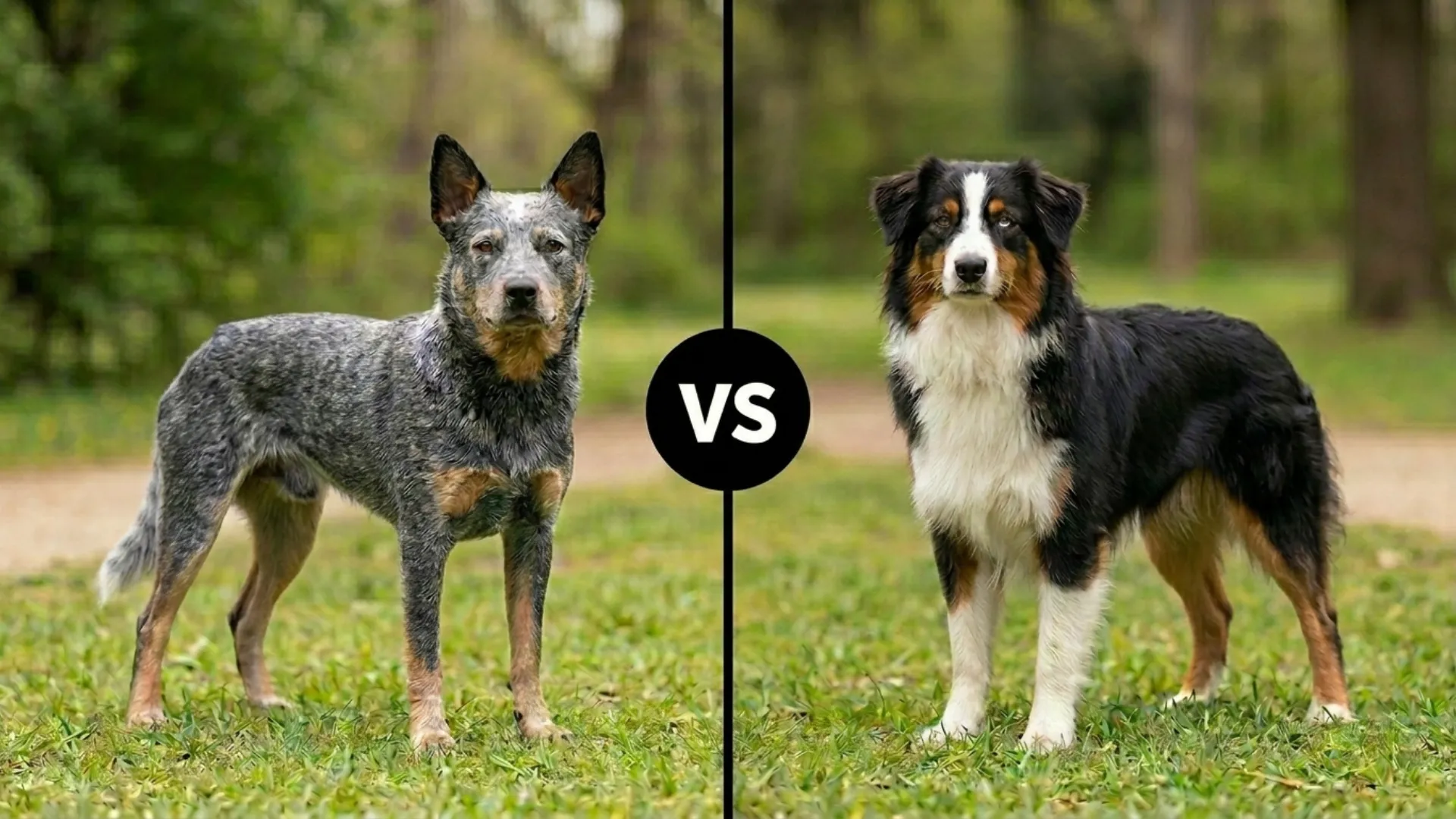
Most people believe choosing between two herding dogs comes down to a preference for looks or slight differences in size. That assumption tends to oversimplify a decision that has more depth than it appears to have.
In reality, these two breeds create very different living experiences, even if they share a similar purpose on paper. One can feel more intense and driven in its behavior, while the other may come across as more adaptable, depending on the environment.
These distinctions are not always discussed clearly, which leads many owners to choose without fully understanding what they are getting into. Over time, that gap in understanding can lead to unnecessary frustration. It is not about one being better than the other. It is about how each one fits into a specific lifestyle.
This comparison of these high-energy breeds will break that down in a way that makes the differences practical, not just theoretical.
Key Takeaways
Two herding dogs with similar reputations often create very different daily experiences once they step into a home.
Blue Heeler grows from harsh cattle country in Australia, while the Australian Shepherd finds its roots in American ranch life, shaped by migrating herding lines.
One leans into raw endurance and independent control, the other develops a more people-connected and responsive working style.
Understanding these differences reveals why choosing between them is less about appearance and more about the life you plan to share.
Blue Heeler vs. Australian Shepherd: Which Dog Breeds to Pick?
Origins & Purpose
Harsh land shaping working identity
Blue Heeler, aka Australian Cattle Dog, was formed within Australia’s expanding cattle regions, where control over livestock required endurance and precision.
Early English herding dogs were crossed with native dingoes to handle climate and terrain challenges. This combination produced a dog suited for long-distance cattle work under demanding conditions.
Selective breeding focused on creating a dog capable of managing restless cattle across wide ranch spaces. The emphasis remained on resilience, responsiveness, and sustained physical output rather than visual traits. Over time, this refinement aligned closely with practical ranch needs in Australian grasslands.
Cross-continental refinement through herding lines
The Australian Shepherd took shape in the United States, influenced by European herding dogs brought by Basque workers traveling through Australia, as noted by Britannica.
These dogs were later mixed with Collies and other working breeds before settling into ranch environments in California. The name followed an assumption rather than the actual origin.
Its identity grew within Western ranch and rodeo settings where adaptability mattered across different livestock tasks. Continued refinement in the United States shaped a dog aligned with varied herding demands rather than a single fixed role. Recognition followed once its working consistency became widely established.
Size & Physical Build
Compact strength with endurance focus
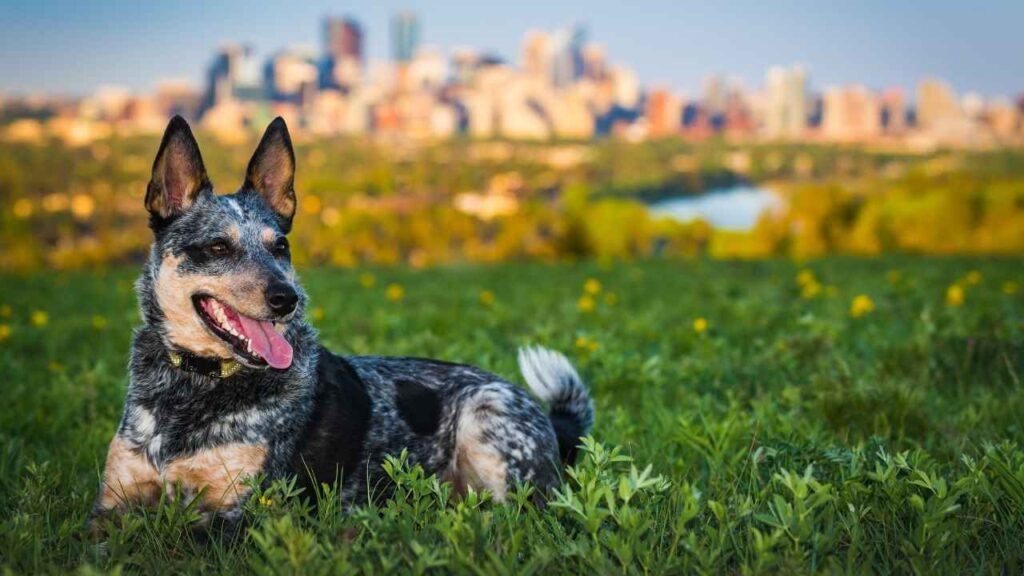
The Blue Heeler ranges from 18 to 20 inches for males and 17 to 19 inches for females, with a weight between 35 and 50 pounds. Its hard-muscled frame supports controlled strength without excess mass. This build aligns closely with agility during cattle handling, as per the American Kennel Club (AKC).
The coat of this herding dog breed begins white at birth before shifting into blue-gray or red with mottled or speckled patterns. These markings add variation while staying functional in outdoor settings. Moreover, a smooth, flexible gait keeps motion steady over long distances.
Balanced frame with visual sharpness
The Australian Shepherd reaches about 20 to 23 inches in males and 18 to 21 inches in females, with a weight ranging from 50 to 65 pounds for males and 40 to 65 pounds for females. Its structure blends muscle with range across working conditions. The frame supports coordinated stock handling.
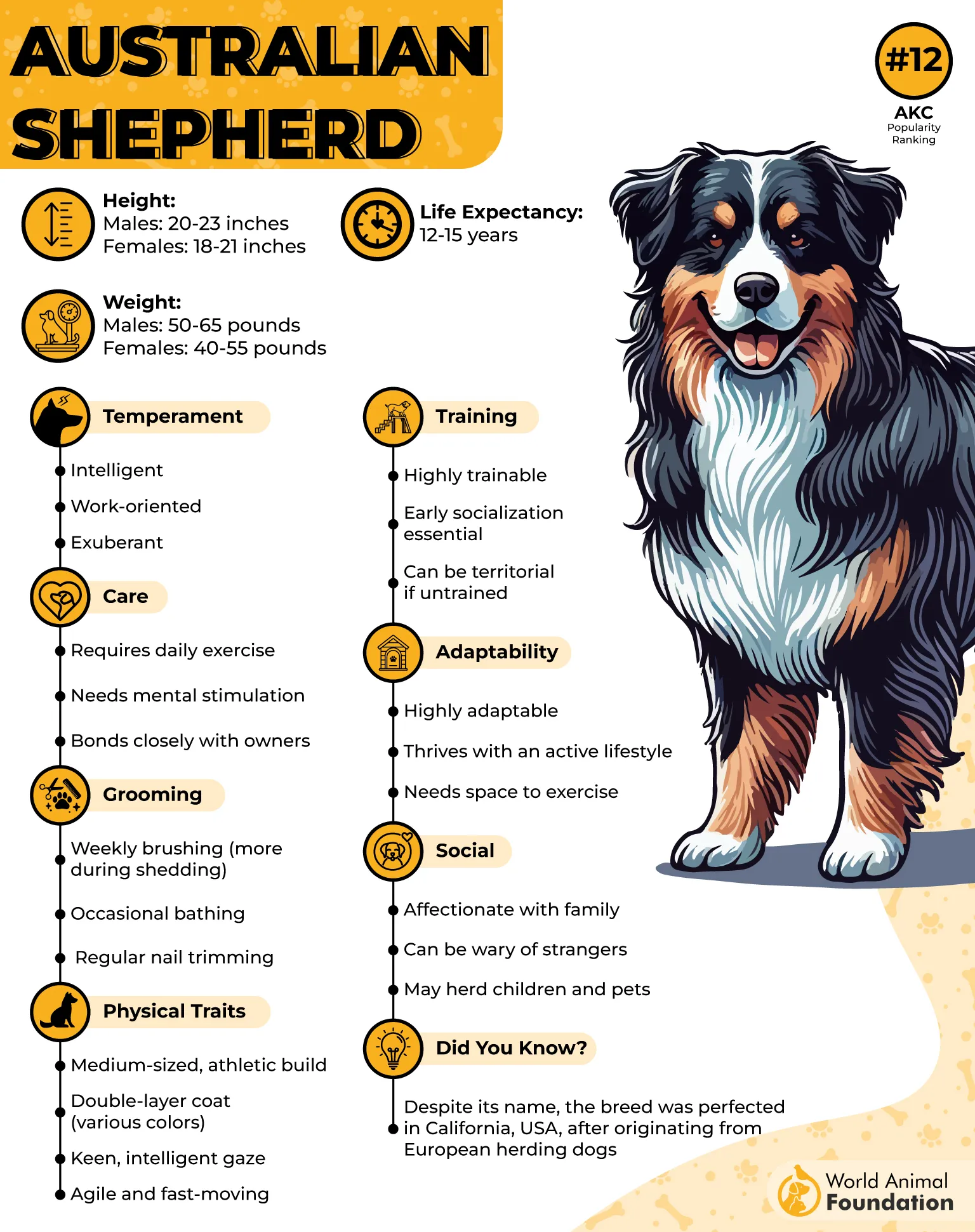
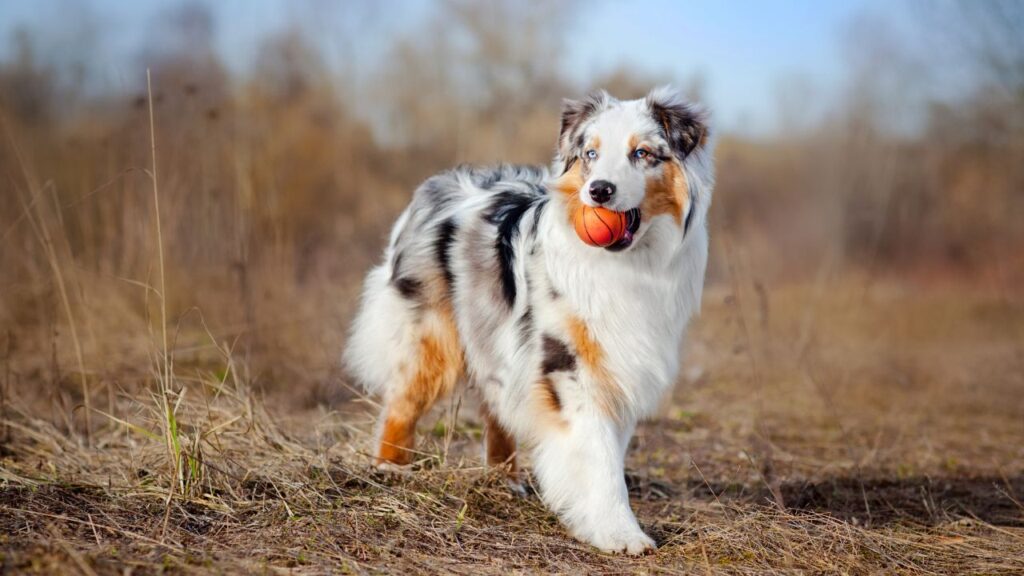
The coat varies widely, with merle patterns introducing mixed shades of blue or red across the body. A focused gaze gives it a sharp working expression during herding tasks. Movement remains agile, matching its role in active livestock environments.
Temperament & Personality
Independent drive with working instincts
The Australian Cattle Dog reflects a tougher, more self-reliant temperament shaped by long hours of work in demanding conditions. It approaches tasks with focus and endurance, often preferring purpose over constant interaction. Social exposure early on helps balance its natural distance from other dogs.
This breed introduces herding behavior into everyday situations, sometimes directing it toward family members through heel nipping. Playfulness appears alongside this instinct, especially in active households with children. Clear boundaries are necessary to manage this behavior early on.
Energetic and people-focused nature
The Australian Shepherd shows a lively and courageous temperament, often directing its energy into games that challenge both mind and body, as mentioned by Omlet.
It forms a strong attachment to one primary handler while still engaging closely with the family. Early guidance shapes this energy into controlled and responsive behavior.
Its daily rhythm revolves around activity, often seeking tasks that involve thinking as much as movement. Without direction, this intensity can shift into restless patterns or overexcitement indoors. Structured interaction helps channel its engagement into steady habits.
Exercise & Energy Levels
Energy that demands purpose
The Australian Cattle Dog operates with intense stamina, requiring more than short walks or casual yard time. Its energy connects directly to task-driven activity, especially in environments where herding is part of daily life. Without structured engagement, that unused drive quickly builds into restlessness.
Daily outlets need to match that intensity, often through running alongside their handler or structured canine activities. Competitive obedience, agility, or similar tasks help redirect this constant motion into focused effort. Adults typically require around 1.5 to 2 hours of strong physical engagement.
Activity tied to companionship
The Australian Shepherd brings a similarly high energy level, paired with a strong inclination to stay close to its handler during activity. Open space supports free movement, though extended walks or hikes create more meaningful engagement. Once fully grown, it adapts well to steady running routines.
The routine of this energetic breed often benefits from split sessions, combining structured work with active companionship throughout the day. Herding tasks, organized dog sports, or guided activities help channel its athletic nature. Daily needs generally fall between one and two hours of vigorous exercise.
Training & Intelligence
Mental drive tied to structured learning
The Blue Heeler responds best when training begins early, with social exposure shaping how it handles people and surroundings.
Its intelligence connects closely with constant activity, often seeking tasks that require focus and repetition. Without structured direction, that energy can shift toward restless or destructive behavior.
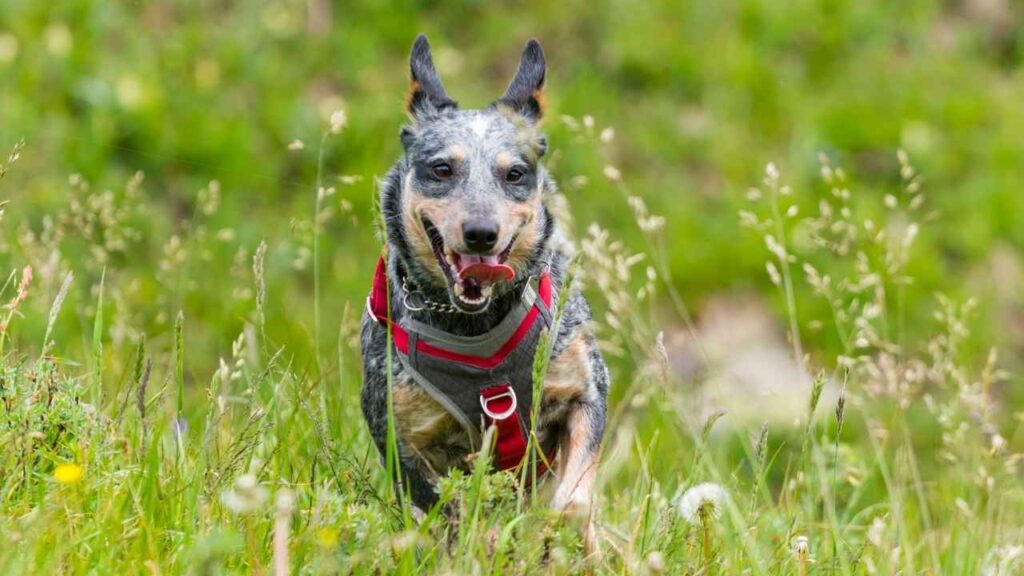
Ongoing and proper training through herding, obedience, or agility creates an outlet that aligns with its working mindset. These activities demand consistency and time, but they also deepen engagement between dog and handler. A routine built around tasks keeps its thinking process occupied and balanced.
Intelligence shaped through engagement
The Australian Shepherd requires early guidance to channel its sharp mind and high energy into controlled behavior. Its strong attachment to family influences how it reacts to surroundings, sometimes becoming protective without proper direction. Training plays a central role in shaping this response.
Consistent physical and mental stimulation prevents unwanted behaviors that can appear when left without purpose or companionship. It is highly intelligent, and its ability to learn quickly becomes evident when given a clear structure and interaction.
Grooming Frequency
Low-maintenance coat with seasonal shifts
The Australian Cattle Dog has a smooth, double-layer coat shaped for outdoor exposure and protection. The coat stays clean without noticeable odor or oily buildup, keeping grooming simple most of the year. Weekly brushing and occasional baths usually handle routine care.
Seasonal shedding changes the routine, as the undercoat releases heavily during specific periods. At that time, brushing every few days becomes necessary to clear loose hair using short bristles or a comb. Nail trimming remains a steady part of care regardless of shedding cycles.
Dense coat requiring regular upkeep
The Australian Shepherd has a waterproof, double-layer coat that benefits from consistent weekly brushing to stay in good condition. The texture and density allow it to handle outdoor activity while collecting dirt more easily. Baths are only needed when the coat becomes noticeably dirty.
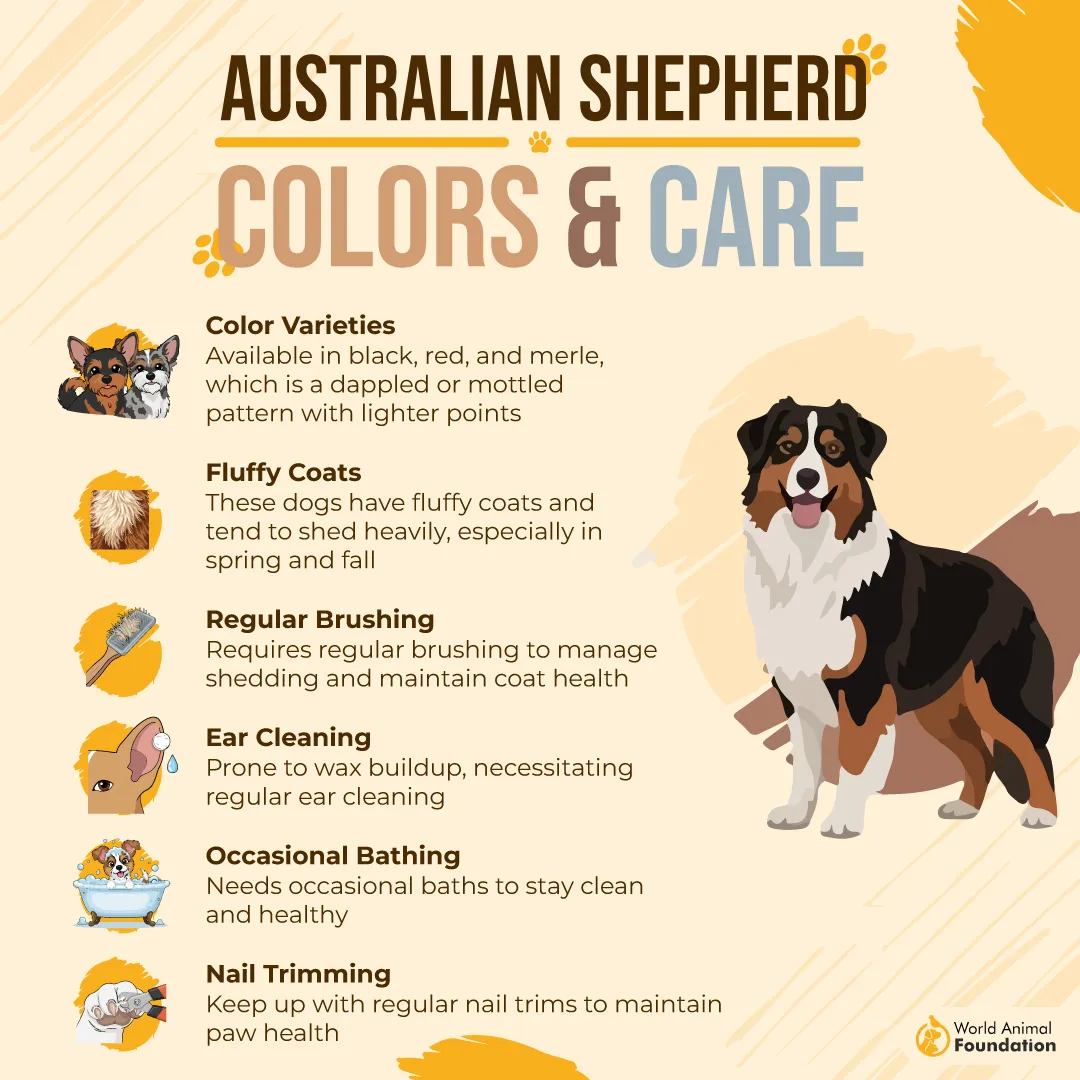
Shedding periods demand closer attention, with frequent sessions using an undercoat rake followed by a wire brush. This process helps manage the heavier volume of loose hair released during these phases. Nail care follows a regular schedule alongside coat maintenance.
Health & Lifespan
Longevity shaped by working resilience
The Australian Cattle Dog generally lives between 12 and 16 years, reflecting its physically durable working build. Health screening often focuses on hearing ability, eye conditions like progressive retinal atrophy, and joint stability. Regular ear cleaning and dental care help prevent common maintenance issues.
Health checks extend into structured testing to monitor inherited conditions before they progress. Evaluations for hips, elbows, and vision are commonly advised, along with BAER testing for hearing and DNA screening for lens and retinal disorders. This approach keeps long-term health risks under control.
Stable lifespan with monitored risks
Australian Shepherds typically range from 12 to 15 years, supported by overall strong health when properly monitored. Screening often targets joint concerns like hip dysplasia, along with neurological and vision-related conditions. Routine ear and dental care remains part of basic upkeep.
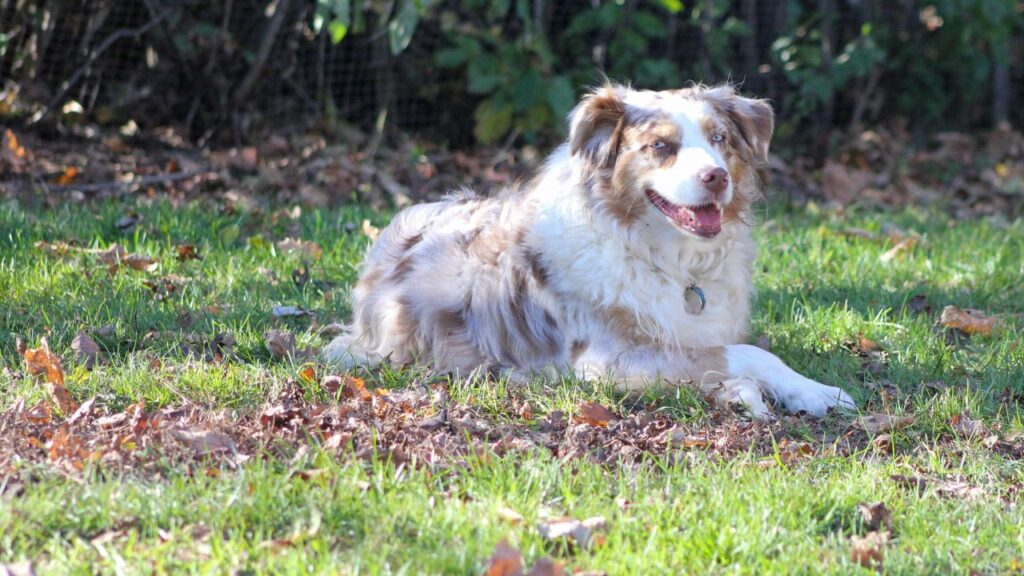
Health planning includes evaluations for hips, elbows, and eye health to detect issues early. Some lines are also observed for epilepsy, cataracts, and certain cancers, making early testing an important part of care. Structured monitoring helps manage potential health concerns.
Blue Heeler vs. Australian Shepherd: Which One is Best for You?
Blue Heeler brings a tightly focused, task-first energy into daily life, while Australian Shepherd feels more socially tuned, adjusting to interaction and shared activity.
One tends to organize the environment through alert, work-like attention, the other blends into movement and engagement without feeling rigid. The difference shows up in rhythm, where one builds structure into the day and the other flows with it.
The choice often comes down to how much predictability versus flexibility fits the household’s pace. Blue Heeler suits spaces where consistent direction and firm routine are part of everyday living, while Australian Shepherd aligns better with active homes that allow varied engagement. Daily life with each one naturally settles into a different pattern depending on how that energy is received and guided.
Conclusion
Both breeds belong to the herding group and carry strong herding instincts, yet their expression in daily life feels distinct. Among various herding dog breeds, one leans toward structure and independence, while the other builds its rhythm through interaction and shared movement. This contrast shapes how each one settles into a home environment, especially for those familiar with high-energy dogs.
Over time, routines settle, and those differences become easier to notice in simple moments. Activities like spending time outdoors or using interactive toys begin to reflect their needs and responses.
Ultimately, their rich history continues to shape them, making them wonderful companions when placed in the right environment.
