




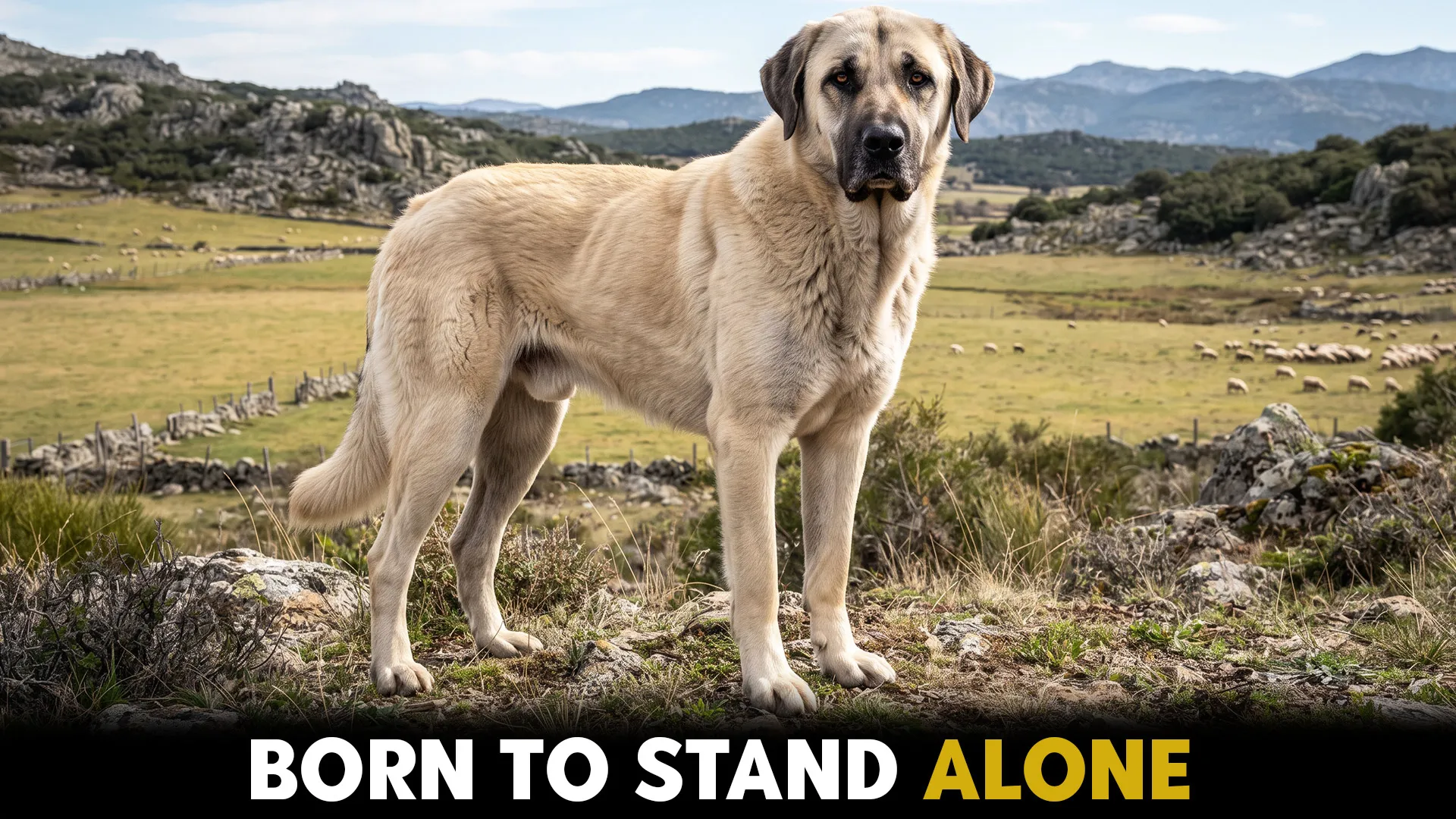
There’s something special about sharing your home with a big dog. They may take up more space on the couch, leave a much bigger paw print at the door, and somehow still believe they belong in your lap, but their loyalty, affection, and larger-than-life personalities can make them great companions.
Big dogs aren’t all built for constant activity or attention. Some are calm and easygoing, while others are independent, confident, and comfortable entertaining themselves for a while. Still, size comes with responsibility.
Larger dogs generally need enough room to move comfortably, consistent training, appropriate exercise, and a routine that keeps them mentally stimulated.
So, which big dogs can fit well into a lifestyle where they aren’t glued to their humans all day? In this guide, we’ll explore some of the top big dog breeds that can thrive with a little independence while still being loving family companions.
Top Big Dog Breeds That Thrive on Their Own
1. Anatolian Shepherd
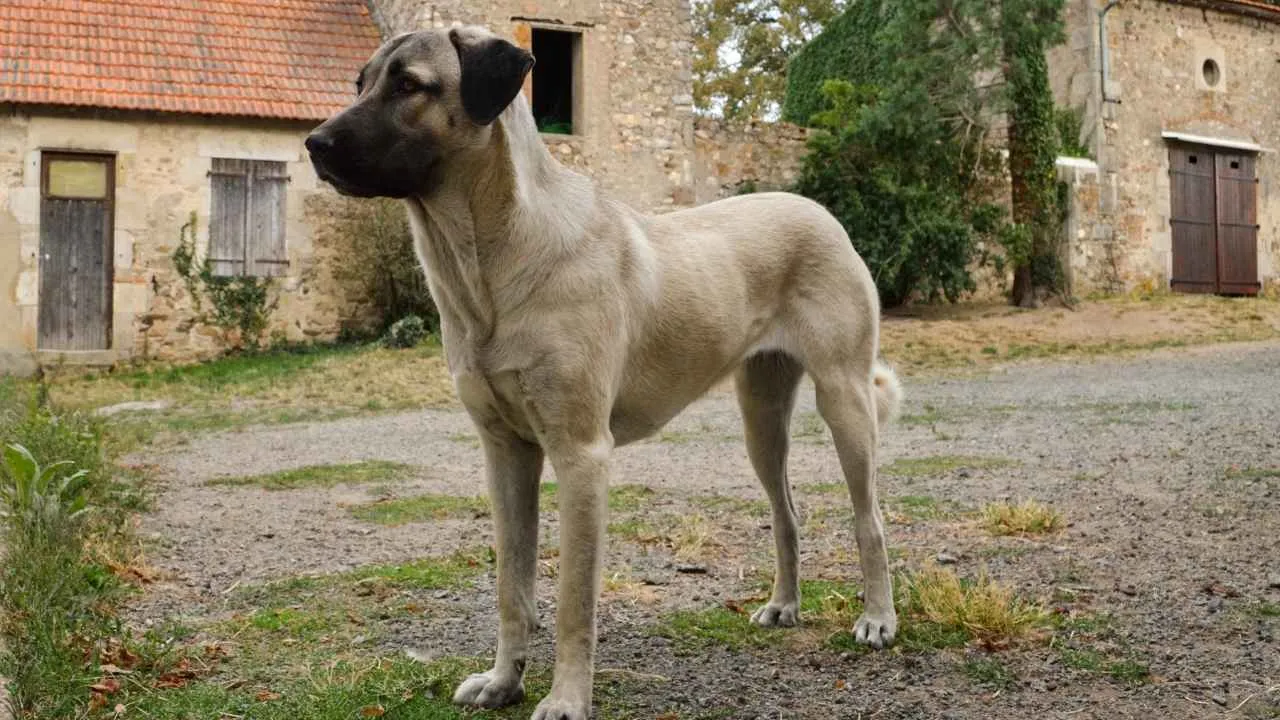
Built for independence, Anatolian Shepherds are the kind of dogs that don’t need someone hovering over them all day. Their ancestors are among the oldest domestic canine bloodlines, dating back around 6,000 years.
They originated in Anatolia, Turkey, where they were bred to guard livestock. They later arrived in the U.S. in the 1950s. PetMD mentions their natural guarding skills are so strong that they have even been used to protect endangered cheetahs in Namibia, Africa.
Calm but Protective Nature
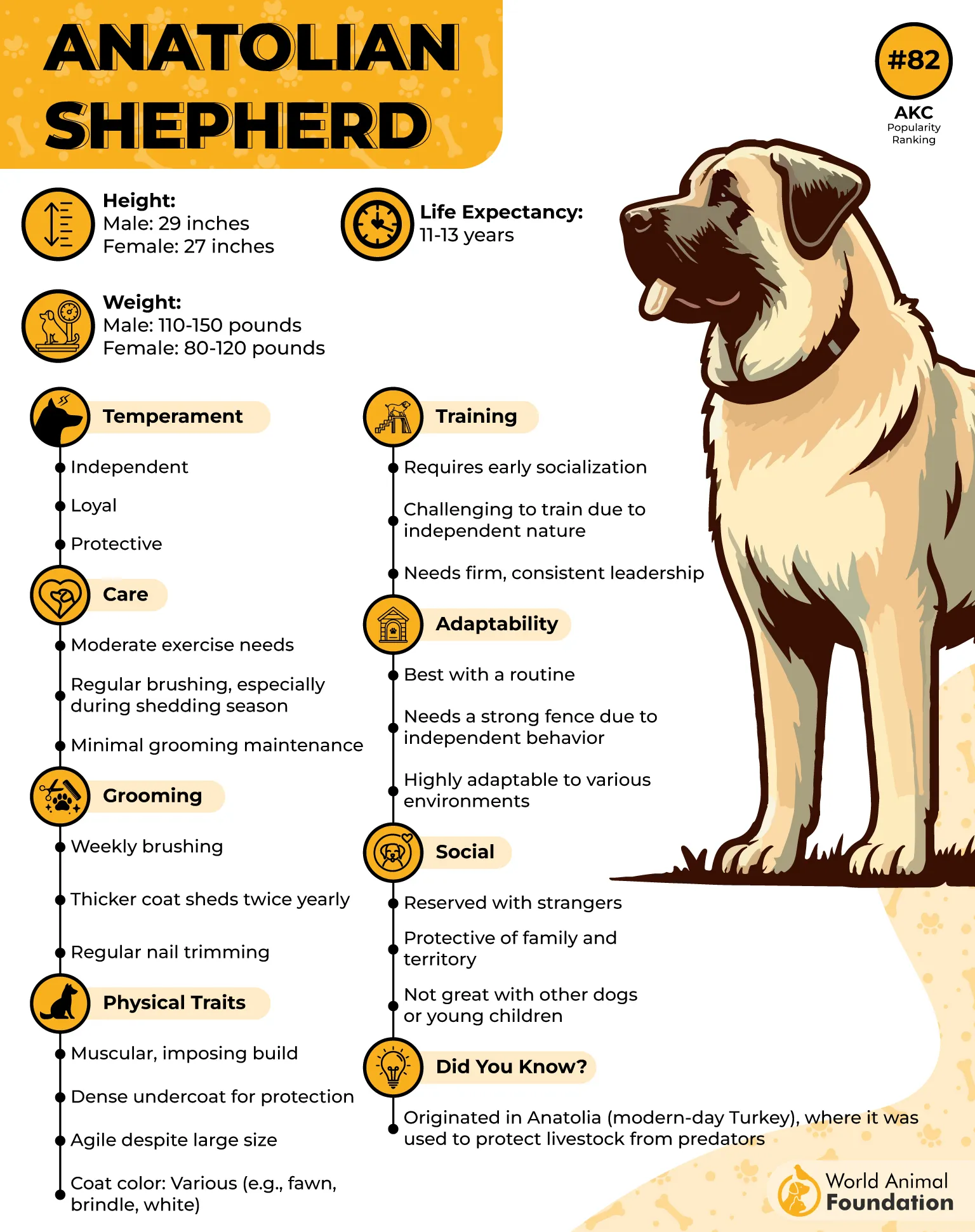
Anatolian Shepherd dogs are calm, reserved, smart, and highly perceptive. They are independent thinkers who were bred to make decisions without waiting for a shepherd’s command. This makes them a strong match for owners who appreciate a dog with a self-sufficient nature.
With their families and people they know well, they can be loving, loyal, and kind. However, they are naturally wary of strangers and can react quickly to anything they see as a threat.
Space, Training, and Exercise
These rugged, muscular dogs are happiest when they have space and a purpose. They do not need excessive exercise, and outdoor time in a securely fenced yard can often meet their activity needs.
They also enjoy hikes and adventures and can reach speeds of up to 30 mph, so secure fencing is essential. Their independent nature can make training challenging. They need an experienced owner who understands working dogs and can keep them occupied and provide steady guidance.
2. Great Pyrenees
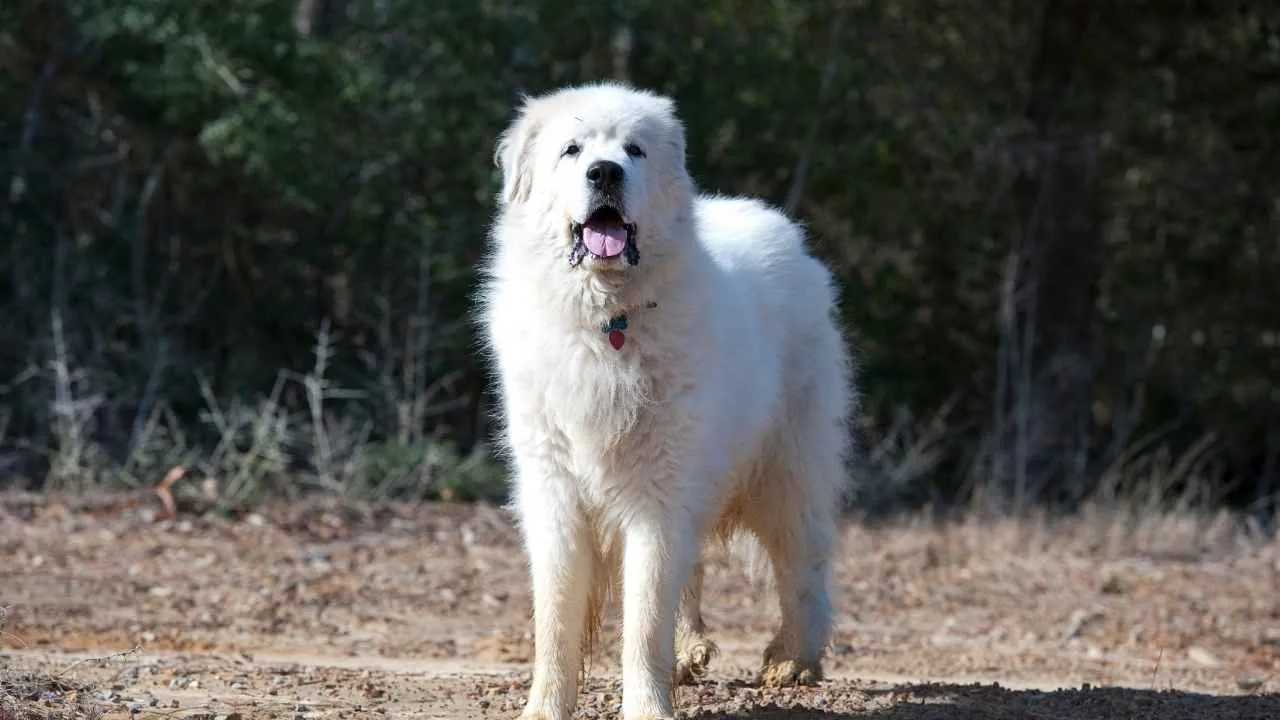
If you want a large dog that is perfectly comfortable doing its own thing, the Great Pyrenees is a natural fit. Originally bred in the Pyrenees Mountains between Spain and France, these giant guardians watched over sheep and livestock for long periods without constant human direction.
Their thick white coats helped them blend into snowy surroundings while protecting flocks from predators such as bears and wolves. That history explains their calm confidence and strong independent streak today.
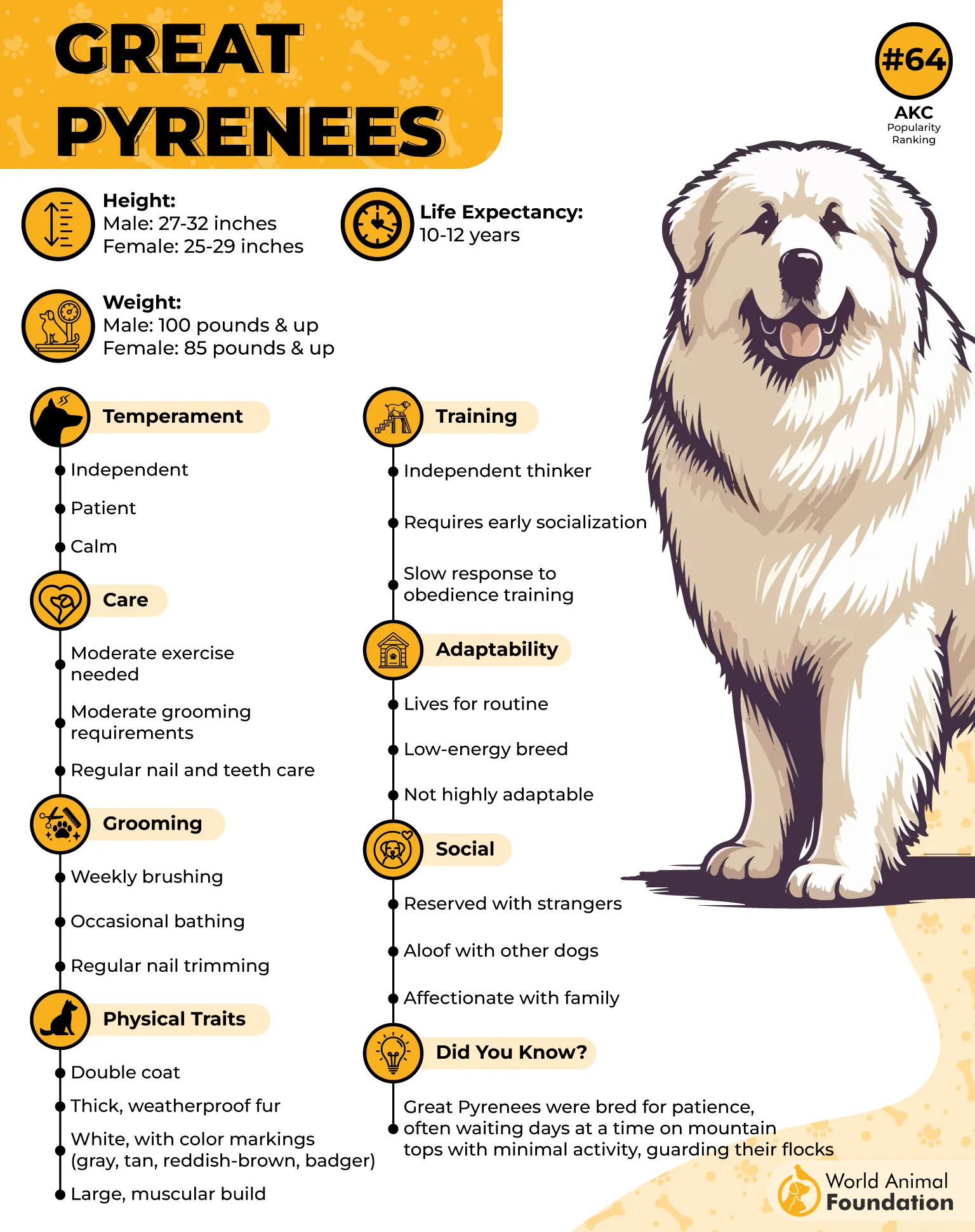
Calm, Independent Guardians
Great Pyrenees are gentle and affectionate with their families but serious about their job of protecting them. They are patient, composed, and not overly excitable. They often prefer to observe before acting and can be reserved with strangers.
Their independent nature may also show up as stubbornness during training, so early training and socialization are important.
At home, they are usually calm and do not need a highly active lifestyle. They enjoy having some quiet time and can be happy relaxing while their family goes about its day.
Space and Daily Life
These dogs do best with plenty of room to roam, making a large, securely fenced yard, farm, or ranch ideal. They have a strong desire to explore and may try to wander, so secure gates and leashes are essential.
Great Pyrenees also tend to bark and can be more active at night because they once guarded livestock after dark. They enjoy cooler weather and may happily spend time outdoors when it is cold.
3. Central Asian Shepherd Dog
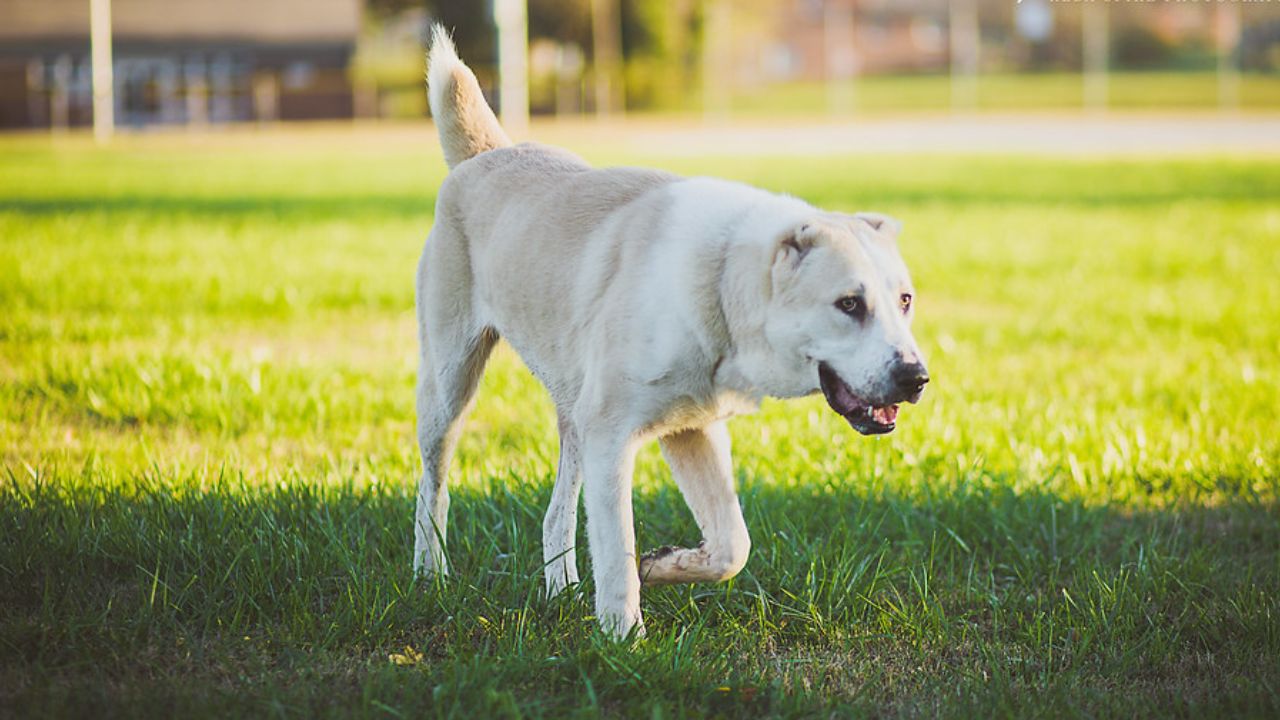
Strong, fearless, and deeply independent, Central Asian Shepherd Dogs were built to handle life without constant human direction.
They developed through natural selection over more than 4,000 years across a vast region stretching from the Caspian Sea to China and from the Southern Ural to Afghanistan, including areas of present-day Turkmenistan, Afghanistan, and Iraq.
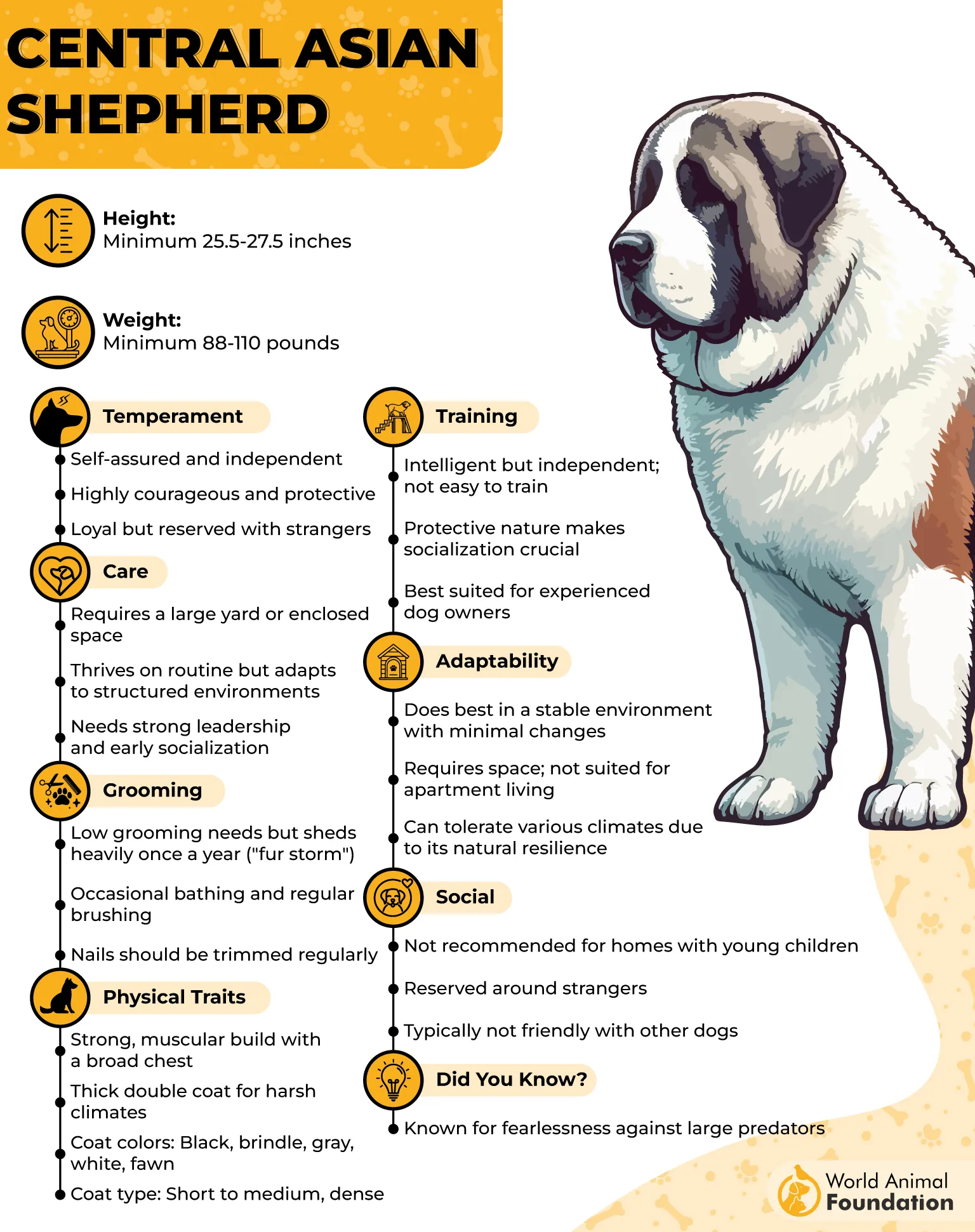
Independent and Protective Nature
Central Asian Shepherd Dogs are calm, quiet, proud, and remarkably difficult to rattle. They have strong territorial instincts and can remain composed even when facing a serious threat.
However, their calm nature should not be mistaken for passivity. Protecting their family is a top priority, and they can respond quickly if they believe their people or territory are in danger.
They are often reserved with strangers and other dogs and may test their owner’s leadership. Consistent, confident, and patient training is essential. Too much harshness or excessive leniency can lead to unwanted behavior, so lifelong guidance is important.
Space, Exercise, and Experience
This breed is not ideal for first-time dog owners. They need an experienced owner who can manage a large, strong-willed guardian and provide lifelong training and supervision. A sturdy fence and room to move are also important.
Their energy level is moderate, and daily walks on a leash and playtime in a secure yard can help meet their exercise needs. They are not clingy, but they do enjoy being close to their people.
4. Akbash
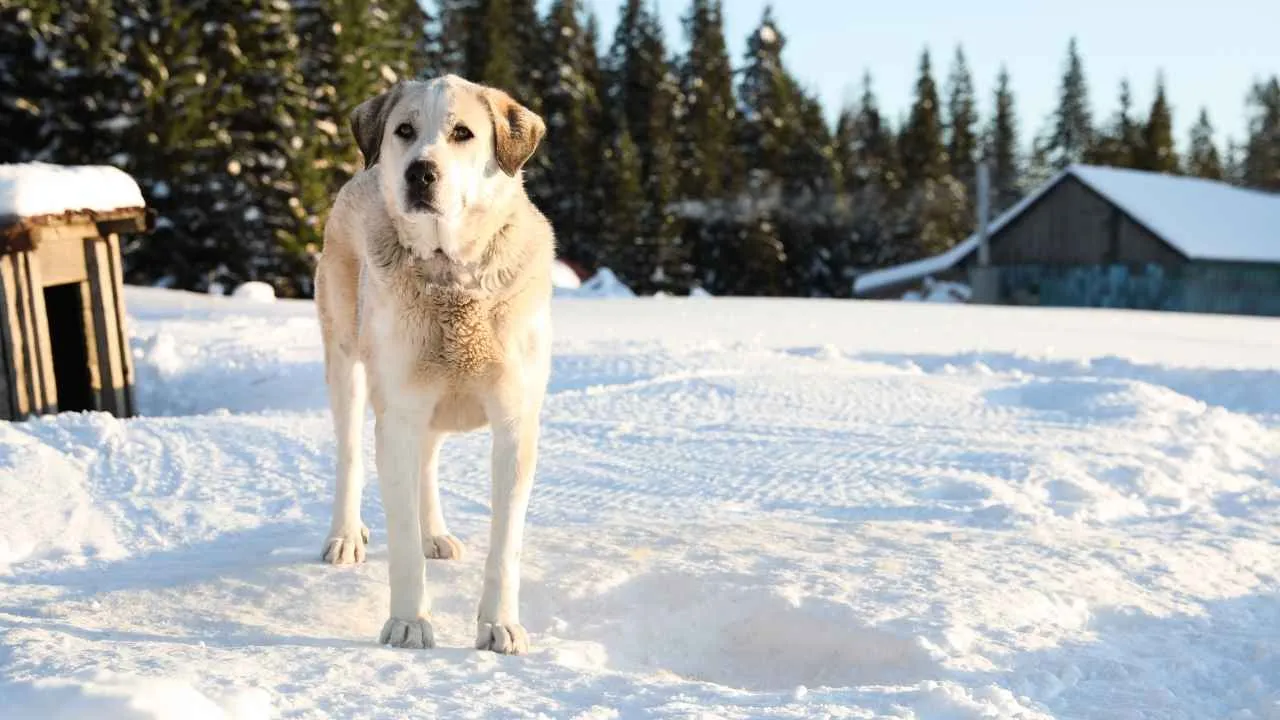
Originally from Turkey, these large guardian dogs were developed to protect livestock from wolves and other predators.
Their long legs help them move quickly, while loose skin around the neck offers protection during attacks. Their white coats, which can be medium or long, also give them a distinctive appearance.
Purpose-Driven Personalities
Akbash Dogs are smart and strongly guided by their guarding instincts. They are naturally watchful and protective, but they are not usually noisy unless they have a reason to alert. Their independence allows them to patrol and monitor their surroundings on their own.
However, they can be wary of unfamiliar people, pets, and children. Early socialization can help them become more comfortable around different people, animals, places, and situations. With proper training and care, they can form loving bonds with their families.
Space and Daily Life
These dogs are best suited to homes with plenty of room to roam. A farm or property with open land is ideal, although a large, securely fenced yard can also work.
Akbash Dogs have a strong instinct to patrol their territory and can become escape artists if they are bored or feel restricted. They need attentive owners who understand their guardian nature and can provide consistent training and mental stimulation.
5. Maremma Sheepdog
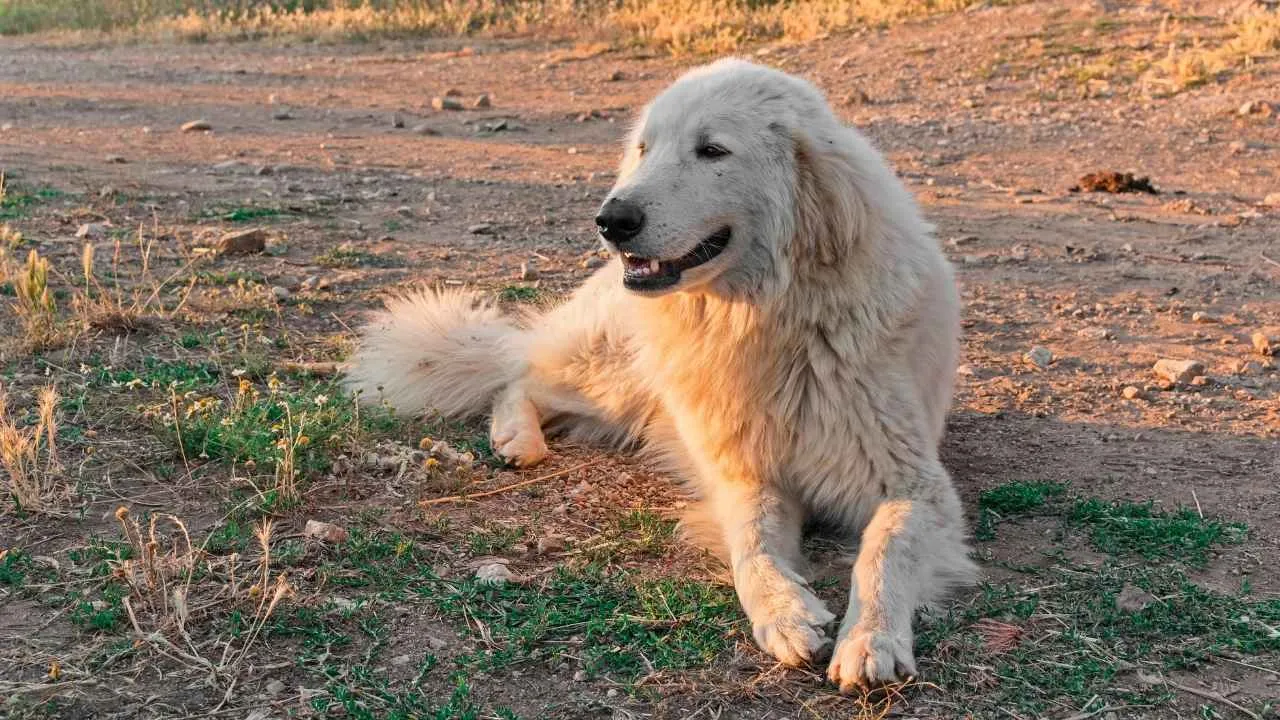
Independent, intelligent, and deeply loyal, Maremma Sheepdogs are natural guardians that are happiest when they have a job to do. They were bred to protect flocks and can also become devoted guardians of their families, territory, and other animals.
While they enjoy company, their independent nature means they can spend time watching over their surroundings without needing constant direction. They are affectionate with their loved ones but naturally cautious around unfamiliar people.
Protective and Strong-Willed
Maremmas are always alert to possible threats and take their guarding role seriously. They can be wonderful with children and familiar animals, including sheep, chickens, and even cats when properly socialized.
However, early and ongoing socialization is essential because they may remain suspicious of strangers. They are intelligent but do not always obey immediately.
Space, Work, and Exercise
Maremma Sheepdogs are best suited to farms and homes with plenty of outdoor space. Secure fencing is essential because they may wander while patrolling their territory.
They are not overly active, but they can become difficult to manage if they are bored or lack a purpose. They need regular exercise and mental stimulation, with longer walks suitable once they are mature enough.
6. Pyrenean Mastiff
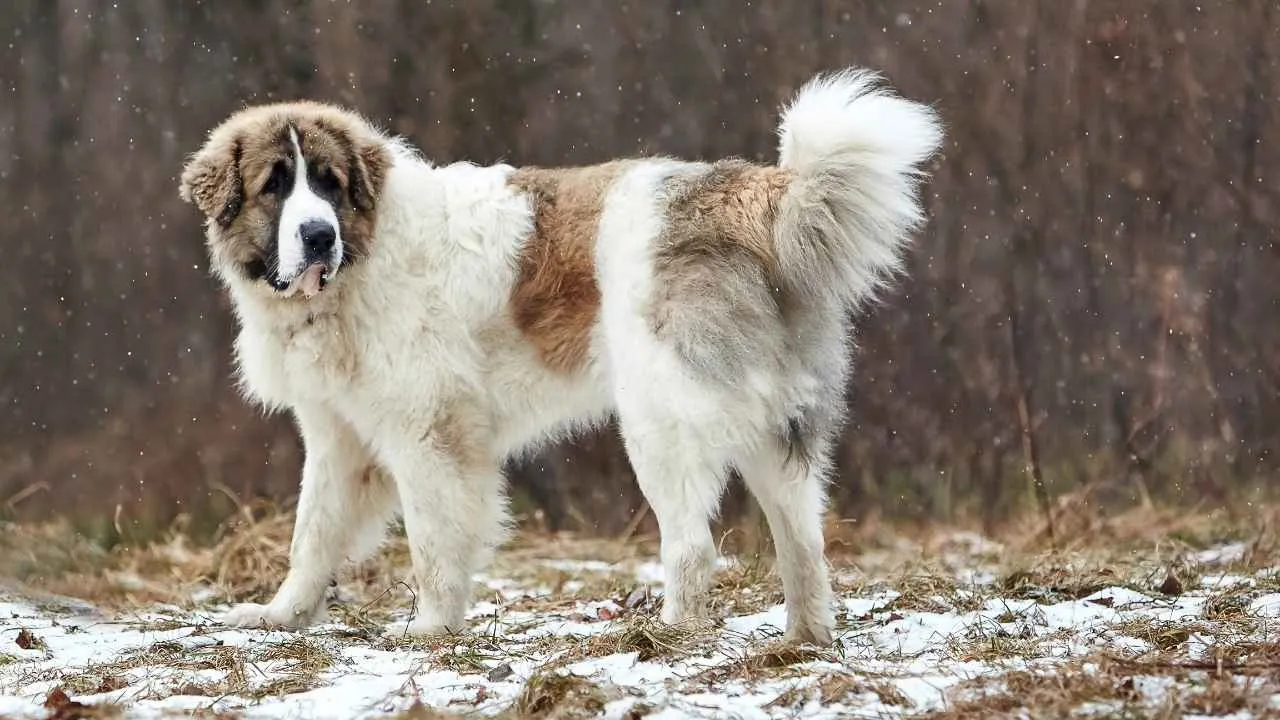
They originated in the Spanish Pyrenees Mountains and were bred to protect sheep from wolves, bears, and thieves. Their history goes back roughly 3,000 years.
They once traveled with shepherds during seasonal migrations, but their guarding instincts also allowed them to work independently. Today, they remain devoted family pets and capable property guardians.
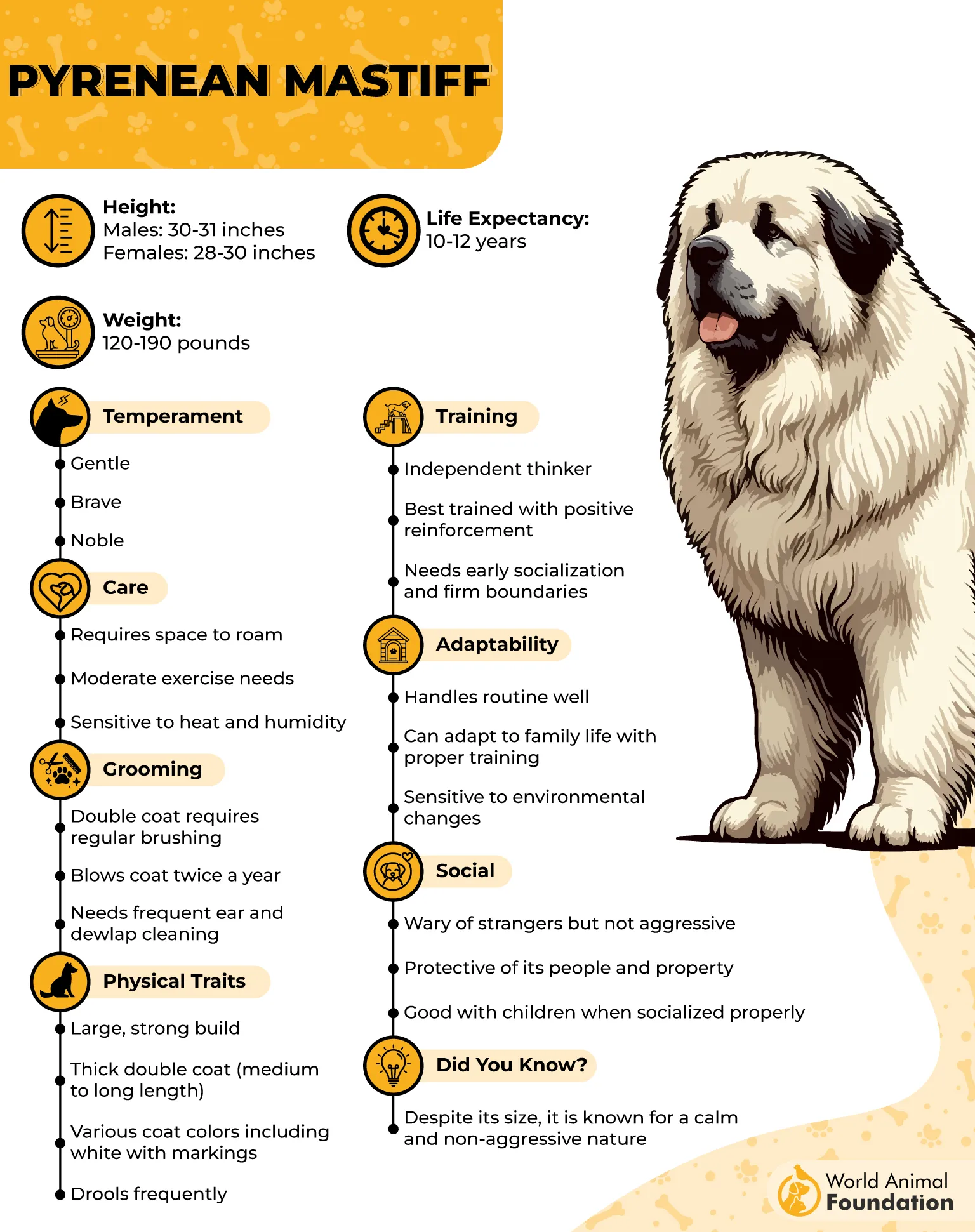
Gentle but Watchful
Pyrenean Mastiffs are affectionate, calm, noble, and loving with their families. They are especially gentle with children, other dogs, and household pets. Their low prey drive also helps them live peacefully with animals they consider part of their family.
Around strangers, however, they remain alert and cautious. They will watch unfamiliar people closely and bark when they sense something unusual. They are not typically incessant barkers, but their guardian instincts remain strong.
Calm Living and Independence
Despite their size, Pyrenean Mastiffs need relatively little exercise and are happy to spend much of their time relaxing.
They enjoy walks, hikes, and roaming larger properties, but they also value time with their people. According to Omlet, they do not enjoy being left alone for long periods and can develop separation anxiety or destructive habits when bored.
7. Kuvasz
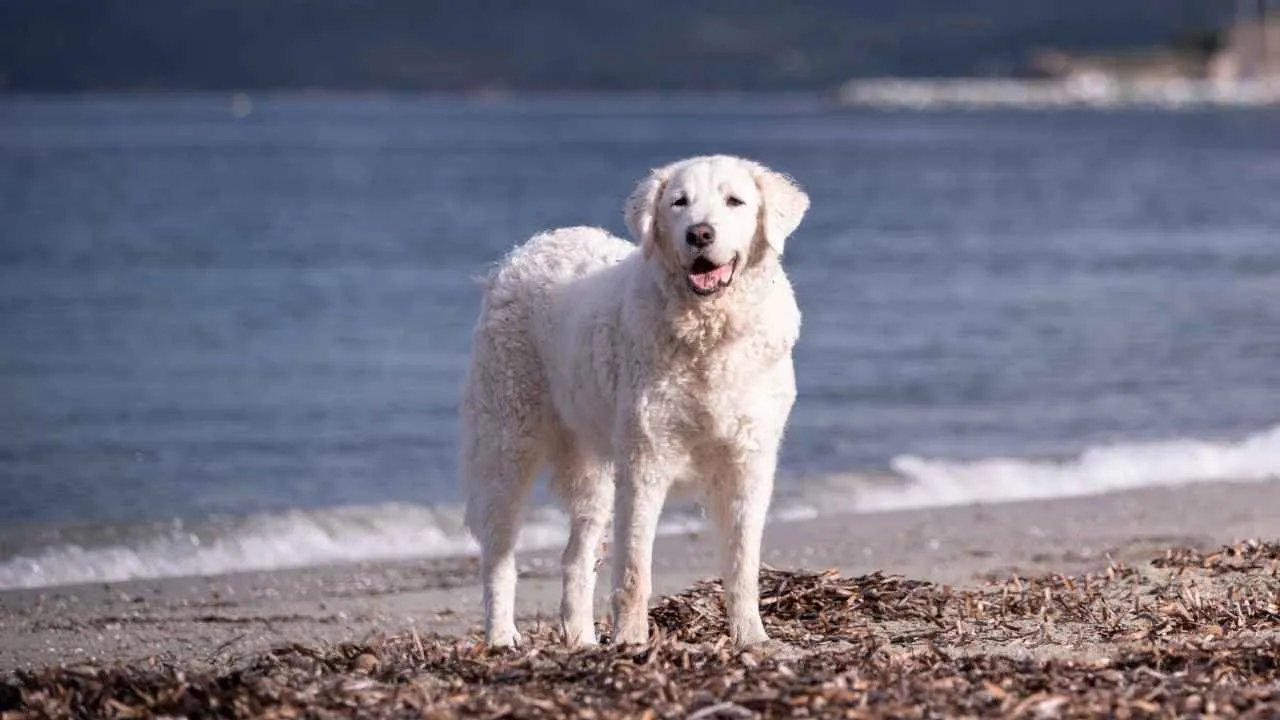
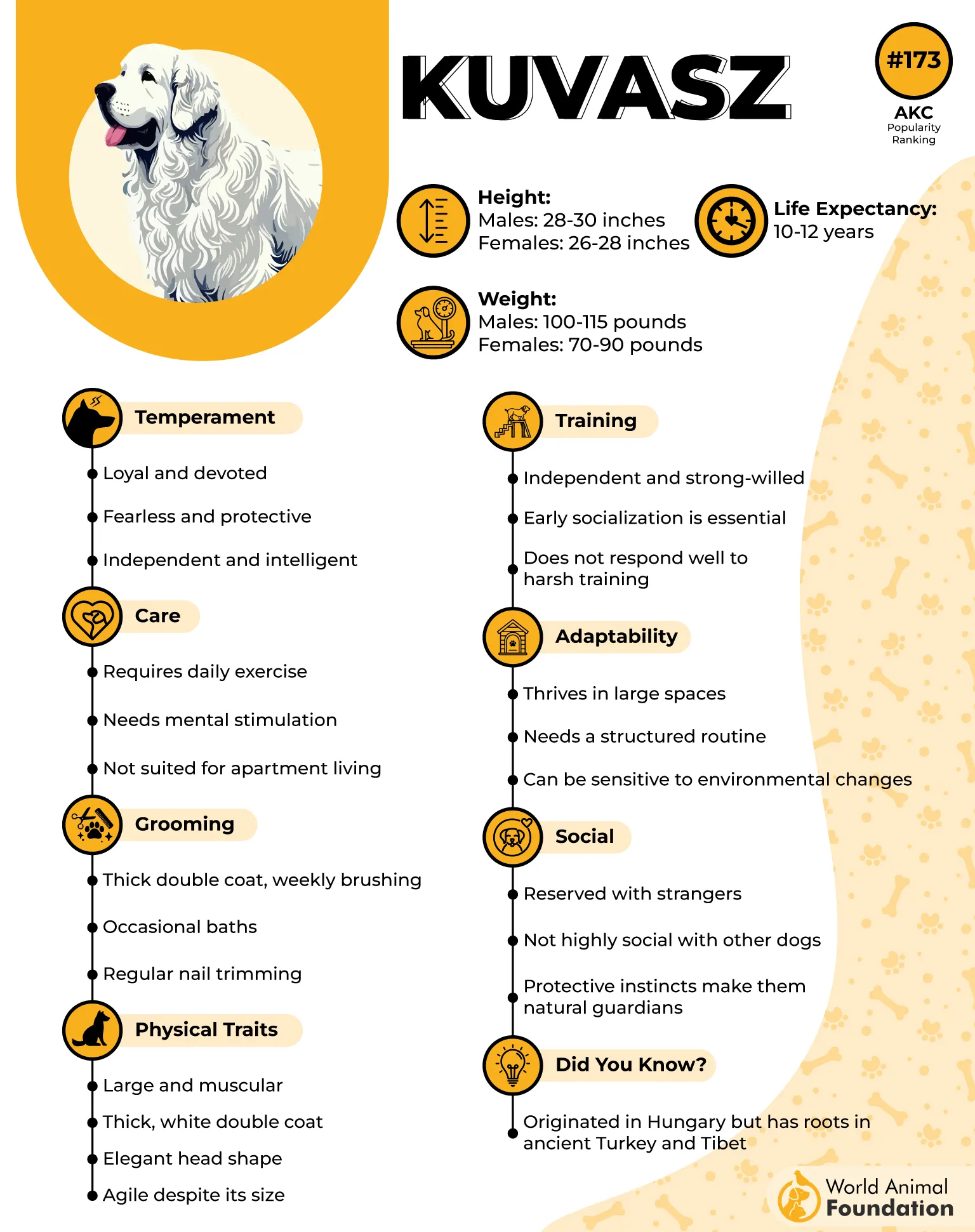
Don’t let the Kuvasz’s fluffy white coat and teddy-bear appearance fool you. These intelligent, strong-willed dogs have a serious guarding instinct and a long history of protecting livestock, as noted by Britannica.
Their ancient roots can be traced to the Ural Mountains in Siberia before the Magyar people brought them to Hungary. Over time, they became valued as livestock guardians, hunting partners, and personal protectors.
Smart and Watchful Guardians
Kuvaszok are extremely intelligent and quick to learn household routines. They can even figure out how to open doors and gates, sometimes to free animals they have bonded with. They are naturally suspicious of strangers and may bark loudly when something seems wrong.
With their families, they are gentle and affectionate, although they usually prefer choosing when to seek attention rather than staying glued to their people.
Space, Exercise, and Independence
Kuvaszok are working dogs that need both physical activity and mental stimulation. They do best when they have a clear purpose, whether that means guarding livestock or taking part in structured daily activities.
Their independent nature means they can entertain themselves and stay alert to what is happening around them, but boredom can lead to problem-solving of the unwanted kind.
Conclusion
Big dogs that thrive on their own can be a great fit for the right home, especially for families looking for a loyal furry friend that does not need constant attention. These breeds often share qualities such as confidence, intelligence, and a strong sense of purpose.
Before bringing one home, take time to consider your lifestyle, living space, experience, and the kind of commitment you can offer.
The best match is not simply the biggest or most independent dog. It is the one whose needs fit naturally into your everyday life. After all, a truly independent dog may enjoy having its own space, but it still wants to know it has a family worth coming home to.
Looking for more large pups? You can also check out the Cane Corso, Scottish Deerhound, Irish Wolfhound, Dogue de Bordeaux, and Bernese Mountain Dog.
