




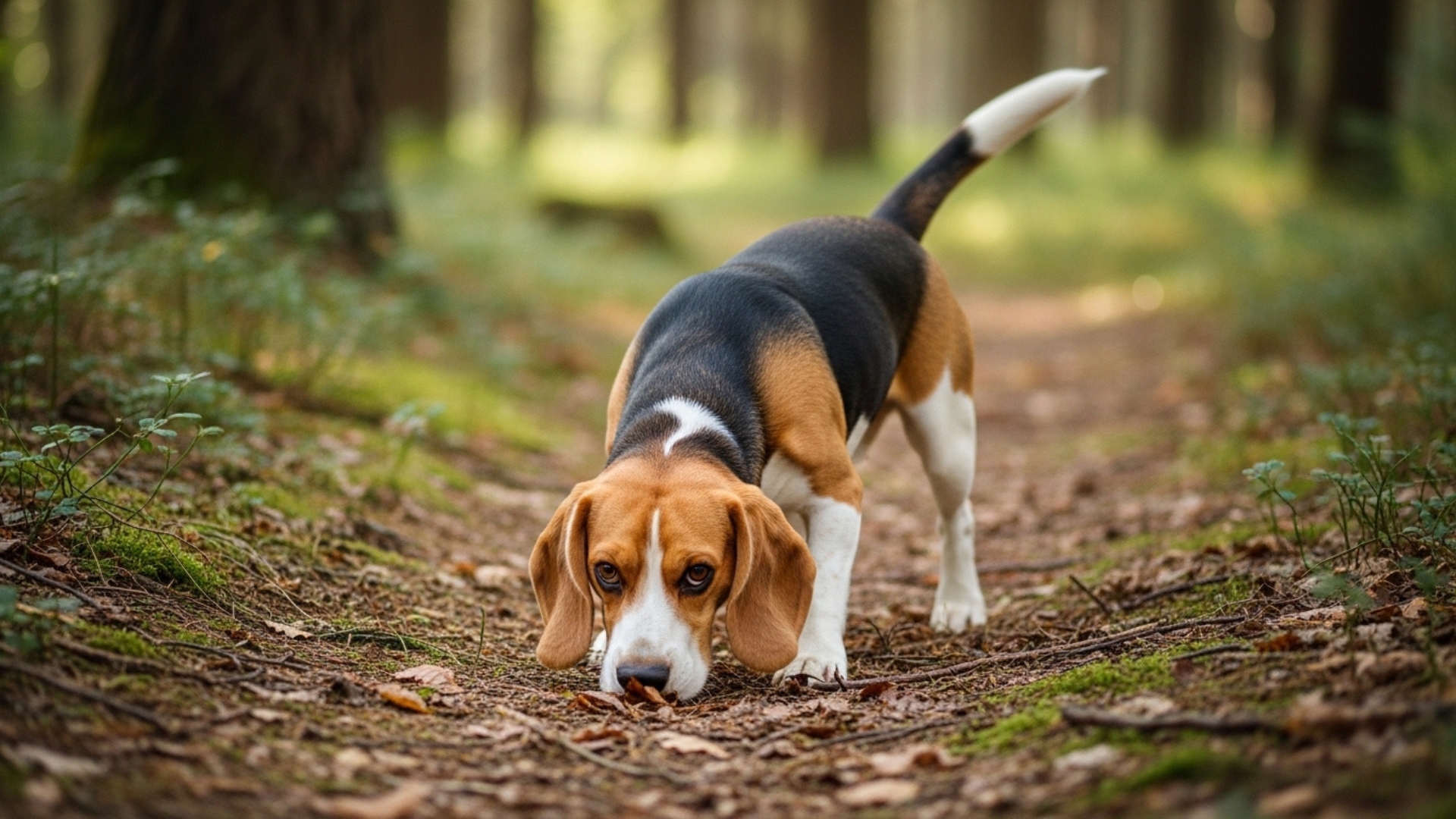
A skilled hunting dog can turn a confusing patch of woods into a readable trail, revealing who passed through, which direction they went, and how long ago they were there. This remarkable ability comes from a dog’s extraordinary sense of smell.
Dogs possess one of the most powerful noses in the animal world. Their noses contain around 300 million olfactory receptors, while humans have only about 5–6 million. Because of this, a dog’s sense of smell is estimated to be 1,000 to 10,000 times stronger than that of humans, as the Royal Canin Foundation reveals.
They also breathe in rapid, short sniffs, sometimes up to 300 times per minute, allowing their noses to constantly collect new scent information. In addition, a much larger portion of a dog’s brain is devoted to processing smells compared to humans.
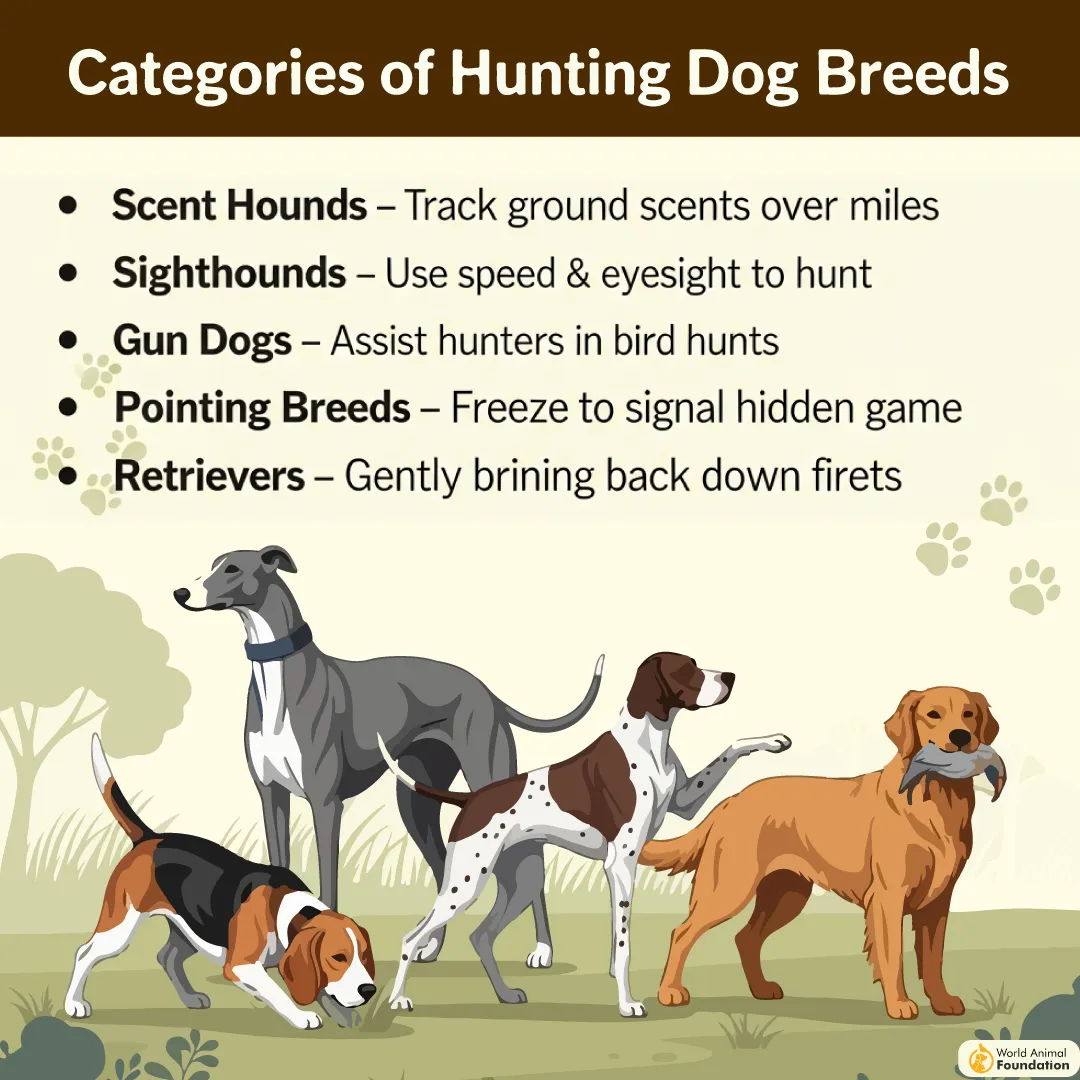
Thanks to these powerful scenting abilities, certain breeds excel at scent tracking during hunts. In this article, we’ll explore seven of the best hunting dog breeds for scent tracking and what makes them exceptional at following a trail.
Best Hunting Dog Breeds for Scent Tracking
1. German Shepherd
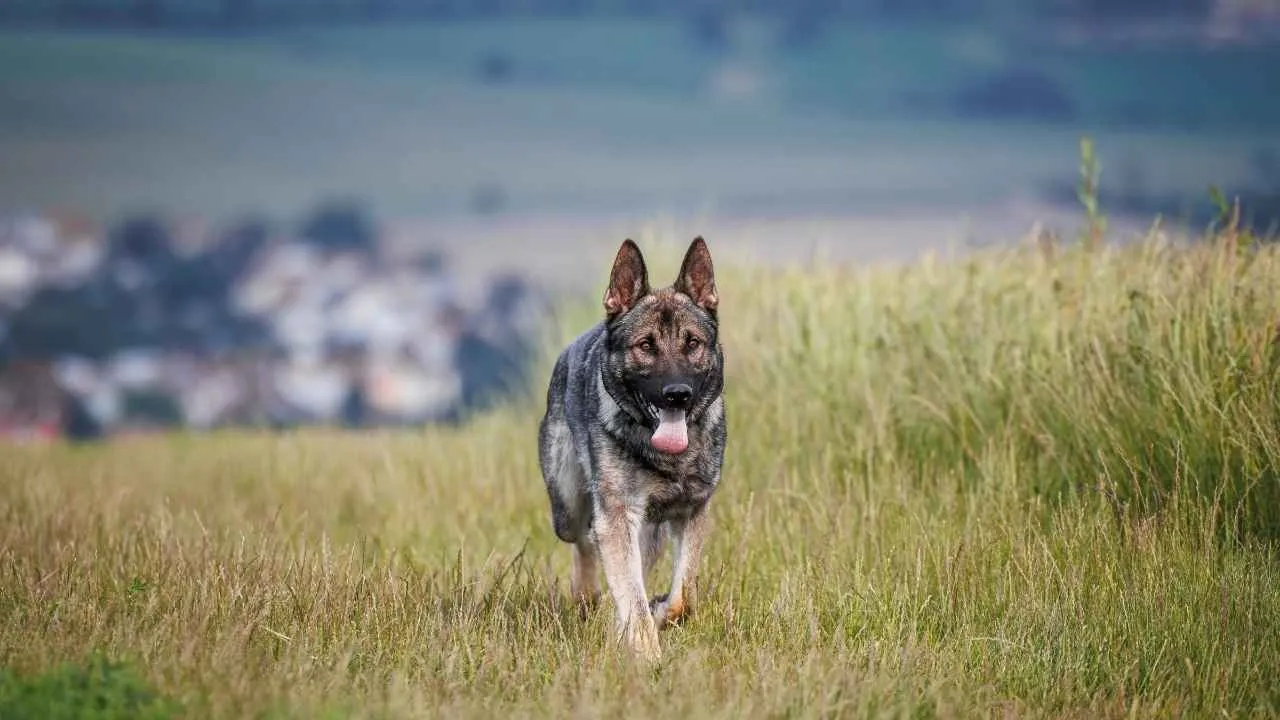
Although German Shepherds were originally bred for herding and protection, their intelligence, trainability, and keen sense of smell make them excellent for scent work, including tracking wounded game, search and rescue, and narcotics detection.
A German Shepherd is a great teammate when it comes to hunting. It not only follows the scent, but it watches you, reads your body language, and stays mentally present.
What Makes Them A Perfect Hunting Partner?
Bite and Jaw Force: With a bite force estimated between 238–305 PSI, the German Shepherd has strong, scissor-like jaws that help it hold and retrieve game securely when working in hunting or tracking situations.
Focus Driven and Strong Sense of Smell: This hunting breed makes a strong bond usually with only one person and is a good watchdog. These attributes cancel out distractions. Their strong sense of smell helps them track at a long distance.
Training Strategy for This Job
Here are the 5 phases a German Shepherd should be trained from puppyhood:
Early socialization and obedience training
Introduction to smell and scent games
Less bird exposure to enhance focusField simulations
Live hunting activities
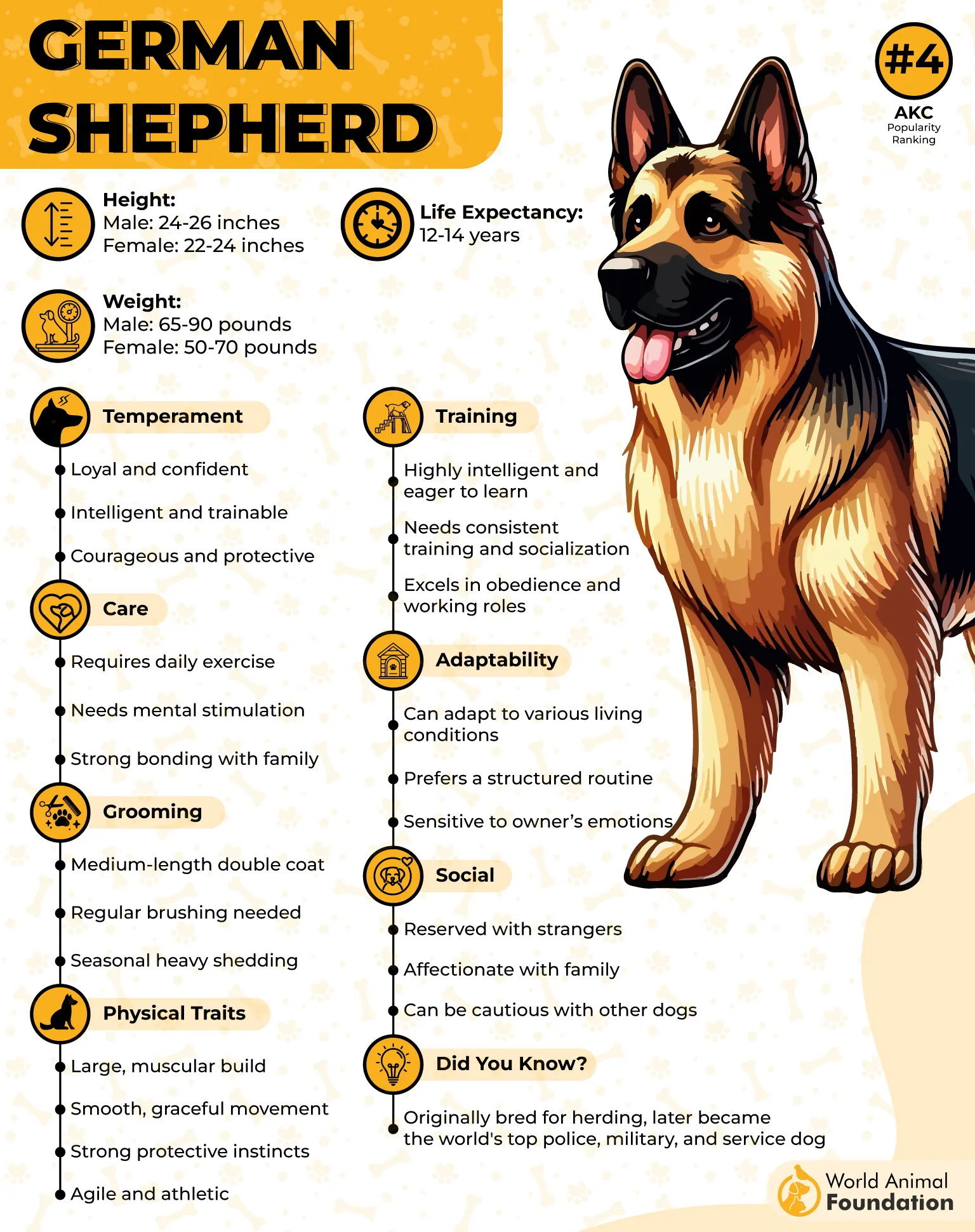
Profile
Strength and Stamina: Strong athletic bodies, high speed, and intense bite
Focus Target: Visual markers, smell, and moving objects
Exercise Needs: Herding, dock diving, tracking, long walks, nose work, and agility for physical and mental stimulation
Temperament: Self-assured, eager to learn, loyal, confident, curious, territorial protectiveness, obedient, and intelligent
2. Beagle
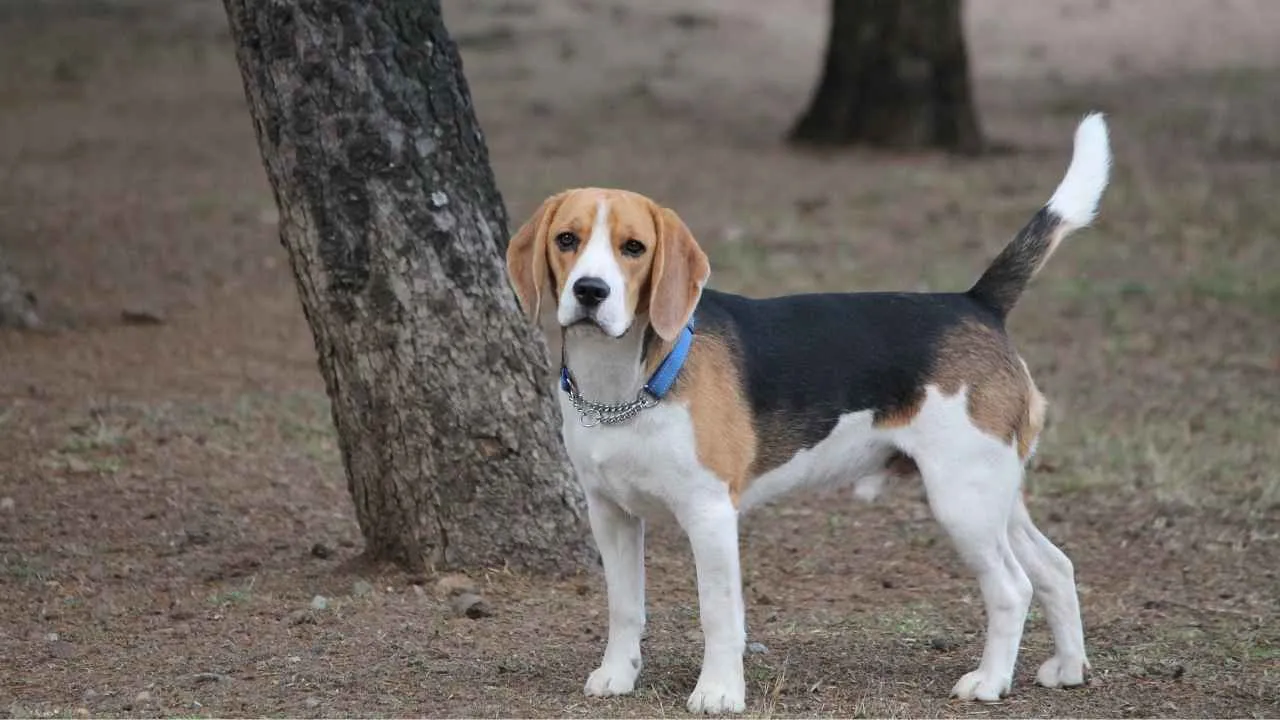
Beagles are known for ground scent work. Their body design: excellent nose, closer to the ground body, and strong tracking drive, fit classic small game trailing. They can work in compact spaces where large dogs can’t reach.
What Makes Them A Perfect Hunting Partner?
Strong Sense of Smell: Beagles have an extraordinary sense of smell and remarkable stamina. According to the AKC, their long, floppy ears often reach the tip of their nose and help trap scent particles, keeping them close so the dog can gather as much scent information as possible.
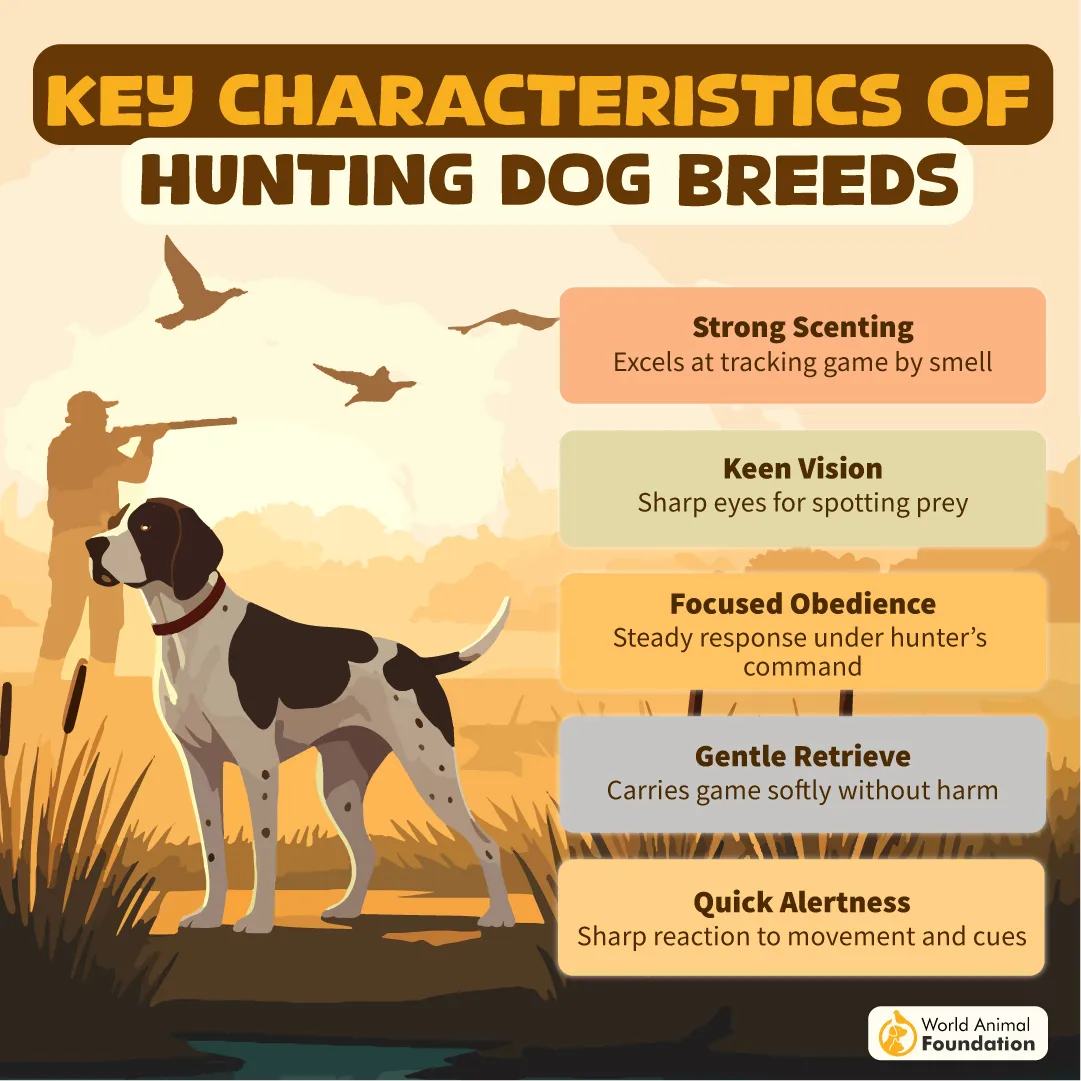
Precise Barking: Beagles use their bark to communicate what they detect. The tone and intensity can indicate how fresh or active a scent trail is, helping handlers understand what the dog has found.
Training Strategy for This Job
These are the 5 steps to smoothly train this hunting companion:
Consistent training and early socialization
Give them light scent-related activities
Controlled rabbit chases
Introduce them to a pack of the same breed (start with the two)
Leashed training
Profile
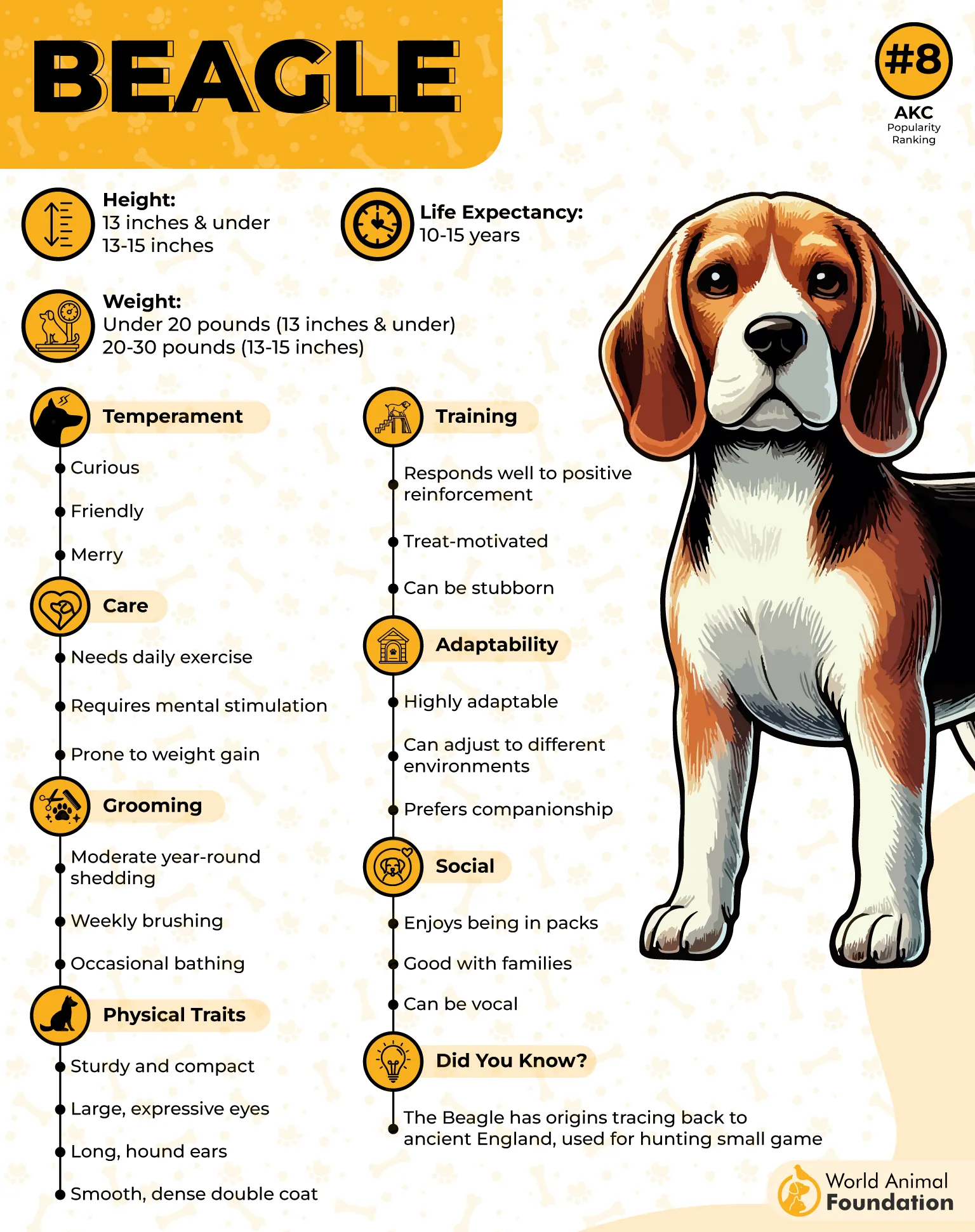
Strength and Stamina: Floppy ears closer to the nose, aiding in the hunt, nose closer to the ground
Focus Target: Rabbits, cotton tails, small rodents, small birds
Exercise Needs: 1 hour of daily exercise, running, hiking, romping
Temperament: Amiable, active, energetic, happy in packs and with humans, affectionate, loving, good with children
3. BloodHound
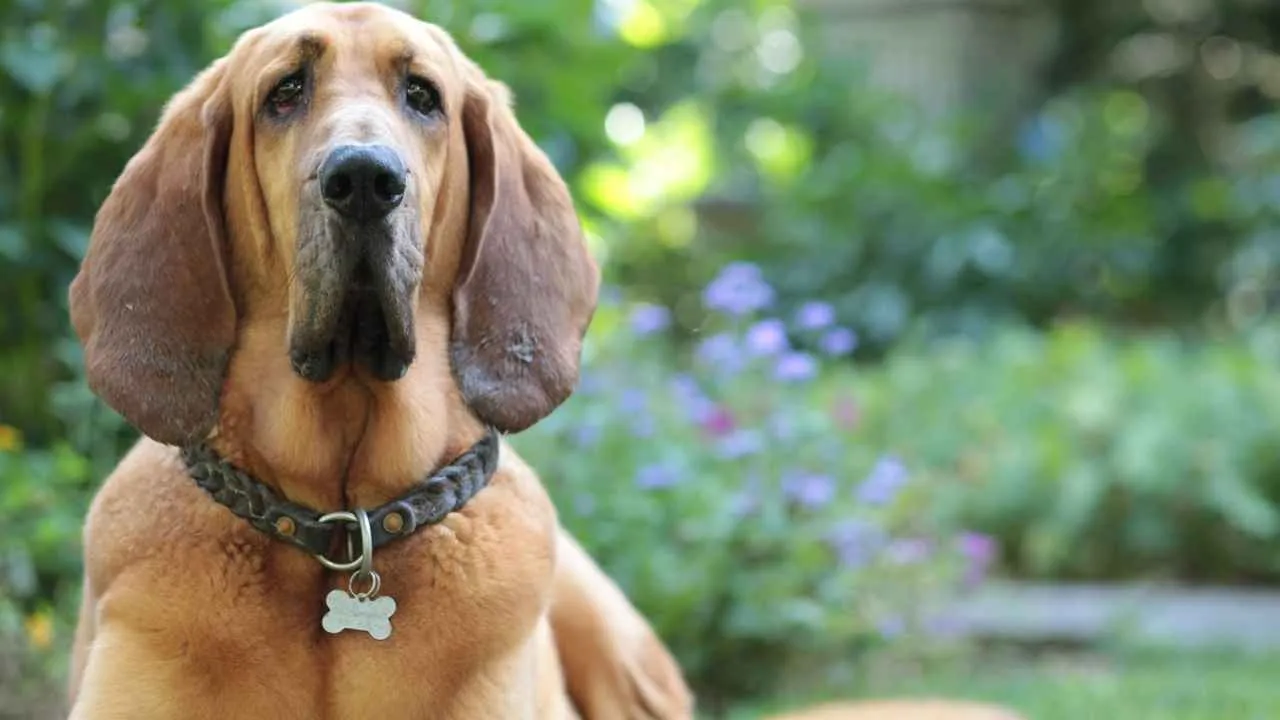
Bloodhounds don’t want to impress you with high speed. They are built for long and complicated trails. Originally developed in medieval Europe for tracking both game and people, Bloodhounds have over 230 million scent receptors, enabling them to follow even faint trails across miles of terrain.
What Makes Them A Perfect Hunting Partner?
Human Trailing: Because of their strong sense of smell, this popular dog breed can trail a fugitive or a lost person. If the scent of the target is provided, they follow the scent through trails and find the human being.
Use of Tongue: They are not a fan of barking, but they “throw their tongue”, “give tongue”, and “speak” to signal the direction of the suspect. Otherwise, remain silent.
Training Strategy for This Job
Week 8-16: Early training and socialization, introduction to lead, harness, and collar
Month 6-12: Polite plays, biting dummies and not your hands, track scent, reward training
Year 1 and Over: Basic commands; sit, come, settle, place, etc.
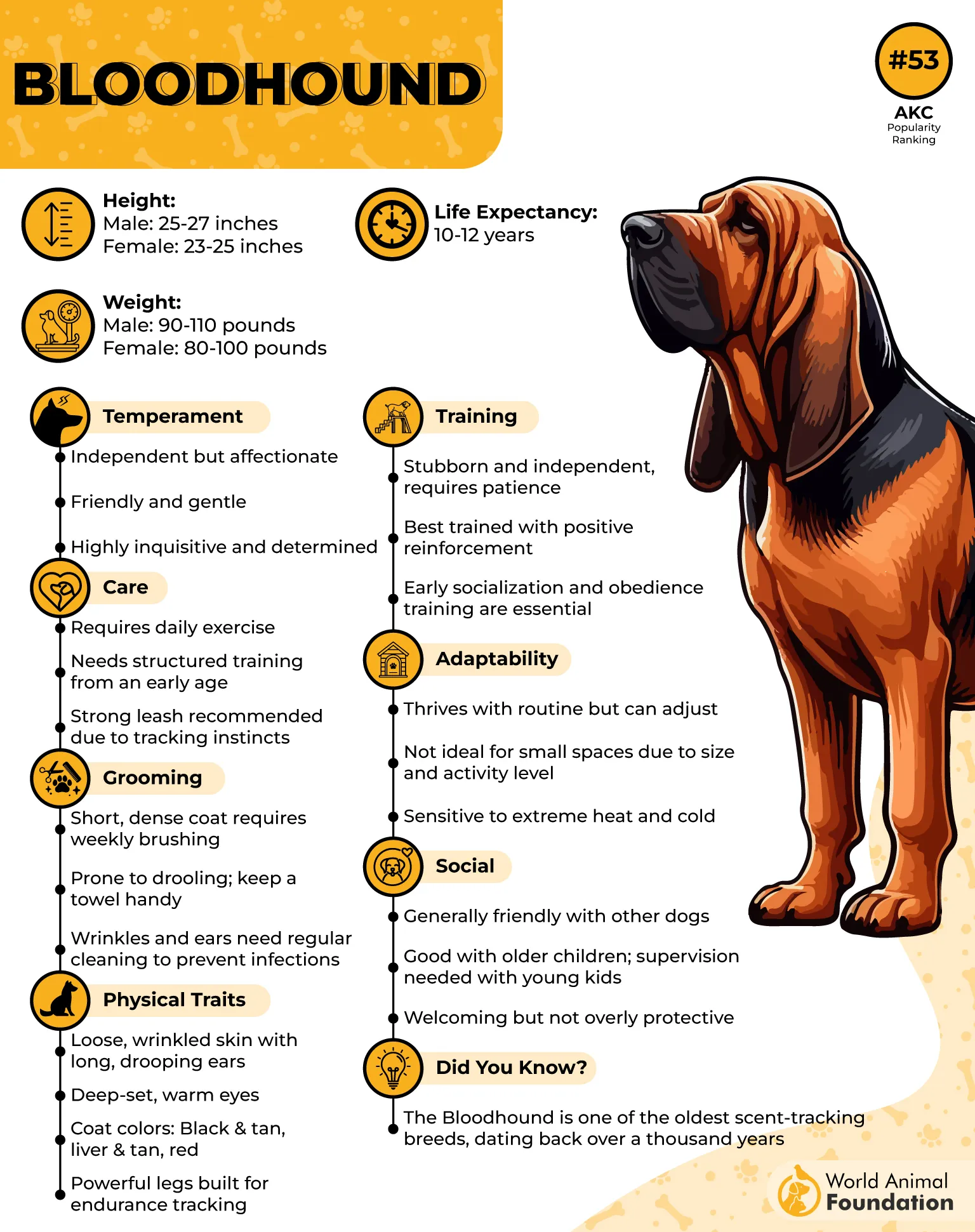
Profile
Strength and Stamina: Tireless hours of working, can work up to 100 hours on a single trail
Focus Target: Small mammals, carrion, and hunting birds as well
Exercise Needs: Excessive and consistent exercise, leash training
Temperament: Tireless, gentle, obedient, affectionate, independent, friendly with other breeds and children
4. Black and Tan Coonhound
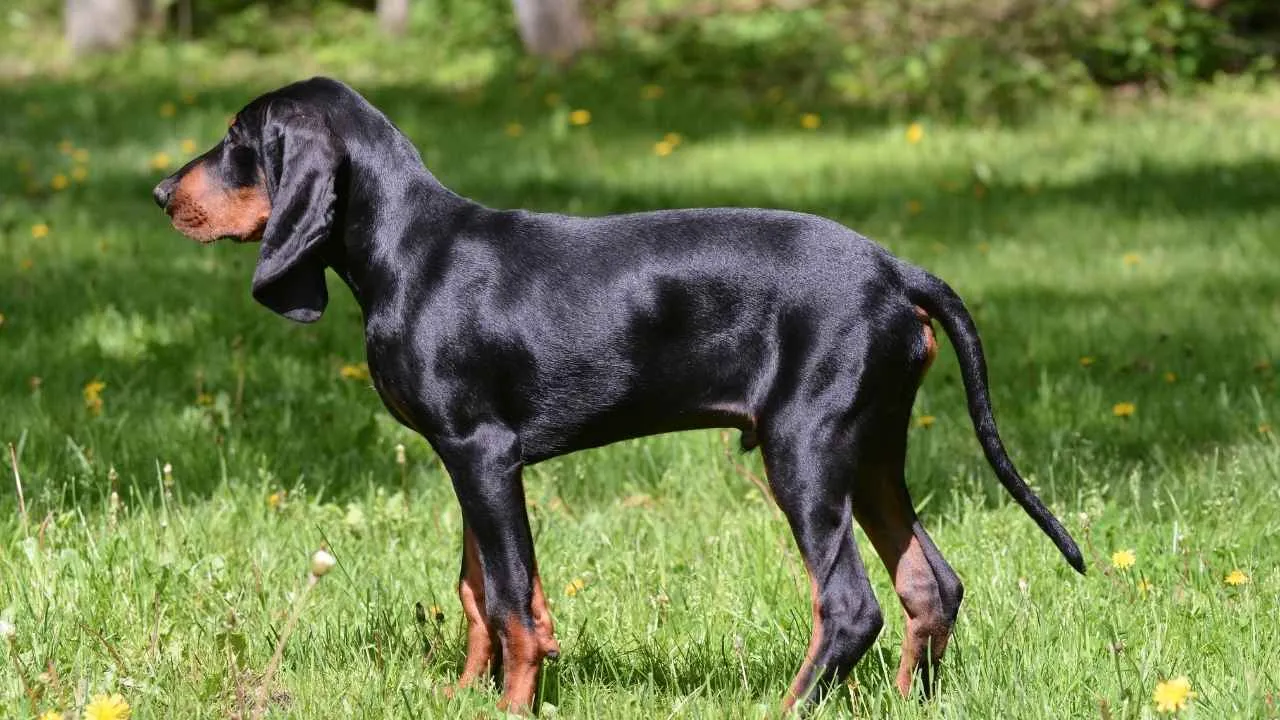
Black and Tan Coonhounds were shaped for trailing and treeing work, often in woods and often in low light. They can handle long distances, tough ground, and the kind of messy scent picture that confuses less focused dogs.
They are identifiable with their unique tan markings, “pumpkin seeds” above the eyes.
What Makes Them A Perfect Hunting Partner?
Powerful Rhythmic Strides: This helps in the efficient trailing in harsh conditions. These strides ensure powerful and balanced speed.
‘Cold Nose’: Their olfactory receptors are sensitive enough to sense old scent. They tend to bark after locating the target.
Training Strategy for This Job
Scent Drag: Buy a raccoon odor and apply it to a dummy. Let this great family dog play with it
Drag Across the Property: Make a trail using this scented dummy and then tie it to a tree.
Make Black and Tan Coonhound Find: This will help its brain link these two objects.
Repeat with Varying Route: So, they can explore different approaches
Desensitize the Gunshot: Get them unbothered by gunfire
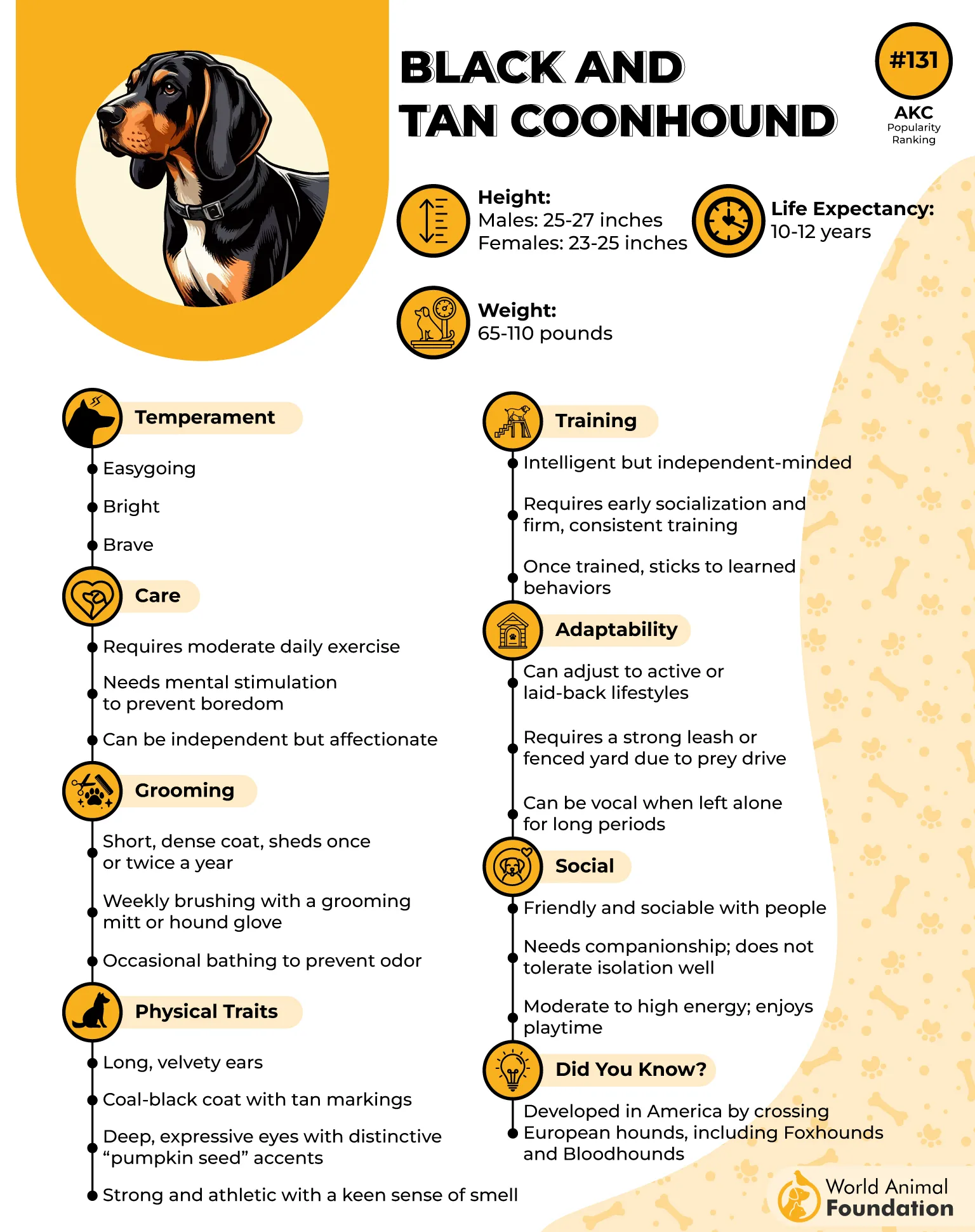
Profile
Strength and Stamina: Large breed, strong, and loves to bark
Focus Target: Raccoon, squirrels
Exercise Needs: Moderate exercise, deer hunting trips, and coonhound field events, according to PetMD
Temperament: Amiable, calm, mellow, independent, intelligent, loyal, protective, easygoing, strong, active, unobstructive indoors. Black and Tan Coonhounds are gentle with children and other pets
5. Basset Hound
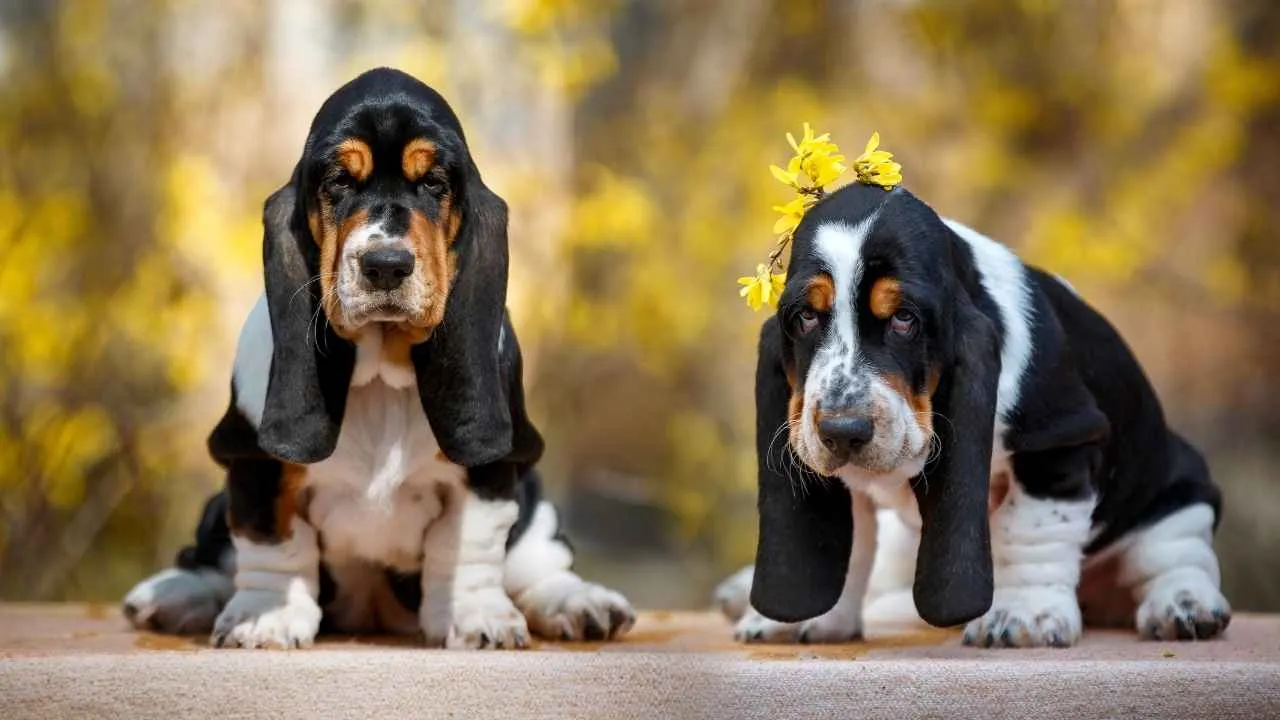
This dog is never in a rush. Its nose stays close to the ground, thus it got the name “basset” which means “low” in English. They are famous for having small legs, a short coat, and a droopy face.
What Makes Them A Perfect Hunting Partner?
Powerful Scent Hound with Strong Tracking Ability: Floppy, long ears direct scent particles to the nose, wrinkled face traps them, wider nostrils ensure maximum air intake, and a nose closer to the ground is the cherry on top.
Loud Barks: Though they are a little lazy, barking is their hobby. This hound dog loves to bark in a loud voice when tracking the target
Training Strategy for This Job
Week 8-16: Teach them basic commands; sit, come, place, etc
Months 4-6: Introduce scent, drag trails at a simple level, and then gradually move to complexity
6+ months: Start field training. Take them to controlled areas initially. Once they are proficient in this, increase the difficulty levels
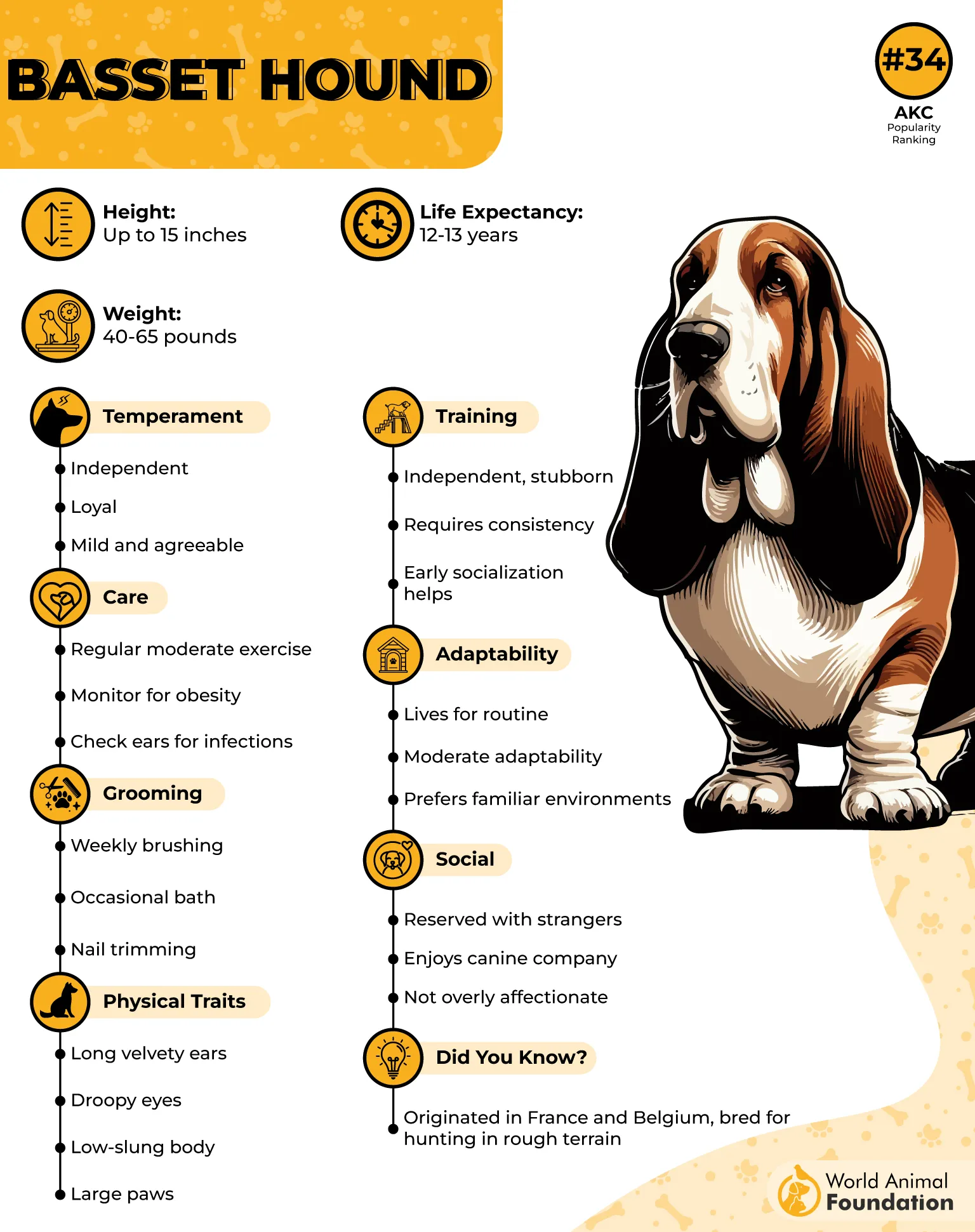
Profile
Strength and Stamina: Loud and long bark
Focus Target: Rabbit, hare, upland bird
Exercise Needs: Moderate exercise: 30-60minutes daily
Temperament: Mild, devoted, good with kids, friendly, low energy, independent, calm, stubborn but loyal, playful, social
6. Treeing Walker Coonhound
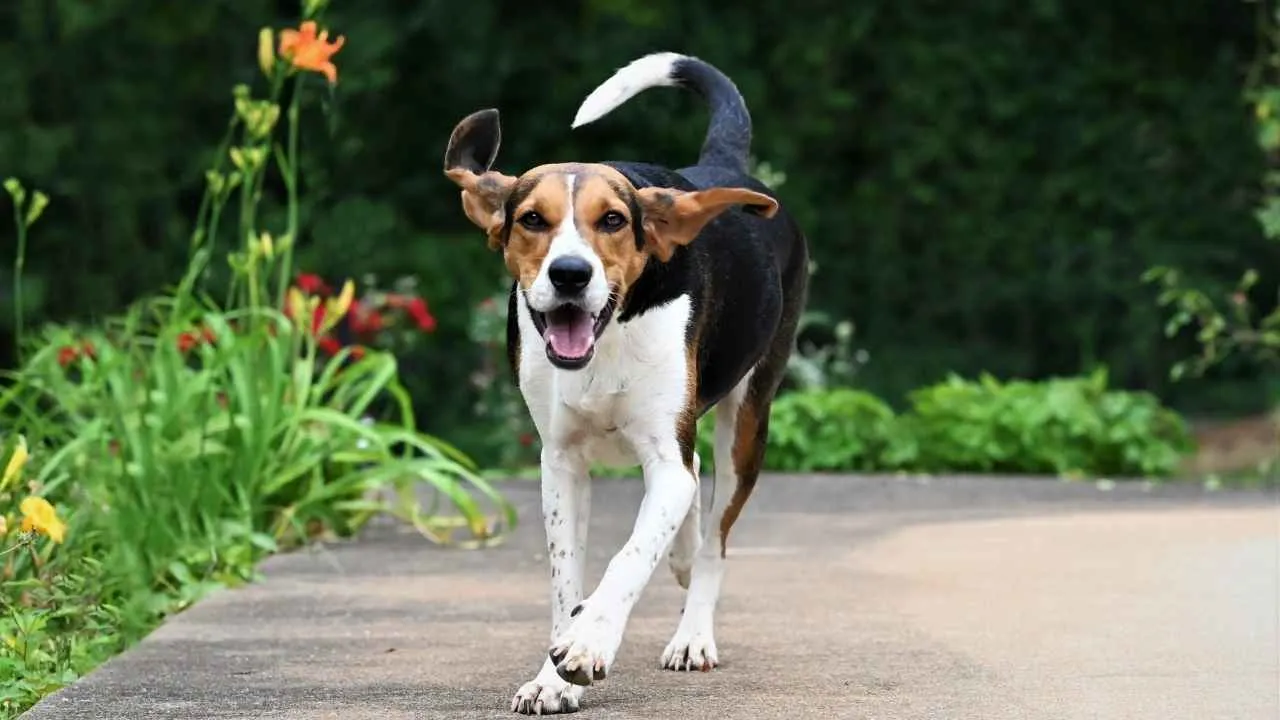
High drive dogs that need real outlets. They tend to cover ground fast, stay excited about the hunt, and keep going when other dogs fade. When the prey, often a raccoon, climbs a tree, this energetic dog remains at the base and barks, or “bays,” loudly to alert the hunter.
What Makes Them A Perfect Hunting Partner?
High Speed: With a top speed of up to 28 mph, the Treeing Walker Coonhound can cover ground quickly during a hunt.
Howling Bark: Their deep, resonant howls help signal the hunt, becoming sharper and more focused when they locate or corner prey.
Training Strategy for This Job
8 weeks-6 months: Obedience and leash training. Introduction to the woods, hunt small game
6 months-12 months: Familiarize with the pack, which helps learn faster. Treeing practice and solo hunting are also recommended
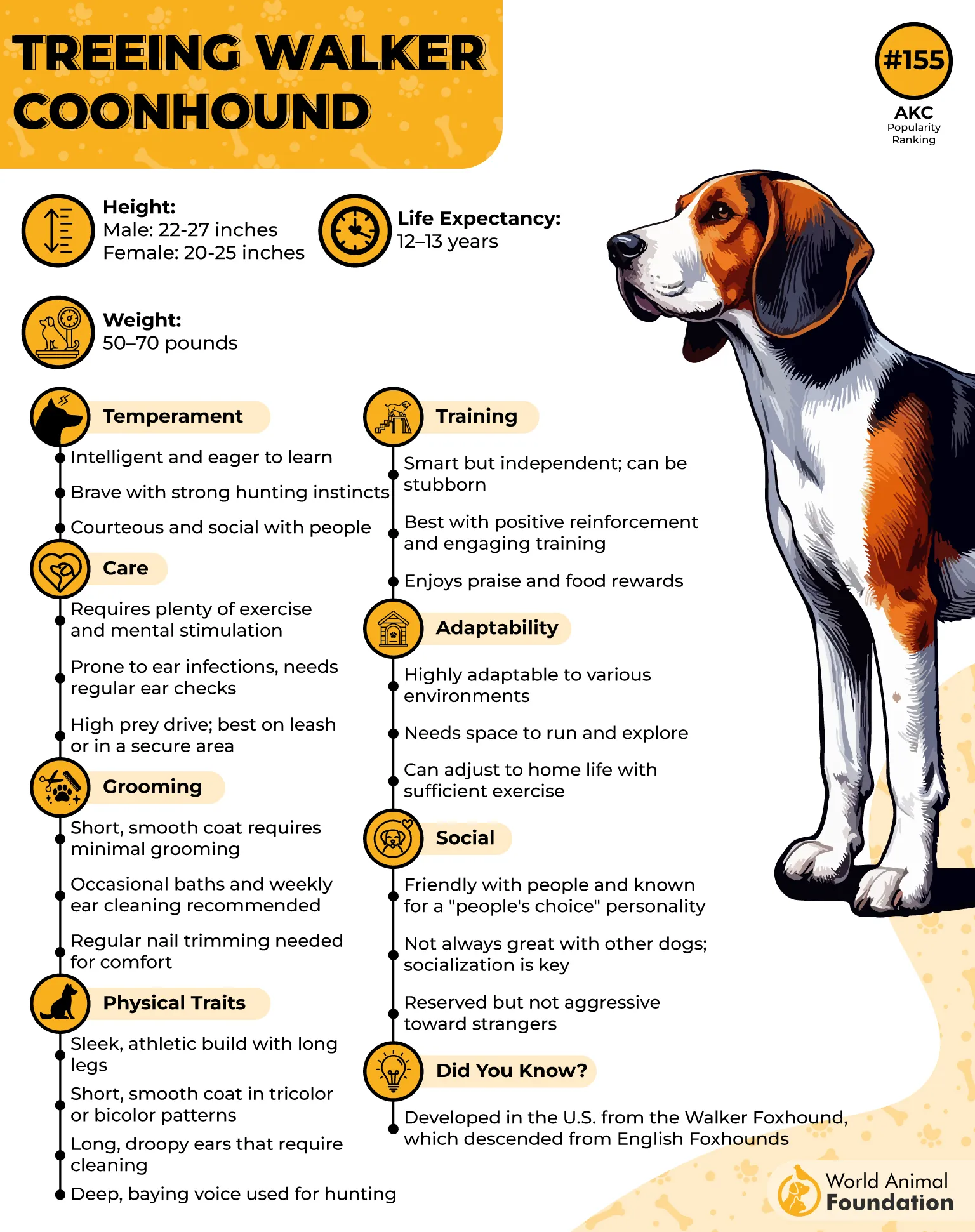
Profile
Strength and Stamina: Tireless, bay
Focus Target: Arboreal prey: raccoon, deer, bear, squirrels, bobcat, and cougar
Exercise Needs: They need excessive workouts to burn energy: running, hiking, field work, agility, night hunts, and water races
Temperament: Courageous, fearless, gentle, high energy, kind to children and other animals, intelligent, eager to please and work, alert and tireless. Proper training makes them a good family dog.
7. Labrador Retriever
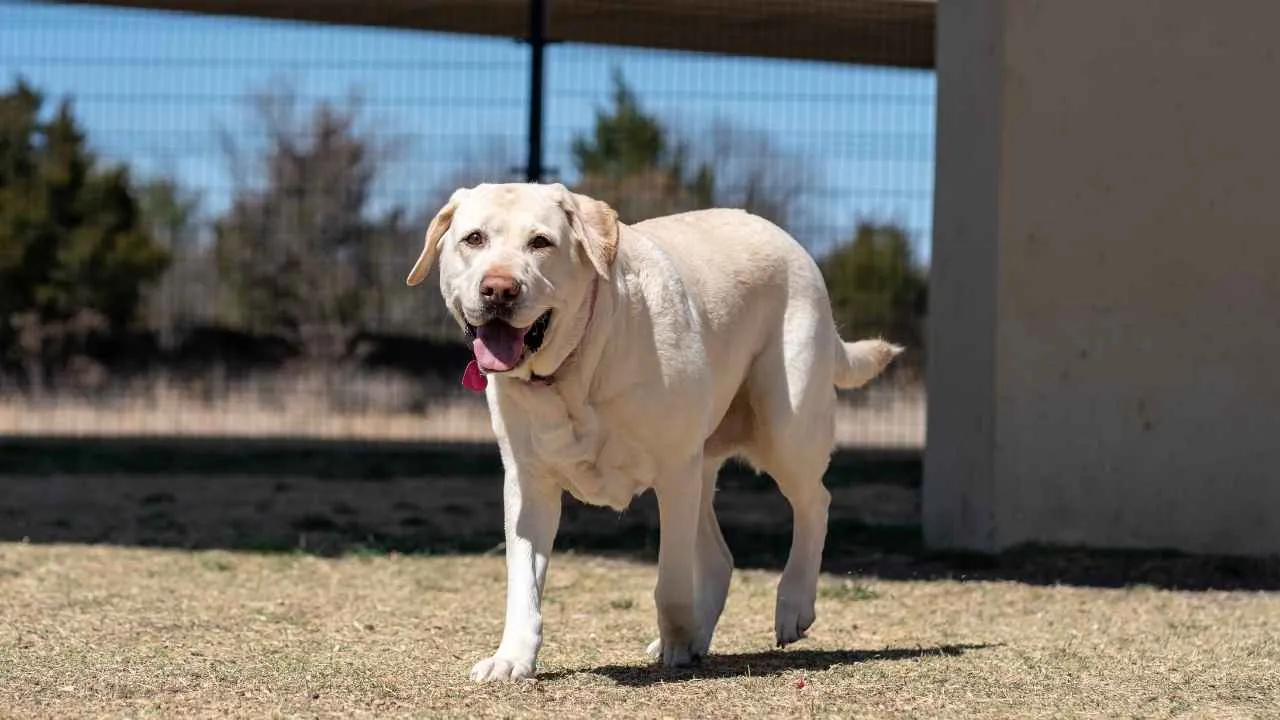
Originally bred as waterfowl retrievers, Labradors excel in tracking and retrieving game. Their keen sense of smell, intelligence, and versatility make them effective in a variety of field tasks, including upland hunting and trailing wounded game. They like finding, flushing, and recovery work, especially in thick cover or wet conditions.
What Makes Them A Perfect Hunting Partner?
Emotional Stability: Labradors are soft-mouthed and emotionally resilient, allowing them to remain calm and focused even in challenging or stressful situations.
Land and Water Hunter: Webbed feet, a waterproof coat, and an otter-like tail help the Labrador Retriever to dive deep into the water and retrieve the prey, according to Wikipedia.
Training Strategy for This Job
Early socialization and obedience training
Regular exercise
Positive reinforcement
Behavioral management for long adolescence
Service Animal training
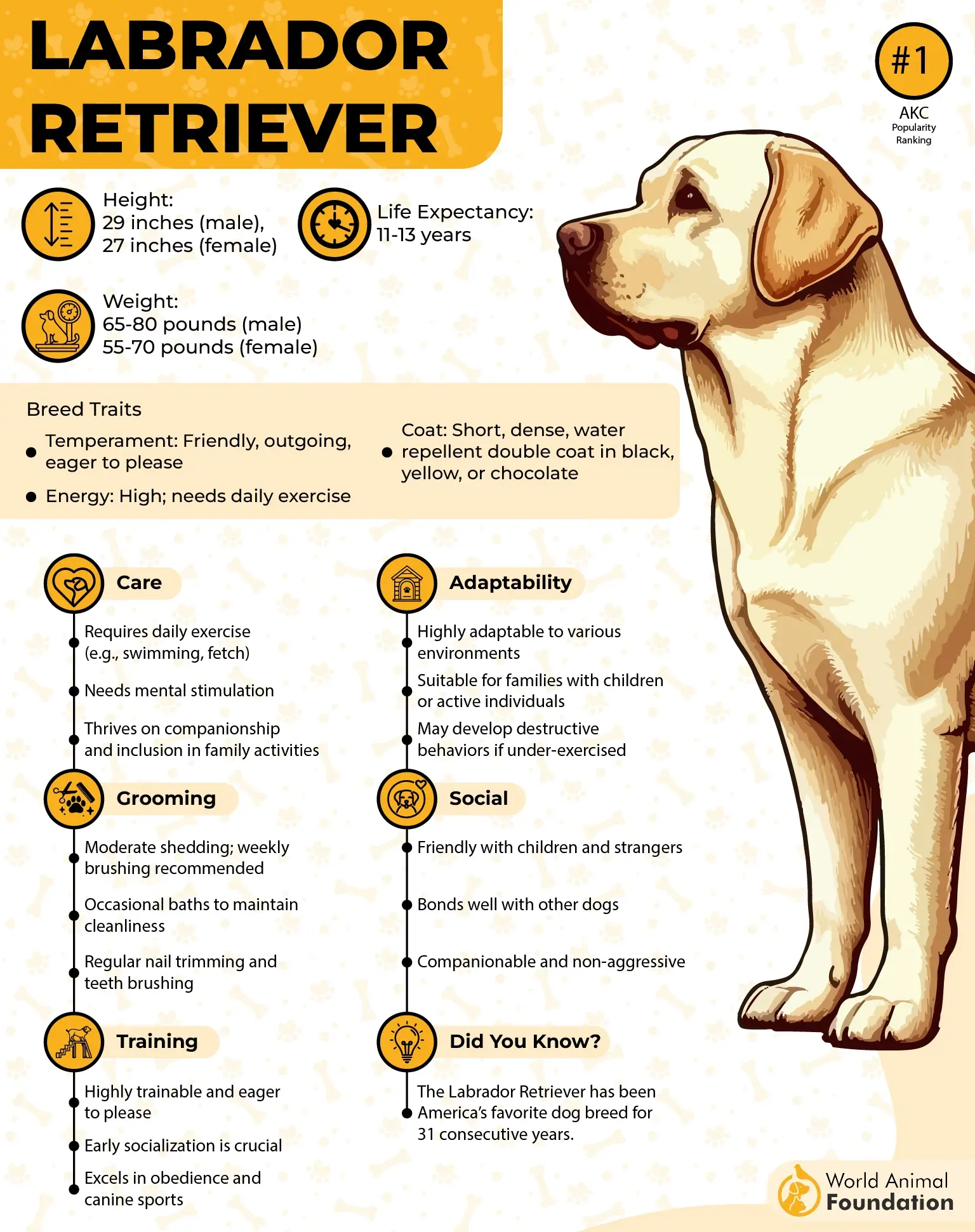
Profile
Strength and Stamina: Athletic, powerful, steady; perfect for a harsh environment
Focus Target: Waterfowl, small animals, moving objects
Exercise Needs: Intense workout: swimming, running, fetch, hiking, retrieving skills, and canine sports
Temperament: Intelligent, affectionate, loyal, highly trainable, and energetic
Conclusion
A scent hound does not just help you hunt. It changes how you experience the outdoors. The woods stop feeling strange, and you start feeling readable: like your bird dog is a binocular reading the words on a book.
The best tracking dog is the one you train with responsibility. As Dean Koontz once said, “Once you have had a wonderful dog, a life without one is a life diminished.”
