




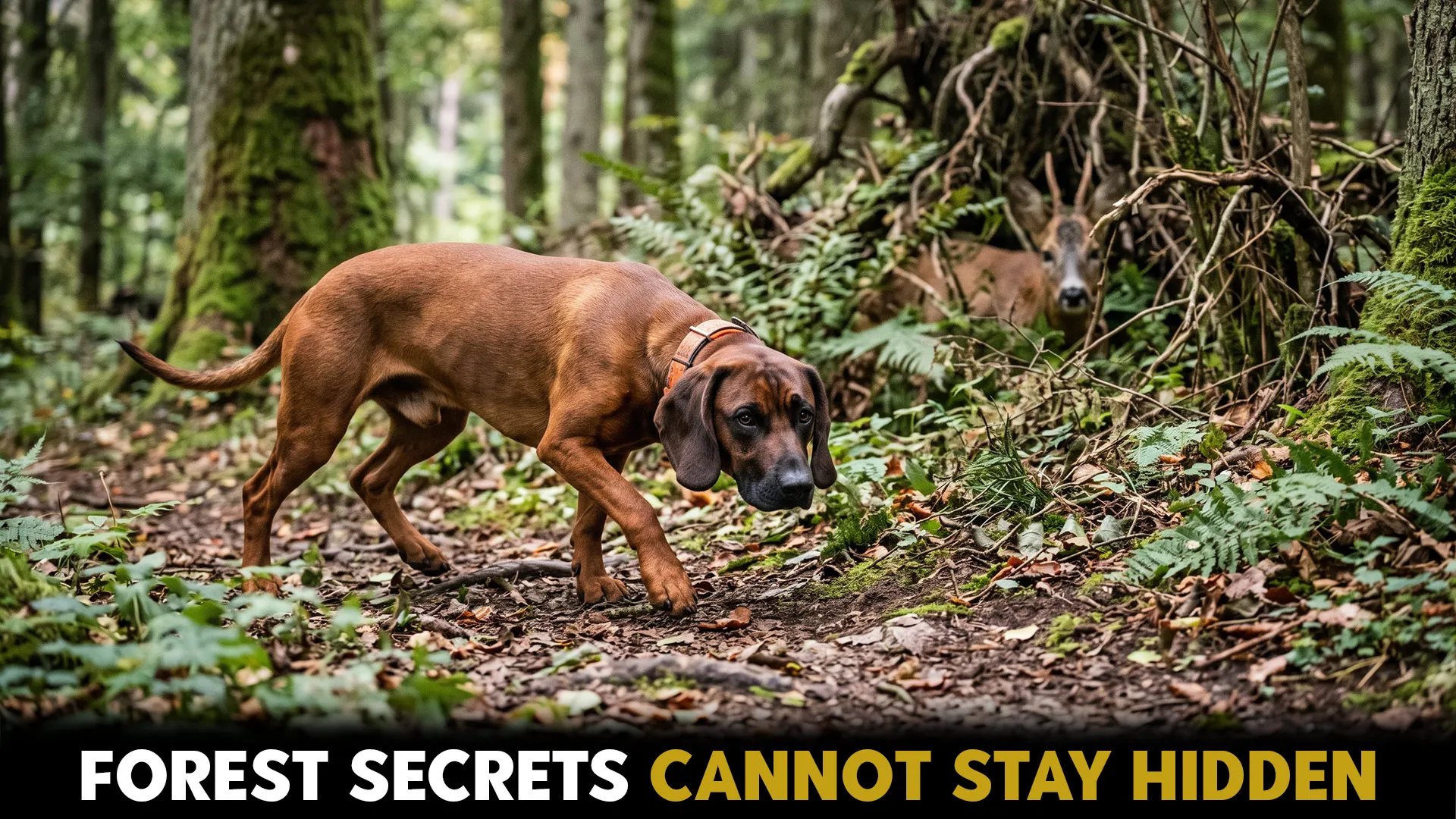
When you’re deep in the forest, spotting an animal is not always as easy as it sounds. Thick brush, fallen leaves, and winding trails can hide wildlife from view.
That’s where the right dog can make a big difference, using its sharp nose, instincts, and focused attention to help locate animals you might otherwise miss.
Dogs have worked alongside hunters for centuries, helping people track, locate, flush, and retrieve game. Many still have the stamina, speed, intelligence, and strong sense of smell needed for challenging outdoor activities.
Of course, a good forest companion needs more than a great nose. The best dogs for this job are alert, energetic, determined, and ready to stay focused while exploring unfamiliar terrain.
If you enjoy hunting or simply want a capable four-legged companion for outdoor adventures, keep reading to discover the dog breeds that stand out when it comes to locating hidden forest animals.
Best Dog Breeds To Locate Hidden Forest Animals
1. Bloodhound
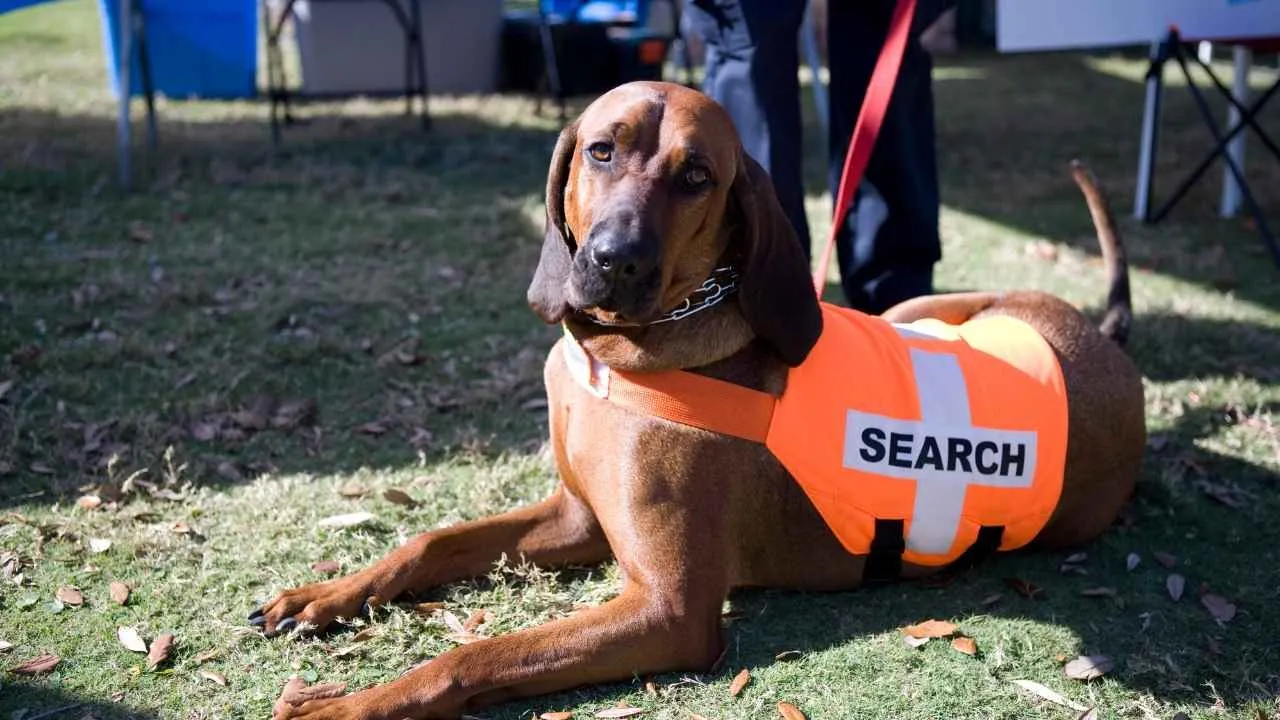
Bloodhounds have an ancient history as scent-hunting hounds. The breed was reportedly refined as a tracker during the Middle Ages and is linked by legend to the St. Hubert Hound. Monks at Saint Hubert Monastery in Belgium developed these dogs in honor of St. Hubert, the patron saint of hunters.
They were later given to the king of France and became known among nobles. The dogs were also reportedly exported to England in the 11th century.
Exceptional Scenting Skills
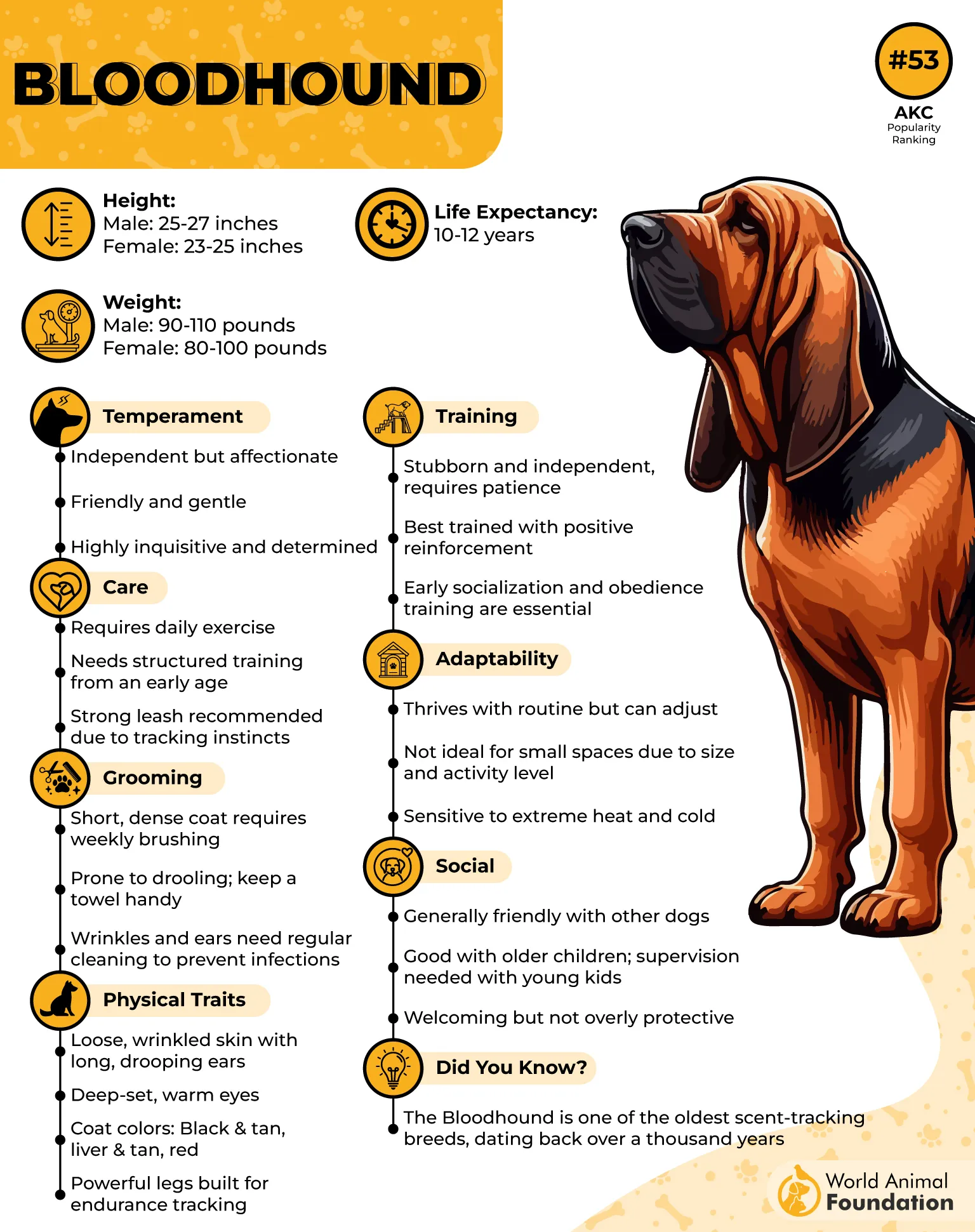
Bloodhounds are famous for their remarkable sense of smell. They have about 230 million scent receptors, roughly 40 times more than humans.
This makes them excellent at following scents through forests and locating animals hidden from view. Once they find an interesting scent, they can stay focused on it for a long time and rarely give up.
Loyal but Determined Companions
Bloodhounds are affectionate, loyal, and gentle family dogs. They are usually good with children and can get along with other dogs and household pets when socialized early.
However, their tracking instinct can take over once they catch a scent. They should be kept on a secure lead or in a fenced area outdoors. They need daily exercise and human company, as they do not like being left alone, according to Purina.
2. Bavarian Mountain Scent Hound
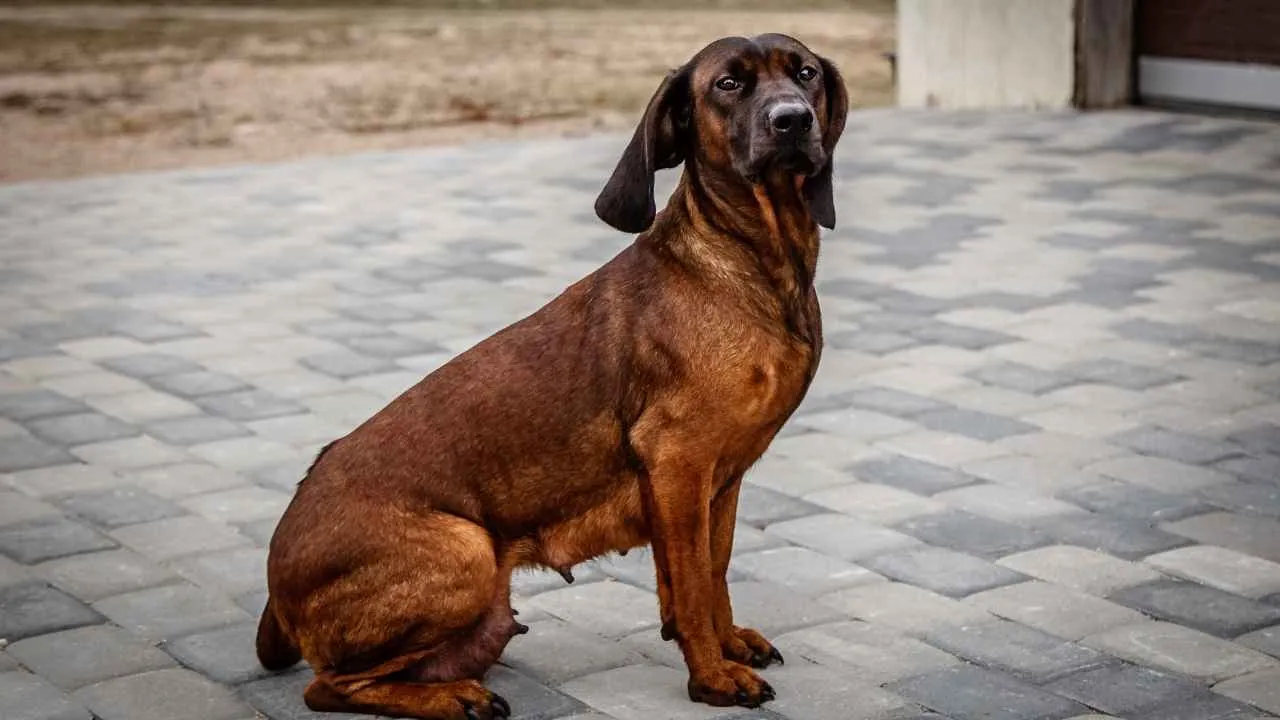
The Bavarian Mountain Scent Hound is a German breed originally developed in the Alps. It was created in the late 19th century by crossing the Hanoverian Scent Hound with the Red Mountain Scent Hound.
These dogs were bred to assist with hunts as powerful and agile gun dogs. The most dependable and persistent dogs were selected to follow wounded game on a lead, making tracking their main role.
Remarkable Tracking Abilities
These scent hounds have a highly developed sense of smell and an outstanding “cold nose” tracking ability. Their noses are so sensitive that they can distinguish injured game from other animals of the same species. They can follow trails of game of any size with great reliability.
They are strong, steady, and persistent workers with a piercing voice while on the hunt. Their focused tracking skills make them well suited for locating animals hidden in forest terrain.
Calm and Devoted Family Dogs
Bavarian Mountain Scent Hounds are calm, balanced, and devoted to their owners. They can be reserved around strangers and may watch from a distance, but they are rarely aggressive.
They enjoy being part of family life and can form very strong bonds with their people. They like children and can live peacefully with cats if raised together, although their prey drive may cause problems with some household pets.
3. Plott Hound
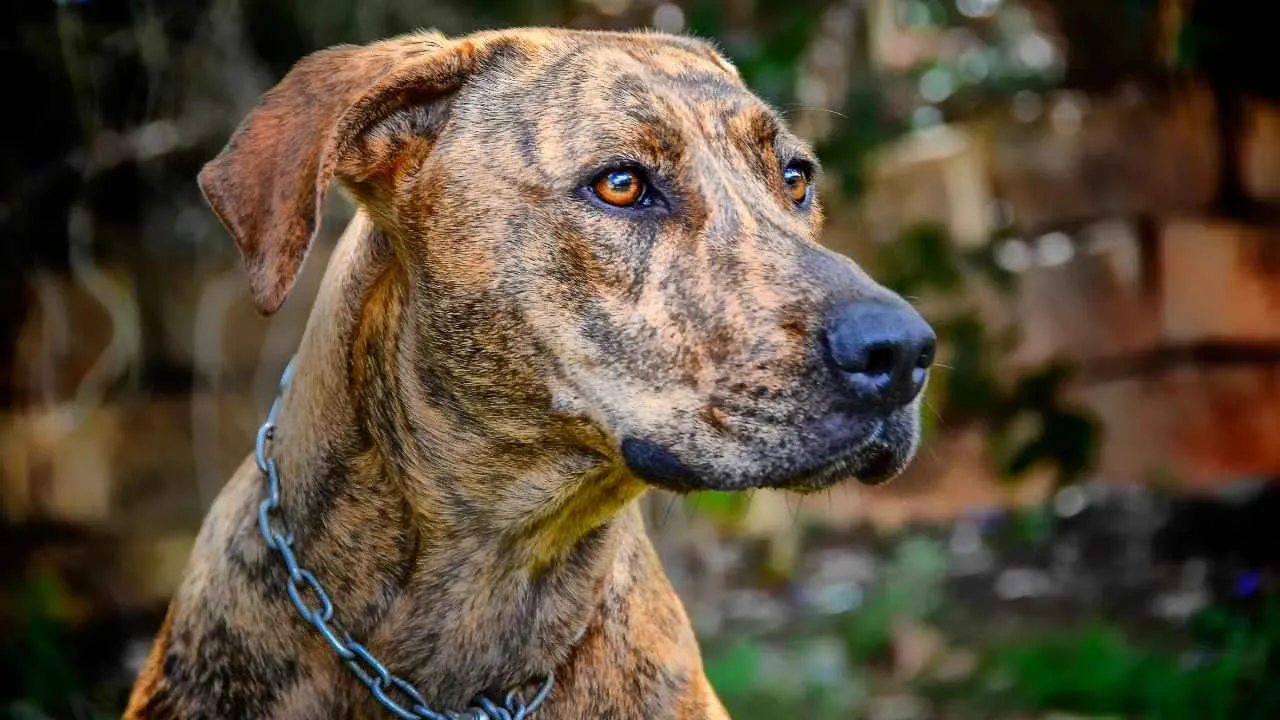
Plott Hounds have a unique history that began in North Carolina, where they are now the state dog. According to PetMD, their name comes from Johannes Plott, a German gamekeeper who arrived in the United States in the 18th century with Hanoverian Scenthound hunting dogs.
He settled in what is now Cabarrus County, and his family continued breeding their own strain, known as “Plott’s hounds.” They became valued hunting dogs known for their skill and perseverance.
Determined Forest Trackers
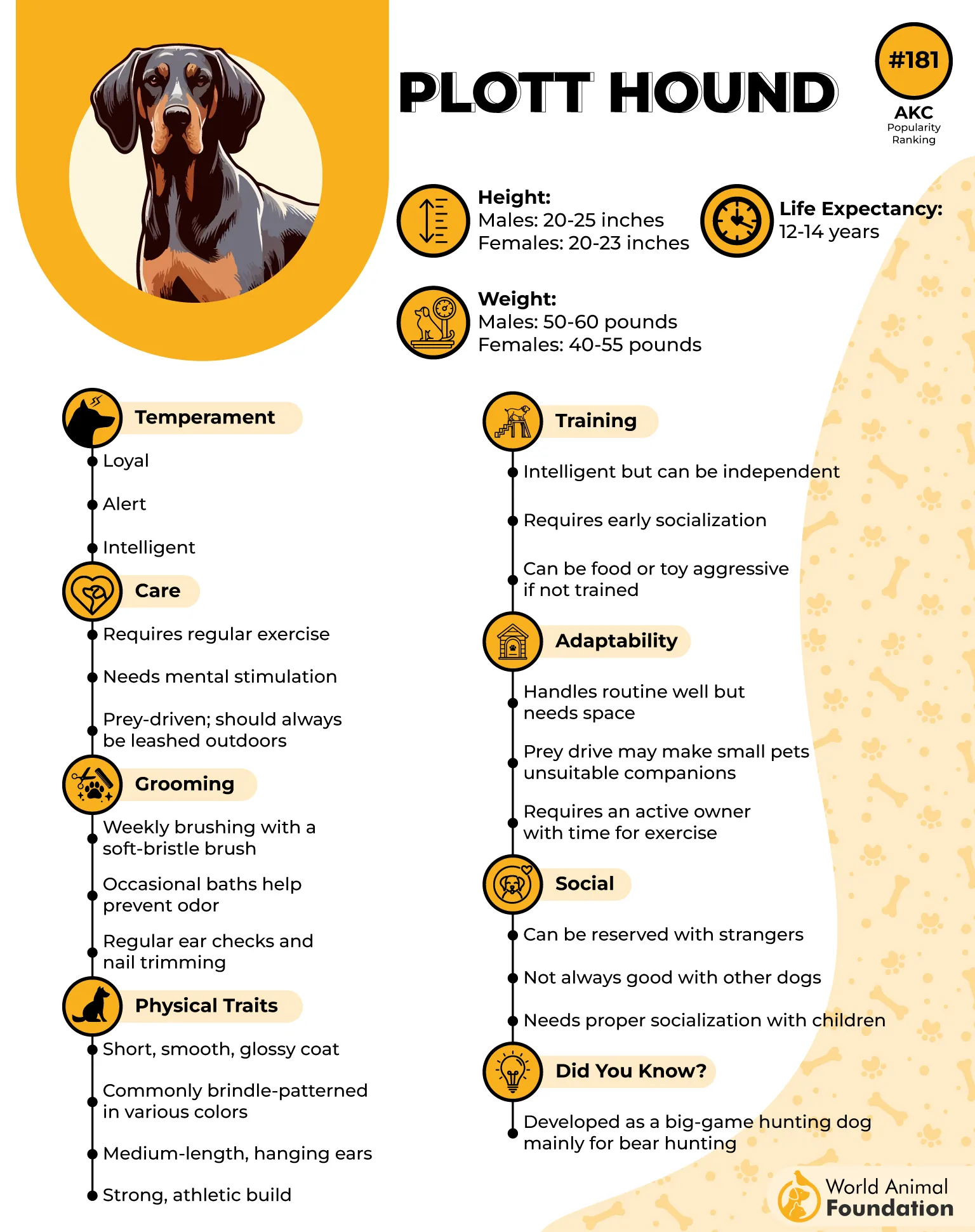
Plott Hounds are alert, confident, bold, and curious hunters with a strong sense of smell. They are often seen following scents with their noses to the ground or tracking animals up a tree. They were used to hunt large game and are known for staying focused on a trail.
Their intelligence and determination also make them ready for different mental challenges during outdoor work. They have a low, bellowing voice that can be heard while tracking.
Energetic Dogs with a Mellow Side
Plott Hounds are lively and energetic, so they enjoy long walks, hikes, sniffing sessions, and other outdoor adventures. They also love having a job to do and plenty of mental stimulation.
After an active day, they can settle down and relax with their families. They are loyal, social, eager to please, and good with children.
4. Treeing Walker Coonhound
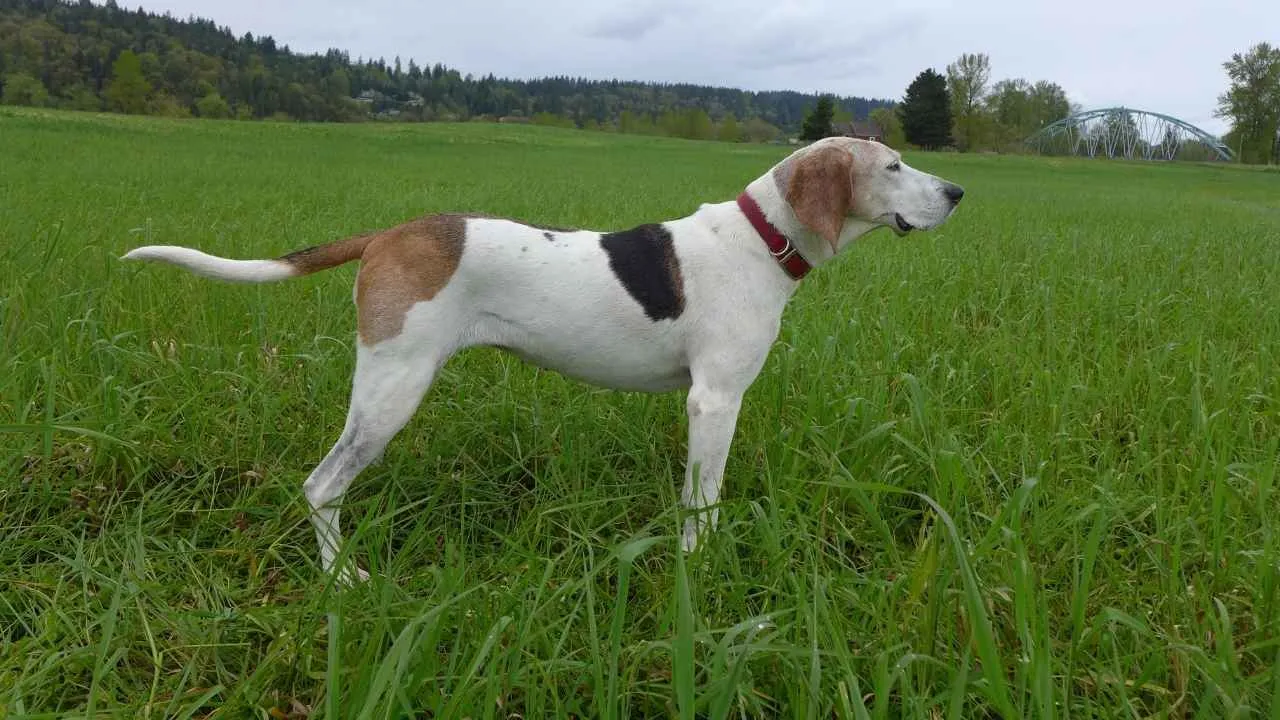
Treeing Walker Coonhounds descended from American Foxhounds and have been bred since the mid-1700s to help hunters track and isolate game in forests. Thomas Walker, a Virginian, is credited with developing the breed in the Appalachian Mountains.
They were recognized by the United Kennel Club in 1945 and the American Kennel Club in 2012. Their name comes from their hunting style, as they chase game into trees.
Fast and Focused Trackers
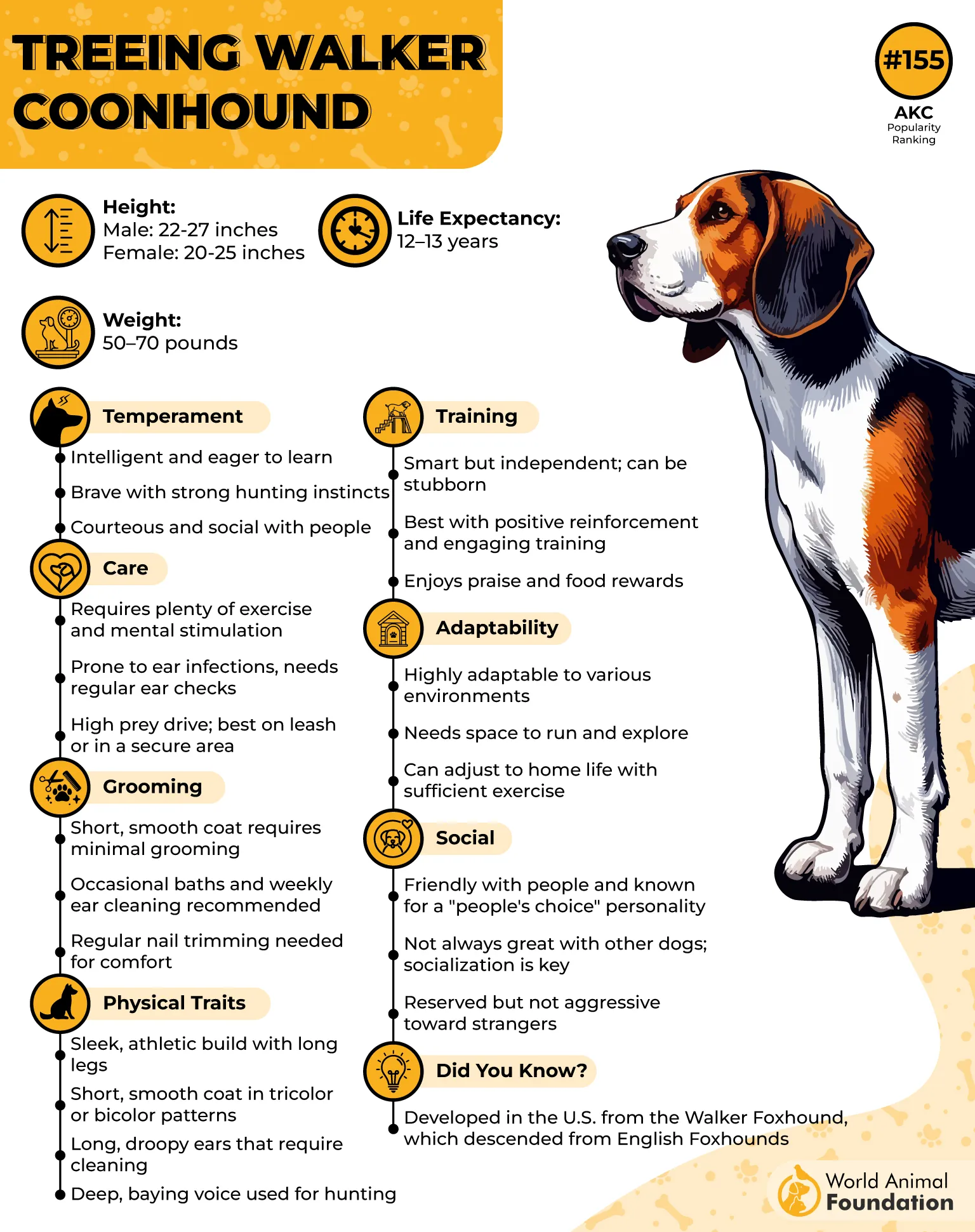
Treeing Walker Coonhounds are known for their speed, endurance, and powerful sense of smell. They were originally bred to track raccoons and chase them up trees, then bark loudly to alert their owners.
Their keen noses allow them to follow quarry over long distances, while their energy helps them stay focused during demanding hunts. They are alert, intense, and loud when working, with a distinctive coonhound bawl.
Active but Affectionate Companions
Treeing Walker Coonhounds need plenty of physical and mental activity. Runs, hikes, hunting trips, long walks, and training sessions can help keep them content. Although independent and strong-willed, they are intelligent and trainable.
At home, they can be calm, affectionate, playful, and even goofy. They form strong bonds with their families and are often good with children and other dogs when well-socialized.
5. Black and Tan Coonhound
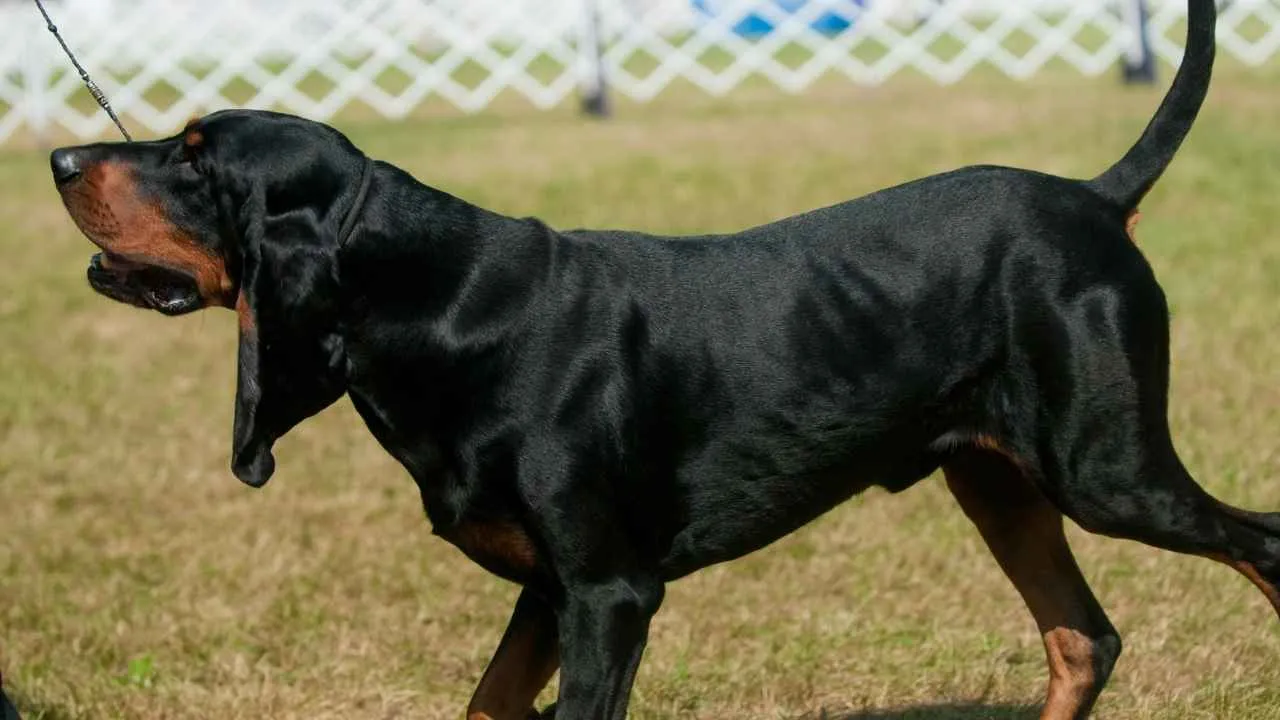
Black and Tan Coonhounds are a true American breed, developed from Bloodhounds and Black and Tan Virginia Foxhounds. They were originally used in the southeastern United States to hunt bears and raccoons.
Their hunting style was similar to their Bloodhound ancestors, following scents with their noses close to the ground but moving at a faster pace. Tracking opossums and raccoons became their specialty, and they are still commonly used as hunting dogs today.
Powerful Noses and Persistent Tracking
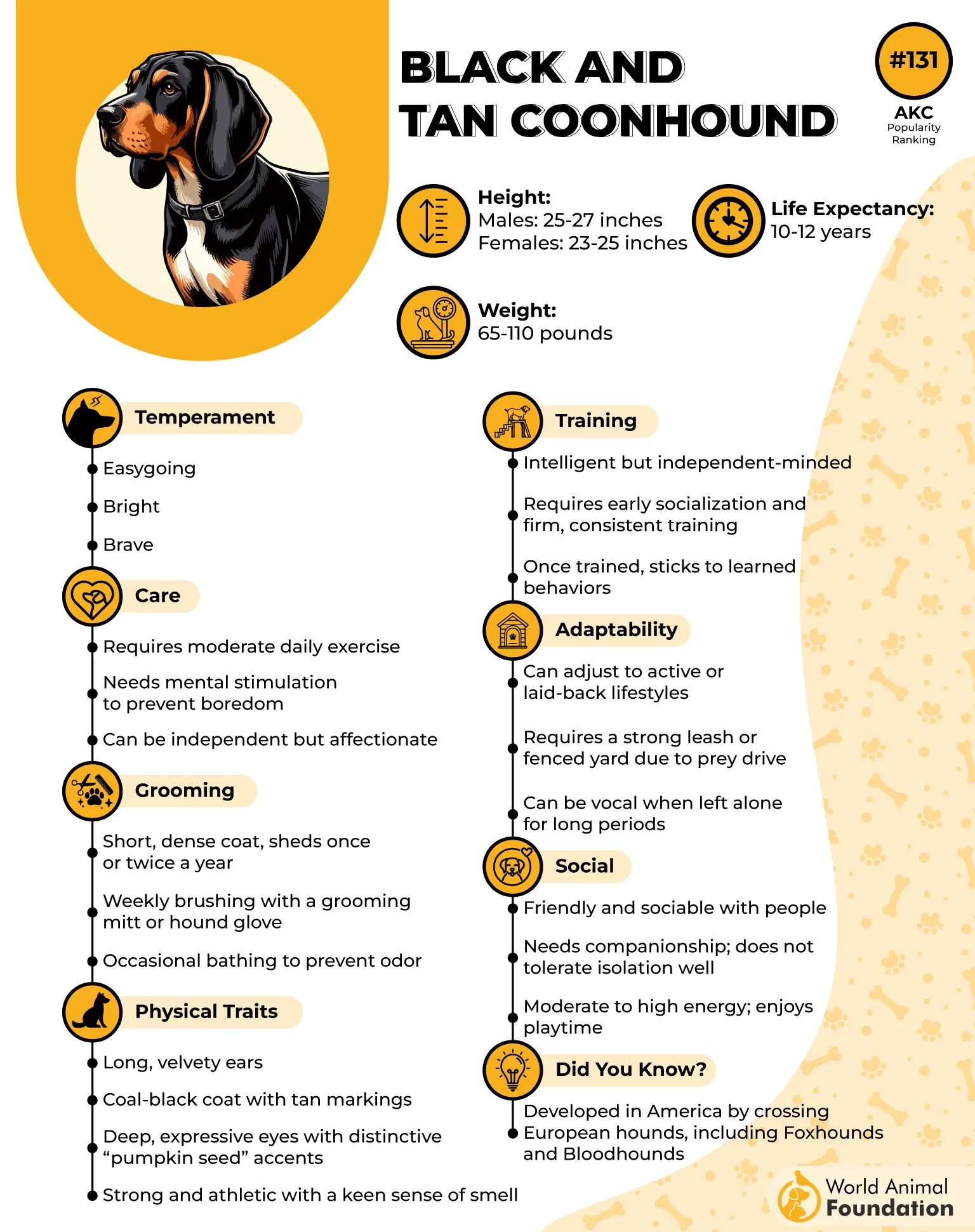
Black and Tan Coonhounds have an amazingly sensitive nose and can follow scent trails over long distances. They have the instinctive ability to follow old, faint scents and stay persistent when working a trail.
Their prey drive can quickly take over when they catch the scent of an animal, especially outdoors. They are tenacious on the trail and can keep working through a scent while their loud howls and bays help make their presence known.
Easygoing but Active Companions
Black and Tan Coonhounds are sociable, friendly, and easygoing dogs that form deep bonds with their families. They can be calm and mellow indoors, often enjoying a comfortable spot on the sofa, but their hunting instincts become much stronger outside.
They are clever and quick-witted but can be considered stubborn because they mature slowly and do not respond well to intensive training.
6. American English Coonhound
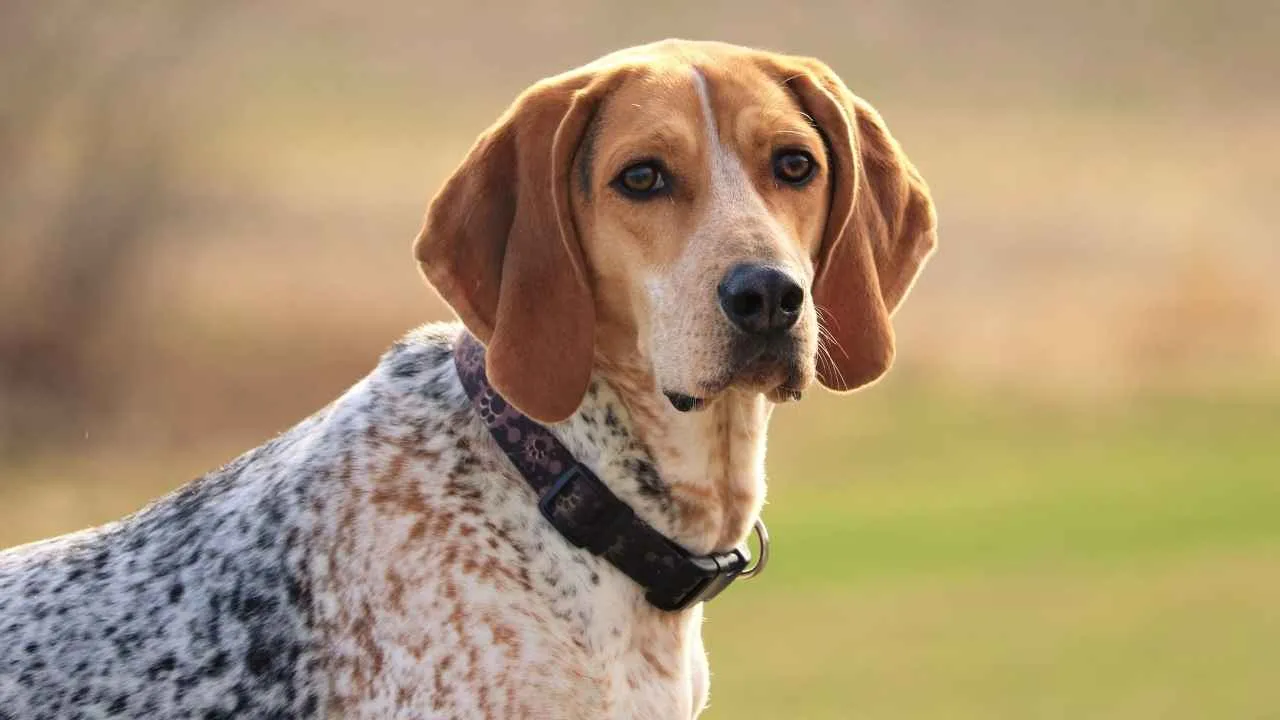
American English Coonhounds, also known as Redtick Coonhounds, descended from European hunting dogs brought to the United States. They were refined there for tracking raccoons and other game and became valued for their speed, stamina, and strong work ethic.
Bred in the United States, these dogs became persistent raccoon hunters with a deep connection to hunting traditions. Their history helped shape them into hardworking hounds with a strong drive to follow animals in the wilderness.
Speed, Stamina, and Strong Scenting Skills
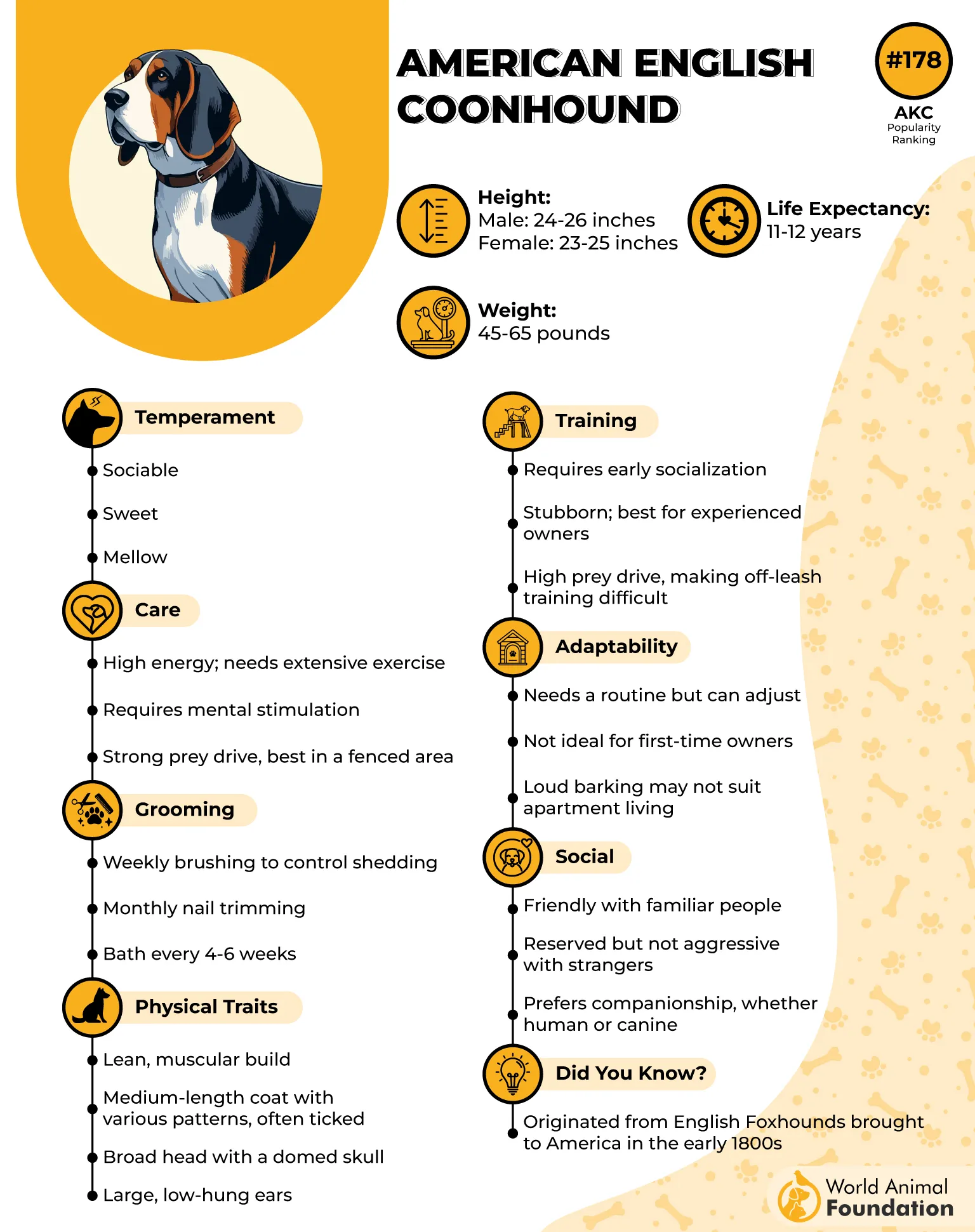
American English Coonhounds are athletic, energetic hunters with a strong ability to track animals. Their lengthy snouts help them sniff out animals in the wilderness, while their endurance and speed allow them to stay focused during a hunt.
They are persistent and devoted raccoon hunters and can even climb trees. Their distinctive baying voice also stands out when they are working. Their strong prey drive can make smaller animals tempting to chase.
Sweet but Demanding Companions
American English Coonhounds are friendly, affectionate, loyal, and playful dogs that bond closely with their families.
They can be mellow and sweet when they are not hunting, but their high energy and strong drive for work can be difficult for novice owners. They can also be independent, making consistent training with positive reinforcement important.
7. Beagle
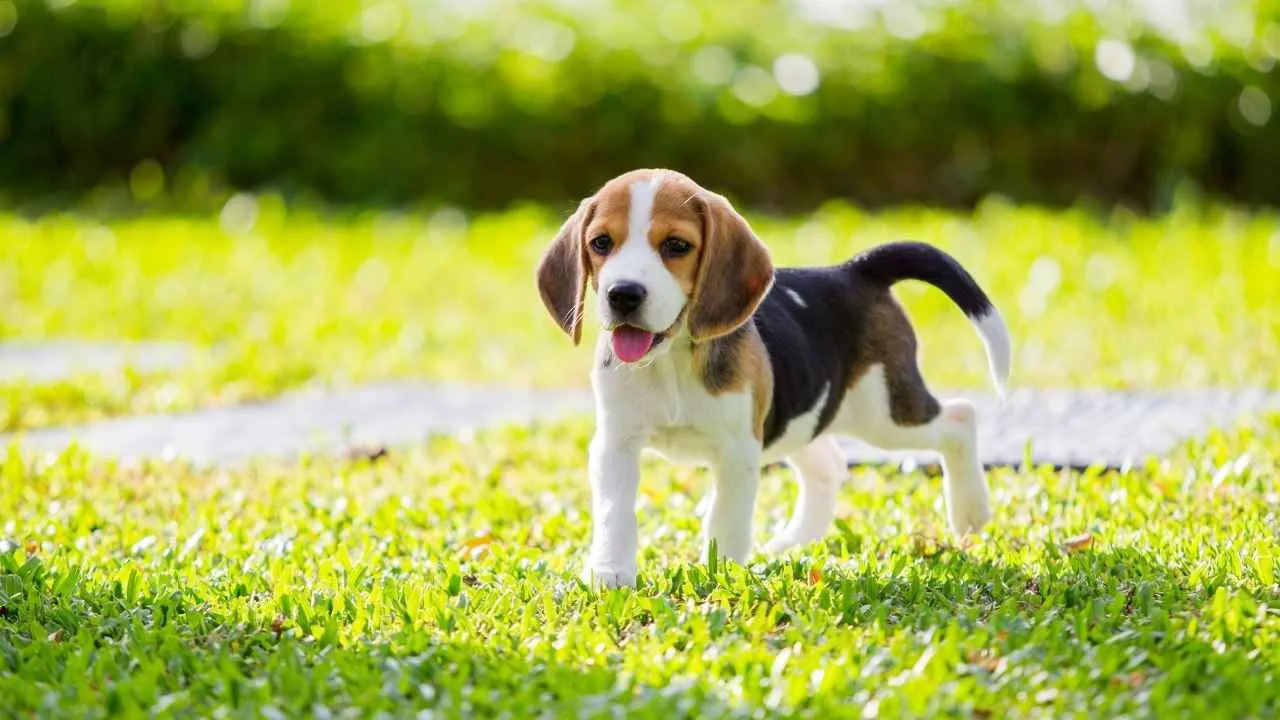
Beagles were bred to hunt alongside other dogs, making them natural pack hunters and trackers. Their love of following scents remains one of their strongest traits.
They enjoy using their noses to track interesting scents and chase after things that catch their attention. Their cheerful and adventurous nature also makes them enjoyable companions for active families.
Strong Noses and Wandering Instincts
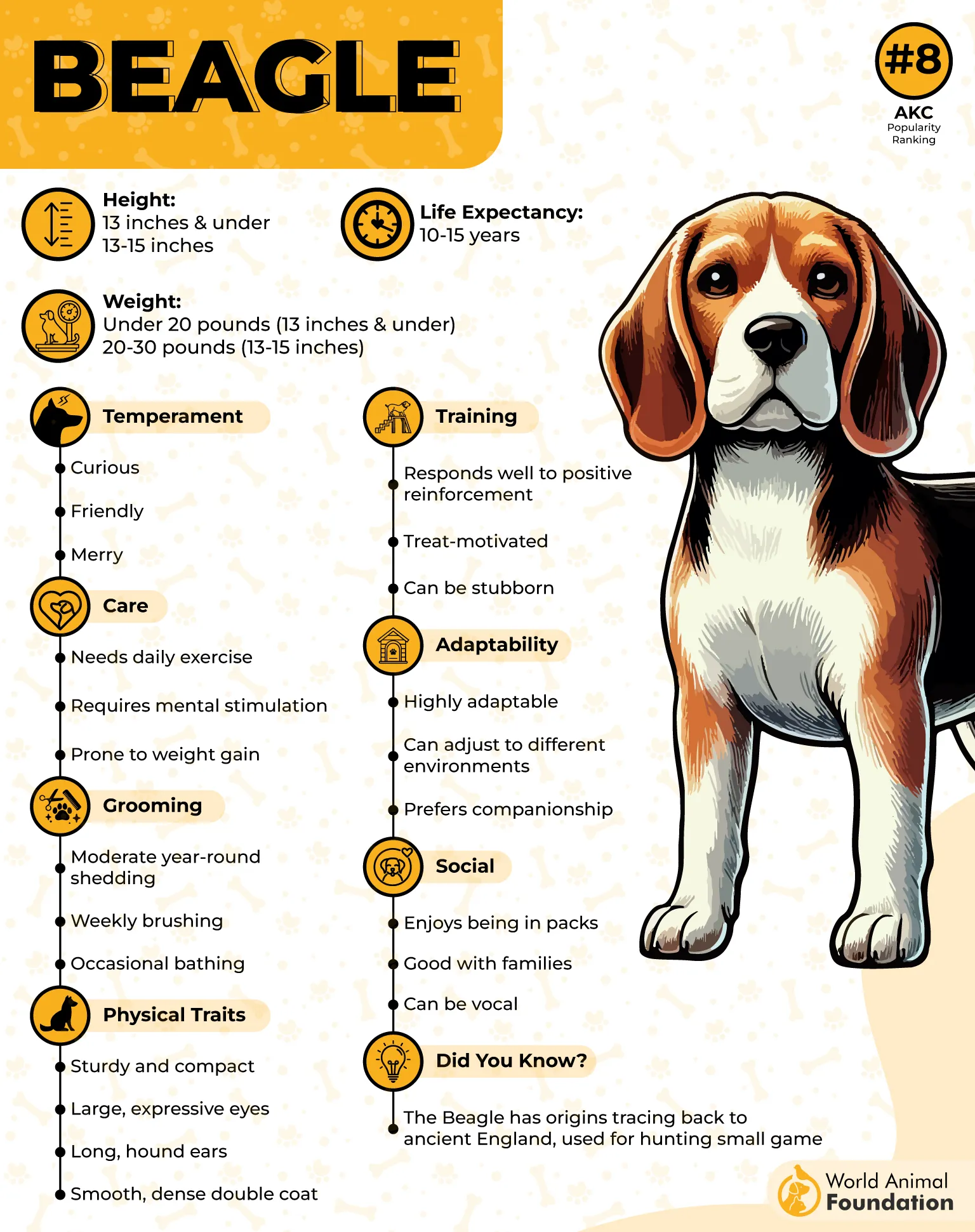
Beagles love to follow their noses, which can lead them far from where they started. When they catch a compelling scent, their instinct is to run off and track it.
Britannica mentions that they are known escape artists and can wander if given the chance, so supervision outdoors and a leash during walks are important. They learn quickly but can become easily distracted, making reward-based training with food especially useful.
Playful and Social Companions
Beagles are loving, happy, outgoing, and playful dogs that enjoy spending time with people and other dogs. They are excellent with children and generally get along very well with other dogs and pets.
Their independent nature can sometimes be frustrating, especially for children, while some Beagles may bark or bay loudly and frequently.
Conclusion
The right dog can make exploring forest terrain much more rewarding, especially when hidden animals are difficult to spot.
Breeds like Bloodhounds, Coonhounds, Beagles, and other scent-driven hunters bring strong noses, persistence, energy, and natural hunting instincts to the task. Each breed has its own strengths, from following faint scent trails to tracking game through challenging surroundings.
Before choosing a dog for this kind of activity, consider its energy level, hunting instincts, training needs, and temperament. With the right match and plenty of time outdoors, your dog can become more than a hunting companion. It can turn every forest adventure into an exciting search.
