




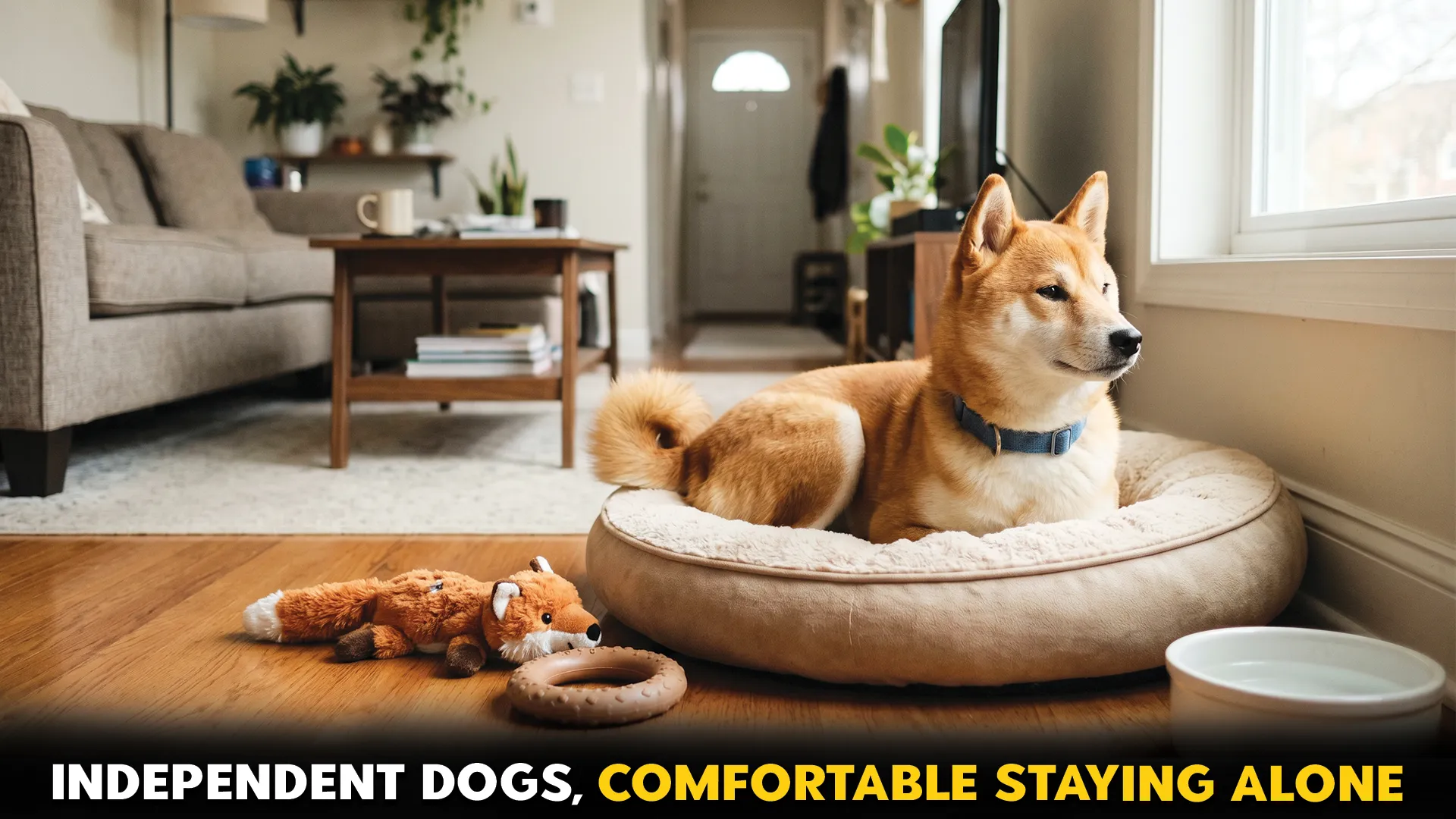
Ever wonder why some people leave their dog at home and return to a peaceful house, while others walk into chaos?
The difference often comes down to dog breeds that can stay alone without turning the place upside down.
Some dogs handle a few hours of solo time calmly, while others struggle with separation anxiety the moment you reach for your keys.
In reality, not every dog breed is the same. Some are naturally more independent, relaxed, and well suited for long stretches left alone, especially when they’ve had proper training and mental stimulation.
That said, even adult dogs can learn to enjoy short periods of alone time if they have toys and a steady routine.
For busy owners and families, choosing the right breed makes all the difference. It reduces worry and helps your dog stay calm, happy, and comfortable even when left alone for a few hours.
Dog Breeds That Can Stay Home Alone
1. Basset Hound
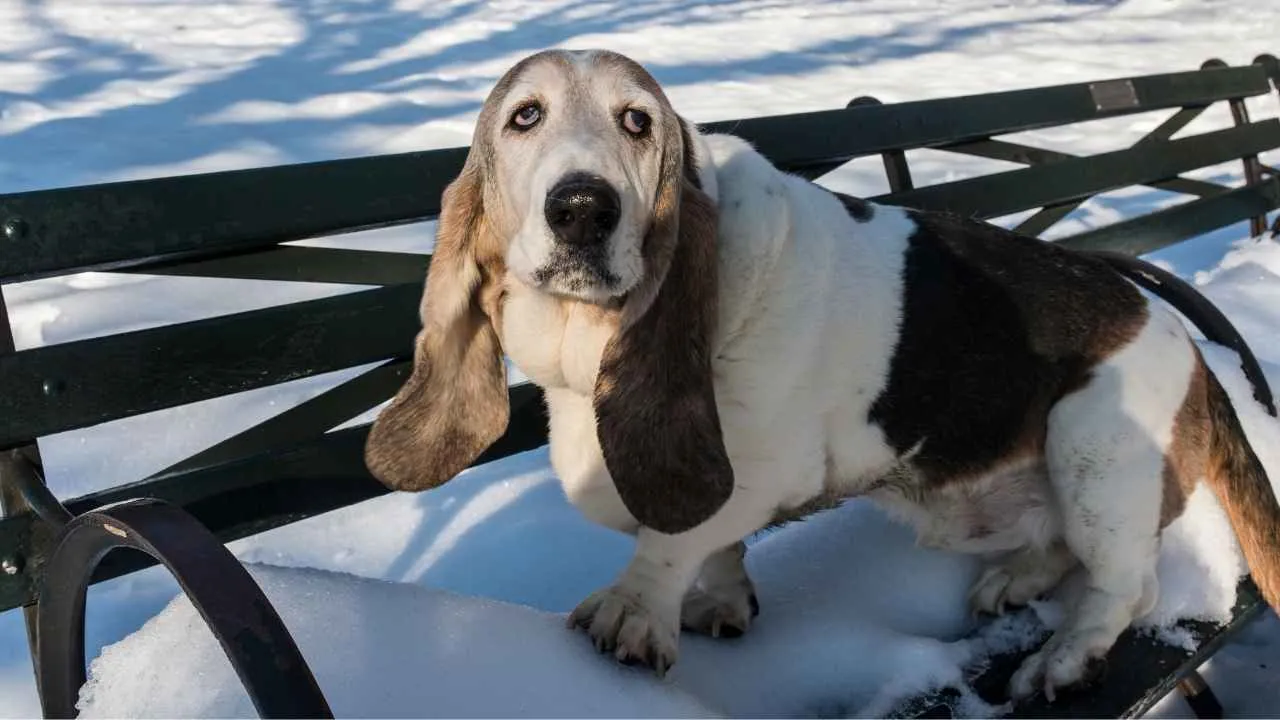
Calm nose, slow pace, big personality
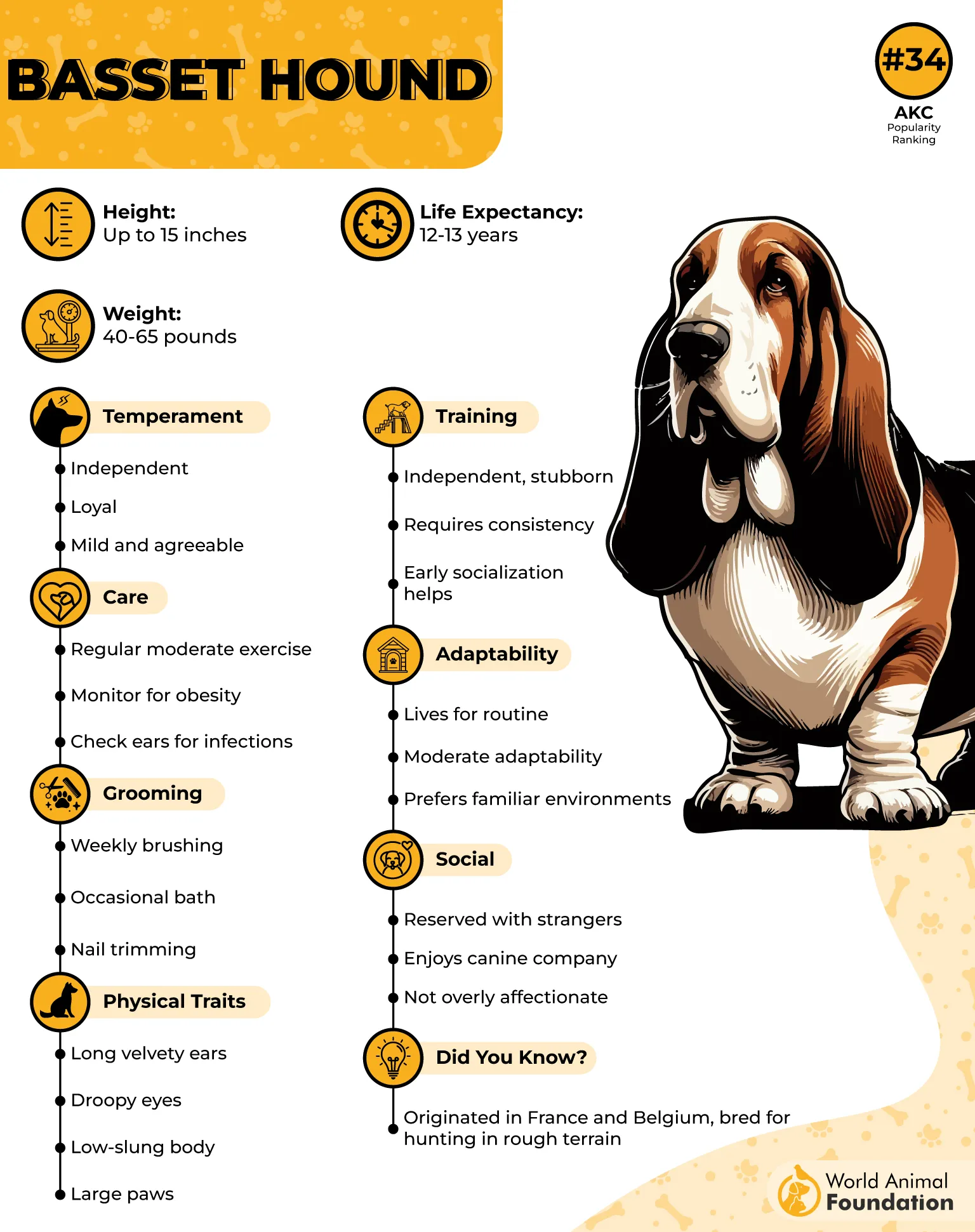
The Basset Hound is a short-legged scent hound originally developed in Great Britain from French basset-type breeds, mainly used for hunting rabbit and hare at a slow, steady pace.
Their powerful sense of smell is second only to the Bloodhound, which basically means once they pick up a scent, they’re in detective mode for life, as per Wikipedia.
Despite their serious tracking skills, they’re famously friendly, playful, and gentle with children and other dogs, often acting more like laid-back companions than working hunters.
They are devoted to humans but not overly clingy, preferring relaxed company over constant attention.
Alone time and home behavior
Can they stay home alone? Yes, but they need the right setup.
With proper training, they can manage a few hours alone without stress. Crate training helps create a safe zone, while puzzle toys keep their curious nose busy.
A good walk or play session before leaving reduces restlessness. Gradual training makes them independent dogs, helping them stay calm instead of worrying when left alone for several hours.
2. Shiba Inu
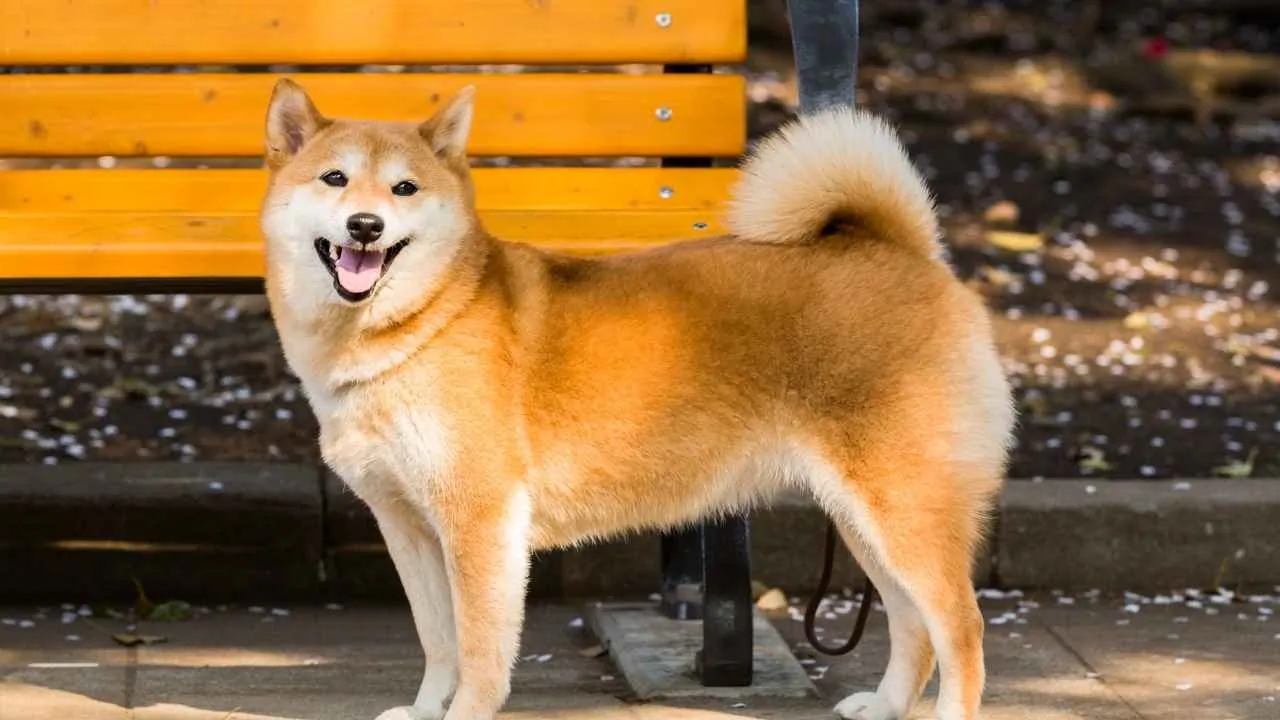
Foxlike charm with a strong-willed streak
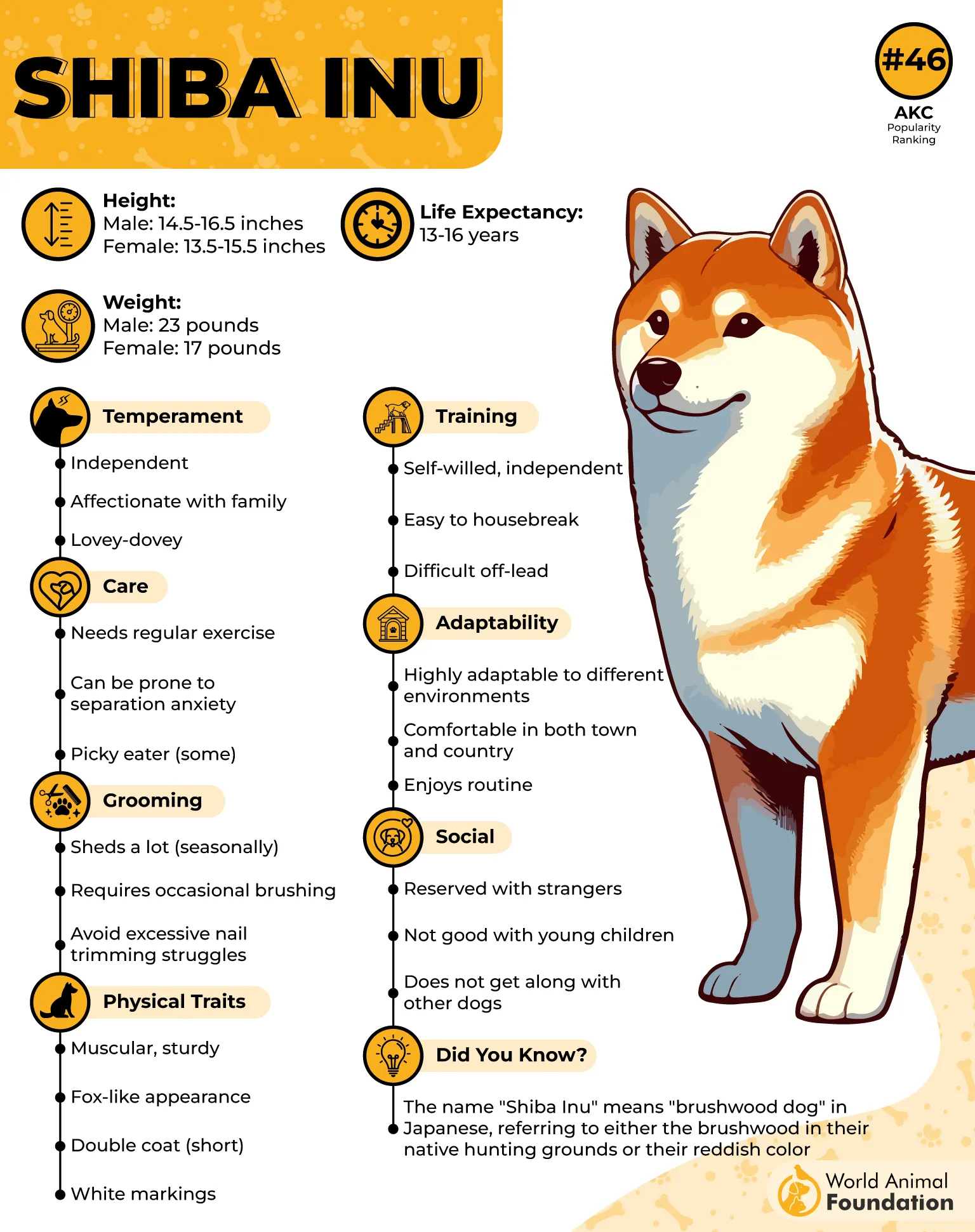
The Shiba Inu is an ancient Japanese breed originally bred for hunting, now known as one of the most popular companion dogs in Japan.
Small but muscular, this dog carries a bold, confident personality that often feels larger than its size.
With red, sesame, or black-and-tan coats and an alert, foxlike expression, this wonderful companion turns heads wherever it goes.
Shiba Inus are generally independent dog breeds. Moreover, clean, and quick learners, often picking up house training early, as per AKC.
However, their stubborn streak means boundaries and consistency matter in daily life.
Alone time and managing independence
When it comes to being left alone, Shiba Inus can handle a few hours once mature, but early training is important.
Some may develop separation anxiety if routines are unclear, so structure helps. Puzzle toys, treat games, and interactive feeders keep their sharp mind busy when left alone for long days.
A calm walk before leaving also helps release energy. Crate training can support comfort and prevent mischief, especially during longer periods alone.
3. Boston Terrier
Funny face, fast steps, full of personality
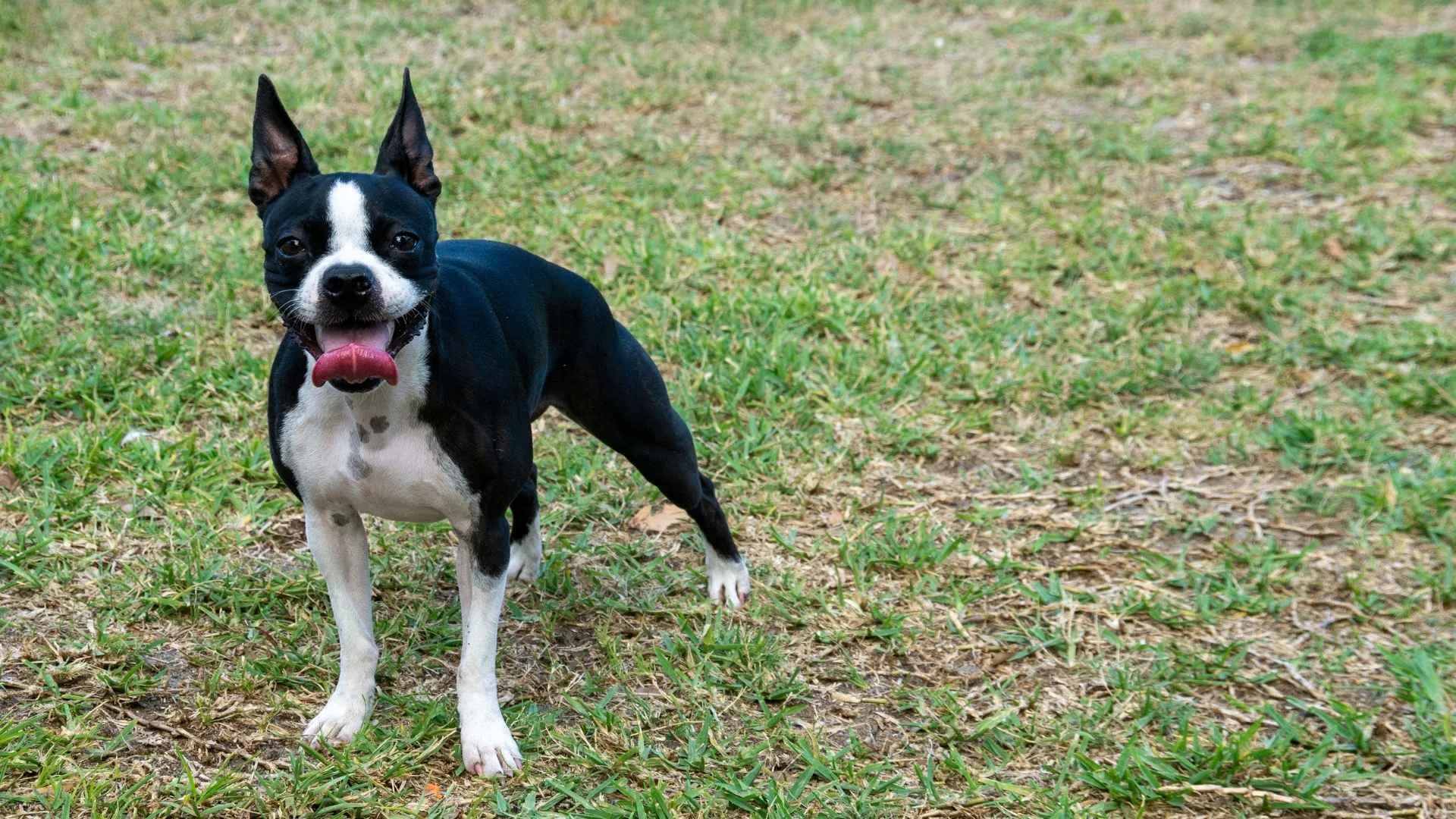
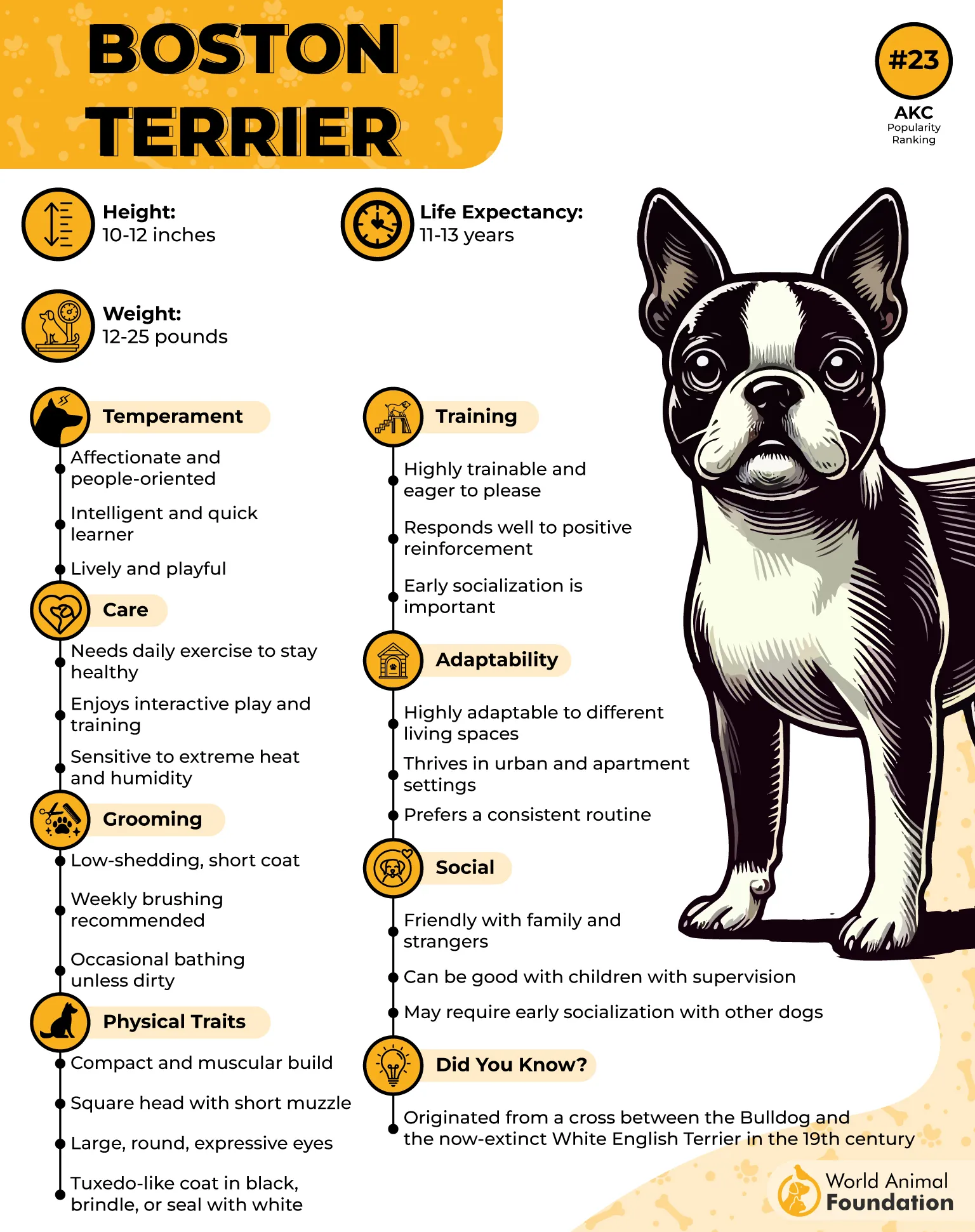
The Boston Terrier is a bright and friendly small dog breed from the American Kennel Club non-sporting group, known for its playful charm and lively spirit.
With a square, well-balanced body and strong little limbs, this best dog breed carries a confident, almost comedic expression that makes it feel like it’s always “performing” for its humans.
They’re intelligent, energetic, and enjoy games like fetch, but they also need structure and routine to stay balanced, as per WebMD.
Because of their affectionate nature, they can sometimes develop separation anxiety if left alone too often without preparation.
Alone time and daily routine needs
When it comes to being left alone for a few hours, Boston Terriers can manage, but they don’t enjoy long stretches of isolation.
A short walk before leaving helps burn energy, and mental stimulation through toys keeps them busy when left home alone.
Without engagement, they may become restless or overly attached to their owners.
With proper training, consistent routine, and interactive toys, they can handle short periods alone more calmly while staying happy and secure.
4. Shar Pei
Wrinkled face, calm attitude, strong character
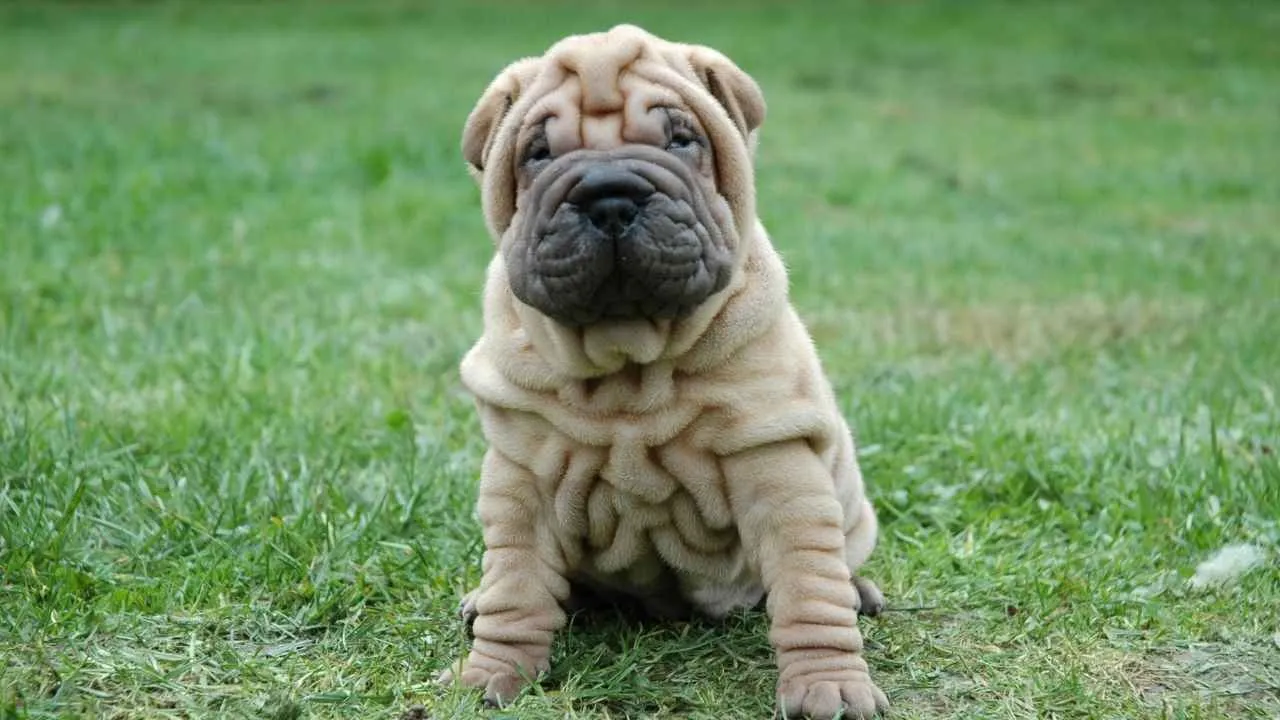
The Shar Pei is a medium, compact dog breed with a very distinctive look, thanks to its loose, wrinkled skin around the head, neck, and shoulders.
Originally bred in ancient China during the Han Dynasty as guard dogs for livestock protection and hunting, this dog breed is alert, intelligent, and naturally protective.
While deeply loyal to its own family, it can be aloof with strangers and may show a dominant streak, which means confident and consistent leadership is important from owners.
Alone time and home behavior
When it comes to being left alone for a few hours, Shar Peis usually manage well due to their independent and low-energy nature.
They require less exercise, making them suitable for apartment living if given short daily walks, as per Hill’s pet.
However, training must continue throughout life to maintain good behavior and prevent stubborn habits from returning.
Mental stimulation and routine help them stay calm when left alone at home, while proper boundaries ensure they remain relaxed rather than reactive.
5. Lhasa Apso
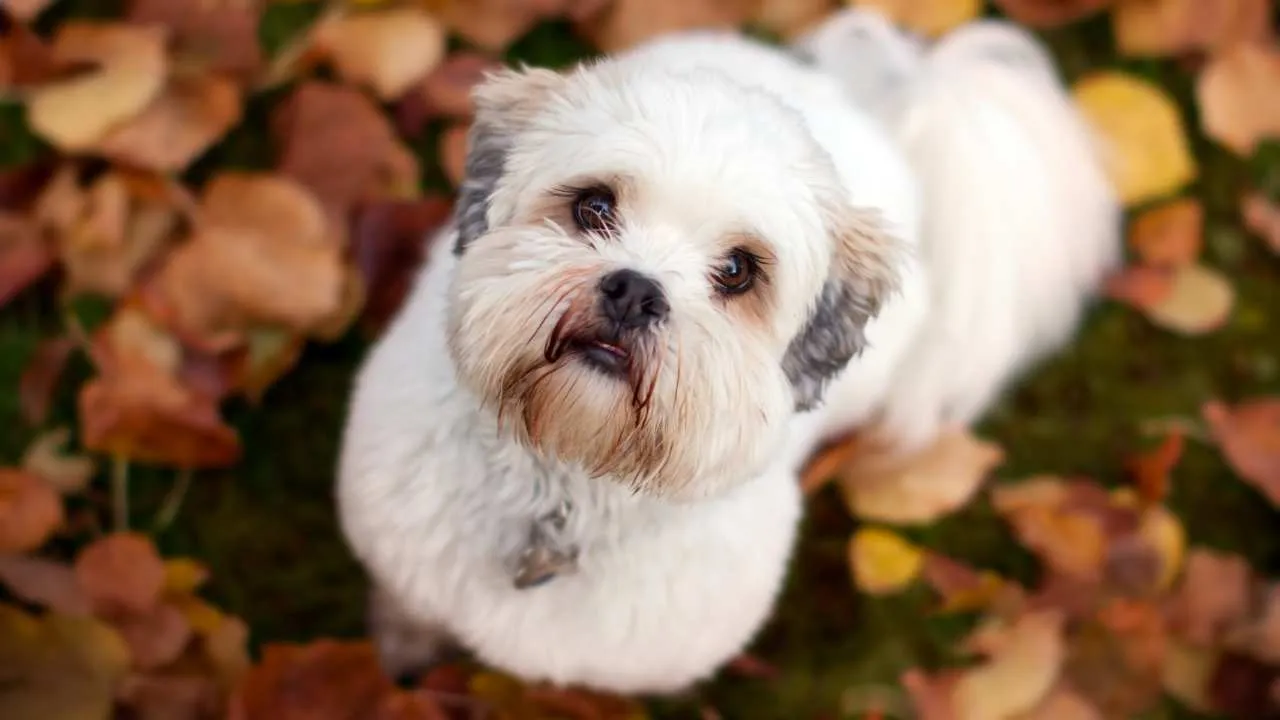
Small lion-like companion with a bold past
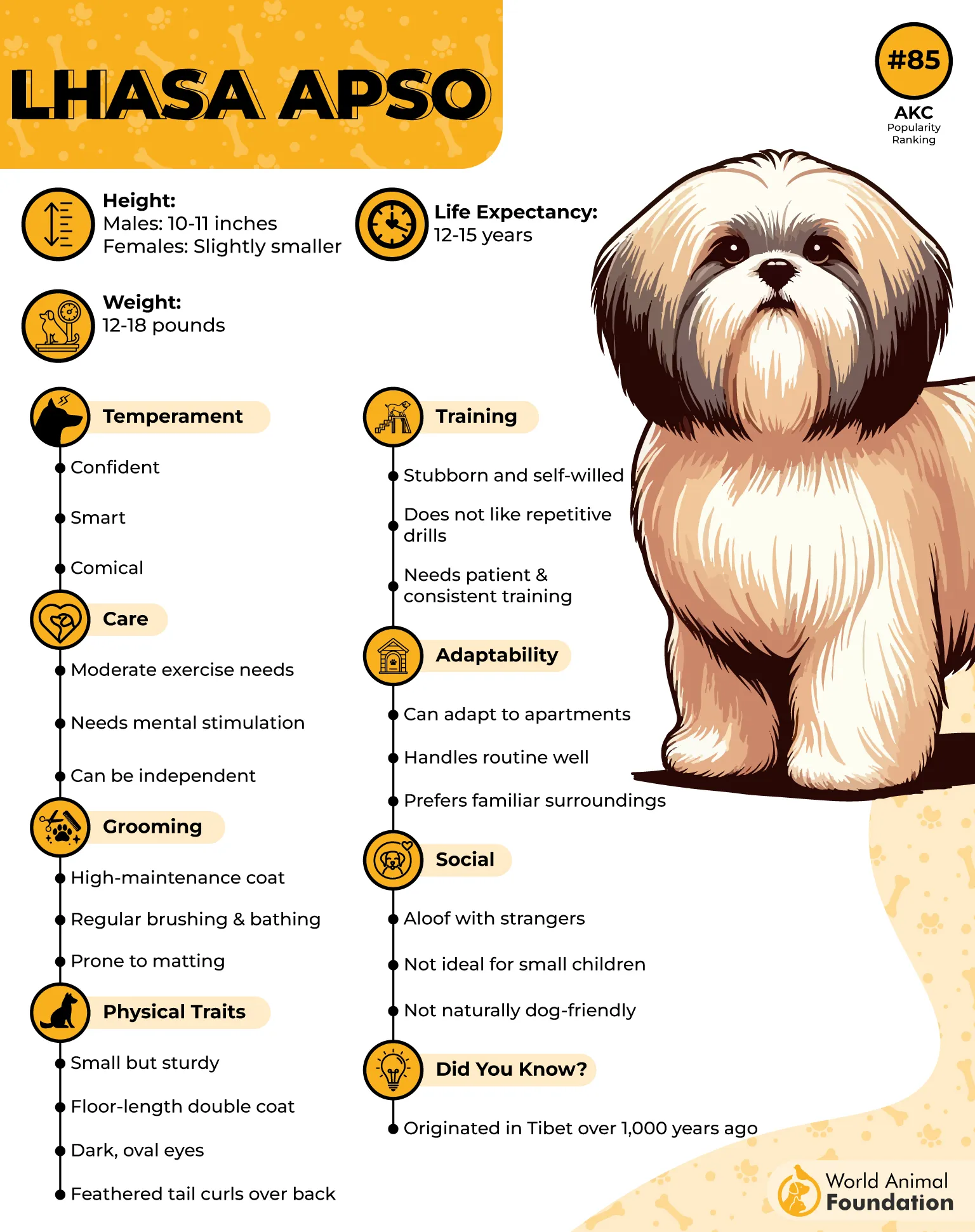
The Lhasa Apso is a small, sturdy dog breed from Tibet, where it is known as abso seng kye, often translated as “bark lion sentinel dog” or “bearded lion dog.”
Bred by Tibetan monks for centuries, this dog breed served in palaces and monasteries as a protective presence, alerting humans to anything unusual, as per Britannica.
Longer than it is tall, with draping hair over the face and legs and a feathered tail that curls over its back, this breed has a unique and elegant appearance.
Despite its royal history, it is affectionate and calm, often enjoying companionship with family members while staying reserved around strangers.
Alone time and staying comfortable at home
When left alone for a few hours, this independent dog breed can adapt well if trained properly.
Crate training helps create a safe, den-like space, especially when filled with toys and comfort items.
A good walk or play session before leaving helps release energy and supports calm behavior.
Soft background sounds like music can also make the house feel less empty when left alone.
With consistent training, routine, and gradual practice, this intelligent breed can learn to stay relaxed at home, even during longer periods of alone time, without developing strong anxiety.
6. Chow Chow
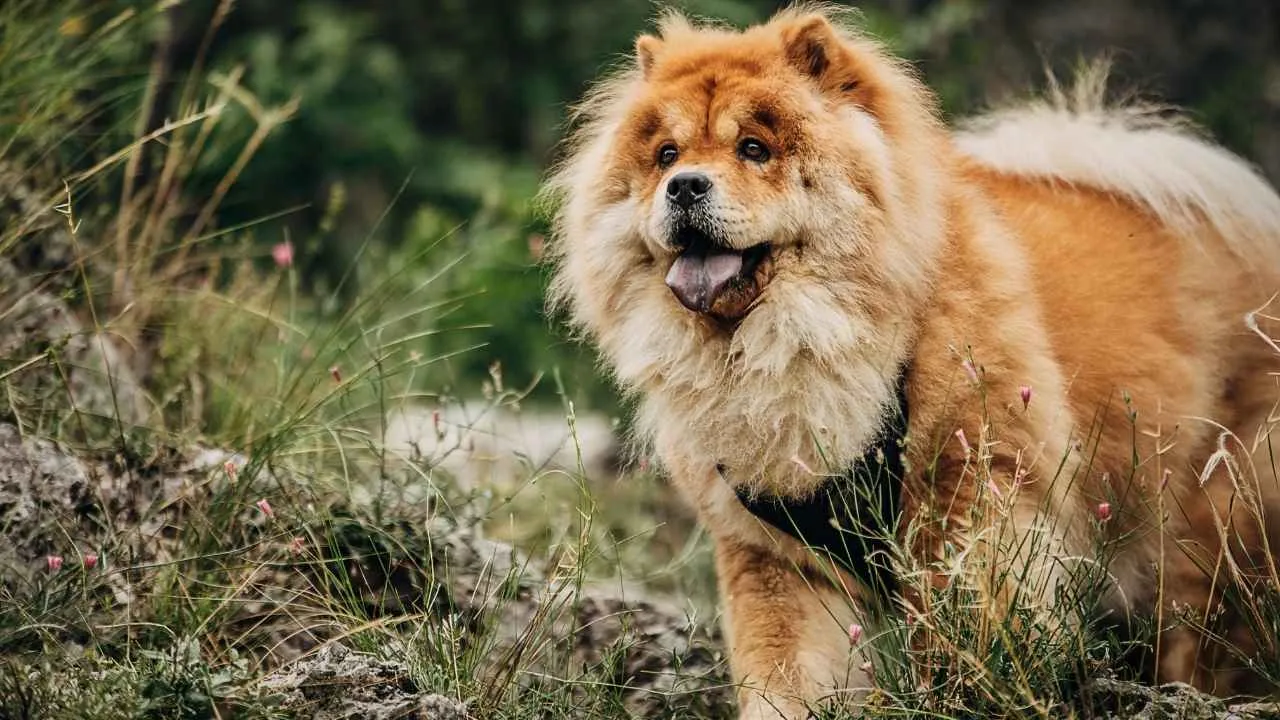
Fluffy lion look with a serious personality
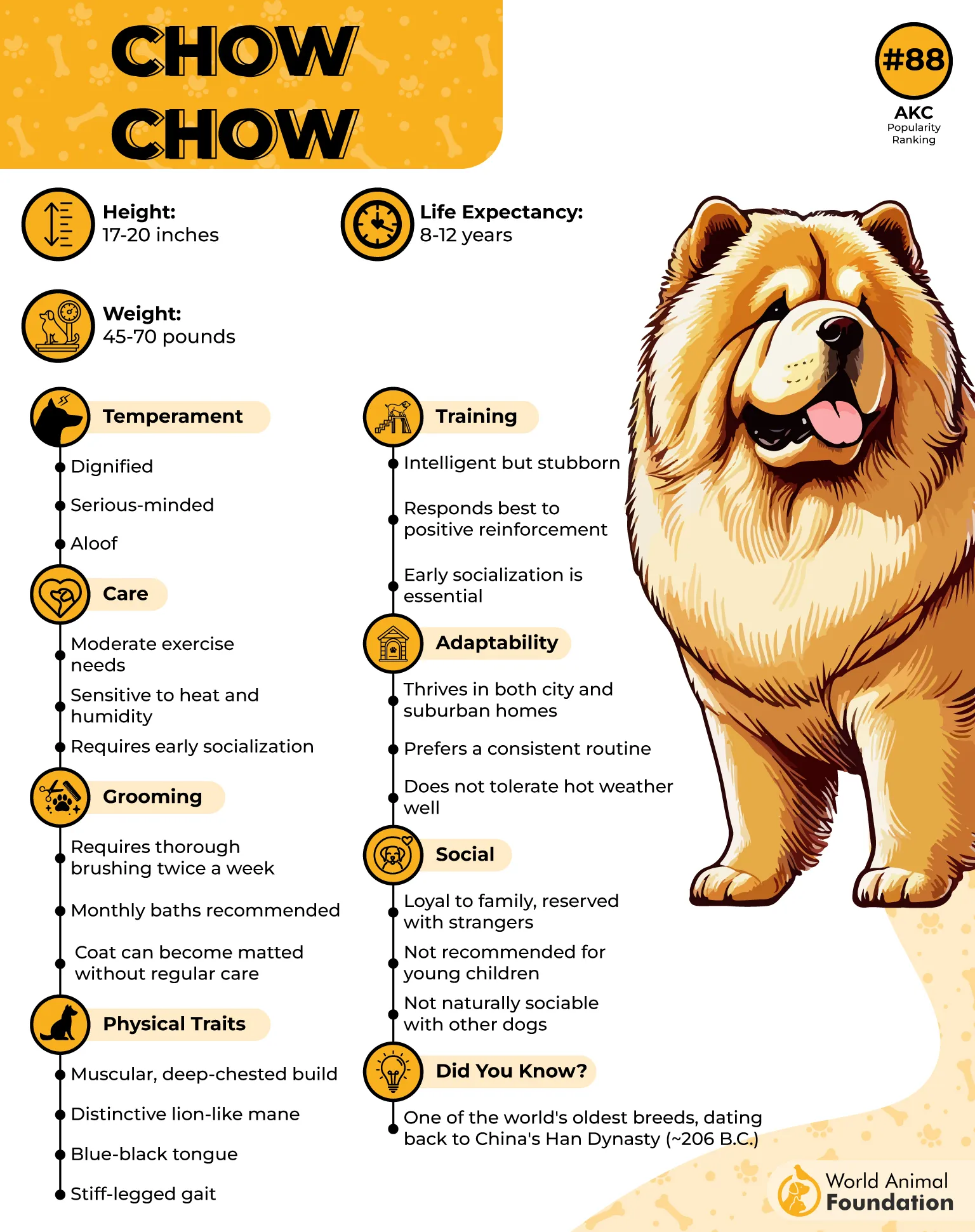
The Chow Chow is a spitz-type dog breed originally from Northern China, known for its strong, square-built body, broad skull, and small upright ears with rounded tips.
Despite its fluffy appearance, it carries a calm, serious expression and a naturally independent attitude.
This breed is sturdy and self-assured, often preferring its own space rather than constant attention.
Alone time and daily routine
When it comes to being left alone for a few hours, the Chow Chow usually handles it better than many social breeds due to its independent nature.
However, it still needs proper training and mental stimulation to stay relaxed when left alone at home.
Short walks—around 20 minutes a couple of times a day—are enough since this breed can overheat easily due to its thick coat and shorter snout, as per PetMD.
Puzzle toys and calm routines help keep the mind active during solo time. With consistent structure, this breed can remain composed and comfortable during periods of alone time without becoming overly anxious.
7. Newfoundland
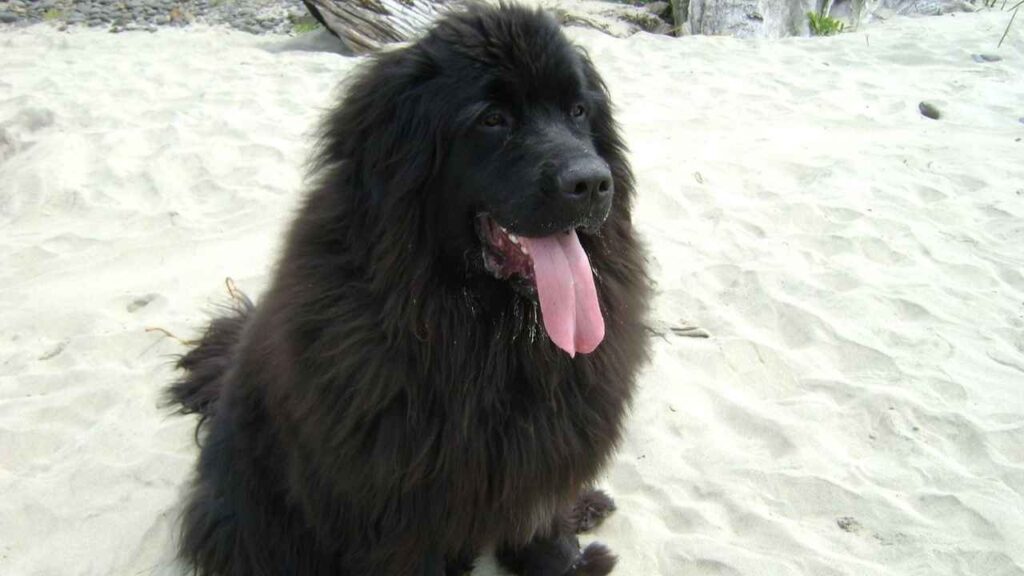
Gentle giant with heroic water instincts
The Newfoundland is a massive working dog known for its calm spirit and legendary water rescue skills.
Despite its impressive size, it carries a soft and patient nature that makes it more comforting than intimidating.
Its love for swimming and pulling tasks shows its working heritage, while its overall demeanor remains steady and reassuring rather than loud or reactive in everyday life.
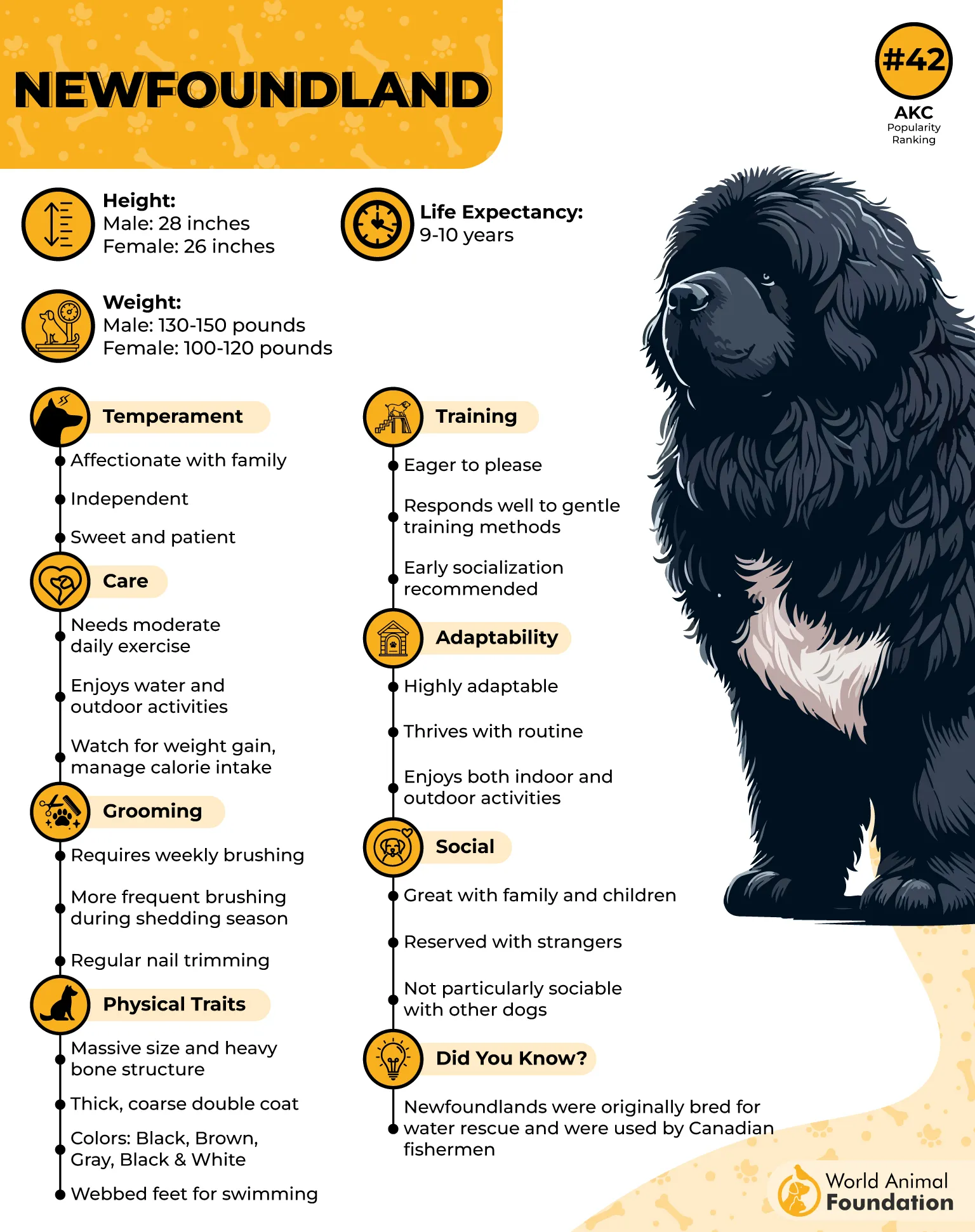
Calm companion with strong but soft presence
This breed is naturally affectionate and friendly, often showing warmth toward strangers, children, and other animals without hesitation.
Its gentle behavior around families has earned it a reputation as a caring “nanny-like” presence, though its large size requires mindful handling.
It does not demand intense exercise, preferring moderate walks, relaxed play, or water-based activities that match its natural abilities.
While it learns well and is willing to cooperate, it may respond at a slower pace due to its laid-back temperament.
Overall, it balances strength with kindness, making it a steady and dependable companion in many home environments.
Conclusion
In the end, choosing dog breeds that can stay home alone comes down to understanding personality, training needs, and daily routine—not just size or appearance.
Some dog breeds are naturally more independent and can handle a few hours or even longer stretches alone, while others need constant company and more reassurance to avoid separation anxiety.
With the right balance of exercise, mental stimulation, toys, and proper training, even many social dogs can learn to stay calm when left alone at home.
If you’re a busy owner, the key is picking a breed that matches your lifestyle instead of forcing a mismatch that leads to stress for both you and your dog.
A well-chosen companion doesn’t just fit into your schedule—they make your time together more peaceful and enjoyable.
After all, the best relationship with a dog isn’t about how long you’re together every hour, but how happily they wait for you to come back home.
