




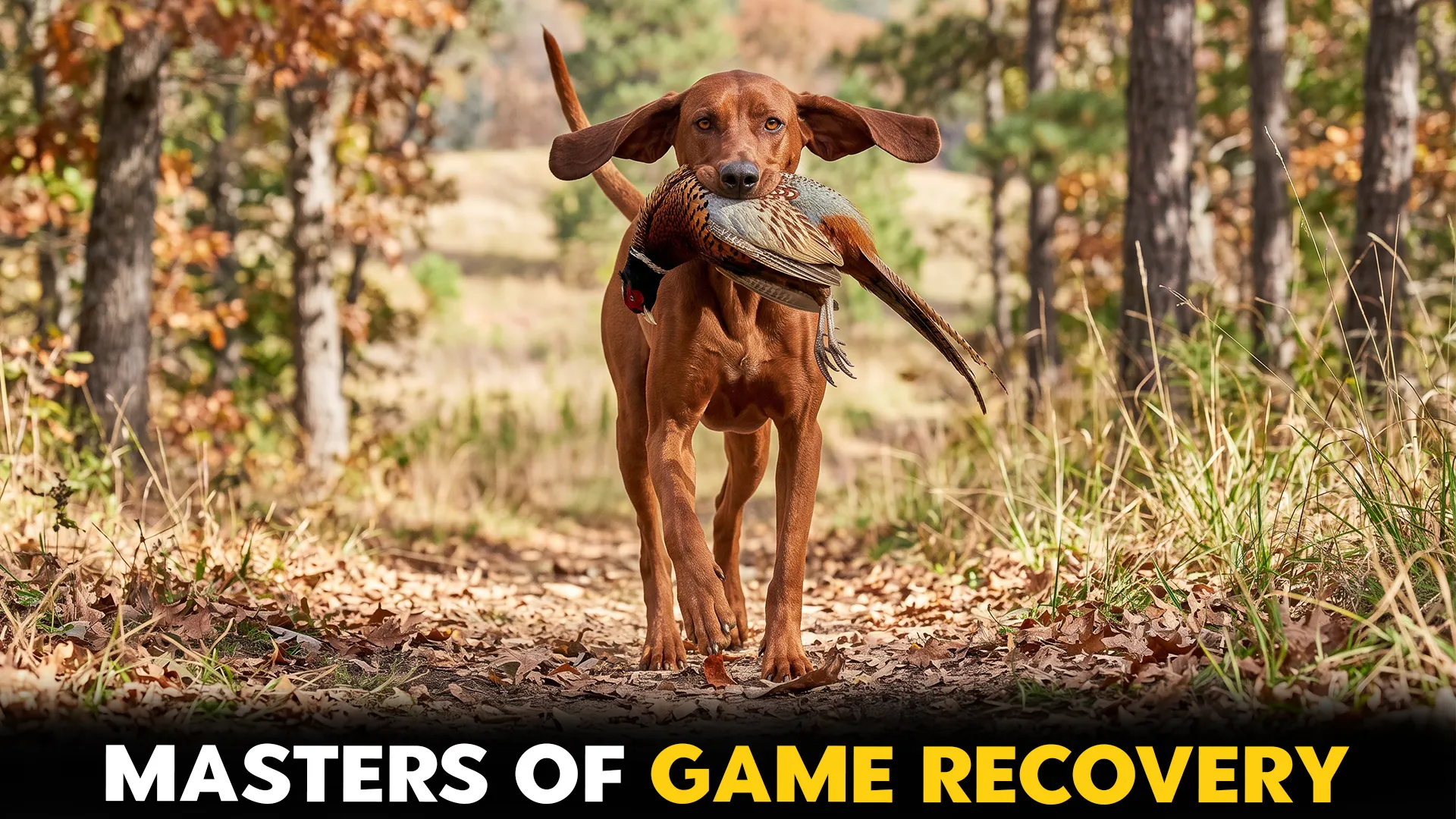
You made a good shot. You were sure of it.
Then the deer took off into the brush, and now you are standing in the dark with a flashlight, staring at a blood trail that just… stops.
Every hunter knows this feeling.
The shot felt right. The buck was there one second and gone the next. And now you are crawling through briars trying to find blood on leaves that all look the same shade of brown in the dark.
You don’t have to do this alone.
A good tracking dog turns hours of frustrating guesswork into a focused, controlled search. These dogs aren’t guessing. They are not wandering, but working a scent trail with a nose that’s doing things your eyes simply can’t.
If you are serious about finding wounded deer instead of losing them, you need the right dog for the job.
These are the best dog breeds for tracking and game recovery, and a few of them might not be who you’d expect.
Did You Know?
According to PetMD, a dog’s nose has up to 300 million scent receptors, compared to a measly 6 million in a human nose. On top of that, according to VCA Animal Hospitals, the part of a dog’s brain devoted to analyzing smells is estimated to be 40 times larger than ours, proportionally speaking.
So when your dog finds a blood trail you can’t even see, it’s not luck. It’s biology doing exactly what it was built to do.
Best Dog Breeds for Tracking and Game Recovery
1. Bloodhound
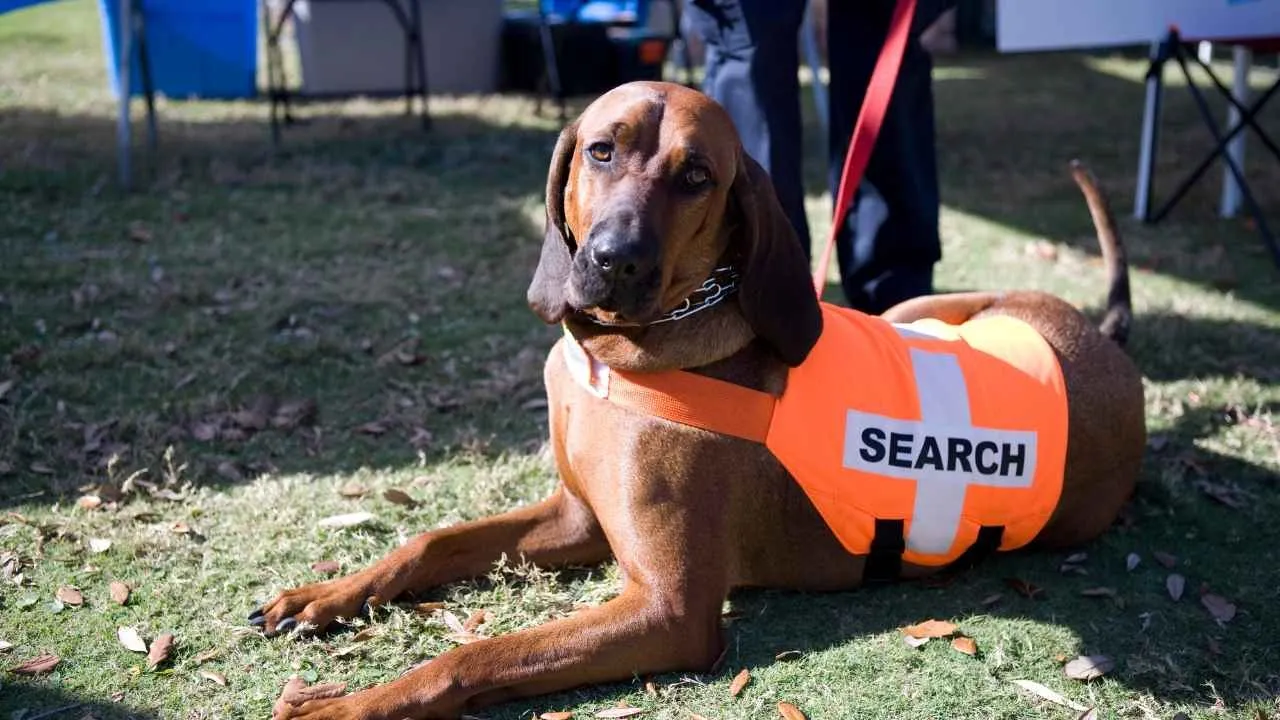
Let’s start with the obvious one.
The Bloodhound practically invented this job.
Those long ears are not for looks. They sweep scent up off the ground as the dog moves and funnel it straight to that huge nose. According to PBS, loose and wrinkled skin around the nose helps Bloodhounds with this mastery. That skin traps scent particles near the face.
All of this helps this dog excel at one purpose.
TRACKING.
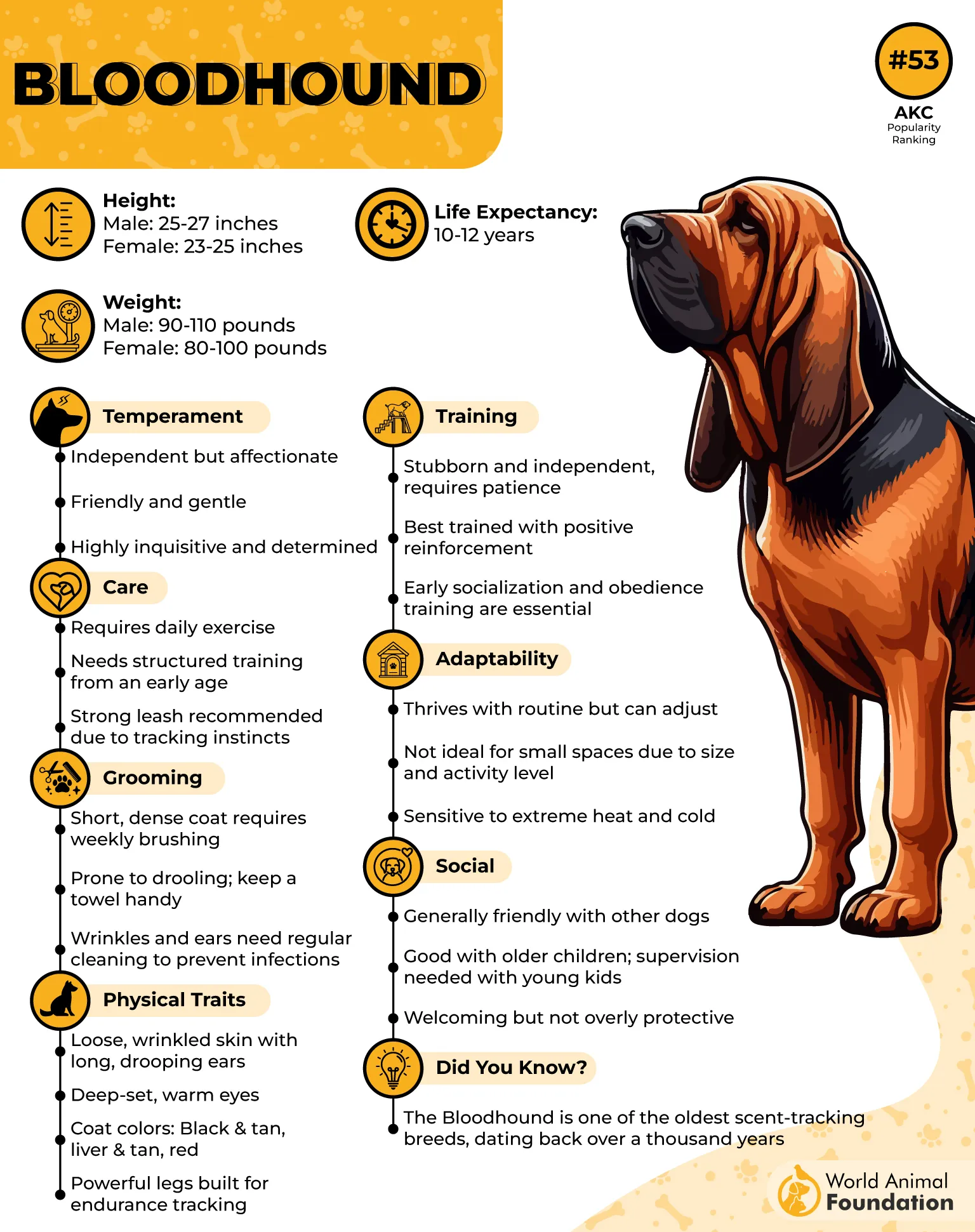
These tracking dogs have an unmatched ability to follow an old, cold trail. Hours old. Sometimes longer.
They work on a leash, methodically, nose down, and they don’t get distracted easily once they are locked onto a scent.
That’s exactly what you want when you are trying to recover a bow-shot deer that ran a quarter mile before bedding down.
The only catch is these are large dogs. They dool, and training takes commitment starting from a young age. But if tracking is your priority, few breeds compare.
2. German Shorthaired Pointer
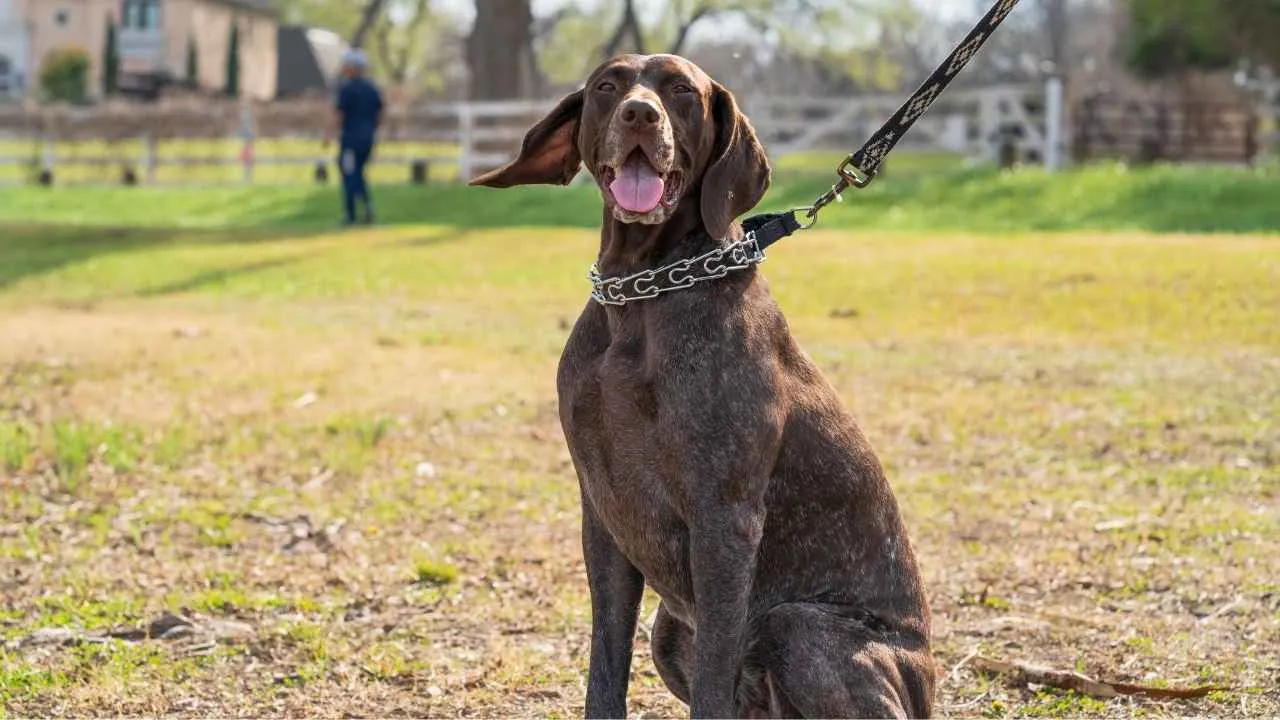
Wait, a Pointer?
Yes. Actually, yes.
The German Shorthaired Pointer wasn’t just bred for pointing birds. This is a genuinely versatile hunting dog, and that versatility includes a great nose for tracking deer, not just upland game.
Honestly, a lot of hunters overlook GSPs for blood work, and that’s a mistake.
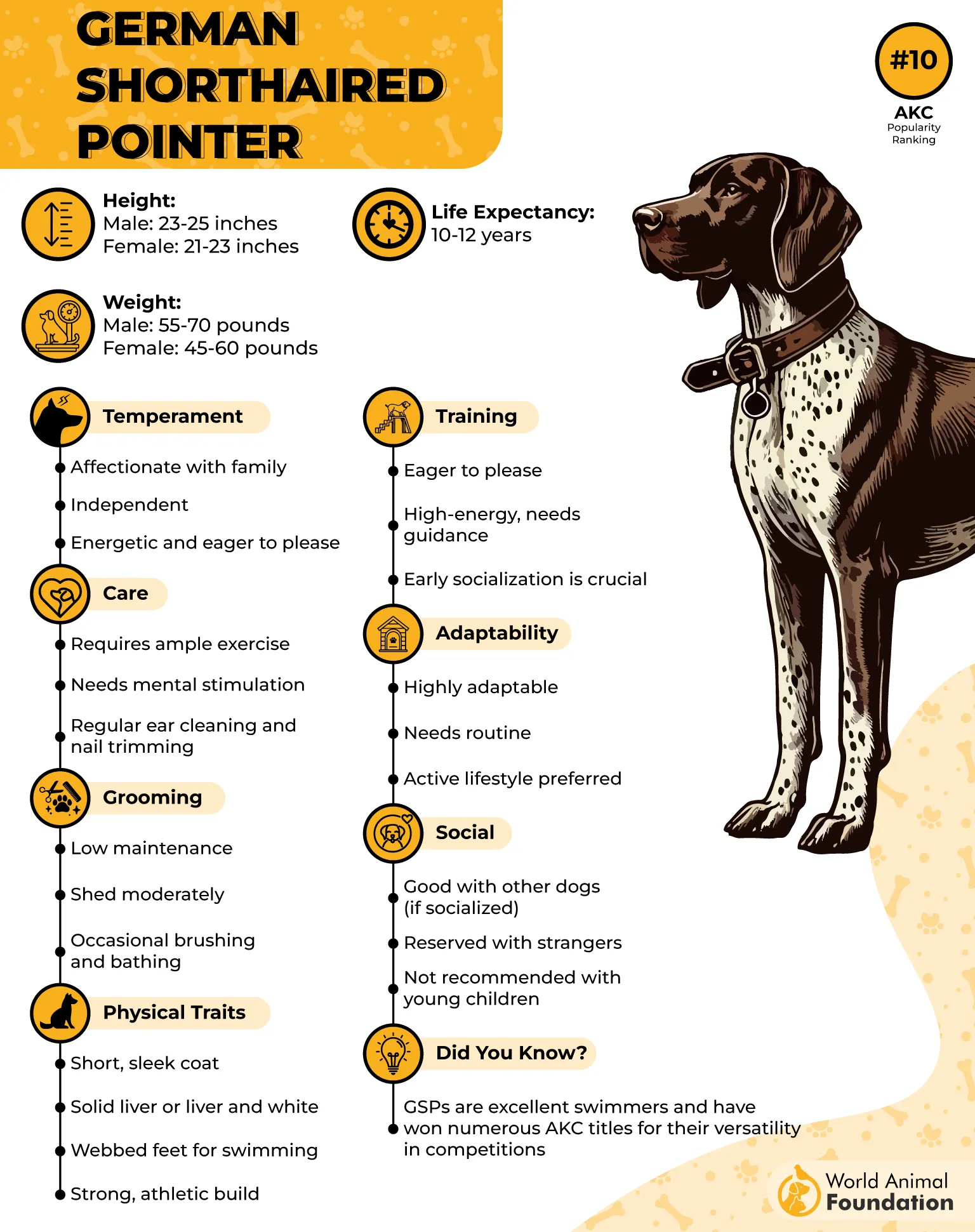
These dogs have excellent noses and a natural drive to work a trail. They are athletic and smart, and they pick up training fast when you start early and stay consistent.
GSPs also double as fantastic family dogs. They are good with kids, good in the yard, and good on the couch after a long morning in the field.
You get a hunting partner and a household companion in one package.
They need a job, though. Leave a GSP with too much free time and no outlet, and that energy turns into trouble.
3. Labrador Retriever
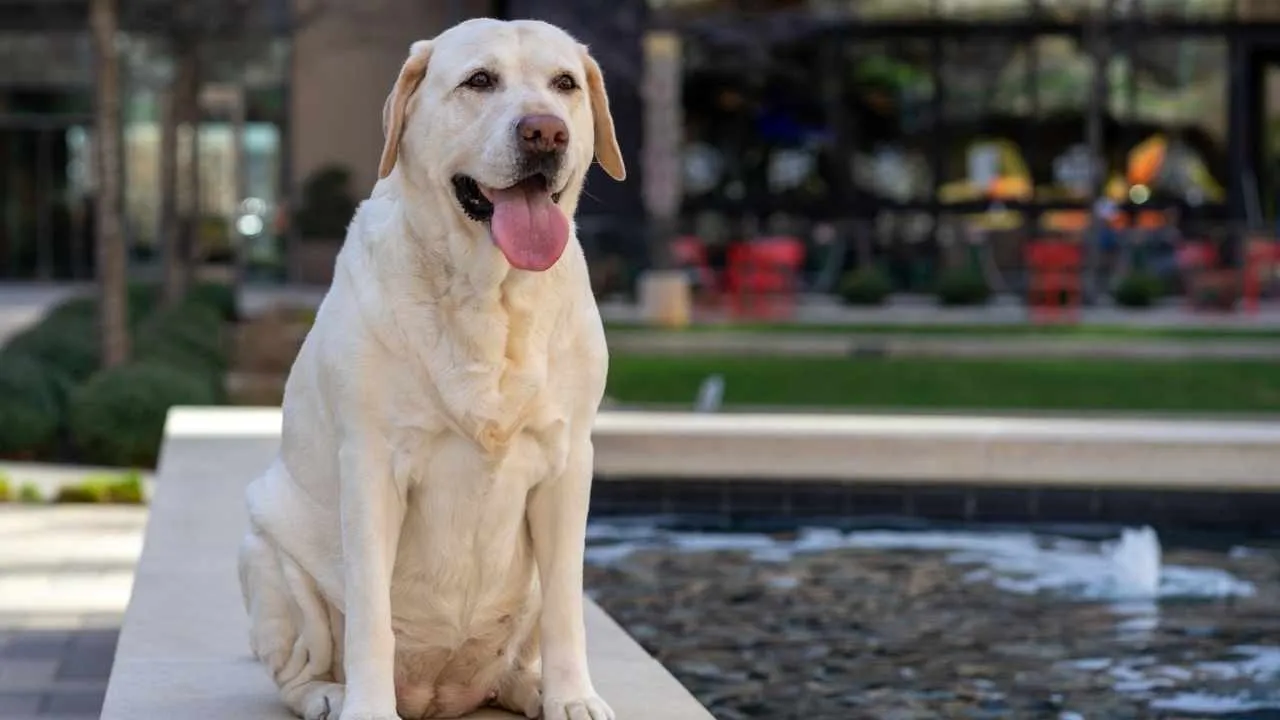
Of course Labs made the list.
Labrador Retrievers are already America’s favorite dog.
Yep.
According to the American Kennel Club, they were the most popular dog breeds for 31 years. It’s not just because they are good with ducks and kids.
Their nose is seriously underrated when it comes to tracking deer.
Labs were bred to retrieve, sure. But retrieving means finding things. A dead deer in thick cover is not all that different from a duck in tall grass, at least as far as a Lab’s nose is concerned.
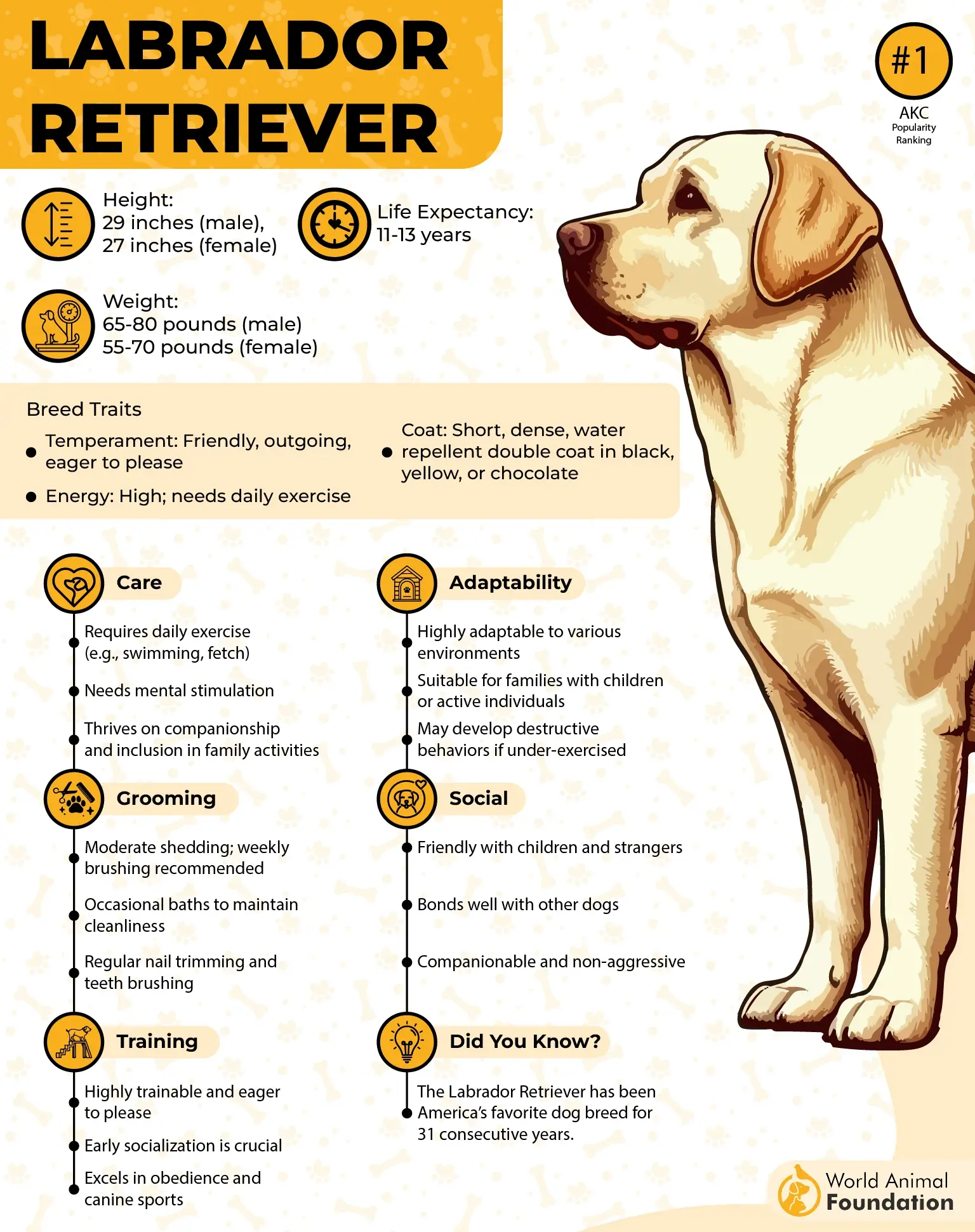
Labs are eager, trainable, and food-motivated. That makes early training fun instead of a fight. Start young, keep sessions short, and reward heavily, and you will have a puppy that takes to blood trailing quicker than you’d expect.
They are not the most specialized trackers on this list. But for hunters who already have a Lab at home, don’t sleep on their tracking abilities. With the right training, these family dogs might already have what it takes.
4. Wirehaired Pointing Griffon
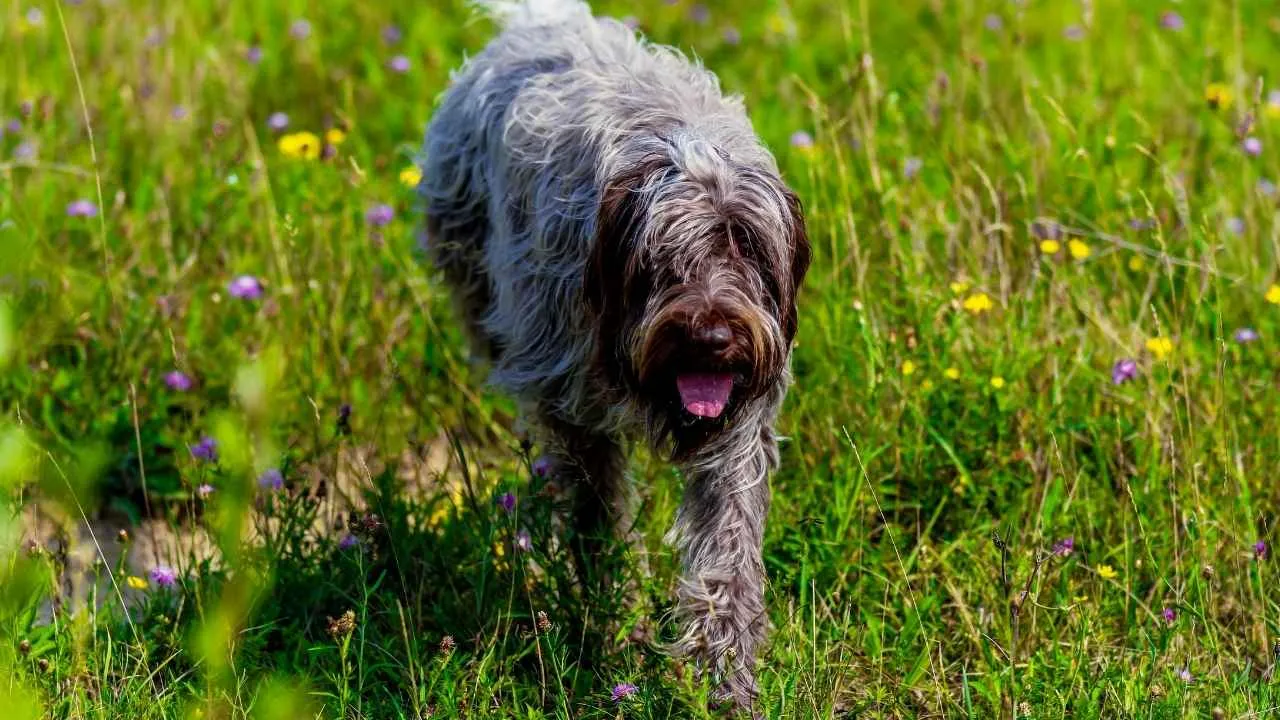
This is a breed a lot of hunters have heard of but never actually hunted with.
The Wirehaired Pointing Griffon.
That scruffy coat is not just for weather protection. These tracking dogs were developed to be an all-around hunting companion, and that includes tracking wounded game with a level of focus that surprises a lot of first-time owners.
Griffons are calm, deliberate workers. They don’t rush a trail; they work slow, nose to the ground, which is exactly what you want on a tough, cold trail where a fast dog might blow right past the good scent.
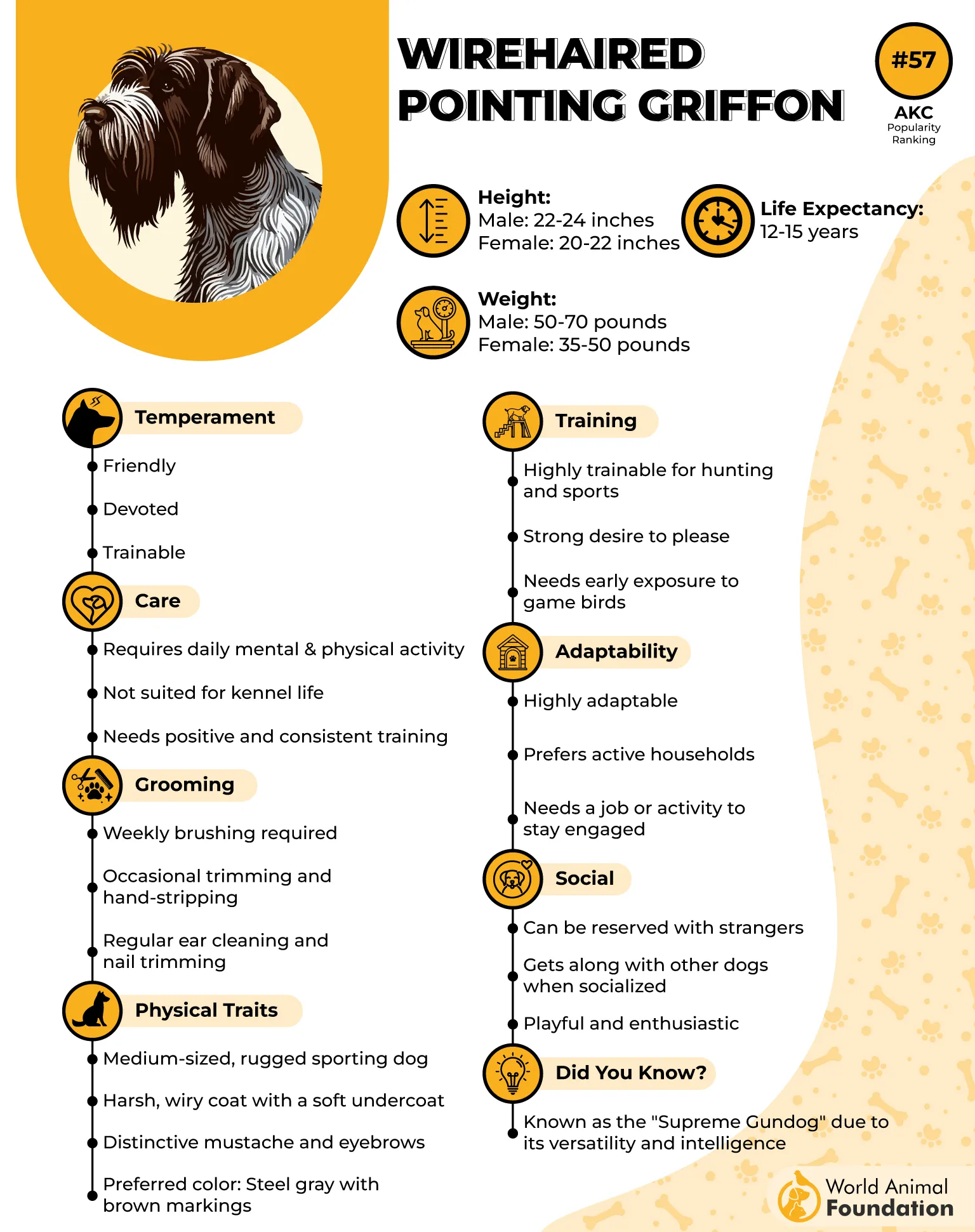
They are also fine family dogs at home, generally easygoing once the work is done for the day. Training takes patience, but a well-trained Griffon is one of the most reliable blood tracking dogs, season after season.
5. Redbone Coonhound
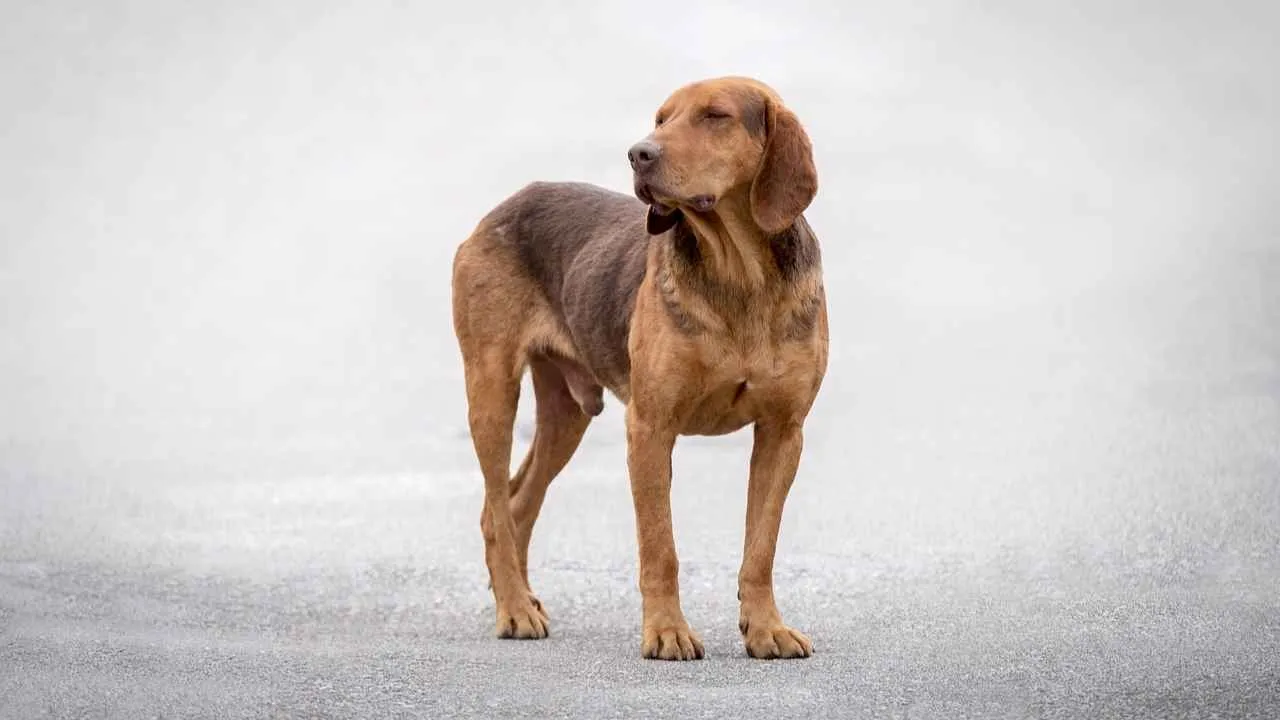
That signature bay is not just for treeing raccoons at night.
The Redbone Coonhound has one of the best noses in the hound world, and that includes excellent tracking abilities on deer blood trails, not just coon scent.
These red dogs were bred to work independently, trusting their nose over everything else, and that trait translates well when you are following a trail deer left hours ago.
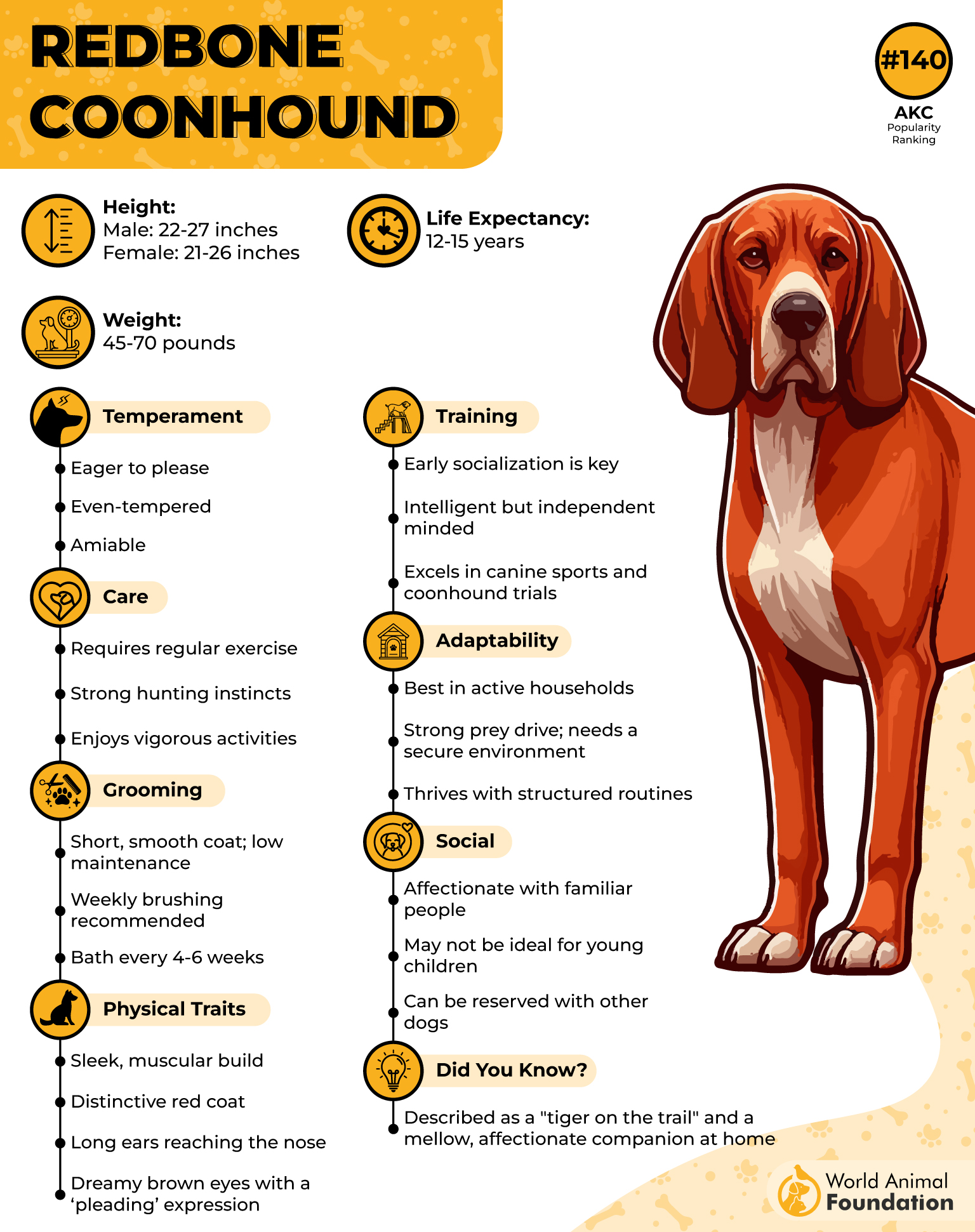
Redbones are stubborn in the best way. Once they are on a scent, they are locked in. That single-mindedness makes leash training very important early on, or you will be jogging through the woods trying to keep up.
They are loyal dogs and are good with people. Once trained properly, a Redbone becomes a serious tracking asset. They are good tracking dogs, and don’t expect them to give up on a trail easily.
That’s really not in their nature.
6. Treeing Walker Coonhound
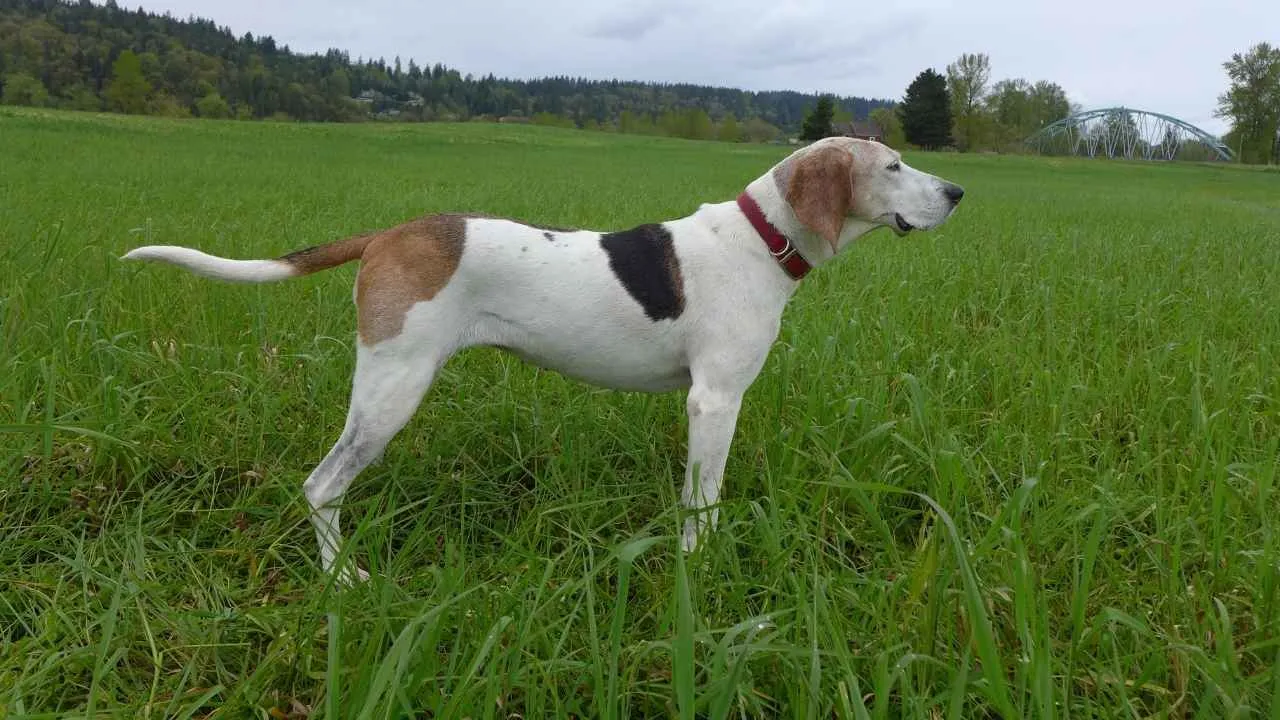
Fast, loud, and relentless.
The Treeing Walker Coonhound was bred for stamina, and that stamina is important when a wounded deer covers real ground before bedding down.
Their tracking abilities come from generations of chasing scent through rough terrain in the middle of the night, so a daytime blood trail is not exactly a challenge for this hound dog.
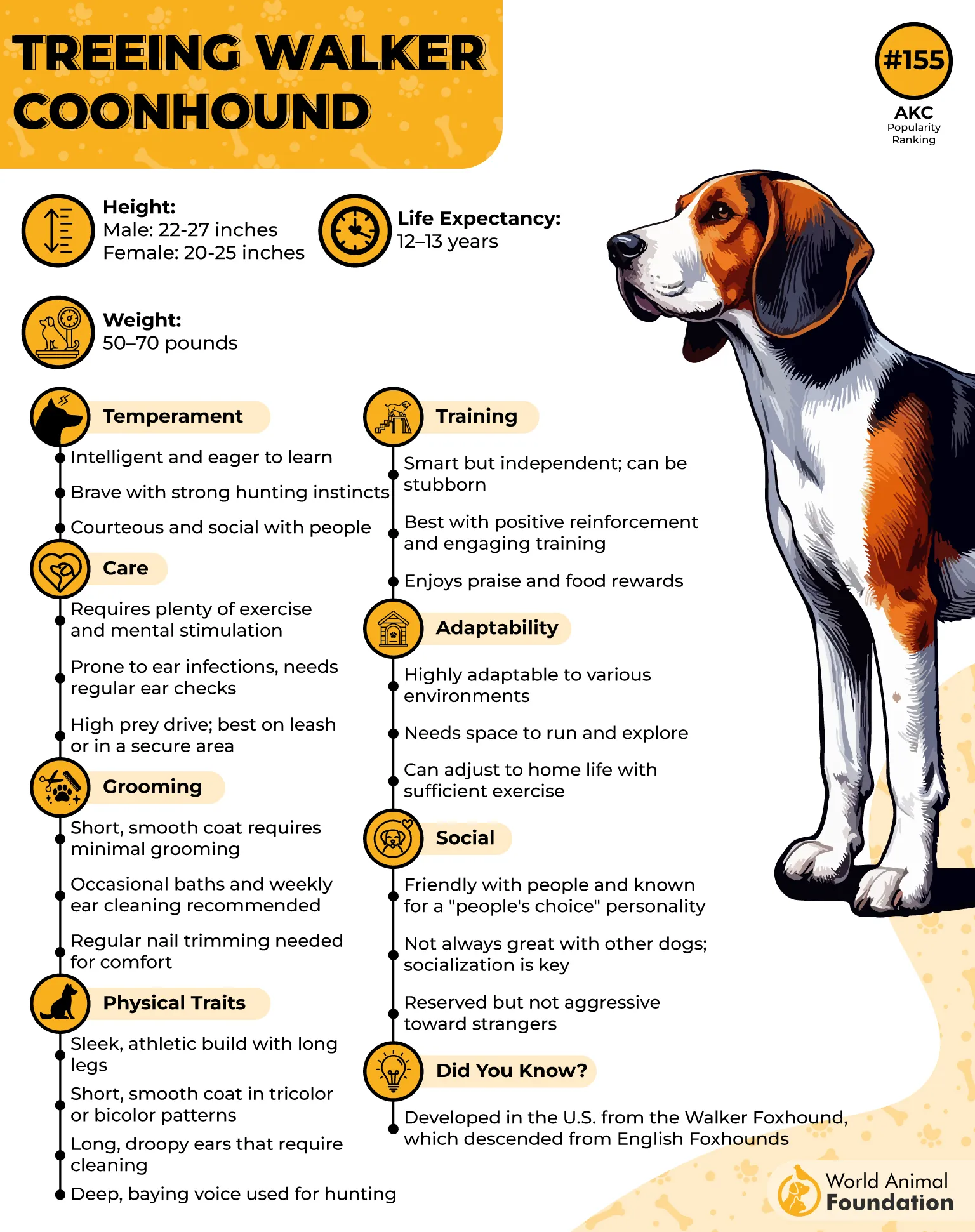
These dogs have a lot of drive. That’s great on a trail, less great if they are not given consistent structure and training from puppyhood.
Control on a leash is the biggest hurdle. Once that is dialed in, though, a Treeing Walker becomes a fast, confident blood tracker who can cover ground quickly without losing the scent.
7. American Foxhound
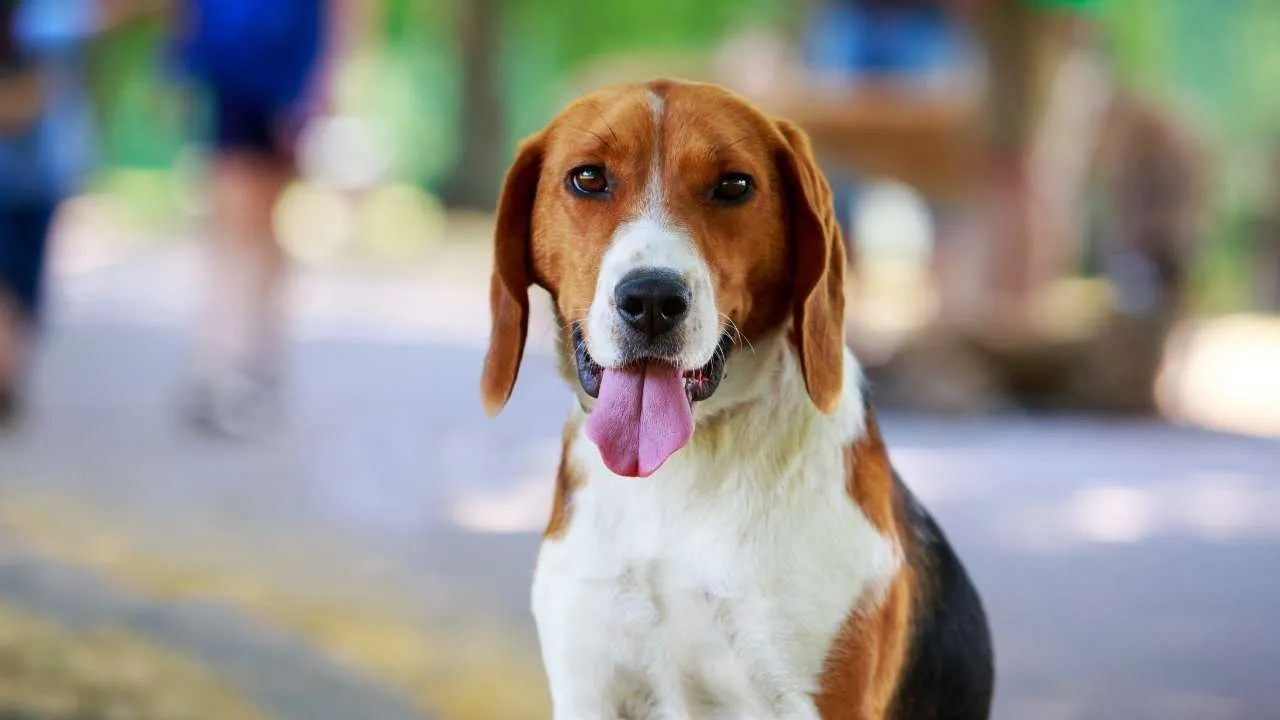
The American Foxhound does not get nearly enough credit.
This small dog breed is basically bred into American hunting history. It is even the official state dog of Virginia, according to WebMD. That’s NOT nothing.
Bred for stamina and scent work over long distances, these dogs bring a steady, patient energy to tracking that many faster breeds don’t have.
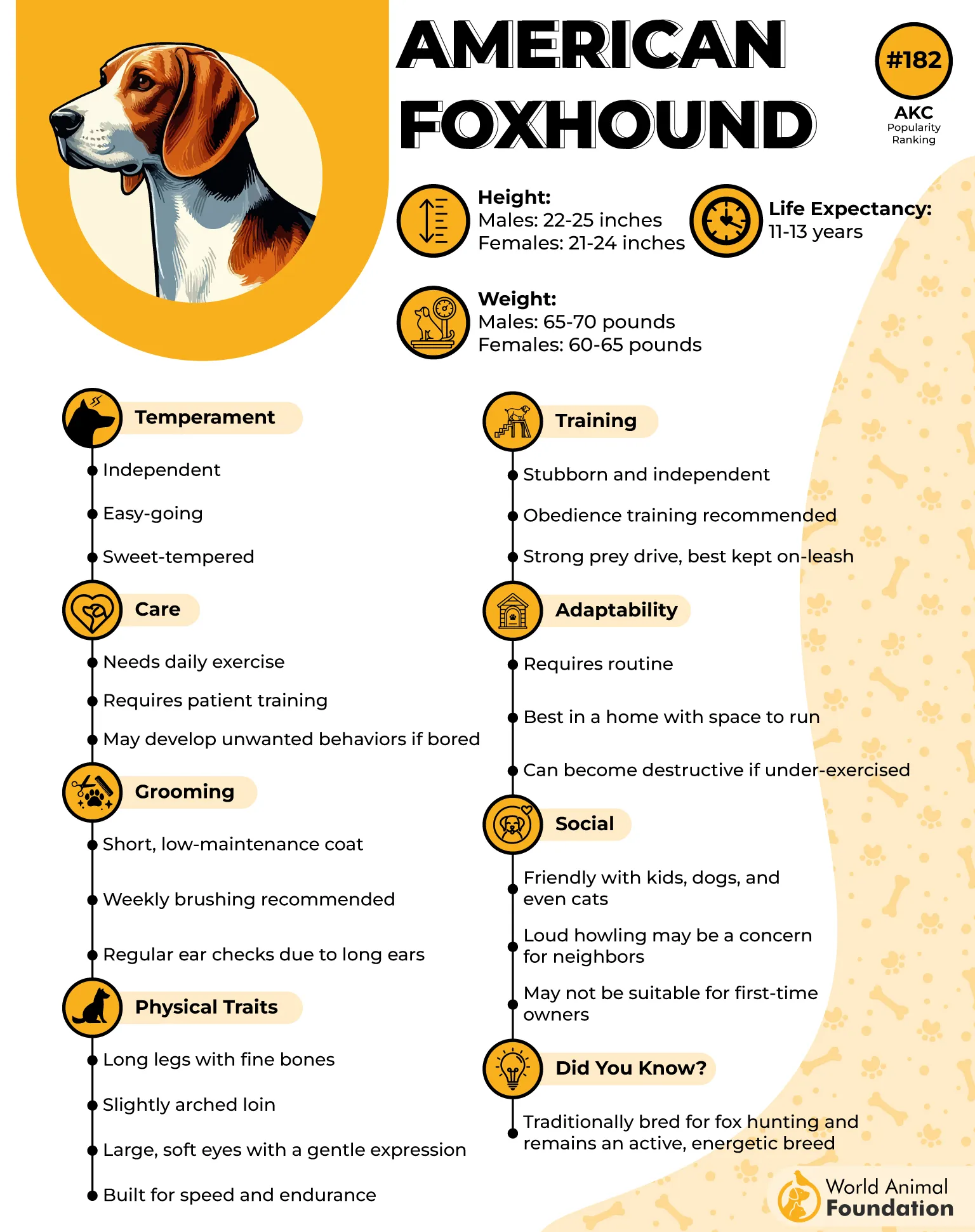
American Foxhounds work well in pack or solo, and their nose holds up admirably on longer, older trails. They are friendly, good with other dogs, and generally good family dogs when they are not on the clock.
Training takes time and repetition, same as most hounds. But once an American Foxhound understands the job, it brings a level of patience to tracking that makes it one of the most underrated dogs on this list.
Conclusion
Losing a deer after a good hit is one of the worst feelings in hunting.
A blood tracking dog changes that.
Each of the blood trailing dogs on this list brings something real to the table when it’s time to find wounded deer and trail blood.
No dog replaces good shot placement or patience before you start blood trailing deer.
But when the trail gets thin, and the blood runs out, and you are standing there with a flashlight with no idea which direction to follow, a good blood dog is the difference between a recovered buck and a regrettable story.
Start training early. Stay consistent. Give your puppy real experience on actual trails.
Because at the end of the day, that dog is not merely a tool.
It’s your best friend in the woods, doing the one thing you can’t do yourself.
Finding what’s lost.
