




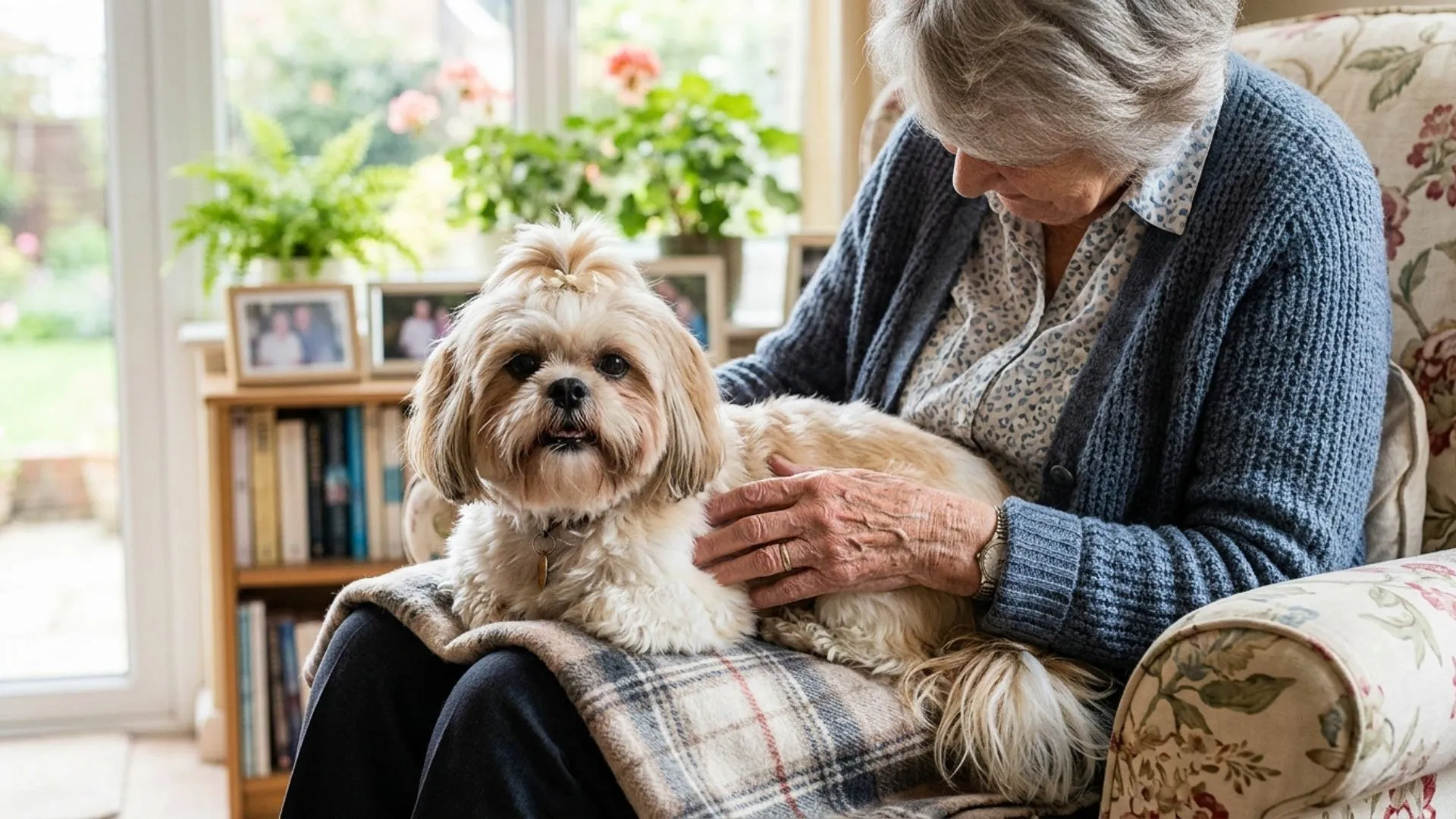
Getting older doesn’t mean life slows down; it means you finally get to enjoy it at your own pace. And there’s no better companion for this chapter than a dog who’s just as happy lounging on the couch as you are.
According to The New York Times, seniors with pets make 30% fewer doctor visits than those without, a clear sign that furry friends are more than just companions; they’re lifestyle upgrades.
Of course, not every dog is suited to a relaxed routine. Some breeds will have you racing across the yard at 6:00 AM, while others are content to curl up beside you as you sip your morning coffee.
This guide highlights the latter: dogs built for calm, cozy companionship. Let’s explore the breeds that are perfectly matched to your slower-paced lifestyle.
Best Dog Breeds for Seniors With a Relaxed Lifestyle
1. Cavalier King Charles Spaniel
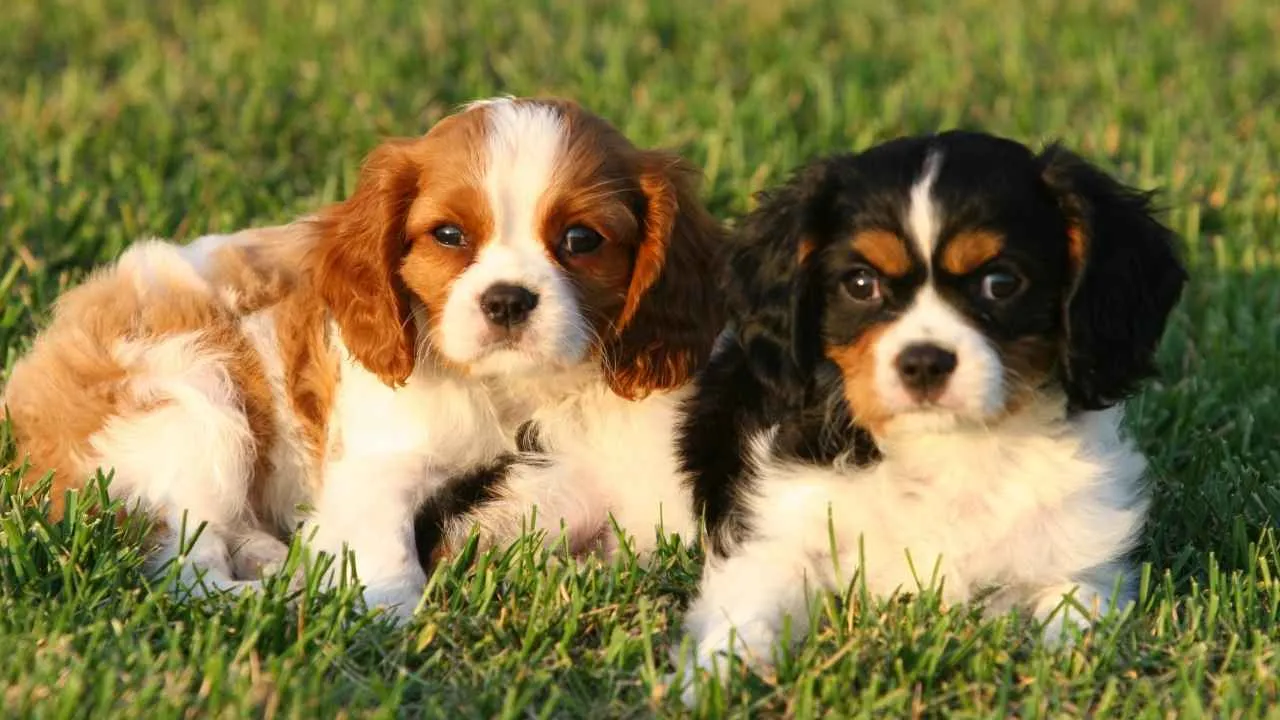
This charming breed has long been associated with royalty, tracing back to the 17th century when King Charles I and his son adored these little companions. So beloved were they that they often accompanied kings to parliament and on long journeys, according to PDSA. Famous figures like Queen Victoria and John Churchill also counted them among their favorites.
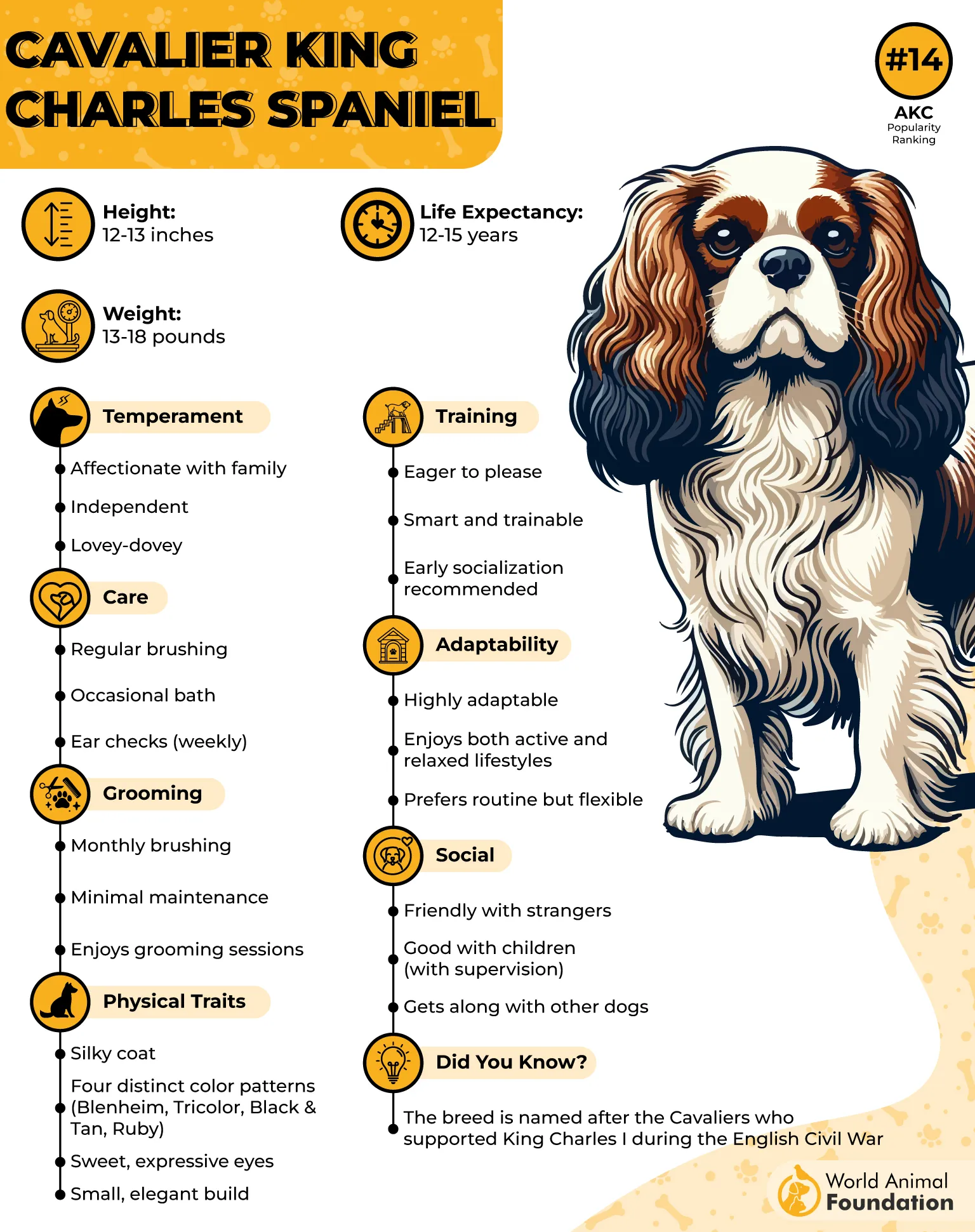
Weighing just 13–18 pounds, the Cavalier King Charles Spaniel was originally bred to sit on the feet of royalty, providing warmth and comfort to aching joints. Beyond their lapdog duties, they offer emotional benefits: interacting with them can release oxytocin (the “feel-good” hormone) and reduce cortisol, helping to ease stress.
Calm and gentle at home, this breed sleeps 14–16 hours a day once its moderate exercise needs are met. Their high emotional intelligence allows them to mirror human feelings and sense potential threats.
Affectionate by nature, they show empathy through pawing and direct eye contact, making them excellent therapy dogs. With just 20–30 minutes of daily walks and indoor play, Cavaliers get the mental and physical stimulation they need—but always keep them on leash, as their curiosity and keen senses can lead them astray.
2. Bichon Frise
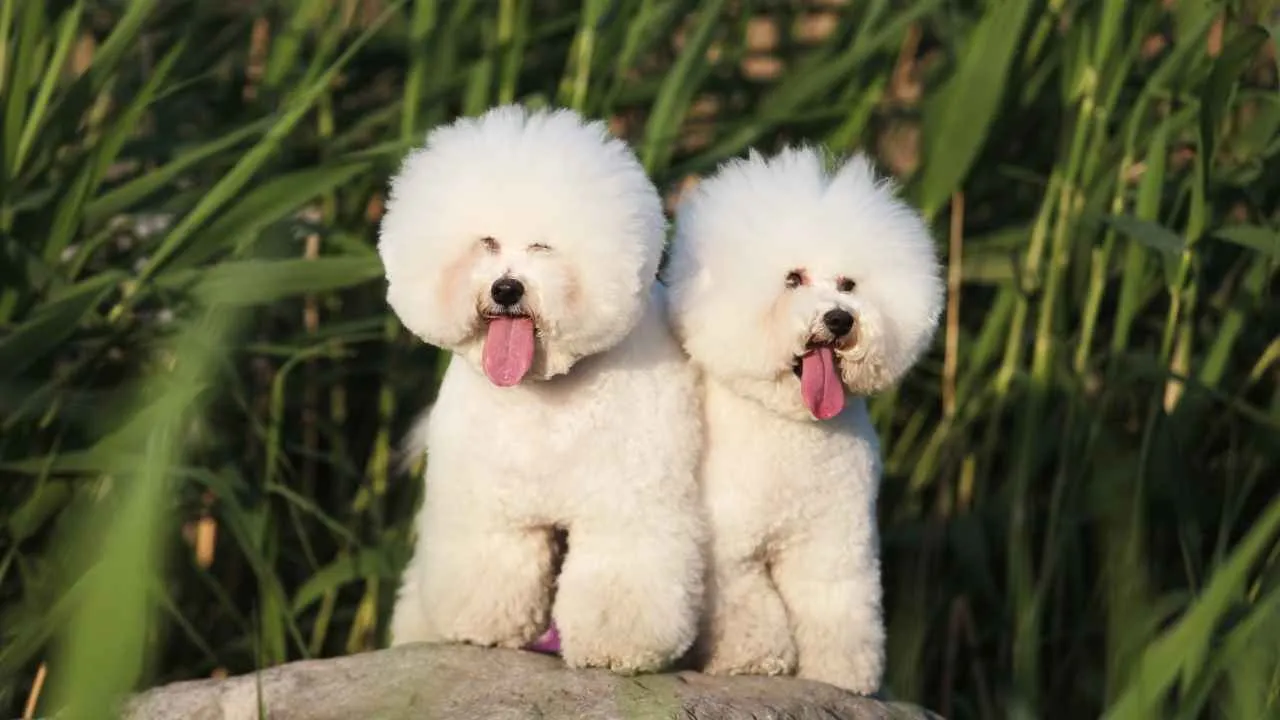
Often featured in royal portraits of France and Spain, the Bichon Frise has a storied history dating back to the 13th century in the Canary Islands. Sailors carried these little companions on ships, and they were traded across Europe. During the French Revolution, the breed adapted to hardship by performing as street dancers and circus entertainers.
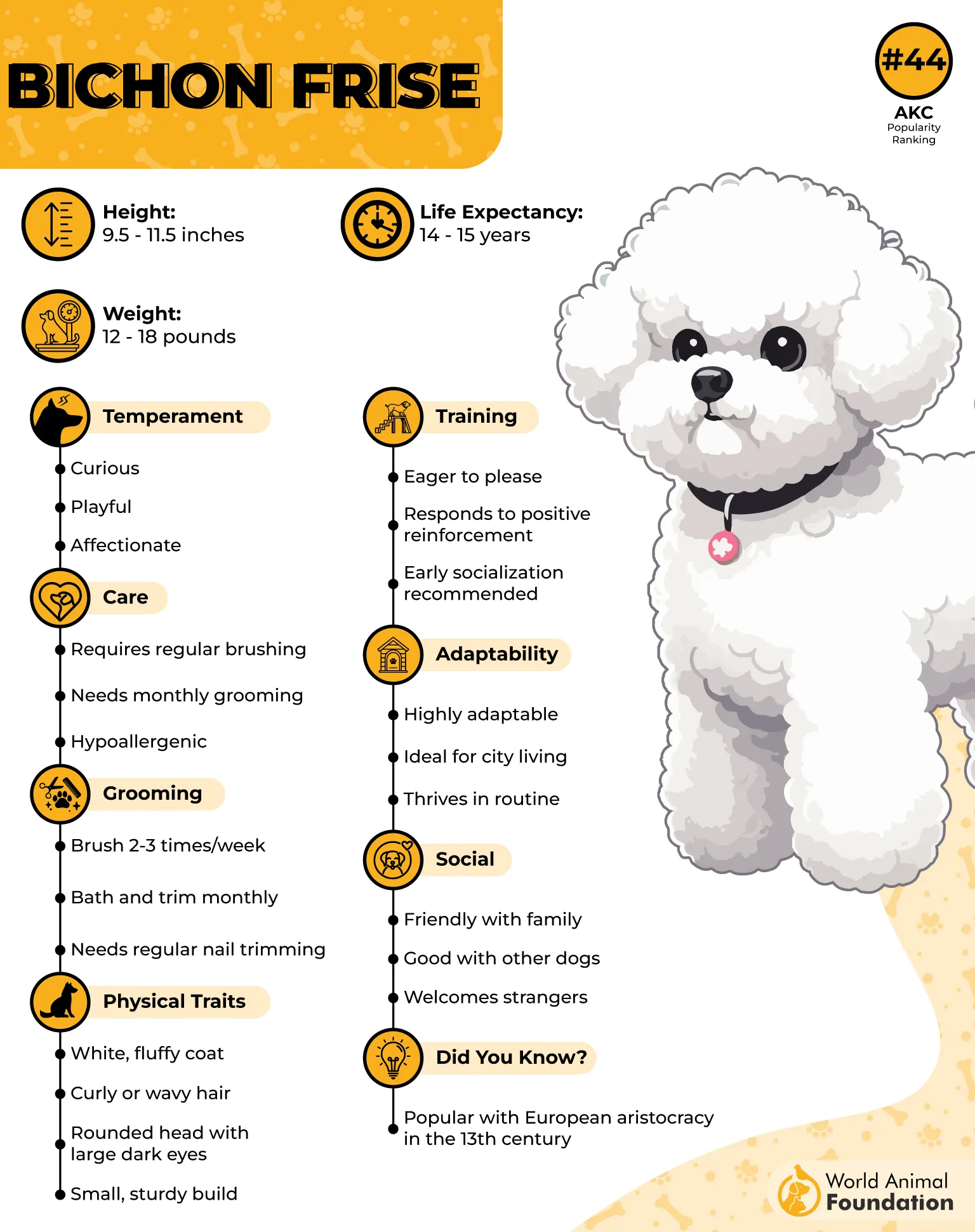
Weighing just 7–12 pounds, the Bichon Frise is perfectly portable: ideal for coffee shops, buses, or long vacations. Its pure white, curly coat grows continuously, trapping loose hair and making it hypoallergenic—an excellent choice for seniors with allergies or asthma.
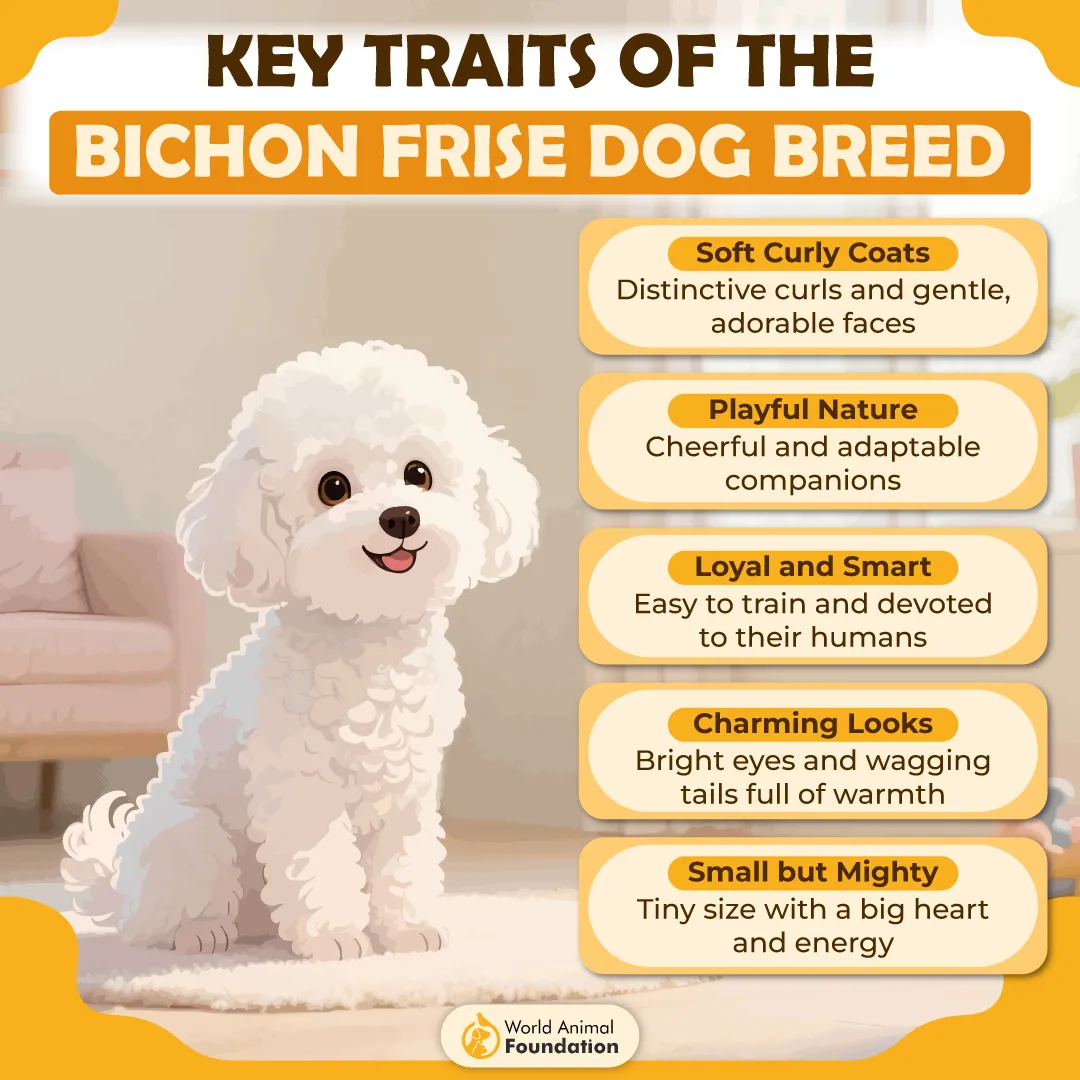
This affectionate breed forms deep, loyal bonds with interactions that release oxytocin, helping to lower blood pressure and provide emotional comfort. Moderate exercise, such as 20–30 minutes of daily walks and play, keeps them happy and healthy. Thanks to its circus heritage, the Bichon Frise loves to entertain, twirling and zooming around to bring joy to any household.
3. Shih Tzu
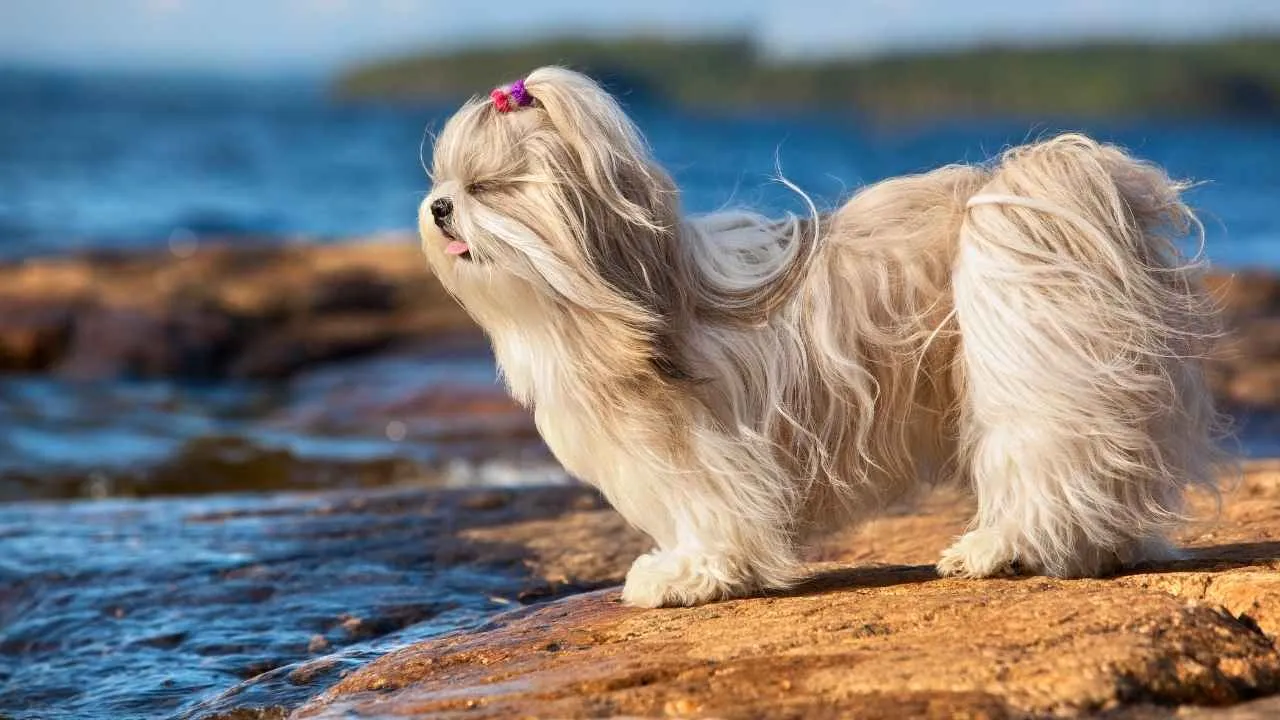
Originating in the 17th century within the walls of China’s Forbidden City, the Shih Tzu was created by crossing the Lhasa Apso with the Pekingese. Originally called the Lhasa Lion Dog for its lion-like appearance, this breed was considered sacred and held a special place in Chinese royal culture.
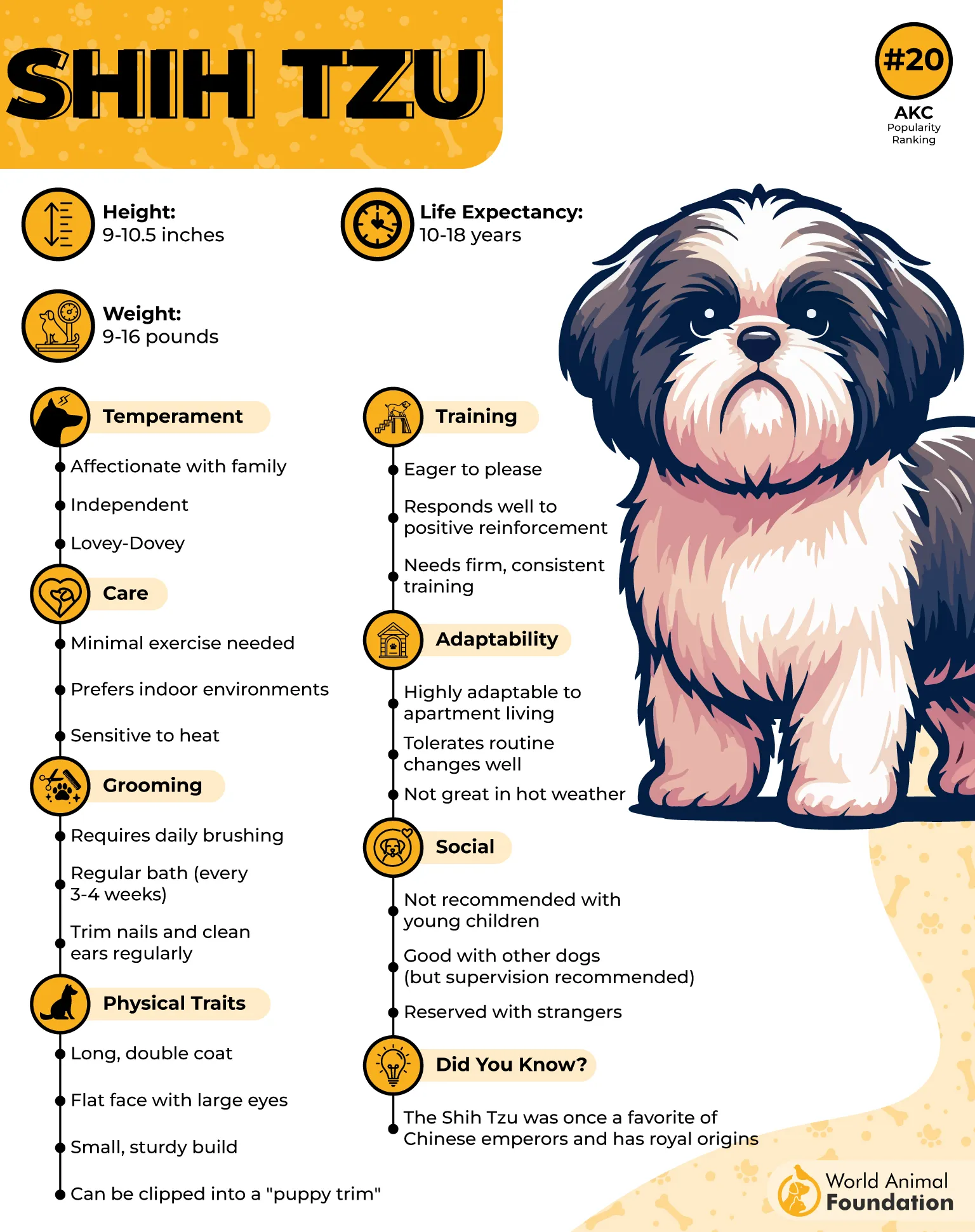
Weighing just 12–18 pounds, the Shih Tzu is a compact, low-impact companion, perfect for seniors or small-space living. With minimal exercise needs, 20–30 minutes of brisk walks or indoor play, they are ideal for households seeking a calm yet affectionate dog.
Petplan states that this people-centric breed thrives on social interaction, curls up in laps, and even serves as a therapy dog thanks to its gentle nature and emotional intelligence. Being brachycephalic, Shih Tzus require care during hot weather to prevent breathing difficulties.
Loyal, loving, and sociable, they bond deeply with families, children, and other pets alike, making them a perfect first-time dog or a devoted royal companion for modern homes.
4. Maltese
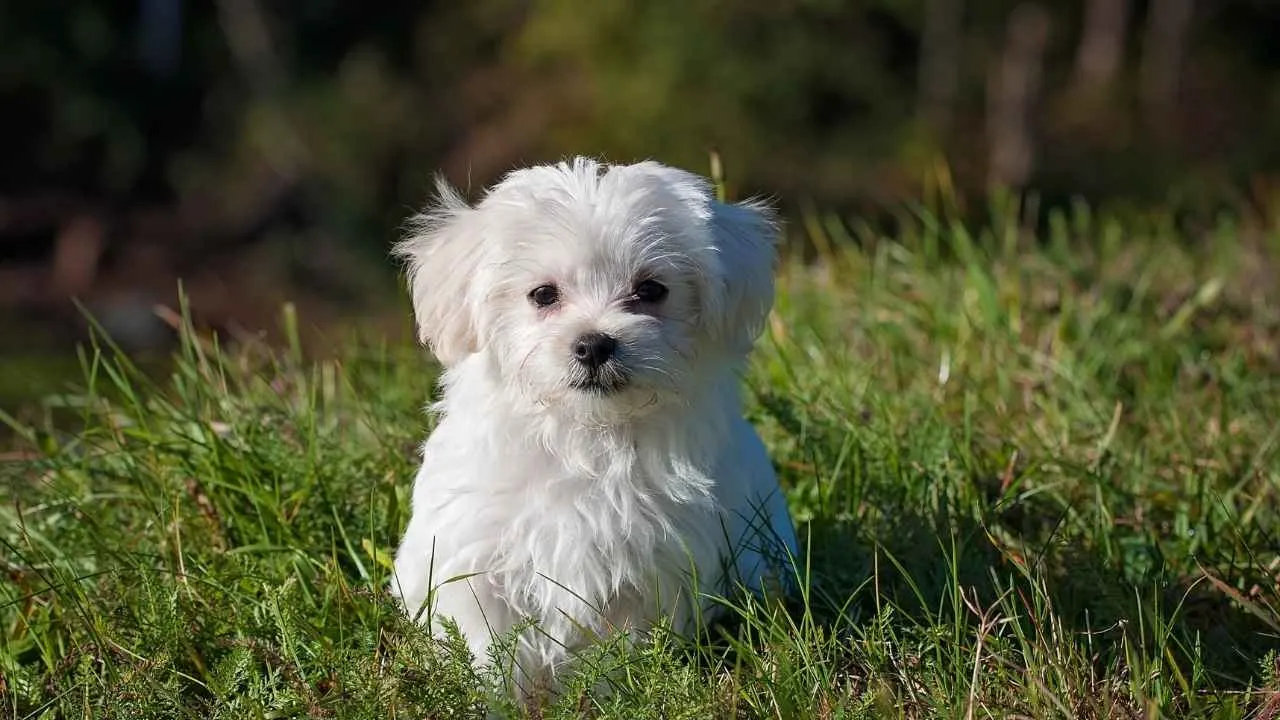
Dating back over 2,000 years, the Maltese has graced the courts of royals and aristocrats across civilizations, including the Phoenicians, Arabs, Greeks, and Romans. Revered for its delicate beauty, this tiny lapdog often appears in ceramic art and poetry as a symbol of elegance and loyalty.
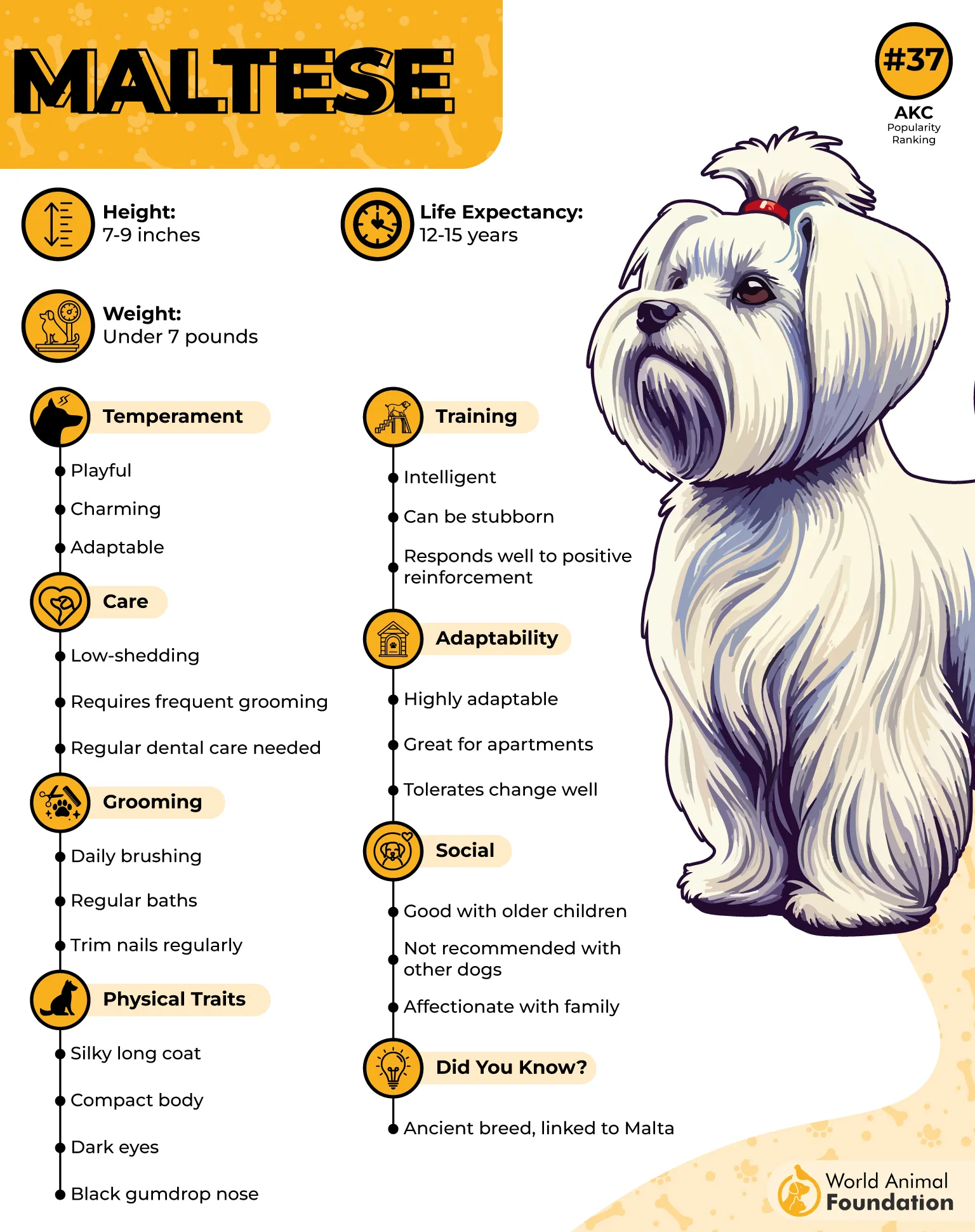
Weighing just 4–7 pounds, the Maltese is perfectly suited for seniors and small-space living. Its small frame and short legs make indoor activity safe and manageable, while its keen emotional intelligence allows it to provide therapeutic benefits, helping delay neurodegenerative decline and reduce stress. With a lifespan of 12–15 years, it offers years of companionship and joy.
Moderate exercise, two short walks a day plus playful indoor activities, keeps this gentle breed happy and healthy. Without a thick inner coat, the Maltese is best suited for indoor living and mild climates. While affectionate and social, early handling and training are key, as this small dog can be snappy if not properly socialized.
5. French Bulldog
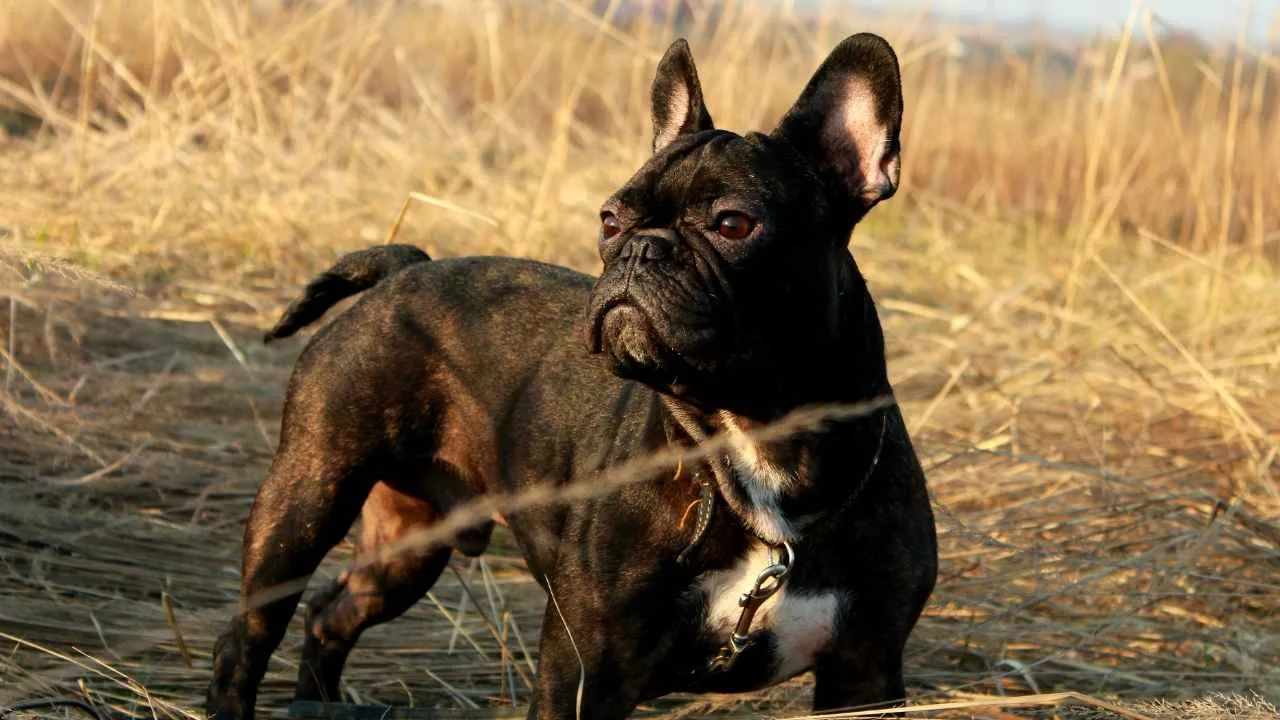
The exact history of the breed is unknown; however, the claims suggest that the Chincha Bulldog is the actual ancestor of the modern French Bulldog. The toy bulldogs were brought to France and then crossed with terriers and Pugs and made Frenchies, writes Dogs Australia.
This, too, is a brachycephalic breed, and low energy strolls are required (10-15 minutes). It has low aerobic capacity and sluggish metabolism, that make it sleep for 12-14 hours. It has a short and single-layered coat, thus requiring minimal grooming. It only barks to alert the owner of a potential threat.
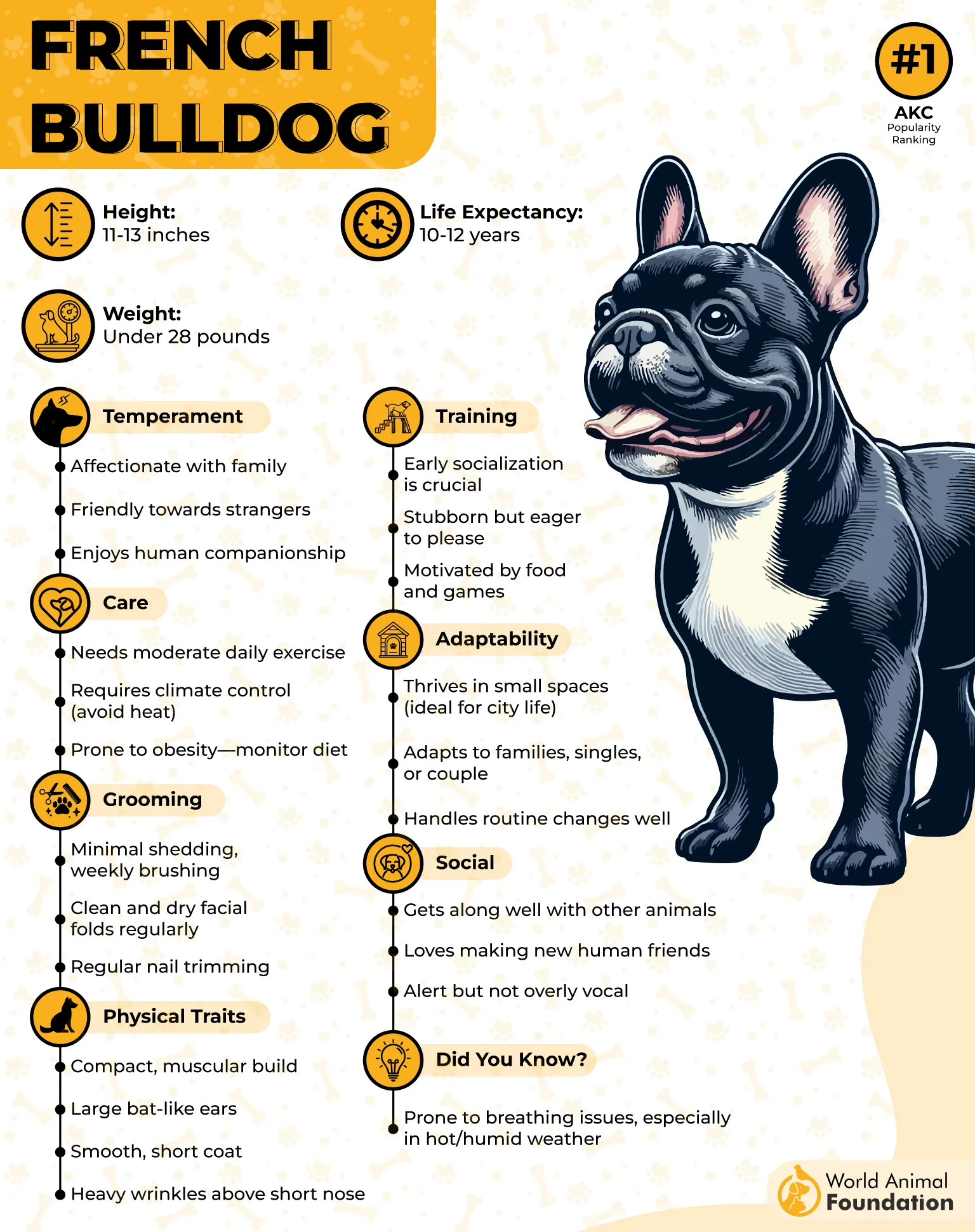
This loyal companion is a social butterfly and makes friends with strangers, and its high emotional intelligence allows it to read the owner’s moods and react accordingly. It has a balance of outgoing personality and being a couch potato, thus, is famous in a senior living community. Left alone for too long, and it can develop separation anxiety.
6. Havanese
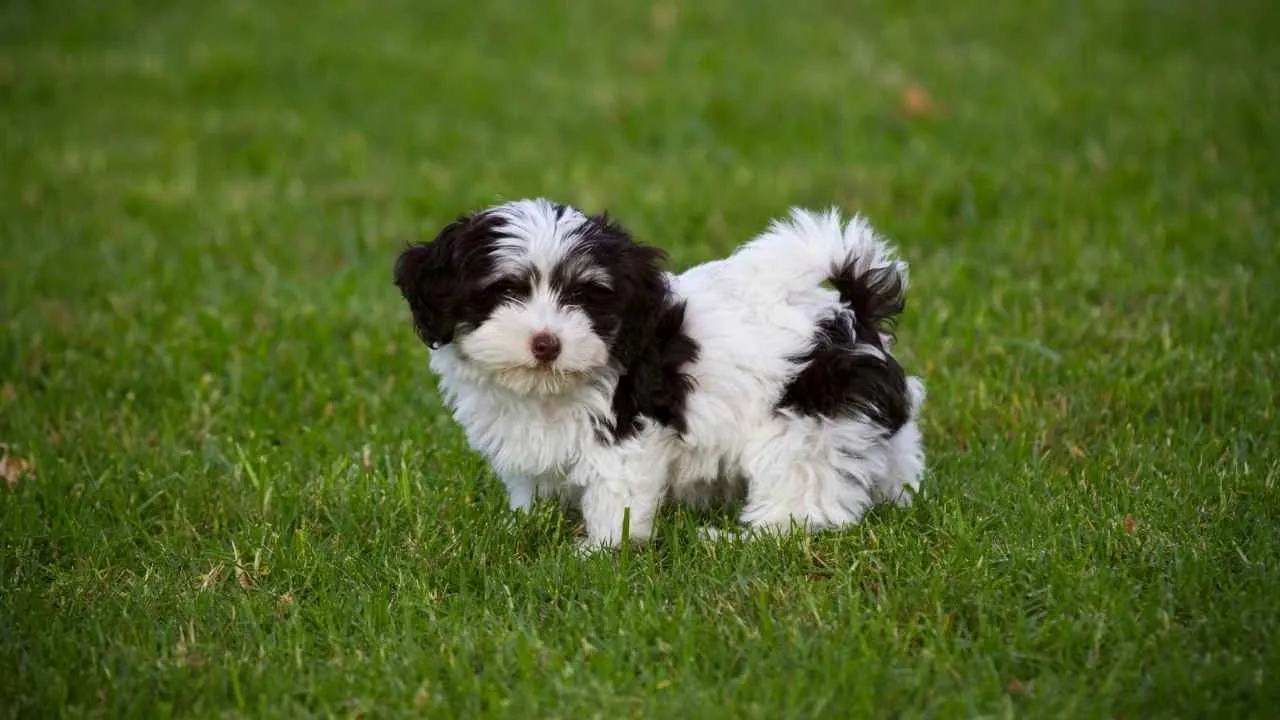
The national dog of Cuba, the Havanese, was bred by crossing an extinct breed Blanquito de la Habana (the little white dog of Havana), with other bichon types and poodles. It is sometimes known as the “Havana silk dog.” Its affectionate and loving nature opened the door to assistive, therapeutic, performance, and signal jobs.
The serotonin and dopamine production provide a non-pharmacological enhancer that reduces loneliness, anxiety, and depression. The small size (8.5-11.5 inches) and lighter weight (7-15 pounds) make it a perfect dog for apartment life. It has a short coat with low shedding that requires low grooming (weekly brushing and occasional baths).
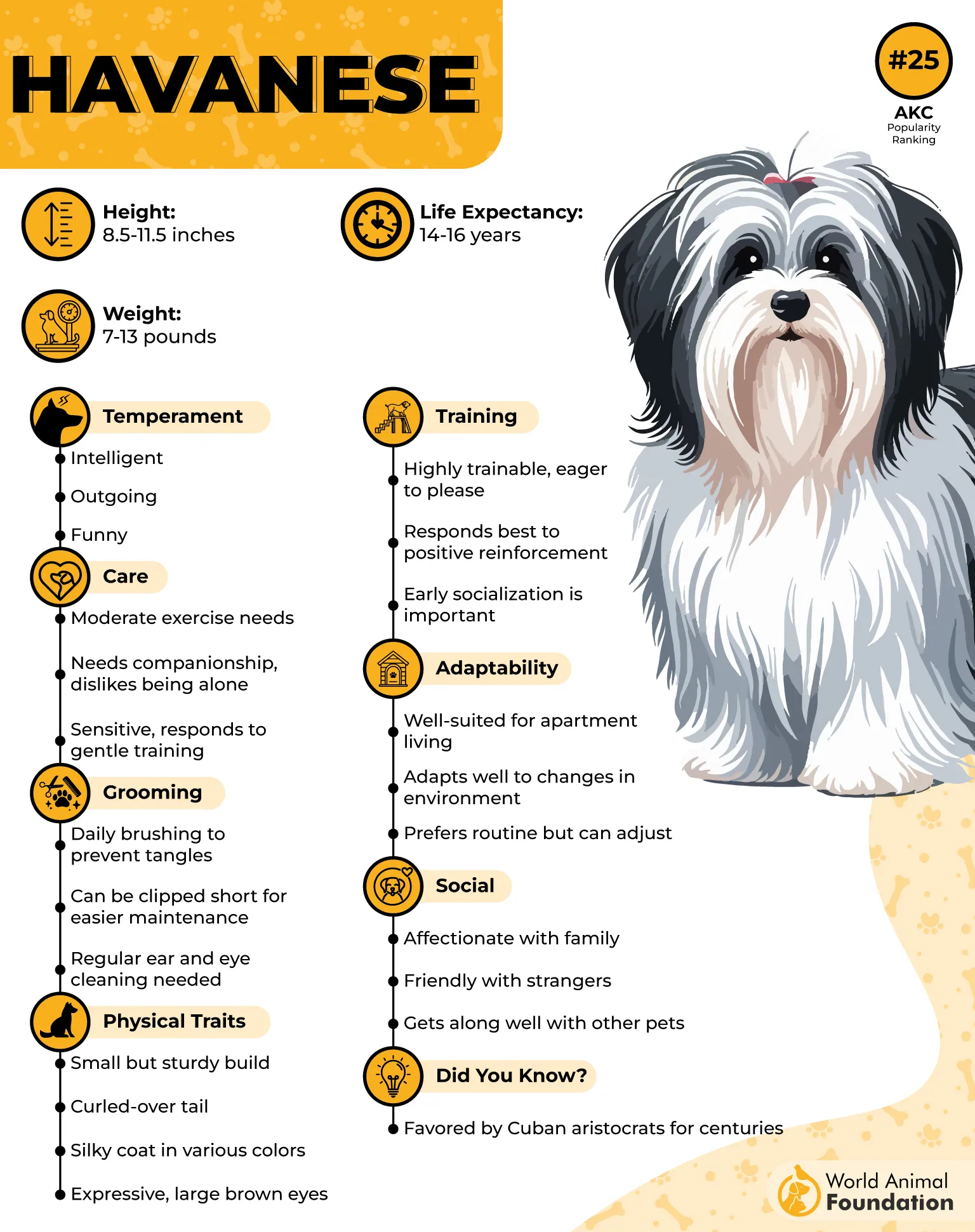
This tiny animal has a “switch-off” mode that lets it socialize openly and thrive in short daily walks, and it remains laid-back indoors. It is highly food motivated, making it easy to train. Despite its small size, it has strong watchful instincts. This makes it a good watchdog without being overly aggressive.
7. Greyhound
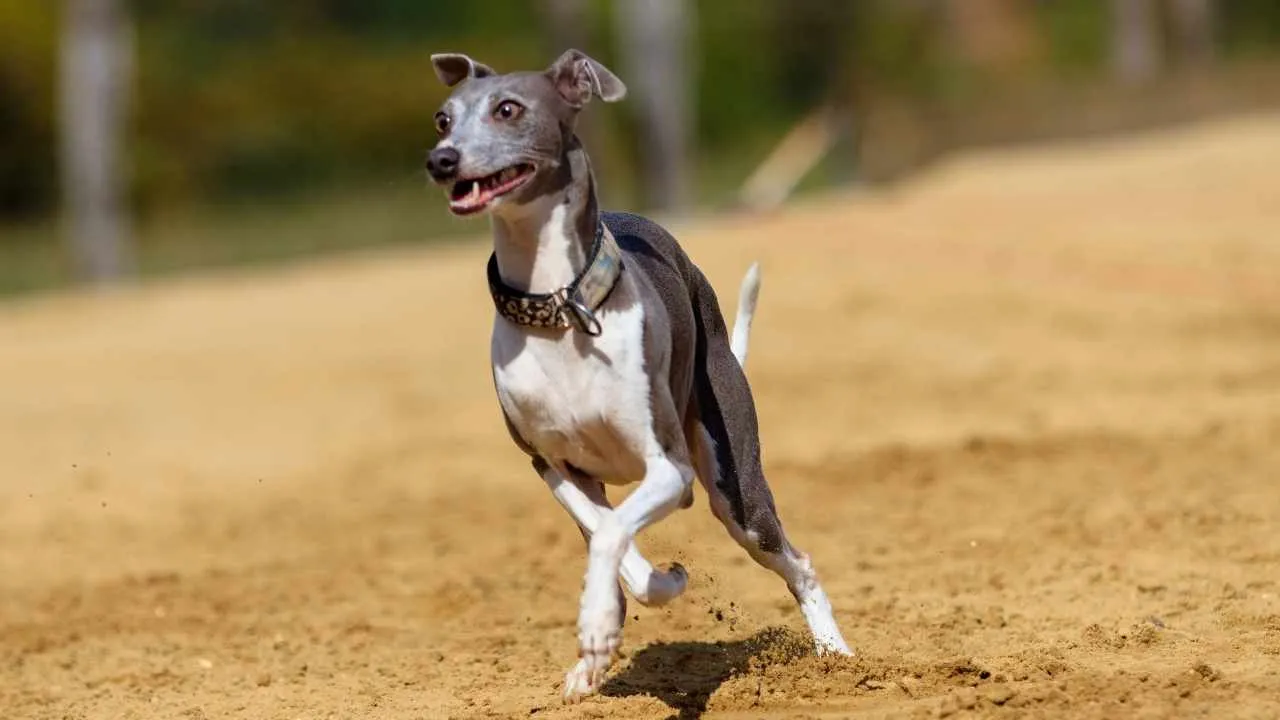
One of the most ancient dog breeds, the Greyhound, has a history that goes back 6,000 years. Its primary goal was to course antelope, bears, and wolves. Known to be the racehorse of canines world, it runs at a speed of 43-45 mph.
Despite being so fast, it needs 20 minutes of daily walk to remain healthy, and sleeps for almost 16-20 hours a day. The polite manner makes it steady on the leash. It does not require frequent grooming since it as a short coat with low natural oils. It makes a deep bond with the owner, but sometimes it can be stubborn because of its independent nature. Proper training and early socialization help train them.
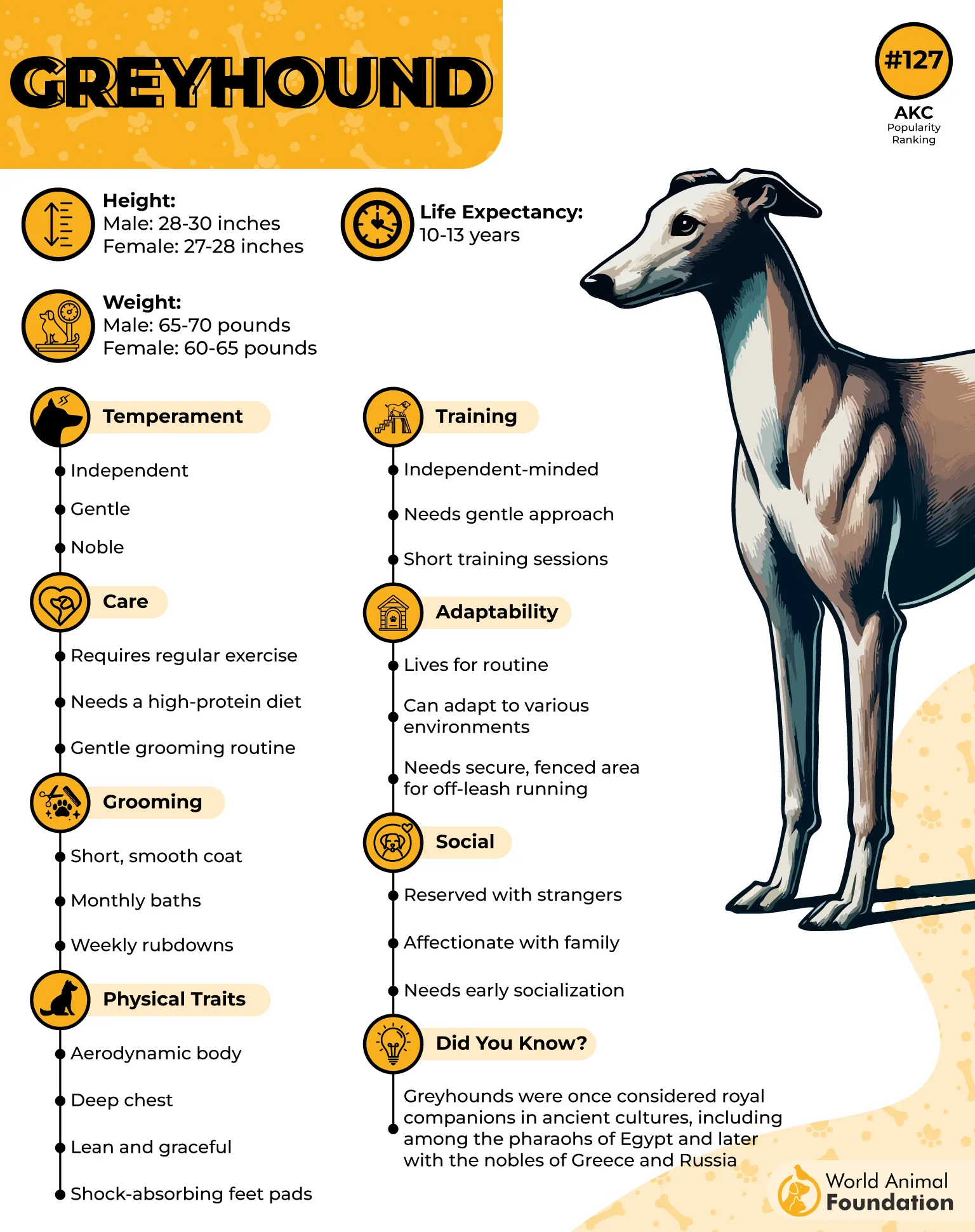
Since the dog is tall (27-30 inches), an older person can groom, pat, or put a coat on the dog without bending. This dog has a cat-like personality: self-cleaning with minimal or zero dog odor and easy housetraining. It has a strong chase drive and can even jump over 6 ft., so a secure fence yard is usually recommended.
Conclusion
The right breed does not fill your home with nose and fur, it fills your day with purpose. Each breed on this list brings something genuinely different to the table: the Cavalier’s emotional warmth, the Bichon’s cheerful resilience, the Shih Tzu’s quiet dignity, the Maltese’s bold little heart, the Frenchie’s effortless cool, the Havanese’s eager loyalty, and the Greyhound’s unexpected calm.
So, if you are on the fence, consider this your sign. Find the breed that matches your pace, your space, and your personality, and let them match yours right back. Slow walks, quiet mornings, and a warm dog beside you? That is not settling. That is living well.
