




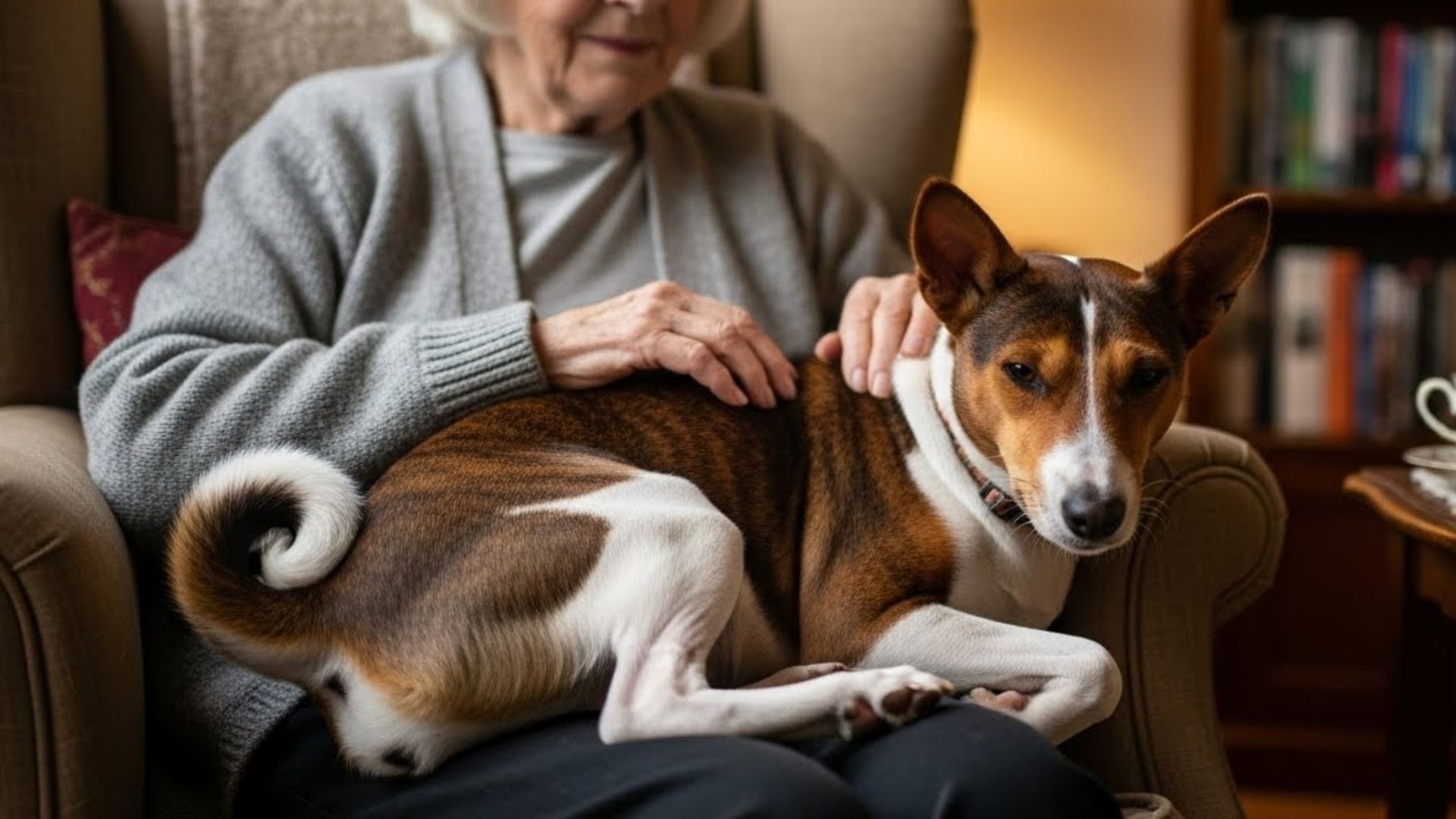
For seniors, choosing the right dog breed can make all the difference in enjoying companionship without added stress. Calm, gentle, and low-maintenance dogs often suit those seeking quiet comfort and emotional support. The right breed can offer warmth, loyalty, and a soothing presence, enhancing daily life.
Breeds known for their relaxed demeanor, moderate energy, and adaptability are ideal for seniors. Smaller dogs are often easier to manage physically, while certain larger breeds are surprisingly calm and affectionate. Factors such as grooming needs, exercise requirements, and temperament play a crucial role in fostering a harmonious bond.
Ultimately, the best dog for a senior is one that fits seamlessly into their lifestyle. With the right match, companionship can become a source of joy, comfort, and even enhanced well-being.
Best Dog Breeds For Seniors Seeking Quiet Comfort
The perfect senior-friendly dog blends calm temperament, manageable care, and unwavering companionship.
1. Basenji
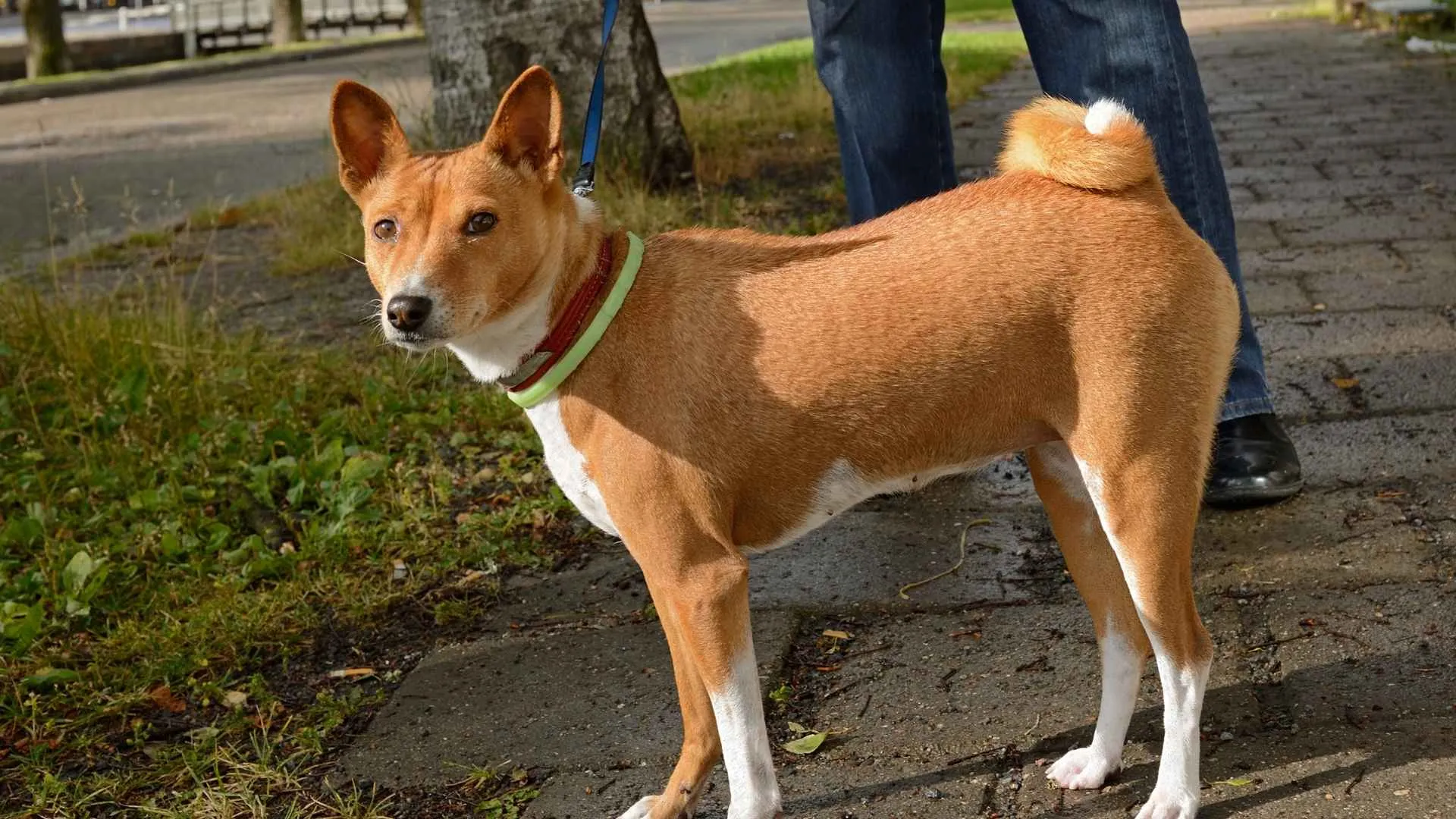
The Basenji, often called Africa’s “barkless dog,” is a small, graceful hound with a curled tail and expressive almond-shaped eyes, as per Purina. Agile and poised, they move like miniature racehorses and communicate not with barks but with a unique yodel.
A Glimpse into Ancient Paws
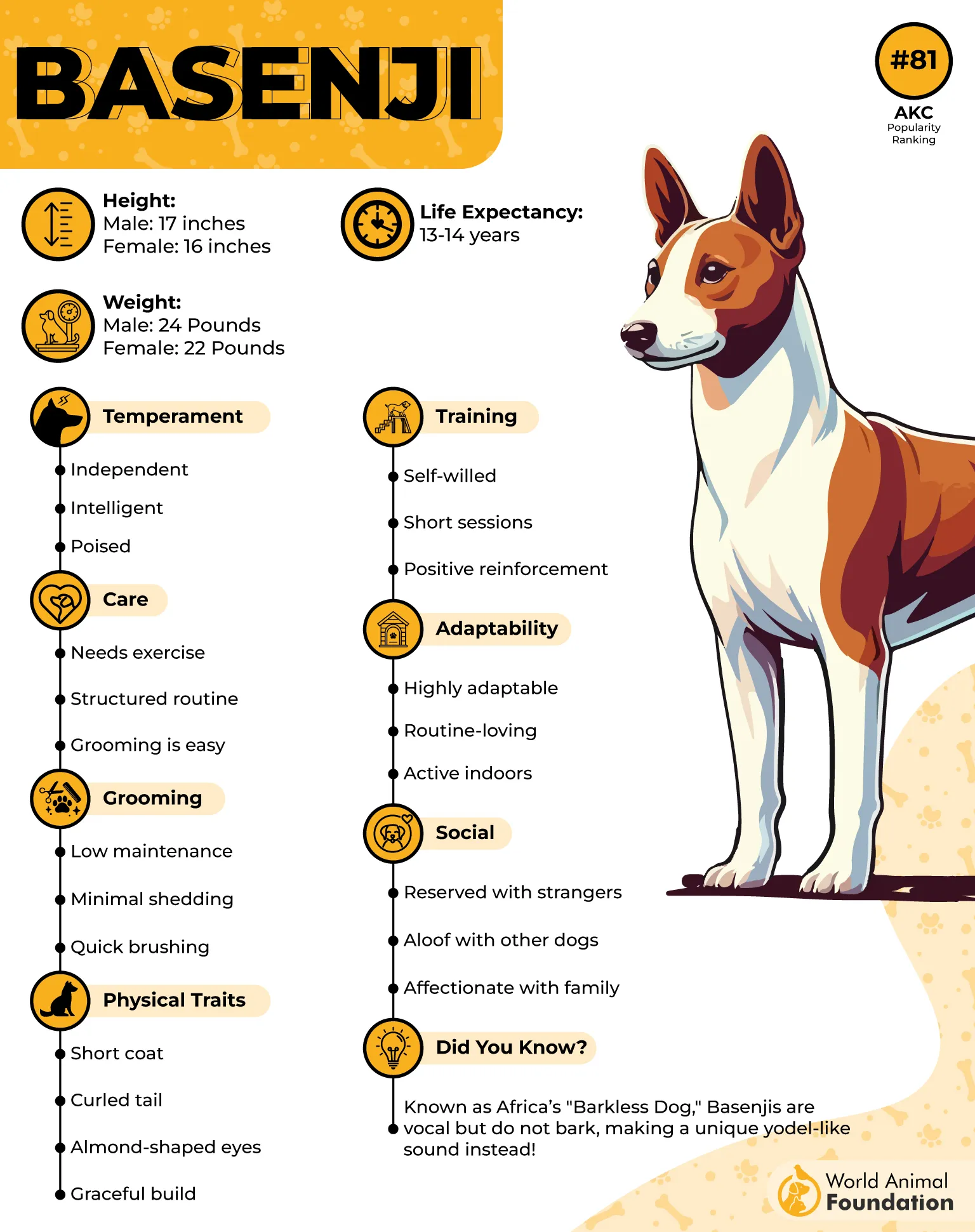
This ancient breed dates back thousands of years, appearing in Egyptian, Babylonian, and Mesopotamian art. Early humans relied on Basenji-type dogs as hunting partners, making them one of the oldest domesticated breeds still thriving today.
Grooming, Personality, and Lifestyle
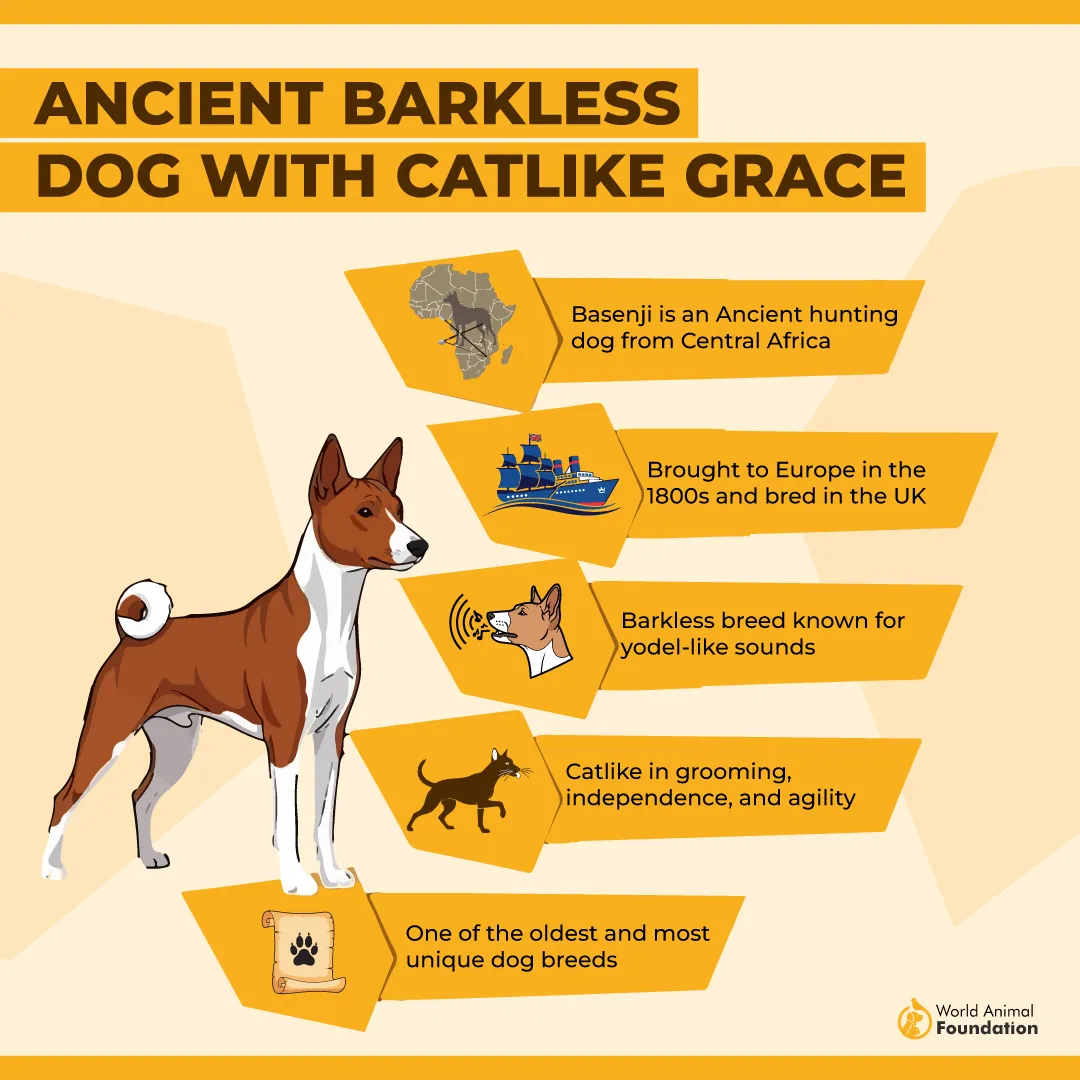
Basenjis are highly intelligent, energetic, and curious, but they self-groom like cats, making them low-maintenance companions. Aloof with strangers but loving toward their family, early socialization ensures they adapt well to a senior household.
Why Basenjis Shine for Seniors Seeking Calm Companionship
Quiet by nature, communicating with gentle yodels instead of loud barks
Small size and graceful build make them easy to manage indoors
Low-maintenance coat thanks to catlike self-grooming habits
Intelligent and playful without demanding constant attention
Loyal and affectionate with family, providing comfort and companionship
2. French Bulldog
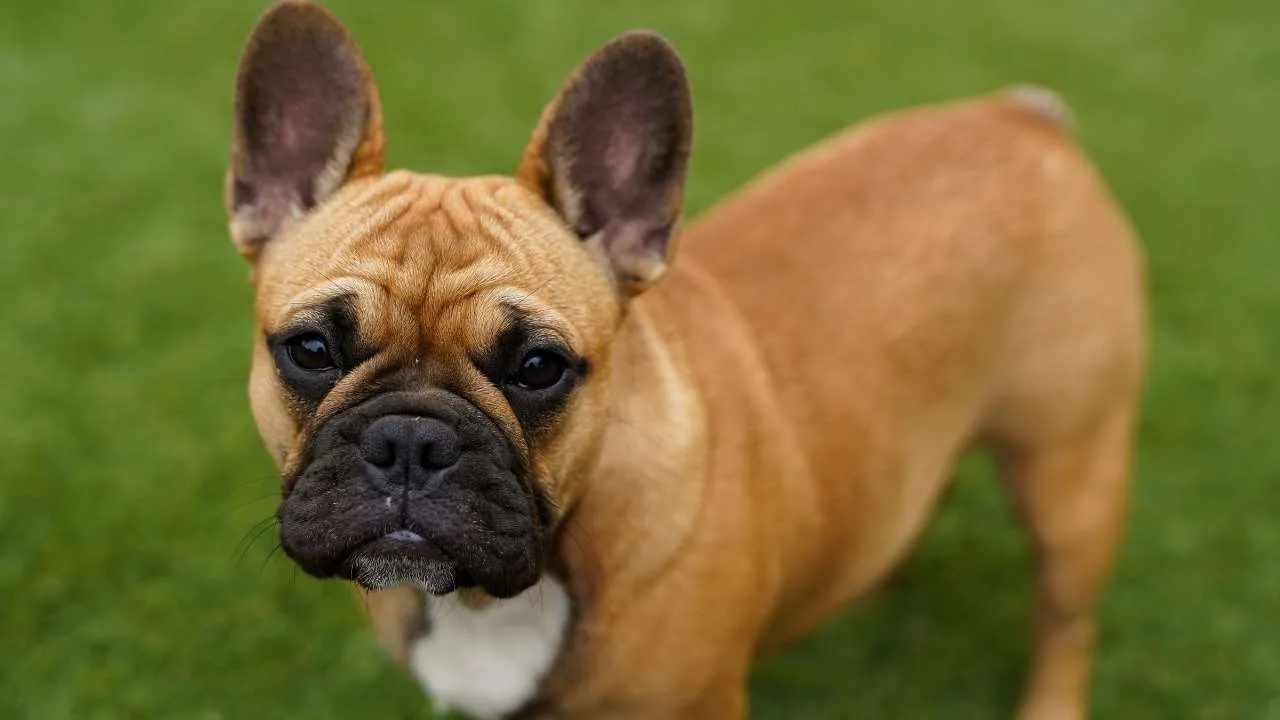
The French Bulldog, or “Frenchie,” was developed in the 1800s by crossing small Bulldogs with native French dogs, as per PDSA. With bat-like ears, a flat face, and a playful personality, this tiny hound is alert yet gentle, making it a devoted companion for seniors.
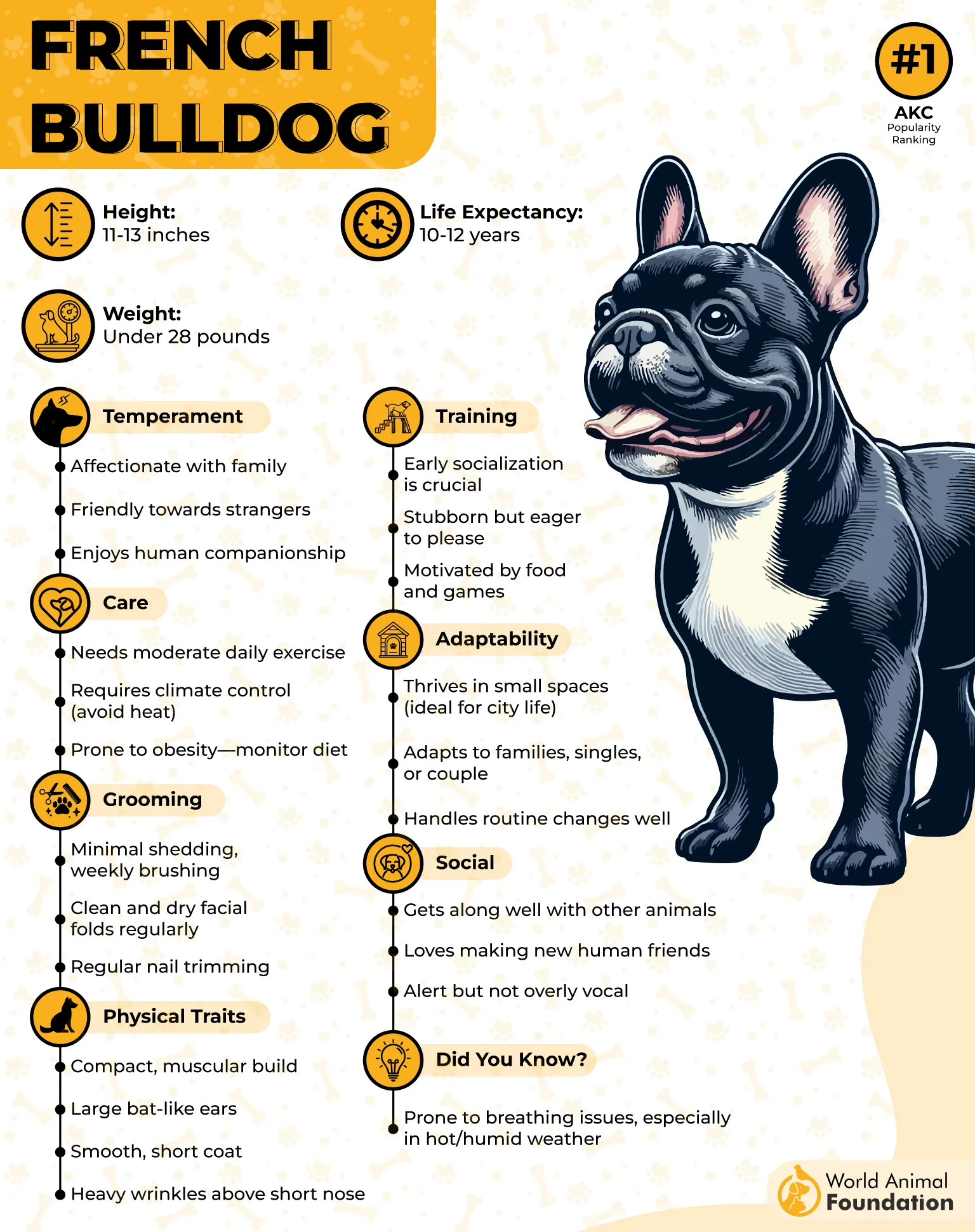
From Apartment-Friendly to Heart-Stealer
Frenchies adapt well to small spaces, requiring only short daily walks or light play in a yard. Their brachycephalic (flat-faced) structure means they must avoid overheating, especially in warm climates, but in moderate conditions, they thrive as calm, affectionate companions.
Grooming, Health, and Personality Tips
Low-maintenance in grooming, Frenchies need weekly brushing and daily cleaning of facial wrinkles to prevent infections. With early socialization and gentle, reward-based training, French Bulldogs flourish in a senior-friendly household.
Why French Bulldogs Delight Seniors Seeking Tranquility
Quiet nature with minimal barking, perfect for peaceful homes
Small size makes them easy to manage and cuddle
Low grooming needs, with a self-maintaining coat and minimal shedding
Playful yet calm energy keeps them entertaining without overwhelming
Highly affectionate and devoted, providing constant companionship
3. Pug
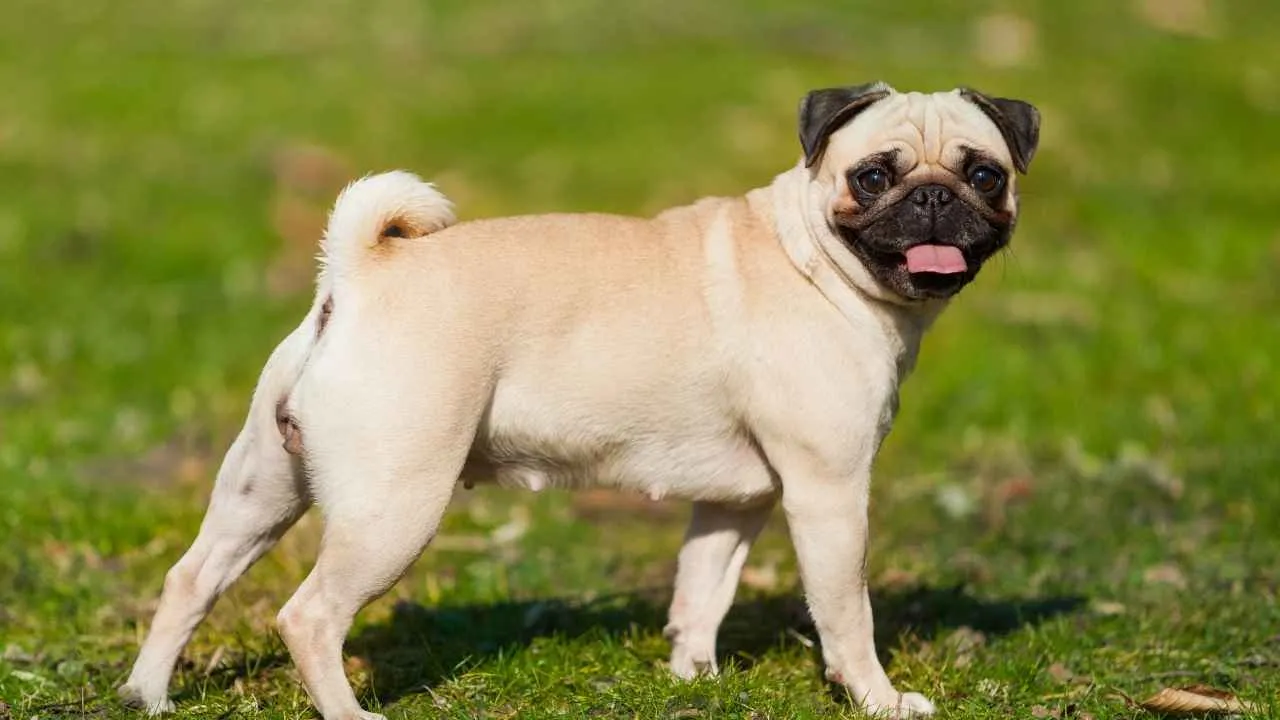
Pugs are small yet muscular dogs, famous for their playful and loving personalities. Known for the motto “multum in parvo” (“a lot in a little”), they pack energy, affection, and charm into a compact, snuggly frame. Their expressive wrinkled faces and big eyes make them instant heart-stealers.
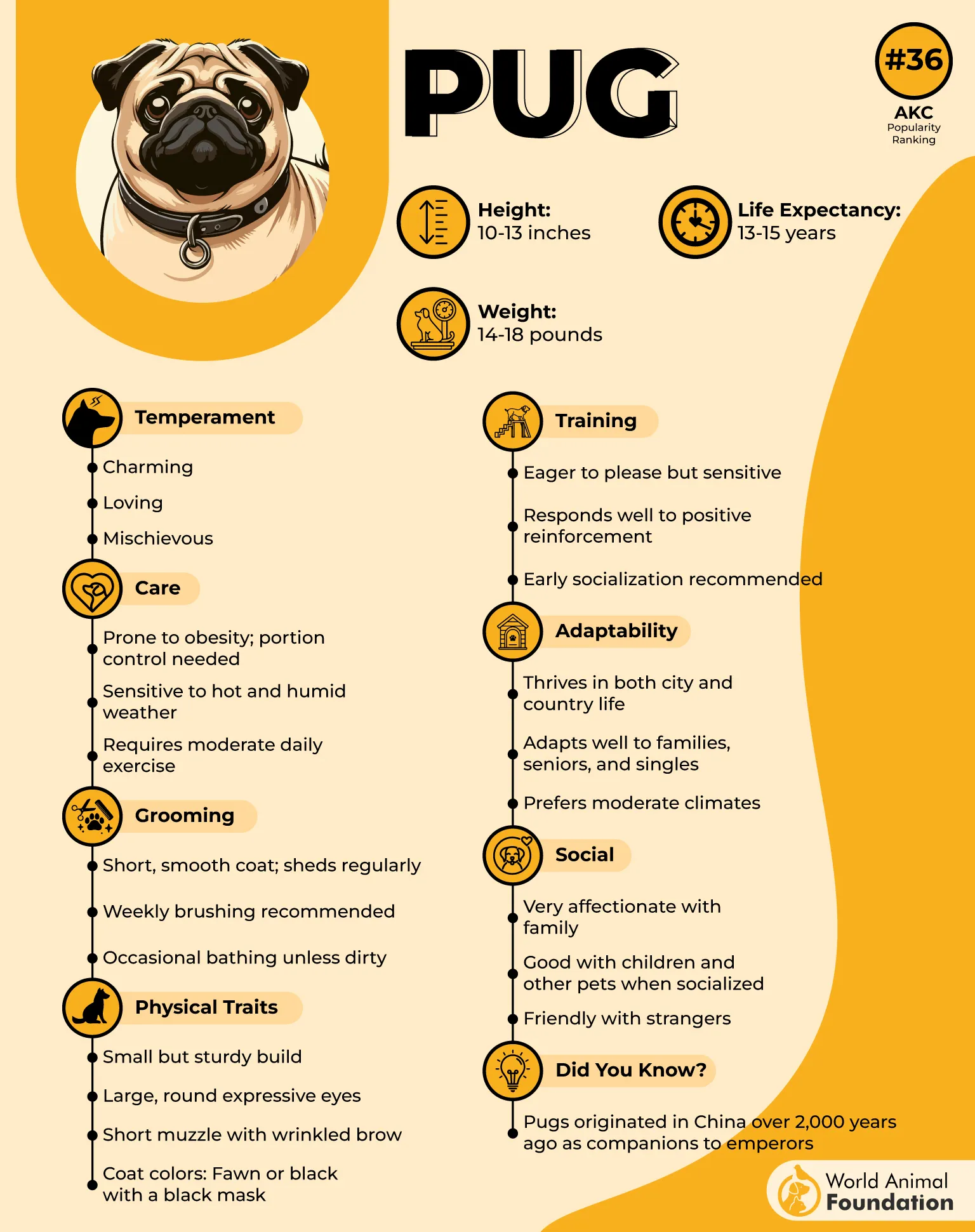
Royal Roots and Global Fame
Originating in China over 2,000 years ago, Pugs were treasured by emperors and later traveled to Europe via Dutch traders. Legends tie them to royal households in Holland, England, and beyond, giving them a legacy of loyalty, companionship, and gentle alertness.
Personality, Care, and Everyday Life
Pugs thrive on human attention and adapt well to city or country life. They enjoy moderate daily exercise, lounging with their owners, and easygoing social interactions. Short muzzles mean they need care in hot weather, while daily wrinkle cleaning and occasional grooming keep them healthy and happy for years.
Why Pugs Are Perfect for Seniors Seeking Calm Companionship
Quiet and laid-back, rarely disruptive in the home
Small, sturdy build for easy handling and cuddling
Affectionate and social, offering constant companionship
Low exercise demands, but playful enough to stay engaged
Minimal grooming with simple daily maintenance of coat and facial wrinkles
4. Pekingese
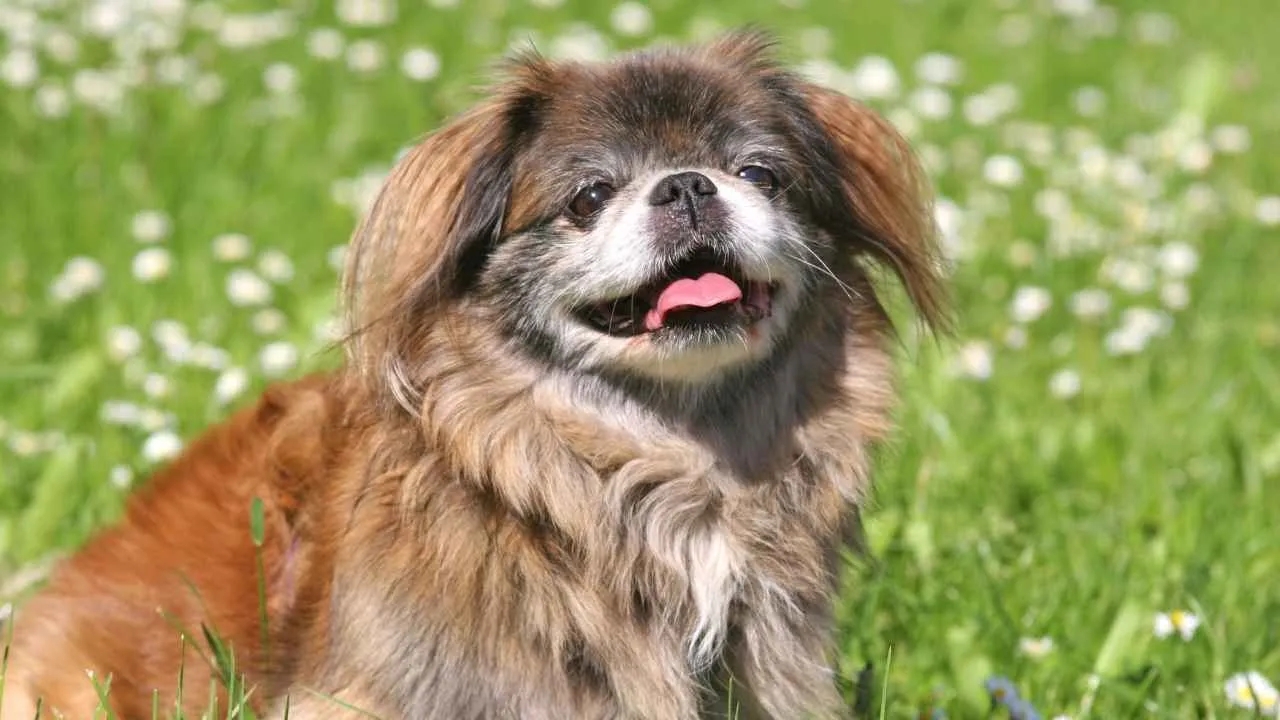
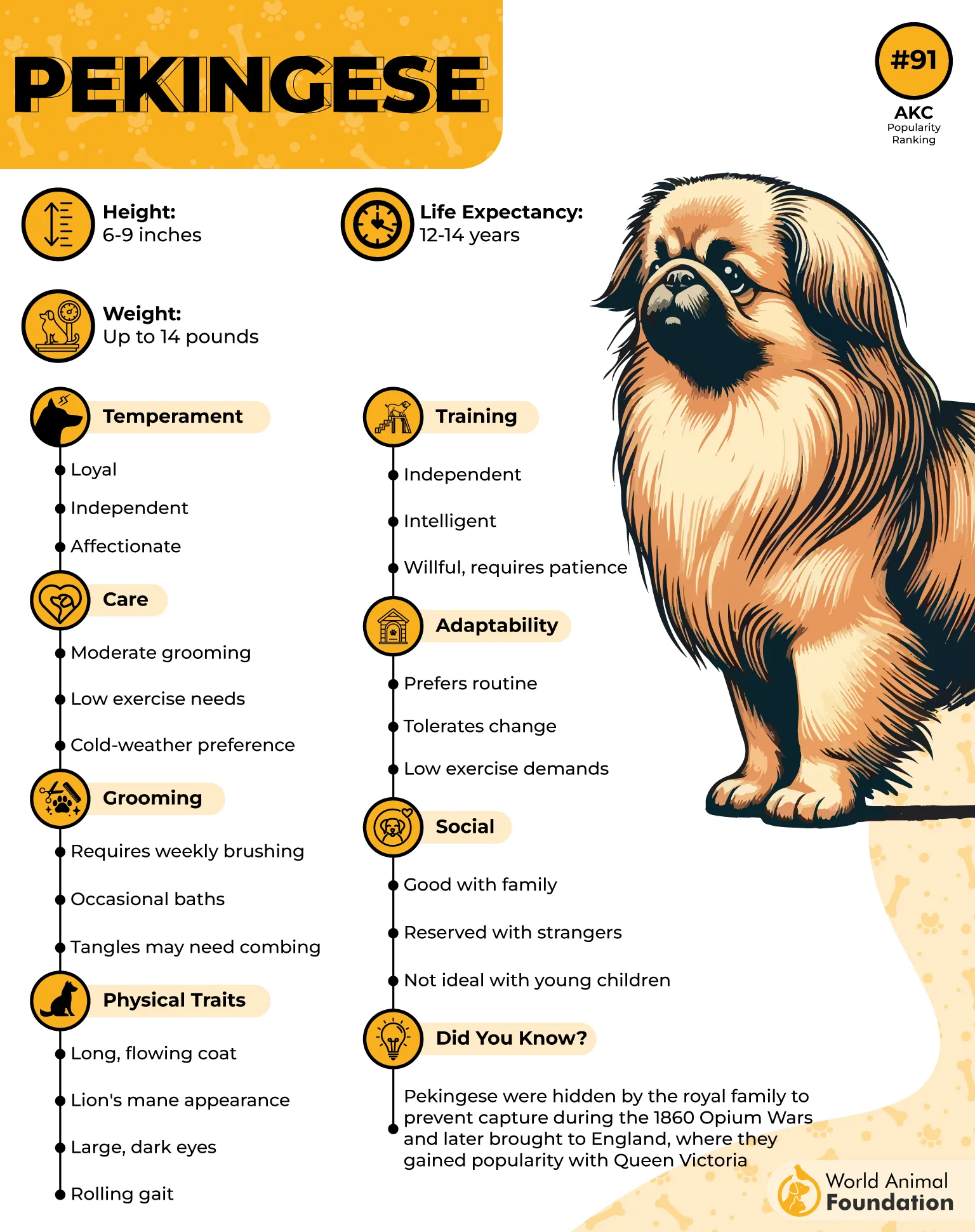
The Pekingese, once a treasured palace companion, is a small yet dignified toy breed with a long, flowing “lion’s mane” and expressive dark eyes. Revered in ancient China, these lapdogs were carried in the sleeves of nobles’ robes and admired for their courage, independence, and striking appearance.
From Imperial Courts to Modern Homes
Brought to the West in the 1800s, Pekingese quickly charmed European royalty and later American dog enthusiasts, according to Britannica. Their long history as companions of emperors and queens gives them a calm, self-assured demeanor, perfect for households that value quiet companionship and a dog with a regal personality.
Personality, Care, and Lifestyle Needs
Pekingese are loyal, affectionate, and low-energy dogs that enjoy leisurely walks and following their owners around the home. Their thick coat and flat face require careful grooming and protection from heat, but their serene nature and modest exercise needs make them excellent pets for seniors.

Why Pekingese Are Perfect for Seniors Seeking Gentle Companionship
Calm and quiet, rarely barking without cause
Compact, low-to-the-ground size ideal for lap cuddles
Loyal and affectionate without being overly demanding
Low exercise needs but enjoys brief daily walks
Requires moderate grooming, providing bonding time without excessive effort
5. Bernese Mountain Dog
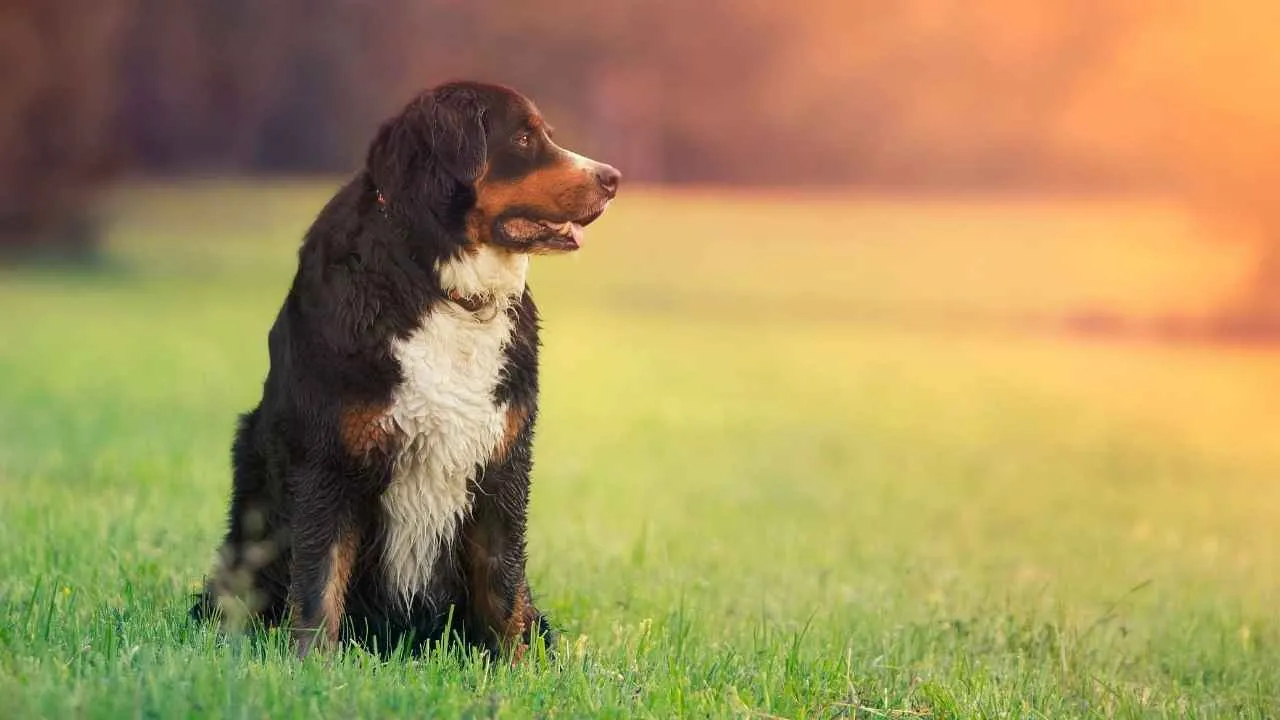
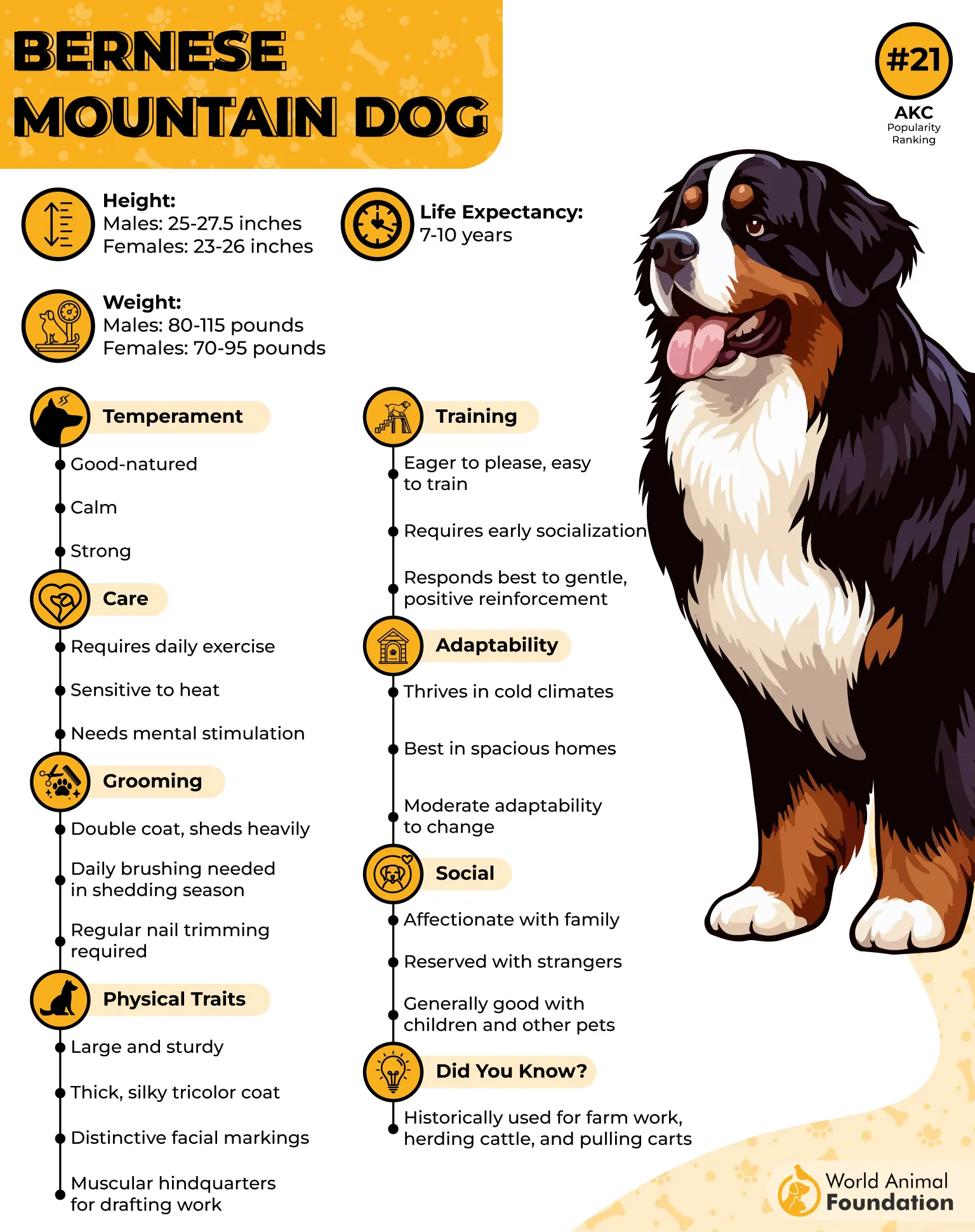
The Bernese Mountain Dog is a large, strikingly beautiful breed with a calm and affectionate temperament. Known for their soft, silky coat and noble gait, these gentle giants are as sweet as they are impressive, making them perfect companions for seniors who enjoy calm, loyal company.
From Farm Helpers to Family Friends
Originally bred in Switzerland to pull carts and help on farms, Berners were hardworking dogs with big hearts. Today, they are mostly cherished family pets, retaining their affectionate nature and love for being included in daily home life, including with children and other pets.
Personality, Care, and Lifestyle Needs
Bernese Mountain Dogs are intelligent, eager to please, and patient, though they can be shy around strangers. Moderate daily exercise, regular grooming, and socialization help keep them happy, while their gentle disposition makes them ideal for seniors who want a loving, calm, and attentive canine companion.
Why Bernese Mountain Dogs Are Perfect for Seniors Seeking Comfort
Calm and affectionate, providing constant companionship
Intelligent and eager to please, making training enjoyable
Patient with children and adaptable to household pets
Moderate exercise needs, suitable for leisurely walks
Medium- to long-haired coat requires regular grooming, but is rewarded with a soft, silky touch
6. Whippet
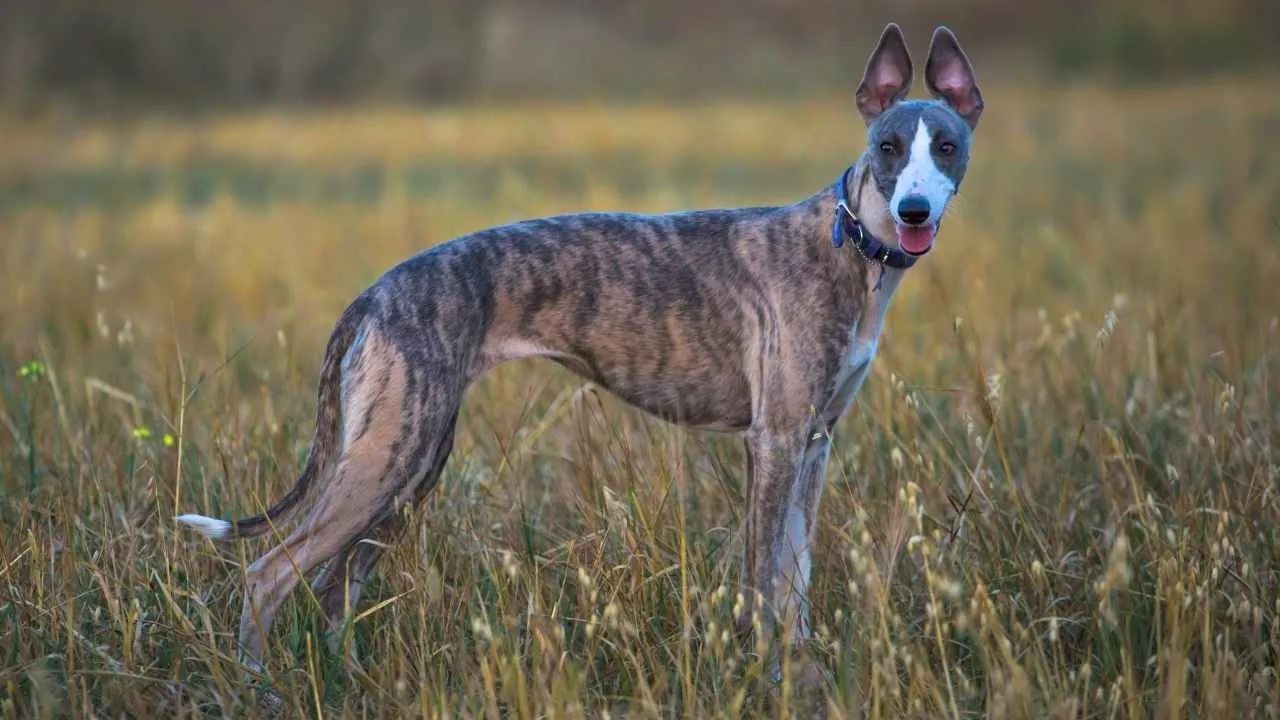
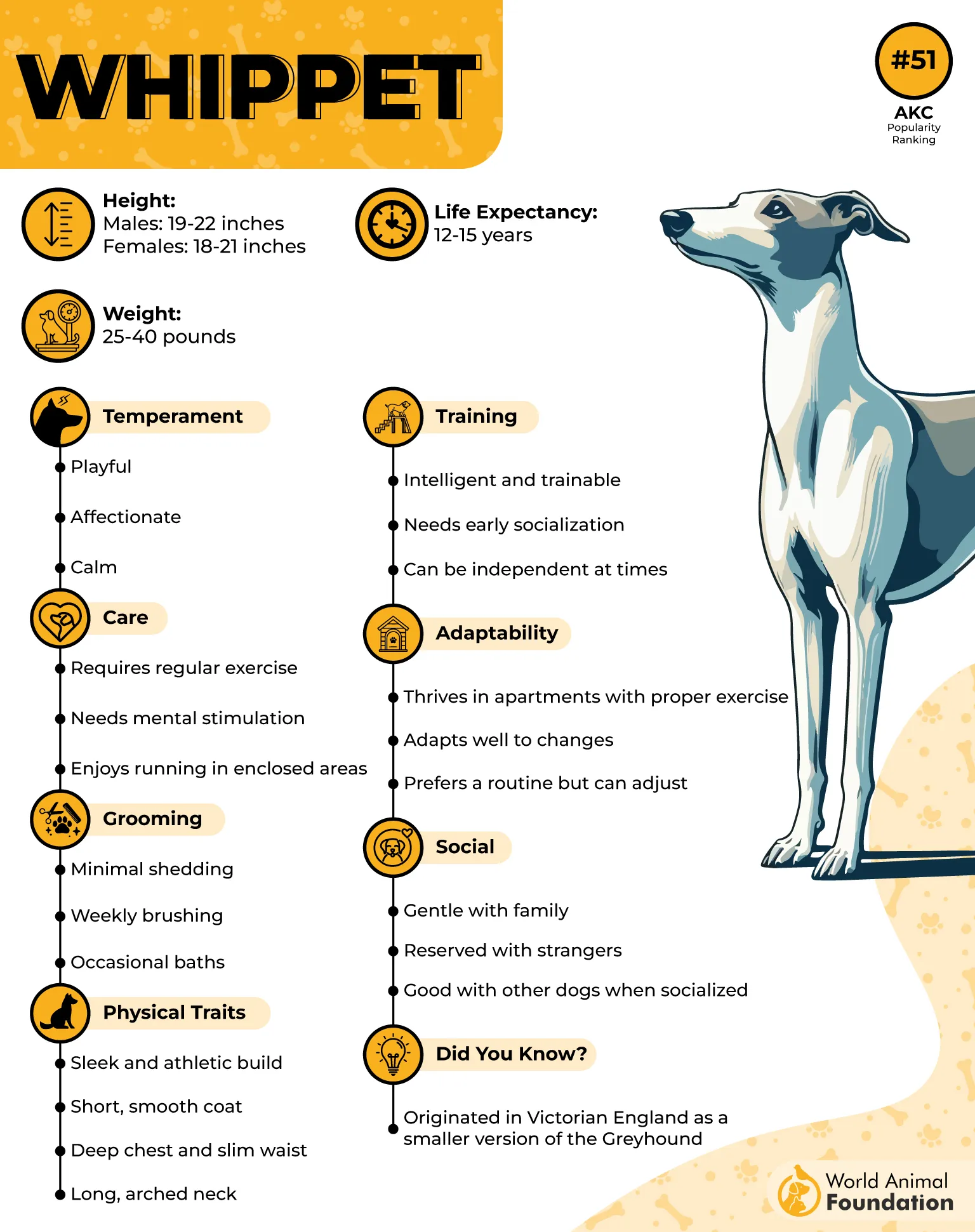
Whippets are graceful, medium-sized dogs often described as miniature Greyhounds. Agile and playful, they thrive in secure spaces where they can run, but they are equally content curling up on the sofa with their owners for a quiet afternoon.
From Hunting Fields to Loving Homes
Originally bred in England to hunt small game, Whippets became beloved pets for their speed, elegance, and gentle temperament. Their friendly, alert nature and loyalty make them ideal companions for seniors who appreciate a calm but active friend.
Personality, Care, and Daily Life
Whippets are sensitive, affectionate, and bond closely with their humans. They require daily exercise and socialization, but their short, smooth coat is low-maintenance, making grooming simple. With patience and positive training, Whippets can be both playful and relaxed household companions.
Why Whippets Are Perfect for Seniors Seeking Calm Companionship
Gentle and affectionate, forming strong bonds with their owners
Medium-sized and easy to handle, ideal for lap time or short walks
Low-maintenance grooming with minimal shedding
Quiet indoors, only expressing excitement when exercised
Active but moderate exercise needs, perfect for outdoor strolls and secure play
7. Irish Wolfhound
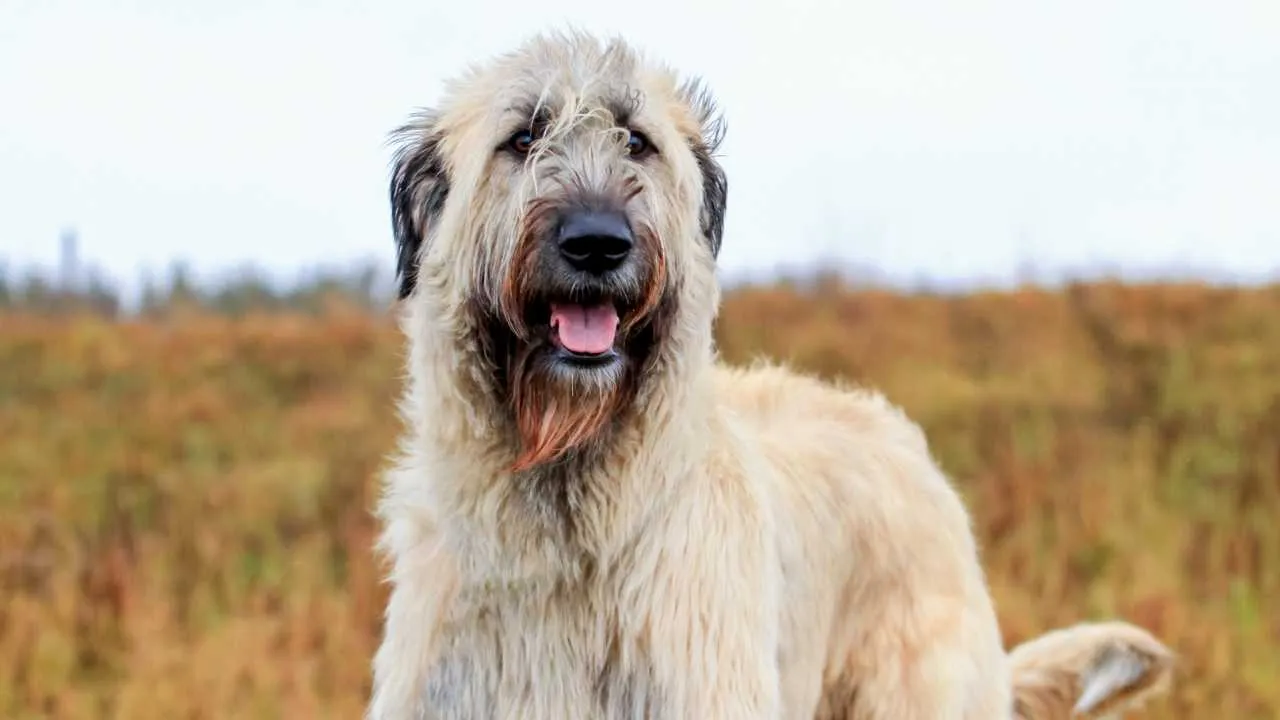
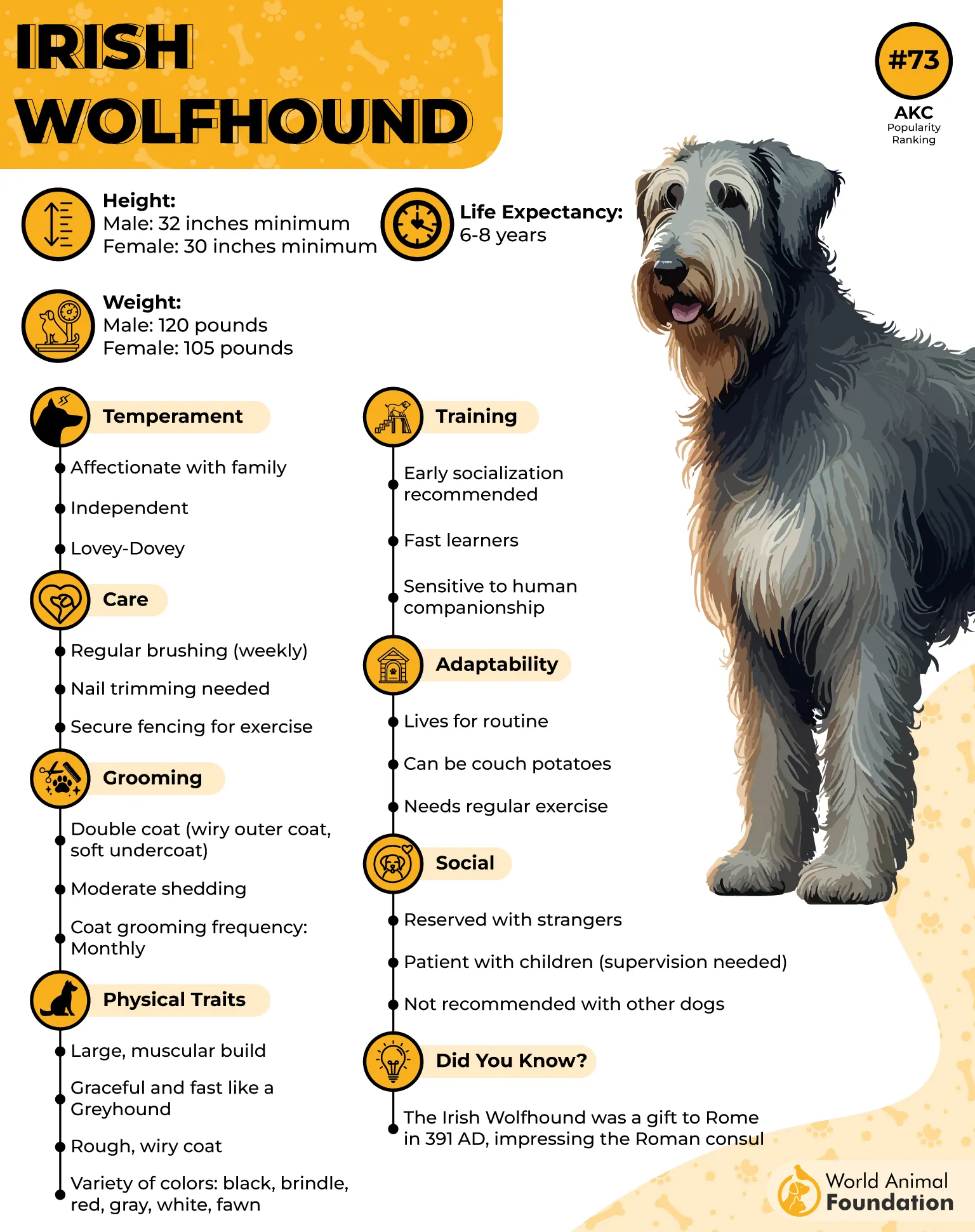
Irish Wolfhounds are one of the tallest dog breeds, yet they carry their size with grace and calmness. These gentle giants are affectionate, patient, and bond deeply with their families, making them ideal for seniors who can accommodate their large stature.
From Legendary Hunters to Loyal Companions
Once bred to hunt wolves and protect people, Irish Wolfhounds have a rich history that spans centuries. Today, their imposing size is balanced by a quiet demeanor, and they thrive as loyal companions in spacious homes.
Care, Exercise, and Everyday Life
Irish Wolfhounds have wiry, low-maintenance coats that need only weekly brushing, along with routine nail and dental care. They enjoy moderate daily exercise, like leisurely walks or gentle play, and are generally calm indoors, preferring relaxed time with their human family.
Why Irish Wolfhounds Suit Seniors Seeking Peaceful Companionship
Calm, patient, and gentle despite their imposing size
Quiet indoors, rarely barking or causing commotion
Low-maintenance grooming with minimal shedding
Loyal and affectionate, forming strong bonds with family
Moderate exercise needs, perfect for daily strolls and gentle play
8. Newfoundland
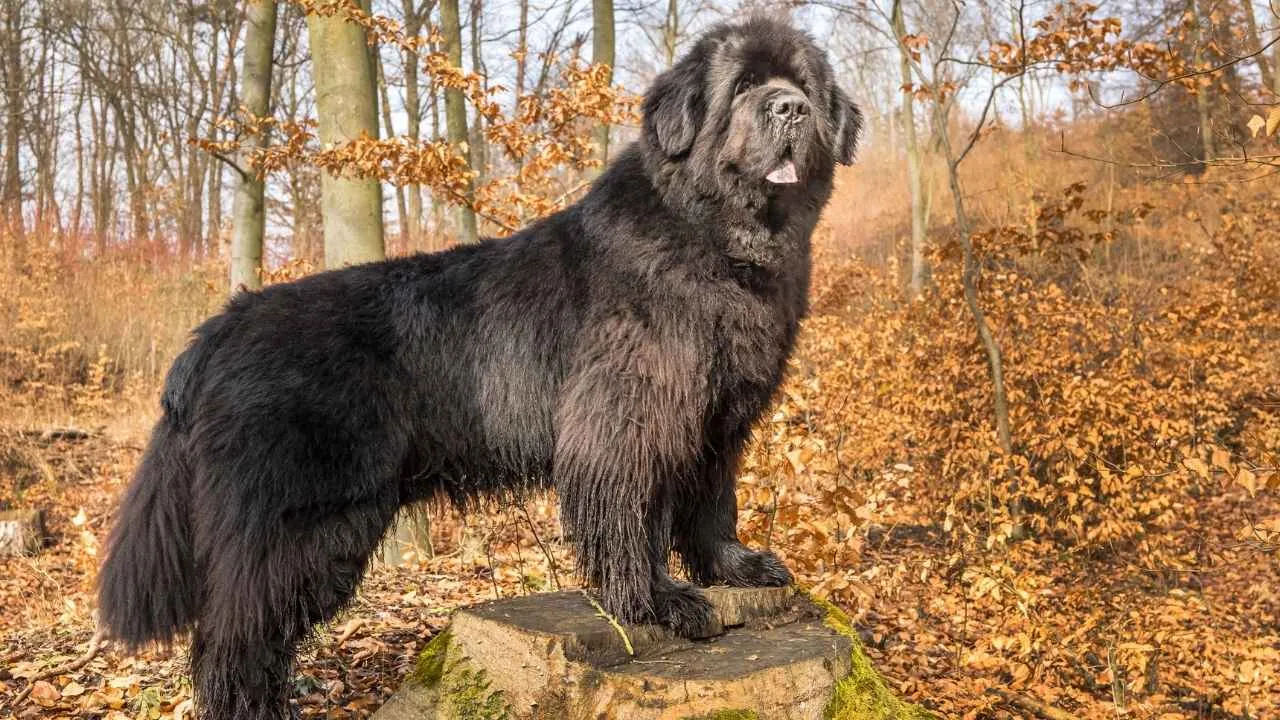
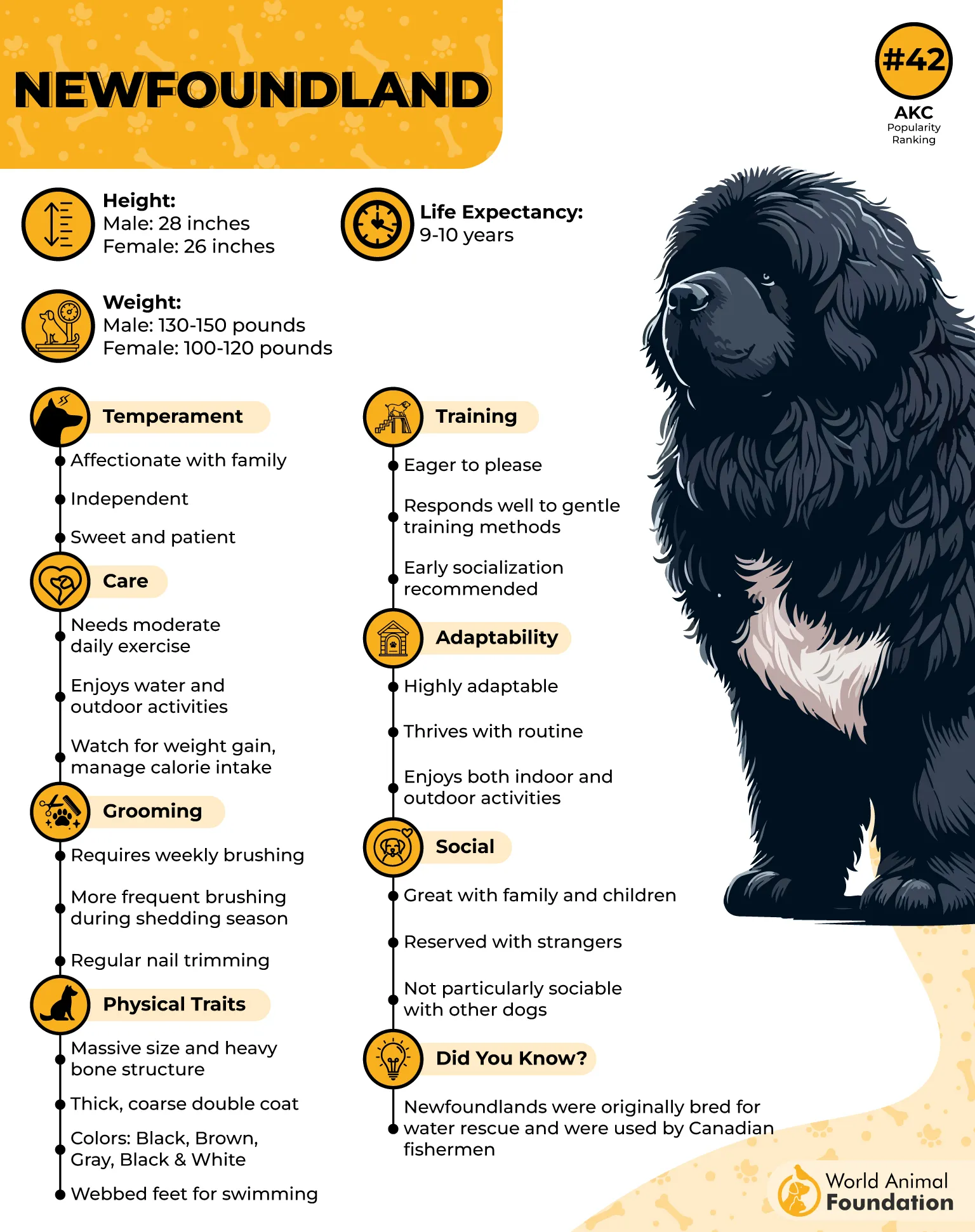
Newfoundlands are powerful, large dogs with an extraordinary history as rescuers of people from the sea. Despite their size, these gentle giants are patient, affectionate, and loyal, making them ideal companions for seniors with space to accommodate their stature.
History of a Heroic Breed
Developed on the island of Newfoundland, this breed likely descends from native dogs crossed with Great Pyrenees brought by Basque fishermen in the 17th century, as per Hill’s Pet. Famous for water rescues and ship work, Newfoundlands earned reputations as dependable, heroic dogs capable of incredible feats.
Care, Exercise, and Everyday Life
Newfoundlands are calm and easygoing indoors but enjoy swimming, short walks, and moderate play. Their thick, heavy coats need weekly brushing, and drooling and shedding are common. Due to their large size, they require plenty of food in the first year and careful monitoring to avoid weight gain, which can shorten their 8–10 year lifespan.
Why Newfoundlands Suit Seniors Seeking Peaceful Companionship
Calm, gentle, and patient, even around strangers and children
Loyal and protective without being aggressive or barky
Moderate exercise needs, with swimming or short walks ideal
Sweet disposition on land or in water
Regular grooming keeps their thick coat comfortable and healthy
9. Cavalier King Charles Spaniel
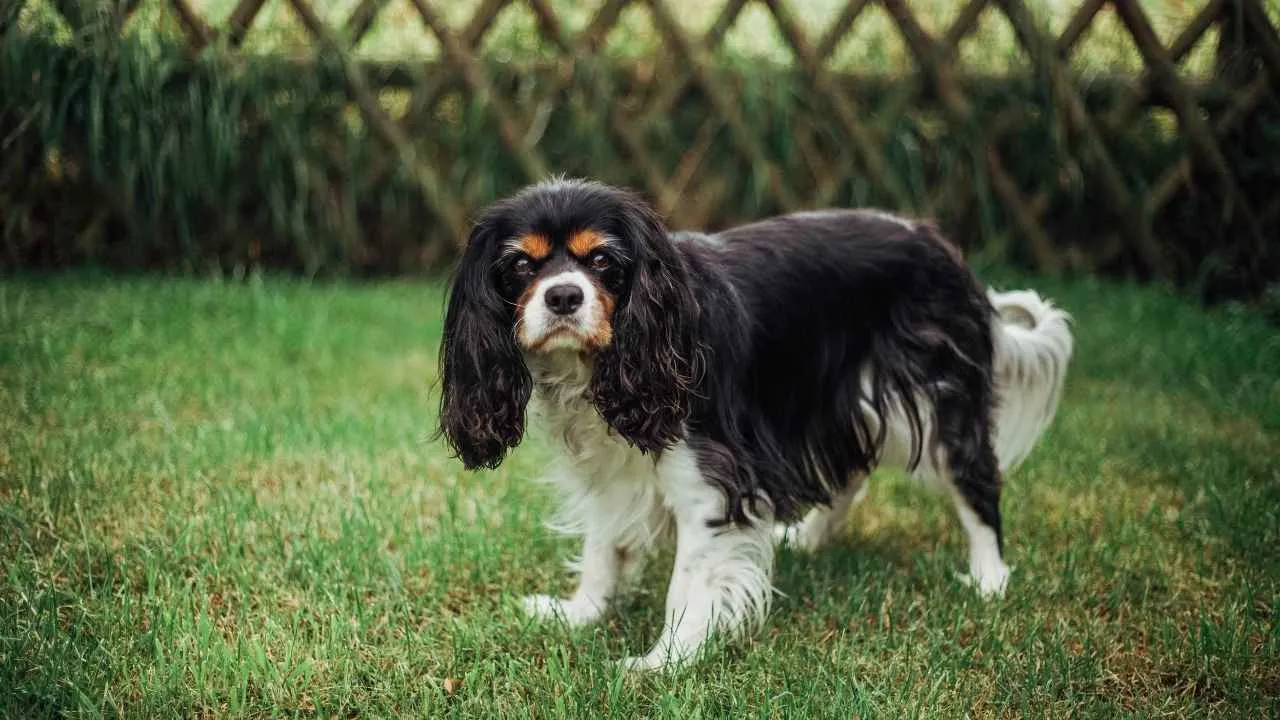
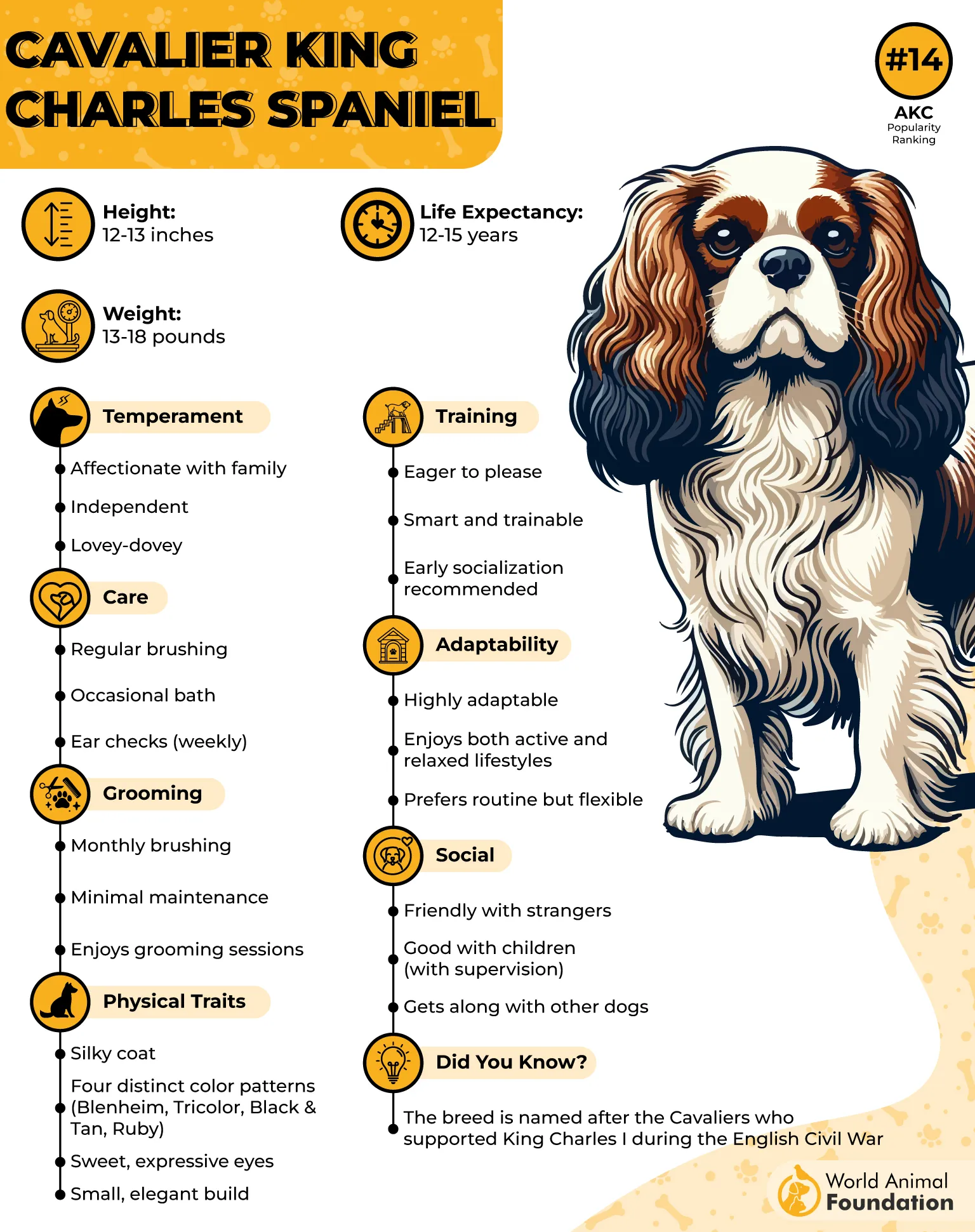
This small, charming dog has roots in British royalty, where it once warmed laps in drafty castles and accompanied kings and queens. Originally bred as a companion, it thrives on human company and enjoys being at the heart of family life, as it’s the 140th breed of the AKC.
Gentle Temperament and Family-Friendly Personality
With a calm and friendly demeanor, these dogs are deeply devoted to their families and get along well with children and other pets. Their loving personality means they form strong bonds, offering constant companionship and quiet reassurance.
Grooming and Daily Care
Though their silky coats require regular brushing to prevent tangles, their grooming needs are manageable for seniors who enjoy routine care. Daily short walks and light activity keep them happy and healthy, without the need for strenuous exercise, making them ideal for indoor living or smaller spaces.
Why This Breed Brings Quiet Comfort to Seniors
Small size and calm demeanor make them perfect for apartment living or senior living communities.
Deeply affectionate, forming strong bonds and providing emotional comfort.
Low to moderate exercise needs, enjoying short walks and gentle playtime.
Adaptable to indoor living while still enjoying occasional outdoor exploration.
Easy to train with gentle reinforcement, fostering a stress-free companionship.
Conclusion
Choosing the best dog breeds for seniors seeking quiet comfort can make a huge difference in daily life. Smaller dogs with a calm demeanor and affectionate nature often provide emotional well-being while being easy to manage in smaller living spaces or apartment living. Senior owners benefit from lap dogs or low-energy breeds that enjoy short walks and quiet time.
Understanding breed characteristics helps seniors pick the right breed for independent living. Dogs with low shedding, minimal grooming, or short coats reduce grooming tasks, while still offering strong bonds, loyal friend companionship, and a tail wag that brightens the day. Daily exercise, whether short walks or indoor play, keeps older adults and adult dogs happy and healthy.
Ultimately, dog ownership brings joy, and the best dog breeds for seniors are excellent companions for those seeking emotional comfort, a friendly demeanor, and affectionate dogs. Whether adopting from local shelters or selecting a perfect dog, smaller breeds like cavalier king charles spaniel, bichon frise, or maltese dogs make ideal furry friends for senior living.
