





Ever wondered how some dogs are quietest in the room while others announce every moment? Barking is a natural way of expressing for a dog. Fortunately, some breeds don’t feel the necessity to bark about everything. These quiet companions may alert you when something feels out of place.
Whether you’re sensitive to sound, living an urban life, or just need a peaceful environment while enjoying the company of a furry friend, choosing the right dog breed can make all the difference. A quiet, comfortable place matters more than anything, especially for families who are sensitive to noise.
Some dogs are naturally calm and relaxed, making themselves a perfect choice for pet parents with a sensitive nature. Still, there’s always a way to make your dog breeds more composed, through a gentle training approach.
This guide will help you find the best easygoing and quiet dog breed that values peace over chaos.
Best Dog Breeds for Noise Sensitive Owners and Families
1. Japanese Chin
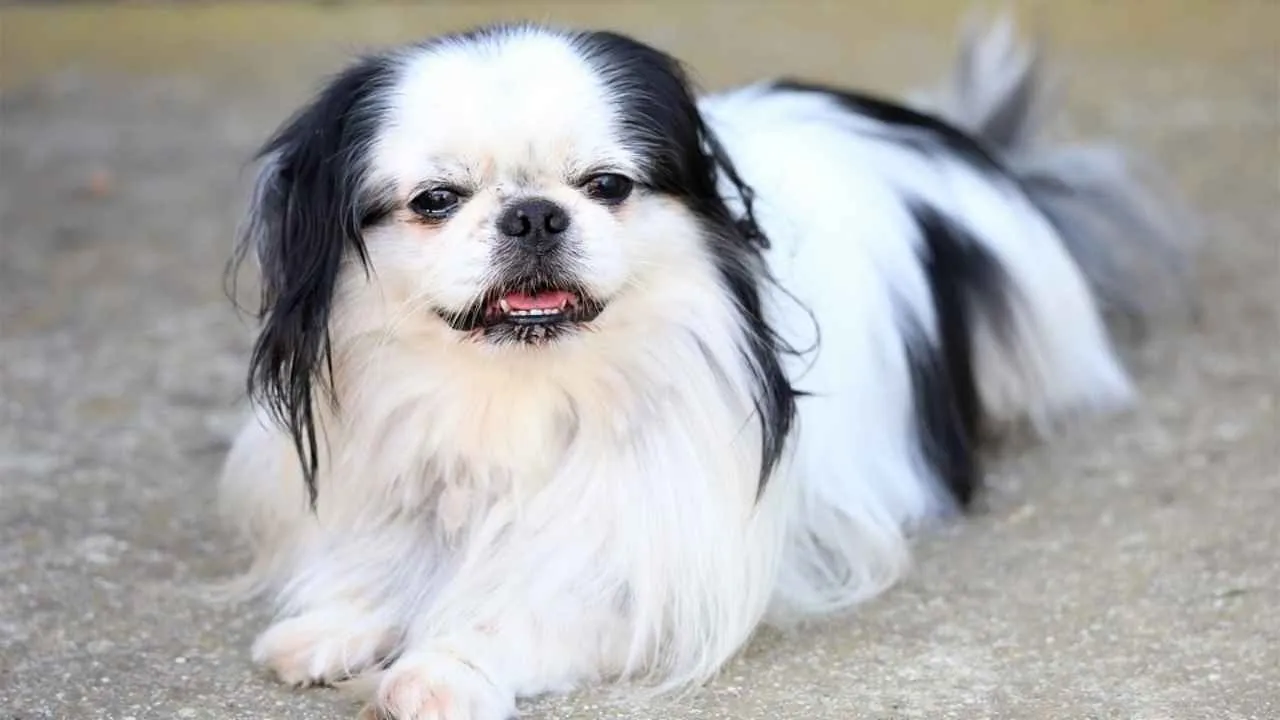
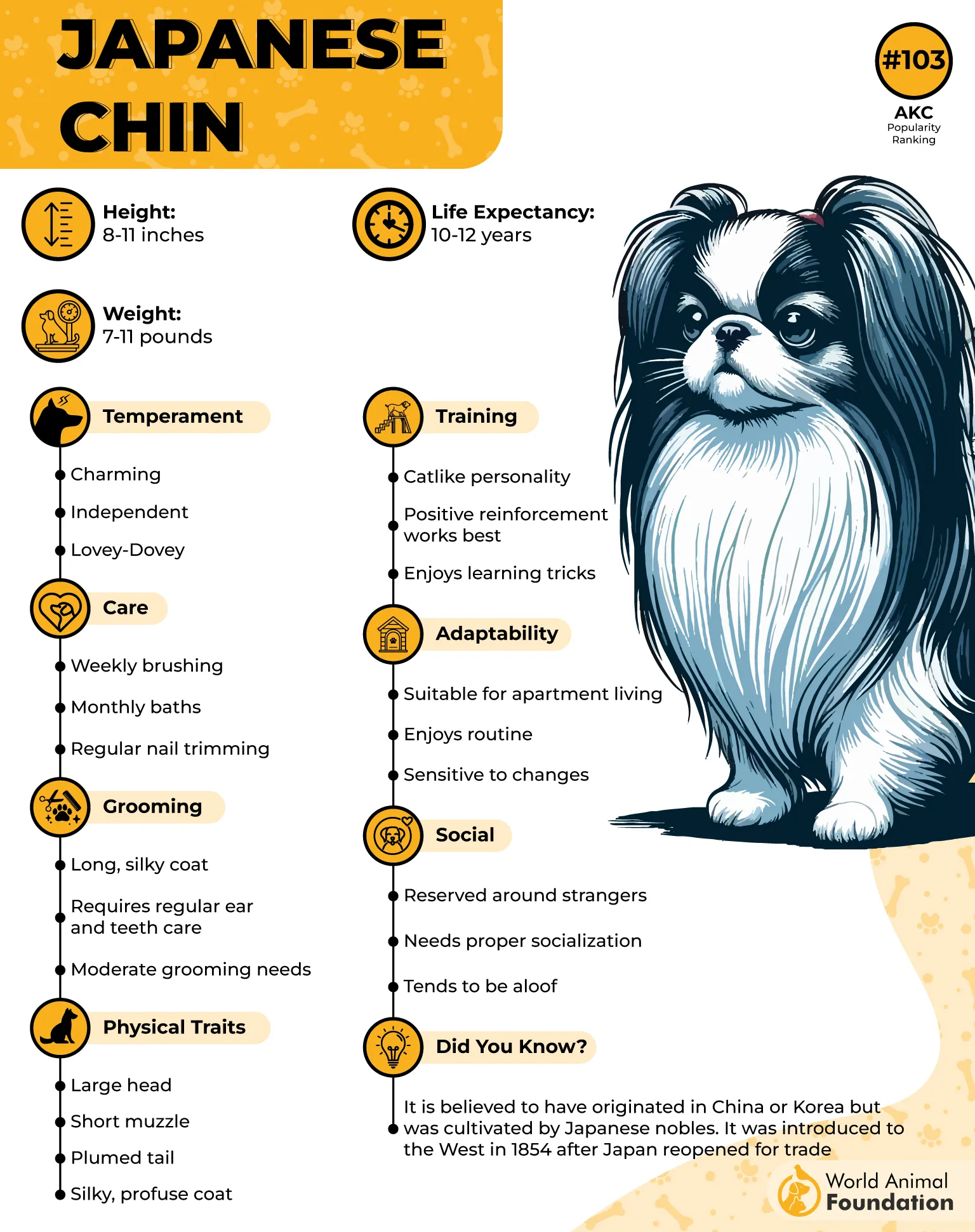
Also known as a Japanese Spaniel, the Japanese Chin is a charming toy breed with a dignified, regal bearing. These little pups are famous for their sweet, squishy face and calm, adaptable personalities. Originally bred to be companion dogs, Chin are loving, affectionate, and alert in nature. They are energetic and compassionate enough to make a perfect, neighbor-friendly lap dog breed.
Personality
Japanese Chins are devoted family dogs. They are generally warm and friendly with everyone, including other pets. However, they tend to be standoffish to strangers at first. They do best with the older children who can respect their small size and boundaries. They’re fastidious as a cat, which makes them both clean and quiet roommates.
Barking Tendencies
Japanese Chins are highly energetic, but they’re not hyperactive. These dogs bark only when they sense any danger in surrounding. They can be excellent watchdogs and even alert you when a guest arrives. Their compact size isn’t enough for protection, but they can be watchful at times.
Care Tips
These pups are brachycephalic (flat-faced), so avoid any activity that can overexert them.
They can get separation anxiety when left alone for a long period.
2. Bulldog
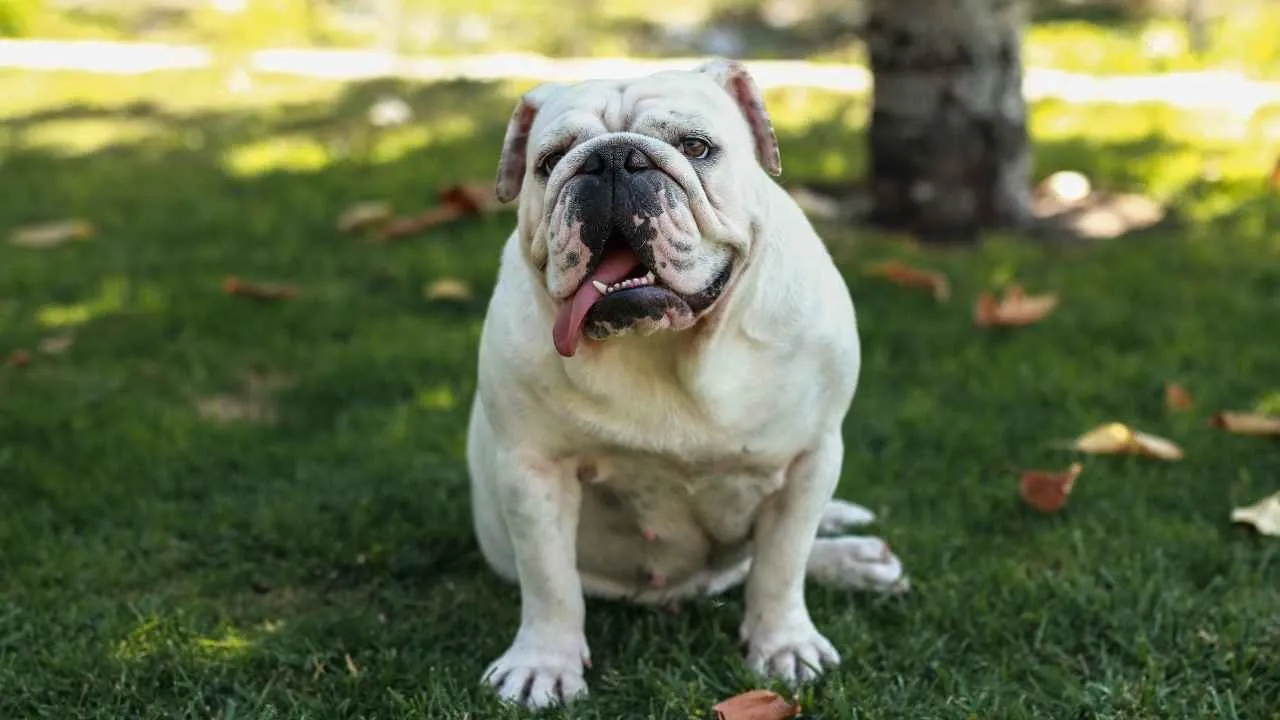
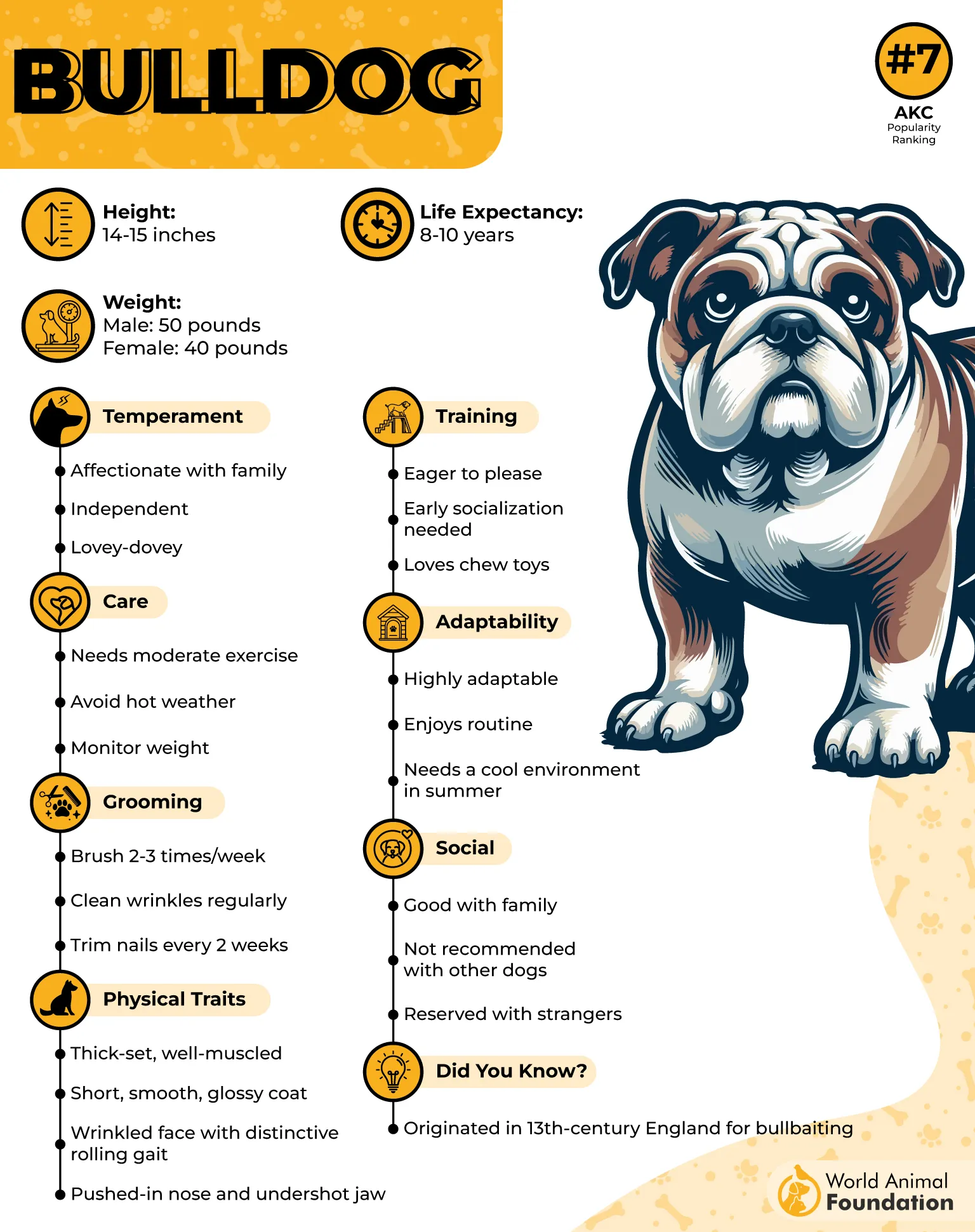
Bulldogs are one of the calmest dog breeds you’ll ever meet, a perfect choice for leisure lovers. You can hear someone calling them ‘English Bulldogs’ too, with origins in England. They have a sturdy, muscular yet compact physique with a signature wrinkled face, which makes them instantly recognizable.
Owners who prefer relaxation with full-time affection should consider this breed.
Personality
Bulldog is an extremely friendly, loyal, and courageous breed. They love spending time with their owners, relaxing and playing by their side. Their gentle disposition makes them wonderful family pets and great companions for kids. They’re calm and quiet in nature, ideal as apartment dogs too.
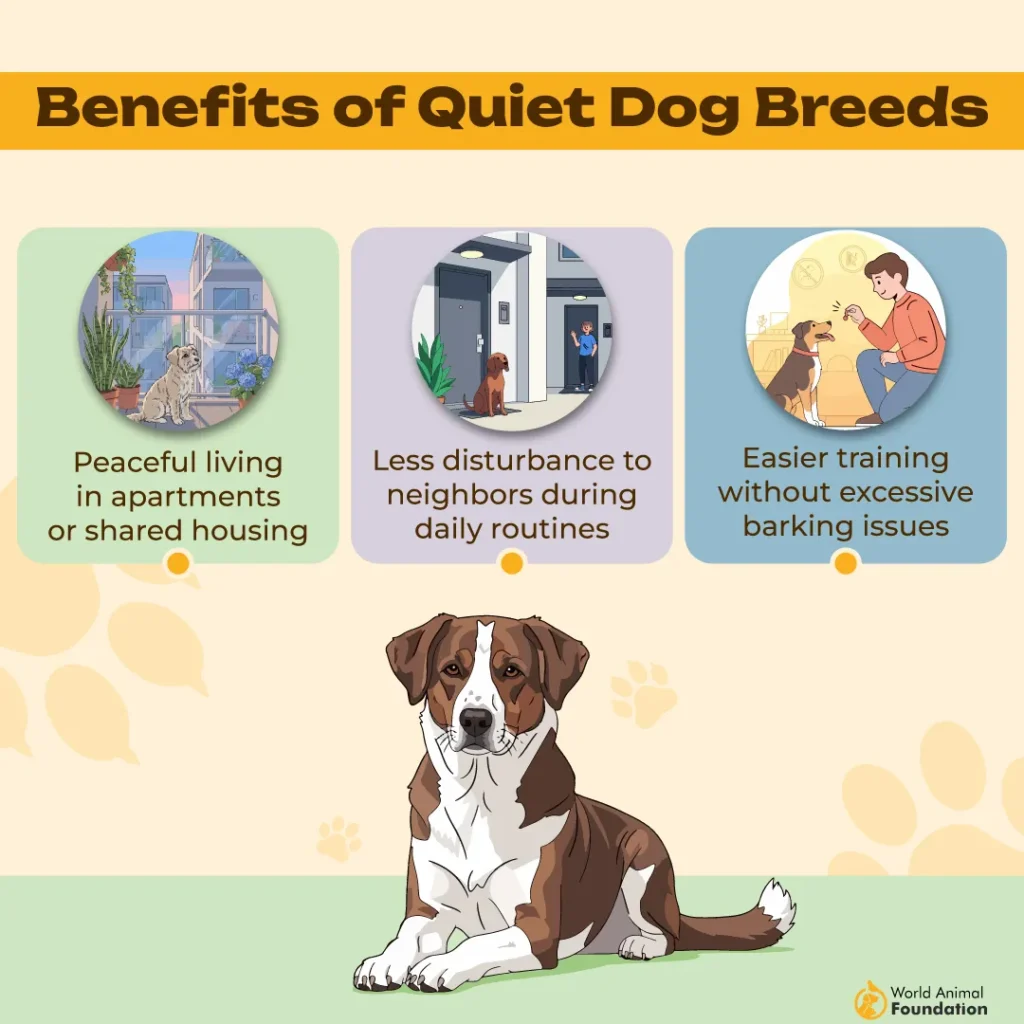
Barking Tendencies
Don’t mind their easygoing attitude, Bulldogs are highly alert and protective of their owners. They’re typically not excessive barkers. Their barking is limited to warning their owners about intruders or usually asking for anything. Otherwise, they only prefer lounging indoors.
Care Tips
Bulldogs can’t bear hot climate conditions. Ensure they get access to water and are completely cool indoors when it’s hot outside.
Their wrinkly skin needs frequent grooming to avoid skin infections.
3. Maltese

Once you lay eyes on the Maltese – it’s hard not to fall for this playful little showstopper. These little toy breeds were named after Malta, where they originated almost 2500 years ago, as stated by Britannica. Their dark eyes and silky, long fur give them a striking aura, making them one of the most beautiful white dog breeds in the world.
Personality
Malteses make both affectionate lap dogs and playful companions. Their diminutive size and sweet charms make them excellent family pets. Maltese love children too, but they need to be supervised as these small dogs can easily get hurt.
These dogs tend to be bold and curious; their alert nature also makes them active watchdogs, too!
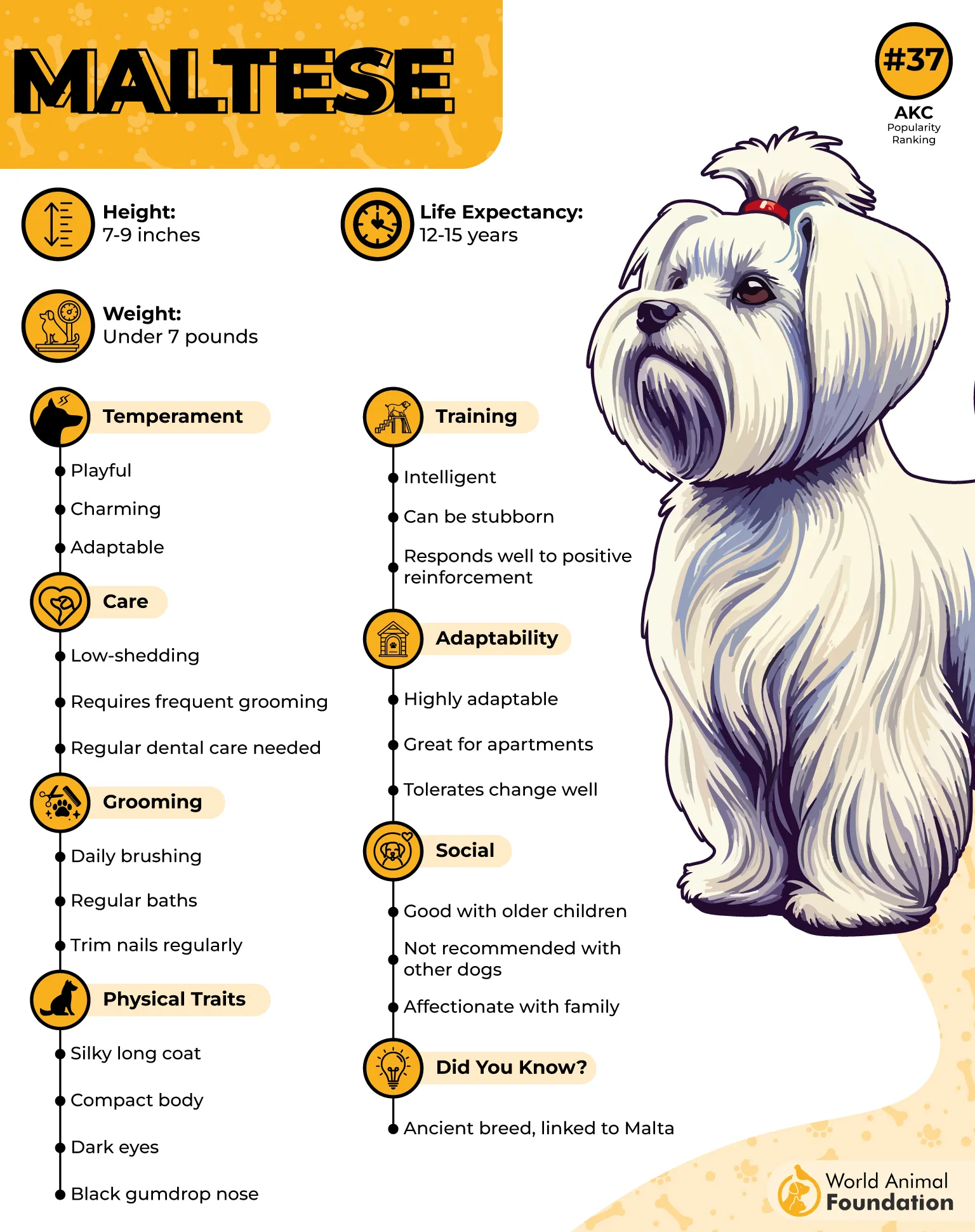
Barking Tendencies
Some Maltese are noted to bark a lot. Well, that depends on the individual, but the majority of them are less vocal. They only bark when something interesting catches their eyes. Maltese may want to share the sight by barking until you notice it. A gentle and positive training approach can reduce the barking tendency in them.
Care Tips
Mental stimulation and short walks are necessary for these dogs to thrive.
Regular maintenance can keep their lush coat clean and prevent matting.
4. Italian Greyhound
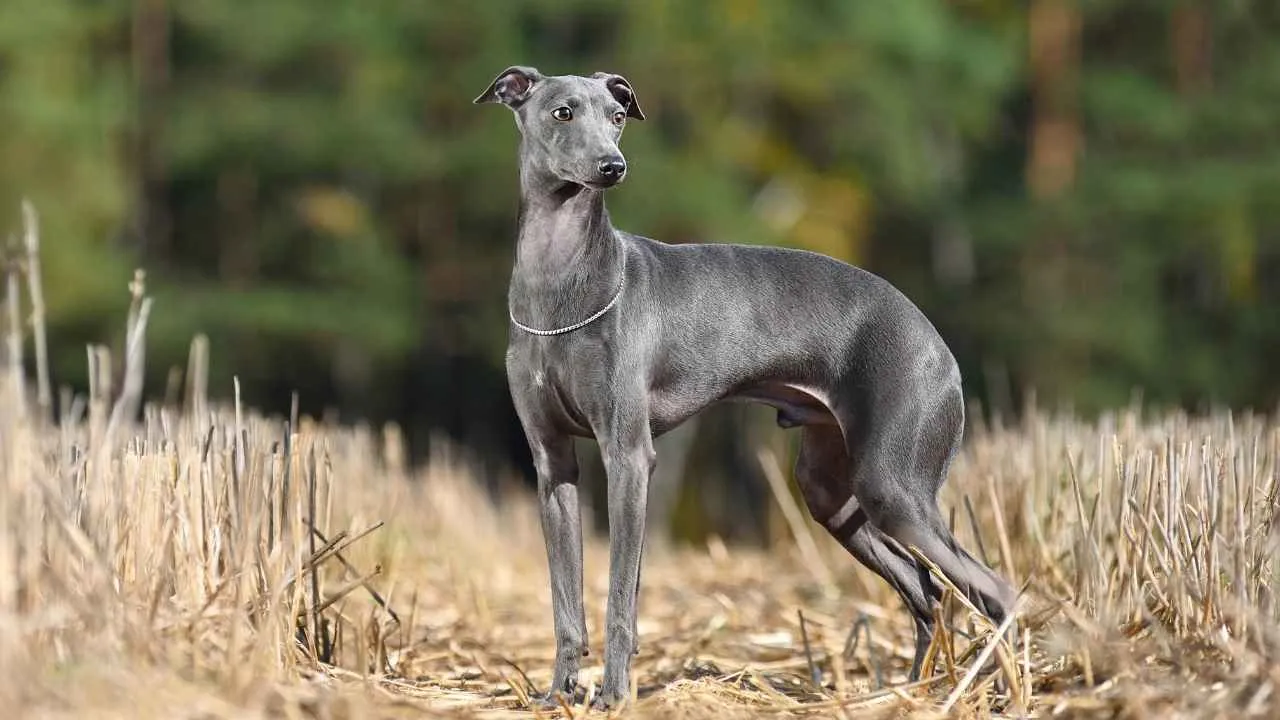
These elegant little dogs are known for their highly affectionate and lively nature. They are one of the oldest dog breeds, as well as great companion dogs. These aristocratic hounds were bred to be in the owner’s lap rather than hunting or retrieving. Still, the AKC states that they are true sighthounds and will chase after any quick-moving small prey.
Personality
Italian Greyhounds are family-oriented sweethearts, often forming strong bonds with family members. The attachment and affectionate makes them kind of ‘clingy’ but in a sweet way. They’re also outgoing in nature, as VCA notes that they get along with almost everyone, including children, strangers, other dogs, and animals.
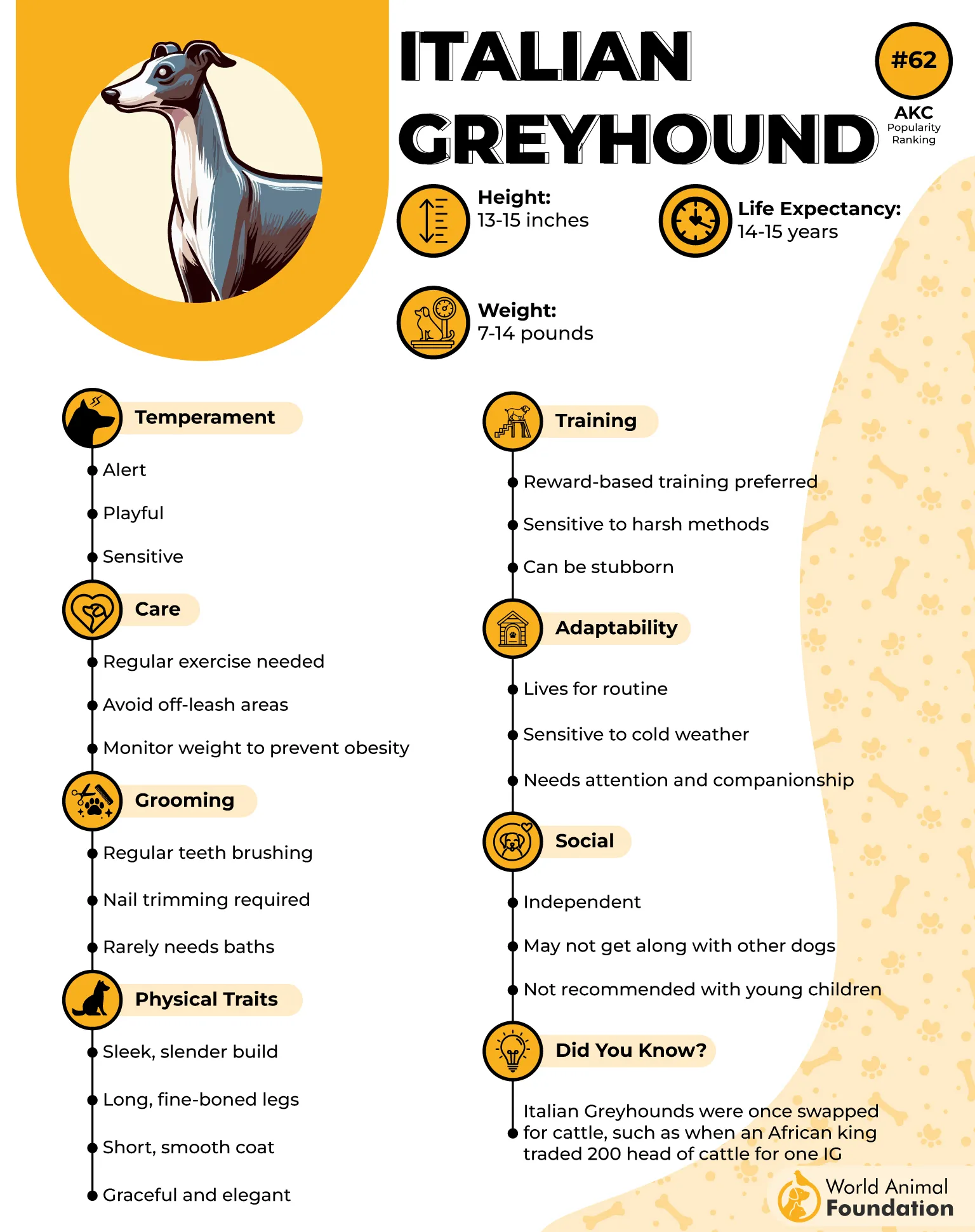
Barking Tendencies
Italian Greyhounds have short bursts of energy, especially during playtime. They’re not typically classified as big barkers, but several factors, including anxiety, alertness, or boredom, can trigger them to be louder than usual.
Care Tips
Regular training sessions, especially positive reinforcement training, can help reduce stubborn streaks in them.
These little bundles of energy have slender legs, so there’s always a risk of injury when jumping or exercising.
5. Pug
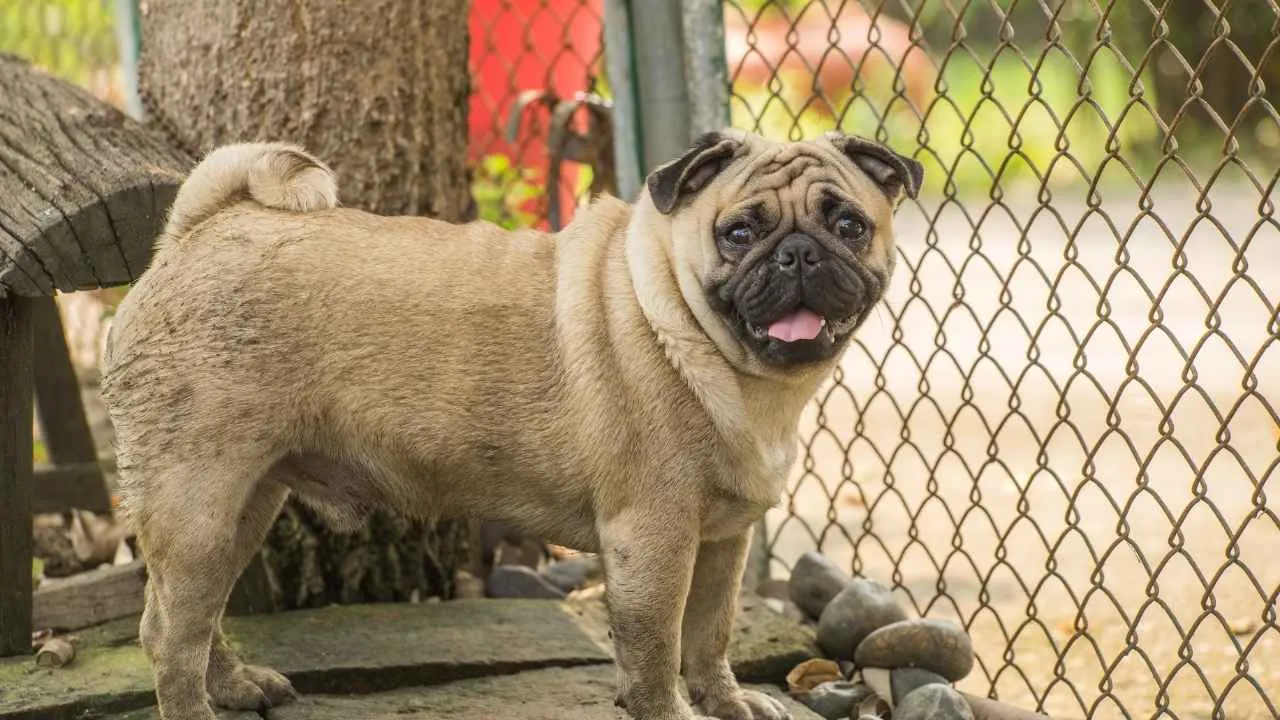
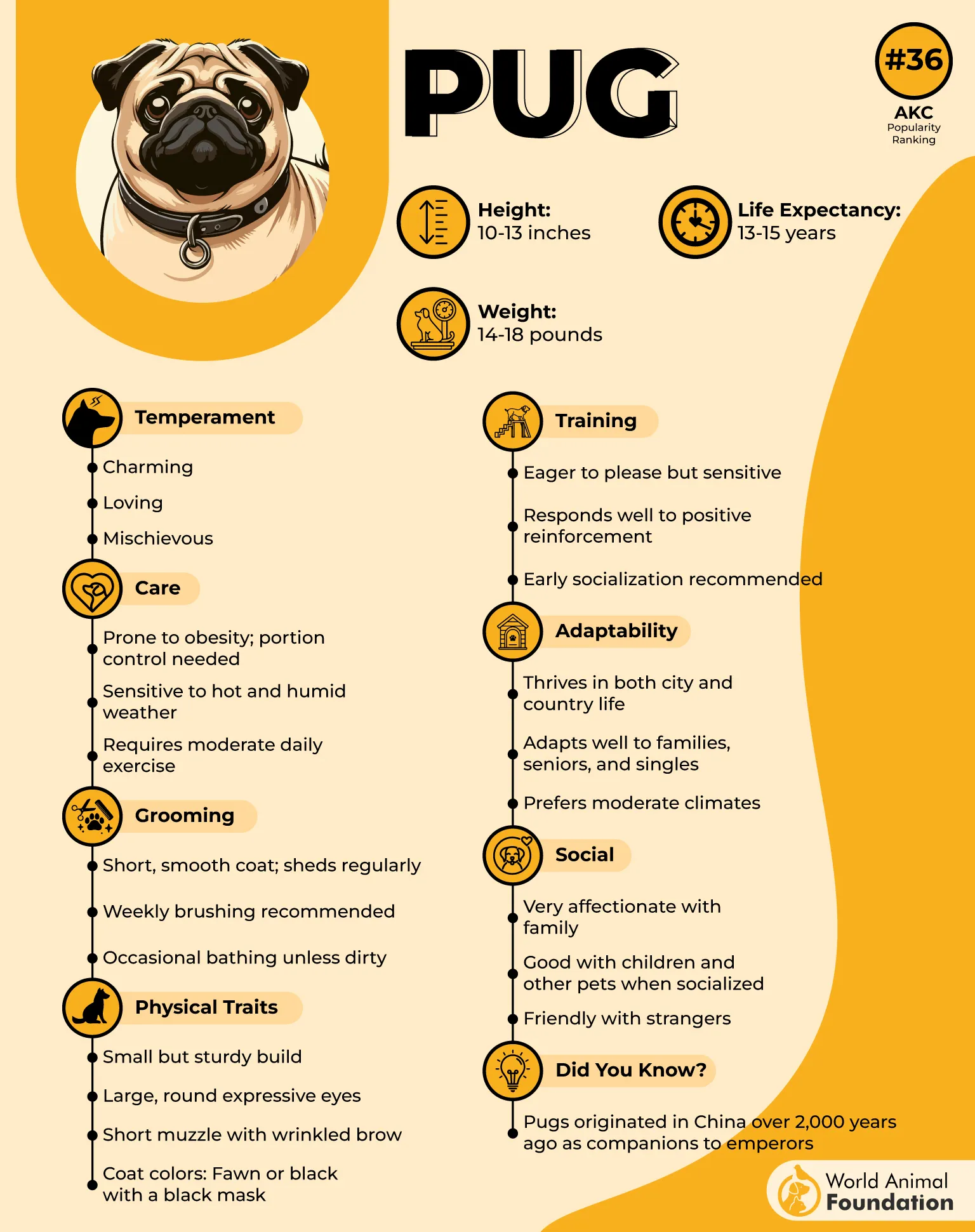
Pugs are little goofballs with charming personalities. This small but muscular breed was once adored by Chinese Emperors. Pugs are known for their distinctive facial features, short coat, and curled tail. Their patience and adaptability make them great dogs for families with children. “Multum in Parvo” is the Pug’s motto in Latin, describing their all-in-one personality.
Personality
Pugs are loyal and devoted, often entertaining their family with silly antics. They are super smart and adjust wonderfully well in small living spaces, becoming a top choice for apartment dwellers. Affection is a two-way street for Pugs; the more love they receive, the more you get in return. Many Pug owners consider them ideal housedogs.
Barking Tendencies
Pugs are usually calm and composed, but sometimes their barking can feel like it’s non-stop. Their bark often signals boredom or an urge to get your attention. Unlike other vocal breeds, Pugs don’t bark without any reason. They typically reserve their barks just to signal their owners about any threat.
Care Tips
Avoid taking your Pug outside in extremely hot temperatures and keep them cool in summers.
They are prone to obesity, so it’s important not to overfeed them with sweet treats.
6. Cavalier King Charles Spaniel

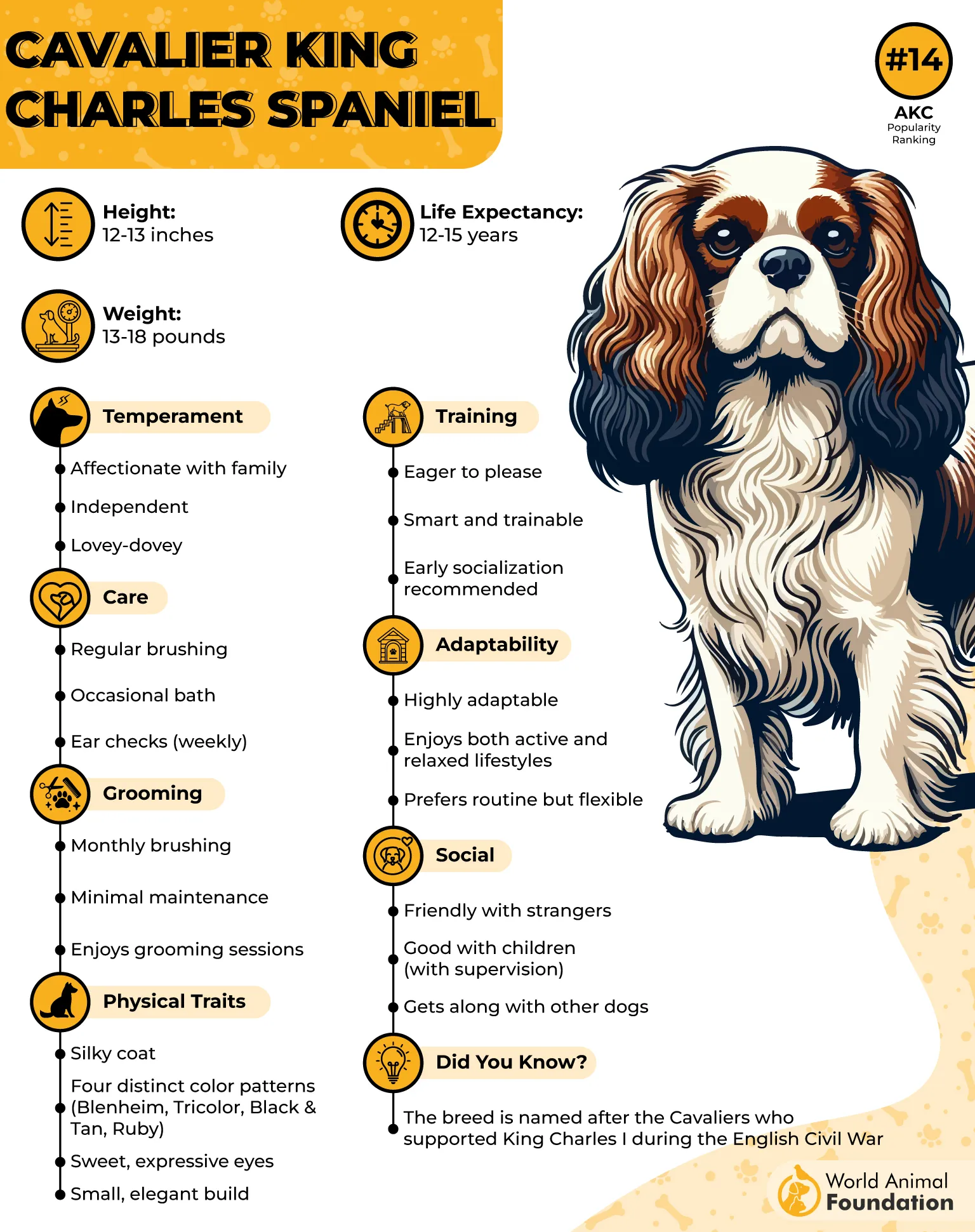
Most noble of all the breeds, CKCS holds a regal bearing due to its connection with British history. With their adorable features and graceful personalities, Cavaliers captivate the hearts of many dog enthusiasts around the world. They were originally developed as companion dogs and thrive on human interaction.
Personality
Cavalier King Charles Spaniels are kind, gentle souls with a pretty chill temperament. They are tolerant in nature too, making them well-suited for children, seniors, and novice pet parents alike. Cavaliers are fun-loving- they enjoy leisurely walks and indoor play. Their adaptable personality allows them to adjust to quiet households.
Barking Tendencies
You’ll never meet a barkless dog in life, but then there are Cavaliers that can at least bark in moderation. They can become barkers if they feel anxious or bored. It can be increased due to excitement or alerting visitors. Proper training and socialization can help them adjust to noise-sensitive households.
Care Tips
According to PDSA, CKCS are highly energetic dogs, so they need plenty of exercise daily to thrive.
Early socialization and reward-based training can reinforce calm behavior in these pups.
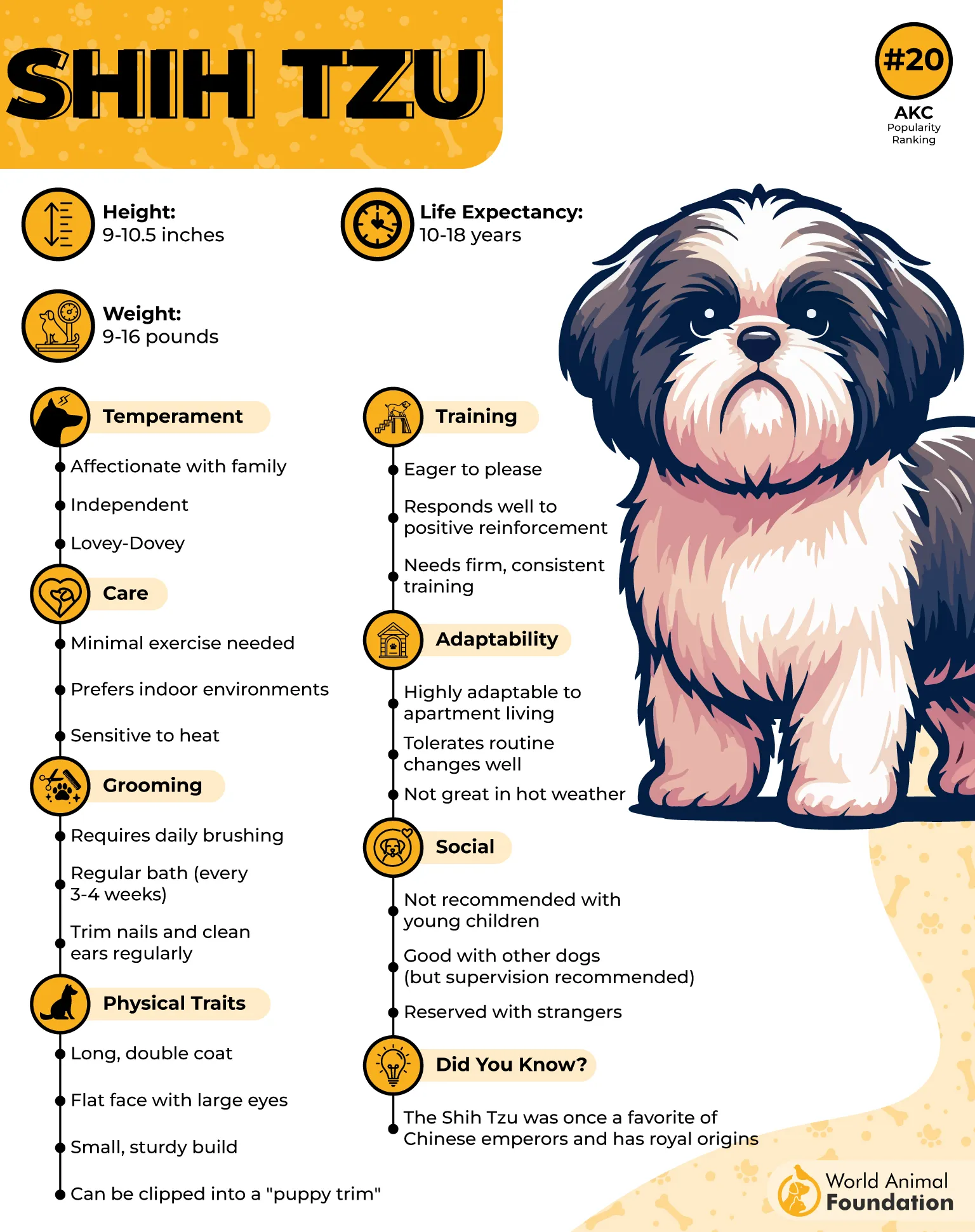
7. Shih Tzu
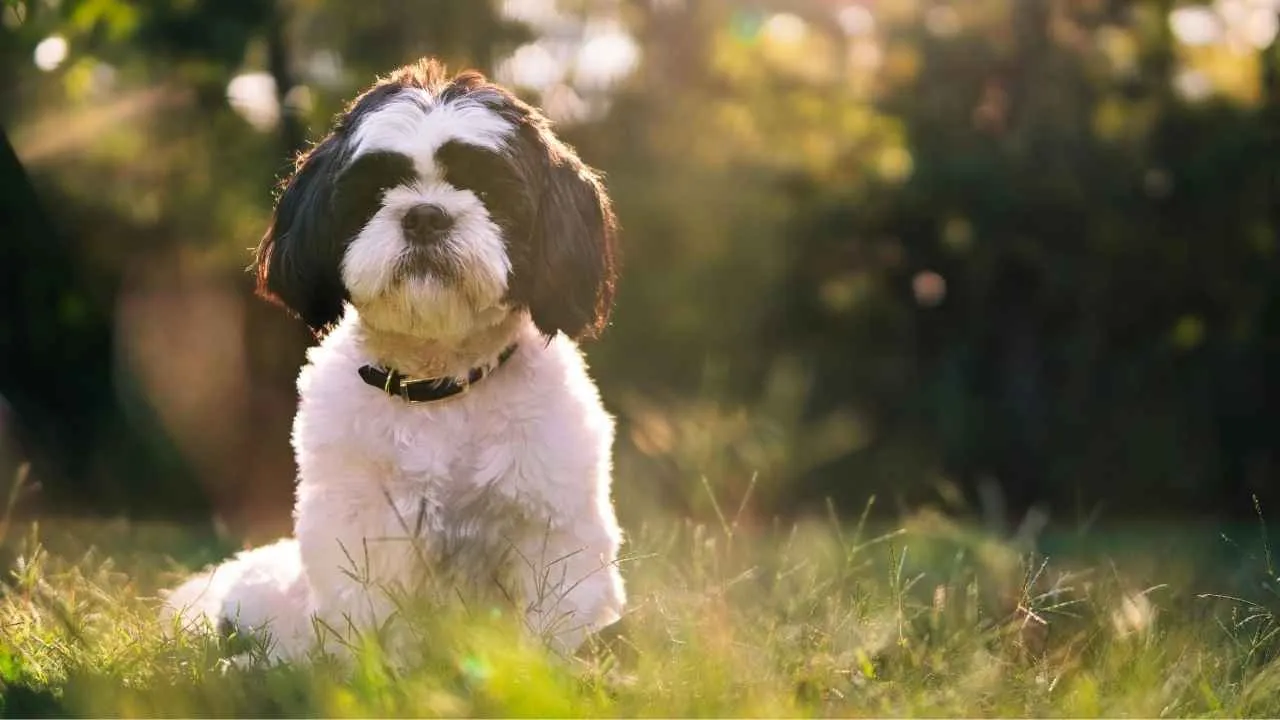
These little lions were bred to be companions, famously known to be the cutest dog breeds with a gentle temperament. For thousands of years, this little Chinese breed has been everyone’s favorite. They’re made for indoor living, and prefer homes with lots of cuddles, attention, and playtimes. Shih Tzus are best suited for a serene lifestyle
Personality
Affectionate to the core, Shih Tzus are also very social. Hill’s Pet describes their disposition as ‘happy and cheerful’. These dogs need constant attention, meaning they’ll follow their favorite person from room to room. They get along with people of almost all ages, as well as other breeds. They can easily become spoiled, but they can be easily trained.
Barking Tendencies
Shih Tzus are somewhere between moderate and excessive barkers. They do have a watchful side and speak up when something feels off, or any strange noise catches their attention. Mostly, the reason behind their barking can be their keen senses and different environmental factors.
Care Tips
They have a double coat, which requires regular grooming and proper care to maintain its beauty.
Daily walks and agility courses can keep them both mentally and physically stimulated.
Conclusion
A quieter dog can actually contribute to a peaceful environment more than you think. But silence doesn’t come in handy with any certain breed. Let’s be realistic here, bark-free dogs don’t exist. Rarely, there’ll be any breed that will choose to stay silent even in threatening situations, but still, barking is the only way for them to communicate.
Many other toy breeds with calm temperament, such as the Border Collie and Bichon Frise, can also make wonderfully composed companions.
But the story doesn’t end on toy breeds only; there are many other large breeds like Great Danes, Basset Hounds, and Golden Retrievers that can respect your boundaries and help create a noise-free environment.
