




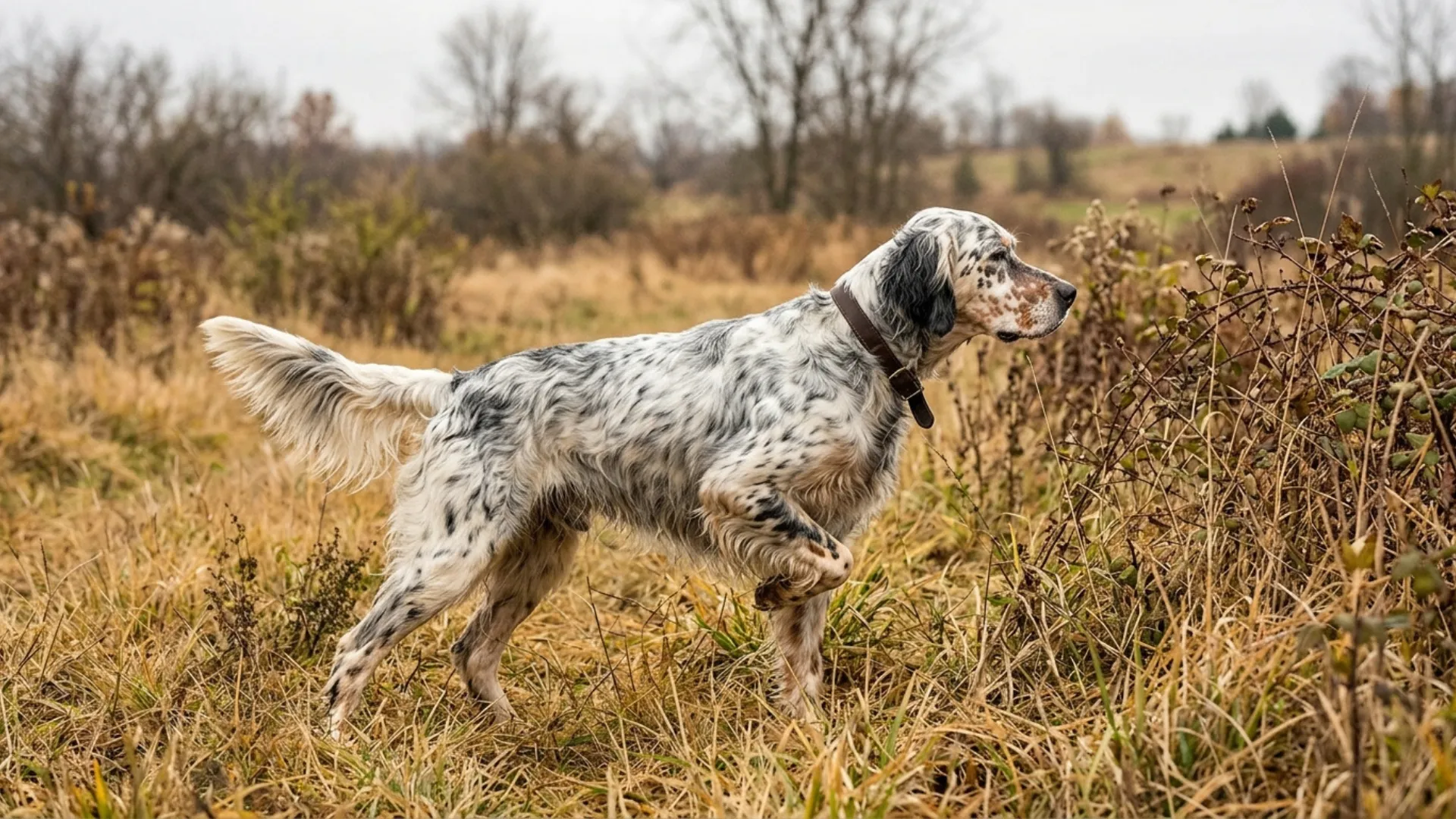
If bird hunting had a leaderboard, some dogs would be straight-up S-tier—no debate.
These breeds don’t just run around hoping to find birds… they lock in, freeze, and literally point like a GPS with fur. It’s giving precision, instinct, and “I understood the assignment.”
According to organizations such as the American Kennel Club (AKC) and field-trial data, pointing breeds consistently outperform general hunting dogs in upland-bird scenarios due to their air-scenting ability and controlled pointing behavior.
Translation: they don’t just find birds—they announce them dramatically like it’s a plot twist. That’s why serious hunters don’t mess about with their dog choice.
Studies and field reports show that breeds with strong pointing instincts can significantly improve hunting efficiency. Less random chasing, more strategic movement. Basically, your dog goes from “vibes only” to “tactical operator.”
Best Dog Breeds for Locating and Pointing Game Birds
1. English Setter
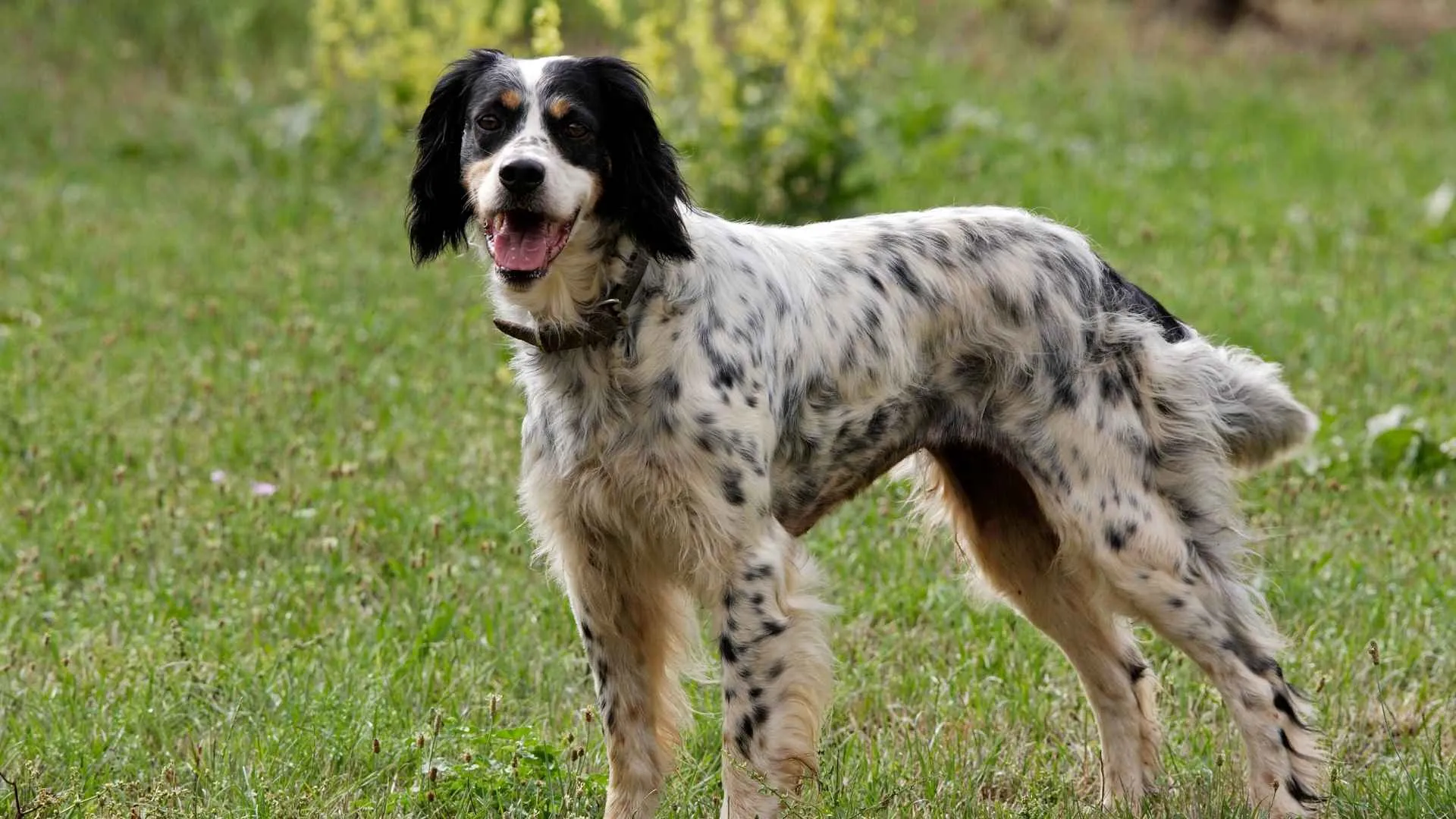
The English Setter is elegance meets work ethic—like a runway model that also runs marathons. This breed glides across fields with a smooth, effortless motion that honestly looks cinematic. But don’t get distracted by the aesthetics—this dog is locked in on the mission.
The signature move of English Setters? The iconic “set.” Instead of charging in, they freeze or crouch low when they catch scent, giving hunters a clean visual before the flush. It’s an old-school technique that still absolutely slaps today.
They’re masters of quartering, moving in a zigzag pattern to cover ground efficiently. Combined with strong air-scenting skills, they can detect birds from impressive distances. That’s not luck—that’s 400+ years of selective breeding doing its thing.
Physically, PetMD says, they’re built for endurance. Long legs, a balanced frame, and that feathered coat protect them in rough terrain without overheating. They can go all day, no cap.
Temperament-wise, they’re friendly and cooperative, which makes training smoother than you’d expect. They actually want to work with you, not freelance their own side quests—big team-player energy.
If you’re serious about hunting, go for field lines (Llewellin or Laverack) over show lines. Field-bred Setters are faster, more driven, and way more “bird-obsessed.”
2. Labrador Retriever
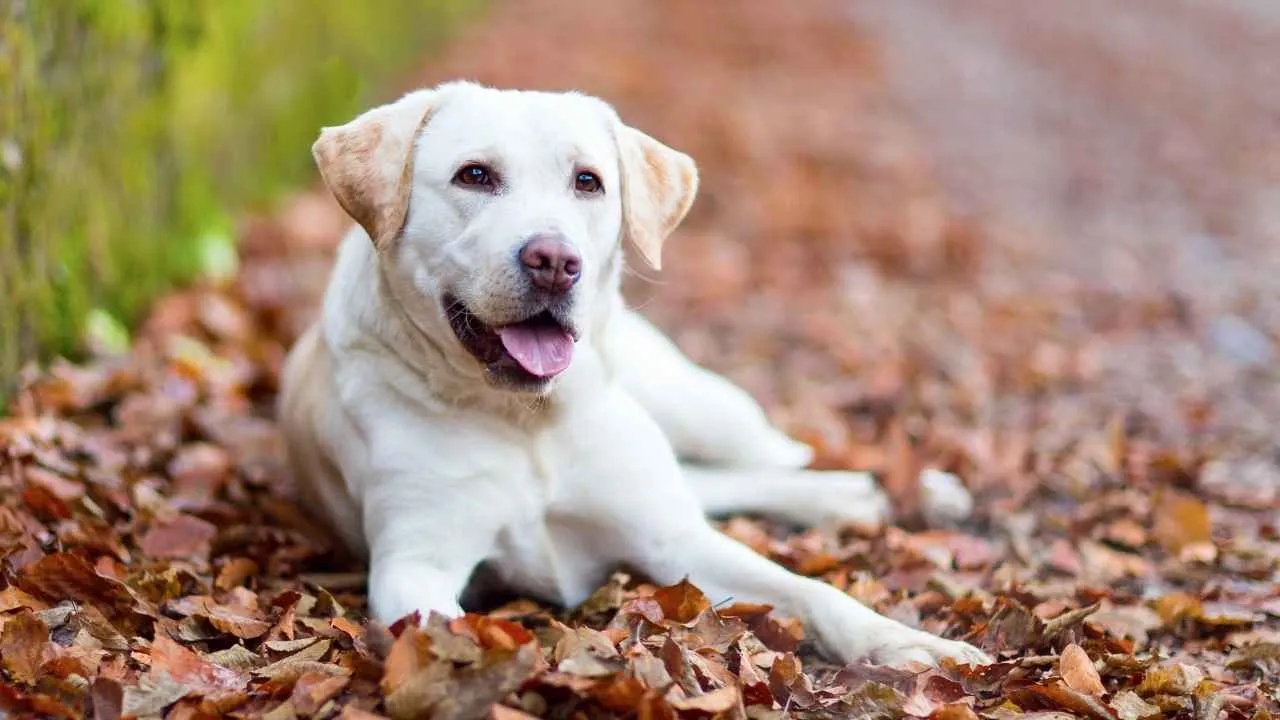
The Labrador Retriever is the ultimate multitasker—like the friend who somehow excels at everything. Traditionally, Labs are flushing and retrieving dogs, but enter the Pointing Lab, and now things get interesting.
Thanks to selective breeding (shoutout to the American Pointing Labrador Association), some Labs now naturally pause and point before flushing. It’s not as dramatic as a pure pointer, but it gets the job done. Think of it as a bonus feature, not the main build.
Labs work closer to the hunter compared to wide-ranging pointing breeds. This makes them easier to manage, especially in dense cover. They’re like “I got you, I’m staying in range.”
Where they really shine is in versatility. Morning pheasants? Easy. Afternoon duck retrieval in icy water? Also easy. This dog does not believe in specialization—it believes in domination.
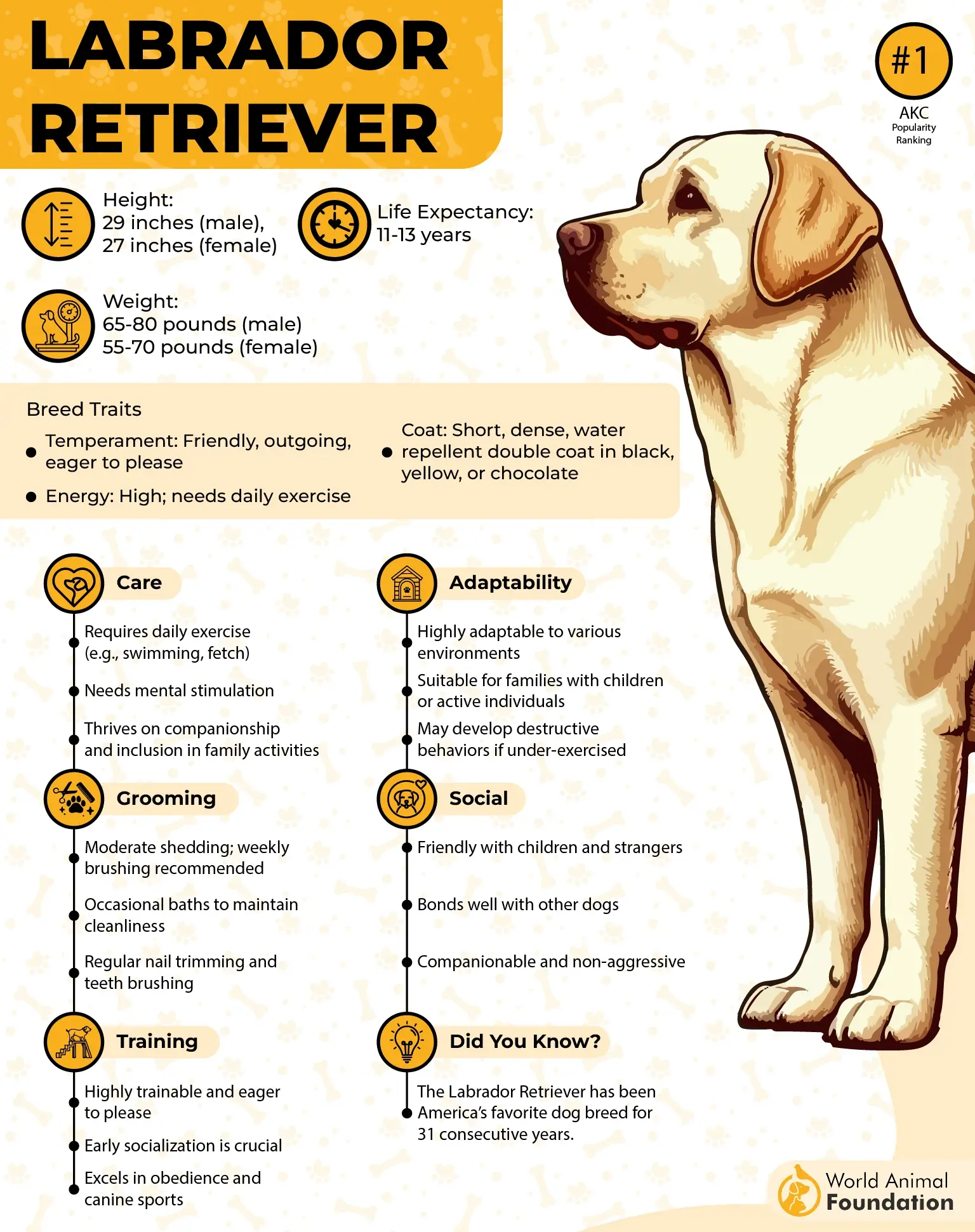
Training a Lab is honestly a vibe because they’re super biddable and eager to please. But if you want pointing ability, you have to choose the right bloodline. Not all Labs come with that installed.
For hunters who want one dog to do everything, a well-bred Pointing Lab is basically a cheat code.
3. German Shorthaired Pointer
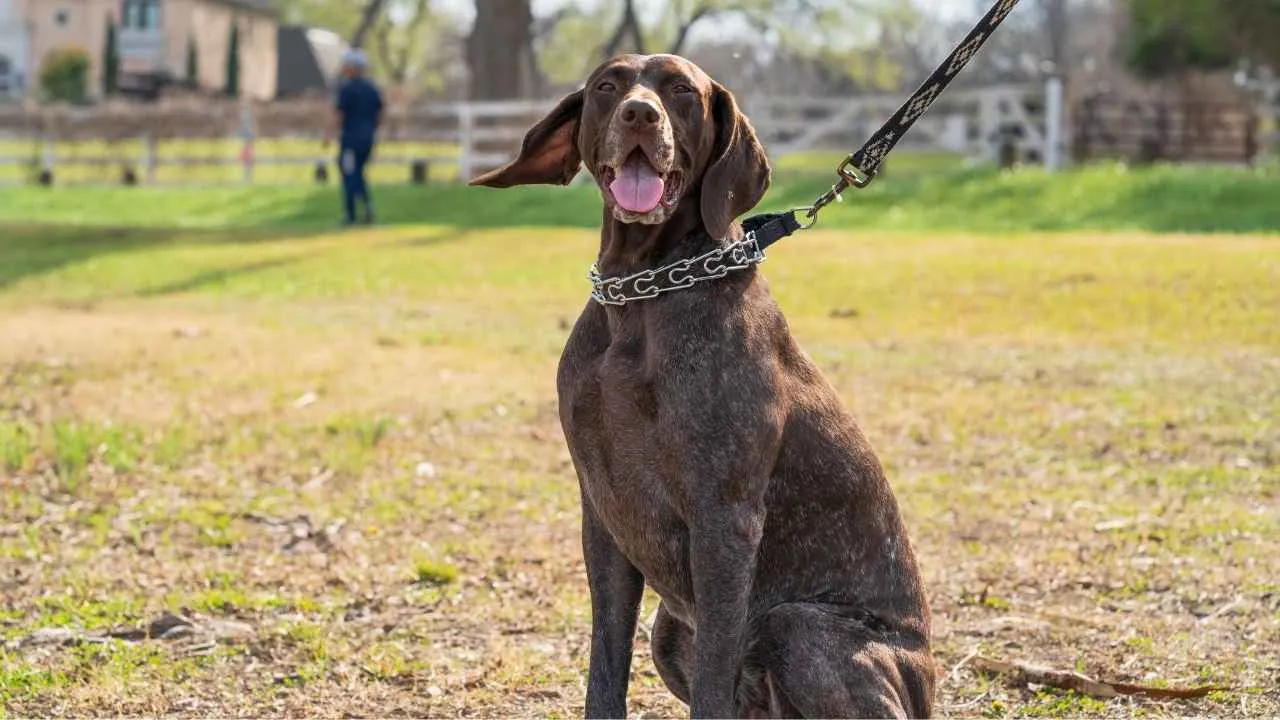
The German Shorthaired Pointer (GSP) is pure chaos—but like, productive chaos. This dog runs like it has unlimited stamina and a mission from the universe to find birds.
Their scenting ability is next-level. GSPs hunt with their heads up, catching airborne scent instead of just tracking the ground. It’s giving an aerial detection system.
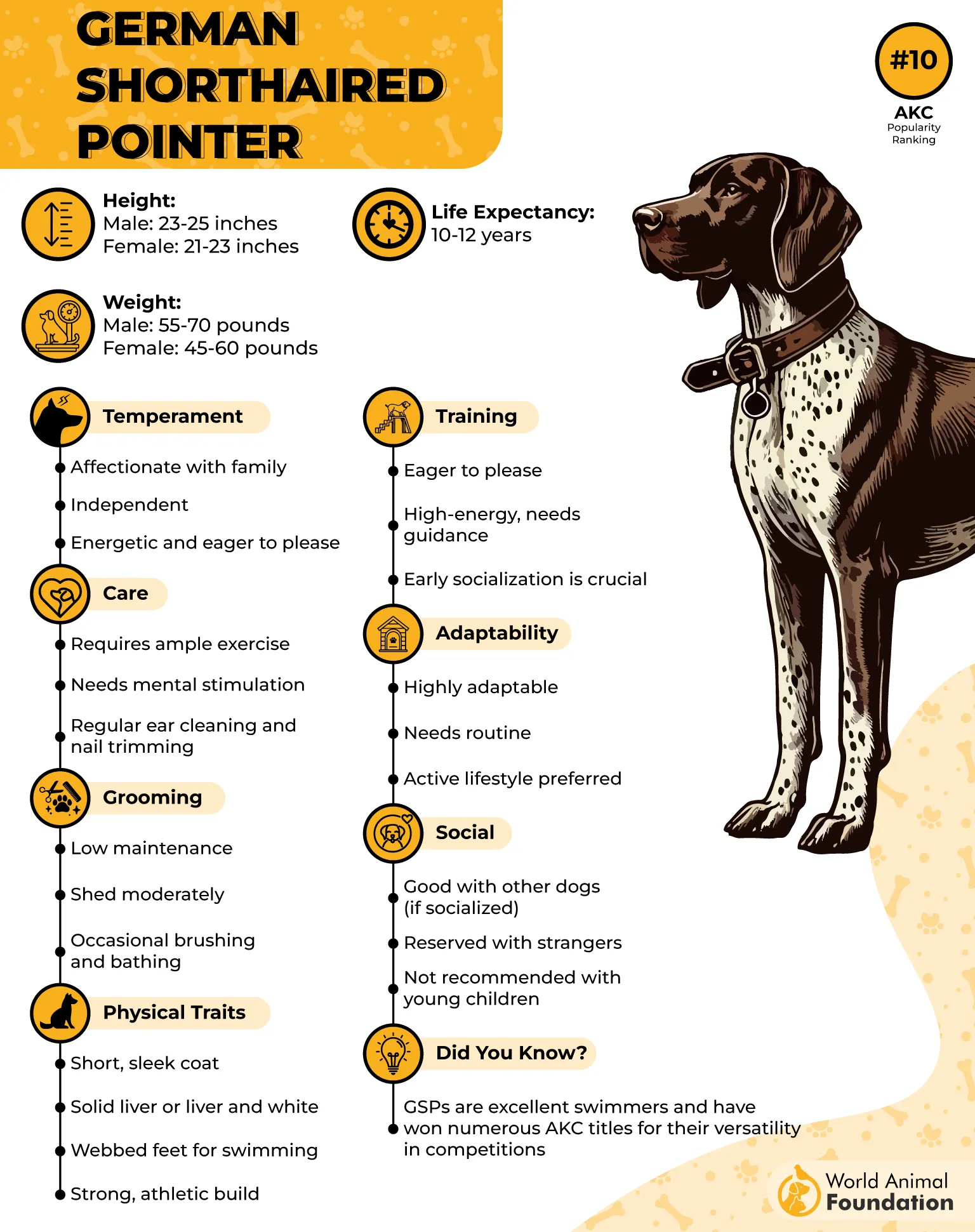
When these Pointer dogs lock onto a bird, the point is clean, dramatic, and unmistakable. One paw lifted, body frozen, eyes locked—it’s basically a hunting statue. Hunters live for that moment.
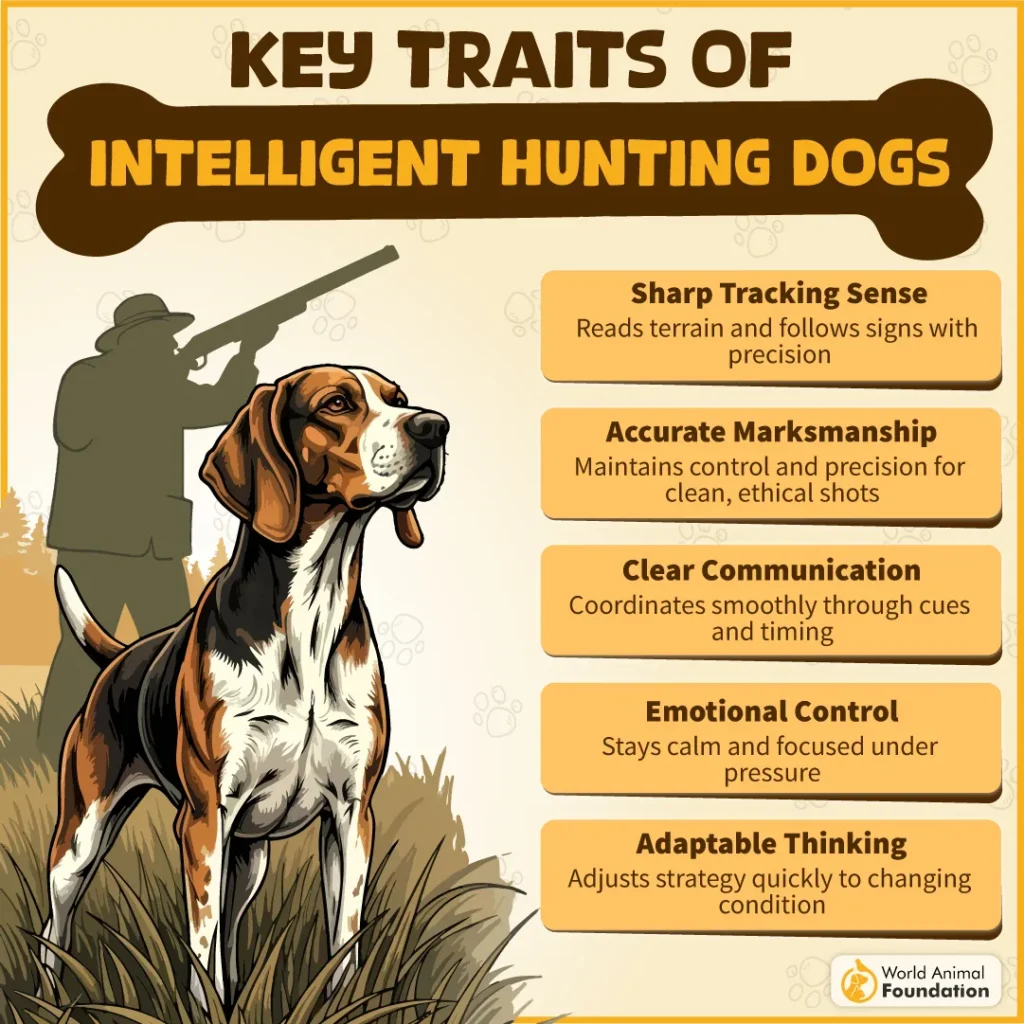
They’re extremely versatile, too. Field, forest, marsh—doesn’t matter. Add in webbed feet and boom, they’re also solid swimmers. This is a true all-terrain unit.
But here’s the reality check: they need serious exercise. Like, minimum 1–2 hours daily, or they will start redesigning your life. A tired GSP = a peaceful household.
Training-wise, these hunting breed dogs are smart but high-drive, so consistency is key. Once trained properly, though, they’re one of the most reliable bird dogs out there.
4. Golden Retriever
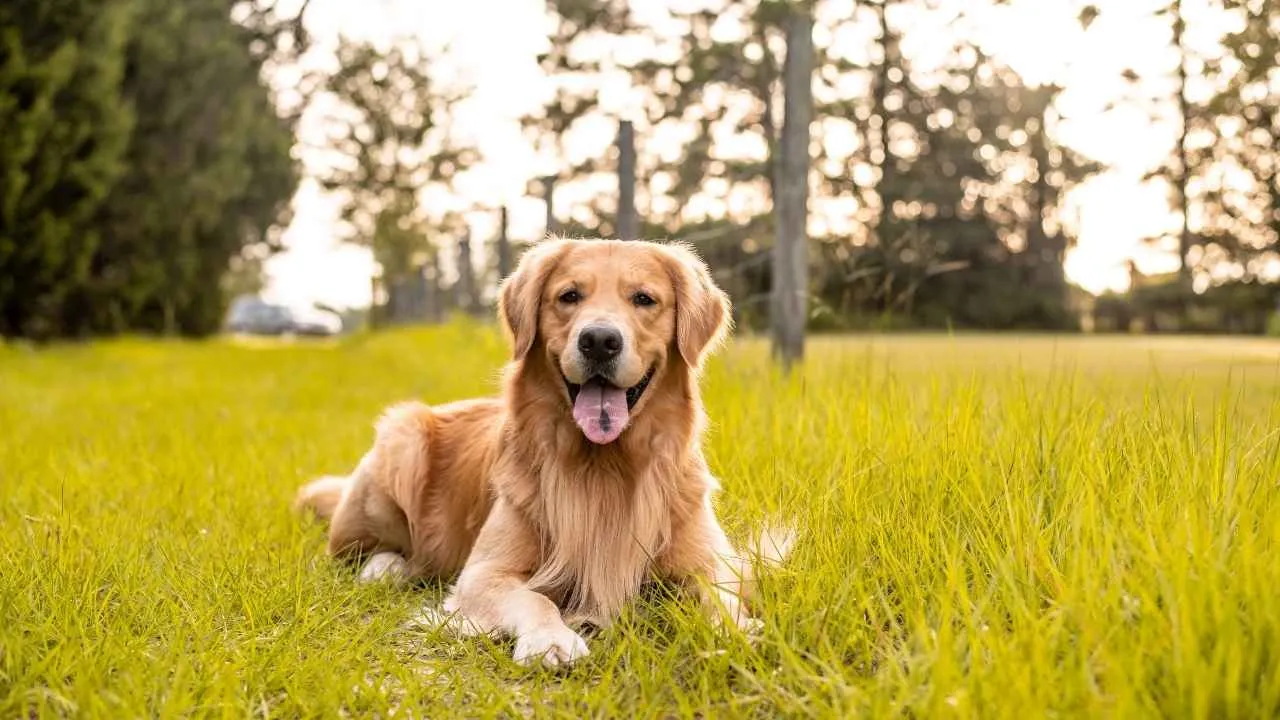
Golden Retrievers are not traditional pointing dogs, and let’s be honest—they’re not trying to be. Their strength is in flushing and retrieving, and they do it exceptionally well.
They work within a closer range, typically 20–25 yards, flushing birds into the air for the hunter. It’s less “freeze and pose,” more “let’s get this moving.” Different style, same goal.
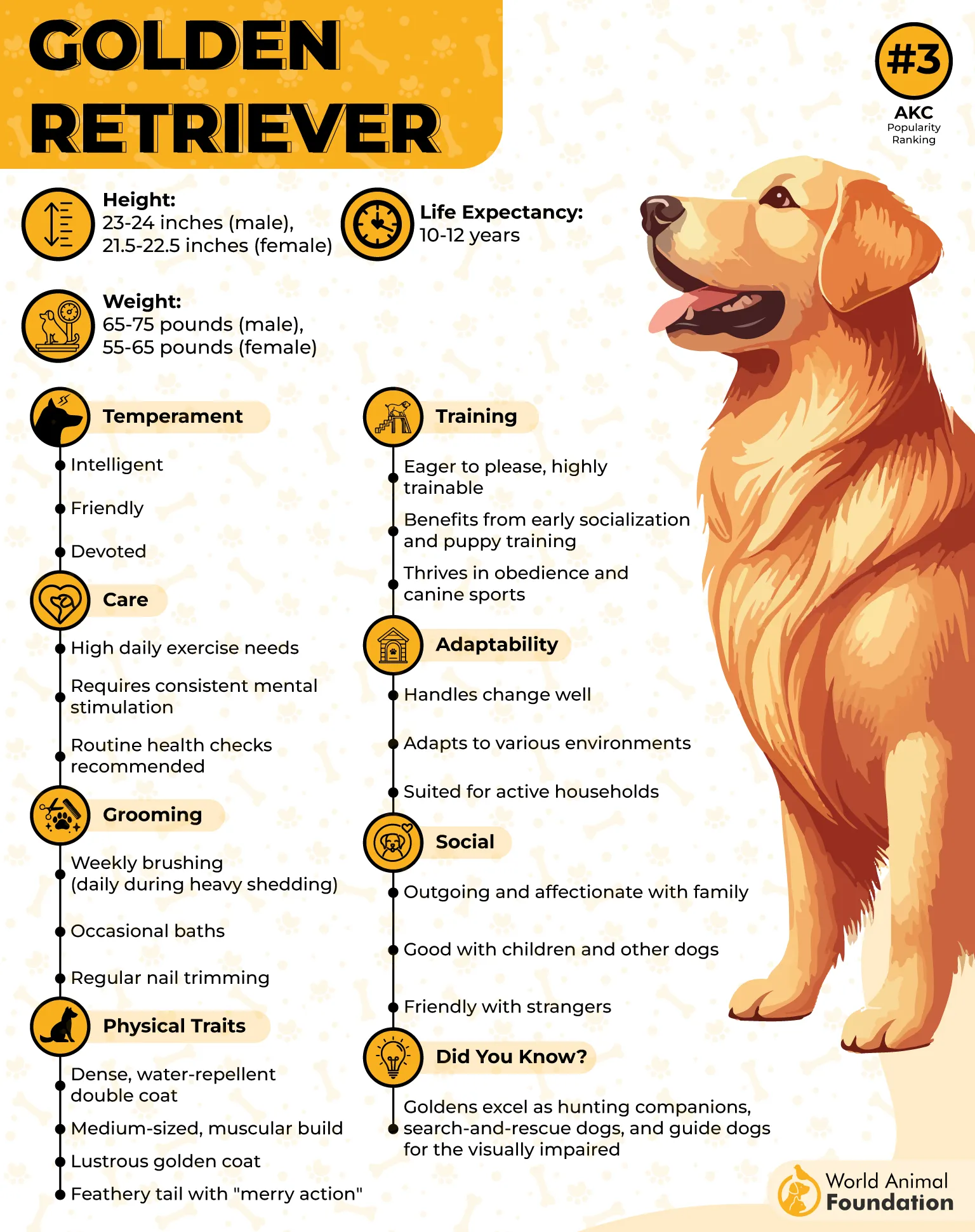
Occasionally, some Goldens show natural pointing behavior, but it’s rare. You can train them to pause, but it’s not instinct-driven like in pointers. So manage expectations.
This bird dog breed absolutely dominates in retrieving. Soft mouth, strong memory, and insane tracking ability mean your bird comes back intact. That’s huge in real-world hunting.

Field-bred Goldens are the way to go if you want performance. They’ve got higher drive, better stamina, and less of that heavy show coat slowing them down.
Bonus: They’re also elite family dogs. So, you get a hunting partner and a wholesome bestie. Dual-purpose unlocked.
5. English Springer Spaniel
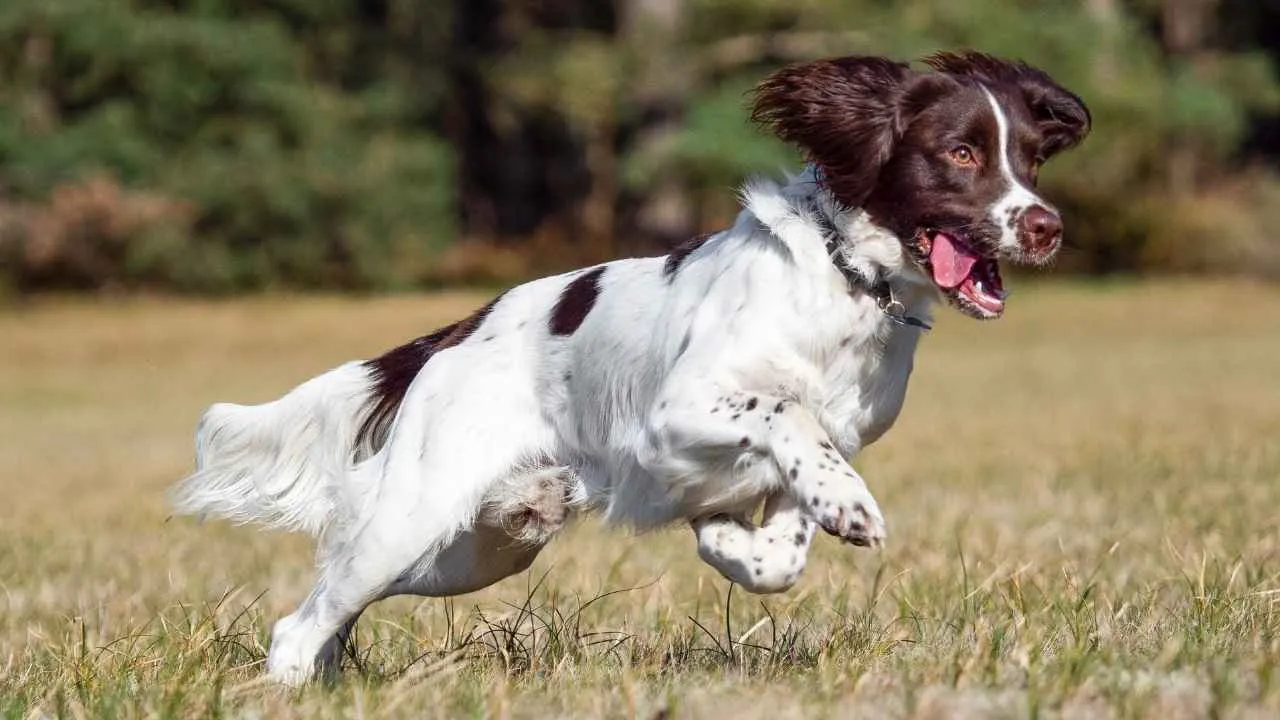
Springers are the definition of “work now, think later.” These dogs charge into cover like they’ve got something to prove—and honestly, they usually do.
Their hunting style is all about flushing. They “spring” birds into the air (hence the name), making them perfect for pheasant hunting. Subtle? Not at all. Effective? Absolutely.
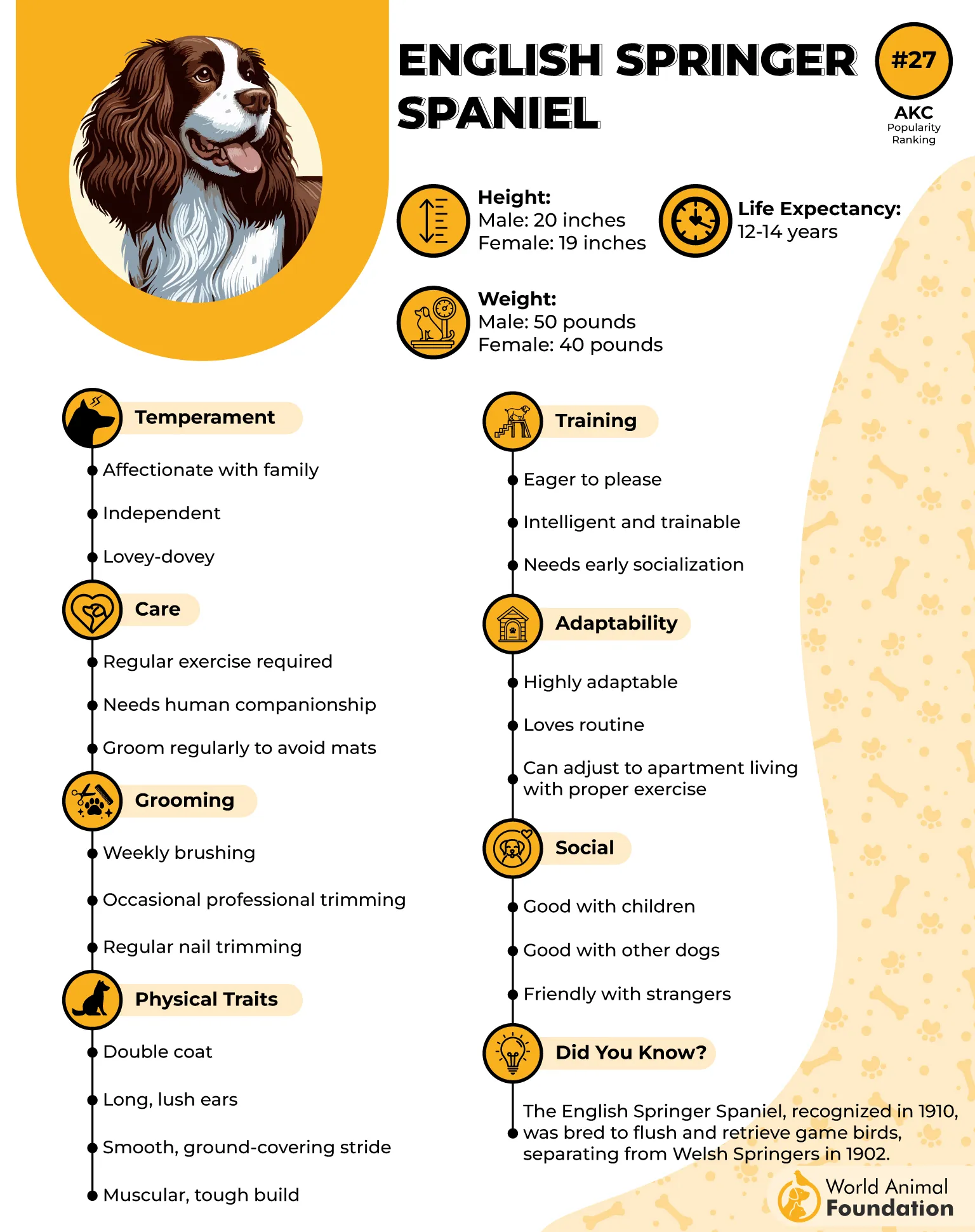
They’ve got an incredible nose, says Purina, helped by those long ears that actually stir scent toward it. Nature really said, “Optimize this build.”
These athletic dogs stay within gun range, which is great for control. They’re energetic but manageable with proper training. Think controlled chaos.
They’re also muscular, durable, and built for rough terrain. Dense coat, strong body, and zero hesitation when diving into thick brush.
For first-time bird hunters, Springers are often recommended because they’re easier to handle compared to wide-ranging pointers.
6. Weimaraner
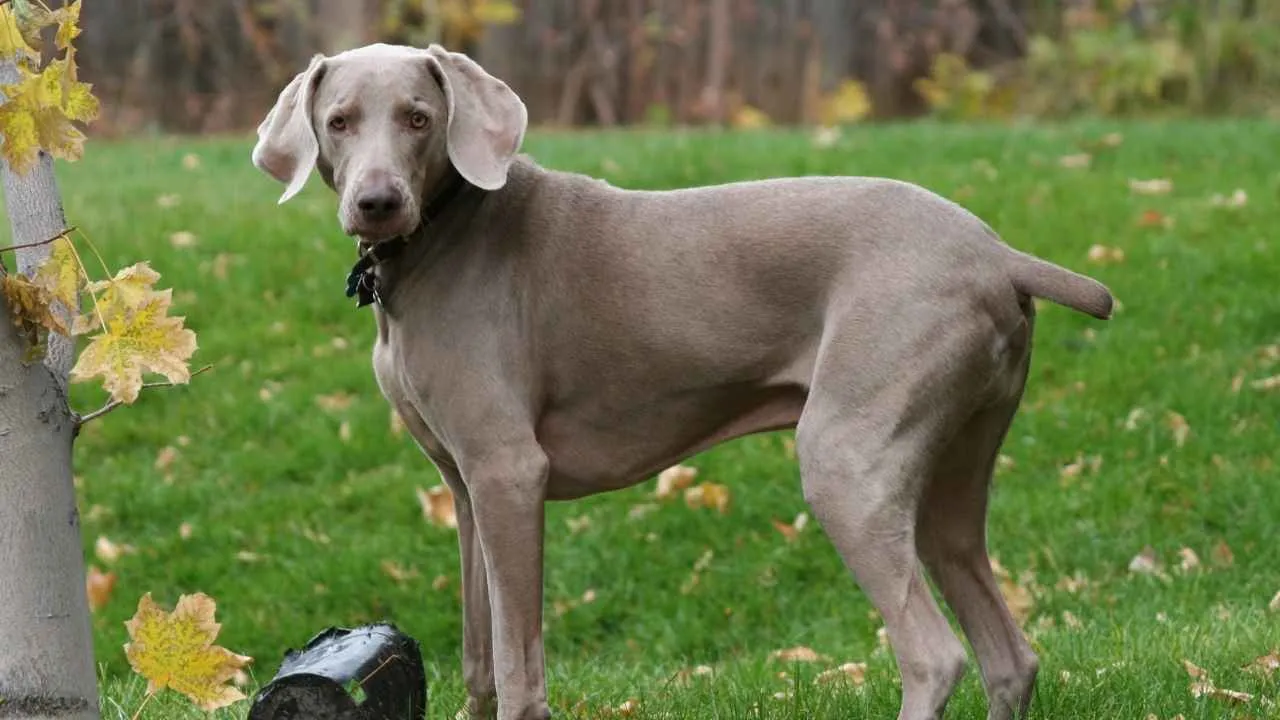
Nicknamed the “Gray Ghost,” the Weimaraner moves like it’s in stealth mode 24/7. This breed doesn’t just hunt—it stalks.
They’re part of the HPR group (Hunt, Point, Retrieve), meaning they do everything in one smooth sequence. Find → freeze → flush → retrieve. Clean workflow.
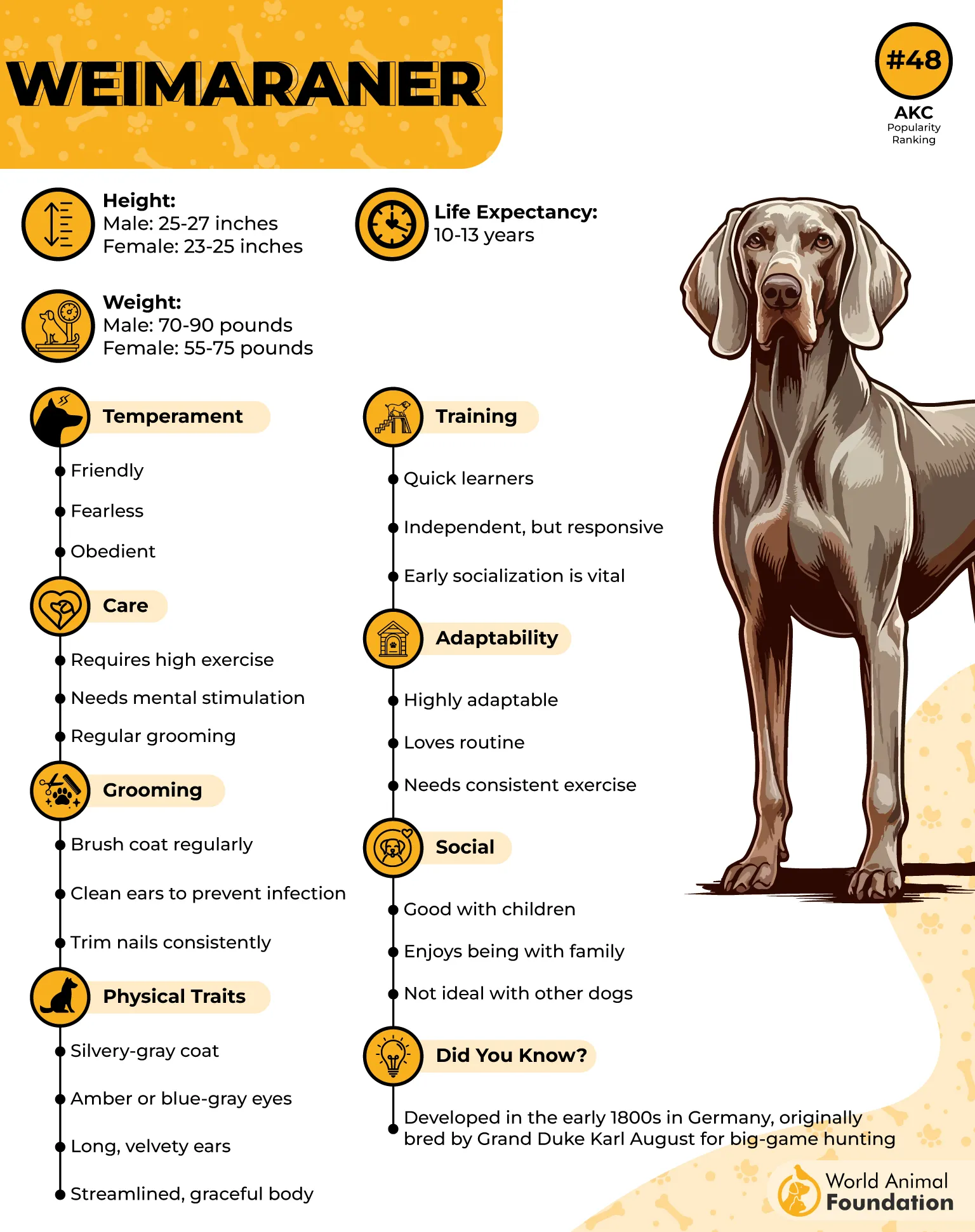
Their pointing style is classic: rigid stance, raised paw, laser focus. They are like giving elite precision with a touch of drama. Weimaraners locate game birds using a high-powered scenting-and-strategic-search combo that’s honestly elite-tier in the gundog world.
They primarily use air-scenting, meaning they catch scent particles carried by the wind instead of just tracking footprints on the ground. They move in a quartering pattern (zigzagging back and forth) to cover as much terrain as possible while staying within range of the hunter.
Once they pick up a bird’s scent, everything changes. Their body stiffens, movement slows, and focus goes laser-sharp. They follow the scent trail carefully until they’re close enough to confirm the bird’s exact location.
Then comes the signature move: they freeze into a rigid pointing stance—head forward, tail straight, sometimes one paw lifted. This is basically the dog saying, “Don’t move. Bird is right there.” A well-trained Weimaraner will hold this position until the hunter approaches.
They’re extremely loyal—like, Velcro-level attachment. If you want a dog that sticks to you like your shadow, this is it.
7. Vizsla
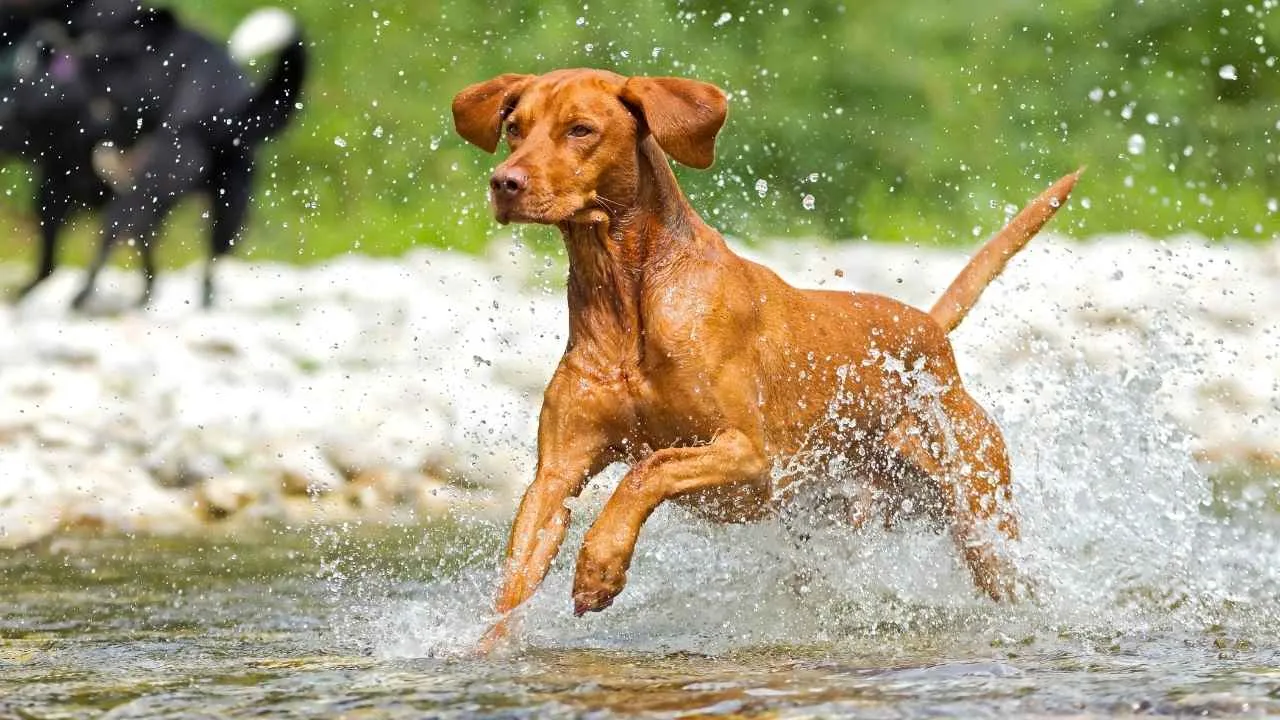
The Vizsla is basically a performance athlete with emotional attachment issues—in the best way possible. Fast, focused, and deeply bonded to its owner.
This gun dog uses a classic HPR technique, which stands for Hunt → Point → Retrieve—basically the all-in-one combo move of the gundog world. No cap, this breed really understood the assignment.
Vizslas move through fields using their nose to pick up scent—often “air-scenting” rather than just sniffing the ground. They cover the terrain in a smooth, athletic pattern, staying connected to the hunter rather than going rogue.
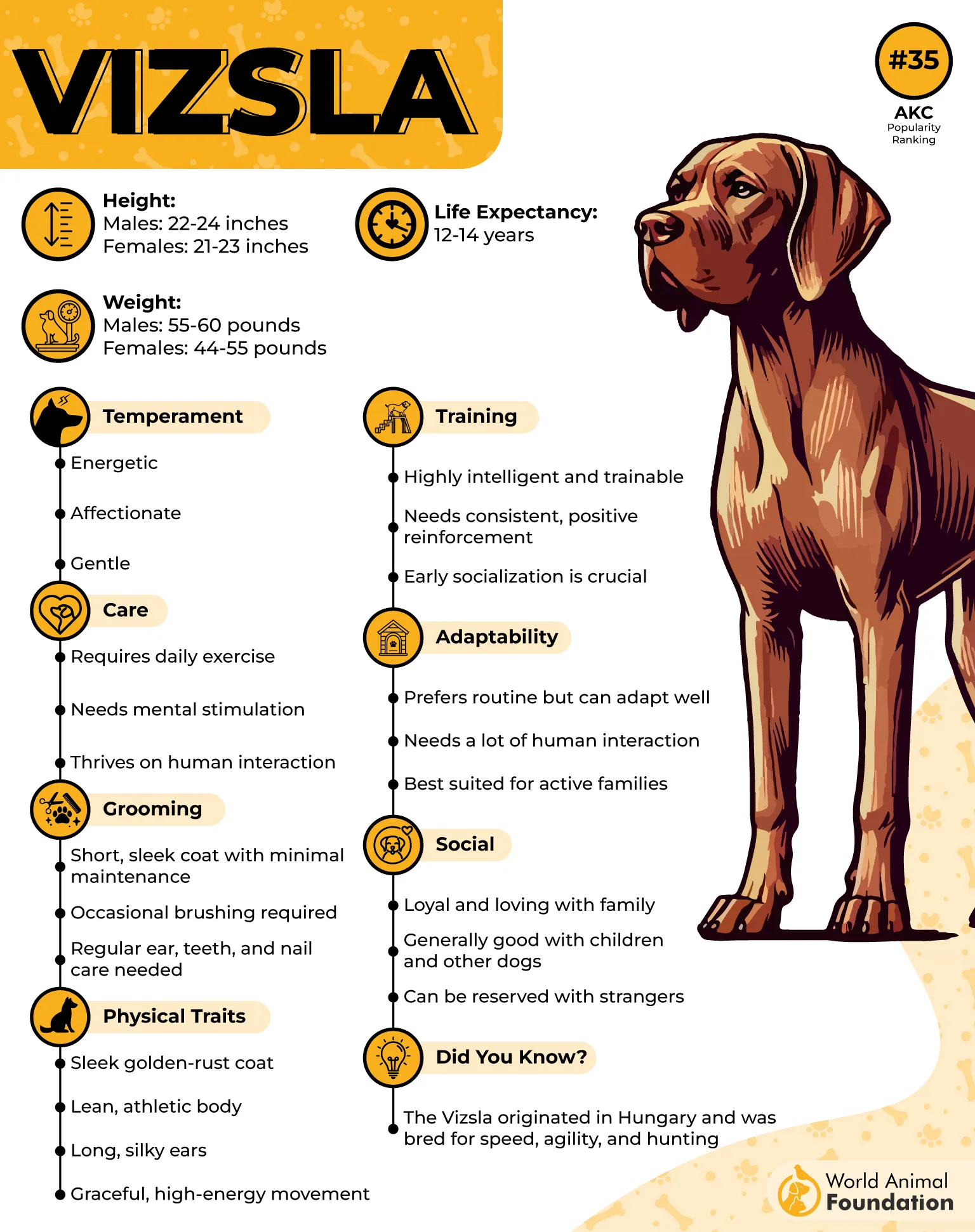
The moment they lock onto a bird’s scent, they freeze like a statue—head forward, body stiff, sometimes one paw lifted like they’re posing for a painting. This is the iconic “point,” silently telling the hunter: “Target located. You’re welcome.”
After the bird is flushed and shot, Vizslas switch roles and retrieve it—gently. They’ve got a “soft mouth,” meaning they carry the bird carefully without damaging it.
They need a lot of exercise. Like, a lot. If you’re not active, they will outgrow your lifestyle.
They’re also super sensitive and respond best to positive training. Harsh methods? Instant shutdown. Respect the vibe.
Fun fact: They were nearly extinct after World War I, but breeders brought them back. Now they’re one of the most respected pointing breeds globally.
Conclusion
So, here’s the deal: not all hunting dogs are built the same. If you want pure pointing mastery, breeds like the German Shorthaired Pointer and English Setter are elite-tier. If you want versatility, the Labrador Retriever or Weimaraner might be your pick.
Choosing the right dog comes down to your hunting style, terrain, and how much energy you can realistically match. Some of these dogs are chill teammates, others are full-on athletes who expect you to keep up. No shortcuts here.
At the end of the day, the best bird dog isn’t just skilled—it’s trained, bonded, and consistent. Because when that moment hits, and your dog locks into a perfect point… yeah, that’s the kind of thing that lives rent-free in your head forever.
