





Let’s be real: getting a dog is adorable until that tiny furry friend comes with a monthly expense sheet. Food, vaccines, parasite prevention, grooming, toys, training, and surprise vet visits can add up fast, but families on a budget can still enjoy a four-legged best friend.
The key is choosing a breed whose size, grooming, exercise, and care needs fit your budget—not just one that looks cute on Instagram. With reported U.S. dog expenses already including hundreds of dollars a year for food and veterinary care, here are seven budget-friendly dog breeds that can offer plenty of personality without turning your household budget into a crime scene.
Best Dog Breeds for Families on a Budget
1. French Bulldog

The French Bulldogs are compact, affectionate companion dogs that can adapt well to smaller homes, making them appealing for families without enormous yards or unlimited outdoor space. Their relatively small size also means food portions are often more manageable than those of large breeds, though individual dietary needs still depend on age, activity, and health.
Their exercise needs are another potential budget win because a French Bulldog generally doesn’t need hours of running every day to be happy. Short walks, indoor play, and brief bursts of activity can provide plenty of stimulation.
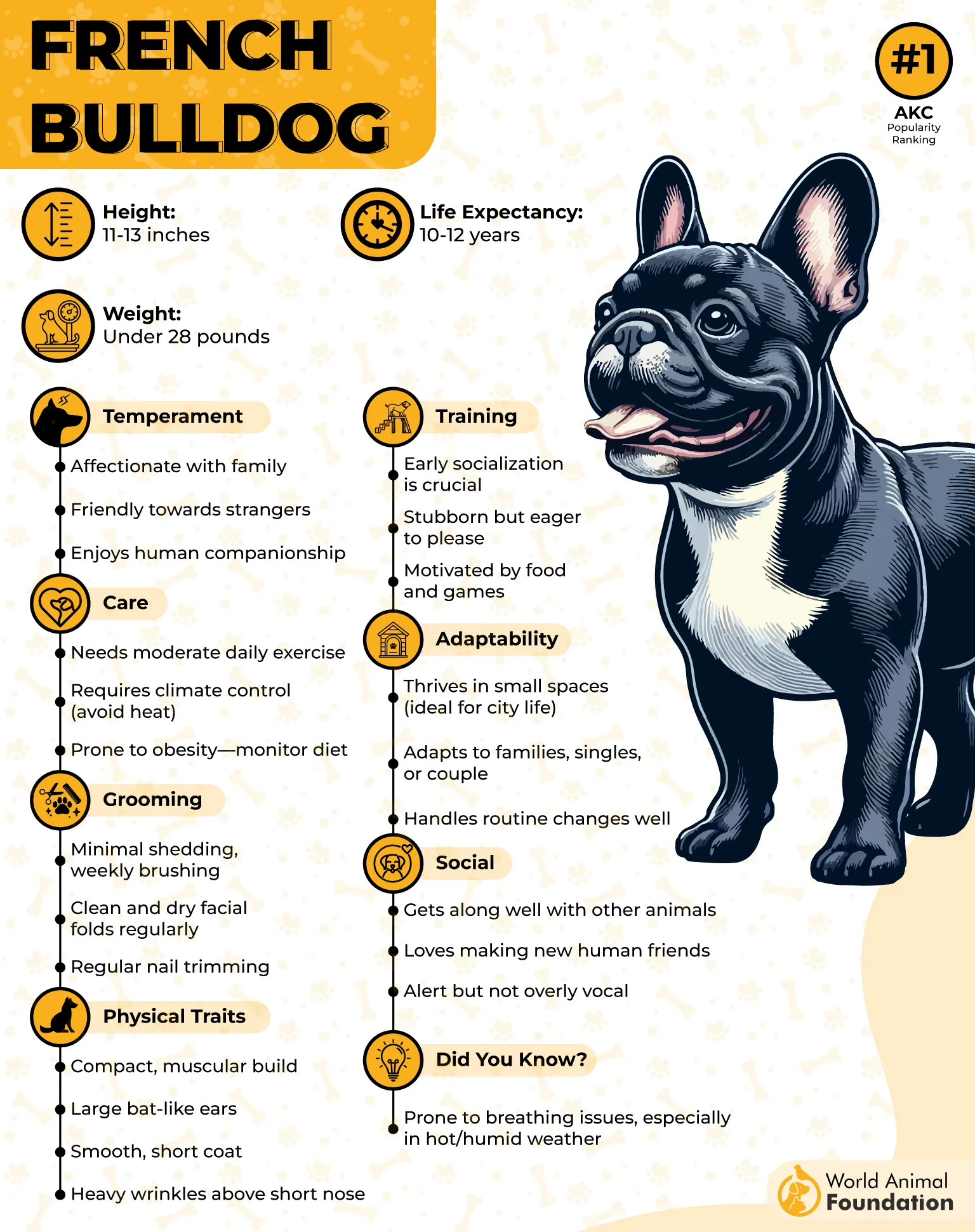
These dogs also have a short coat, so you won’t need regular professional haircuts or spend your weekends battling enormous mats. A basic brush, occasional bath, nail care, ear cleaning, and dental care can form the foundation of their grooming routine, which is considerably simpler than maintaining a long-coated breed.
Here is where budget-conscious families need to pay attention: French Bulldogs can have health problems associated with their brachycephalic body shape, and veterinary care can become considerably more expensive if breathing, skin, spinal, or other breed-associated issues arise.
2. Dachshund

Originally developed for hunting badgers, Dachshunds are curious, lively, intelligent, and famously determined. Their compact size can make food, bedding, transportation, and everyday supplies cheaper than with a large breed.
PetMD says these affectionate breeds come in smooth, longhaired, and wirehaired varieties, and that distinction matters when you are planning your budget. Smooth-coated Dachshunds are particularly straightforward to groom, while longhaired and wirehaired varieties require more coat maintenance and can potentially mean more time or professional grooming costs.
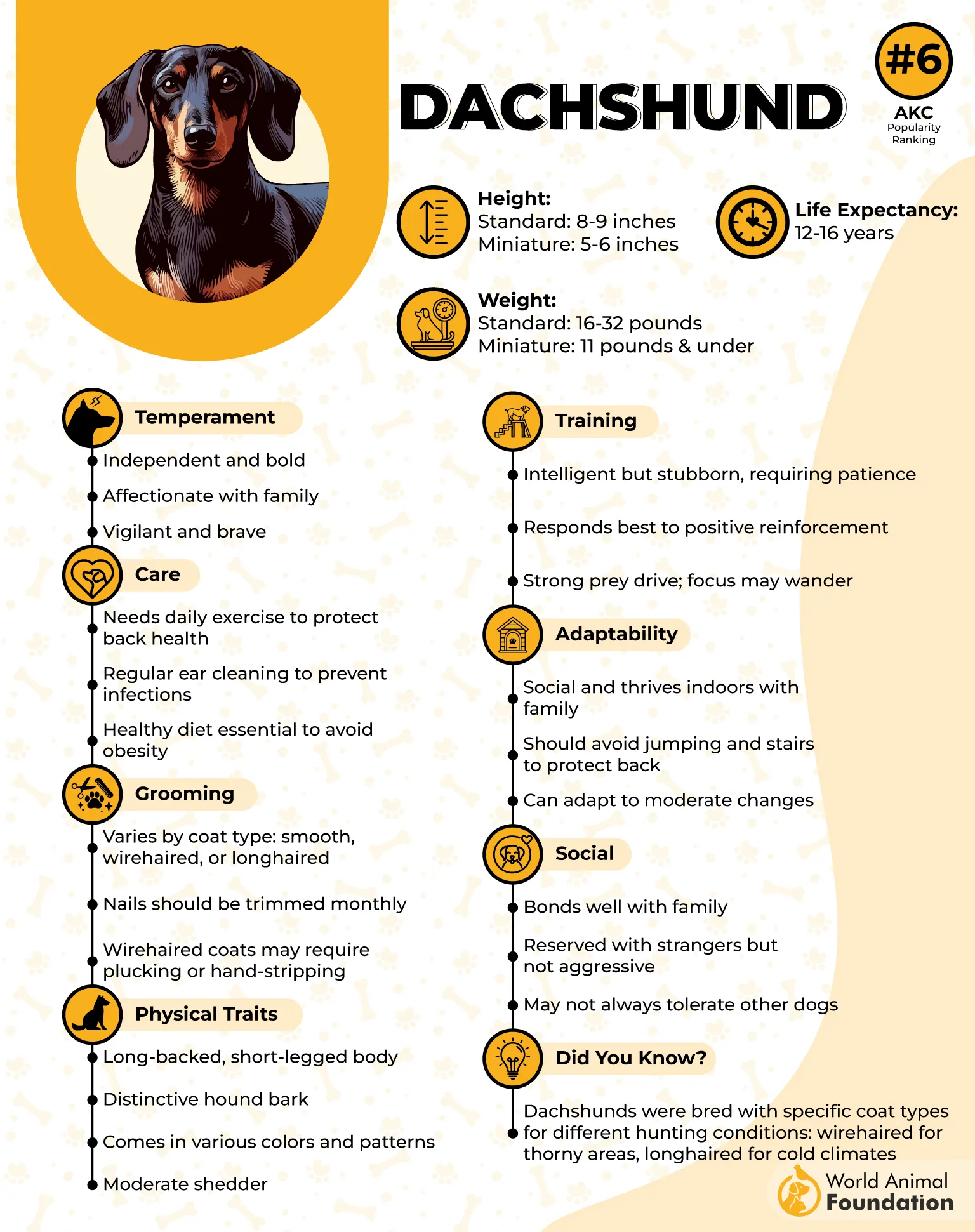
Exercise is another area where the Dachshund can fit family life nicely because they do not need enormous amounts of space to stay active. They enjoy walks, sniffing adventures, games, and exploring, but their little legs do not require marathon-level exercise to be satisfied.
Dachshunds’ long backs make them prone to intervertebral disc disease, which can lead to expensive spinal problems. Keeping them at a healthy weight, limiting jumping, and handling them properly can help reduce the risk.
3. Beagle

Originally bred for hunting in packs, Beagles tend to be social, cheerful, curious, and people-oriented, which helps explain why they have become such popular companions.
Their compact-to-medium size can help families manage food costs without sacrificing the fun-loving personality people often want from a family dog. Purina also notes that they have short, dense coats, so their grooming routine is generally simpler than that of long-haired breeds, and regular brushing helps manage moderate shedding.
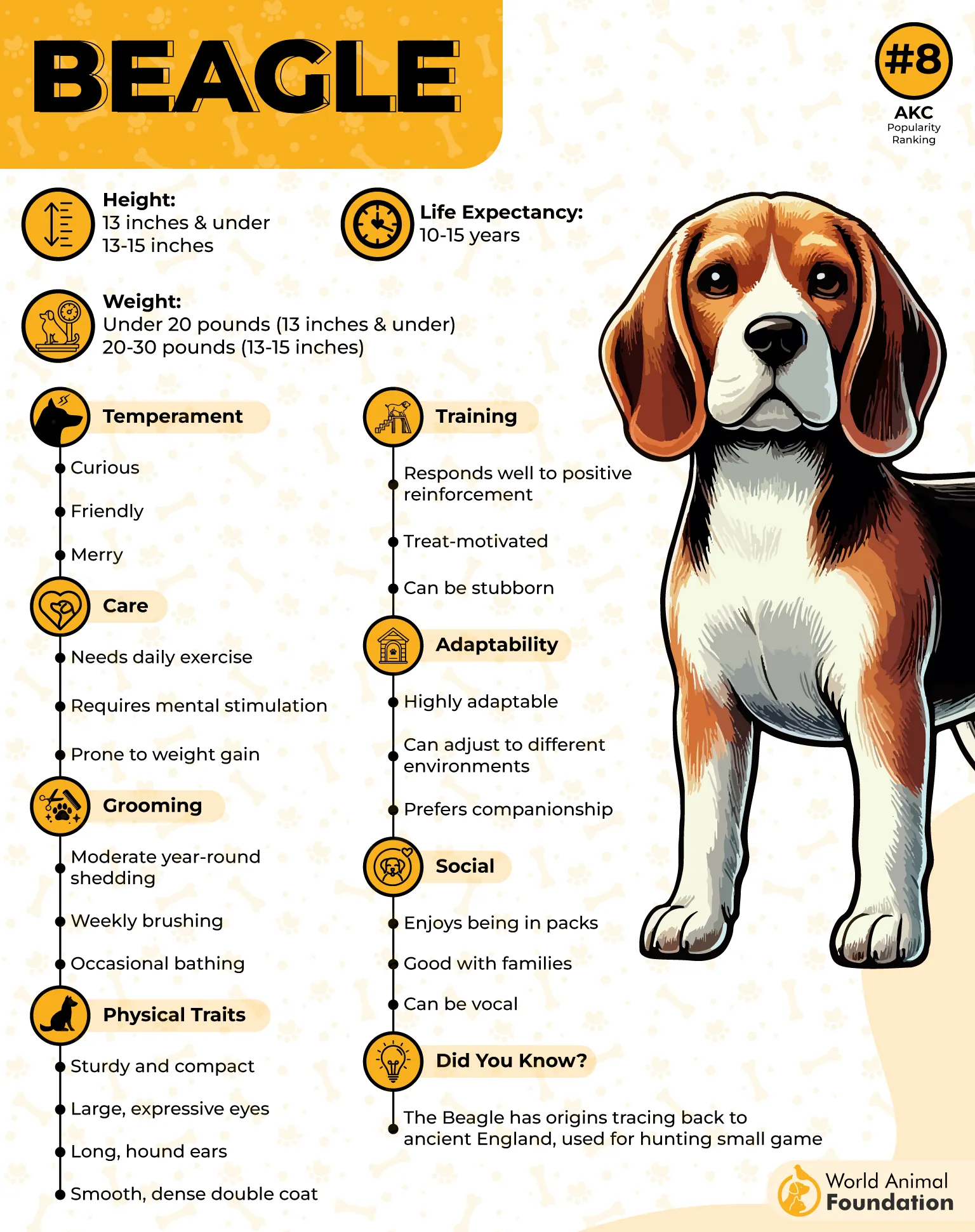
But don’t confuse “easy grooming” with “easy dog,” because Beagles have energy and curiosity that can make them surprisingly demanding if you ignore their needs. They were bred to use their noses, and a Beagle with insufficient physical and mental stimulation may decide that your trash can, kitchen counter, shoes, or garden are fascinating research projects.
Training can also affect your budget indirectly because a bored or poorly trained Beagle can create a whole list of expenses you never planned for. Positive reinforcement is useful because Beagles are highly food-motivated, so ordinary kibble can sometimes double as a training reward instead of requiring a separate premium-treat budget.
4. Chihuahua

The Chihuahuas are little dogs that can be confident, alert, affectionate, and intensely attached to their humans. At the same time, their small size can make everyday food, transportation, bedding, and many accessories relatively economical.
One of the biggest advantages for budget-conscious families or first-time dog owners is how little food they need. A Chihuahua’s meals are tiny, although quality nutrition should never be replaced with random leftovers just because the dog is small.
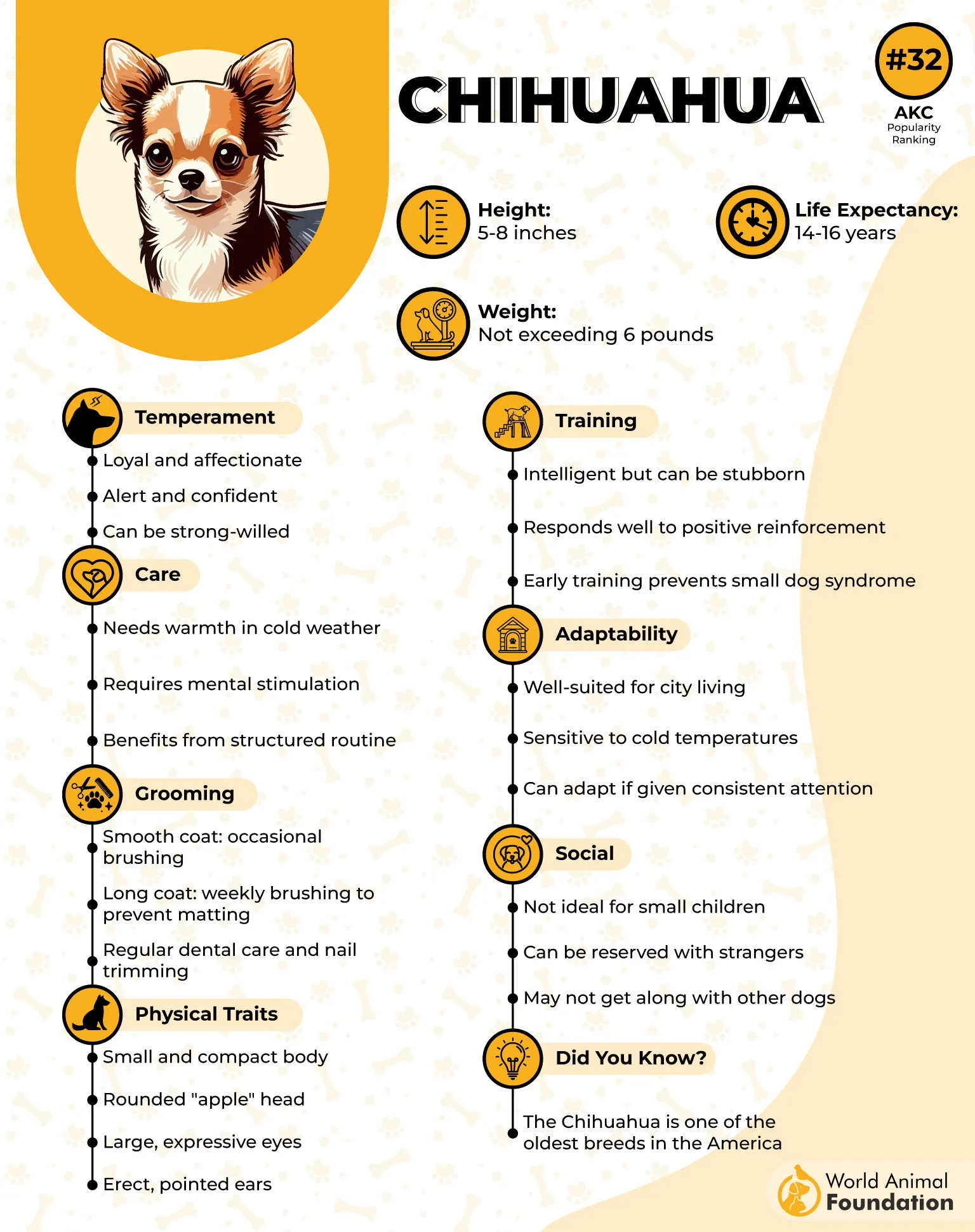
Grooming costs depend partly on whether you choose a smooth- or long-coated Chihuahua. Smooth-coated Chihuahuas generally need minimal coat maintenance, as per Pet Plan, while long-haired Chihuahuas require more brushing to keep their coats tangle-free. However, neither variety needs the extensive coat work associated with some heavily groomed breeds.
The Chihuahua’s tiny body comes with special considerations, especially around handling and interactions with children. Their small size makes accidental injury easier, so families with young kids should teach gentle handling and supervise interactions, rather than letting the dog become an unsupervised toddler toy.
5. Shih Tzu

The Shih Tzus are small companion dogs that are affectionate, adaptable, playful, and especially comfortable living close to their humans, which makes them popular with families and people living in smaller homes.
Their small size can make food costs manageable, and they don’t need a giant backyard to burn off their energy. Short walks, indoor games, and family interaction can provide plenty of activity for many Shih Tzus, making them practical for households where long outdoor exercise sessions don’t fit the schedule.
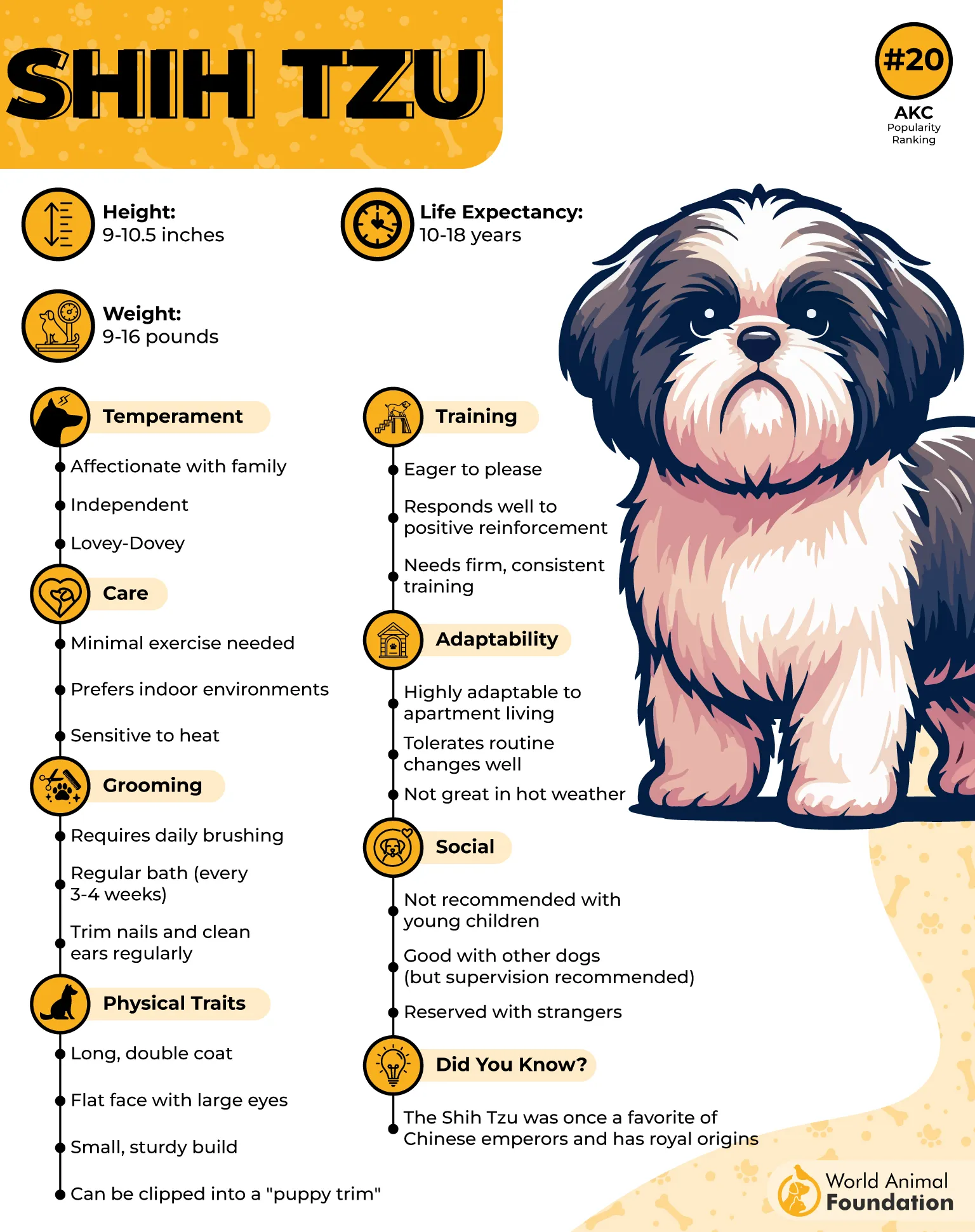
However, here’s the plot twist: these incredibly affectionate dogs aren’t necessarily low-maintenance when it comes to grooming. Experienced owners recommend daily brushing for dogs with longer coats, along with regular bathing and attention to the eyes, face, mustache, and topknot.
That means the budget-smart move may be choosing a practical haircut rather than trying to maintain a floor-length show-style coat at home. Keeping the hair shorter can reduce brushing time and make everyday cleaning easier, although professional grooming appointments may still be needed depending on your family’s skills and routine.
6. Miniature Schnauzer

Originally developed as a farm dog and rat terrier, the Miniature Schnauzer is smart, alert, adaptable, and energetic without taking up much physical space.
One particularly useful feature for budget-conscious households is their distinctive coat, which sheds relatively little compared with many other breeds. That doesn’t mean zero grooming, because Miniature Schnauzers need regular brushing and coat maintenance, but families can potentially reduce professional grooming expenses by learning some basic maintenance themselves.
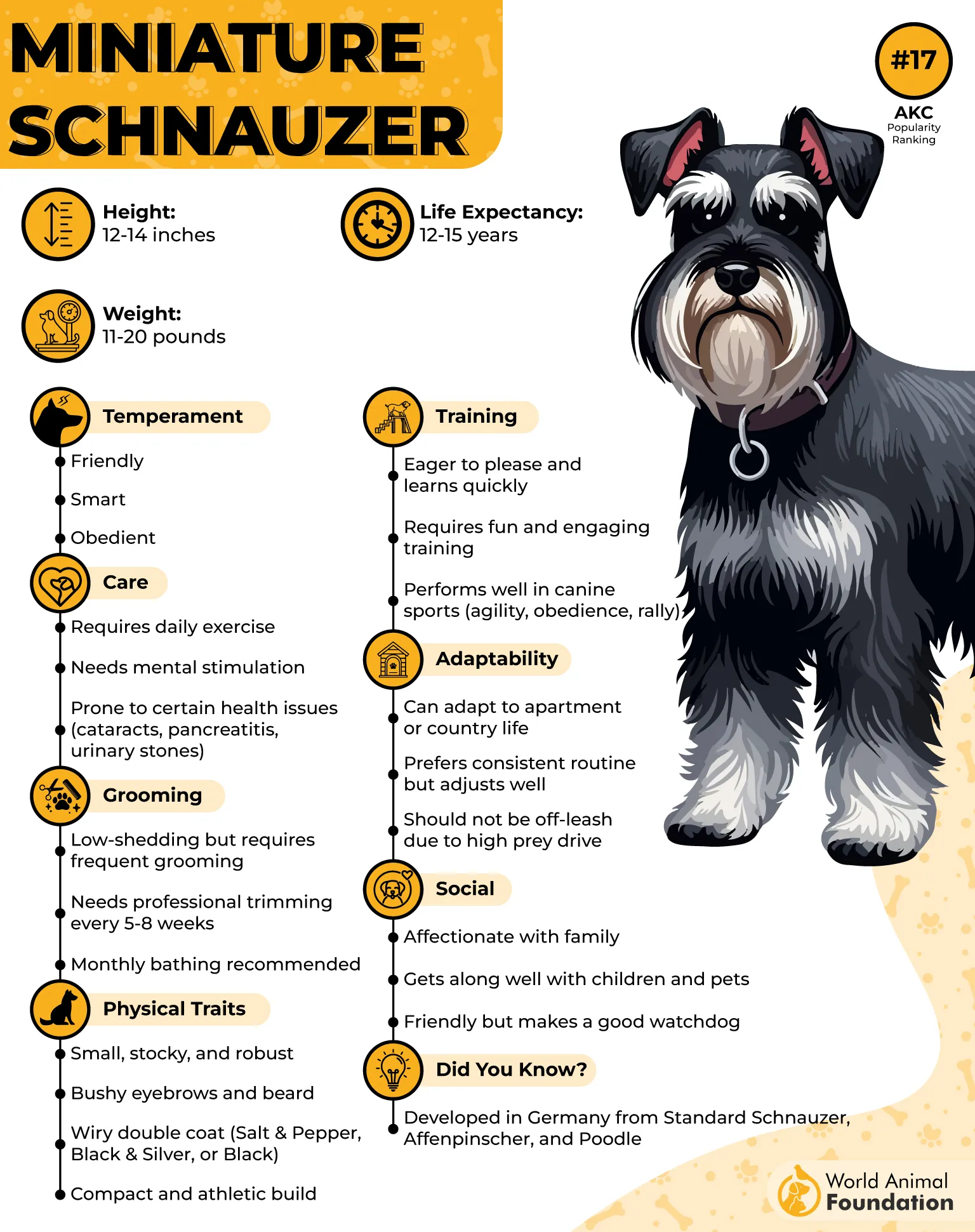
Miniature Schnauzers are also intelligent enough to enjoy training, tricks, scent games, and interactive activities, which is great news when your wallet doesn’t appreciate being introduced to the pet-store aisle every weekend.
A cardboard box, hidden kibble game, homemade obstacle course, or short training session can provide mental stimulation without requiring expensive electronic toys. Exercise needs are moderate, but this cheap dog breed is not decorative cushions with eyebrows and needs to be around active families.
7. Pug

The Pug’s compact size, affectionate personality, and relatively modest exercise needs can appeal to families that want a companion dog without the food and space demands of larger breeds.
Their short coat is another reason Pugs can appear attractive from a maintenance perspective, but prospective owners should not mistake a short coat for a low-shedding coat. Pugs can shed significantly, so regular brushing can help manage loose hair around the home, and their facial folds need regular attention to keep them clean and dry.
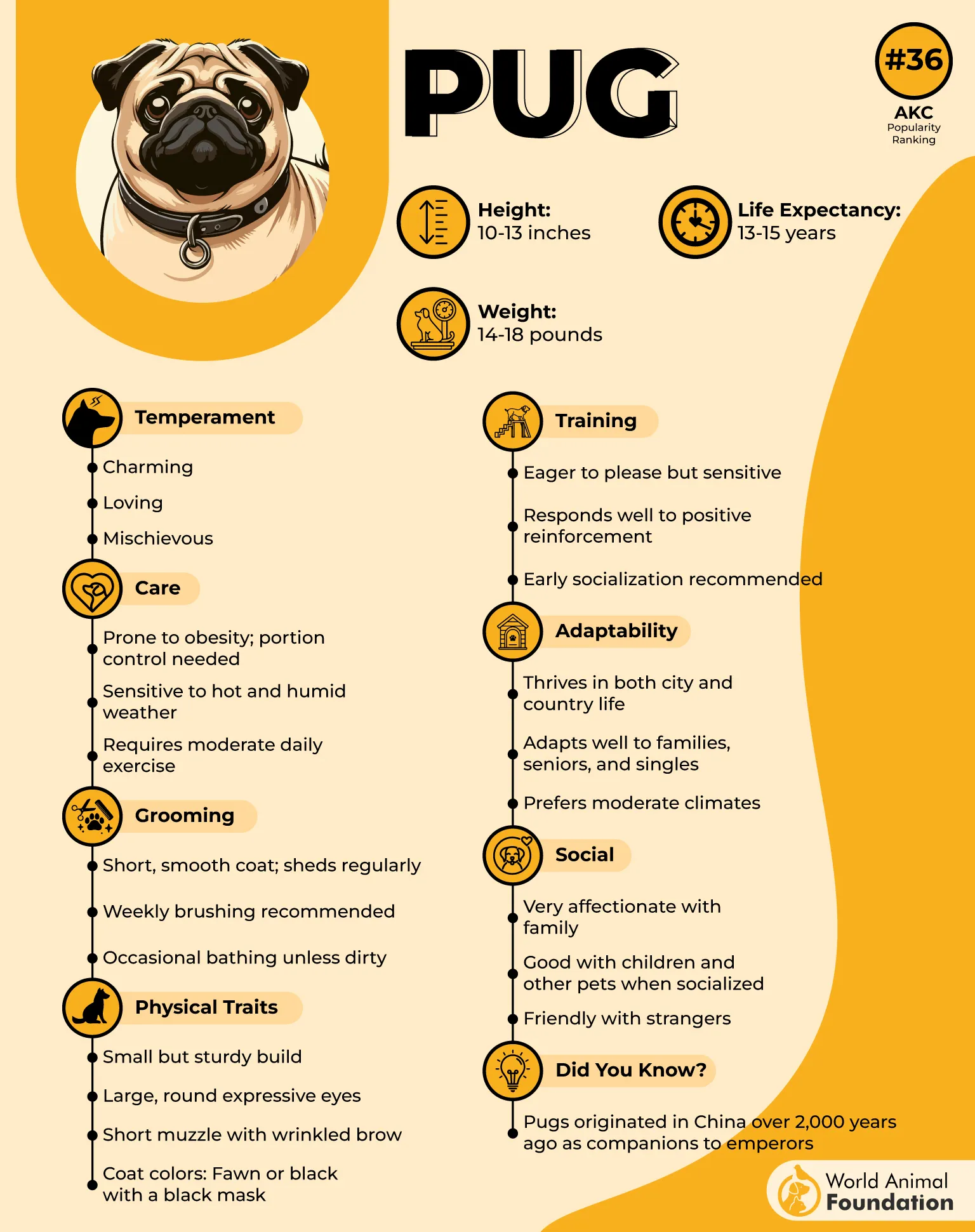
Approach exercise sensibly, too, because these small dogs have short muzzles and can be vulnerable to overheating and breathing difficulties. Short walks and controlled indoor play provide activity without pushing them into strenuous exercise, especially in hot weather.
The biggest financial caveat with this affordable dog breed is the potential for breed-associated health problems, particularly those connected with flat-faced anatomy. Veterinary bills can become significant if a Pug develops breathing, eye, skin, or other medical complications, which means choosing this breed solely because it is small could be a false economy.
Conclusion
Choosing a family dog on a budget is not really about finding the breed with the cheapest puppy price or the smallest food bill. It is about calculating the whole-life cost: food, preventative medicine, shelter dog adoption fees, vaccinations, parasite control, grooming, dental care, training, supplies, boarding, and the possibility of unexpected veterinary treatment.
And here is the genuinely budget-friendly hack nobody puts on the cute puppy poster: prevention beats panic spending. Keeping a low-cost dog breed at a healthy weight, feeding an appropriate diet, staying current with routine veterinary care and providing enough exercise and mental stimulation can help prevent avoidable problems.
