




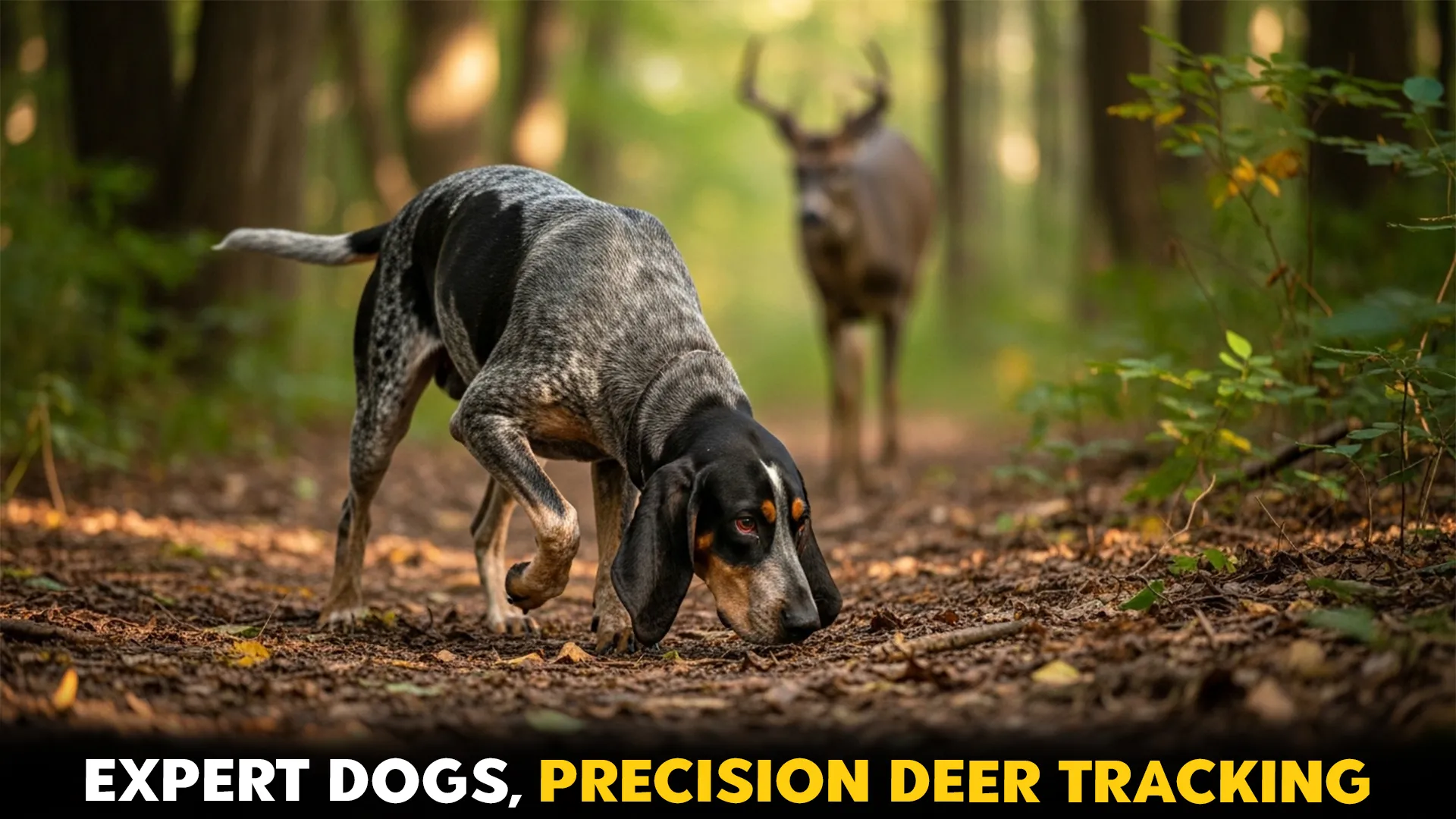
In the high-stakes world of big-game recovery, a tracker is only as effective as the nose leading the way. For the expert handler, a tracking dog is more than a companion; it is a precision tool capable of deciphering cold trails and navigating grueling terrain long after the visual sign has vanished.
Experienced hunters often rely on trained blood-tracking dogs to locate wounded deer quickly and efficiently, especially in dense forests where visibility is low. With their powerful sense of smell, sharp hearing, and focused instincts, these dogs can follow even the faintest trail, ensuring that no animal is left to suffer unnecessarily.
In this guide, we’ll explore the remarkable dog breeds known for their tracking abilities and how they assist in responsible deer hunting.
Disclaimer: At World Animal Foundation, we focus on real-world conservation efforts. Please note that we do not support hunting for sport or entertainment.
Best Dog Breeds Choices for Deer Tracking Experts
1. Bluetick Coonhound
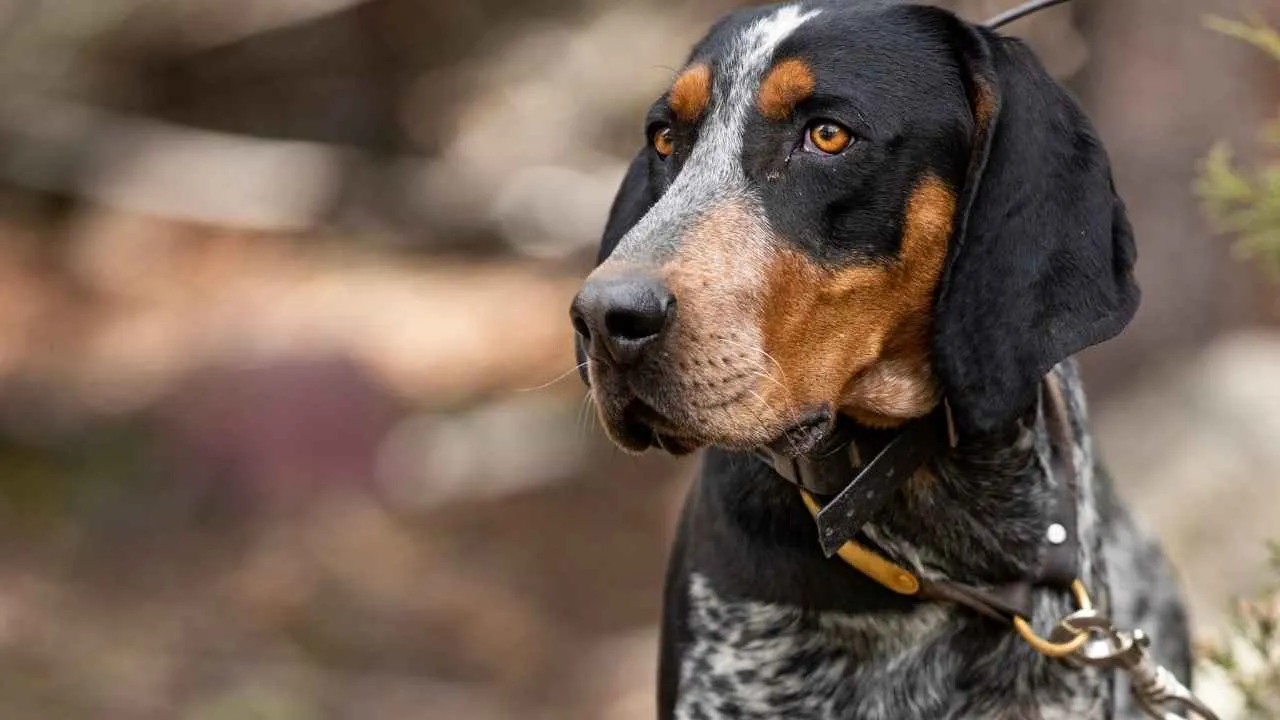
The Bluetick Coonhound is prized for its friendly temperament, powerful nose, and distinctive deep “bawl” voice. Developed in the United States, particularly in Louisiana, this breed traces its lineage to the Grand Bleu de Gascogne of France, along with English Foxhounds, American Foxhounds, and other regional hounds.
Strong yet well-balanced, the Bluetick is a medium-to-large dog with impressive tracking ability. It’s especially known as a “cold-nosed” hound, meaning it can follow older scent trails that many other dogs would miss. Hunters often rely on its ability to track days-old trails and even follow blood scent through dense cover or in low-light conditions.
Bred for endurance and determination, Blueticks thrive when given a job to do. They are athletic, hardy, and happiest when engaged in activities like tracking, hunting, or advanced scent work. However, their independent nature can make training a challenge, and they should be supervised around smaller animals due to their strong prey drive.
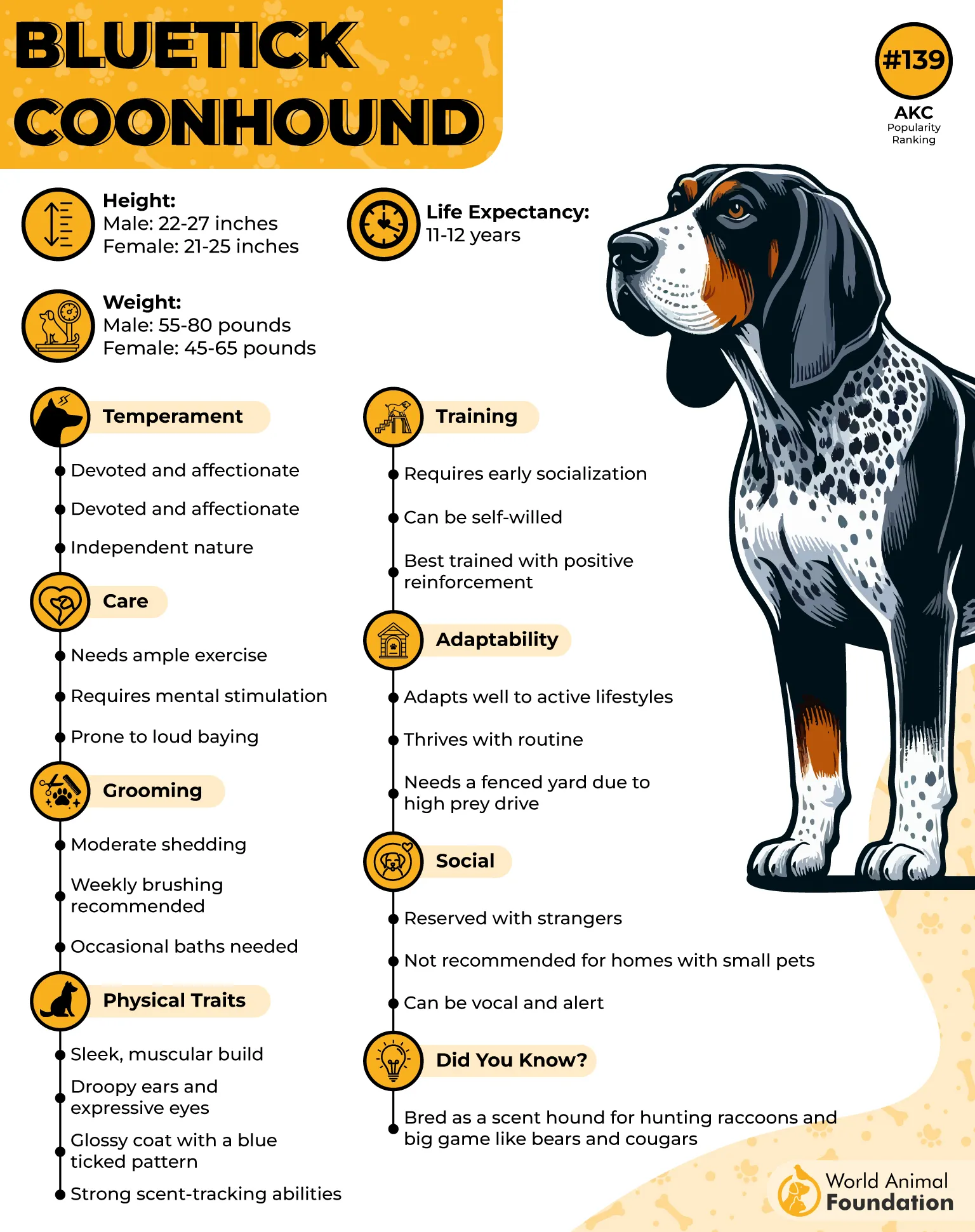
Highly versatile, Bluetick Coonhounds are used to track a variety of game, including deer, boar, and even larger animals. They also excel at “treeing” raccoons and other prey. One thing to keep in mind: they are notably vocal. Their signature howl may be impressive in the field, but it can require patience and training in a home environment.
In many ways, the Bluetick is like a determined detective: focused, intelligent, and relentless when following a trail.
2. Slovensky Kopov
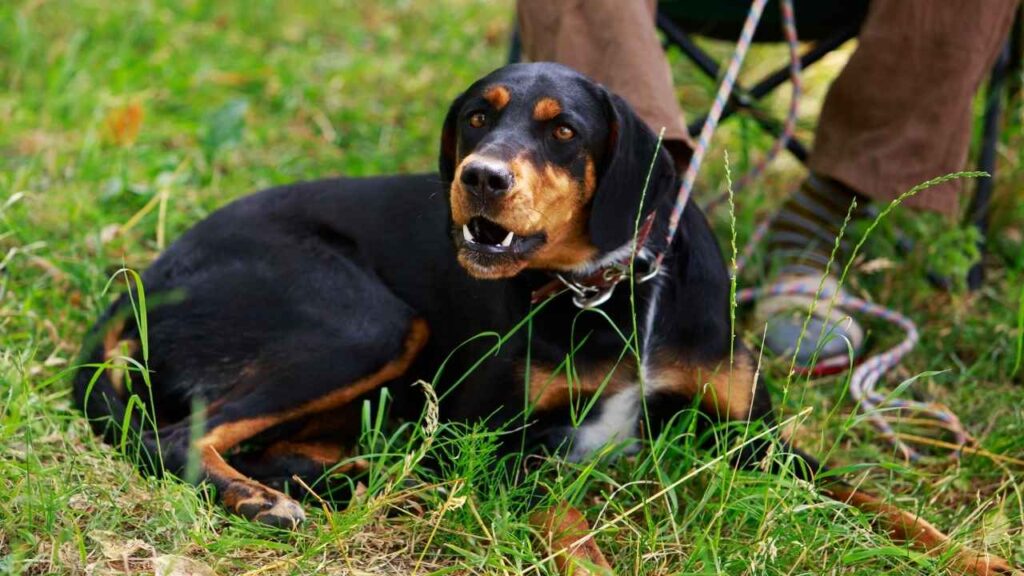
The Slovenský Kopov, an intriguing name to match a remarkable dog, is a medium-sized scent hound from Slovakia in Central Europe. Bred specifically for hunting, this distinctive breed is best known for its skill in tracking deer and hunting wild boar across rugged terrain.
Unlike many traditional hounds, the Slovenský Kopov combines strong working instincts with a calm and adaptable nature. It is widely used to track wounded deer with precision, yet at home it can be an easygoing and loyal companion. Its balanced temperament makes it suitable for families, as it generally gets along well with children while remaining attentive and protective of its surroundings.
In terms of trainability, this breed stands out. Intelligent and focused, the Slovenský Kopov learns quickly and responds well to consistent guidance. It is naturally courageous and independent in the field, with an excellent sense of direction, traits that make it highly effective during tracking work.
The breed is believed to have developed from crosses involving Central European hounds such as the Austrian Black and Tan Hound (Brandlbracke), along with influences from regional sighthounds. Over time, it has earned a reputation as one of the most reliable tracking dogs for deer and boar hunting.
Overall, the Slovenský Kopov is a versatile working dog, lively, determined, and dependable, equally capable in the field and at home.
3. Blue Lacy
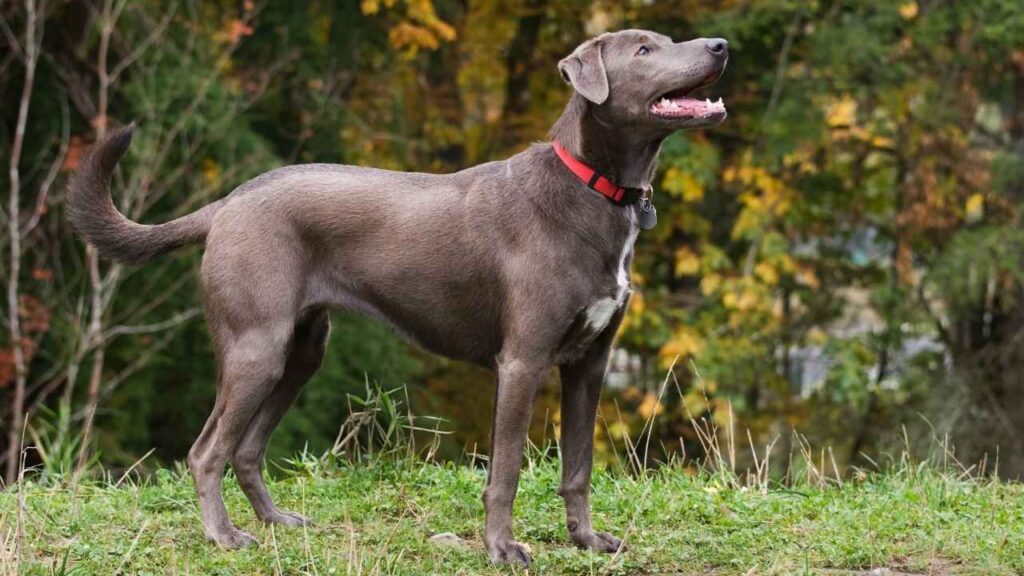
The Blue Lacy is a strong, fast, and lightly built working dog that originated in Texas during the mid-19th century. Recognized as the official state dog of Texas, the breed was developed by the Lacy brothers, ranchers who moved from Kentucky to Texas in 1858 and needed a versatile dog capable of handling demanding ranch work.
Bred for performance and adaptability, Blue Lacys are believed to be a mix of Greyhounds, scent hounds, and possibly coyotes. Despite the name, they come in a variety of colors: “blue” ranges from silver to dark charcoal, “red” spans light cream to rust, and a tri-color variation combines a blue base with distinct red markings.
Highly alert and intelligent, these dogs are known for their intense work ethic and boundless energy. They excel in both hunting and herding roles, showing exceptional determination when working with large game or managing tough livestock. Quick to learn and eager to please, Blue Lacys are relatively easy to train but require consistent activity to stay mentally and physically satisfied.
Their versatility in the field is impressive. Blue Lacys are skilled in tracking, blood trailing, treeing game, running trap lines, hunting wild hogs, and herding livestock. Their speed, agility, and focus make them stand out in a wide range of working tasks.
Today, they are especially valued for their tracking abilities, often used to locate wounded or lost game. Ranchers and hunters favor them for their resilience, as they can handle harsh terrain and perform reliably in both hot and cold Texas conditions.
4. German Shorthaired Pointer
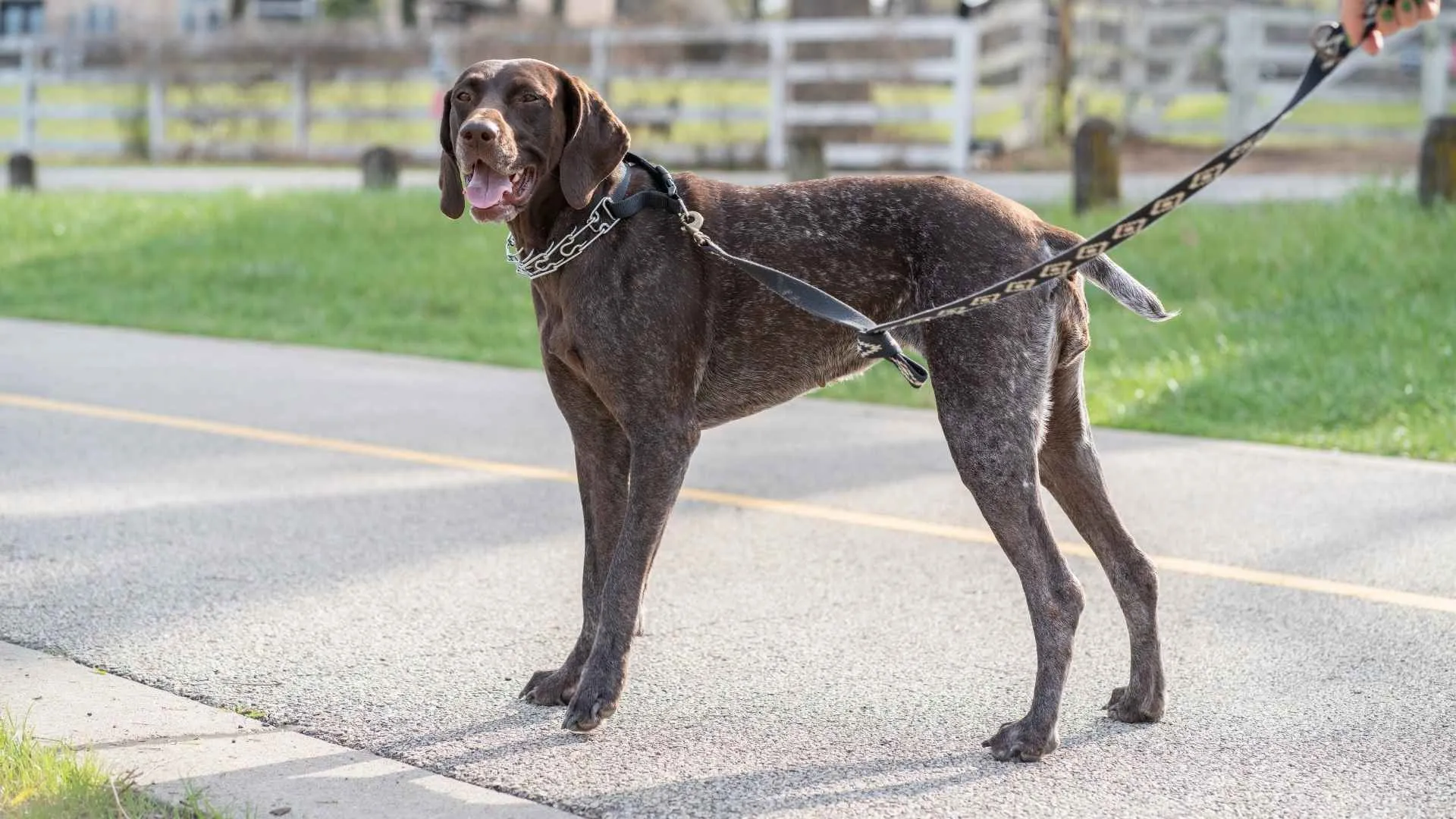
The German Shorthaired Pointer is a rugged, versatile working dog known for its skill both on land and in water. Naturally gifted as a retriever, it handles upland game with precision and is equally capable in light to moderate water work, making it a true all-purpose hunting companion.
Affectionate yet not overly clingy, this breed forms strong bonds with its family while maintaining an independent, focused nature. In the field, it’s all business: driven, alert, and highly efficient, while at home, it tends to be calm and easygoing. Good with children and eager to be part of family life, it strikes a solid balance between work and companionship.
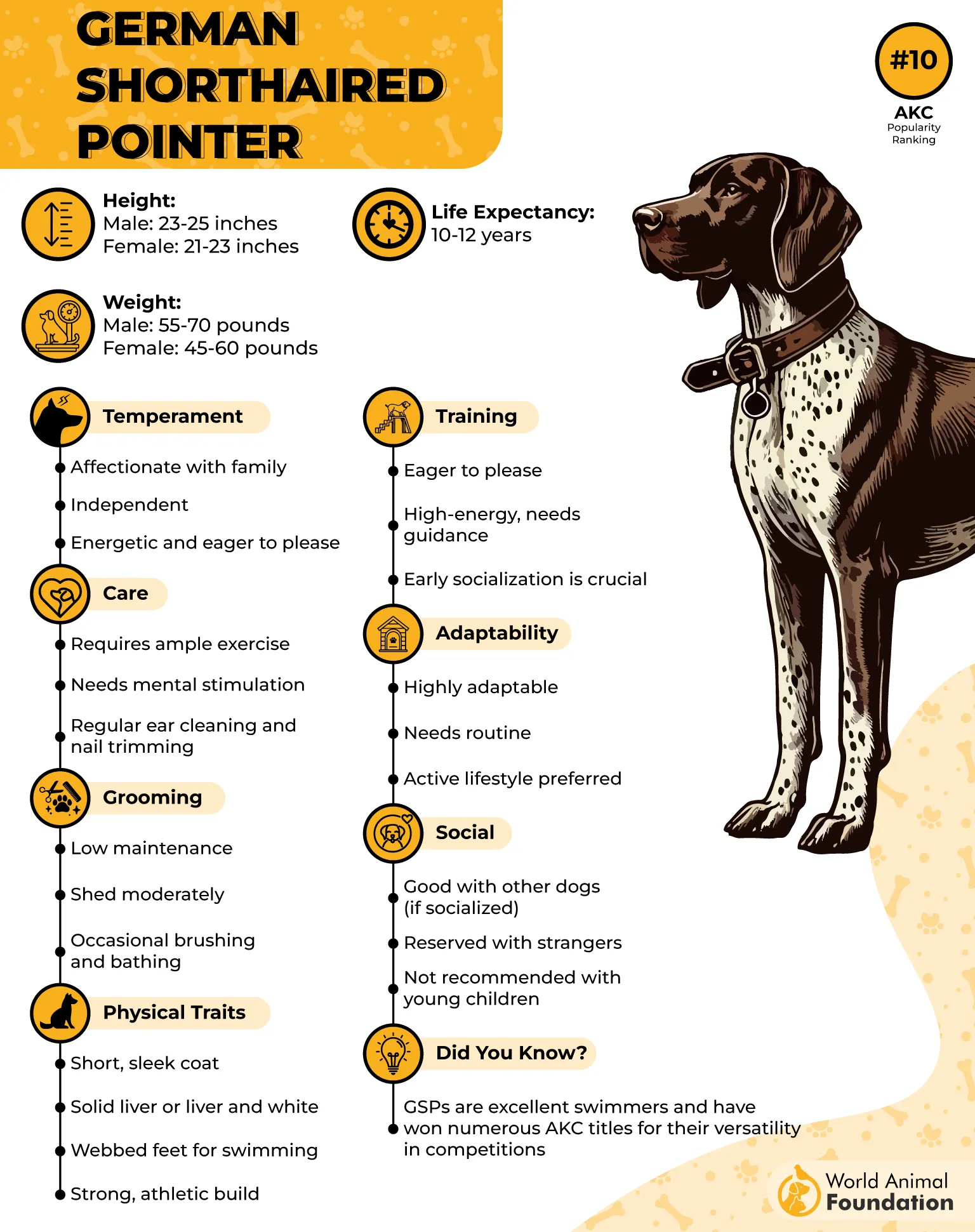
Highly intelligent and energetic, the German Shorthaired Pointer thrives on activity and purpose. It excels in a wide range of tasks, including pointing, retrieving, field trailing, and even tracking wounded deer. Developed from a mix of hunting breeds such as Spanish Pointers, German bird dogs, and various hounds, it possesses a keen nose and strong tracking instincts.
Lean, athletic, and built for endurance, this “Deutsch Kurzhaar” performs well in all types of terrain and weather conditions. Whether locating game, following a blood trail, or pointing with precision, it is known for its accuracy, stamina, and adaptability; qualities that make it a favorite among hunters and active families alike.
5. Bavarian Mountain Hound
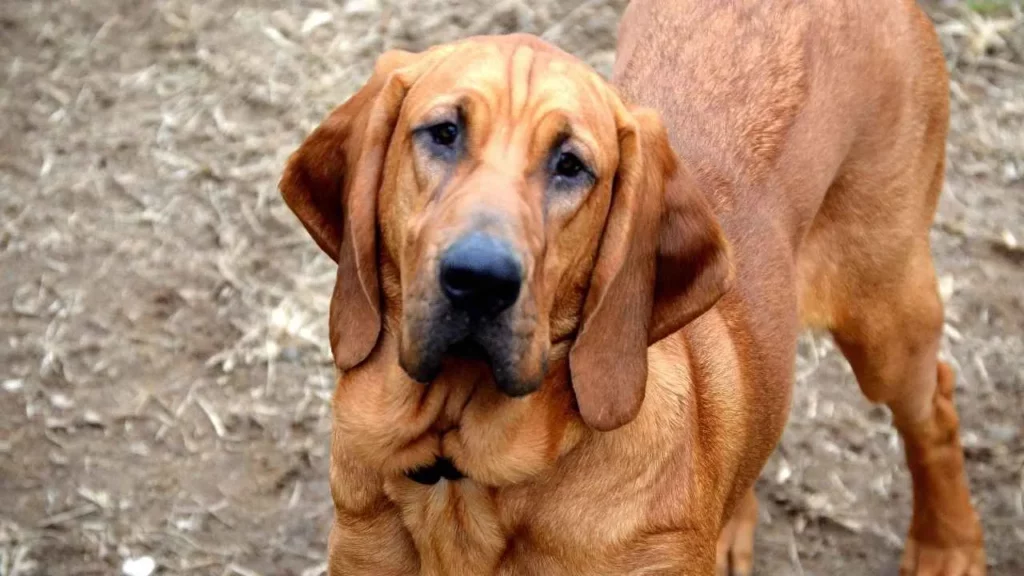
Widely regarded as one of the best dogs for deer tracking, the Bavarian Mountain Hound is a specialized scent hound with roots tracing back to medieval hunting dogs. Developed from the Hanoverian Scenthound and regional mountain hounds, this breed was designed to track wounded game across rugged, mountainous terrain with precision and endurance.
Lightweight yet muscular, the Bavarian Mountain Hound excels at following cold scent trails, often hours or even days old. Its calm, methodical tracking style makes it especially valuable for locating injured deer and large game in challenging environments.
Purina says that, beyond its working abilities, this breed is known for its loyalty and strong bond with its owner. It tends to be reserved around strangers but is deeply devoted to its family. Early training and consistent socialization are essential, particularly to build reliable recall and ensure good behavior in different settings.
Like many scent hounds, it can be quite vocal and expressive. It also requires plenty of physical and mental stimulation to stay balanced and content. Bred for stamina, this dog can track for long hours and thrives in activities that engage its nose, body, and mind.
One important consideration: once it picks up a scent, the Bavarian Mountain Hound can become single-minded in its pursuit. Strong recall training is crucial, as this determined tracker may ignore commands when focused on a trail.
6. Labrador Retriever
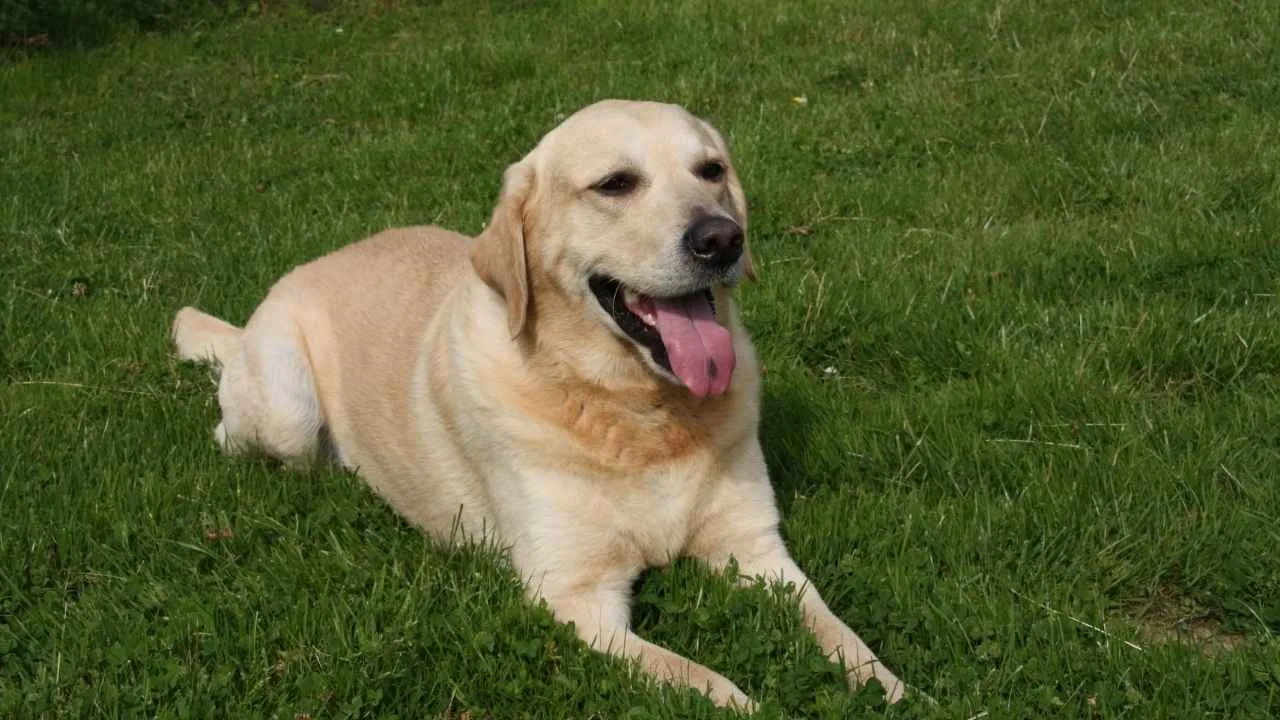
Often called the “Swiss Army knife” of gun dogs, the Labrador Retriever is one of the most versatile and dependable working breeds. Equally skilled on land and in water, Labs excel at flushing, retrieving, and a wide range of field tasks. They’re also outstanding shed hunters, capable of locating antlers hidden beneath snow, brush, or fallen leaves.
This ability comes from a powerful combination of natural retrieving instincts, high intelligence, and an excellent sense of smell. Their strong desire to please makes them highly trainable, allowing handlers to easily redirect their focus from birds to antlers, or even to tracking blood trails.
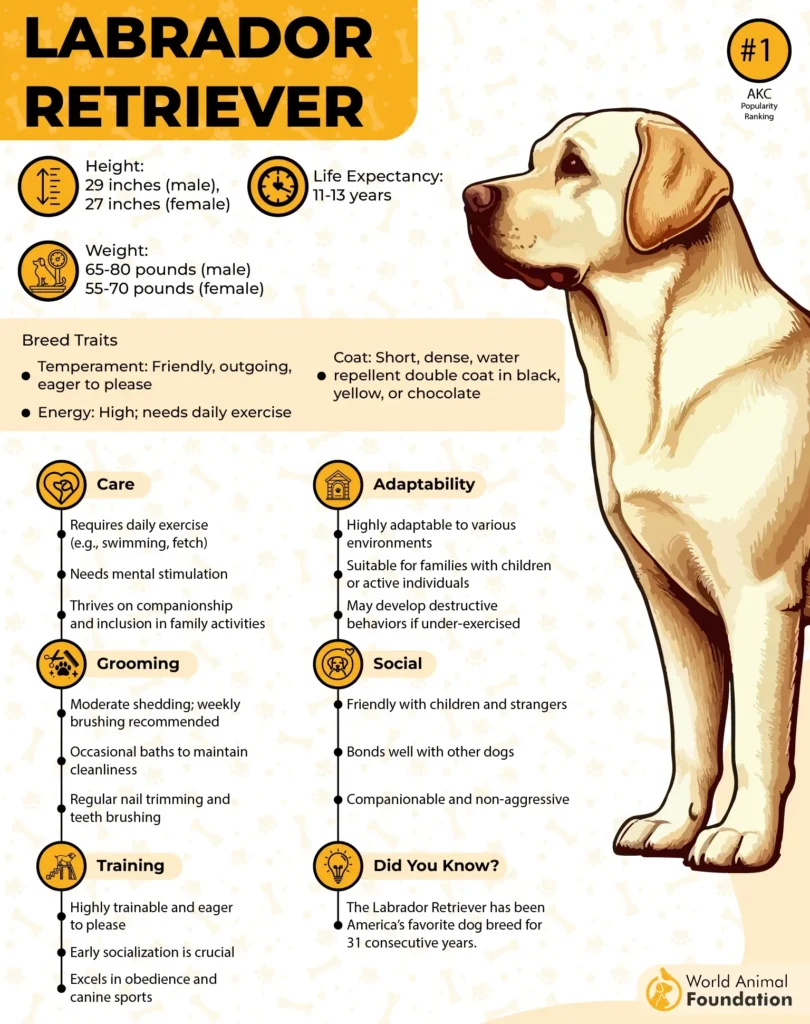
Friendly, focused, and responsive, Labradors are easy to handle in the field and can learn complex tasks with consistency and early training. They thrive on interaction and enjoy working closely with their humans, which strengthens their performance and reliability.
With proper exposure from a young age, these energetic and food-motivated dogs can become highly effective deer tracking companions. Add in their weather-resistant coats and adaptability, and it’s easy to see why Labradors are a top choice for hunters and outdoor enthusiasts alike.
7. Weimaraner
Ethical, purposeful hunting, when practiced responsibly and within legal limits, is often framed around conservation principles such as population control and sustainable game management. In some cases, mature bucks are selectively targeted to support herd balance and allow younger males a better chance during the rut. For many hunters, antlers also serve as a lasting keepsake, symbolizing experience in the field and forming a tangible connection to nature and the hunt.
However, successful tracking and recovery require more than patience and intention; they demand precision and the right partner in the field. This is where skilled tracking dogs play an essential role.
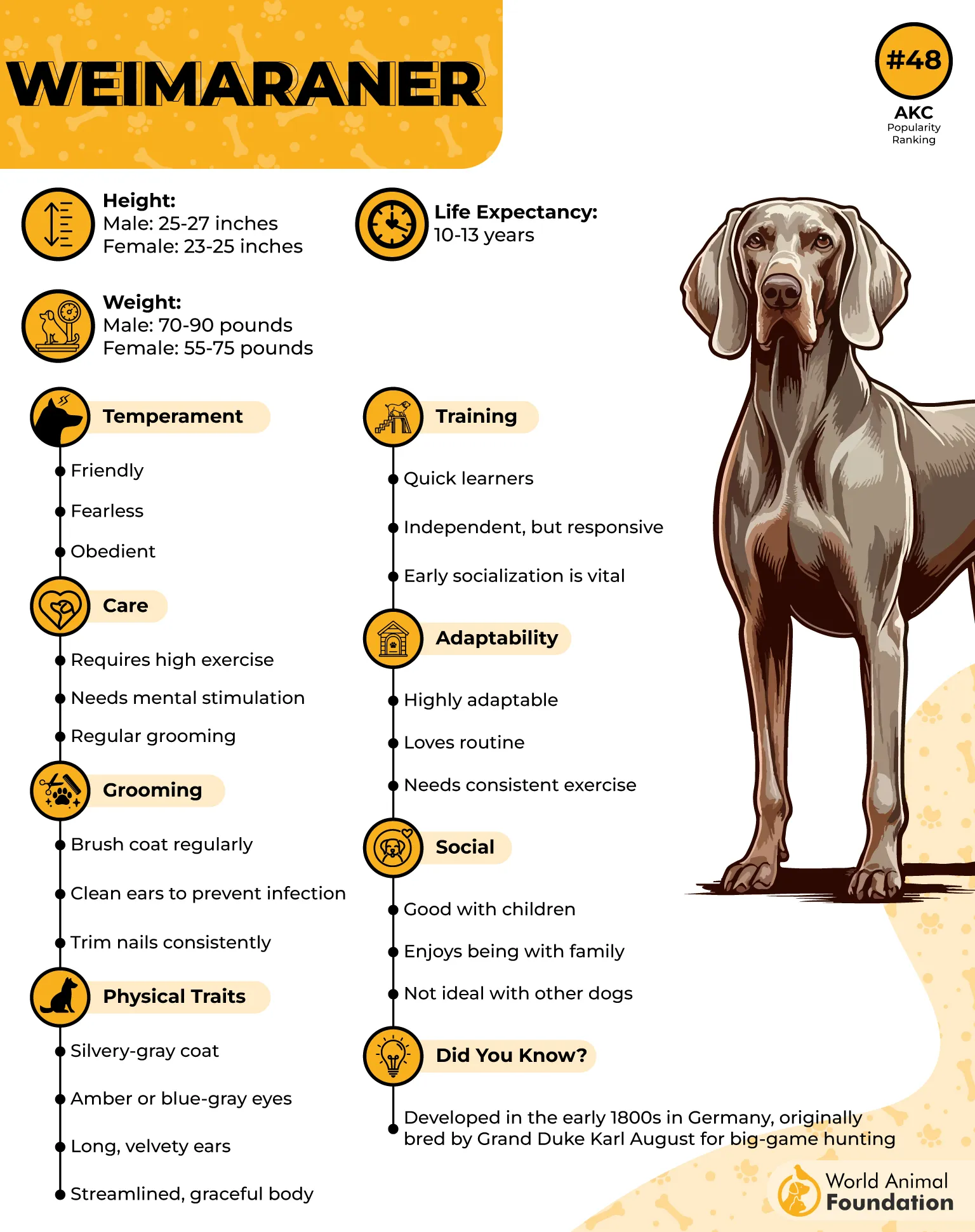
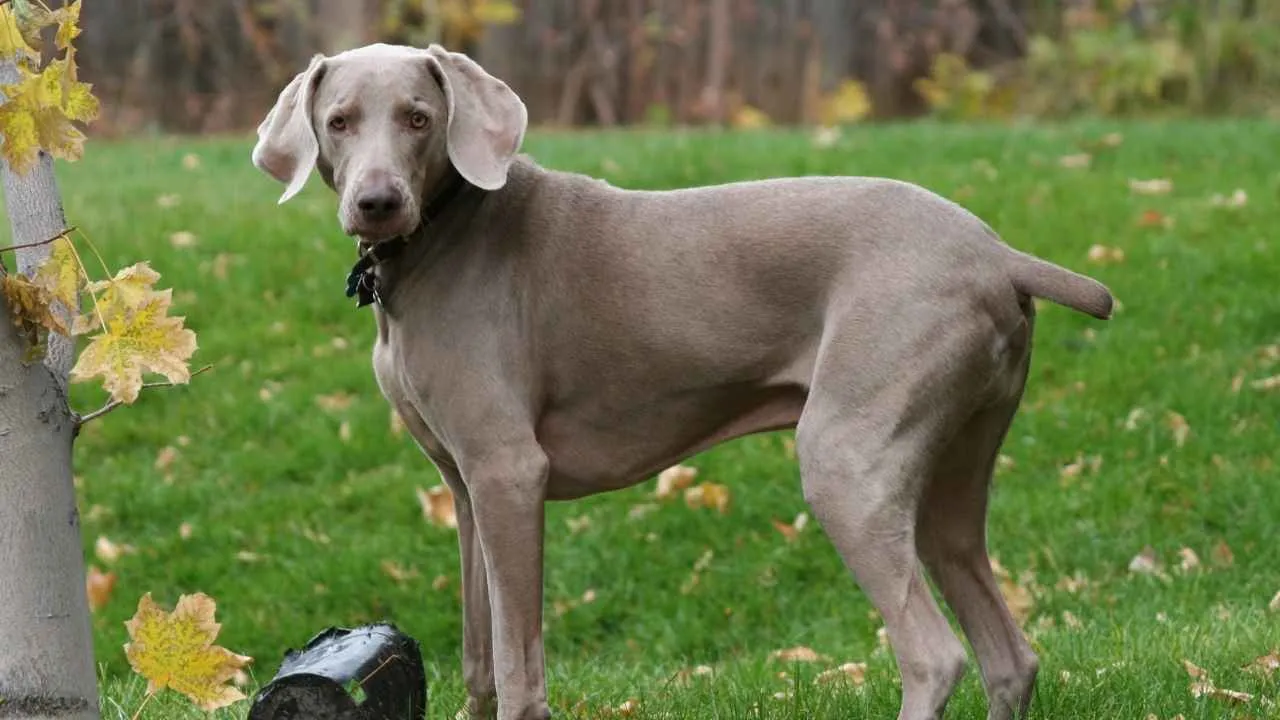
The Weimaraner is one such capable companion. Originally bred for stamina, versatility, and endurance, this athletic breed is well-suited for long hours of work across challenging terrain. Known for its speed, intelligence, and strong scenting ability, the Weimaraner can follow cold trails and help locate wounded or hard-to-find game with impressive accuracy.
Often referred to as a “silver ghost” for its sleek grey coat, the breed was developed in Germany with influences from various hunting dogs, including pointers and other versatile gun dog lines. Historically, it was used for tracking large game such as boar, deer, and even bear before becoming more common as a bird dog and all-purpose hunting companion.
Today, Weimaraners remain valued for their focus, athleticism, and tracking potential. With proper training, they can become reliable partners in the field, helping hunters recover game efficiently and responsibly.
8. American Foxhound
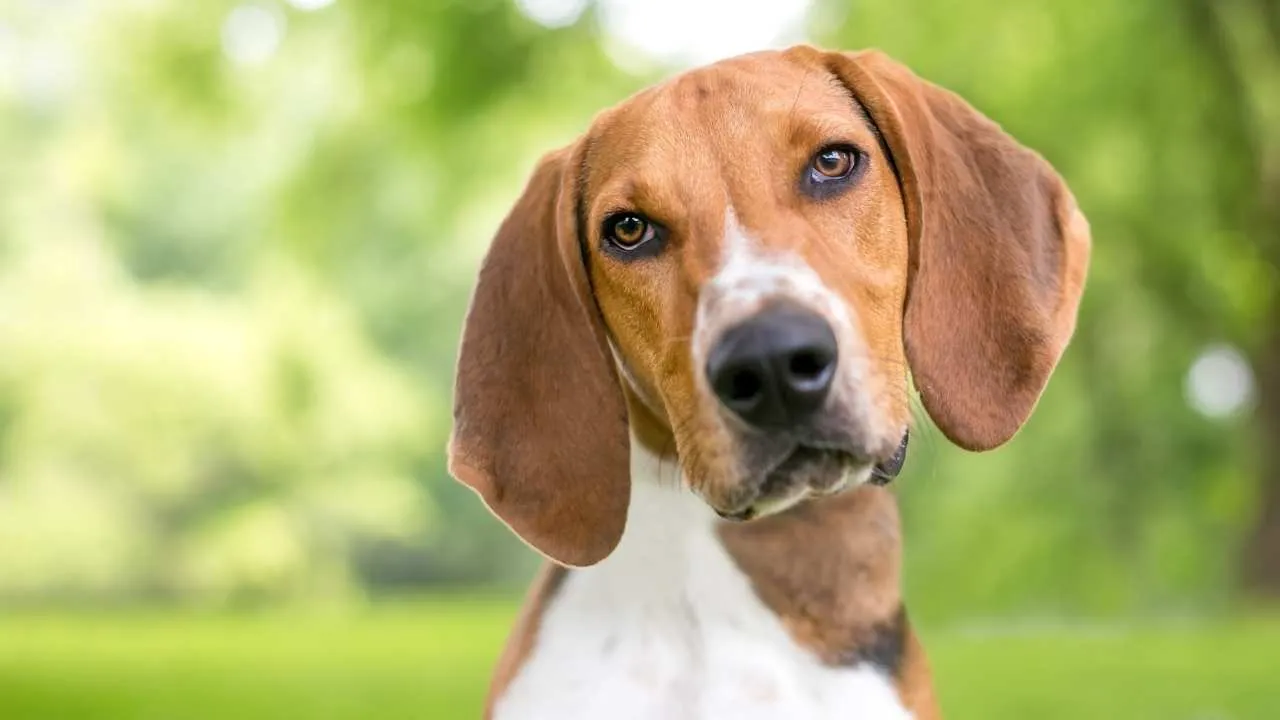
The American Foxhound is a dedicated, single-minded working hound known for its speed, endurance, and relentless drive to follow a scent trail. Widely regarded as one of the most capable breeds for long-distance tracking, it excels in deer hunting scenarios that require stamina, precision, and persistence.
Bred to cover vast ground, American Foxhounds are especially effective in deer drives, where their job is to push game across large areas, or in tracking wounded deer over miles of challenging terrain. Their natural hunting style emphasizes pursuit and endurance rather than close handling, making them powerful assets in open-country tracking work.
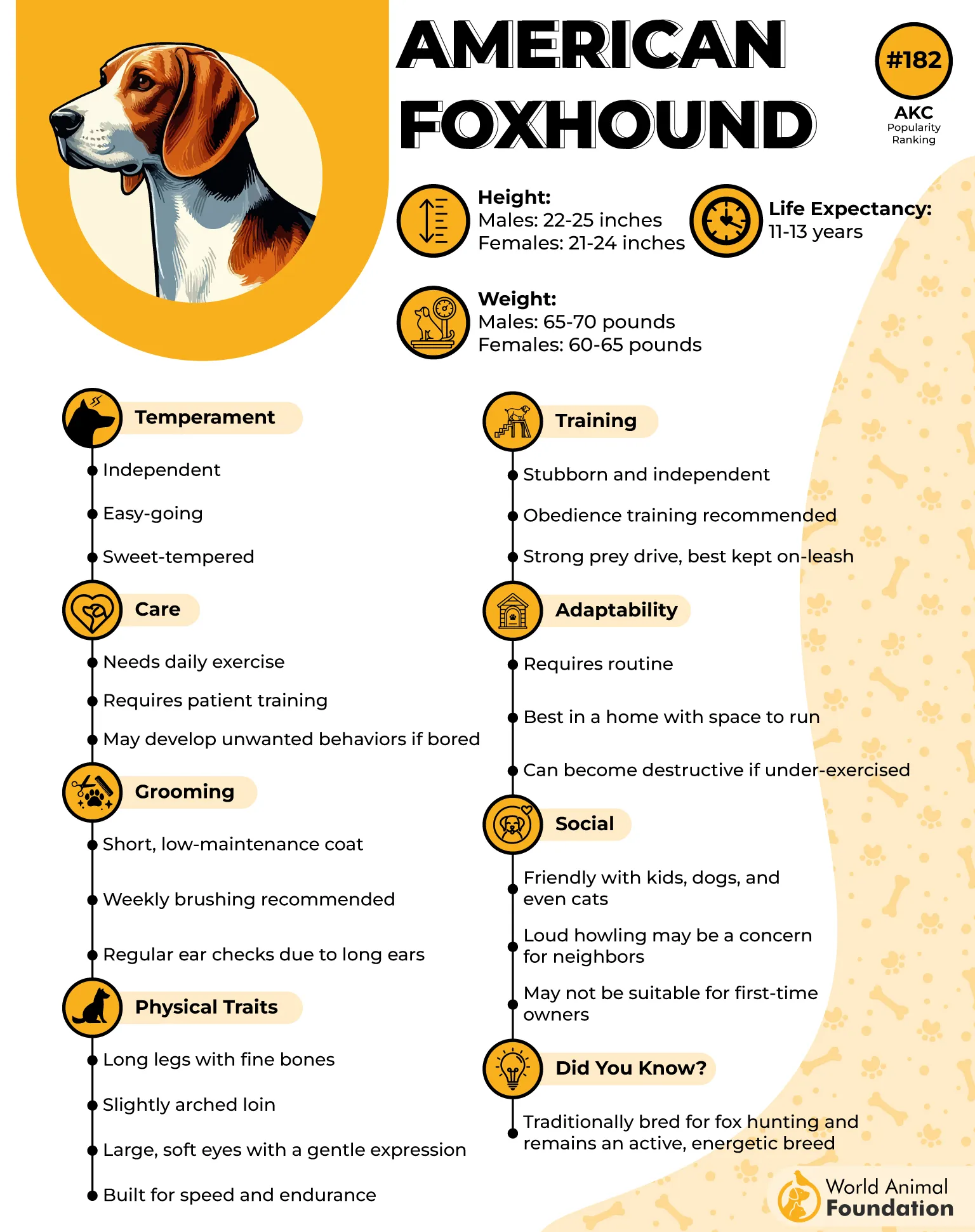
Showsight Magazine states that this breed is energetic, vocal, and highly independent, which can make training a challenge for inexperienced handlers. However, its strong hunting instincts and fox-hunting heritage are exactly what make it so effective in the field. Developed from a mix of French and English hound lines, the American Foxhound was refined for speed, stamina, and scent-tracking ability.
Despite their intense work drive, these dogs are generally gentle, easy-going, and friendly in a home environment. They tend to get along well with children and other animals, provided they receive enough exercise and mental stimulation.
Ultimately, the American Foxhound thrives when given a purpose. Whether tracking deer or working in the field, this tireless hound performs best when its natural instincts are put to use in active, demanding environments.
9. Redbone Coonhound
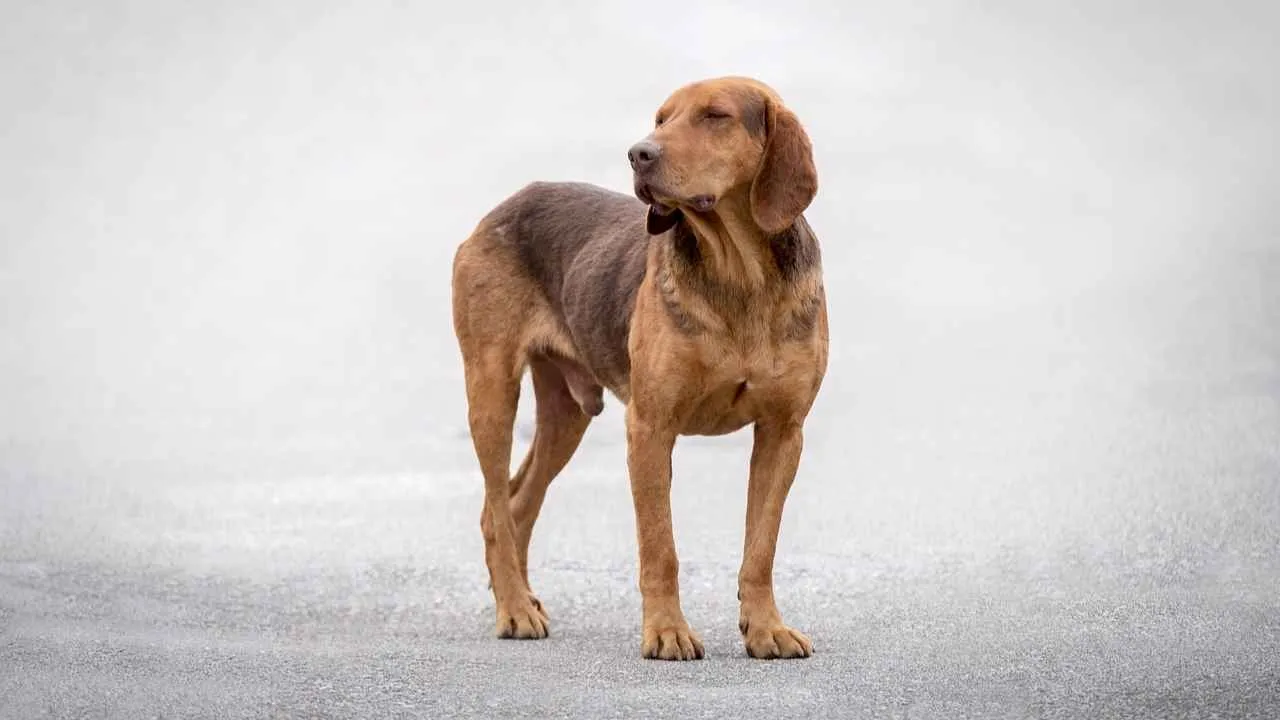
The Redbone Coonhound is a true-blue American hunting dog, originally developed in the southern United States before the Civil War. Its foundation stock is believed to come from foxhounds brought by Scottish immigrants, later refined with bloodhound lineage to enhance scenting ability and endurance.
Traditionally used for treeing small game such as raccoons, squirrels, and opossums, the Redbone is also capable of tracking larger animals like bears and cougars. Its ability to “tree” game, holding it in place until the hunter arrives, makes it especially valuable in the field, as PetMD mentions.
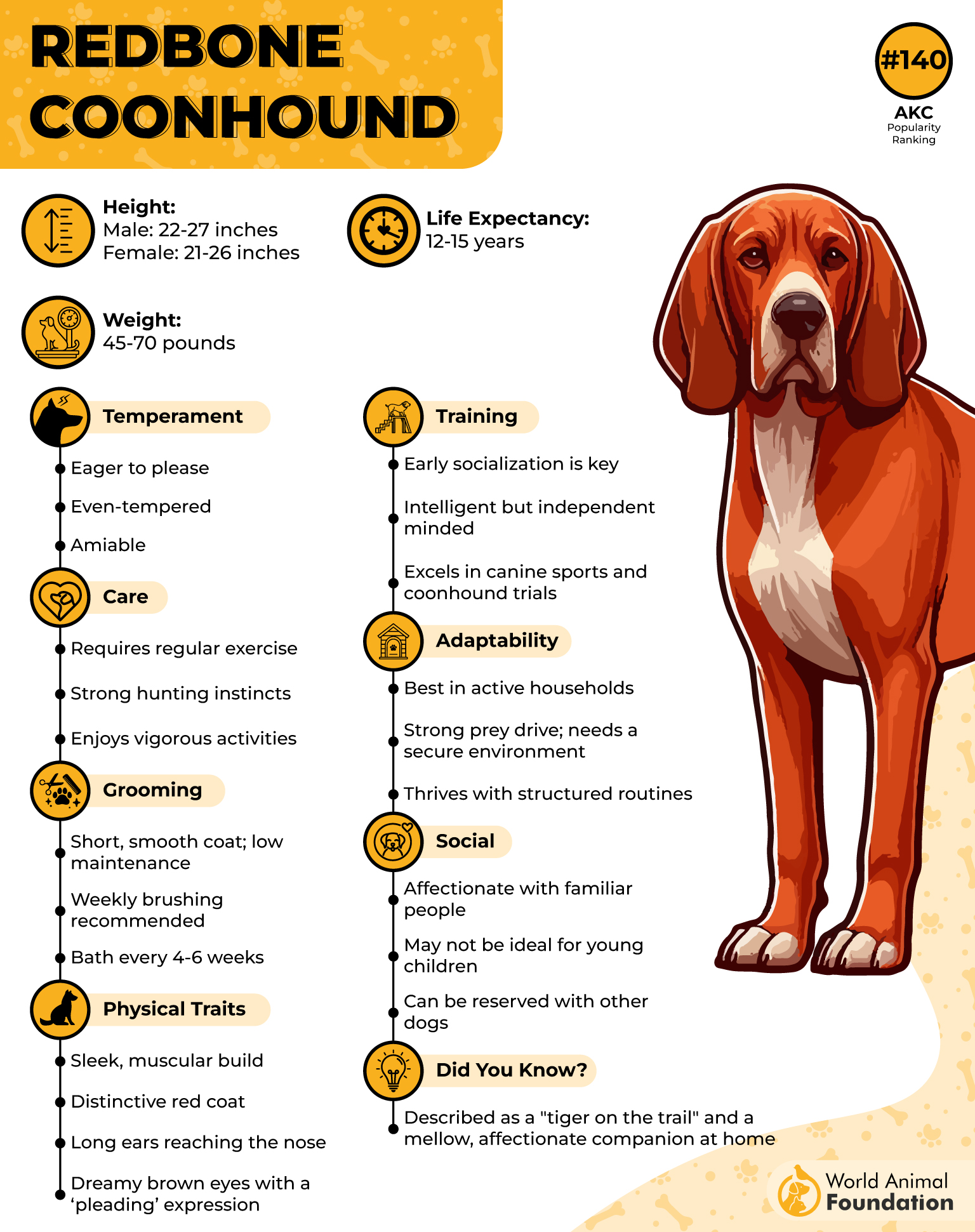
Unlike many working hounds bred solely for performance, the Redbone stands out for its balance of beauty and utility. With its striking deep red coat, lean muscular build, and strong yet elegant presence, it is as visually distinctive as it is capable.
This breed is known for its excellent cold-nose tracking ability, allowing it to follow older scent trails over long distances and challenging terrain, including mountains and marshlands. Courageous and determined when on a track, it combines agility with persistence, making it highly effective in demanding hunting conditions.
At home, Redbones are typically even-tempered, affectionate, and relatively mellow, forming strong bonds with their families. In the field, however, they become focused, energetic, and driven, with a distinctive, melodic bay that carries over long distances.
Because of their strong prey drive and high energy levels, Redbone Coonhounds require regular exercise, early training, and proper socialization. When their instincts are properly channeled, they become reliable, efficient, and highly skilled hunting companions.
10. German Wirehaired Pointer
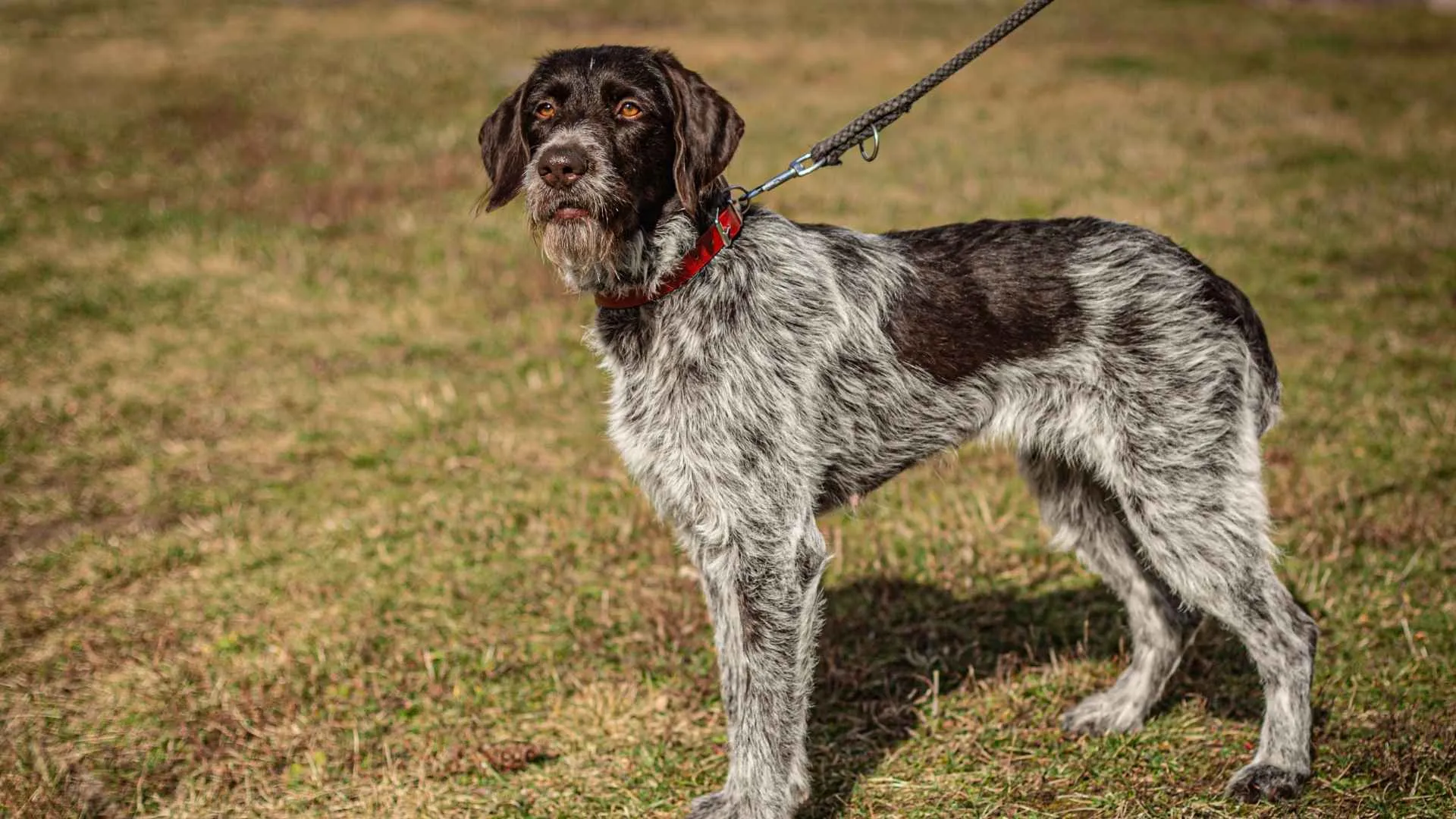
The German Wirehaired Pointer, or Deutsch-Drahthaar, is a versatile and highly capable hunting dog widely respected in the field. Built for serious outdoor work, this breed is not limited to a single specialty; instead, it’s designed to handle a wide range of hunting tasks with consistency and reliability.
From tracking wounded game to pointing upland birds, flushing small game, and retrieving waterfowl, the German Wirehaired Pointer is a true all-around performer. For hunters and conservation-minded outdoorsmen alike, its adaptability and endurance make it a dependable partner across diverse hunting situations.
In deer management scenarios, particularly in areas with overpopulated herds or regulated harvest seasons, this breed is especially valued for its ability to recover wounded or fallen game efficiently and accurately.
Energetic, driven, and purpose-focused, German Wirehaired Pointers thrive when given meaningful work. They are strong swimmers, confident in rough terrain, and unfazed by challenging environments such as marshes, dense thickets, or open grasslands. Their wiry coat adds protection, allowing them to work comfortably in harsh conditions.
Loyal yet independent, this breed combines intelligence with grit. With proper training and structure, the German Wirehaired Pointer becomes an exceptional tracking, retrieving, and pointing companion for serious hunters and active outdoor enthusiasts.
Conclusion
Deer are gentle herbivorous mammals known for their keen hearing and strong sense of smell, which help them detect danger and survive across diverse habitats like forests, grasslands, and meadows. While their senses make them highly alert, their relatively weaker eyesight, especially in low light, can leave them vulnerable to predators.
They are most active during dawn and dusk, making these times typical for field observation and hunting. However, any interaction with wildlife must be guided by responsibility and respect.
Deer are not resources or numbers; they are vital parts of the ecosystem. With several species already threatened or endangered, conservation and ethical practice are essential to ensuring their survival for future generations.
