




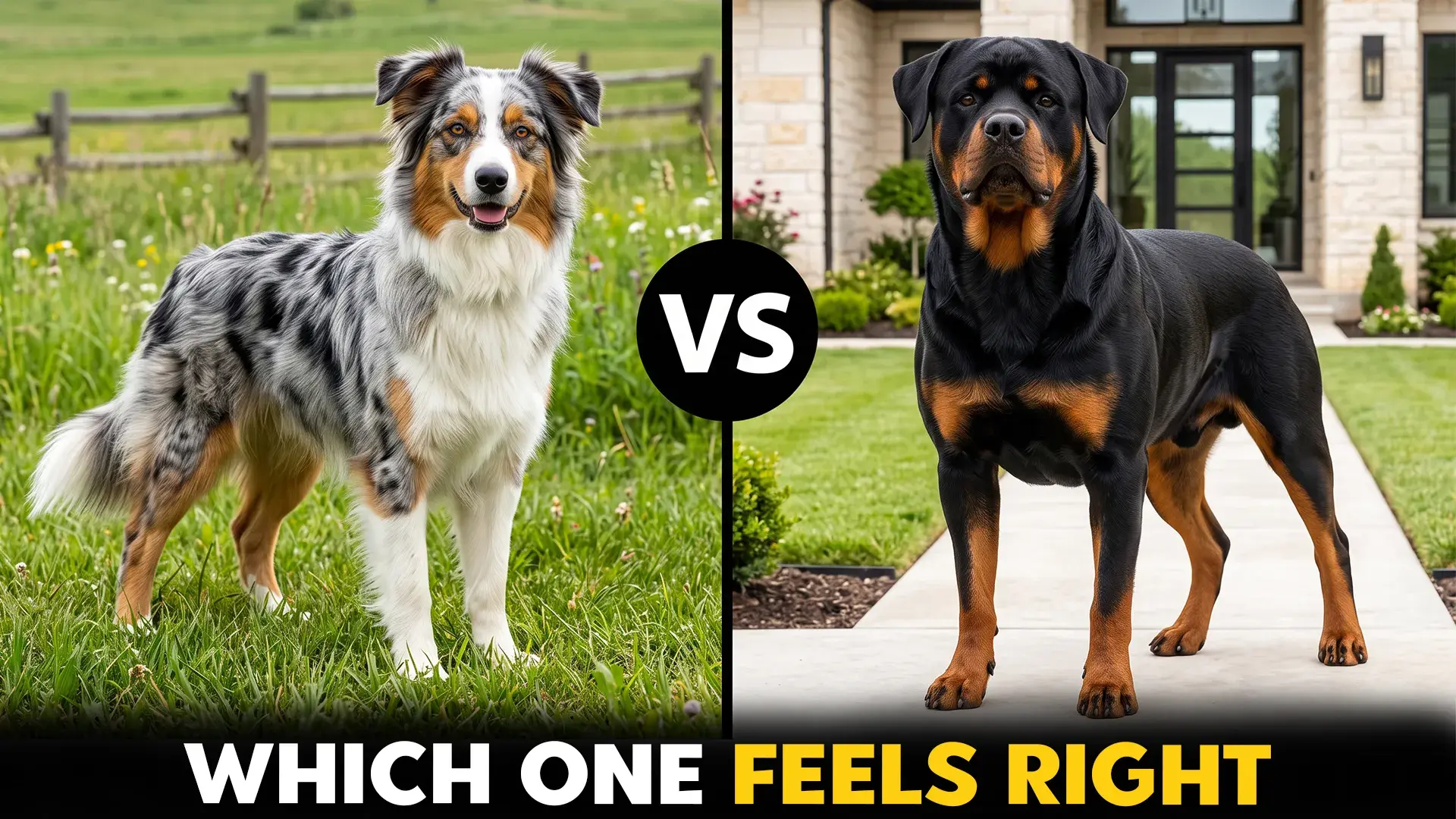
At a glance, these breeds share intelligence and loyalty, but they express those traits in different ways. The Australian Shepherd is usually the lighter, more agile choice, built for speed, herding, and constant motion. It often suits owners who enjoy training, outdoor time, and an active household.
The Rottweiler is larger and more muscular, with a strong guarding instinct and a steady confidence that can be reassuring in the right home. It tends to fit experienced owners who want a devoted family dog and are ready to invest in early training and socialization.
Both breeds need structure, attention, and purpose, but the Aussie often asks for more movement and mental variety, while the Rottweiler asks for clear leadership and consistency.
Before choosing, it helps to think honestly about your space, schedule, and experience, because both dogs can be wonderful companions when their needs are met.
Australian Shepherd vs. Rottweiler: Quick Comparison Before You Choose
Choosing between the agile Australian Shepherd and the powerful Rottweiler comes down to matching their distinct instincts with your daily lifestyle. While the high-energy Aussie thrives on non-stop mental and physical jobs, the loyal Rottweiler excels as a calm, devoted guardian who prefers structured strength-based activities.
Origins & Purpose
The Australian Shepherd and the Rottweiler were shaped by work, and that history still shows in how they behave today. The Australian Shepherd likely traces back to herding dogs used by the Basques in Spain, with development continuing in North America.
Despite its name, the breed became closely tied to ranch life in the American West, where it earned a reputation for intelligence, stamina, and a strong instinct to move livestock. It was also used as a messenger dog during World War II.
The Rottweiler has even older roots, with ancestry linked to Roman cattle-driving dogs. In Germany, especially around Rottweil, the breed worked as a cattle dog, guard dog, butcher’s helper, draft dog, and later as a police and rescue dog.

These backgrounds explain a lot: the Aussie was built to herd and react quickly, while the Rottweiler was built to protect, pull, and work with strength.
Physical Size & Build
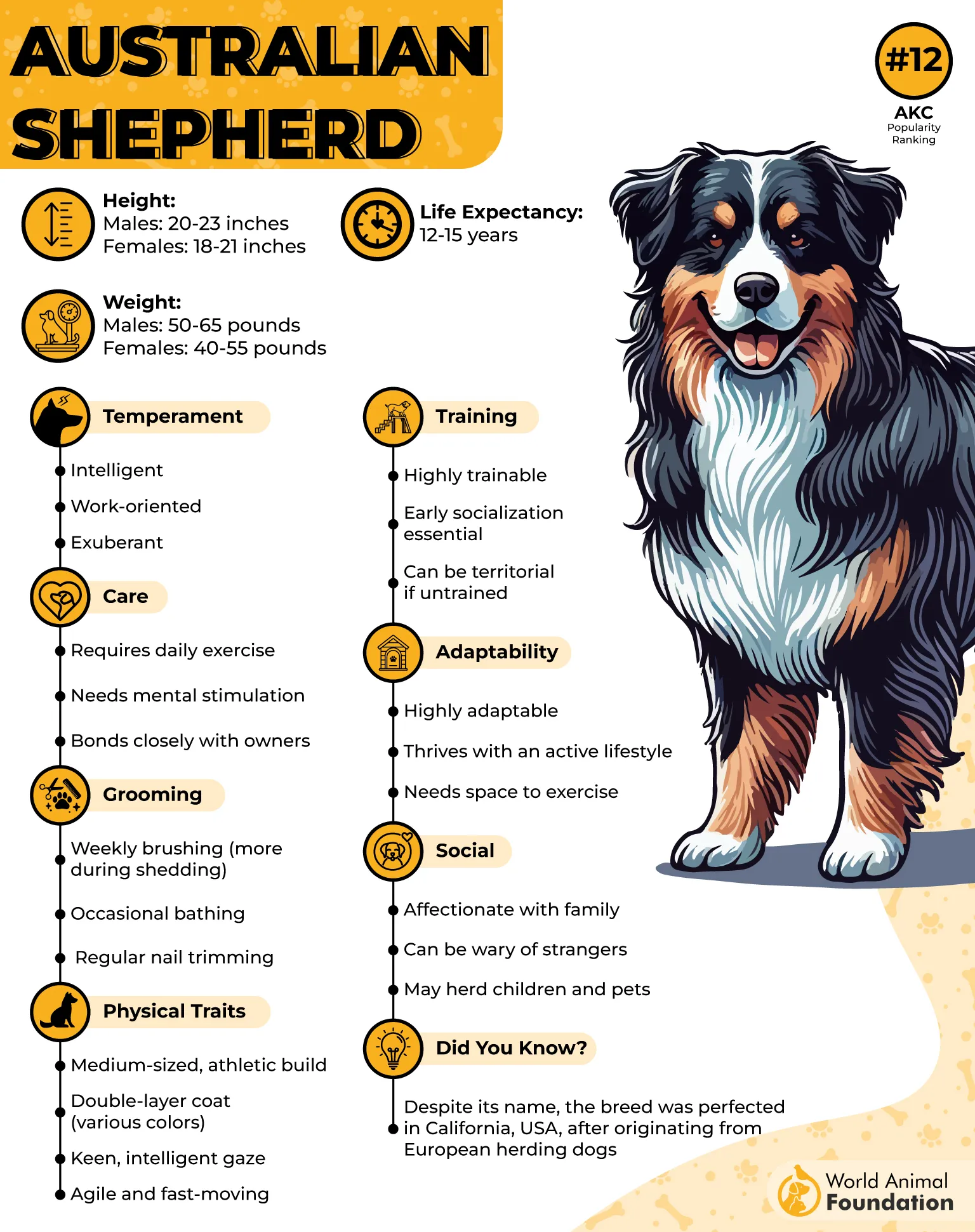
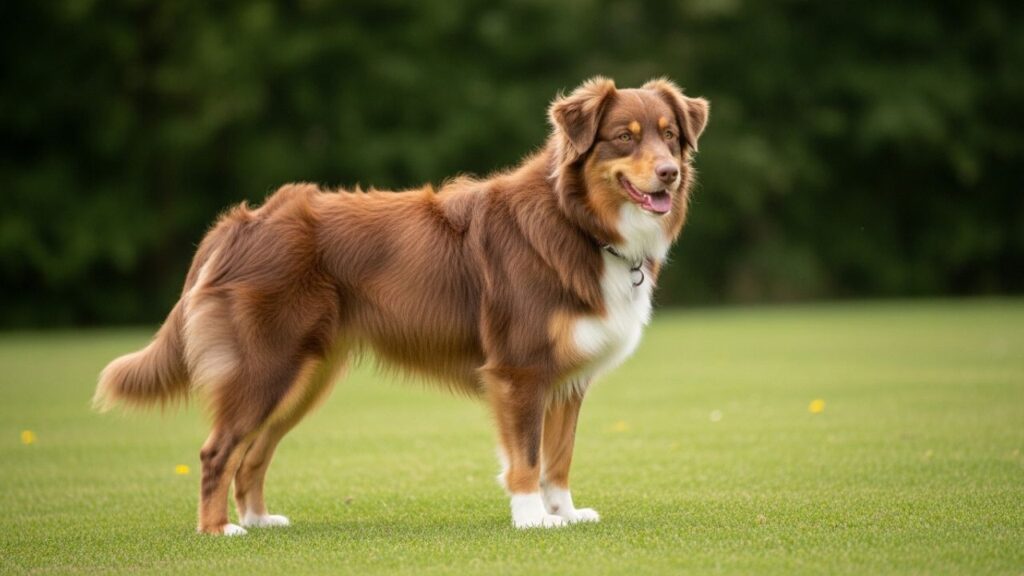
Physically, these two breeds look and feel very different. The Australian Shepherd is a medium-sized dog with a lean, athletic frame that makes it look ready to spring into action at any moment.
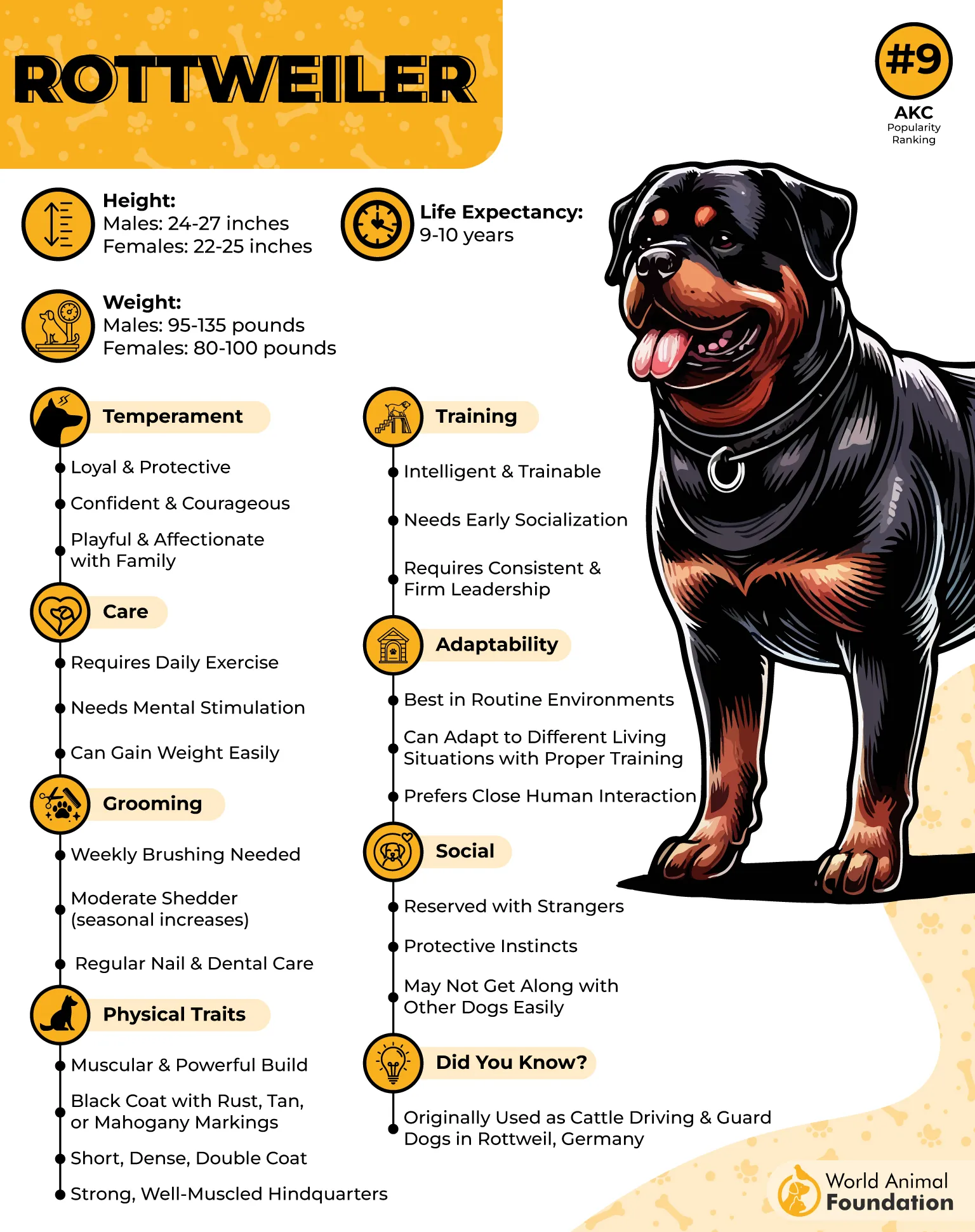
Its weather-resistant double coat can come in several colors, including merle patterns, and its overall appearance reflects agility more than bulk. The Rottweiler, by contrast, is massive and muscular, with a broad head, strong square muzzle, and a solid body that gives it a powerful presence.
Males and females are both large, and the breed is known for its black coat with rust markings on the face, chest, and legs. While the Aussie moves with a smooth, easy gait and a lighter build, the Rottweiler carries more weight and strength.
If size matters in your home, this difference is important. One feels nimble and quick; the other feels sturdy, imposing, and built for heavy-duty work.
Pricing & Availability
Neither breed comes with a single fixed price, so availability often matters more than a number on a tag. Australian Shepherds may be found through breed-specific rescue organizations, local shelters, or responsible breeders.
That gives potential owners a few different paths, especially if they are open to adopting an adult dog. Rottweilers can also be found through reputable breeders or rescue groups, including organizations dedicated to the breed.

Because both dogs are pure breeds with strong followings, finding the right match may take patience and research. It is worth asking about temperament, health history, and the dog’s background before making a decision.
If you are hoping for a puppy, breeder availability may be more limited than rescue options. If you are open to adoption, both breeds may appear in shelters or rescues waiting for a second chance. In either case, choosing carefully matters more than choosing quickly.
Personality & Temperament
Both breeds are loyal, but their personalities show that loyalty in different ways. The Australian Shepherd is alert, smart, and eager to work, according to the American Kennel Club.
It loves having a task, whether that means learning new cues, joining family activities, or simply staying close to its people. Without enough stimulation, it can become restless or even destructive, and its herding instinct may show up as nipping or trying to gather children and other pets.
The Rottweiler is confident, intelligent, and naturally protective. When well socialized, it can be calm, affectionate, and steady with family members, though it may be more reserved with strangers. It needs clear guidance and early training so its strength and independence stay balanced.
Both breeds can be loving companions, but the Aussie often feels busier and playful, while the Rottweiler feels more grounded and watchful. The right choice depends on whether you want a lively herder or a powerful guardian with a softer side.
Energy Levels & Exercise Needs
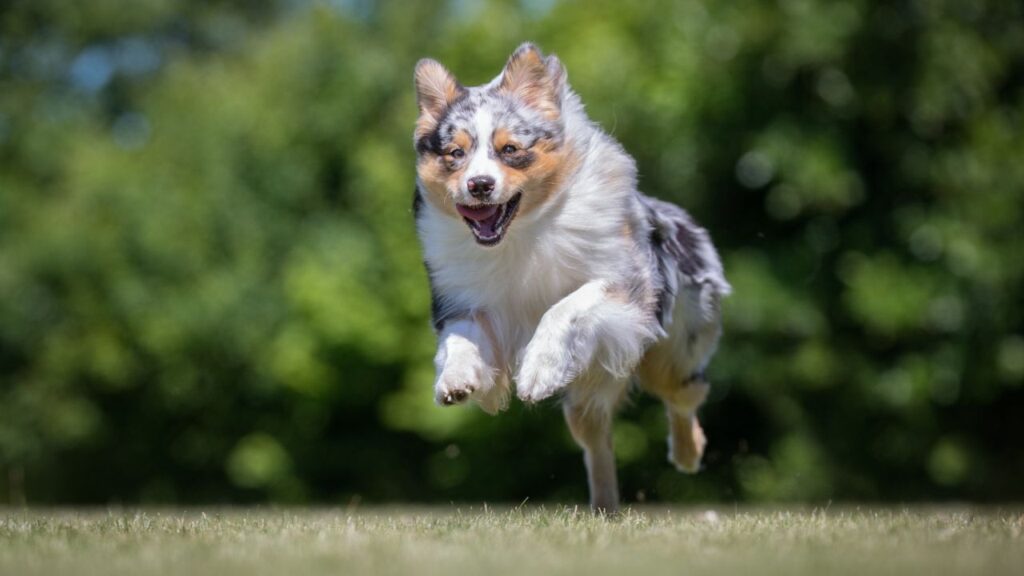
Energy is one of the biggest differences between these breeds, and it should weigh heavily in your decision. The Australian Shepherd is a high-energy athlete that needs daily exercise and plenty of room to move.
A large fenced yard, long walks, hikes, and active play all help, but the breed is happiest when it has a real job to do. Obedience, agility, herding, and dock diving are all good outlets for that drive.
The Rottweiler is also active and needs regular exercise, but its energy is often expressed with more steadiness than speed.

Walking, jogging, swimming, and training sessions can keep it satisfied, especially when paired with a purpose, as stated by Britannica.
Both breeds can become frustrated without enough activity, but the Aussie is usually the more demanding of the two when it comes to constant motion and mental challenge. If your lifestyle is active and structured, either breed can fit. If not, both may struggle.
Trainability & Intelligence
Both the Australian Shepherd and the Rottweiler are highly intelligent working breeds, but they excel in different ways. The Australian Shepherd is exceptionally quick to learn and thrives on problem-solving, obedience, agility, and tasks that keep both mind and body engaged.
Its eagerness to learn, combined with a strong desire to please, makes training enjoyable when sessions remain consistent and mentally stimulating. However, without enough challenges, an Aussie may become bored and develop unwanted behaviors.
The Rottweiler is equally intelligent but approaches training with greater confidence and independence. Originally developed for demanding working roles, it responds best to calm, consistent leadership and early socialization.
Proper guidance helps channel its natural strength and protective instincts into dependable behavior.
While both breeds require regular training, the Australian Shepherd often suits owners seeking an energetic learning partner, whereas the Rottweiler is generally better matched with experienced handlers who can provide firm, confident, and patient direction.
Guarding & Protection Ability
When it comes to guarding instincts, the Australian Shepherd and the Rottweiler serve different roles. The Australian Shepherd is naturally alert and observant, making it an excellent watchdog.
It is quick to notice unfamiliar people, unusual sounds, or changes in its surroundings and will often bark to notify its family. Although loyal and protective, the Aussie was originally bred for herding rather than personal protection and is generally not an aggressive guard dog.
The Rottweiler, by contrast, was developed for guarding and protection work. It combines confidence, courage, physical strength, and a calm, steady temperament, making it a dependable protector when properly trained and socialized.
Rather than reacting impulsively, a well-raised Rottweiler is typically reserved with strangers and assesses situations carefully before responding. Both breeds are devoted to their families, but the Rottweiler is better suited for owners specifically seeking a capable guard dog, while the Australian Shepherd shines as a vigilant companion.
Coat Grooming & Maintenance
The Australian Shepherd and the Rottweiler differ noticeably in grooming needs. The Australian Shepherd has a medium-length, weather-resistant double coat that requires regular care to keep it healthy and free of tangles.
Brushing two or three times a week usually helps manage loose hair, while shedding seasons demand more frequent grooming as the undercoat becomes heavier. Occasional baths, routine nail trimming, ear checks, and dental care complete the breed’s grooming routine.
The Rottweiler, in comparison, has a short, dense double coat that is much easier to maintain, as explained by Vets Love Pets. Weekly brushing is generally enough to remove loose hair and keep the coat looking glossy, although shedding becomes heavier during seasonal coat changes.

Baths are only needed when necessary, alongside regular nail trimming, ear cleaning, and dental care. Owners looking for a lower-maintenance coat may prefer the Rottweiler, while those willing to invest more time in grooming may appreciate the Australian Shepherd’s fuller coat.
Health & Lifespan
Both the Australian Shepherd and the Rottweiler are generally healthy breeds, but each has inherited health conditions that responsible owners should understand.
Australian Shepherds may be screened by responsible breeders for concerns such as hip dysplasia, epilepsy, cataracts, progressive retinal atrophy, and certain genetic conditions affecting vision or medication sensitivity.

With regular veterinary care, a balanced diet, and adequate exercise, they typically enjoy a lifespan of around 12 to 15 years.
The Rottweiler has a shorter average lifespan of about 9 to 10 years and is more commonly affected by conditions seen in large, powerful breeds. These include hip and elbow dysplasia, certain eye disorders, heart disease, and some forms of cancer.
Because of their size, maintaining a healthy weight and providing regular exercise are important for long-term joint health. Regardless of breed, routine veterinary check-ups, responsible breeding practices, and proper daily care play an essential role in supporting overall health and quality of life.
Australian Shepherd vs. Rottweiler: Which Breed Suits You Better?
The right choice ultimately depends on your lifestyle, experience, and what you expect from a canine companion. If you enjoy an active routine and want a highly intelligent dog that thrives on exercise, training, and mental challenges, the Australian Shepherd is likely the better fit.
This energetic breed loves having a job to do and forms close bonds with owners who can match its enthusiasm and commitment.
The Rottweiler is better suited to owners seeking a calm, confident, and devoted working dog with strong protective instincts. Although affectionate with its family, it requires consistent training, early socialization, and a confident handler to help it develop into a well-mannered companion.
Both breeds are loyal, trainable, and happiest when given purpose and regular interaction with their families.
By honestly considering your activity level, training experience, available time, and living environment, you can choose the breed that will thrive alongside you for years to come.
Conclusion
The Australian Shepherd and the Rottweiler are both exceptional working breeds, but they excel in different environments and suit different types of owners. The Australian Shepherd stands out for its boundless energy, intelligence, and enthusiasm for herding, training, and active lifestyles.
The Rottweiler offers calm confidence, unwavering loyalty, and natural protective instincts, making it a dependable companion in experienced hands. Neither breed is inherently better than the other; the best choice depends on your daily routine, proper training commitment, and the role you want your dog to play in your life.
Both thrive when given consistent guidance, regular exercise, mental stimulation, and plenty of time with their families. Taking the time to understand each breed’s personality, care requirements, and strengths before making a decision will help create a rewarding relationship for years to come.
Choosing the right match isn’t just about the dog you admire most; it’s about the one that fits your lifestyle best.
