




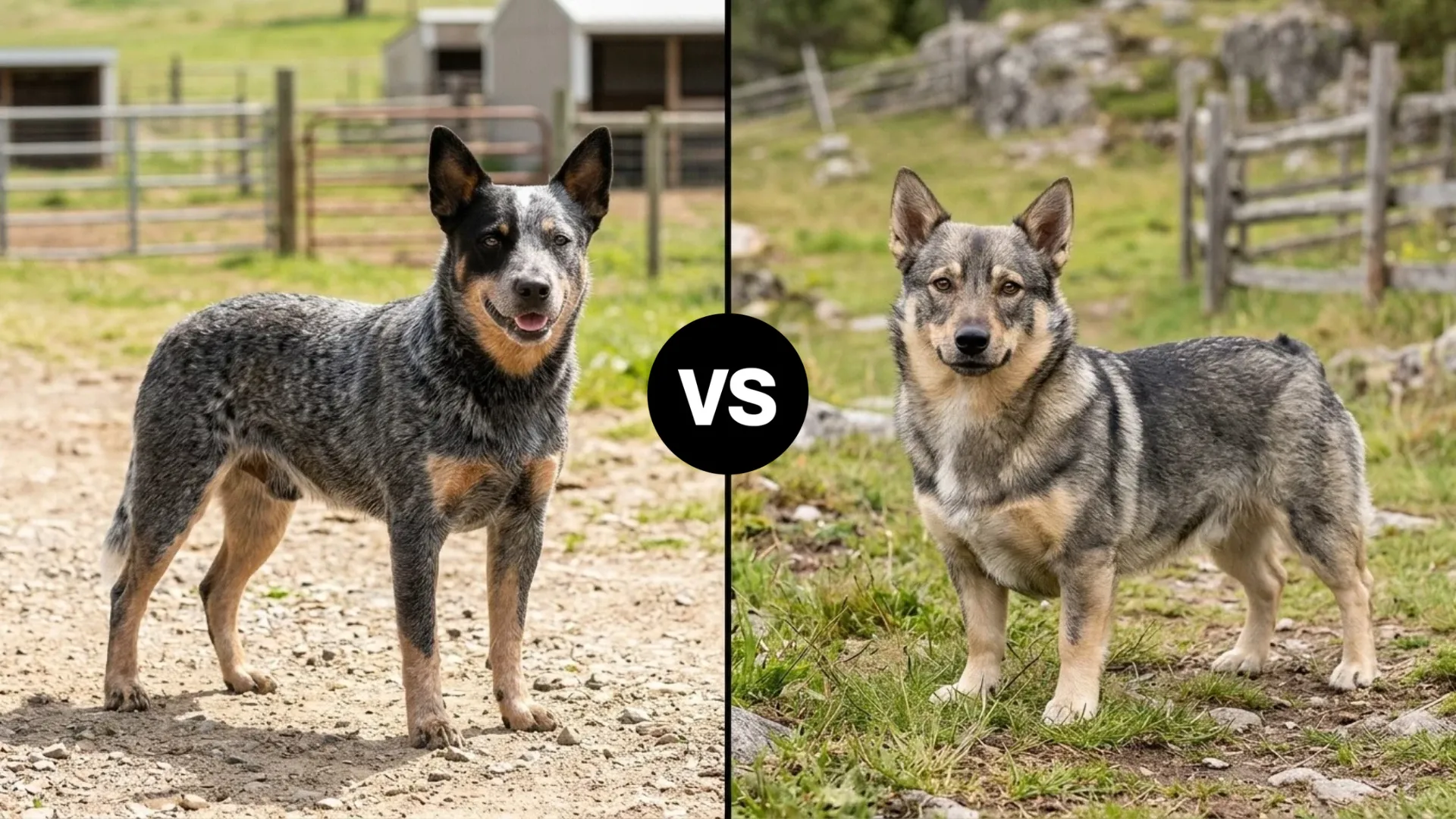
The Australian Cattle Dog and Swedish Vallhund may have different appearances, but both breeds share a strong herding instinct, sharp intelligence, and an energetic approach to life.
Originally developed to work with livestock, these dogs are alert, hardworking, and naturally independent. Their compact, athletic builds and lively personalities make them fascinating companions, especially for people who enjoy an active lifestyle.
Despite their similarities, the two breeds have distinct characteristics that set them apart. Understanding these differences can help you decide which breed better suits your home, routine, and expectations.
From physical traits and personality to grooming, training, and everyday care, knowing what makes each dog unique will give you a clearer picture of life with either of these hardworking herding breeds.
Australian Cattle Dog vs. Swedish Vallhund Dog
Origins & Purpose
Australian Cattle Dog
The Australian Cattle Dog originated in the 1800s when cattle ranchers in the Australian Outback needed a herding dog capable of handling the region’s harsh conditions.
The sheep herding dogs brought from England were not suited to the demanding environment, leading to several breeding experiments. Thomas Hall crossed Blue Smooth Highland Collies with Dingos to develop the early ancestors of the breed.
Later crosses with Bull Terriers, Dalmatians, and Working Kelpies helped refine its working abilities and temperament.
Its impressive working skills and lively personality eventually attracted admirers beyond Australia. The American Kennel Club (AKC) officially recognized the Australian Cattle Dog in 1980.
Swedish Vallhund
The Swedish Vallhund has a history dating back at least 1,000 years to the Viking era, although its exact origins remain unknown. This sturdy Spitz-type breed was developed for herding livestock, guarding property, and providing companionship.
Its history is also linked to the Welsh Corgi, with theories suggesting that Vikings either brought Vallhunds to Britain or returned to Sweden with early Corgis. According to the Royal Kennel Club, the breed is also related to larger Scandinavian Spitz-type dogs, including the Norwegian Elkhound.
Despite its long history, the Swedish Vallhund remains relatively rare around the world. The first Vallhund litter in the United States was born in 1986, and the AKC officially recognized the breed in 2007.
Size & Physical Build
Australian Cattle Dog
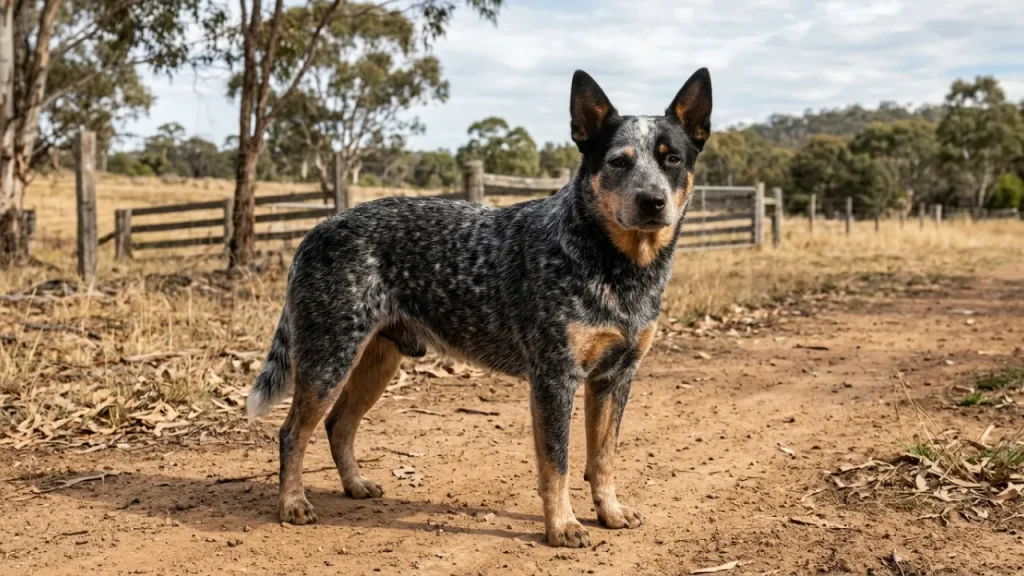
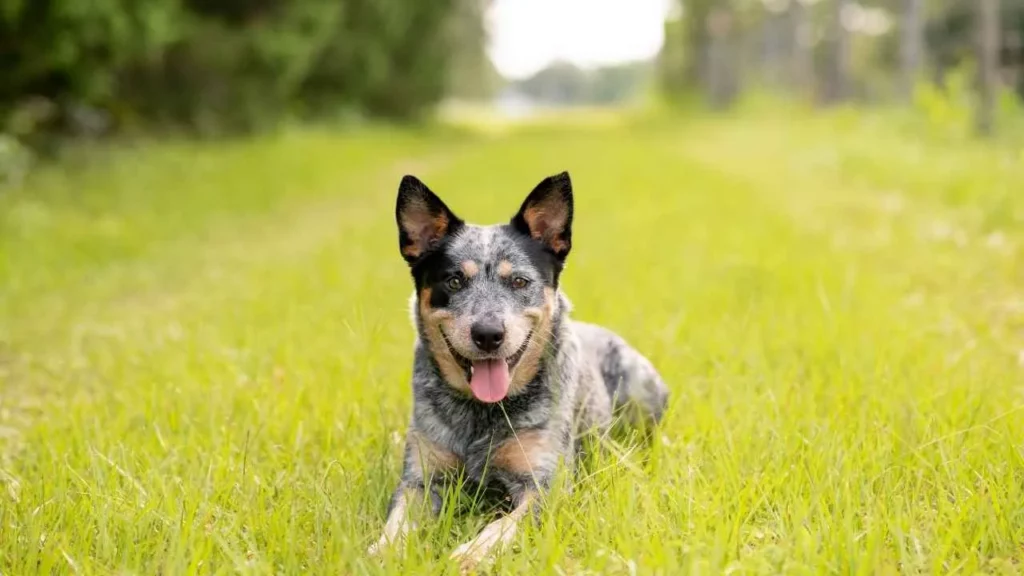
The Australian Cattle Dog has a sturdy, muscular, and compact build designed for endurance and agility. These medium-sized dogs typically stand 17–20 inches tall and weigh between 35 and 50 pounds.
Their strong, balanced bodies allow them to cover long distances while working with livestock. They have a broad skull, muscular cheeks, a powerful muzzle, and small to medium-sized pricked ears. Their oval, dark eyes give them an alert and focused expression.
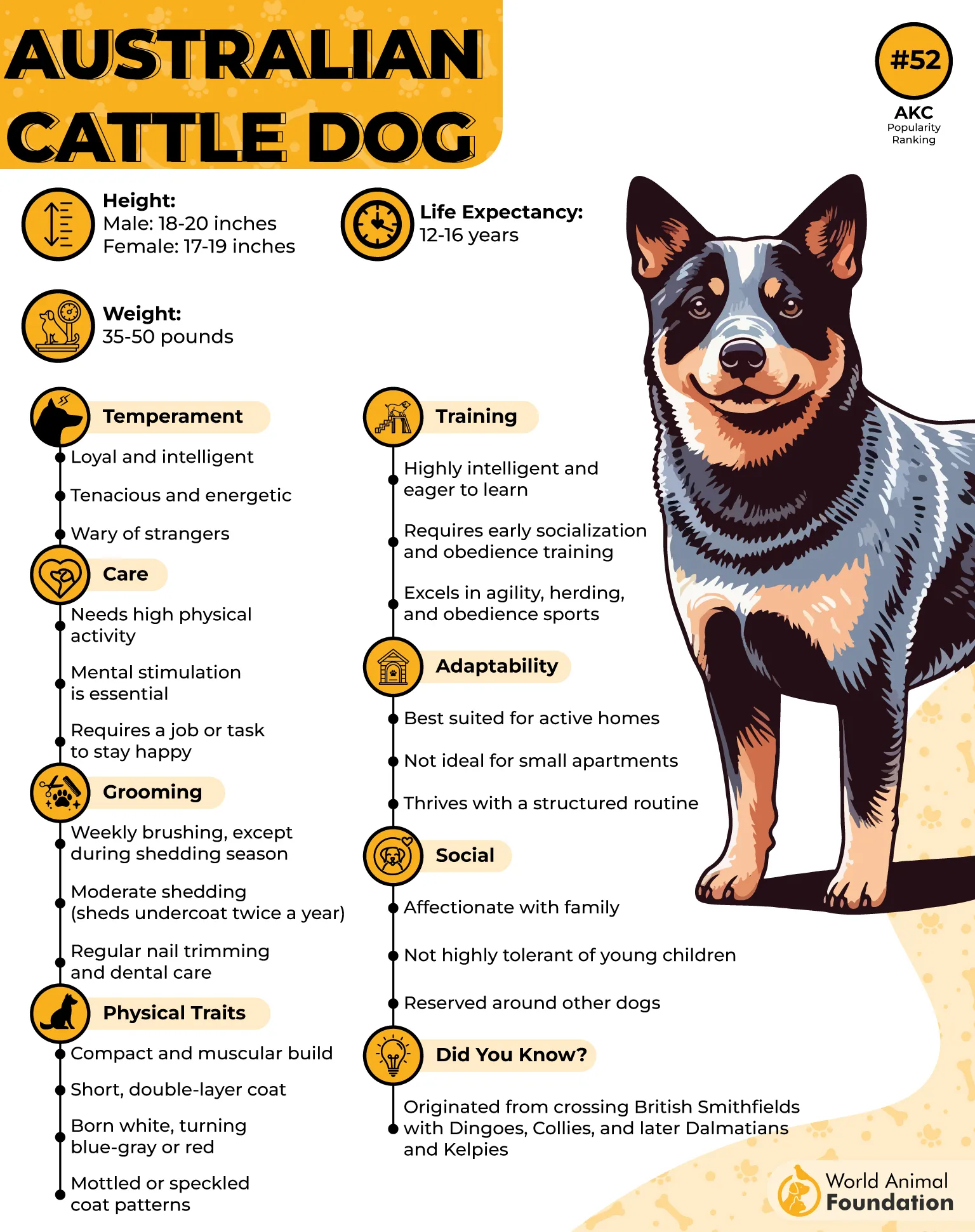
Their short double coat provides protection against weather and rough terrain. Accepted coat colors include blue, blue speckle, blue mottle, and red speckle.
Interestingly, Australian Cattle Dog puppies are born white, and their true coat colors begin to appear around three weeks of age, according to Greencross Vets.
Swedish Vallhund
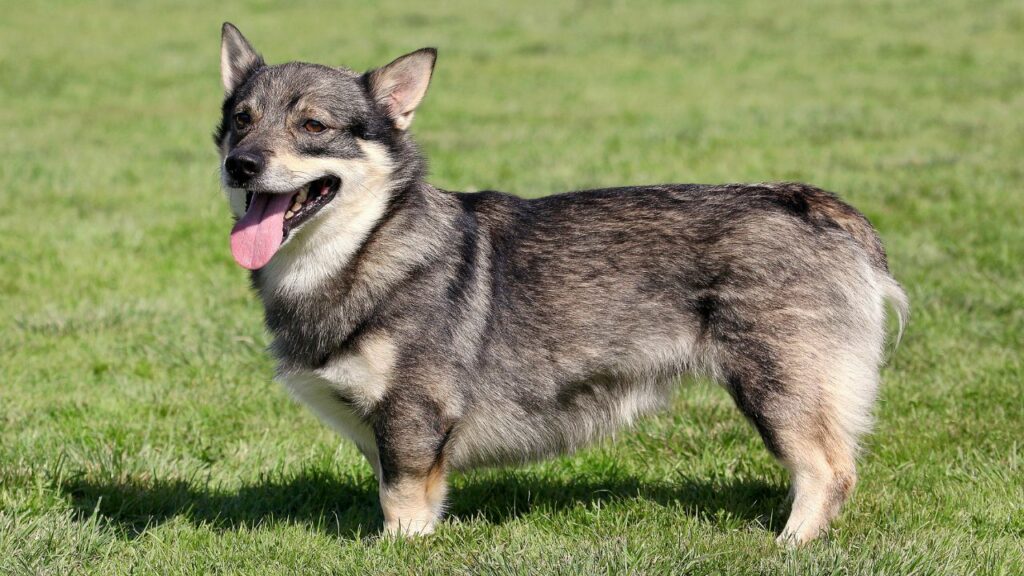
The Swedish Vallhund is a small-to-medium-sized herding dog with a long, low-set body and a sturdy build. Its short legs and powerful frame reflect its original purpose of working on farms and herding cattle.
The breed has a wedge-shaped head, upright triangular ears, and oval eyes. Its tail can vary in length, ranging from naturally absent to long.
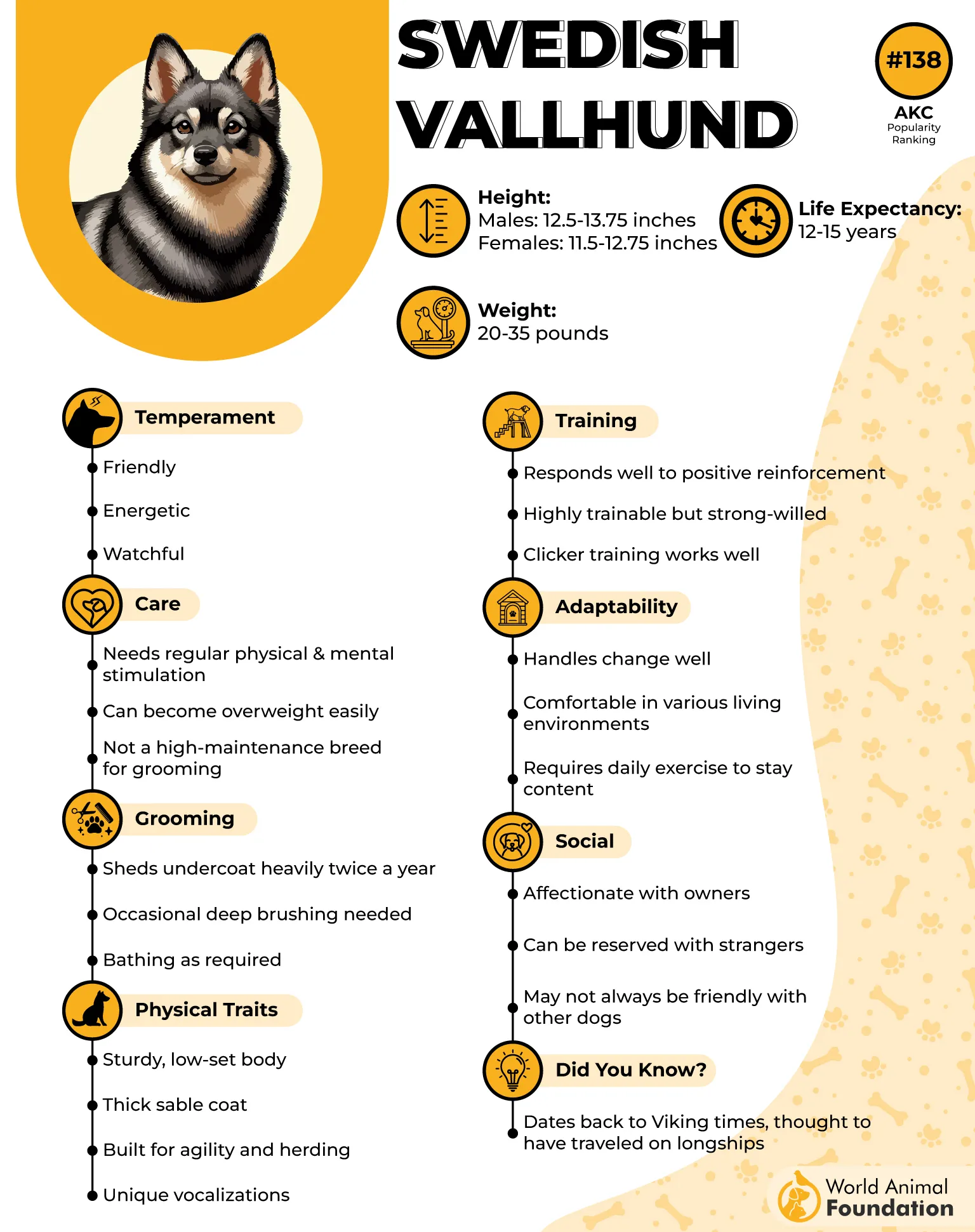
As a Spitz-type breed, the Swedish Vallhund has a thick double coat with colors ranging from grayish to reddish shades. Its coat gives it a wolf-like appearance, while its compact body resembles that of a Corgi.
Despite its relatively small size, this breed is strong and athletic, with a build suited to its hardworking herding background.
Temperament & Personality
Australian Cattle Dog
Australian Cattle Dogs are highly intelligent, energetic, and hardworking, with strong protective instincts toward their owners and property.
They form close bonds with their families but can be wary of strangers. Generally friendly and eager to please, they can also be independent and stubborn, making consistent training important.
These dogs need plenty of physical and mental activity and are not suited to a sedentary lifestyle. Their strong herding instincts may lead them to nip at children’s heels or try to control other pets.
Early training and socialization help manage these behaviors and encourage better interactions with family members and animals.
Swedish Vallhund
Swedish Vallhunds are affectionate, friendly, and alert dogs that enjoy spending time with their families. They make good watchdogs and are known for their vocal personalities, communicating through barking, whines, and groans.
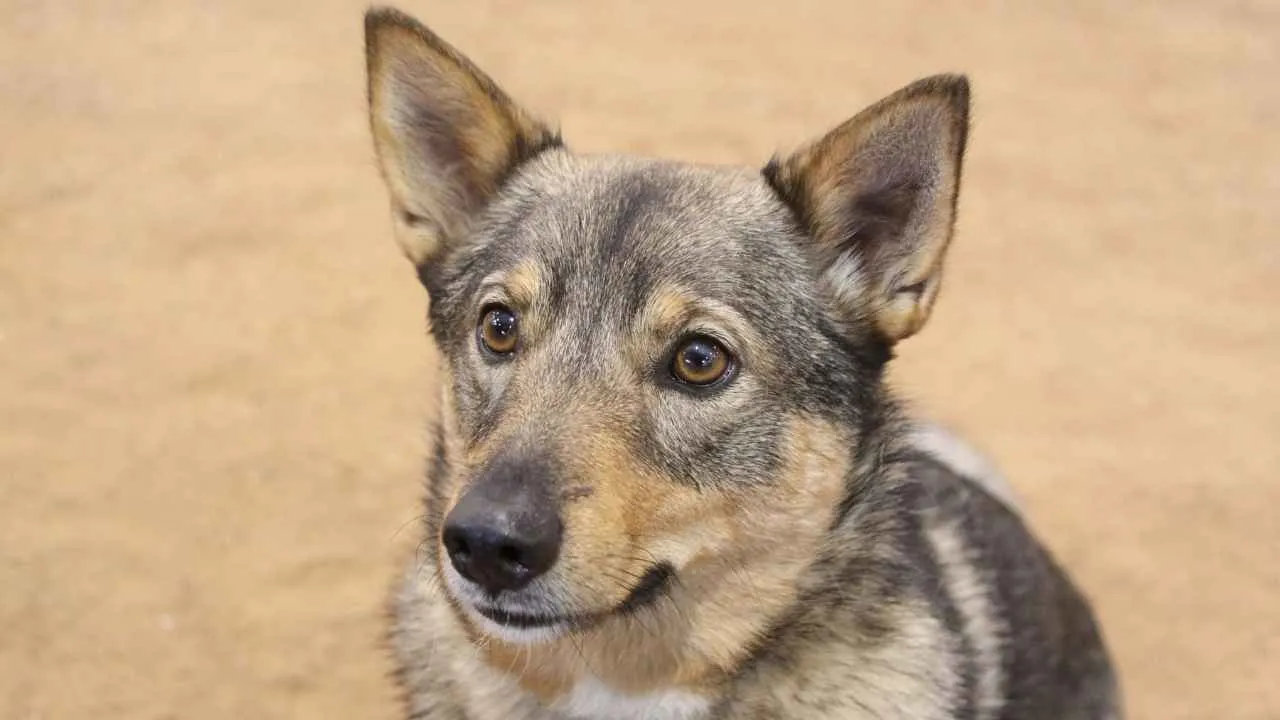
Their tendency to bark frequently can be managed with proper training. Their herding background gives them an independent and sometimes bossy nature.
They generally get along well with children, cats, and other household pets when properly socialized, although they may be less welcoming toward unfamiliar animals. Agile and eager to take on challenges, they enjoy an active lifestyle and also appreciate relaxing with their families.
Exercise & Energy Levels
Australian Cattle Dog
Australian Cattle Dogs have boundless energy and stamina, as they were originally bred to herd cattle across large areas for extended periods. They need an active family that can provide plenty of daily exercise and mental stimulation.
A few leisurely walks are not enough to keep this breed satisfied. They are happiest when given a job to do, whether working with livestock or playing in the yard.
Suitable activities include:
Running and long walks
Herding and agility training
Fetch and problem-solving games
Obedience training and other challenging tasks
Without enough physical activity and mental engagement, Australian Cattle Dogs can develop behavioral problems.
Swedish Vallhund
Despite their short stature, Swedish Vallhunds have high energy levels and need regular exercise to stay happy and well-behaved.
Aim for around one to two hours of daily activity, including walks, jogging, and interactive games. They also enjoy activities that challenge their intelligence and allow them to use their natural herding abilities.
Some activities they particularly enjoy include:
Hiking, jogging, and daily walks
Fetch, flyball, and tracking
Agility and herding competitions
Barn hunts and puzzle toys
Swedish Vallhunds have a strong instinct to chase moving objects, including cars, so they should be kept on a leash or in a securely fenced area outdoors. Combining physical activities with mental challenges helps keep these lively dogs engaged.
Training & Intelligence
Australian Cattle Dog
Australian Cattle Dogs are highly intelligent and quick learners who enjoy problem-solving and mastering new tricks. However, their independent and sometimes stubborn nature means they need firm but gentle guidance.
They respond best to positive reinforcement, rewards, and consistent obedience training rather than harsh corrections.
Training should focus on:
Early socialization to manage nipping tendencies.
Basic obedience and advanced commands.
Agility, frisbee, and fetch.
Herding, tracking, and livestock work.
Swedish Vallhund
Swedish Vallhunds are intelligent, highly trainable dogs that generally enjoy pleasing their owners. They respond well to positive reinforcement, with treats and toys helping keep training sessions interesting.
Starting obedience training and socialization early can prevent unwanted habits and build confidence around unfamiliar people and dogs.
Training should focus on:
Early socialization with people and other dogs
Heel-nipping caused by herding instincts.
Excessive barking and vocalization.
Potty training and consistent bathroom routines.
Coat Maintenance
Australian Cattle Dog
Australian Cattle Dogs have a short, dense double coat with a weather-resistant outer layer and a protective undercoat. Their coat comes in blue or red speckled patterns, and puppies are born white before developing their distinct colors by around 4–6 weeks of age.
Although their coat is relatively easy to maintain, they shed moderately to heavily and need regular brushing.
Their grooming routine should include:
Daily brushing to remove loose hair and maintain coat condition.
Extra brushing twice a year when they shed their undercoat.
Occasional baths, especially after getting muddy.
Regular nail trimming and basic skin checks
Swedish Vallhund
Swedish Vallhunds have a thick double coat that naturally stays relatively clean and does not require complicated grooming.
Weekly brushing helps remove loose fur and prevent tangles. However, they shed heavily twice a year, usually in spring and fall, when daily brushing is helpful to manage their undercoat.

Their grooming routine should include:
- Weekly brushing, ideally two to three times a week.
Daily brushing during seasonal shedding periods.
Monthly baths to keep the coat clean.
Regular nail checks and trimming when needed.
Weekly ear checks and daily teeth brushing.
Health & Lifespan
Australian Cattle Dog
Australian Cattle Dogs are generally hardy and robust, with an expected lifespan of around 13–17 years. However, they can be prone to several inherited health conditions, particularly those affecting their eyes, joints, and hearing.
Common health concerns include:
Progressive retinal atrophy (PRA) and cataracts.
Primary lens luxation (PLL).
Hip and elbow dysplasia.
Deafness and epilepsy
Osteochondritis dissecans.
Von Willebrand’s disease and persistent pupillary membrane
Umbilical hernia.
Swedish Vallhund
Swedish Vallhunds have an average lifespan of 12–15 years. Although they are generally long-lived, they can develop certain inherited conditions affecting their joints, eyes, and heart.
Common health concerns include:
Canine hip and elbow dysplasia.
Luxating patella.
Heart disease and allergies.
Mild eye problems.
Swedish Vallhund retinopath
Australian Cattle Dog vs. Swedish Vallhund Dog: Which Breed Suits Your Lifestyle Best?
Both the Australian Cattle Dog and Swedish Vallhund are intelligent, energetic herding breeds that thrive with active owners. However, their differences in temperament, exercise needs, size, and grooming can make one a better fit for your lifestyle than the other.
VCA says the Australian Cattle Dog is better suited to experienced owners who can provide plenty of exercise, consistent training, and purposeful activities.
The Swedish Vallhund offers a slightly more manageable companion for families looking for an affectionate, playful, and equally active dog.
Before choosing either breed, consider how much time you can dedicate to exercise, training, grooming, and companionship. If you enjoy outdoor adventures and challenging activities, both breeds can be rewarding companions, but their individual needs should guide your decision.
Conclusion
The Australian Cattle Dog and Swedish Vallhund share a hardworking herding background, sharp intelligence, and plenty of energy, but they differ in size, temperament, grooming needs, and exercise requirements.
While the Australian Cattle Dog is more independent and protective, the Swedish Vallhund tends to be more openly friendly and companionable. Both need consistent training, regular activity, and responsible health care to thrive.
Before bringing either breed home, consider your daily routine, experience with dogs, and ability to meet their physical and mental needs. Spend time learning about both breeds and, if possible, meet them in person.
The best companion is not necessarily the most impressive or energetic dog, but the one whose personality and needs fit naturally into your everyday life.
