




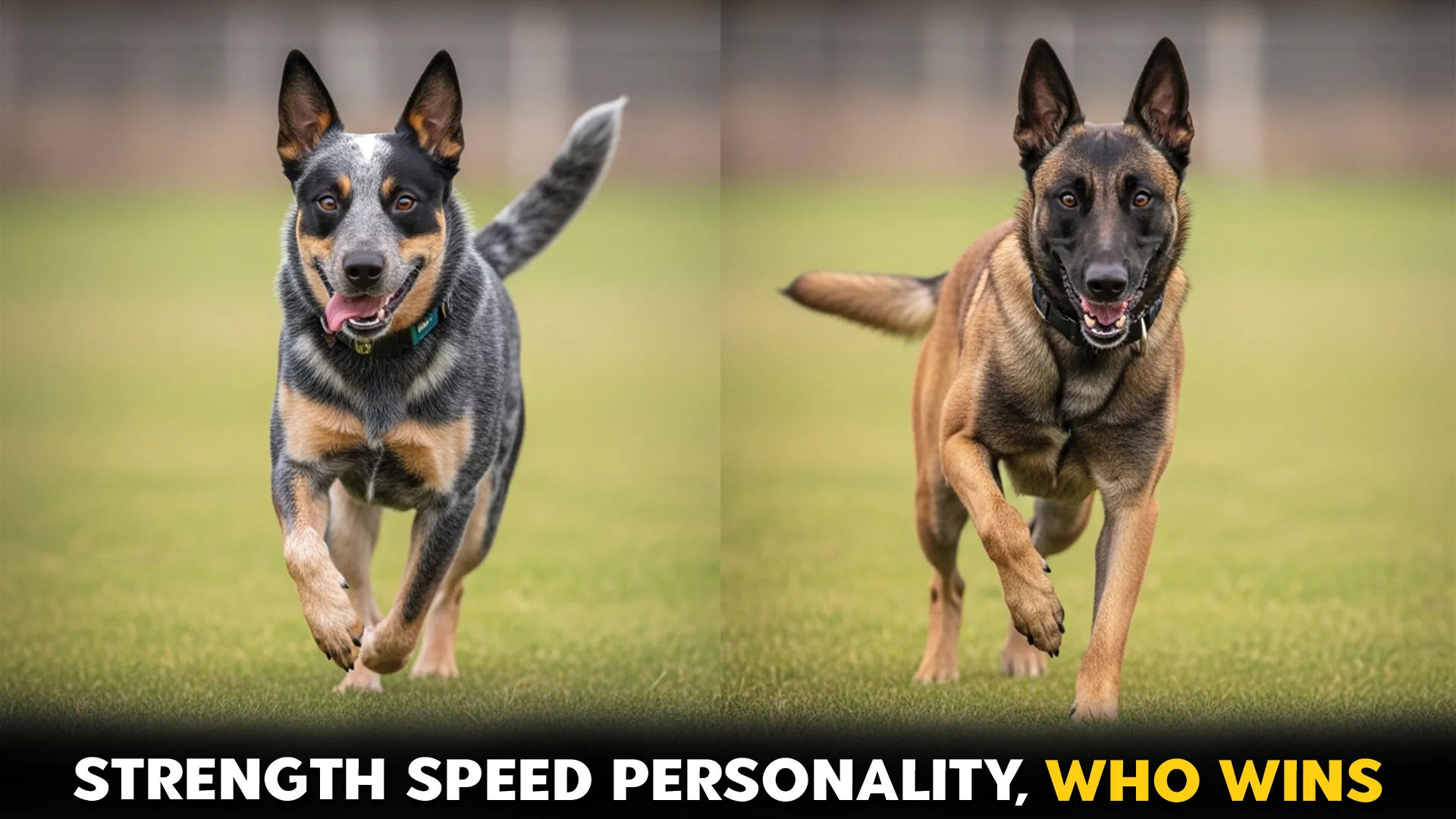
When it comes to elite working dogs, the Australian Cattle Dog and the Belgian Malinois stand in a league of their own—built for performance, driven by instinct, and defined by unmatched intensity.
But how do they truly compare in strength, speed, and personality?
The Australian Cattle Dog, often called the Blue or Red Heeler, is a compact yet powerful herder developed to handle tough livestock across rugged terrain.
Weighing up to 50 pounds, this breed combines endurance with sharp intelligence, thriving on constant activity and mental challenges. Their legendary resilience is exemplified by Bluey, the longest-living dog on record at 29 years.
On the other hand, the Belgian Malinois is a high-octane athlete known for speed, agility, and laser-focused drive.
Originally bred in Belgium for herding, it has become a top choice for police, military, and search-and-rescue roles due to its exceptional trainability and work ethic.
While both breeds excel in demanding roles, the choice comes down to lifestyle—steady endurance versus explosive energy.
Australian Cattle Dog vs Belgian Malinois: Strength, Speed, vs Personality Compared
Both the Australian Cattle Dog and the Belgian Malinois are powerhouses of the canine world, renowned for their incredible stamina and unwavering work ethic. While one is a rugged, compact driver of livestock and the other a sleek, high-speed athlete often found in elite service work, choosing between them comes down to how their distinct personalities fit your daily life.
Origins & Purpose
In the comparison of origin and purpose, the Australian Cattle Dog and the Belgian Malinois share a common foundation as highly capable herding breeds, yet they were shaped by very different environments and roles.
The Australian Cattle Dog emerged in 19th-century Australia, specifically developed to manage cattle across the harsh, expansive conditions of the Outback, as noted by Britannica.
Its purpose was practical and demanding—driving livestock over long distances by nipping at their heels, a behavior influenced by its dingo ancestry and essential for control and endurance.
In contrast, the Belgian Malinois originated in the Mechelen region of Belgium during the 1800s, where it was initially bred as a herding and guardian dog.
Over time, its exceptional intelligence, agility, and trainability expanded its purpose beyond farms into modern working roles, including police work, military operations, and search-and-rescue tasks.
While both breeds were designed to work closely with humans, their origins reflect distinct priorities: rugged cattle management versus versatile service and protection.
2. Size & Physical Strength
When comparing size and physical strength in the Australian Cattle Dog and the Belgian Malinois, both breeds are built for demanding work, but they differ in structure and overall presence.
The Australian Cattle Dog is a compact, sturdy herder, typically standing between 17 and 20 inches tall. Its muscular frame, dense double coat, and balanced build support endurance, agility, and the ability to work for long hours in tough environments.
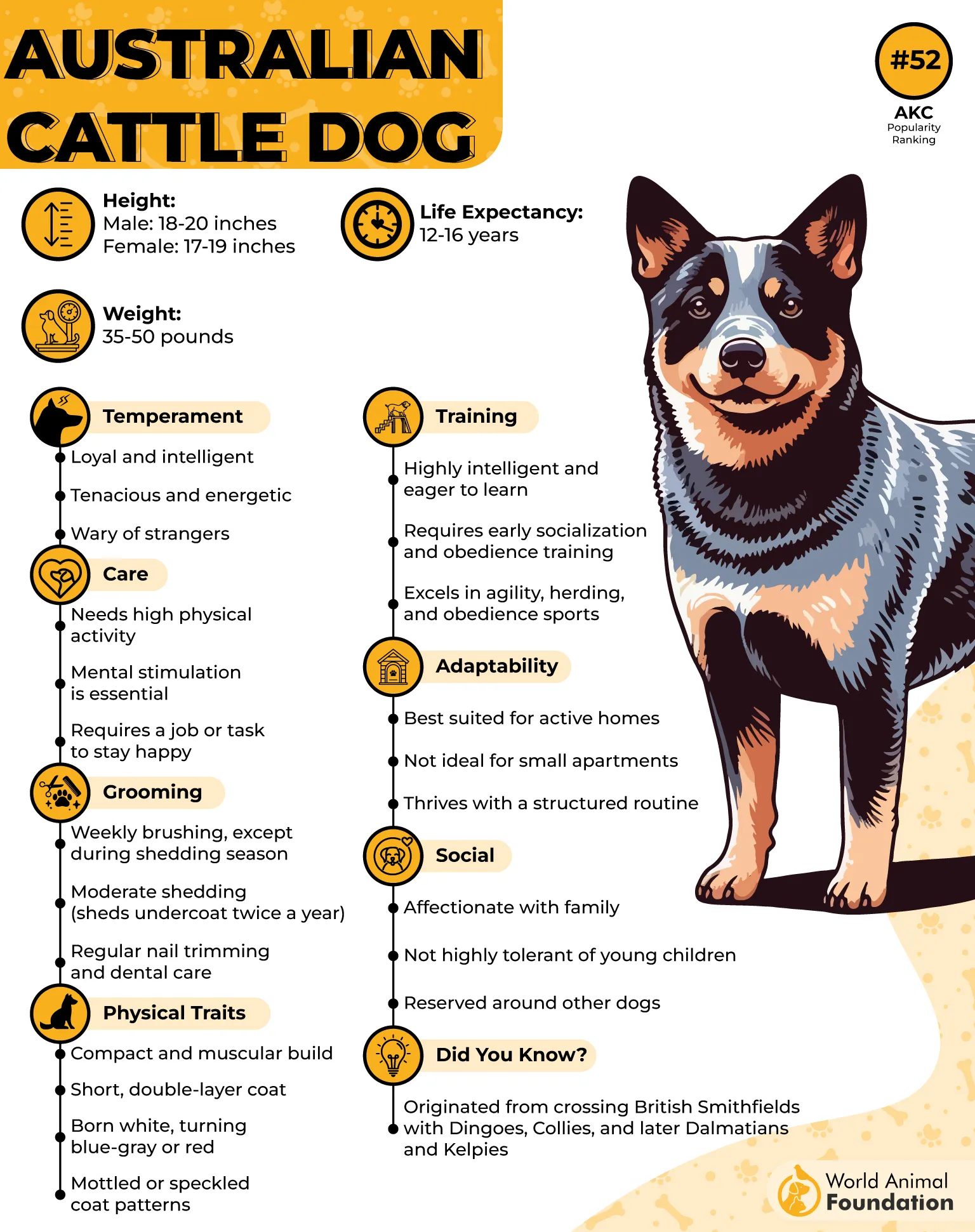
Though smaller, it is remarkably strong for its size, with a powerful bite and impressive stamina that suit its role in controlling livestock.
In contrast, the Belgian Malinois is taller and more athletic in appearance, standing around 22 to 26 inches. It has a square, well-proportioned body with lean, defined musculature rather than bulk.
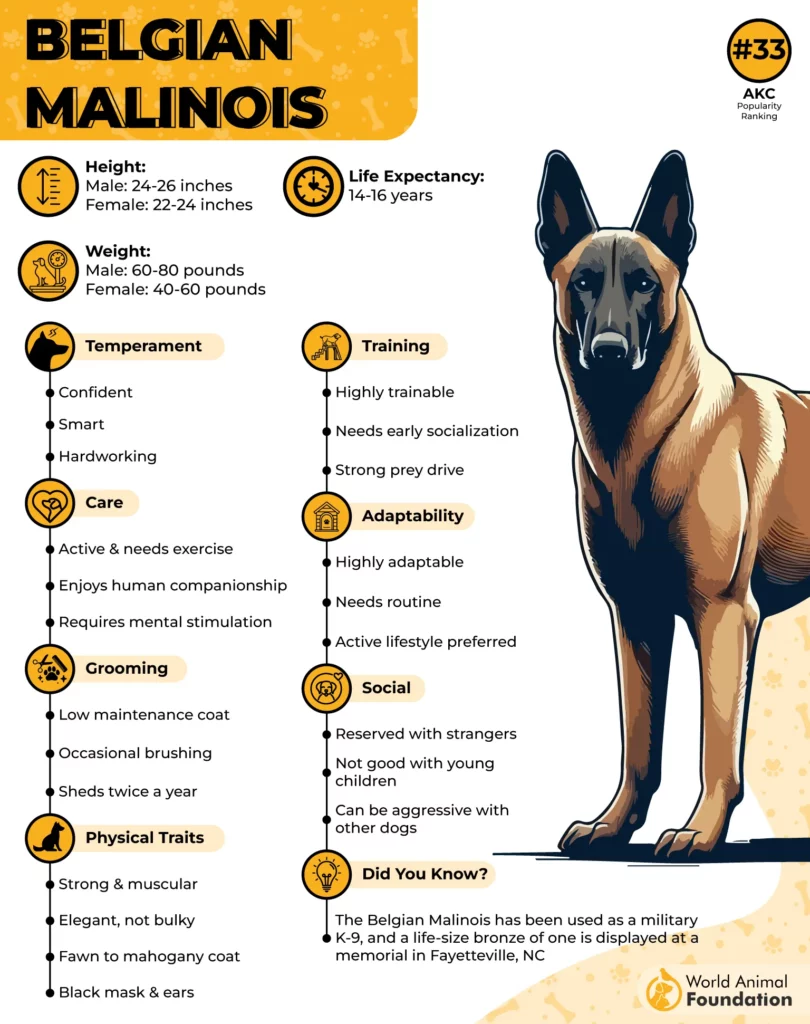
This structure gives the Malinois a clear advantage in raw power, reach, and speed, making it highly effective in physically demanding working roles.
While both breeds are strong, the Malinois leans toward height and athletic power, whereas the Cattle Dog emphasizes compact strength and resilience.
3. Temperament & Personality
When comparing personality and temperament in the Australian Cattle Dog and the Belgian Malinois, both breeds are defined by intelligence, loyalty, and a strong working instinct, yet they express these traits in different ways.
The Australian Cattle Dog is known for its alert, watchful, and courageous nature. Bred to work independently while still responding to its handler, it develops a deep sense of loyalty and tends to form a strong bond with its owner.
Naturally reserved with strangers, it can be protective and sometimes dominant, especially around other dogs, and may exhibit herding behaviors toward people or children due to its ingrained instincts.
In contrast, the Belgian Malinois is highly driven, energetic, and intensely focused on its human partner. It thrives on constant engagement and purpose, often forming an exceptionally close bond with its handler, as mentioned by the HillsPets.
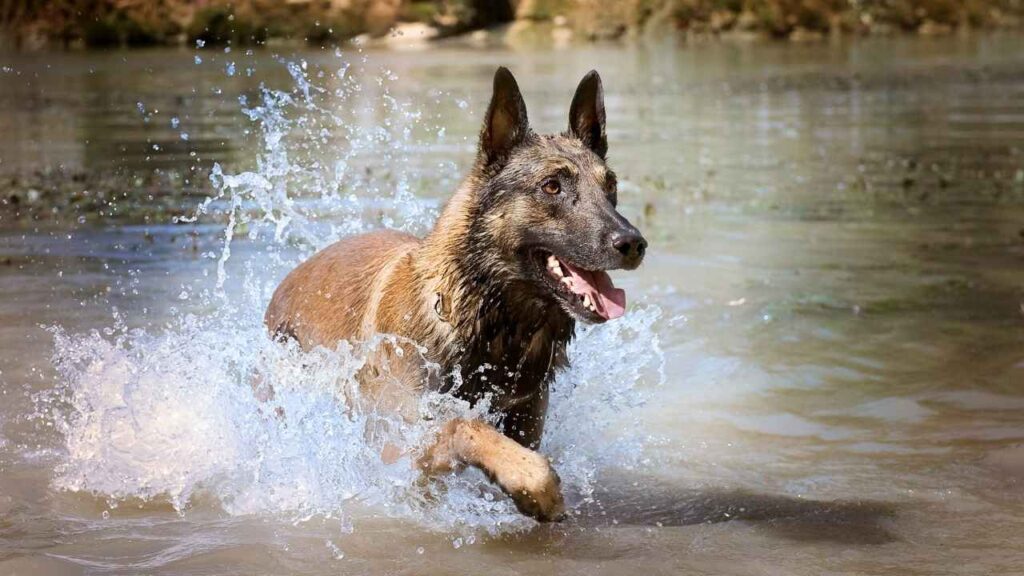
This breed is eager to work, learn quickly, and requires consistent mental and physical stimulation to remain balanced. Without adequate activity, its intensity can become overwhelming.
While both breeds are loyal and protective, the Malinois leans toward high-drive partnership, whereas the Cattle Dog emphasizes independence paired with vigilance.
4. Exercise & Energy Levels
When comparing exercise and energy levels in the Australian Cattle Dog and the Belgian Malinois, both breeds rank among the most active and demanding companions, but their needs reflect slightly different styles of intensity.
The Australian Cattle Dog is a tireless worker with deep endurance, bred to cover long distances while herding livestock.
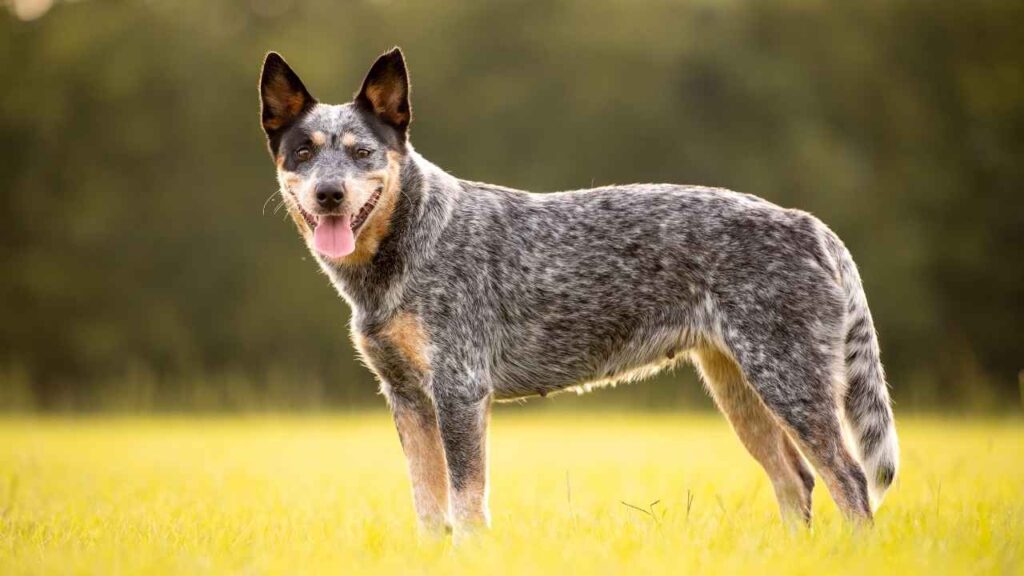
A simple daily walk is not enough for this breed; it thrives when given structured physical activity and mental challenges.
Activities like running, agility, obedience training, or interactive play help channel its energy and prevent boredom, especially in environments without farm work.
The Belgian Malinois, however, operates at an even higher level of intensity. This breed requires continuous engagement, combining both physical exercise and mental stimulation to stay balanced.
It excels in activities such as running, hiking, agility, tracking, and protection work, ideally alongside its handler. Without consistent involvement, its energy can become overwhelming.
While both breeds demand active lifestyles, the Malinois typically requires more constant stimulation, whereas the Cattle Dog balances high energy with endurance-driven activity.
5. Training & Speed level
When comparing training and responsiveness in the Australian Cattle Dog and the Belgian Malinois, both breeds are highly trainable, intelligent and capable learners, but their training styles and instincts require thoughtful direction.
The Australian Cattle Dog benefits greatly from early socialization and consistent obedience training. As a naturally driven and energetic worker, it thrives when given structured tasks and ongoing activities such as herding, agility, or obedience work.
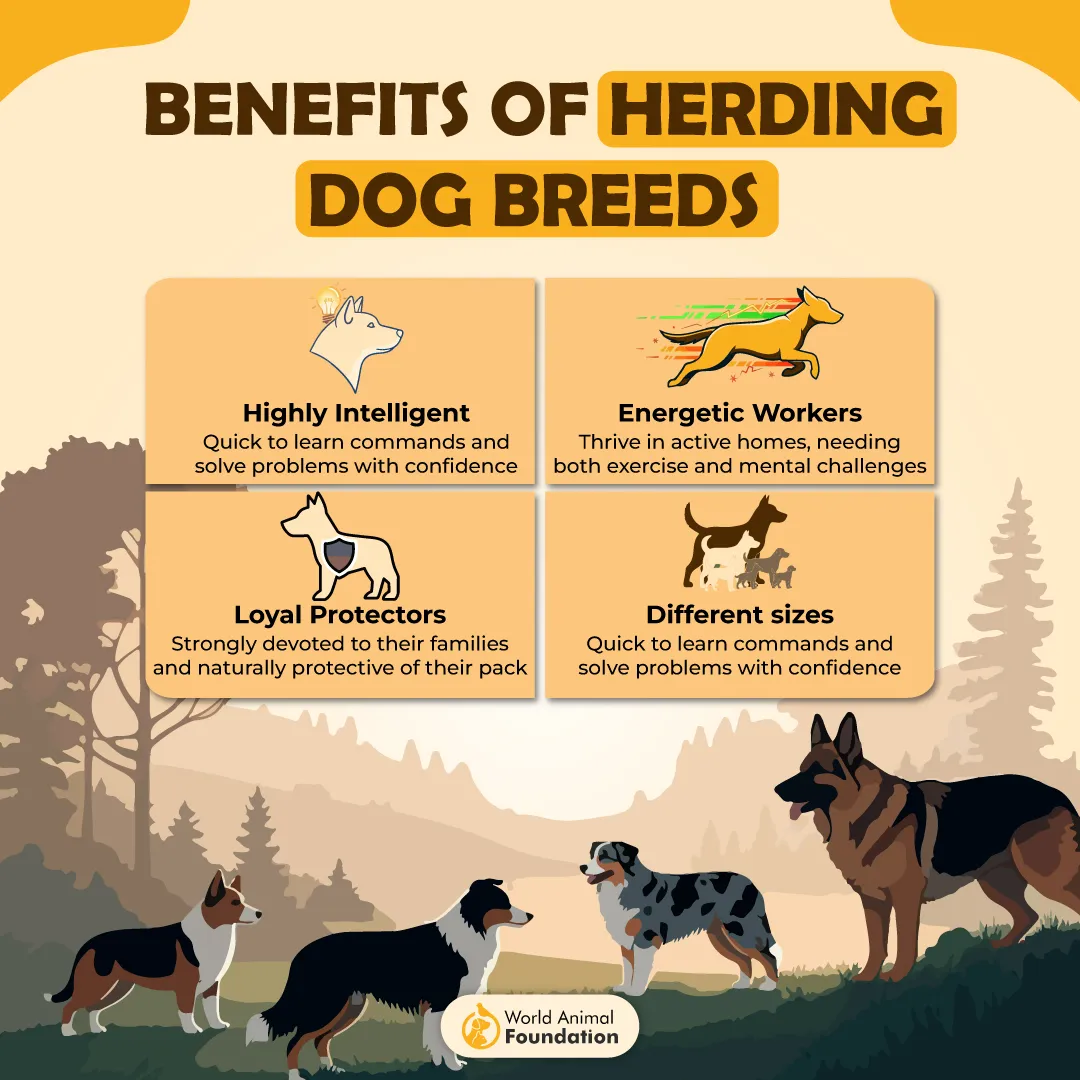
Training not only channels its intelligence but also helps prevent boredom, which can lead to undesirable or destructive behaviors. Regular engagement between dog and owner strengthens cooperation and trust.
The Belgian Malinois, known for its sharp focus and high prey drive, responds quickly to training but requires firm, consistent handling from an experienced owner.
Its instinct to chase moving objects must be carefully managed and redirected through controlled training and structured activities. Early socialization is essential to ensure balanced behavior.
In terms of speed, the Malinois is often quicker and more reactive, excelling in fast-paced tasks, while the Cattle Dog relies more on sustained effort and precision.
Both breeds demand commitment, but the Malinois typically requires a higher level of training intensity and control.
6. Coat Maintenance
When comparing coat maintenance in the Australian Cattle Dog and the Belgian Malinois, both breeds are relatively low-maintenance, thanks to their short coats, but each has its own grooming rhythm.
The Australian Cattle Dog has a smooth, double-layer coat that is naturally clean and resistant to odors, making routine care straightforward, as noted by the AKC
Weekly brushing is usually enough to keep the coat healthy and remove loose hair, along with occasional bathing when needed.
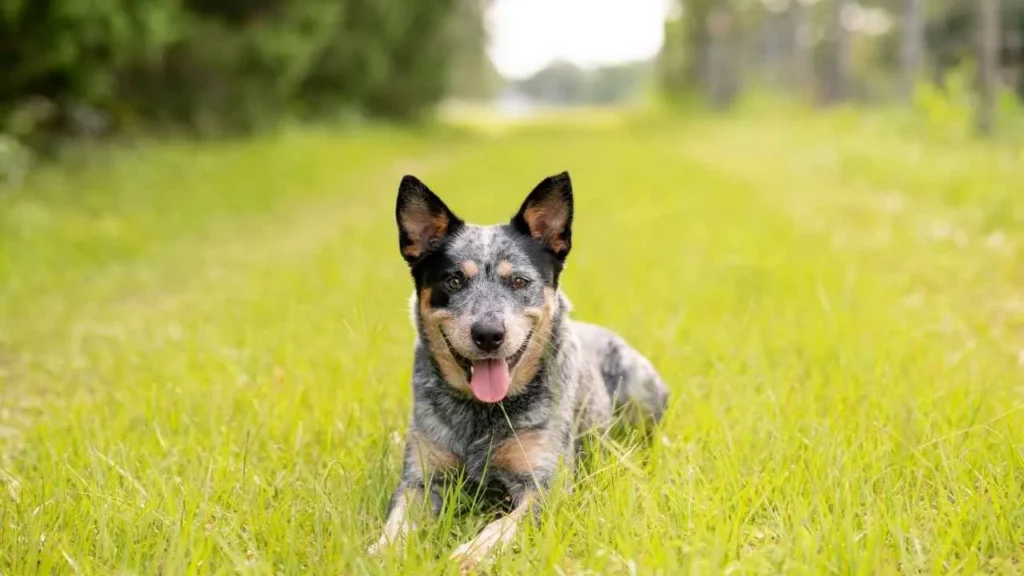
However, this breed experiences seasonal shedding, typically twice a year, during which the undercoat sheds more heavily and requires more frequent brushing to manage loose fur and maintain coat condition.
The Belgian Malinois also has a short, dense, weather-resistant coat that is easy to maintain. Regular brushing with a medium-bristle brush or grooming mitt helps keep the coat clean, supports healthy skin, and distributes natural oils.
Like the Cattle Dog, the Malinois sheds seasonally, and during these periods, more frequent brushing—often daily—helps control shedding.
Overall, both breeds are low-effort in grooming, with the main difference being the intensity of shedding cycles rather than daily upkeep.
7. Health & Lifespan
When comparing health and lifespan in the Australian Cattle Dog and the Belgian Malinois, both breeds are generally robust, but they differ slightly in longevity and common health considerations.
The Australian Cattle Dog typically enjoys a longer lifespan, averaging around 12 to 16 years, with some individuals known for exceptional longevity—most famously Bluey, recognized as one of the longest-lived dogs on record at 29 years and five months.
While hardy, the breed can be predisposed to certain hereditary conditions such as deafness, progressive retinal atrophy (PRA), and hip dysplasia. Routine care, including ear checks and dental hygiene, supports overall well-being.
The Belgian Malinois, on the other hand, has a slightly shorter average lifespan of about 10 to 14 years. It is considered a relatively healthy breed, especially when responsibly bred, but can still be prone to issues such as hip and elbow dysplasia and certain eye conditions.
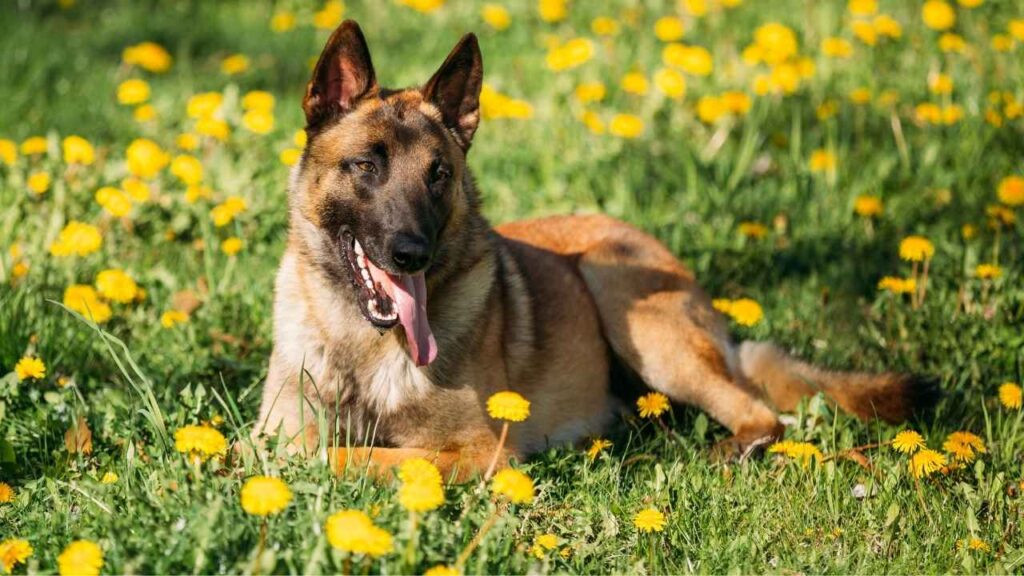
Due to its active nature and working background, maintaining proper conditioning, preventive care, and regular veterinary checks is important.
Both breeds benefit from responsible breeding and consistent health monitoring to support long, active lives.
Are Belgian Malinois & Australian Cattle Dog suitability as Family Pets?
When considering the suitability of the Australian Cattle Dog and the Belgian Malinois as family pets, both breeds can thrive in the right household, but they are best suited to experienced, active owners who understand their demanding nature.
The Australian Cattle Dog forms strong bonds with its family and is known for its loyalty and protective instincts.
However, its natural herding drive may lead it to nip or attempt to “herd” children and other pets if not properly trained and socialized.
It tends to be reserved with strangers and does best in homes where it has structure, consistent training, and plenty of physical and mental stimulation.
The Belgian Malinois is equally devoted but even more intense in its need for engagement. It thrives in homes where it can participate in daily activities alongside its owner and is not well-suited to being left alone or confined for long periods.
Its high energy and drive require continuous training, socialization, and purposeful interaction.
While both breeds can be excellent companions, they are best matched with families who can meet their exercise, training, and attention needs consistently.
Conclusion
In comparing the Australian Cattle Dog and the Belgian Malinois, both breeds stand out as intelligent, loyal, and highly capable companions, yet they demand commitment from their owners.
The Australian Cattle Dog offers steadfast devotion with a slightly more independent nature, making it a strong fit for structured households that can manage its herding instincts.
The Belgian Malinois, by contrast, is intensely driven and thrives on constant engagement, excelling in active, hands-on environments.
Ultimately, both breeds can make rewarding family pets when their physical, mental, and emotional needs are consistently met with experience and dedication.
