




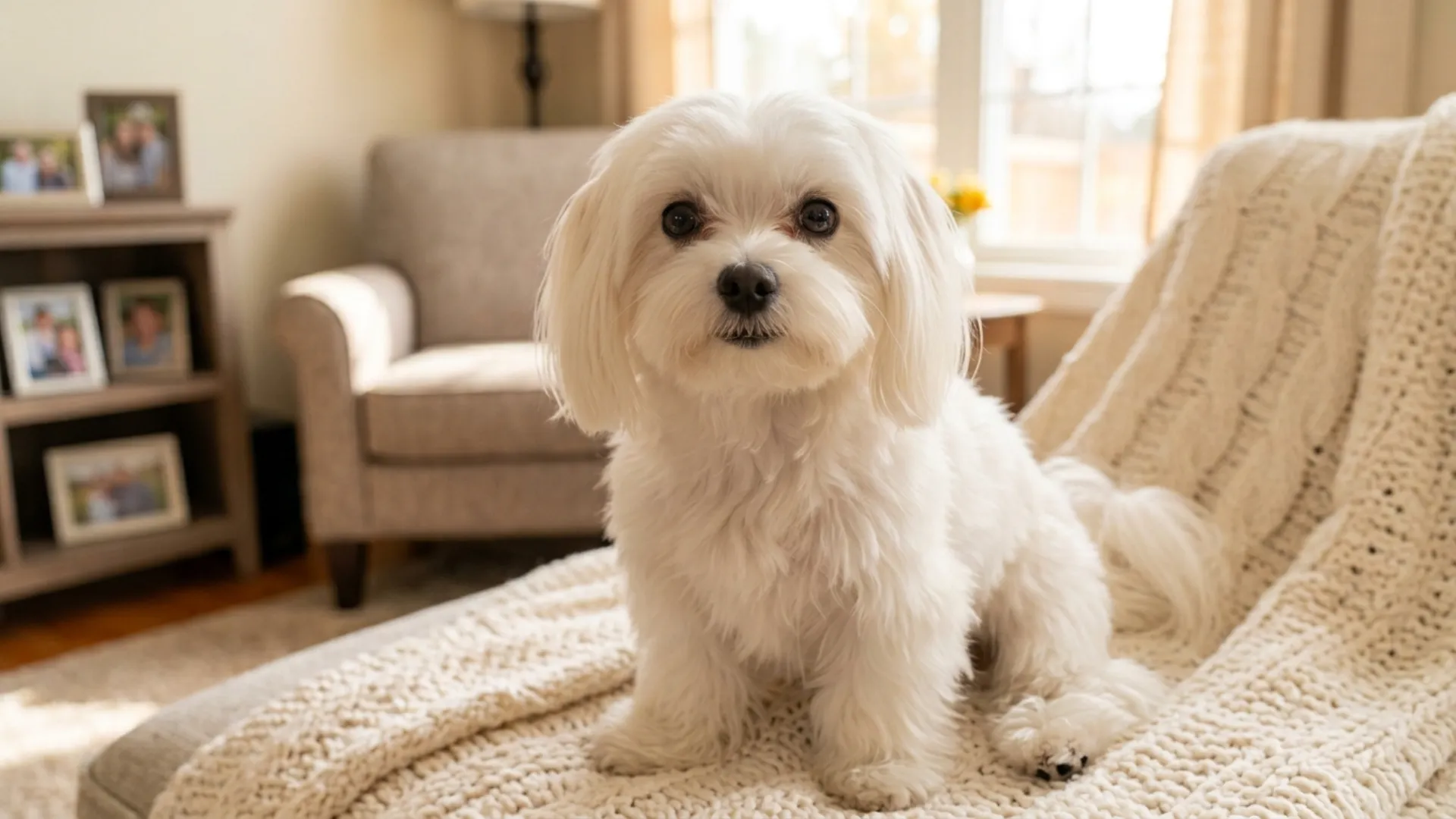
Nobody walks past a toy dog without smiling. You could be having the worst Monday of your life. Late for work. Spilled coffee. Traffic everywhere. Then a tiny dog in a little sweater trots past you on the sidewalk, tail up, looking like it owns the whole block.
And just like that… your mood flips.
These dogs are small enough to scoop up with one arm, but they fill an entire house with personality. They snore. They sass, follow you into the bathroom, have opinions about the couch cushions, and they WILL share them.
“Toy” doesn’t mean fragile, boring, or decorative. Many of these little dogs were bred for real jobs, from catching rats to keeping royalty company. Some are highly intelligent, some are low shedding, some are total couch potatoes, and others are ready for agility class, a weekend hike, or sniffing every bush in the neighborhood.
So if you are thinking about bringing home a pint-sized pup, you have options.
We are covering amazing toy dog breeds to consider bringing home, what makes each one special, and what kind of owner they fit best.
Amazing Toy Dog Breeds to Consider Bringing Home
1. Cavalier King Charles Spaniel
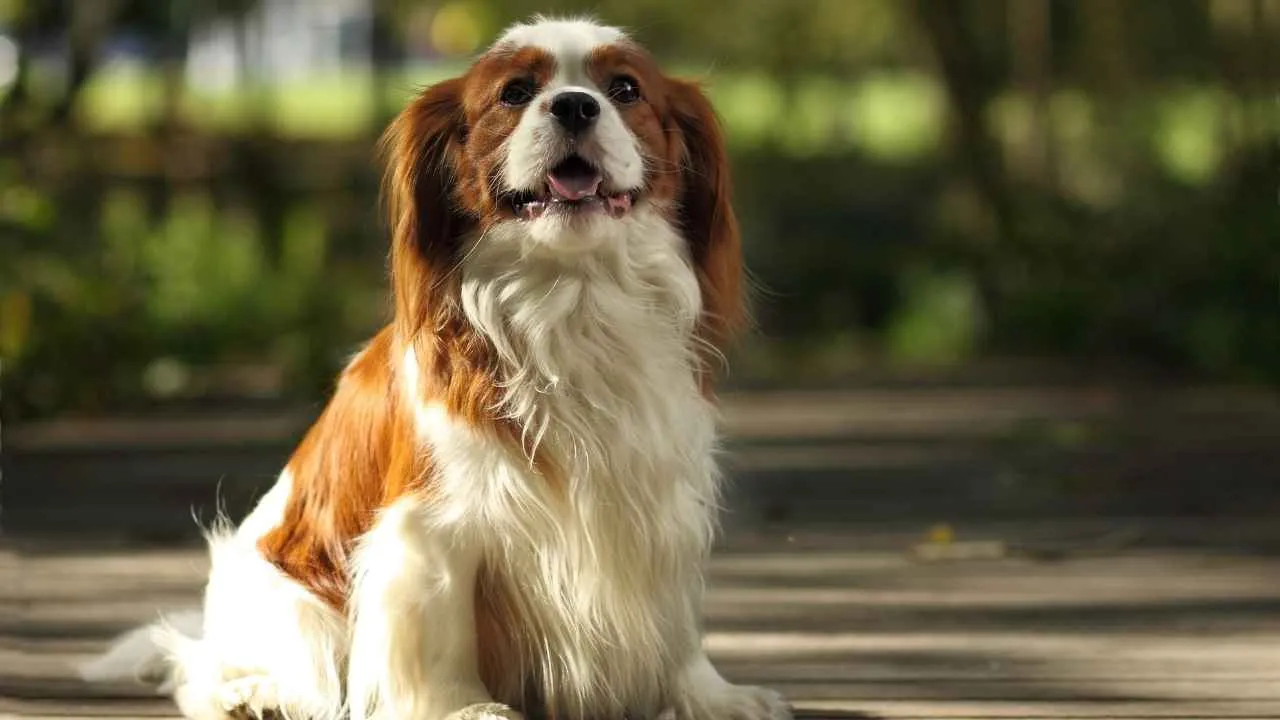
If you could design the perfect lap dog from scratch, you’d probably end up with a Cavalier King Charles Spaniel.
This breed is named after King Charles II of England, who was so obsessed with his little Spaniels that people complained he cared more about his dogs than running the country.
Kind of relatable, though.
TWIST!! The Cavalier we know today almost didn’t exist. By the 1920s, the old-style Spaniel with the longer nose had mostly faded away. According to the American Kennel Club, an American named Rosewell Eldridge offered prize money at Crufts, England’s biggest dog show, to anyone who could breed dogs that looked like the ones in those old royal paintings.
Breeders took the challenge, and BOOM, the Cavalier King Charles Spaniel was back.
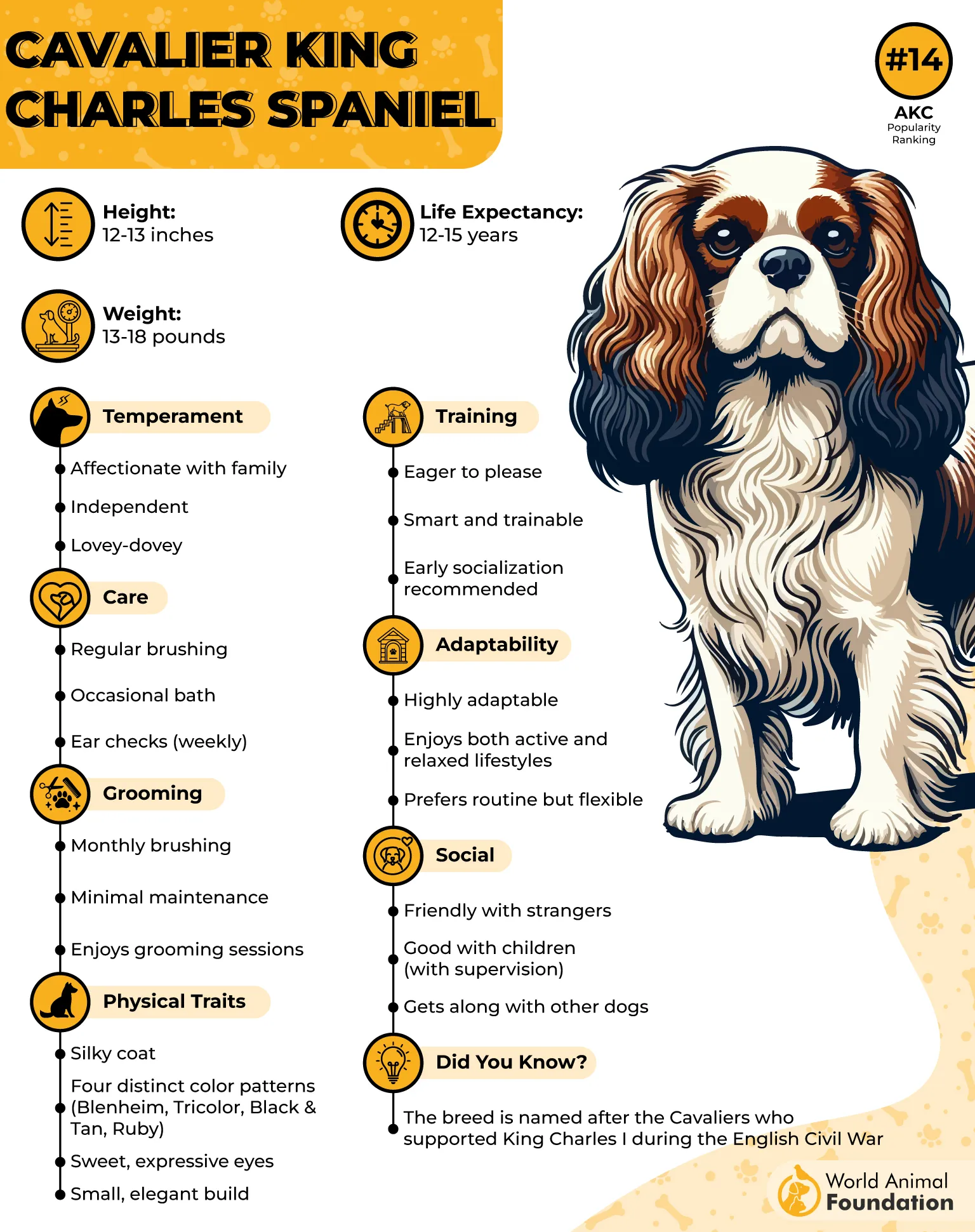
These companion dogs are sweet, gentle, and affectionate with basically everyone. Kids, seniors, other dogs, the delivery guy. This Spaniel dog has never met a stranger. Those big, soulful eyes are pretty much a cheat code for extra treats.
They are a little bigger than most toy dog breeds, usually 13 to 18 pounds. They enjoy moderate exercise like daily walks and backyard play. Their silky, feathered coat needs brushing a few times a week to prevent matting.
Cavaliers are prone to certain health issues, so regular vet checkups and a reputable breeder are important.
2. Maltese
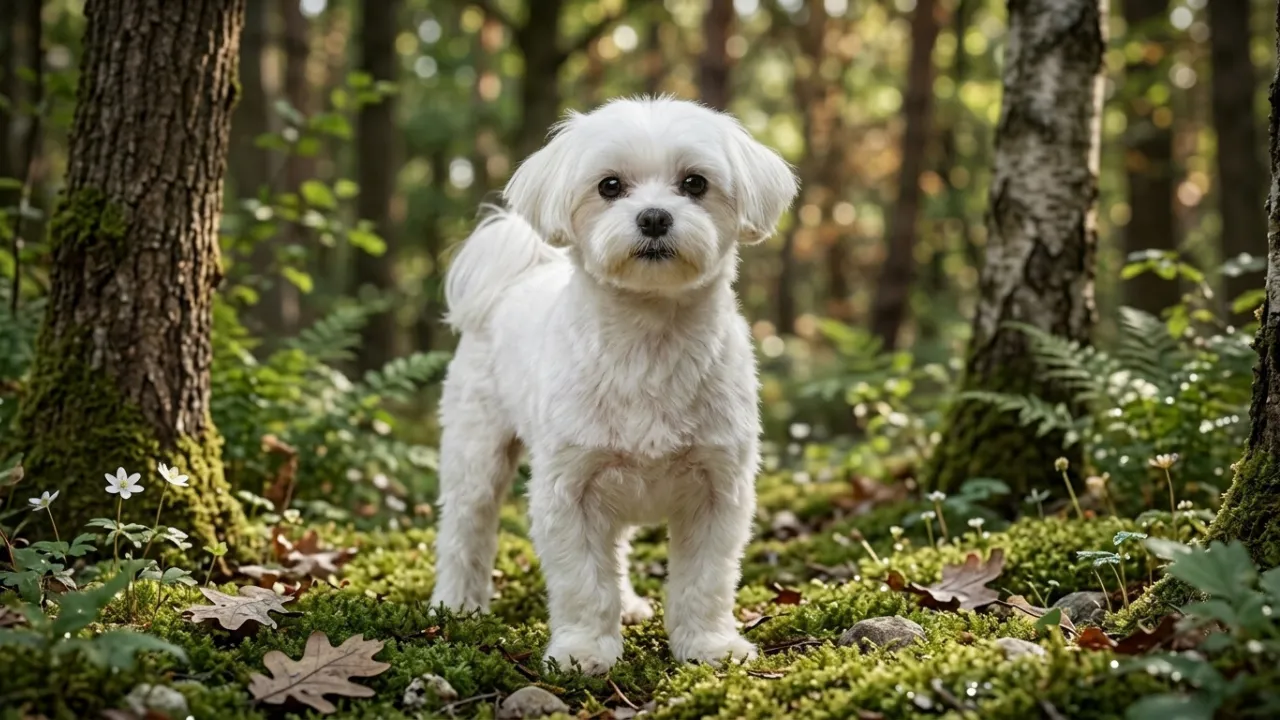
The Maltese looks like royalty. White, silky coat. Dark, sparkly eyes. That graceful little trot.
But don’t let the elegant vibe fool you. Underneath all that fluff is a feisty little character who will happily boss around dogs ten times its size.
Maltese are one of the oldest dog breeds, and they have been companion dogs throughout human history. They don’t herd or hunt. Their whole job description is “be adorable and stay close.”
They nailed it.
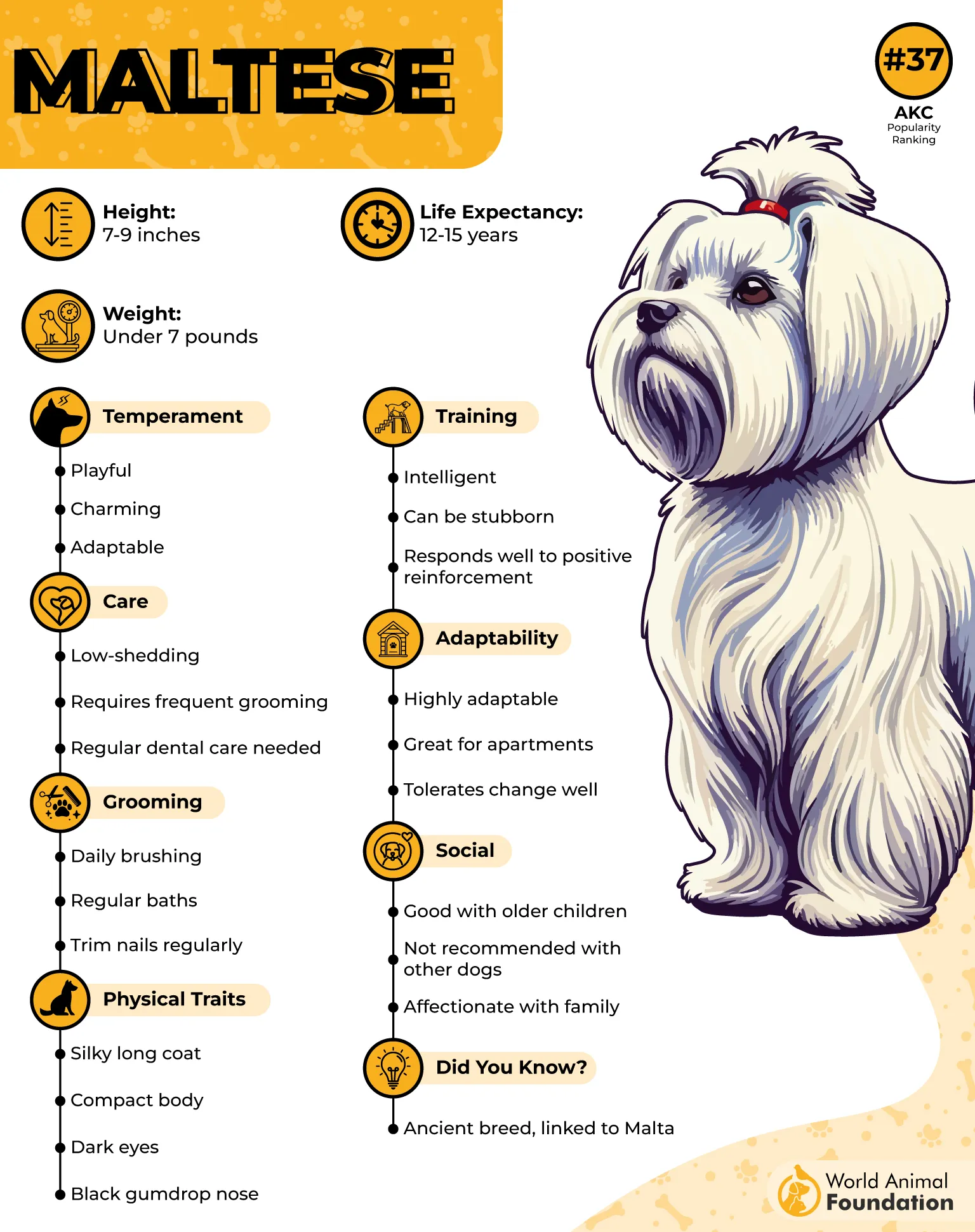
These small white dogs usually weigh under 7 pounds and keep their puppy-like playfulness well into their senior years. They love games, cuddling, and following you from room to room.
The long, flowing locks are gorgeous, but they are a commitment. Without daily brushing, that coat tangles quickly. Many owners skip the floor-length show look and go with a short “puppy cut” instead. Way easier.
Also, keep up with their dental care. Tiny mouths mean crowded teeth, and the Maltese are prone to dental problems.
Great for apartment living, absolutely.
Great for being left alone all day… NOT SO MUCH!!
3. Toy Poodle
Okay, quick history lesson.
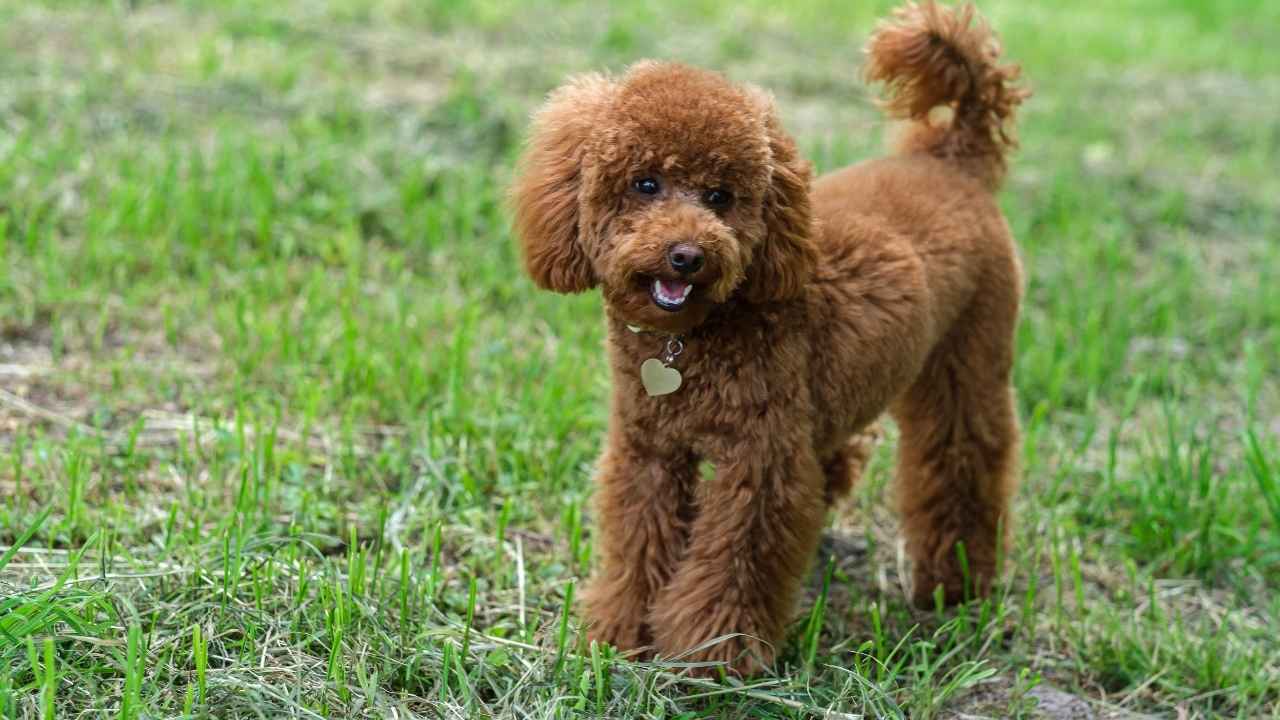
Even though the Poodle is the national dog of France, the breed actually started in Germany as a duck-retrieving water dog. The name comes from the German word “pudel,” which loosely means “to splash.”
So yeah, these fancy pups were originally bred to get muddy.
Over time, the breeders shrank the Poodle breed down into the Miniature Poodle and the Toy Poodle. In old-time Europe, Poodles were super common circus performers because they were adept at learning tricks.
That brain never went away.
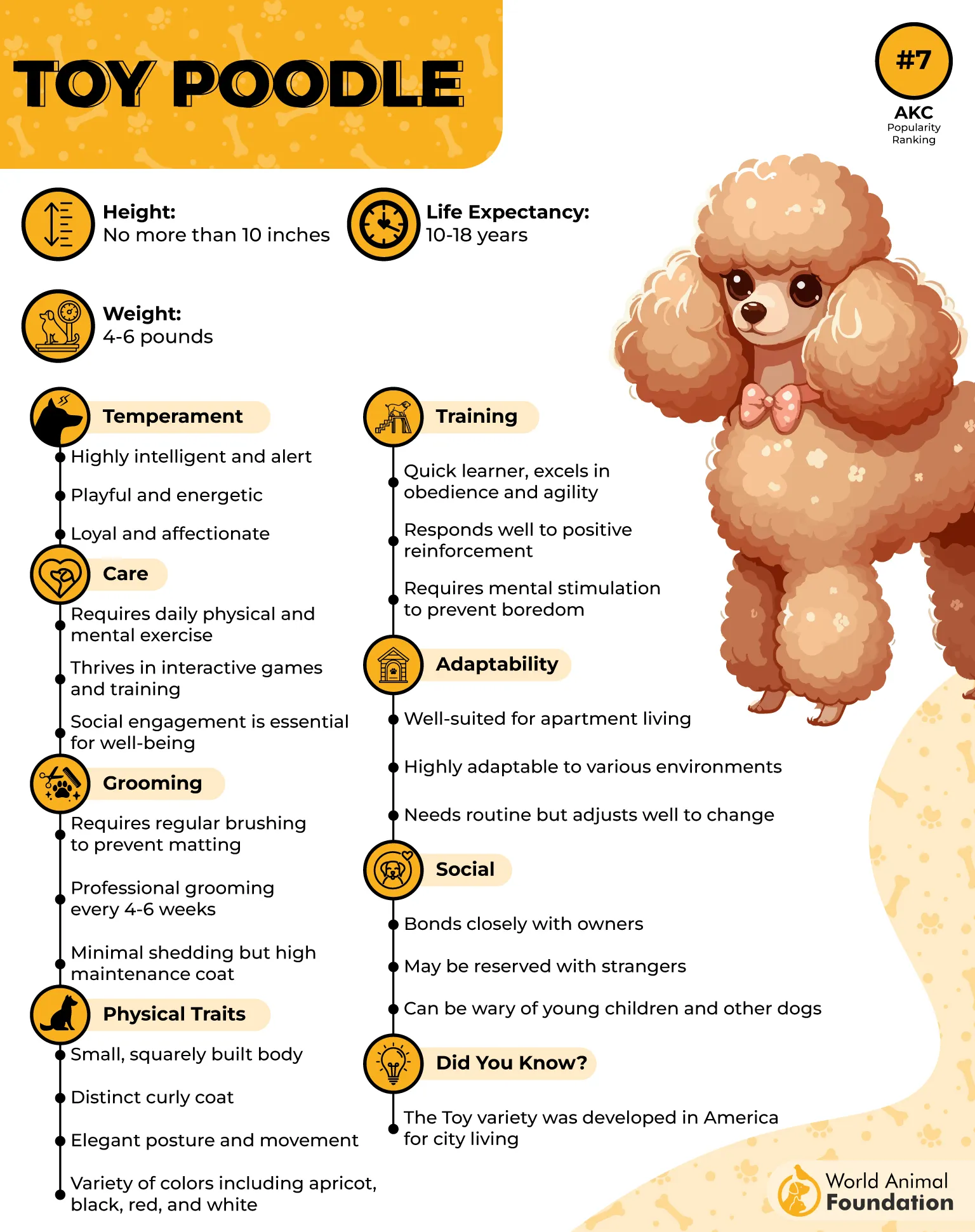
Toy Poodles are highly intelligent, eager to please, and show-offs. They love learning new things, solving puzzle toys, and getting praised for doing something cool. If you like training your dog, a Toy Poodle will happily keep up.
That curly coat is low-shedding, which is why Poodles are a favorite for people with allergies. But the hair keeps growing. Purina suggests planning on a groomer trip every 4 to 6 weeks. They usually live a long time, too, often well into their teens.
Smart, cheerful, active, loyal, and playful pups. Not a bad combo.
4. Havanese
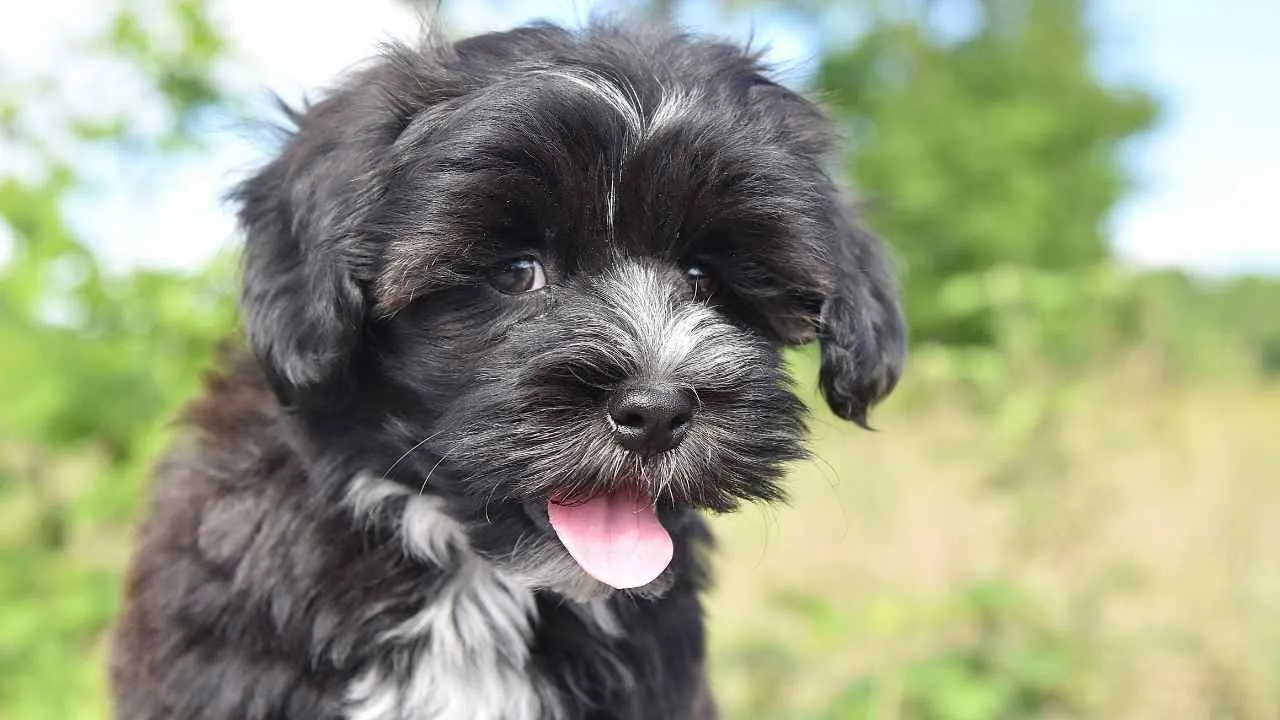
The Havanese is the national dog of Cuba, and the only breed native to the island.
After the Cuban revolution in 1959, many families fled the country, and only a handful of Havanese made it to the United States with them. The breed was rebuilt from just a few of those dogs. Today, it’s one of the most popular toy dog breeds in America.
Talk about a glow-up.
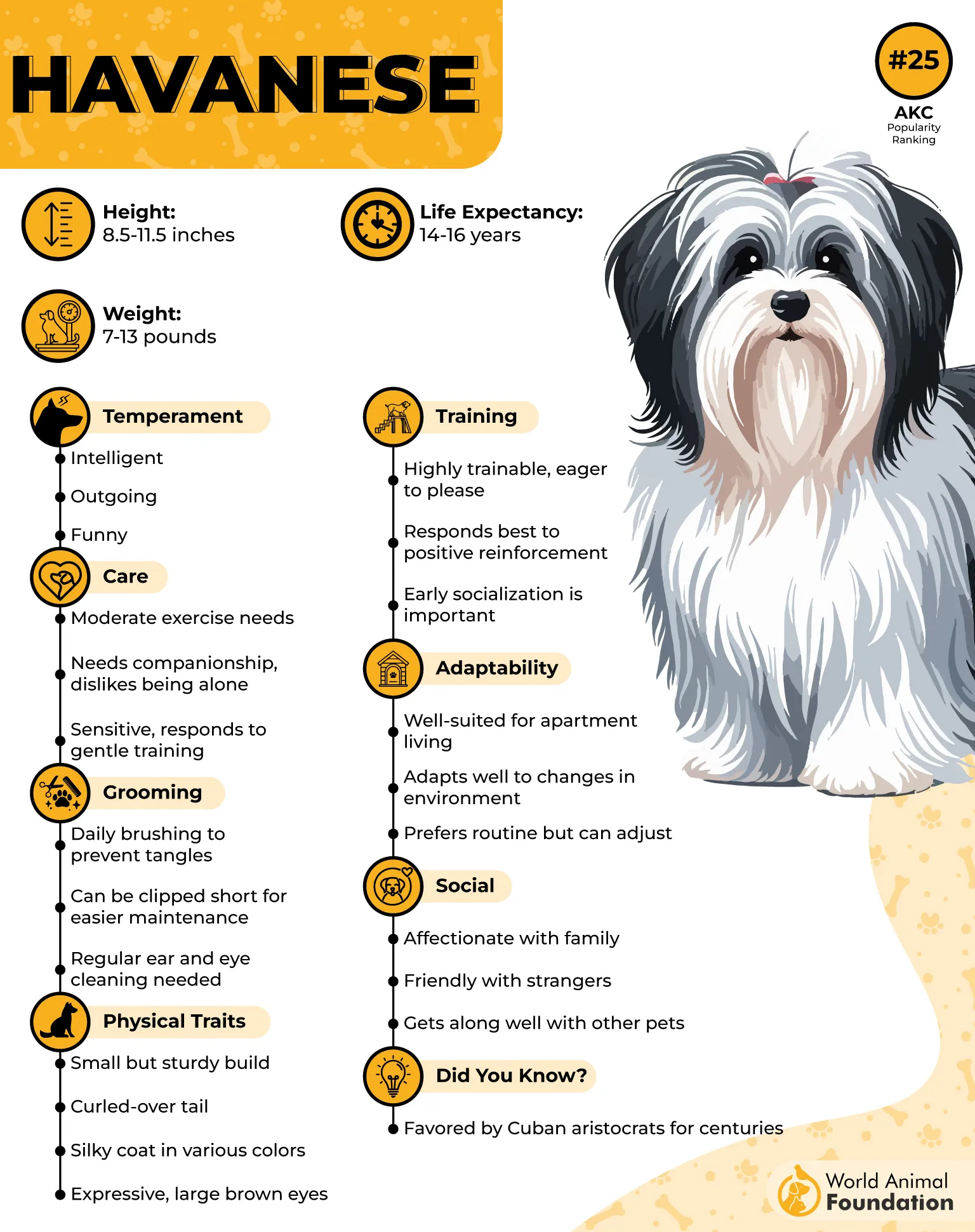
Havanese are cheerful, outgoing, and friendly dogs, according to PetMD. They are usually called the “velcro dogs” because they stick to their humans like glue. They are great with kids, gentle with other dogs, and happy to hang out with whatever the family is doing.
Their coat is soft and lightweight. It helps shield the dog from the hot Cuban sun, not to keep it warm. The dog is long-haired, so regular brushing is a must. Some owners even let it grow into cords.
They are adaptable little dogs. They are fine with apartments and houses. As long as they are with you, they are good.
5. Yorkshire Terrier
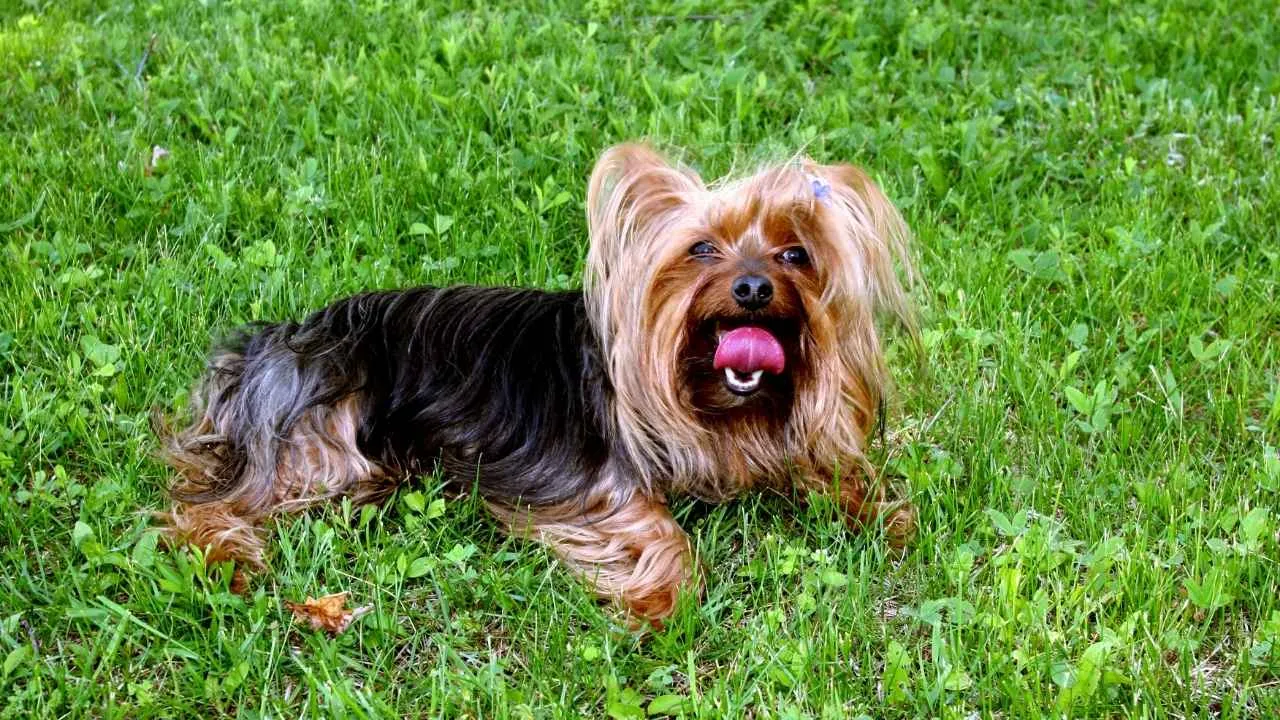
Yorkies are classic for a reason.
Back in the 1860s, a Yorkshire Terrier named Huddersfield Ben became so famous in the show ring that he is often called the father of the breed. Then Victorian ladies of England fell hard for the Yorkie and turned a rat-catching hunting dog into a high-fashion lap dog.
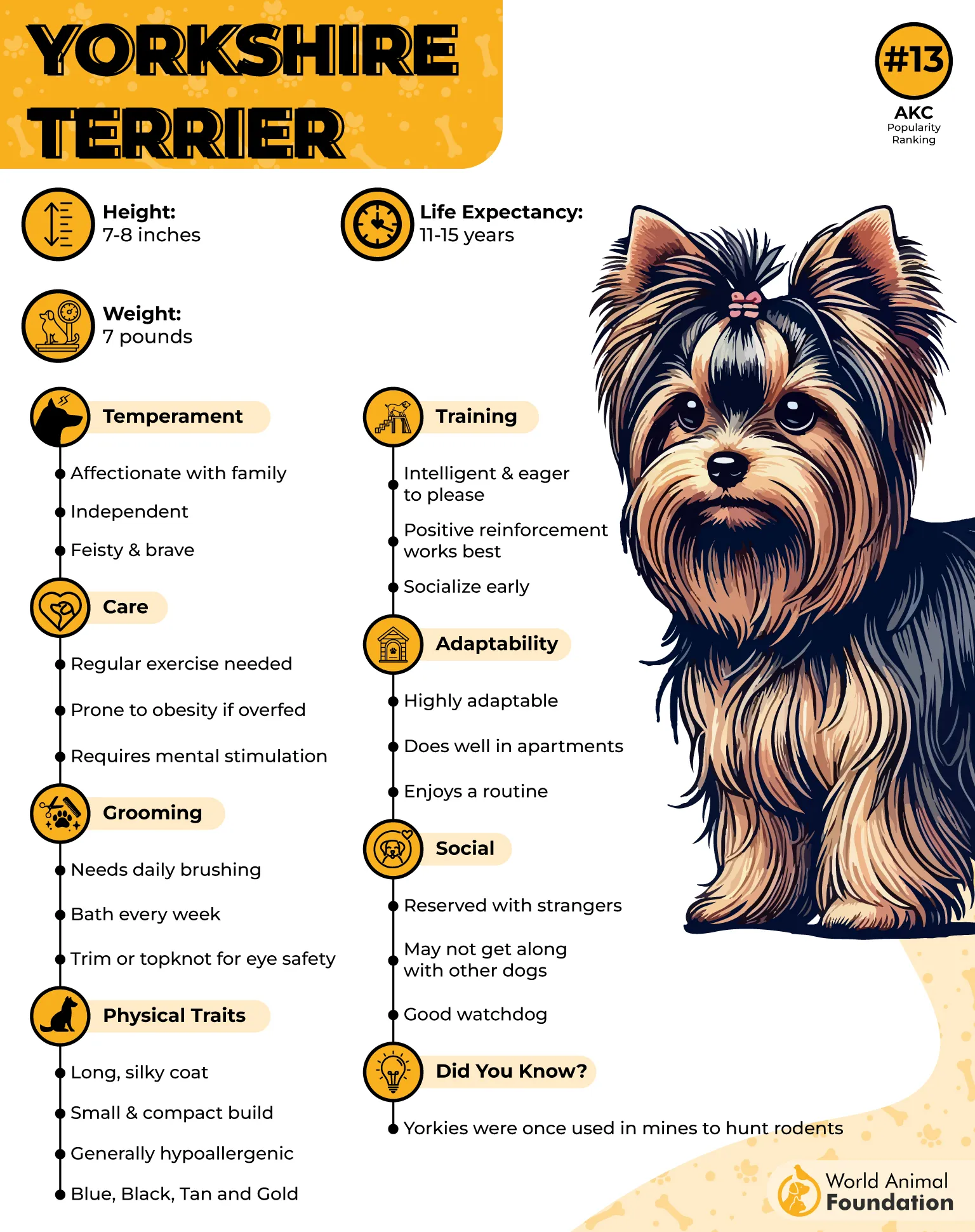
Yorkies are tiny, usually around 7 pounds. But they act like full-size terriers. Curious, alert, brave, and a little bossy. They will bark at strangers, squirrels, and that random bag blowing across the yard.
Their silky coat is actually hair, not fur, and it’s similar in texture to human hair. That means minimal shedding but a lot of brushing. A short coat (haircut) makes life easy.
Early socialization and consistent training help keep that big terrier attitude in check.
6. Shih Tzu
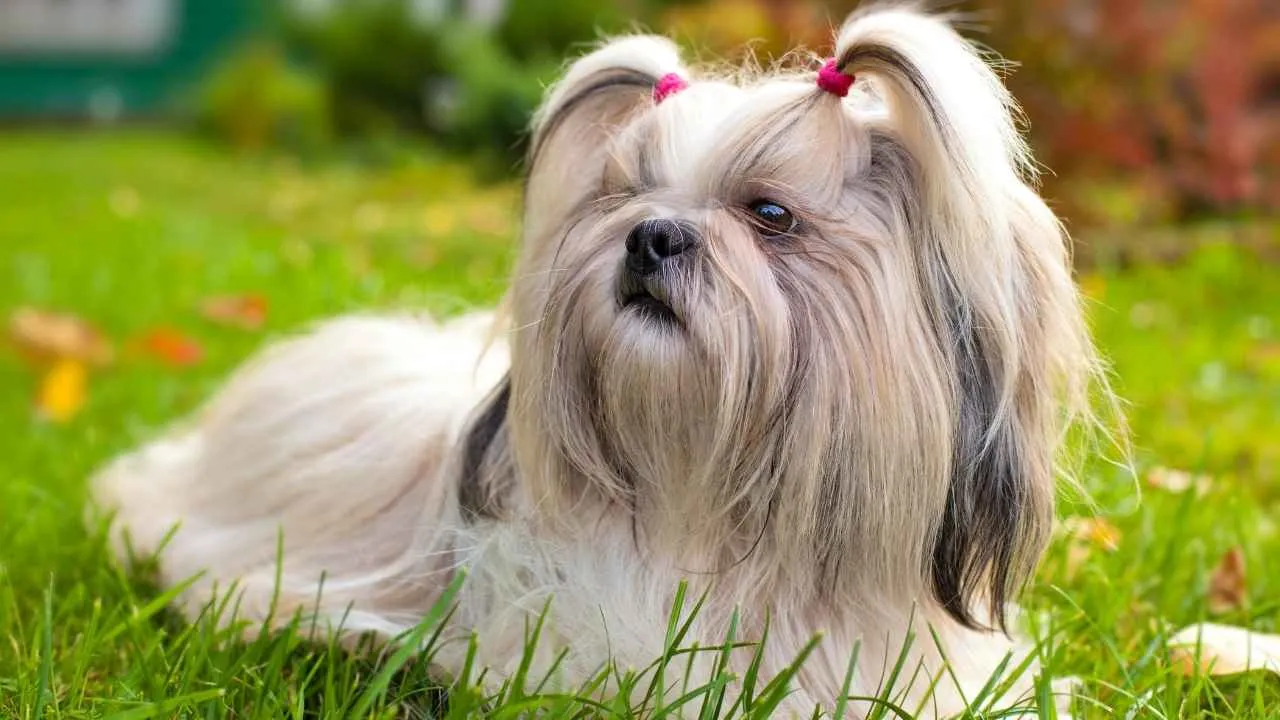
Unlike many breeds, the Shih Tzu was never bred to herd, hunt, or guard.
Their only job is companionship.
For centuries, these Asian dogs lived in Chinese palaces as cherished pets. Even today, you can tell they were bred to be loved. They are sweet, affectionate, and they absolutely live for nap time.
Some people call the Shih Tzu the “chrysanthemum dog” because the hair on its face grows out in every direction, like flower petals. Pretty cute, right?
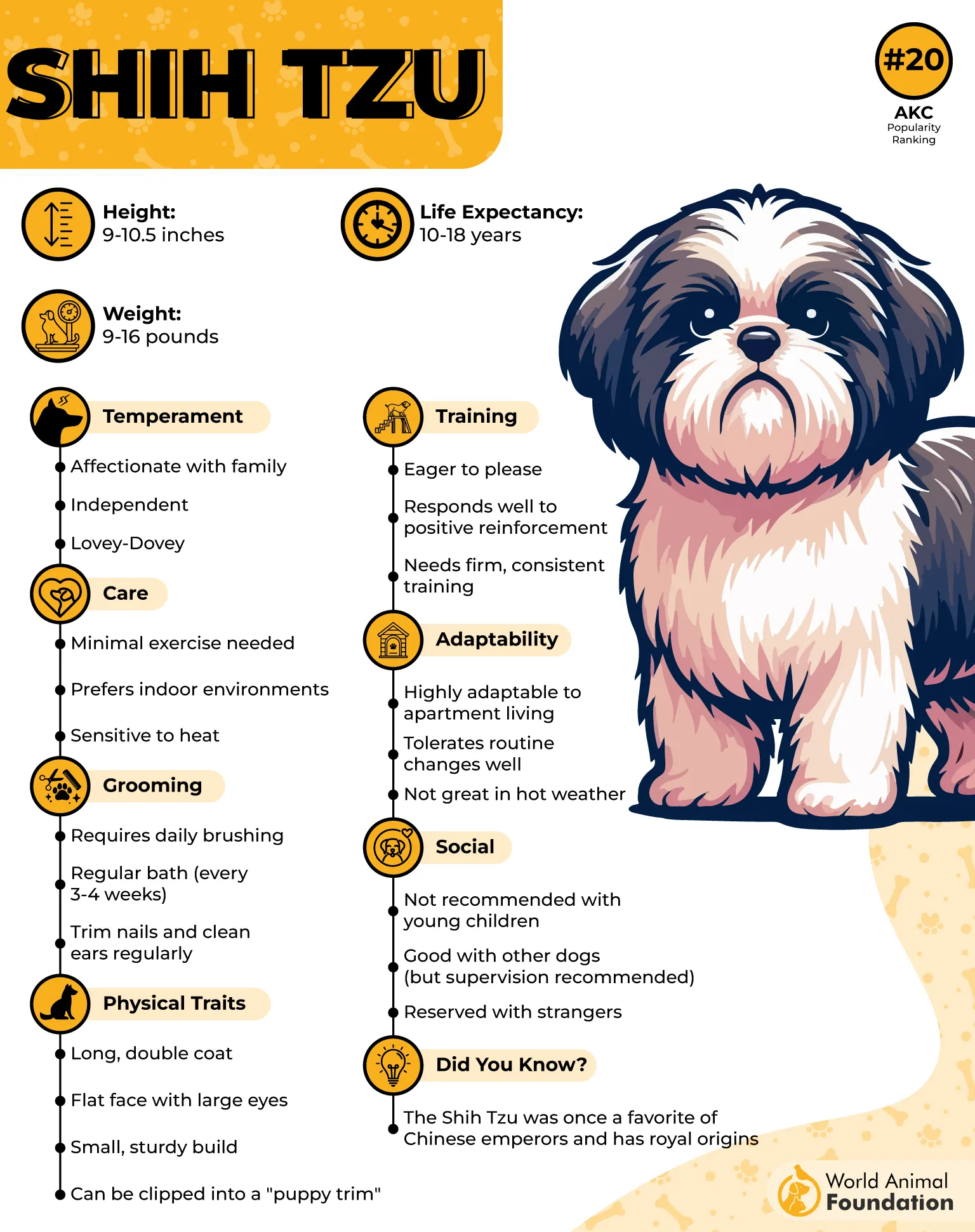
Shih Tzus usually weigh between 9 and 16 pounds and have a calm, friendly temperament. They are good with kids (gentle ones), other pets, and pretty much any lifestyle.
Moderate exercise and short daily walks keep them happy.
Watch for their flat faces. That short snout makes them sensitive to heat, so skip long walks on hot summer days.
Their grooming needs are real, too. Daily brushing keeps tangles away, and a little topknot hair out of those big eyes.
7. Papillon
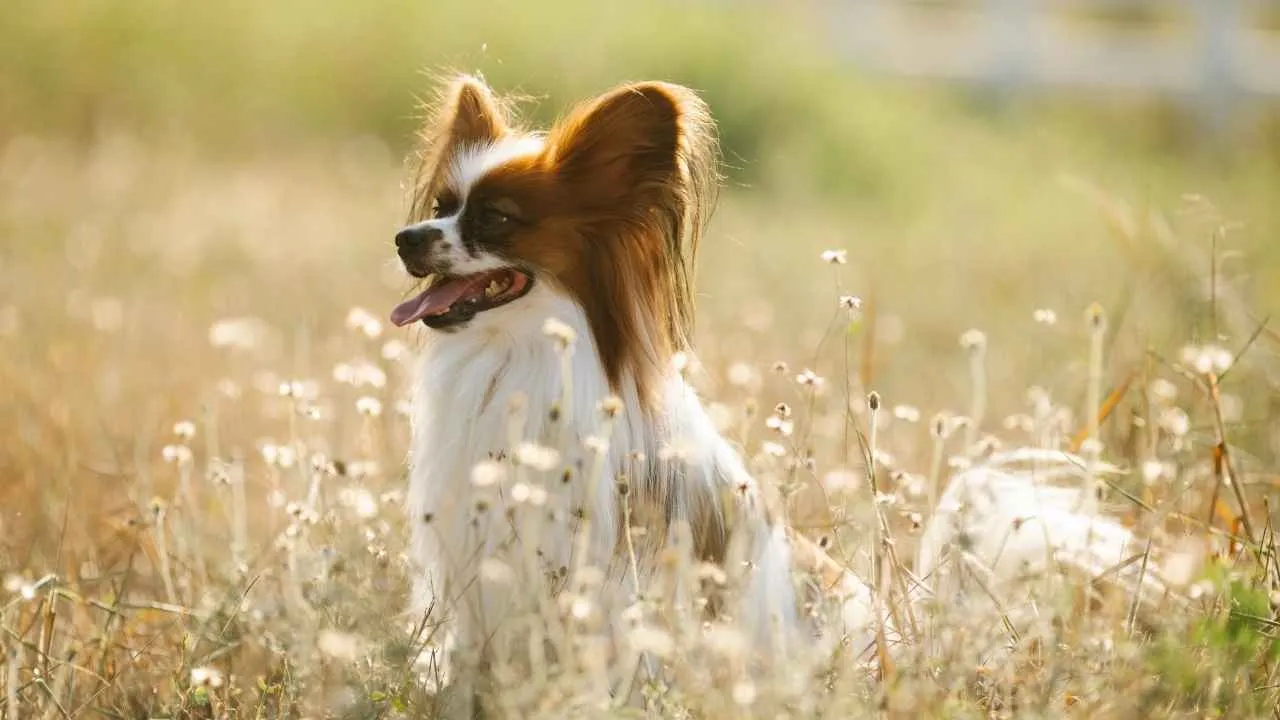
Last but not least, the Papillon.
You will know one when you see it. Those big, fringed ears stick up like butterfly wings, which is exactly where the name comes from. “Papillon” means butterfly in French.
A fun fact!! According to Orvis, there’s also a drop-eared version called the Phalene, which means “moth.” Same breed, different ears.
And in 1999, a Papillon took Best in Show at the Westminster Kennel Club Dog Show. Not bad for a dog that weighs less than a gallon of milk.
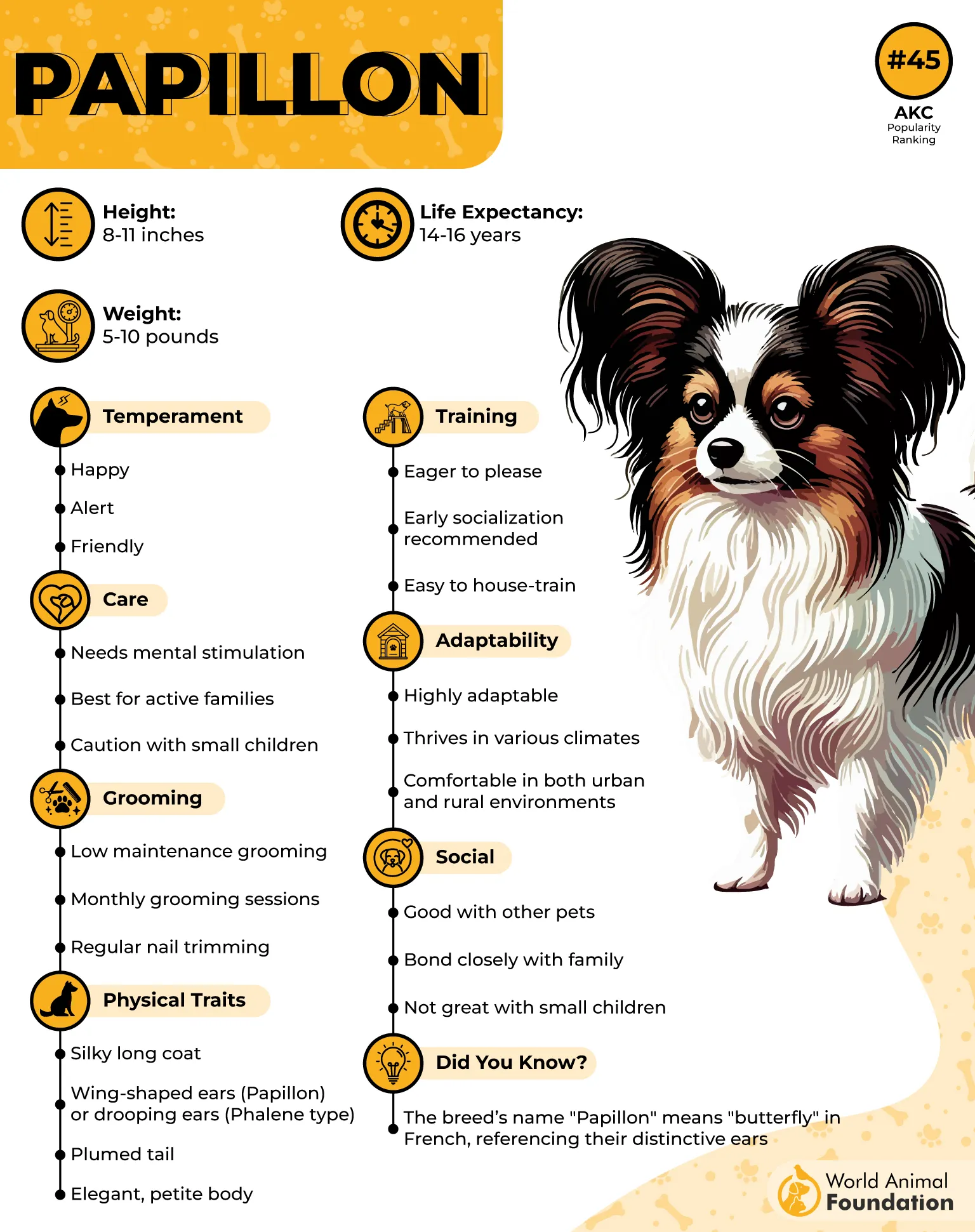
Papillons are smart, quick, and full of energy. They are agility rock stars and learn tricks fast. If you want a small dog that can keep up on a light hike, this might be your match.
Their single silky coat is surprisingly low maintenance. A good brushing a couple of times a week usually does the trick.
They are friendly and playful, but they need attention and mental stimulation. A bored Papillon is a mischievous Papillon.
Conclusion
Toy breeds aren’t just cute. Okay, they are VERY cute.
But they are also smart, loyal, funny, and packed with personality.
The real key is compatibility.
Do you want a lap warmer or a little athlete? Can you handle daily brushing? Will your puppy be home alone a lot?
Answer those honestly before you fall for the first adaptable face you see. Because the right toy dog breed won’t just live in your house. It will run it. And you will love every minute.
