




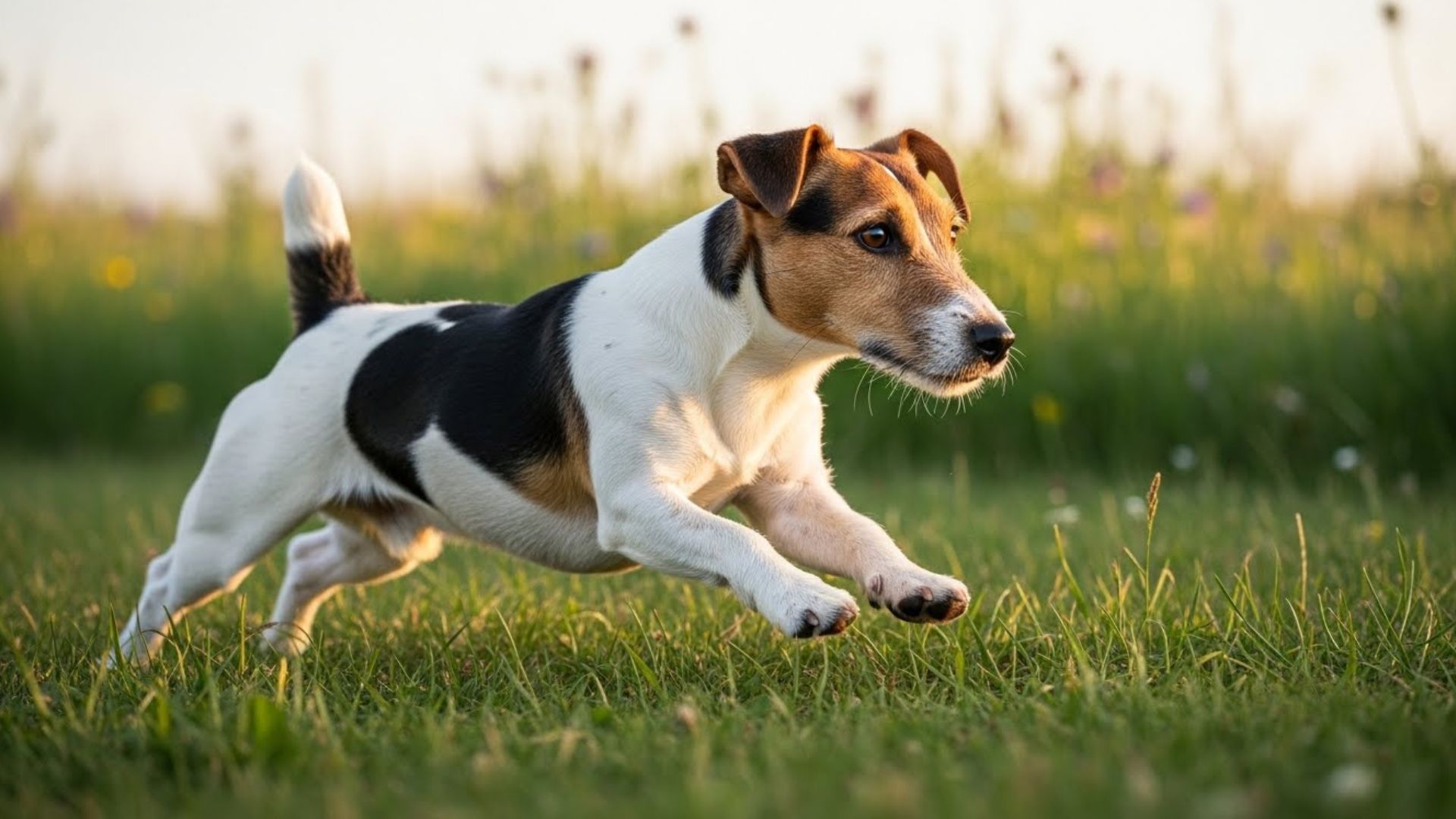
Dogs come in every size and style—and so do their instincts. While some pups are content to nap at your feet, others light up the second something small darts by, flipping instantly into chase mode.
This intensity is often tied to what a breed was originally developed to do, but a dog’s environment and daily experiences can strengthen those urges, too.
Living with a high prey drive dog isn’t “bad”—it just means you need a plan. These dogs can become laser-focused on squirrels, cats, or fast-moving toys, and once they lock in, it can be tough to get their attention back.
Without guidance, that drive can turn walks into a tug-of-war and backyard time into nonstop patrol duty.
The good news: prey drive can’t be erased, but it can absolutely be redirected. With consistent training, the right outlets, and clear boundaries, these energetic hunters can grow into obedient, reliable companions.
In this guide, we’ll break down what prey drive looks like, why it happens, and how to manage it in everyday life.
Amazing Dog Breeds with a High Prey Drive
1. Russell Terrier
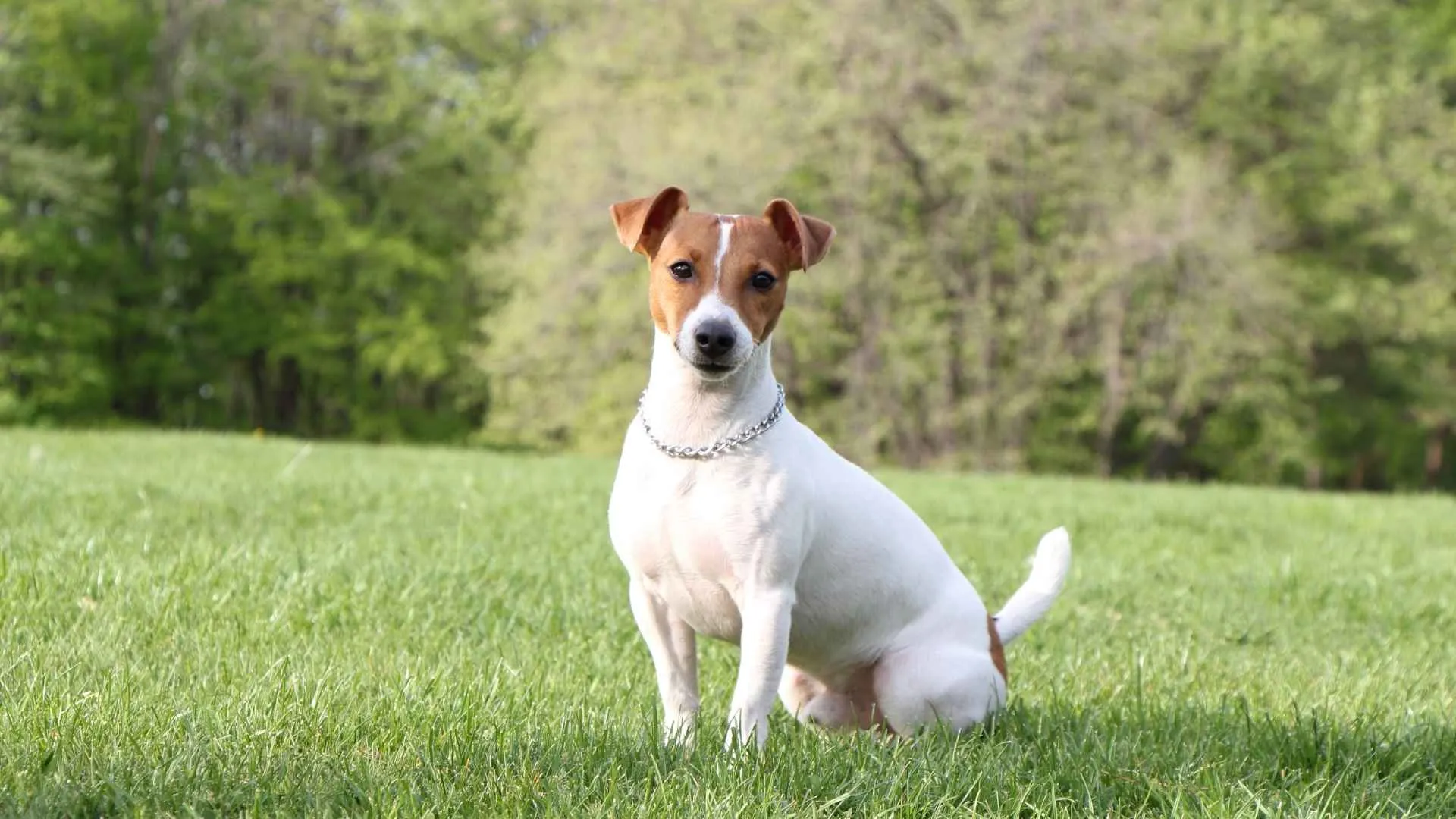
Also called the Jack Russell Terrier, the jaunty Russell Terrier is a compact, mostly white Terrier with tan and/or black markings, V-shaped ears, and bright, almond-shaped eyes.
The AKC states that the Russell Terrier is cheerful, energetic, curious, and friendly, and that it was developed by England’s “Sporting Parson” to work in foxhunts.
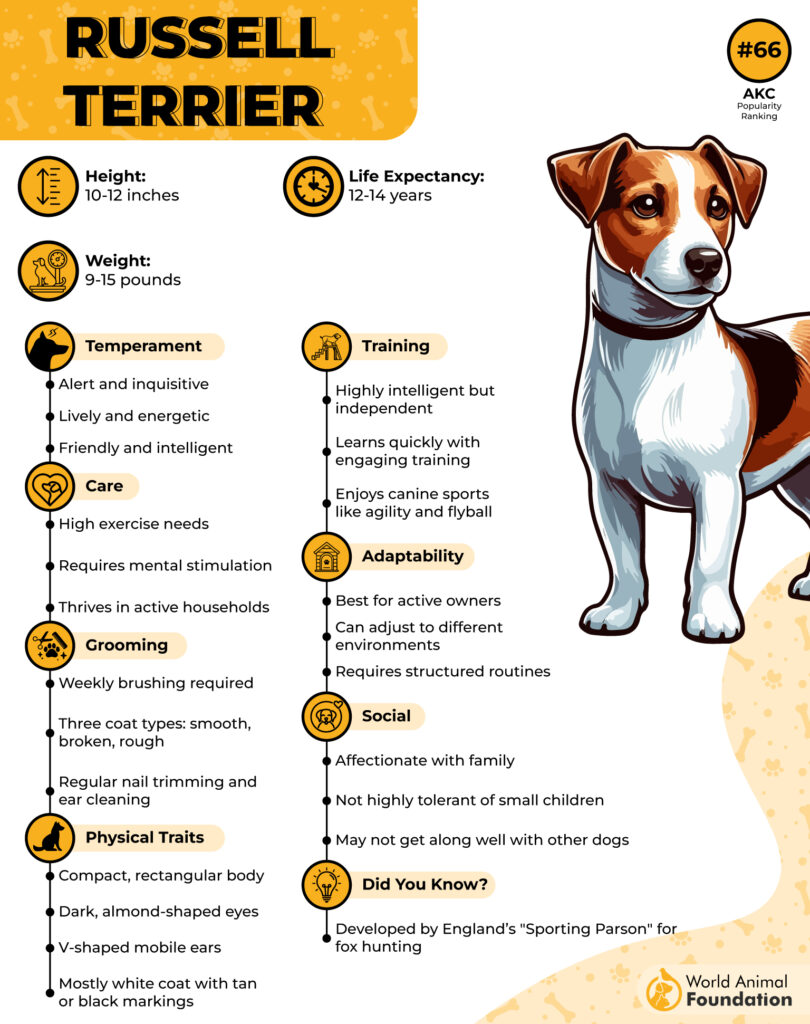
Don’t let the plush-toy look fool you—this is one of those high-prey-drive dogs that’s always “on.” Originally developed for foxhunts, Russells are tireless, inquisitive, and quick to chase anything that moves, which is why they shine with games like fetch and other fast-paced outlets.
Because that drive can spill over into barking and chasing, early training and consistent rules matter. They often do fine with other dogs and may live with cats, but many will still try to pursue and vocalize at them—tiny pets like rabbits or guinea pigs are a no-go.
Give them safe chew toys (especially for a puppy), daily attention, and structured play so their energy stays fun, not frantic.
Fact: The Russell Terrier joined the American Kennel Club’s Terrier Group in 2012.
2. Rhodesian Ridgeback
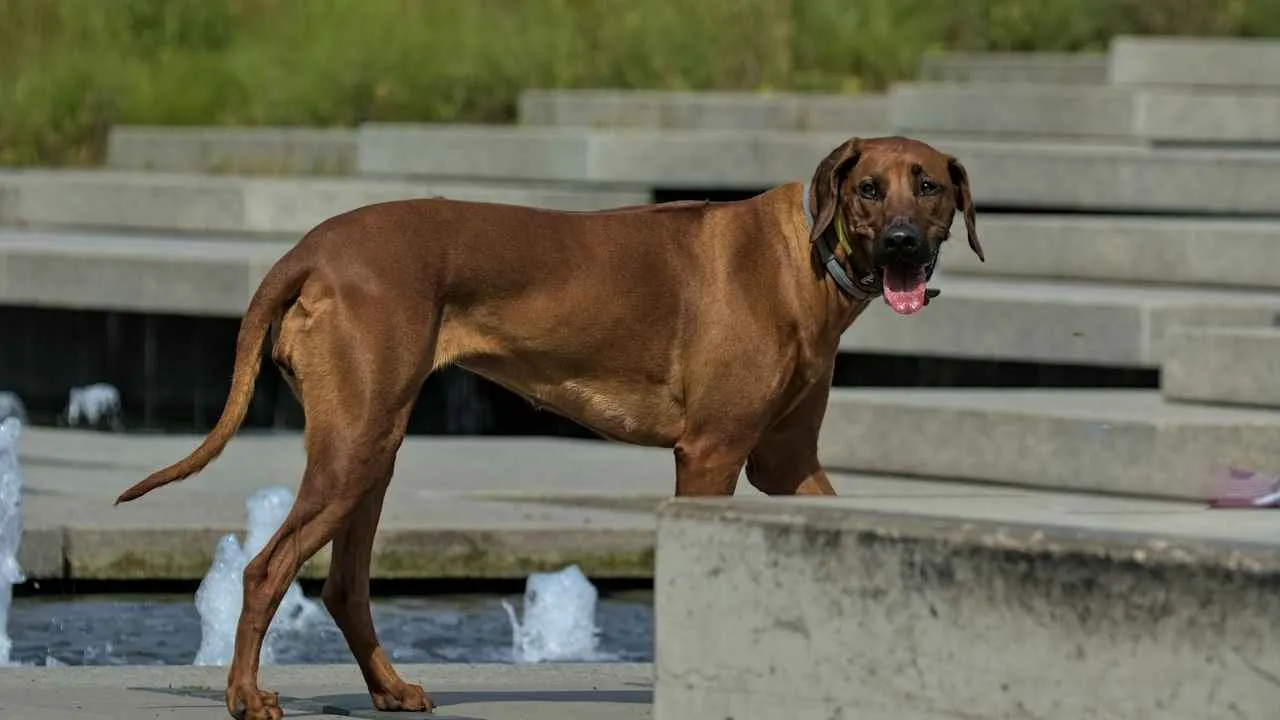
Also called the African Lion Hound or simply the Ridgeback, the Rhodesian Ridgeback is instantly recognized by the ridge of backward-growing hair along its spine.
Originally developed in Rhodesia (now Zimbabwe), this powerful hunter was bred to track tough quarry while still being a devoted home companion.
PetMD states that the Rhodesian Ridgeback is a gentle, intelligent breed that can be a terrific family companion when matched with the right household.
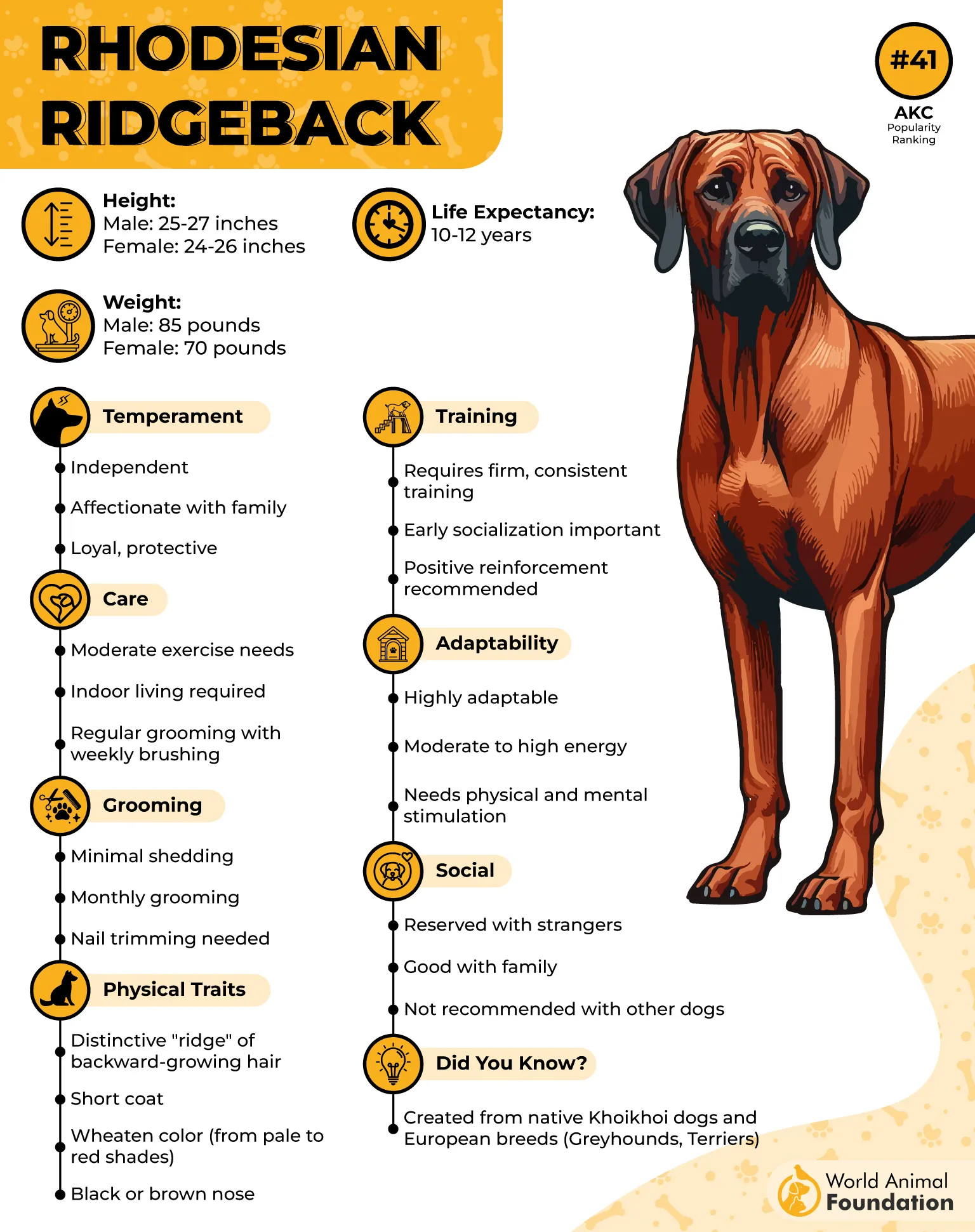
Because they were bred to pursue wild animals, Ridgebacks often have a strong prey drive—meaning they’re wired to chase movement, not “be mean.” That’s why prey drive vs. aggression matters: a fast-moving squirrel can trigger instinct, while true aggression is a separate behavioral issue that needs different handling.
These athletic, alert, strong-willed dogs do best with firm, fair training and early socialization, starting in puppyhood. Plan on at least 45 minutes of daily activity through exercise and play to keep their minds and bodies settled.
3. Weimaraner
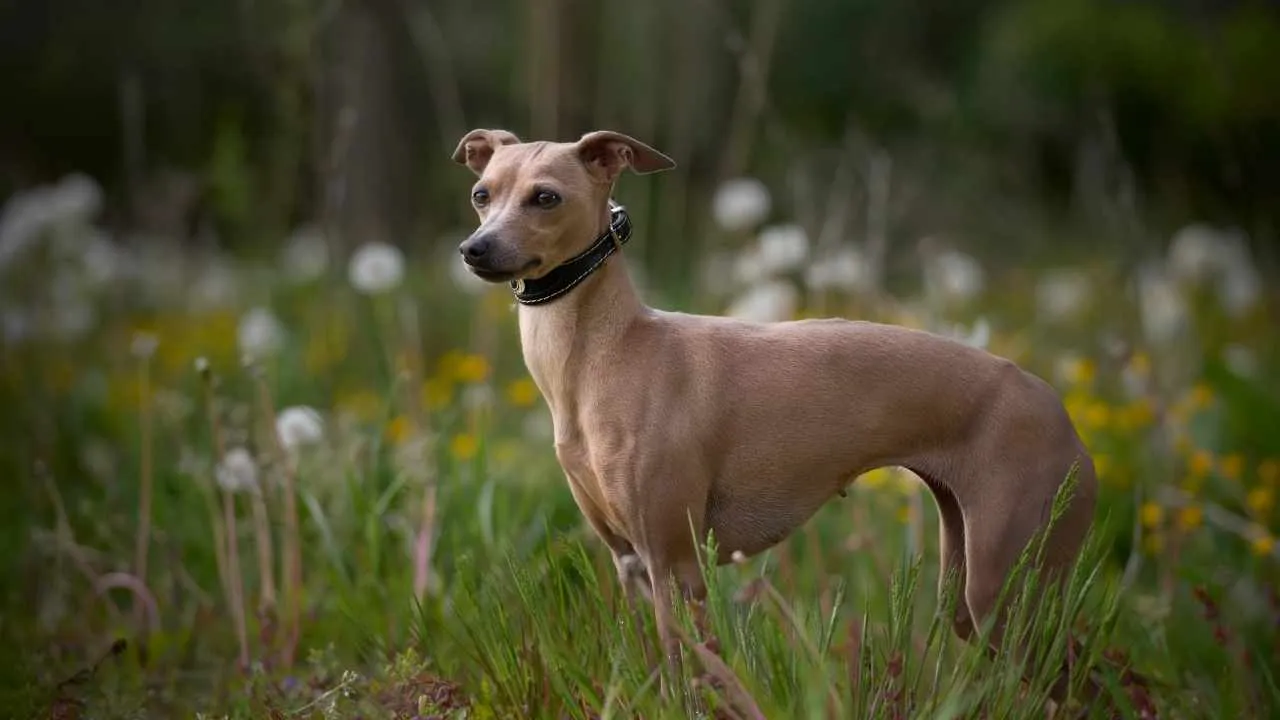
The Weimaraner—often called the “Gray Ghost”—is a sleek, silvery-blue hunting dog with striking bluish eyes and long, velvety ears. WebMD states that Weimaraners are friendly dogs and can be a great fit for family life.
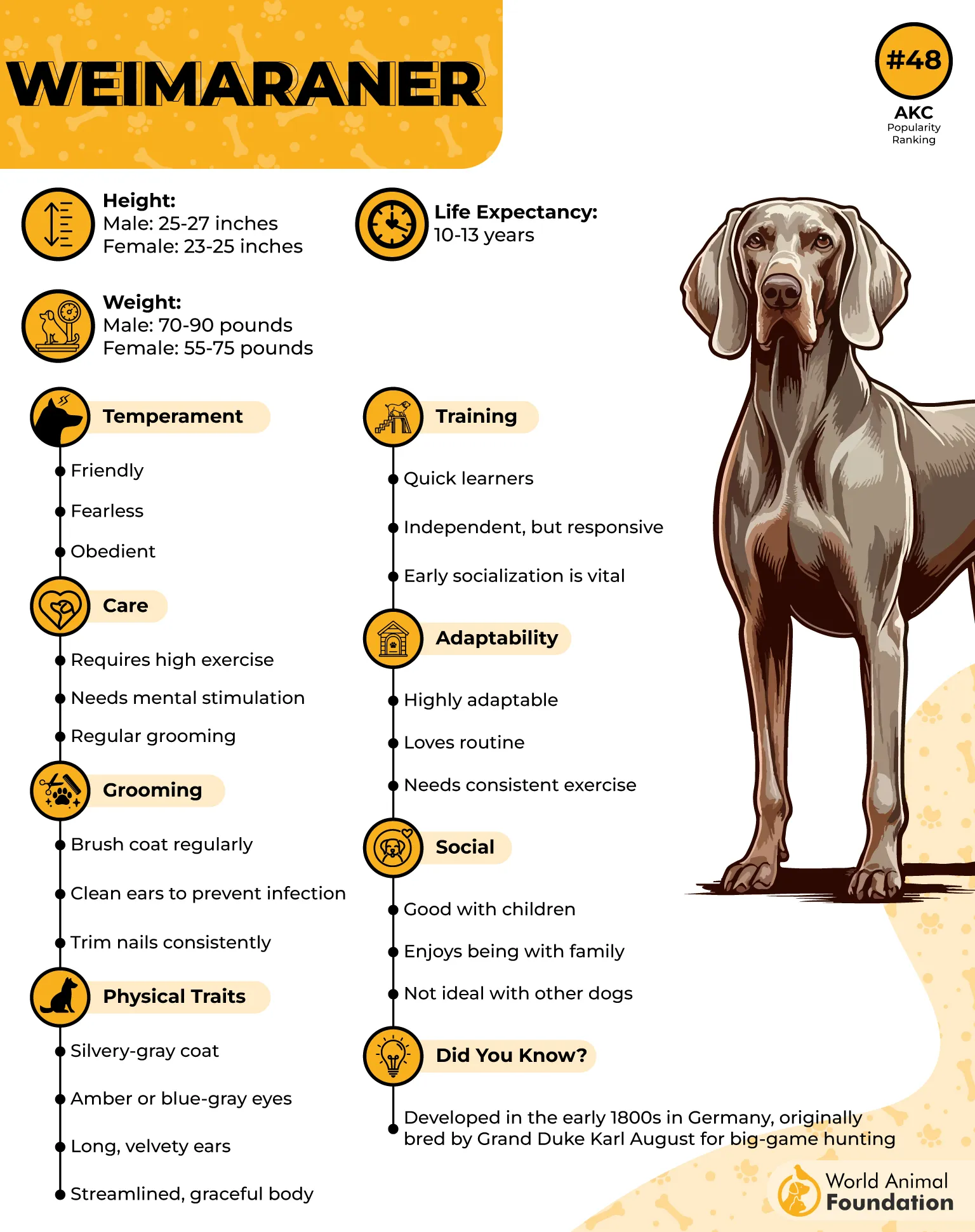
As they were developed to chase big game, Weimaraners can have a powerful prey drive that shows up in everyday life. Quick-moving “targets” like squirrels, rabbits, or even a fast toy can flip their switch from calm to pursuit in seconds, especially on walks or in open yards.
They’re happiest indoors with their people, but boredom is a major trigger. Without enough mental stimulation and daily exercise, a Weimaraner may channel that pent-up energy into restlessness and even excessive barking, making the chase instinct harder to manage.
Fact: Weimaraners were created for hunting bears and other big game, and they can also excel as pointers and retrievers.
4. Greyhound
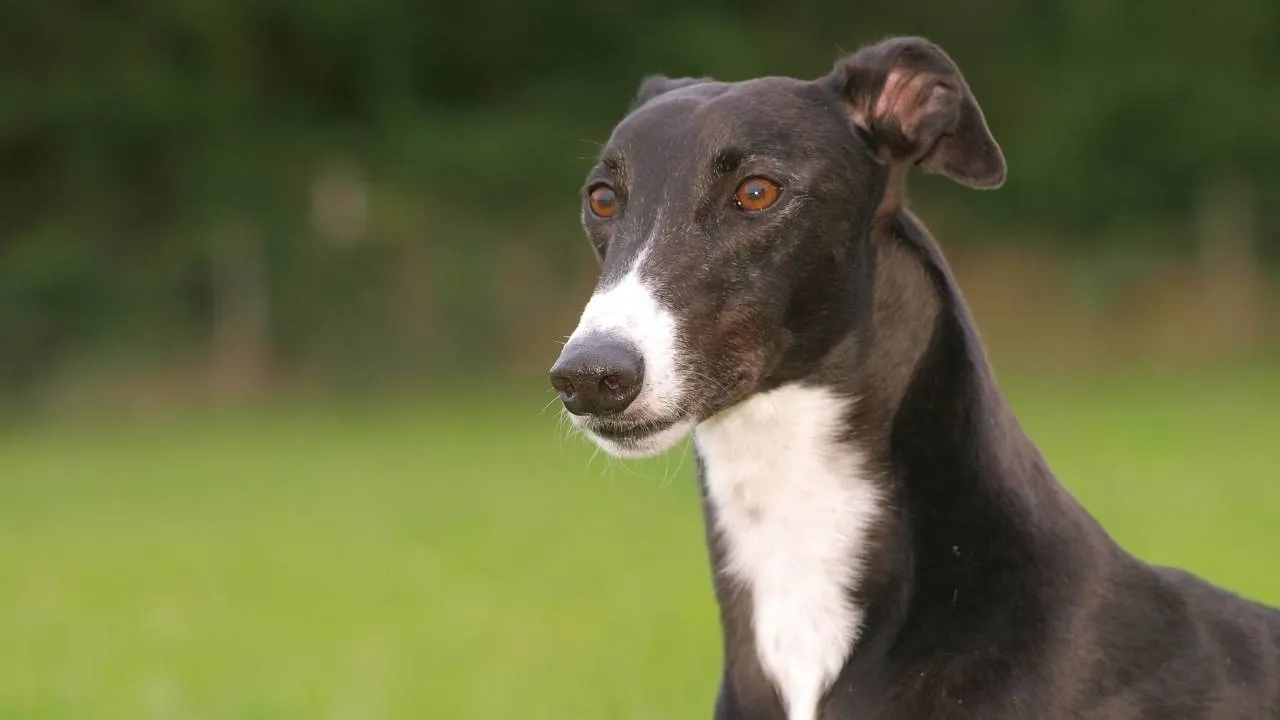
The Greyhound—often called the “champion sprinter of dogdom”—is a sleek sighthound built for speed, with an aerodynamic head, deep chest, tucked waist, and that signature “inverted S” silhouette.
Originally bred for fast pursuit in hunting and later valued in racing, this graceful dog blends athletic power with a gentle, sweet-tempered personality.
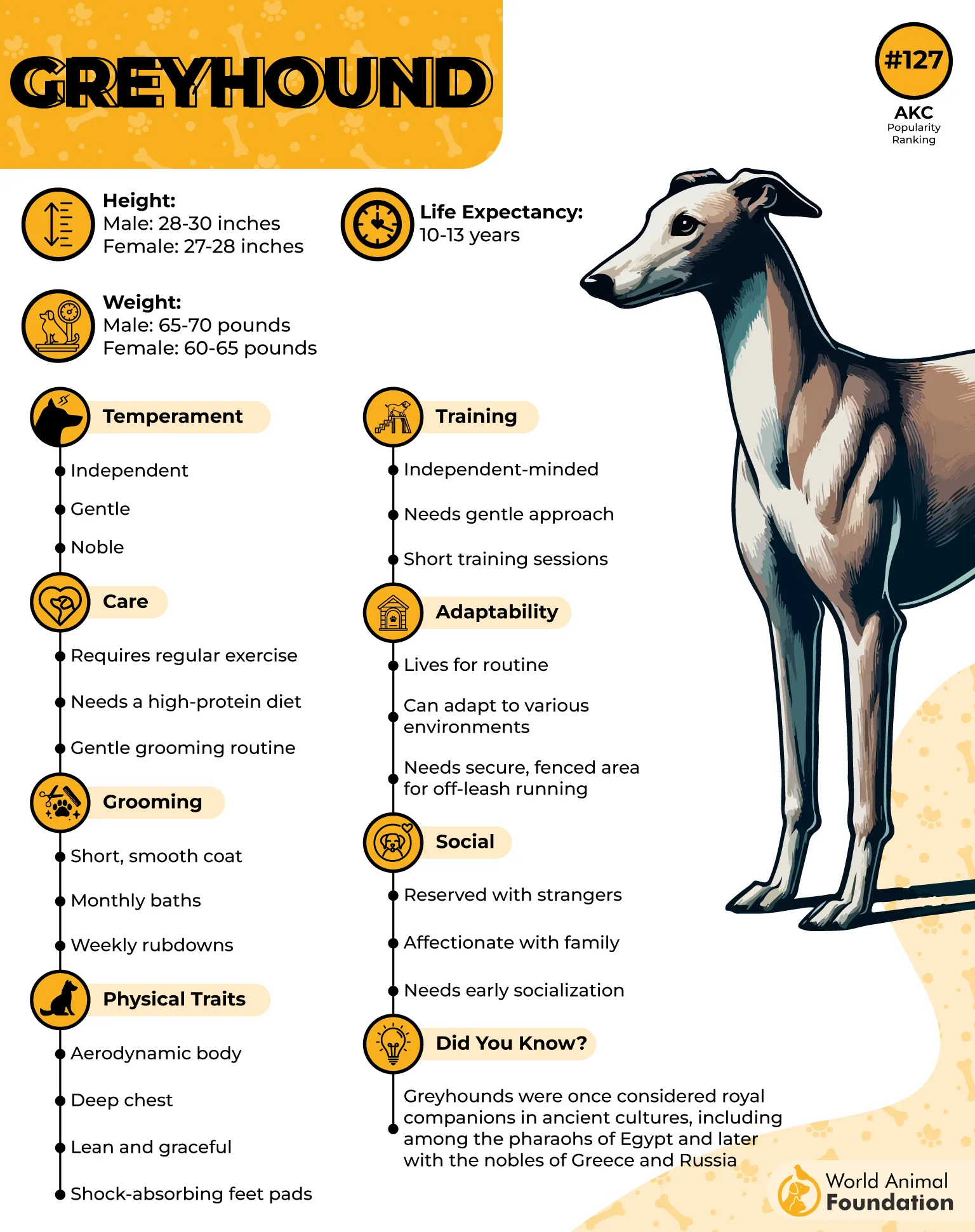
Because Greyhounds chase with their eyes, their high prey drive can switch on instantly when they spot a cat or other small animal. Management matters: start early socialization, use a secure leash, and practice calm focus around movement so your dog learns that “see it” doesn’t always mean “chase it.”
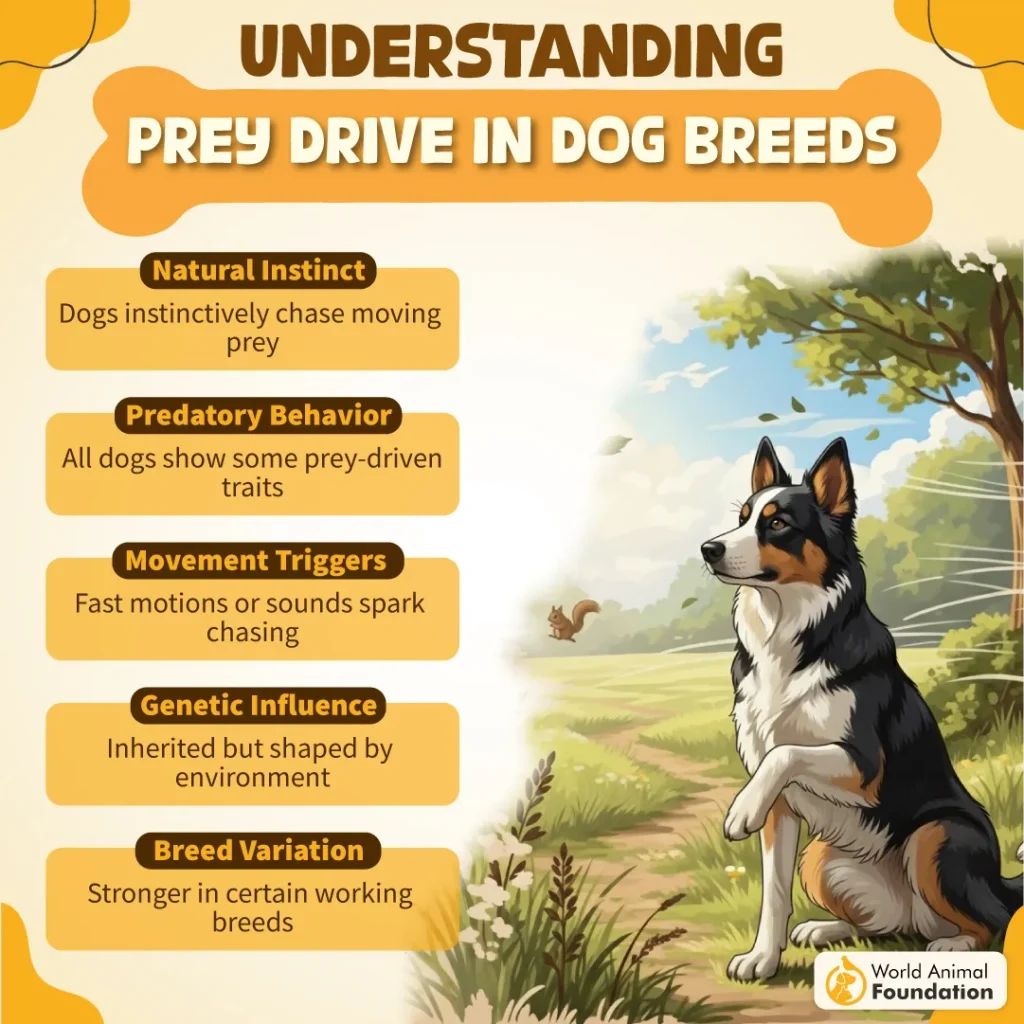
For training tips that work best for high-drive dogs, lean on positive reinforcement—treats, praise, and rewards—since Greyhounds can be sensitive to harsh corrections. Keep sessions short, varied, and fun, prioritizing recall and leash manners to help them resist distractions.
5. Border Collie
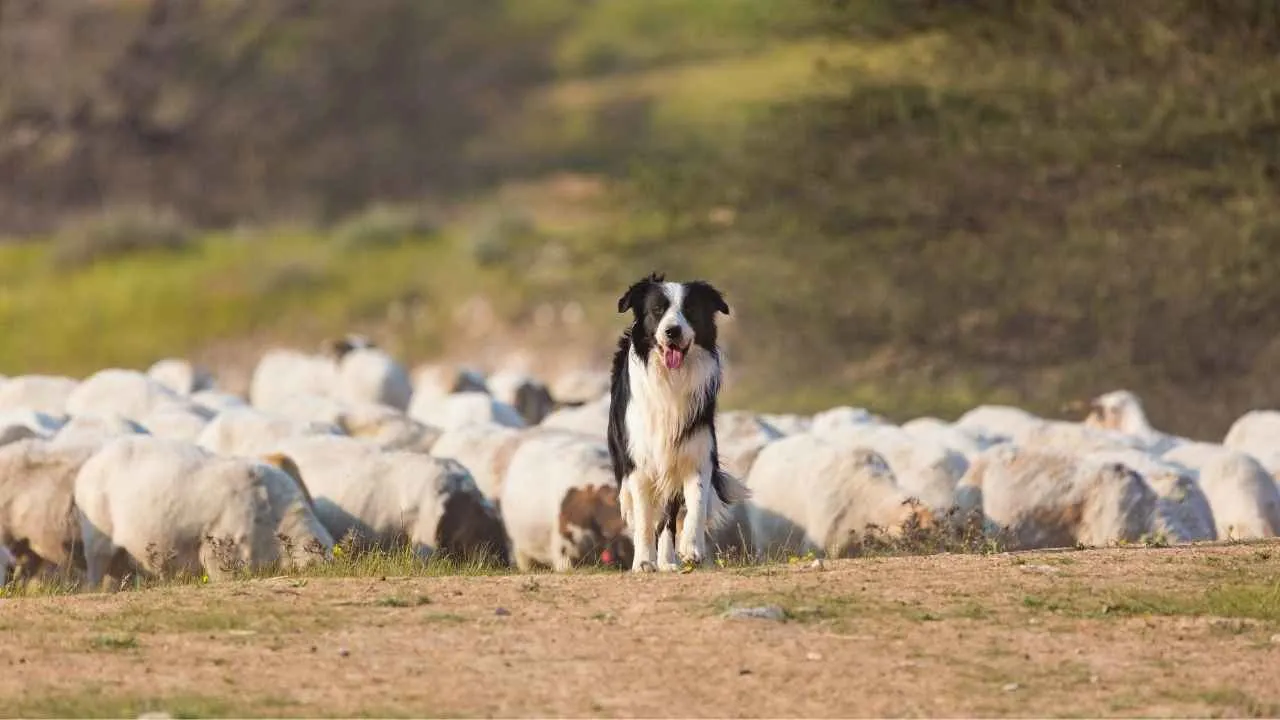
The Border Collie—often simply called the Border—is a medium-sized sheepdog famous for its intense “herding eye,” plus rough or smooth coats in many colors.
That focus can look like a high prey drive at home. Borders may try to herd children or small animals, circling and staring to control movement instead of chasing to catch. A secure leash routine and calm “leave it” training help keep those instincts from turning into household chaos.
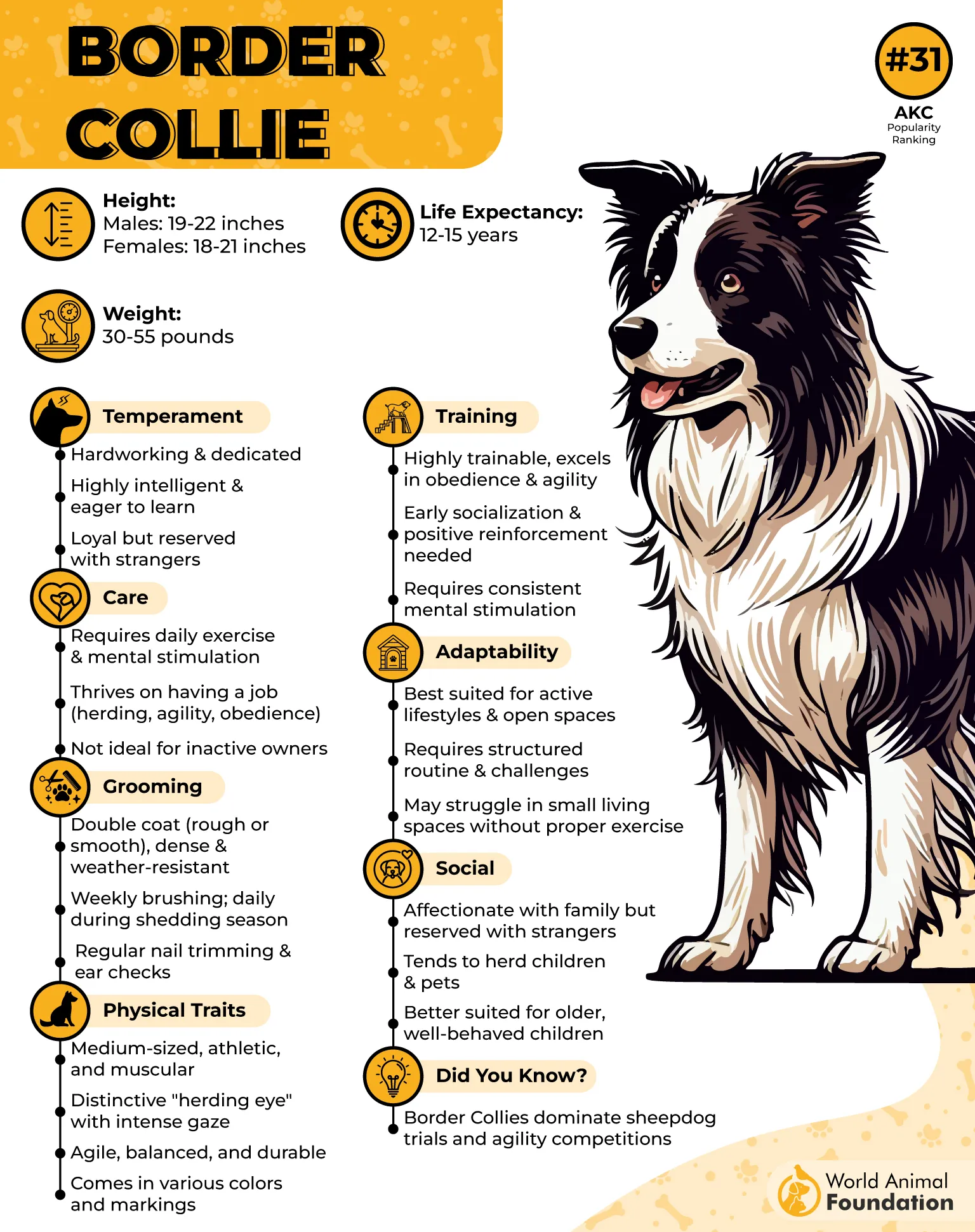
Because boredom fuels problem behaviors, management is about safe setups: sturdy fencing, structured play, and outlets like running with other dogs. Many thrive when given about 2 hours of activity daily, and fast-paced games like flyball keep both brain and body busy.
For a safety-minded home, think boundaries plus enrichment—then you get a dog that can switch from intense worker to cuddle buddy after the “job” is done.
6. Basenji
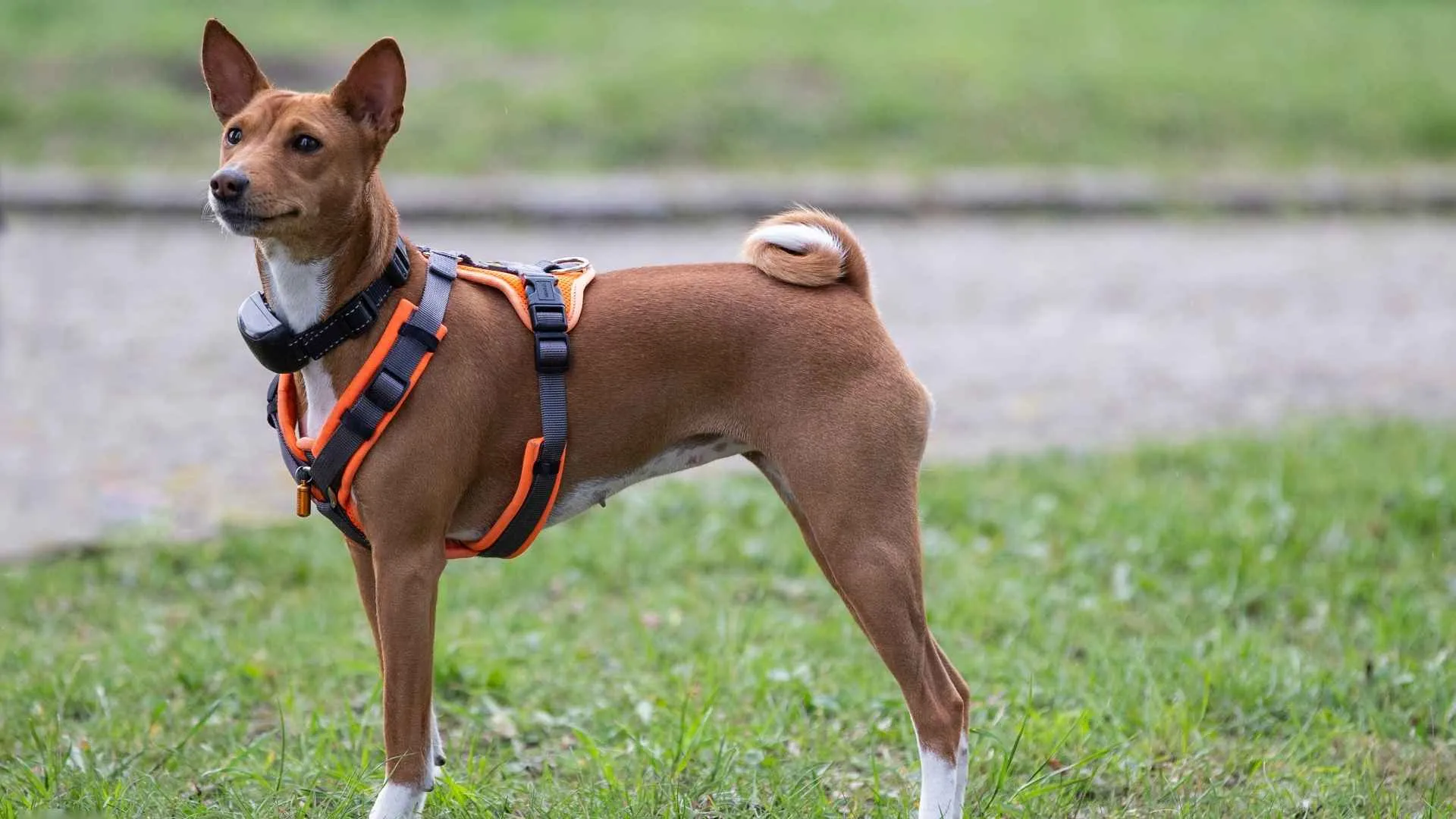
The Basenji—often called Africa’s “barkless dog”—is a compact, sweet-faced hunter known for a short, glossy coat, a tightly curled tail, and an expressive, wrinkled forehead.
This ancient African breed has been depicted in cave paintings dating back to 6000 BCE, and that long history shows in its sharp instincts and alert, self-possessed vibe.
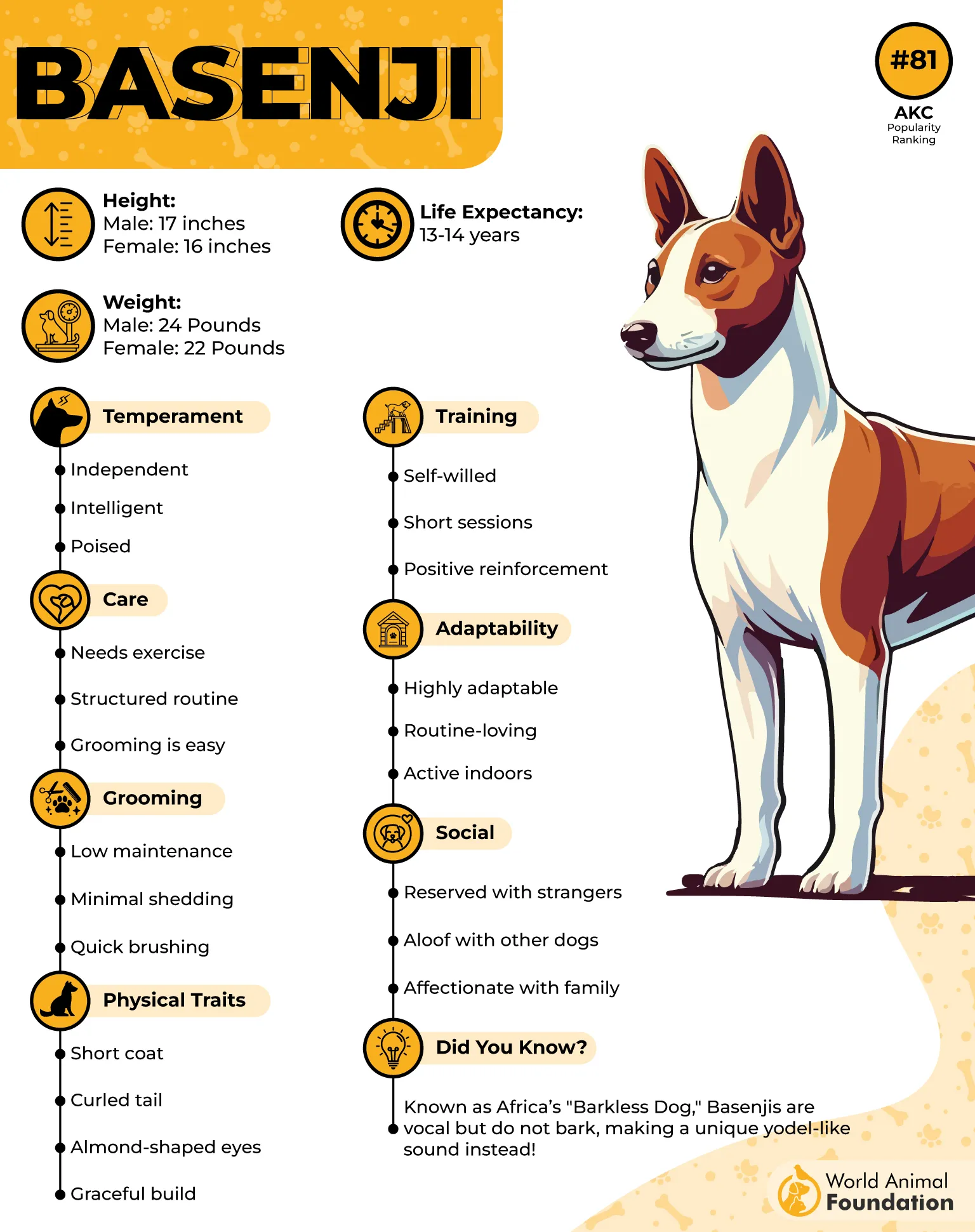
As a high-prey-drive dog, the Basenji is famously scent-sensitive and quick to take off if something interesting crosses its path. That’s why leash habits and dependable recall practice matter so much, especially on walks where tempting smells can override your voice.
Because they’re intelligent (and easily bored), Basenjis do best with daily outlets: play sessions, long walks, and brain games that keep them busy. Without enough stimulation, they can turn independent—and selective—about obedience.
7. Irish Setter
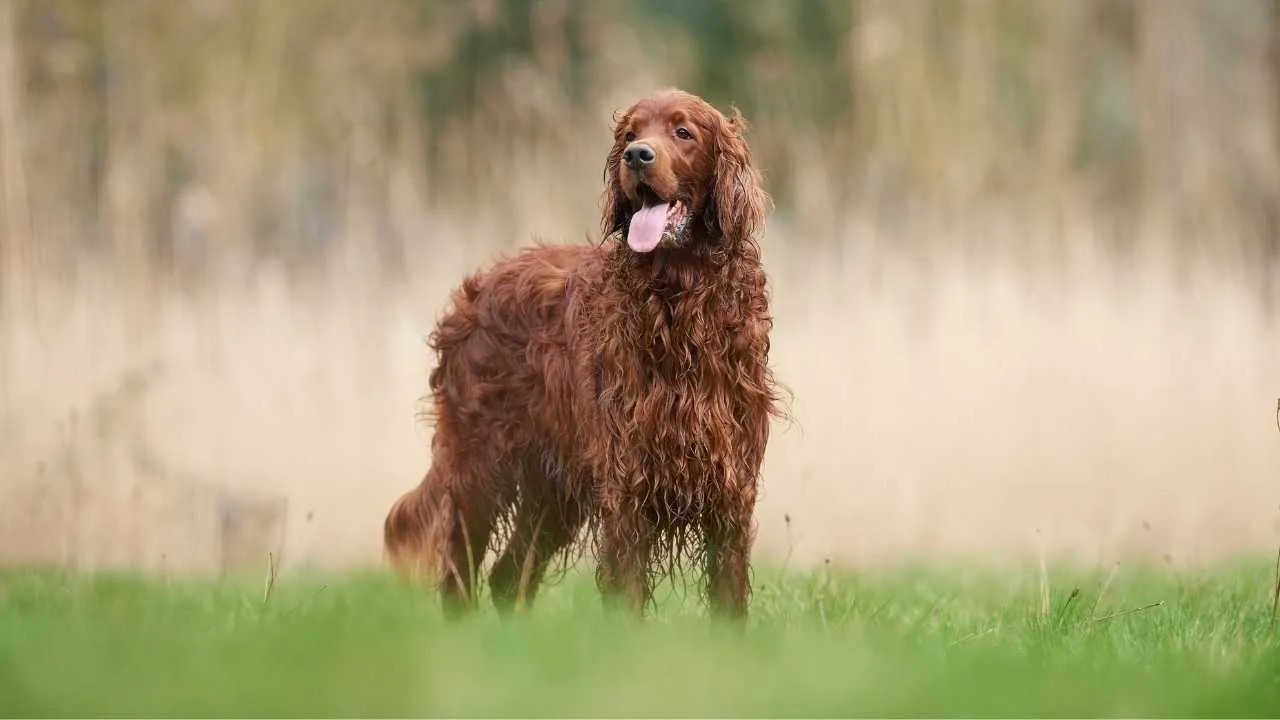
The Irish Setter—also called the Irish Red Setter—is a high-spirited gundog famous for its flowing mahogany-to-chestnut coat, long legs, and elegant, athletic build. Bred to work in the field, this sporting dog brings beauty and bold energy into everyday life.
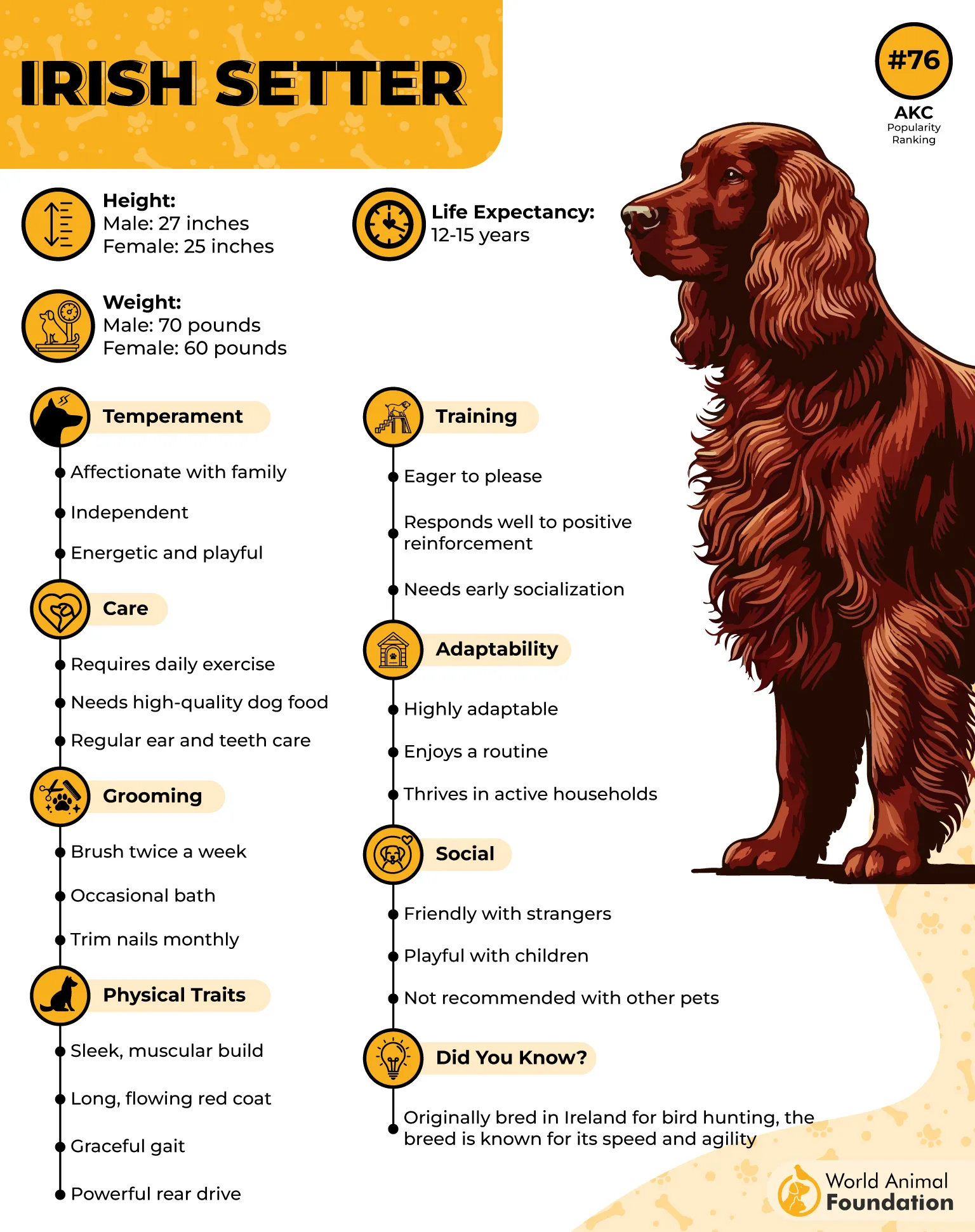
That purpose-bred background is exactly why prey drive can show up: Irish Setters love movement and often can’t resist a good chase. The upside is that many are satisfied by structured games like fetch, scent work, and birdy training drills that let instinct “turn on” in a controlled way.
Because they’re intelligent, loyal, and eager to please, they respond best to consistent, reward-based training—especially recall, leash skills, and impulse control. Early socialization matters too; when raised alongside cats or smaller animals, they often learn to treat them like family, not prey.
For a busy, happy Setter, plan plenty of exercise and space to move, plus moderate grooming to keep that coat looking its best.
Conclusion
A dog’s prey drive is part of your dog’s instinct, and in certain breeds, it can feel like an intense prey drive that kicks in the second they spot prey or catch the scent of small prey.
That doesn’t make a “bad dog”—it means dog training, structure, and safe outlets matter, especially around other animals, small pets, and other pets.
To manage prey drive, set clear rules, use reward-based practice, and plan for securely fenced areas on walks and playtime. Many dogs with high prey drive can live peacefully with other pets, but most dogs need supervision and routines—especially smaller dogs.
Skip shock collars; instead, focus on skills that protect everyone in the home, from working dogs and gun dogs to guard dogs like German Shepherds, because every dog loves having a job.
