




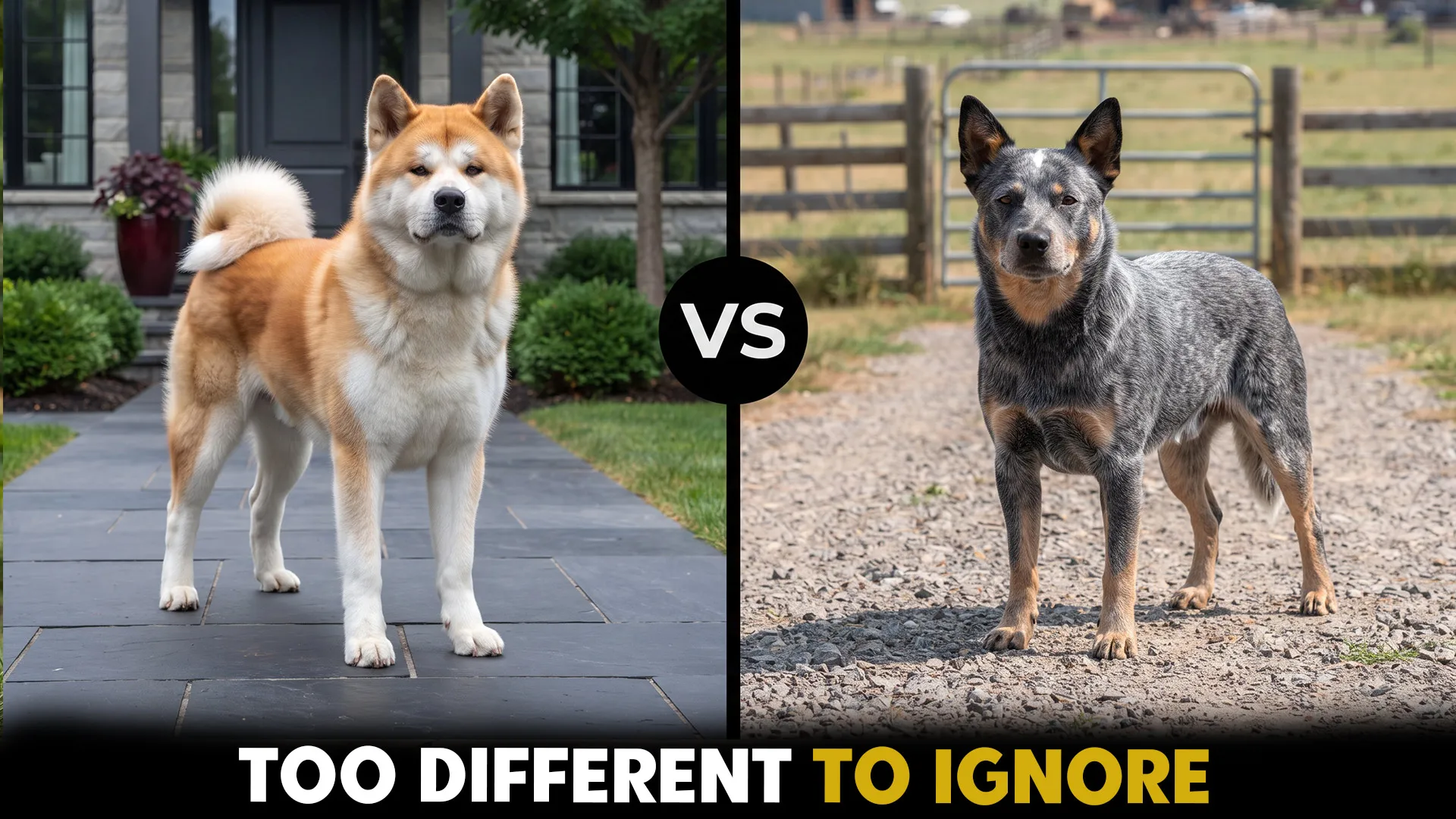
The Akita and Australian Cattle Dog are both intelligent, loyal, and hardworking breeds, but they were developed for very different purposes. The Akita originated in Japan as a hunting and guarding dog, while the Australian Cattle Dog was developed in Australia to help manage cattle across challenging terrain.
The Australian Cattle Dog, meanwhile, is smaller but highly energetic, agile, alert, and eager to work. It is also commonly known as the Blue Heeler, Red Heeler, or Queensland Heeler. The breed is particularly well suited to active households that can provide plenty of physical and mental stimulation.
Choosing between these two recognized breeds depends on more than appearance or size. Potential owners should consider their differences in health, lifespan, training, grooming, energy level, and natural guarding instincts.
Akita vs. Australian Cattle Dog: Key Differences
Comparing these traits closely can help determine whether the more imposing and independent Akita or the energetic and hardworking Australian Cattle Dog is the better fit for a particular lifestyle.
Size and Strength
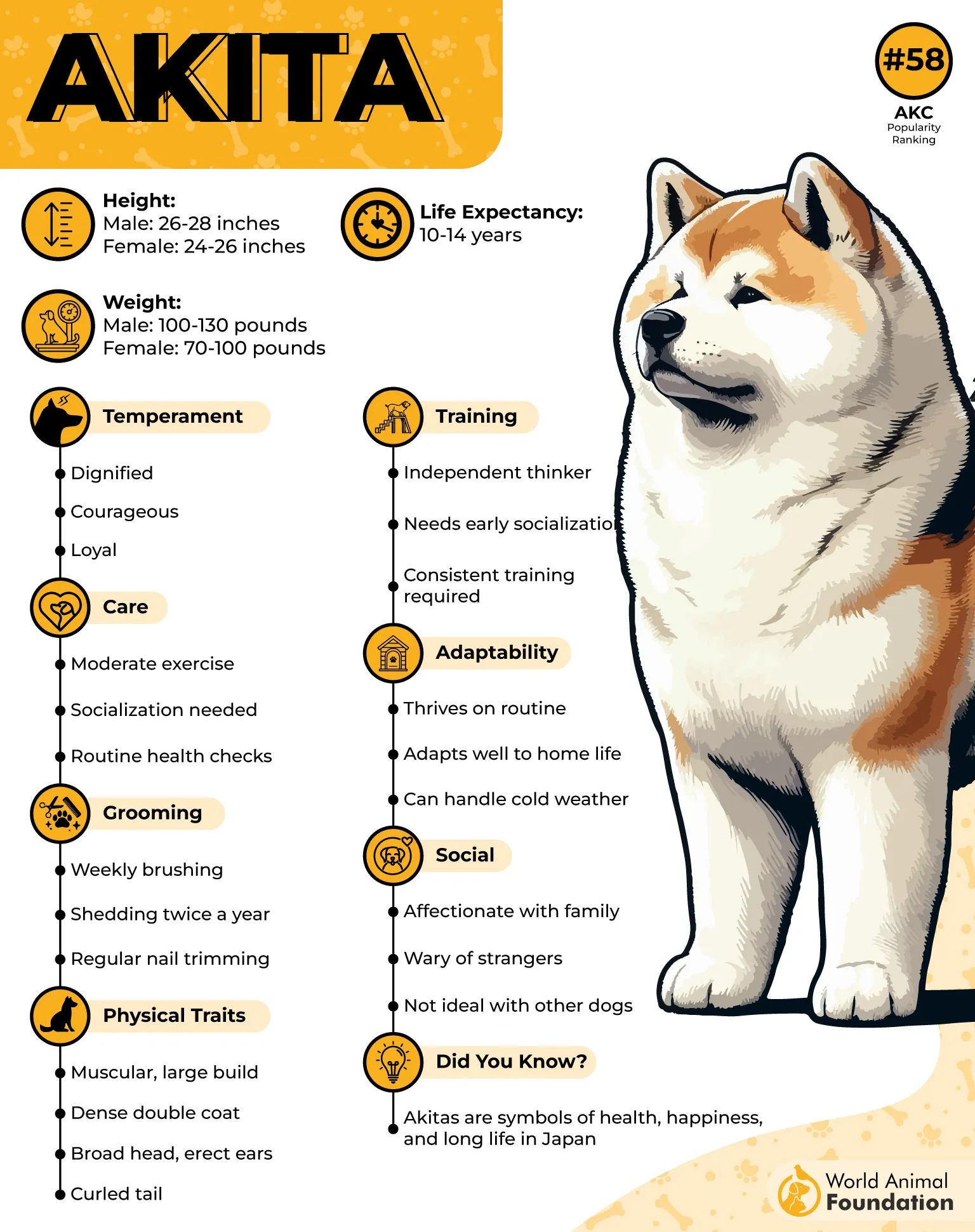
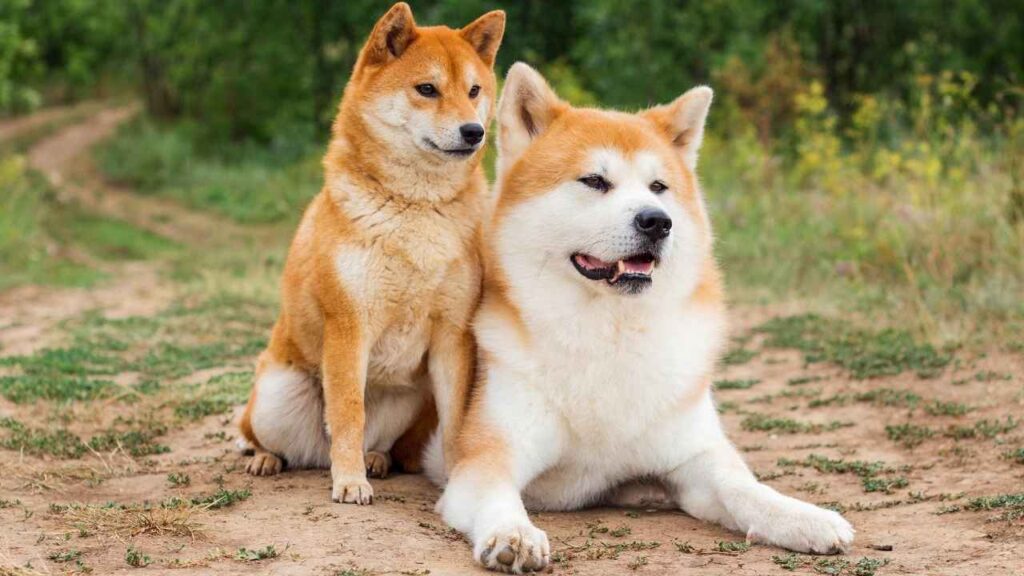
The Akita is a large and powerful Japanese breed with a substantial bone structure and muscular build. Male Akitas stand 26–28 inches tall and weigh 100–130 pounds, while females stand 24–26 inches and weigh 70–100 pounds; the breed has a strong, imposing appearance that reflects its historical roles as a guarding and hunting dog.
The Australian Cattle Dog is a medium-sized, compact working breed built for endurance and agility rather than sheer size. Its muscular body, strong legs, and athletic structure allow it to move quickly and efficiently while working livestock. Although smaller than the Akita, it is remarkably sturdy for its size.
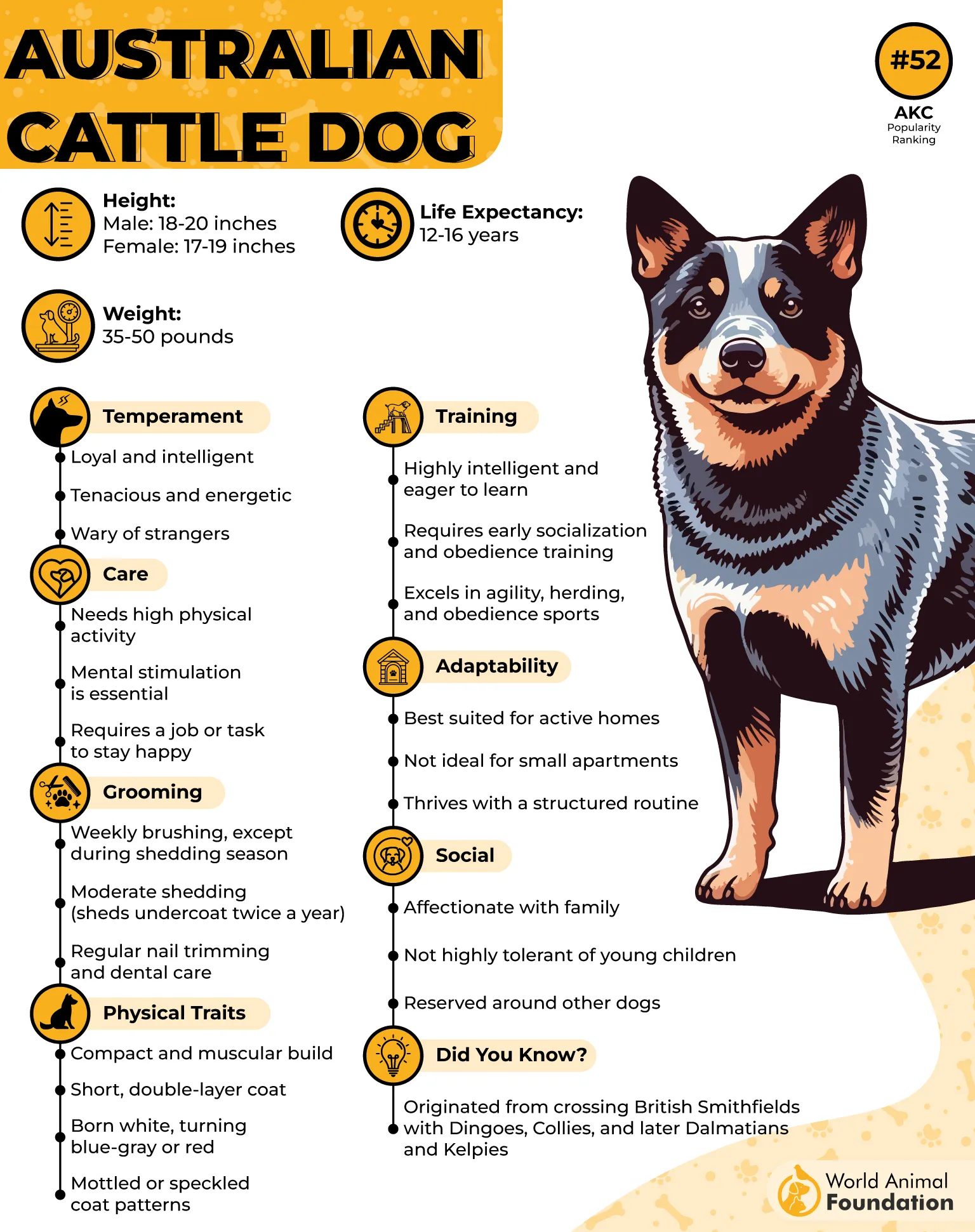
The Akita’s imposing stature can serve as a natural deterrent, whereas the Australian Cattle Dog’s compact athleticism is better suited to active work that requires speed and maneuverability.
Temperament and Personality
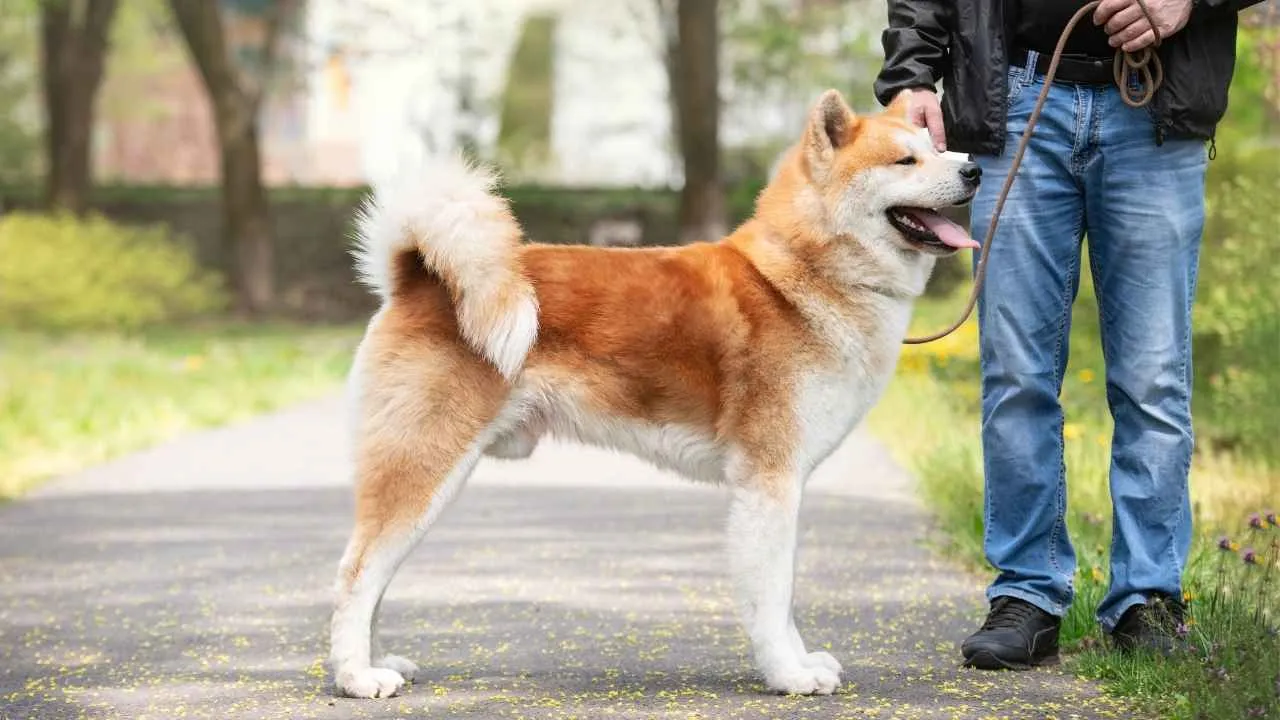
The Akita is known for its dignified, loyal, and often reserved temperament. It can form exceptionally strong bonds with its family while remaining cautious around unfamiliar people.
Akitas are generally independent dogs that appreciate respectful handling and consistent boundaries, making early socialization especially important.
The Australian Cattle Dog is typically alert, highly intelligent, energetic, and highly devoted to its family. It was bred to work closely with livestock and therefore tends to be responsive, observant, and eager to have a purpose. This intelligent dog can be reserved with strangers but often develops a strong attachment to its owners.
Both breeds are loyal and protective, but the Akita generally has a more independent and reserved personality, while the Australian Cattle Dog tends to be more energetic and task-oriented.
Health and Lifespan
The Akita has a life expectancy of 10–14 years. Like many large breeds, it can be susceptible to several inherited and age-related health conditions.
According to the AKC and Akita Club of America, important health concerns include hip dysplasia, thyroid disorders such as hypothyroidism, eye disorders, progressive retinal atrophy (PRA), autoimmune conditions, and gastric dilatation-volvulus (GDV), commonly called bloat. Bloat is a potentially life-threatening emergency in which the stomach can become distended and twisted and requires immediate veterinary treatment.
The Australian Cattle Dog generally has a longer life expectancy of 12–16 years.
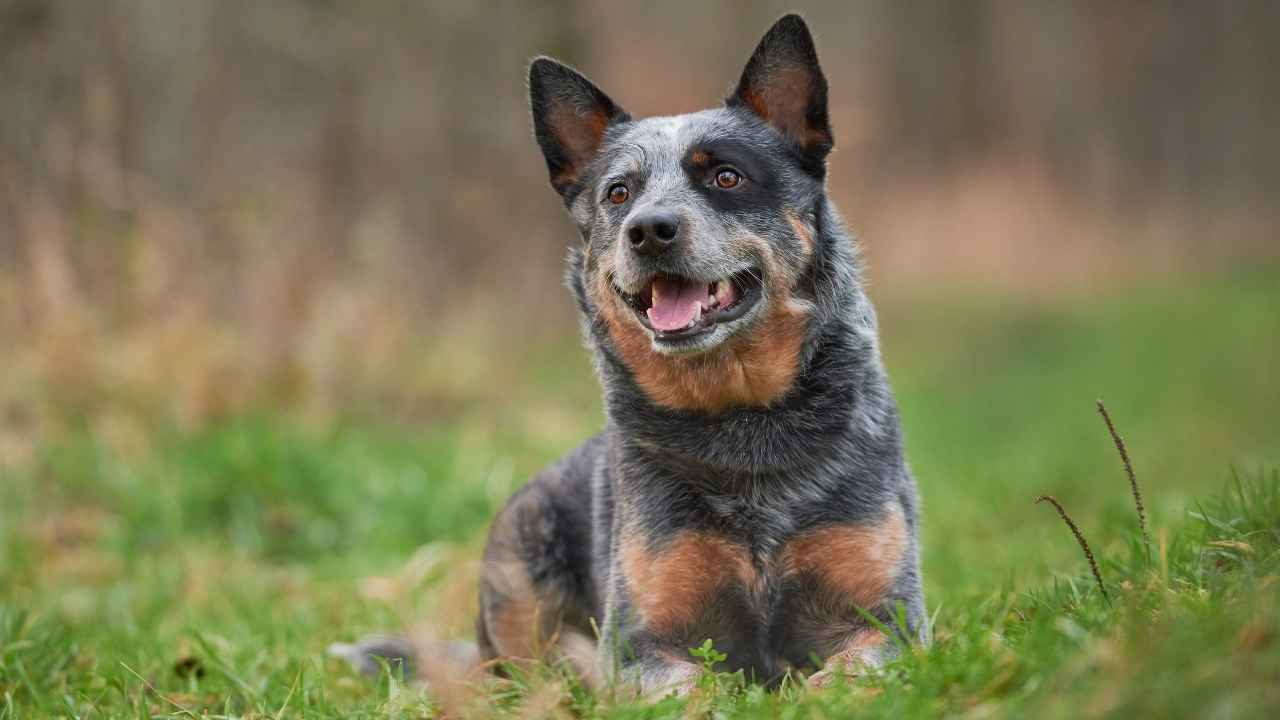
Despite being a muscular breed, Australian Cattle Dogs can be affected by hip dysplasia, elbow dysplasia, congenital deafness, progressive retinal atrophy (PRA), and primary lens luxation (PLL).
Responsible breeding, routine veterinary examinations, appropriate nutrition, and maintaining a healthy weight can help support either breed’s long-term well-being. Prospective owners should ask breeders about appropriate health testing for the parents.
Energy, Exercise & Training Needs
The Akita and Australian Cattle Dog have noticeably different activity requirements.
The Akita is generally a moderately active breed rather than a nonstop working dog. Most Akitas can have their exercise needs met with moderate daily activity such as a brisk walk or jog, along with opportunities for energetic play. Consistent training should begin in puppyhood, with particular attention to socialization because of their natural guarding instincts and strong prey drive.
The Australian Cattle Dog has considerably higher exercise and training requirements. Australian Cattle Dogs benefit from activities such as obedience, agility, herding, running, and other mentally stimulating exercises. Early socialization and obedience training are particularly important because an intelligent, loyal dog that lacks sufficient stimulation can become bored and destructive.
Overall, the Australian Cattle Dog requires more daily physical activity and mental engagement than the Akita. The Akita may suit an owner who prefers structured walks, play, and calmer routines, while the Australian Cattle Dog is better suited to someone who enjoys frequent training, outdoor activities, dog sports, or demanding physical exercise.
Grooming Needs
The Akita has a dense double coat that provides insulation against cold weather but requires regular brushing. Shedding can become particularly heavy during seasonal coat changes, when more frequent grooming may be necessary, as per PetMD. Routine nail care, dental care, and general maintenance are also important.
The Australian Cattle Dog has a smooth, short double coat that is relatively easy to maintain. It is recommended to brush weekly and bathe occasionally, although the breed sheds its undercoat more heavily twice a year and may need brushing every few days during those periods.
The Australian Cattle Dog therefore has simpler overall grooming requirements. Owners seeking a lower-maintenance coat will generally find the Australian Cattle Dog easier to manage, while Akita owners should be prepared for considerably more loose fur during seasonal shedding.
Natural Guard Instincts
The Akita has strong natural guarding tendencies and can be naturally protective of its family and territory, as per the AKC.
Its reserved attitude toward unfamiliar people and imposing physical presence can make it an effective deterrent. However, these instincts require responsible socialization and training so that protective behavior remains appropriate and manageable.
The Australian Cattle Dog is naturally alert and observant, with a strong instinct to monitor its surroundings. Although its primary historical role was herding rather than dedicated guarding, its loyalty, confidence, and attentiveness can make it a useful watchdog. It may quickly notice unfamiliar activity and alert its family.
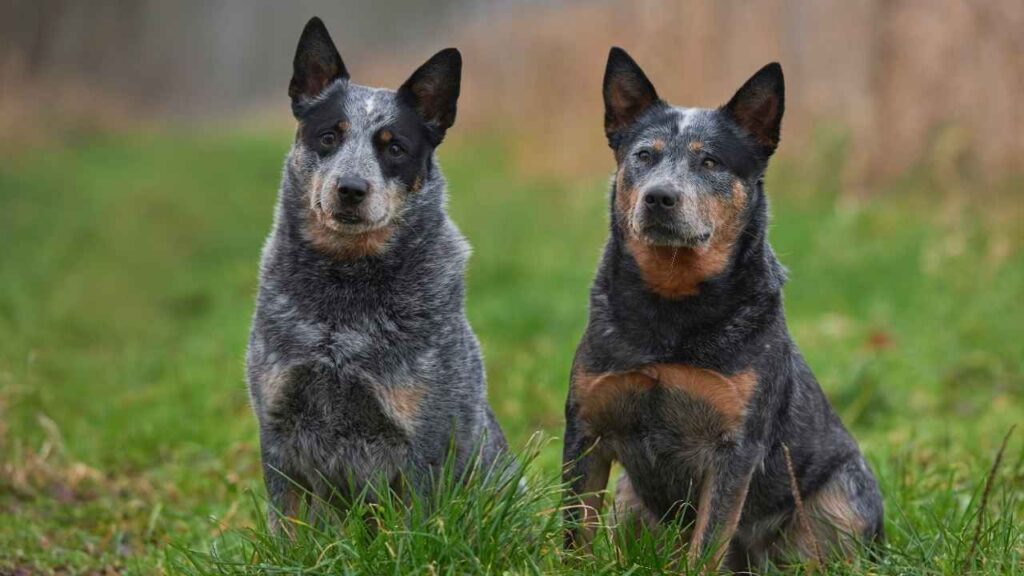
The Akita generally has stronger natural guarding instincts and a more imposing protective presence. The Australian Cattle Dog is also vigilant and protective of its household but is more strongly shaped by its herding group.
For owners specifically seeking a naturally protective breed, the Akita has the advantage, while the Australian Cattle Dog offers a highly alert and active watchdog temperament.
Conclusion
The Akita and Australian Cattle Dog are both intelligent, loyal, and capable breeds, but their differences are significant. The Akita is larger, more powerful, more independent, and naturally more protective, while the Australian Cattle Dog is smaller, more energetic, highly agile, and strongly driven to work and stay mentally engaged.
For owners who prefer a substantial and dignified companion with strong guarding instincts, the Akita may be the better match. Those looking for an energetic working partner that enjoys training, outdoor activities, and constant mental challenges may find the Australian Cattle Dog more suitable.
Ultimately, neither breed is universally better than the other. The right choice depends on lifestyle, experience, available exercise, training commitment, and expectations for companionship and protection. Understanding their differences in size, temperament, health, grooming, energy, and guarding instincts can help owners choose the breed that best fits their home.
