




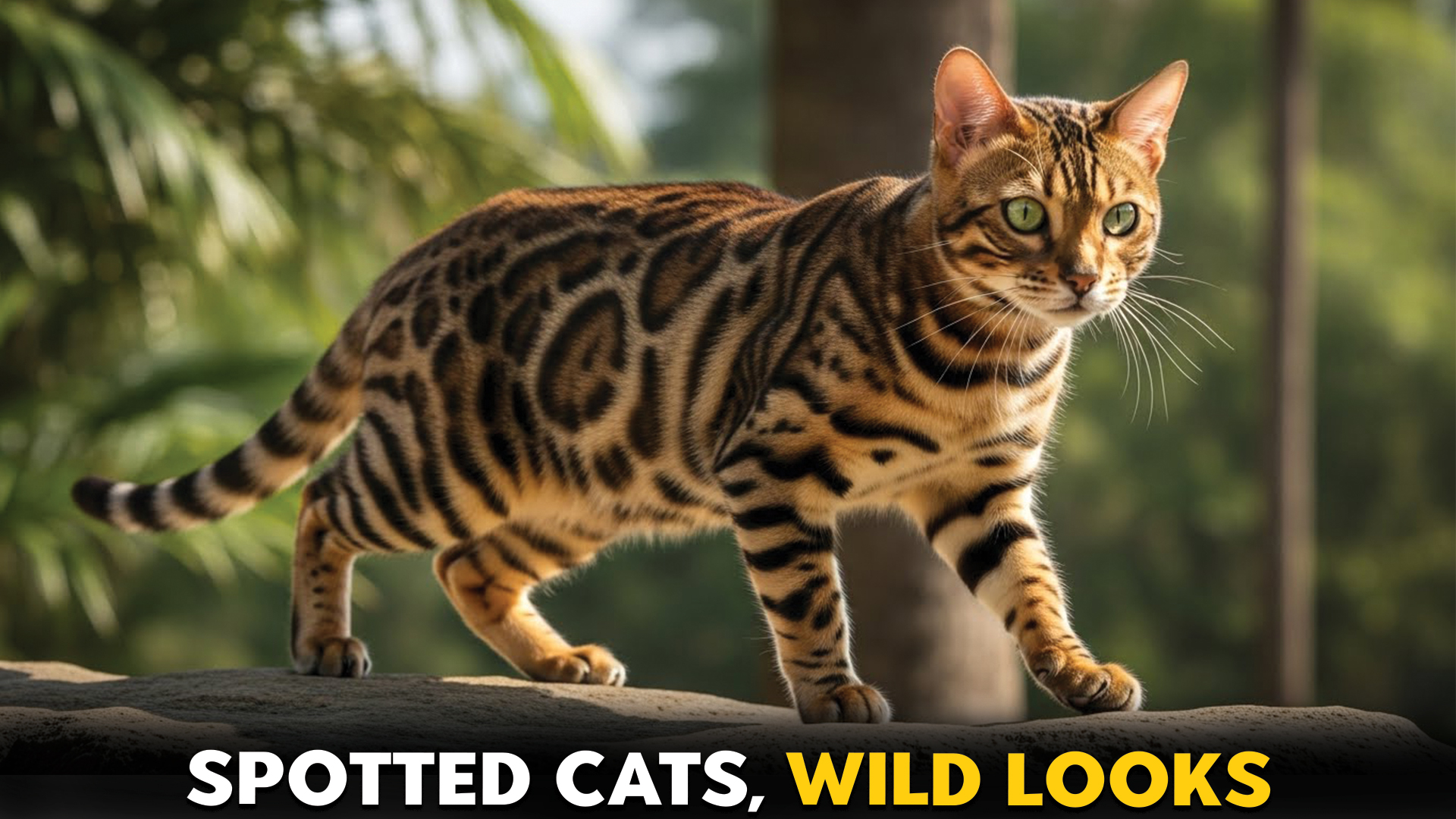
Spotted cat breeds have an undeniable allure, blending the exotic beauty of wild felines with the companionship of domestic cats. Their distinctive coats instantly evoke images of jungle hunters and desert roamers, yet these cats fit seamlessly into modern homes. As interest in rare and visually striking pets grows, spotted coats continue to fascinate cat lovers seeking something both elegant and unique.
Unlike striped or solid patterns, spots vary widely in shape and meaning. Some cats display bold rosettes reminiscent of leopards, while others have delicate speckles or sharply defined dots. These patterns often trace back to natural genetic variations or carefully planned breeding programs, including hybrids with wild ancestry. Each spotted coat tells a story shaped by geography, evolution, and human influence.
Many are rare and highly sought after, with limited breeders and higher costs. In this guide, we’ll explore remarkable spotted cat breeds, their origins, and what makes these captivating felines truly special.
7 Cat Breeds with Spotted Coats
1. Bengal
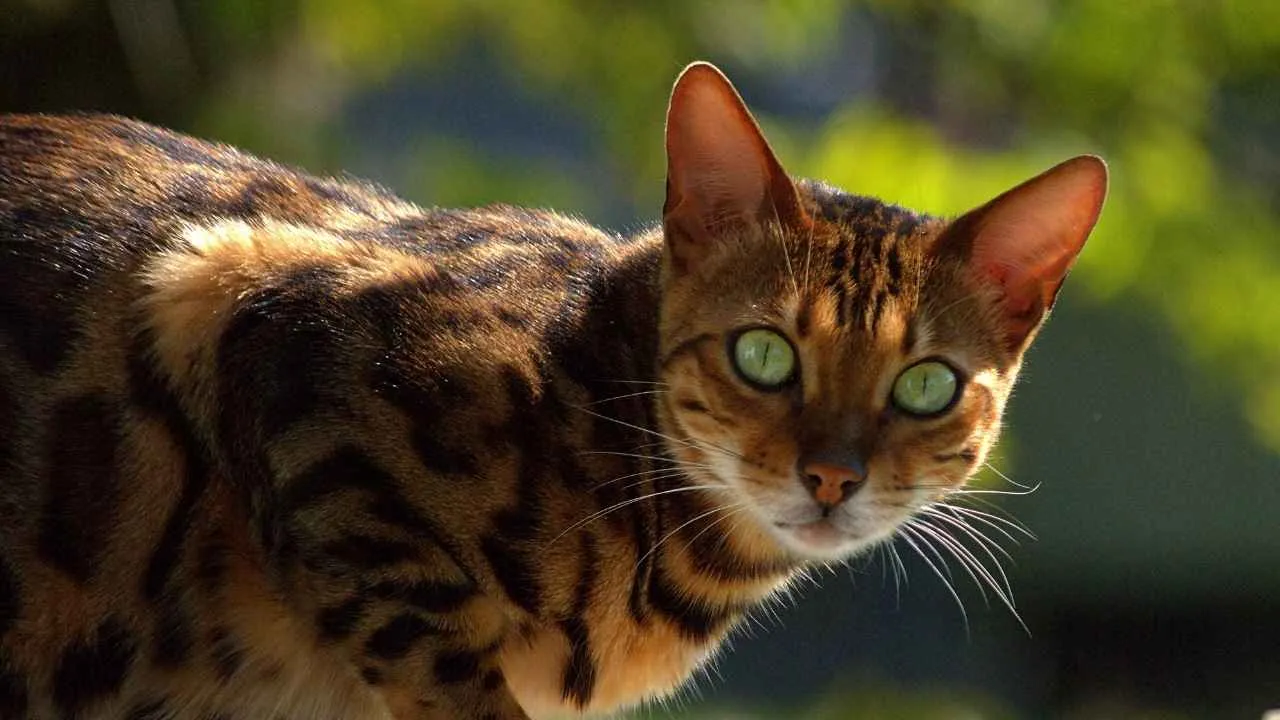
Also known as the Bengal cat, this striking breed was developed by crossing domestic cats with the Asian leopard cat.
According to Britannica, the Bengal cat is a short-haired domestic cat breed that was developed in the United States during the 1970s and 1980s.
The result is a sleek, athletic feline with a short, silky coat marked by dramatic spots or rosettes that resemble a miniature leopard.
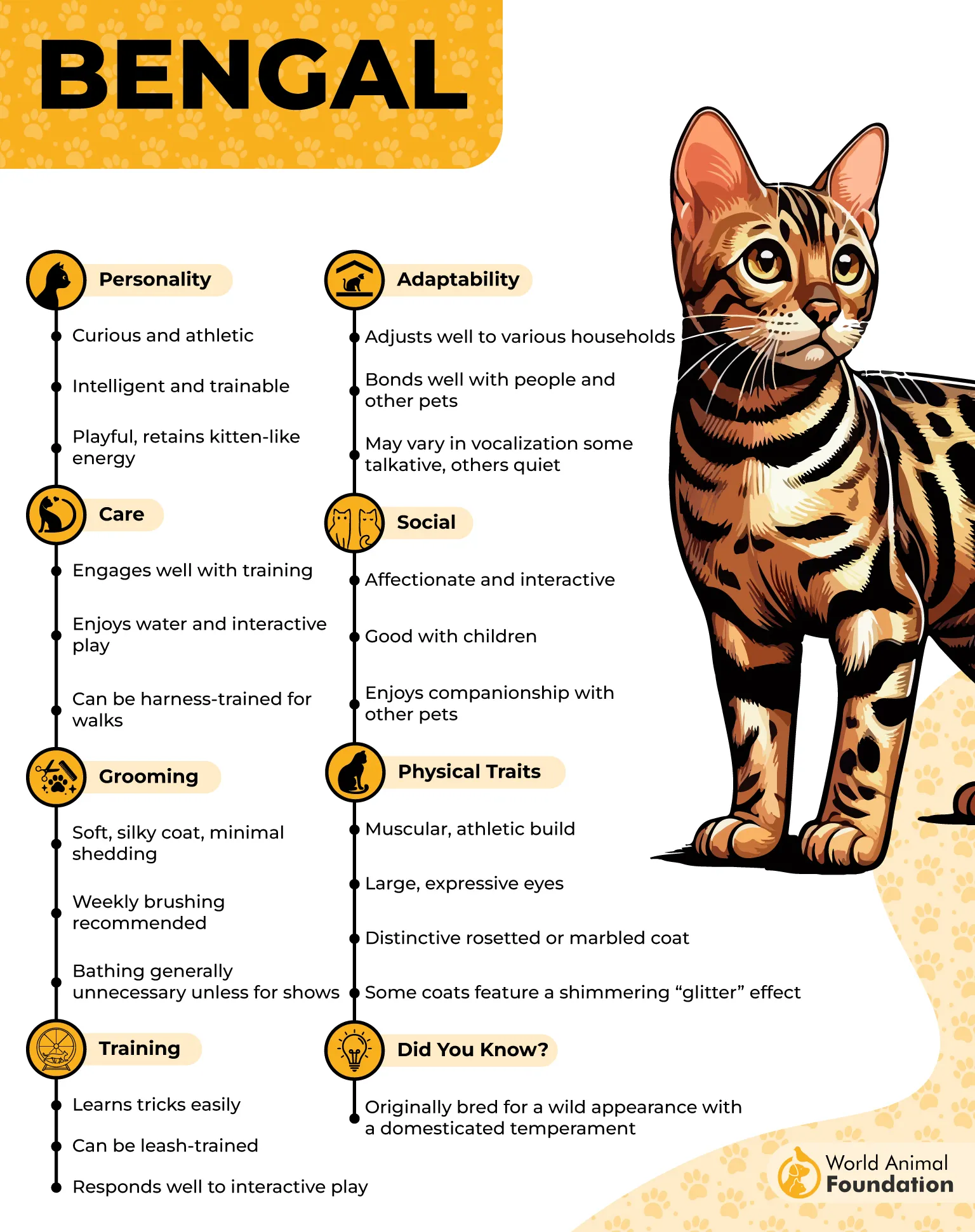
A Bengal’s spotted coat comes from its wild ancestry, where natural selection favored bold patterns for camouflage. These spots may appear as distinct dots or rosettes in shades like brown or silver, giving each cat a uniquely patterned appearance that stands out among domestic breeds.
The texture of the Bengal’s coat adds to its appeal. Its single-layer fur reflects light with a subtle shimmer often called “glitter,” enhancing the contrast of the spots. This combination of pattern and sheen explains why Bengals are often considered one of the most visually striking spotted cats.
Beyond looks, Bengals are active and curious, and their coat remains easy to maintain despite its exotic appearance.
Fun fact: the Bengal breed originated in the 1970s through crosses with the Asian leopard cat.
2. Egyptian Mau
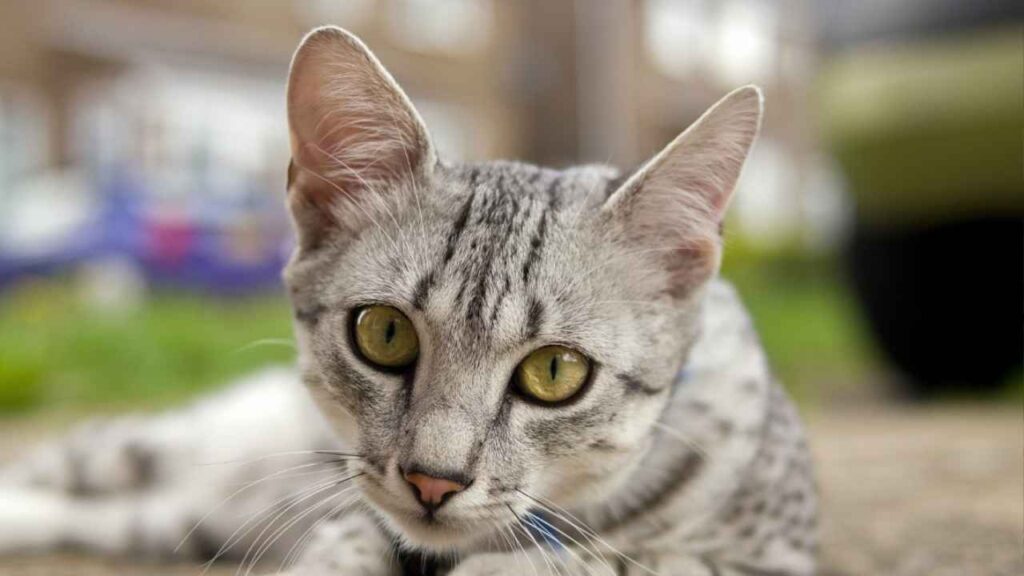
Also known simply as the Mau—meaning “cat” in Egyptian Arabic—the Egyptian Mau is an ancient breed.
According to PetMD, Egyptian Maus are medium-sized, short-haired cats that descend from felines that once roamed the streets of Egypt.
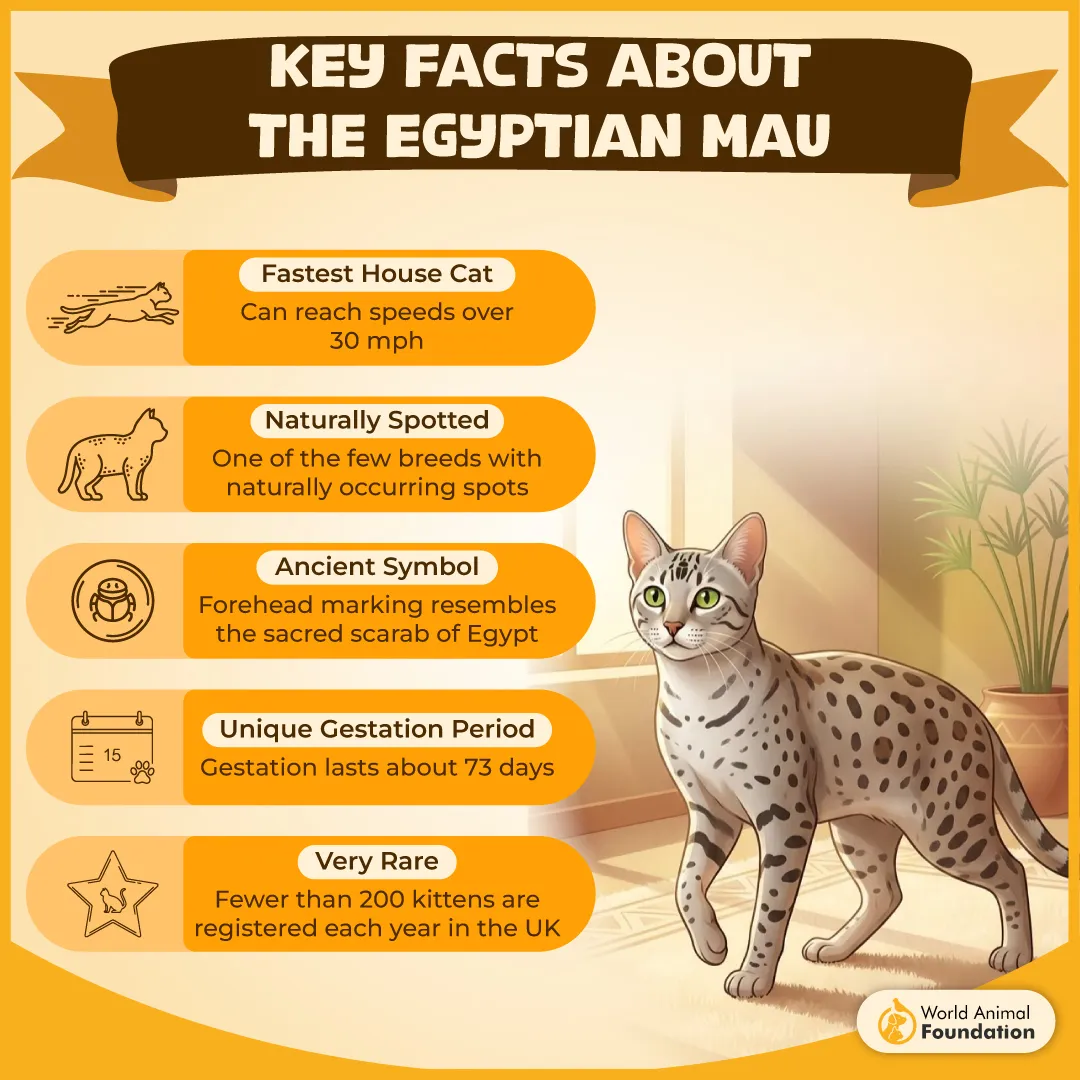
It is instantly recognized for its naturally spotted coat, muscular frame, and expressive green eyes, making it a living link to feline history.
What sets the Egyptian Mau apart among spotted cats is that its markings occur naturally, not through selective hybrid breeding. The spots are random, appearing not only on the fur but also on the skin, highlighting a genetic pattern shaped by nature rather than human design.
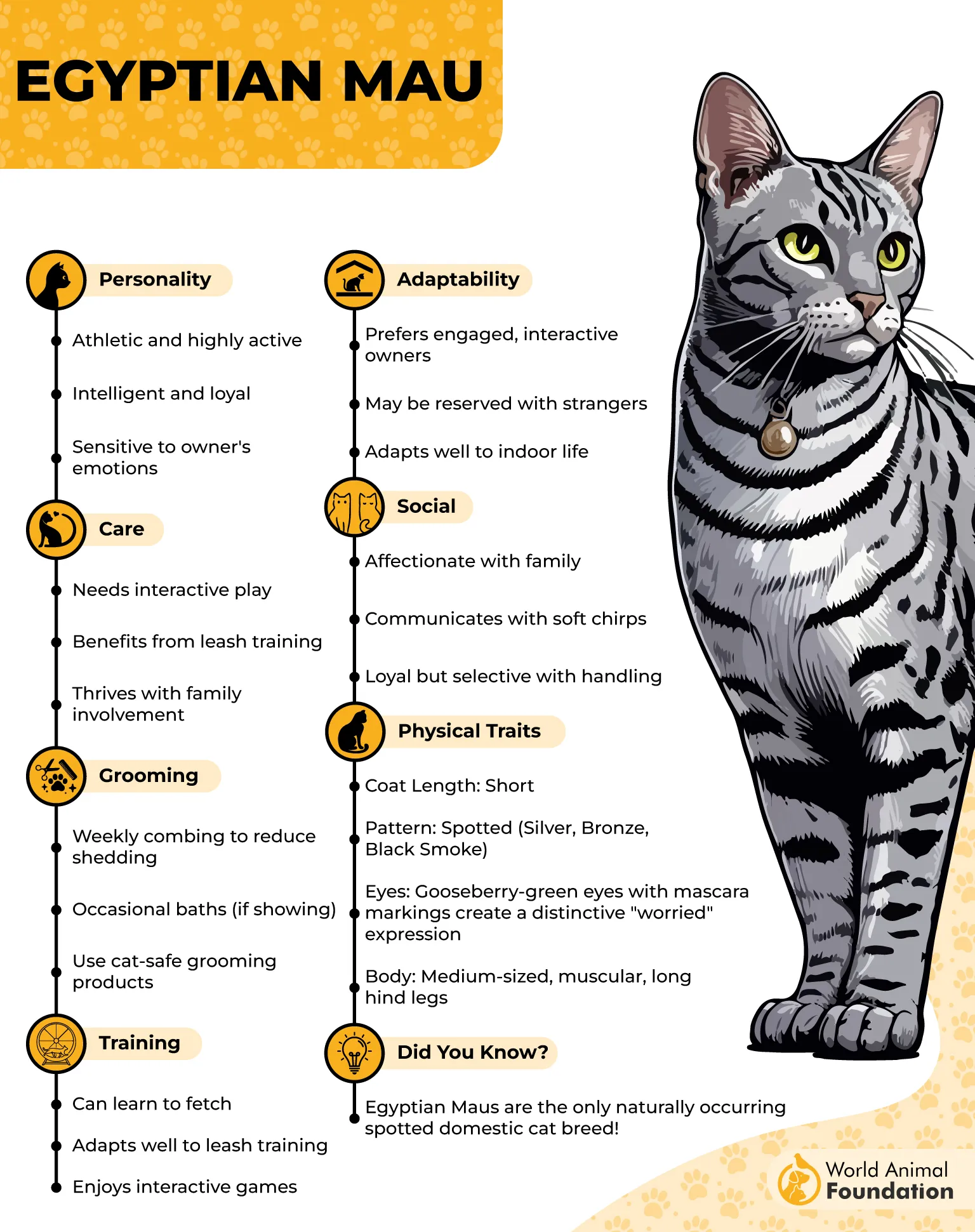
The genetics behind the Mau’s spotted coat involve specific dominant genes that influence color and pattern. In silver Maus, combinations of agouti and inhibitor genes create the shimmering contrast that defines their iconic appearance, while maintaining clear, well-defined spots.
These genetic traits contribute to coat variations without altering the breed’s authenticity.
Fun fact: the Egyptian Mau is the only naturally spotted domestic cat breed in the world.
3. Ocicat
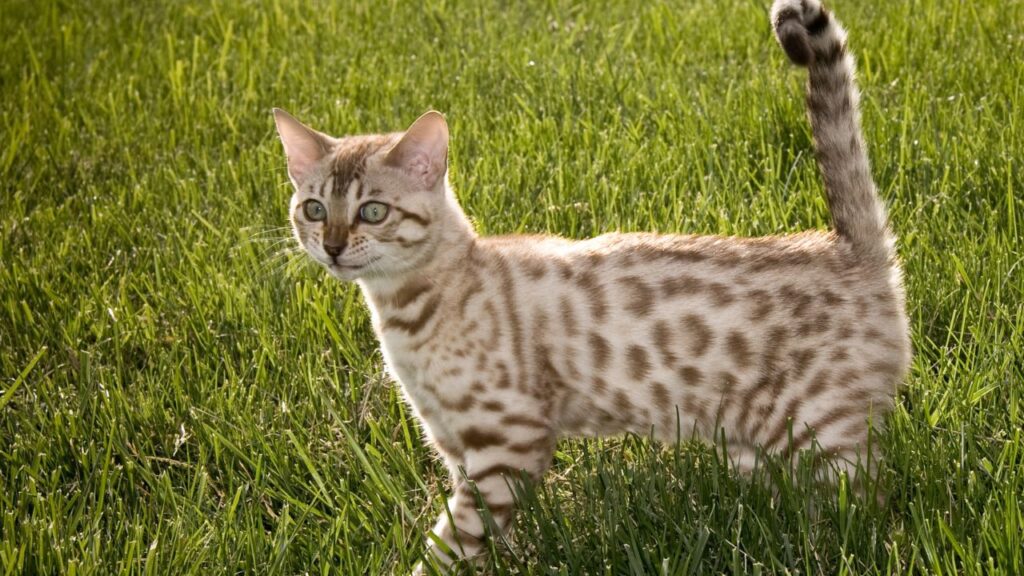
Often mistaken for a wild feline, the Ocicat—sometimes nicknamed the “ocelot-lookalike”—is a fully domestic breed developed in the United States during the 1960s.
According to WebMD, they tend to get along well with children and other animals, making them excellent household pets.
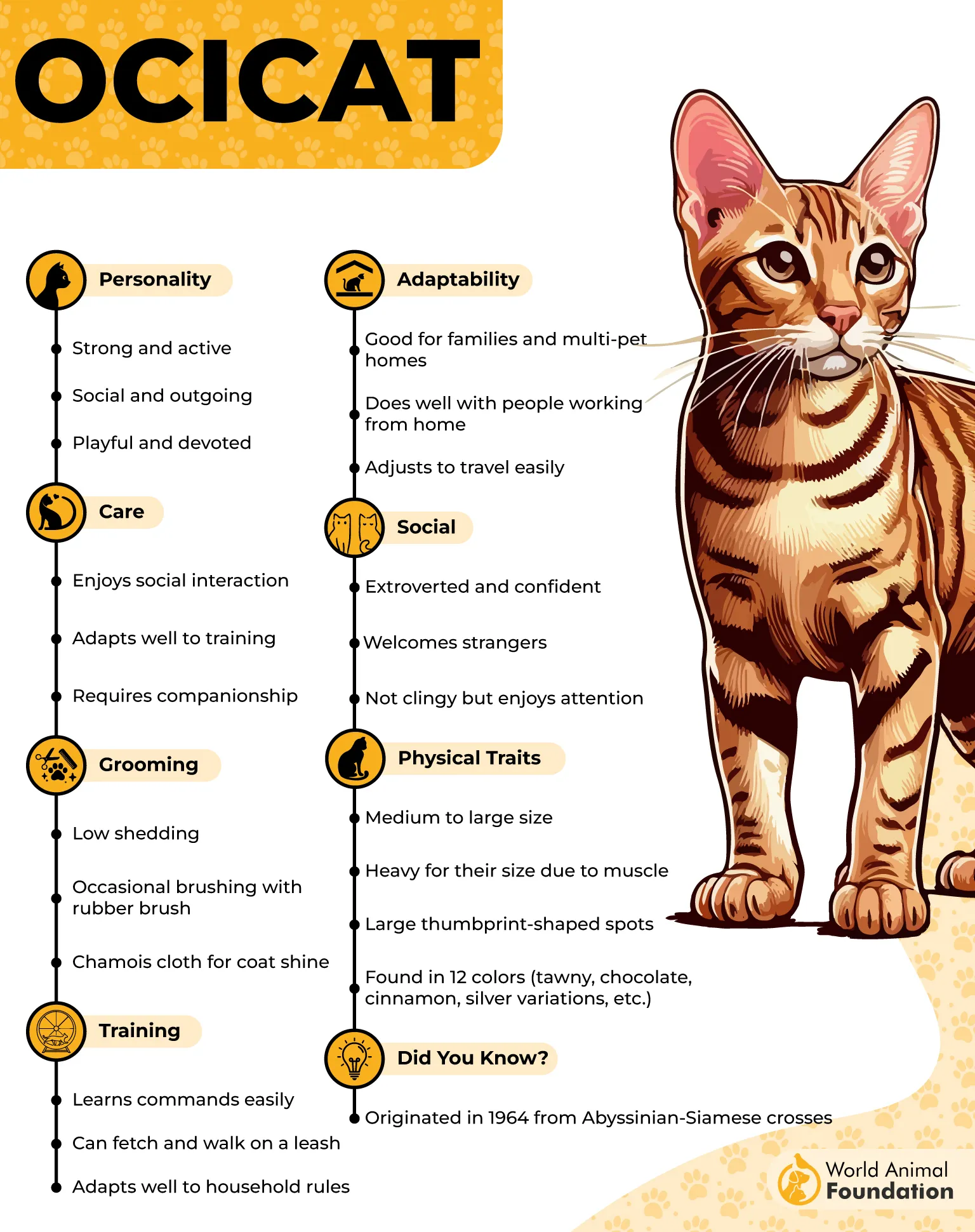
Those signature spots are thumbprint-shaped and evenly distributed, giving the Ocicat a dramatic, jungle-inspired appearance. Available in colors like tawny, silver, cinnamon, blue, and black silver, this breed is a standout among popular domestic cats with spotted coats.
Despite its exotic look, the Ocicat is famously social and people-focused. Its confident, outgoing personality makes it a favorite in interactive households, proving that striking spotted cats can also be affectionate and highly adaptable companions.
The Ocicat’s popularity shows how wild-style markings can exist without wild ancestry.
Fun fact: the breed originated accidentally in Michigan in 1964 and contains no wildcat DNA despite its ocelot-like appearance.
4. Savannah
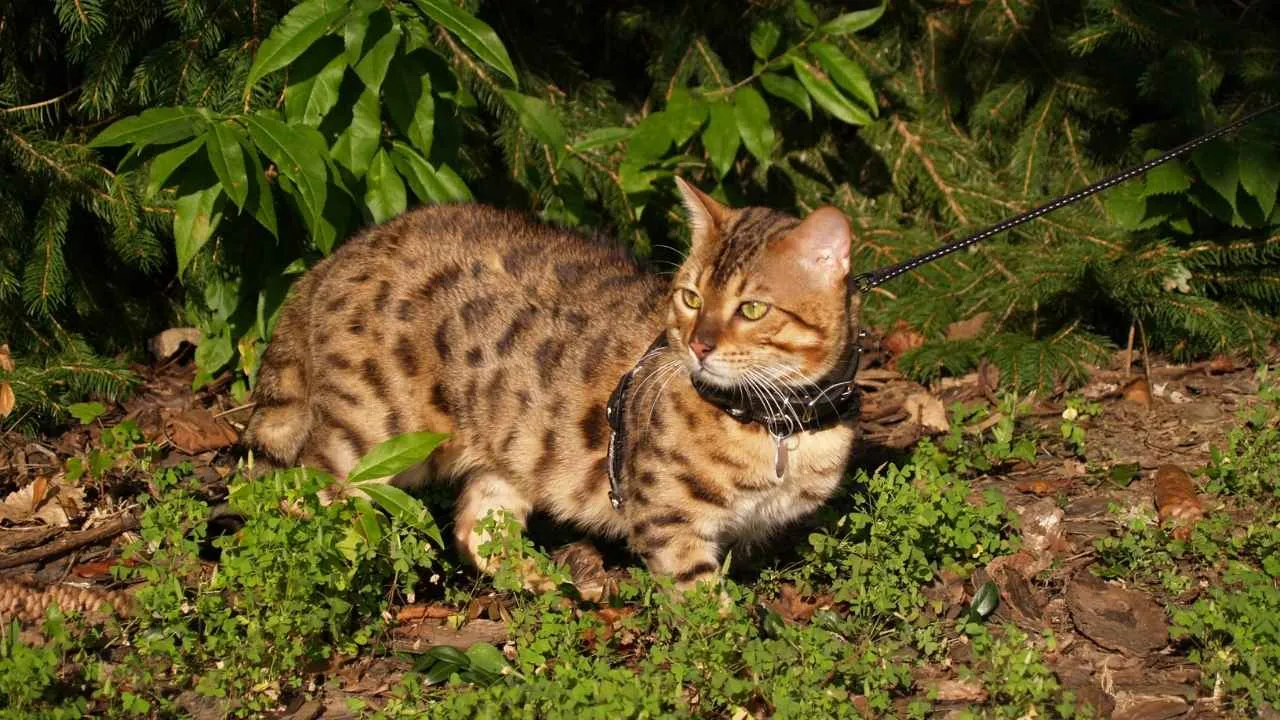
Also known as the Savannah cat, this rare hybrid breed was developed by crossing a domestic cat with the African serval in the 1960s. With long legs, tall ears, and a lean build, Savannahs stand out for their bold black spots set against golden or silver coats.
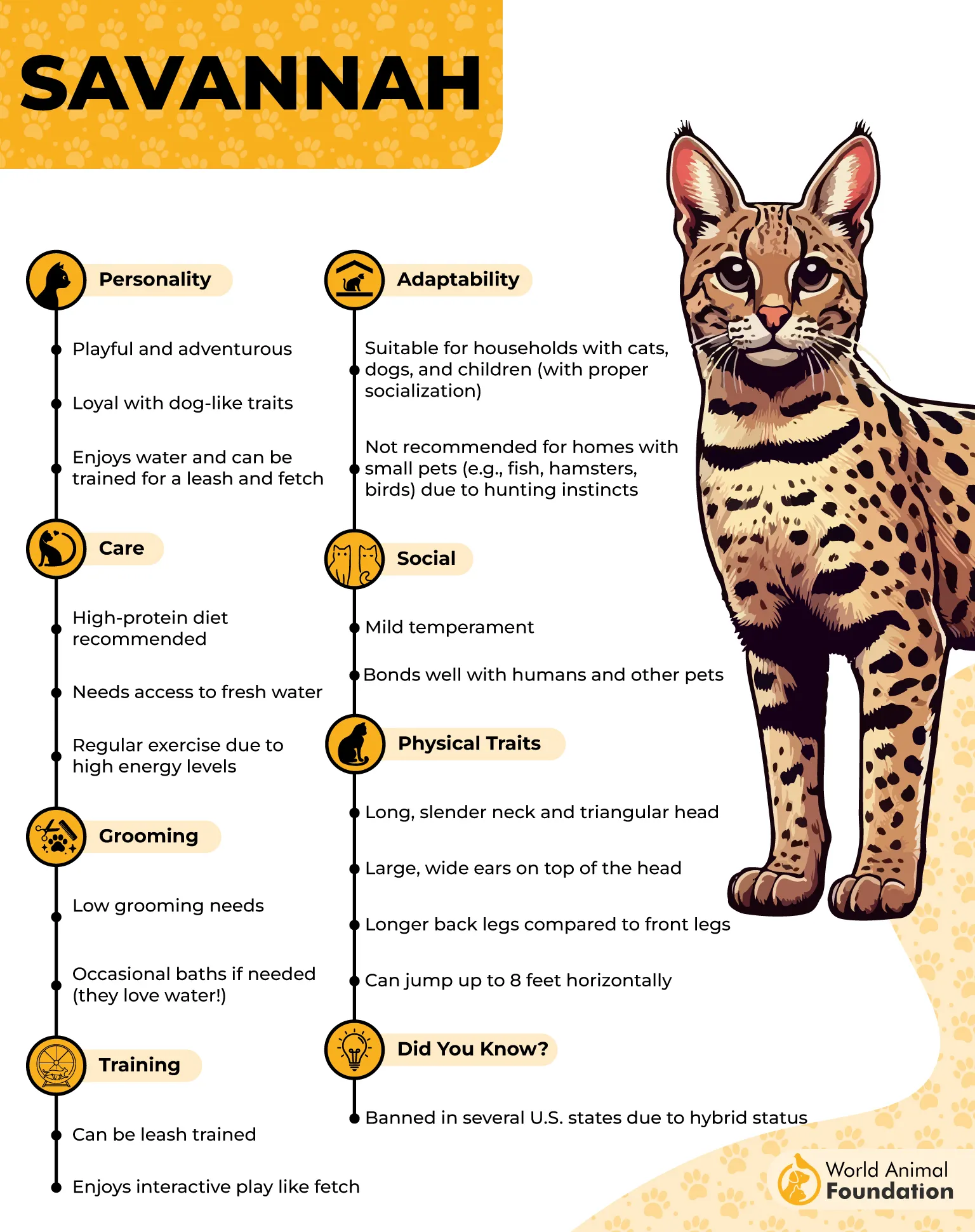
Among rare and exotic spotted cat breeds, the Savannah is especially striking due to its wild-inspired patterning and impressive presence. The spots resemble those of jungle cats, giving the breed an unmistakably untamed look that few domestic cats can rival.
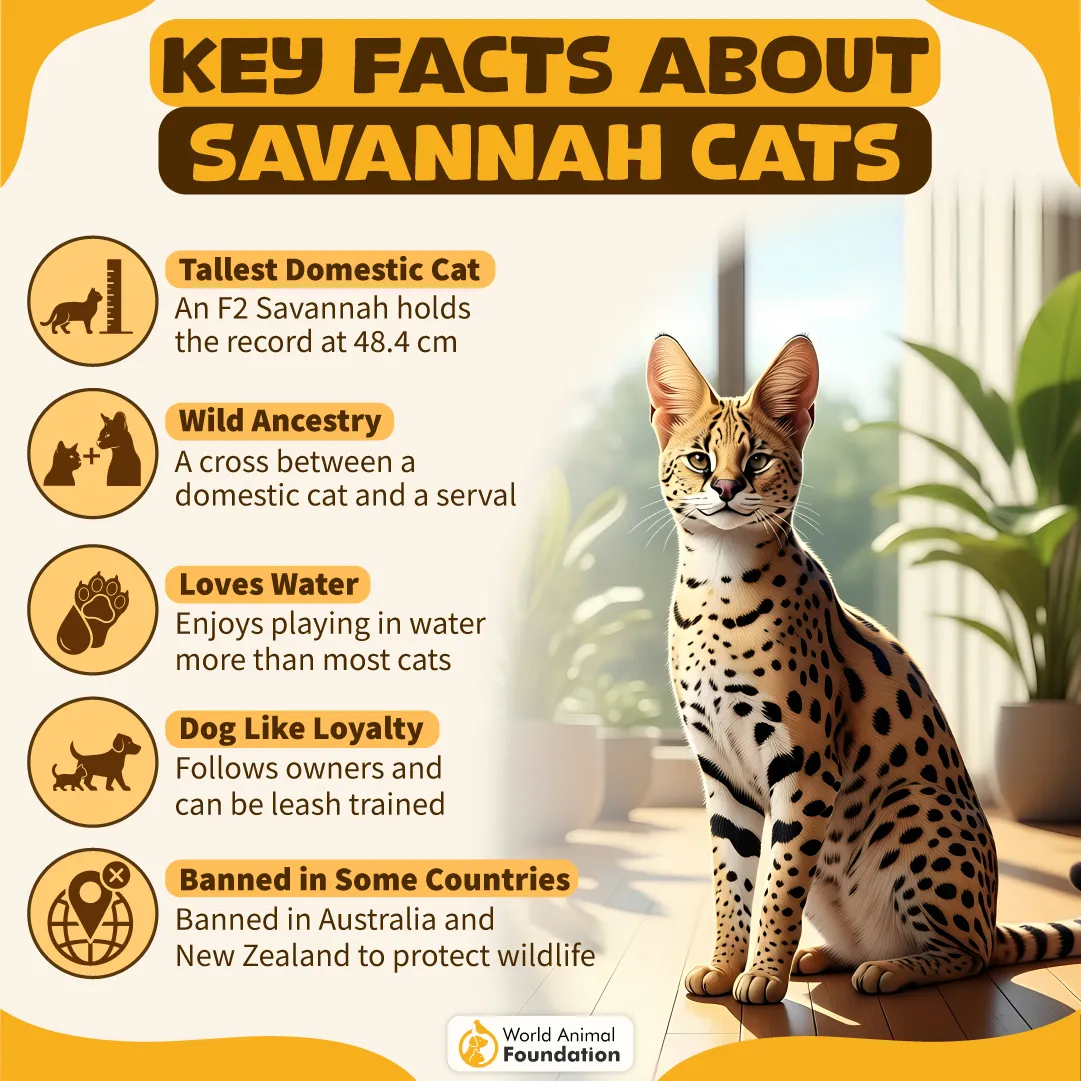
Different filial generations, from F1 to F5, influence both appearance and temperament, but the spotted coat remains a defining feature throughout. These cats often form deep bonds with one person and require plenty of space and stimulation to thrive.
Because of their rarity and breeding complexity, Savannahs are among the most expensive cats, typically costing between $1,800 and $3,200, depending on generation and breeder.
Fact: F1 Savannahs are the largest and closest in ancestry to the African serval.
5. California Spangled
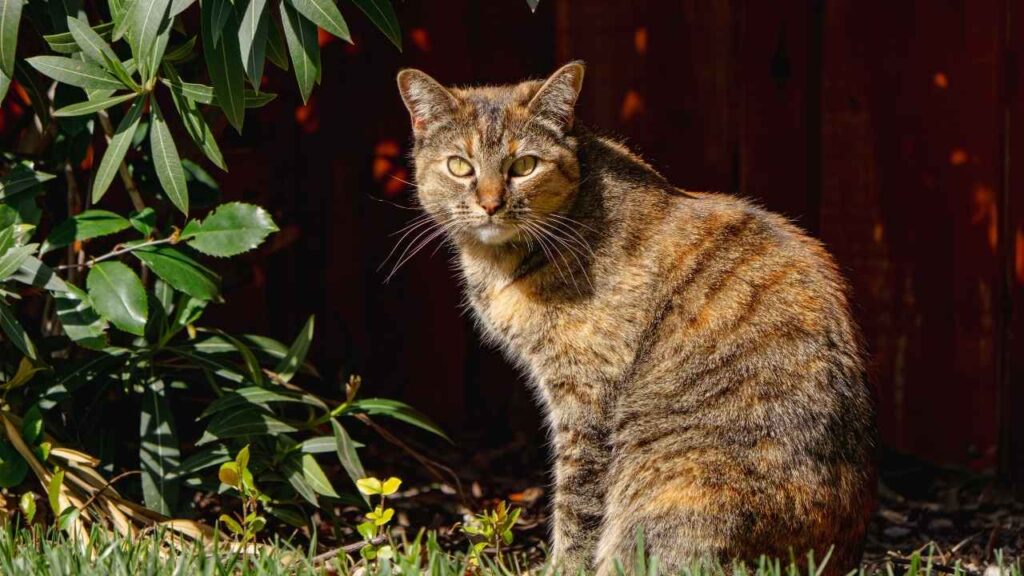
Often nicknamed the “house leopard,” the California Spangled is a rare domestic breed developed in California during the 1980s. Created by blending breeds like the Abyssinian, Angora, and street cats from Egypt and Malaysia, it was designed to resemble wild spotted cats such as leopards and ocelots.
Its coat is the star feature, marked with bold, well-defined spots that enhance its exotic appearance. Despite this wild look, the California Spangled is fully domestic, showcasing how selective breeding can produce striking patterns without sacrificing a companion-friendly nature.
When it comes to personality, these spotted cats are known for being social, confident, and people-oriented. They enjoy interaction, thrive on attention, and often form strong bonds with their households, balancing their dramatic looks with an approachable temperament.
Intelligent and alert, California Spangled cats tend to be curious and playful, making them engaging companions.
Fun fact: despite their beauty and charm, the California Spangled is so rare that the breed is considered at risk of extinction.
6. Serengeti
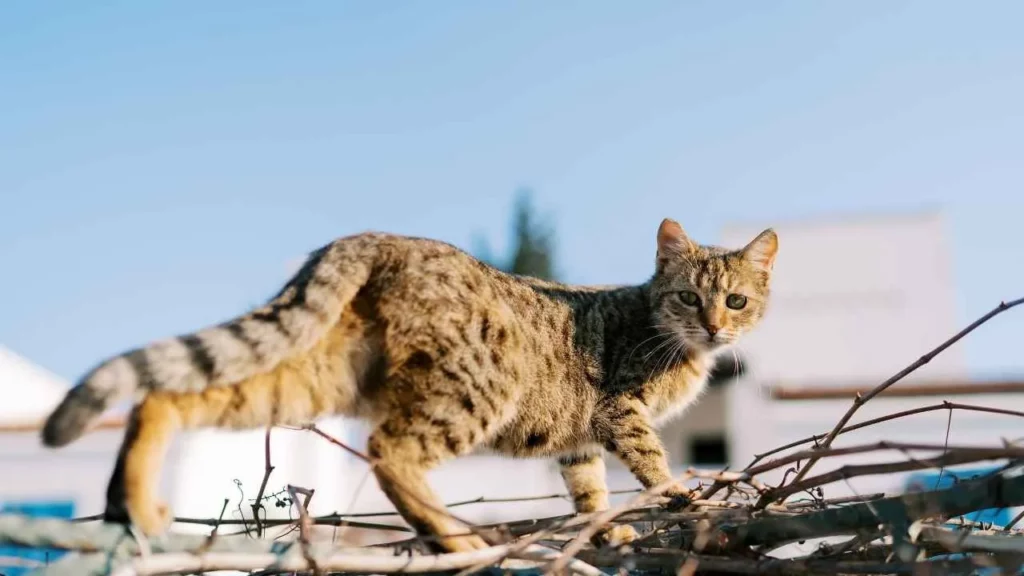
Sometimes referred to simply as the Serengeti cat, this modern breed was developed in California in the 1990s by crossing the Bengal with the Oriental Shorthair. Created to echo the look of the African serval, it features long legs, large ears, and a sleek, athletic frame without any wild ancestry.
The Serengeti’s spotted coat is its standout trait, marked by bold black spots set against a warm golden or tawny background. Because the coat is short, glossy, and close-fitting, these dramatic markings remain crisp and eye-catching with minimal effort.
When it comes to grooming, spotted cats like the Serengeti are refreshingly low maintenance. Weekly brushing is usually enough to remove loose hair and keep the coat smooth, allowing the striking spot pattern to stay well defined.
Despite their exotic appearance, Serengetis are practical to care for and highly adaptable.
Fact: the breed was intentionally developed to resemble a serval while remaining 100% domestic, with no wild cat genes involved.
7. Pixie Bob
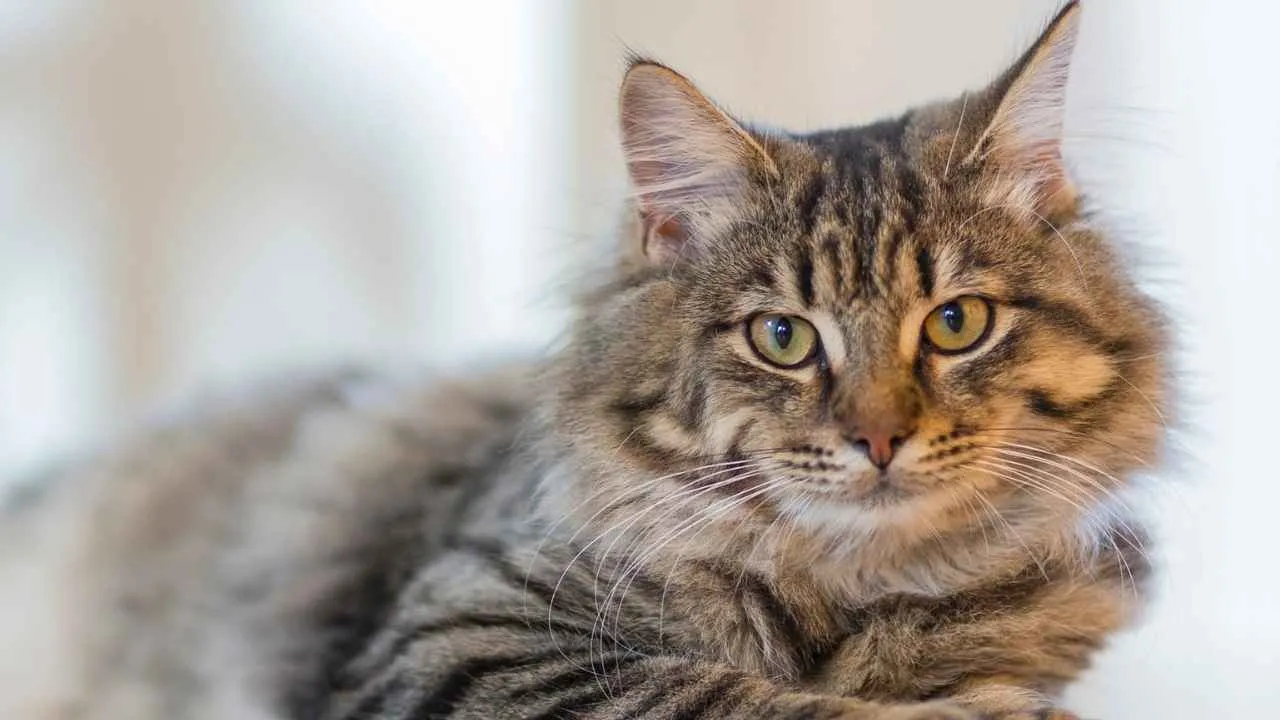
Also known as the Pixiebob cat, this breed is admired for its bobcat-like appearance, muscular frame, and distinctive spotted tabby coat. Often featuring short tails, polydactyl paws, and a thick double coat, Pixie Bobs look wild while remaining fully domestic and family oriented.
Their soft spots and subtle tabby patterns give them a bold yet approachable aesthetic, making them a strong choice for owners drawn to spotted coats without high-energy demands. Pixie Bobs are adaptable and calm, blending easily into households that value companionship over constant activity.
When choosing the right spotted cat breed, temperament matters as much as appearance. Pixie Bobs are known for their loyal, dog-like behavior and preference for bonding and lounging, making them ideal for homes seeking a relaxed, people-focused feline with a striking coat.
Responsible breeding and routine care help maintain their overall well-being, allowing their unique looks to shine.
Fact: despite their rumored wild ancestry, there is no DNA evidence confirming a bobcat cross in Pixie Bobs.
Conclusion
Cat breeds with spotted coats bring a touch of the wild into everyday life, echoing the look of spotted wild cats while remaining loving companions.
From bold rosettes to subtle tabby markings, these spotted breeds showcase how certain breeds were developed with a clear original intent—to capture exotic beauty without sacrificing temperament.
Whether inspired by a little leopard aesthetic or influenced by earlier generations of selective breeding, these cats stand out among other breeds for their unique patterns, thick fur, and striking presence.
For pet parents, choosing the right spotted cat means balancing appearance with personality. Some, like the Serengeti breed, are highly intelligent and active, while others adapt easily when properly introduced to home life.
Even familiar cats such as the Siamese cat, known for Abyssinian colored points, show how pattern diversity enriches the feline world. With thoughtful selection and care, these visually stunning cats make truly great pets, a vision supported by breeders like Karen Sausman.
