




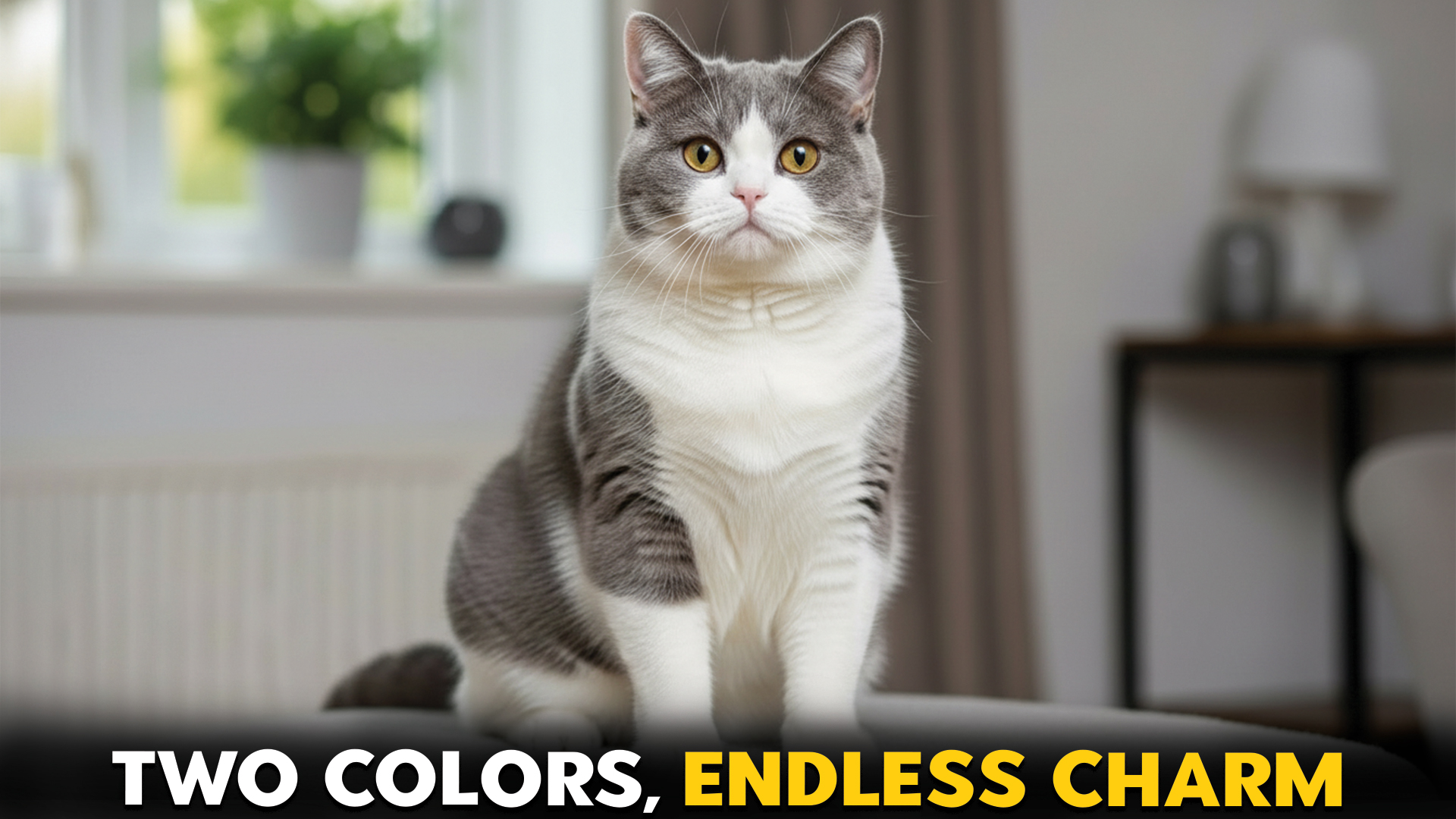
Ever noticed a cat that looks like it was carefully painted, with splashes of white mixed into a darker coat? Chances are, you were looking at a bi-color cat—and yes, they really do stand out.
Bi-color cats aren’t a breed of their own. Instead, they’re defined by a coat pattern where solid white fur appears alongside another color or pattern, such as black, gray, orange, or even tabby markings.
The white can show up as a tiny chest patch, neat socks on the paws, or spread so widely that the cat looks almost all white. No two bi-colored cats ever look exactly the same, which is part of their charm.
So why does this happen? The answer lies in genetics. The white areas on a bicolor cat form because pigment-producing cells fail to reach certain parts of the skin while the kitten is developing in the womb. The earlier this process stops, the larger the white patches will be.
In this guide to cat breeds with bicolor coats, we’ll explore how this eye-catching pattern appears across different cats, the common bi-color styles you might spot, and what makes these markings so appealing. Let’s dive in.
Cat Breeds with Bi-Color Coats
1. Turkish Van
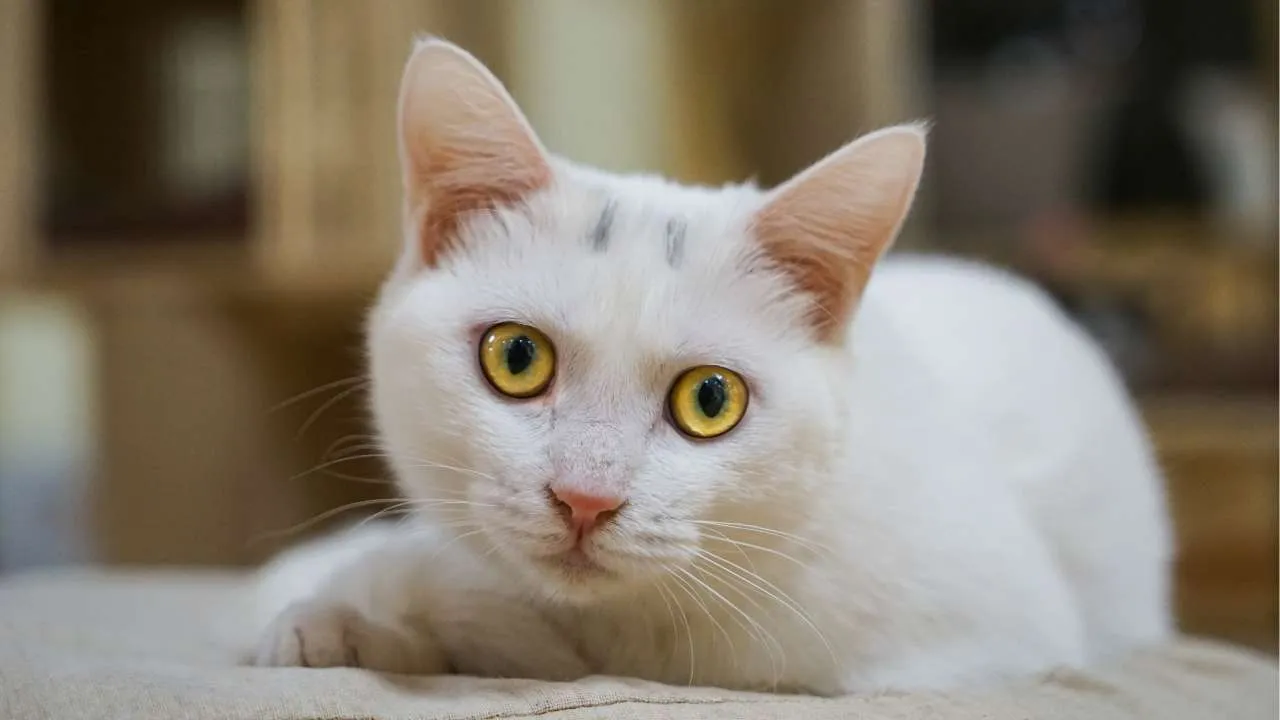
The Turkish Van bicolor cat is a rare and eye-catching breed, best known for its striking bicolor coat. What makes this cat special is the Van pattern, a coat style named after the breed itself. At first glance, these cats often look almost completely white, which gives them a clean and elegant appearance.
The Van pattern keeps color limited to specific areas. Color appears only on the head, usually between the ears, and on the tail, while the rest of the coat remains white.
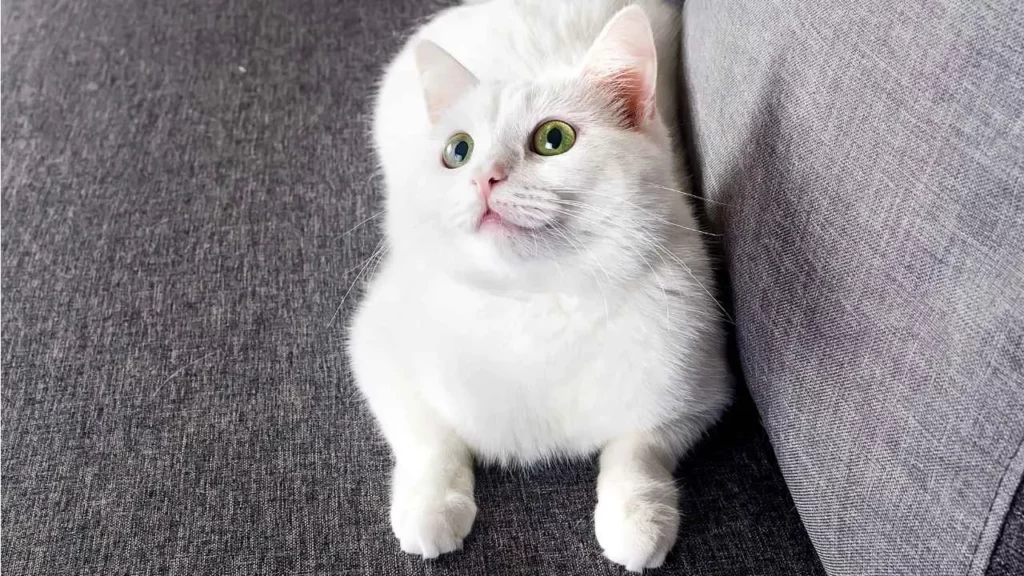
In some cats, the color can be very light—such as cream or pale orange—making it hard to notice from a distance. Some calico cats can also show a Van pattern, with soft mixes of orange, black, cream, or tan against a white coat.
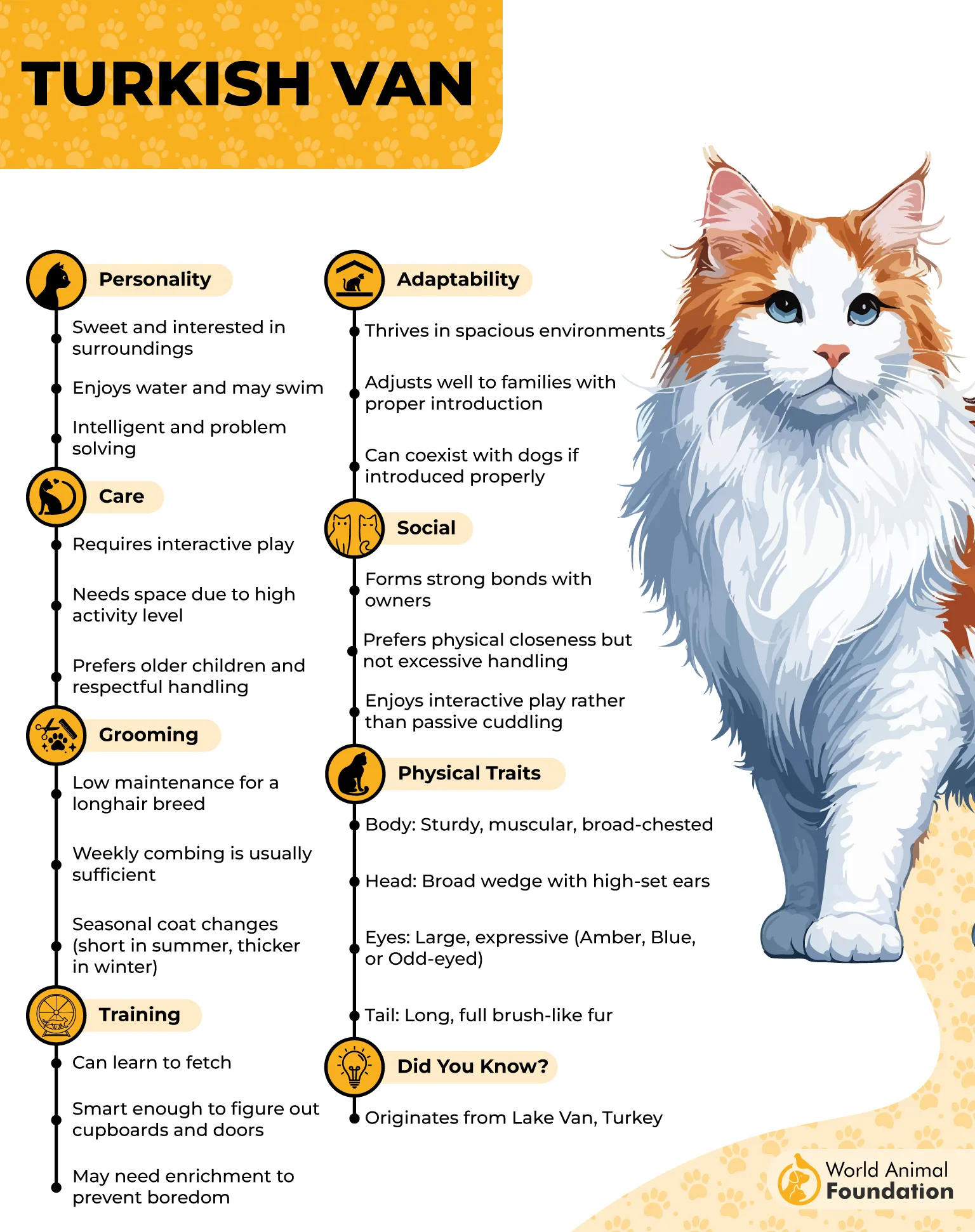
Turkish Vans are not just known for their looks. They often have blue or amber eyes, and some are odd-eyed, with two different eye colors. This breed is famous for its playful, mischievous nature and has a surprising love of water, which is unusual for cats.
2. Turkish Angora
The Turkish Angora cat is a natural breed that comes from the region of modern-day Turkey. It is one of the oldest long-haired cat breeds, with records dating back to the 17th century.
Outside the United States, it is often called the Angora or Ankara cat. This breed is admired for its elegant look and graceful movement.
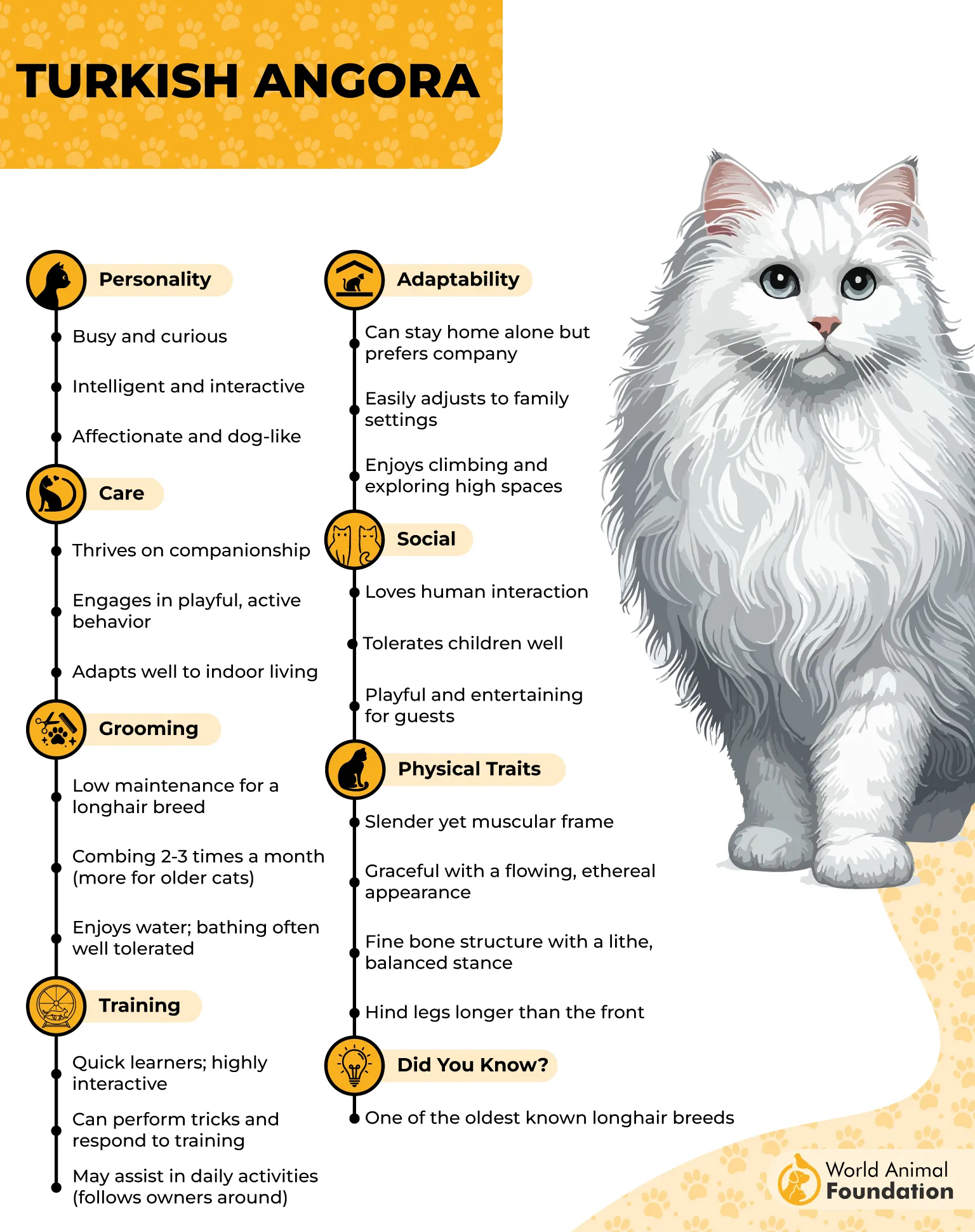
Turkish Angoras are best known for their long, silky coat and fluffy, plume-like tail. While many people picture them as pure white, they actually come in a wide range of colors.
These include bi-color patterns, as well as tabby, black, and smoke coats. The coat has a soft, shimmery texture. Eye colors can be blue, green, amber, or yellow, and some cats are heterochromatic, meaning each eye is a different color.
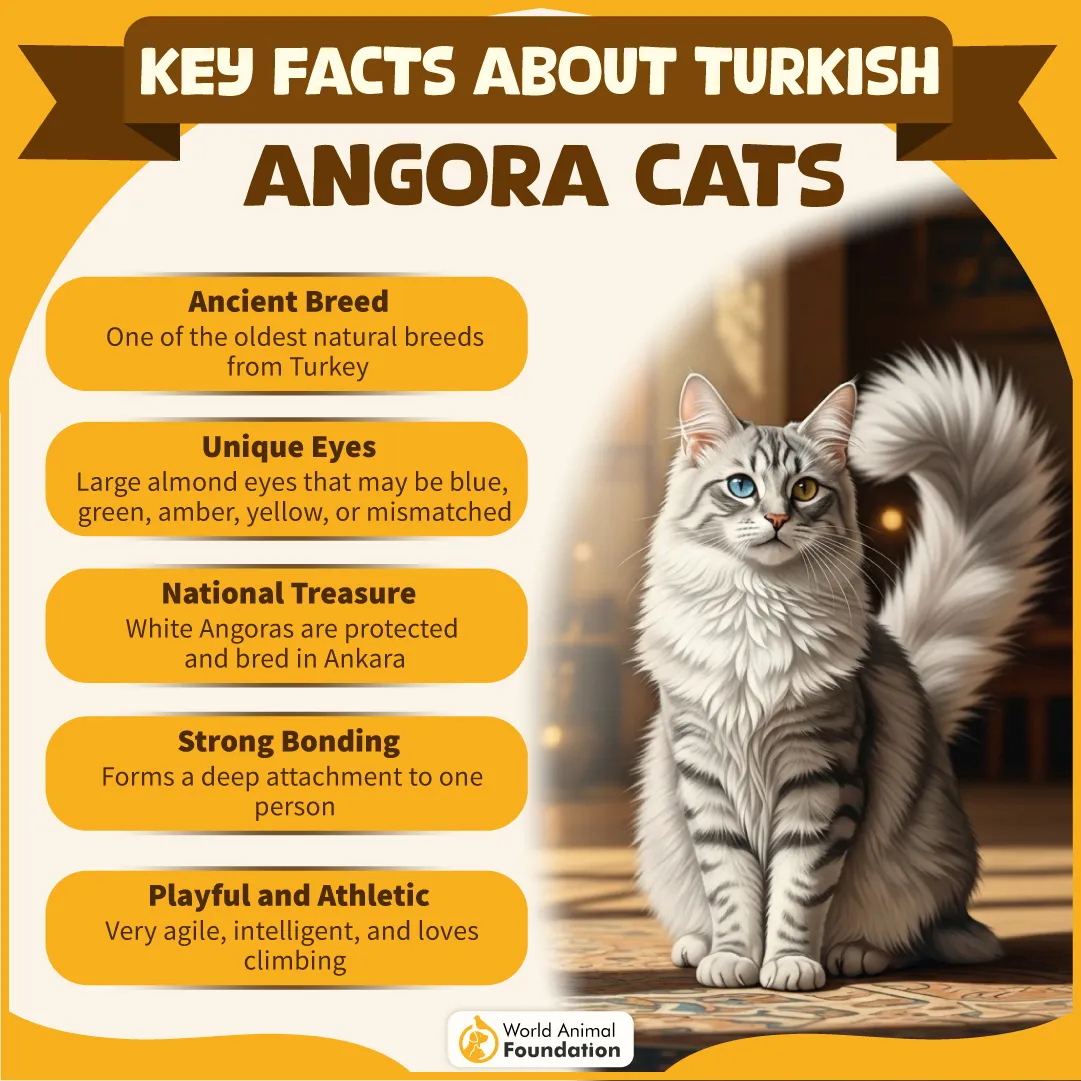
Beyond their appearance, Turkish Angoras are loved for their personality. They are known to be sweet, intelligent, and loyal. This breed is easy to train and often forms a strong bond with one special person in the household.
3. Maine Coon
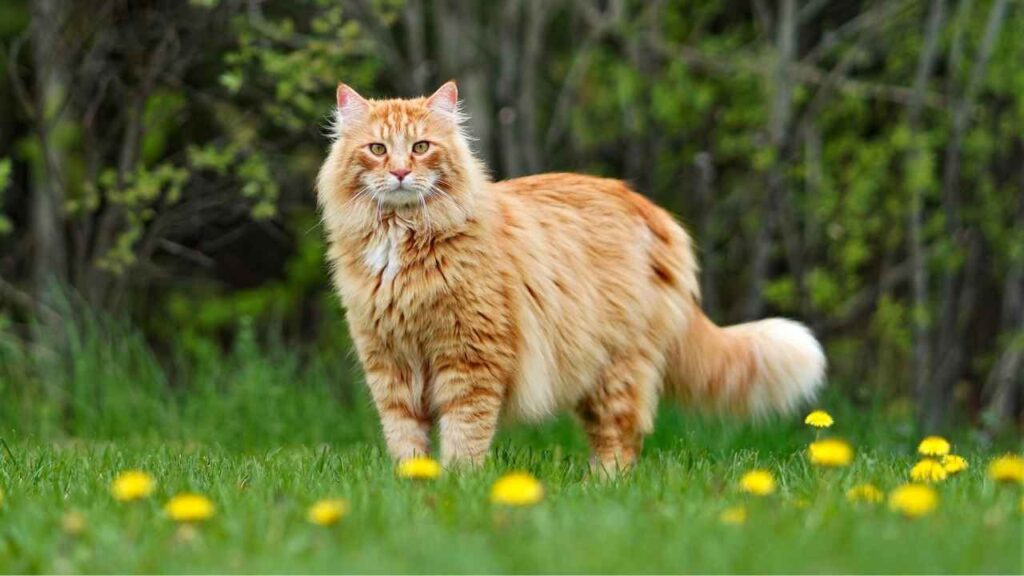
The Maine Coon cat is a natural breed that comes from the state of Maine in the United States. It is the oldest natural breed in North America and is also the official state cat of Maine.
Known for its size and strength, this large breed has a heavy, shaggy coat that can appear in almost any color or pattern, including bi-color and van patterns.
Maine Coons with bi-color or van coloring often have blue or odd-colored eyes, while other coat patterns may show green, gold, or copper eyes.
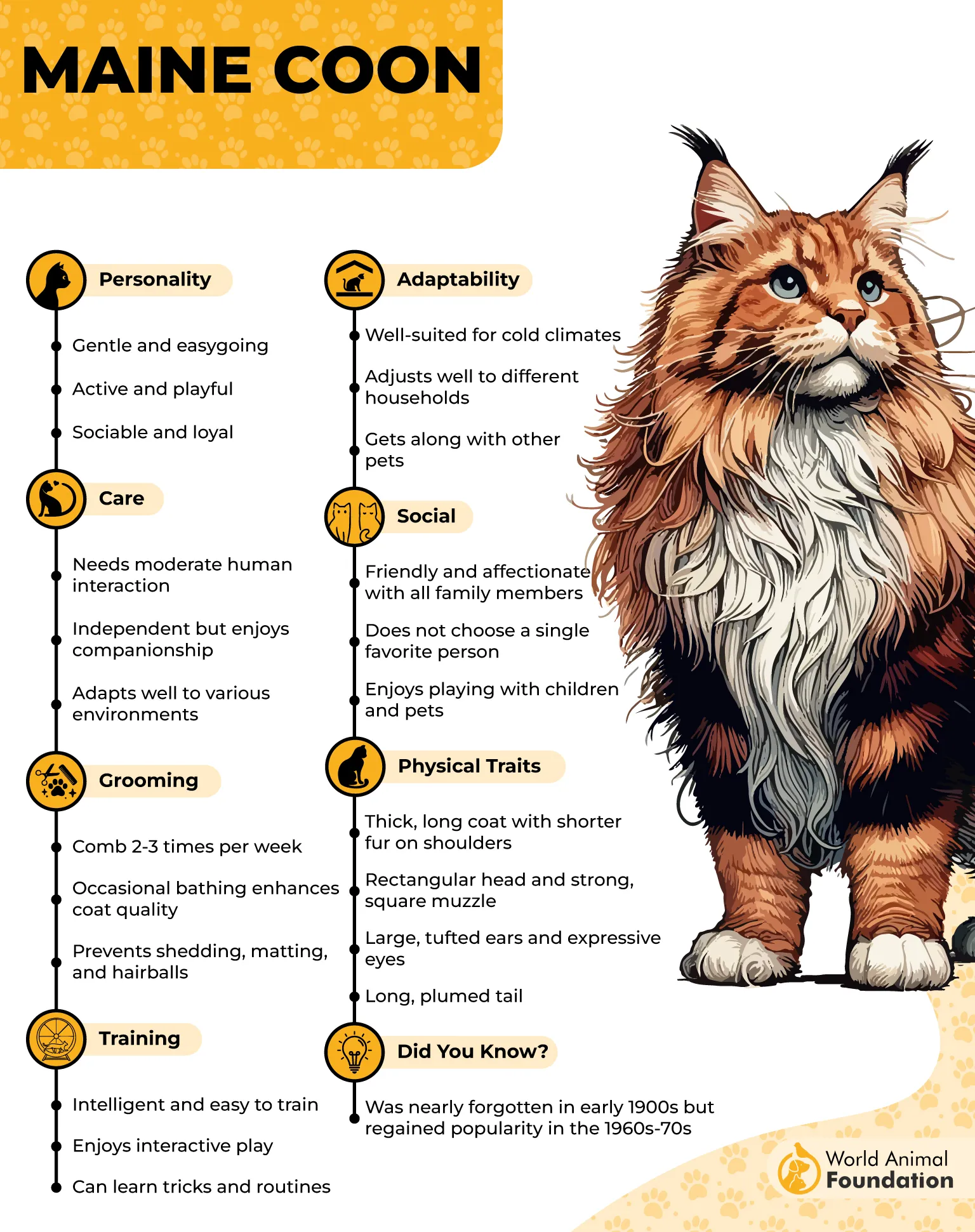
Their thick fur gives them a rugged look, yet their expressions are gentle and calm. Because of their friendly nature and impressive presence, they are often called the “gentle giant,” as mentioned by Chewy.
In terms of personality, Maine Coons are good-natured, playful, and affectionate without being demanding. They enjoy staying close to their people rather than sitting on laps all the time. They are also known as excellent mousers and love interactive activities like playing fetch and climbing.
4. British Shorthair
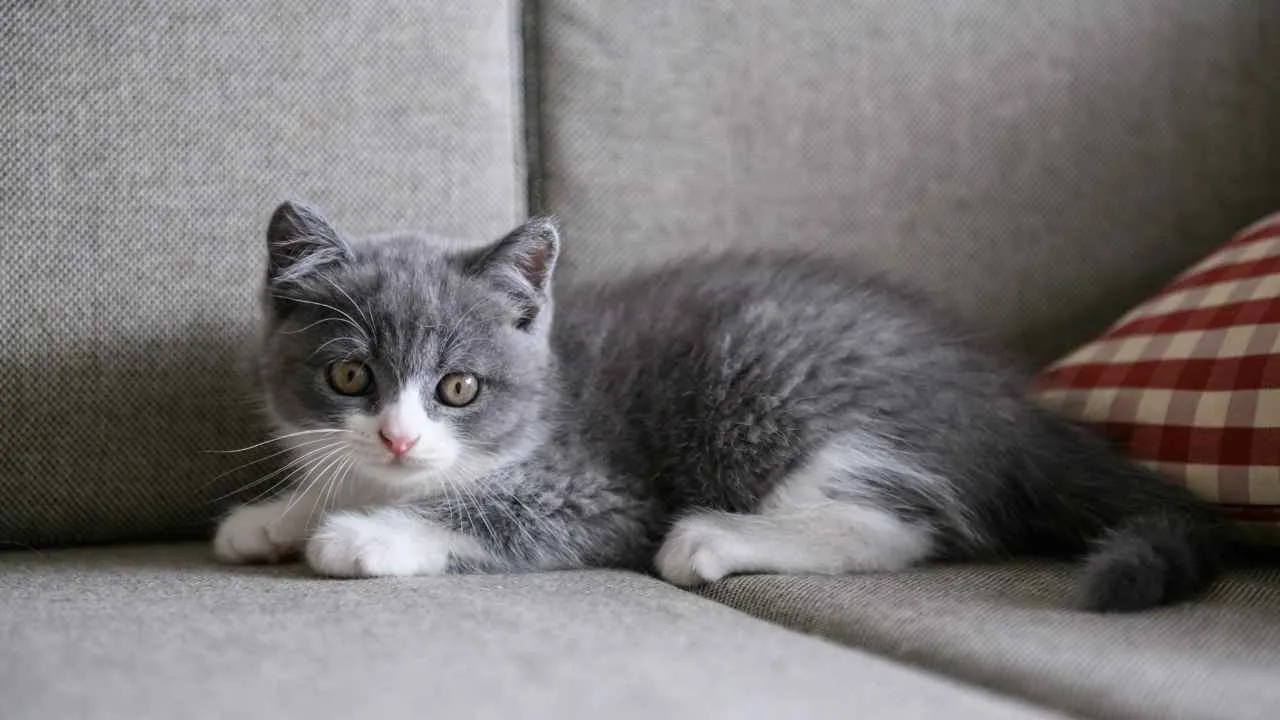
The British Shorthair cat is one of the oldest and most well-known cat breeds. It has been recognized since the late 19th century and has been carefully bred for over a century.
Although the breed nearly disappeared during the two world wars, it was preserved through careful crossbreeding and is now one of the most popular cats worldwide.
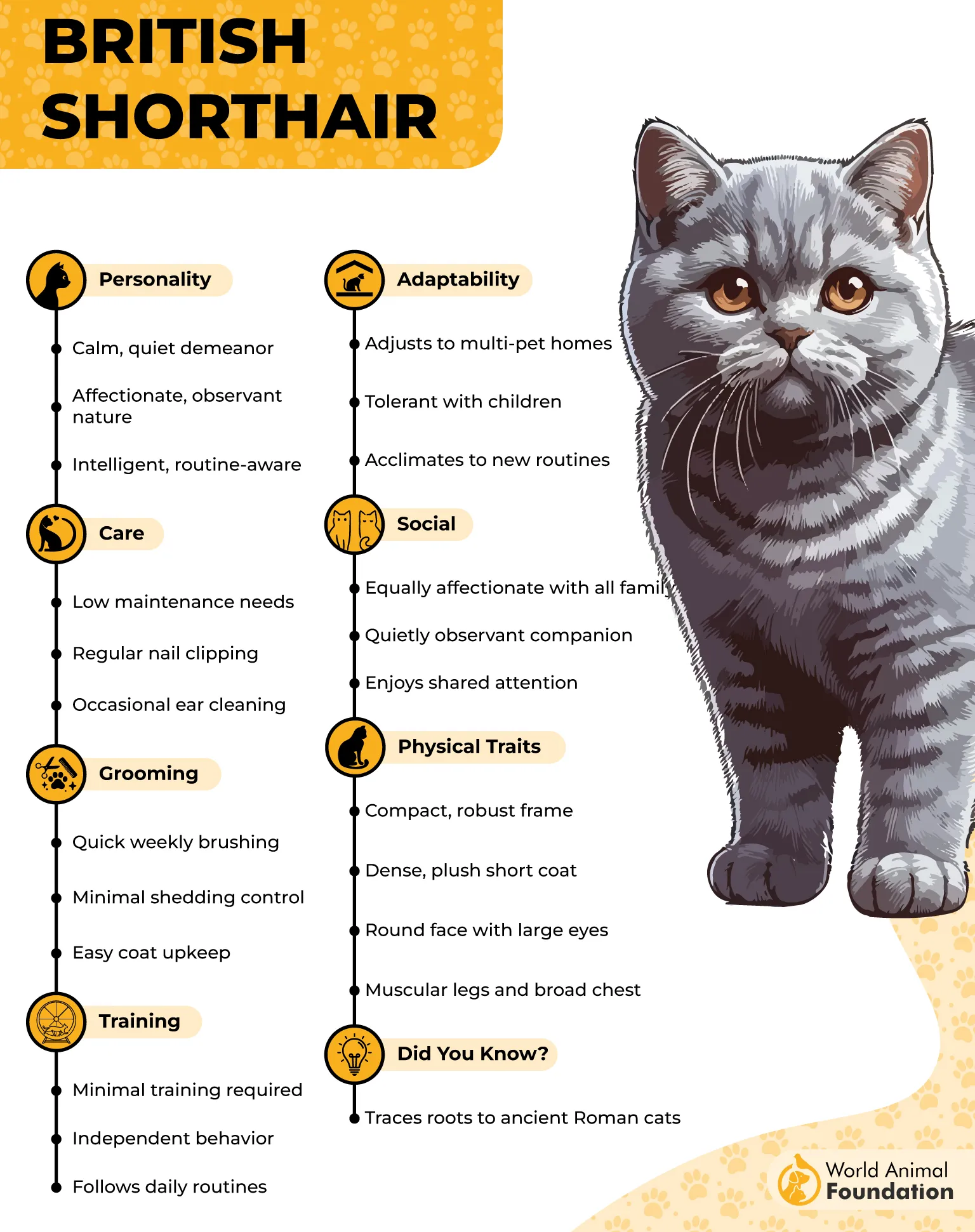
This breed comes in a wide range of colors, including red, cinnamon, chocolate, blue, and black. It also appears in many patterns, such as bi-color, tortoiseshell, tabby, and color points. The coat is dense and plush, giving the cat a solid and tidy appearance that suits bi-color markings very well.
British Shorthairs are known for their calm and reserved personality. They are affectionate but not demanding and prefer a balanced relationship with their family. Rather than bonding with one person, they tend to be loyal to the entire household.
5. Persian
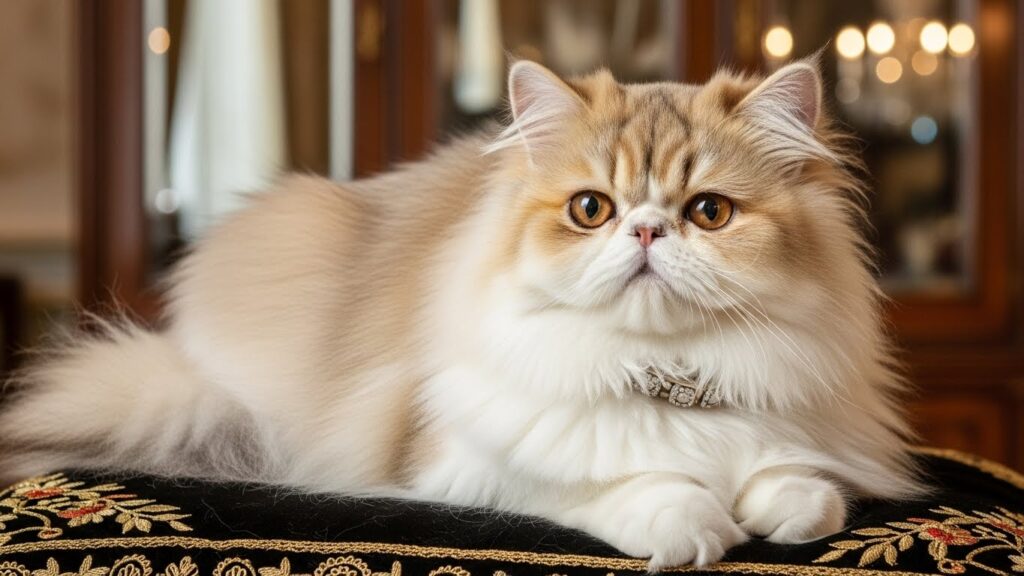
The Persian cat is a well-known and elegant breed with a solid build and a soft, silky coat. It is easily recognized by its round face and short muzzle, which give it a distinctive and gentle expression. This breed is often seen as aristocratic due to its calm presence and graceful appearance.
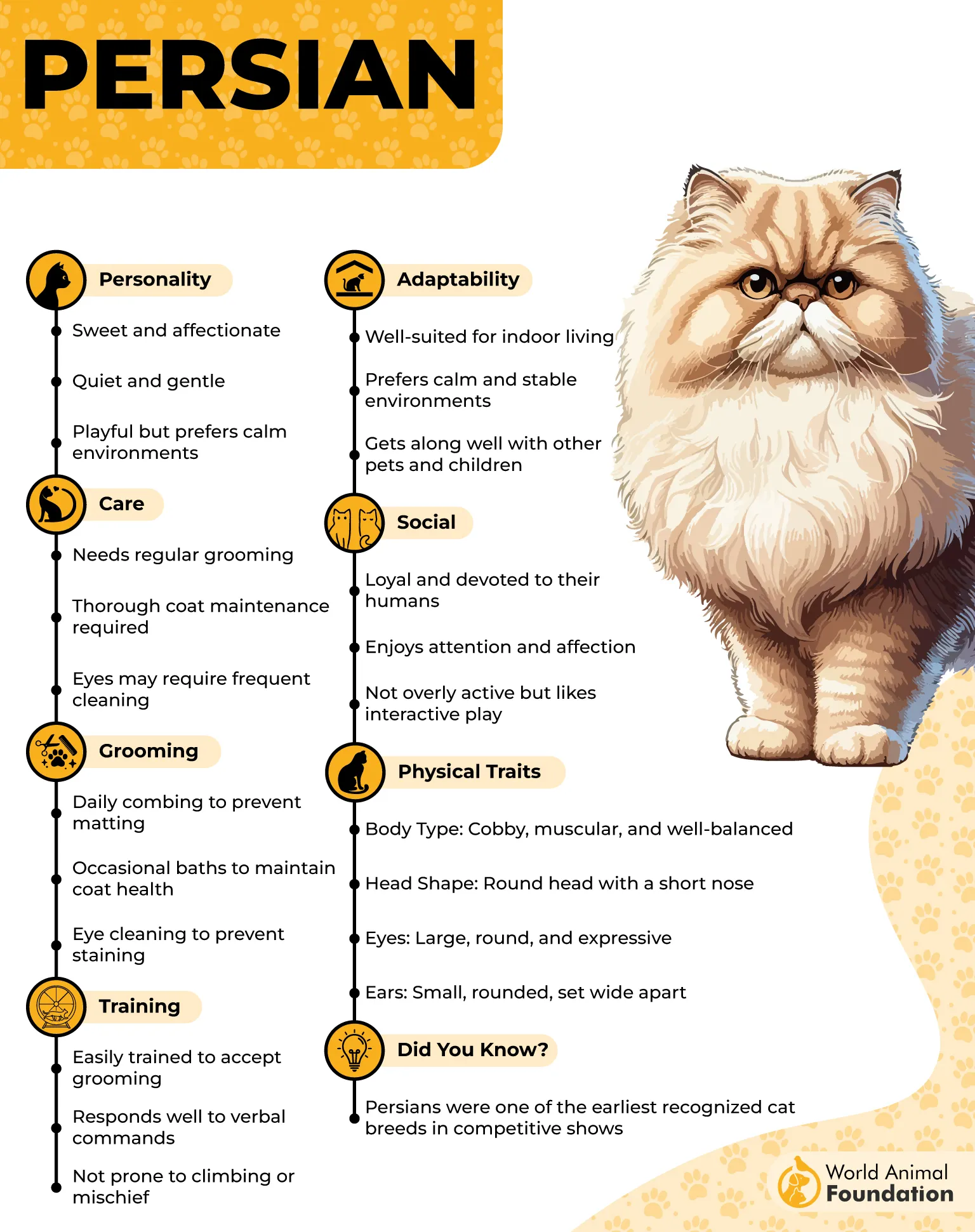
Persians come in a wide variety of colors, including blue-cream, calico, seal, white, cream, and lilac. They also display many coat patterns, such as bi-color, tricolor, tabby, shaded, and pointed patterns. Their thick fur highlights bi-color markings beautifully, making them especially eye-catching.
In terms of personality, Persian cats are laid-back and mild-tempered. They enjoy quiet companionship and show short bursts of playful, kitten-like energy. Persians make great lap cats on their own terms and tend to get along well with everyone.
6. Ragdoll
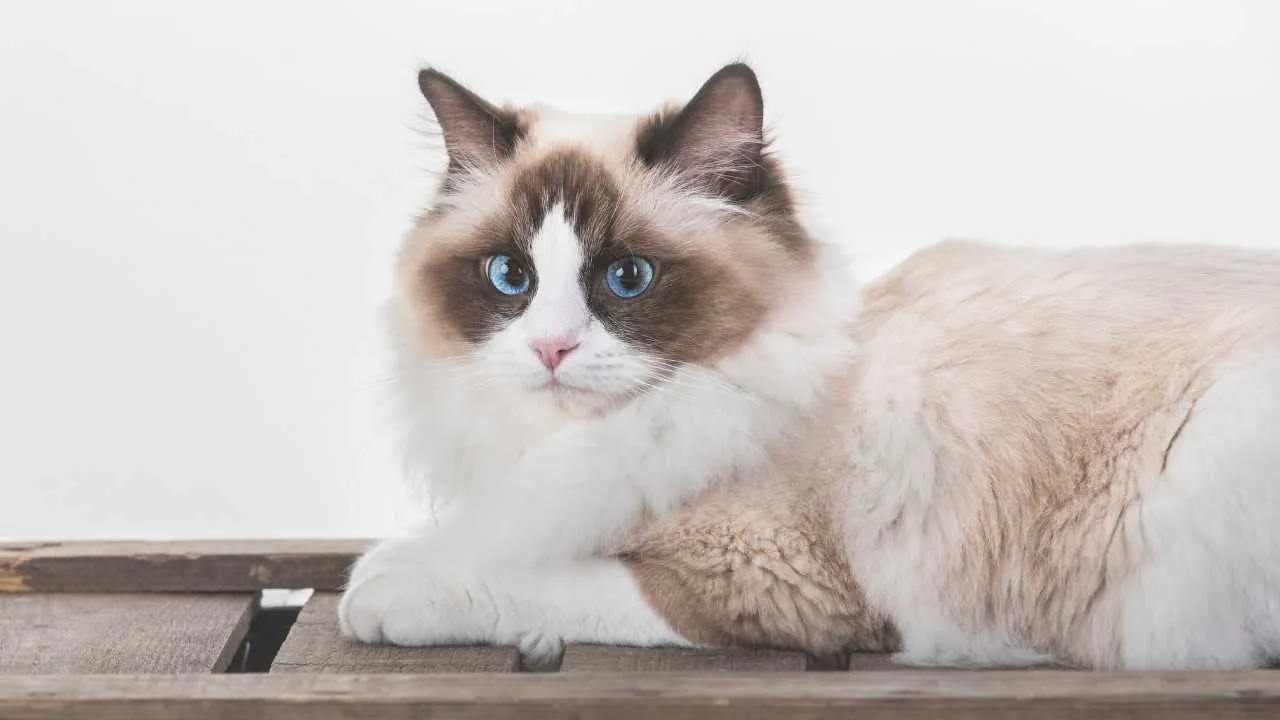
The Ragdoll cat is a breed that originated in the United States and is best known for its calm and gentle nature. PetMD says that these cats are famously relaxed and often go completely limp when picked up, which is exactly how they earned the name “Ragdoll.”
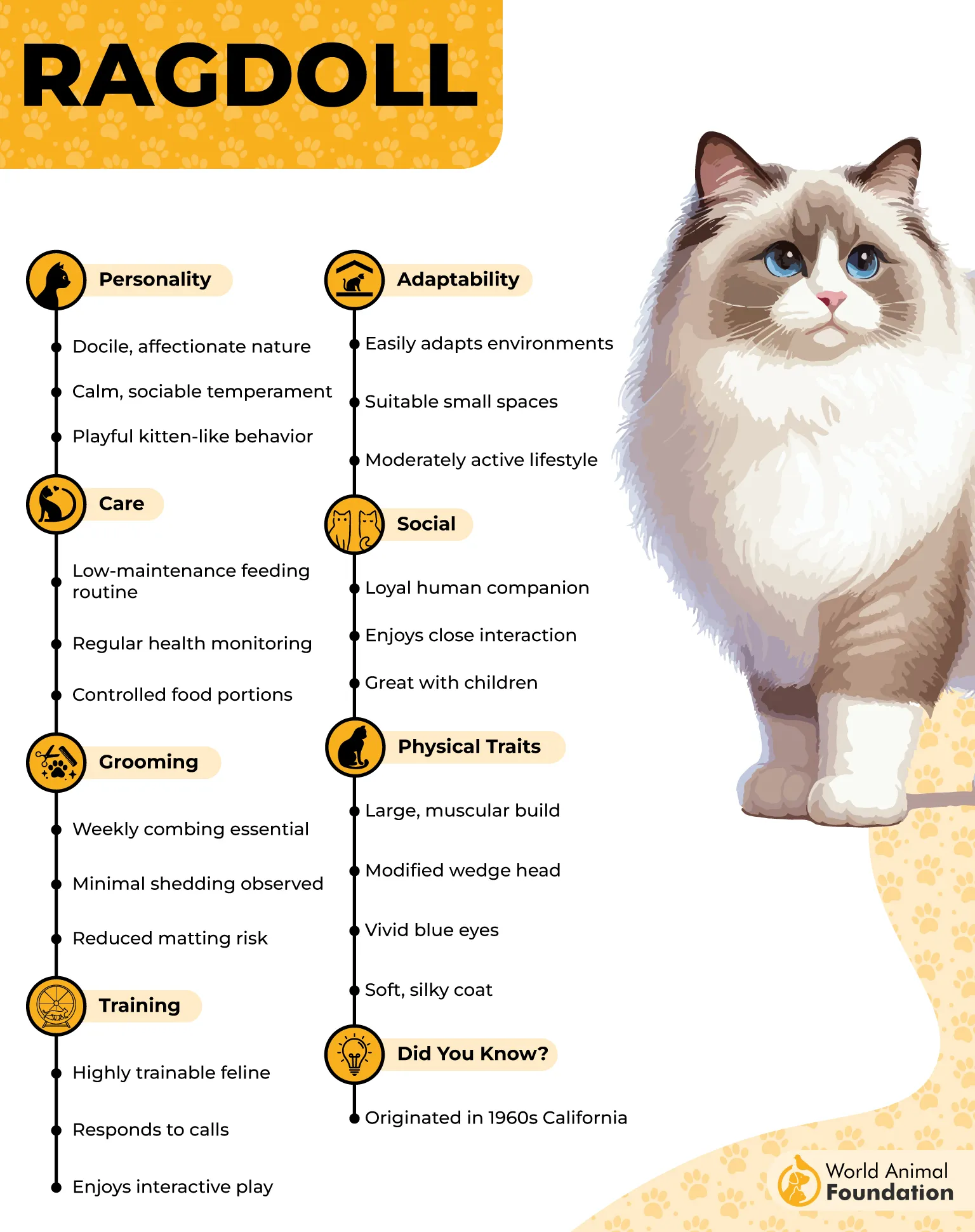
Ragdolls have a very soft coat made up mostly of guard hairs, giving their fur a smooth and plush feel. Their coloring comes in six main shades: seal, chocolate, red, and the diluted versions—blue, lilac, and cream. These colors can also appear in lynx or tortoiseshell variations.
When it comes to patterns, Ragdolls are seen in colorpoint, mitted, and bicolor coats, making them a perfect fit for this list. Ragdoll kittens are born white and begin showing color around 8 to 10 weeks of age. Their coat continues to develop slowly, reaching full color and maturity between 3 and 4 years.
7. Siberian
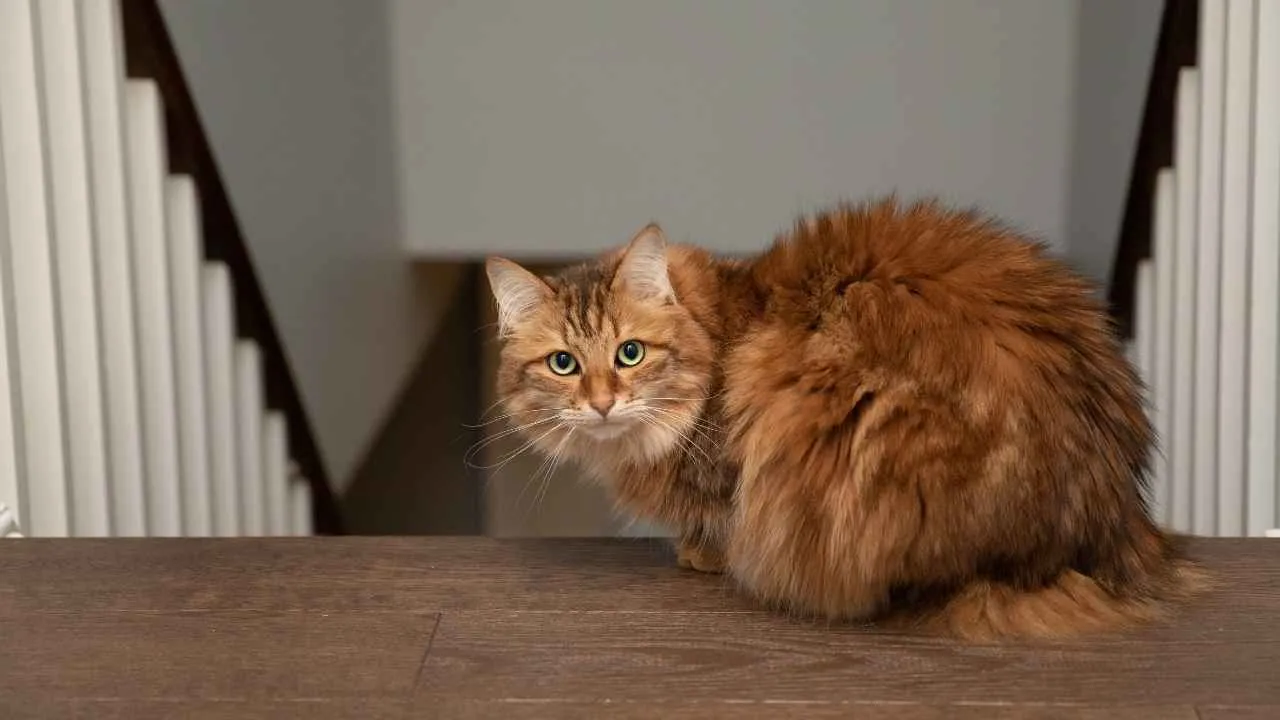
The Siberian cat is a natural breed that comes from Russia and has lived there for centuries. This breed is well adapted to harsh climates and is known for its thick, beautiful fur.
Its strong build and rounded body shape give it a powerful yet balanced appearance. Siberians are admired for their friendly personality and overall robust health.
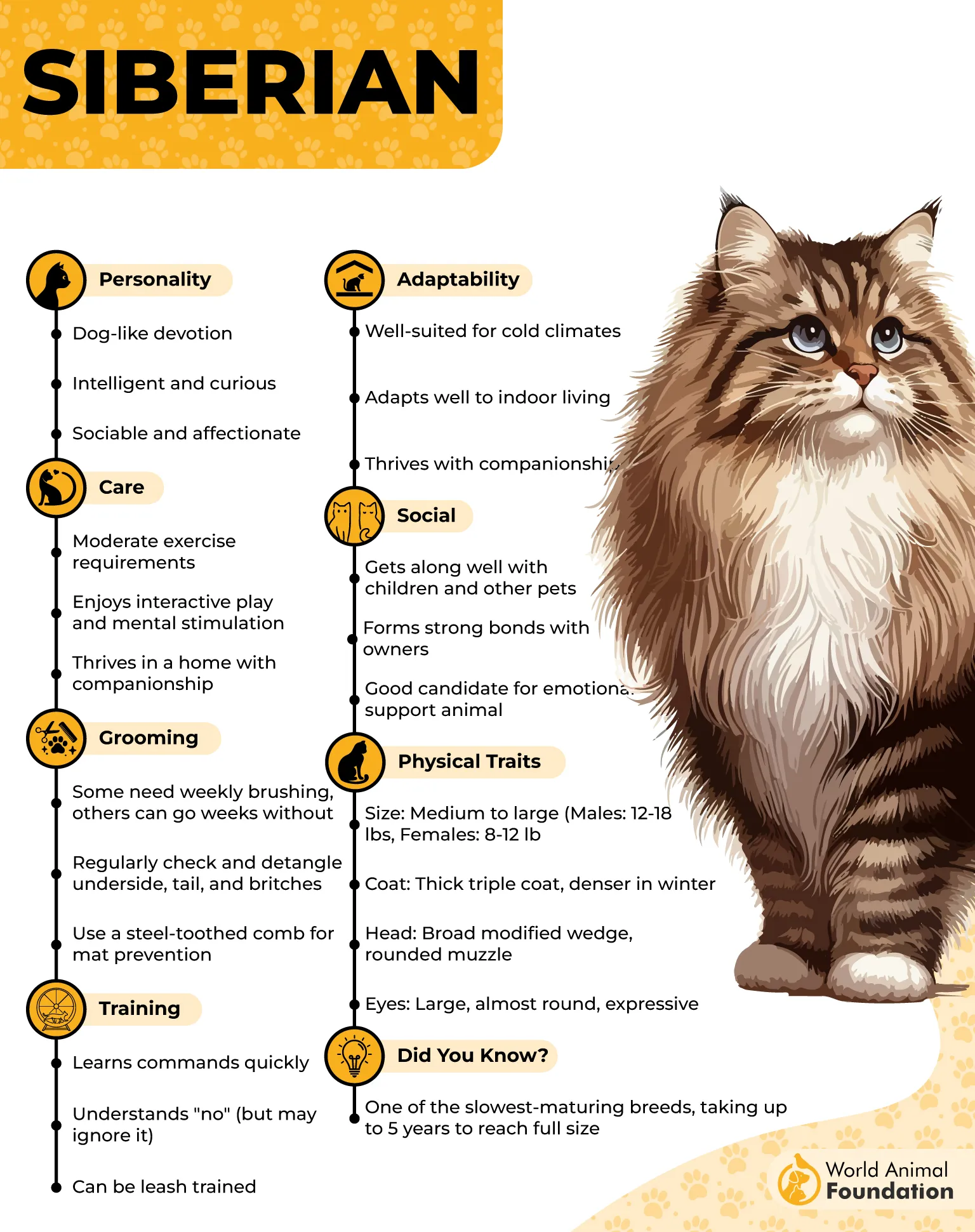
The coat of the Siberian cat is medium to long, with a noticeable collar around the neck and a dense undercoat. This heavy fur helped the breed survive extreme cold temperatures for generations.
Siberians come in many coat colors and patterns, including bicolor, though some colors are not seen in this breed. Their rich coat texture makes bi-color markings look especially bold and attractive.
One of the most interesting traits of the Siberian cat is that it is considered the most hypoallergenic cat breed. It tends to produce fewer allergens, which may make it suitable for people with cat allergies.
8. Oriental
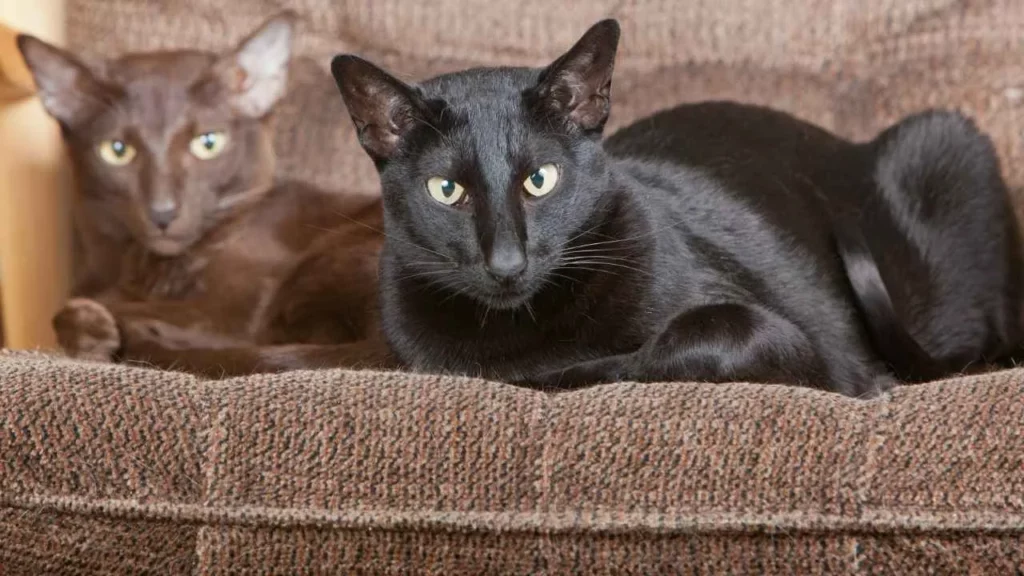
The Oriental bicolor cat refers to any Oriental-type cat that has white areas mixed with another coat color. These cats are easy to recognize by their sleek bodies and striking contrast between white and colored fur. Most Oriental bicolors have green eyes, while colorpoint varieties are the exception and have blue eyes.
In many Oriental bicolor cats, the white spotting appears more often on the legs and underside than on the back. This creates a clean and balanced bi-color look that highlights their slim, elegant shape.
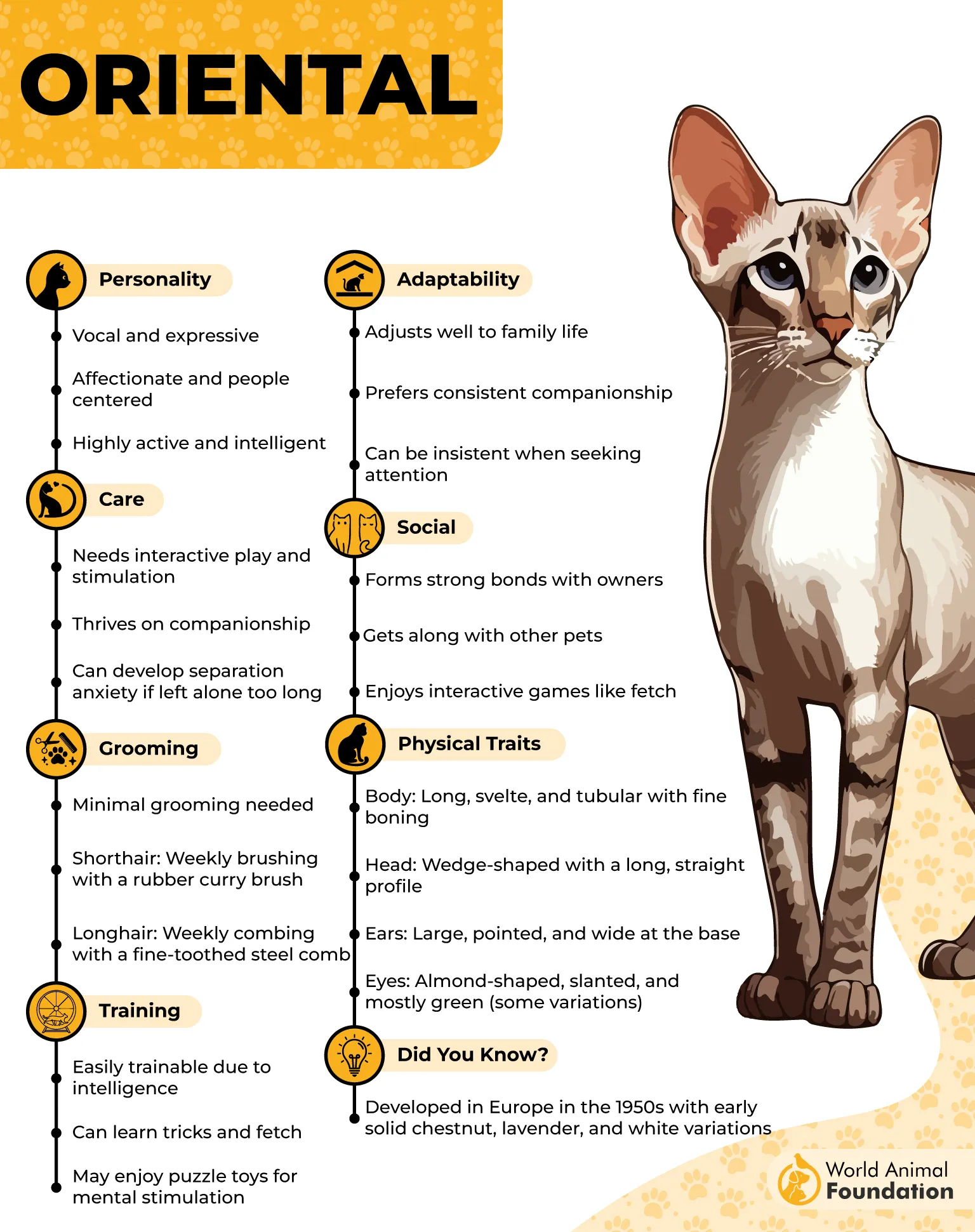
Their short coat lies close to the body, which makes the white patches and color contrasts stand out even more.
Oriental cats are known for their social, friendly, and highly adaptable nature. They are intelligent and lively, often described as the “greyhound of cats” because of their sleek profile.
These cats crave attention and form strong bonds with their owners. After being alone, they often seek closeness and affection.
9. Cornish Rex
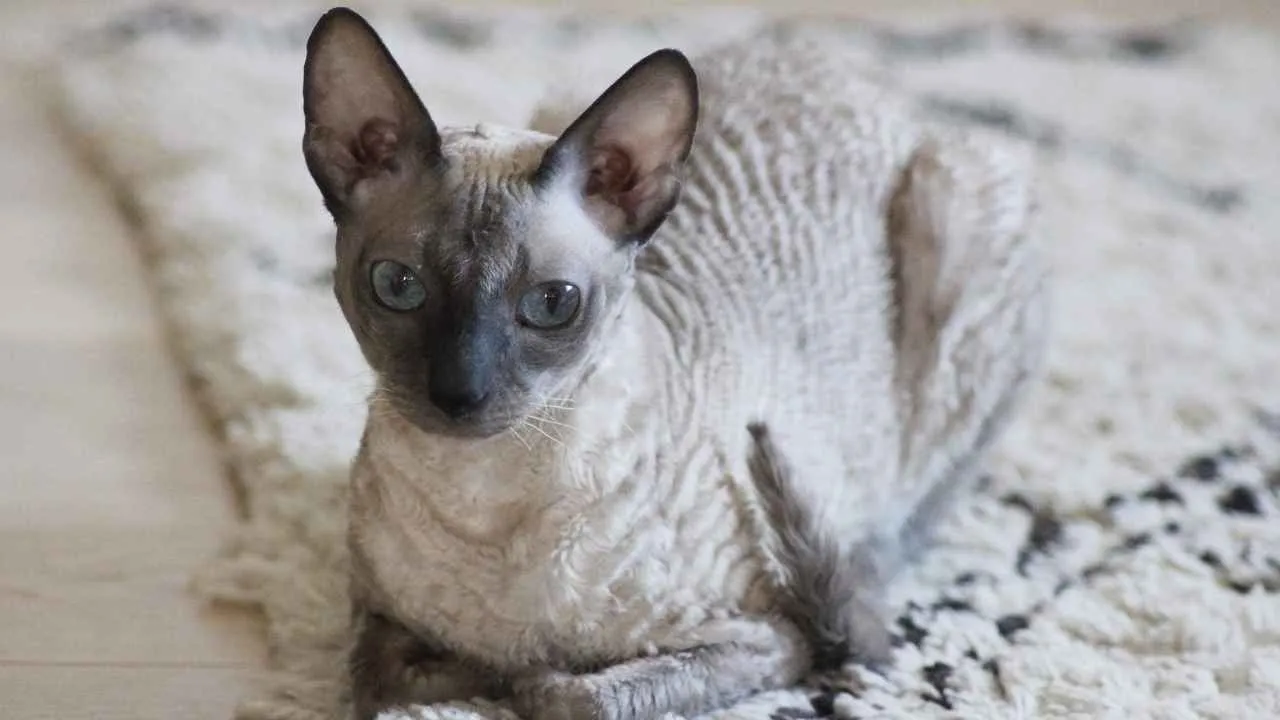
The Cornish Rex cat is easily recognized by its unique curly coat, which feels very soft and silky. Unlike most cats, Cornish Rexes don’t have guard hairs; their fur is made up only of a curly undercoat, according to Purina.
Cornish Rex cats come in many colors and patterns, including chocolate, silver, pure white, red, tabby, tortoiseshell, calico, and bicolor. Their short and fine fur shows off bi-color markings clearly and beautifully.
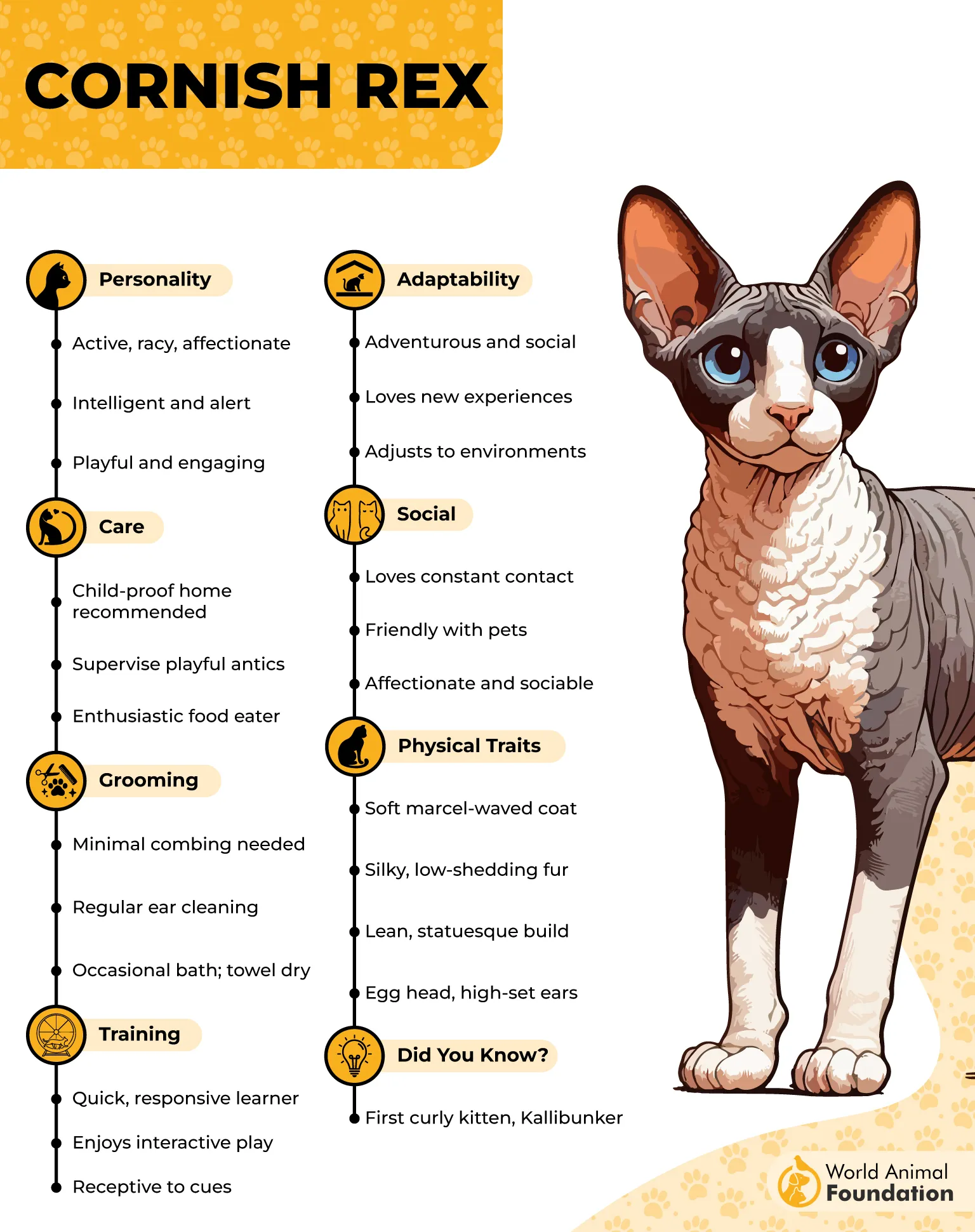
Known for their outgoing and energetic personality, Cornish Rex cats are highly active and playful. They tend to get along well with both humans and other pets, making them a lively and affectionate member of any household. Their slender bodies and large ears give them a distinctive, elegant look that pairs perfectly with their unusual coat.
This breed also loves interactive play and mental stimulation, so they thrive in homes where they get plenty of attention and activities.
Conclusion
Bi-color coats add a special charm to cats, making their patterns truly eye-catching and unique. Some of the most popular bi-color patterns include magpie cats, harlequins, tuxedos, and other distinctive designs.
These patterns are often described using terms like tuxedo pattern (featuring white mitts, belly, and chin, sometimes with a white-colored tail-tip), or patched, pied, particolored, harlequin, and magpie cats—typically white with colorful splashes on the back and head.
Genetically, all these patterns fall under the umbrella term “piebald” or “white spotted,” which refers to the varying degrees and distribution of low-grade white spotting that creates the endless variety seen in bi-color cats. This fascinating genetic diversity means no two bi-colored cats are ever exactly alike, making each one truly special.
Whether you’re a long-time cat lover or just starting your journey, take a moment to appreciate the magic of bi-color cats—you might just find a charming companion whose pattern and personality speak directly to your heart.
