




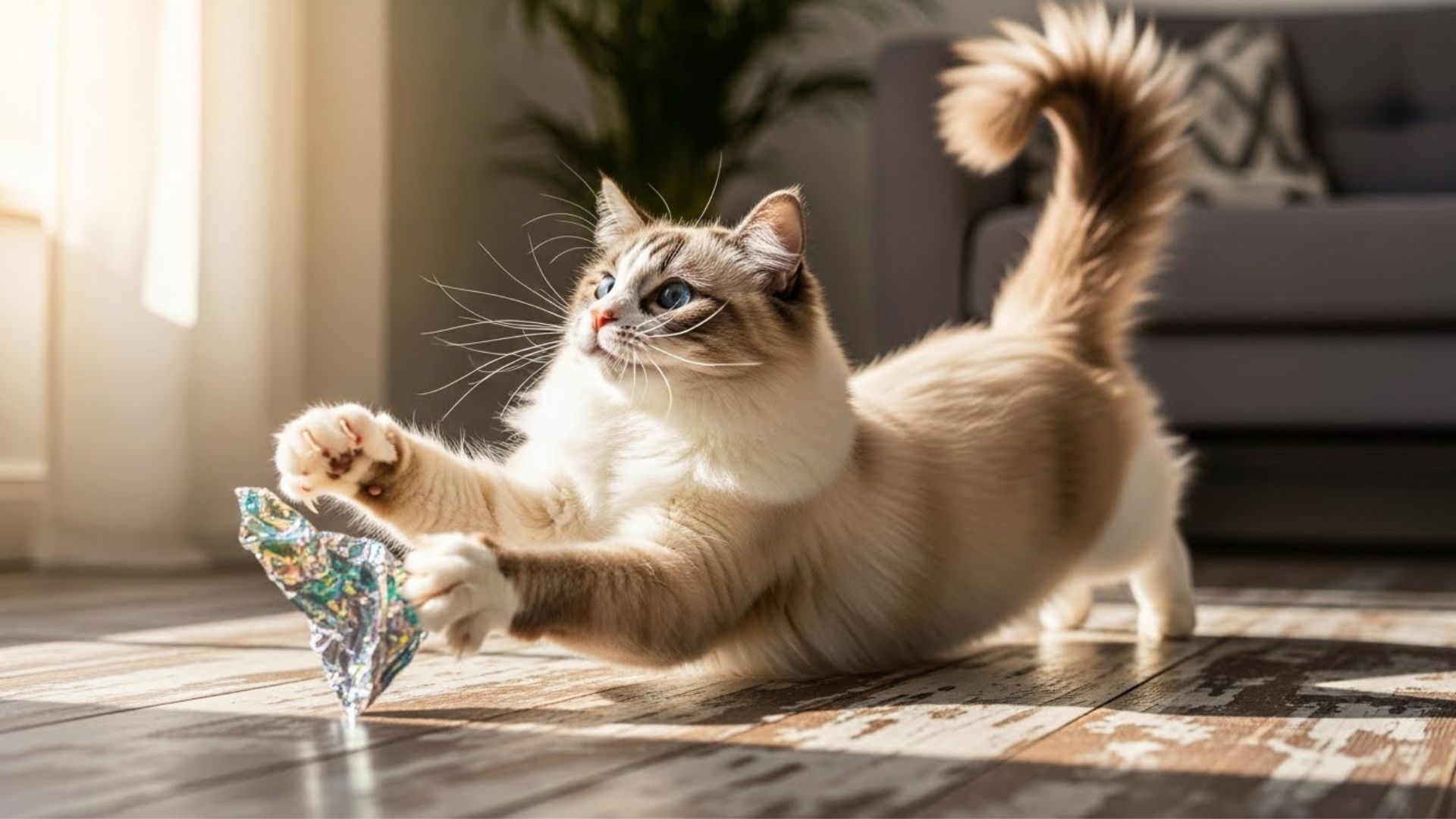
For thousands of years, cats have occupied a unique place in human life. Across cultures, these graceful animals were never considered ordinary pets. Instead, cats were believed to possess a deeper connection to the spirit world, acting as guardians, messengers, and even divine beings. From sacred temples to royal courts, cats were intricately woven into myths, beliefs, and everyday life.
Unlike dogs, who were often celebrated for loyalty and labor, cats were admired for their independence, mystery, and quiet intelligence. This made them ideal symbols in fairy tales, religious texts, and folklore. Many ancient societies believed, according to Greek mythology, that cats could see what humans could not, moving freely between the mortal realm and unseen worlds.
Some of today’s most recognizable mythical cats still carry the echoes of those ancient stories. Their physical traits, behaviors, and reputations are deeply rooted in legend. These are not just beautiful animals for domestication; they are living remnants of humanity’s earliest spiritual beliefs.
Let’s explore several remarkable wild cat breeds with archaic folklore connections and uncover how myth, magic, and history shaped their enduring legacy.
7 Cat Breeds with Ancient Folklore Connections
1. Egyptian Mau
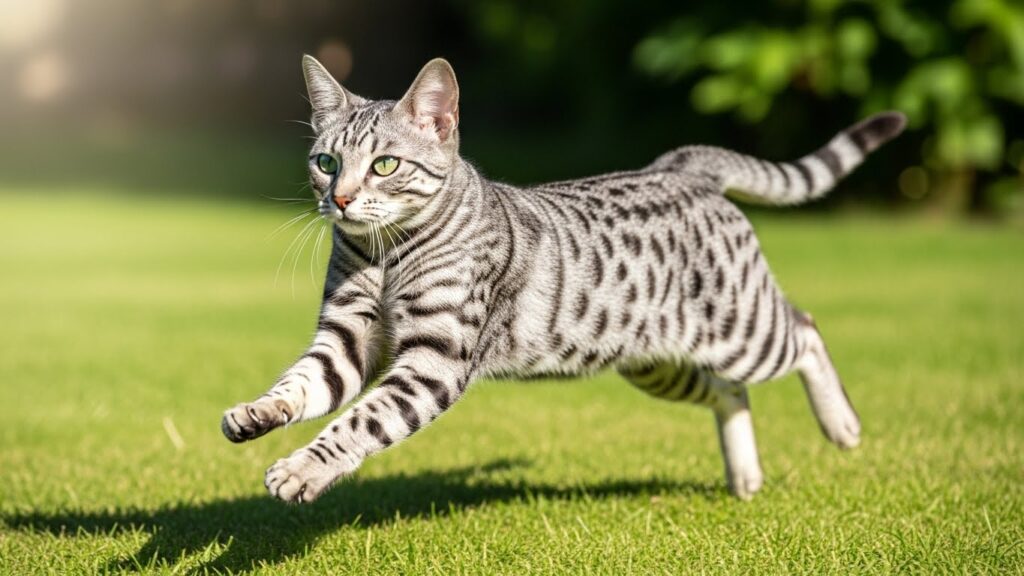
The Egyptian Mau is one of the oldest cat breeds known to humans, with a lineage tracing directly back to ancient Egypt.
Spotted cats resembling it appear in ancient Egyptian art dating back thousands of years, where they were frequently depicted alongside pharaohs, nobles, and gods. These cats were not merely decorative figures; they were deeply revered animals believed to embody divine qualities.
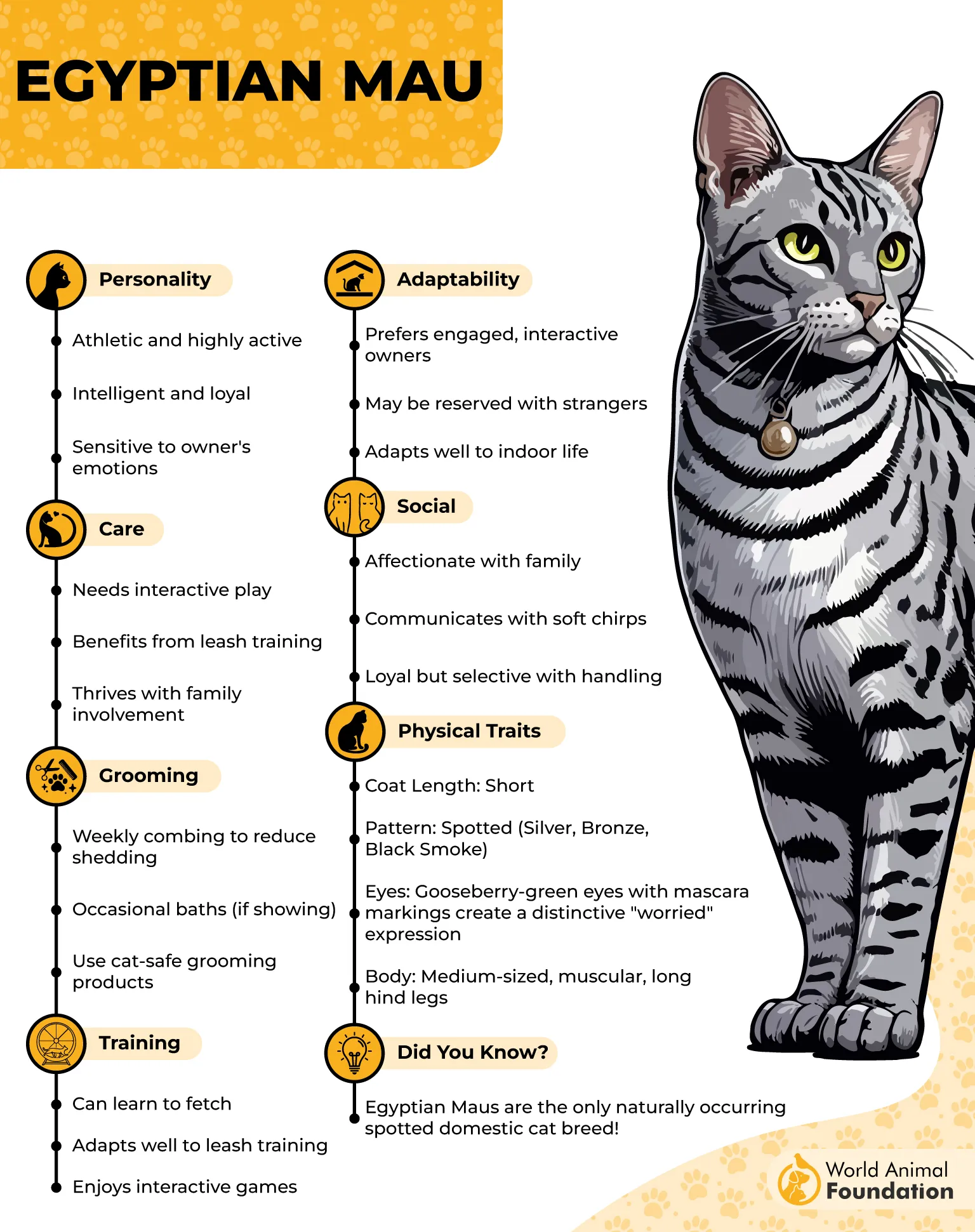
Central to the Mau’s mythology is the goddess Bastet, the beloved feline deity of home, fertility, protection, and joy. Often shown with the head of a domestic cat, Bastet represented the gentle yet powerful nature of cats. Egyptians believed cats were her earthly manifestations, and harming one was considered a serious crime. It, with its elegance and alert expression, became closely associated with her worship.
One of the most potent myths describes the sun god Ra transforming into a giant cat named Mau to defeat the chaos serpent Apophis. This legendary battle symbolized the triumph of order over evil and reinforced the belief that cats protected the world from malevolent forces. In this role, the Mau was seen as both guardian and warrior.
Cats were mummified, honored in sacred ceremony, and buried with humans to accompany them into the afterlife. The Mau’s distinctive forehead marking, often called the scarab mark, further ties it to ancient Egyptian symbolism of rebirth and life. Even today, this breed carries the dignity and mystery of its divine past.
2. Birman
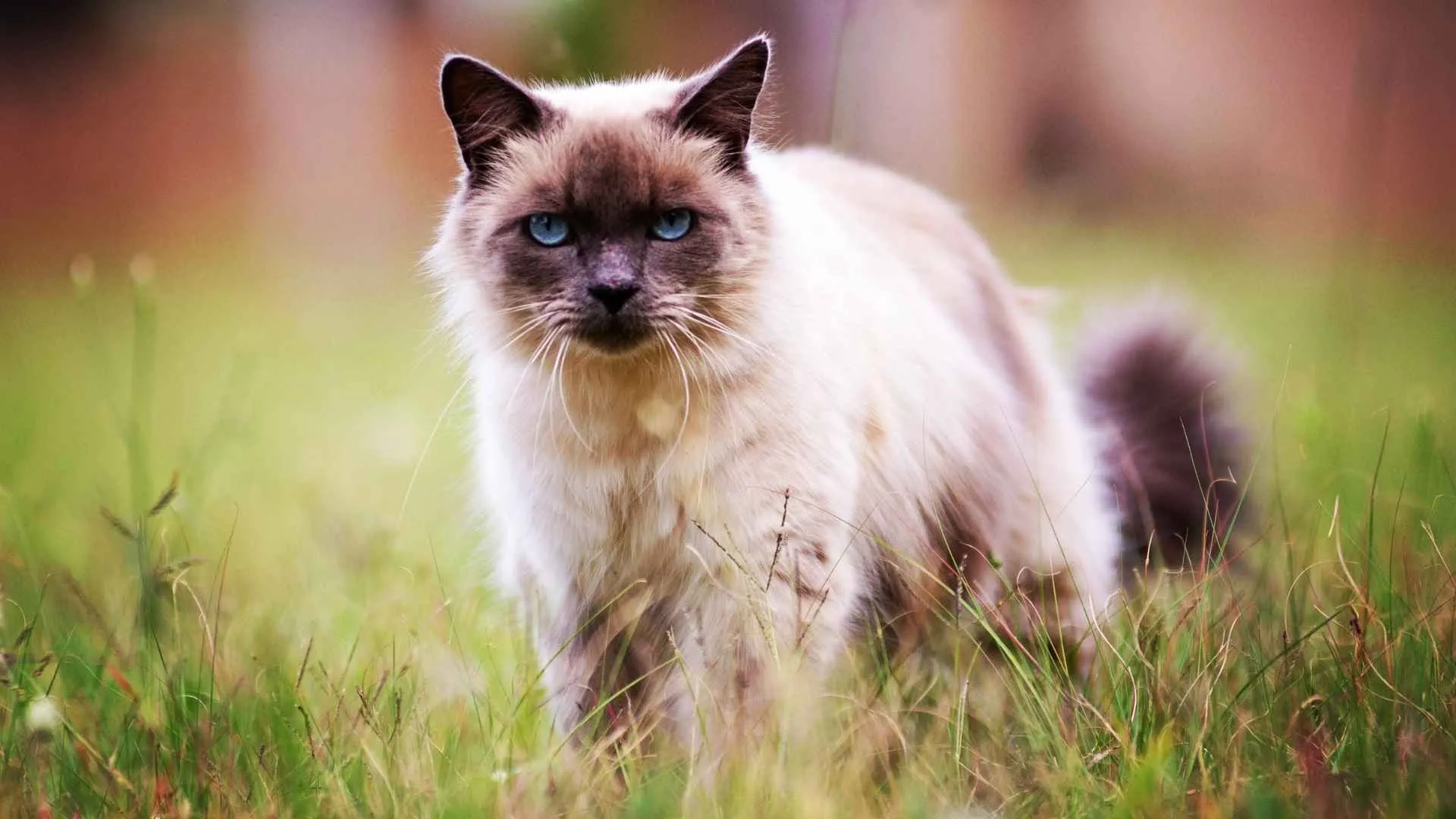
The Birman, also known as the Sacred Cat of Burma, is a breed wrapped in legend and devotion. Although formally recognized in Europe in the twentieth century, the Burmese folklore stretches far deeper into ancient temple traditions.

According to legend, these cats lived alongside priests and were revered as spiritual guardians.
The most famous story centers on a temple cat named Sinh, who belonged to the head priest, Mun-Ha. When the temple was attacked, and the priest lay dying, Sinh placed his paws upon his master and gazed at the statue of the goddess Tsun-Kyan-Kse. In that moment, a divine transformation occurred.
Sinh’s white fur turned golden like the goddess’s statue, his eyes became sapphire blue, and his paws remained white as a symbol of purity. This transformation was seen as a divine reward for loyalty and faith. Shortly after, all the temple cats changed in the same way, marking them as sacred beings.
The Birman’s white-gloved paws remain a defining trait today, serving as a reminder of this ancient story. Calm, affectionate, and deeply bonded to humans, the Birman continues its legacy as a spiritual companion rather than just a pet.
3. Norwegian Forest Cat
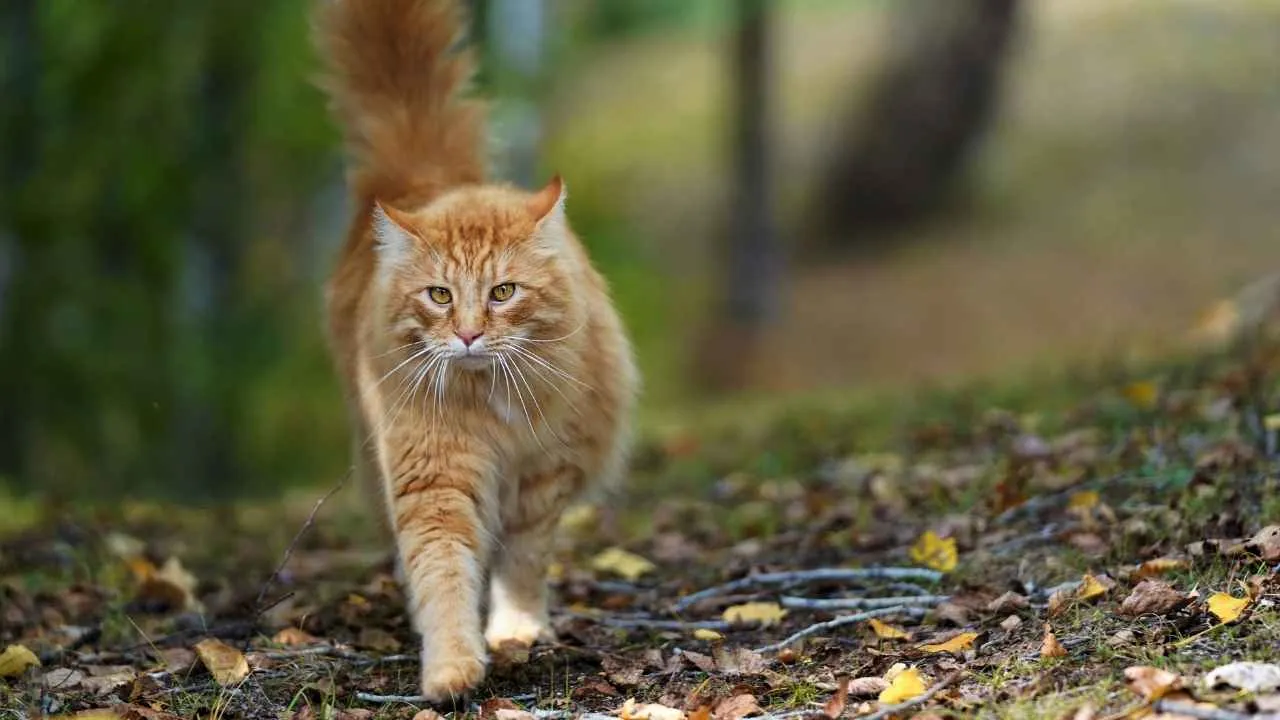
The Norwegian Forest Cat emerges straight from the icy landscapes of Scandinavian folklore and Norse mythology. Large, powerful, and thick-coated, this breed looks as though it belongs in ancient legends—and according to myth, it does. According to Spruce Pets, these cats were believed to possess strength beyond that of ordinary animals.
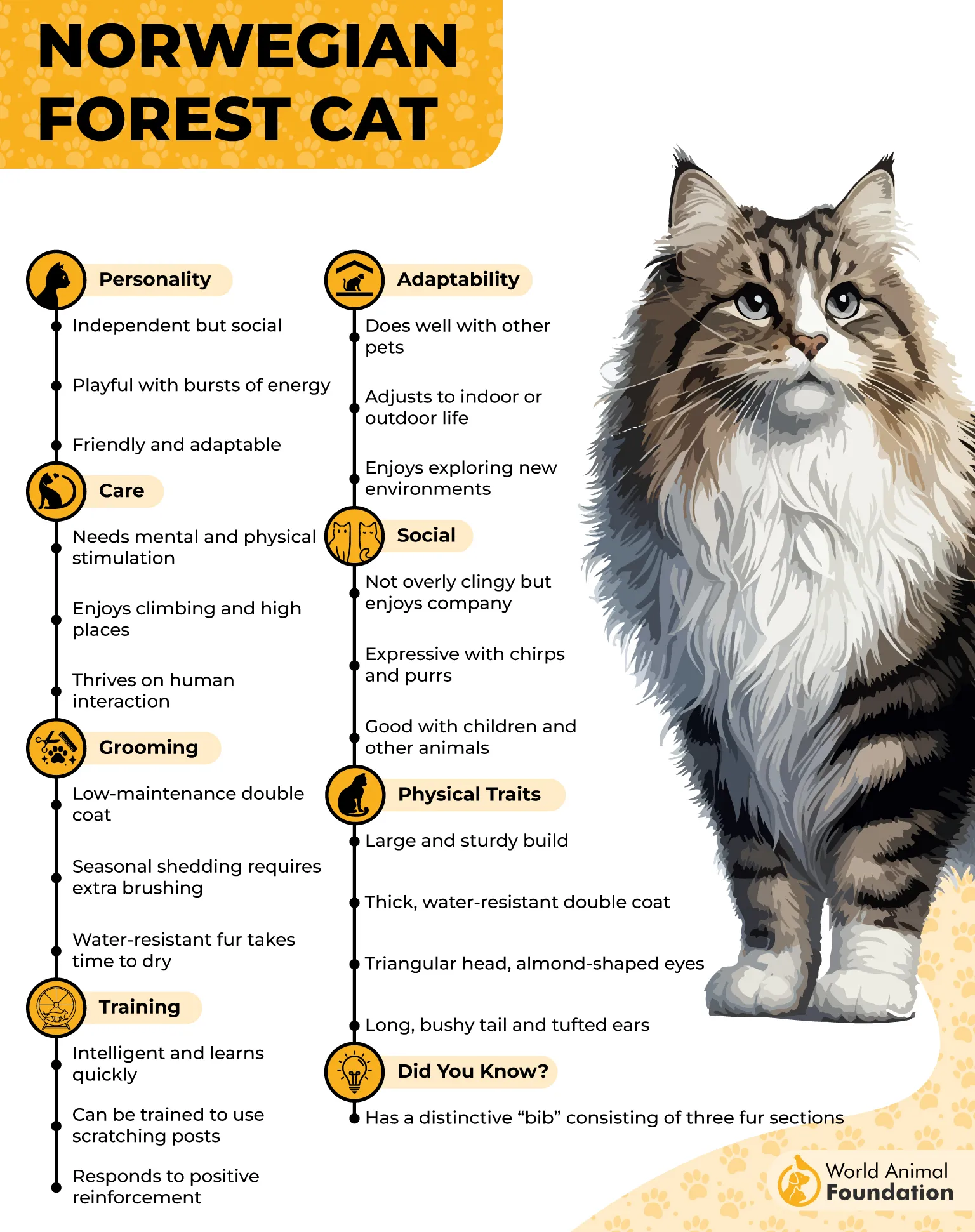
In Norse mythology, the goddess Freyja, associated with love, fertility, and beauty, rode a chariot pulled by two enormous cats widely believed to resemble it. Because of this connection, these cats became symbols of good fortune, love, and prosperity. They were often gifted to newlyweds to bless marriages.
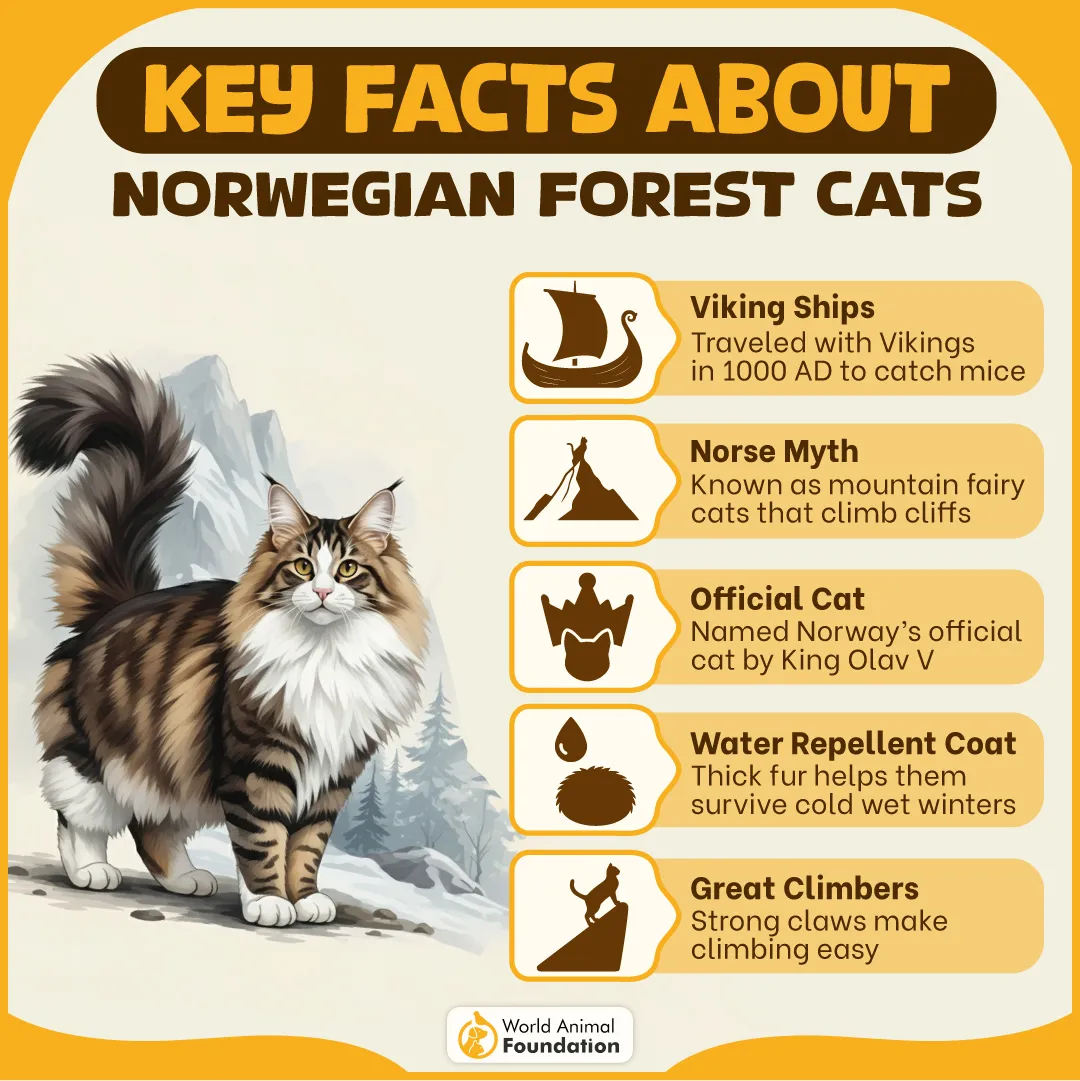
Another famous tale involves Thor, the god of thunder, who was challenged to lift a massive cat. Unbeknownst to him, the cat was actually the world serpent Jörmungandr in disguise. Even Thor could barely lift it, emphasizing the mythical strength attributed to feline creatures.
Beyond myth, they were invaluable feline companions to Vikings. They protected food supplies from rats and adapted perfectly to cold climates. Their agility and climbing ability inspired tales of mountain-dwelling fairy cats with supernatural powers.
4. Korat
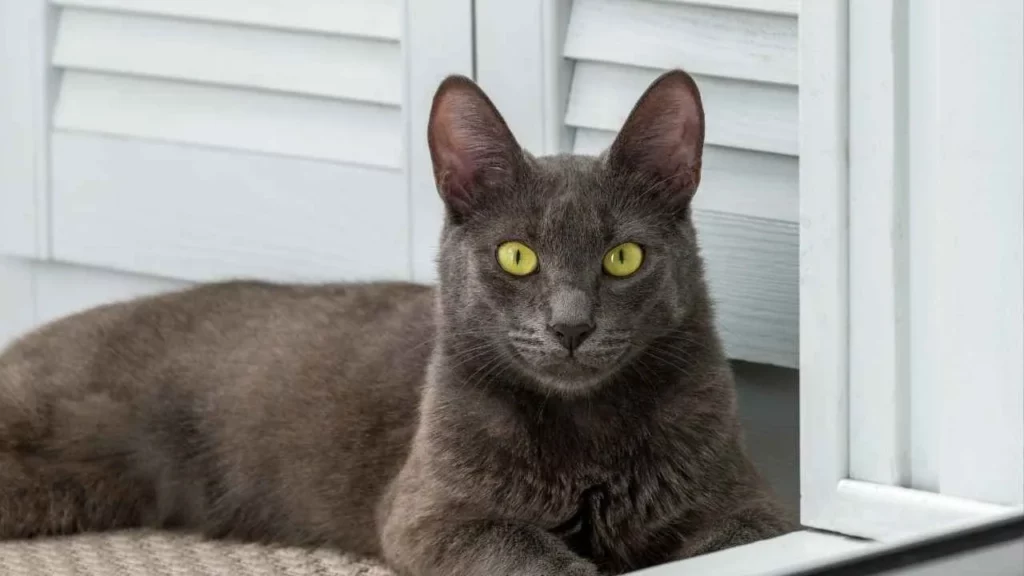
The Korat is a treasured breed from Thailand with a long history steeped in tradition and folklore. The earliest written record of the Korat appears in ancient manuscripts known as cat book poems, which list cats believed to bring good fortune.
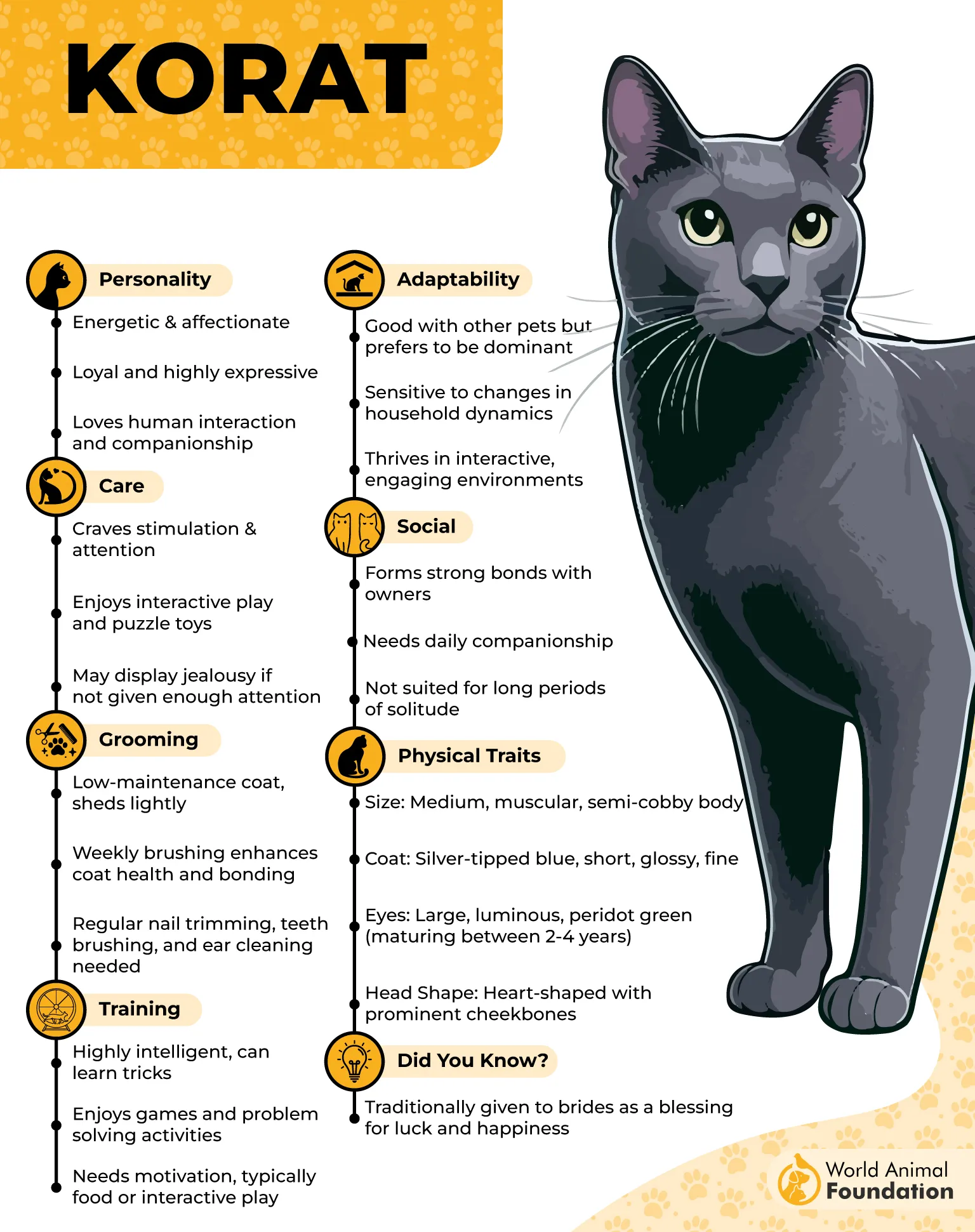
The Korat was among the most revered of these lucky cats.
Known locally as Si Sawat, it was never sold in Thailand; it was only gifted, underscoring how highly valued the breed was. Its silver-tipped coat and luminous eyes inspired poetic descriptions comparing it to dew on lotus leaves. These cats were believed to bring prosperity, harmony, and protection.
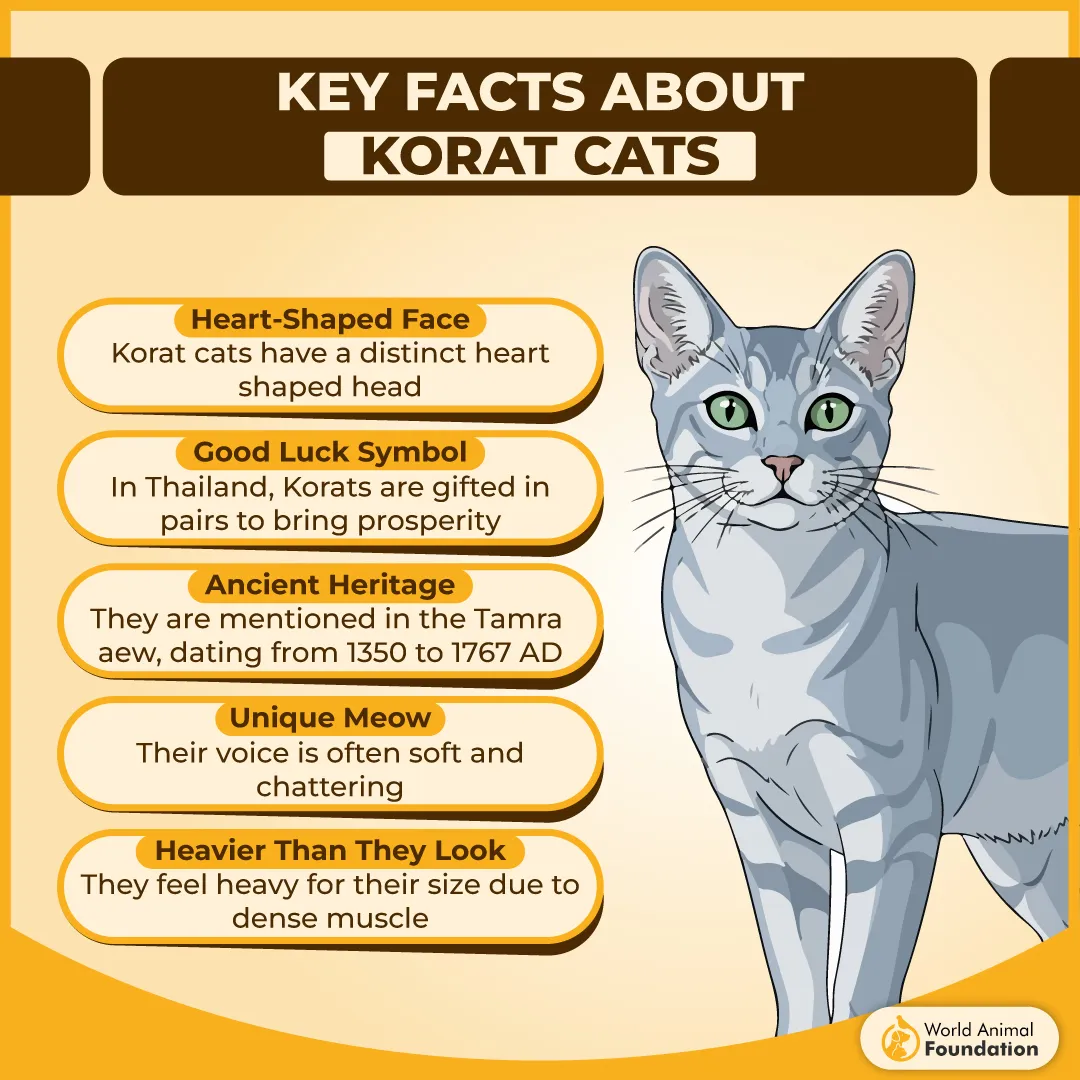
Folklore suggests that Korats had the power to influence rainfall, making them especially important in agricultural communities. Some legends even claimed Korats with kinked tails increased luck and abundance for their owners.
Even today, the Korat is cherished not only for its beauty but for its symbolic meaning. Calm, intelligent, and deeply bonded to humans, the Korat remains a living symbol of luck and spiritual connection.
5. Dragon Li
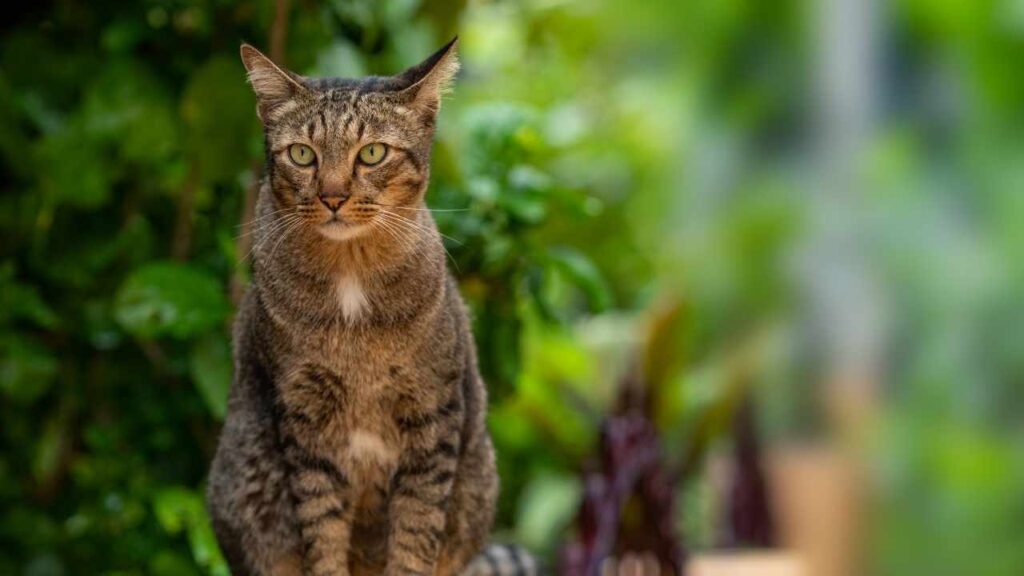
The Dragon Li is one of China’s oldest natural cat breeds and is considered a national treasure. Believed to descend from the Chinese mountain wildcat, the Dragon Li has remained essentially unchanged for centuries. Its strong, athletic body reflects its ancient origins.
In Chinese folklore, these cats were believed to be protectors of the home and symbols of prosperity. Families kept them not only to control rodents but also to guard against negative energy and unseen dangers. These cats were thought to bring balance and harmony.
Their golden-brown coat with broken mackerel markings was often compared to brush strokes in Chinese calligraphy. This association linked the Dragon Li to wisdom, culture, and refinement rather than mere utility.
Unlike many modern breeds shaped by selective breeding, the Dragon Li represents a long-standing partnership between humans and cats. It stands as a living bridge between ancient belief and modern companionship.
6. Manx
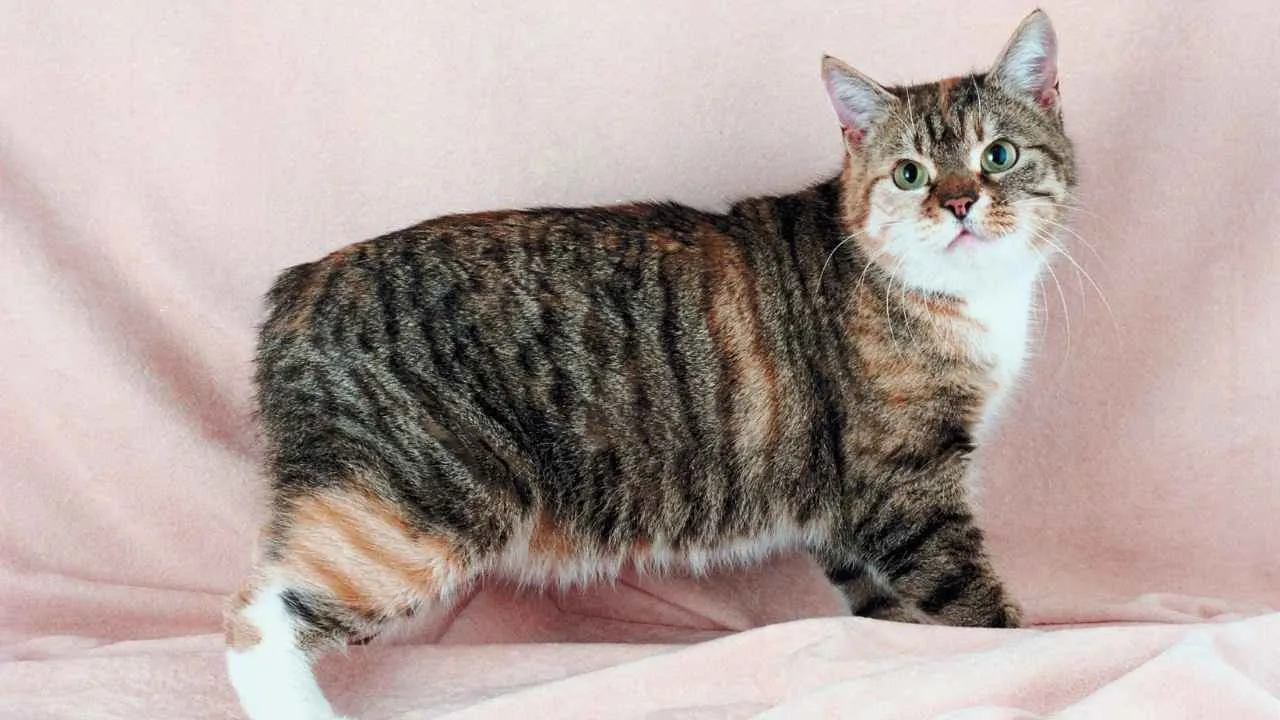
The Manx cat originates from the Isle of Man, a land deeply rooted in Celtic mythology and supernatural lore. The island’s folklore is filled with spirits, fairies, and mysterious creatures believed to influence human fate.
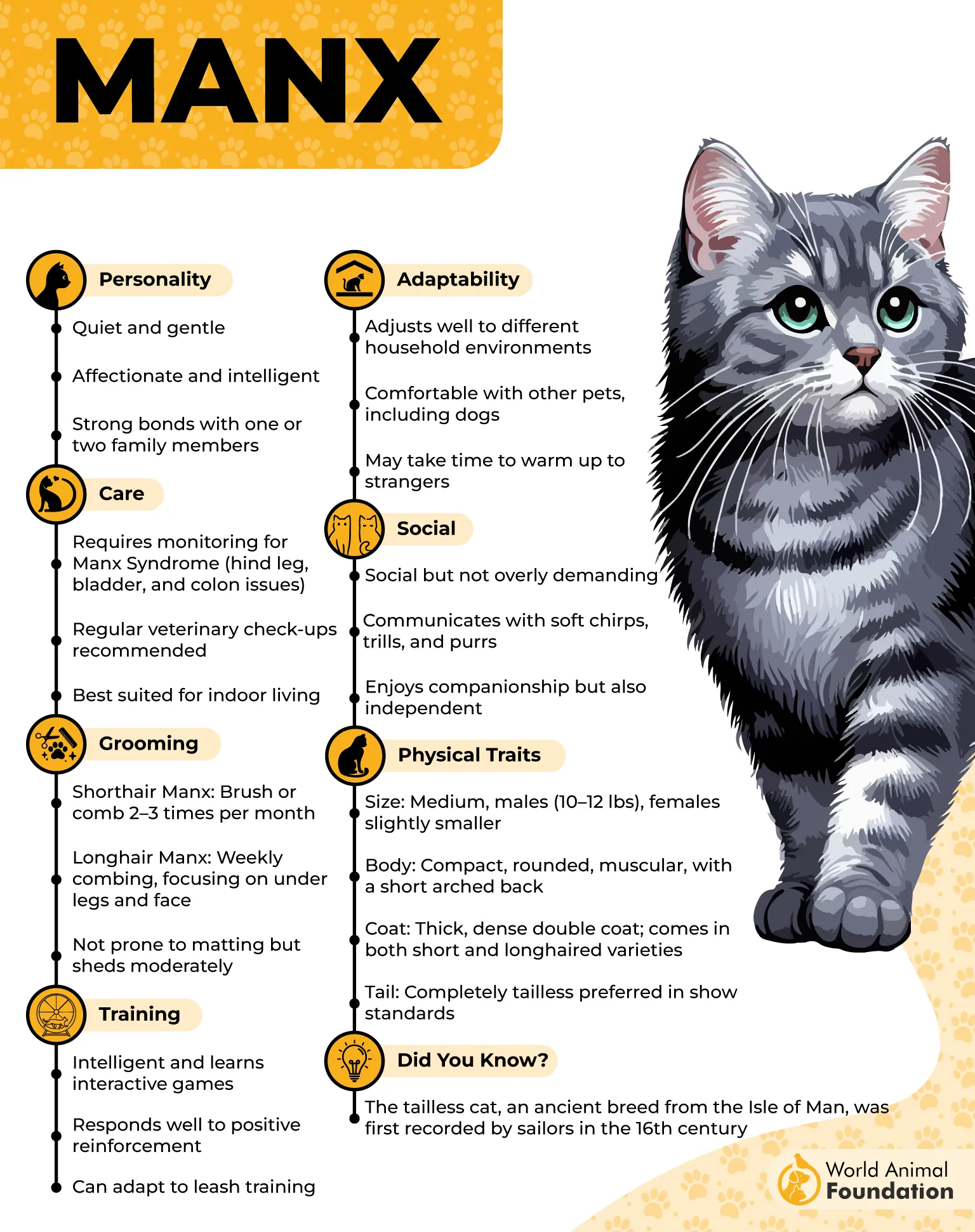
In such a setting, cats naturally took on mystical significance.
Legends from the region speak of fairy beings known as the Mooinjer Veggey and supernatural animals like the cat sith, a large black cat with blood red eyes believed to steal souls. These stories reinforced the belief that cats could move between worlds.
While the Manx cat itself is not consistently named directly in ancient tales, it emerged from a culture that believed animals possessed spirits and magic. Its unusual tailless appearance only added to its mystique.
Today, Purina mentions that Manx remains a symbol of mystery and heritage. Calm, intelligent, and intensely loyal, it carries the quiet magic of the land from which it came.
7. Nile Valley Egyptian Cat
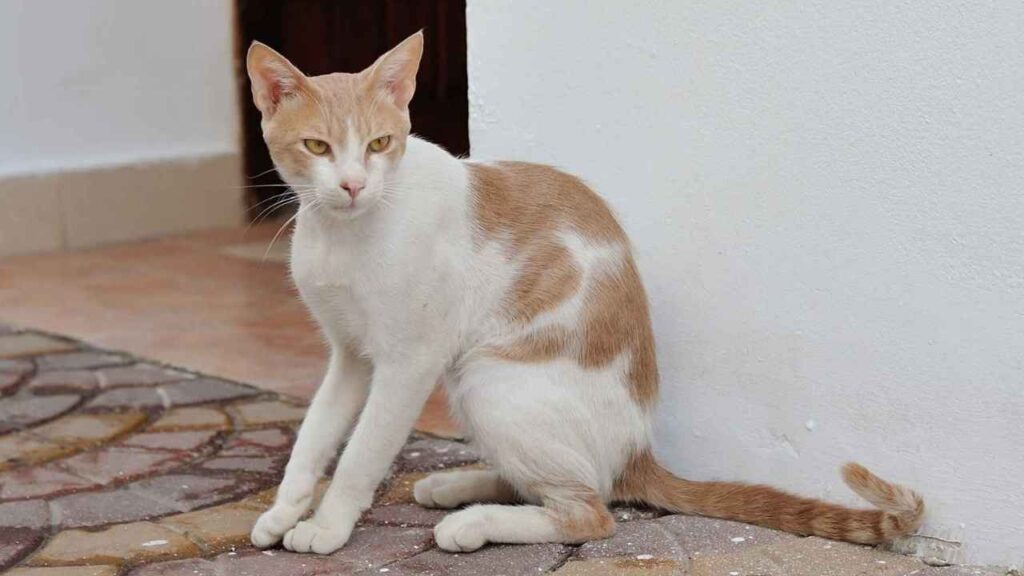
Beyond individual breeds, cats in the Nile Valley were universally revered in ancient Egyptian society. They were seen as protectors of homes, families, and even cosmic order. Their presence was believed to ward off evil spirits and misfortune.
ProfileMultiple feline deities shaped Egyptian belief, including Bastet, Sekhmet, and Mafdet. Each represented a different aspect of feline power, from nurturing protection to fierce justice. Together, they embodied the dual nature of cats.
Cats were honored through art, ritual, and mummification. Killing a cat, even accidentally, was considered a grave offense. Their role in society went far beyond companionship; they were sacred animals.
This reverence shaped how humans viewed cats for generations. Even today, the elegance and mystery of cats echo the divine status they once held along the Nile.
Conclusion
Throughout history, cats have been far more than pets, and they contain mind-blowing facts. They were guardians, symbols, and sacred beings believed to possess knowledge beyond human understanding. These ancient stories remind us why cats continue to fascinate and inspire.
Each breed explored here carries a legacy shaped by folklore, belief, and human imagination. From temples and mythic chariots to poetry and superstition, cats have always held an integral role in human culture.
For modern cat lovers, understanding these stories adds depth to everyday companionship. Each purr and watchful gaze carries echoes of ancient worlds.
In welcoming cats into our lives, we continue a tradition thousands of years old—one filled with magic, mystery, and timeless connection.
