




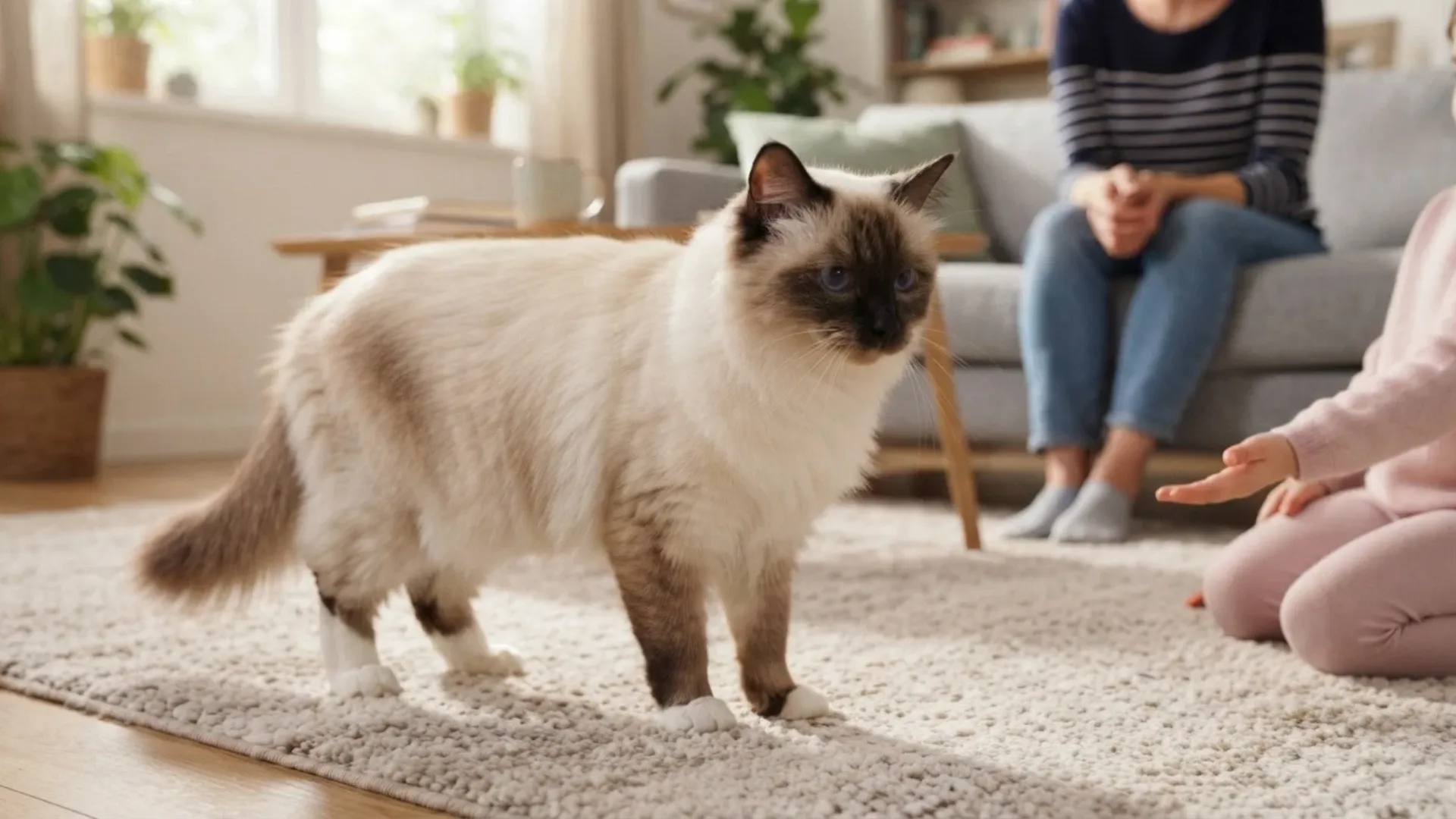
The history of felines suggests that not every friendly cat is a gentle one. Some will headbutt you one minute and bolt the next at a dropped spoon.
Gentleness is something else entirely. It is how a cat handles chaos, noise, tiny hands, and the general mess of family life without flinching.
That distinction matters more than most adoption guides admit. A cat can purr on command and still have zero patience for toddlers or barking dogs.
This list skips the usual guesswork. Instead, it looks at real temperament traits: how calm a cat stays under handling, how it reacts to noise, and how well it tolerates rough affection and other pets.
So before falling for the first soft meow you meet, read on. The most pawfect family companion is often hiding behind quieter, steadier traits than you expect.
Best Gentle Cat Breeds Perfect for Families
1. Ragdoll
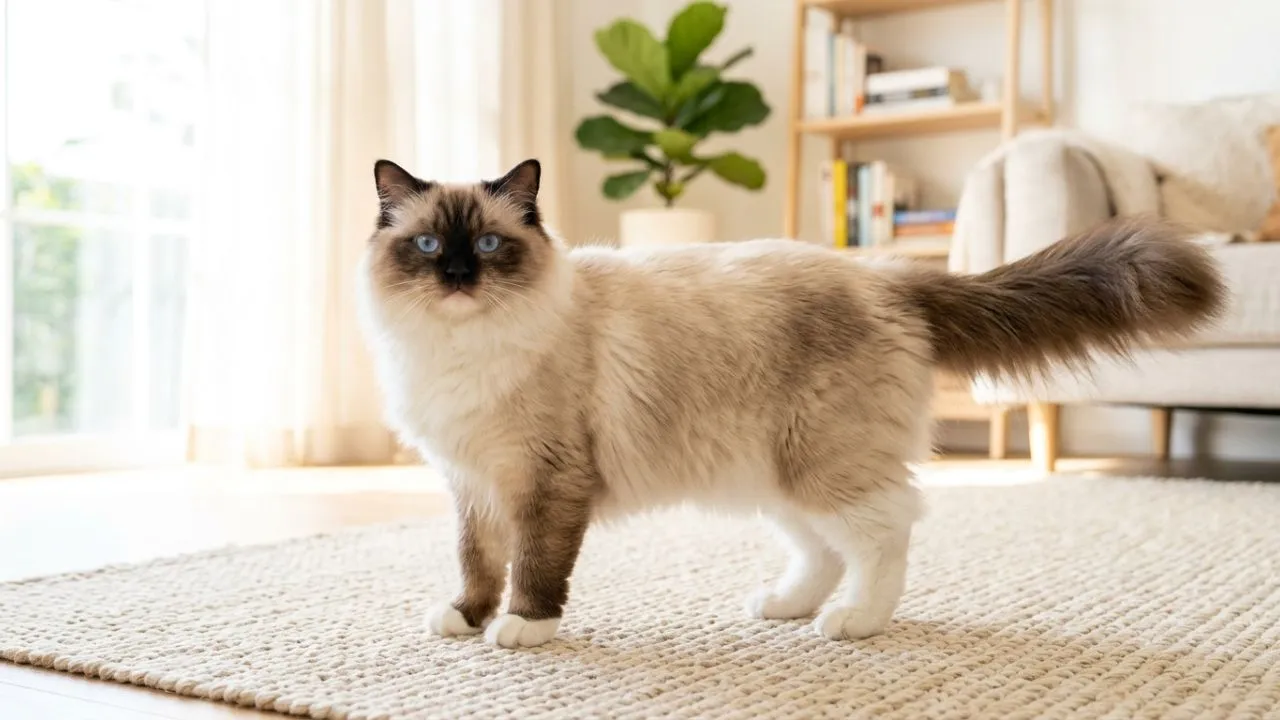
Pick a Ragdoll up, and it goes completely limp, true to its name, barely flinching at a sudden noise or a toddler’s shriek. That calm demeanor makes it one of the most forgiving choices among gentle cat breeds for families. WebMD notes this relaxed nature shows up early, even in kittens.
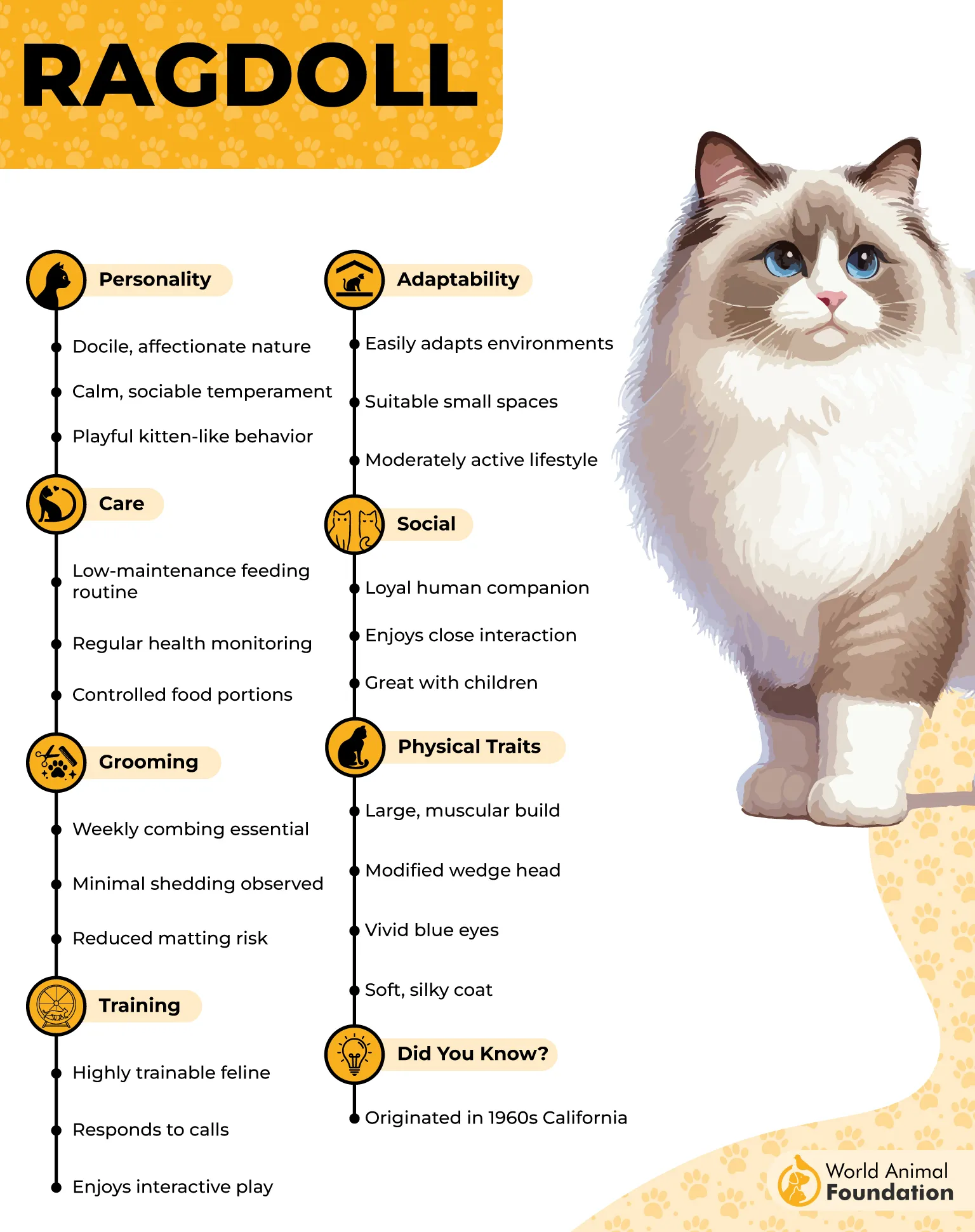
Toddlers can tug gently, and this feline friend just leans in for more interaction. It gets along well with other pets, including dogs, and treats most new faces as potential companions. Older kids enjoy teaching it simple tricks, since Ragdolls are surprisingly trainable for a cat.
Energy level: Moderate, with short bursts of playtime.
Play style: Enjoys interactive toys and chasing feather wands.
Living fit: Adapts easily to apartment living and small spaces.
The silky coat needs a weekly brush to prevent matting, so build a steady grooming schedule early. Watch for heart health concerns common to the breed and keep up with checkups. A cat tree by a window gives it the vertical space it craves without much upkeep.
2. Maine Coon
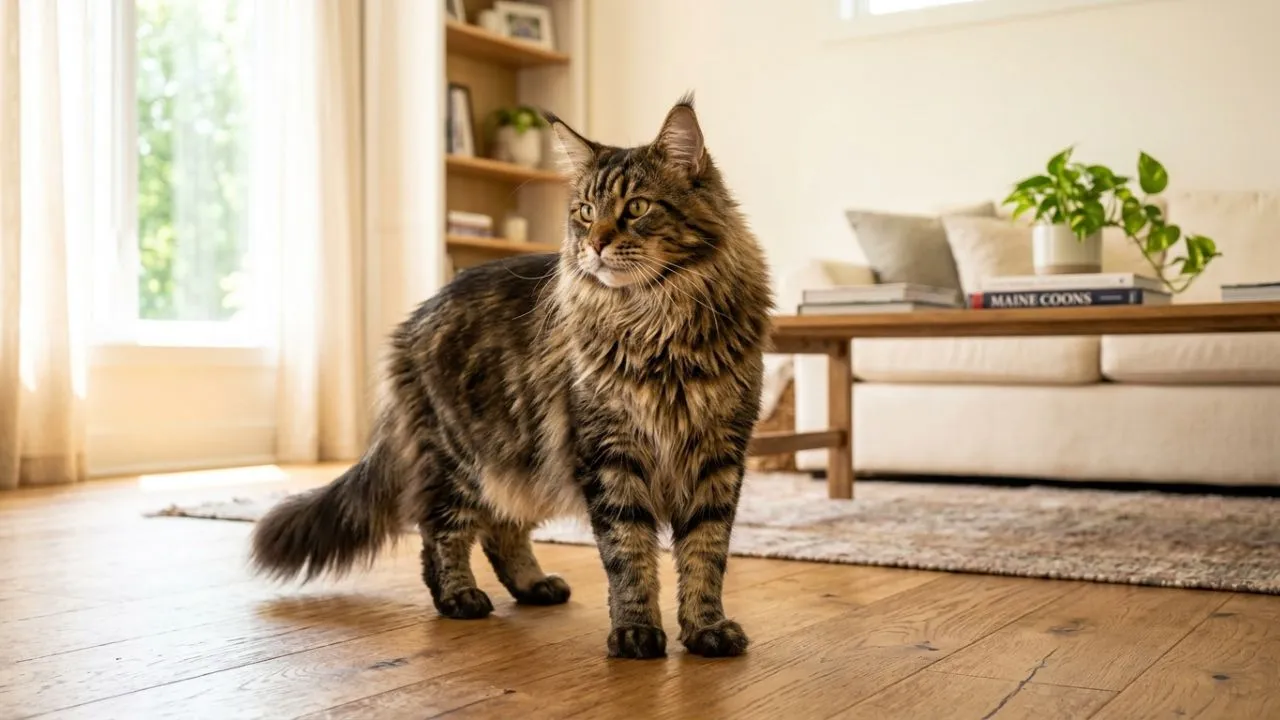
Maine Coons tolerate handling that would send smaller cats running, staying loose and easygoing even when kids scoop them up awkwardly. Loud households barely register with this specific breed, and VCA describes the temperament as famously steady. It’s a gentle giant in every sense.
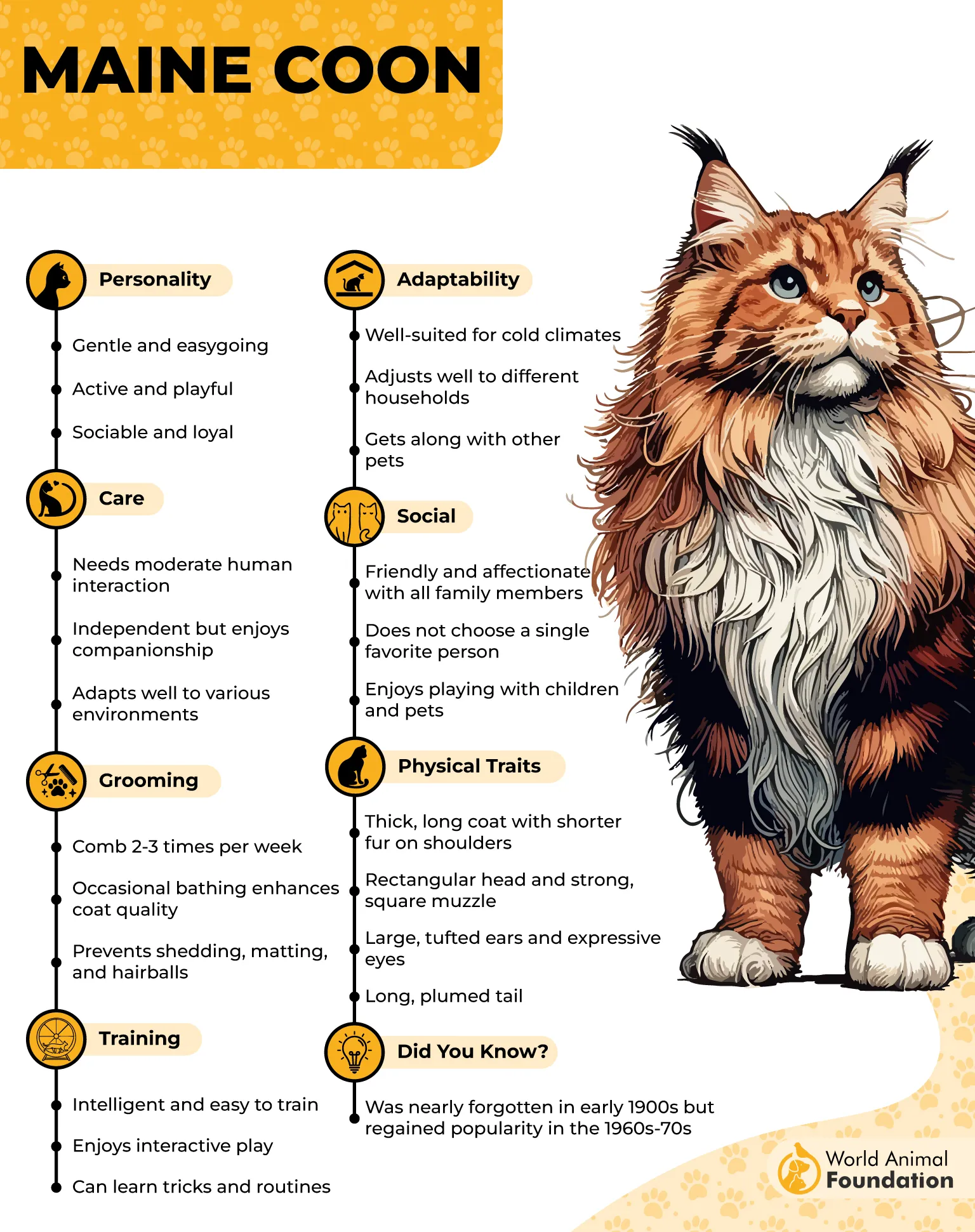
This breed suits toddlers and teens alike, rarely nipping even when play gets rough. It shares space comfortably with dogs and other cats, making it well suited for multi-pet homes. Its independent nature means it won’t demand constant attention from busy parents.
Energy level: High, especially in younger cats.
Play style: Enjoys puzzle feeders and chasing toys across rooms.
Living fit: Needs more floor space than small apartments offer.
That dense coat sheds heavily, so regular grooming two to three times a week keeps fur off furniture. Maine Coons are prone to joint issues, so a vet should monitor mobility as they age. Their size means a sturdy litter box and scratching post are worth the investment.
3. Birman
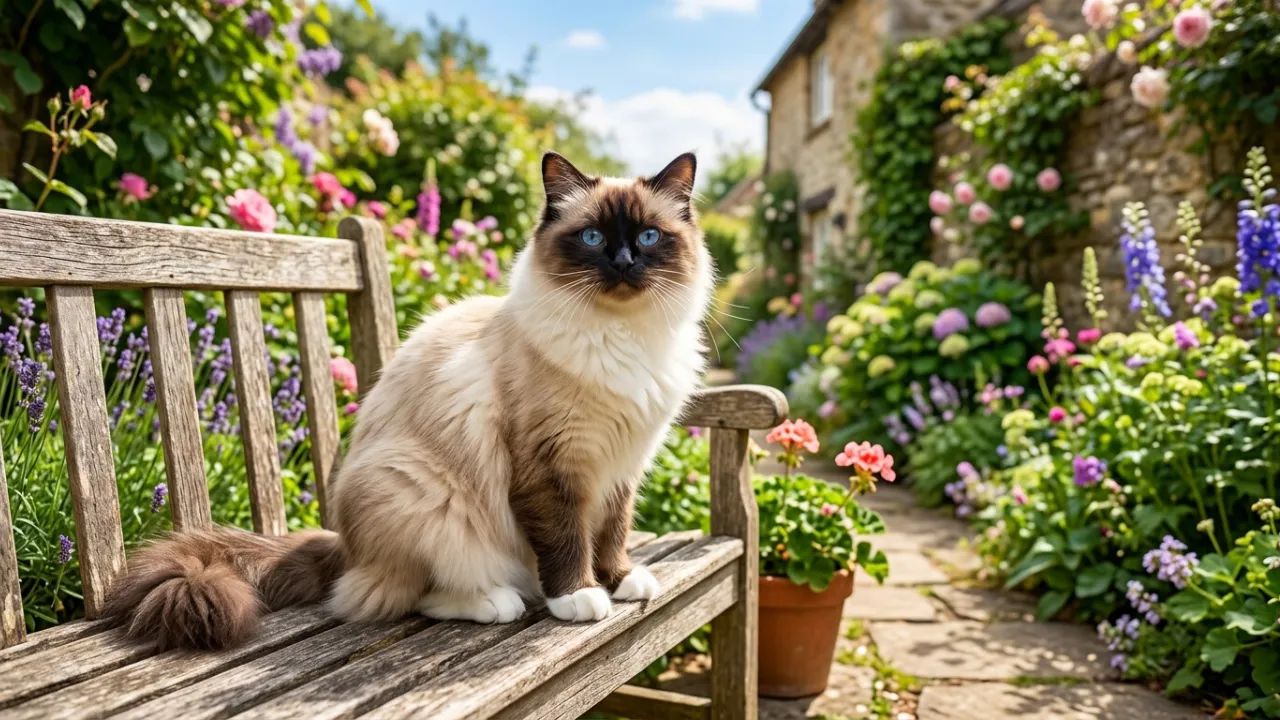
A Birman rarely startles, even when a houseful of children thunders past. It responds to handling with a soft, patient stillness rather than a dash for cover, which is exactly what new owners hope for in a first cat. Its striking green eyes only add to the charm.

Birman cats suit families with younger kids since they rarely scratch when startled, and they adapt well to living alongside other pets. Older children will appreciate how readily this breed forms strong bonds and follows them from room to room. It settles into a new environment faster than many breeds.
Energy level: Low to moderate, content with short play sessions.
Play style: Enjoys gentle interactive play rather than chasing.
Living fit: Thrives in indoor-only homes with predictable routines.
Its silky, single-layer coat needs less upkeep than most long-haired cats, making grooming manageable even for first-time cat owners. Some Birmans carry a genetic kidney condition, so routine screening is smart. Keep its environment calm, since sudden changes can unsettle this sensitive companion.
4. Persian
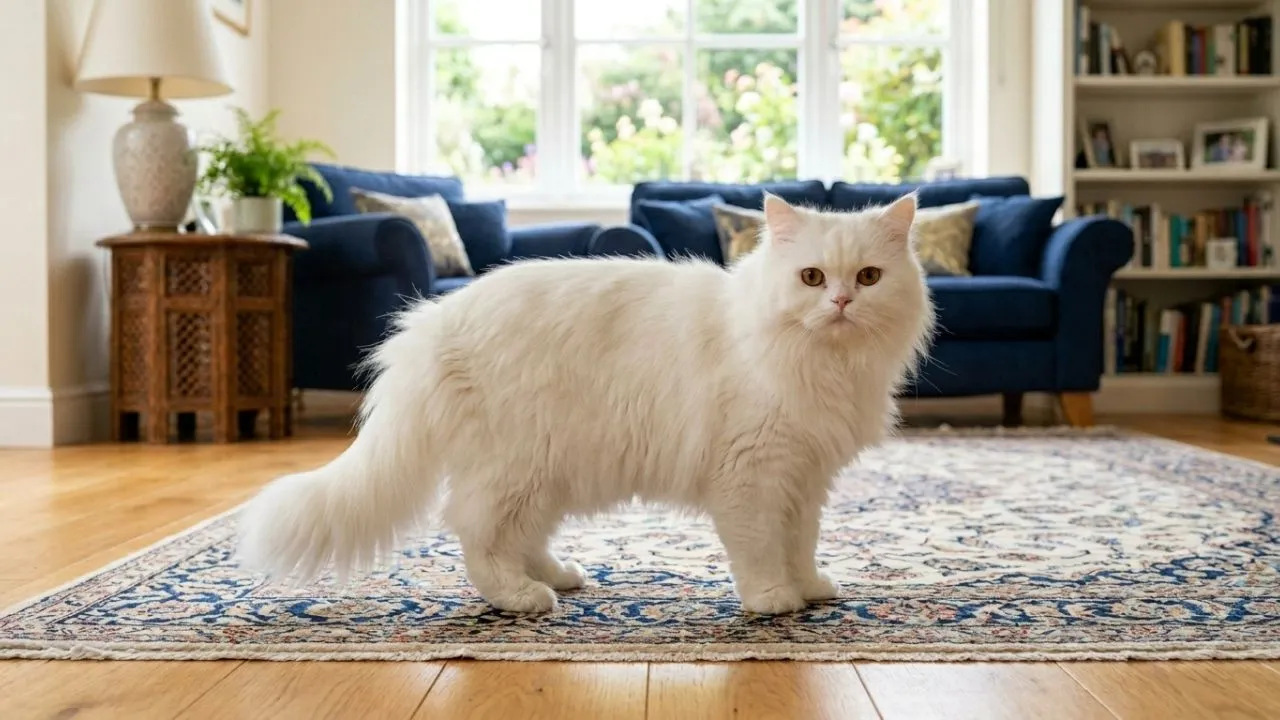
Persians respond to being picked up with a slow blink and a settle, rarely squirming or voicing complaint. Loud toys or barking dogs barely shift their calm temperament. Royal Canin notes this laid-back energy is a defining trait of the breed.
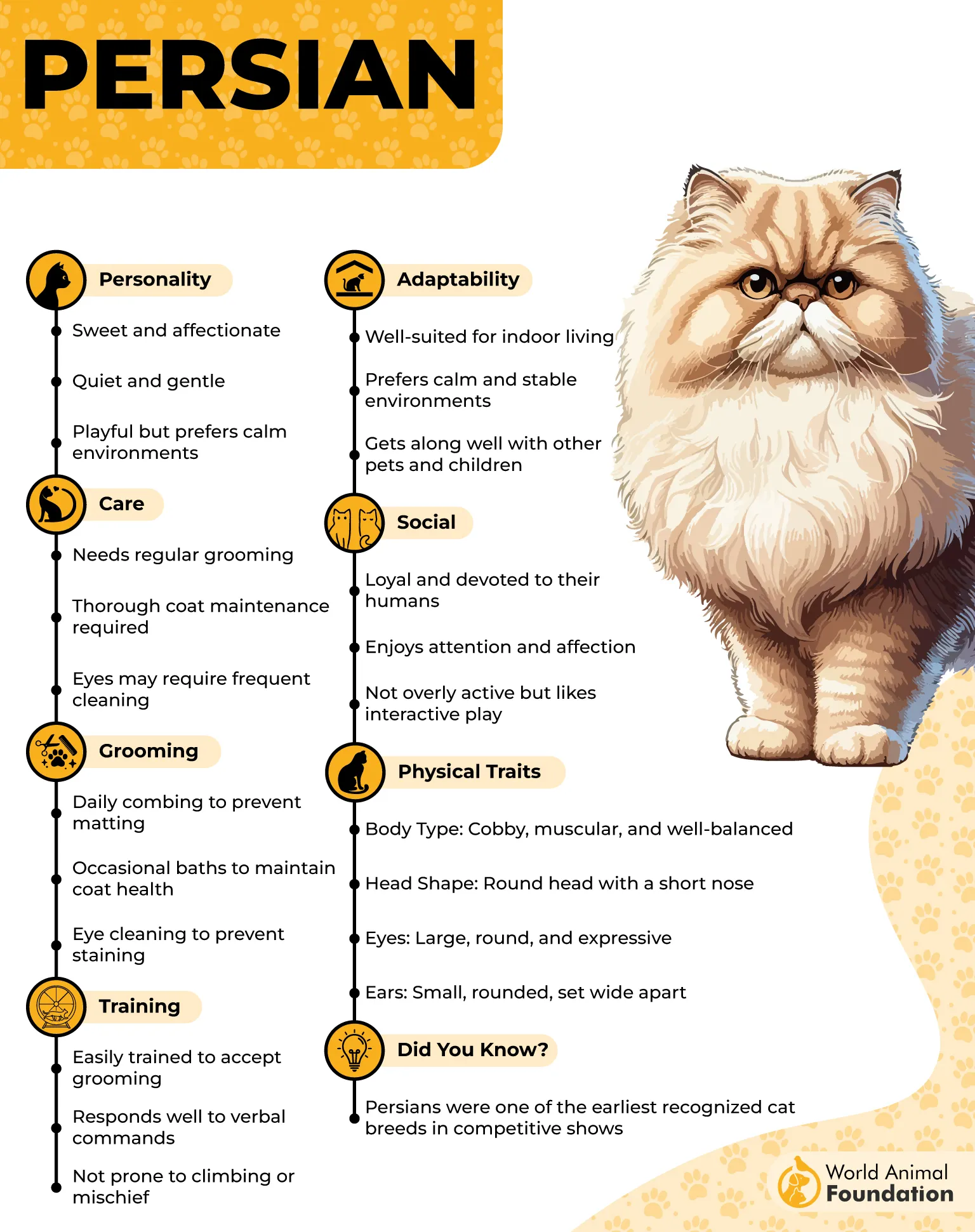
This cat fits best with older kids who understand gentle handling, since its flat face makes rough play uncomfortable. It can live peacefully with calm dogs, though highly energetic pets may overwhelm it. Persians bond closely with their human companions and prefer routine over chaos.
Energy level: Low, happiest lounging in a favorite spot.
Play style: Light, short play with soft toys.
Living fit: Ideal for small spaces and indoor living.
That flat face means daily eye and face cleaning, plus a strict grooming schedule to prevent tangles. Breathing and dental issues are common, so regular vet visits matter here. A cool, dust-free home helps this breed stay comfortable year-round.
5. Exotic Shorthair
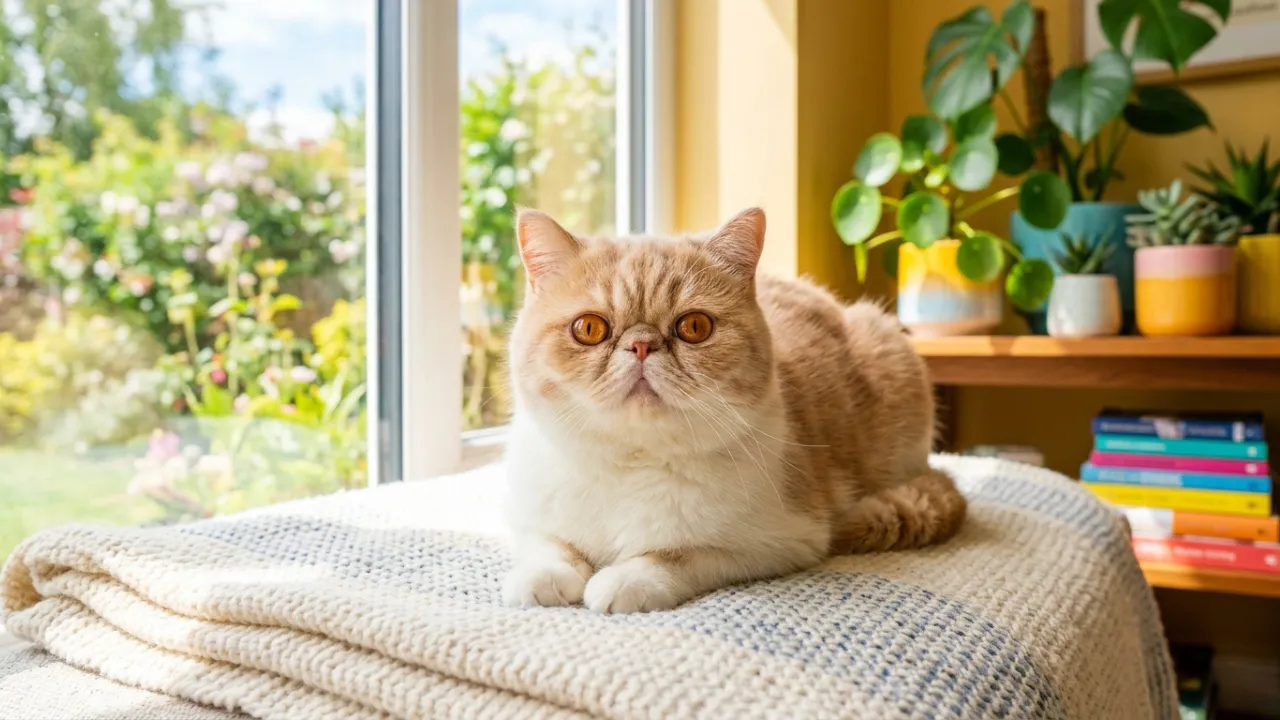
Think of this breed as a Persian in a wash-and-wear coat, just as tolerant of handling and noise but far less demanding to maintain. It rarely reacts poorly to a chaotic household, staying unbothered through doorbells and dropped pans. Purina describes the temperament as consistently placid.
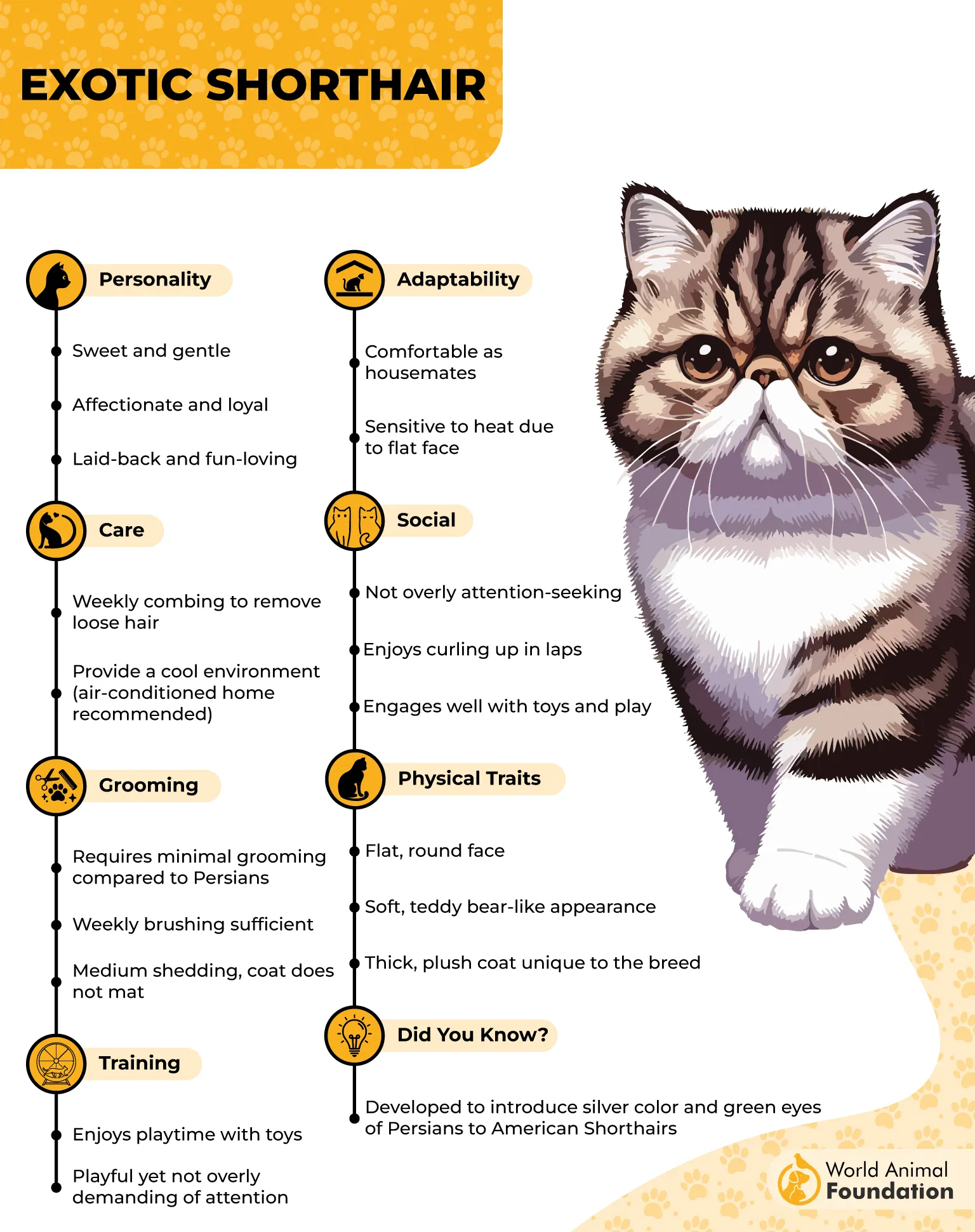
Exotic Shorthairs suit families with kids of any age, since their patience rarely runs thin. They adapt comfortably to homes with other pets and rarely compete for attention. New owners often pick this breed specifically because it is so forgiving of mistakes.
Energy level: Low, more lap cat than athlete.
Play style: Brief interactive sessions, easily satisfied.
Living fit: Excellent for apartment life and quiet homes.
Its short, dense coat means low grooming needs compared to its long-haired cousin, just an occasional brush. The same flat-faced health watch-outs apply, including breathing and eye concerns. Keep water and food bowls shallow, since its face shape makes deep dishes awkward.
6. Ragamuffin
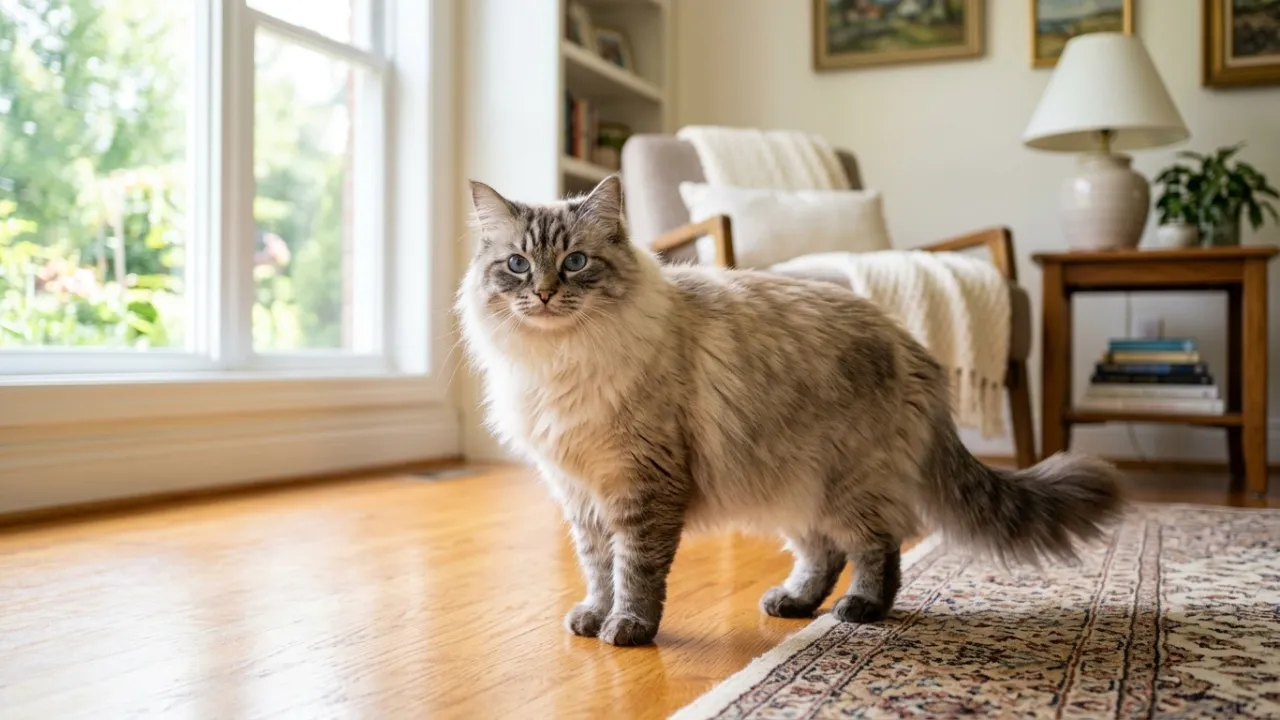
A Ragamuffin greets handling the way a dog greets its owner, leaning into hugs rather than pulling away. It tunes out household noise with ease, rarely reacting to vacuum cleaners or shouting kids. Many describe this breed as dog-like in its devotion and composure.
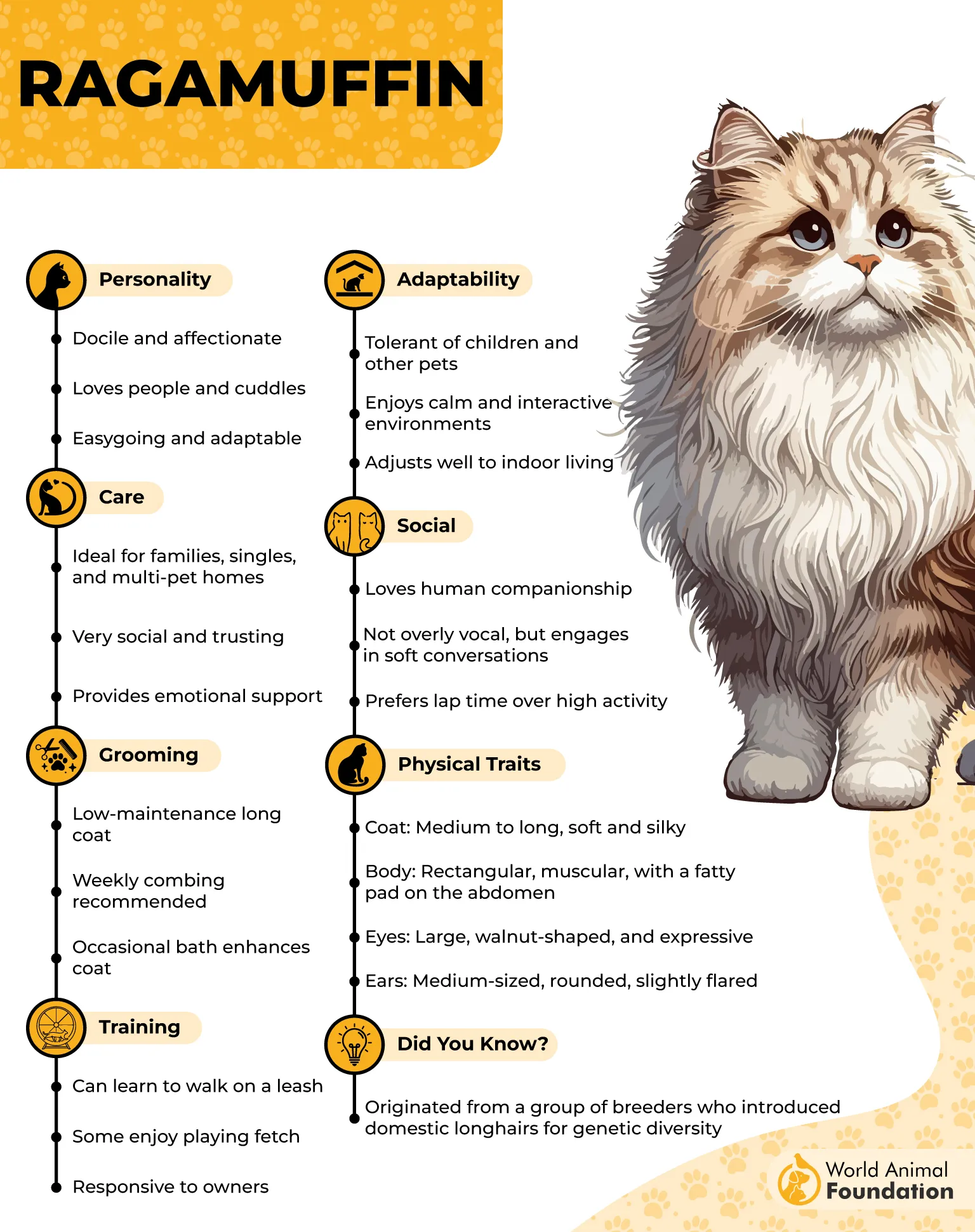
This breed welcomes toddlers and teens equally, showing remarkable patience with clumsy affection. It integrates smoothly into homes with other pets and rarely shows territorial behavior. Its social nature means it craves being part of family activity rather than observing from a distance.
Energy level: Moderate, playful without being hyper.
Play style: Enjoys fetch-style games and following family members room to room.
Living fit: Comfortable in both small spaces and larger homes.
Its semi-long coat resists matting better than most, though a weekly brush still helps. Ragamuffins carry a similar heart health watch-out to Ragdolls, so periodic screening is wise. Because this cat craves company, long stretches alone can leave it lonely.
7. Siberian
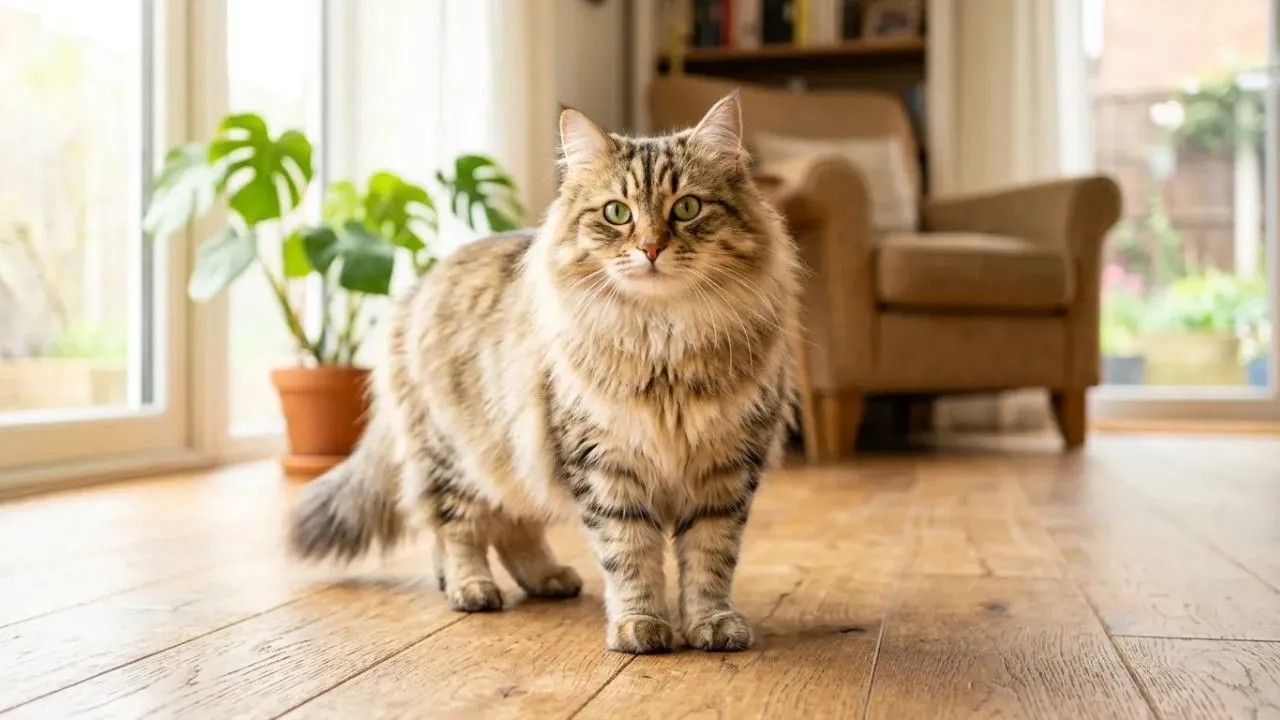
Siberians handle enthusiastic kids with a sturdy calm, rarely bolting at sudden movement or noise. This breed’s steady nerves make it one of the best cats for a lively household. Its thick coat and confident posture give it an almost wild, unbothered presence indoors.
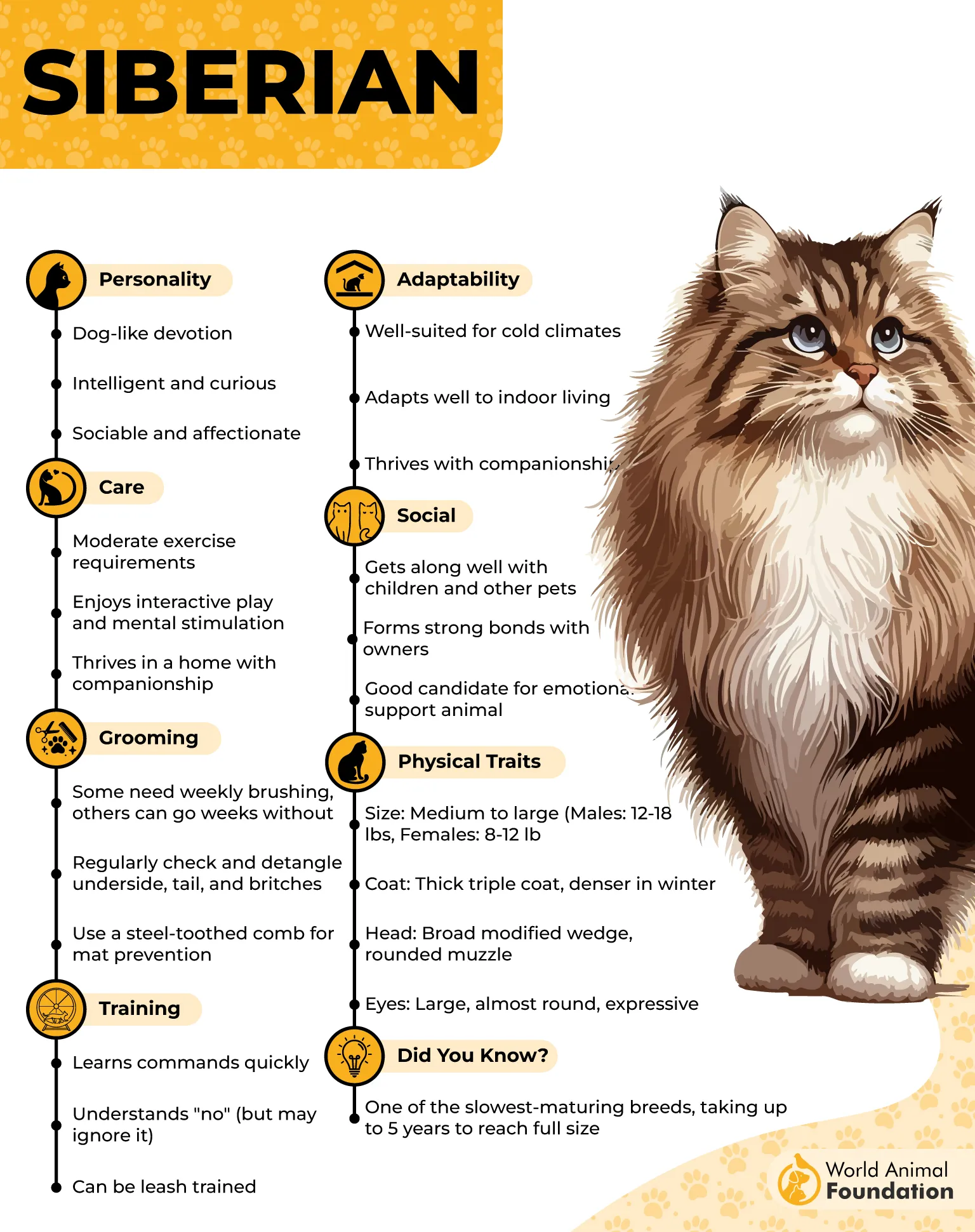
This cat suits families with energetic children since it can handle rougher play than more delicate breeds. It cohabits well with dogs and other cats, often initiating play itself. PetPlan notes Siberians also form strong bonds with every member of a household, not just one person.
Energy level: High, athletic, and quick to climb.
Play style: Loves vertical spaces, scratching posts, and climbing cat trees.
Living fit: Needs room to explore, better suited to larger homes.
That dense triple coat sheds seasonally and needs regular grooming to manage loose fur. Siberians are often recommended for allergy-sensitive households, though reactions vary, so a trial visit helps before adopting. Keep claws trimmed to reduce furniture damage from all that climbing.
Conclusion
Gentleness in cats is never just luck. It comes from steady genetics, early handling, and the right match between breed and household. The seven breeds above share real, testable traits, not just a soft reputation.
Still, no breed guarantees a perfect fit. A Ragdoll raised without gentle handling can turn skittish, and a well-socialized cat from any list can surprise you.
Use the checklist from earlier, not just the label “gentle,” when choosing. Think about your home’s noise level, your kids’ ages, and your other pets. The right cat is less about the breed name and more about matching temperament to real life.
