




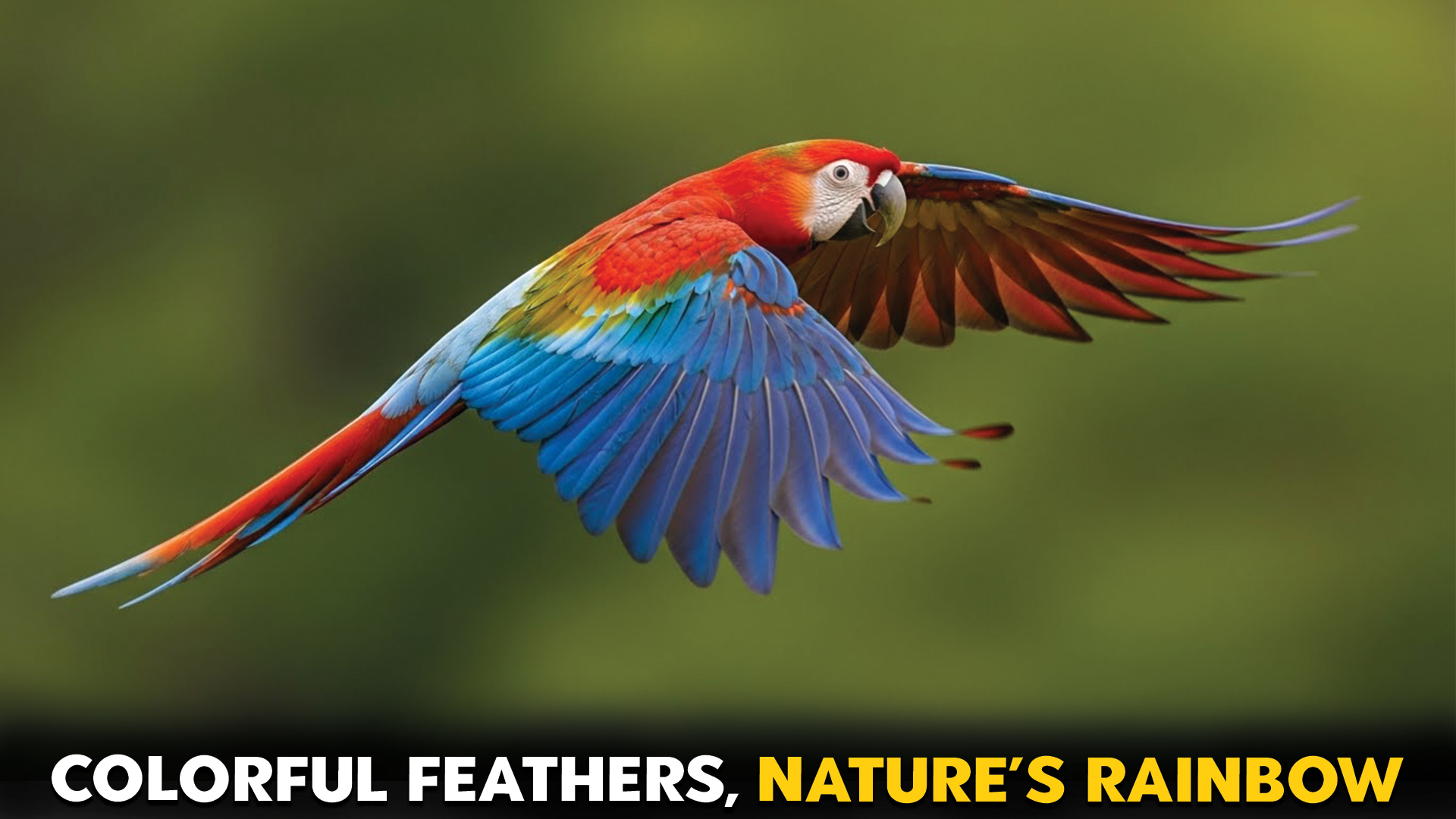
Imagine walking through nature and suddenly spotting a bird so bright it looks like it’s been painted by hand. The world of birds with the most colorful feathers is full of surprises, and once you start noticing them, it’s hard to look away.
Birds don’t wear these stunning colors just for us to admire—those vivid feathers play important roles in their lives. Bright colors can help attract a mate, send signals to other birds, blend into leafy surroundings, or even help control body temperature by reflecting or absorbing sunlight.
Nature clearly has a creative side, and birds are one of its best displays. While bold colors are often linked to courtship and confidence, some species prove that beauty isn’t limited to just one gender.
From glowing blues and fiery reds to striking yellows and greens, these feathered wonders show just how expressive the natural world can be.
If you love color, wildlife, or simply enjoy being amazed, you’re in the right place. Let’s explore some of the most colorful birds and discover what makes them so unforgettable.
Birds with the Most Colorful Feathers
1. Peacock
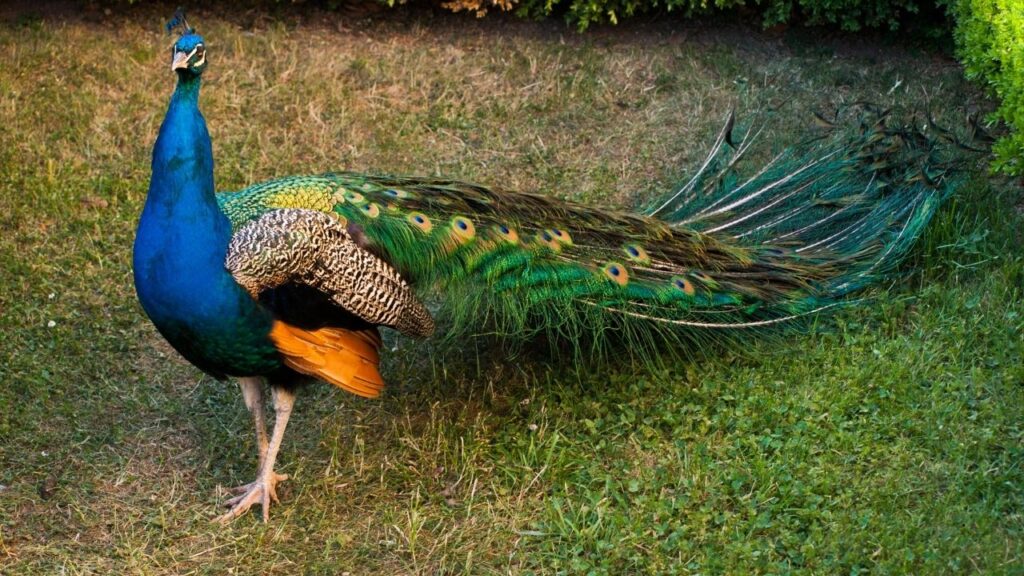
The Indian peacock is one of the most visually striking birds in the world. The term peafowl includes both males and females, but only males show the famous bright colors and dramatic display. Their bold appearance has made them a symbol of beauty in many cultures.
Male Indian peafowl (Pavo cristatus) have iridescent blue and green feathers and long tails covered in eyespots, which they fan out while dancing to attract mates.
Females are less colorful, with pale brown plumage and shorter tails, though they show a bright green sheen on the throat. The glowing effect of the feathers comes from structural coloration, where tiny feather structures reflect light.
Native to the Indian subcontinent and parts of South China and Africa, peafowl now live in many regions as ornamental birds. In the wild, they spend time on the forest floor and roost in trees at night.
Preferred habitat: Open tropical seasonal forests
Diet: Insects, rodents, fruits, and leftover grains
Unique behavior: Males perform tail-fanning dances with foot stomping
Conservation status: Unknown
2. Scarlet Macaw
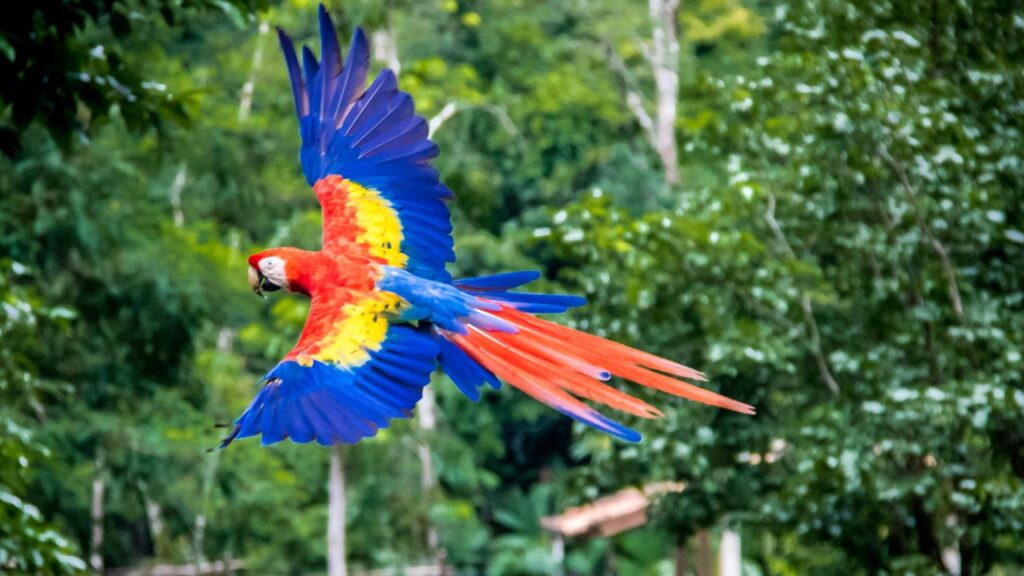
The Scarlet Macaw is one of the most eye-catching parrots in the world. Its bold colors make it impossible to miss in the wild. The plumage is dominated by bright scarlet red, mixed with strong yellow and deep blue feathers on the wings, creating a dramatic contrast.
These parrots have powerful beaks and strong feet, perfectly suited for cracking hard nuts and seeds. Their faces are mostly bare, with white skin marked by fine black feather lines.
Males and females look alike, and even young birds closely resemble adults, with the main difference being eye color. Wild Expedition mentions that Scarlet Macaws are highly social and are often seen in pairs or large, noisy flocks. They mate for life and communicate with loud calls across the forest.
Scarlet Macaws live in the tropical rainforests of Central and South America, from southern Mexico to Peru and eastern Brazil.
Their bright colors actually help them blend into the colorful rainforest filled with fruits and flowers, offering natural camouflage. Their diet includes seeds, nuts, fruits, and flowers, all easily handled by their strong beaks.
Preferred habitat: Tropical rainforests and humid evergreen forests
Diet: Seeds, nuts, fruits, and flowers
Unique behavior: Can mimic human speech
Conservation status: Least concern
3. Wilson’s Bird-of-paradise
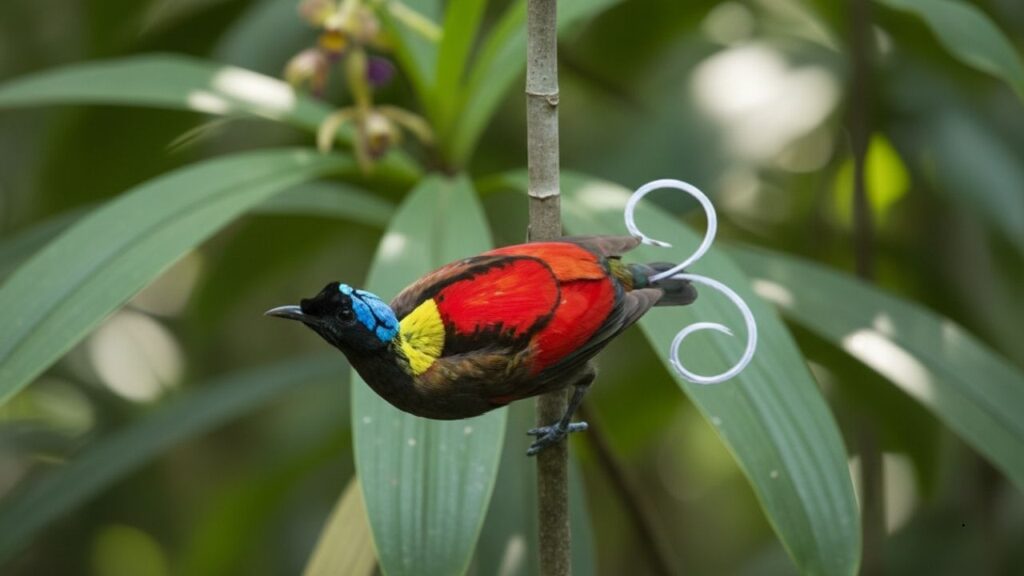
Wilson’s bird of paradise is a small but stunning bird named after British ornithologist Edward Wilson. A specimen discovered in Indonesia in 1850 was donated to the Academy of Natural Sciences in Philadelphia, giving the bird its name.
Male Wilson’s birds of paradise have bright red feathers on their backs, a yellow patch on the neck, and a featherless crown that shows vivid electric-blue skin.
They also have two curved, sickle-shaped tail feathers. During courtship, the male performs a rare display by spreading his neck feathers to reveal an iridescent green cape. It took scientists nearly 150 years to fully document this behavior. Females choose mates based on feather brightness.
Females look much plainer, with olive-brown, mottled feathers, but they share the bald head patch and blue skin seen in males. This bird is known for being extremely elusive, which adds to its mystery.
Size: Similar to a sparrow
Distinct feature: Bare blue crown and curved tail feathers
Courtship trait: Males reveal a green, cape-like display
Female appearance: Olive-brown plumage with blue skin on the head
4. Mandarin Duck
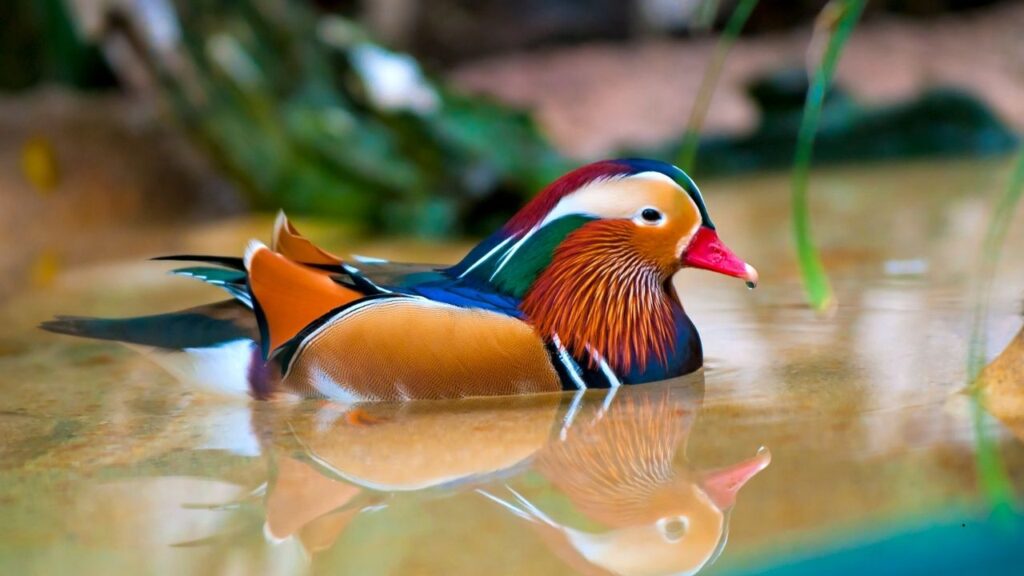
The Mandarin duck is often called the most ornate duck in the world. As with many birds, the male stands out with bold and striking colors. Its eye-catching appearance has made it a popular subject in East Asian art and culture.
Male Mandarin ducks (Aix galericulata) have orange cheeks, fan-shaped “sails” on their backs, a purple chest, and rich blue and iridescent green feathers on the head and tail.
Females look much plainer, with mottled brown plumage, creamy-white feathers, and a gray head. This difference is an example of sexual dimorphism, where males are more colorful to attract mates. Brighter plumage often signals better health and higher mating success.
Mandarin ducks are native to China, Japan, Korea, and parts of Russia, with introduced populations in the U.K. and the United States. They prefer riparian habitats near rivers and streams, though they can live at sea level or higher elevations.
Preferred habitat: Rivers and streams
Unique behavior: Chicks leap from tree nests soon after hatching
Range: East Asia, with introduced populations elsewhere
Conservation status: Least concern
5. Resplendent Quetzal
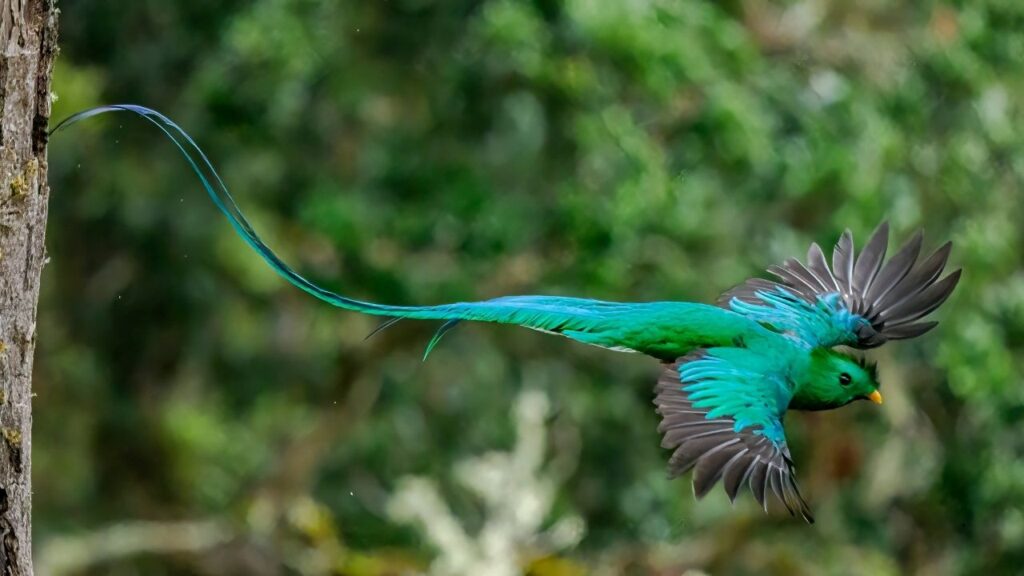
The Resplendent Quetzal is a bird of legendary beauty and deep cultural meaning. It was revered by ancient Mesoamerican civilizations and is still an important symbol today, even appearing on Guatemala’s flag. For centuries, it has been associated with freedom, wealth, and sacred traditions.
Males are especially striking, with shimmering green feathers, a bright crimson red chest and belly, and a golden-green crest on the head.
During the breeding season, they grow extraordinarily long tail feathers that trail behind them in flight. Males display these feathers by rising above the forest canopy and diving toward potential mates. Females are less colorful, with duller green feathers, a shorter tail, and a grey breast.
According to the Florida Museum, Resplendent Quetzals live in the cloud forests of Central America, from southern Mexico to Panama. They are usually seen alone or in pairs and feed mostly on fruits, especially wild avocados, along with insects and small animals.
Preferred habitat: Humid cloud forests
Diet: Fruits, insects, small amphibians, and lizards
Unique behavior: Males perform dramatic diving displays during courtship
Cultural importance: Sacred bird to the Maya and Aztec civilizations
6. Rainbow Lorikeet
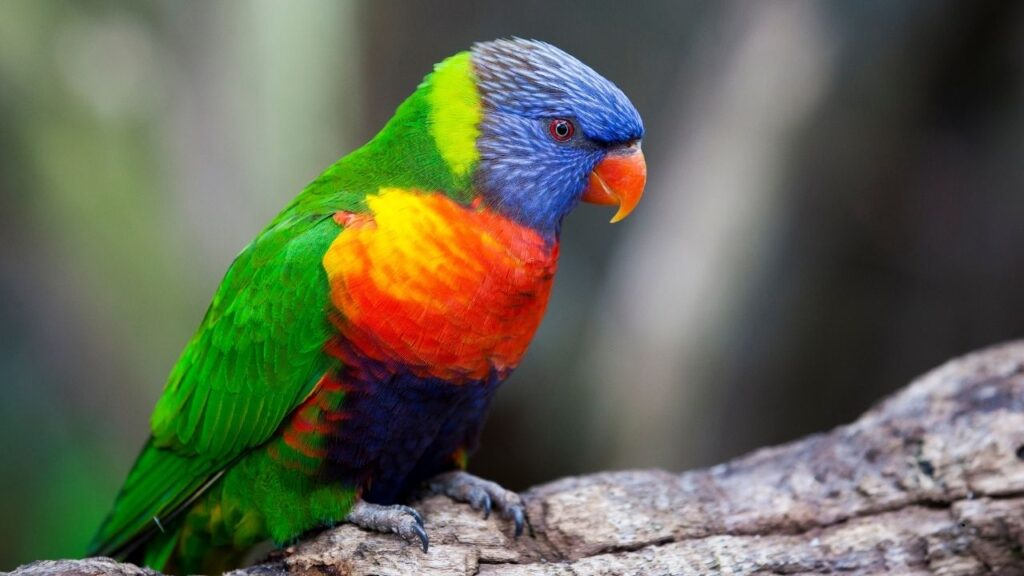
The Rainbow Lorikeet is a lively and eye-catching parrot known for both its bright colors and playful nature. Its bold appearance and noisy behavior make it one of the most recognizable birds in its range.
This bird shows a stunning mix of colors, including a red beak and forehead, a deep blue head and belly, a green back, wings, and tail, and a yellow-orange breast. Males and females look alike.
The colorful feathers help with both camouflage among flowers and leaves and during courtship. During mating displays, males perform energetic movements such as dancing, bobbing, prancing, and even hanging upside down. Their loud calls often reveal their presence before they are seen.
Rainbow Lorikeets are native to northern and eastern Australia and nearby islands, with introduced populations in places like Perth.
They live in rainforests, woodlands, coastal bush, and urban areas, where they often visit gardens and parks. They feed mainly on nectar and pollen using their special brush-tipped tongues, but also eat fruits, seeds, and insects.
Preferred habitat: Rainforests, woodlands, coastal bush, and urban areas
Diet: Nectar, pollen, fruits, seeds, and insects
Unique behavior: Can be hand-fed in many areas and roost communally
Conservation status: Least concern
7. Keel-Billed Toucan
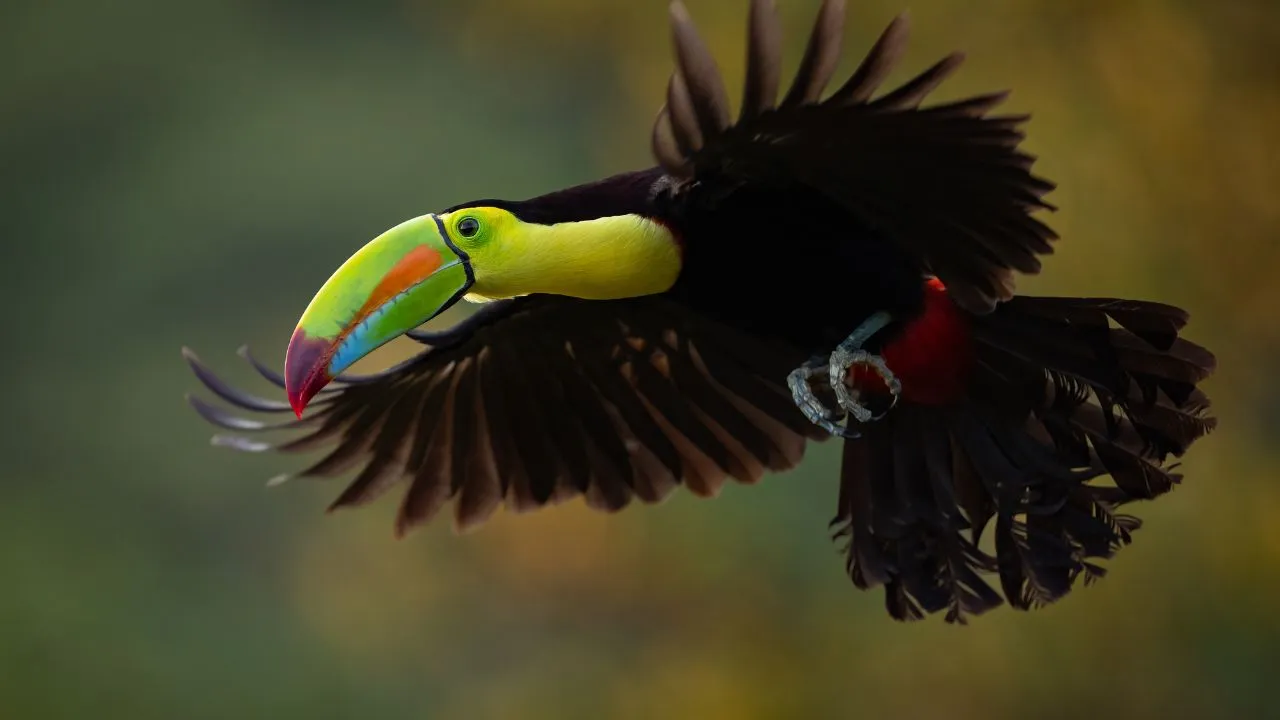
The Keel-billed Toucan is instantly recognizable thanks to its enormous, brightly colored bill. This rainbow-like bill blends green, yellow, orange, and red hues, making it one of the most striking features in the bird world.
Despite its size, the bill is surprisingly light because it’s made of a spongy, keratin material. The bird’s body is mostly black, with a bright yellow face and throat, green eye rings, and a red patch under its tail.
These toucans live in the tropical rainforests of Central and South America, from southern Mexico to Colombia and Venezuela. They usually move in pairs and are known for their loud, croaking calls.
Their diet mainly consists of fruits, but they also eat insects, small reptiles, and eggs. The large bill helps them reach fruit on thin branches and toss food into the air before swallowing.
Preferred habitat: Dense tropical rainforests
Diet: Fruits, insects, small reptiles, eggs
Unique feature: Large, colorful bill used for feeding and temperature regulation
Behavior: Often seen in pairs, with loud croaking calls
8. Golden Pheasant
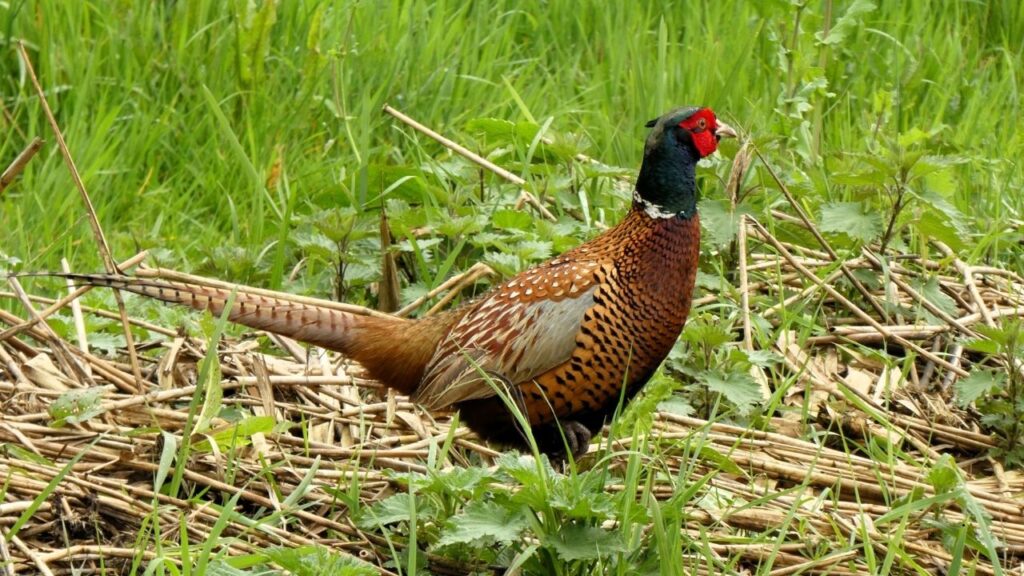
The Golden Pheasant is a stunning bird known for its dazzling colors, especially in males. They display a golden-yellow crest, bright red breast, and deep blue-green upper back.
Their long golden-brown tail has dark bars, while their yellow eyes and legs complete the striking look. Females are much plainer, with mottled brown feathers that help them blend into their surroundings.
Native to the mountainous forests of western China, these pheasants prefer dense undergrowth and bamboo thickets. They spend most of their time on the ground, foraging among leaf litter for grains, seeds, leaves, and insects.
During courtship, males perform elaborate displays to show off their bright feathers, but they are shy and often run rather than fly when disturbed.
Preferred habitat: Dense underbrush and forested areas
Diet: Grains, seeds, leaves, and insects
Unique behavior: Mostly ground-dwelling and shy; prefers running to flying
Conservation status: Least concern
9. Lilac-Breasted Roller
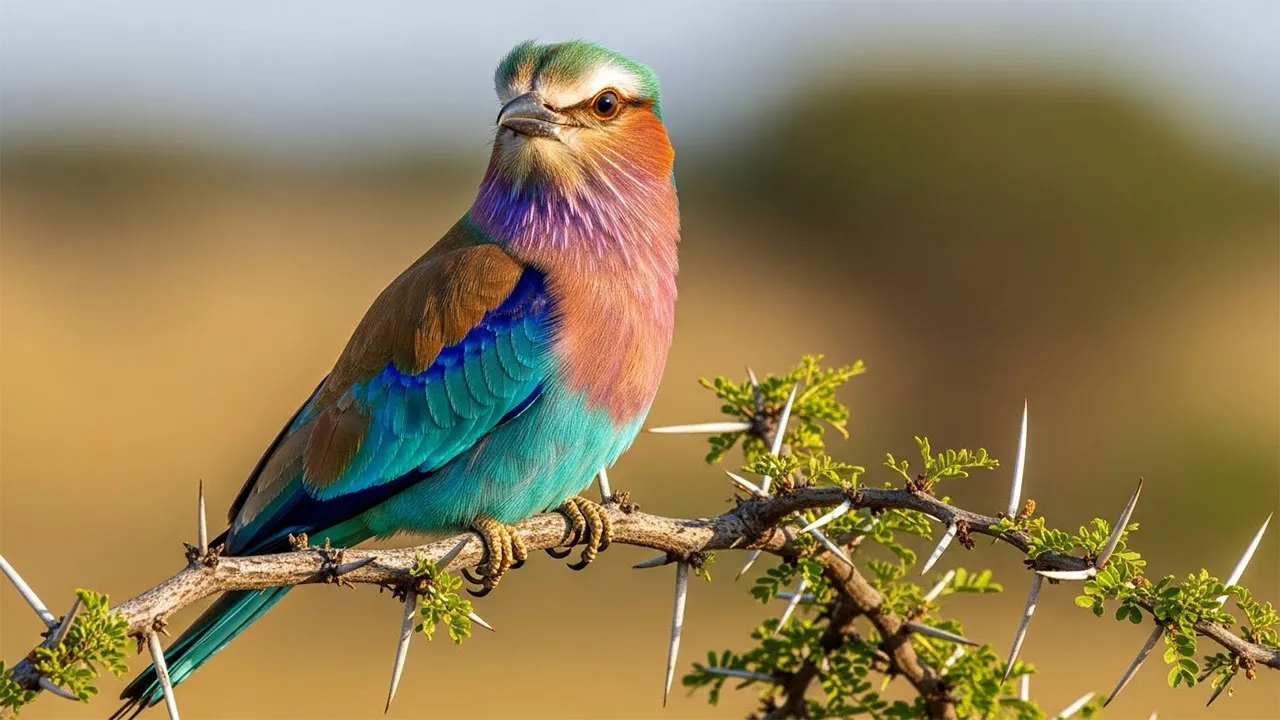
The Lilac-breasted Roller is a spectacular bird famous for its vibrant colors and impressive aerial displays.
Its standout features include a lilac-colored breast and throat, turquoise crown, green-blue belly, and rusty-orange face and cheeks. The wings show a dazzling mix of blues and greens, while long dark tail feathers add to its elegance.
These medium-sized birds are found across sub-Saharan Africa in open woodlands, savannas, grasslands, and thorn scrub.
They mainly feed on insects like beetles and grasshoppers, but will also hunt small reptiles, amphibians, and even small birds. Lilac-breasted Rollers are often seen perched on high branches, scanning for prey.
During courtship and territorial fights, males perform dramatic rolls and dives, accompanied by loud calls — a behavior that inspired their name.
Preferred habitat: Open woodlands, savannas, grasslands, and thorn scrub
Diet: Insects, small reptiles, amphibians, and small birds
Unique behavior: Performs acrobatic aerial rolls during courtship
Range: Eastern and southern Africa
10. Painted Bunting
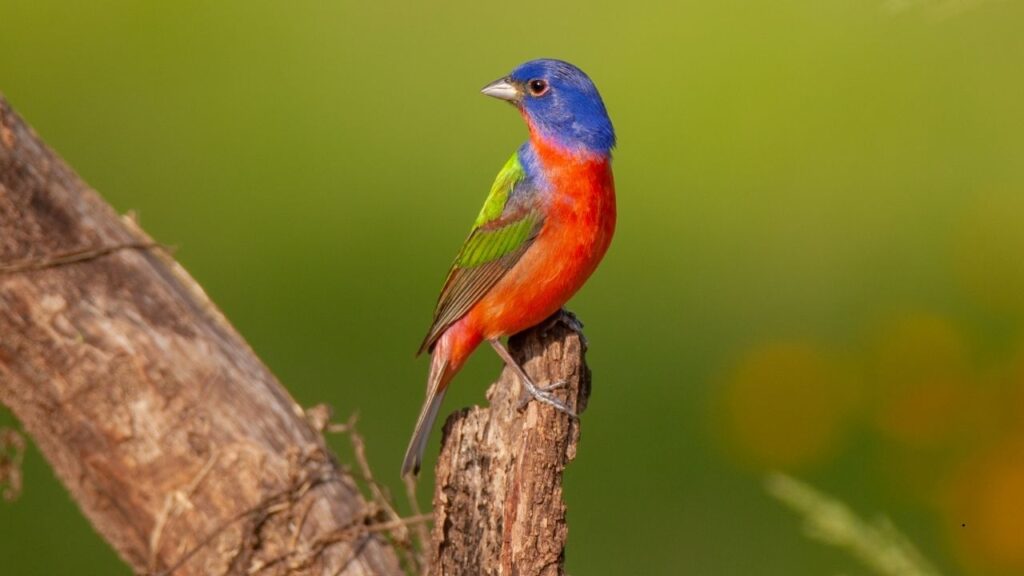
The Painted Bunting is a small but striking songbird known for its bright, rainbow-like colors. Adult males show a bright blue head, red breast and underparts, and a green back, making them instantly recognizable. Females and young birds are much duller, with yellowish-green plumage that helps them stay hidden.
These birds are found in the southeastern and south-central United States, favoring brushy areas, woodland edges, and thickets.
They are often seen at backyard feeders but prefer to stay secretive, feeding mainly on seeds and insects on the ground. Males sing loud, rapid warbles from high perches to defend their territory.
eBird mentions that there are two populations: eastern birds breed in the southeastern U.S. and migrate to Florida and the Caribbean, while western birds breed in Texas and winter along Mexico’s Pacific coast.
Preferred habitat: Shrubby areas, riparian zones, and open forests
Diet: Seeds and insects
Unique behavior: Western birds pause migration to molt in northern Mexico before continuing south
Conservation status: Least concern
Conclusion
Many male birds use flowing tail feathers and iridescent colors to attract females, making them some of the most colorful species in the tropical bird world.
For example, the Resplendent Quetzal dazzles with its long, flowing tail feathers, while the Indian Peacock’s iridescent blue and green plumage is a spectacular sight. Wilson’s Bird of Paradise also stands out with its bright colors and unique feather displays. These vibrant traits help birds identify members of their own species and play a key role in courtship rituals.
For bird watchers, spotting a dozen of these colorful species in one place is a true delight. Each species showcases unique traits, but only a few have such stunning plumage and flowing tails that make them unforgettable.
Together, these birds represent the incredible diversity and beauty found among tropical birds, capturing the imagination of anyone lucky enough to witness their displays.
There are other beautiful bird species as well, with iridescent feathers and a colorful plumage. These include the Fiery-Throated Hummingbird, Splendid Fairy Wren, Rainbow Finch, Oriental Dwarf Kingfisher, and Red-Bearded Bee Eater.
