




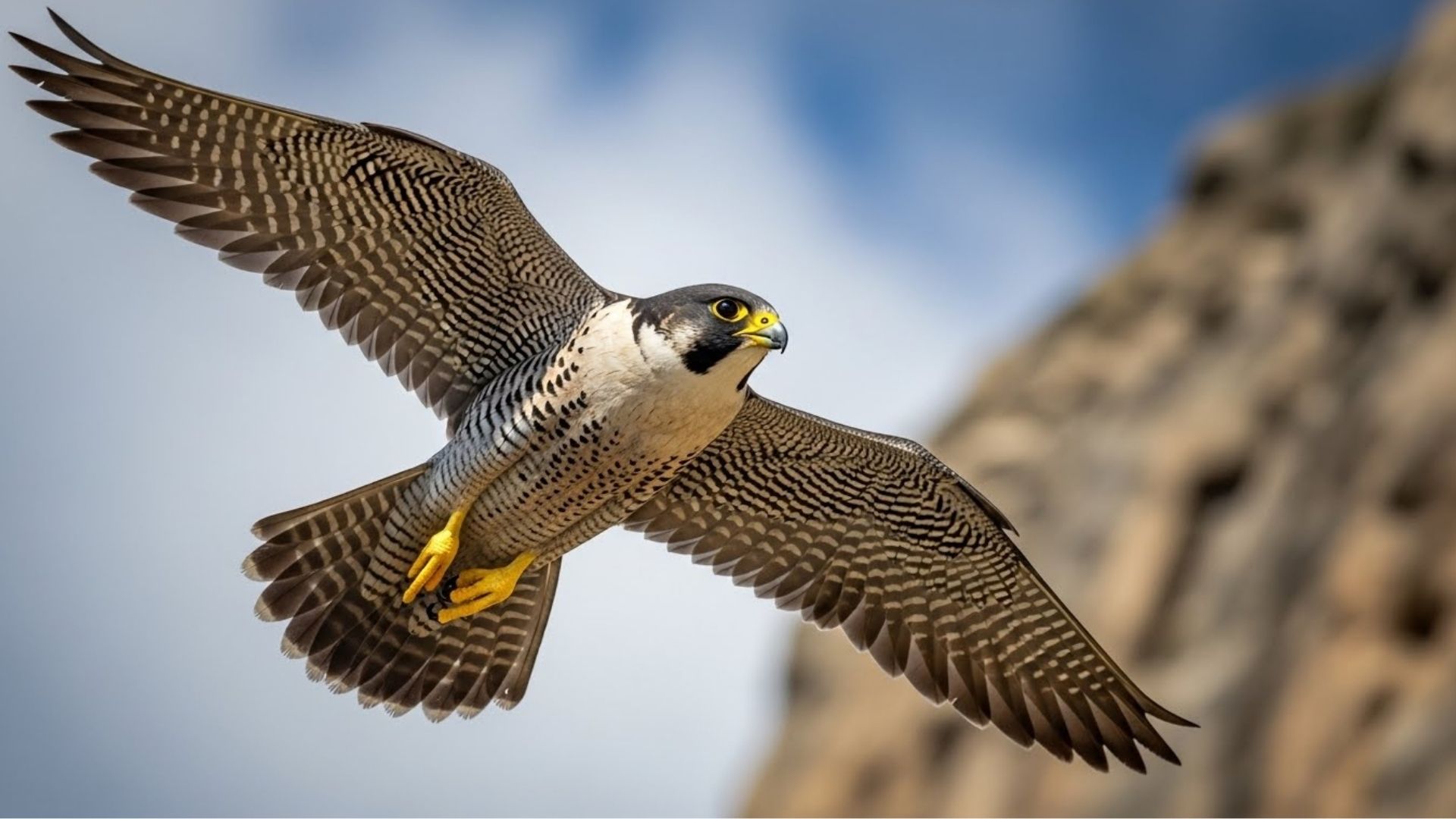
Have you ever heard someone say they have “eyes like a hawk”? It’s no surprise that many expressions about sharp eyesight come from birds, because—believe it or not—some birds truly have some of the best vision in the animal kingdom.
While humans have pretty amazing eyesight ourselves (we can see in 3D and spot things from miles away!), birds take things to a whole new level. Their eyes are built to see details so small and far that it’s almost like having built-in superpowers.
Some birds can even see ultraviolet light—colors that our eyes can’t even detect! This helps them find food, spot predators, and even communicate in ways invisible to us. Pretty incredible, right?
So, if you’ve ever wondered how birds manage to zoom in on tiny prey or navigate across vast skies with perfect precision, you’re about to find out. Let’s take a look at the fascinating world of bird species with the best vision and discover just how their eyes work wonders!
Key Takeaways
Discover how birds like the peregrine falcon and bald eagle see details from miles away with super-sharp vision.
Learn why the Great Horned Owl’s night vision beats most animals and how it hunts in near-total darkness.
Find out how color perception and UV vision give the American kestrel and Harris hawk an edge when hunting.
Explore the unique ways birds like the osprey and great blue heron use their eyes to spot prey in tricky environments.
Birds with the Best Vision
1. Peregrine Falcon
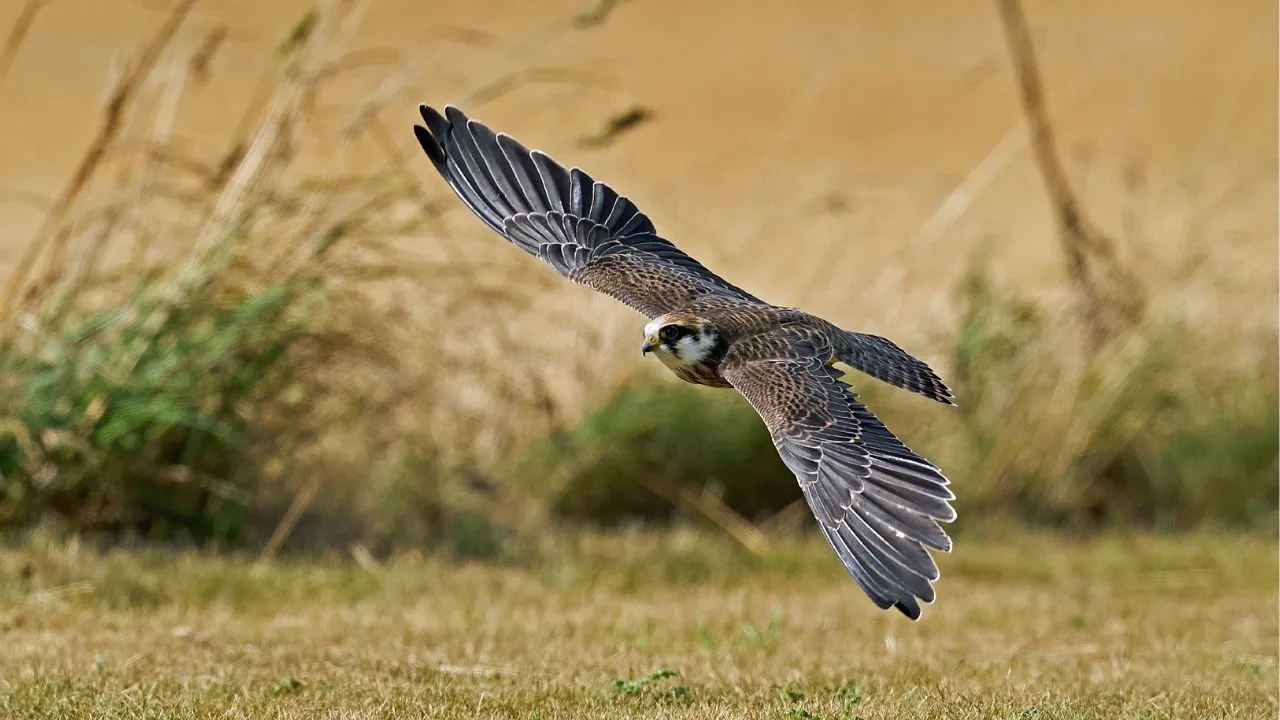
There are 63 species of falcons around the world, and like other birds of prey, they rely on incredible eyesight to survive. Falcons need to spot small prey from far away, so having sharp vision is essential for their hunting success.
One of the most impressive falcons is the peregrine falcon. It’s famous for being the fastest animal on the planet, diving at speeds up to 300 km, as mentioned by Britannica.
Even at these incredible speeds, peregrine falcons can see their target with amazing clarity. Their eyes are specially designed to keep things sharp and clear while they zoom through the air.
Peregrine falcons have about one million cones in their eyes. This means they can see colors very well, just like the Harris hawk.
But they don’t have as many rods, which means their night vision isn’t as strong as that of owls. This balance helps them focus on hunting during the day when their sharp color vision is most useful.
2. Harris’s Hawk
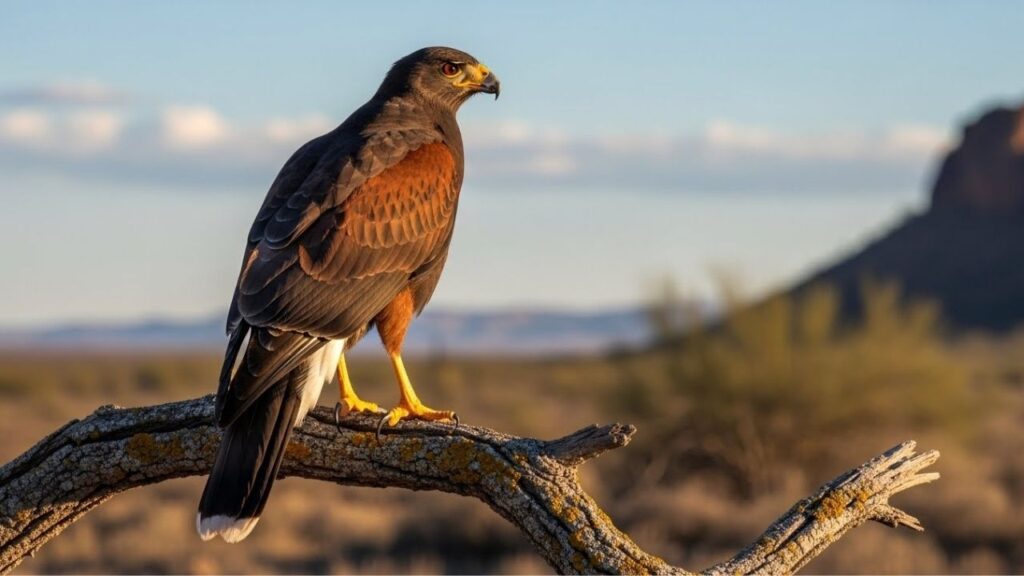
Hawks are powerful birds of prey found all over the world, except Antarctica. Among them, the Harris hawk stands out for its amazing color vision and hunting skills.
Harris hawks have binocular vision, meaning both eyes focus on the same object, giving them excellent depth perception. Unlike owls, they have more cone cells in their eyes, which help them see vibrant colors.
While their night vision isn’t as strong as owls’, they can still see clearly in low light. Harris hawks can spot prey from about 100 feet away and detect movement from nearly a mile!
What makes the Harris hawk’s eyesight even more impressive is its variety of photoreceptors. It has special cones that let it see at least four distinct colors, including some we humans can’t see well.
This bird’s eyes can quickly register fast-moving objects, even faster than humans can, helping it catch prey with amazing precision.
3. Great Horned Owl
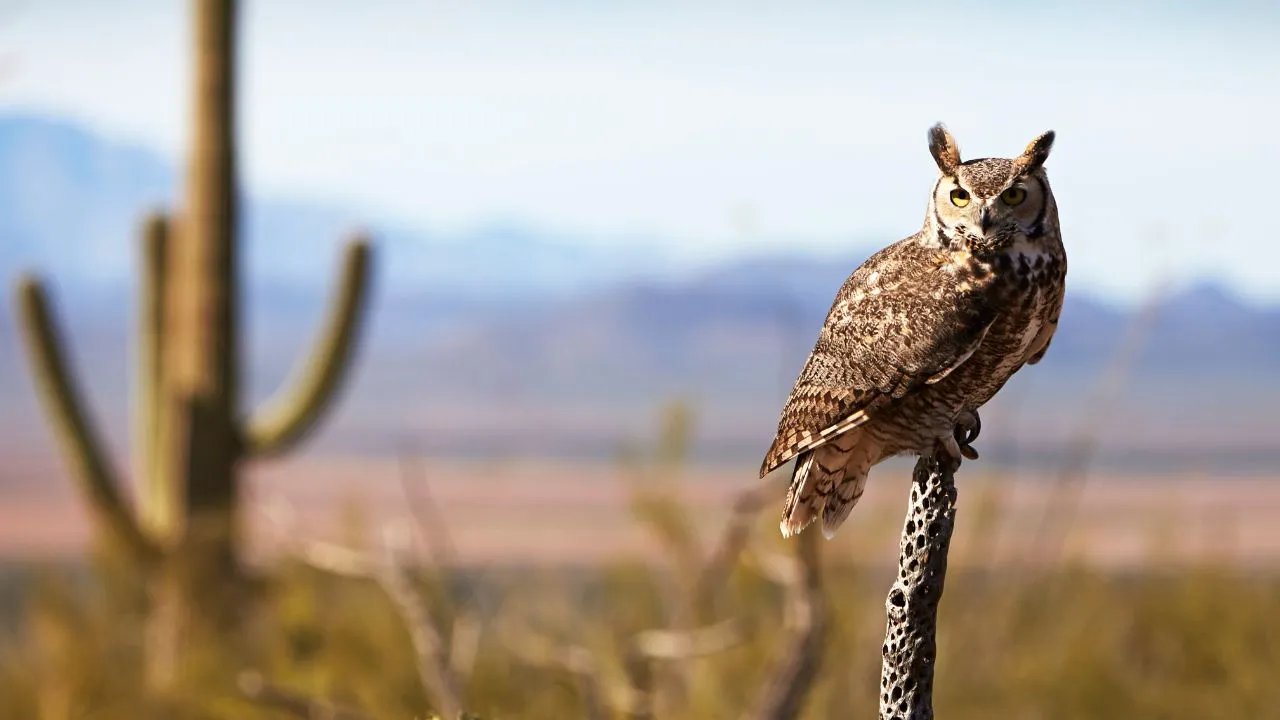
The Great Horned Owl is one of the most skilled nocturnal birds, thanks to its exceptional night vision. Unlike many birds that rely mostly on color vision, owls have more rod cells in their eyes, which help them see well in low light or complete darkness, as mentioned by the American Bird Conservancy.
This owl’s eyes are large and forward-facing, giving it excellent depth perception and the ability to spot even the slightest movements at night. While it may not see colors as vividly as some daytime hunters, the Great Horned Owl can detect prey hidden in near-total darkness with remarkable accuracy.
Its sharp vision, combined with silent flight and keen hearing, makes the Great Horned Owl a top predator after sunset. This bird truly shows how different types of vision can be just as powerful depending on when and how an animal hunts.
Its eyes are specially adapted to gather more light, allowing it to navigate and hunt with ease in the darkest hours. In fact, owls have a special layer behind their retina called the tapetum lucidum that reflects light and boosts their night vision even further.
4. American Kestrel
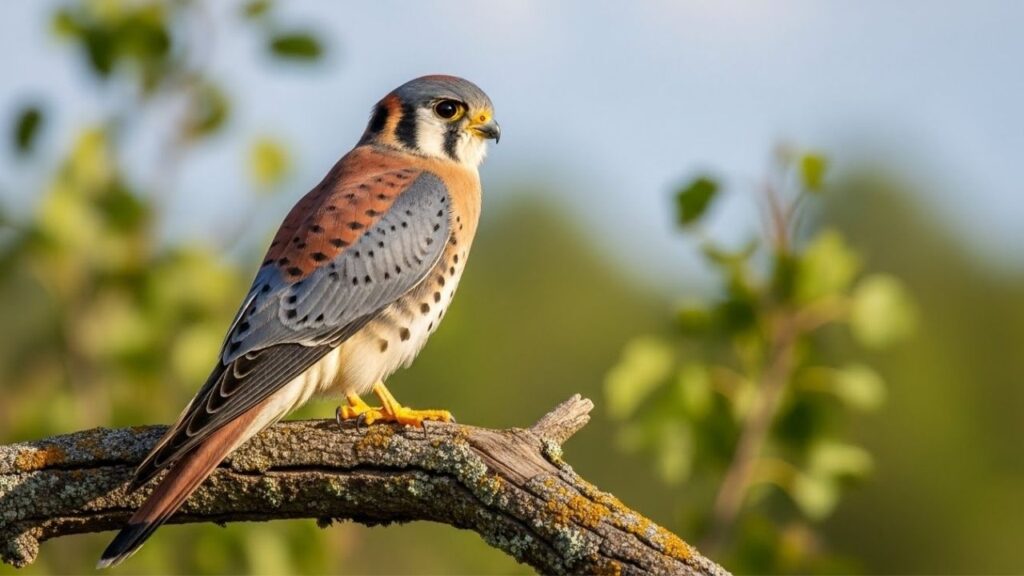
The American kestrel is one of the smallest falcons, but don’t let its size fool you—its eyesight is incredibly sharp. This bird uses its keen vision to spot tiny prey from high up in the sky.
American kestrels have excellent color vision and can even reflect UV light, which helps them detect the urine trails of small mammals.
This unique ability gives them an edge when hunting, making it easier to find hidden prey. Their eyes are finely tuned to spot movement quickly, allowing them to swoop down with precision and speed.
Despite being small, the American kestrel’s eyes are perfectly designed for fast, accurate hunting during the day, making it one of the birds with the best vision in the animal kingdom.
Their ability to quickly process visual information helps them react instantly, even when tracking fast-moving targets, proving that sharp vision isn’t just about clarity—it’s about speed too. This incredible combination of color detection and rapid processing makes the kestrel a master hunter in its environment.
5. Osprey
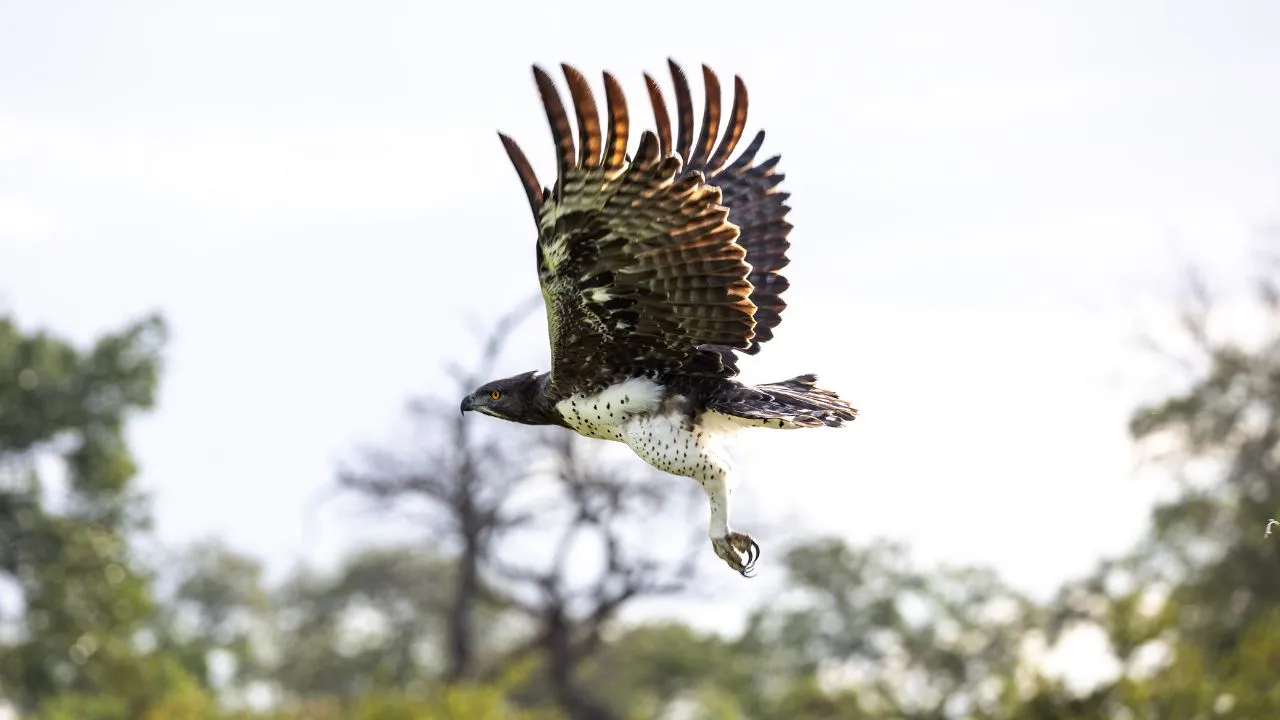
The osprey is a bird of prey that depends heavily on its excellent eyesight to hunt fish. It soars high above the water, scanning for the slightest movement below before diving to catch its prey with remarkable accuracy.
Ospreys have specially adapted eyes that help reduce glare from the water’s surface, allowing them to see clearly even on bright, sunny days. Their sharp vision lets them judge distances perfectly and spot fish swimming beneath the water, sometimes from hundreds of feet above.
This bird’s vision is so precise that it can adjust for the refraction of light in water, meaning it accurately judges where the fish really is—even when it looks like it’s in a different spot. This remarkable ability makes the osprey one of the birds with the best and most specialized vision in the animal kingdom.
Beyond just sharp eyesight, ospreys also have a high density of photoreceptor cells in their retinas. This means they can detect even the smallest movements and details, giving them a huge advantage when hunting in challenging environments like choppy waters or low-light situations.
6. Bald Eagle
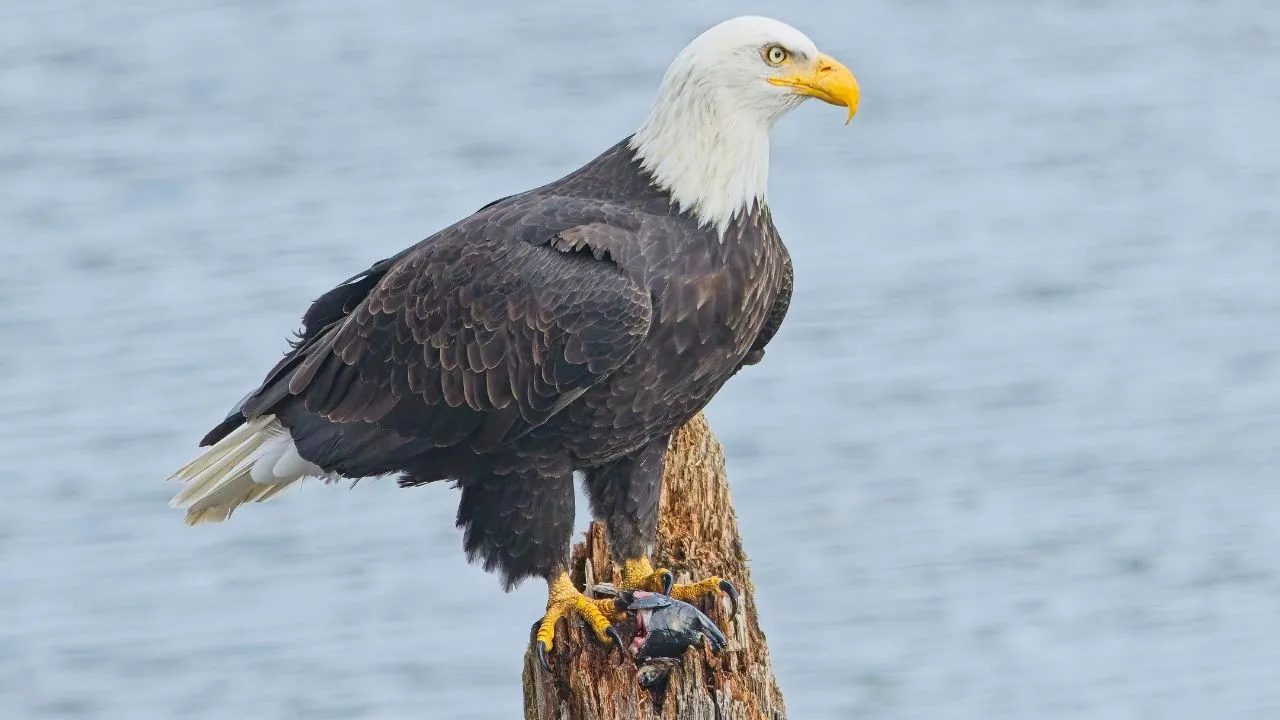
We’ve all heard the phrase “eagle eye,” and bald eagles truly live up to this reputation. They have some of the best distance vision in the bird world, able to spot prey from as far as two miles away.
Their vision is so sharp that what we see clearly from 5 feet, bald eagles can see just as clearly from 20 feet — that’s called 20/5 vision!
One amazing feature of bald eagle eyes is that they have two focal points, called foveae, allowing them to focus both forward and sideways at the same time.
This gives them an incredible 340° field of vision, almost like having eyes all around their head. Their eyes take up most of their skull, packed with a high density of nerve cells that create a super-detailed image.
Bald eagles also switch between monocular vision (using one eye) and binocular vision (using both eyes) to track prey perfectly. They can keep their heads still to get a sharp, steady view.
Plus, they see colors just like we do — and even beyond, into the ultraviolet light spectrum. This extraordinary vision helps them hunt fish and other prey from great heights with incredible precision.
7. Great Blue Heron
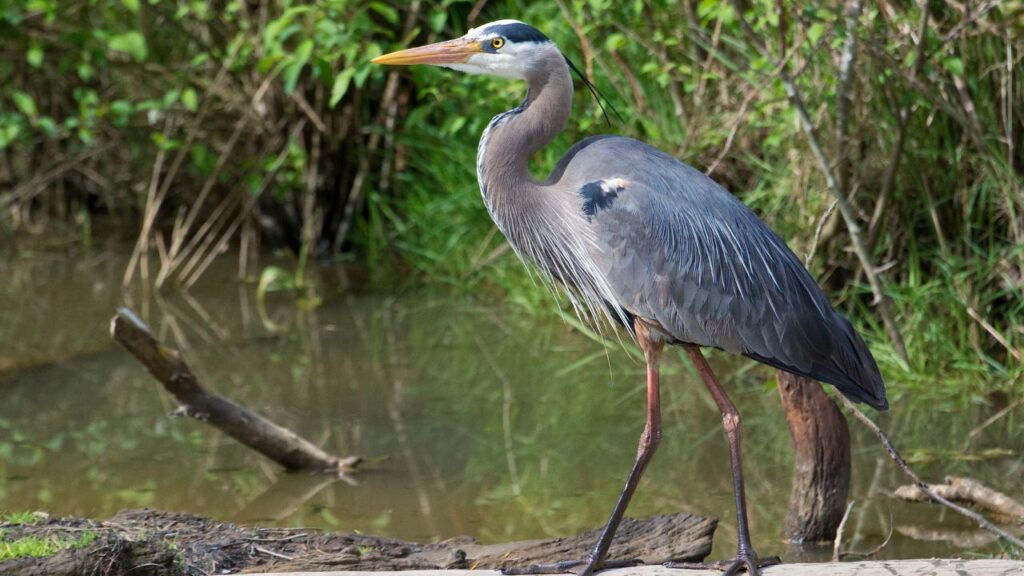
The great blue heron is another bird known for its strong eyesight—about three times sharper than human vision. This incredible clarity helps the heron spot fish and other prey with amazing accuracy.
As a water bird, the heron often faces the challenge of glare reflecting off the water’s surface. To overcome this, it tilts its head to reduce glare and get a clearer view, according to the New York Times.
Herons rely heavily on their vision not only to find food but also to navigate their environment. Their ability to judge distances precisely helps them move gracefully and quietly through shallow waters, avoiding startling their prey.
This combination of strong eyesight and careful movement allows great blue herons to be successful hunters, proving just how important keen vision is for survival in the wild.
Their eyes are perfectly adapted to spot even subtle movements beneath the water’s surface, making them expert fishers in their watery habitats.
Conclusion
Birds are known for their excellent vision, often surpassing that of most animals, including humans. Avian eyes are specially designed to perceive visible light and even ultraviolet vision, which many other animals cannot see.
This ability, combined with their enormous eyes and high visual acuity, gives many bird species the best eyesight in the animal kingdom. Diurnal birds, in particular, possess sharp peripheral vision and excellent depth perception, which helps them spot prey and navigate their environment with precision.
While some birds have good night vision, predatory birds often have poorer vision in low light compared to species with excellent night vision, like owls. Birds strongly reflect UV light, allowing them to perceive depth and colors invisible to the human eye.
This unique avian vision makes perfect sense when you consider how different birds have adapted to their specific needs, giving them remarkable visual abilities that set them apart from most animals.
There are other birds as well that have incredible eyesight. These include the Tawny Owl, Wedge-tailed Eagle, Broad-tailed hummingbird, and Eurasian blue tit.
