





Bird migration is one of nature’s most astonishing feats. Every year, countless birds leave their homes to travel thousands of miles in search of better climates, food, and safe places to raise their young.
Some of these journeys are so long and challenging that they push the limits of endurance and navigation in the animal kingdom.
These epic voyages showcase not only the incredible stamina of birds but also their finely tuned instincts and remarkable ability to find their way across vast landscapes and oceans.
Understanding these incredible migrations helps us appreciate the important role birds play in maintaining the balance of ecosystems around the world.
Their journeys connect different regions and habitats, reminding us how interconnected our planet really is—and why protecting these migratory routes is essential for the health of both birds and the environments they pass through.
Key Takeaways
Meet the Arctic Tern and Bar-tailed Godwit, masters of the longest nonstop flights on Earth.
Follow the Sooty Shearwater and Red Knot as they cross oceans in epic migrations.
Discover the threats migratory birds face and the fight to save their routes.
See how tiny birds like the Northern Wheatear take on huge journeys.
Birds That Migrate the Longest Distances
1. Arctic Tern
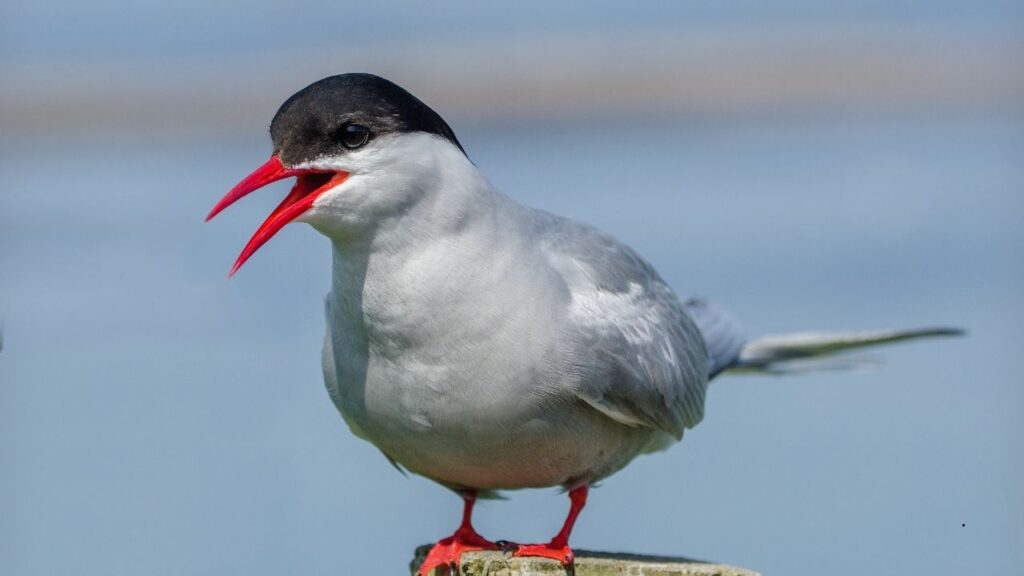
No list of birds that migrate the longest distances is complete without the Arctic Tern. This incredible bird holds the record for the longest migration in the animal kingdom. Each year, it flies about 90,000 km (55,923 miles) from its breeding grounds in Greenland all the way to the Weddell Sea in Antarctica.
By following the summer from pole to pole, Arctic Terns cover more miles in a lifetime than most creatures, equal to flying to the moon and back more than three times, as mentioned by National Geographic.
Record-Breaking Flight and Unique Route
In 2010, researchers discovered Arctic Terns fly twice as far as previously thought, averaging 44,000 miles annually.
Their migration takes them from Arctic breeding sites to Antarctic feeding grounds and back.
Instead of flying in a straight line, they follow a winding route across oceans and continents.
Some individuals have traveled nearly 60,000 miles in a single migration—more than twice around the Earth.
Adaptations and Lifestyle
Arctic Terns belong to the Laridae family, which includes gulls and skimmers. They mostly breed in Arctic regions across North America, Europe, and Asia. These birds have mostly white and gray feathers, with bright reddish-orange beaks and feet.
They often forage in groups, catching small fish and invertebrates near the sea surface. Arctic Terns are social, nest in colonies on the ground, and often rest on ice during migration. Though they don’t breed every year, they usually mate for life and return to the same breeding sites season after season.
2. Sooty Shearwater
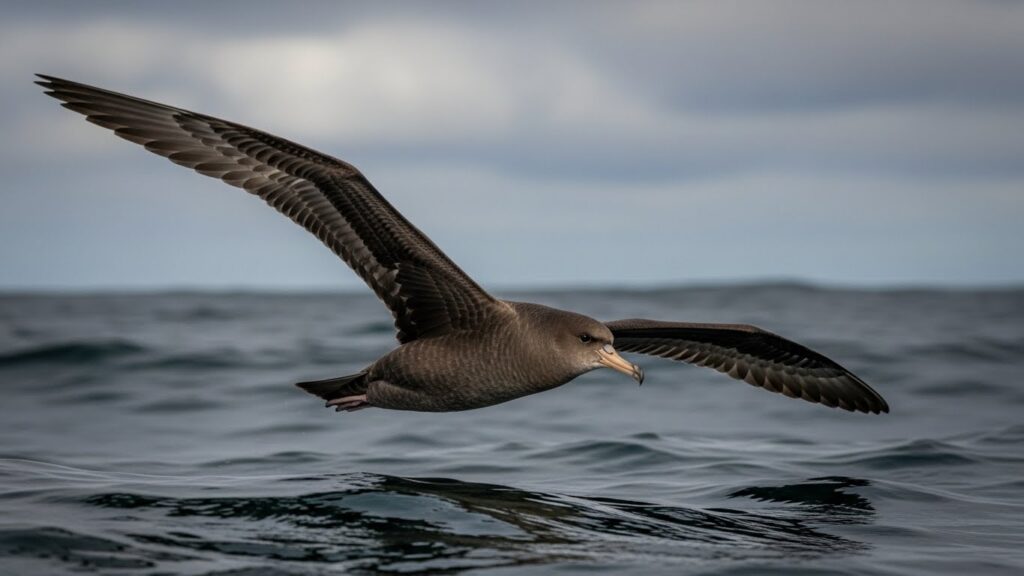
The Sooty Shearwater is one of the world’s most impressive migrators, traveling up to 40,000 miles (64,000 km) each year. These seabirds follow a circular route from their breeding colonies in the Falkland Islands and New Zealand to Arctic waters during the northern summer, then back again.
Along the way, they cover up to 310 miles a day, crossing from the Southern Hemisphere to the Northern Hemisphere and back. For a time, they held the record for the longest migration — a title now taken by another incredible bird.
Unique Flight and Feeding Habits
Named for their dark, chocolate-colored feathers.
Fly low over the sea, often with one wing nearly touching the water
Hunt fish and squid by diving as deep as 223 feet underwater.
Use stiff wingbeats to glide long distances while “shearing” the ocean surface.
Conservation and Cultural Importance
Birda says that the Sooty Shearwaters are also known as muttonbirds. In New Zealand, indigenous communities harvest their young during traditional seasons on Stewart Island. This harvest involves catching chicks as they leave their burrows, with strict limits to protect the population.
Despite being widespread and numerous, the species is classified as Near Threatened. This is due to threats like fishing bycatch, harvesting, and possible impacts from climate change.
3. Short-tailed Shearwater
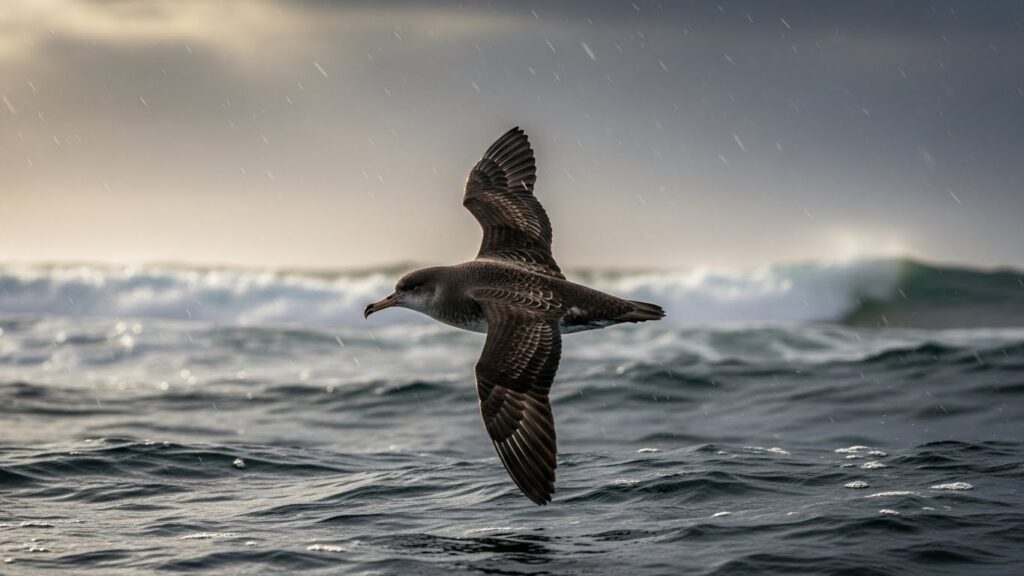
Also known as the Tasmanian Muttonbird or Yolla, the Short-tailed Shearwater is a remarkable migrator. Each year, it completes a huge journey from its breeding grounds in Tasmania and southern Australia all the way to Kamchatka in Russia’s Far East.
From there, it travels to the Aleutian Islands in Alaska, circles the Pacific Ocean, and returns down the western coast of North America before heading back to Australia. Despite these long trips, these birds return faithfully to the same burrows every breeding season.
Migration Route and Behavior
Travels around 30,000 km (18,600 miles) each year.
Migrates from southern Australia to the Bering Sea and Kamchatka Peninsula for feeding.
Flies north to the Arctic Ocean before returning across the central Pacific.
Known for flying low over the ocean with quick, snappy wingbeats.
Cultural and Ecological Importance
These birds are sometimes called “muttonbirds” because of their popularity as a traditional food source in Australia. Their populations remain strong, though they face threats like habitat disturbance.
The Short-tailed Shearwater’s amazing migratory pattern demonstrates how birds can travel vast distances while relying on familiar breeding sites, showing incredible endurance and navigation skills.
4. Bar-tailed Godwit
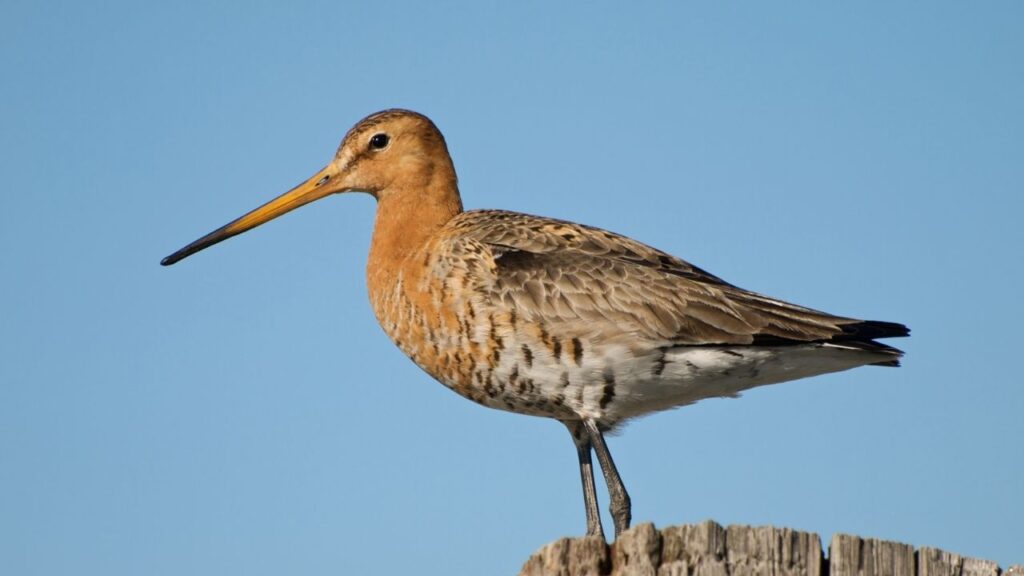
Imagine flying nonstop for nine days without eating, drinking, or resting. The Bar-tailed Godwit does exactly that. This incredible bird holds the record for the longest nonstop flight of any bird.
It flies over 11,000 km (6,835 miles) from Alaska all the way to New Zealand in one go. This journey showcases astonishing endurance and navigation skills, surprising researchers who once thought such a feat was impossible.
Migration Route and Flight Facts
Flies nonstop for around nine days and covers up to 12,000 km (7,500 miles).
Migrates annually from Alaska to New Zealand or Australia.
Uses satellite tracking to map its impressive trans-Pacific route.
Travels directly from breeding grounds to nonbreeding coastal mudflats.
Appearance and Lifestyle
Bar-tailed Godwits belong to the Scolopacidae family and have long legs and an upturned bill used to probe mudflats for shellfish, worms, and crustaceans. Their plumage changes with the seasons—rusty-red in breeding season and gray-white in winter.
They often show a distinctive white patch on their back during flight. While some subpopulations face decline due to habitat loss, conservation efforts aim to protect their crucial stopover and feeding sites. These amazing birds remind us of nature’s incredible capacity for endurance and adaptation.
5. Red Knot
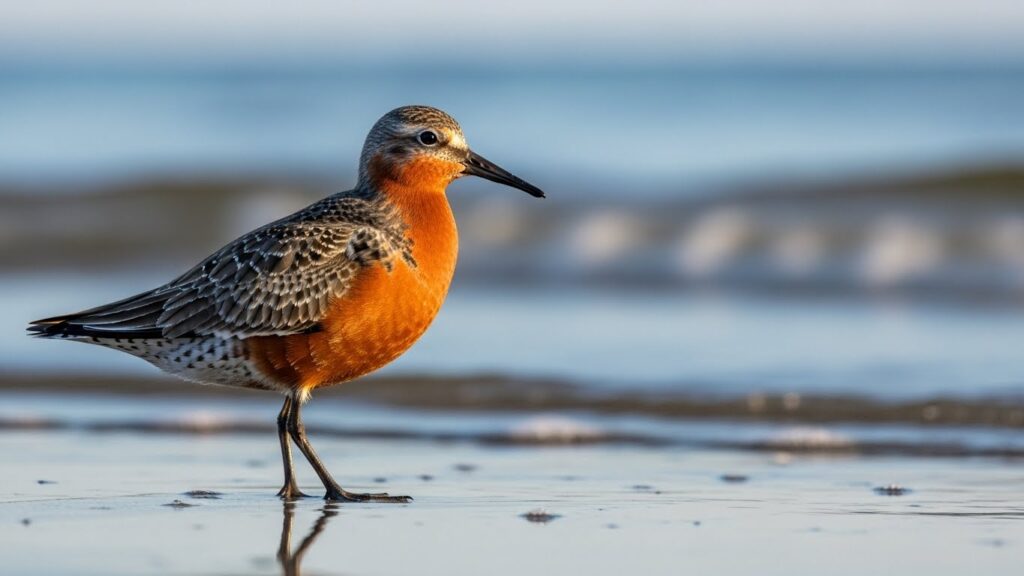
The Red Knot is a remarkable migratory shorebird that travels up to 15,000 km (9,300 miles) each year. It journeys from its breeding grounds in the Canadian Arctic Archipelago to winter along the southern coasts of Chile and Argentina.
Despite its relatively small wingspan, this bird covers vast distances, showcasing incredible endurance. However, human activities are making this epic trip harder for the Red Knot, especially the Atlantic subspecies known as the Rufa Red Knot, which is now listed as threatened.
Migration Route and Challenges
Migrates annually between Arctic breeding sites and southern wintering areas like Tierra del Fuego.
Faces threats from coastal development and overharvesting of horseshoe crab eggs, a vital food source.
Has a global range, but populations have declined by 10-29% due to habitat loss, hunting, disturbance, and climate change.
Appearance and Conservation Status
In winter, Red Knots have a plain look, but during spring, their chest turns a bright robin-red. They breed mostly above the Arctic Circle and winter in diverse shorelines worldwide, including Australia and South America.
These birds often gather in dense flocks, standing shoulder to shoulder on sandy beaches. While widespread, the species is listed as Near Threatened. Conservation efforts focus on protecting their habitats and the crucial food sources they depend on during migration.
6. Northern Wheatear
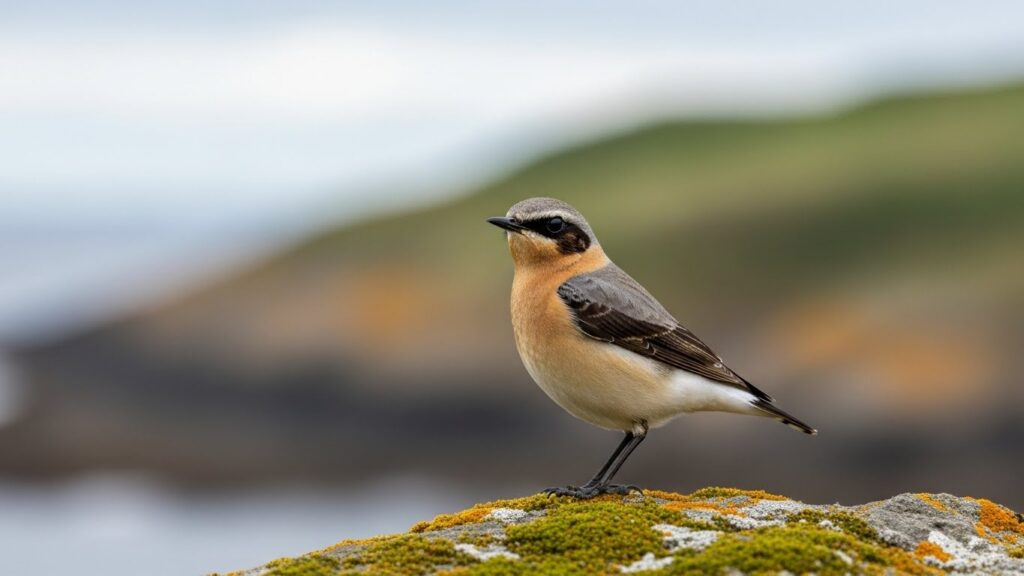
The Northern Wheatear is a tiny but mighty migrator. Despite its small size, it travels an astonishing 18,000 miles (about 29,000 km) each year. This includes a nonstop journey across open ocean, icy landscapes, and deserts.
The Northern Wheatear breeds in northern and central Asia, Europe, Greenland, Alaska, and parts of Canada. Then it flies all the way to Sub-Saharan Africa to spend the winter. This makes it the songbird with the longest known migration.
Migration Route and Behavior
Travels roughly 9,000 miles (14,500 km) one way between breeding and wintering grounds.
Birds from Alaska cross Asia to reach Africa; others from Europe and Greenland winter in Sub-Saharan Africa.
Migrates across very challenging environments, including oceans and deserts.
Builds nests in cavities like rabbit burrows, rock crevices, or man-made openings.
Appearance and Lifestyle
Northern Wheatears have a modest but striking look. Their plumage is gray, black, white, and buff. In flight, they show a bright white rump and a black-and-white tail pattern. Males sing to attract females, who build the nests alone.
These birds forage on the ground in meadows, tundra, and pastures. Found across northern Eurasia and North America, they are a familiar sight in summer and during migration in various parts of the world.
7. Pectoral Sandpiper
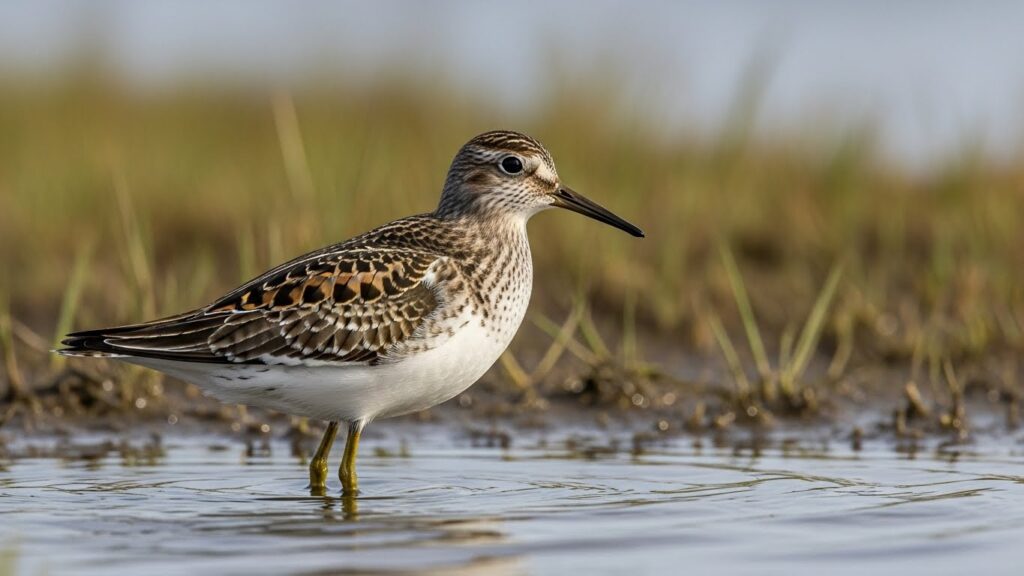
The Pectoral Sandpiper is an impressive migratory bird that travels up to 18,000 miles each year. It breeds in the tundra of northeast Asia, Alaska, and central Canada.
From there, it migrates south to wintering grounds in South America. Some Asian populations even reach as far as Australia and New Zealand. This long journey shows how far small birds can travel each year.
Migration Route and Behavior
Migrates from Arctic breeding areas to distant wintering sites in South America and Australasia.
Prefers grassy marshes and wet fields over open mudflats.
Males perform a unique hooting flight display using an inflatable air sac on their chest.
Hunts insects and small invertebrates by sight and by probing the ground with its long bill.
Appearance and Lifestyle
The Pectoral Sandpiper is medium-sized with a brown, streaky breast and a white belly, giving it a distinctive look. The Cornell Lab mentions that its name comes from the “pectoral” air sac males inflate during mating displays.
They spend most of their time wading in water searching for food. Males are larger and heavier than females. This shorebird is often seen during migration throughout the Great Plains and coast to coast in North America.
Conclusion
Bird species around the world show just how powerful and adaptable nature can be. As birds migrate between the far north and the southern summer, many birds rely on long-distance migration to survive changing seasons.
From Arctic breeding grounds to warmer climates, birds breeding in one region often travel long flights in search of a stable food supply. While some species follow a clear seasonal migration, other birds show partial migration or even an irregular pattern, moving only short distances when conditions allow.
However, many species now face population decline due to shrinking stopover sites, changing sea level, and reduced food supply along their routes. While many birds still manage incredible journeys, not all birds migrate the same way, and some struggle more than others.
Protecting key habitats is essential so bird species—whether traveling across continents or staying within one region—can continue these remarkable migrations for generations to come.
