




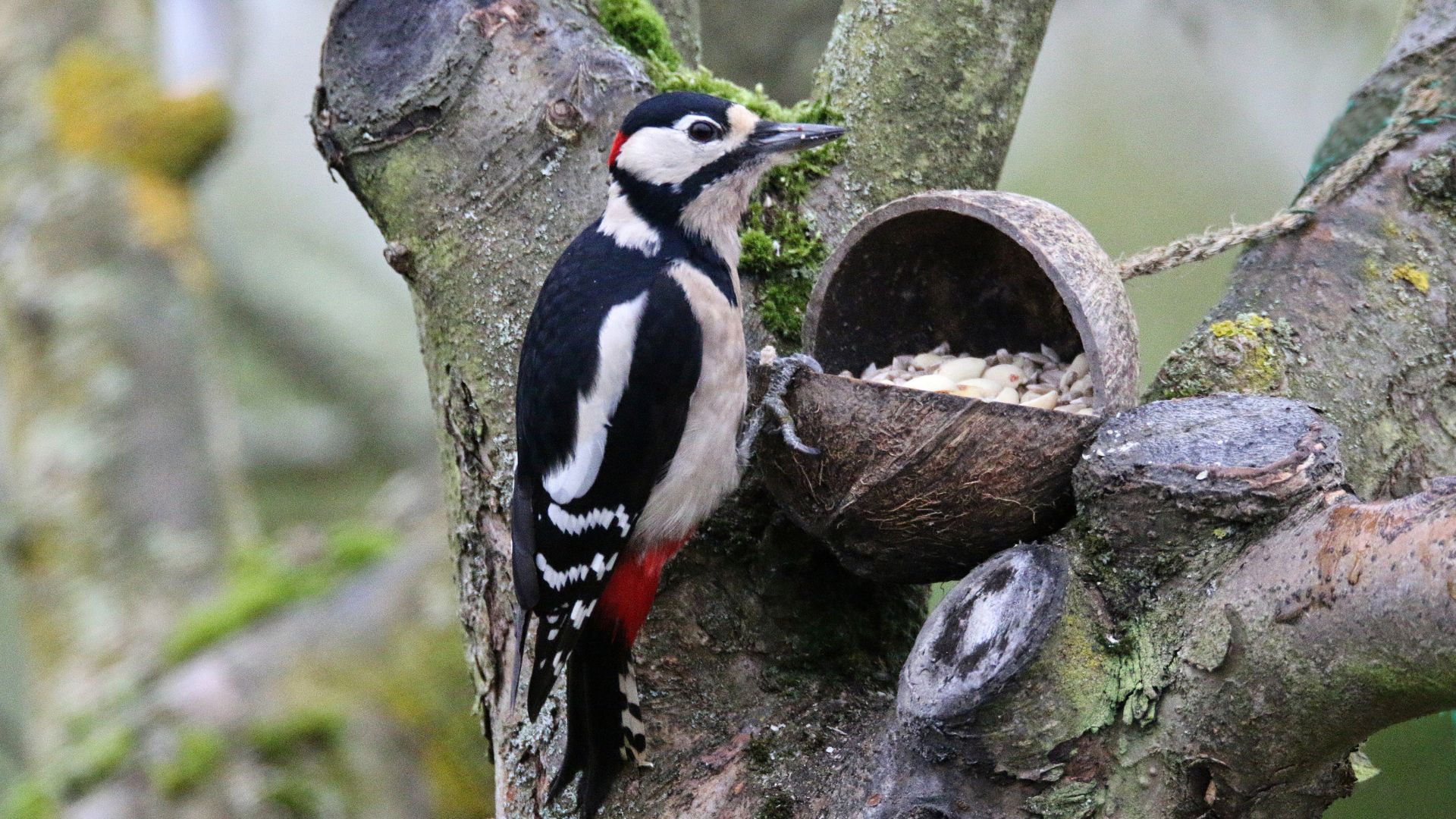
Have you ever stopped to think about how much effort goes into a bird’s next meal? It turns out, eating isn’t just about survival in the bird world—it’s often a carefully timed, season-based ritual that changes throughout the year.
As temperatures shift and life stages change, birds adapt their feeding habits in surprisingly clever ways to stay energized, raise young, and prepare for long journeys ahead.
During colder months, birds focus on high-energy foods to keep warm, while spring brings an urgent need to refuel after exhausting migrations and support nesting and growing chicks.
Summer turns feeding into a teaching moment, with adults showing their young how to find food, and fall becomes all about bulking up for the road ahead.
And then there are birds that don’t just eat—they follow rituals that seem almost shocking. From scavenging meals others wouldn’t touch to using very specific feeding routines based on opportunity and season, these behaviors can feel strange, clever, and even a little unbelievable.
So if you think bird feeding is just peck, swallow, repeat—think again. You’re about to discover birds that have truly fascinating feeding rituals, and trust us, some of them will completely change the way you see dinner in the wild.
Key Takeaways
Discover how flamingos use unique filter-feeding and why their diet colors their iconic pink feathers.
See how clever birds like woodpecker finches and Egyptian vultures use tools to unlock tricky meals.
Explore amazing hunting styles from black herons’ wing canopies to the underwater dives of American dippers.
Learn how specialized feeders like snail kites survive on one main food source and what that means for their survival.
Birds That Have Fascinating Feeding Rituals
1. Flamingo
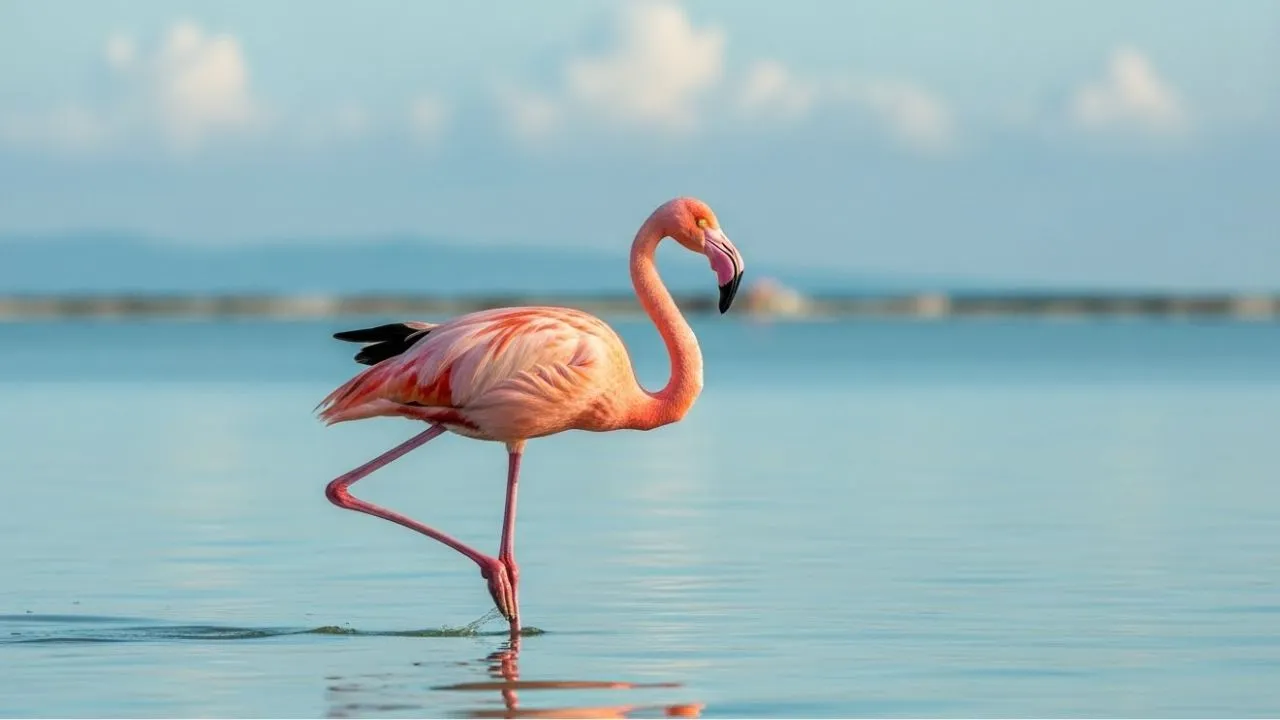
Flamingos have one of the most fascinating feeding rituals in the bird world. Instead of pecking at food like most birds, they feed with their heads upside down in shallow water.
Their curved beaks are specially designed for this position, allowing them to sift food from muddy or salty water with remarkable efficiency. Their feeding method is called filter feeding.
Flamingos slowly sweep their heads side to side while standing in water. Tiny comb-like structures inside their beaks trap food as water flows out, while a strong tongue pumps water in and out to separate edible particles from mud and debris.
What flamingos eat doesn’t just fuel their bodies—it also affects their appearance. Natural pigments in their food are responsible for their iconic pink color, as mentioned by Birdfact.
They often feed in groups, which helps stir up food from the water and makes feeding more effective. During peak feeding times, they may spend several hours a day repeating this rhythmic motion.
Key highlights of flamingo feeding habits:
Feed with their heads upside down
Use filter feeding to strain food from water
Have comb-like beak structures and a pumping tongue
Often feed in groups
Diet influences their pink coloration
2. Black Heron
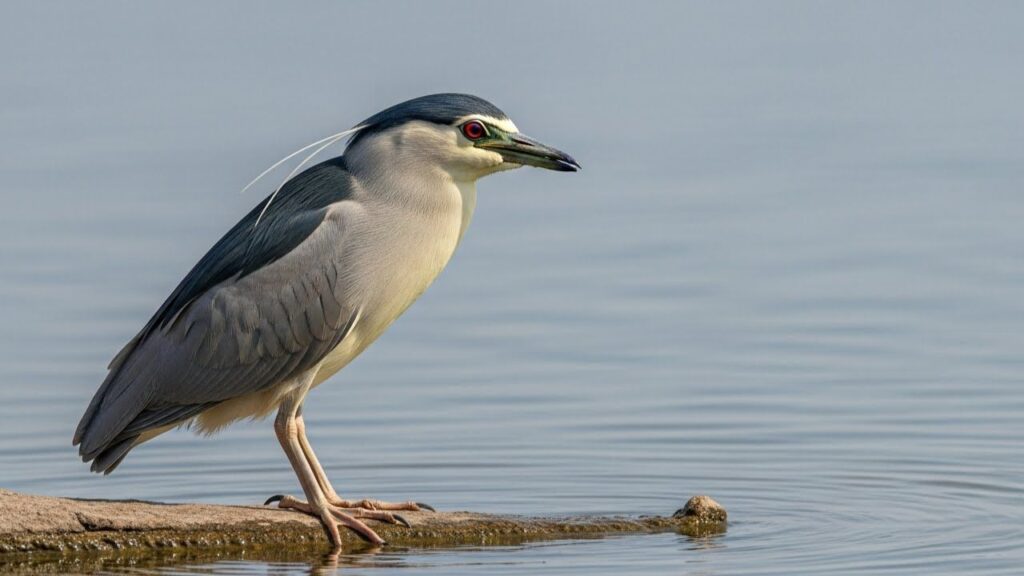
Black herons are masters of a feeding strategy so unusual that it looks almost like performance art in the bird world.
When hunting in shallow waters, these dark-plumaged herons spread their wings over their heads and bodies to create a shade canopy — a clever trick that helps them lure and spot prey beneath the surface.
They can feed alone or in small groups, sometimes gathering with other herons and wading birds as fish schools move through wetlands, lakes, and tidal flats. Their diet mainly consists of small fish, but they’ll also take aquatic insects, crustaceans, and amphibians when available.
This remarkable feeding ritual makes black herons stand out even among their wading bird relatives. The combination of shade creation and stealthy stalking allows them to take advantage of prey that might otherwise slip away.
Around dusk, when feeding activity peaks, groups of black herons may be easier to spot as they work together along the water’s edge.
Key highlights of black heron feeding habits:
Uses a wing canopy to cast shade and lure prey
Walks slowly while hunting in shallow water
Feeds on fish, insects, crustaceans, and amphibians
Hunts alone or in small groups
Most active during daylight and twilight hours
3. Woodpecker Finch
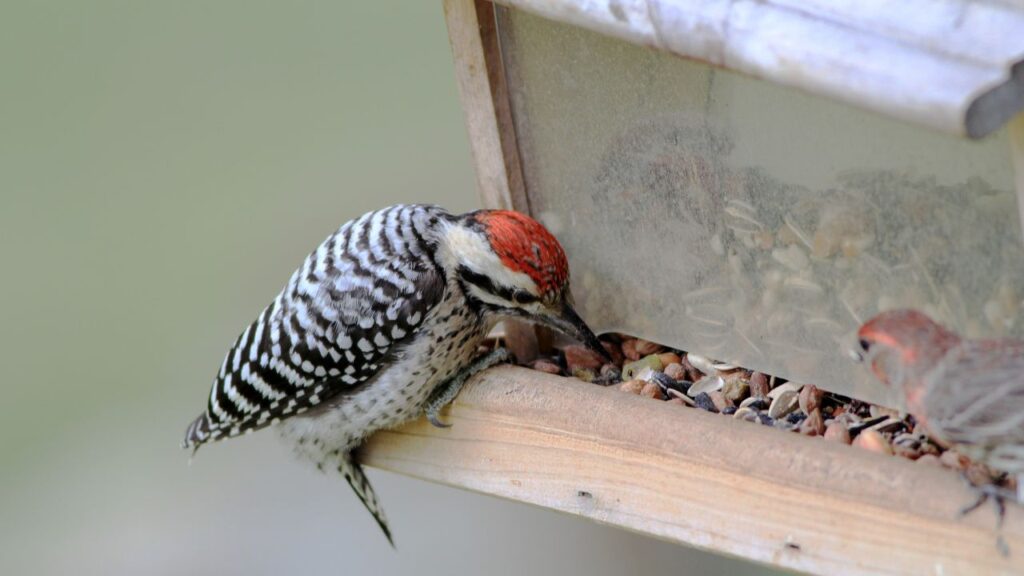
Woodpecker finches are among the most fascinating feeders in the avian world because of their unique use of tools to find food.
On the Galápagos Islands, where competition for food can be tough, these clever little birds pick up twigs, cactus spines, or thorny sticks and insert them into cracks and holes in wood to extract hidden insects and larvae — a behavior almost never seen in other bird species.
Their diet mainly revolves around invertebrates like beetle grubs, spiders, and other arthropods that live under bark or inside crevices, but they’ll also eat seeds and plant matter when insects are less abundant.
The tool-using behavior is more common in dry environments where food is harder to reach, making this finch’s feeding ritual a brilliant evolutionary solution to a challenging habitat.
This mix of instinct and learned technique makes the woodpecker finch one of nature’s most impressive little problem-solvers. During the dry season, up to half of their diet may be obtained using tools — a number that reflects just how essential this trick is for their survival.
Key highlights of woodpecker finch feeding habits:
Uses twigs or cactus spines as tools to extract prey
Primarily eats insects and larvae
Also consumes seeds when insects are scarce
Tool use is more frequent in dry, resource-poor conditions
Native to the Galápagos Islands with adaptive foraging strategies
4. Green Heron
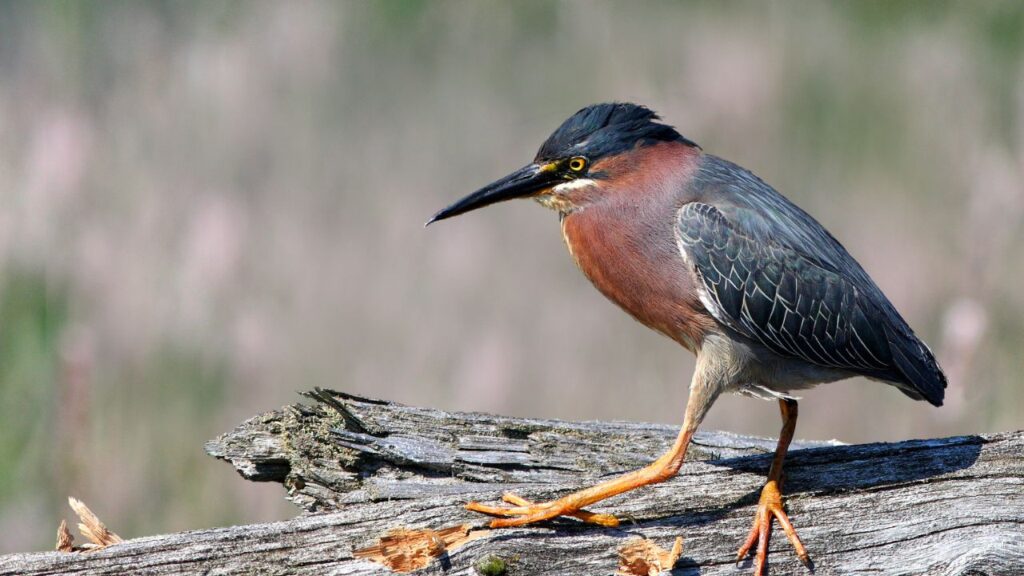
Green herons are small but remarkably skilled hunters found along calm streams, marshes, and edges of ponds.
Unlike larger herons that rely solely on patience and long strikes, green herons often use surprising hunting techniques like dropping bait — such as insects, feathers, or twigs — onto the water’s surface to lure fish closer, according to the Cornell Lab.
These birds usually hunt from a low perch, waiting until a fish or other aquatic prey comes within reach. Then, with lightning speed, they stab downward with their sharp beaks to grab their meal.
Their diet consists mainly of small fish, frogs, crustaceans, and aquatic insects, but they’ll also eat spiders, small reptiles, and even snails — making them versatile feeders in ever-changing wetland environments.
Green herons may be compact in size, but their feeding behavior is both patient and innovative. At times, they’ll even use tools — placing objects as decoys — so fish will approach more closely, a rare trick among birds.
Key highlights of green heron feeding habits:
Uses bait occasionally to lure fishHunts from low perches with quick strikes
Eats fish, frogs, crustaceans, and insects
Adapts diet based on food availability
Known for patience and clever hunting techniques
5. Egyptian Vulture
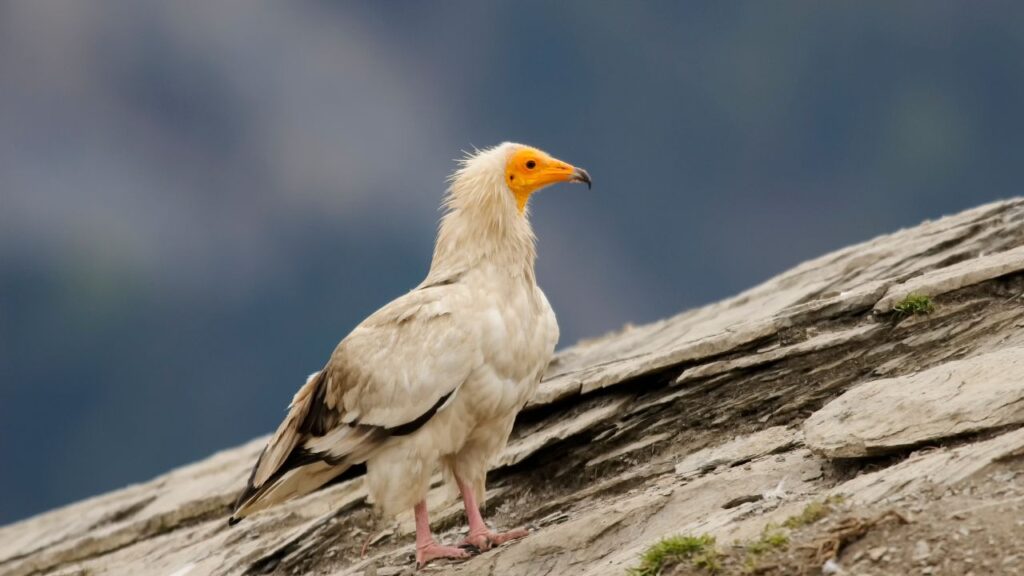
Egyptian vultures may not look glamorous, but their feeding habits are nothing short of genius. As scavengers, they feed primarily on carrion (already dead animals) — a role that’s vital for cleaning up the environment.
These vultures are opportunistic, eating anything from roadkill to leftovers at carcasses, and they rely on their excellent eyesight to spot meals from high in the sky.
What really sets Egyptian vultures apart is their ability to use tools to access food. The Peregrine Fund mentions that they’re famous for picking up small rocks and tossing them at larger eggs — such as those of ostriches — to break them open.
This smart use of tools shows remarkable problem-solving skills not often seen in birds. Their diet also includes bones, eggs, and even some plant matter when other food is scarce.
Despite living in harsh environments from North Africa to South Asia, Egyptian vultures have adapted to survive by making the most of tough feeding conditions. Their flexible diet and clever strategies allow them to thrive where other predators may struggle.
Key highlights of Egyptian vulture feeding habits:
Primarily scavenges carrion for food
Uses rocks as tools to break open eggs
Eats bones, eggs, and some plant matter
Finds food using keen eyesight from flight
Very adaptable in harsh environments
Snail kites are one of the most specialized feeders in the raptor world. They live mainly in freshwater wetlands and have evolved a very narrow diet that revolves almost entirely around large apple snails, which they spot from the air or while perched low over shallow water.
These birds patrol marshes by gliding slowly or sitting and scanning for snails. When they find one, they swoop down, snatch it with their foot, and then fly to a perch to extract the snail from its shell, using that curved bill as a precision tool.
While snails make up the vast majority of their diet, snail kites may occasionally take other prey — such as small turtles, crayfish, or rodents — when snails are scarce.
This tight reliance on apple snails makes snail kites both fascinating and vulnerable; they thrive only where their preferred prey is abundant, and changes in water levels or snail populations can greatly affect their success.
Key highlights of snail kite feeding habits:
Highly specialized diet focused on apple snails
Forages by gliding low or scanning from perches
Snails are seized with their feet, then extracted with the bill
May eat other prey if snails are scarc
Dependent on freshwater wetlands with abundant snail
6. Snail Kite
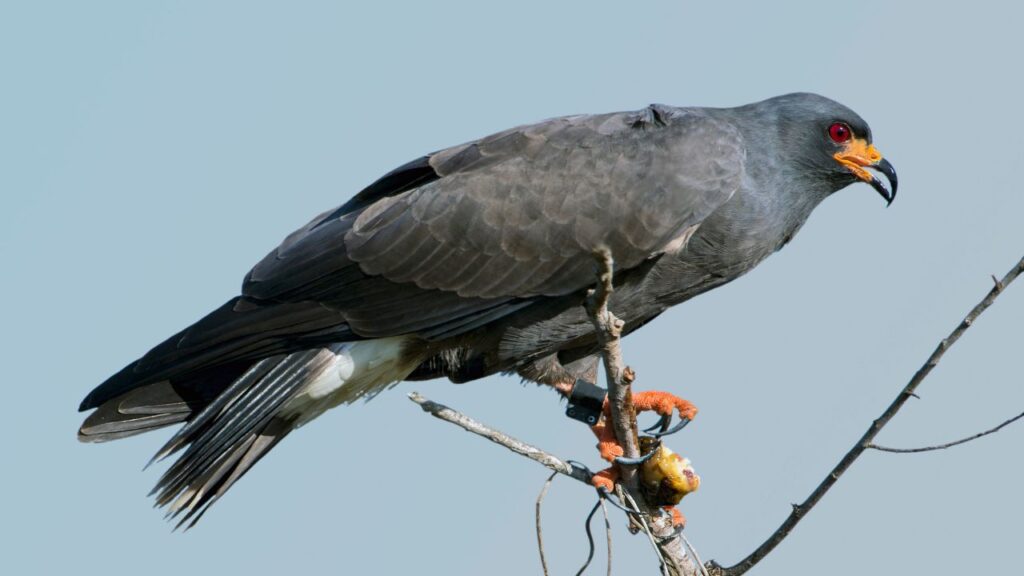
Snail kites are one of the most specialized feeders in the raptor world. They live mainly in freshwater wetlands and have evolved a very narrow diet that revolves almost entirely around large apple snails, which they spot from the air or while perched low over shallow water.
These birds patrol marshes by gliding slowly or sitting and scanning for snails. When they find one, they swoop down, snatch it with their foot, and then fly to a perch to extract the snail from its shell, using that curved bill as a precision tool.
While snails make up the vast majority of their diet, snail kites may occasionally take other prey — such as small turtles, crayfish, or rodents — when snails are scarce.
This tight reliance on apple snails makes snail kites both fascinating and vulnerable; they thrive only where their preferred prey is abundant, and changes in water levels or snail populations can greatly affect their success.
Key highlights of snail kite feeding habits:
- Highly specialized diet focused on apple snails
- Forages by gliding low or scanning from perches
- Snails are seized with their feet, then extracted with the bill
- May eat other prey if snails are scarce
- Dependent on freshwater wetlands with abundant snails
7. American Dipper
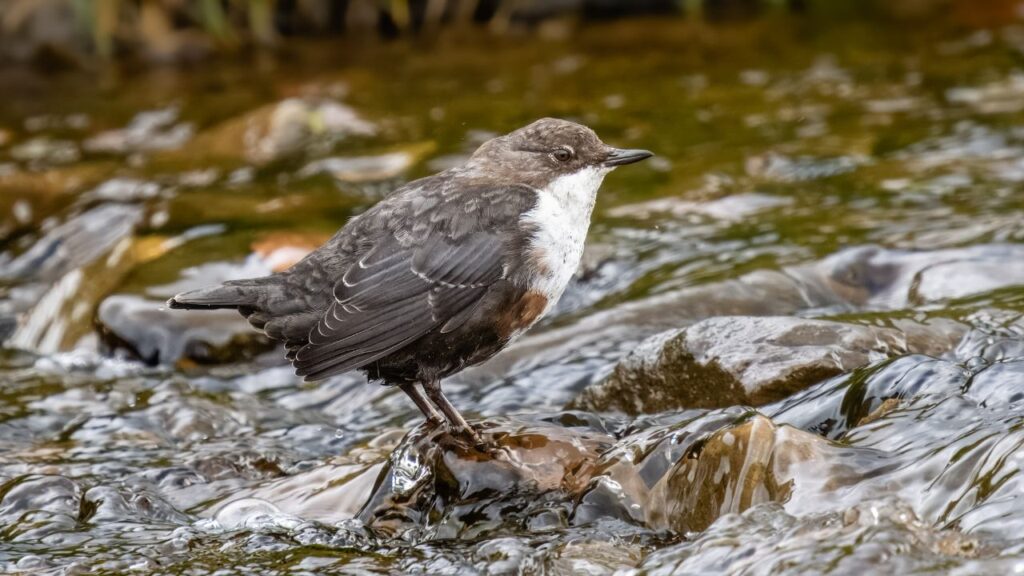
American dippers are among the most unique foragers in the bird world because they spend large portions of their feeding time underwater, right in the fast-flowing mountain streams they call home.
Unlike most songbirds, these stout, water-loving birds dive, swim, and even walk along streambeds to find food hiding beneath stones and debris.
Their diet is centered on aquatic insects and larvae, such as caddisflies, mayflies, stoneflies, and midges, but they’ll also take small fish, fish eggs, tadpoles, and other tiny invertebrates when available.
These birds use their wings to “fly” underwater and their strong legs to propel themselves, making them incredibly effective hunters in icy, rushing water.
The name “dipper” comes from their characteristic bobbing motion on rocks and logs along stream edges, which some scientists believe helps them see into turbulent water.
Their ability to forage below the surface, even turning over stones with their bills, makes them one of North America’s most extraordinary feeding specialists.
Key highlights of American dipper feeding habits:
Forages underwater by swimming and diving
Eats mainly aquatic insects and larvae
Also takes small fish, fish eggs, and tadpoles
Walks along streambeds to expose hidden prey
Named for their rhythmic bobbing near water edges
Conclusion
When it comes to birds that have fascinating feeding rituals, courtship behavior plays a big role in many species. During late winter and early spring, males often use courtship feeding and elaborate courtship displays to attract a mate.
Watching these creatures engage in chasing, singing, and other fun forms of bird behavior is truly an adorable thing. These displays give the pair a chance to complete the bonding process before copulation and show off their skills in a variety of ways.
Understanding the reasons behind these behaviors helps us appreciate the true complexity of bird rituals. Whether it’s feeding on the ground, competing through displays, or performing a series of actions to win a mate, birds leave a lot of fascinating clues about how they choose their partners.
In the end, these feeding rituals and courtship behaviors reveal the incredible ways birds interact and thrive in their areas, making their world full of action and wonder.
