




Some birds have an incredible ability to live and even thrive in the harshest weather conditions, whether it’s the freezing cold of winter or the intense heat of scorching deserts.
While icy winds and freezing temperatures challenge many creatures in cold climates, soaring temperatures and dry landscapes test those in hot regions. These feathered survivors use amazing adaptations to stay cool or warm and find food when it seems impossible.
Some birds can lower their body temperature at night to conserve energy, almost like a mini hibernation, helping them survive freezing cold.
Others use clever ways to beat the heat, like seeking shade or being active during cooler hours. Their resilience and smart strategies reveal just how extraordinary nature can be when it comes to surviving extreme cold or heat.
If you think all birds fly away to escape harsh weather, think again. Many species choose to stay—and even travel from colder or hotter regions—to brave snow, ice, or scorching sun. Let’s explore these remarkable and unusual bird species that truly shine in extreme weather events!
Key Takeaways
See how Emperor Penguins survive freezing winters without nests or food for months.
Meet Snowy Owls and Gyrfalcons—Arctic hunters built for the cold.
Discover how Ravens and Roadrunners thrive in icy tundras and hot deserts.
Find out how Sandgrouse carry water and Ostriches defend themselves in tough climates.
Birds That Can Live in Extreme Weather Conditions
1. Emperor Penguin
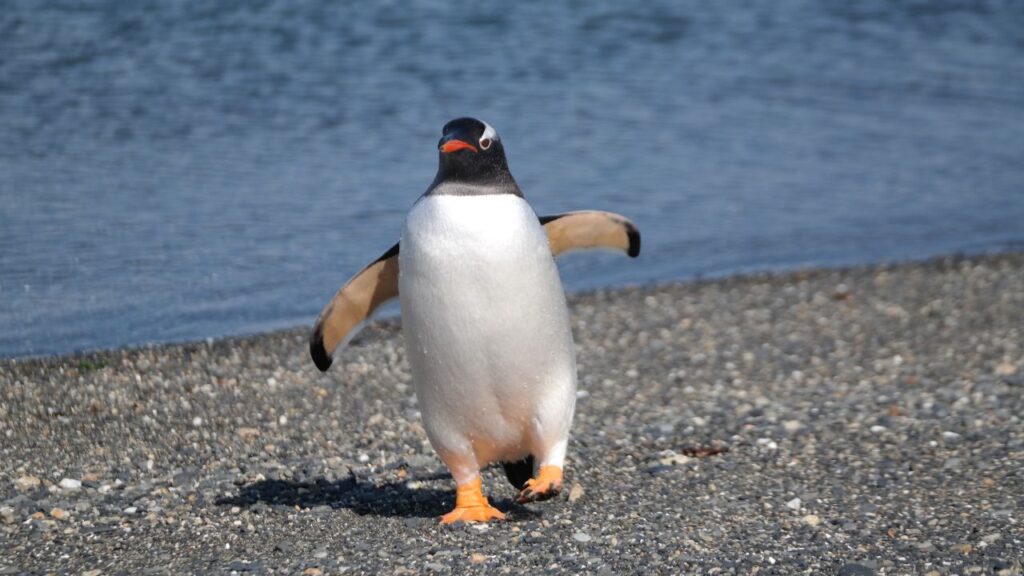
Emperor penguins are extraordinary birds that survive and breed in the brutal Antarctic winter — the coldest and harshest season on Earth.
They are the only birds to breed during this deep freeze, relying on solid sea ice to protect their eggs and chicks. Instead of building nests, male emperors balance a single egg on their feet, keeping it warm and safe from the freezing ground, as mentioned by WWF.
During this time, penguins huddle closely together to share body heat, helping the entire group survive extreme cold.
Incredible Adaptations for Survival
Breeding on ice: They depend on stable sea ice for about nine months to raise their young successfully.
Long fasting periods: Males can fast for up to four months while incubating the egg.
Deep diving: They dive as deep as 500 meters to hunt underwater.
No nest building: The egg is kept off the ice by balancing it on the male’s feet, covered by a warm flap of skin to minimize heat loss.
Facing Future Challenges
Emperor penguins are currently listed as Near Threatened. Their survival depends heavily on the presence of sea ice, which is shrinking due to climate change. Without enough ice, breeding becomes impossible, putting their population at serious risk.
Scientists warn that if global warming continues unchecked, more than 80% of emperor penguins could disappear by the end of the century. Protecting their icy habitat is critical for their future.
2. Snowy Owl
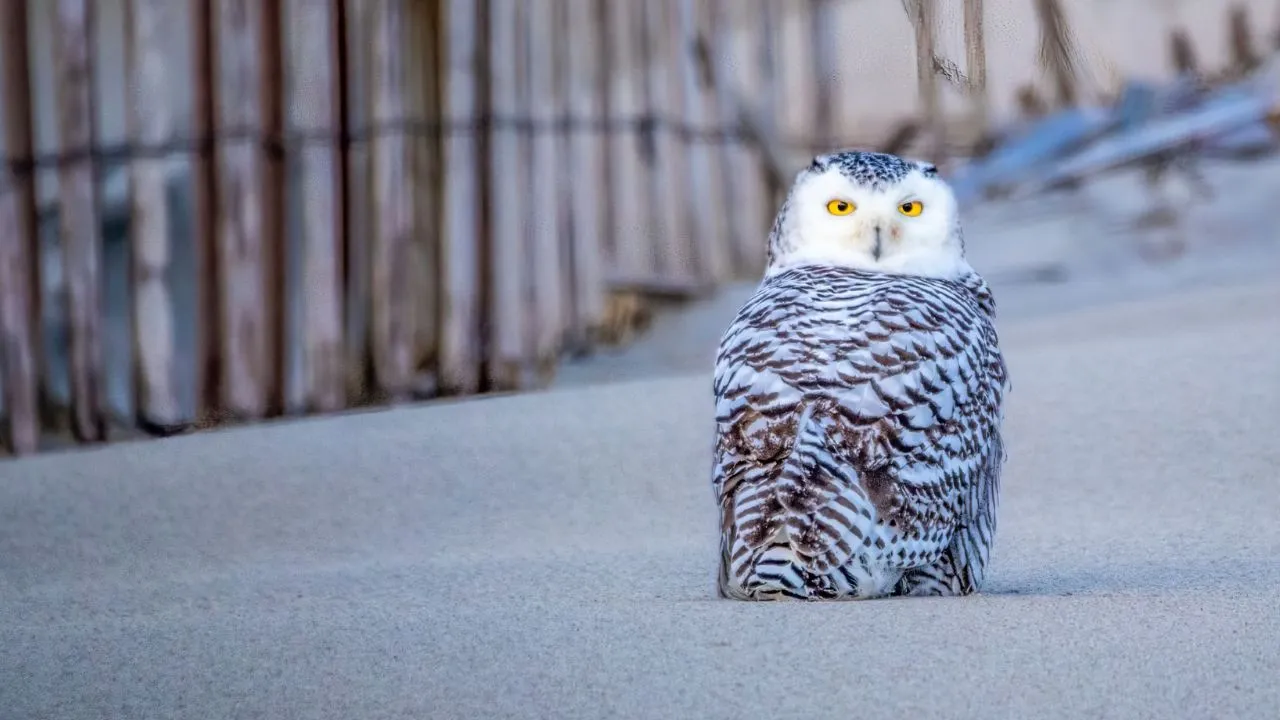
Snowy owls are striking birds known for their dazzling white feathers and bright yellow eyes. Native to the high Arctic tundra, they are perfectly built to handle freezing temperatures and harsh winter conditions.
These owls often travel south during especially cold winters, sometimes appearing far from their usual range, thrilling bird watchers and nature lovers alike.
Amazing Winter Visitors and Hunters
Seasonal travelers: Snowy owls occasionally migrate south into the northern United States and beyond during cold winters, creating rare “irruption” events that happen every 3 to 5 years.
Skilled hunters: Their main diet consists of rodents like lemmings, but they can also prey on birds as large as geese.
Flexible breeders: In years when food is abundant, they can raise larger families, sometimes doubling or tripling their usual number of chicks.
Adapted to Survive and Thrive
Snowy owls breed on the tundra, where females lay 3 to 11 eggs depending on food availability. During the summer months, they enjoy daylight hours to hunt continuously.
Male snowy owls tend to be almost pure white, while females and younger birds have darker spots for camouflage. Their ability to live in extreme cold and shift their range makes them a fascinating example of nature’s adaptability to winter’s challenges.
3. Gyrfalcon
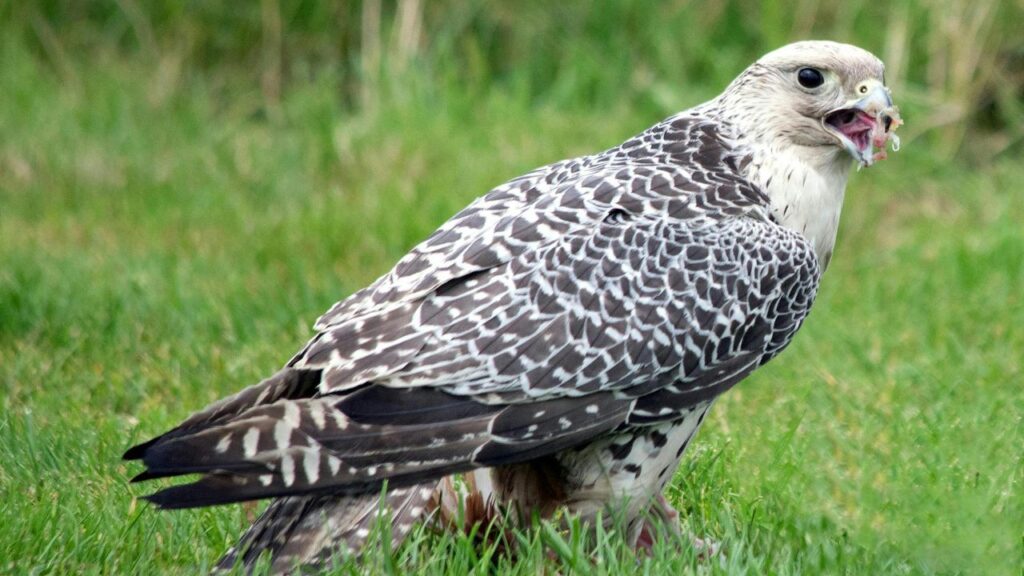
The Gyrfalcon is the largest and most powerful falcon in North America. It lives in the High Arctic, where it nests on remote cliffs and hunts over vast, open lands.
This fierce predator mainly hunts large birds like ptarmigans and waterfowl, and sometimes medium-sized mammals such as Arctic hares. Known for its speed and strength, the Gyrfalcon is a true master of survival in extreme cold.
Hunting Skills and Behavior
Hunting tactics: Gyrfalcons use a “surprise and flush” method, flying low to scare prey into flight and then chasing them down.
Powerful stoops: They also dive from high altitudes at incredible speeds to catch prey.
Calls: Usually quiet, they make a low-pitched, agitated “Kak-Kak-Kak” sound when disturbed.
Plumage variety: Gyrfalcons come in three color phases—gray, black, and white—helping them blend into Arctic landscapes.
Conservation and Research
Though rare, Gyrfalcons have a large range and stable population, so they are currently not considered vulnerable. However, climate change poses future challenges by affecting their Arctic habitat.
For over 30 years, scientists have studied Gyrfalcon behavior, nesting, and diet to better understand how they and their prey, like ptarmigans, adapt to a changing world. This research is crucial for protecting these amazing birds and the fragile Arctic ecosystem they call home.
4. Common Raven
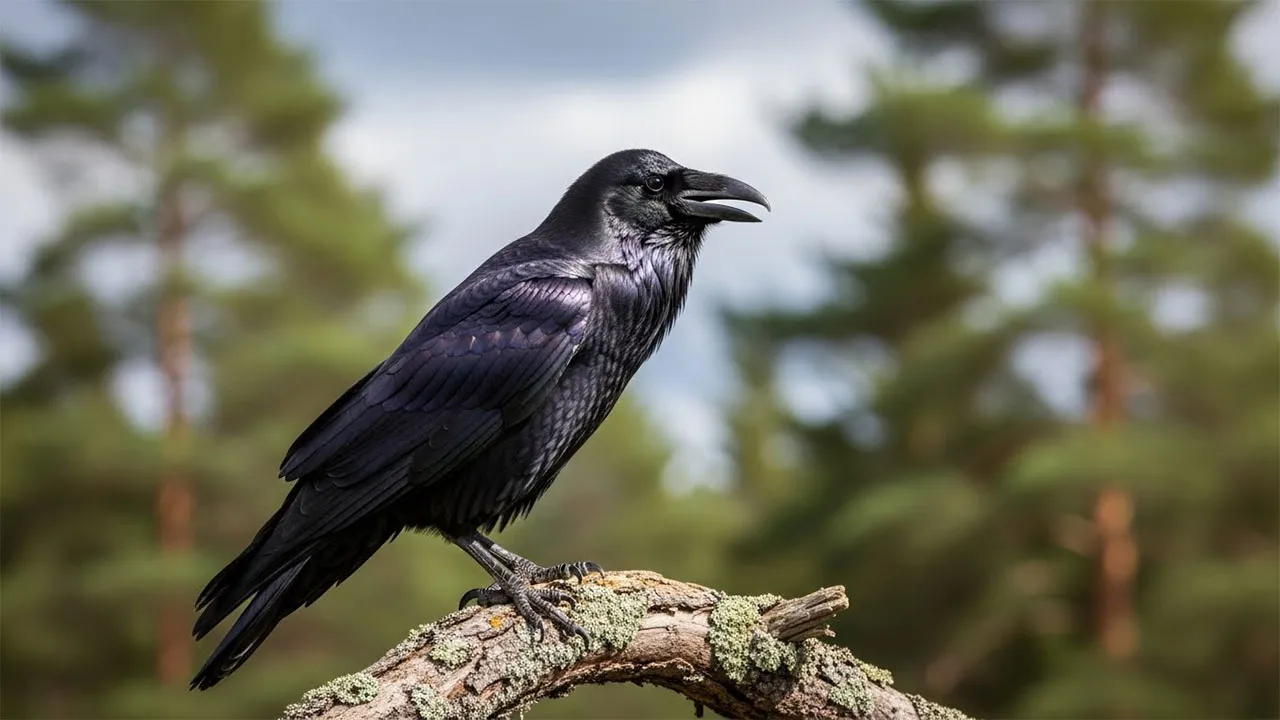
The Common Raven is one of the smartest and most adaptable birds in the world. Found across the Northern Hemisphere, ravens thrive in a wide range of habitats—from hot deserts to the icy Arctic tundra.
Known for their deep, echoing croak, these birds are just as comfortable soaring over wilderness as they are scavenging near human settlements. Their intelligence and resourcefulness help them survive all seasons and extreme weather.
Key Traits and Behavior
Highly intelligent: Ravens are famous for solving complex problems and using creative tactics to find food.
Versatile diet: They scavenge discarded food but also hunt small animals, helping keep environments clean.
Distinctive features: Ravens have shaggy throat feathers, strong feet, long bills, and wedge-shaped tails that set them apart from crows.
Wide range: They live across vast areas, including mountains, forests, deserts, and tundra.
Population and Conservation
Common Ravens have a large and growing population. They are not considered vulnerable because their range and numbers are stable or increasing.
Once pushed out of some areas, ravens are now making a strong comeback. Their ability to adapt to different environments and extreme weather makes them a true all-weather survivor.
5. Ostrich
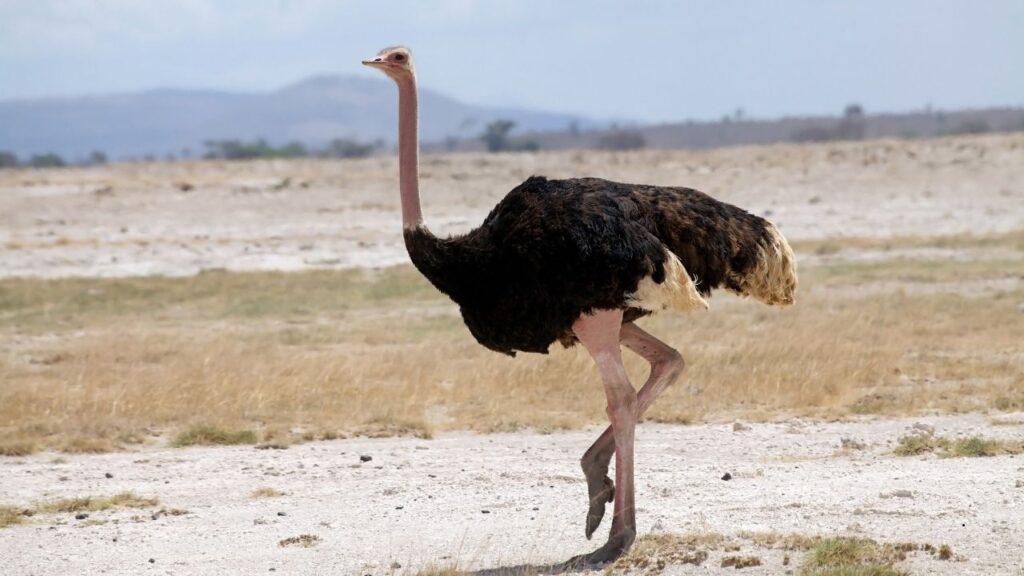
The ostrich is the world’s largest and heaviest bird. It lives in open savannas and deserts across Africa, where temperatures can soar, and water is scarce.
This flightless bird is perfectly built to handle hot, dry environments. Like camels, ostriches can go long periods without drinking water, getting most of their moisture from the plants they eat, according to the Maryland Zoo.
Remarkable Adaptations and Traits
Speed and power: Ostriches are the fastest two-legged animals, able to sprint at speeds up to 69 km/h (43 mph).
Strong defense: Their powerful legs deliver kicks strong enough to defend against predators—even lions.
Distinctive appearance: Males have black feathers with white wing and tail plumes, and a colorful neck during the breeding season. Females are brownish-grey and more camouflaged.
Large eyes: They have the largest eyes of any land animal, protected by long black lashes, helping them spot danger from far away.
Thriving in Extreme Heat
Ostriches have evolved to survive some of the hottest climates on Earth. Their long legs help keep their bodies away from the hot ground, while their tough feet allow them to run across rough terrain.
Their ability to tolerate heat and conserve water makes them true champions of life in extreme weather conditions.
6. Road Runner
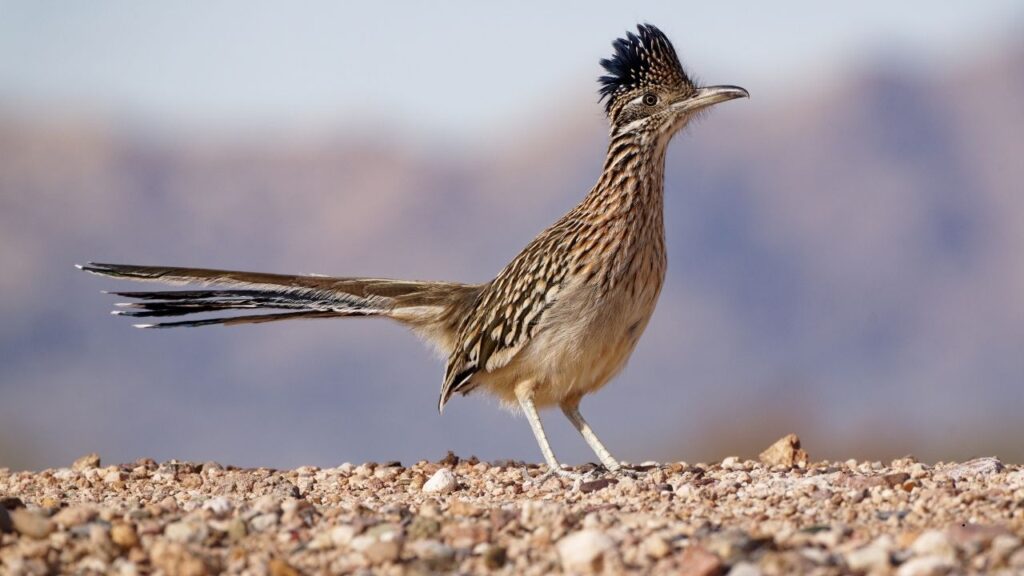
The roadrunner is a fast-running bird native to the deserts of the southwestern United States, Mexico, and Central America.
Unlike the famous cartoon character, the real roadrunner is a ground-dwelling member of the cuckoo family. It is well adapted to life in hot, dry environments, where it uses its speed and agility to escape predators and hunt prey.
Unique Traits and Behavior
Speedy runner: Roadrunners can run up to 32 km/h (20 mph), using their long tails for balance while dashing across the desert floor.
Flight ability: Though they mostly run, roadrunners can fly short distances to perch on branches or rocks.
Distinctive features: They have mottled brown and tan feathers, a crest on their heads that can puff up to communicate, and a long, graduated tail.
Special feet: Their toes are arranged with two pointing forward and two backward, allowing them to grasp and climb.
Family Ties and Survival Skills
According to Creation Ministries, Roadrunners belong to the genus Geococcyx, meaning “earth cuckoo,” and share traits with other cuckoos and anis.
Despite their different appearances and habits, these birds all have rounded wings, curved bills, and similar tail feather patterns. Roadrunners thrive in extreme desert weather by using their speed and cleverness, making them a true symbol of survival in tough conditions.
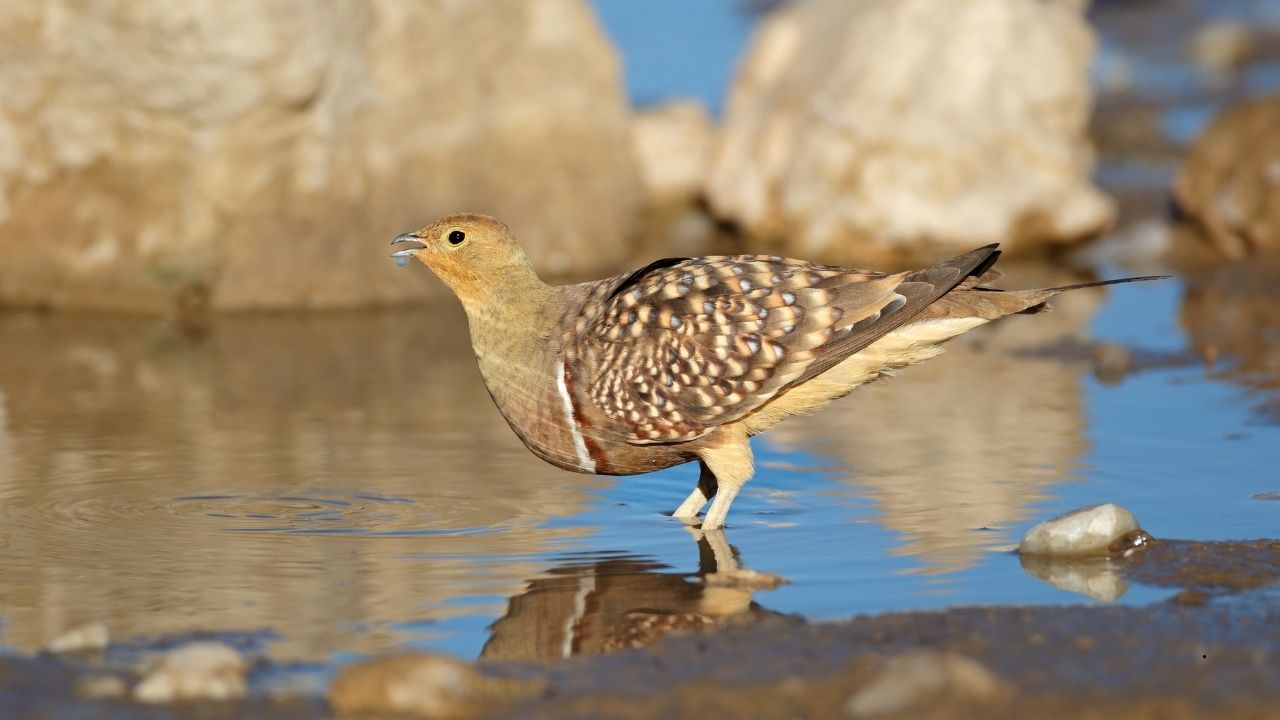
7. Sandgrouse
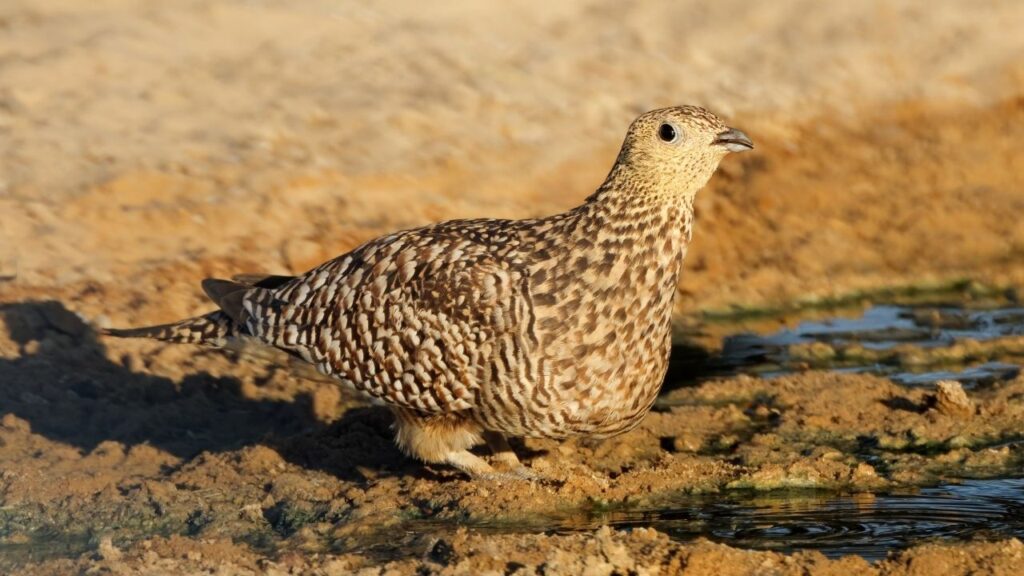
Sandgrouse are remarkable birds that live in some of the driest and harshest environments on Earth. Found across Africa, Asia, and parts of Europe, these ground-dwelling birds thrive in open plains, savannahs, and semi-deserts.
Their mottled brown feathers blend perfectly with the dusty landscapes, helping them stay hidden from predators.
Unique Water-Carrying Adaptation
Water transport: Male sandgrouse have special feathers on their bellies that soak up and hold water.
Chick care: They fly long distances to water sources, then carry water back to their thirsty chicks.
Feather structure: The belly feathers have tiny, hair-like extensions that trap about two tablespoons of water.
Chick feeding: The chicks use their bills to “milk” the water from their father’s feathers.
Life in the Harsh Desert
Sandgrouse live in flocks and often travel miles to find water each day. Their diet mainly consists of seeds found in their arid habitats. Despite being related to shorebirds, sandgrouse have adapted perfectly to desert life.
They nest on the ground far from water, relying on their amazing ability to carry water to keep their young alive. Their survival skills make them true champions of extreme weather conditions.
Conclusion
From the frozen Arctic breeding grounds to scorching deserts and tropical regions, the avian world shows remarkable flexibility. Survival may involve killing prey or protecting small birds, but it always depends on steady bird activity and dependable food sources.
Whether facing snow or heat, body features that minimize heat loss in cold climates and an efficient circulatory system help birds cope in coastal areas and other extreme conditions, especially during sudden temperature changes and big storms.
In hotter landscapes, birds rely on insects, shade, and natural shelter to survive severe wildlife pressures. Access to open water becomes vital, just as it does in icy regions.
Through evolution, birds have adapted to live in open areas, staying active even when conditions are dangerous. This ability to adjust gives them a clear advantage, allowing birds to thrive across both frozen and sun-scorched parts of the planet.
