




Your first dog deserves more thought than a quick decision based on an adorable face. Behind every appealing photograph is an animal with particular exercise requirements, grooming needs, feeding habits, and behavioral tendencies.
A puppy may need frequent bathroom breaks, short training sessions, and plenty of supervision. Adult dogs also require regular veterinary care, daily interaction, and opportunities to explore their surroundings. For beginners, these responsibilities are easier to manage when the breed’s temperament and activity level suit their household.
Some dogs are naturally sociable and responsive to training, making basic lessons more straightforward for inexperienced handlers. Others have stronger working instincts or demanding exercise requirements that call for greater preparation. Knowing these distinctions before bringing a pet home can save considerable frustration later.
So, which companions deserve a place on a first-time owner’s shortlist? The breeds ahead offer a range of appealing personalities, manageable care routines, and qualities worth exploring.
Key Takeaways
Did you know that the Miniature Pinscher is actually older than the Doberman? This clever little dog has quite an interesting history.
Rat Terriers and Jack Russell Terriers also have a working background, which explains their love for games, outdoor activities, and exploration.
Further down the list, you’ll meet affectionate companions with some rather interesting habits that first-time owners should know about.
Read till the end to find out which of these dogs could fit comfortably into your everyday routine.
Amazing Dog Breeds to Consider When You’re New to Dogs
1. Miniature Pinscher

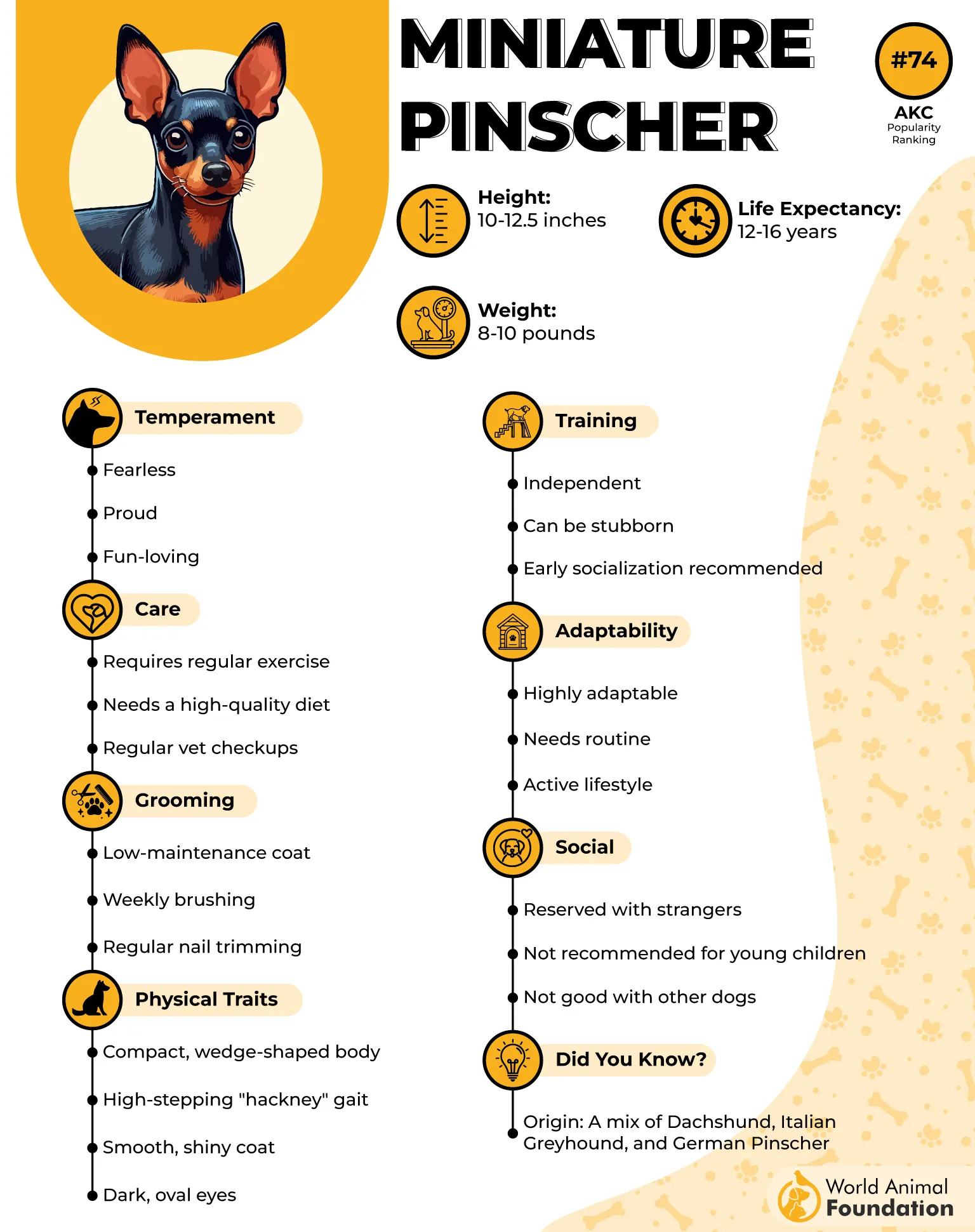
The Miniature Pinscher, often called the Min Pin, has German roots stretching back several centuries, with written records dating roughly 200 years. It was kept in homes and on farms to control rats and other vermin. Although often mistaken for a miniature Doberman, the Min Pin is a separate, older breed.
A Spirited Personality That Needs Patient Training
For someone new to dogs, the Miniature Pinscher can be an entertaining companion, provided they are ready for an independent mind. These clever dogs enjoy learning tricks, yet their strong-willed nature can make consistent training a test of patience.
These everyday details help explain their lively character:
Enjoys several short bursts of activity.
Likes being close to familiar people.
Often adds silly antics to daily routines
Think Carefully About Other Small Pets
Their instinct to chase and catch small animals can make a home with hamsters or other rodents unsuitable. Coat care is fairly simple, with weekly brushing using a soft-bristle brush or grooming glove and baths around every six weeks, or when needed, as noted in the AKC.
2. Rat Terrier

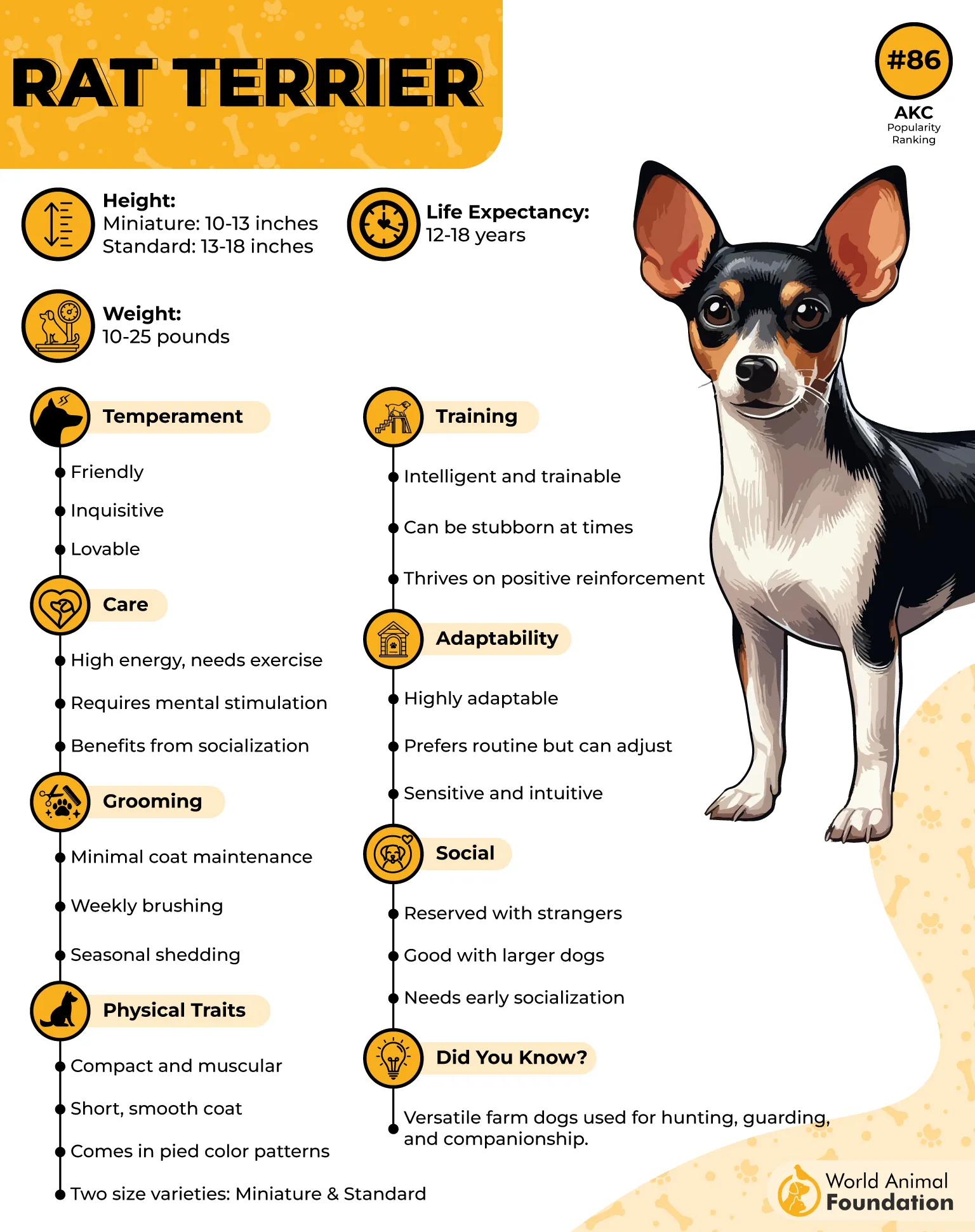
The Rat Terrier began taking shape in Britain around 1820, through crosses between Smooth Fox Terriers and Manchester Terriers. Bred for efficient rat control, these dogs reached the United States late in the 19th century, where their hunting ability made them useful companions on farms and around homes.
A Devoted Companion With an Active Mind
For new dog owners, the Rat Terrier brings plenty of affection and enthusiasm, along with a need for regular involvement, as Zooplus reported. These intelligent dogs enjoy being included in daily routines, and long stretches without company can leave them bored or restless.
Their everyday habits offer a better idea of what life with one involves:
Loves solving puzzle toys and learning games.
Enjoys meeting familiar people and welcoming guests
Often seeks a warm lap after an active day.
Simple Coat Care, Plenty to Do
A Rat Terrier’s short, smooth coat needs only a quick weekly brushing with a curry brush or rubber mitt. Shedding can increase noticeably during spring and fall, while a monthly bath is usually enough unless muddy outdoor adventures leave the coat especially dirty.
3. Jack Russell Terrier
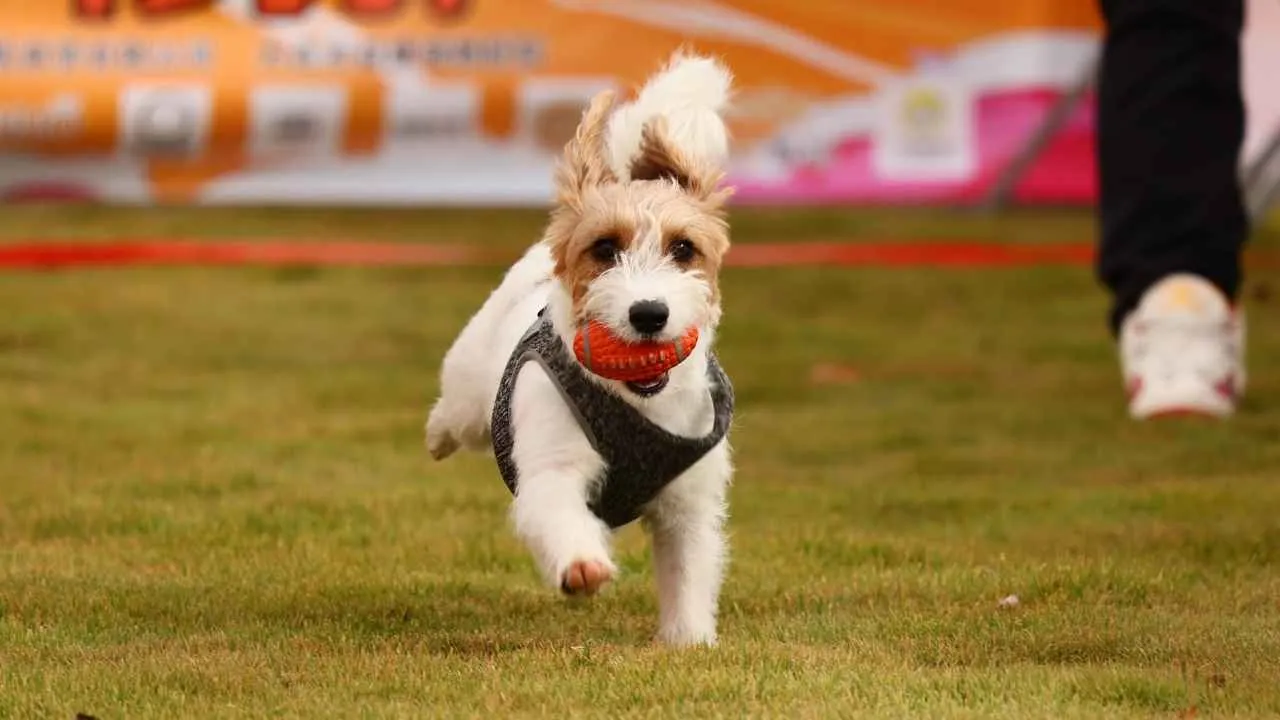
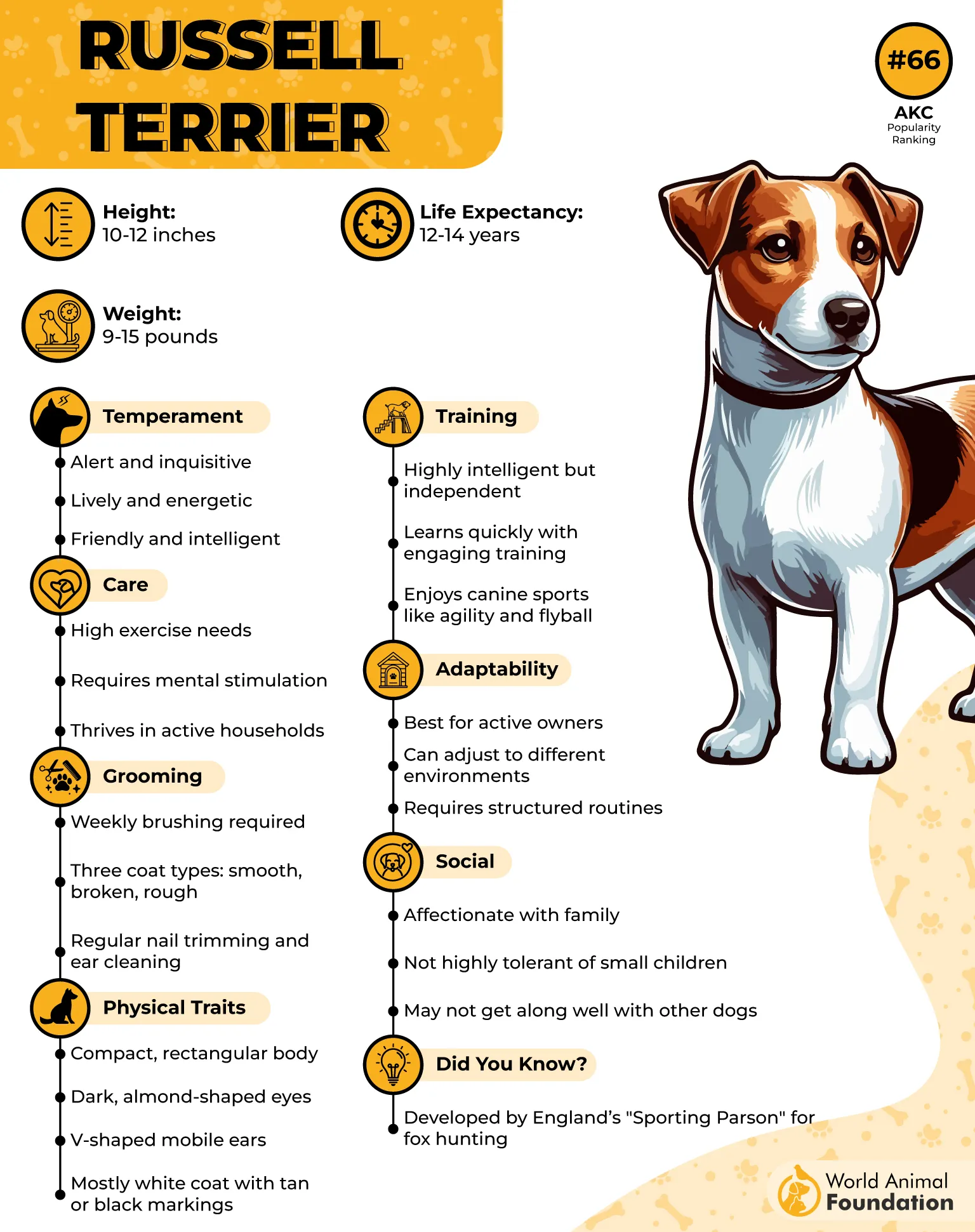
The Jack Russell Terrier originated in 19th-century England, where it was bred to help hunters locate foxes and draw them out of underground dens. Its early lineage included the now-extinct White Terrier, and the breed later gained a reputation for catching rats and other vermin.
A Lively Companion for Active Beginners
This small dog brings plenty of energy into everyday life, so first-time dog owners should be ready for an active routine. These quick-thinking dogs need regular training, outdoor adventures, and activities that give their busy minds something to work on.
These details make daily life with this terrier especially interesting:
Smooth, rough, and broken coat varieties
A strong instinct to dig beneath the soil
A determined chase response toward small animals
Simple Grooming, Plenty of Outdoor Time
Their coat may be smooth, rough, or broken, with each type requiring slightly different grooming attention, as claimed by Chewy.
Using a stripping comb every six to eight weeks helps remove loose, dead hair from rough or broken coats, while monthly baths and regular nail trims cover much of their routine care.
4. Toy Fox Terrier

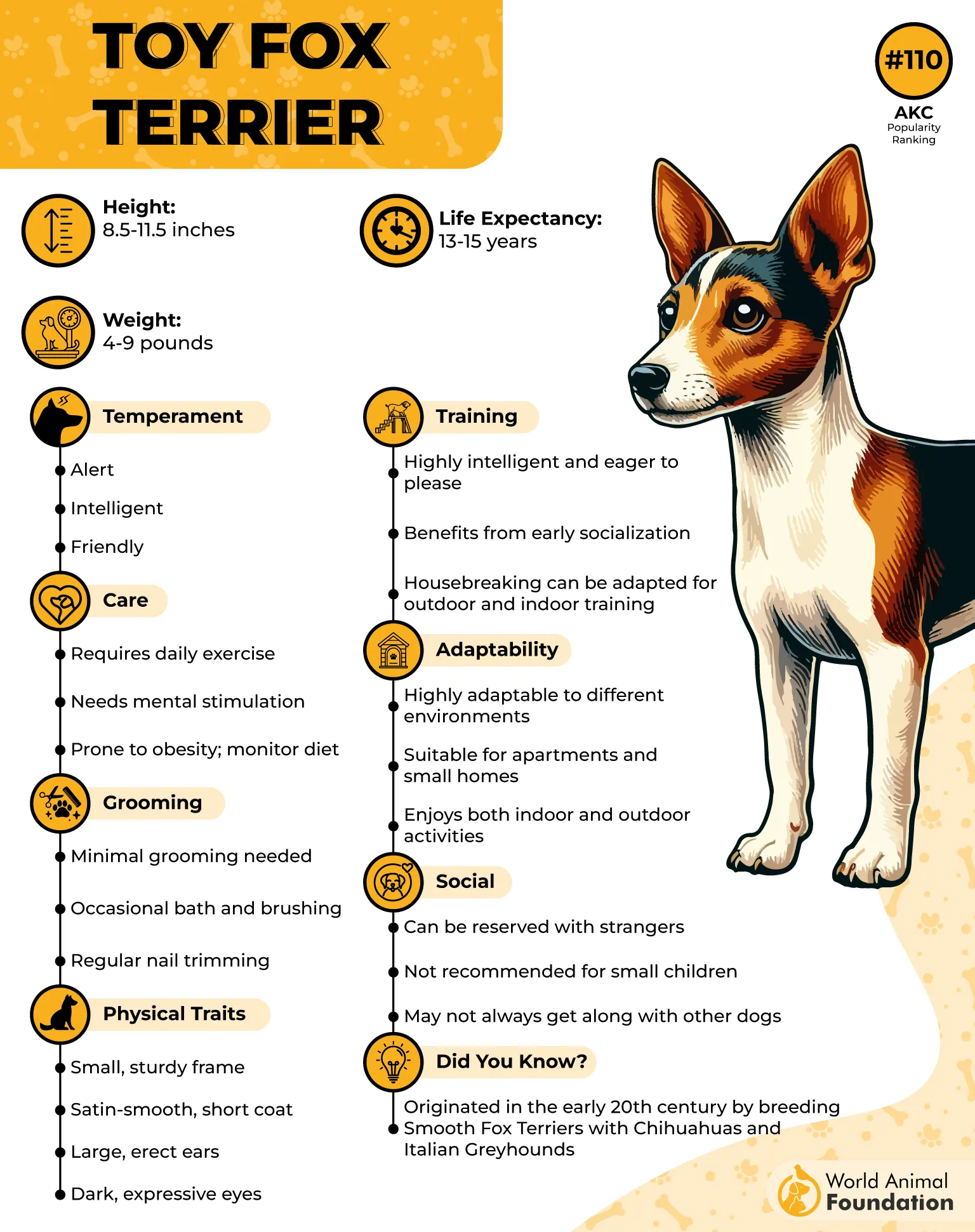
The Toy Fox Terrier emerged in the United States during the 1930s, when breeders sought a milder version of the Fox Terrier. Its ancestry combines the Fox Terrier with small breeds such as the Miniature Pinscher, Italian Greyhound, and Chihuahua. Often called the Amertoy, it brings terrier spirit into a much smaller frame.
A Clever Companion for Active Beginners
Toy Fox Terriers are affectionate, alert, and quick to learn, making them engaging companions for people new to dog ownership. They enjoy training and family activities, although their energetic nature calls for regular interaction and consistent guidance.
These practical details add to their appeal:
Short, glossy coat with a distinct neck ruff
Weekly brushing with a soft-bristle brush or grooming mit
Occasional baths when dirty or smelly
Always Interested in the Household
These affectionate dogs often follow their favorite people from room to room and prefer regular company throughout the day. Long periods spent alone can be particularly difficult for them, so a household with enough time for daily interaction and companionship may be a better match.
5. Manchester Terrier

The Manchester Terrier traces its roots to England, where the Black and Tan Terrier was valued for catching rats during the 16th century. In the mid-1800s, breeders crossed it with the Whippet, combining terrier hunting ability with the speed associated with racing. The result came in two sizes, Standard and Toy.
A Lively Companion for an Active Household
For novice owners, these dog breeds can offer regular activity, consistent training, and plenty of company. They enjoy games and outdoor adventures, while their independent terrier instincts call for patient guidance and early socialization.
These everyday habits are worth knowing:
Often alerts the household when someone approaches the door.
May become unsettled when left alone for long periods
Enjoys chasing balls and playing with squeaky toys.
A Sleek Coat With Seasonal Shedding
Their short, dense coat needs a weekly brush with a curry brush, with more frequent grooming during spring and fall shedding periods. Baths are generally needed every two to three months, while routine ear checks can help catch redness, swelling, or debris early.
6. Dachshund

The Dachshund has a long working history in Germany, with the earliest written records dating to the 16th century. Its name combines the German words Dachs, meaning badger, and Hund, meaning dog. Bred to enter badger dens and drive out their occupants, these dogs also hunted foxes and rabbits.
An Alert Companion With a Playful Side
Dachshunds often take their household watchdog duties seriously, barking at delivery workers, passing neighbors, or even a squirrel near the doorstep. Their lively nature also comes with a mischievous streak, and they can quickly turn a quiet afternoon into an invitation to play.
Their daily habits have a few interesting twists:
Enjoys following scent trails outdoors.
May dig holes while searching for underground animals.
Can investigate unattended food with surprising determination.

Three Coats, Different Grooming Needs
Dachshunds come in smooth, long-haired, and wirehaired varieties, each with its own coat-care routine. Smooth coats need occasional brushing, while the longer varieties require several sessions a week to prevent tangles. Their low-set bellies also need checking for leaves and burrs after outdoor time.
7. Chihuahua

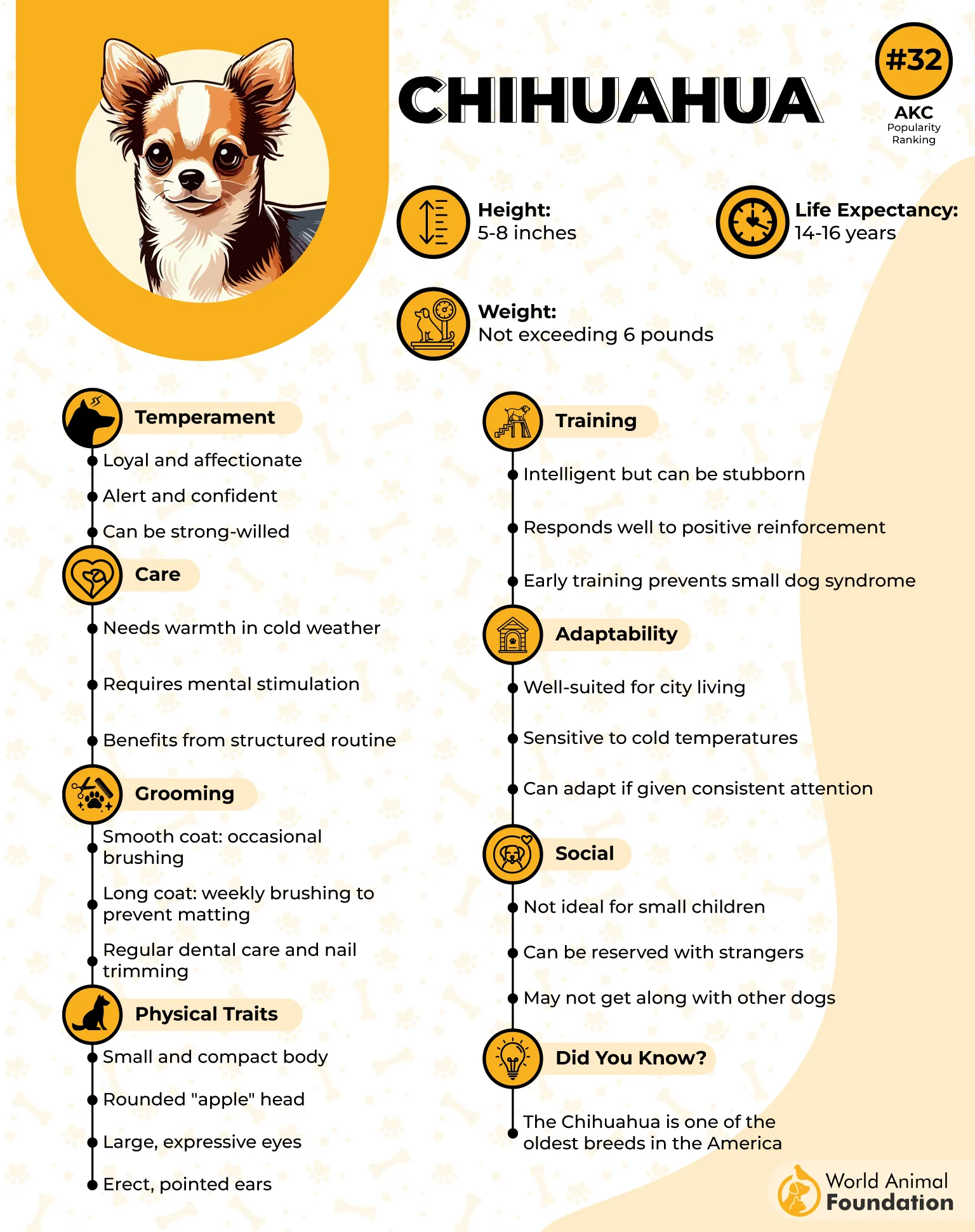
The Chihuahua’s early story remains unclear, with theories linking its ancestry to China or Central and South America. In 1850, several small dogs were discovered in the Mexican state of Chihuahua and brought to the United States. Their appeal soon shifted toward companionship, a role that suited their affectionate nature.
A Big Voice in a Tiny Household Companion
Chihuahuas appreciate owners who spend quality time with them and understand the importance of gentle handling due to their small size.
Beginners can do well with this breed by establishing clear boundaries and gradually introducing their dog to new people, surroundings, and experiences.
A few everyday habits reveal what life with one can involve:
Short bursts of energetic play
Frequent lap-side naps
A strong interest in exploring outdoors
Two Coats, Different Grooming Needs
Chihuahuas come in two distinct varieties, smooth and long-haired. The smooth coat is short and naturally glossy, with a small neck ruff, while the long coat can be flat or slightly wavy, with delicate feathering around the legs and tail that needs regular brushing to prevent tangles.
Conclusion
Bringing home a first dog involves choosing a companion after learning about its habits, care requirements, and personality. Some top dog breeds need regular activity and patient training, while others are easier to manage with a calmer schedule. Even large breeds can suit first-time households when their needs match the owner’s routine. Grooming also varies according to coat type, so it helps to understand what weekly care will involve.
New owners should consider their available time, household environment, and experience with animals before choosing a pet. Dogs that are eager to please may respond well to consistent guidance, but feeding, veterinary visits, socialization, and daily interaction remain ongoing responsibilities. A suitable companion should match what you can realistically provide, making the experience more comfortable for both you and your new pet.
