




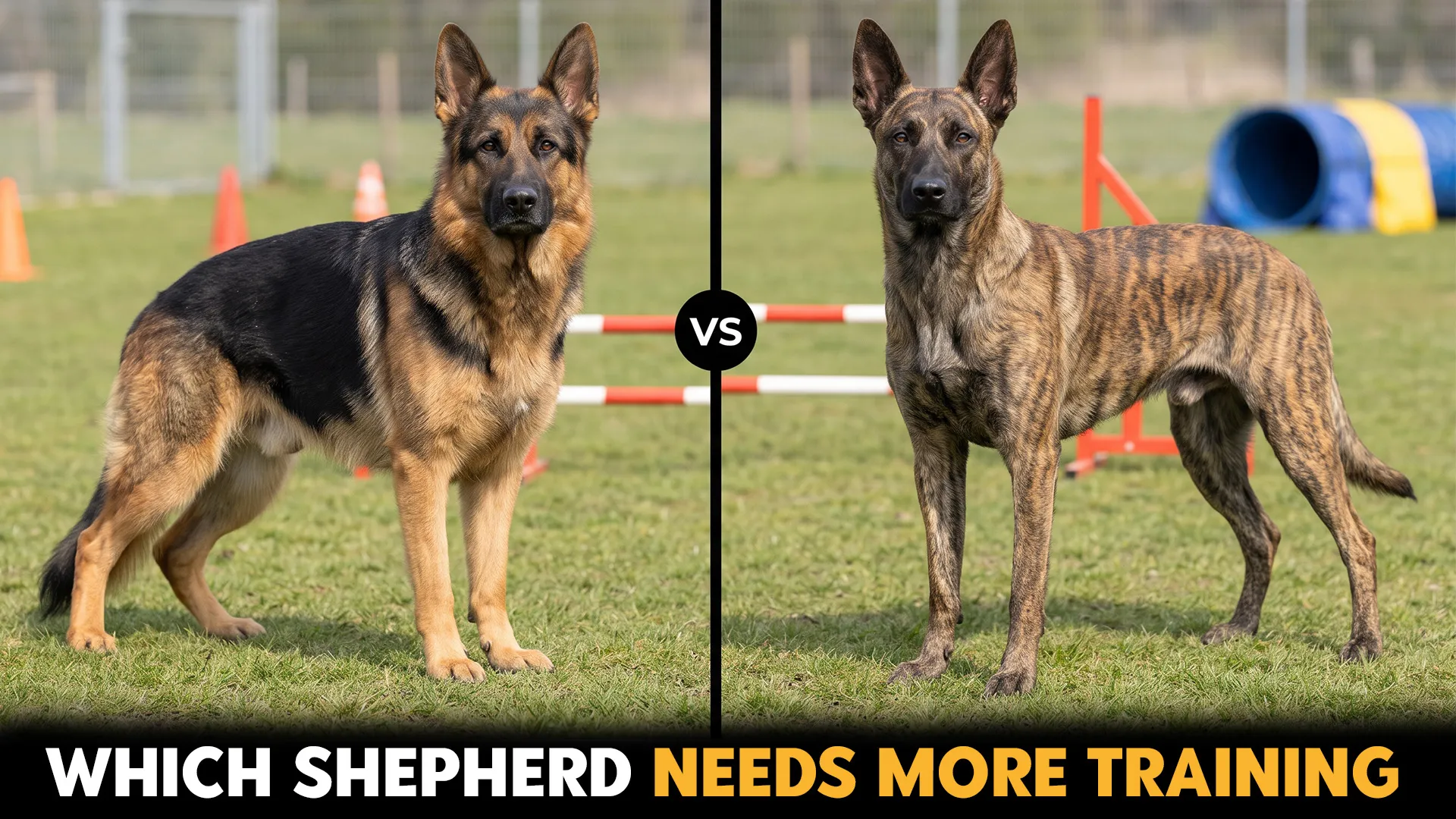
At first glance, the German Shepherd and the Dutch Shepherd look remarkably alike—both are athletic, intelligent, wolf-like herding dogs built for demanding work.
Yet beneath their similar silhouettes lie distinct histories, energy levels, coat varieties, and daily handling needs that make each breed suited to a very different kind of owner. Choosing between them comes down to understanding how their temperaments, drive, and care requirements play out in everyday life.
Developed in neighboring European countries for herding and farm duties, both breeds have earned global reputations in police work, search and rescue, dog sports, and active family homes.
However, while the German Shepherd is one of the world’s most recognizable and versatile working companions, the Dutch Shepherd remains a rarer, often higher-drive powerhouse with three distinct coat types and an intense appetite for mental and physical challenges.
Whether you are searching for a loyal family protector, a competitive working partner, or an active trail companion, knowing how these two breeds compare can help you make the right choice.
German Shepherd vs. Dutch Shepherd
Below, we break down the key differences between the German Shepherd and the Dutch Shepherd—from temperament and trainability to grooming, health, and lifestyle fit.
Origin and History
Germany started this shepherd rivalry back in 1899. Captain Max von Stephanitz set out to turn the country’s scattered herding dogs into one disciplined, standardized, pure breed.
According to Britannica, the result was a working dog built from traditional herding and farm stock, bred for stamina over show ring polish. The American Kennel Club recognized the breed in 1908, and its job description soon expanded into military dog units, police dog work, and devoted family pet duty around the world.
In the beginning, Dutch farmers were not chasing a bloodline. They originally needed a dog that could herd sheep, guard the yard, and pull a cart without complaint, and the first formal Dutch breed standard appeared in 1898 in the Netherlands.
That practical, no-fuss origin still shows in every Dutch Shepherd working a farm today. The breed only joined the American Kennel Club’s Foundation Stock Service in 2012, over a century after its German counterpart found fame.
Same origin, two very different paths. One shepherd breed got noticed, the other just kept working.
Size and Physical Characteristics
Twenty-six inches. That is the tallest a male German Shepherd should stand at the shoulder under the breed standard, and it leaves the Dutch Shepherd looking noticeably leaner.
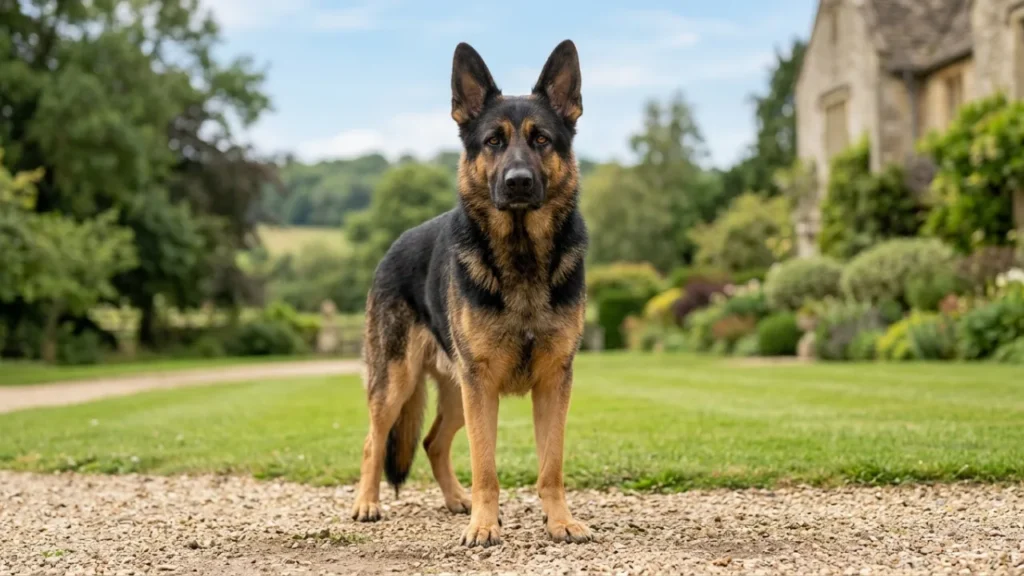
According to the American Kennel Club, male German Shepherds reach 24 to 26 inches at the withers, with females at 22 to 24 inches, and the breed’s weight typically runs from 50 to 90 pounds. Bone is heavier, and the chest runs deeper, giving the whole frame a build for power first, ideally suited to a larger home with yard space.
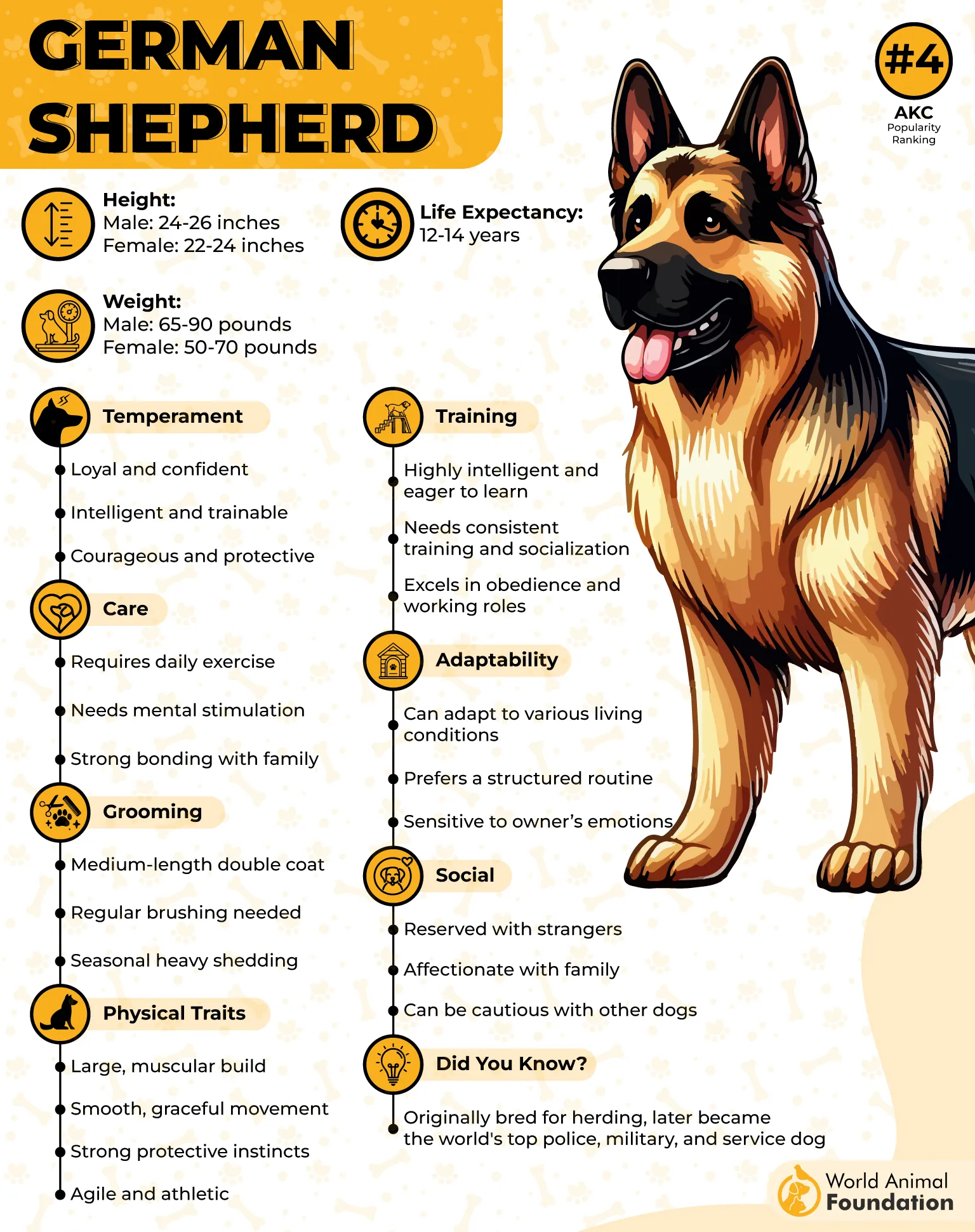
The Dutch Shepherd measures closer to 21.5 to 24.5 inches and weighs anywhere from 42 to 75 pounds, a genuinely marginally smaller dog built for agility over mass. Where the German Shepherd looks ready to brace a door shut, its Dutch counterpart looks ready to vault the fence instead.
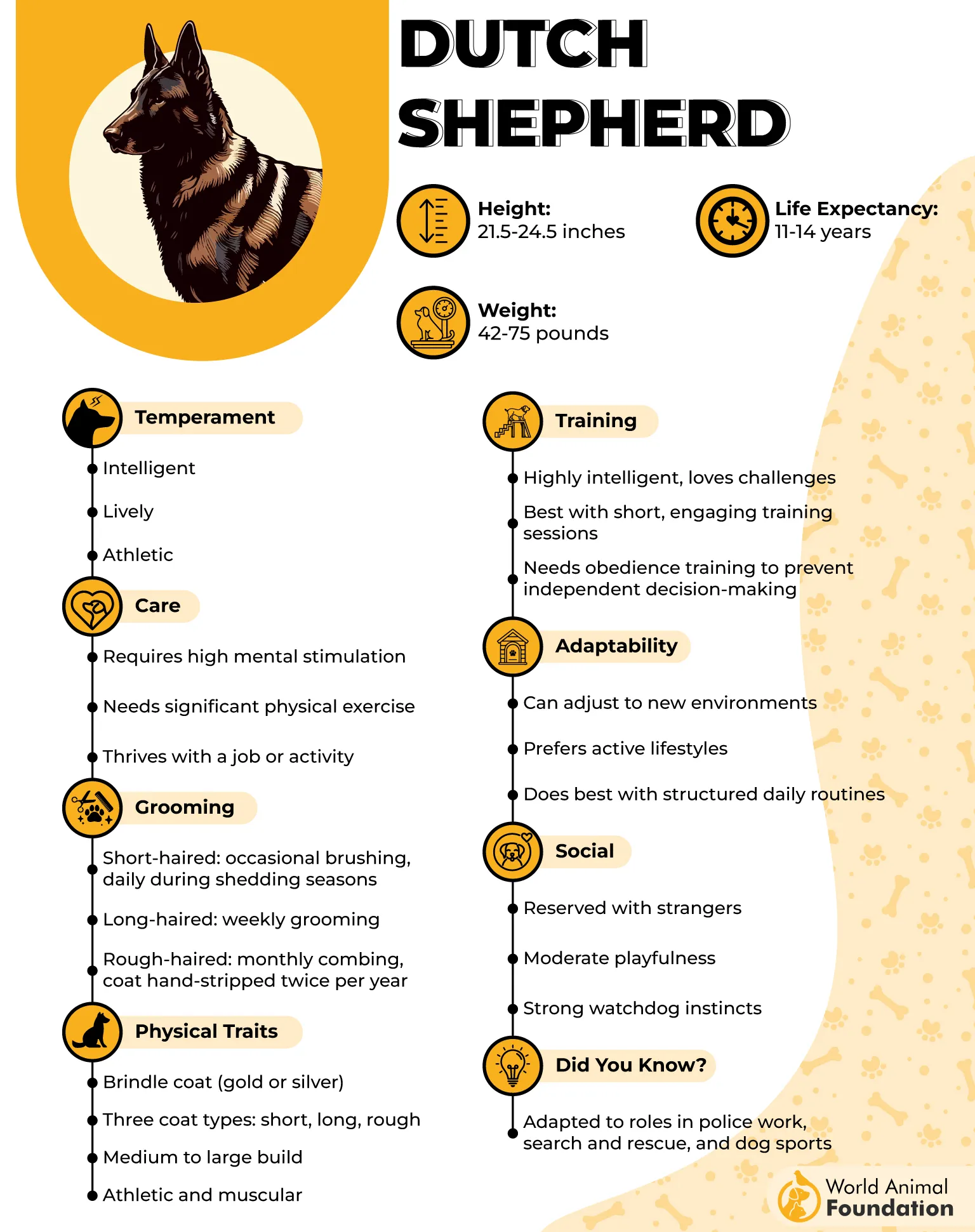
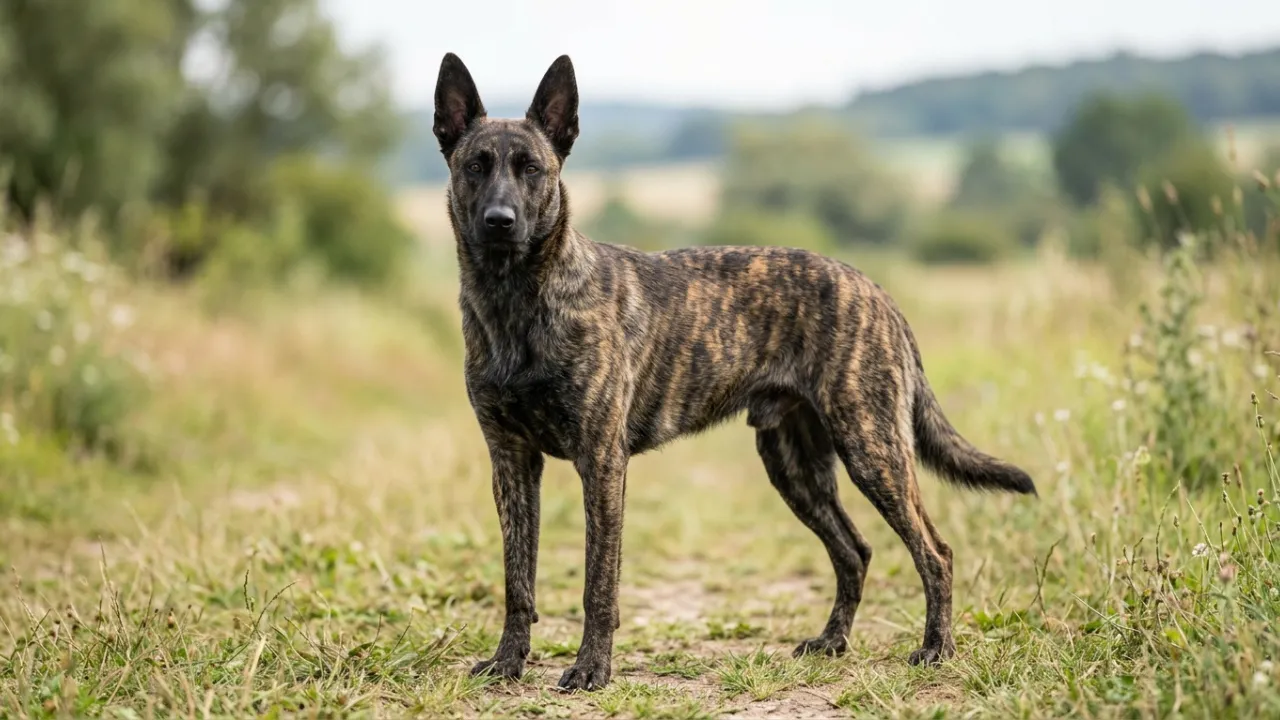
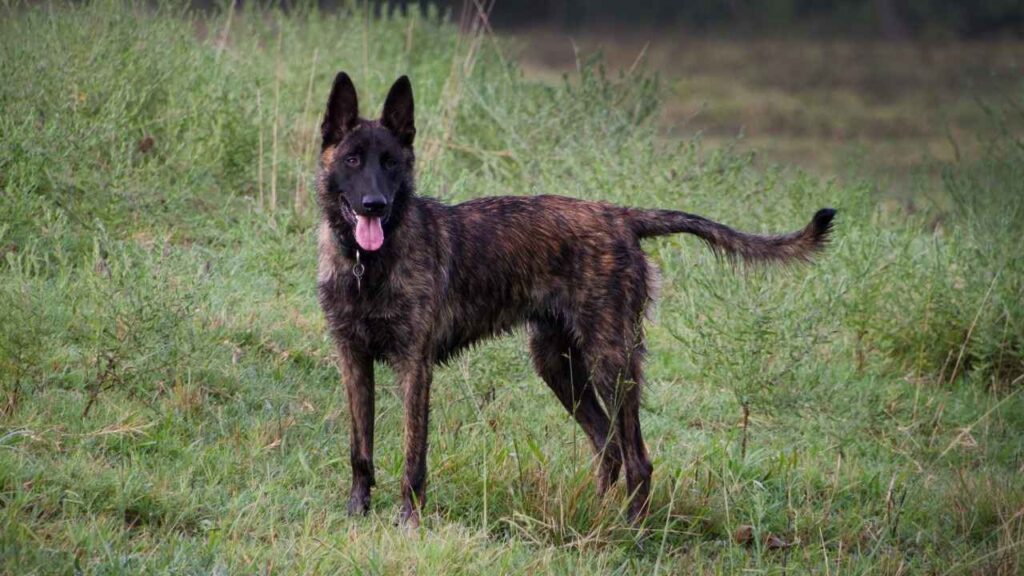
Coat color is the fastest way to tell the two apart in appearance. German Shepherds come in black and tan, sable, solid black, and several other combinations, while the Dutch Shepherd sticks strictly to gold or silver brindle, a striped pattern its German cousin is not allowed to carry.
Put them side by side, and the family resemblance is obvious, but so is the size gap between a heavyweight and a nimble middleweight.
Temperament and Personality
What does a dog bred for discipline actually feel like to live with? The German Shepherd’s temperament runs calm and biddable one moment, playful and rambunctious the next, and individual character counts for more than breed alone.
Breed only accounts for roughly 9% of a dog’s overall behavior, so a well-socialized German Shepherd puppy typically grows into a confident, protective family pet rather than a nervous one.
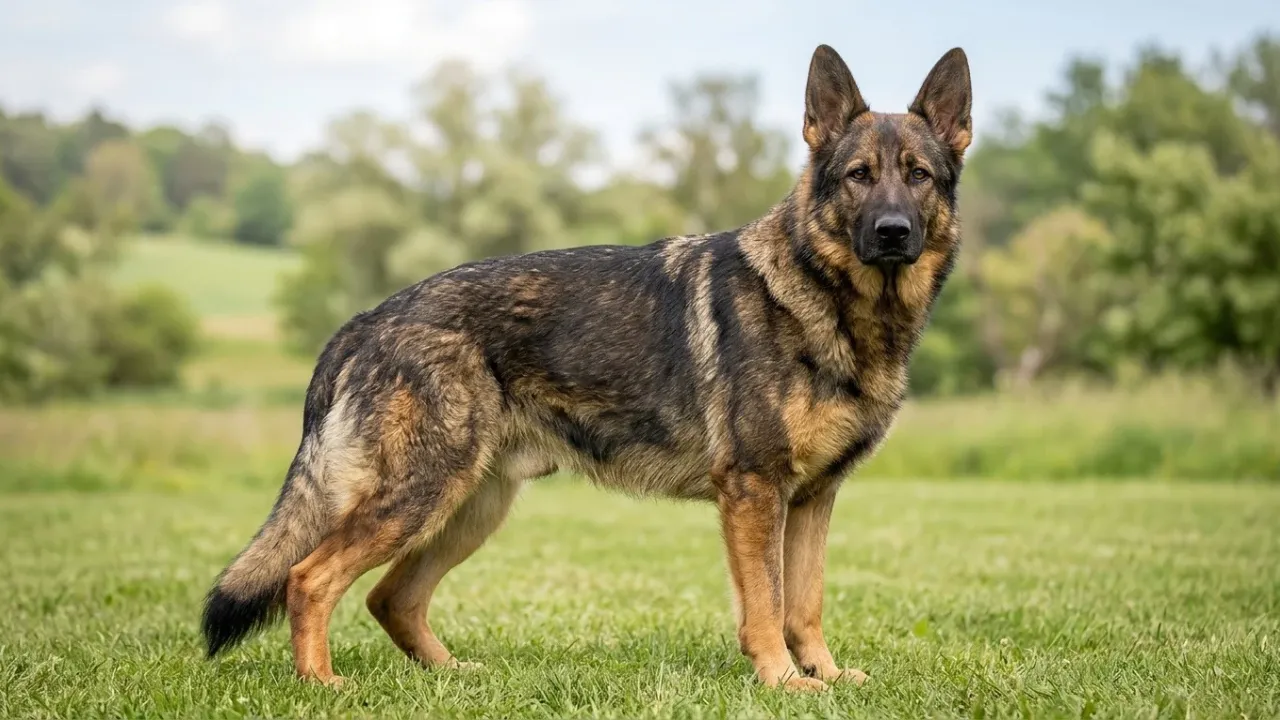
The Dutch Shepherd runs on a different emotional frequency entirely. According to Royal Canin, the breed is affectionate, obedient, very loyal and confident, and undemanding in daily life, yet constantly alert to everything happening around it.
That constant alertness is the real dividing line between the two, and it says a lot about character. The German Shepherd tends to settle once it trusts its surroundings, while the Dutch Shepherd keeps one ear up permanently out of habit rather than anxiety.
Either dog makes a devoted guard dog, but the German Shepherd guards like a soldier on duty, and the Dutch Shepherd guards like it never clocked out in the first place.
Exercise and Energy Needs
The Dutch Shepherd thrives on more fuel than most owners expect. According to PetMD, the breed’s high energy level calls for roughly 90 minutes to 2 hours of exercise every day, plus real mental stimulation through dog sports like agility or obedience.
A tired body means little to this breed if the brain is still bored. Skip the mental half of that equation, and a Dutch Shepherd will invent its own job, usually one involving your furniture.
The German Shepherd needs a similar daily commitment, typically around 90 minutes split across walks, play, and training, though it tolerates a slightly more relaxed pace once that baseline is met.
Puppies of both breeds need far less. A common rule of thumb caps structured exercise at about 5 minutes per month of age, twice a day, to protect growing joints in either breed.
Neither dog suits a sedentary household. One simply asks for the activity with a little more patience than the other.
Training and Intelligence
Three commands in, and most new owners already know they underestimated these dogs. Both breeds rank among the smartest working dogs anywhere, and both were bred to think independently rather than wait for instructions.
The German Shepherd trains fast because it wants to please as much as it wants to work. Positive reinforcement, consistency, and an early start turn a new German Shepherd puppy into a dependable assistance dog, a sharp police dog, or simply a highly obedient companion.
The Dutch Shepherd learns just as quickly, but it negotiates more. Its independent nature runs deep, and training that feels repetitive or unfair tends to produce behavioral issues and a stubborn, obstinate response rather than instant compliance.
Reputable breeders on both sides tell new owners the same thing: these are not dogs for someone who wants a blank slate. They expect a real partnership, with clear leadership on one end and genuine engagement on the other.
Give either breed a job, a routine, and consistent follow-through, and the intelligence stops being a management problem and becomes the best part of living with them.
Grooming and Coat Care
Both these shepherds are double-coated breeds built for weather, not vanity, and both shed heavily enough to furnish a second dog. The difference lies in how often that shedding turns into a full seasonal event.
German Shepherds blow their undercoat twice a year, typically each spring and fall, and the CKC USA seasonal grooming guide recommends stepping up brushing to near-daily sessions during those weeks. Owners of GSDs learn this schedule fast, usually the hard way.
German Shepherd coat care, broken down:
Routine weeks: Brush 2 to 3 times weekly to spread natural oils and catch loose hair early.
Shedding season: Brush daily, since spring and fall bring the heaviest coat-blow of the year.
Bathing: Every 2 to 3 months is usually enough unless the dog gets genuinely dirty.
The Dutch Shepherd sheds on a gentler, moderate scale, and its short, long, or rough coat variety decides most of the workload. A short-coated Dutch Shepherd needs one weekly brush, while a long- or rough-coated one needs 2 to 3 sessions to stay mat-free.
Neither breed needs a professional groomer on a strict schedule, but both reward an owner who treats brushing as a weekly habit, not a once-a-year emergency.
Health and Lifespan
12 to 14 years is the typical lifespan quoted for a German Shepherd, a number shaped in part by 2 conditions that show up again and again in the breed: hip dysplasia and degenerative myelopathy, a slow neurological disease that affects mobility in older dogs.
The Dutch Shepherd tends to outlast its German counterpart by a couple of years, usually living 11 to 14 years, and is widely considered, in general, a healthier breed overall thanks to a smaller gene pool shaped almost entirely by working ability.
According to Purina, the breed is generally healthy but can be predisposed to allergies, inflammatory bowel disease, and hip dysplasia, the one condition both breed stocks share.
That shared risk is not a coincidence, since both breeds carry a similar frame-to-joint ratio. Veterinary advice for either dog usually starts with the same 2 words: weight management.
Reputable breeders now screen hips, elbows, and, in the German Shepherd’s case, degenerative myelopathy status before breeding. Luckily, this practice has measurably improved outcomes for both breeds over the last few decades.
A longer life in either dog comes down to the basics done consistently. Lean body condition, steady exercise, and early screening do more for lifespan than genetics ever will on their own.
Conclusion
German Shepherd versus Dutch Shepherd never really needed a winner, and after all these critical differences, it still does not. One is the larger, more famous standard German working dog built for steady, dependable protection. The other is the leaner, lesser-known Dutch breed built for relentless drive and independent thinking.
Pick the German Shepherd for a proven family pet with decades of track record behind it. Pick the Dutch Shepherd if a rare, highly adaptable, slightly more intense companion fits an active household better.
Either decision leads to a smart, loyal dog that works hard for the people it loves. Choose based on energy, experience, and home, not reputation, and you end up with a fantastic companion either way.
