




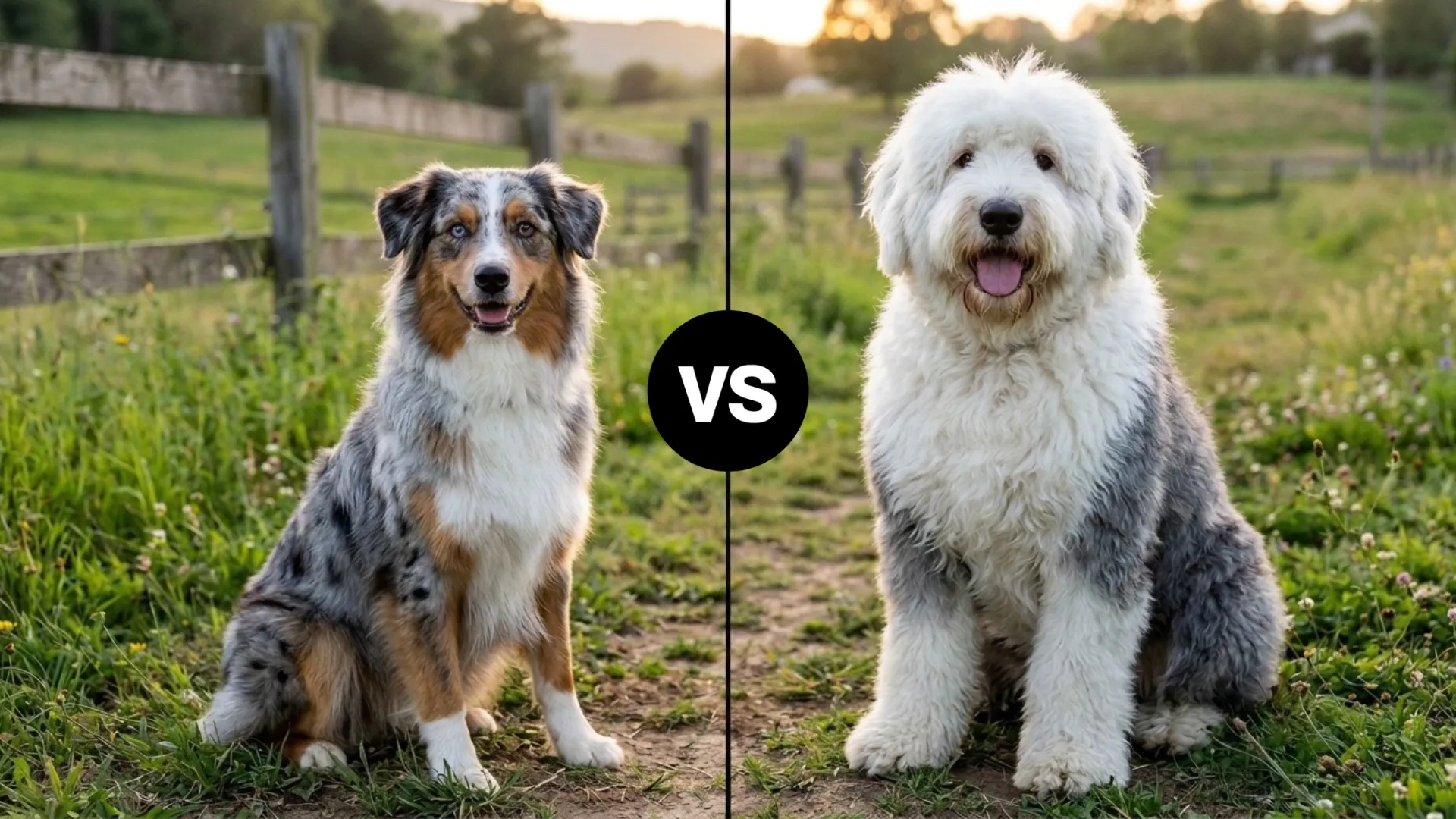
Australian Shepherds and Old English Sheepdogs are intelligent herding breeds known for their working abilities and strong bonds with people. Although both enjoy having a purpose, they differ in appearance, coat maintenance, activity requirements, and typical behavior.
The Australian Shepherd is generally an agile, energetic dog with a strong instinct to control movement. The Old English Sheepdog, recognized for its shaggy coat and substantial build, was developed to help move livestock across the British countryside.
Understanding these differences can help prospective owners choose a breed that matches their lifestyle. From daily exercise to grooming commitments, each dog brings distinct advantages and responsibilities.
Australian Shepherd vs. Old English Sheepdog Breed
1. Breed Origins & Functional Background
Australian Shepherd: A Versatile Herding Dog With American Roots
Despite its name, the Australian Shepherd was developed primarily in the United States. Its history is associated with ranching communities and herding dogs brought to North America, including dogs linked to Basque shepherds who had worked in Australia. American breeders refined the breed for managing livestock, creating an agile, responsive working dog.
Old English Sheepdog: A British Farmhand With a Shaggy Coat
The Old English Sheepdog developed in England as a drover and farm dog, helping move cattle and sheep to markets. Its substantial build and weather-resistant coat suited outdoor work in the British countryside. The breed later became a popular show dog and family companion, although its historical background remains rooted in livestock handling.
Two Herding Histories, Two Different Working Styles
Both breeds were developed to assist people with livestock, but their traditional work differed. Australian Shepherds became known for their agility and ability to respond quickly to a handler, while Old English Sheepdogs were valued for helping drive livestock over longer routes. These histories help explain their different physical builds and working tendencies today.
2. Physical Characteristics & Body Structure
Australian Shepherd: Athletic Proportions and Agile Movement
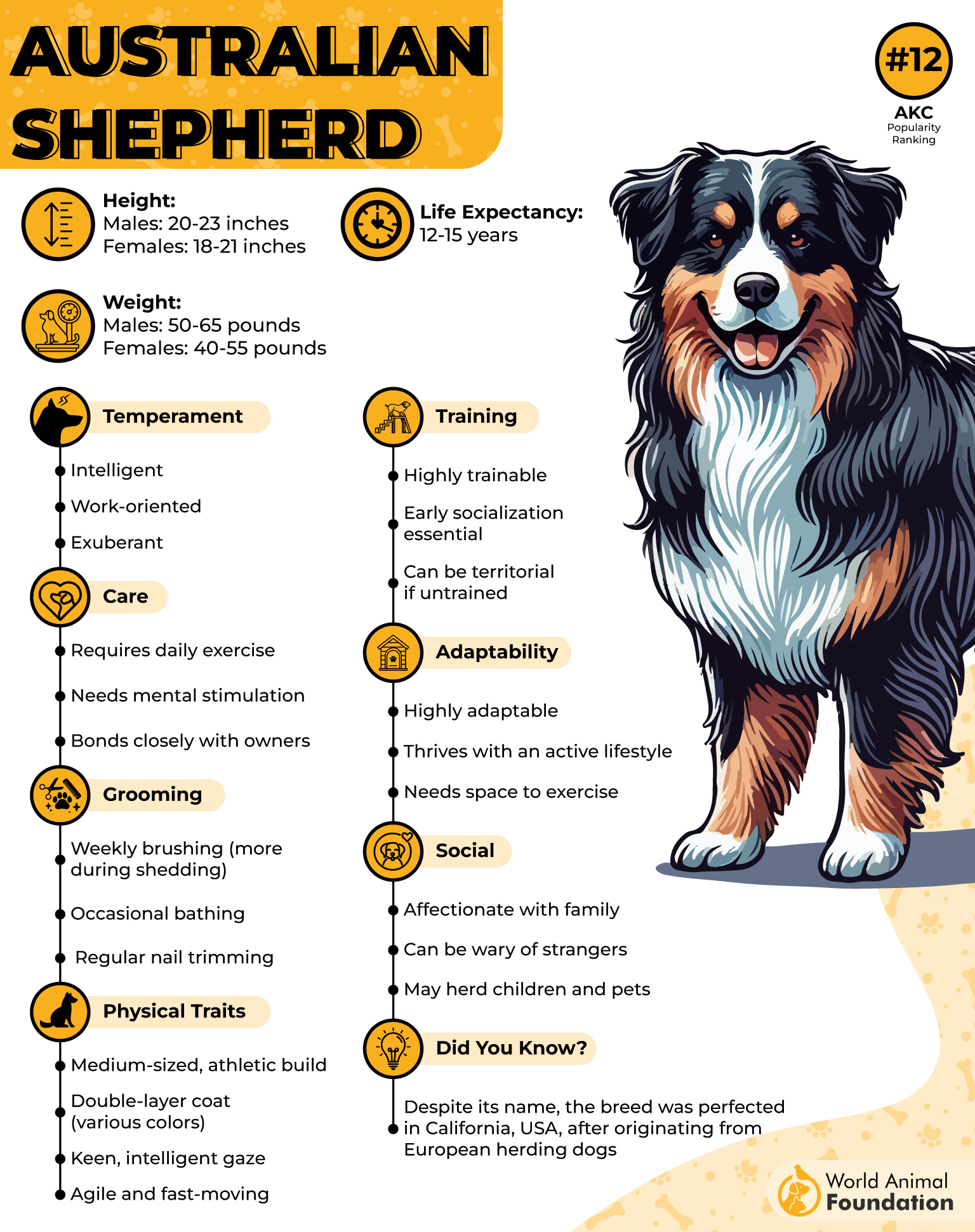
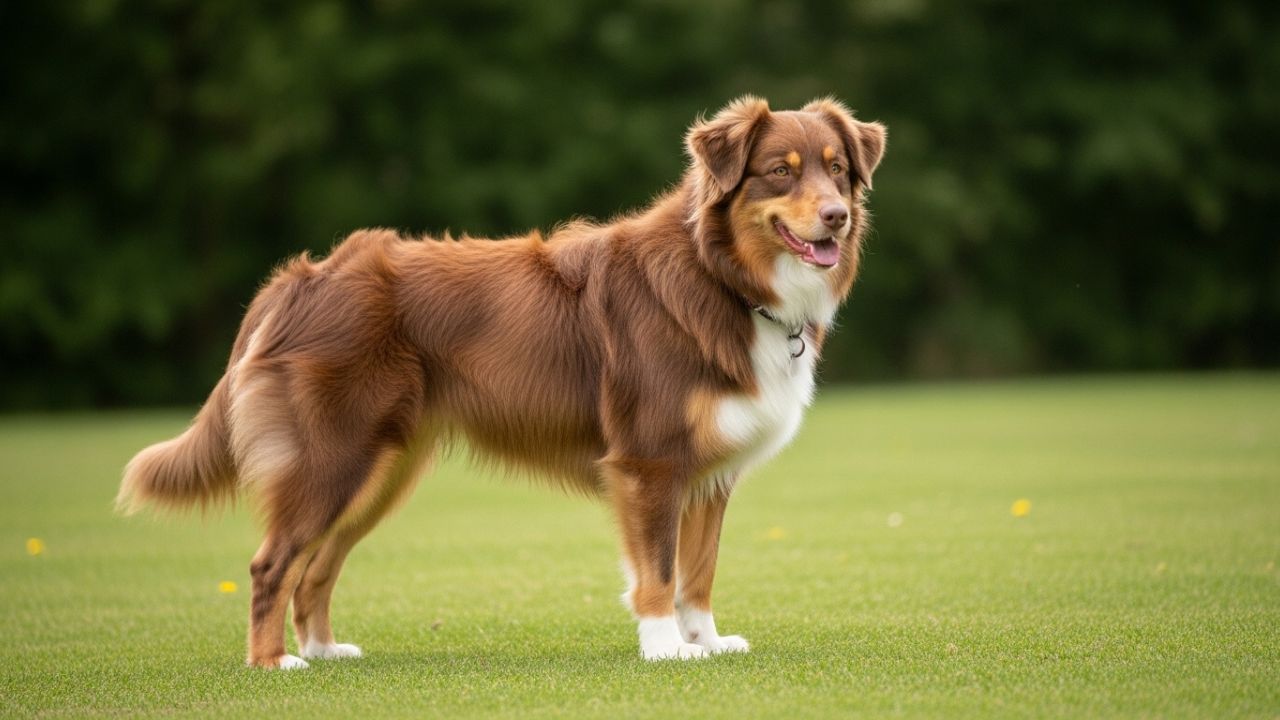
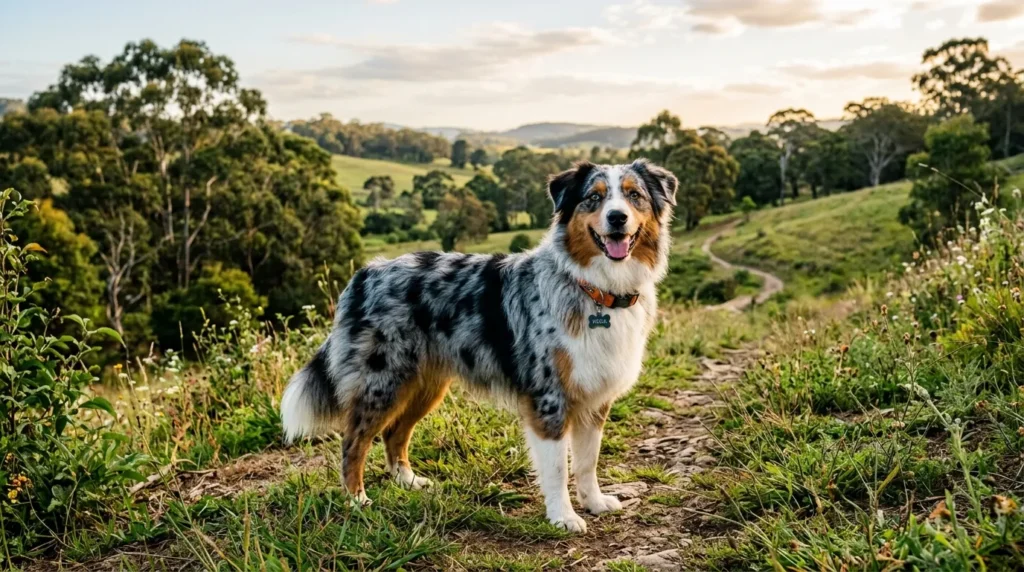
Australian Shepherds are medium-sized dogs, typically standing 18–23 inches tall and weighing approximately 40–65 pounds. They have muscular bodies, expressive eyes, and medium-length double coats that may be blue merle, red merle, black, or red. Their balanced build supports quick turns and energetic movement during herding and other athletic activities.
Old English Sheepdog: A Broad Frame Beneath Abundant Fur
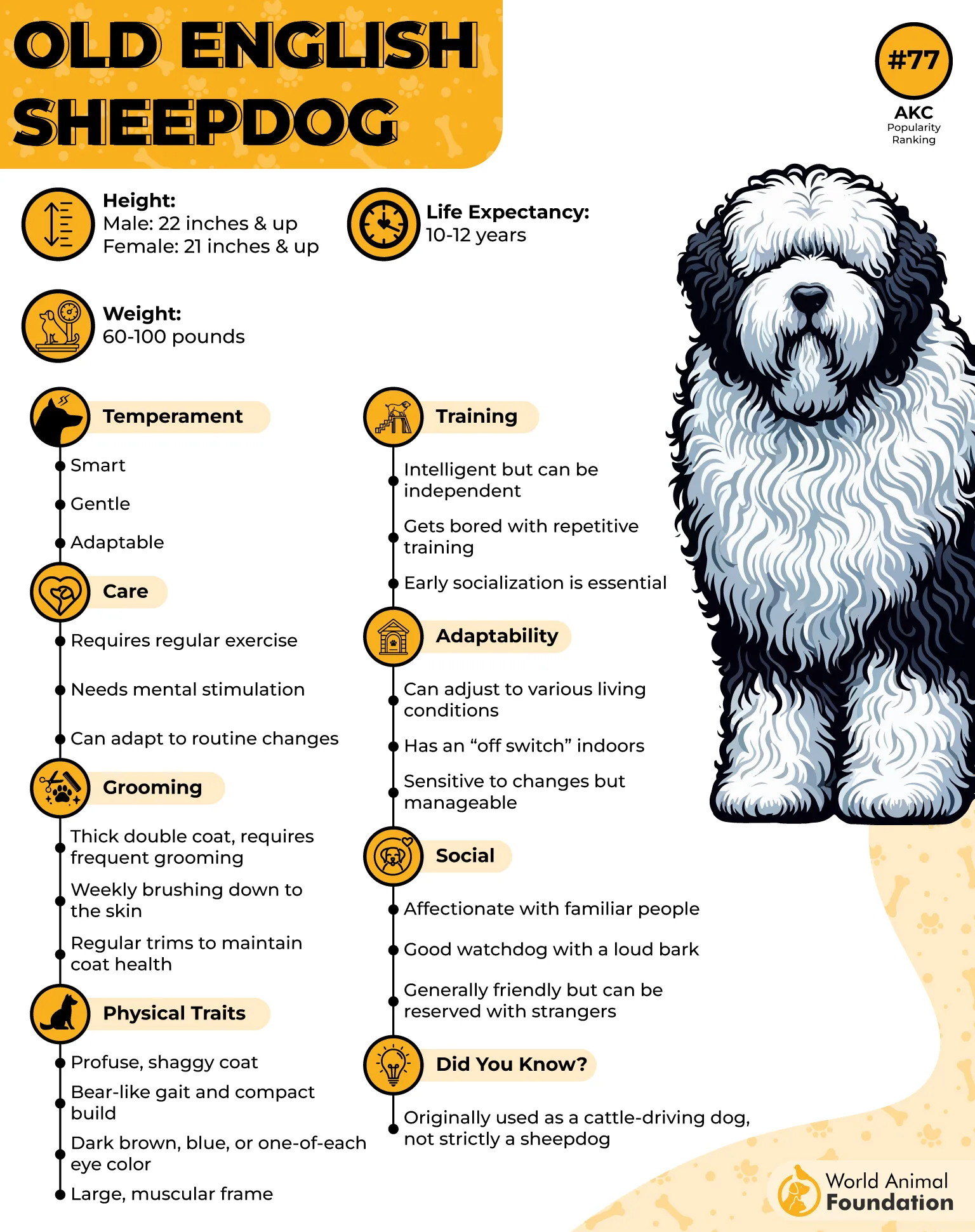
Old English Sheepdogs are generally larger in appearance, with males standing at least 22 inches and females at least 21 inches at the shoulder under major breed standards. Adults commonly weigh around 60–100 pounds, although individual sizes vary. Their distinctive shaggy double coats can obscure their outlines, while their sturdy frames reflect their traditional working role.
Comparing Agility With Substantial Strength
Australian Shepherds generally have a more athletic, streamlined appearance suited to quick changes of direction. Old English Sheepdogs tend to look bulkier because of their larger frames and abundant coats. Both need room for comfortable movement, but their size differences can affect transport, handling, grooming arrangements, and the amount of space needed for everyday care.
3. Temperament & Behavioral Profile
Australian Shepherd: Alert, Devoted, and Ready for a Task
Australian Shepherds are typically intelligent, attentive, and strongly connected to their families. Their herding instincts may lead them to chase moving objects or attempt to control the movement of children and other animals, as per Purina. Many are reserved around unfamiliar people until properly introduced, making early socialization important for developing confidence and appropriate behavior.
Old English Sheepdog: Affectionate With a Playful Side
Old English Sheepdogs are often sociable, affectionate, and entertaining family companions. Their playful personalities can continue into adulthood, although individual temperaments differ. Because of their herding heritage, some may attempt to guide moving people or animals, while their size makes teaching calm greetings and appropriate household manners particularly useful.
Which Personality Fits Your Household?
Australian Shepherds often suit owners who enjoy structured activities and can provide regular mental challenges. Old English Sheepdogs may appeal to families looking for a sociable companion with a more substantial build, provided they can manage their grooming and exercise needs. Both benefit from early socialization, consistent boundaries, and plenty of positive interaction.
4. Activity Requirements & Energy Levels
Australian Shepherd: A High-Energy Partner for Active Days
Australian Shepherds generally need substantial daily exercise alongside mental stimulation. Long walks, hiking, agility, herding activities, and interactive training can help channel their energy productively. Without sufficient engagement, some may become restless or develop unwanted behaviors, so this breed is best suited to owners who can provide regular activity and purposeful challenges.
Old English Sheepdog: Steady Exercise With Room to Play
Old English Sheepdogs need daily walks, playtime, and opportunities to explore their surroundings, as per Hill’s Pet. Their working heritage means they are not simply couch companions, although their activity requirements can differ from those of highly driven Australian Shepherds.
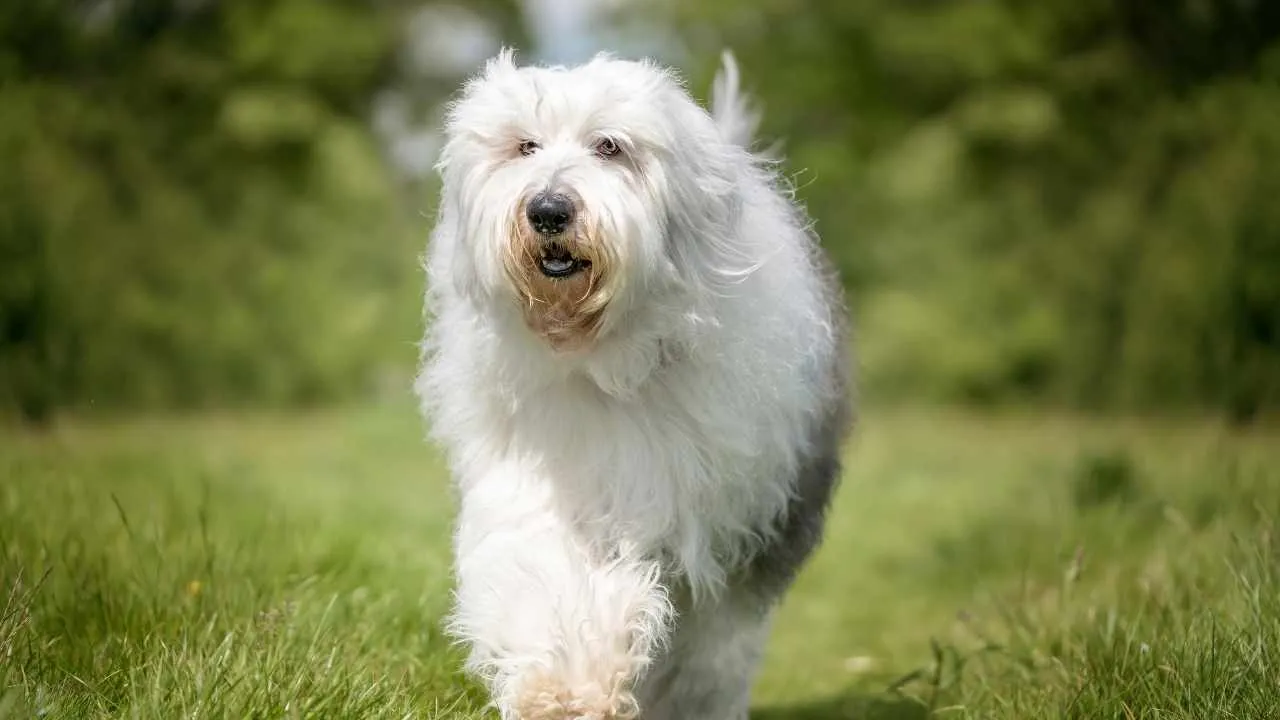
Exercise should be adjusted to age, fitness, weather, and health, particularly because their thick coats can make hot conditions uncomfortable.
Matching Exercise to Your Everyday Routine
Australian Shepherds typically require more demanding mental and physical engagement, especially when their herding instincts are strong. Old English Sheepdogs also need consistent activity but may be better suited to owners who prefer walks and interactive play over intensive canine sports.
Neither breed should be left without stimulation for long periods, and both need gradual conditioning before strenuous outings.
5. Trainability, Intelligence & Learning Ability
Australian Shepherd: A Quick Study With Sharp Instincts
Australian Shepherds are widely recognized for their intelligence, responsiveness, and ability to learn complex tasks. They often excel in obedience, agility, and herding when training is consistent and rewarding. Their sensitivity to movement and environmental changes can sometimes make them easily distracted, so focused lessons and appropriate impulse-control exercises are valuable.
Old English Sheepdog: Clever, Sociable, and Sometimes Independent
Old English Sheepdogs can learn commands and household routines well, particularly when training includes rewards and playful interaction. Their intelligence does not always translate into instant obedience, and some individuals may show an independent streak.
Short, engaging sessions and consistent expectations help reinforce good manners, especially when managing a large dog around visitors or children.
Which Breed Offers the Easier Learning Experience?
Australian Shepherds may appeal to owners interested in advanced training and organized canine sports. Old English Sheepdogs can also be capable learners but may respond best to patient, engaging lessons that maintain their interest. Both need early socialization, reliable recall practice, and reward-based methods rather than harsh corrections.
6. Coat Maintenance & Grooming Needs
Australian Shepherd: Regular Brushing for a Weather-Resistant Coat
Australian Shepherds have medium-length double coats that generally benefit from brushing several times a week. Extra attention is useful around feathered areas, behind the ears, and during seasonal shedding. Routine nail trimming, dental care, and ear checks should also be part of their maintenance, while trimming the coat excessively short is generally unnecessary, as per Orvis.
Old English Sheepdog: A Shaggy Coat That Demands Commitment
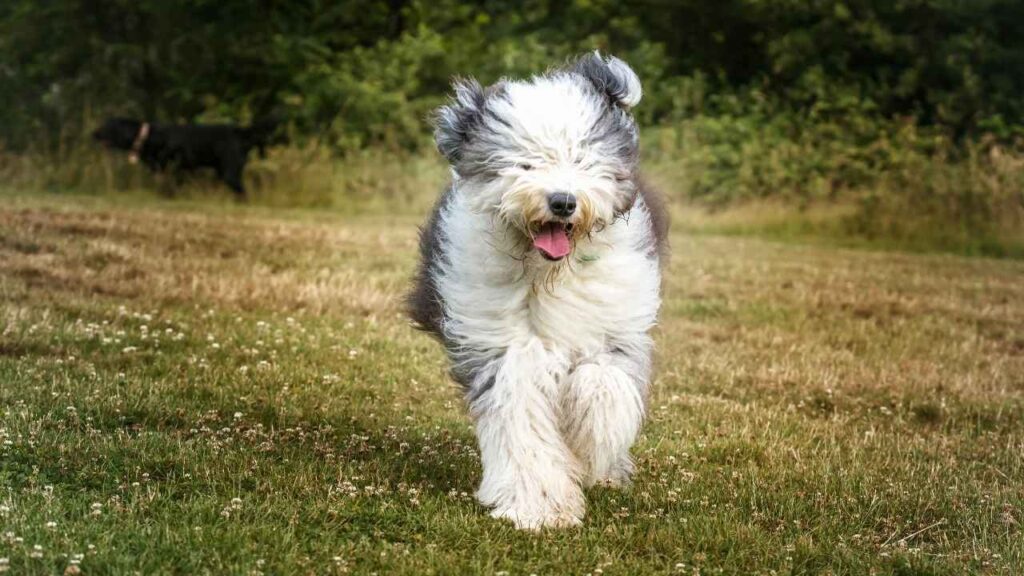
The Old English Sheepdog’s profuse double coat requires considerable grooming to prevent mats and tangles. Thorough brushing may take significant time, and many owners use professional grooming services to keep the coat manageable. The eyes, ears, paws, and skin need regular inspection because dense fur can conceal debris, irritation, and developing skin problems.
Comparing Grooming Time and Maintenance Costs
Australian Shepherds generally have the easier coat to manage, although they still shed and need regular brushing. Old English Sheepdogs usually require a greater investment of time, effort, and potentially professional grooming costs. Prospective owners should consider these recurring responsibilities before choosing a breed, particularly if they have limited time for coat care.
7. Average Lifespan & Longevity
Australian Shepherd: An Active Companion for Many Years
Australian Shepherds commonly live around 12–15 years, although individual lifespans vary, as per the AKC. Potential health concerns include hip dysplasia, certain eye disorders, epilepsy, and inherited conditions associated with some bloodlines. Responsible breeding, appropriate health screening, regular veterinary examinations, and maintaining a healthy weight can help support long-term well-being.
Old English Sheepdog: A Large Breed Requiring Preventive Care
Old English Sheepdogs typically have a lifespan of approximately 10–12 years. Potential health concerns include hip dysplasia, certain eye conditions, and hypothyroidism. Their larger size makes joint health and weight management particularly important, while routine veterinary care helps identify developing problems before they significantly affect daily comfort.
Which Breed May Stay by Your Side Longer?
Australian Shepherds generally have a longer expected lifespan than Old English Sheepdogs, although no individual dog’s longevity can be guaranteed. Genetics, preventive healthcare, nutrition, exercise, and weight management all influence long-term health. Choosing a responsible breeder who performs appropriate health screening is important for either breed.
Conclusion
Australian Shepherds and Old English Sheepdogs share a herding heritage, intelligence, and a strong capacity for companionship. However, Australian Shepherds generally offer a more agile, high-energy profile, while Old English Sheepdogs stand out for their substantial build, shaggy coat, and sociable character.
Before choosing between them, consider your available exercise time, training experience, grooming budget, and household space. Australian Shepherds often need intensive mental stimulation, whereas Old English Sheepdogs demand a particularly committed coat-care routine. Both require consistent training, socialization, and preventive veterinary care.
The better choice depends on which dog’s needs fit your lifestyle. Meeting individual dogs and learning about their health histories can help you make an informed decision. With responsible care and suitable daily activities, either breed can become a devoted and rewarding family companion.
