




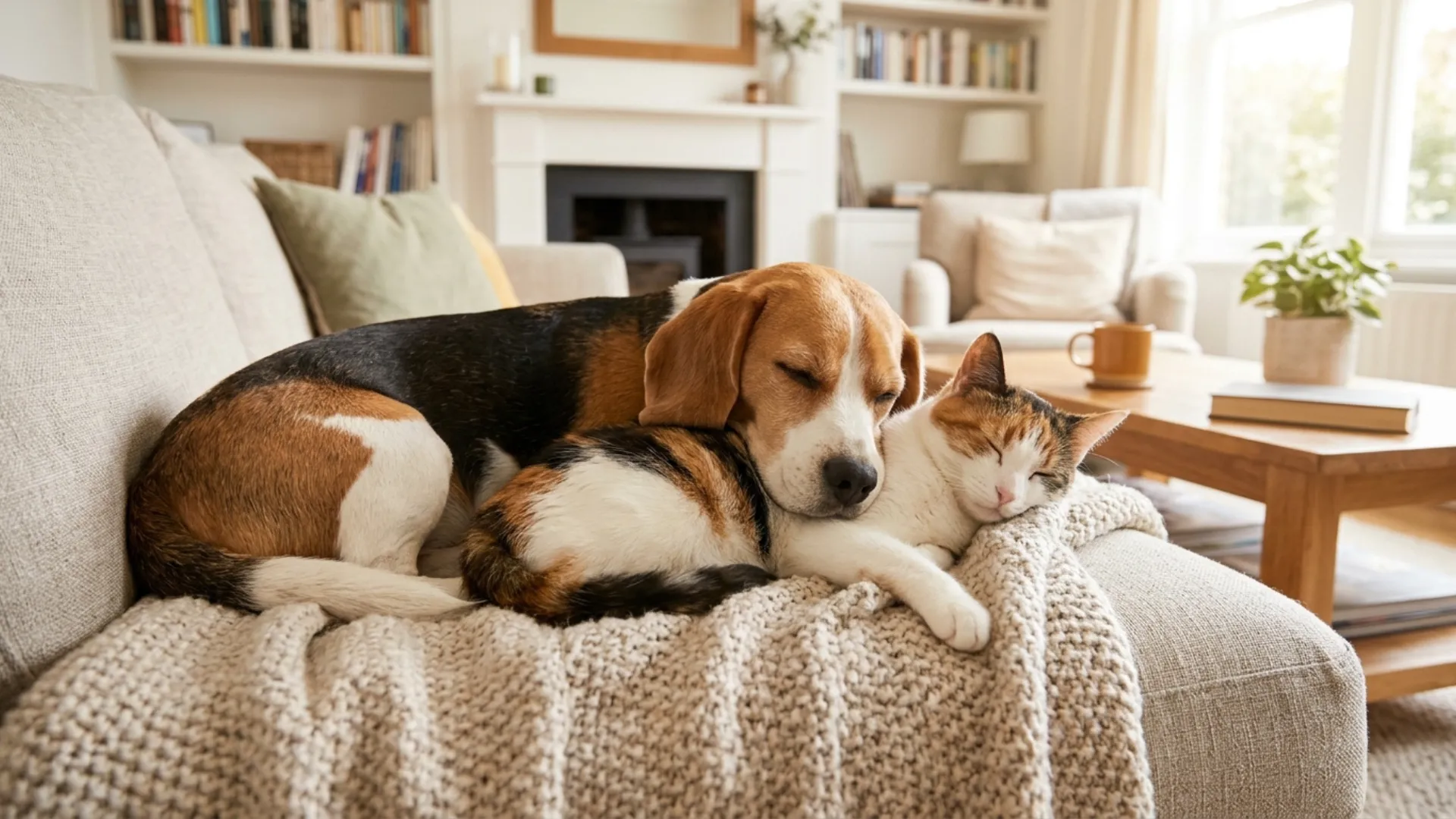
It can be really sweet to have a dog and a cat in your home together. Picture your cat on the couch with your dog nearby, or the two of them gazing out the window on a nice day. Moments like that make a house feel full of love. It does take some thought to choose the right dog for a cat-friendly home, though.
Friendly breeds with traits like gentleness and a love for family may make good feline roommates, but no breed can guarantee an instant friendship. Training, past experiences, and a strong prey drive can all make it harder for a cat to feel comfortable around a dog. Many families have successfully raised cats and dogs together through patient, guided introductions.
Fun Fact
Body language and scent help dogs and cats communicate with each other. Over time, some pairs develop strong bonds and happily share their space, especially when you’re patient and carefully supervise their interactions.
Top Dog Breeds That Quickly Bond with Cats for Cozy Coexistence
1. Basset Hound

Distinctive long ears, short legs, and droopy faces make Basset Hounds easy to spot, but behind that low-slung build lies a happy-go-lucky companion that thrives on being near its family. Their easygoing nature also makes them a strong candidate for households with cats, especially in homes that appreciate a calm, quiet atmosphere.

While Basset Hounds generally make friendly, low-drama housemates for felines, their powerful natural scent drive is something to keep in mind from day one. Proper early introductions, consistent training, and adequate mental stimulation help establish a smooth dynamic, preventing the dog from simply ignoring or tuning out its feline companion.
Hill’s Pet states that living with a Basset Hound requires a commitment to daily walks, a steady routine, and plenty of patience during training. Their independent streak means learning takes gentle consistency rather than harsh direction. A secure, fenced yard is also a must, as a compelling scent track can quickly pull their full focus away at a moment’s notice.
2. Beagles
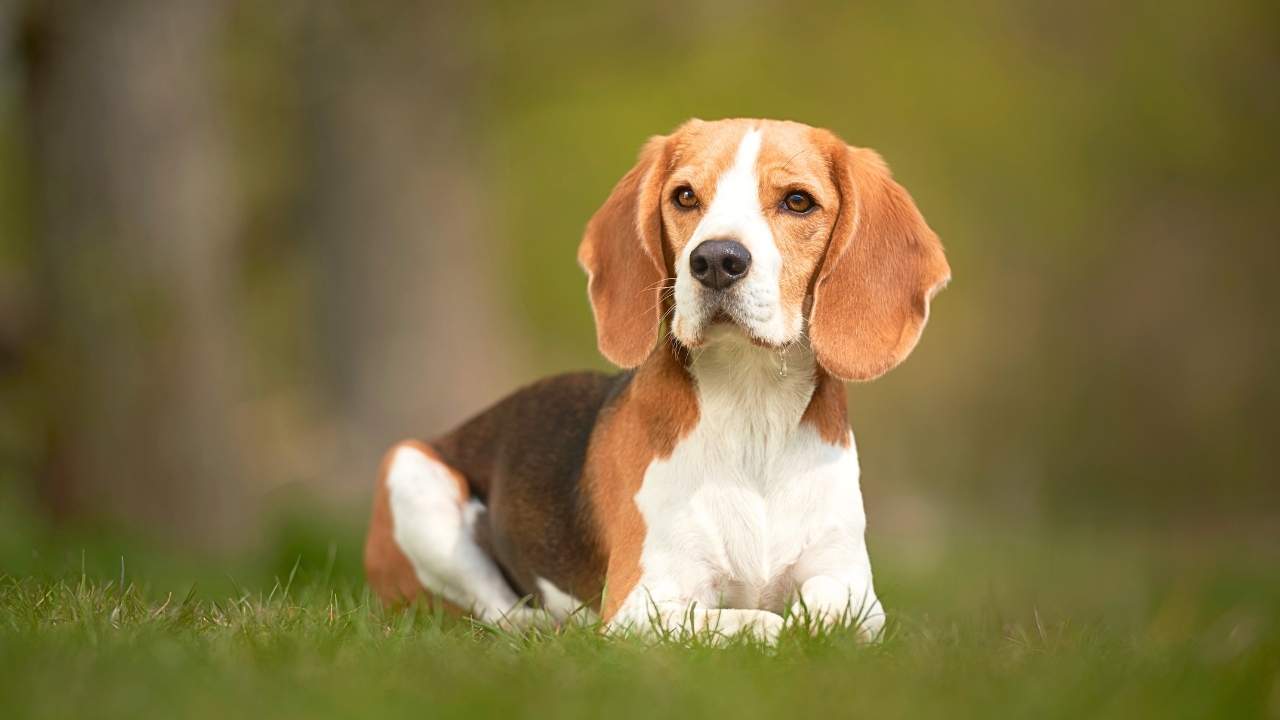
Expressive eyes, long ears, and a sturdy, compact build give the Beagle its classic look, while a playful, happy-go-lucky personality makes the breed a favorite for many households.
Originally bred as pack hunting hounds, they thrive on companionship and dislike being left alone for long periods. With early exposure and proper guidance, a Beagle can learn to live peacefully alongside a calm cat.

The American Kennel Club classifies the Beagle as an affectionate and inquisitive breed. While curiosity helps during initial introductions, their natural hunting instincts mean a fleeing cat can easily trigger a chase response. Rewarding calm behavior through positive reinforcement allows owners to establish clear boundaries, build reliable obedience, and keep play sessions under control.
Beagles require plenty of daily exercise, including active play and structured walks. Without sufficient physical and mental outlets, a bored Beagle will quickly develop unwanted habits. To keep peace in the home, keep dog food bowls in a separate area well away from the cat’s litter box.
3. Bulldog

Bulldogs are instantly recognizable by their broad, wrinkled heads, glossy short coats, and stocky, powerful builds. Despite their tough appearance, these dogs are gentle homebodies that thrive in a quiet, loving environment and prefer lounging with their family over high-energy exercise.
While a Bulldog is naturally affectionate and loyal, it still needs clear guidance on household rules. A cat will naturally feel threatened if a dog invades its personal space or blocks its exit paths.

Giving both pets time to adjust gradually and rewarding the Bulldog for remaining calm while the cat moves freely around the room helps build a safe, peaceful relationship.
Daily low-impact exercise and short, consistent training sessions keep Bulldogs healthy and responsive. Because their flat faces make it harder to breathe and regulate body temperature, intense activity should always be avoided—especially in warm or humid weather.
4. Labrador Retriever

Friendly, sweet-natured, and eager to please, the Labrador Retriever is well known for its enthusiastic approach to meeting new people and other pets. With the right orientation, many Labradors easily learn to accept a new cat as part of the family routine and become great feline companions.
Because young Labradors can be extremely energetic and bouncy, training is essential from day one. Teaching reliable recall, practicing a solid “settle” command, and redirecting any impulses to chase will ensure the dog learns to coexist peacefully with a cat.

PDSA notes that Labradors thrive on daily exercise, mental stimulation, and structured training—especially those from high-drive working lines that love retrieving games and working-style tasks.
To give your cat complete peace of mind, make sure your home includes plenty of elevated perches and quiet, dog-free zones where the feline can relax undisturbed.
5. Papillon

Cute, cheerful, and highly intelligent, the Papillon is a small breed instantly recognized by its trademark butterfly-shaped ears and eager personality. Their tiny stature makes them look naturally non-threatening, though a cautious cat will still appreciate having a little extra elevated space to feel entirely secure.
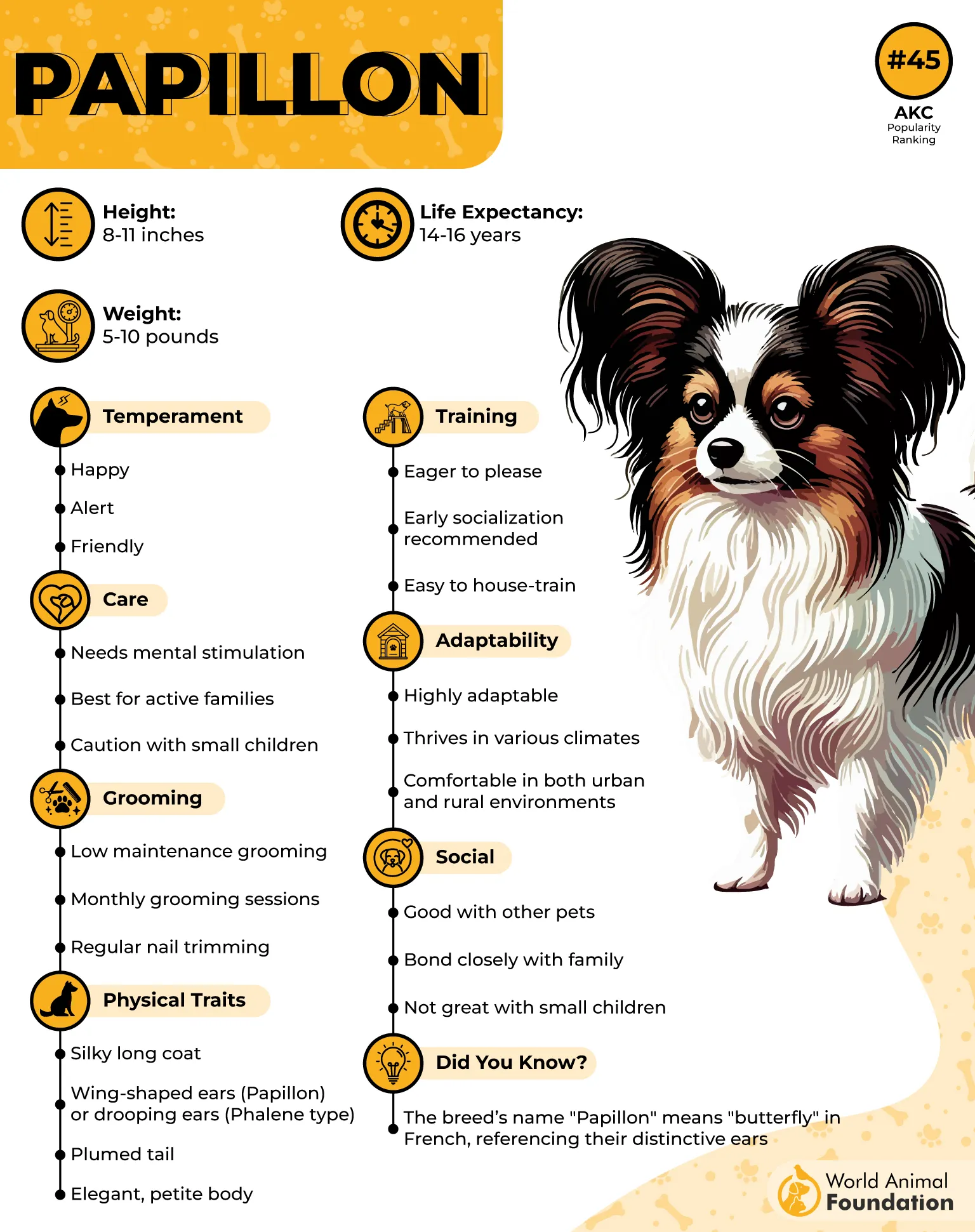
Papillons are fast learners that love participating in everyday family activities. However, as they mature, they can develop an annoying habit of chasing smaller pets if clear boundaries aren’t established early on. Teaching a Papillon to stay calm around a cat and discouraging any rough play from the start is key to maintaining a peaceful home.
Daily play, quick training sessions, and regular coat grooming are all part of basic Papillon care. While their modest exercise needs make them ideal for apartment living, interactive play between your dog and cat should always be supervised.
6. Pug
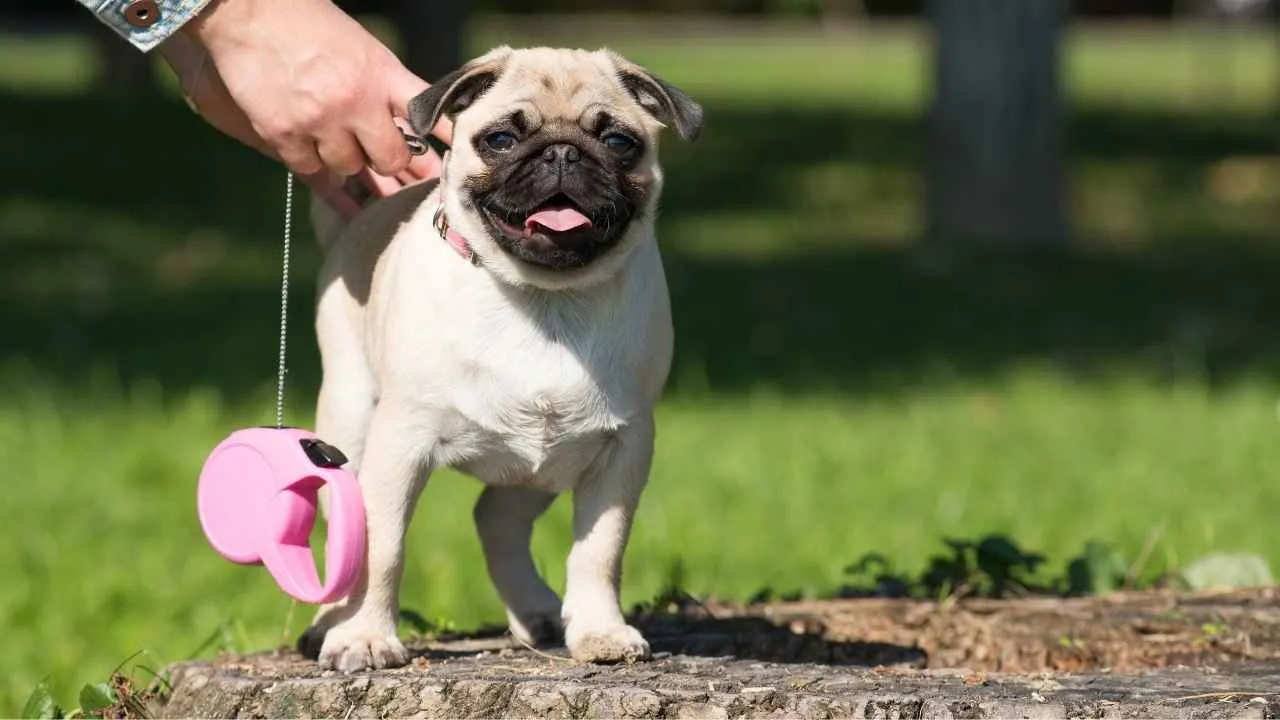
With their cute wrinkled faces and tightly curled tails, Pugs are instantly recognizable companions. Known for their sweet, affectionate personalities, these easygoing dogs love hanging out with their owners around the house.
In most cases, Pugs do wonderfully with cats, and both pets can easily coexist when given enough space and time to adjust to one another.

However, if a Pug constantly follows a cat or gets overly pushy with play, the cat can quickly feel stressed or overwhelmed. It is up to the owner to manage these interactions, set clear boundaries, and keep the dog’s playfulness from annoying the feline.
Pugs only require gentle, short daily walks alongside regular indoor play. Because their flat faces make them susceptible to breathing difficulties, exercise should be kept light—especially in warm weather. Routine care also includes keeping their facial folds clean and dry to prevent skin irritation.
7. Boxer

Boxers are well known for their social, family-oriented nature and an abundance of playful energy. Highly active and eager to join in on any activity, they make enthusiastic companions that love to play and work.
While they thrive in a busy family home, Boxers can learn to coexist peacefully with cats through early socialization, consistent training, and positive reinforcement for calm behavior.

Because Boxers are naturally high-energy, their energetic presence can easily overwhelm a timid or shy cat. Their strong urge to chase and jump can cause anxiety in a feline, even when the dog is just trying to be friendly.
Keeping a Boxer happy requires daily walks, interactive play, and regular mental stimulation. To maintain harmony at home, provide your cat with a dedicated dog-free safe zone, and reward your Boxer whenever it stays calm and relaxed while the cat moves around the room.
8. Maltese
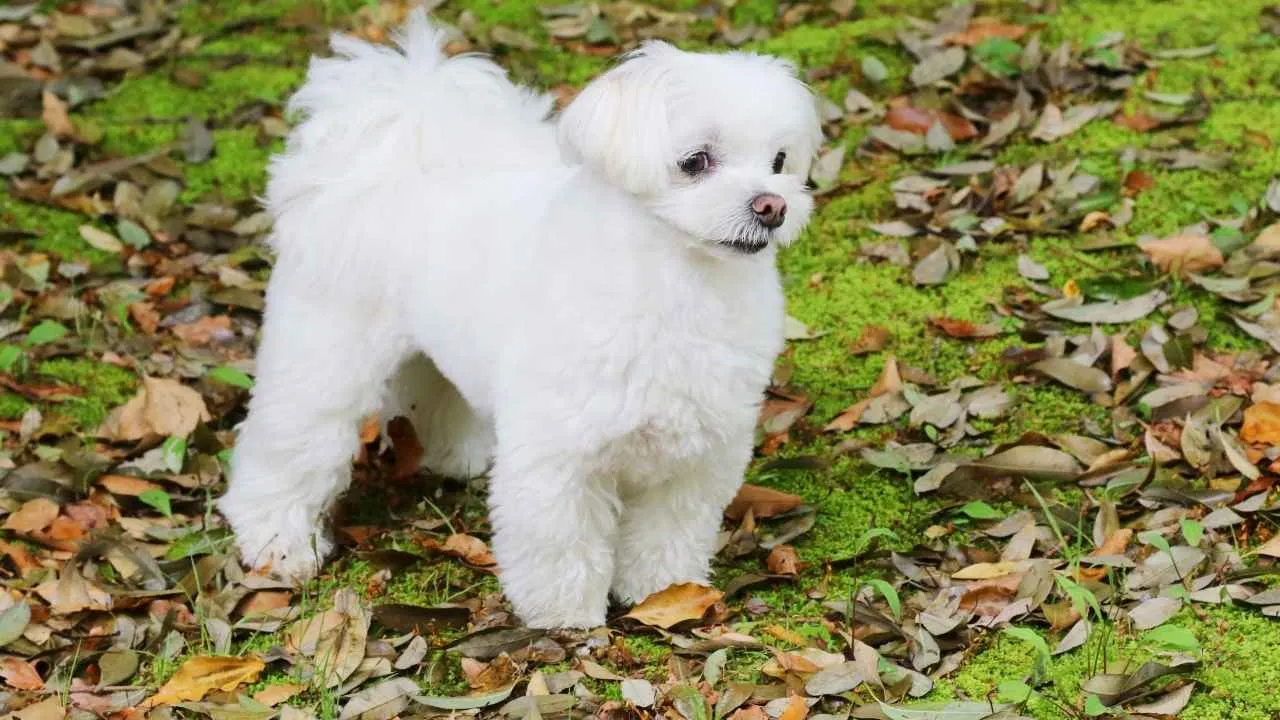
The Maltese is a classic companion breed known for its sweet nature and easy adaptability to home life. These affectionate small dogs often develop great relationships with cats, especially when introduced properly and given positive early experiences together.
Because Maltese are naturally playful, a new cat in the house will instantly catch their attention. However, this curiosity can quickly turn into fixated behavior or persistent chasing if left unchecked, making it essential to teach your dog boundaries and mutual respect from day one.

Daily coat care is a must for a Maltese, as their fine hair mats and tangles easily without frequent brushing. They also thrive on regular activity and daily human companionship.
Due to their tiny size, all interactions with other pets—especially larger animals—should always be closely supervised to ensure everyone stays safe.
9. Shih Tzu

Sturdy and affectionate, the Shih Tzu is a classic companion dog known for its luxurious long coat and sweet, round face. These cute dogs are happiest lounging indoors with their owners in a relaxed setting, and with clear boundaries, they can learn to become wonderful feline housemates.
While Shih Tzus enjoy a good play session, they are far from high-energy and prefer a balanced routine. Teaching basic obedience cues and using positive reinforcement to reward calm behavior will help prevent any unwanted chasing habits.

To keep the peace at home, always provide your cat with an accessible escape route and a quiet sanctuary to retreat to when things get busy.
Daily grooming is essential to keep a Shih Tzu’s long coat free of tangles and mats. Their small size makes them exceptionally well-suited for apartment living, though separate feeding areas and slow, managed introductions will help both new and existing pets feel secure during the transition.
10. Cavalier King Charles Spaniel
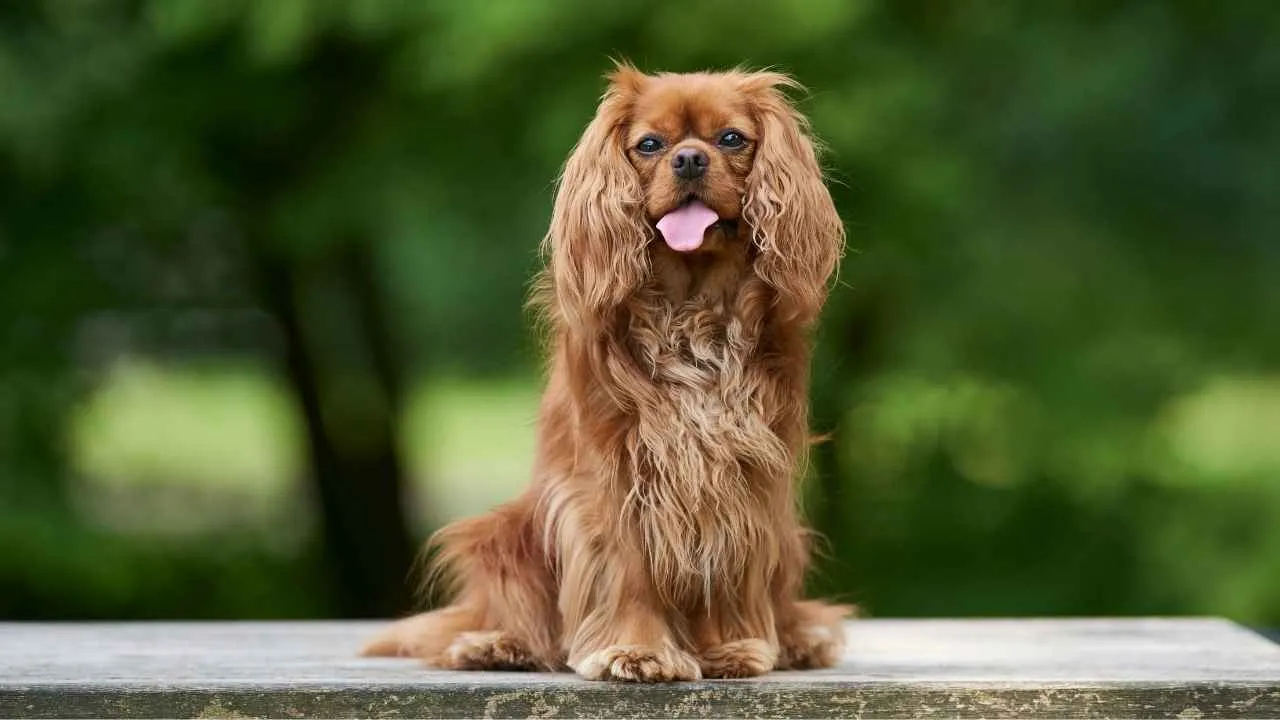
Silky coats, long soft ears, and large, dark eyes give the Cavalier King Charles Spaniel its trademark gentle look. Thanks to their affectionate and adaptable personalities, these small dogs make wonderful companions for multi-pet households, provided the resident animals are comfortable around dogs.
When meeting a cat, a Cavalier will naturally show curiosity by approaching, sniffing, or attempting to initiate play. It is important to give the cat plenty of space to walk away freely without being pursued.

Keeping early meetings brief and rewarding the dog for calm, relaxed behavior helps both pets build mutual trust over time.
Cavaliers require daily walks, interactive playtime, and regular brushing to keep their silky coats free of tangles. They are a great fit for owners looking for a loving companion that balances outdoor activity with cozy indoor relaxation. Routine veterinary care is especially important for this breed, as they are prone to certain inherited health issues, including heart conditions.
Conclusion
A peaceful home does not require a dog and a cat to become best friends overnight. Sometimes the first sign of a growing bond is simply being able to rest in the same room without fear. Those quiet moments can be just as meaningful as cuddling or playing together.
Choose a dog whose needs match your household, respect the cat’s comfort, and give both pets time to adjust. With patience, gentle training, and safe spaces, a home can become a place where dogs and cats feel secure, valued, and loved.
