




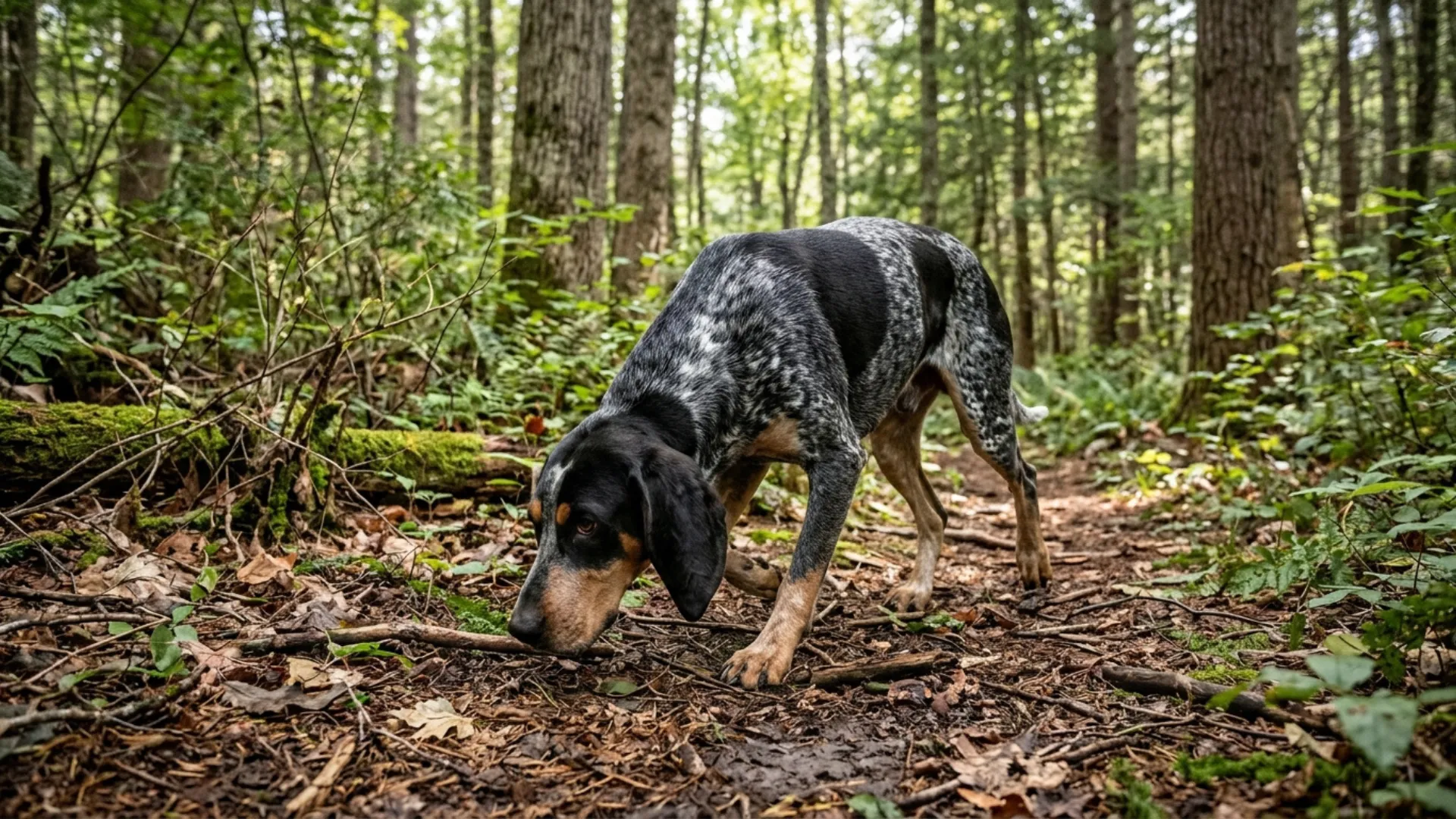
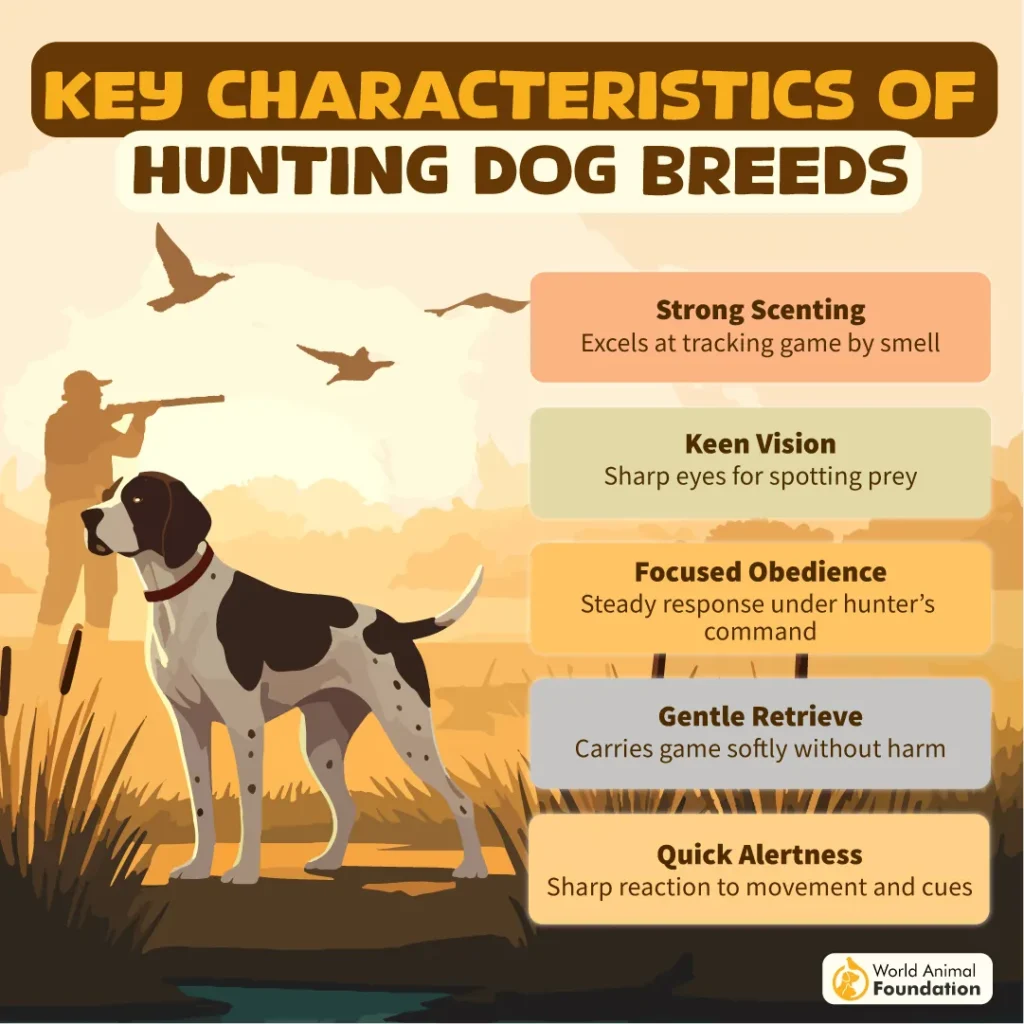
Dogs have accompanied humans on hunting journeys for generations, using their instincts to locate prey and navigate difficult environments. Their remarkable sense of smell allows them to detect faint trails that might otherwise go unnoticed.
From scent hounds that follow ground-level clues to bird dogs bred for locating game, different breeds bring specialized abilities to the field. Successful hunting companions also need stamina, focus, and proper training to work safely and effectively.
Explore remarkable dog breeds whose noses and hunting instincts make them exceptional trackers.
Amazing Dog Breeds for Hunting and Scent Tracking
1. Treeing Walker Coonhound
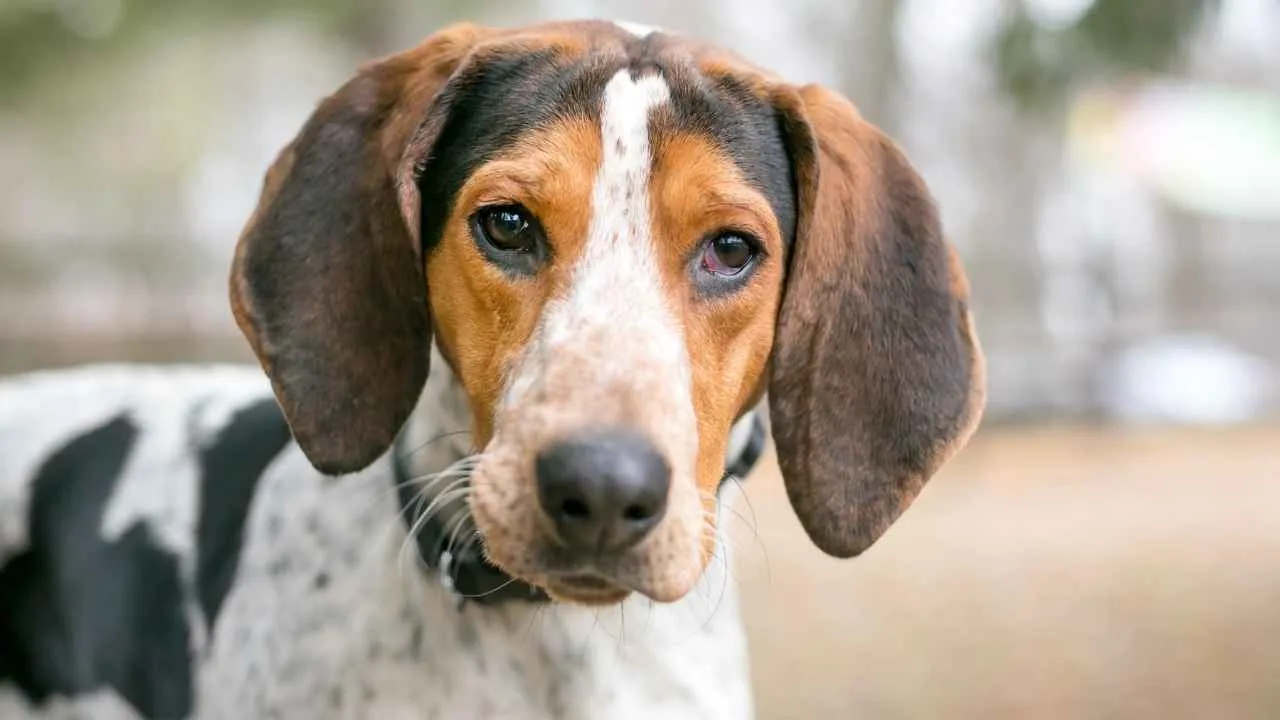
The Treeing Walker Coonhound is a swift, courageous hunting dog celebrated for its ability to cover extensive ground. Its long, muscular legs, streamlined body, and powerful hindquarters allow it to move rapidly across hunting terrain with impressive stamina and make it prized for its treeing ability.
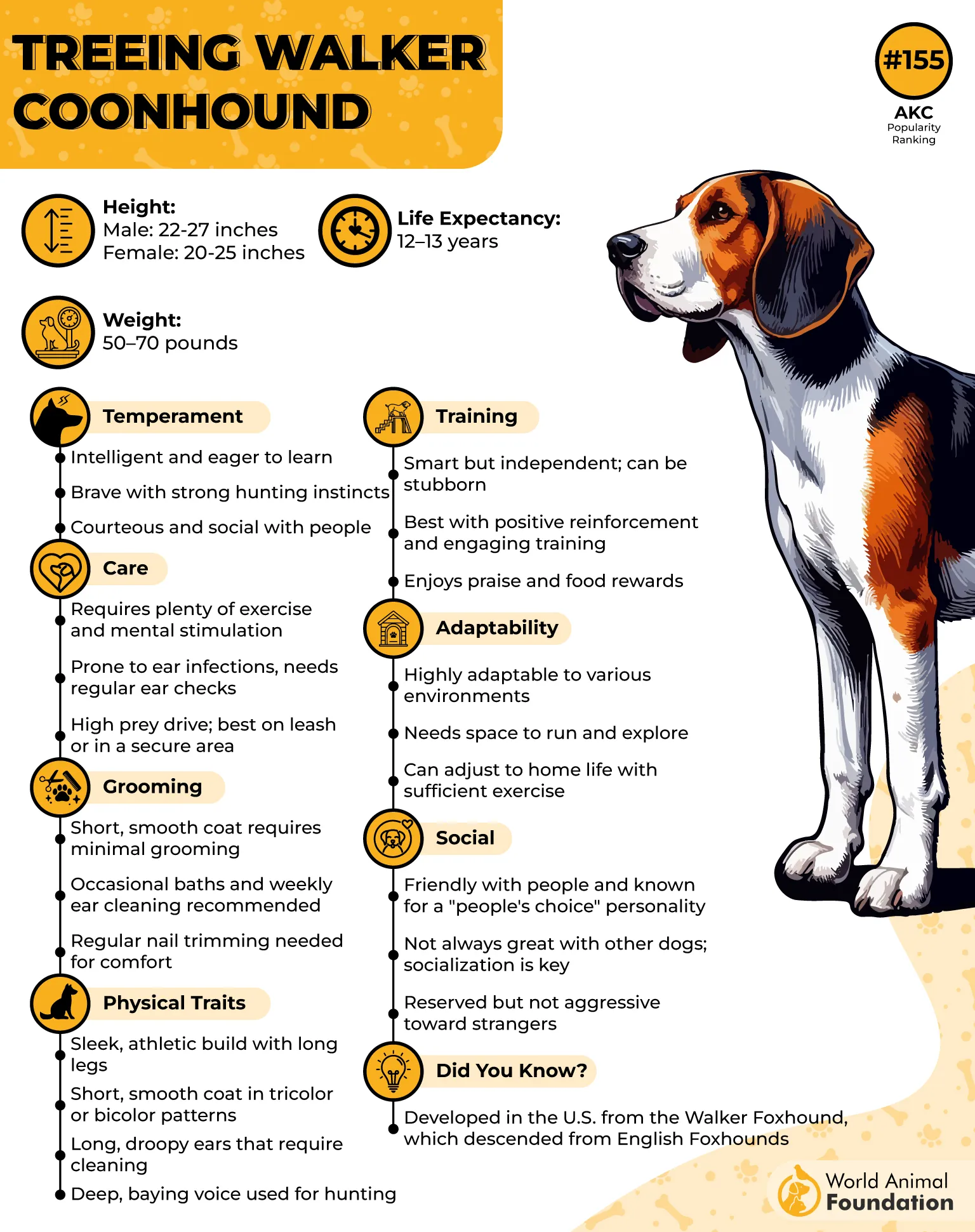
Unlike slower scent hounds, this breed relies on speed to pursue raccoons and other game over considerable distances, and it needs space to roam because of its active, wide-ranging hunting style. Once its quarry escapes into a tree, the Walker uses its specialized hunting instincts to keep the animal located until hunters arrive.
Despite its determined working nature, the Treeing Walker is gentle and affectionate with its family. Its calm expression and sweet temperament make a striking contrast to its energetic performance in the field.
How This Breed Stands Out
Fast-moving raccoon pursuit: Its athletic build and powerful stride help it chase raccoons quickly while covering large areas.
Specialized treeing behavior: It follows quarry into trees and remains focused on its location, helping hunters identify where the animal has taken refuge.
2. Bluetick Coonhound
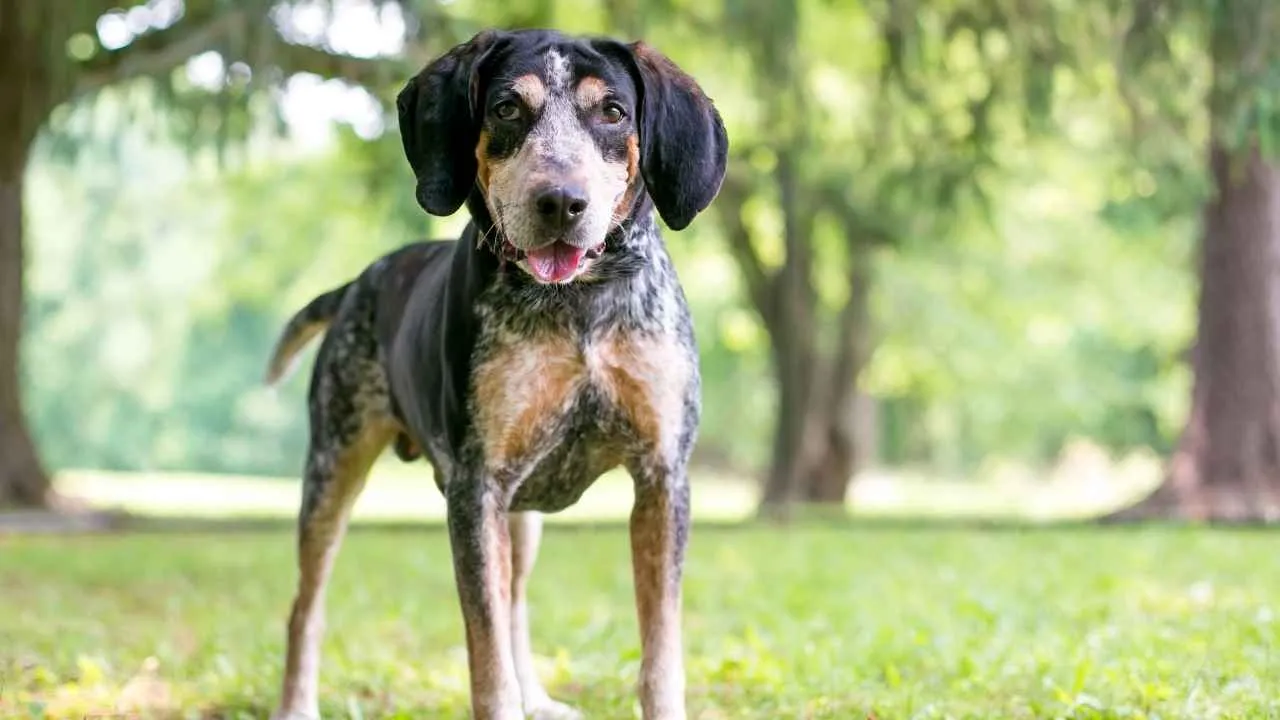
The Bluetick Coonhound is a persistent scent hound capable of following faint odours across challenging terrain, and it can also be used for tracking wounded animals. Its exceptional nose allows it to pursue intricate trails and handle tracking wounded game, including raccoons and other larger game.
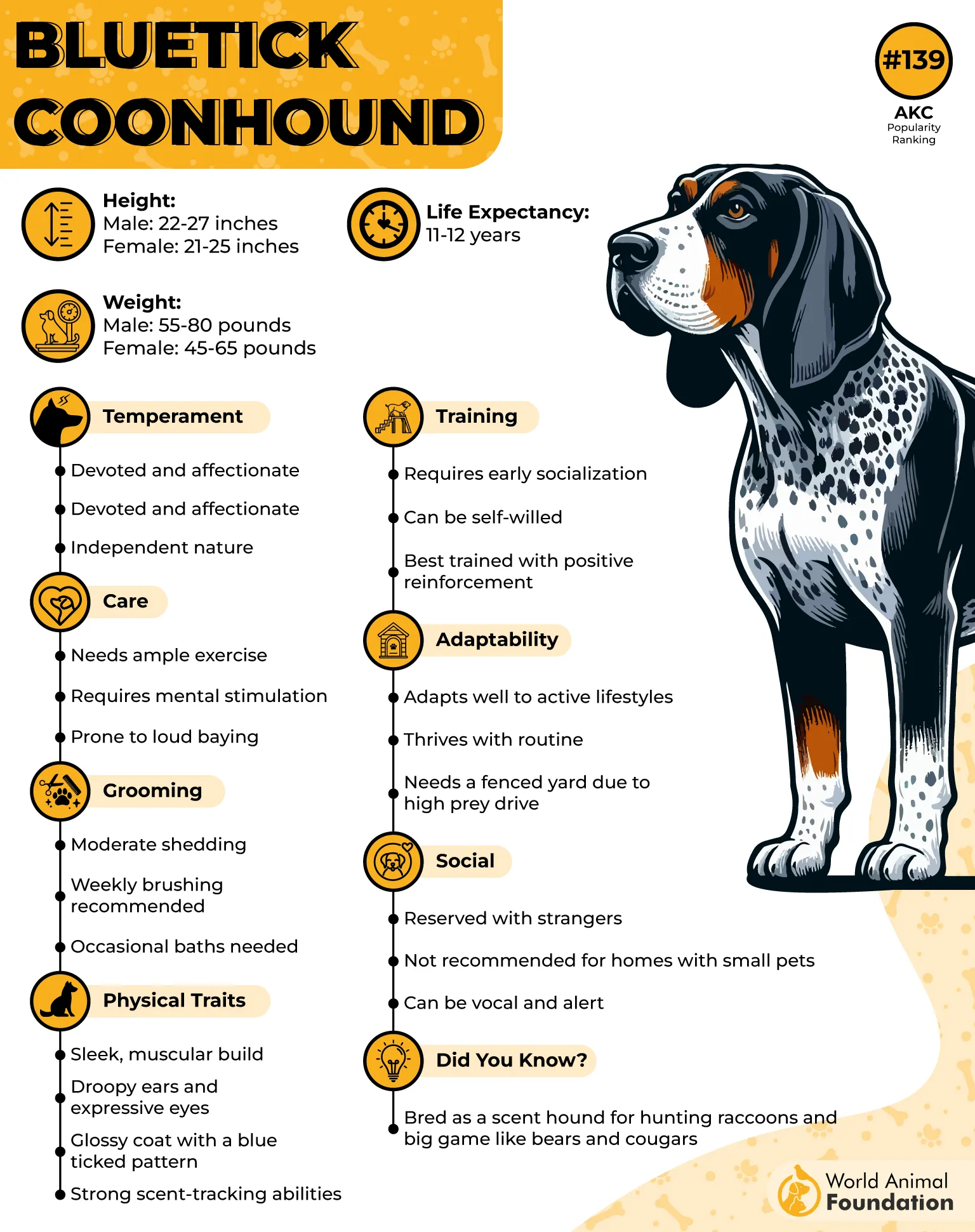
This breed is particularly suited to hunters who work after dark, using its strong scenting instincts to locate prey and follow it until it takes refuge in a tree. Its determination helps it remain focused even when a trail becomes difficult to follow.
Blueticks are energetic, affectionate, and naturally vocal. Their loud hunting calls make them easy to locate in the field, while their high exercise needs make them better suited to active households than apartment living.
How This Breed Stands Out
Strong nighttime tracking instincts: Its keen nose helps it follow faint animal trails during nighttime hunts.
Distinctive bawling hunting voice: Its loud, ringing vocalisations alert hunters to its location and signal when it has picked up or followed a trail.
3. German Shorthaired Pointer
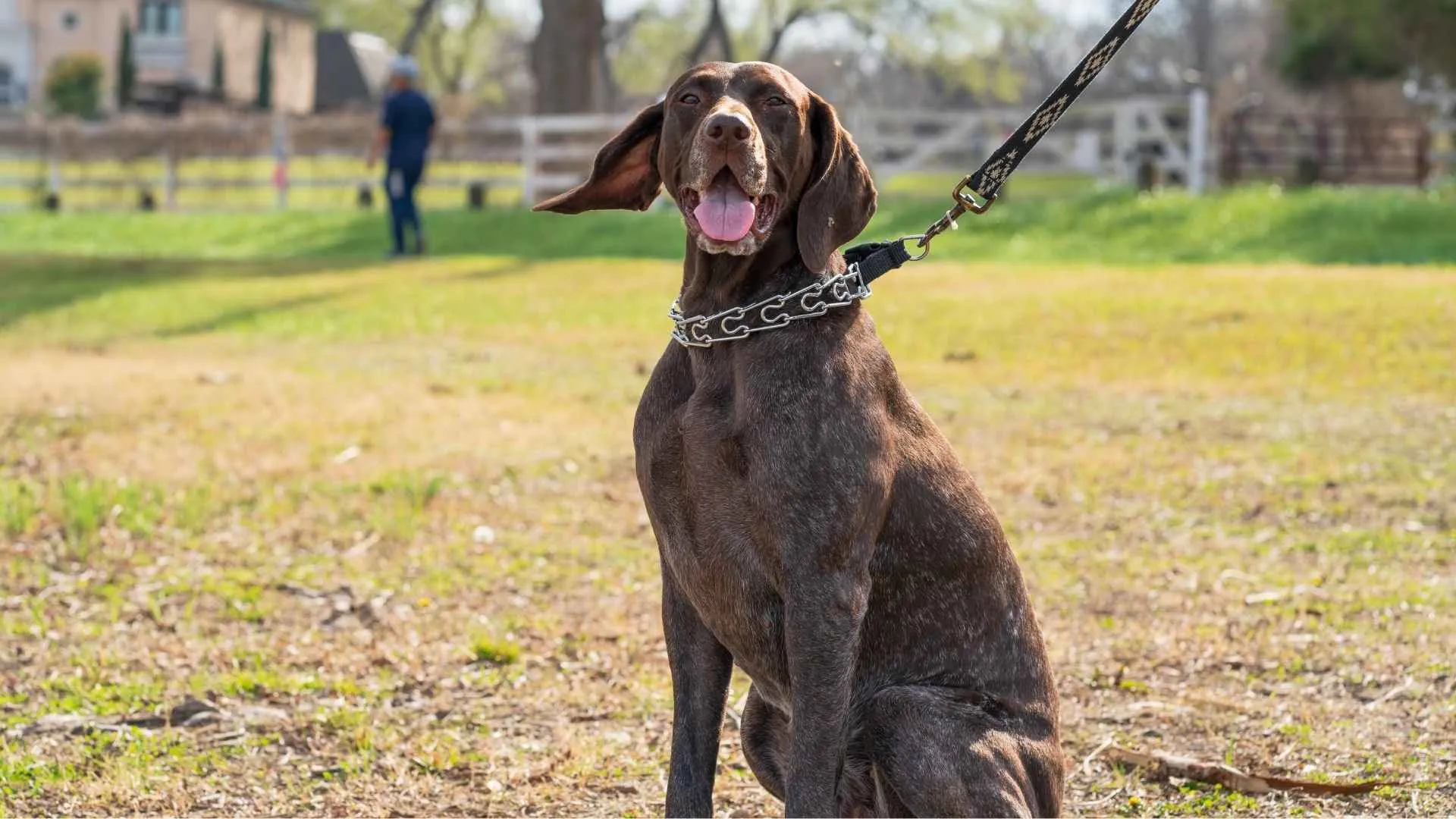
The German Shorthaired Pointer is a hunting companion known for its versatility, equipped to track, point, and retrieve game. Its athletic build and sharp instincts make it particularly effective in bird hunting, where it can locate prey and signal its position before the hunter approaches. This variety of hunting tasks is part of what makes the breed so adaptable across land and water.
According to PDSA, German Pointers belong to the Gundog group, which includes breeds originally trained to locate and retrieve game. They are energetic, friendly dogs that need active owners willing to dedicate plenty of time to exercise and outdoor adventures.
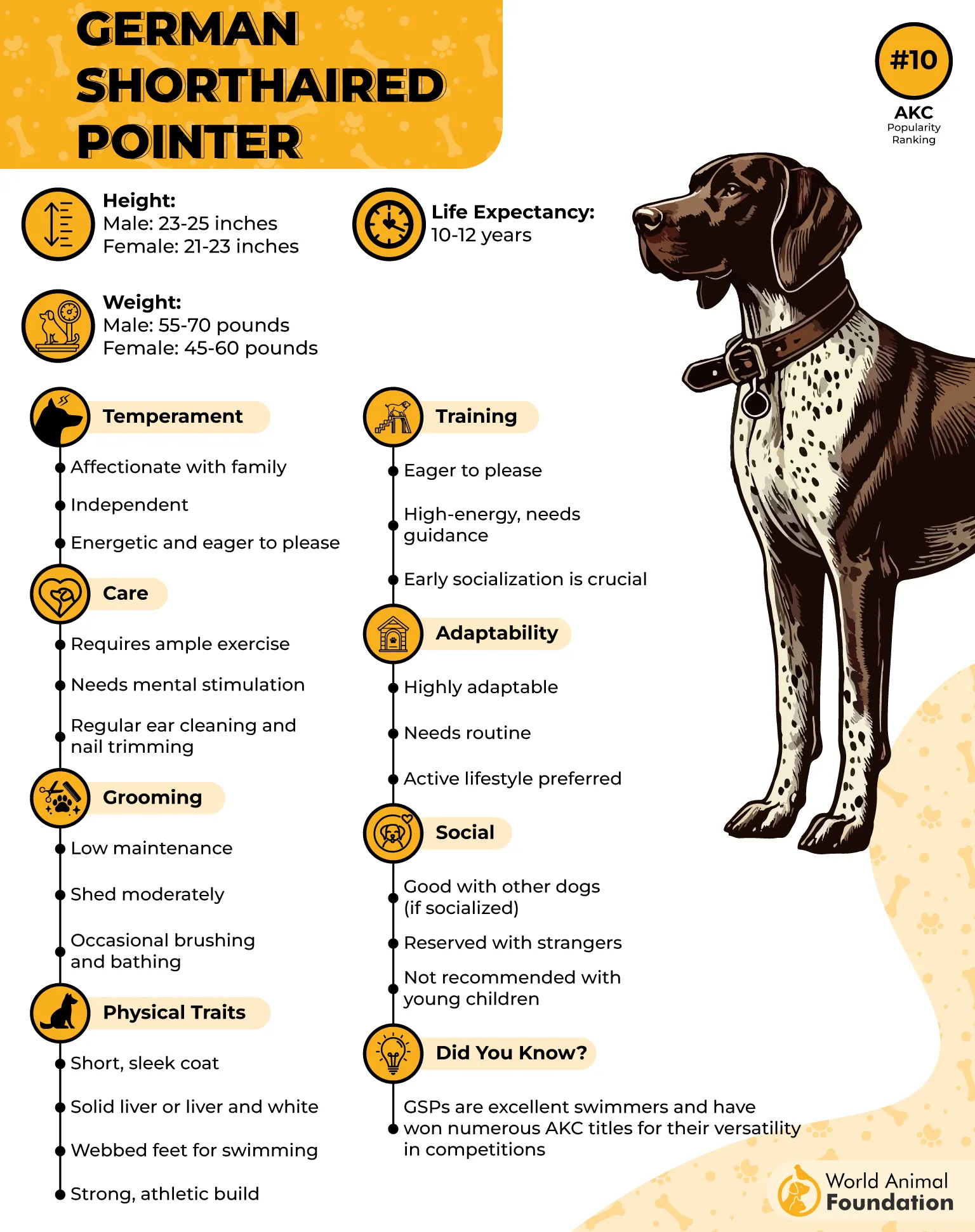
Beyond its field abilities, this breed is known for its intelligence, eagerness to work, and quick learning. Its strong prey drive supports its hunting performance, although it may make living with smaller household pets more challenging.
With impressive stamina and a constant need for physical activity, GSPs thrive with active owners who can provide regular exercise and mental challenges. They are also friendly and companionable family dogs.
How This Breed Stands Out
Distinctive bird-pointing stance: When it detects game, the Pointer freezes and indicates the bird’s location, helping hunters approach strategically.
Versatile land-and-water hunting: Its tracking, pointing, and retrieving abilities allow it to assist with different hunting tasks across varied environments.
4. English Springer Spaniel
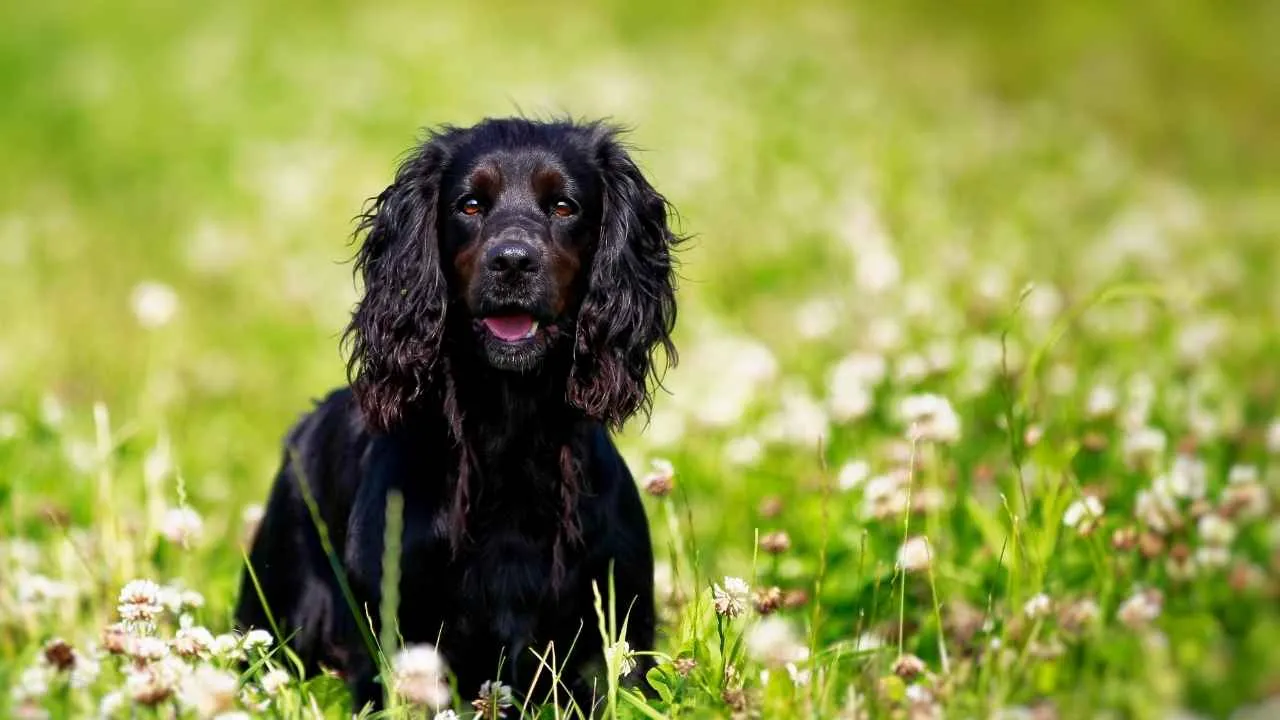
The English Springer Spaniel earned its name from its ability to flush game birds out of hiding, making it a valuable partner for hunters. Particularly effective with pheasants, this breed combines sharp instincts with the stamina needed for demanding fieldwork. It can also flush rabbits in dense cover.
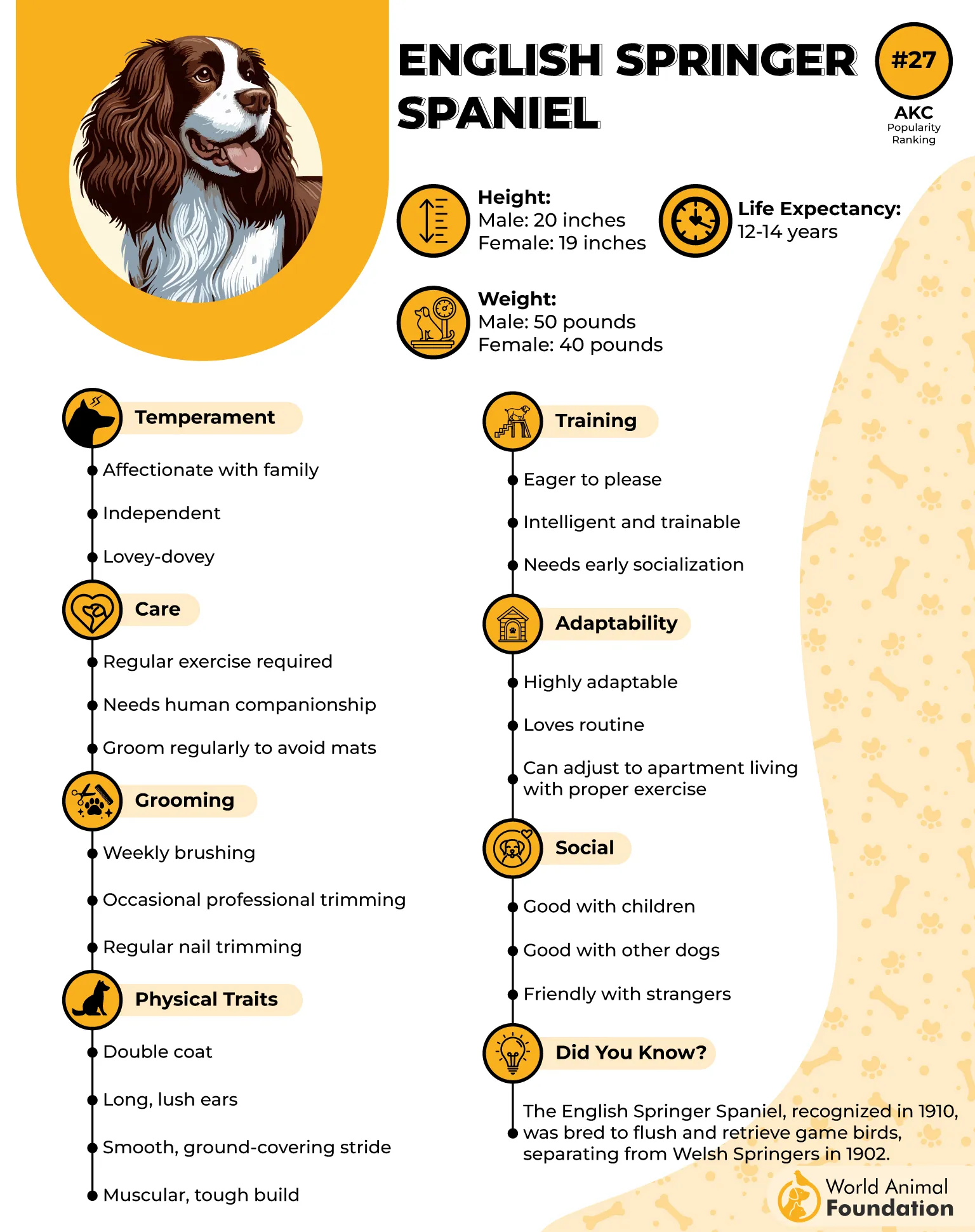
Its compact, athletic build helps it move through tight spaces and thick vegetation where larger dogs may struggle. Beyond locating birds, the Springer also has impressive retrieving abilities, allowing it to handle multiple stages of a hunt.
Highly intelligent and eager to please, this energetic dog responds well to positive reinforcement training. Its energy levels require regular exercise and consistent activity. Its affectionate nature also makes it a friendly family companion when hunting duties are over.
How This Breed Stands Out
Skilled flushing from dense cover: Its instinct to spring birds from hiding makes it especially useful when searching thick vegetation.
Energetic quartering movements: Its active, systematic movement across hunting grounds helps it cover terrain while locating hidden game.
5. Basset Hound
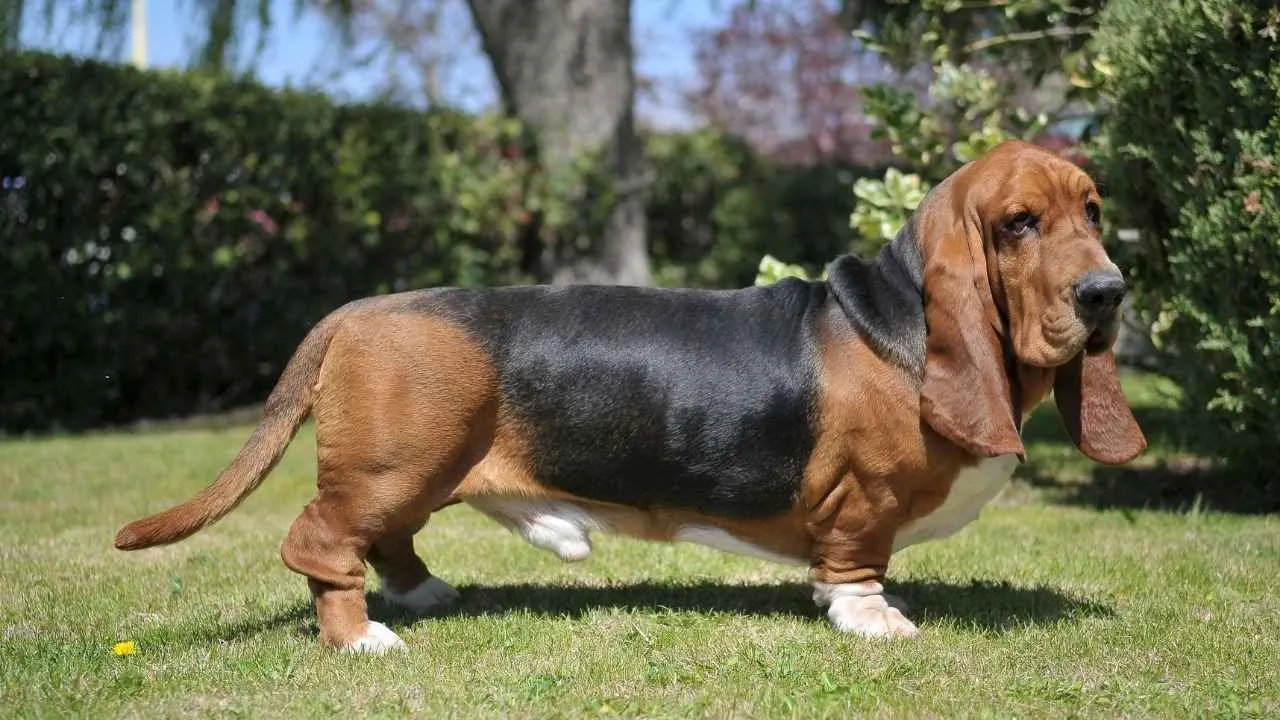
Basset Hounds are renowned for their exceptional scenting ability, making them dependable companions for hunters following ground-level trails. Their powerful noses allow them to detect and pursue scents with remarkable accuracy, particularly when tracking small game.
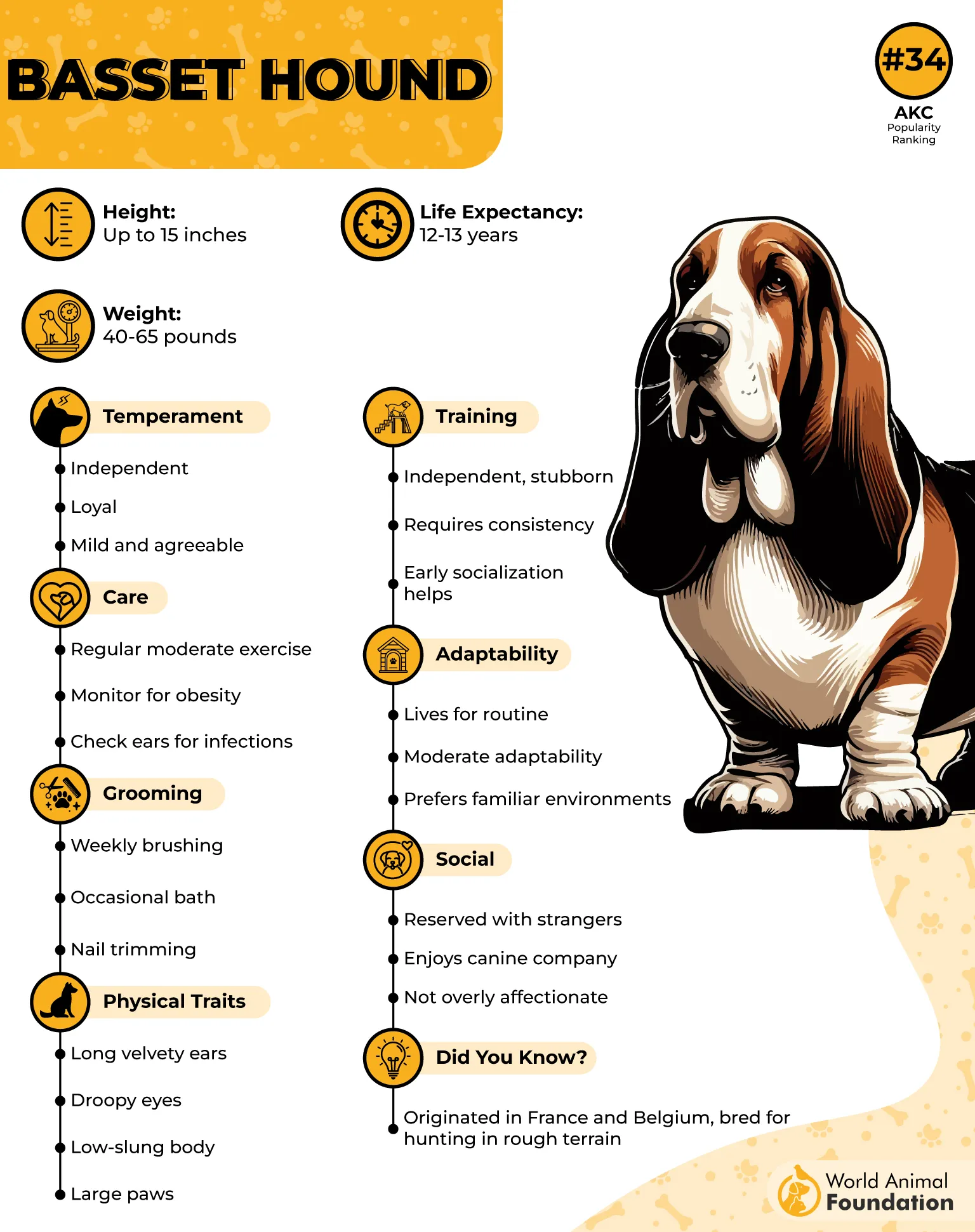
Unlike faster hunting breeds, Bassets work at a steady, deliberate pace. Their compact build, sturdy bones, and strong legs support long periods of trail-following rather than bursts of speed. Their naturally loud, ringing bark also helps hunters keep track of them in the field.
At home, these dogs are generally mild-mannered and agreeable, although they can become determined and stubborn once they pick up an interesting scent. Their loyalty and natural hunting instincts make them devoted tracking companions.
How This Breed Stands Out
Powerful nose for slow-paced tracking: Their exceptional scenting ability helps them follow trails persistently, even when the scent becomes difficult to locate.
Short legs suited to following ground scents: Their low-set build keeps their noses close to the ground, helping them investigate and follow scent trails.
6. Beagle
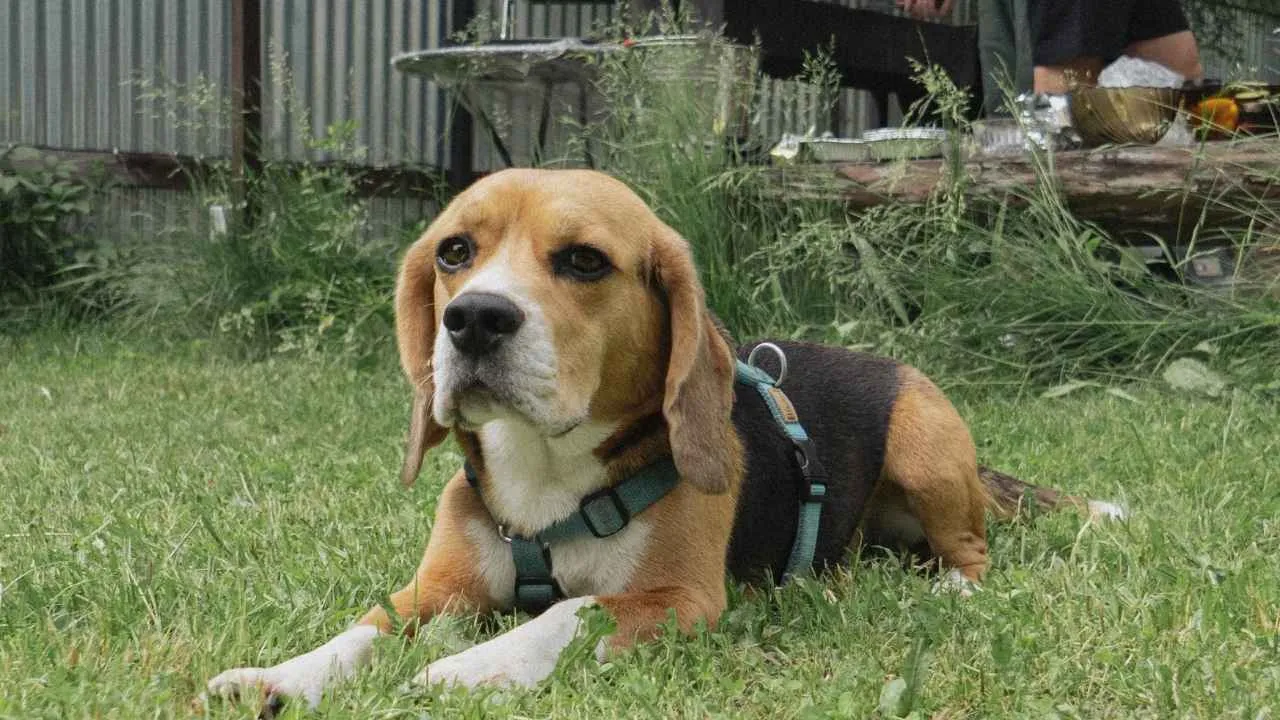
Beagles are energetic scent hounds with an exceptional ability to follow small-animal trails. Originally valued for rabbit hunting, they use their powerful noses to investigate scents and stay focused on a trail for extended periods.
According to WebMD, their small size and easy-care coats make them appealing pets, but they are energetic dogs that require regular exercise and social interaction. Without adequate attention, they may become restless and destructive.
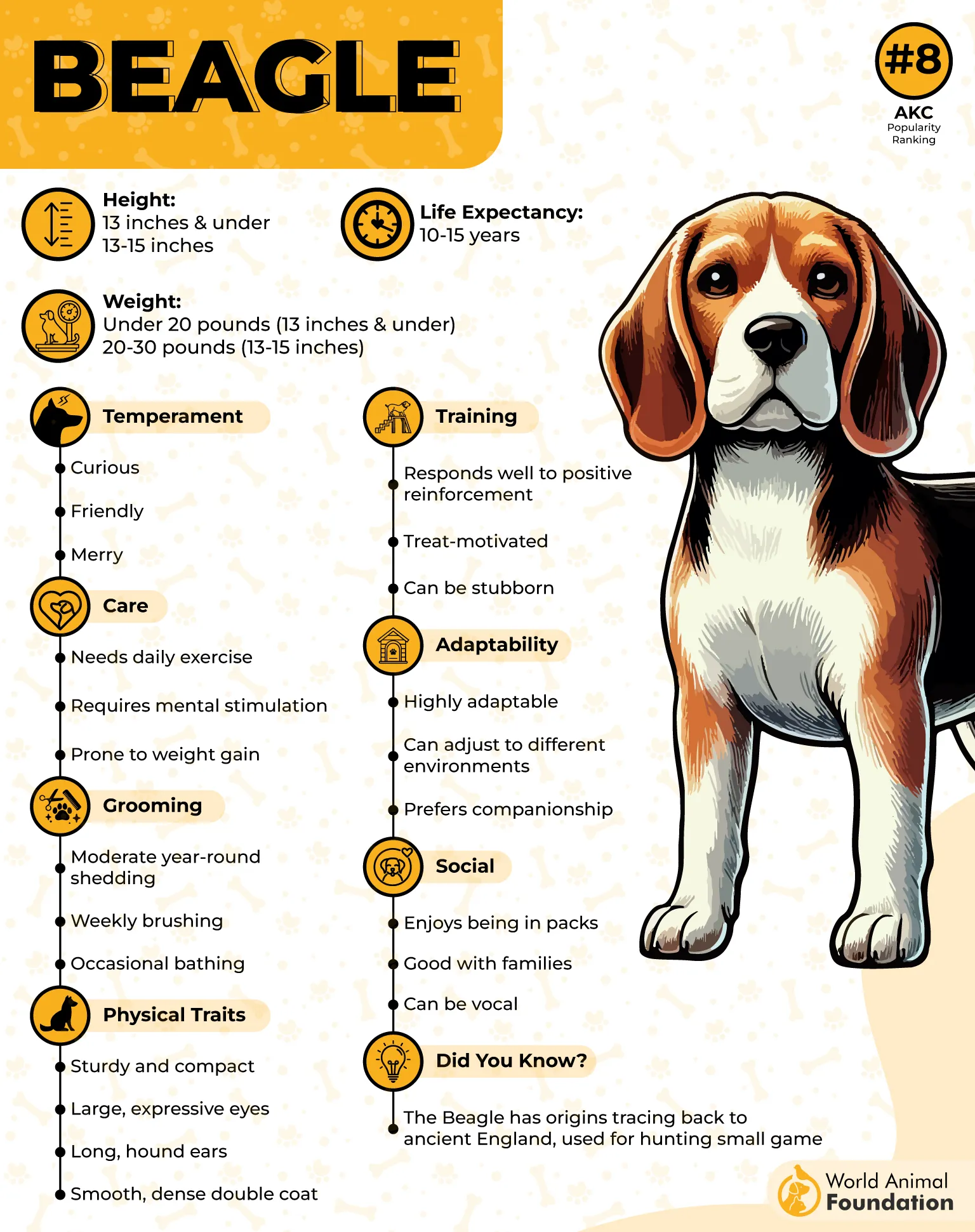
Their tracking abilities also make them useful as detection dogs in agricultural and law-enforcement settings.
Despite their strong hunting instincts, Beagles are affectionate, friendly, and enjoy spending time with people. Their short coat is relatively easy to maintain, while their distinctive voice helps hunters stay aware of their location during a search.
How This Breed Stands Out
Persistent rabbit-trailing instincts: Their keen noses and natural hunting drive help them follow rabbit scents across different types of terrain.
Compact, ground-hugging build: Their short stature allows them to move through low vegetation and investigate scent trails close to the ground.
7. Bloodhound
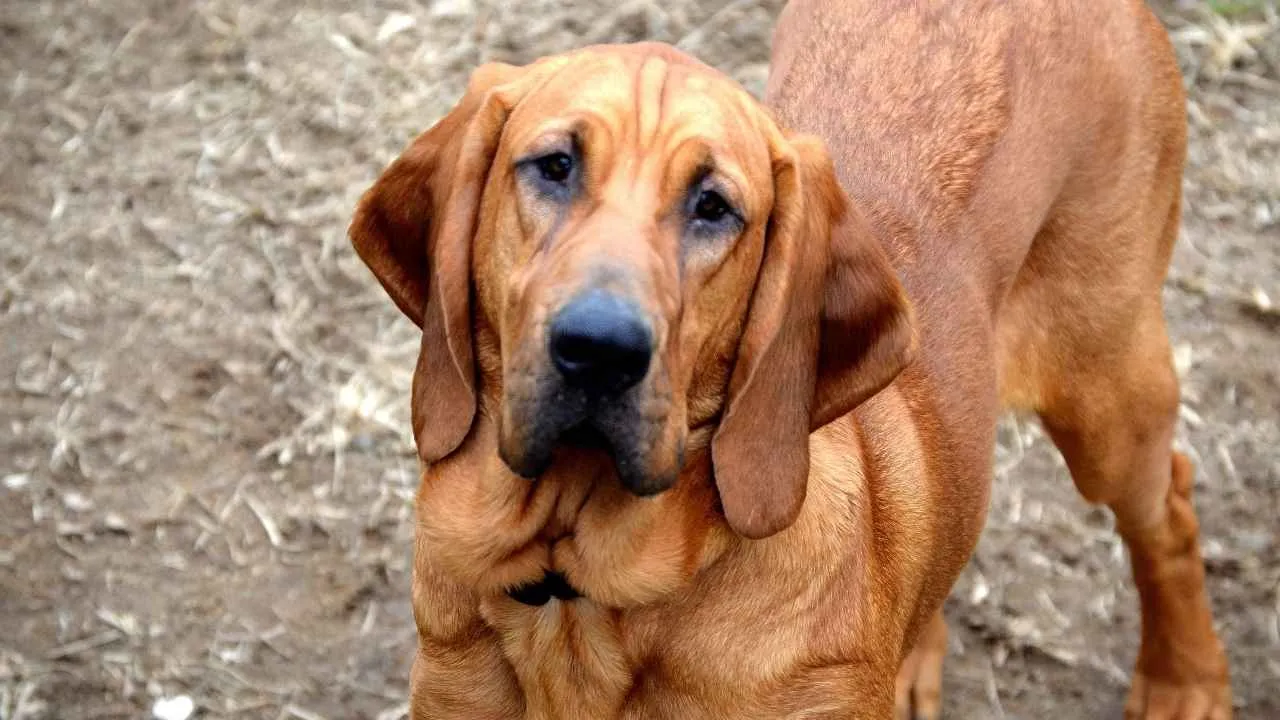
The Bloodhound is renowned for its extraordinary sense of smell, making it one of the most capable scent-tracking dogs. With a long history of following trails, this breed has also become valuable in police investigations, where its tracking work can help locate missing people and follow evidence.
According to the AKC, Bloodhounds have short, dense coats that shed once or twice annually. Weekly brushing helps remove loose hair, encourage healthy coat growth, and distribute natural skin oils. Regular bathing prevents unpleasant odors, while routine nail trimming keeps them comfortable.
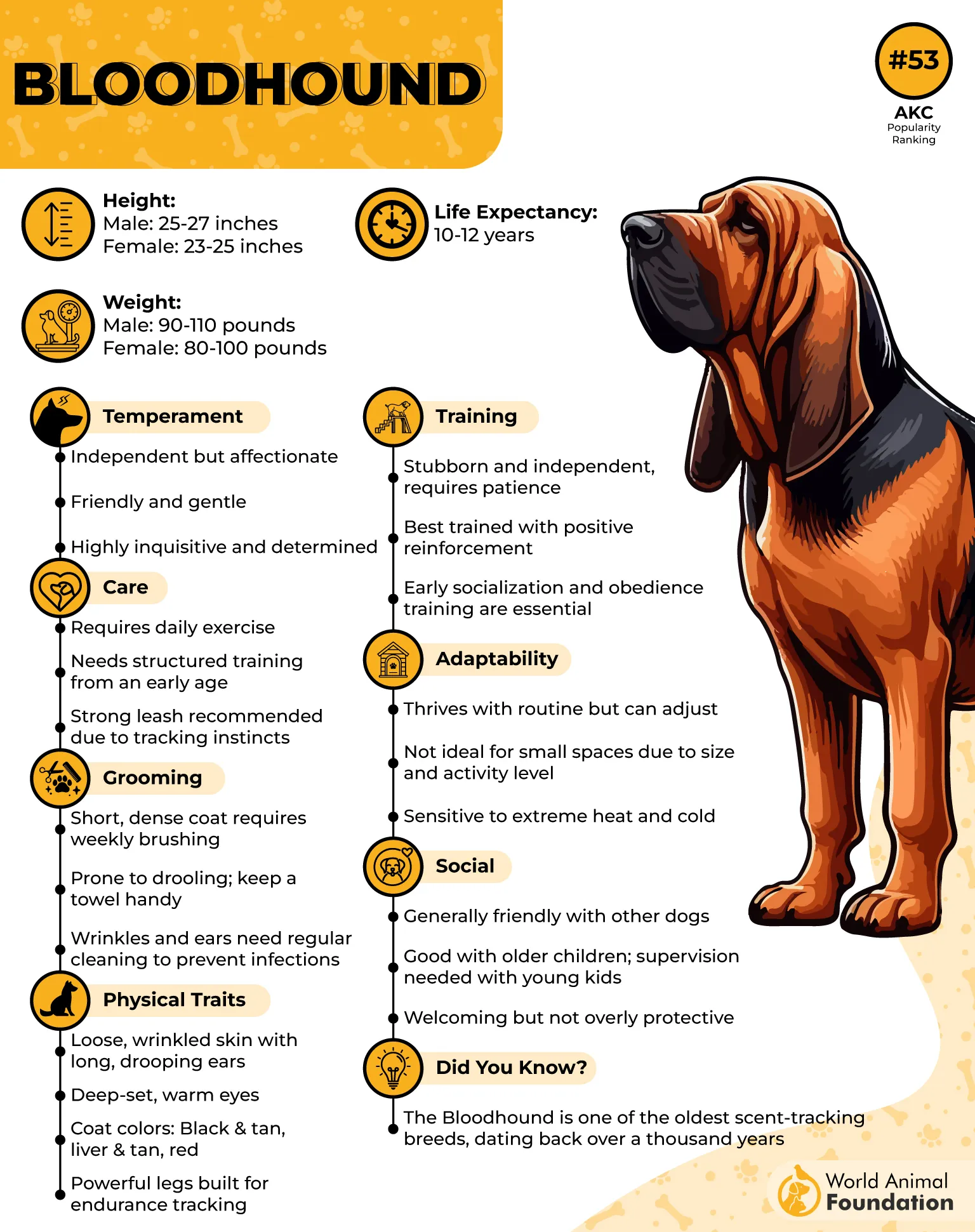
Its loose facial skin, deep wrinkles, and drooping ears are distinctive features. Bloodhounds are generally gentle and easygoing, but their strong tracking instincts keep them focused when they pick up an interesting scent.
They also have considerable energy and need regular exercise.
How This Breed Stands Out
Exceptional cold-trail tracking: Its highly developed nose can follow faint scent trails over considerable distances, even after time has passed.
Long ears that help trap scent: Its pendulous ears sweep near the ground, helping direct scent particles toward its nose as it tracks.
Conclusion
Successful hunting and scent tracking depend on a dog’s instincts, physical abilities, and determination. A powerful nose helps locate faint trails, while stamina and agility support long searches across challenging terrain.
Many of these breeds have been selectively bred for generations to strengthen instincts like scent tracking, pointing, flushing, and retrieving.
Some dogs excel at following ground scents, while others are skilled at flushing hidden game, pointing out prey, or retrieving it. Their distinctive working styles make them valuable partners in different hunting environments. Choosing the right dog should match your hunting style and environment, including your local climate and terrain.
Training, regular exercise, and mental stimulation help these intelligent, energetic dogs develop their abilities. Understanding their individual strengths also helps owners provide suitable activities and care.
Ultimately, these dogs combine remarkable scenting skills with loyalty, courage, and dedication, making them impressive companions both in the field and at home.
