




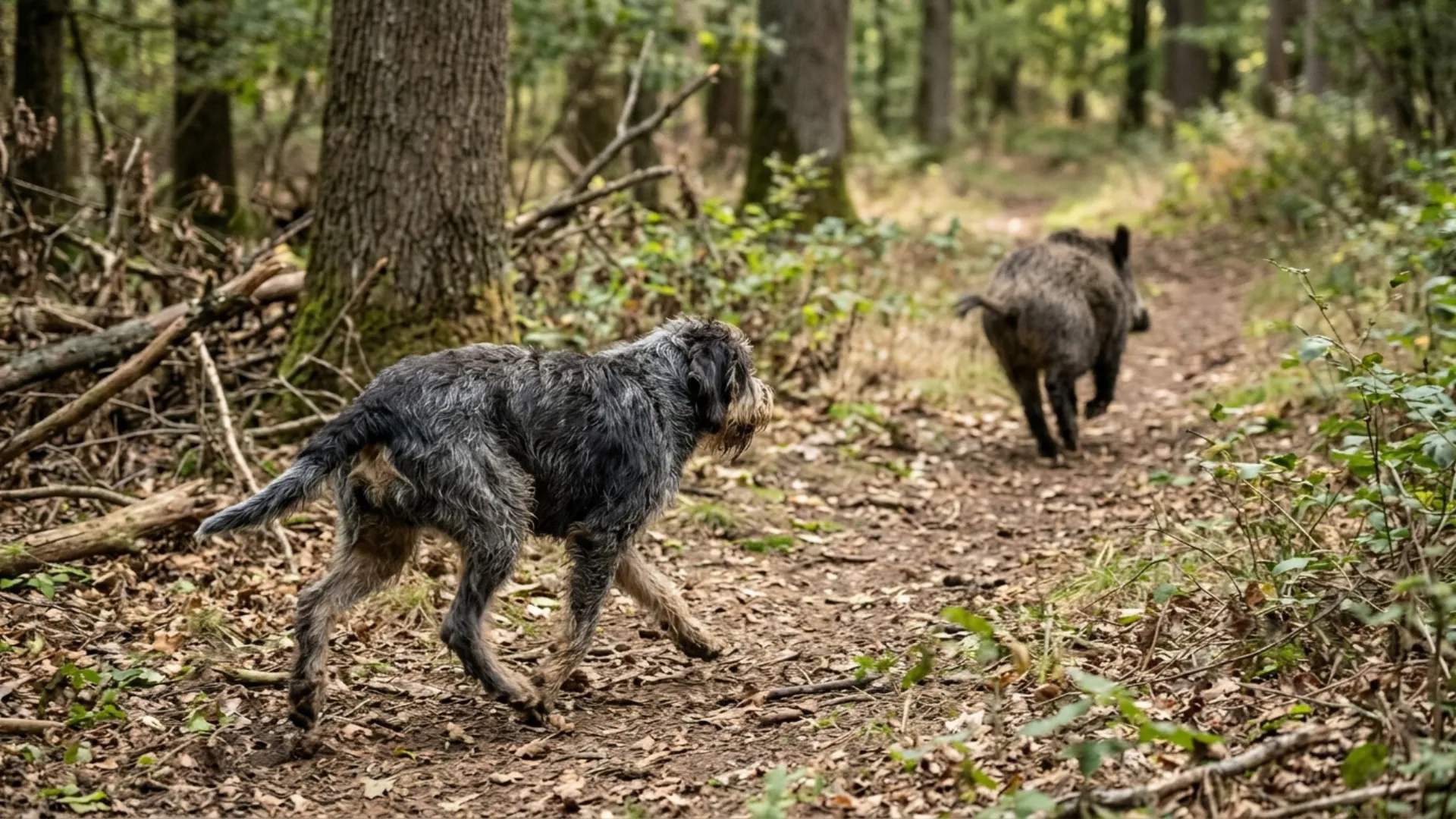
A wild boar may have crossed the trail hours ago, leaving faint scent and a few signs in the dirt.
Can a dog still find the route through tangled brush and uneven ground? That is where a capable tracking dog earns its place. Wild boar hunting relies on more than speed or strength. Dogs need a keen sense of smell, enough endurance to work across rough country, and the focus to stay on the correct trail.
Some are valued for following older scent, while others bark when they locate a boar and help the hunter close the distance. Their roles can differ, so no single trait tells the whole story. Training and safe handling remain essential because a cornered boar can be dangerous.
The nine breeds featured here bring different strengths to the field, from scenting ability to stamina and determination, helping explain why hunters choose them for wild boar tracking.
Key Takeaways
Could a dog still follow a wild boar that passed through the woods hours earlier? For the right scent hound, an aging trail can still reveal the way forward.
Slovenský Kopov was specifically bred to pursue wild boar and can stay on difficult scent trails for hours while working through rugged mountain terrain.
Plott Hound takes another approach when scent disappears, sweeping from side to side until its sensitive nose picks up the trail again.
Keep reading because one French hound can even use its hunting voice to give clues about how old or close a scent may be.
Amazing Dog Breeds that Excel at Tracking Wild Boars
1. Slovenský Kopov
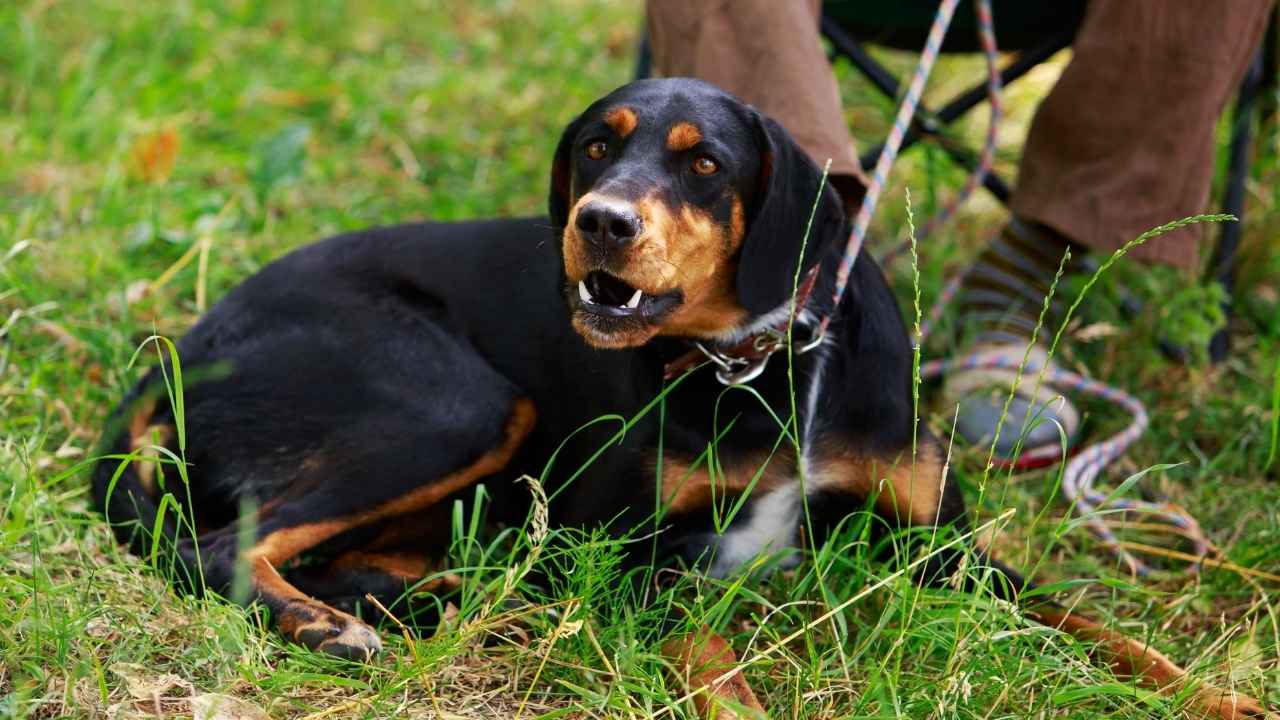
Slovenský Kopov was originally bred in Slovakia and was officially recognized as a distinct breed by 1870, with historical roots believed to reach much further into Europe’s native scent hounds. It remains the country’s only native scent hound and is officially recognized today as its national breed.
A Nose Built for Boar Trails
Unlike general-purpose hunting hounds, Slovenský Kopov was selectively bred to pursue wild boar, following scent trails through dense undergrowth and rugged mountain terrain. Its exceptional directional sense helps it follow a trail for hours, even when the scent is difficult to pick up.
Three details explain its specialized hunting style:
Tracks both fresh and older boar scent
Uses persistent baying to alert hunters
Circles quarry to distract it while avoiding a direct attack
Alert Beyond the Hunt
At home, Slovenský Kopov is affectionate with its family and can be patient with children, while unfamiliar visitors may trigger warning barks, as the AKC writes. Training calls for firm, consistent handling, particularly because some dogs can be stubborn and assertive around other dogs of the same sex.
2. Bavarian Mountain Scent Hound
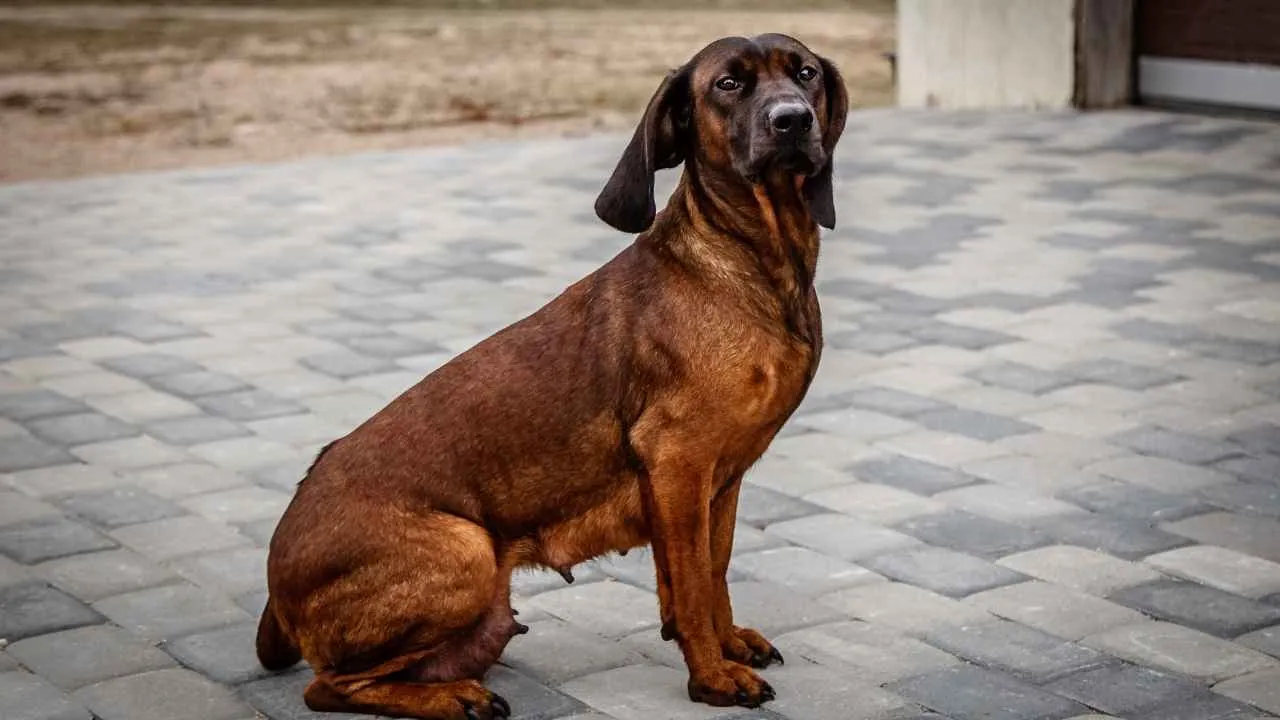
Bavarian Mountain Hound emerged in 19th-century Germany when Baron Karl-Bebenburg Reichenhall crossed the Hanoverian Hound with the Mountain Scenthound to create a lighter, more agile tracking dog. The goal was to recover wounded game over long distances as hunting methods changed.
Following the Scent
This hog hunting hound follows ground scent methodically, keeping its nose close to the trail and adjusting its search when the scent weakens.
Its keen interest in hoofed game makes it particularly suited to tracking wild boar through forests and across uneven mountain terrain.
Its tracking technique involves the following points:
Searches in widening arcs when a trail disappears
Uses long, pendulous ears that help funnel scent toward the nose
May bay or vocalize when excited by a trail
Made for Rough Ground
Bavarian Mountain Hound has a muscular, medium-sized frame, strong paws, and sturdy pasterns that help it negotiate rocky paths and steep climbs, as noted by Purina. Its close, weather-resistant coat also protects it in cold, damp woodland conditions where tracking can take hours.
3. Hanoverian Scenthound
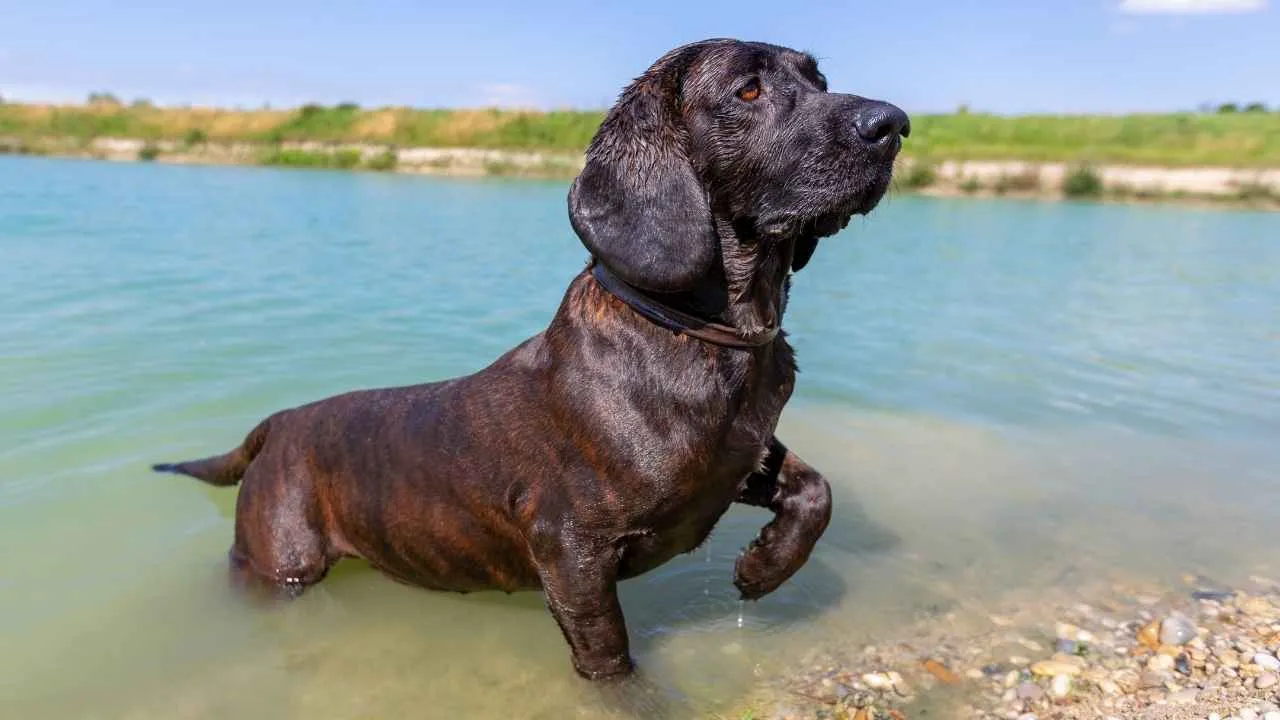
Hanoverian Scenthound was developed in Germany in the early 19th century, when local hunting dogs were crossed with Bloodhounds and other scent hounds. Bred to follow wounded game, it became valued for its ability to work through faint scent trails across challenging hunting grounds.
Precision on the Trail
When tracking wounded wild boar, the Hanoverian Scenthound relies on its nose and close cooperation with a handler to follow the animal’s trail.
Its measured approach and concentration help it follow difficult scents without rushing blindly toward potentially dangerous game.
The following details explain its specialized working style:
Can follow faint, aging blood trails
Works closely with one assigned handler
Uses a long tracking lead during trail work
Focused and Selective
Hanoverian Scenthound is calm and assured during work, with strong concentration and loyalty toward its handler. Around unfamiliar people, it can be discerning, and its powerful hunting instincts may prompt it to chase smaller animals without suitable training and socialization.
4. Transylvanian Hound
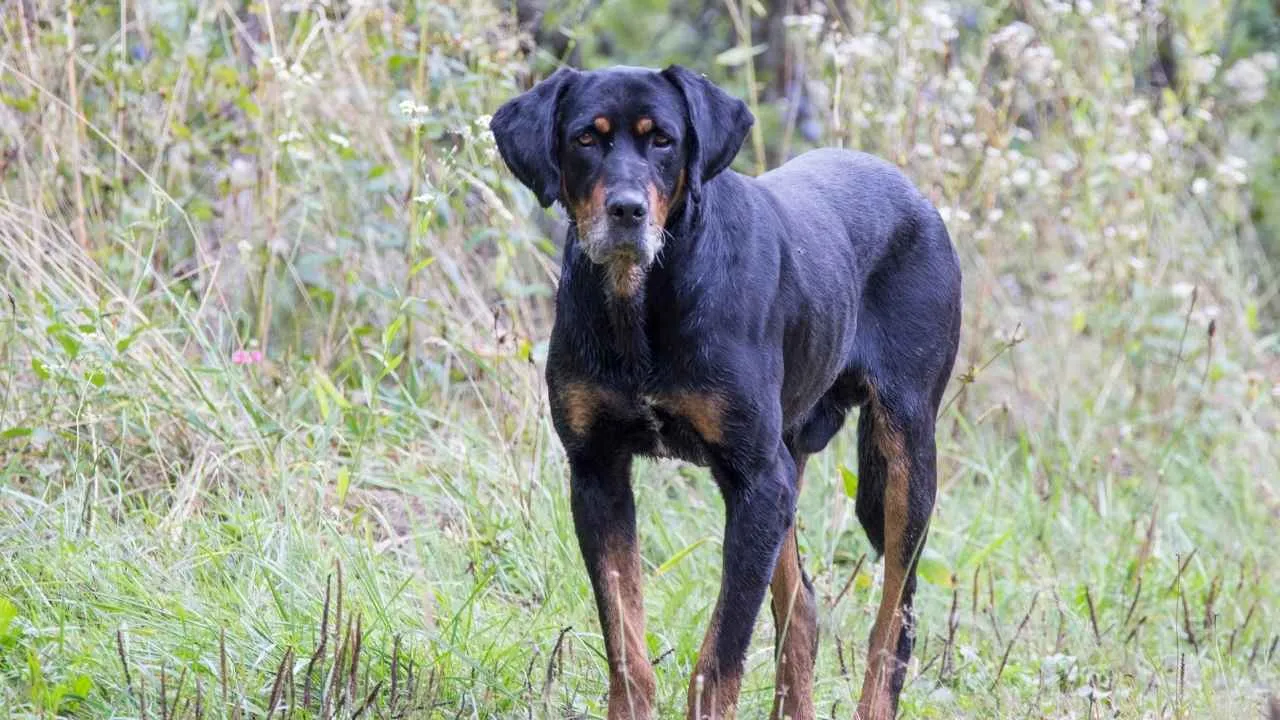
Transylvanian Hound traces its ancestry to scent hounds brought by Hungarian Magyar tribes into Transylvania during the 9th century, which were crossed with local Celtic hounds.
By the Middle Ages, their descendants hunted through the Carpathian forests, with long-legged dogs pursuing large game such as wild boar, bears, and lynx.
Following the Scent
Transylvanian Hound relies on its powerful nose to follow wildlife trails across wooded slopes, rocky paths, and uneven ground. When it catches a promising scent, its resonant bay helps hunters follow its progress even when thick forest blocks their view.
The below-mentioned working details explain its approach in the field:
Dense, short coat that dries quickly after wet forest travel
Long-striding gait suited to extended hunts
Persistent searching when a scent trail becomes difficult to follow
Life Beyond the Hunt
At home, the Transylvanian Hound can be an affectionate family companion when given proper training and enough daily activity. Its exuberant play may overwhelm young children, while its reserved response to unfamiliar people calls for careful introductions and early socialization.
5. Plott Hound
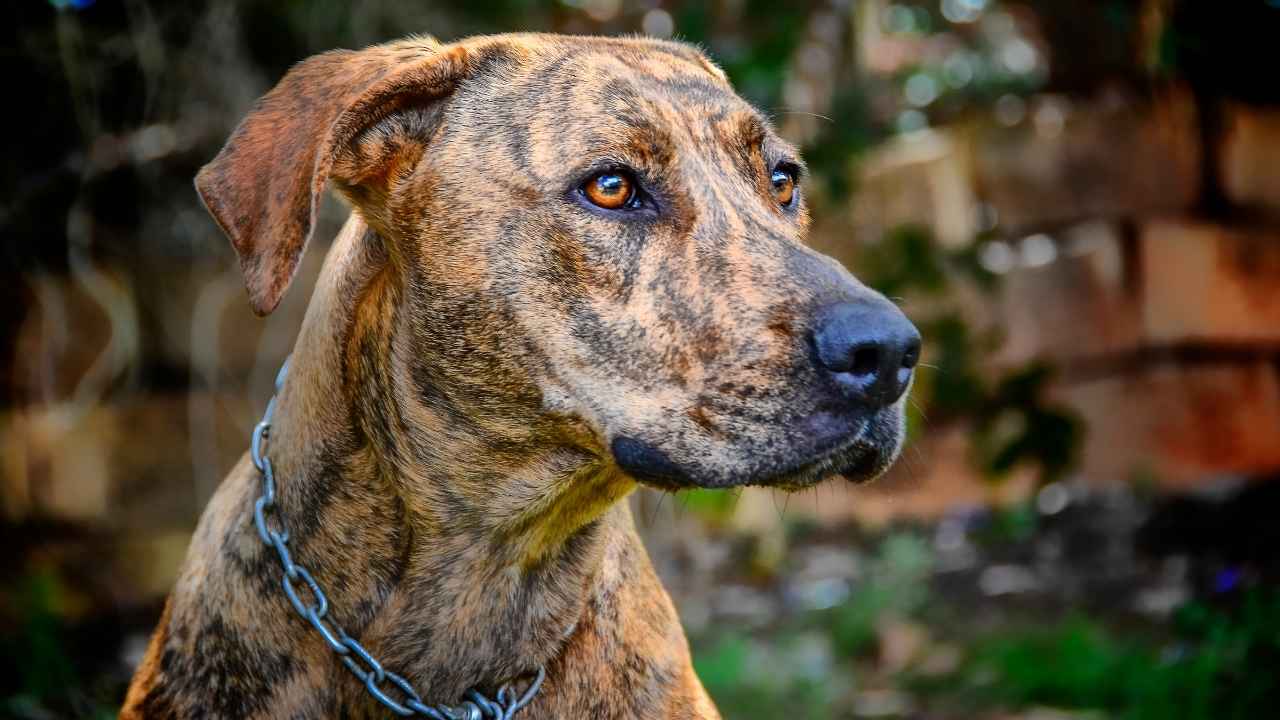
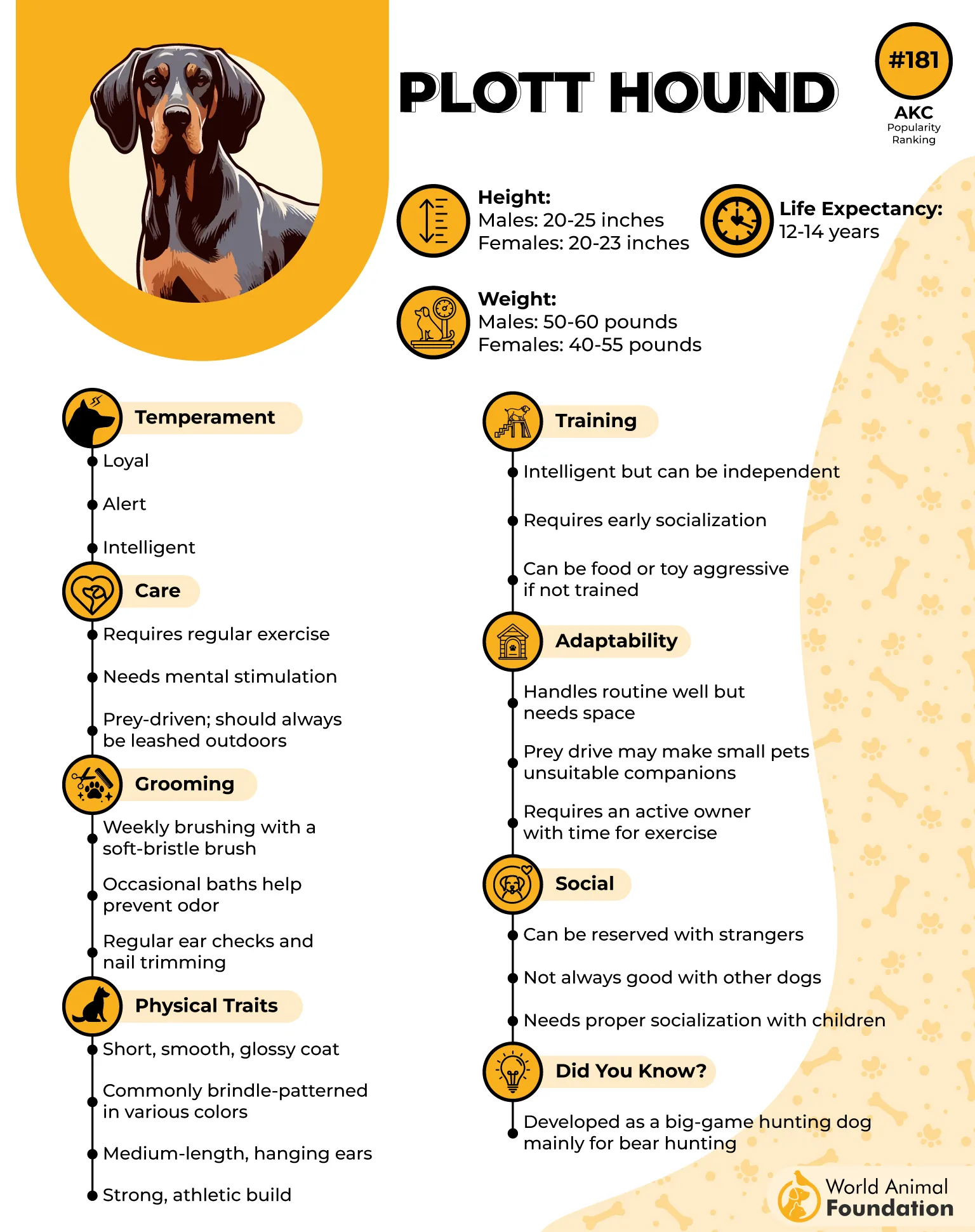
Plott Hound traces its American roots to 1750, when Johannes “George” Plott arrived with five Hanoverian Hounds and bred their descendants in North Carolina’s mountains for seven generations. The breed later took the Plott family name and became North Carolina’s official state dog in 1989.
Following the Cold Trail
Plott Hound has a highly sensitive nose that helps it follow older scent trails through thick brush and rugged mountain country. When a trail grows difficult to follow, it can sweep from side to side to pick up the scent again, then focus intensely on the track.
Its tracking approach comes down to three key details:
A deep, resonant bay helps hunters locate it at a distance.
Brindle markings can break up its outline in woodland surroundings.
A short coat sheds debris and dries relatively quickly after wet hunts.
Independent by Nature
Plott Hound can work alongside other dogs, using vocal signals and body language to coordinate during a hunt, as Showsight Magazine describes.
Its strong focus on scent can make handler cues harder to follow, so training calls for consistency, engaging rewards, and patience with its independent streak.
6. Alpine Dachsbracke
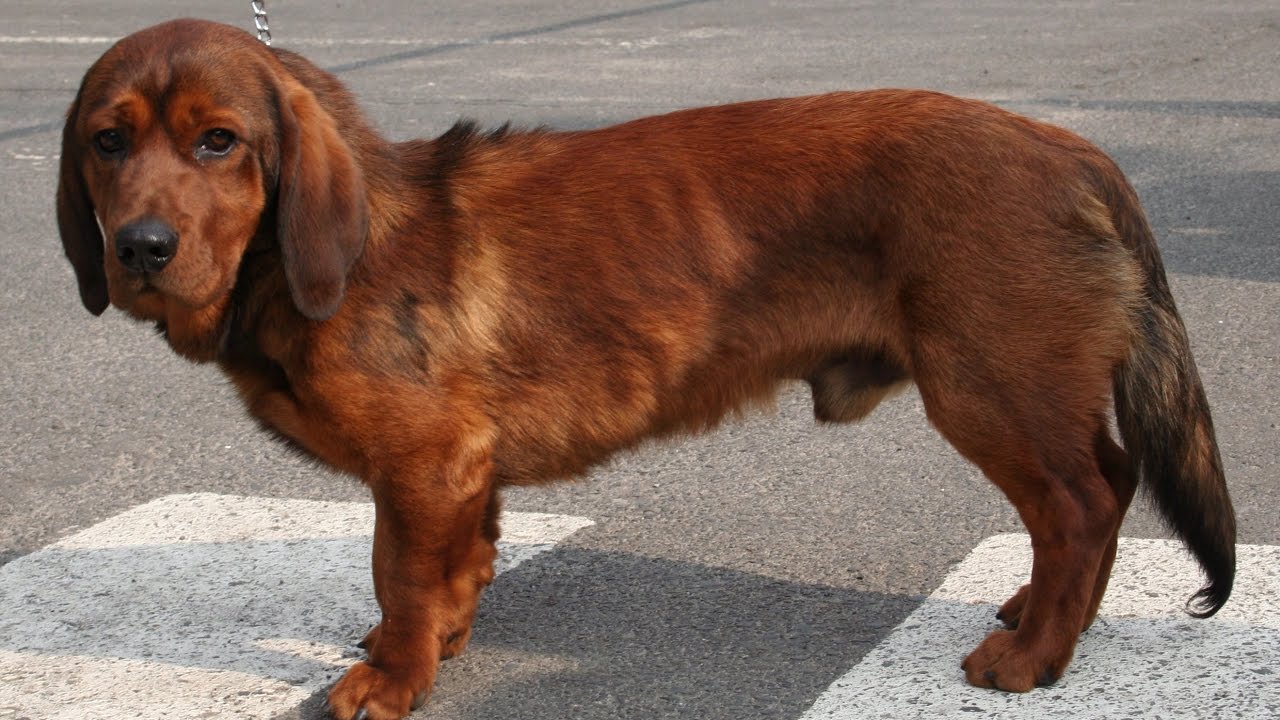
Alpine Dachsbracke originated in Austria and attracted royal attention during the late 1800s, when Crown Prince Rudolf of Habsburg took hunting trips to the Middle East.
His gamekeepers reportedly brought dogs resembling this compact hound on those expeditions, linking the breed to an unusual chapter in European hunting.
Following the Scent
Alpine Dachsbracke was used to track wounded deer and hunt foxes and hares, relying on its nose to follow trails through dense cover and mountainous ground. Its low-set body helps it work close to the scent path, even when an animal’s trail has grown faint.
Its field work depends on three notable qualities:
Persistent tracking when scents grow faint
Methodical searching after losing a trail
Baying that helps hunters follow its progress
Built for Rough Ground
Alpine Dachsbracke has short, sturdy legs and strong bone suited to uneven Alpine terrain, where a steady pace can matter more than a quick sprint. Its weather-resistant double coat also offers protection in cold, damp conditions, while solid feet support long hours on rocky ground.
7. Griffon Nivernais
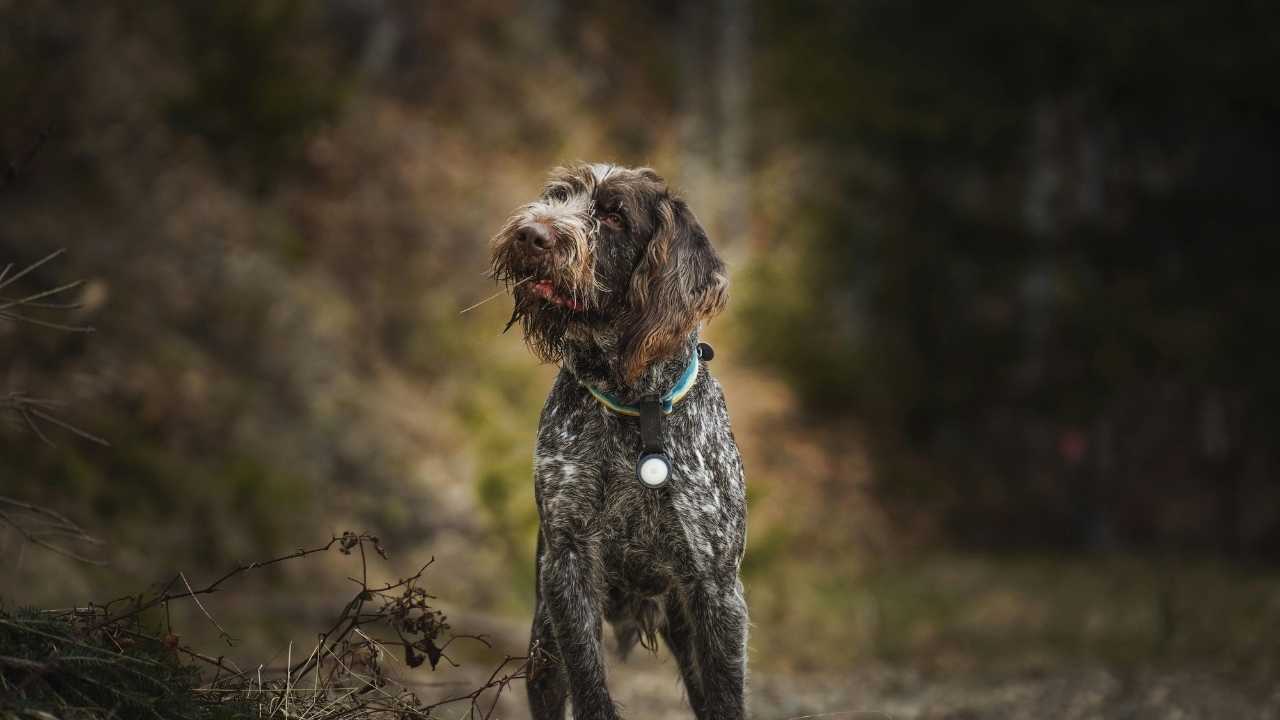
Griffon Nivernais dates back to 13th-century France, where its ancestors hunted wild boars and wolves while helping protect rural properties.
By the 1800s, the breed had nearly disappeared, prompting enthusiasts in the early 20th century to rebuild its numbers using remaining hounds and breeds such as the Otterhound and French Foxhound.
Following the Scent
Griffon Nivernais relies on its keen nose and steady endurance to follow boar trails through dense woodland, where tangled vegetation can make pursuit difficult.
Its coarse, shaggy coat offers some protection from thorny undergrowth, while its stamina suits prolonged hunts across challenging terrain.
This is what makes this breed distinctive from other breeds:
Loud, ringing calls that help hunters follow the trail
Cooperative hunting in small packs
Independent decisions when following scents
A Mind of Its Own
Griffon Nivernais is an intelligent, independent hound that can work through difficult tracking situations without constant direction. That self-reliance can also lead to mischief at home, so consistent handling and clear boundaries are important for managing its determined nature.
8. Segugio Italiano
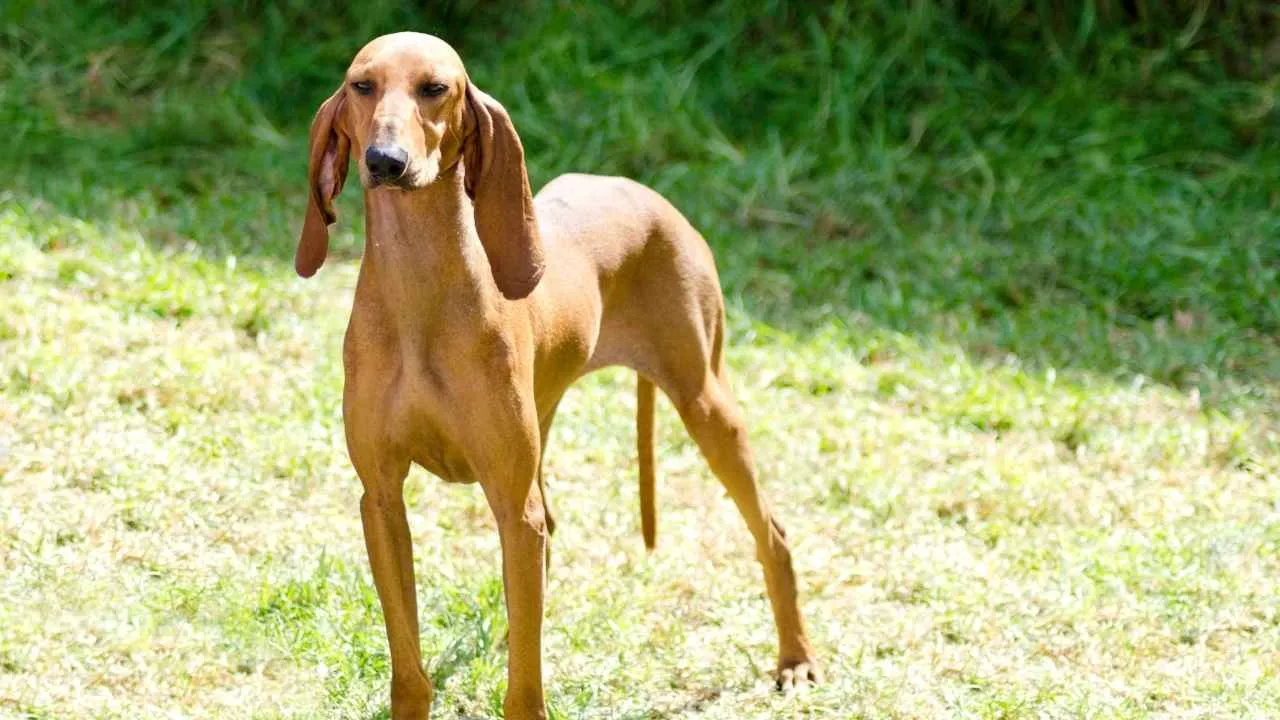
Segugio Italiano has served Italian hunters for thousands of years, initially tracking rabbits and hares across varied terrain before also being used in organized packs to pursue wild boar. Today, it remains a highly popular working breed in Italy, while its numbers are still much smaller in other countries.
Following the Scent
When tracking wild boar, Segugio Italiano relies on its keen nose, keeping its head low and tail raised as it follows a scent across wooded ground and rough terrain.
Its speed and stamina help it pursue a trail over long distances, while its distinctive baying helps hunters follow its progress.
Its approach to hunting is reflected in these points:
Works alone or in hunting groups
Uses resonant baying to signal game location
Tracks through scent rather than relying on physical restraint
Life Beyond the Hunt
Away from hunting work, Segugio Italiano is intelligent, loyal, and generally gentle, with a cautious nature that makes it attentive to unfamiliar activity.
Daily care should include a brisk 30–45-minute walk and additional time for free roaming, with dog sports such as agility or obedience providing further activity.
9. Gascon Saintongeois
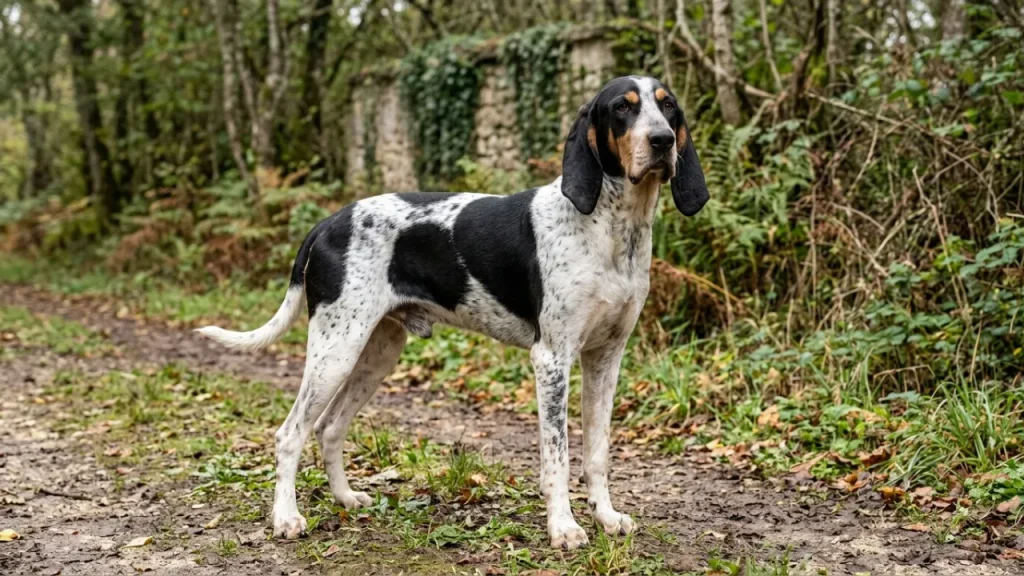
Grand Gascon Saintongeois emerged in mid-19th-century France when Count Joseph de Carayon-Latour crossed the remaining Saintonge hounds with the Bleu de Gascogne to revive the local hunting line. The resulting breed retained the qualities valued in traditional French pack hunting.
Following Faint Trails
Grand Gascon Saintongeois uses its exceptional nose to work out faint, aging scents across wide stretches of land, including dense vegetation where a trail can be difficult to follow. During wild boar hunts, its deep, resonant baying helps handlers follow the hounds through thick cover.
Its fieldwork relies on several specific abilities:
Cold-scent tracking across complex terrain
Wide-ranging, elastic galloping
Instinctive coordination within a pack
A Voice With Purpose
Grand Gascon Saintongeois has a powerful hunting voice that can communicate useful clues about a scent trail, including its age and proximity.
Its calm, affectionate nature at home contrasts with the intense focus it brings to fieldwork, while its very high activity level calls for plenty of room for sustained outdoor pursuits.
Conclusion
Dogs bred to hunt hogs need more than a strong nose. They rely on their sense of smell to cover rough ground, follow fading scents, and stay focused when the trail becomes difficult. Each breed brings a different combination of these qualities, from steady scent tracking to loud baying that improves visibility for hunters following its progress.
Their natural instincts still need proper training and responsible handling, especially when dealing with dangerous wildlife. Anyone interested in these working dogs should also consider their exercise needs and protective behavior at home.
The right environment helps these capable hunters remain effective in the field and put their natural abilities to good use.
