




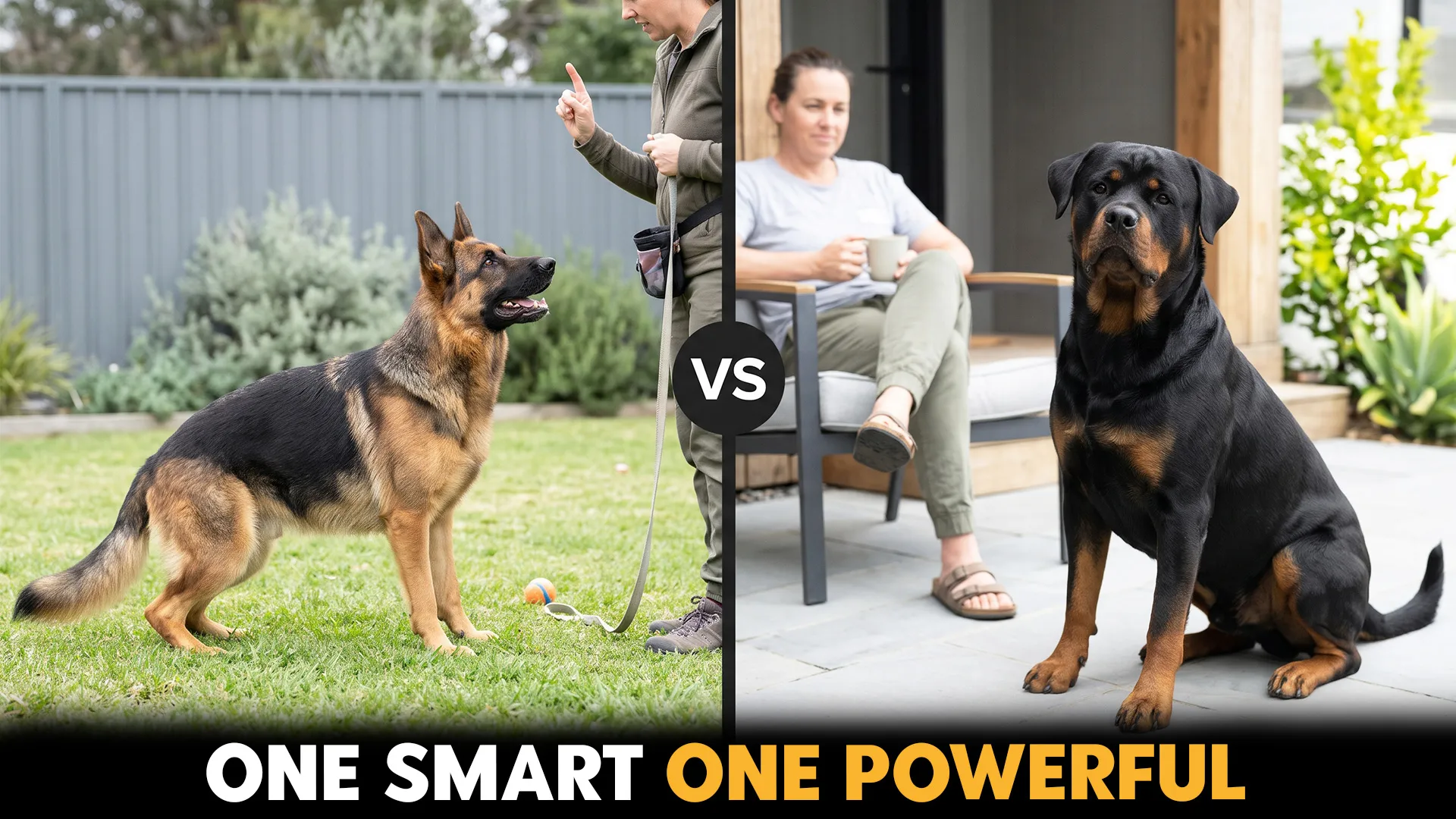
German Shepherds and Rottweilers, both are large dogs known for their intimidating size and strong protective instincts. Both breeds make excellent guard dogs and share a lot of behavioral and physical similarities.
Both German Shepherds and Rotties were bred as working dogs and have an athletic build. When it comes to temperament, both are unwaveringly loyal to their humans and form strong bonds with them.
Having a high work drive and exceptional intelligence, they thrive on regular exercise and mental enrichment. Lack of adequate stimulation can lead to destructive behaviors.
However, there are some key differences that set the two breeds apart. Let’s have a closer look at their distinguishing traits.
German Shepherd vs. Rottweiler: Hidden Compatibility Insights for Dog Lovers
Origins & Purpose
German Shepherds and Rottweilers were both originally bred in Germany as working dogs. However, there are some key differences between the two breeds.
German Shepherds were bred as farm dogs and herding dogs by a German cavalry officer, Max Von Stephanitz in the mid-19th century. He focused on the dogs’ working ability rather than their appearance.
Rottweilers are rugged dogs who were bred as cattle drover dogs and to pull heavy carts for butchers. That is why they are also referred to as ‘butcher’s dogs.’ Later, people started using Rotties for other purposes as well, such as for police work and as therapy dogs.
Size & Build
Both German Shepherds and Rottweilers are athletic and muscular dogs. However, there are some key differences between the two breeds.
German Shepherds stand 22 to 26 inches tall at the shoulders and weigh between 50 and 90 pounds. Females tend to be smaller than males.
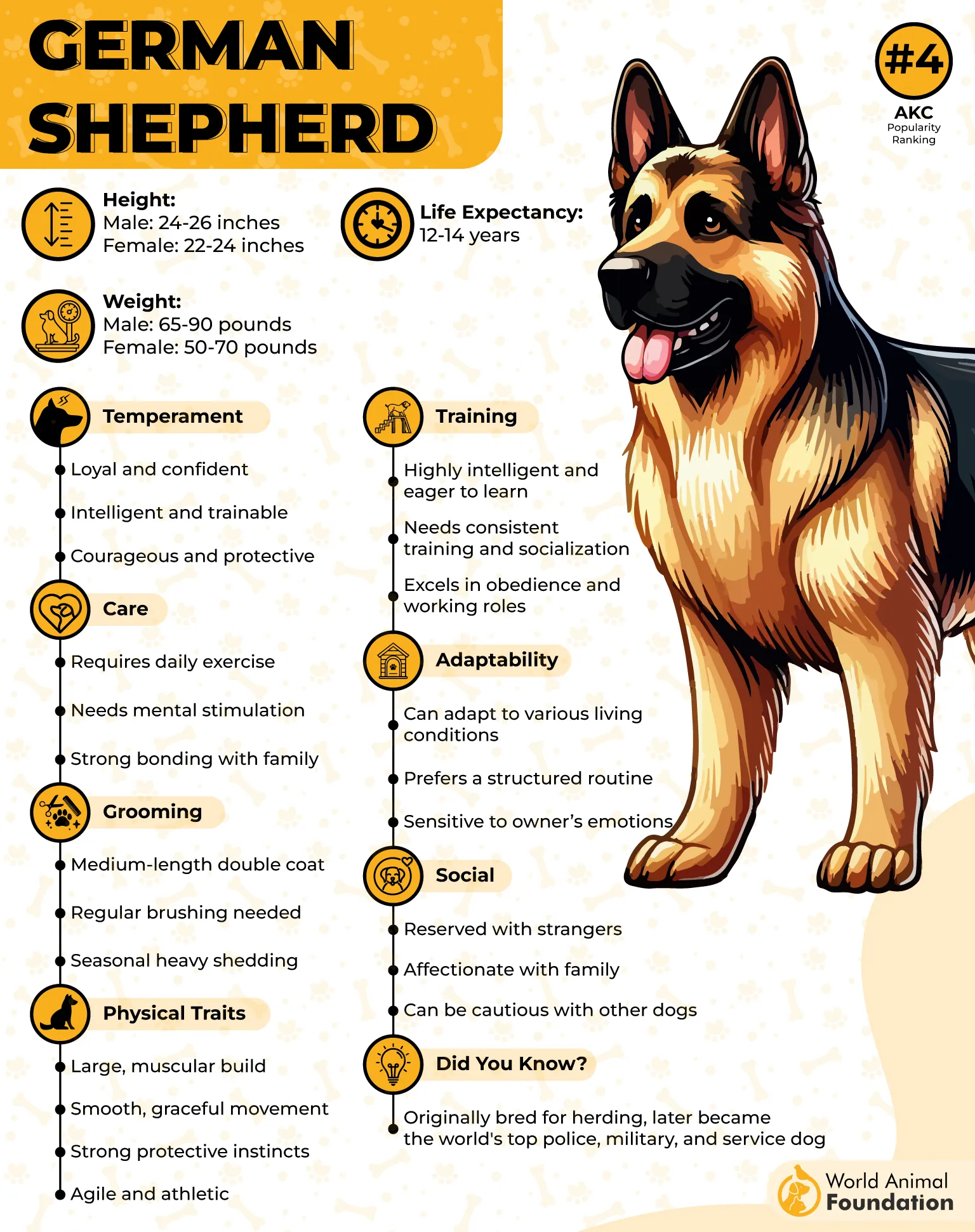
An extended muzzle and erect ears are the traits that help you distinguish German Shepherds from other breeds. Their smooth and graceful curves are reflective of their athleticism, flexibility, and strength.
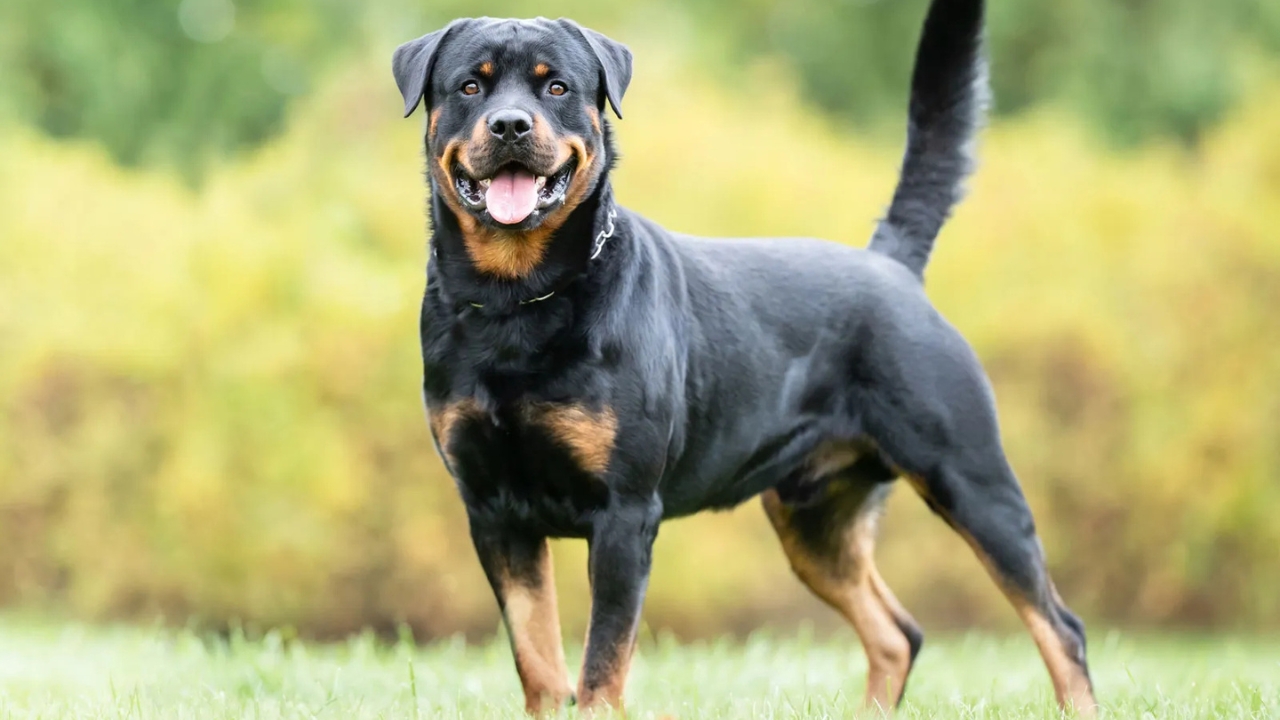
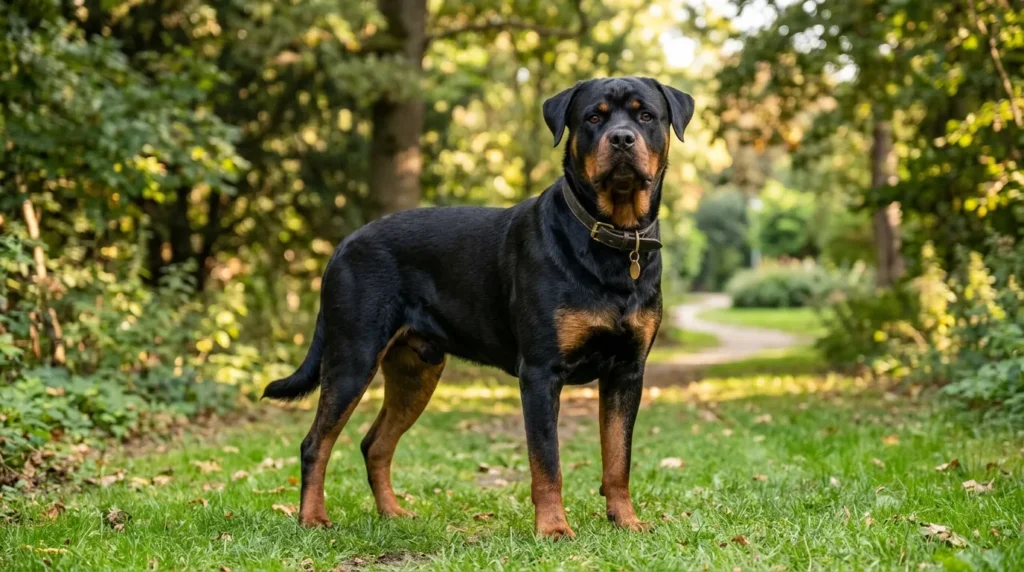
Rottweilers tend to be heavier and stockier than German Shepherds. They stand 22 to 27 inches tall at the shoulders and weigh between 80 and 135 pounds, according to the American Kennel Club.
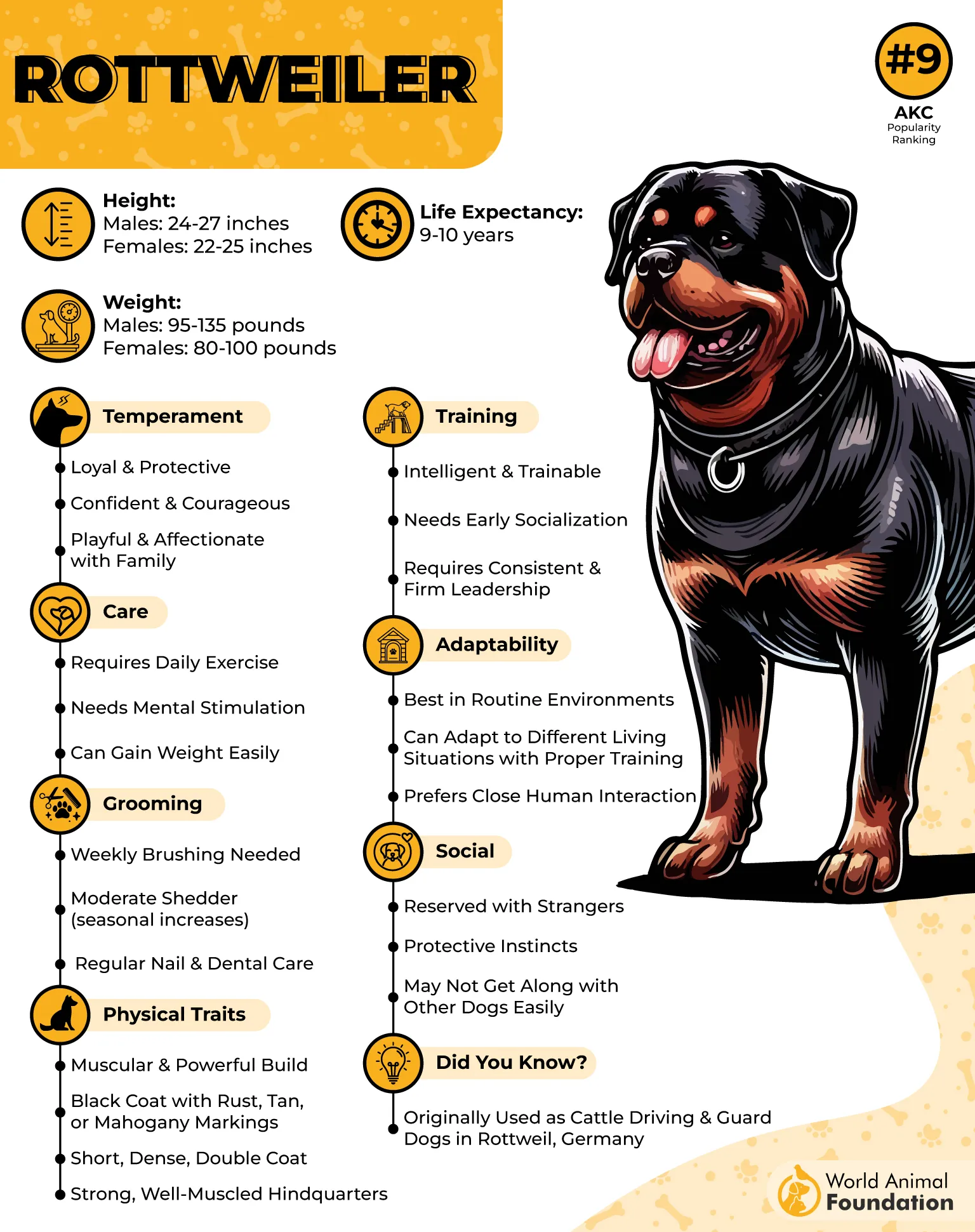
Females are smaller than males. Their thickly muscled legs and effortless trotting gait reflect their endurance and athleticism.
Pricing & Availability
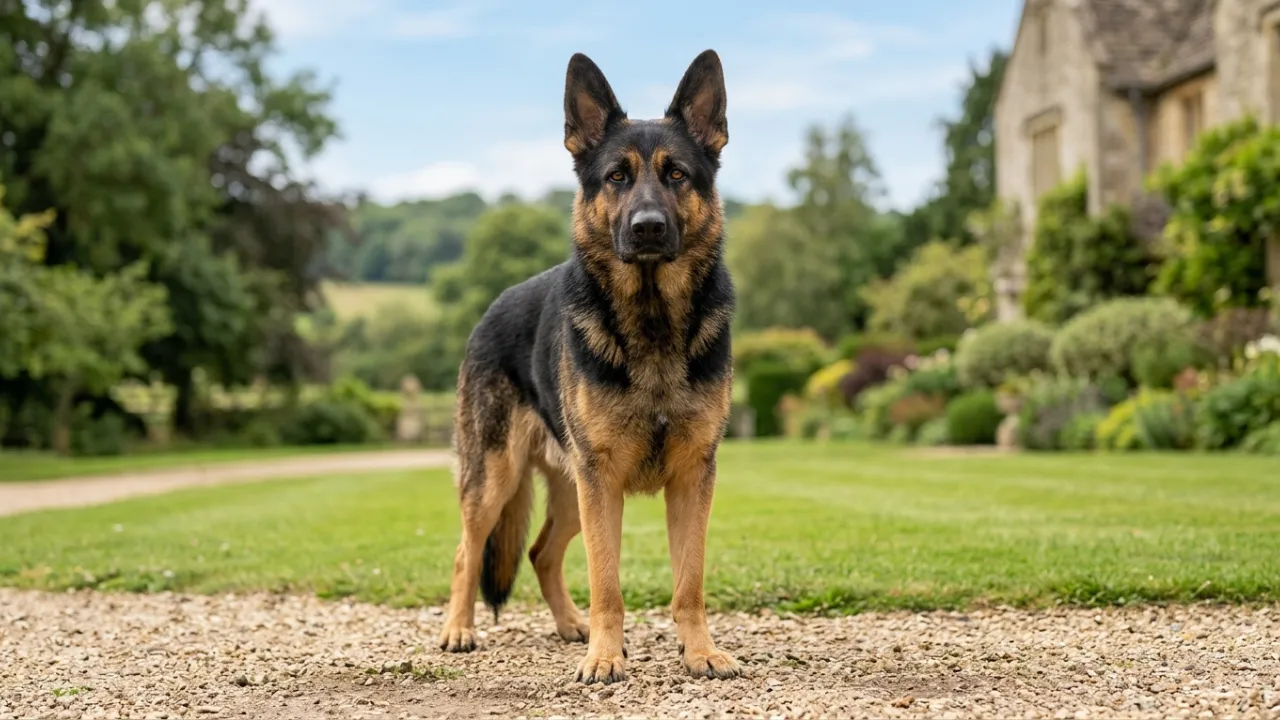
German Shepherds and Rottweilers, both are quite popular all around the world. However, GSDs steal the spotlight.
Purebred German Shepherd puppies may cost you somewhere between $800 and $4000. You can save some bucks by adopting GSDs from a nearby shelter home instead of a reputable breeder.
Purchasing Rottweiler puppies from a reputable breeder may cost you around $1,500 to $4,000. You can also consider adopting a Rottie from a nearby shelter home.
Temperament & Personality
Thanks to their similar working roles in history, GSDs and Rottweilers share many behavioral traits. But some main differences set them apart.
German Shepherds are immensely loyal and affectionate dogs. They are highly alert to their surroundings and tend to be gentle around their family members. Well-trained and properly socialized GSDs behave well with children and make loving family pets.
However, they are reserved towards strangers and do not like them entering their territory. PetPlan mentions that they love spending time with their pet parents and may struggle with separation anxiety.
Rottweilers are often perceived as aggressive dogs due to their role in protection work. However, they are loyal, affectionate, and playful towards their loved ones. Rotties are often gentle with kids and make wonderful family dogs.
Like GSDs, they also possess strong protective instincts. Despite their large size, Rottweilers are calm and quiet dogs. PetMD mentions that they follow their pet parents around the house and desire close companionship.
Exercise Needs & Energy Level
German Shepherds and Rottweilers, both are very active and high-energy dogs that require regular exercise for physical and mental enrichment. However, GSDs require more activity to keep their minds and bodies fit.
German Shepherds are highly alert dogs. They require one to two hours of daily exercise for physical and mental stimulation. This can include all sorts of high-energy activities like walking, running, and playing.
Various canine sports like agility training, dock diving, tracking, and herding are also a good way to exercise GSDs.
Rottweilers are relatively more easygoing and calm at home. They require at least one hour of daily exercise for physical and mental stimulation. Exercise can be offered in the form of dog sports, playtime in the backyard, hikes, and neighborhood walks.
Lack of adequate physical activity and mental enrichment can lead to behavioral problems in both breeds.
Trainability & Obedience
Both German Shepherds and Rottweilers are very intelligent, highly trainable, and smart breeds. However, GSDs outshine Rotties in intelligence and trainability.
Ranking third on the AKC’s list of canine intelligence, German Shepherds are quick learners. Their ability to understand and follow complex commands enables them to excel at obedience training. They respond best to positive reinforcement techniques.
Rottweilers are also very smart dogs. They rank ninth on the American Kennel Club’s list of the smartest dog breeds. Like GSDs, they also learn quickly and are highly obedient. However, they are more confident and require consistent learning.
They can be stubborn at times and have a stubborn streak. However, they respond best to positive reinforcement-based training.
Note: Proper training and early socialization are important to ensure balanced behavior in your dog.
Grooming Needs & Shedding
German Shepherds and Rottweilers have a double coat that provides them protection from harsh elements and keeps them warm in winters.
GSDs have a medium-length coat that comprises a soft undercoat and a rough and heavy outer coat. They shed a lot and need lots of grooming.
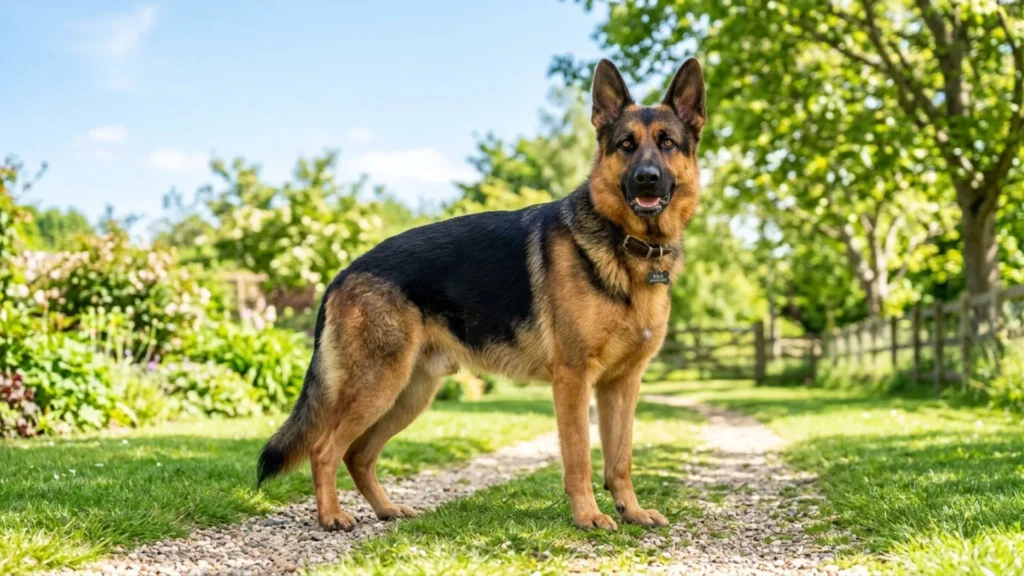
Brush your GSD’s coat every day with a pin brush. It helps you manage the amount of hair that ends up on your floor and furniture.
Rottweilers can be instantly recognized through their signature black and tan coats. They have a short and smooth coat that sheds a lot. Their low-maintenance coats need weekly brushing (sometimes daily) to manage shedding and look good.
Guarding Instincts & Alertness
Since both breeds were used for herding, they have instincts to protect their loved ones and their territory.
German Shepherds are courageous dogs with exceptional problem-solving skills. Their innate abilities combined with their agility, intelligence, and physical prowess make them perfect for protection work.
Thanks to their unwavering loyalty, they can willingly sacrifice their lives while protecting their humans. GSDs have been serving as guard dogs, police dogs, military dogs, and search-and-rescue dogs for several decades.
Rottweilers’ intimidating appearance acts as the first line of defense against potential intruders. Their strength, bravery, and trainability enable them to excel as guard dogs.
Rotties combine calmness with a sharp sense of vigilance. In addition to being protection dogs, Rottweilers are also great at police work.
Health & Lifespan
German Shepherds and Rottweilers are healthy breeds, but may be prone to certain health issues during their lives.
German Shepherds have an average life expectancy of 12 to 14 years. They may experience health issues like elbow and hip dysplasia, degenerative myelopathy, cancer, bloat and GDV, allergies, and heart disease in their life.
Having a lifespan of 9 to 10 years, Rottweilers are shorter-lived than GSDs. During their life, they may suffer from hip and elbow dysplasia, obesity, osteosarcoma, cranial cruciate ligament rupture, GDV, entropion, and subaortic stenosis.
Regular vet checkups are important to keep the breed healthy. Also consider investing in pet insurance.
German Shepherd vs. Rottweiler: Which Loyal Guardian Should You Choose?
Both Rottweilers and German Shepherds are active, intelligent, and athletic dogs. They are better suited for experienced owners. Pet parents who can provide their dogs with regular physical and mental stimulation and know how to handle a big dog should consider adopting these breeds.
Rottweiler vs. German Shepherd: the final choice depends on your personal preference. If you are looking for an alert and active guard dog, a GSD may be a better option. On the other hand, Rotties are a good choice for individuals who want a protection dog.
Conclusion
German Shepherds and Rottweilers were both originally bred for versatile working roles in Germany. Both breeds are large, but Rotties are stockier than GSDs and can be easily distinguished from other breeds due to their black and tan coats.
Both breeds are valued for their strong protective instincts. However, German Shepherds are alert guardians, while Rotties make calm guard dogs. With proper training and early socialization, both make wonderful family pets.
