




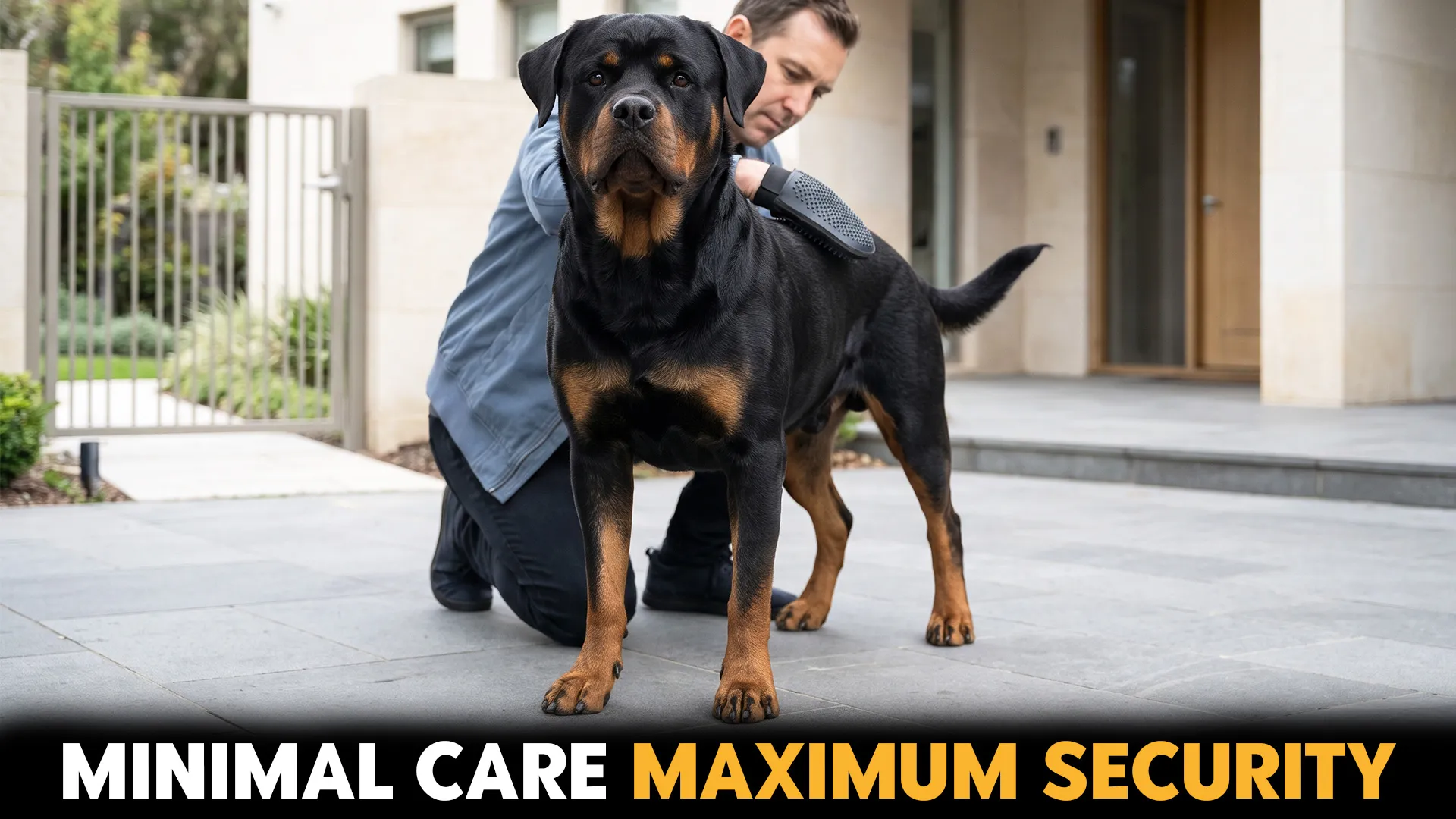
A good guard dog doesn’t have to bark at every little sound or act tough around everyone. Sometimes, the best protector is the one who stays calm, notices when something feels unusual, and makes you feel safer just by being nearby.
If you want a dog that can help protect your home without demanding hours of grooming, there are breeds that offer a lovely balance of alertness, loyalty, and companionship.
Of course, keeping your dog’s coat care simple doesn’t mean skipping other responsibilities. Minimal-grooming dogs may need less brushing, trimming, or professional grooming, but they still need proper training, daily activity, socialization, and regular health care.
The good news? With the right breed, you can enjoy a protective companion without making coat maintenance another full-time job.
So, which dogs offer dependable companionship, a natural protective instinct, and an easier grooming routine? Let’s explore seven of the best dog breeds that can help you feel secure while making everyday life a little easier.
Minimal Grooming Guard Dog Breeds That Keep You Secure
1. Cane Corso
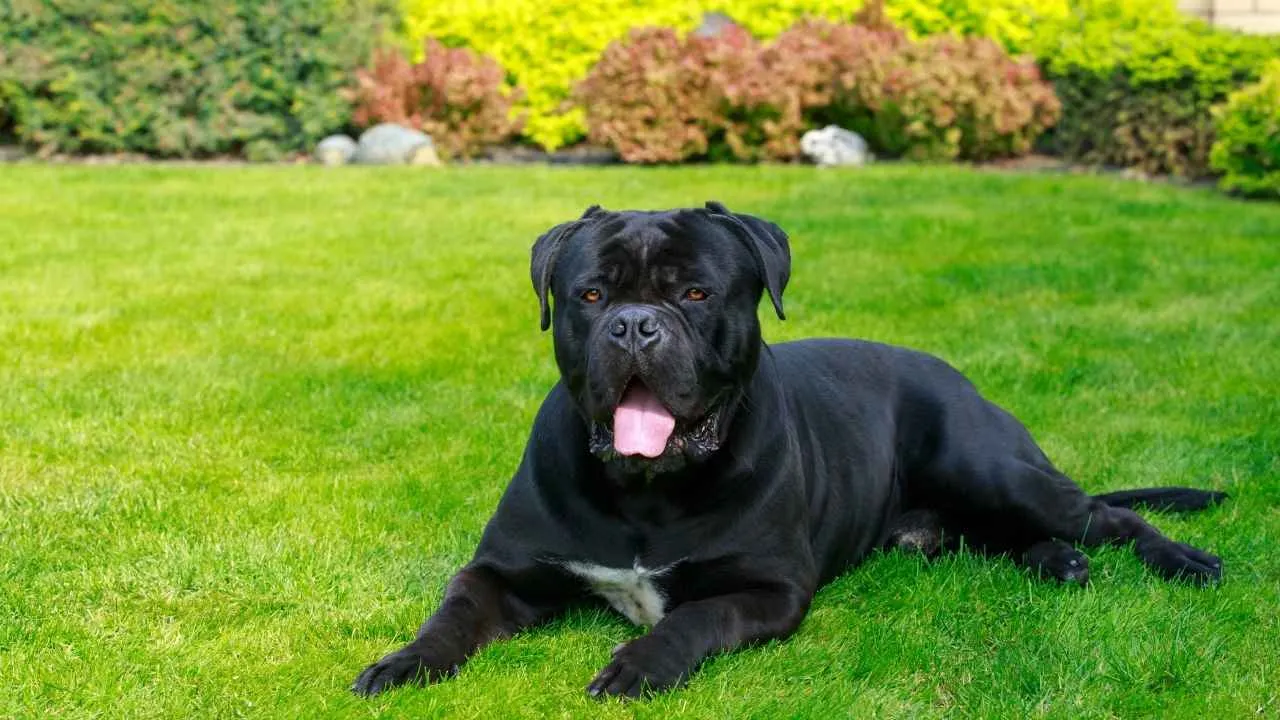
Cane Corsos, also known as Italian Mastiffs, are intelligent, loyal working dogs with a strong protective instinct. Their history dates back to ancient Greece and Rome, where their ancestors served as guardians and working dogs.
According to PetMD, their name roughly translates to “guard dog of the courtyard.” Today, they remain devoted companions with an alert and confident nature.
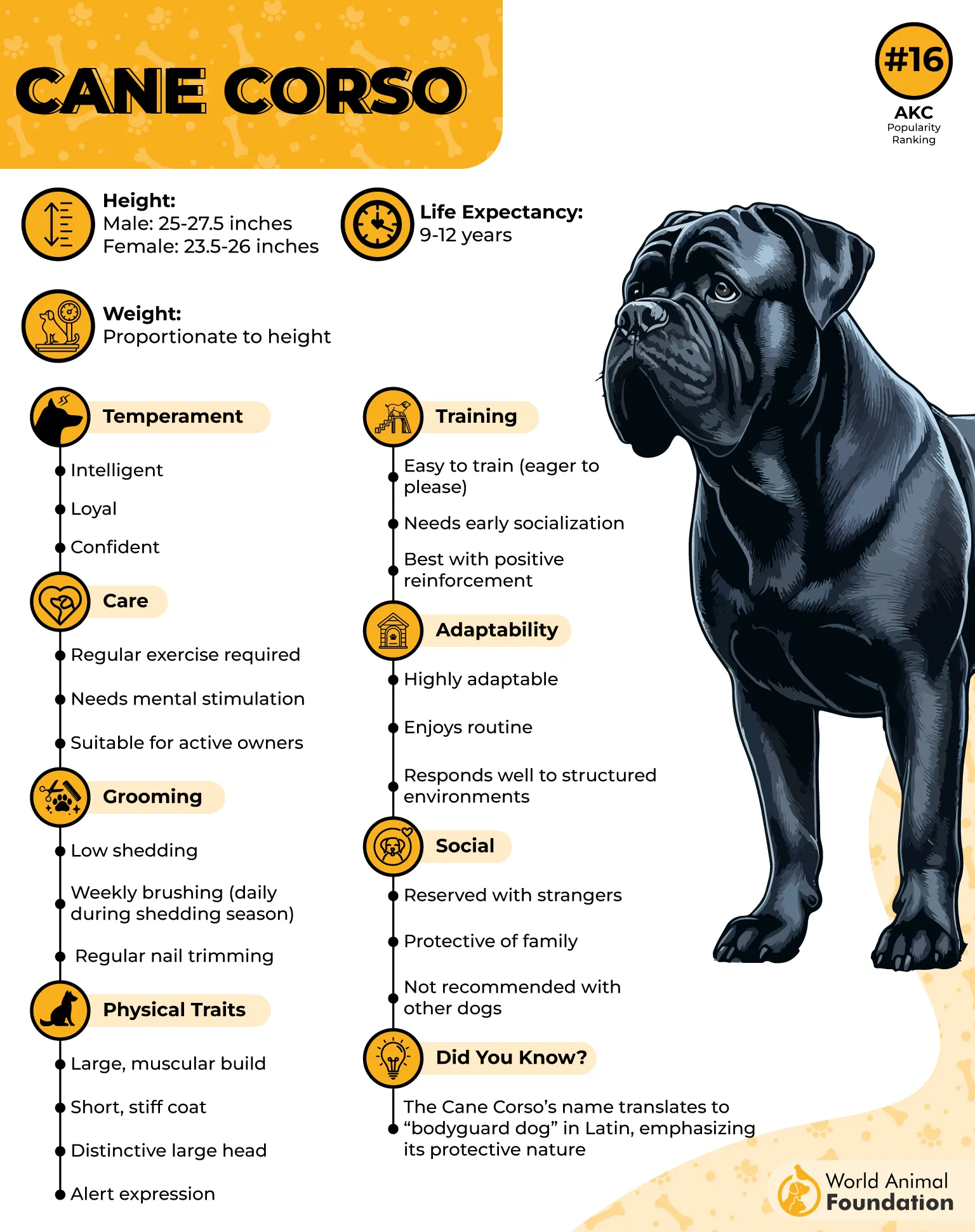
Their muscular build, large head, and watchful expression give Cane Corsos an imposing appearance. They are eager to please and quick to learn, but they can also be strong-willed.
These dogs need early socialization, consistent training, and plenty of daily exercise. They are best suited to experienced owners who can guide them confidently.
Grooming and Care
Coat care: Their short, smooth, double-layered coats need little grooming. However, they shed moderately throughout the year, especially in spring.
Skin care: Occasional baths are usually enough. Clean their skin wrinkles when needed to keep them free of dirt.
Health and lifespan: Cane Corsos typically live 9–12 years. They can be prone to obesity, hip and elbow dysplasia, epilepsy, and bloat. They generally handle warmer climates well.
2. Rottweiler
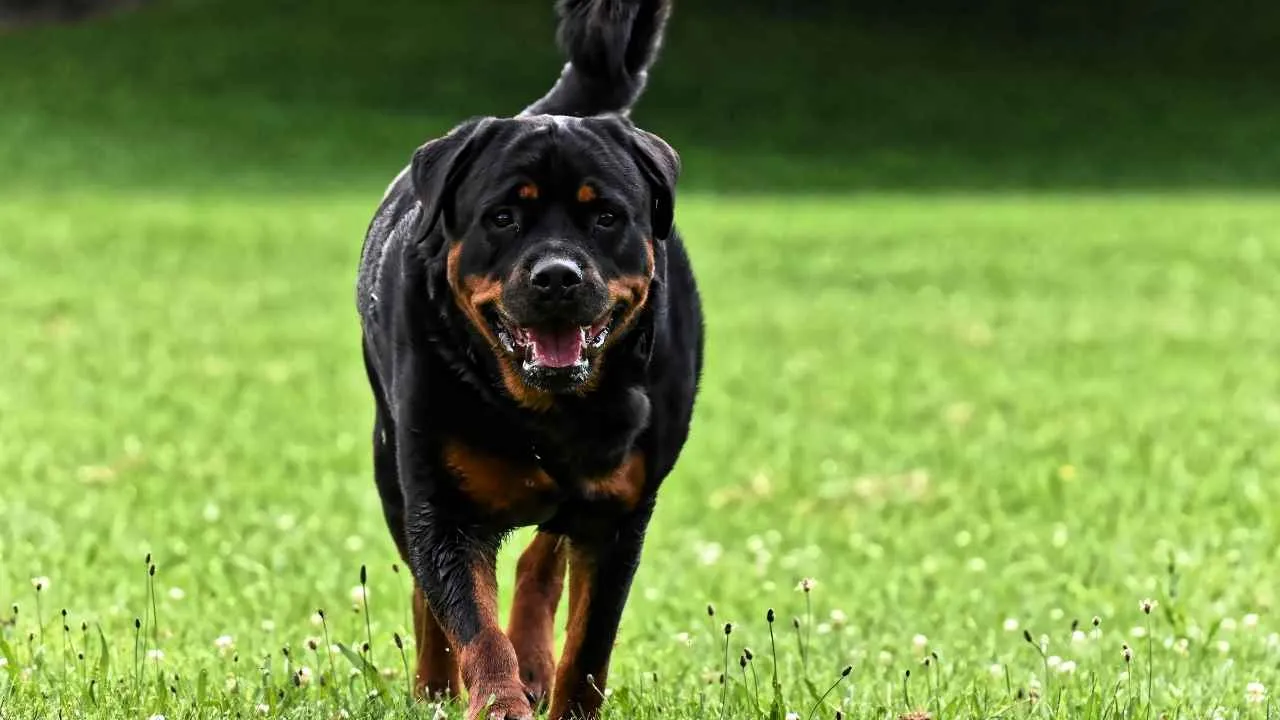
Rottweilers are powerful working dogs descended from the mastiffs of ancient Rome. They were bred to drive livestock, pull carts, and protect their owners from robbers.
These duties shaped their strength, courage, intelligence, and willingness to work. Today, they remain devoted family companions with an instinct to guard their homes.
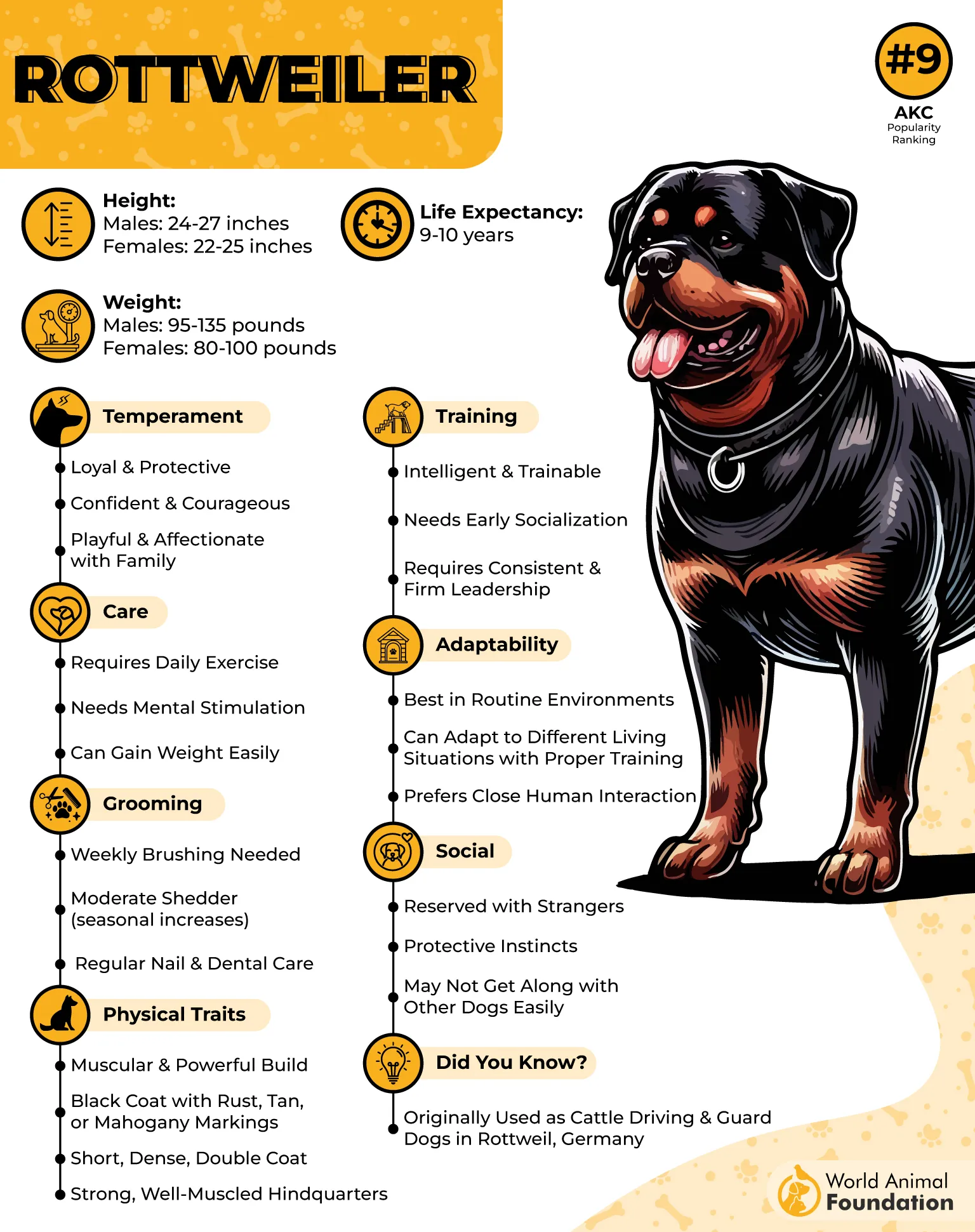
Despite their imposing appearance, Rottweilers can be affectionate, playful, and gentle with their families. They are usually calm and confident, and they are not known for excessive barking. However, they can be stubborn and destructive when young.
Early training, socialization, and positive reinforcement help them develop good manners. They also need at least 60 minutes of daily exercise and mental stimulation.
Grooming and Care
Coat care: Their short, black-and-tan coats are easy to maintain, but they shed heavily throughout the year. Weekly or daily brushing can help manage loose hair.
Skin care: Occasional baths are usually enough. Check their skin for any unusual changes and consult a vet if you notice concerns.
Health and companionship: Rottweilers typically live 9–10 years. They thrive on close companionship and may develop unwanted behaviors if left alone for long periods.
3. Doberman Pinscher
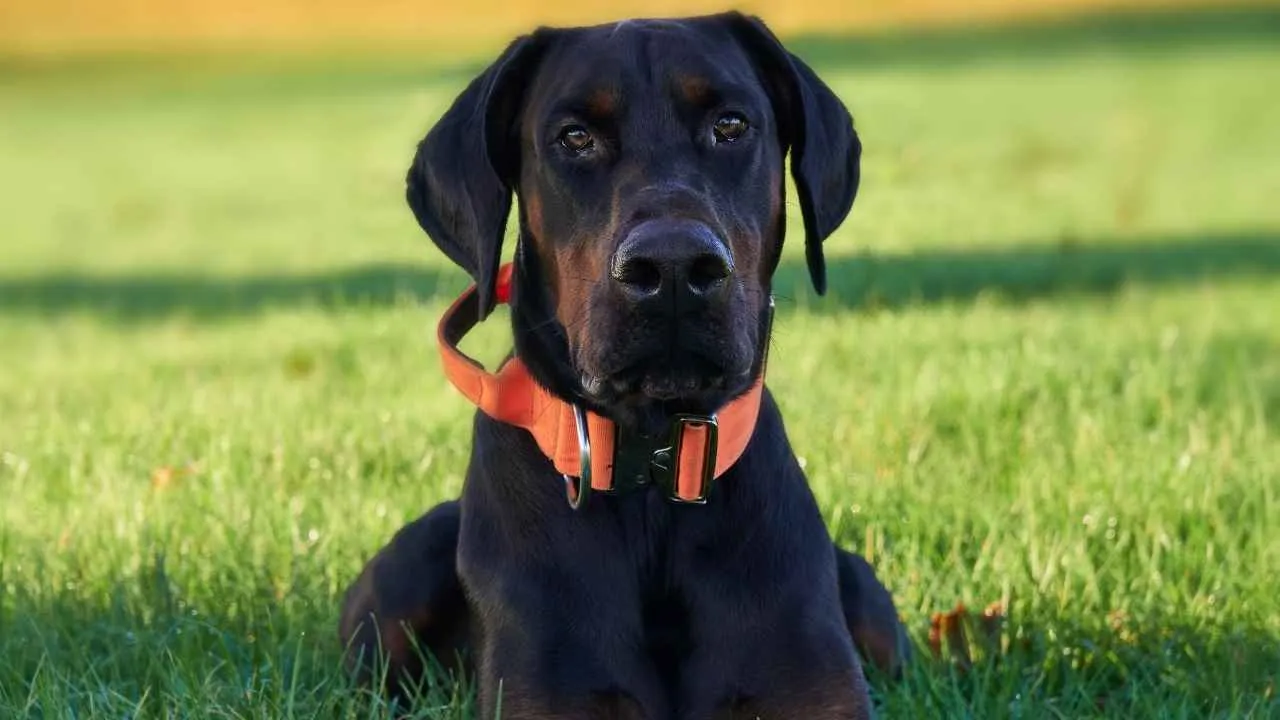
Doberman Pinschers were developed in Germany in the late 1800s by Louis Dobermann, a tax collector who wanted a reliable guard dog and companion. The breed is known for its intelligence, speed, and alert nature.
Today, Dobermans serve in security, police work, and search-and-rescue roles. They can also become devoted family companions.
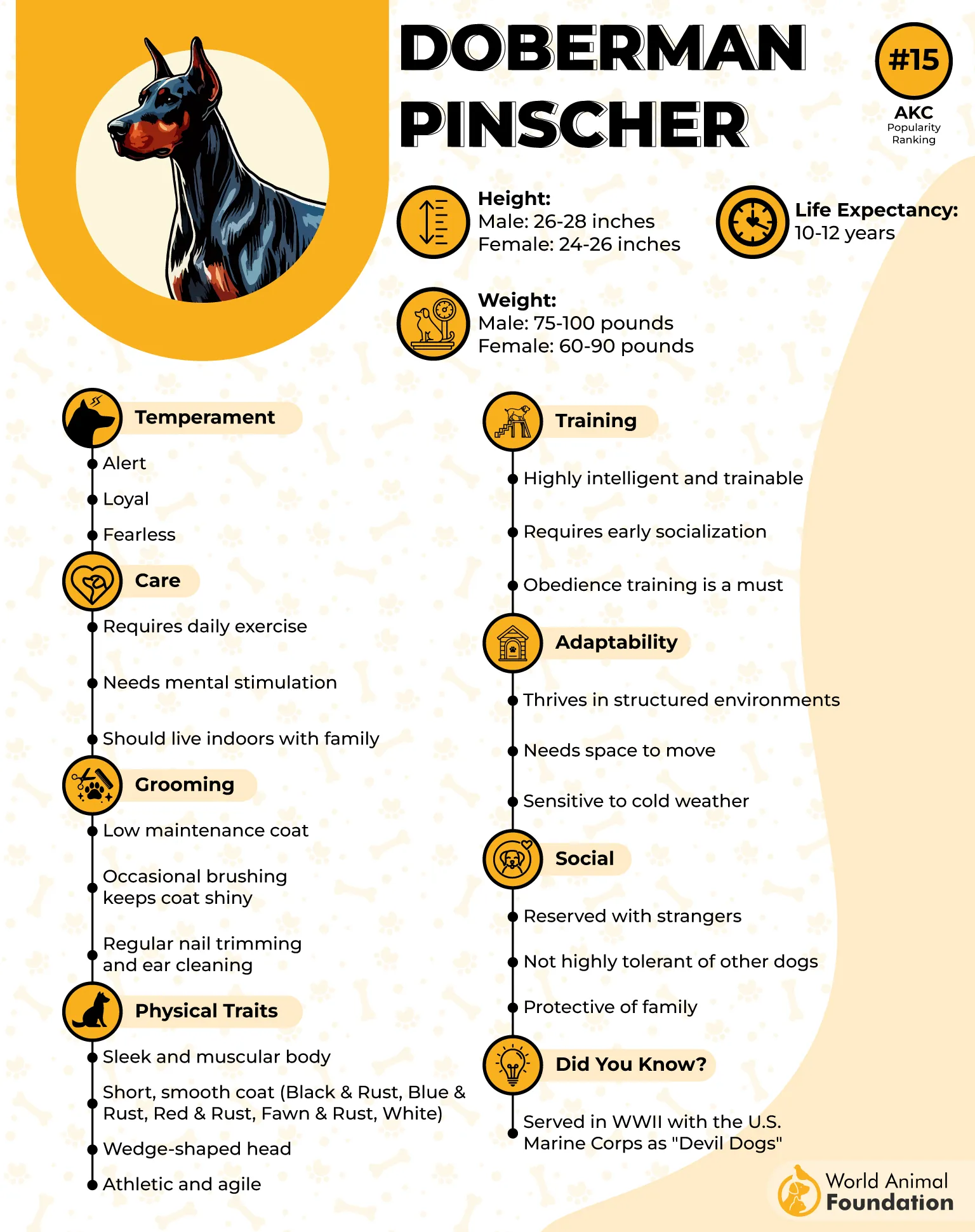
These dogs are fearless, protective, and deeply attached to their owners, as noted by the AKC. Their strong loyalty can make them wary of strangers, so early socialization and consistent training are important. Dobermans are energetic and need plenty of daily exercise and mental stimulation.
They are best suited to experienced owners who can keep them active and engaged. Their strong prey drive may also make them less suitable for homes with small animals.
Grooming and Care
Coat care: Their short, smooth coats are easy to maintain, but they shed moderately to heavily. Brushing several times a week can help control loose hair.
Skin care: Their skin needs little upkeep. Monthly or occasional baths are usually enough, but consult a vet if you notice unusual skin changes.
Nail care: Trim their nails about once a month, or when they become too long.
4. Bullmastiff
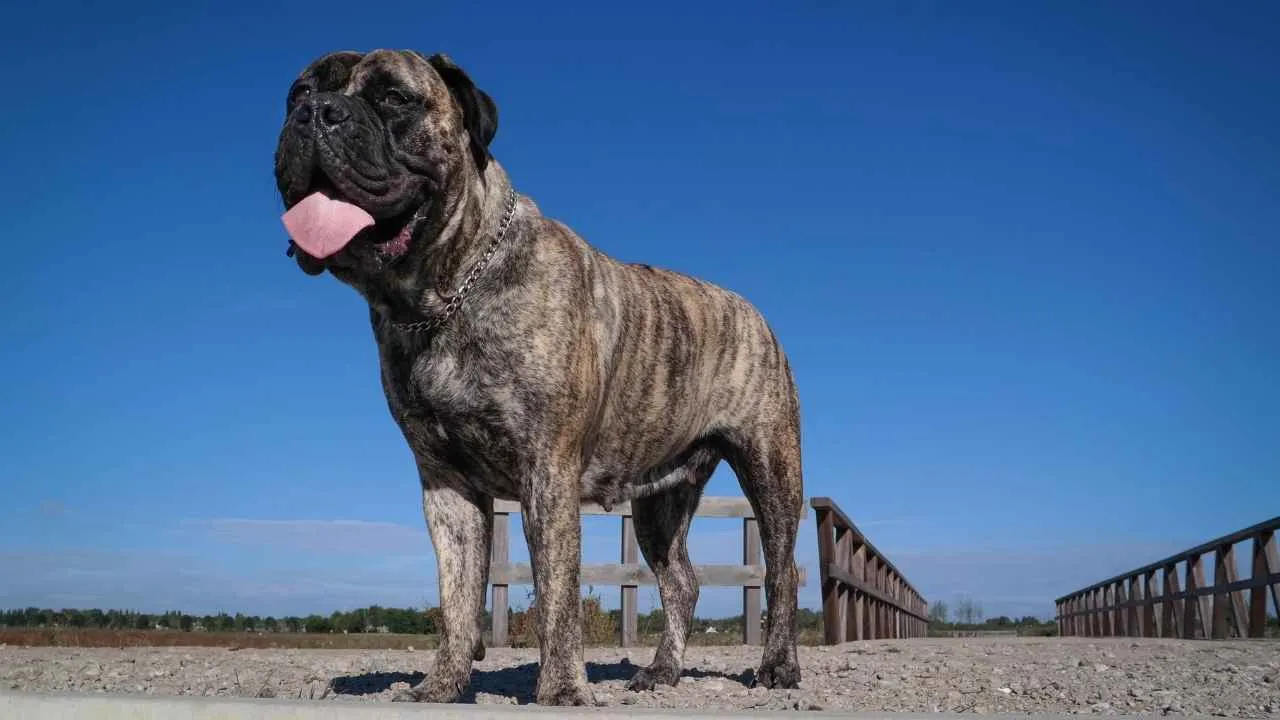
Bullmastiffs were developed in 19th-century England by crossing Bulldogs with Mastiffs. Gamekeepers bred them to guard estates and catch poachers. Today, these powerful dogs remain dependable protectors and affectionate family companions.
Their broad heads, muscular bodies, and confident expressions give them a strong presence, even when they are simply relaxing at home.
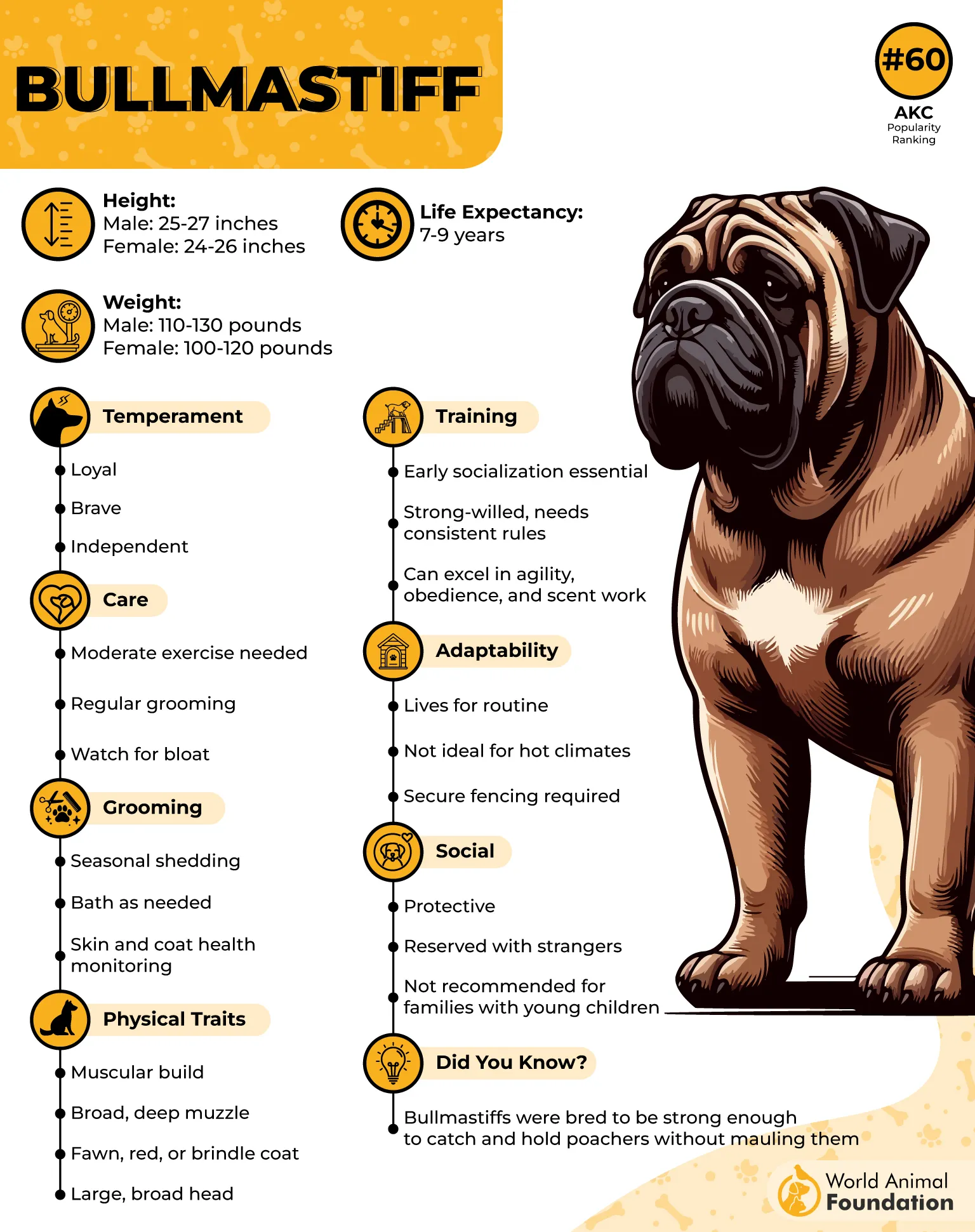
Despite their size, Bullmastiffs are usually calm, docile, and loving with their families. They tend to bark less and enjoy staying close to their people. However, they may be wary of strangers and need early training and socialization.
Daily walks and playtime help keep them active, but they are not suited to long-distance running. Supervise them around small children and animals because their size can lead to accidental knocks.
Grooming and Care
Coat care: Their short, dense coats come in fawn, red, or brindle. Monthly brushing helps manage seasonal shedding, and professional grooming is rarely needed.
Bathing and skin care: Occasional baths are usually enough. Their droopy jowls may need daily wiping to remove excess drool and food.
Health and exercise: Bullmastiffs need daily walks and a balanced diet to help prevent obesity and joint strain. Their short snouts can also make them prone to breathing problems.
5. Rhodesian Ridgeback
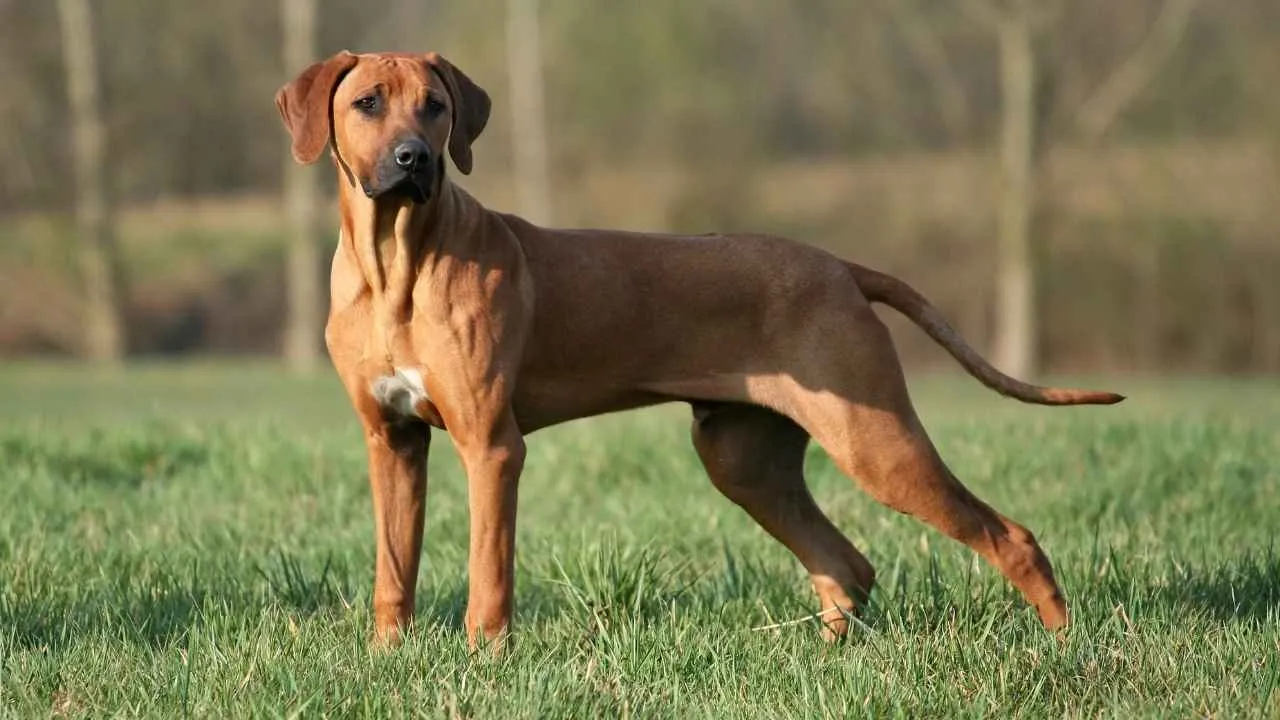
Rhodesian Ridgebacks, also known as African Lion Hounds, were bred in Africa to track and pursue large predators, including lions.
Their most distinctive feature is the ridge of hair along their backs that grows in the opposite direction from the rest of their coat. These muscular, athletic dogs are intelligent hunters with an instinct to protect their families.
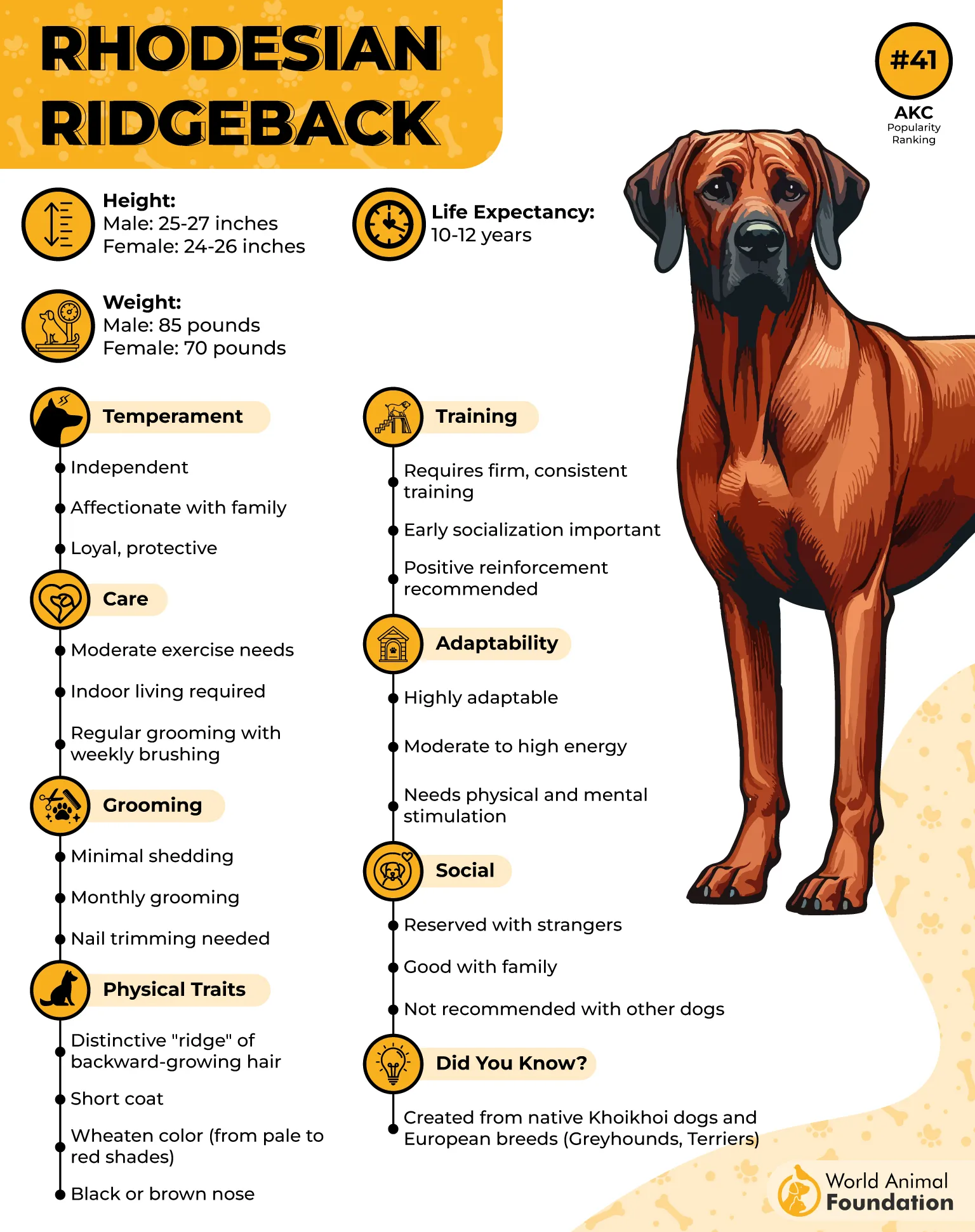
Rhodesian Ridgebacks are loyal and affectionate with their loved ones but tend to be reserved around strangers. Early socialization and firm, consistent, reward-based training help manage their strong prey drive and independent nature.
Grooming and Care
Coat care: Their short, wheaten-colored coats need little maintenance. Weekly brushing helps manage moderate shedding, whether they have the characteristic ridge or not.
Bathing and skin care: Monthly baths usually keep their coats clean and glossy. Dog-safe shampoo is suitable, while sensitive-skin formulas may help when needed.
Exercise and enrichment: They are energetic dogs that need at least 45 minutes of daily exercise, plus mental stimulation and engaging activities like running, hiking, tracking, and agility.
6. Boxer
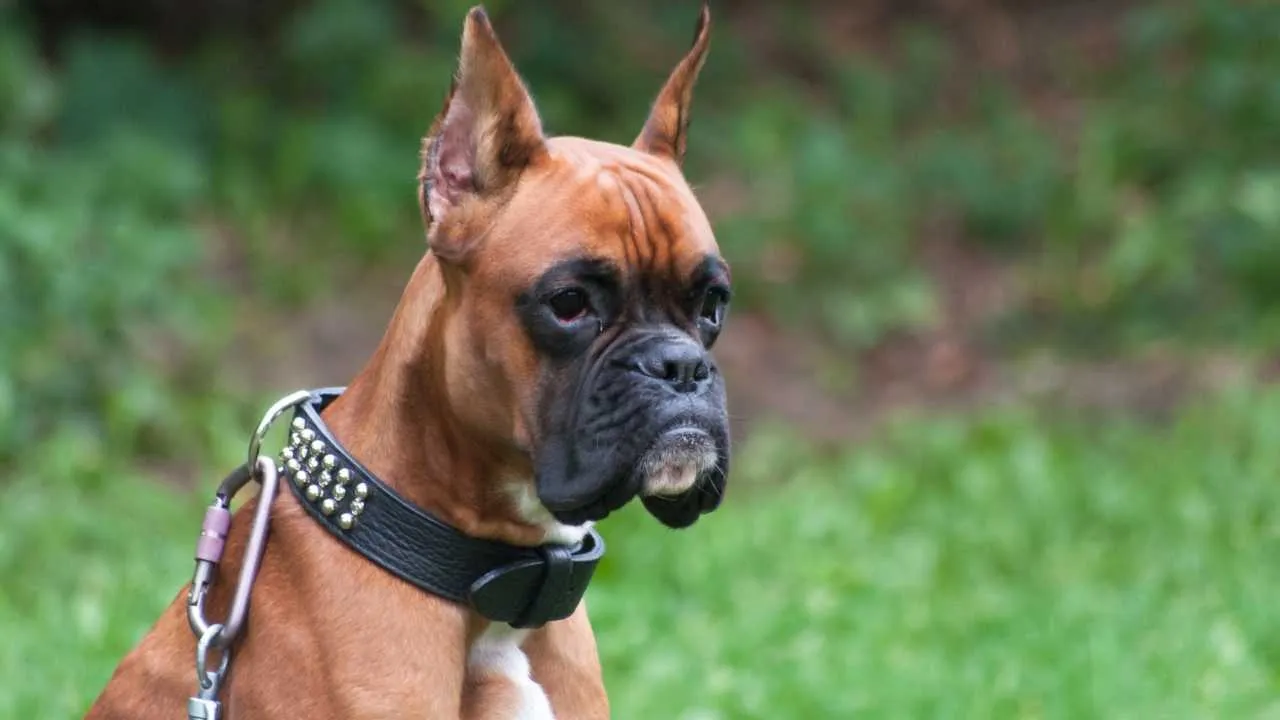
Boxers were developed in Germany and later became popular in the United States during the 1930s. Originally used for hunting, these muscular dogs are known for their athletic build, smooth coats, and alert expressions.
They make excellent watchdogs and protection dogs, usually barking when they sense a reason to do so. Their intelligence also makes them suitable for service work.
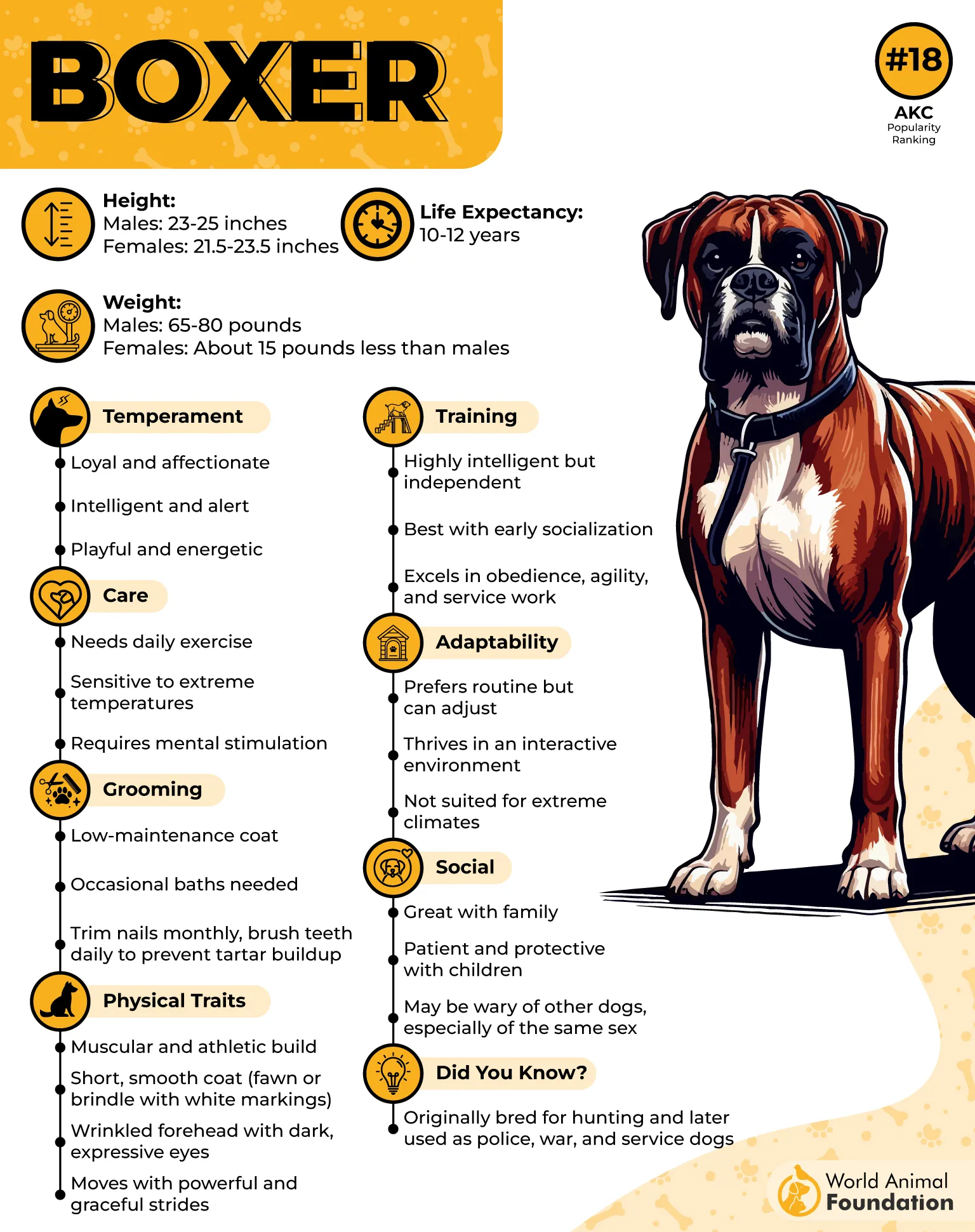
Despite their serious appearance, Boxers are playful, affectionate, and deeply devoted to their families. They learn quickly but can sometimes be stubborn and boisterous.
Early training and socialization help them behave well around people and other animals. Their lively nature can be overwhelming for very young children or older individuals, as mentioned by Britannica.
Grooming and Care
Coat care: Boxers have short, smooth coats that shed moderately. Weekly brushing helps remove loose hair and keep their coats healthy.
Bathing and skin care: Monthly baths are usually enough, or less often if they stay clean. They need no special skin treatments, but consult a vet if you notice skin changes.
Exercise and activity: Boxers need around 30 minutes to two hours of daily exercise. Walks, playtime, agility, and other dog sports help keep their energetic minds and bodies engaged.
7. Dogo Argentino
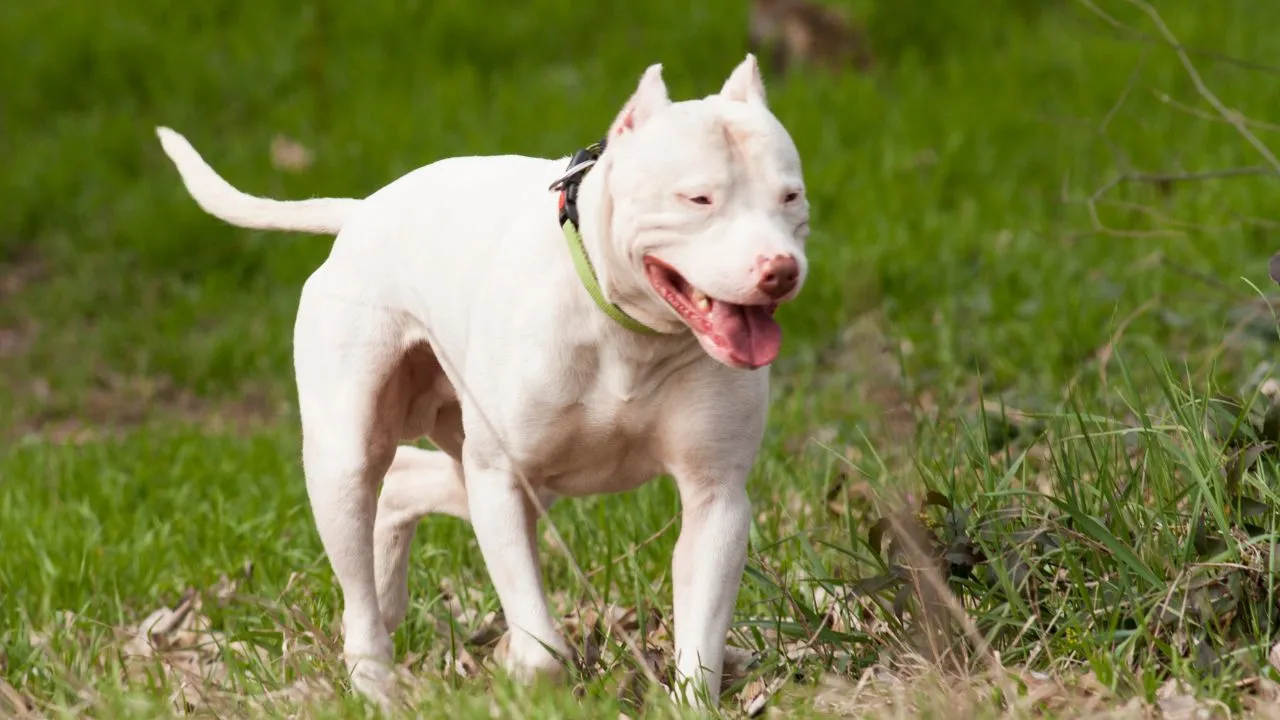
Dogo Argentinos were developed in Argentina by Dr. Antonio Nores Martinez for big-game hunting. These muscular, athletic dogs are known for their speed, strength, intelligence, and determination.
Their short, smooth, white coats give them a distinctive appearance, while their alert nature and protective instincts make them devoted guardians.
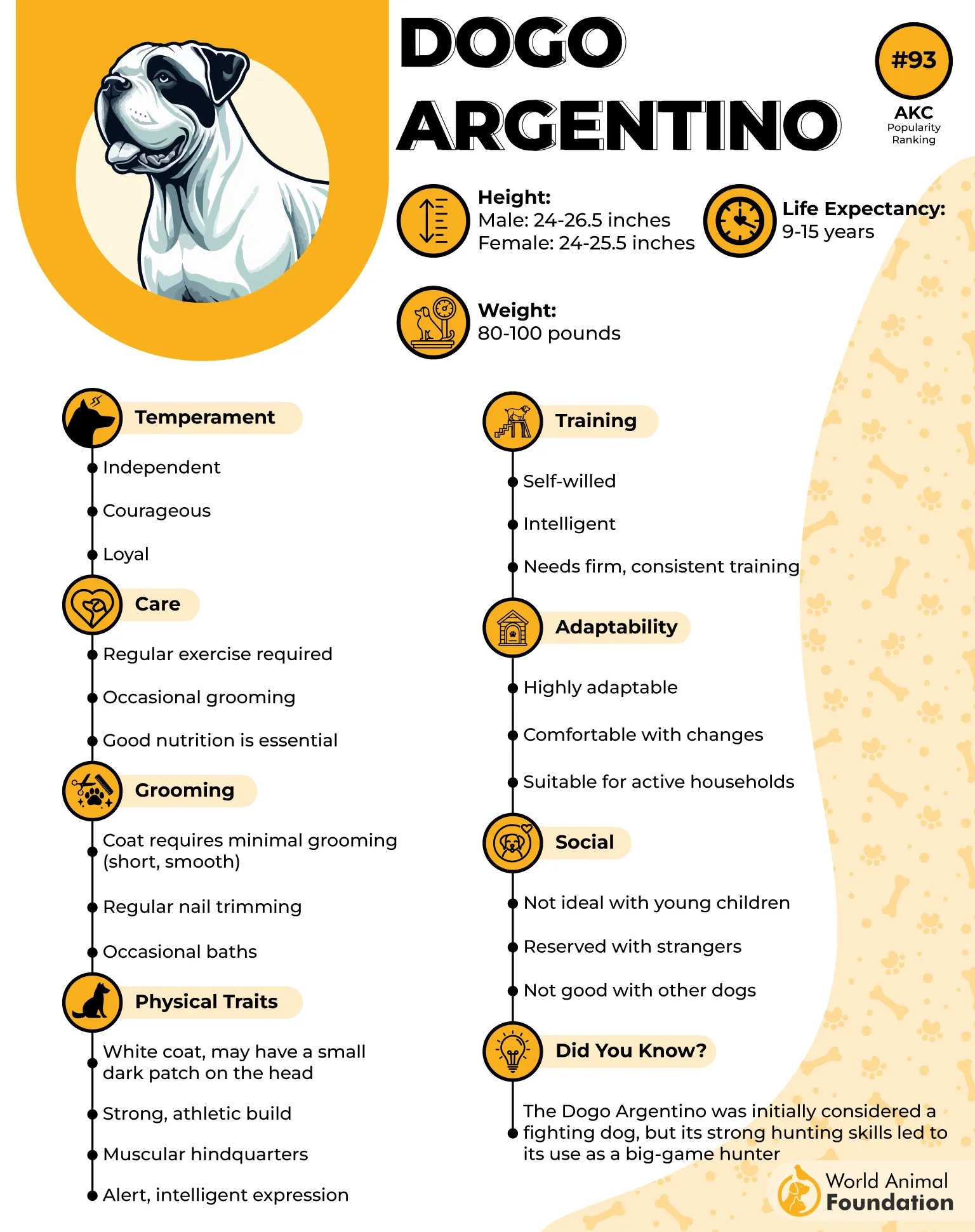
Despite their tough exterior, Dogo Argentinos can be affectionate and loving with their families. They can be independent during training and may chase small animals due to their hunting instincts.
Early socialization and consistent training are essential, making them better suited to experienced owners.
Grooming and Care
Coat care: Their short, smooth coats need little maintenance. Occasional brushing helps manage regular shedding, and their fur does not need clipping or detangling.
Bathing and skin care: Baths are only needed when they get dirty. Their white coats can cover skin with little pigment, making them prone to sunburn, so limit prolonged sun exposure and use dog-safe sunscreen when appropriate.
Exercise and activity: These athletic dogs need plenty of physical activity and mental stimulation. Without enough exercise, they may become bored and destructive.
Conclusion
Choosing a guard dog doesn’t mean signing up for endless grooming sessions. From their short coats to their loyal, watchful nature, these breeds offer different ways to bring protection and companionship into your home.
However, easy coat care doesn’t mean low overall responsibility. Every dog still needs proper training, exercise, socialization, and attention to thrive.
Before choosing your new companion, consider your lifestyle, experience with dogs, and the time you can dedicate to their needs. Research each breed carefully and meet dogs in person when possible.
The right guard dog should do more than make you feel secure; it should fit comfortably into your everyday life and become a trusted member of your family.
