




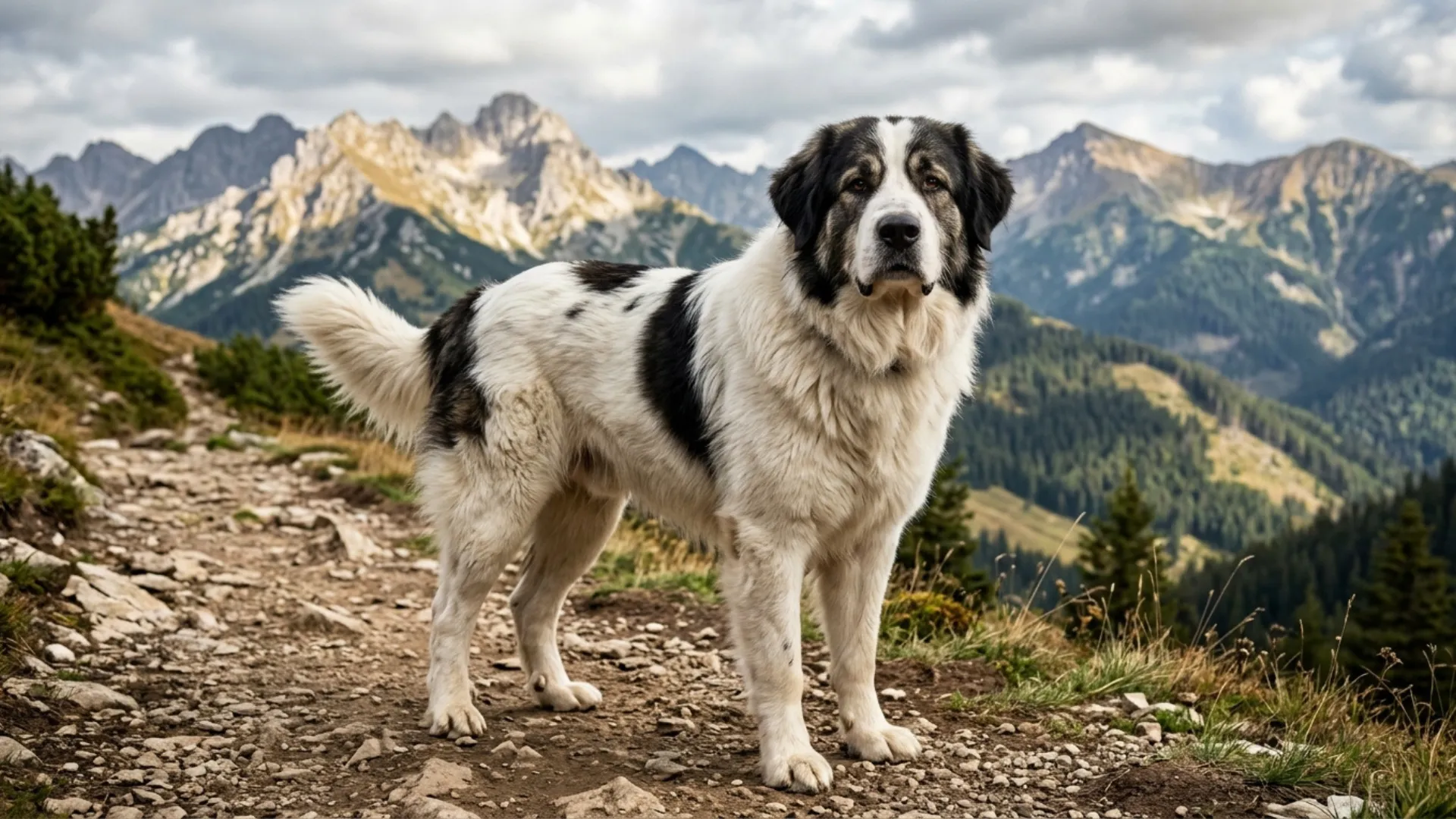
Giant dogs are great, without a doubt, when they’re common breeds. However, many of the largest breeds of dogs are not often found outside their respective region. Many grew in isolated farming lands, on mountain ranges, and big estates where their imposing size was useful.
These dogs didn’t come into existence just to be immensely strong and imposing. Their work bodies were shaped by hard labor. Some protected their flock from wolves and thieves, while others labored with shepherds or guarded flocks in rugged places.
The following breeds are rare but very distinct breeds of giant dogs. Some are even suited as family dogs, while others are the perfect dogs for working scenarios if their owners know what they’re doing.
Rare and Remarkable Giant Dog Breeds to Consider
1. Spanish Mastiff
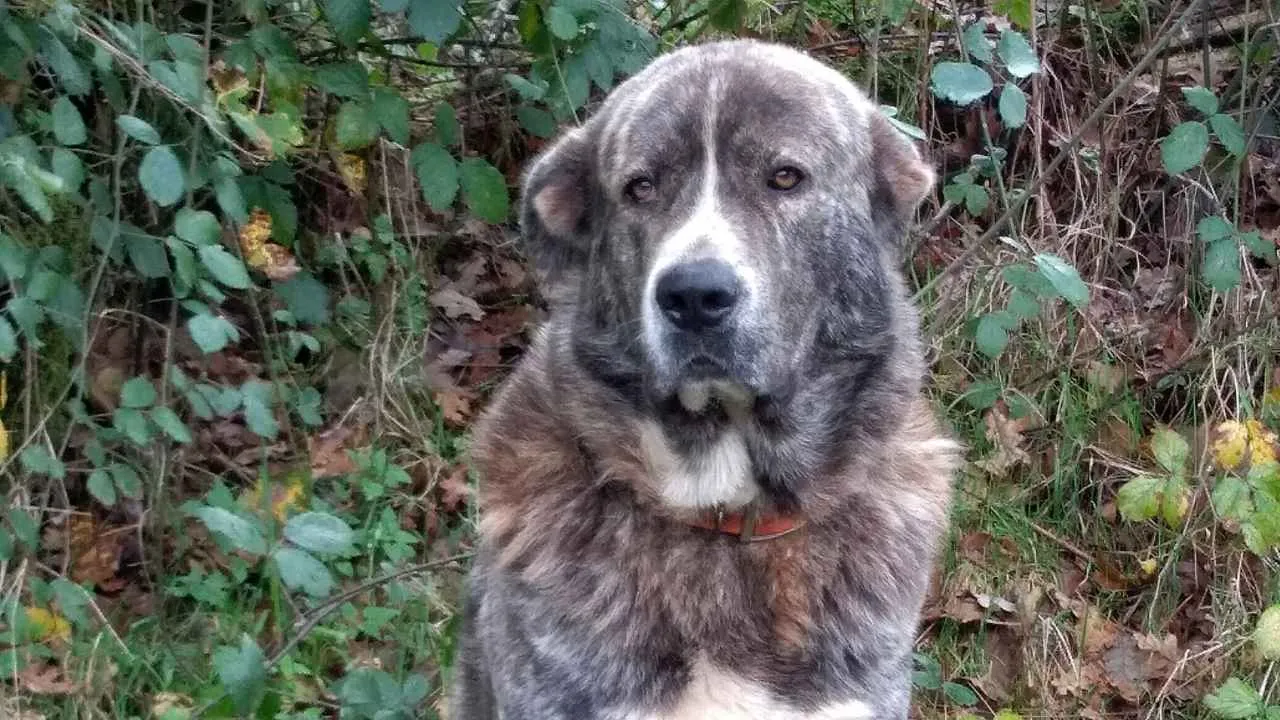
Known as a sweet companion dog, this rare breed is one of the largest working dogs in Europe. It is typically 28-35 inches tall at the shoulder and might weigh about 140-200 pounds, and in some instances, even more as it grows.
These large dogs had a close association with the famous Merino sheep of Spain. Spanish Mastiffs were used with flocks to guard against wolves and other predatory animals. It was not a chasing and herding job. Instead, the dog had to stay with the livestock, look around, and stop the threats.
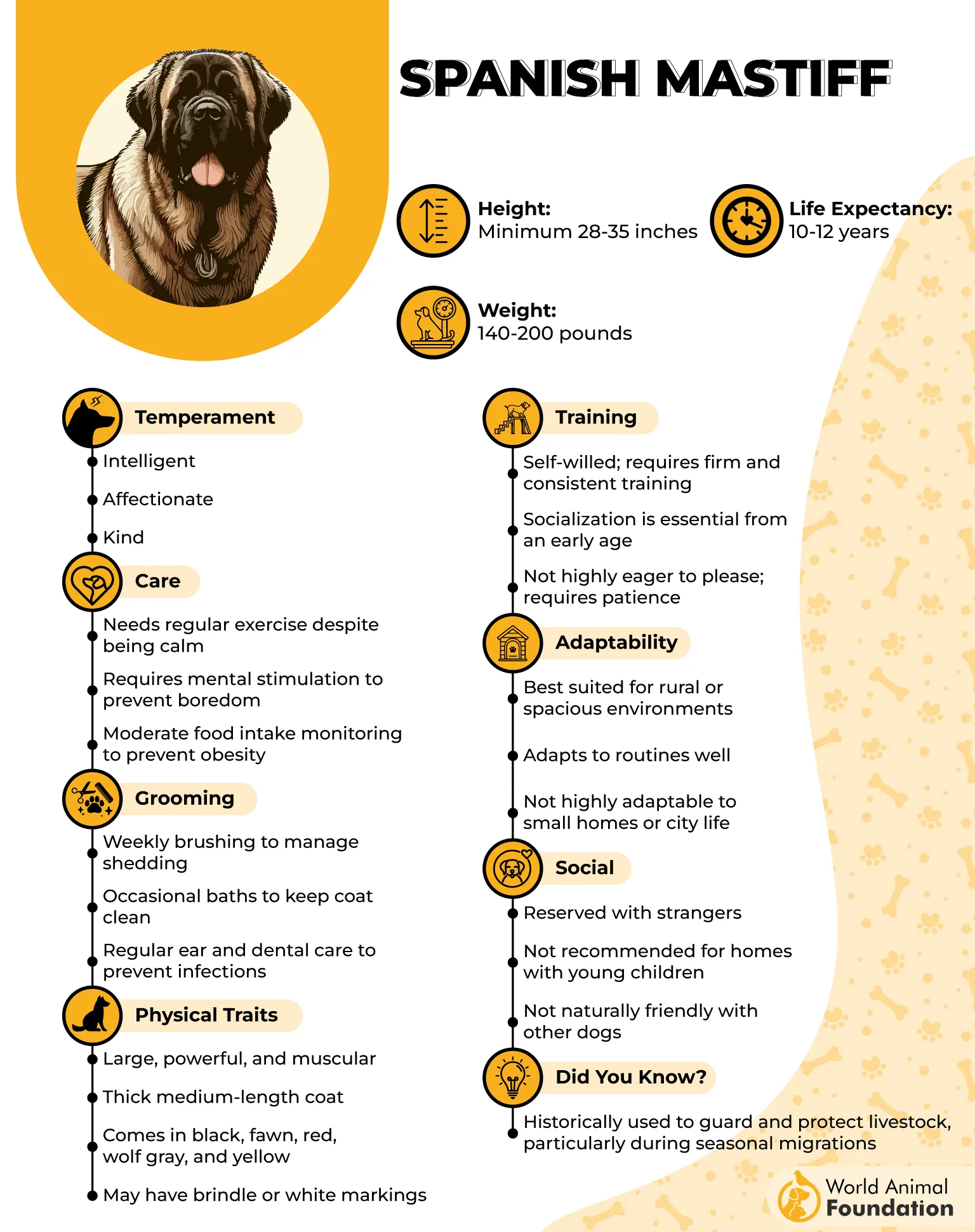
What explains this is the breed’s past history: its huge head, loose skin around the neck, a dense body, and relatively short coat. The excess skin around the neck was a protection for a dog that would routinely defend its flock against predators.
The Spanish Mastiff is not as active as you’d expect for this large and powerful dog. It had a normal working routine of extended periods of observation, not continuous travel. It can be a big and beautiful friend towards family members, but may be more cautious of strangers entering into its space.
2. Bucovina Shepherd Dog
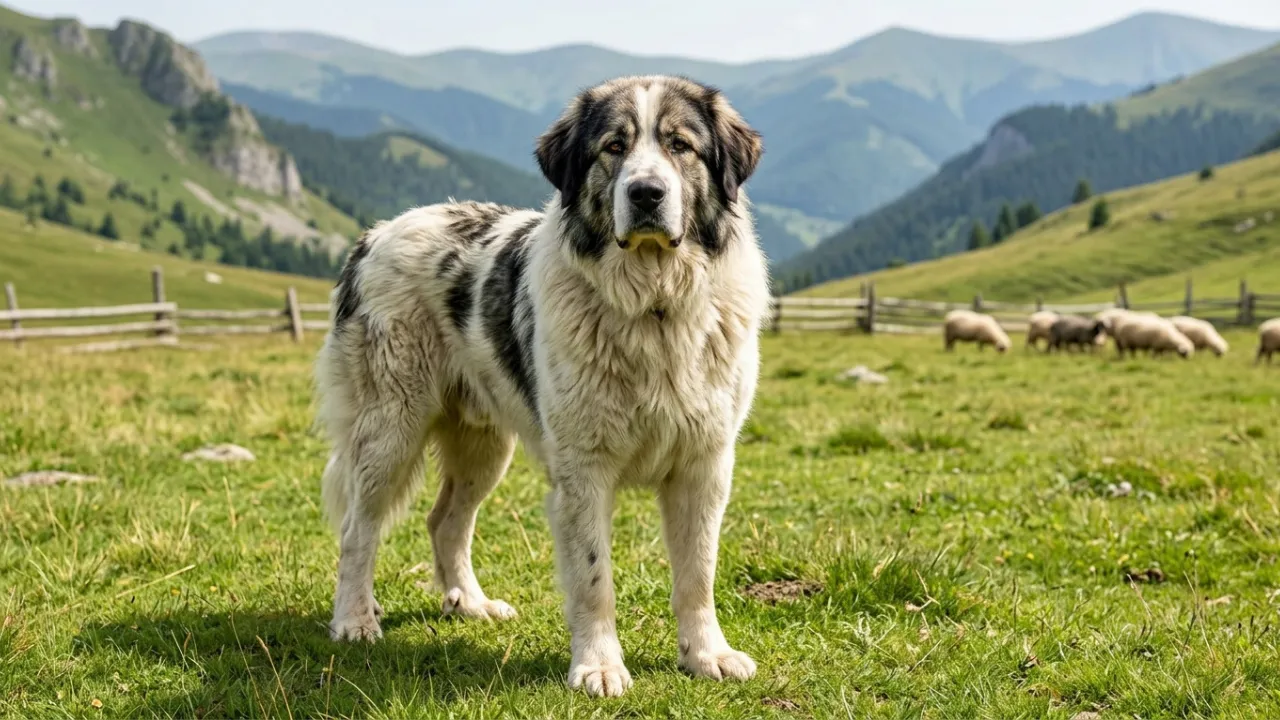
The Bucovina Shepherd Dog is a shepherd dog breed from the Carpathian region of Romania. It is a large, rugged-looking, thick-haired mountain guardian.
A male may grow up to about 26-30 inches, and females are generally about 25-28 inches. This is a very sturdily-built breed with a dense, long coat, which is usually white with black, gray, brown, or other dark markings.
The Bucovina Shepherd is different when you compare it to other herding dog breeds. Its role is to be alert to possible dangers and deal with them, not continuously herd the flock, which is a big difference.
Their thick coat makes them well adapted to rough mountain climates, and their deep bark can let someone know, even from quite a distance away, that there is a new animal or person in their vicinity.
3. Rafeiro de Alentejo
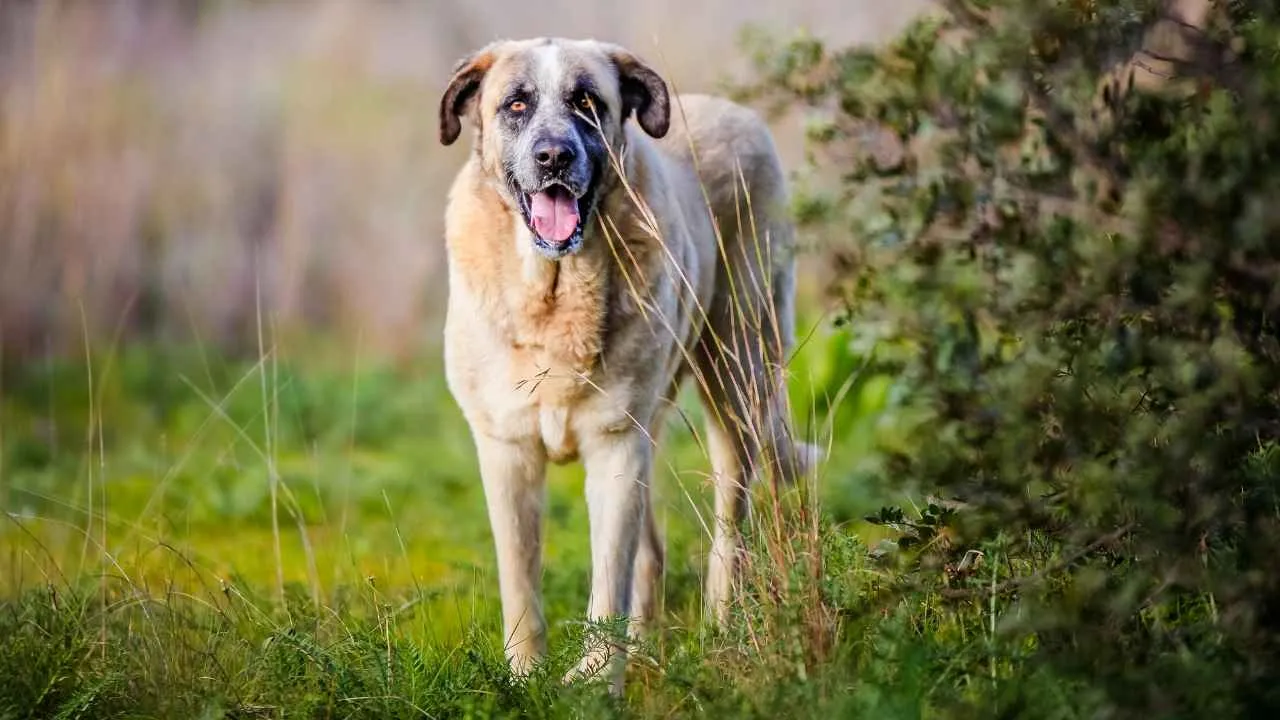
The Rafeiro de Alentejo is a giant Portuguese watchdog with a peculiar work schedule. It has been traditionally used to protect assets and livestock of Alentejo houses but is especially linked to increased nocturnality.
It was a night-time activity that made good sense. After dark, when there was less human activity around farms, the sheep and cattle still needed protecting. Rafeiro’s job was to be alert and respond to anything their family required them to be aware of.
It typically grows up to be 25-29 inches tall and 75-130 pounds or more. It has a large head, a stout body, and a rolling gait, making it quite imposing but not exactly athletic.
In addition to the size, there is more to the breed. It works at night and has an uncommon history, as opposed to giant breeds bred to move livestock around for the day or do a lot of heavy work.
Rafeiros are gentle and loving with their close relatives at home. Their background as guards does not mean, however, that they will not have territorial instincts when they are relaxed in the home, as owners must know.
4. Cão de Gado Transmontano
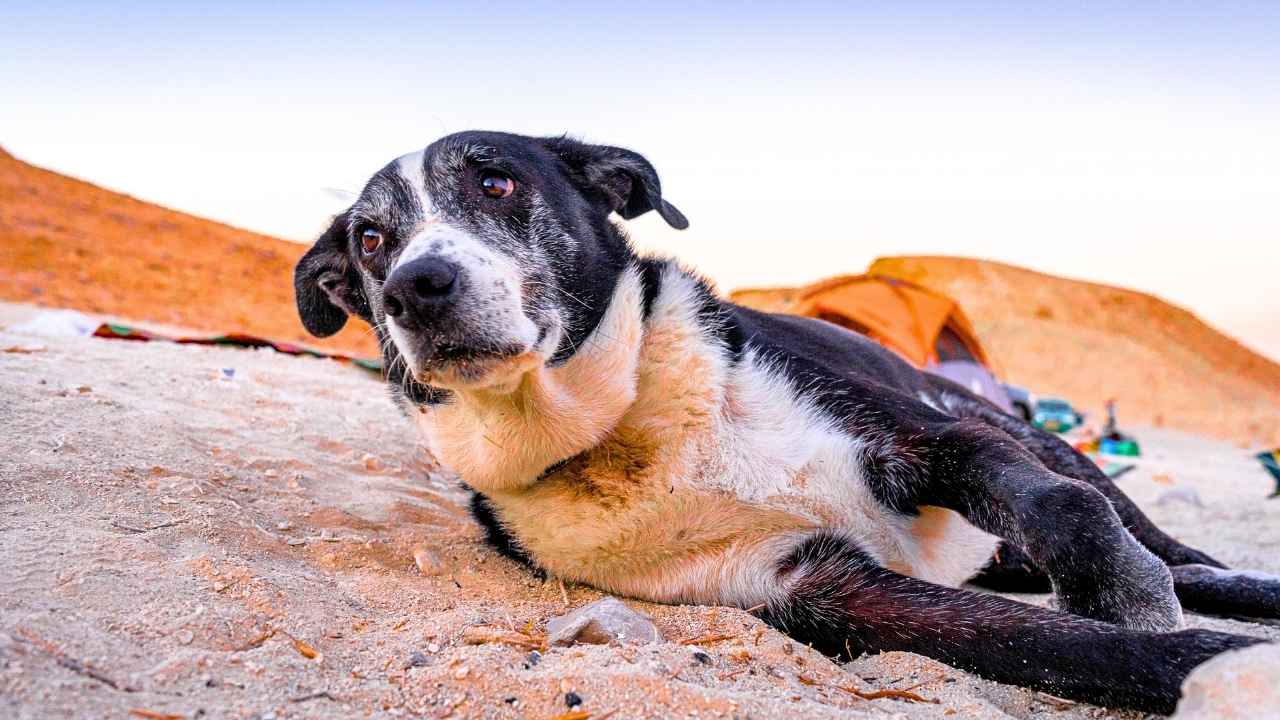
There is one lesser-known gigantic livestock guardian that is found in Portugal: the Cão de Gado Transmontano or Transmontano Mastiff. This is because its name is derived from the mountainous area of the North-East of Portugal called Trás-os-Montes.
This breed is especially unique in that it was bred for use as an all-purpose companion, not to work in a harsh, scrap location to guard livestock.
Transmontano Mastiff is a big, muscular Molossoid breed with a considerable bone structure. Its original job was to keep flocks safe from predators and let the animals roam the open field.
Compared to other internationally renowned giant breeds, it has been less common in other parts of the world.
It is a rare breed and an interesting choice for those seeking to discover a giant dog that’s not one of the more common breeds such as a Mastiff, a Great Dane, or a Saint Bernard. It also provides an example of the fact that there are still a large number of living regional livestock guardians that have had centuries of working experience, but are not widely known.
5. Caucasian Shepherd Dog
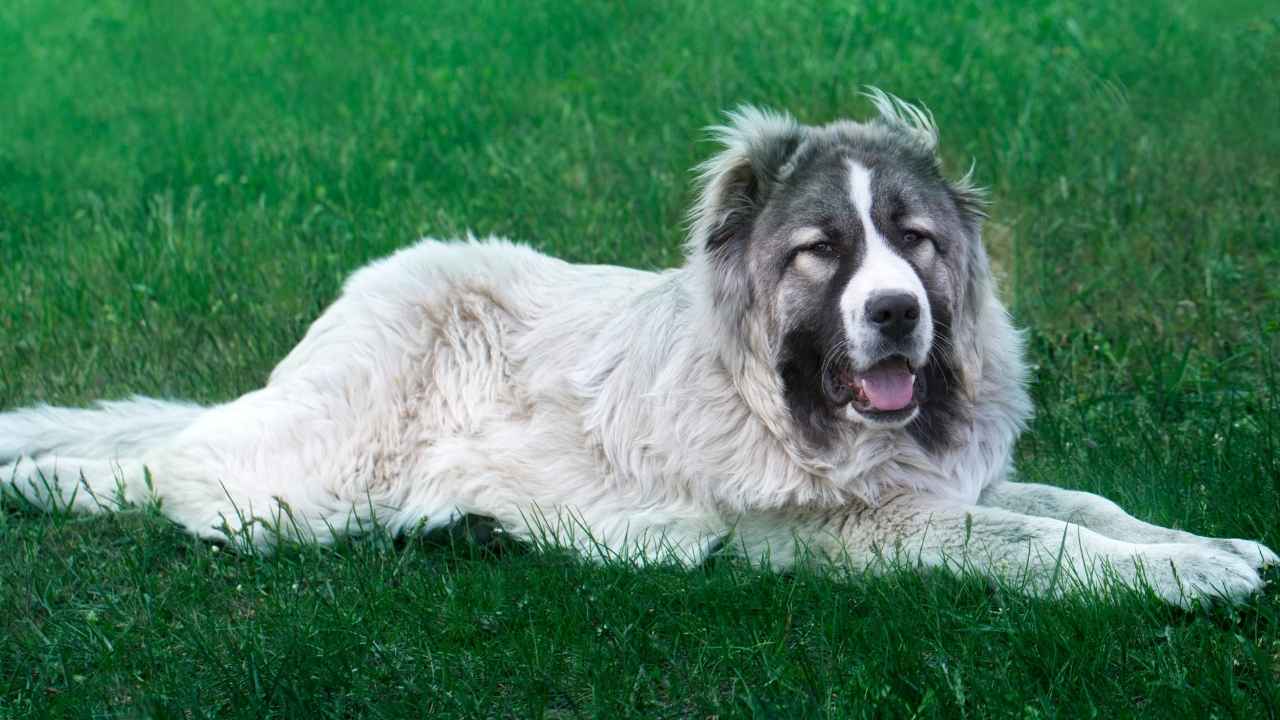
Known as an alert working dog by PetMD, this breed had its origins in the Caucasus region where livestock and property were at risk from serious predators and adverse weather.
It is variable in size, but may be over 100 pounds in large animals, and males may reach a height of 25-30 inches. The dog has a thick double coat which may further make it appear bigger, especially around the neck and shoulders.
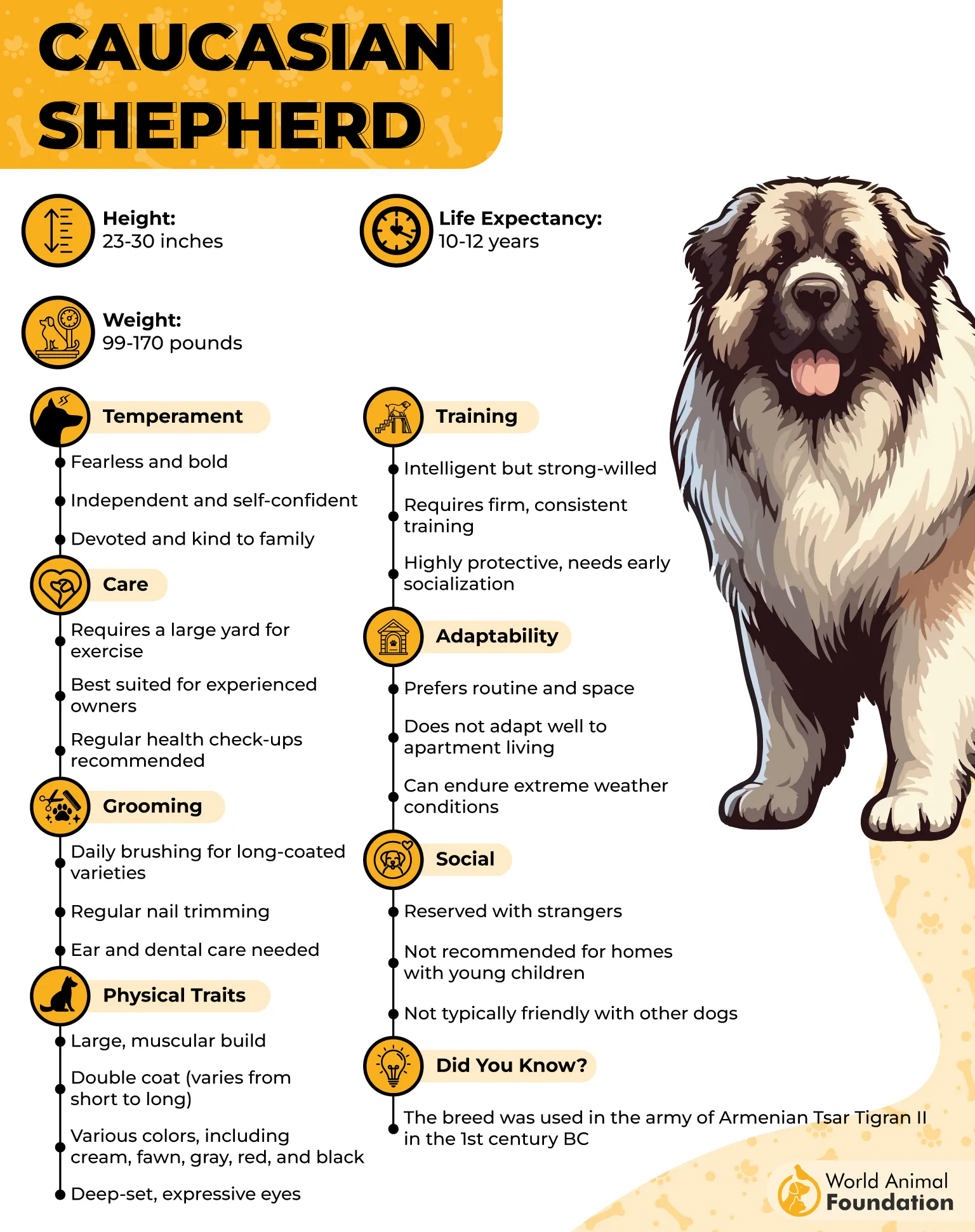
One of its defining characteristics is that it is independent. Traditional livestock guardians were expected to spend time with the livestock without having to give an instruction every few minutes. Being able to evaluate new situations on their own was thus useful.
The length of the coat also varies, from shorter coats to coats with much longer hair and a well-pronounced mane.
It’s a breed that’s very much linked to responsibility in terms of physical size. A well over 100-pound dog that is making decisions on its own to guard is a dog that must be carefully socialized, managed, and owned by a dog owner who understands large guardian breeds.
6. Polish Tatra Sheepdog

The Polish Tatra Sheepdog is a dog that lives in the Tatra Mountains in Southern Poland and is easily recognized by its thick white coat. It is a large livestock guardian, but may sometimes appear to be a large white pet dog.
Males are approximately 24-28 inches in height and females are a little shorter. Their thick, weather-resistant coats were beneficial for their surroundings in the cold mountains where they could be found.
The breed was made to be a guard instead of a shepherd. This involved a low-profile approach to predators and not disturbing the animals unnecessarily.
The white coat also worked in its favor. The shepherds were able to recognize the dogs, especially at a distance, among their sheep.
The Polish Tatra is also known for its somewhat mild-mannered working style. It doesn’t have to rush around all day like it normally does to get to work. Rather, it is alert and strong, possessing a sense of territory.
7. Broholmer
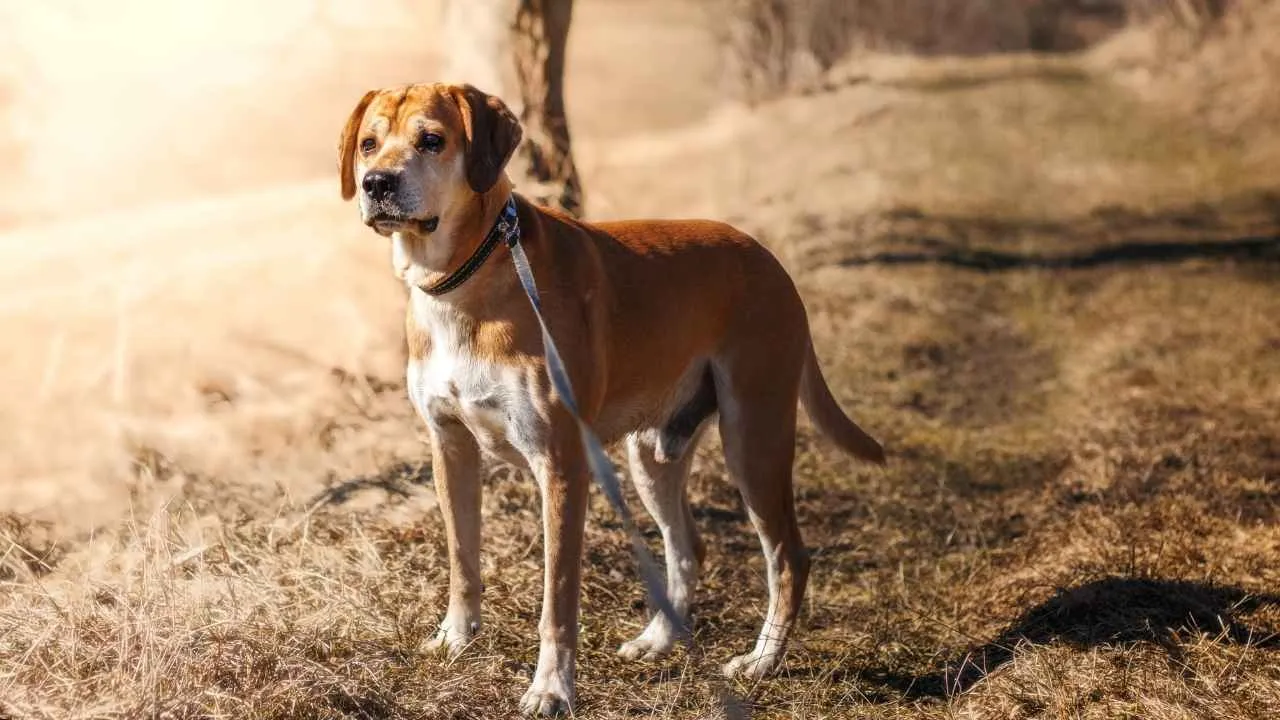
Called good-natured by the American Kennel Club, this massive Danish dog breed has been bred as a large property guardian and watchdog, not as a shepherd of flocks of sheep far from home.
This large dog will reach a height of 29.5-31.5 inches and weigh around 90-150 pounds, while the female is slightly smaller.
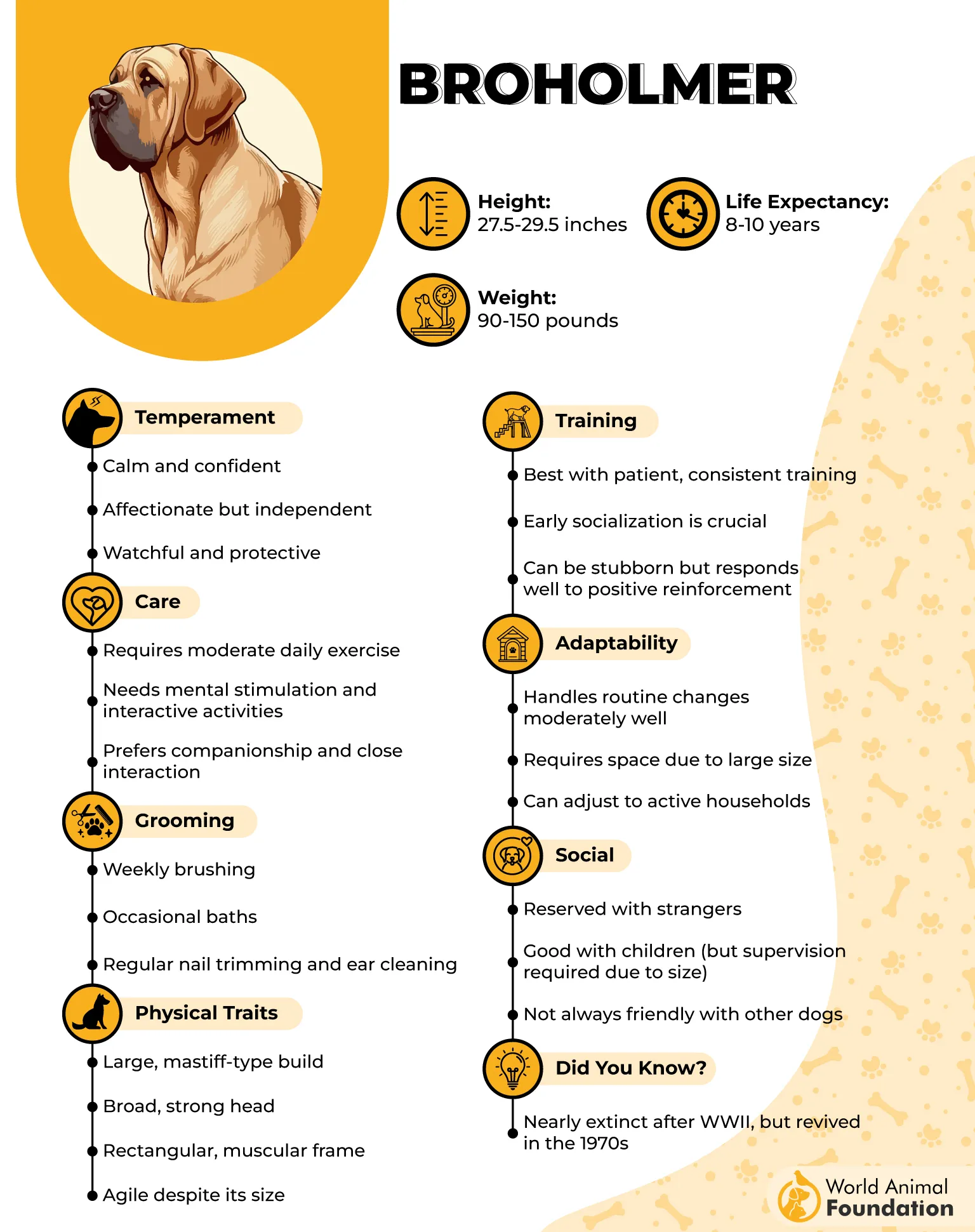
It has a broad head, a strong body, a deep chest, and a short coat, which are clearly recognized. It has a shorter coat than the heavy mountain guardians, which leaves it with a more streamlined silhouette.
The other interesting aspect of the Broholmer’s history is that its population has drastically dwindled over the years. There was a concerted effort on the part of dedicated Danish breeders to restore the breed and thus maintain it as a separate national breed.
The Broholmer is a good-natured, vigilant, and confident dog.
Conclusion
The unusual giant breeds of dogs provide an insight into the diversity of ways in which humans have modified working dogs. They’re big and impressive, but it’s not just that.
Anyone interested in giant-sized dogs will find them interesting, and they will give them a glimpse of the amazing regional dogs that guarded livestock, homes, and communities for generations.
