




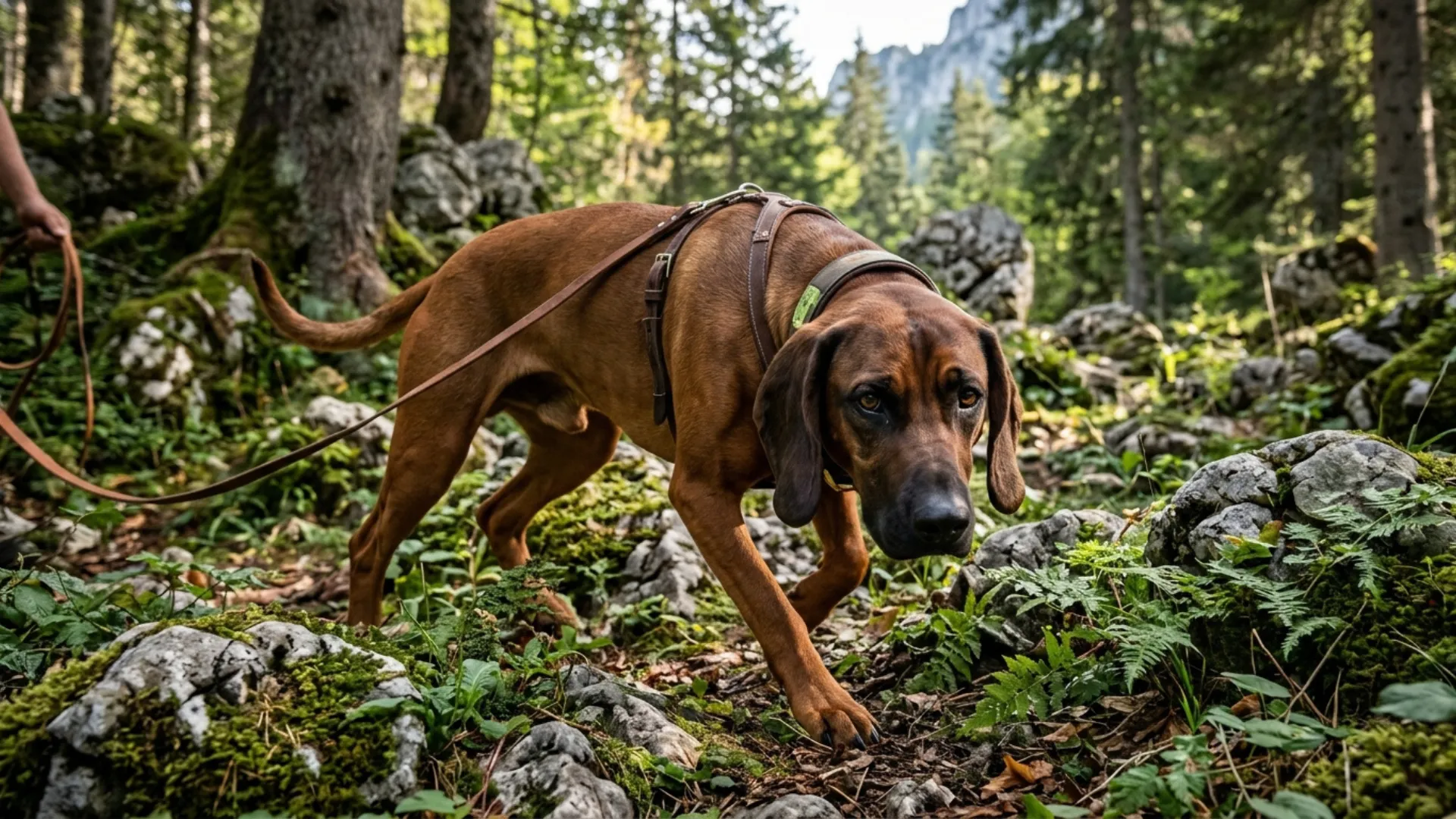
Stand at a fork in an invisible trail, and most of us would freeze, unsure which direction to take. Certain dogs solve that puzzle in seconds, without a visible clue to guide them.
A study featured by PBS’s NOVA found that dogs stationed at right angles to a trail could work out which direction a person had walked, using little more than one well-timed sniff.
That kind of built-in GPS is exactly what separates an average pup from true trackers; the dogs’ breeders have spent generations refining it for endurance tracking across brutal terrain.
Not every dog comes wired with that instinct, and knowing which ones do can save you a lot of guesswork if you are searching for a dedicated hunting partner or one of the clever dogs with a serious nose.
Ready to meet the toughest seven dogs built for exactly that job? Let’s dig into who makes the cut.
Top Dog Breeds That Excel at Wildlife Tracking
1. Bloodhound
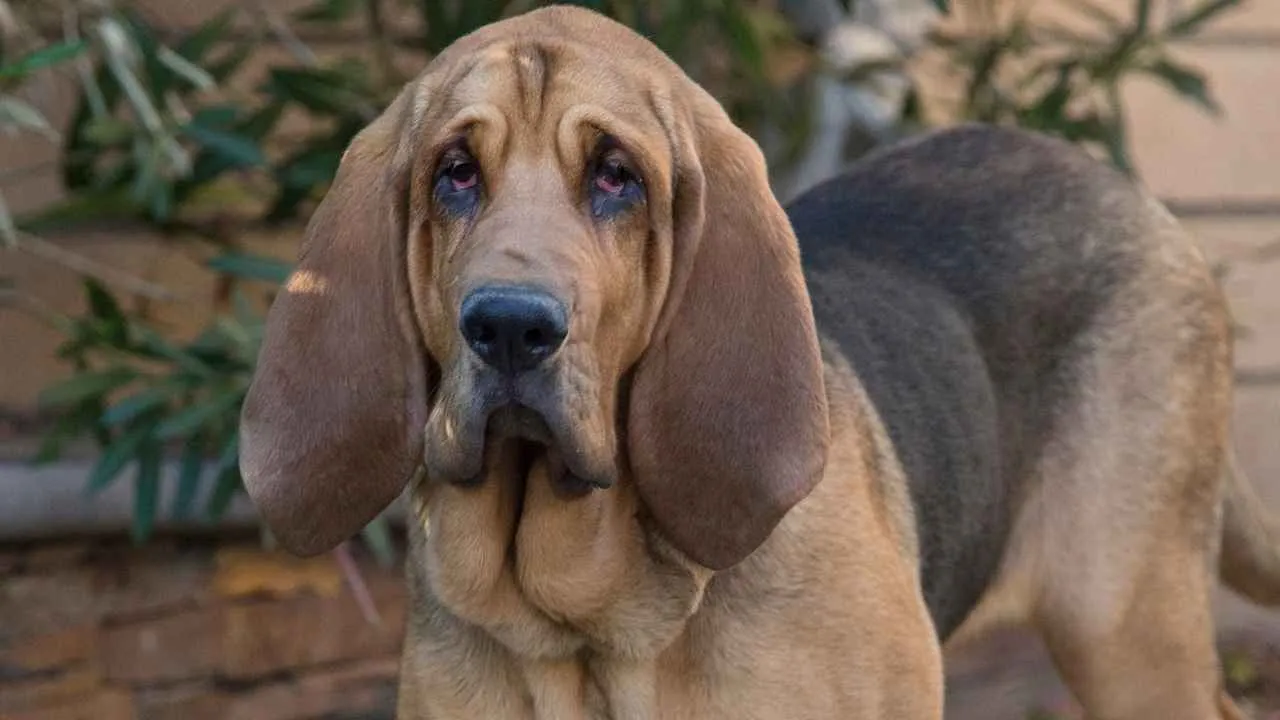
Long before crime dramas made it look easy, the Bloodhound was already trailing scent for real, thanks to scenting instincts few breeds can match. Centuries of breeding gave it long, droopy ears that sweep scent up off the ground and loose skin that traps smells near the nose.
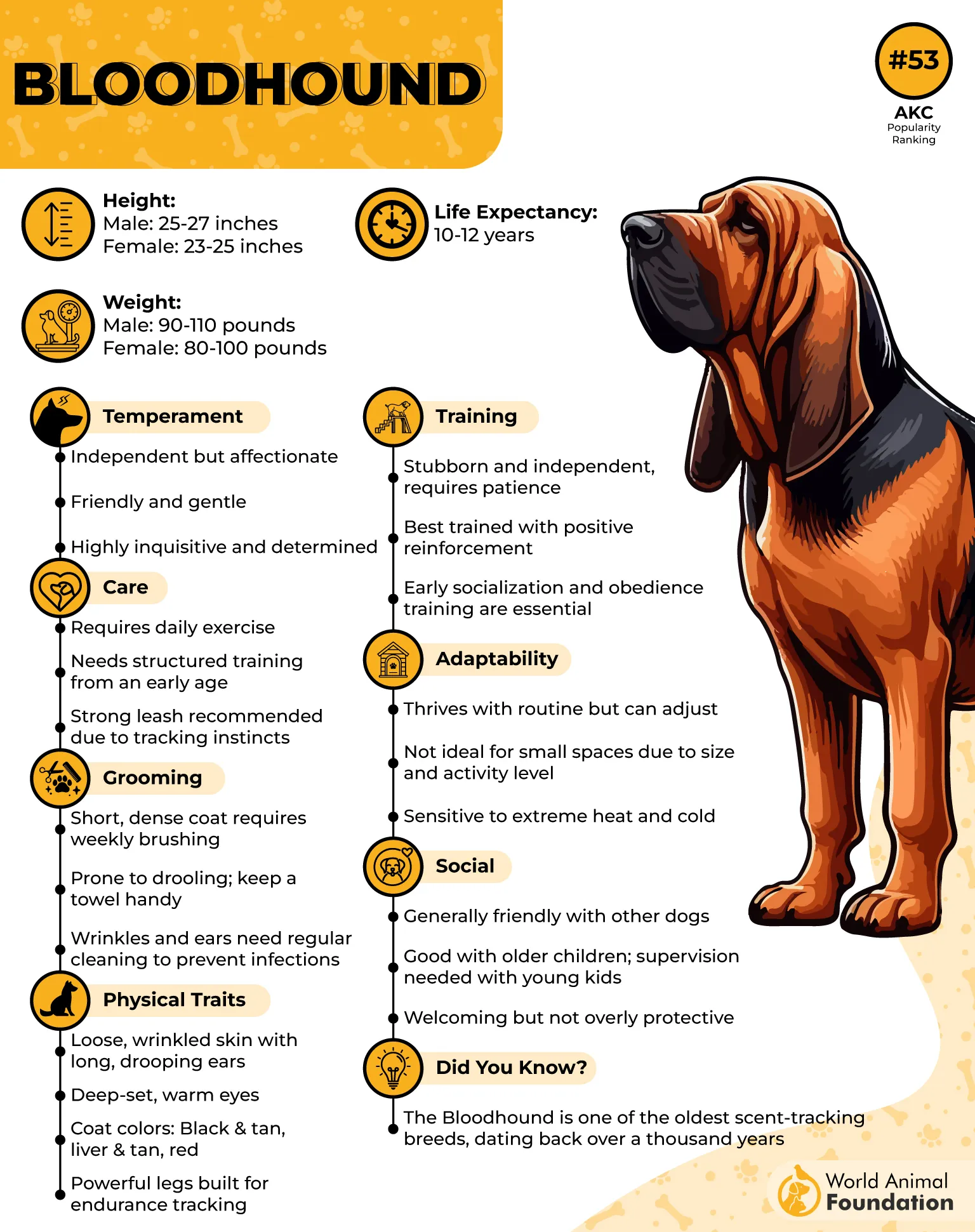
This hound can work a trail through city streets or open countryside with equal confidence. Recognized by the AKC as one of the sharpest scent hounds alive, it is often the first call when a trail has gone cold for everyone else.
Skill marker: Can follow a trail that is hours, even days, old.
Tracking style: Cold trail specialist built for patience, not speed.
This is not a dog for someone in a rush. A patient dog handler who lets it work at its own pace will get the best from this focused, four-legged friend.
2. Bavarian Mountain Scent Hound
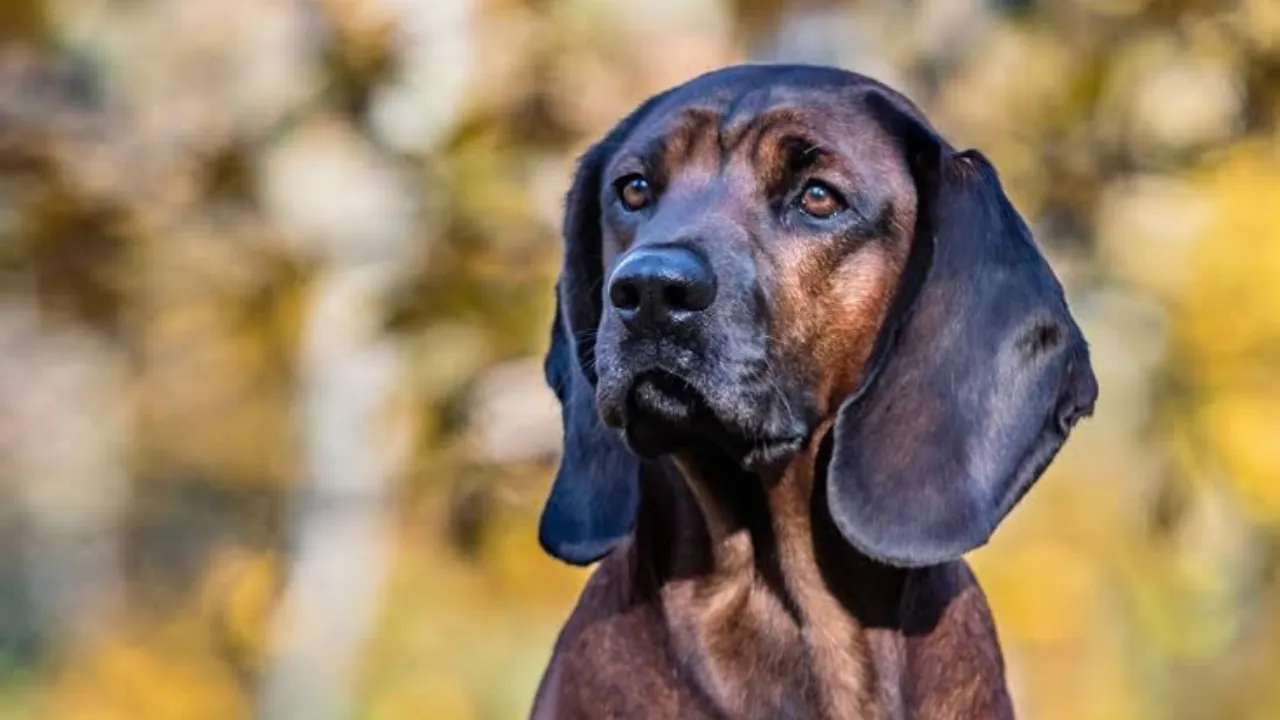
This breed was born in Bavaria for one job: finding wounded deer and boar on steep ground, especially during deer season. A compact, muscular body and deep chest give it the controlled power to move slowly and steadily rather than sprint.
Steep slopes and thick mountain brush are where this hound feels most at home. It remains a trusted partner across Europe for hunters who need an animal that will not lose focus halfway up a hillside.
Skill marker: Stays locked onto one trail without drifting off course.
Tracking style: Hot trail, close-range blood tracking specialist.
Life indoors can feel slow if this breed never gets real fieldwork. An experienced dog handler who offers regular tracking sessions will get the best out of this hardworking companion.
3. Hanoverian Scenthound
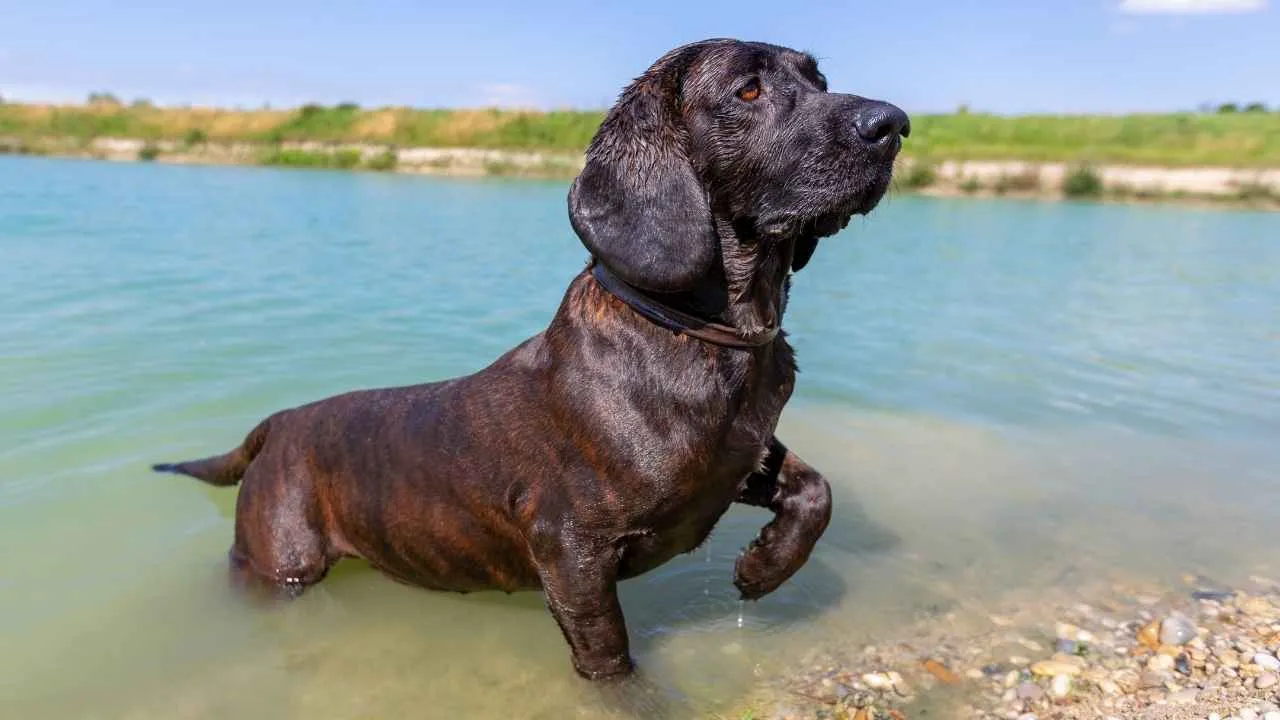
The Hanoverian Scenthound is the heavier, older cousin of the Bavarian Mountain Scent Hound, built for the same wound tracking job in dense German forests. A deep chest and sturdy neck let it push steadily through thick undergrowth without losing rhythm or pace.
Thick forest floors and tangled brush are this breed’s natural office. For generations, hunters have called on it to finish a job quickly and humanely after a shot.
Skill marker: Works low to the ground at a slow, deliberate pace.
Tracking style: Hot trail, precision blood trail specialist.
This is a reserved, serious breed, not suited to a busy household full of strangers coming and going. A dedicated dog handler who values quiet, focused tracking sessions will see this hound at its very best.
4. Plott Hound
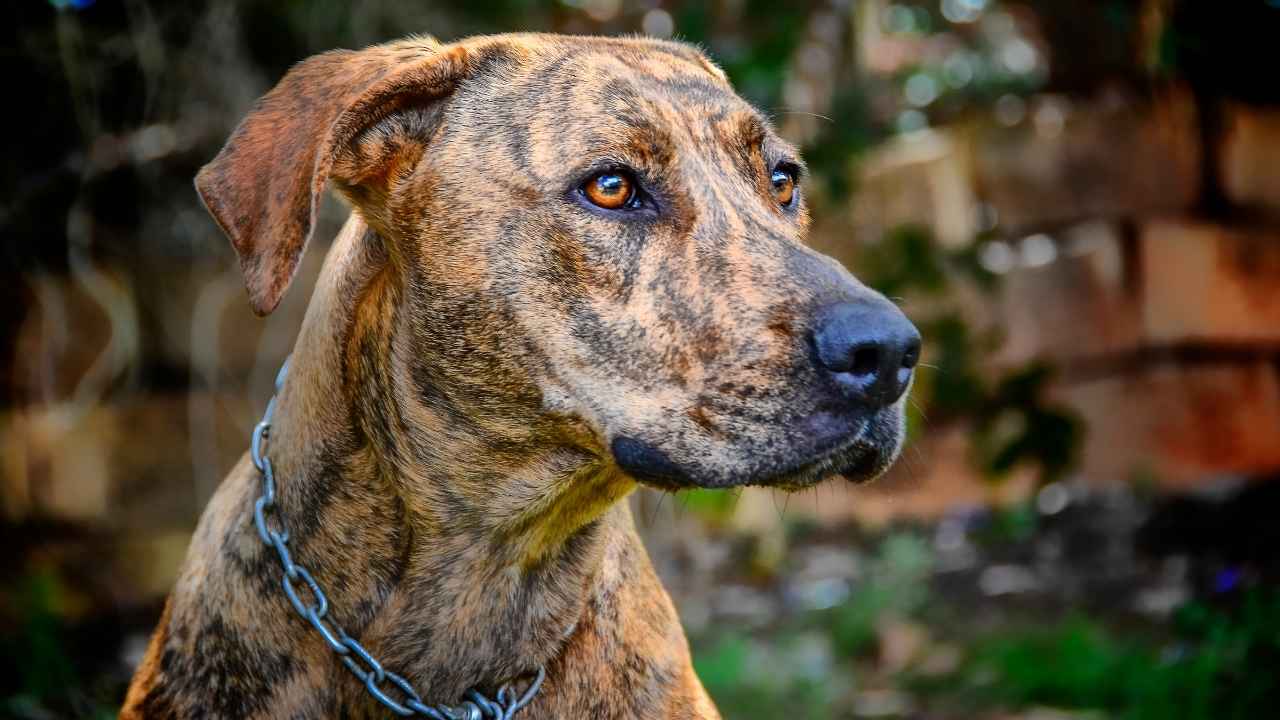
The Plott Hound holds a rare title as the only American hound breed not descended from English stock. German settlers bred it to chase wild boar, giving it a deep chest and powerful lungs built for endurance tracking over the long haul.
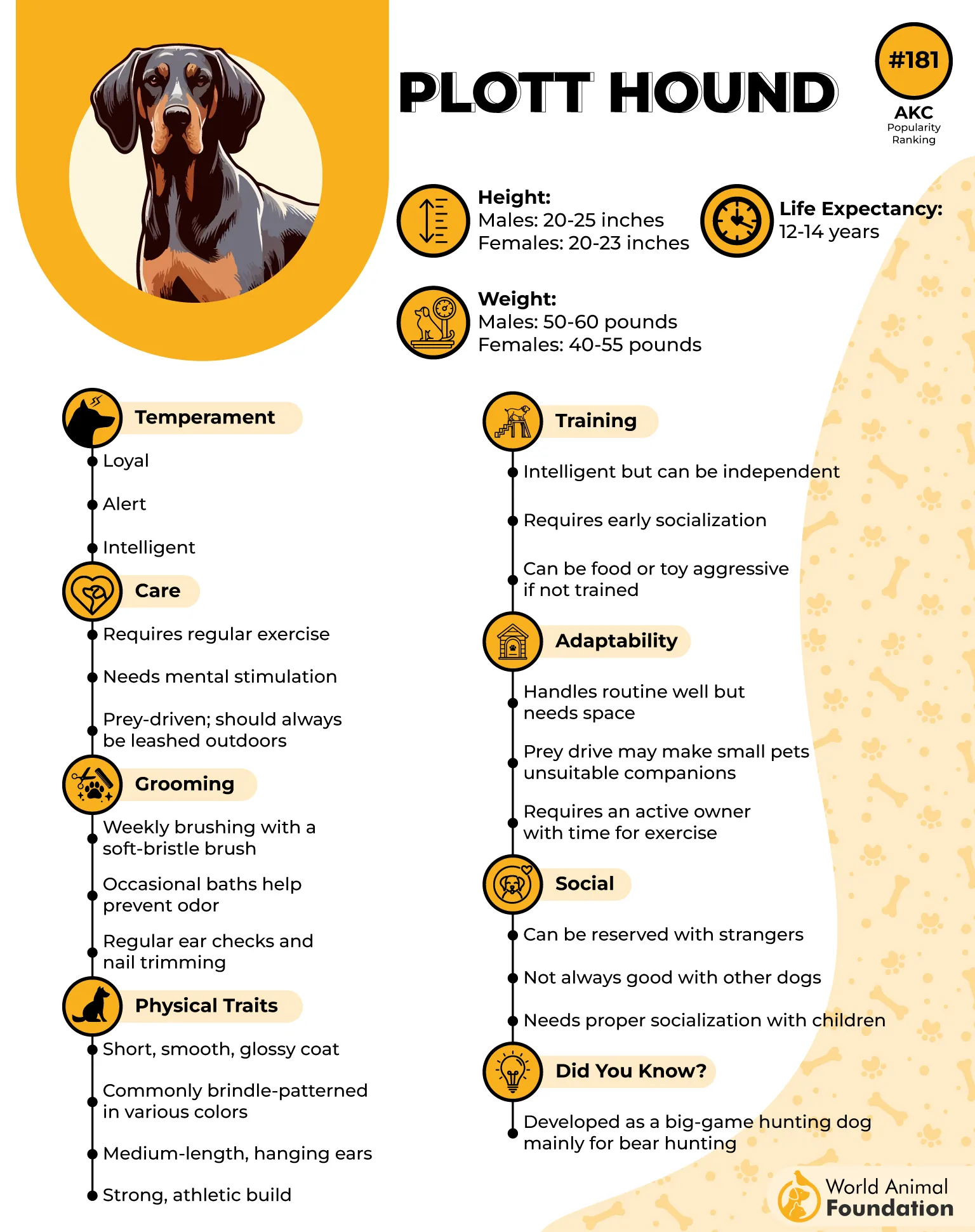
Rough, wooded wilderness is where this breed shows off its stamina best. Orvis notes that hunters have relied on the Plott Hound for generations to trail big game across terrain that wears out most other dogs.
Skill marker: Keeps going for hours once locked onto a hot trail.
Tracking style: Hot trail, open-mouth baying pursuit tracker.
A loud, confident bay comes standard here, so quiet neighborhoods are not the best fit. An active dog handler who can match its drive will find the Plott Hound a tough animal and loyal companion built to go the distance.
5. Black and Tan Coonhound
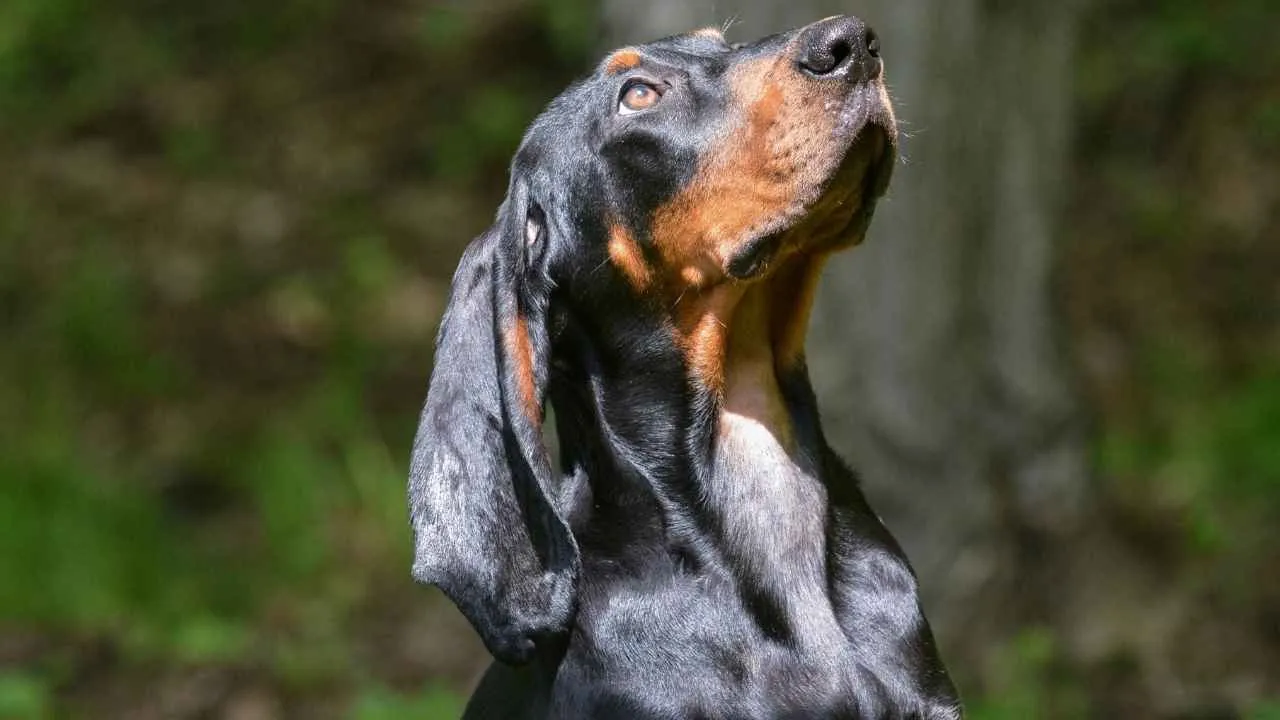
This breed traces back to Bloodhound lines, refined in the American South for nighttime raccoon trailing. Long, low-set ears and a strong nose give it the close-range scenting power the job demands.
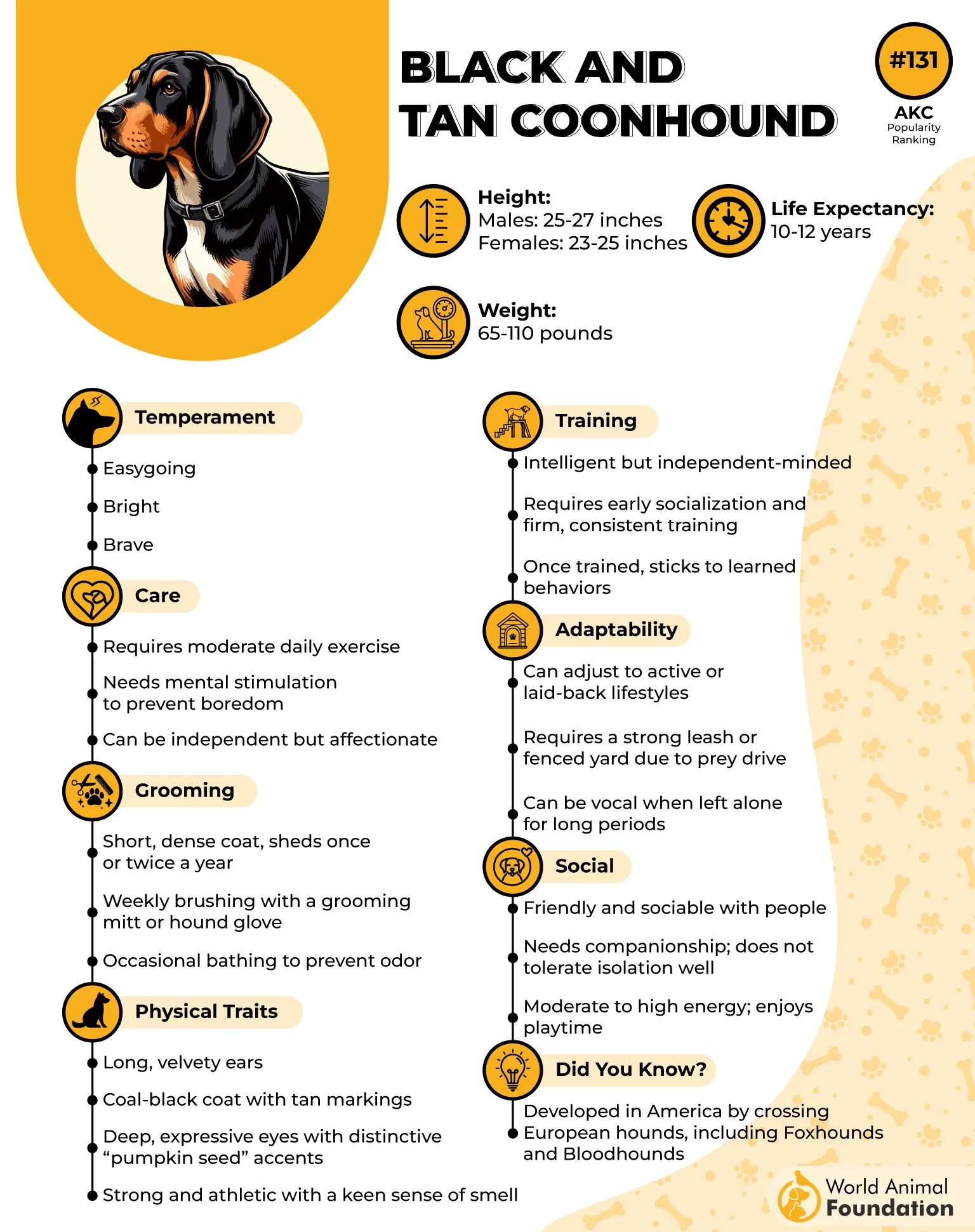
Woodland and swampy ground make up this hound’s favorite hunting grounds. Britannica lists it among the classic scent hounds still used for trailing and treeing work across the rural South.
Skill marker: Can pick up and hold a trail hours after it was laid.
Tracking style: Cold to warm trail, nose-to-ground tracker.
Friendly by nature, this breed warms up fast to new handlers and makes a solid starting point for someone new to tracking breeds. Secure fencing matters, since a strong scent can pull it off course quickly.
6. Bluetick Coonhound
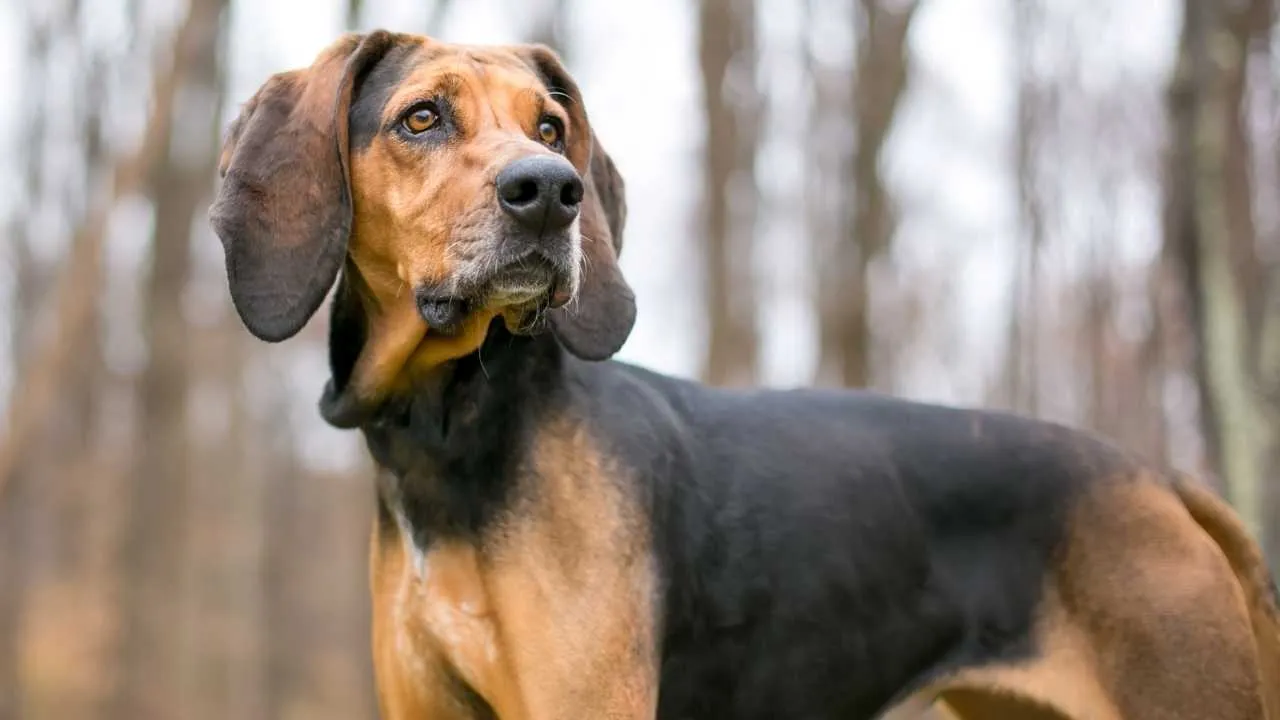
Developed in the American South for fast, musical voiced night hunts, the Bluetick Coonhound carries a lean, athletic frame built for incredible speed. Its mottled coat and deep bay make it one of the more recognizable tracking dogs in the coonhound family.
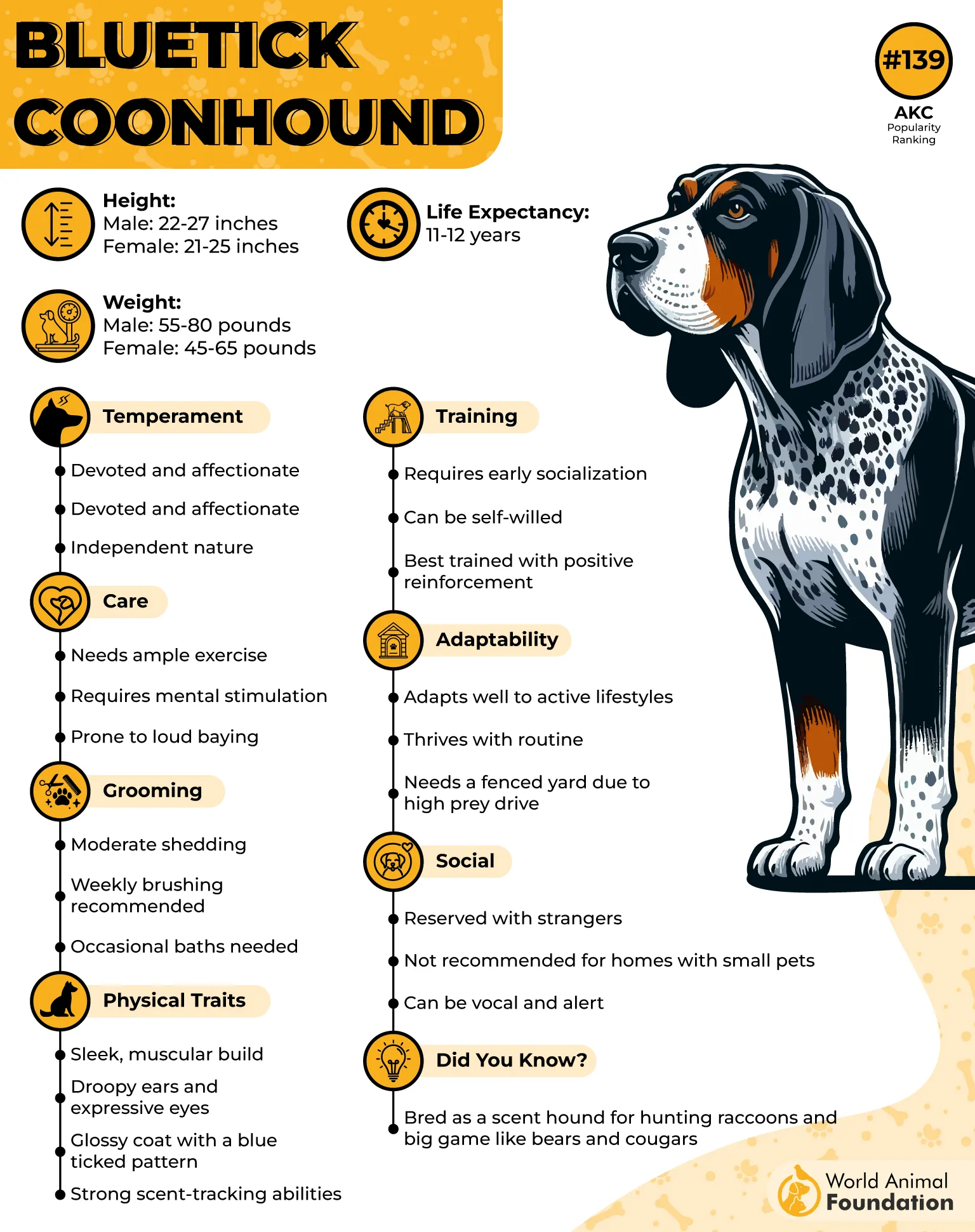
Wooded terrain at night is where this breed feels most alive, chasing a hot trail with real enthusiasm. VCA names it a top breed choice among hunters who want speed paired with persistence once a trail is struck.
Skill marker: Combines quick pursuit with the stamina to stay on trail for hours.
Tracking style: Hot trail, fast cold-nosed pursuit tracker.
This is a vocal breed, so apartment living rarely works out well. A rural dog handler who does not mind some noise will find the Bluetick a clever, food-motivated companion eager to please.
7. Transylvanian Hound
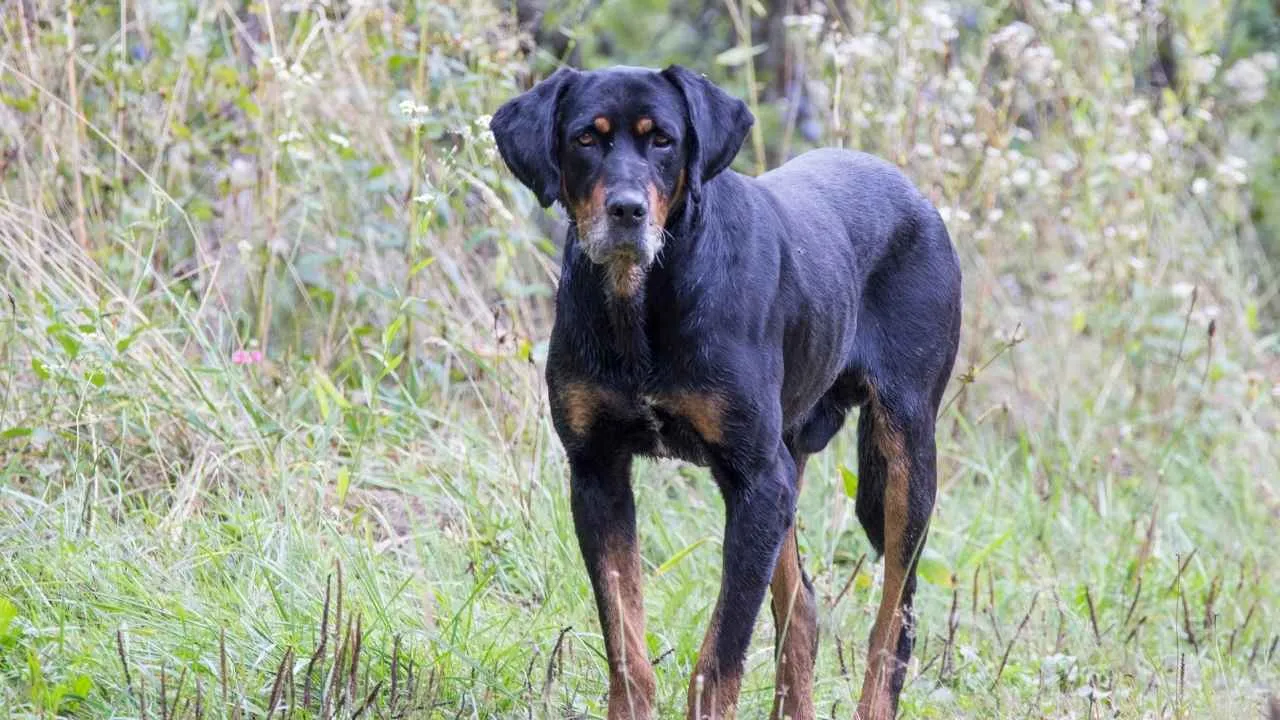
One of Hungary’s oldest breeds, the Transylvanian Hound has tracked big game through the Carpathian Mountains for centuries. A dense coat and sturdy frame help it handle cold, rugged terrain without slowing down.
Mountainous, forested ground is this hound’s natural habitat, built to handle snow and rock with equal ease. CKCUSA lists it as one of the good examples of breeds still used for traditional big game tracking in Europe today.
Skill marker: Stays fixed on one trail without getting pulled off by distractions.
Tracking style: Cold trail, methodical tracker built for difficult ground.
Loyal and single-minded, this breed suits a dog handler who wants one dedicated tracking partner rather than a jack of all trades. Training resources can be hard to find outside Europe, so a wonderful local club is worth seeking out early.
Conclusion
These hounds prove that a famous nose and generations of smart breeding choices can turn an ordinary walk into an elite tracking session. From misty mountain slopes to swampy southern woods, each one brings a different tracking style to the trail, making them some of the top breeds any serious handler could ask for.
Ready to welcome your own four-legged friend built for the job? Start researching reputable breeders near you, meet a puppy in person, and get started on raising your next great tracking partner.
