




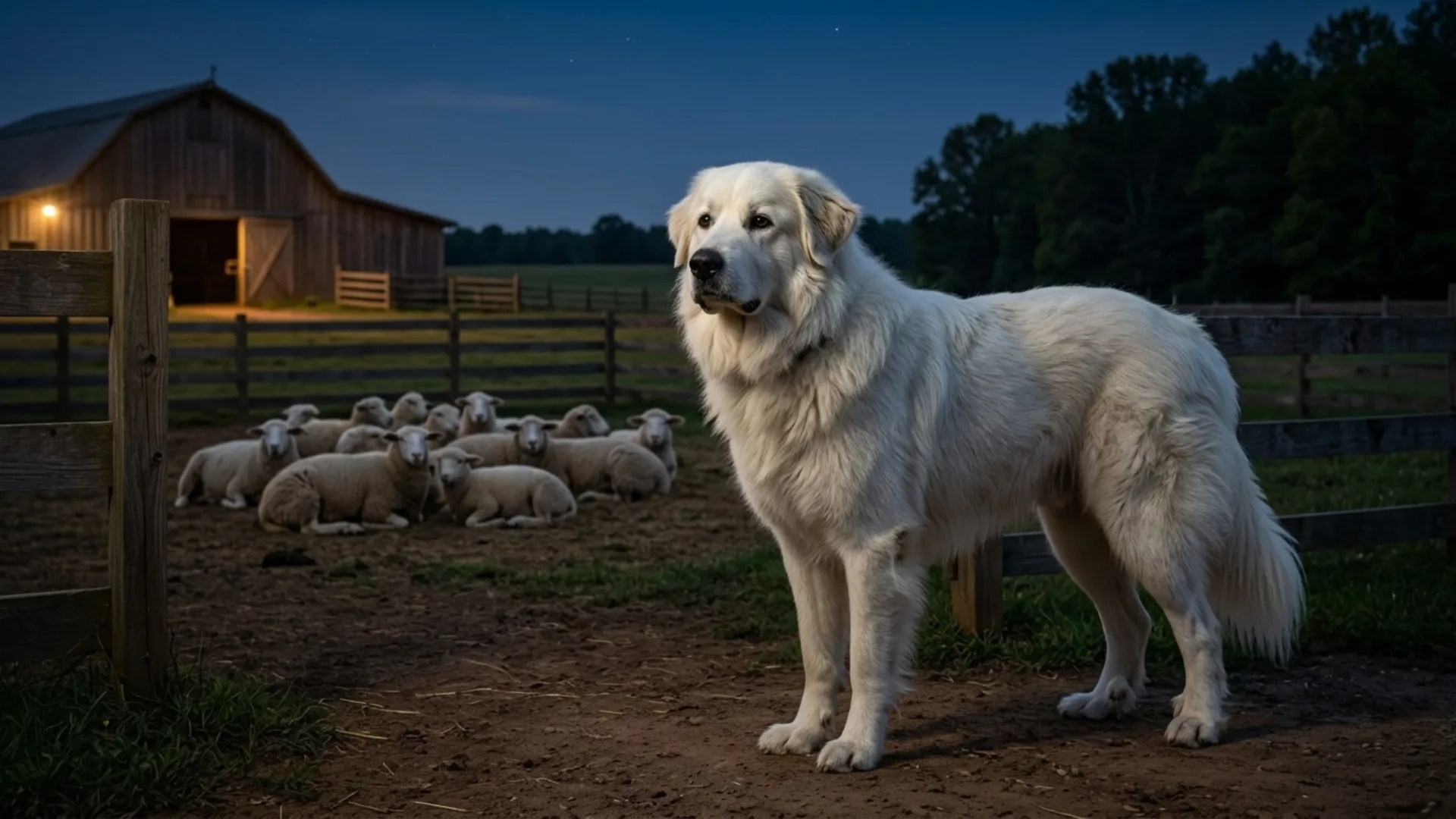
Ever caught your dog’s eyes glowing an eerie green in a flashlight beam? That eerie glow is proof of a night vision system built for exactly this kind of work.
According to the AKC, dogs have a reflective layer, the tapetum lucidum, that bounces light back through the retina for an extra edge after dark. For farm owners choosing between casual watchdogs and true guardian dogs, that hidden advantage matters more than most people realize.
Not every loyal companion was bred for vigilant night duty. Some breeds carry generations of territorial guardians’ instincts, herding backgrounds, and a strong natural chase instinct that makes them excellent guardians after dark.
The best guard dog breeds for this job are not just trainable family companions; they are unique breed lines built to protect livestock while providing companionship and real security.
Curious which ones turned ancient instinct into round-the-clock farm security? Keep reading to find out.
Dog Breeds With Excellent Night Vision for Farm Security
1. Tibetan Mastiff
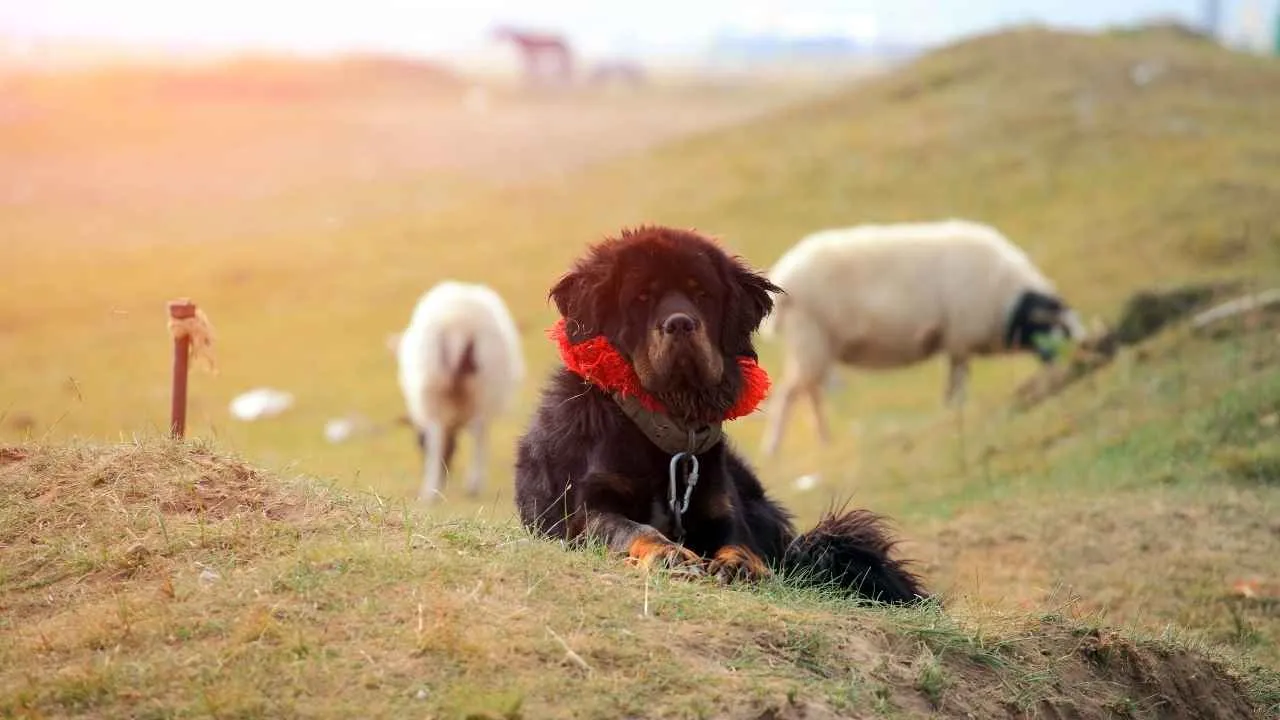
For centuries, this breed guarded Himalayan villages and nomadic camps against wolves and snow leopards. The breed was built to work independently, often patrolling through the night without a handler nearby. That solo night duty shaped a dog that still prefers working alone today.
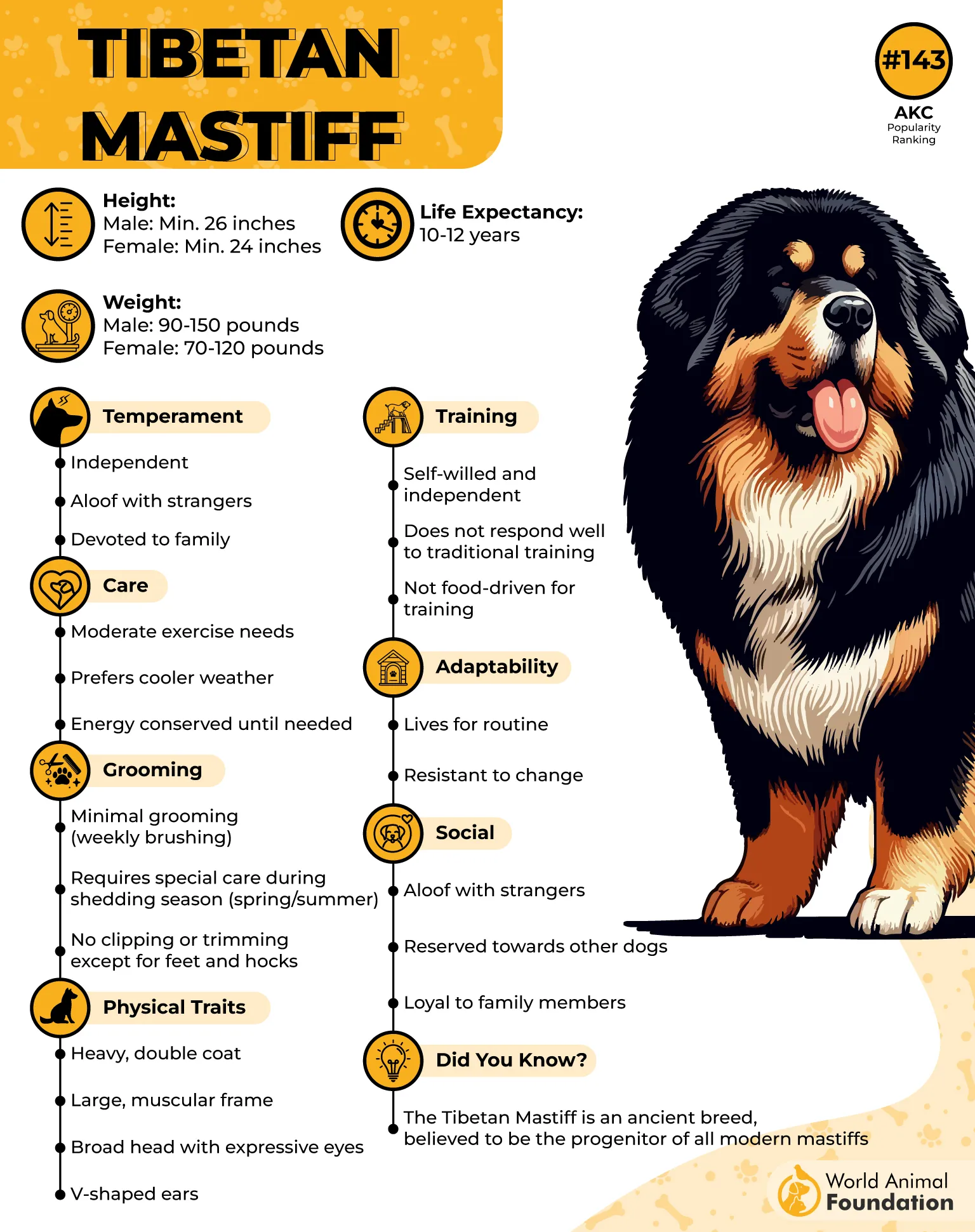
Like all dogs, the Tibetan Mastiff has a reflective layer behind its retina that bounces light back through the eye for a second pass, boosting vision in low light. Its deep-set, wide-spaced eyes give it an unusually broad field of view for scanning a dark perimeter.
Slow perimeter patrol: It walks the fence line at dusk, pausing at known entry points.
Silent freeze and stare: It locks still toward a sound before deciding whether to react.
This is not an easy first dog for farm owners. Its independence and giant size mean training takes real effort, and a bored Tibetan Mastiff can turn destructive instead of watchful.
2. Anatolian Shepherd
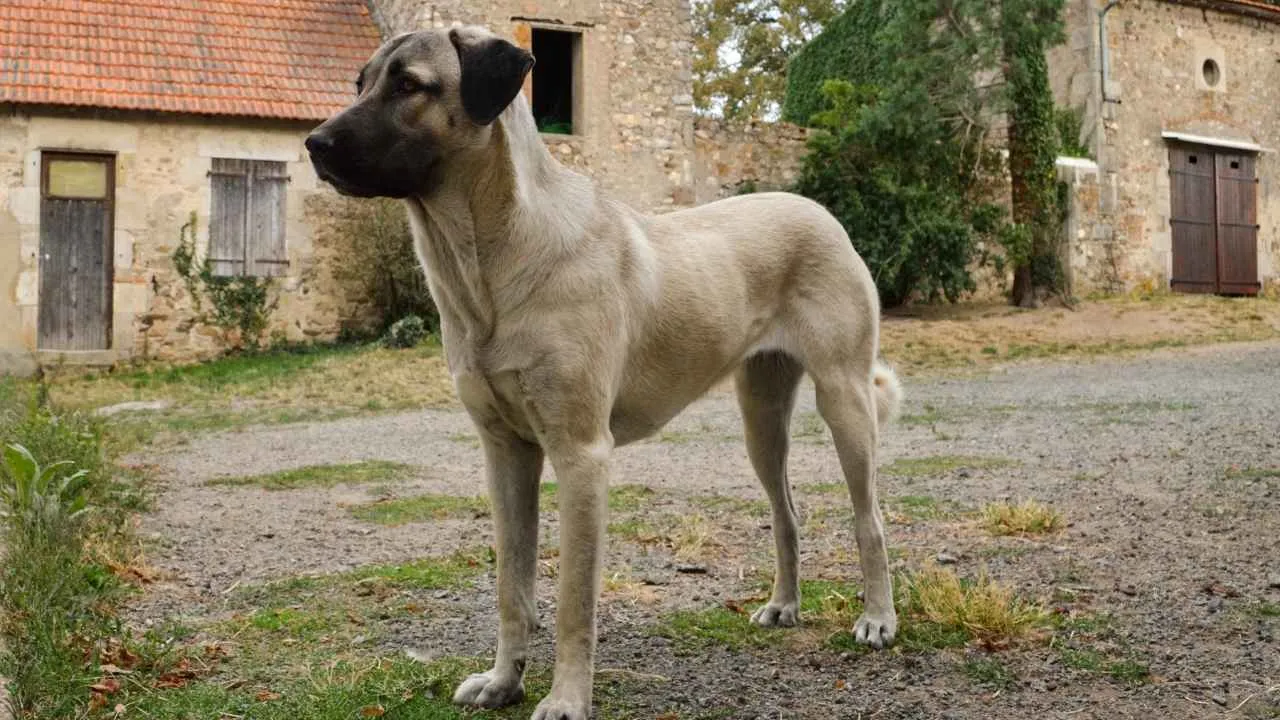
This livestock guardian dog developed on the open plains of Turkey, where flocks grazed for miles with little shelter. Guarding that kind of territory meant learning to watch distant tree lines, not just the yard. The breed’s size and stamina let it patrol those distances without tiring.
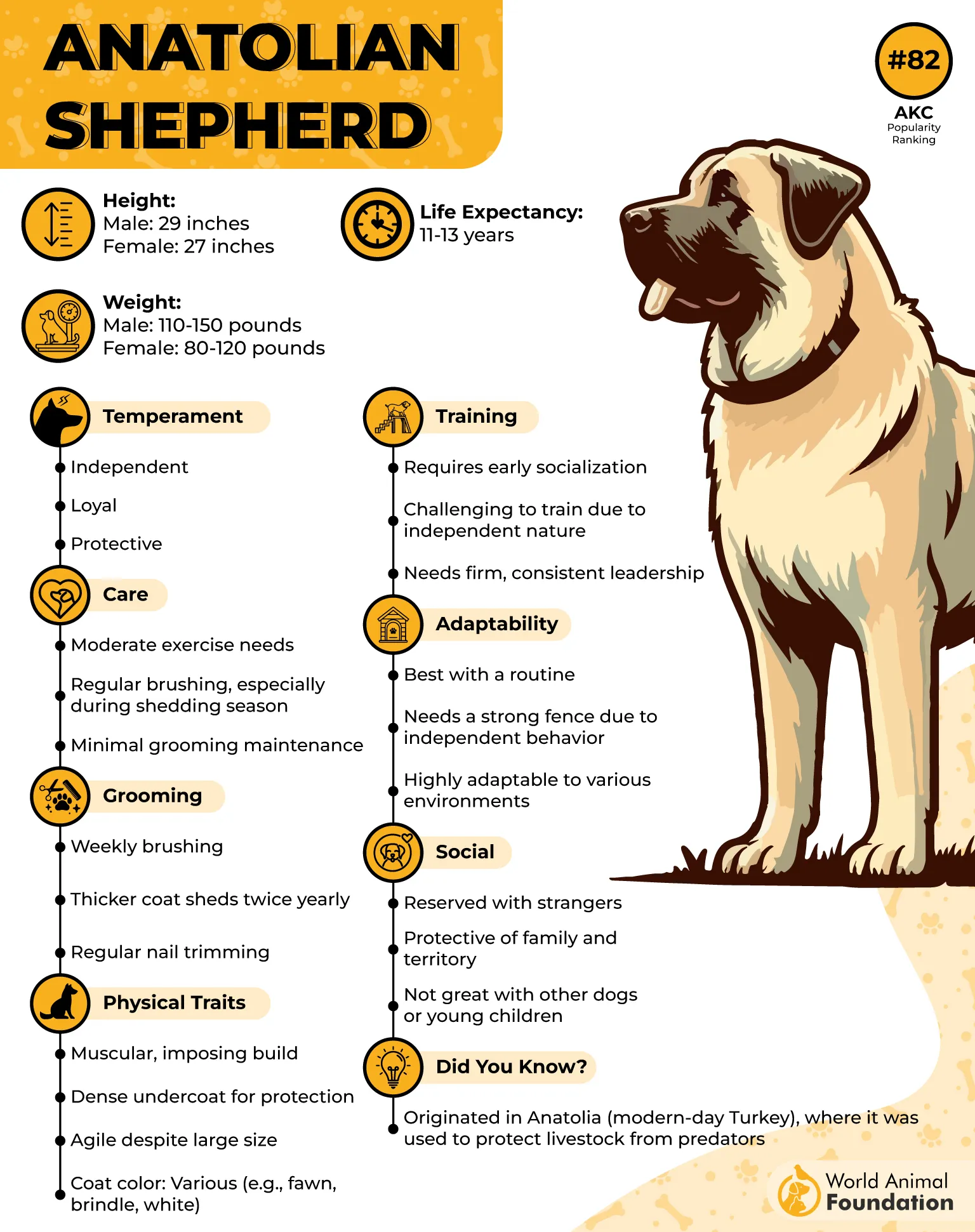
The Anatolian Shepherd’s eyes dilate wider in dim light, pulling in more of the available light than a human eye can manage. This gives it an edge at spotting motion far off, exactly where trouble tends to start on open farmland.
Fence-line sweeps: It covers long stretches of perimeter at a steady trot after dark.
Early motion alerts: It raises its head toward distant movement well before a nearby person can see anything.
According to Britannica, the breed’s territorial instinct runs deep, which also means it can be wary of visitors. Thorough socialization matters for any farm with regular guests.
3. Great Pyrenees
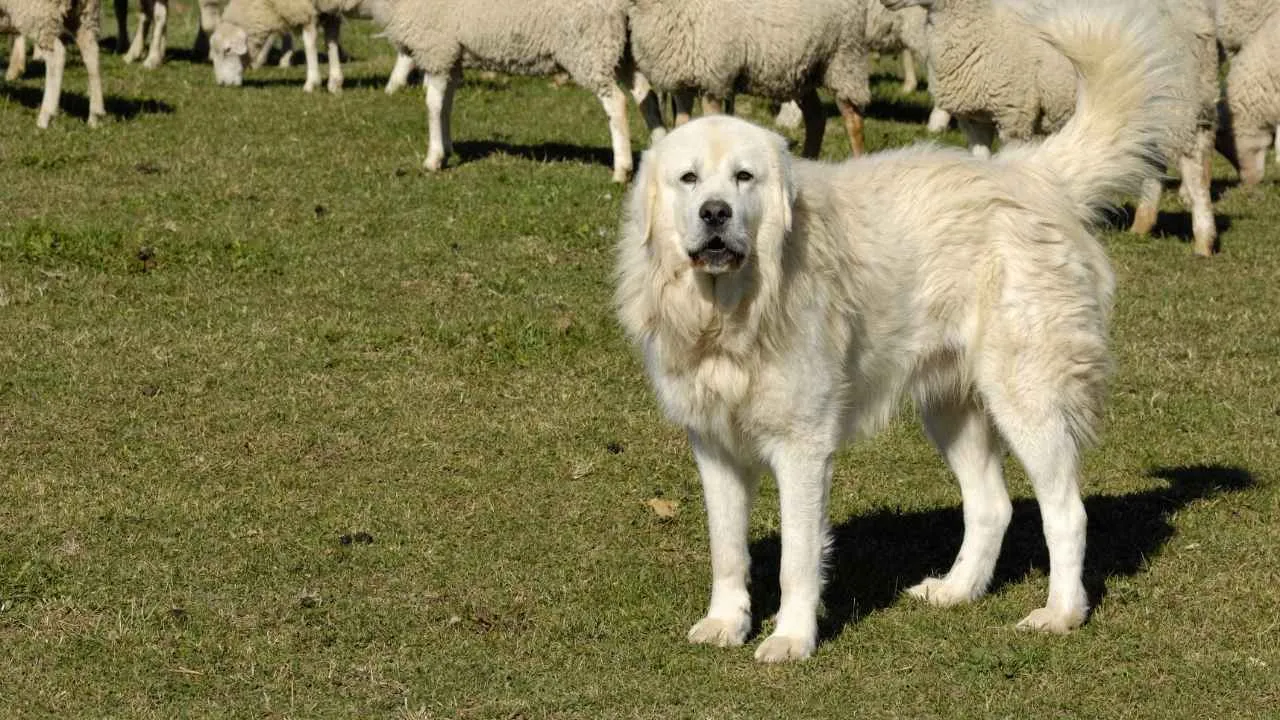
Bred in the mountains between France and Spain, the Great Pyrenees worked alone at night while shepherds slept. Predators moved after dark, so the breed’s whole job depended on staying alert when light was scarce. That history still shows up in its nighttime habits today.
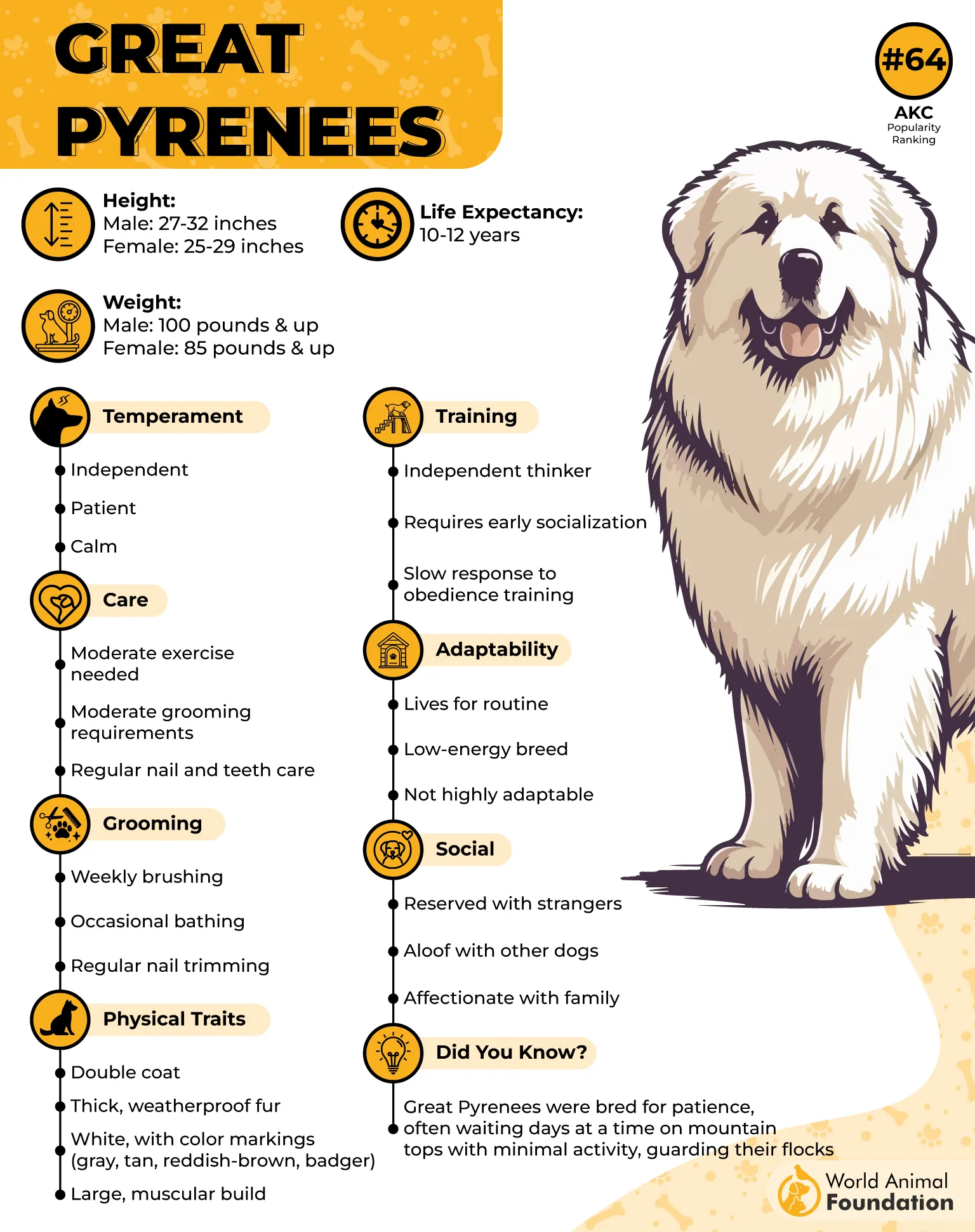
PetMD notes the breed has a rod-dominant retina, which trades sharp detail for better sensitivity to motion and contrast in dim conditions. That trade-off suits a livestock-guarding dog more than a hawk-eyed daytime watchdog ever would.
Dusk activity shift: It becomes noticeably more alert and active as the light fades.
Low growl warnings: It growls softly at movement before escalating to a full bark.
Vision alone will not make a reliable guardian. Vet visits and routine health checks still matter, since joint issues are common in giant breed dogs by middle age.
4. Kuvasz
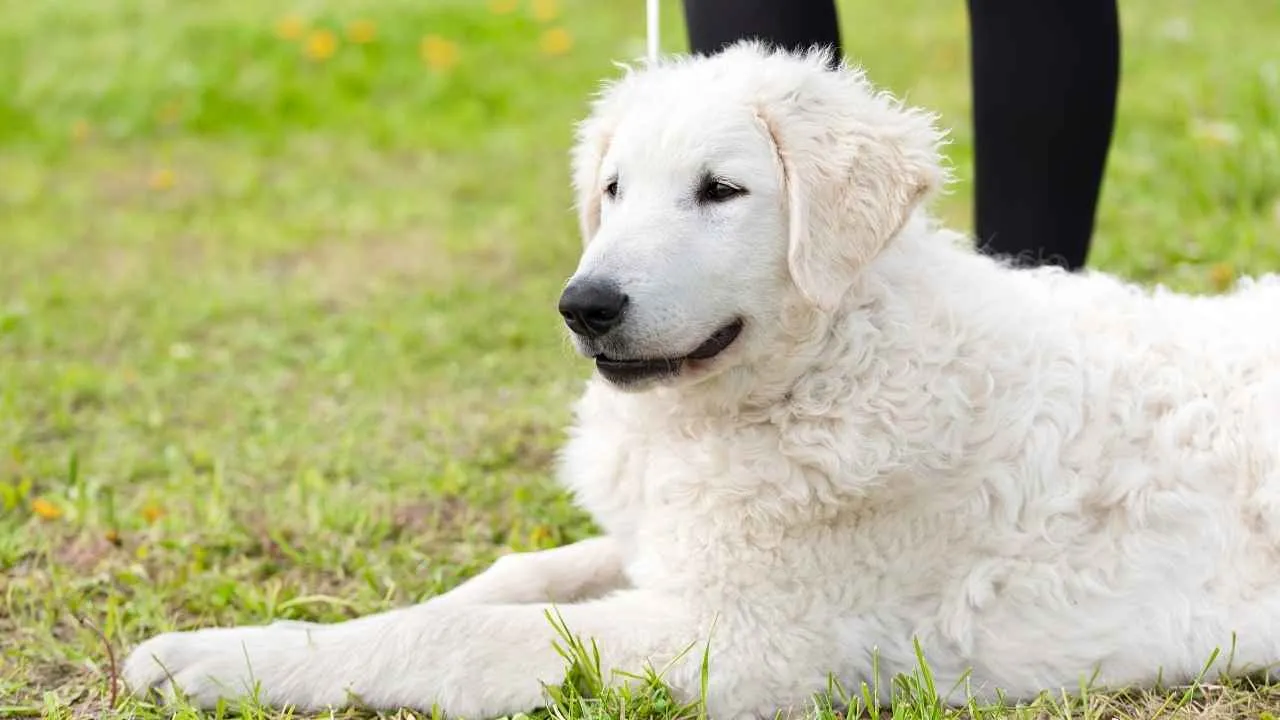
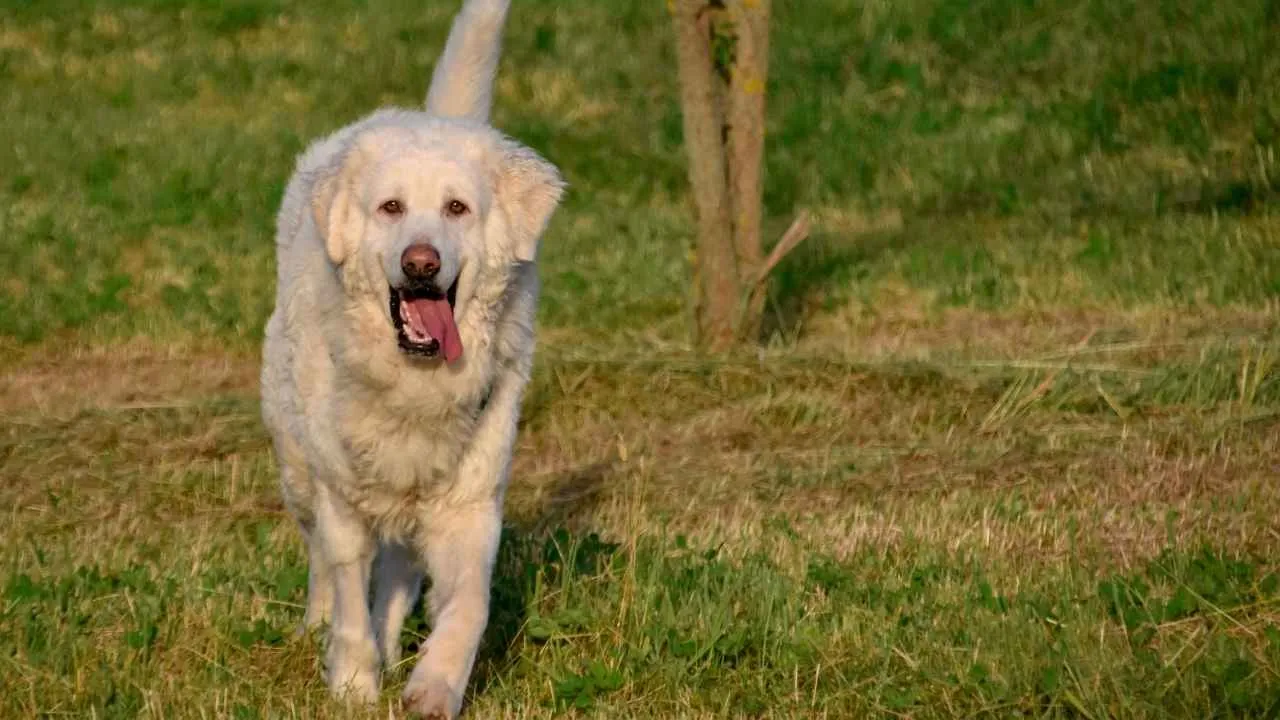
Hungarian shepherds relied on the Kuvasz to guard flocks across open countryside, often overnight and unsupervised. The breed’s thick white coat and solid build made it a dependable livestock defender in harsh weather. That working history is why it still treats farm life as its natural job.
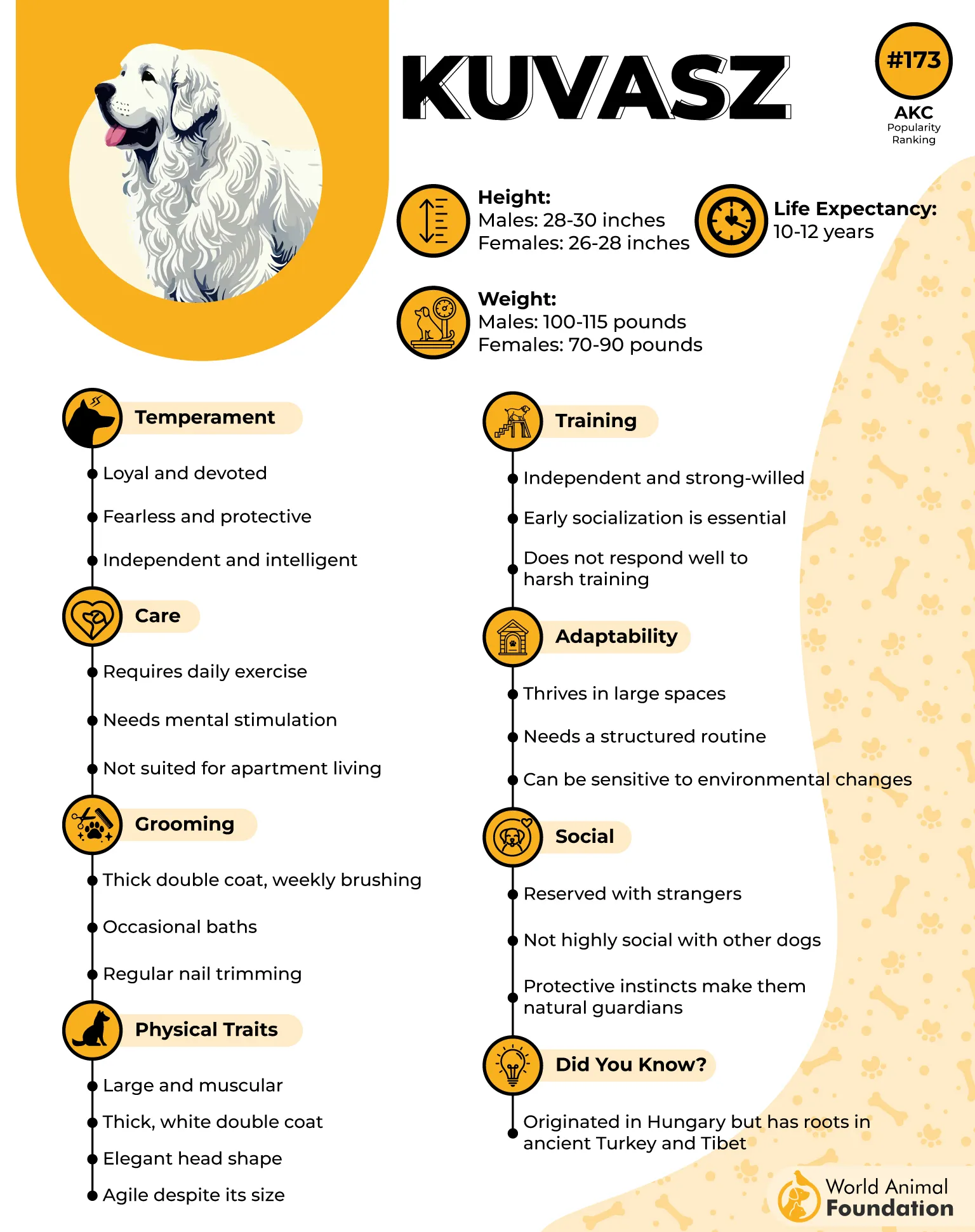
The Kuvasz shares the rod-rich retina common to working guardian breeds, which favors picking up movement over picking out fine detail in the dark. This trait matters more on a farm than sharp daylight vision ever would.
Territory circling: It loops the property boundary at intervals through the night rather than staying in one spot.
Quiet shadowing: It follows unfamiliar movement at a distance before committing to a bark.
Kuvasz puppies need early, consistent training. Without it, natural suspicion toward strangers can turn into excessive barking or reactivity as an adult.
5. Caucasian Shepherd

Mountain communities across the Caucasus region bred this dog to guard livestock against wolves and bears, often in near-total darkness. Its sheer size and dense coat let it work through harsh winters without shelter. Generations of unsupervised night duty built a dog that trusts its own judgment.
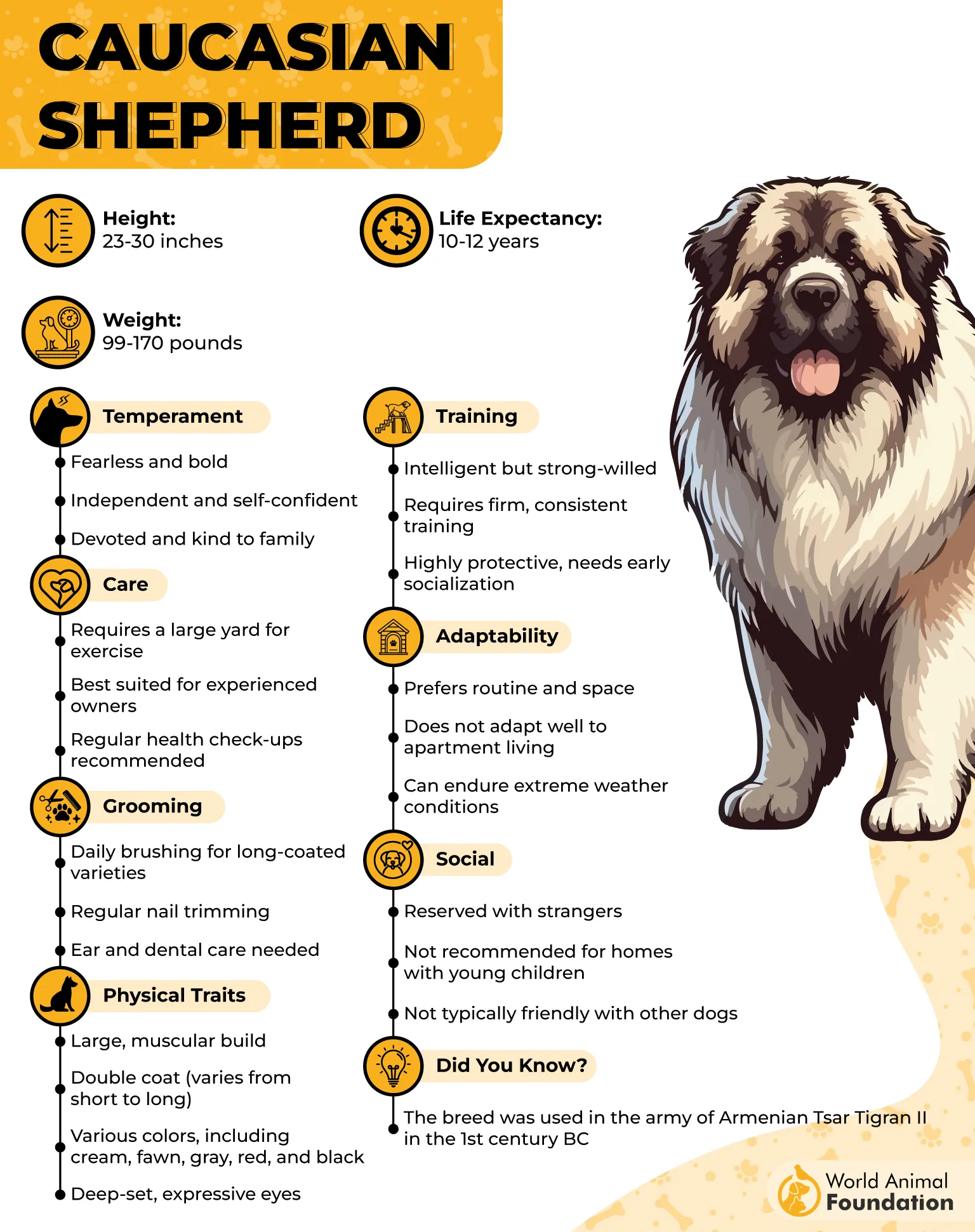
The Caucasian Shepherd’s broad head and wide eye placement give it strong peripheral awareness, useful for catching movement near ground level where foxes and jackals tend to approach. That wide angle of vision covers far more ground than forward-facing eyes alone.
Low-angle scanning: It lowers its head and sweeps the ground near fences rather than only looking straight ahead.
Positioning itself upwind: It shifts position to face incoming scent and movement together.
This is a serious guardian dog, not a casual family pet. Its protective instincts need an experienced handler and secure fencing from the start.
6. Maremma Sheepdog
Italian shepherds developed the Maremma Sheepdog to live among the flock itself, bonding with livestock rather than a human family. That close bond meant it had to notice threats the moment light started fading, long before full darkness fell. According to VCA, the breed still prefers working outdoors over staying indoors with people.
The Maremma’s vision is tuned to transitional light rather than pitch darkness, making it especially sharp during the dawn and dusk hours when predators are most active. That crepuscular alertness lines up neatly with when farm risks actually peak.
Dusk patrol routine: It paces the flock’s edge as the sun sets, without being told to.
Minimal daytime fuss: It stays relaxed and low-key once full daylight returns.
Its independence can read as stubbornness. Training works best when it respects the handler rather than simply obeys commands.
7. Central Asian Shepherd
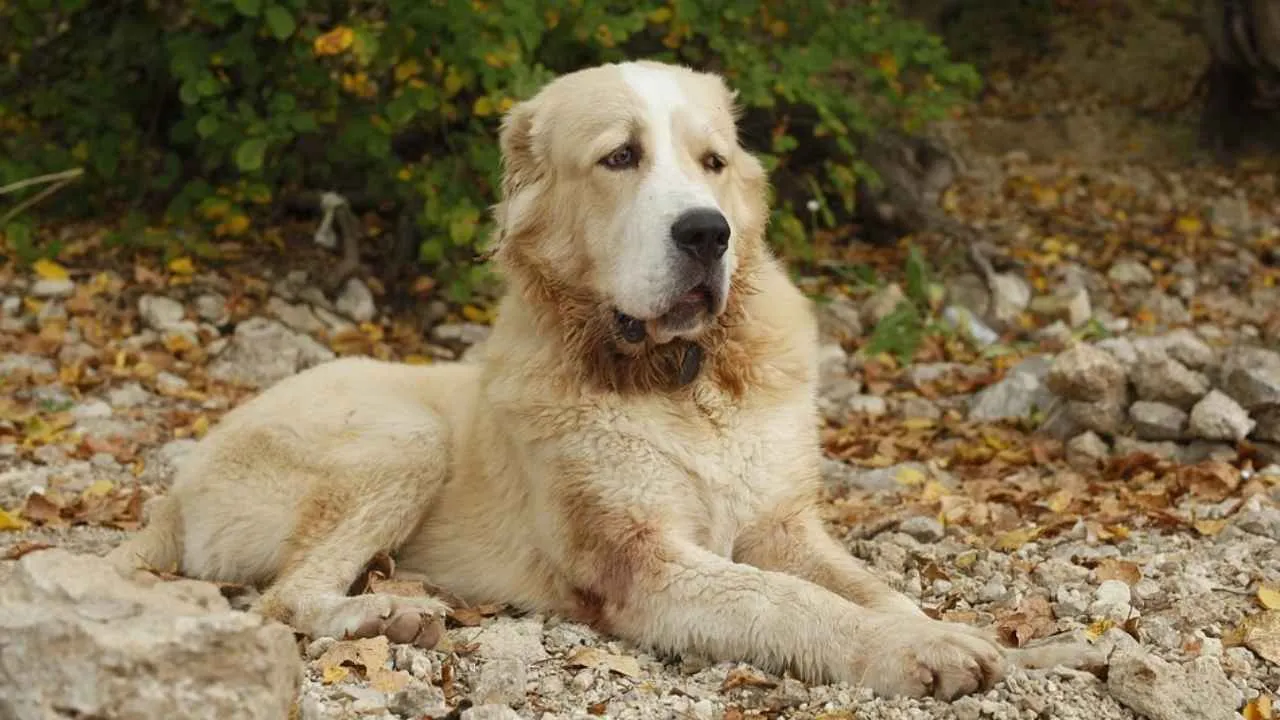
This ancient livestock guardian dog comes from the steppes of Central Asia, where flocks roamed vast, unfenced territory. Purina notes the breed has guarded livestock and property for thousands of years with little human oversight. Surviving that job meant developing sharp instincts for the dark.
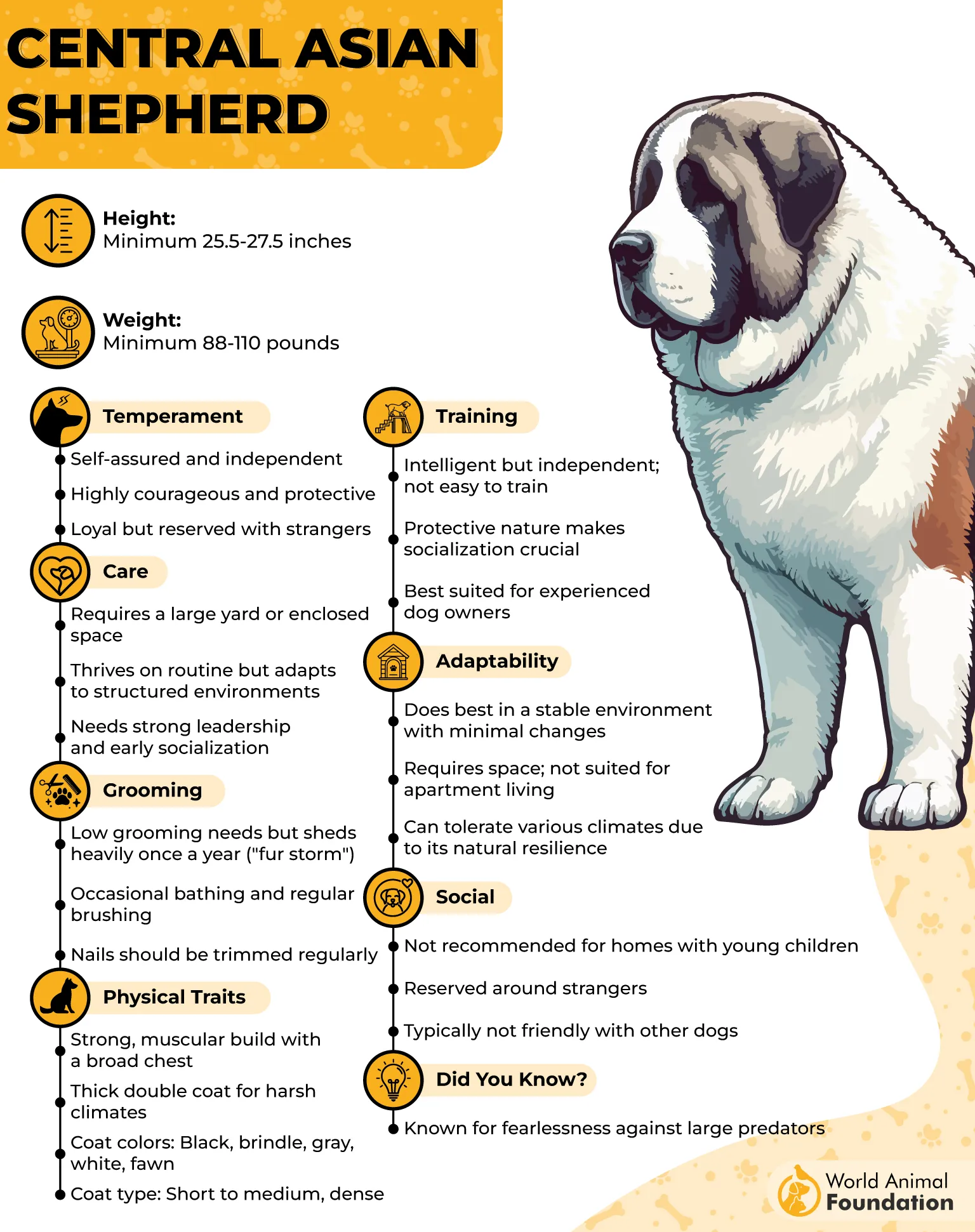
Its unusually large eyes gather more ambient light than most breeds, a real advantage when patrolling vast farmland with no outdoor lighting at all. That extra light-gathering capacity suits near-total darkness better than brightly lit suburban yards.
Wide-territory rounds: It covers large stretches of land on a loose, self-set patrol schedule.
Minimal reliance on sound alone: It investigates visually before committing to a bark or chase.
Choosing this breed means choosing a serious commitment. It is fiercely protective and not naturally suited to small properties or first-time dog owners.
Conclusion
Great night vision gives these seven guardian dogs a real edge once the sun goes down, but it is only one piece of what makes an excellent choice for farm owners.
From the Tibetan Mastiff’s solo patrols to the Central Asian Shepherd’s wide-ranging watch, each livestock guardian dog brings its own mix of loyal instincts, adaptability, and suitability for different farm layouts.
Match the breed to your land, your flock, and your experience level, not just its eyes. Ready to welcome one of these reliable protectors into guardian mode on your farm? Start researching breeders near you today.
