





Want a dog that spends less time at the grooming salon and more time by your side? Short-haired dogs might be just what you’re looking for!
Their sleek coats are generally easier to maintain, making them appealing to busy pet parents who want more time for walks, playtime, cuddles, and family fun instead of endless brushing.
But don’t let those short coats fool you into thinking grooming is completely off the table. These dogs still need occasional brushing, regular baths, and basic coat care to keep their skin and fur healthy.
Some may even shed more than you expect, especially those with double coats or weather-resistant fur. The good news is that their shorter hair is usually easier to manage, even when shedding becomes noticeable.
Let’s explore the short-haired dog breeds that could make life with a furry friend a little easier!
Dog Breeds with Short Hair: A Grooming Dream
1. Vizsla
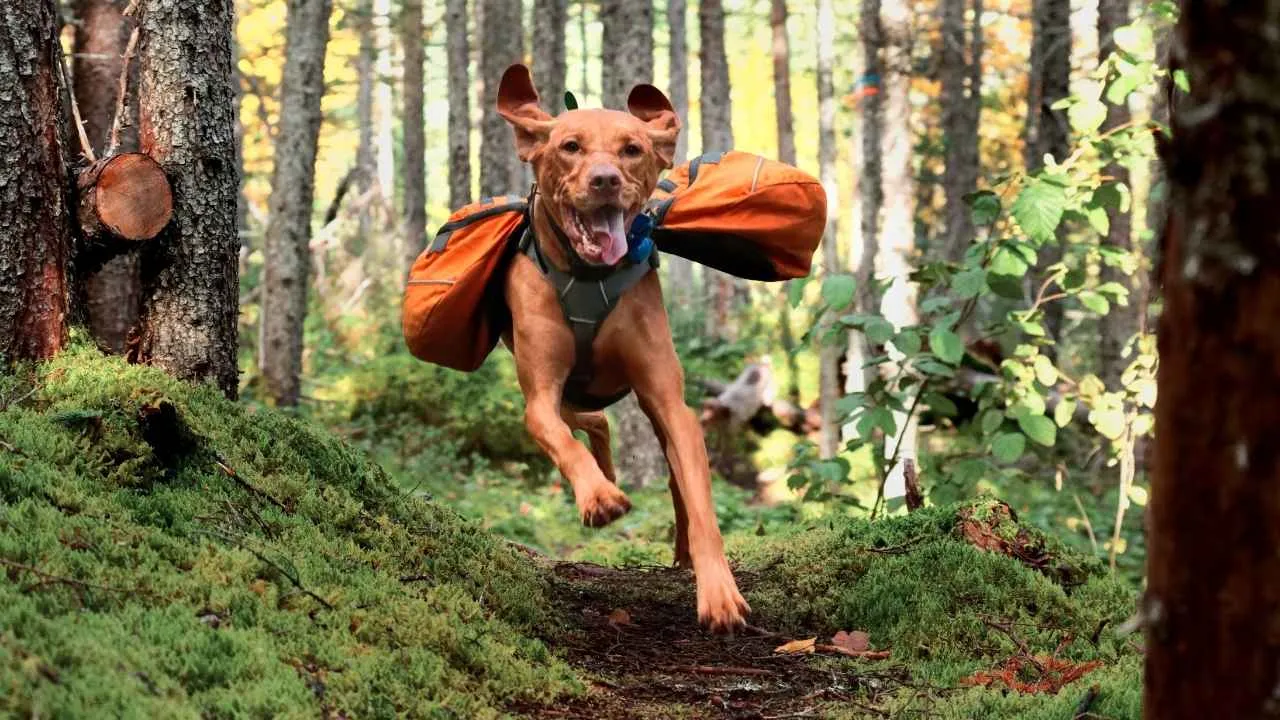
Hungarian Vizslas are energetic, athletic dogs with short coats that are easy to maintain. A weekly brushing helps remove dead hair, while regular checks can catch any lumps, bumps, or injuries after outdoor adventures.
Their grooming needs are simple, making them appealing and gentle companions for owners who prefer spending more time outdoors than caring for long coats.
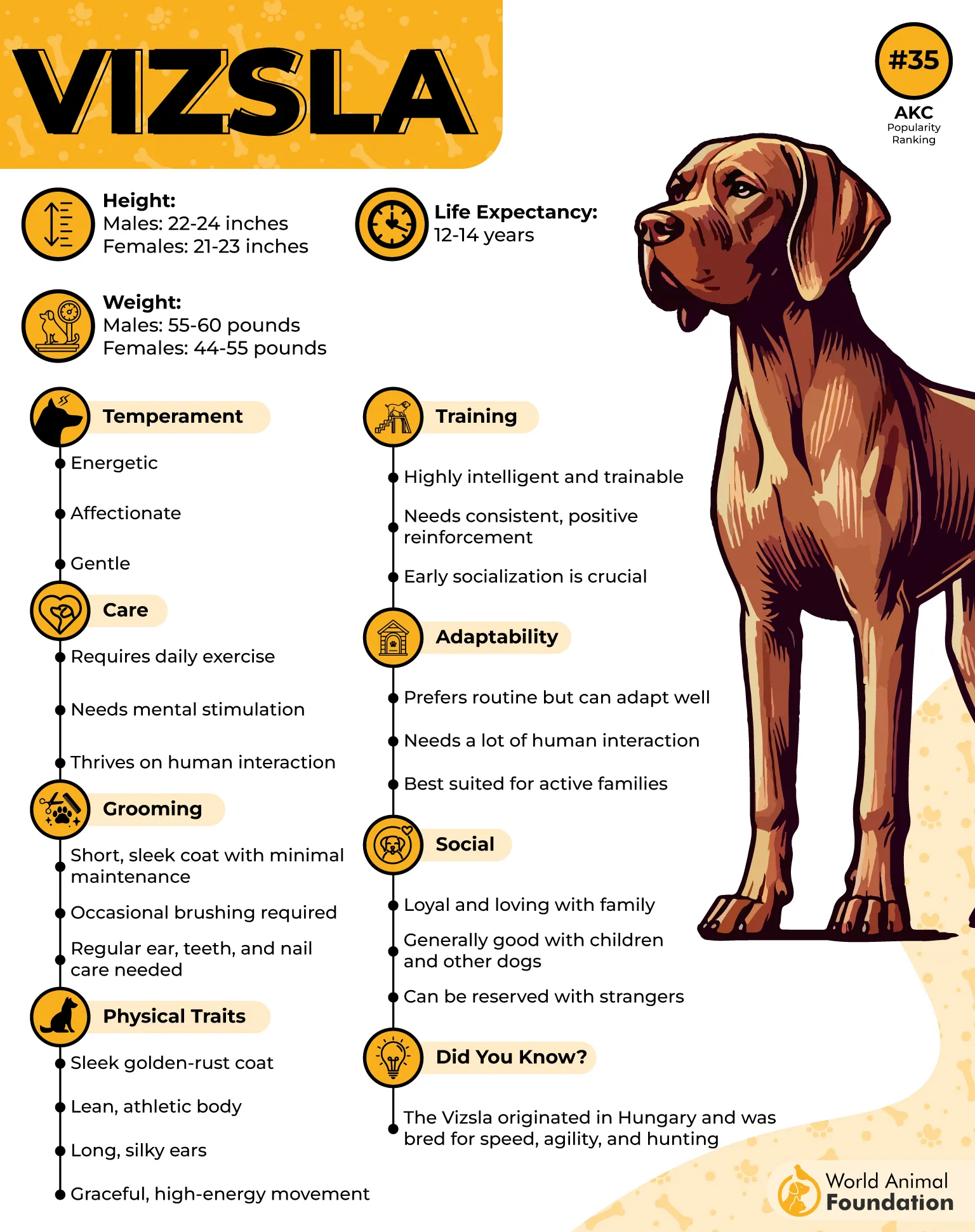
These dogs are affectionate and love staying close to their human families. Often called Velcro dogs, they follow their favorite people around and dislike being left alone for long periods, as mentioned by Omlet.
They are generally gentle with children, friendly with strangers, and sociable with other dogs and pets. However, their prey drive may require extra care when introducing them to cats.
Exercise and Training Needs
Daily activity: Vizslas need plenty of exercise and mental stimulation. They enjoy running, long walks, outdoor adventures, and jogging with their owners. A quick walk is rarely enough.
Training: These intelligent dogs learn quickly and enjoy fun, rewarding sessions. They respond best to gentle handling and affection, as harsh words can frighten them.
Family life: Vizslas suit active households that can offer plenty of companionship. They mature slowly and may retain puppy-like behavior until three or four years of age.
2. Beagle
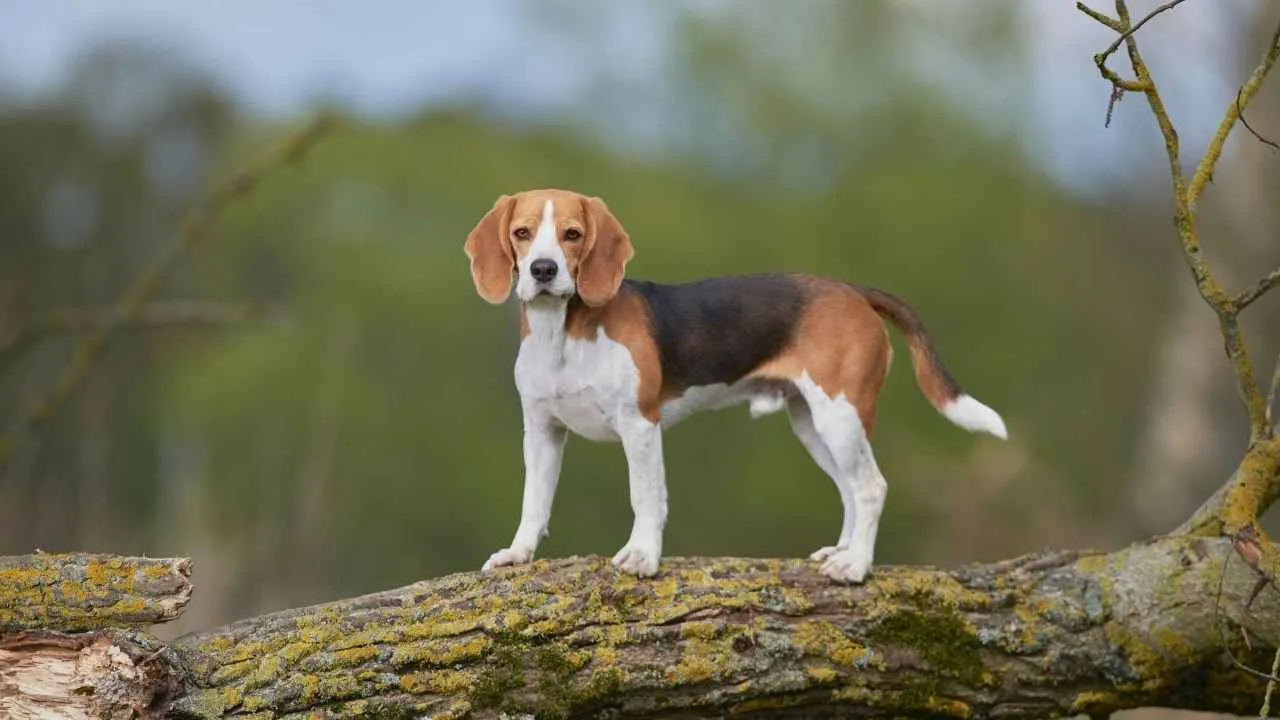
Beagles are cheerful, curious dogs with smooth, short coats that make grooming fairly simple. Their dense double coats shed moderately, so weekly brushing helps remove loose hair and keep their coats tidy.
Occasional baths can also help, depending on how much time they spend outdoors. With their floppy ears, regular ear cleaning is important to help prevent infections.
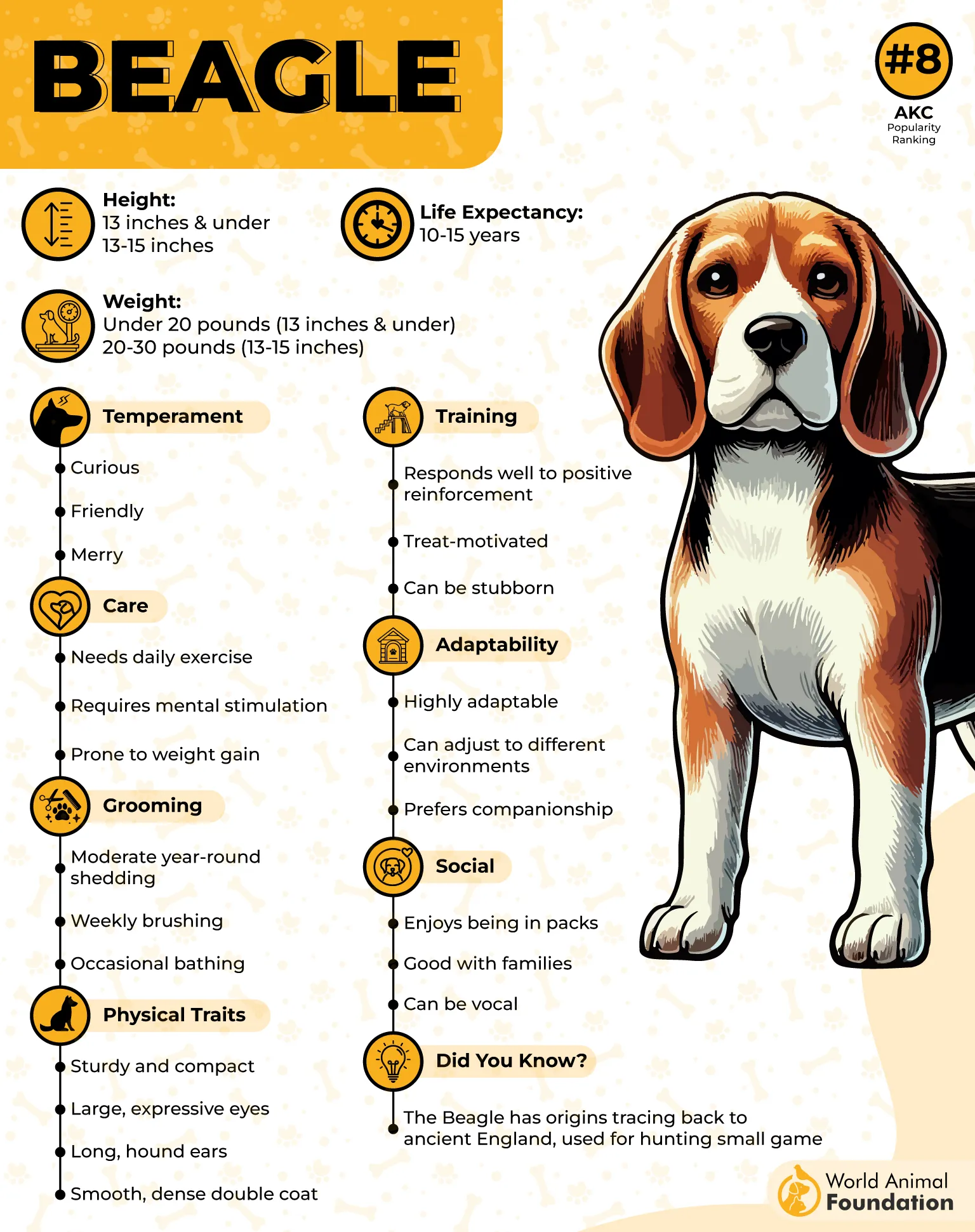
Bred to hunt in packs, Beagles enjoy company and usually get along well with other dogs. They are affectionate, playful, and gentle with children, making them entertaining family companions.
However, early introductions to cats are important, and they may never be safe around unfamiliar cats or small pets. Beagles also make good watchdogs because they bark at unusual sounds, but they are not reliable protection dogs.
Exercise and Care Needs
Daily activity: Beagles need plenty of playtime, exercise, and supervision. Their strong sense of smell can lead them to wander, so reliable recall can be difficult to achieve.
Training and companionship: These clever dogs can be independent and easily distracted during training. They may bark excessively or become destructive if left alone for too long.
Health and feeding: Beagles are prone to obesity, so measured meals served at regular times are important. Avoid free-feeding to help maintain a healthy weight.
3. American English Coonhound
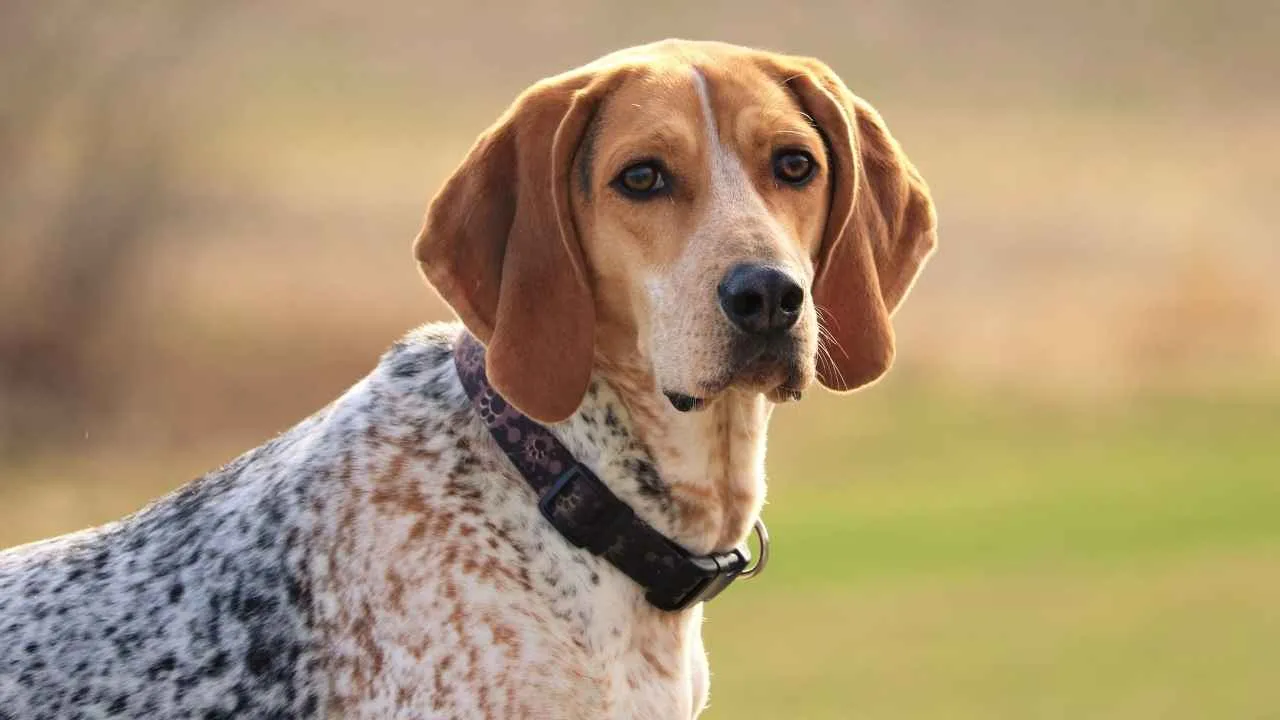
American English Coonhounds are sleek, muscular hunting dogs known for their speed, stamina, and strong tracking skills. Also called Redtick Coonhounds, they descend from European hunting dogs brought to the United States and were bred to track raccoons and other game.
Their short, hard coats come in various color patterns, including red and white, blue, and tricolor. Weekly brushing can help keep their coats tidy with minimal grooming effort.
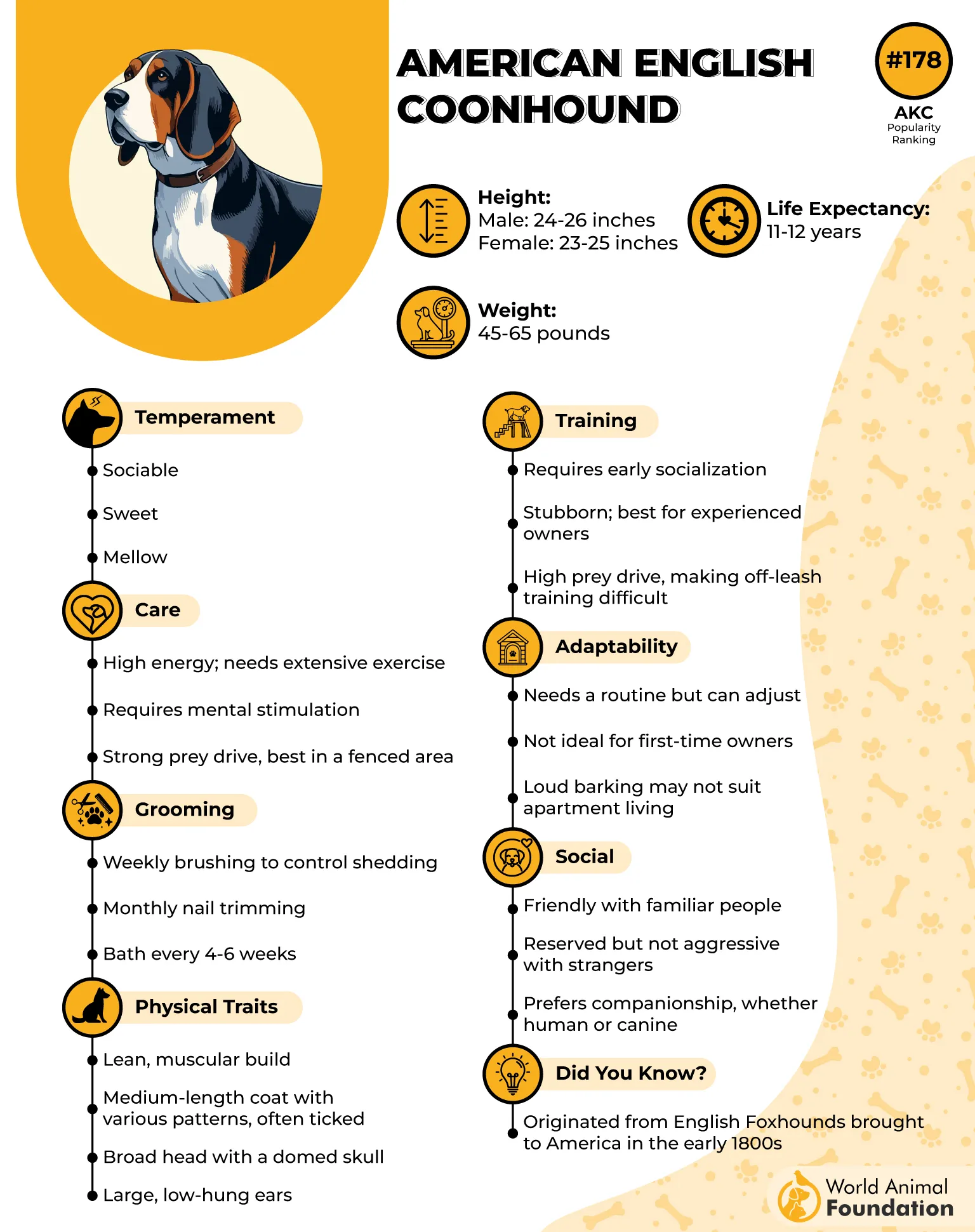
These hounds are affectionate, loyal, and sociable with their families. They can be mellow at home when their exercise needs are met, but their strong hunting instincts make them a demanding choice for inexperienced owners.
According to PetMD, they may chase smaller animals, including cats and rabbits, so outdoor supervision and secure spaces are important. Their loud, ringing bark can also be challenging in homes where noise is a concern.
Exercise and Training Needs
Daily activity: American English Coonhounds need plenty of exercise to channel their energy. Long walks, jogging, and canine sports can help keep them active and engaged.
Training: These intelligent dogs can be independent and stubborn, especially when distracted by scents. Consistent training with positive reinforcement takes time and patience.
Best environment: They suit active owners who can provide regular exercise and meaningful activities. Their strong hunting drive and demanding work ethic may make them difficult pets for novice owners without an appropriate outlet for their instincts.
4. American Staffordshire Terrier
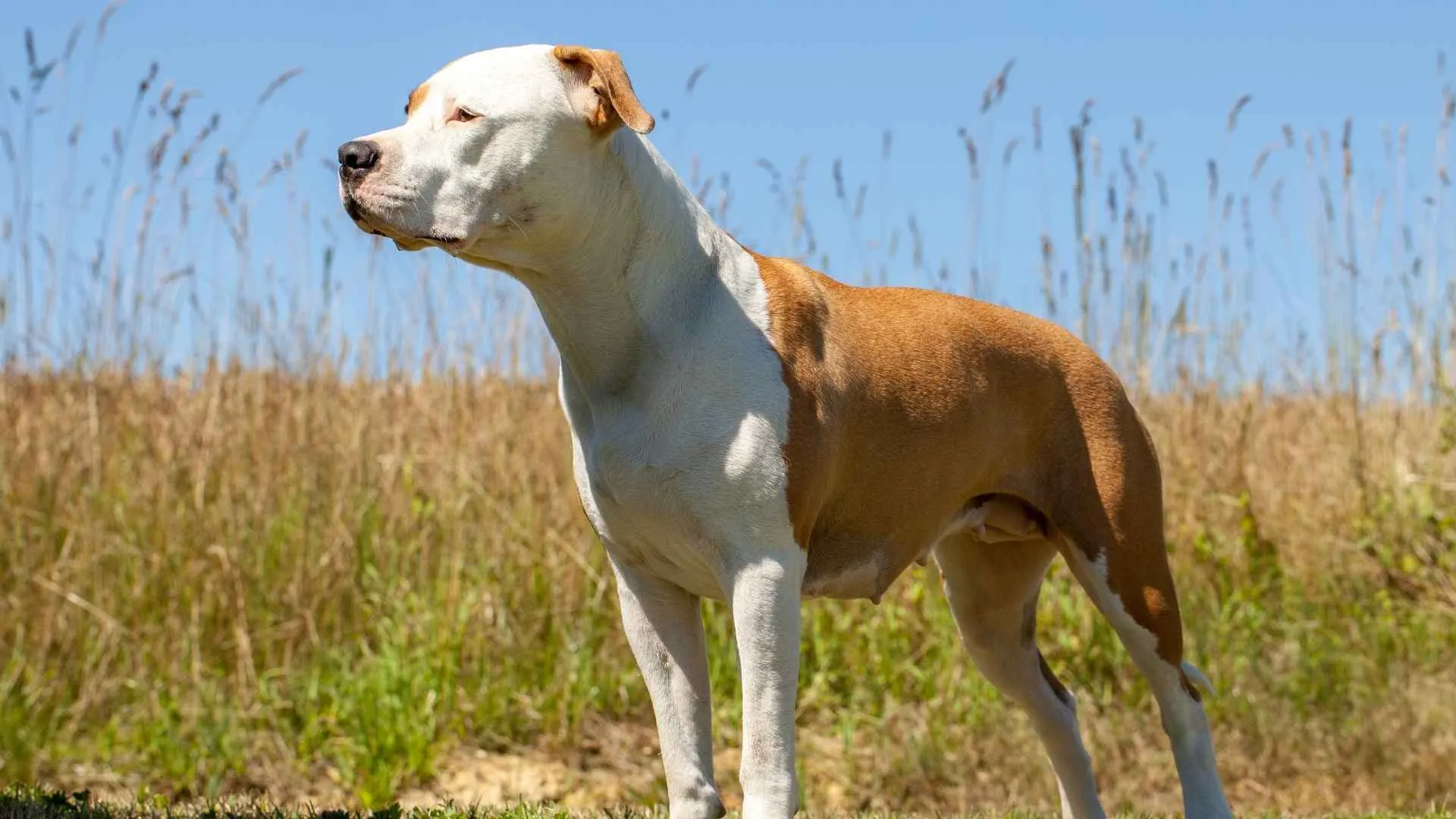
American Staffordshire Terriers, often called AmStaffs, are muscular, confident dogs with short, stiff coats that are easy to maintain. Their glossy, single-layer coats come in many colors and patterns.
They shed some hair but are not heavy shedders. Brushing every few weeks and bathing every four to six weeks can help keep their coats clean and tidy.
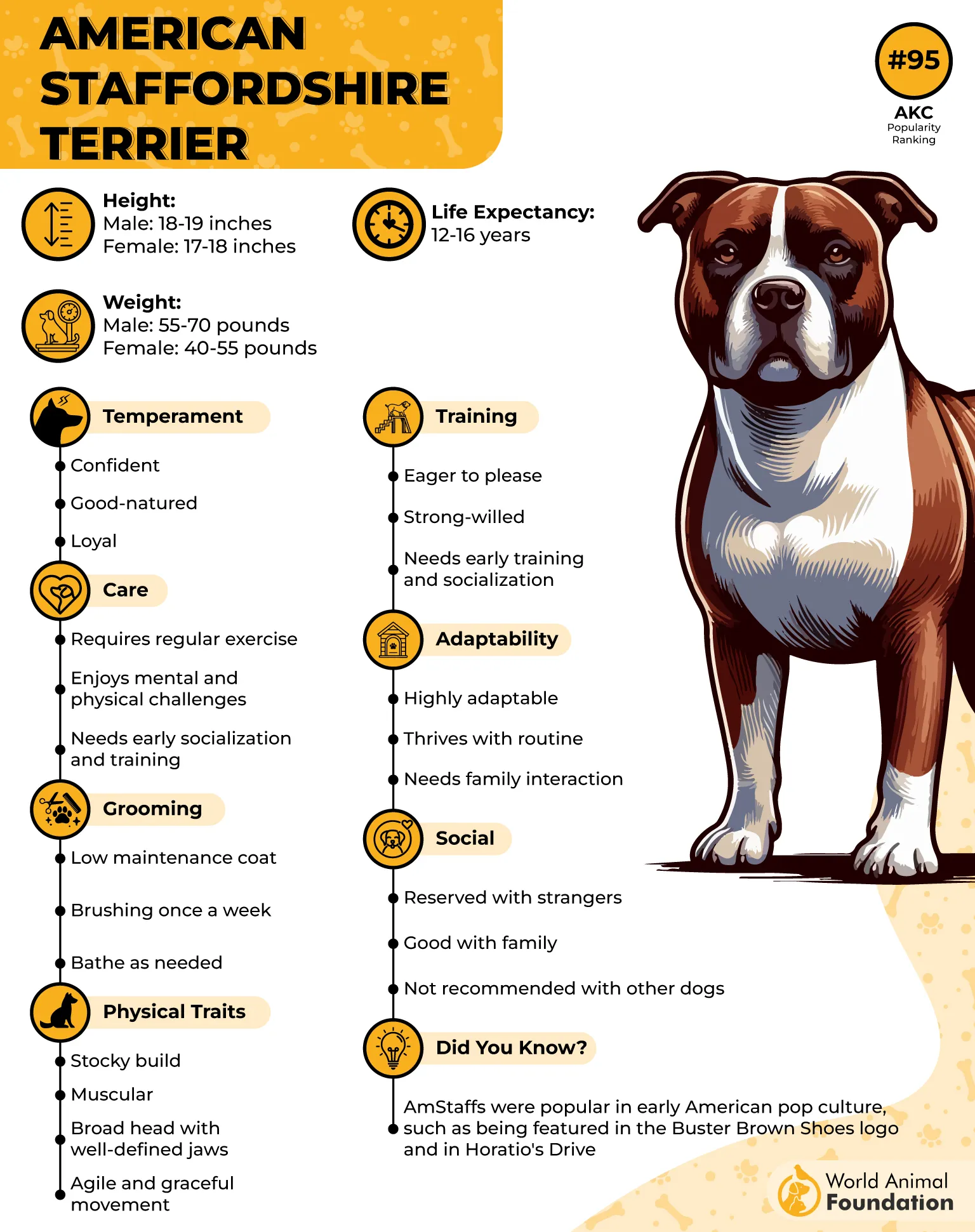
Behind their strong appearance, AmStaffs are affectionate, playful, and loyal companions. They enjoy spending time with their families and can be happy playing energetic games or relaxing at home. They are also intelligent and quick to learn.
However, they may show aggression toward other dogs, so early socialization and careful supervision around other animals are important. Their protective nature also makes consistent training essential.
Exercise and Training Needs
Daily activity: AmStaffs need around 60 minutes of exercise each day. They enjoy active games such as tug-of-war and chase, along with other vigorous activities.
Training: These smart dogs respond well to consistent training and mental challenges. Positive experiences and early socialization help them learn to behave calmly around strangers and in new situations.
Choosing a puppy: Responsible breeding and early socialization are important when bringing an AmStaff into the family.
5. Boston Terrier
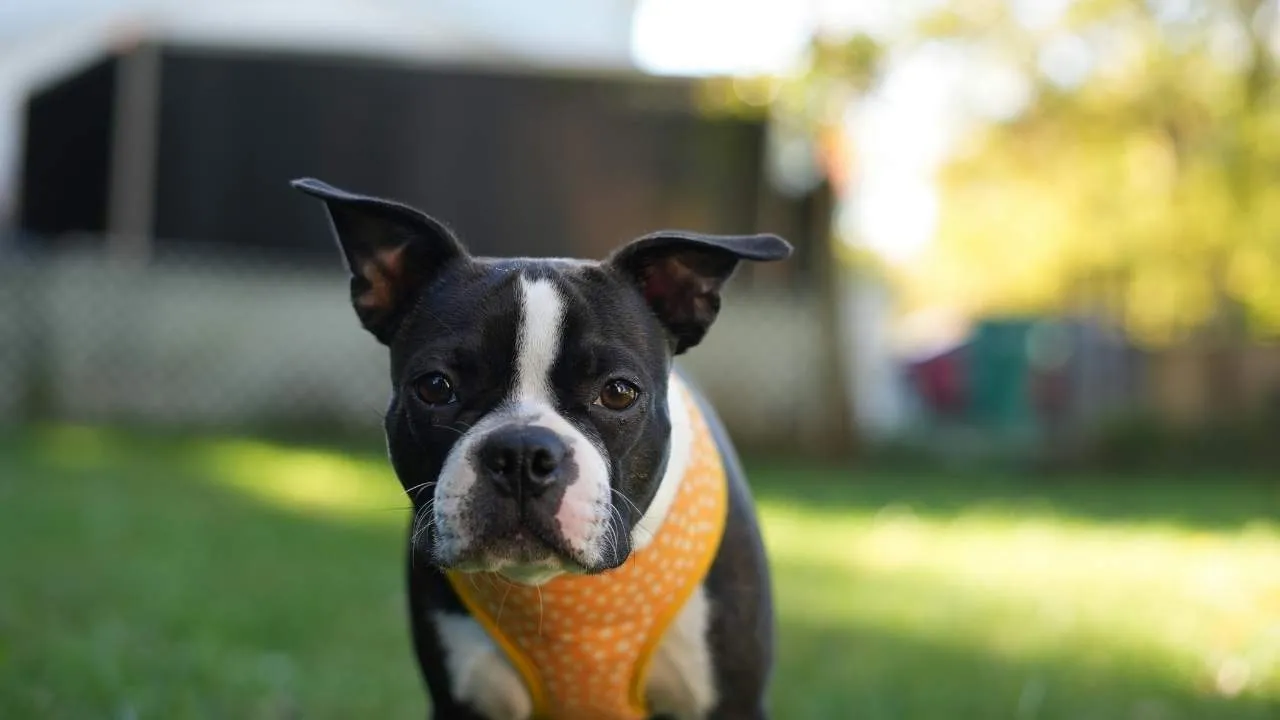
Boston Terriers, nicknamed the “American Gentleman,” are known for their smooth, short coats and distinctive tuxedo-like markings. Their coats are usually black and white, brindle and white, or seal and white.
They need little grooming, making them a good fit for owners who prefer simple coat care. Their cheerful personalities and compact build also make them appealing companions for many households.
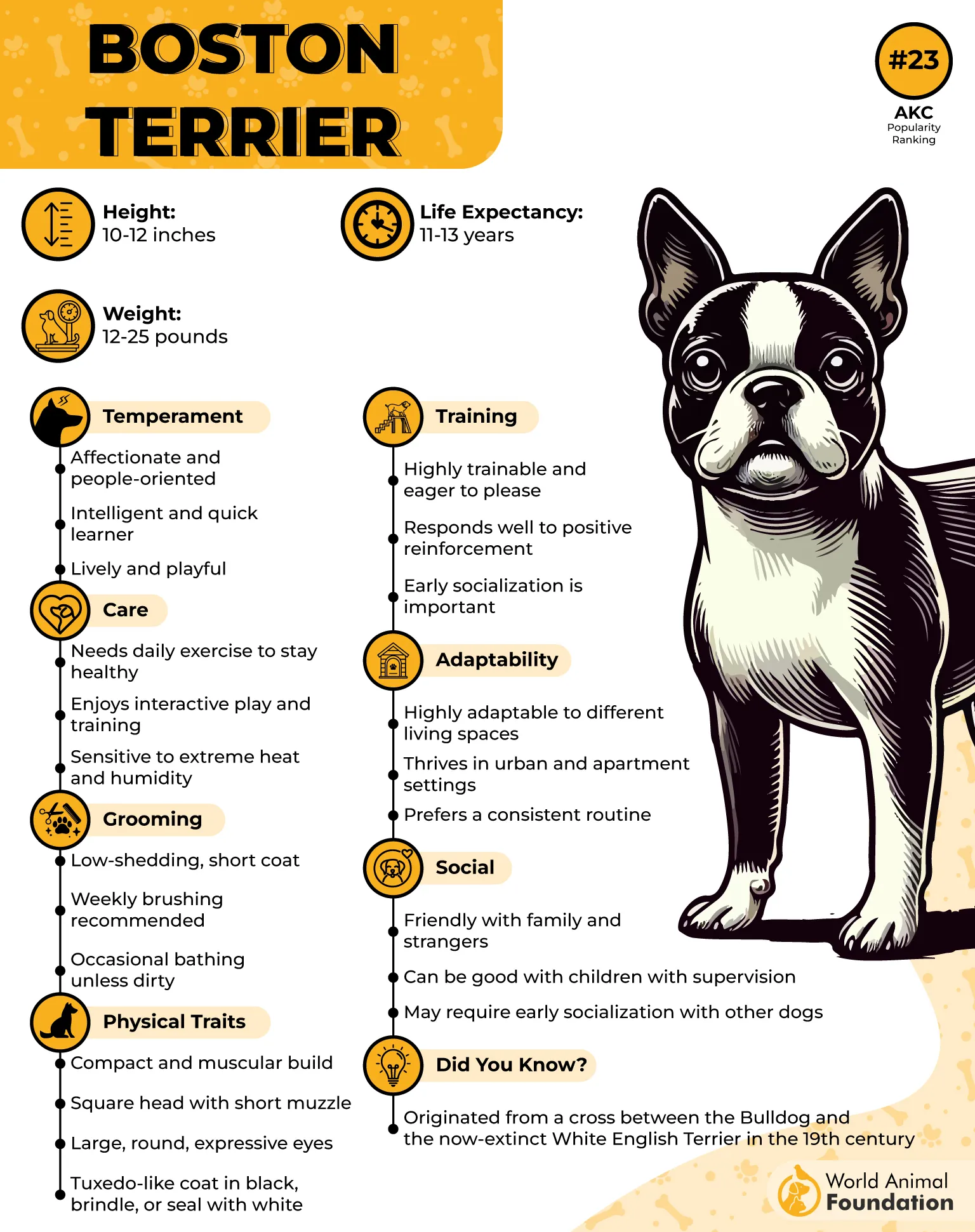
These lively, affectionate dogs love being part of family activities. They usually do well with children who play gently and can get along with other household pets, including cats.
However, they may act assertively toward unfamiliar dogs, as noted by Britannica. Their flat faces can cause breathing difficulties, especially in hot weather or during strenuous activity.
Exercise and Care Needs
Daily activity: Boston Terriers need moderate exercise and enjoy games such as fetch. They can adapt well to apartment living and are happy to relax beside their owners.
Training and socialization: These clever dogs may be stubborn at times but respond well to rewards and encouragement. Supervise interactions with children and other dogs to help prevent rough play or conflicts.
Weather precautions: Avoid strenuous exercise in hot weather, and schedule walks during cooler morning or evening hours.
6. Whippet
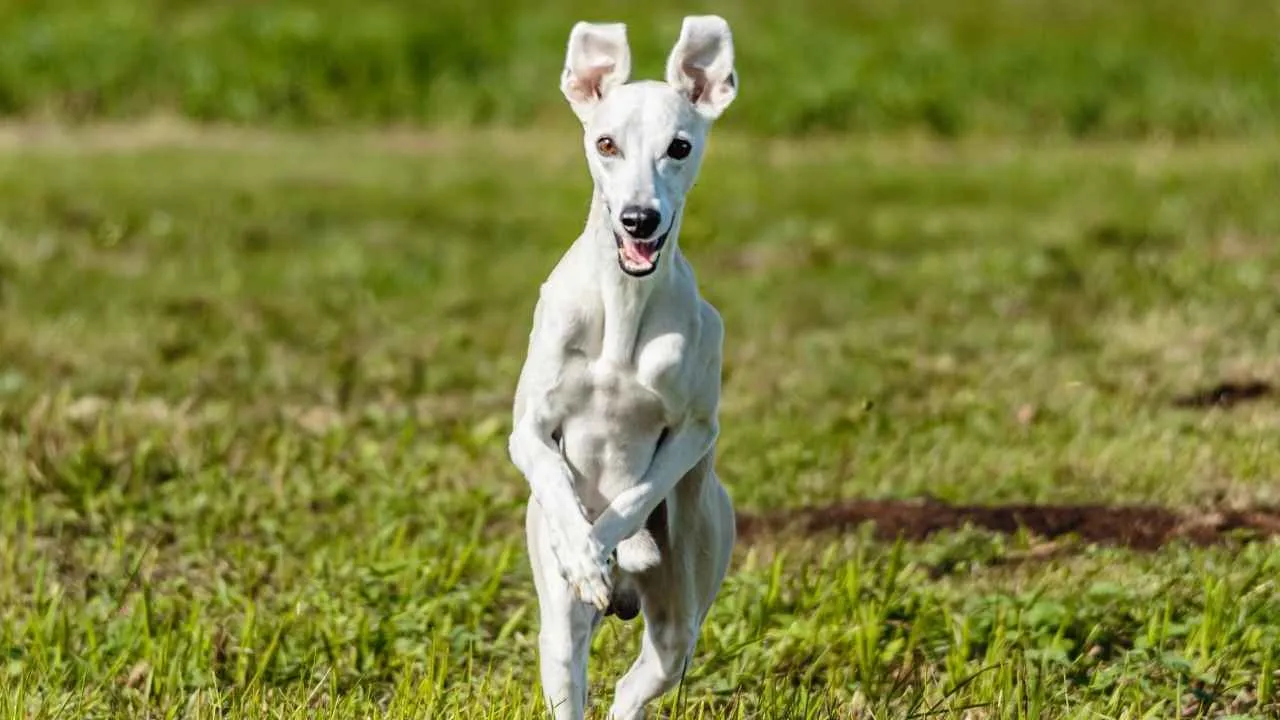
Whippets are sleek, graceful dogs with short, smooth coats that need very little grooming. Known as the “Poor Man’s Racehorse,” they are built for speed and love to run. Their coats lie close to the body and come in many colors and patterns, including black, fawn, red, white, and brindle.
Despite their athletic build, these dogs are low-maintenance and rarely bark, making them appealing companions for city living.
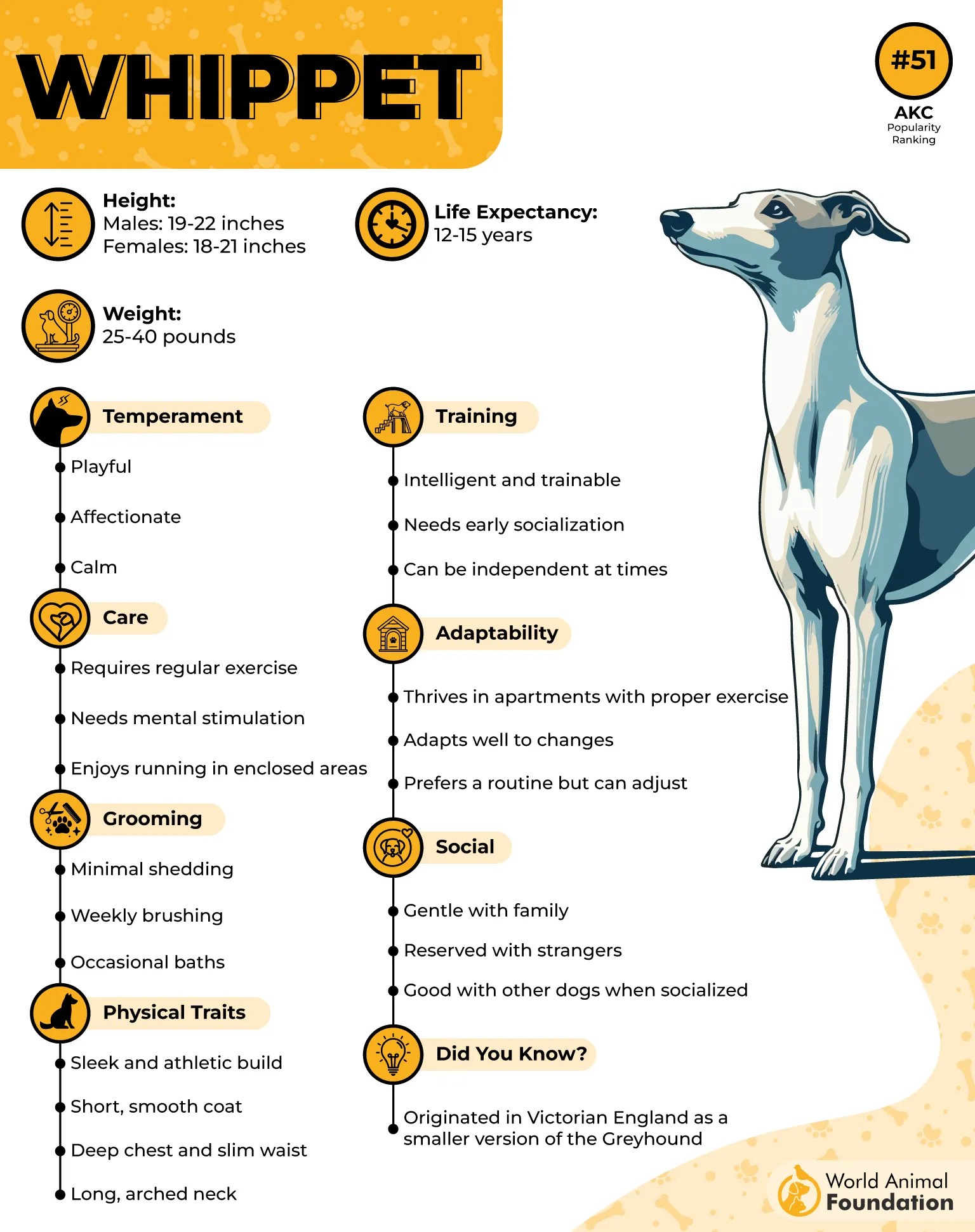
Behind their racing abilities, Whippets are gentle, affectionate, and sensitive dogs. They enjoy spending time with their families and are usually quiet and welcoming toward strangers. After a good run, they are happy to relax on the couch or curl up in their beds.
However, these adorable pups love human company and may struggle when left alone for long periods. Their strong chasing instincts also mean they need careful supervision around small animals.
Exercise and Care Needs
Daily activity: Whippets need regular exercise, running opportunities, and mental stimulation. A securely fenced yard is ideal, but they can adapt to apartment living when their exercise needs are met.
Training and safety: These intelligent dogs enjoy learning and playing chase games. Keep them on a leash during walks, as they may bolt after squirrels, rabbits, or other small animals.
Companionship: Whippets thrive with owners who understand their sensitive nature and can provide plenty of company. A dog walker or pet sitter can help keep them occupied when family members are away for long periods.
7. Basenji

Basenjis are graceful, energetic hunting dogs known as Africa’s “barkless dogs.” They rarely bark but communicate through unusual sounds, including yodels and chortles.
Their short, smooth coats need only occasional grooming, as they keep themselves clean much like cats. Their tightly curled tails and wrinkled foreheads also give them a distinctive appearance.
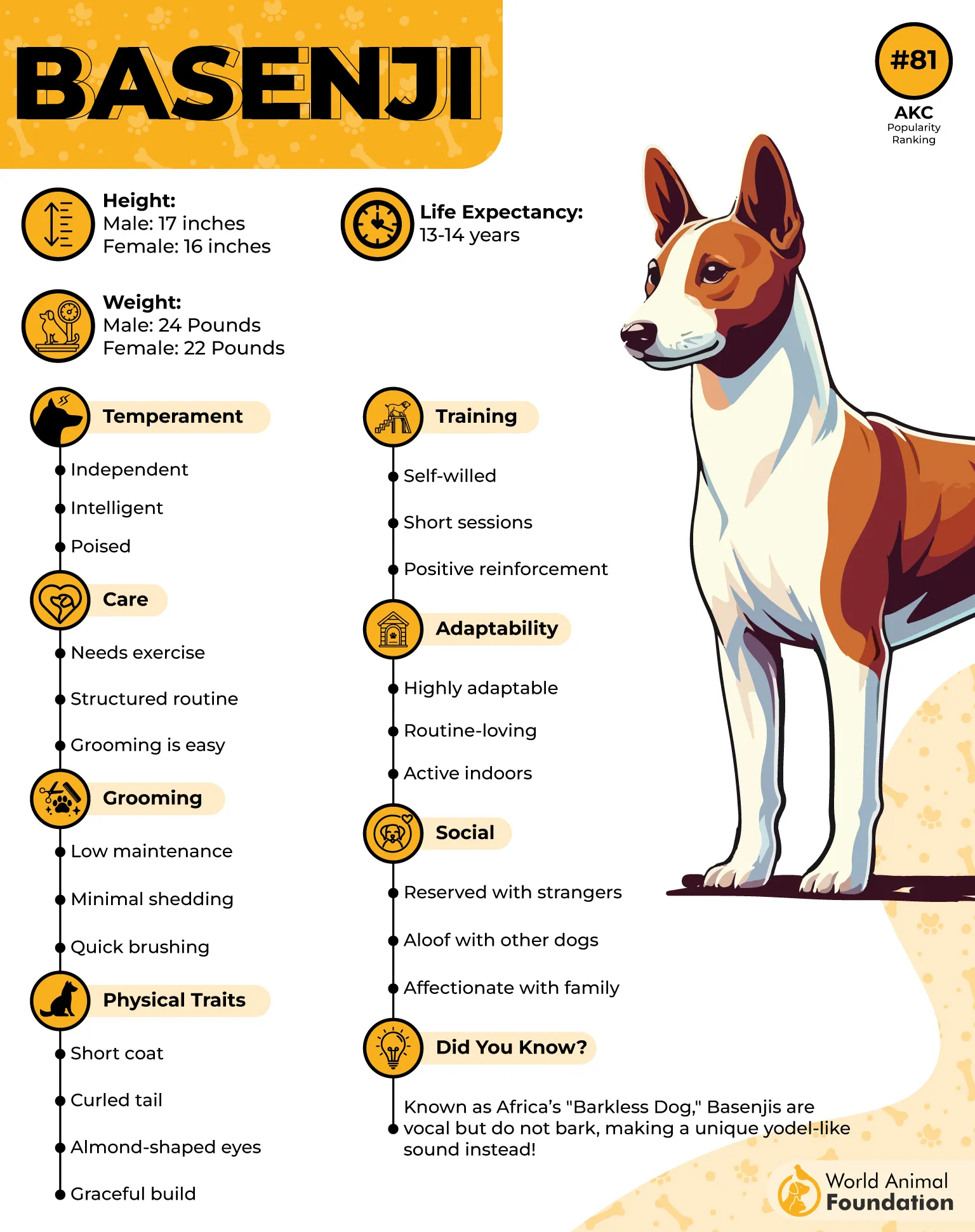
These intelligent dogs are curious, playful, and devoted to their owners, but they can be independent and wary of strangers. They dislike being left alone and may become destructive when bored.
Their strong prey drive makes them difficult to trust around small animals, while their climbing skills and speed can make escapes hard to prevent. Families with young children should also supervise interactions, as Basenjis may nip when they feel threatened.
Exercise and Training Needs
Daily activity: Basenjis need regular exercise and mental stimulation. Activities such as agility and lure coursing can keep them engaged and help prevent destructive behavior.
Training: They are intelligent but stubborn, and recall can be unreliable. Patient, consistent training with treats works better than shouting, which may make them fearful.
Outdoor safety: Keep Basenjis on a leash or in a secure, fenced area. They are skilled climbers and fast runners, and their hunting instincts may lead them to chase small animals.
Conclusion
Short-haired dogs can make wonderful companions for people who want to spend less time on coat care and more time enjoying life with their pets.
Each breed has its own personality, exercise needs, and care requirements. A short coat may simplify grooming, but it does not mean every dog has the same needs.
Before choosing a breed, consider your lifestyle, living space, and the time you can give to training, exercise, and companionship.
Research each breed carefully and meet potential dogs before making a decision. The best companion is not simply the one with the easiest coat to maintain, but the one whose needs and personality fit naturally into your life.
Looking for more short-haired breeds? You can also check out the Italian Greyhound, Miniature Pinscher, Doberman Pinscher, short-haired Chihuahua, and Basset Hound.
