




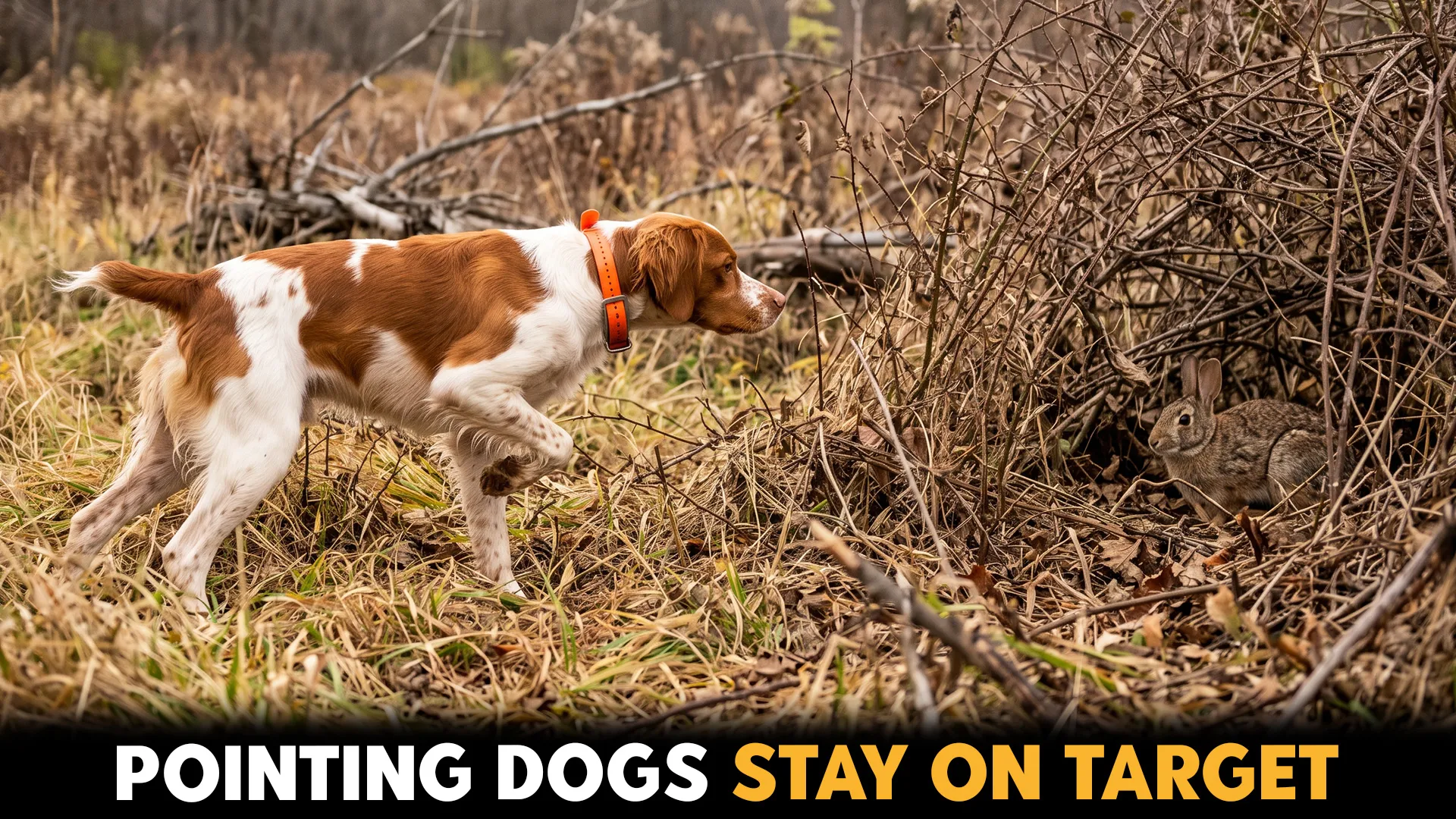
If you’ve ever watched a skilled hunting dog catch the faint scent of a rabbit and confidently lead the chase, you already know there’s nothing quite like the teamwork between a hunter and a well-trained canine.
When it comes to hunting wild rabbits, success depends on more than luck. A good rabbit-hunting dog can pick up fresh scent trails, locate rabbits hiding in thick cover, and point or flush them into the open while staying under control.
The best hunting dogs combine instincts with trainability, endurance, and a willingness to work closely with their handler, making every hunt more productive and enjoyable.
But not every hunting dog works the same way. Some excel at tracking scent over long distances, while others are better at locating hidden game and alerting hunters to its exact location.
In this article, we’ll explore the best dog breeds to locate and point wild rabbits, what makes each one stand out, and how to choose the right hunting companion for your style of hunting.
Key Takeaways
Meet seven incredible dog breeds built to locate and point wild rabbits like pros.
See why Beagles, Irish Setters, and German Shorthaired Pointers top hunters’ lists.
Discover how Brittanys, English Setters, and Boykin Spaniels tackle tough terrain.
Compare hunting skills, temperament, and care to find your perfect field partner.
Best Dog Breeds to Locate and Point Wild Rabbits
1. Irish Setter
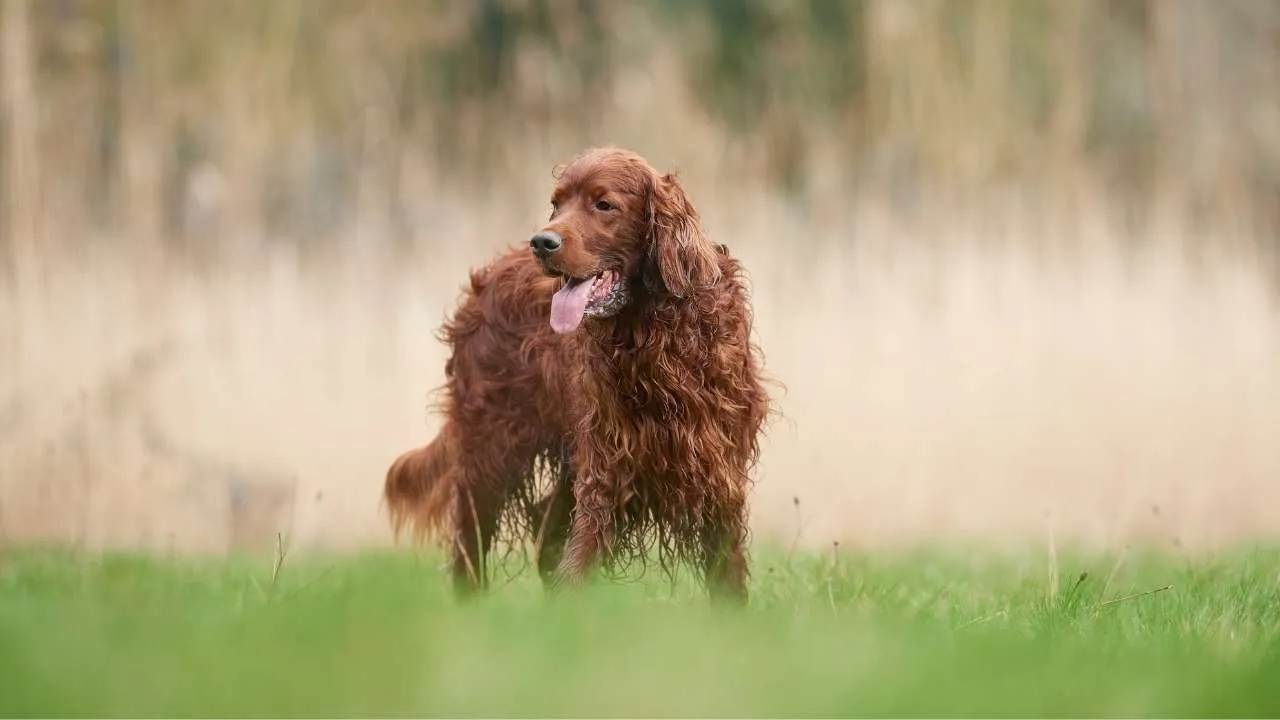
Originally developed as hardworking hunting dogs, Irish Setters are known for their keen noses, speed, and ability to cover rough ground with ease.
Their striking red coats may grab attention, but their real strength lies in locating game across open fields. They were bred to work closely with hunters, making them a dependable choice for tracking and pointing wild rabbits.
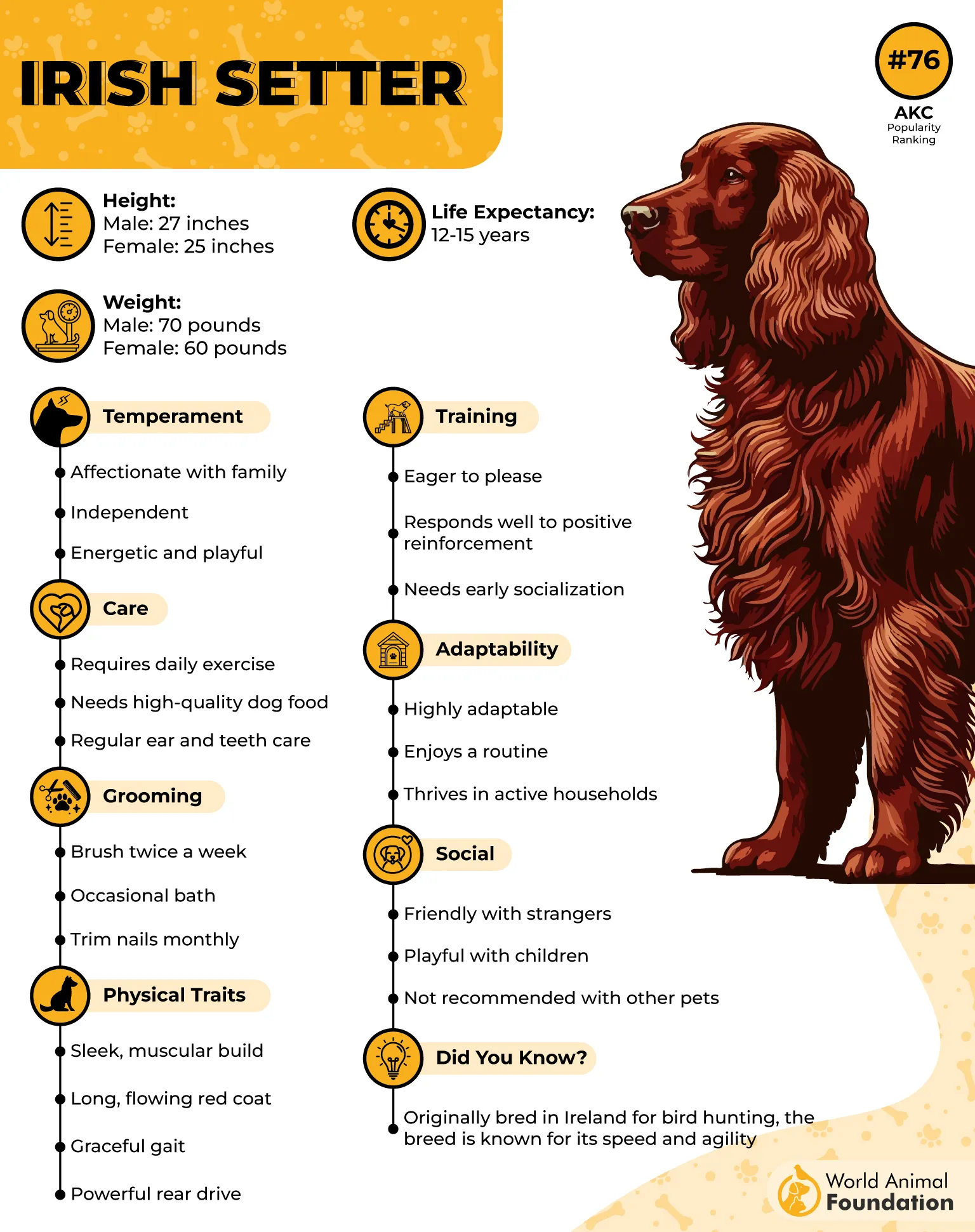
Best for: Hunters who want an energetic and trainable field companion
Hunting style: Fast runners with excellent scenting ability that naturally work large areas
Hunting Ability
Irish Setters are intelligent, energetic, and eager to work. Their excellent noses and natural athleticism help them cover large hunting areas with ease.
They respond well to patient, consistent training and enjoy having a job to do. Without enough exercise or mental stimulation, they can become barkers, chewers, diggers, or wander off on their own.
Temperament and Care
Irish Setters are affectionate, playful, and friendly with both people and other dogs. However, their strong hunting instincts mean they may not be reliable around small pets, as mentioned by Hill’s Pet. They need plenty of daily exercise, regular training, and lots of human interaction to stay happy.
Their long coats should be brushed several times a week to prevent mats and remove debris picked up in the field. While they may bark to announce visitors, they are generally too friendly to be effective guard dogs.
2. Beagle
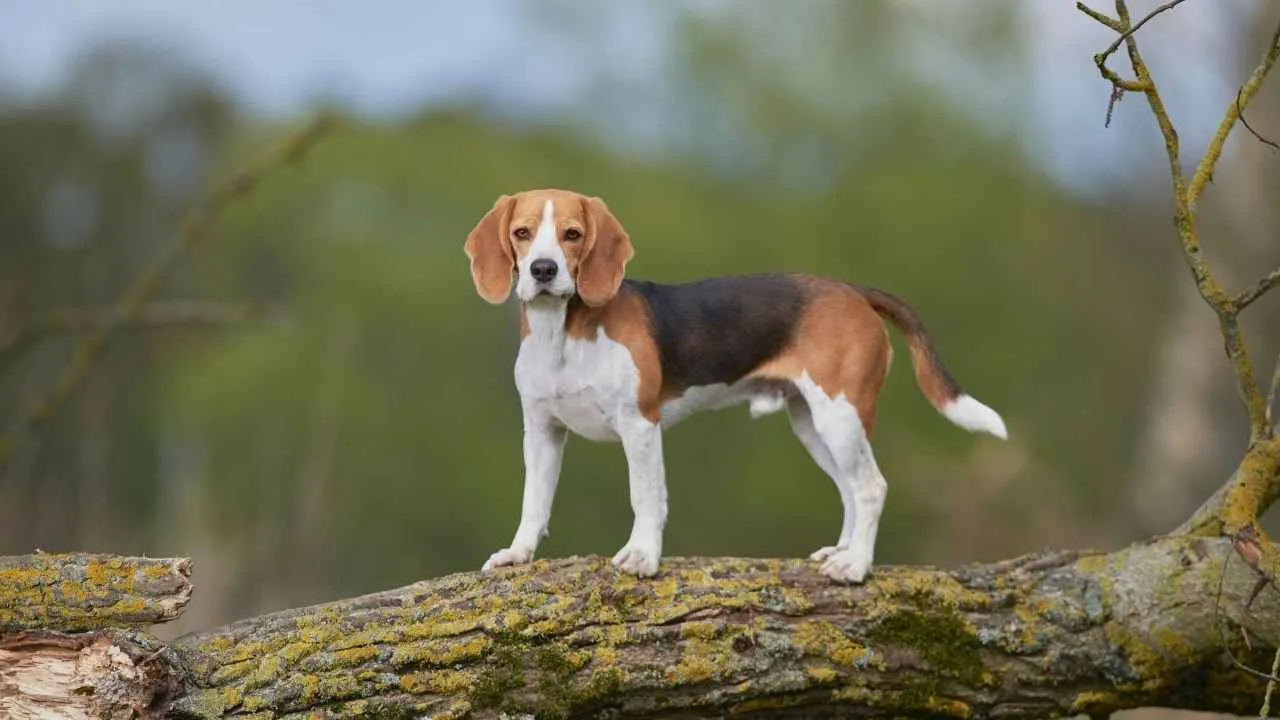
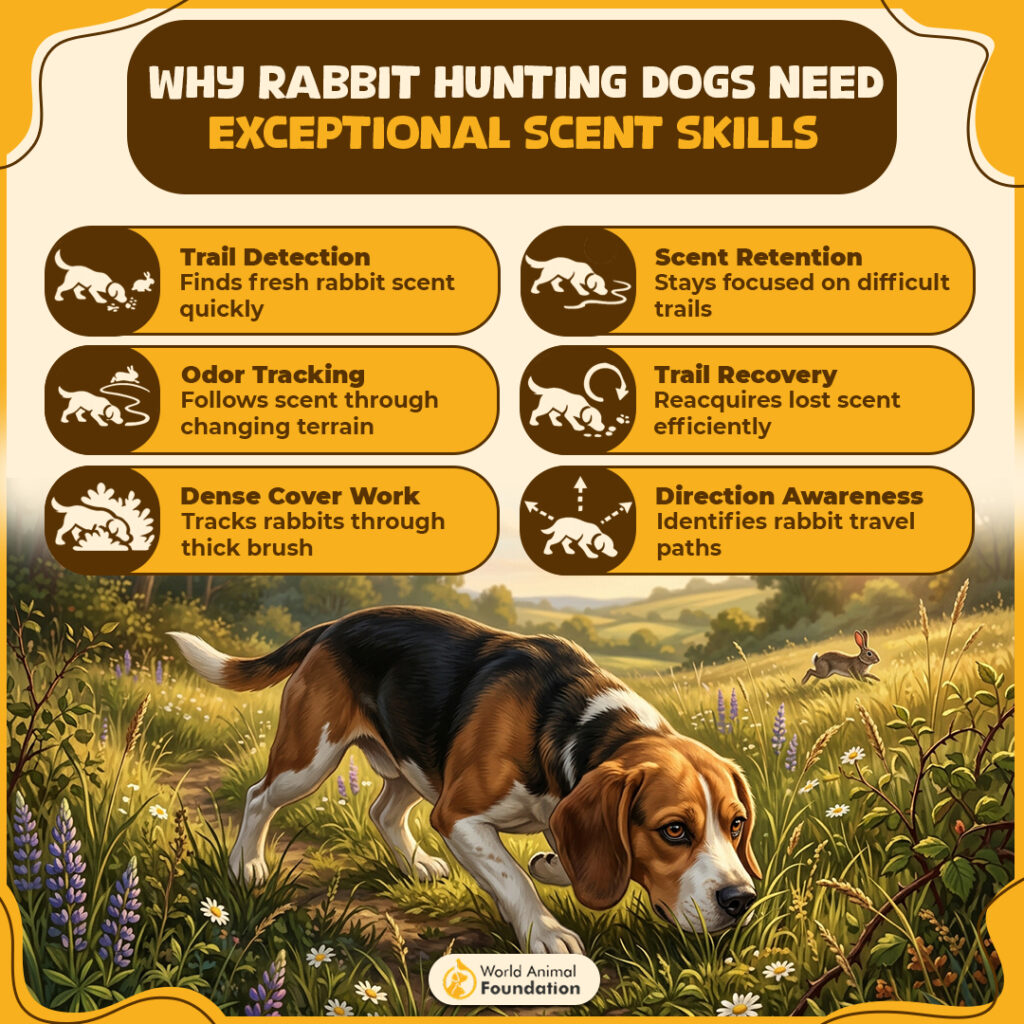
Few dogs are as closely connected with rabbit hunting as Beagles. For centuries, they have been trusted for their outstanding noses, determination, and ability to follow scent trails over long distances.
Originally bred to hunt in packs, they excel as classic rabbit dogs, making them one of the most reliable choices for hunters who want a skilled tracking companion.
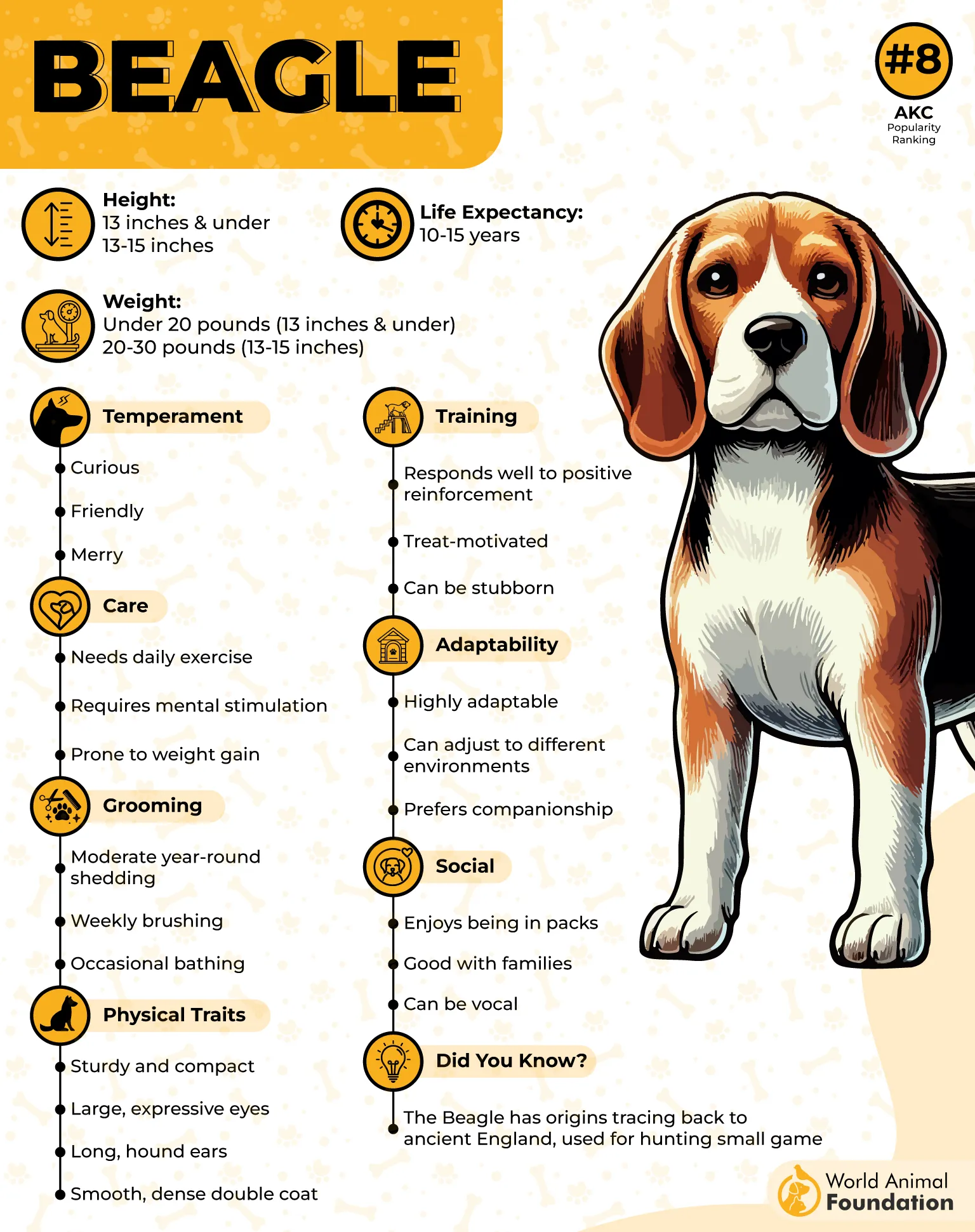
Best for: Hunters looking for an excellent scent-tracking dog
Hunting style: Follows rabbit scent trails with determination and uses its distinctive bay to help hunters stay on the trail
Hunting Ability
Beagles are intelligent, curious, and full of energy. Their powerful sense of smell keeps them focused on a trail, but it can also lead them to wander if they catch an interesting scent.
They thrive with activities like scent work, tracking, and agility, and they need plenty of daily exercise to stay happy. Positive reinforcement training works best, although they can sometimes be stubborn and independent.
Temperament and Care
Beagles are cheerful, affectionate, and social dogs that usually get along well with children and other dogs. Because of their hunting instincts, they may need careful introductions to cats and other small pets.
They are also known for their loud baying, making them good watchdogs, though they are too friendly to be effective guard dogs. Their floppy ears need regular cleaning to help prevent infections, and portion-controlled meals are important since the breed is prone to obesity.
3. German Shorthaired Pointer
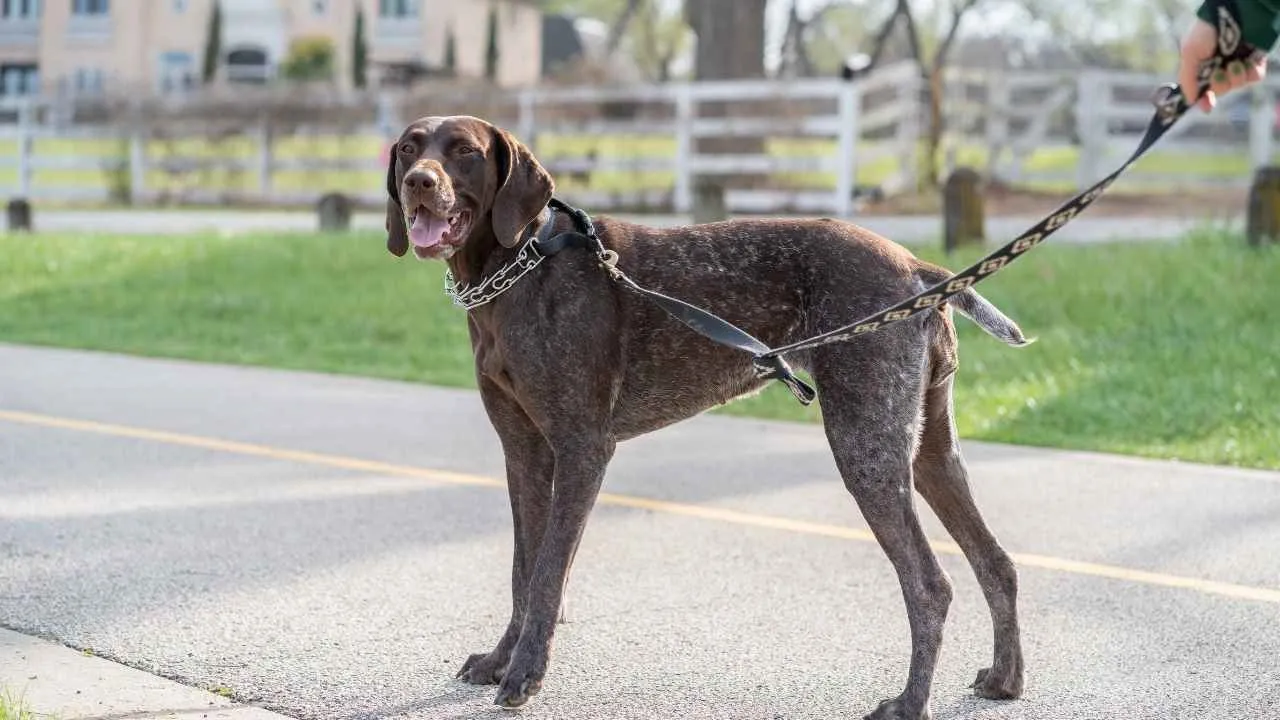
German Shorthaired Pointers are versatile hunting dogs known for their speed, endurance, and sharp instincts. Originally bred as gundogs, they naturally locate game by freezing and pointing toward the scent before waiting for the hunter’s command.
Their ability to cover large areas quickly makes them an excellent choice for locating wild rabbits in open fields and rough terrain.
Best for: Active hunters who want an energetic and versatile hunting partner
Hunting style: Uses its keen nose to locate game, then points to its exact location before the hunt continues
Hunting Ability
German Shorthaired Pointers are intelligent, athletic, and eager to work. They thrive on hunting, tracking, and other outdoor activities, and they need plenty of daily exercise to stay physically and mentally satisfied.
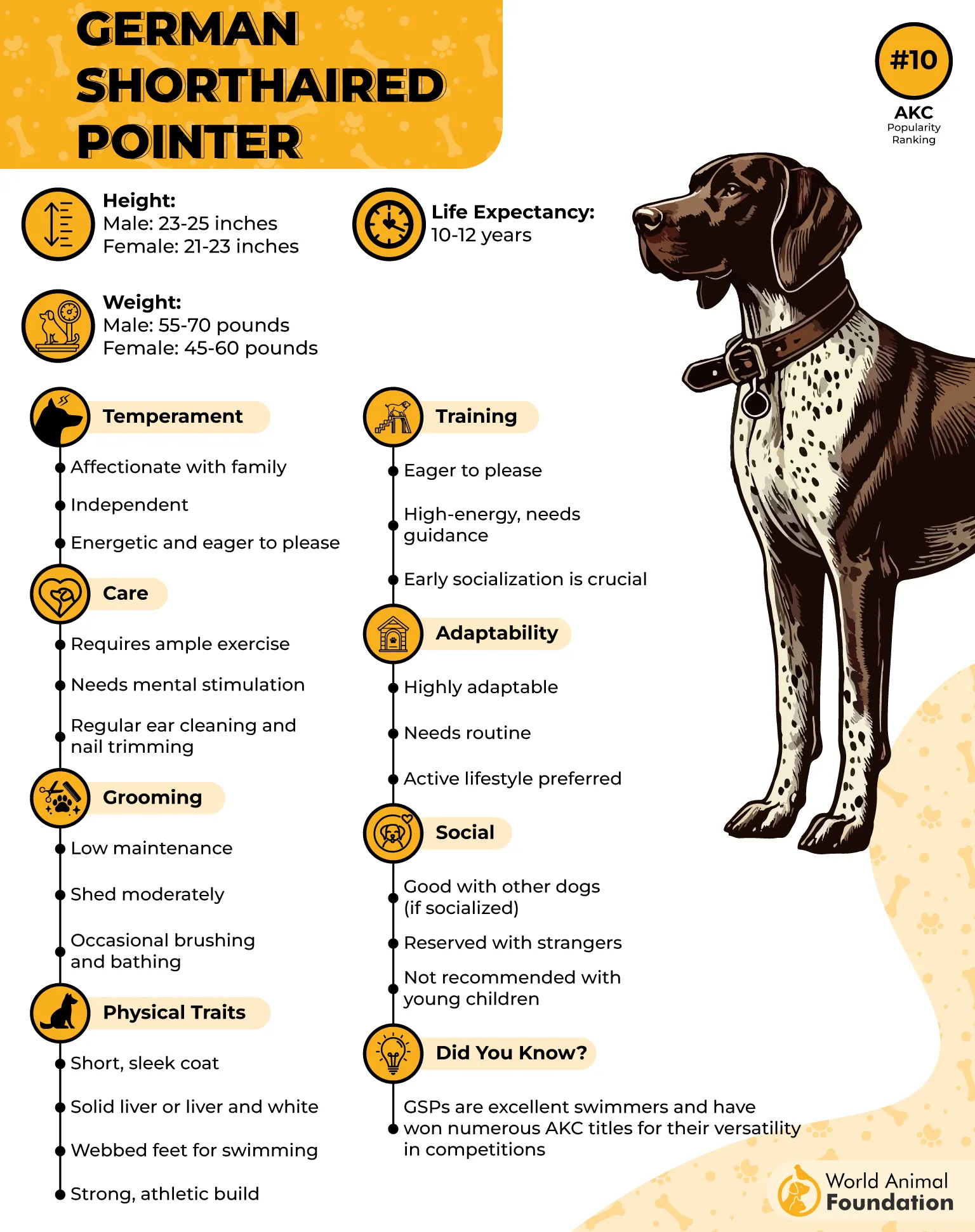
They learn quickly but can become distracted by interesting scents. Their strong prey drive also means they may not be trustworthy around unfamiliar cats or small pets without proper training and socialization.
Temperament and Care
German Shorthaired Pointers are loyal, affectionate, and happiest when spending time with their families. According to Orvis, they generally get along well with children and other dogs, making them excellent companions for active households.
Their short coats require very little grooming, but they should never be left without enough exercise or mental stimulation, as boredom can quickly lead to unwanted behaviors. While they make alert watchdogs, they are usually too friendly to be dependable guard dogs.
4. English Setter
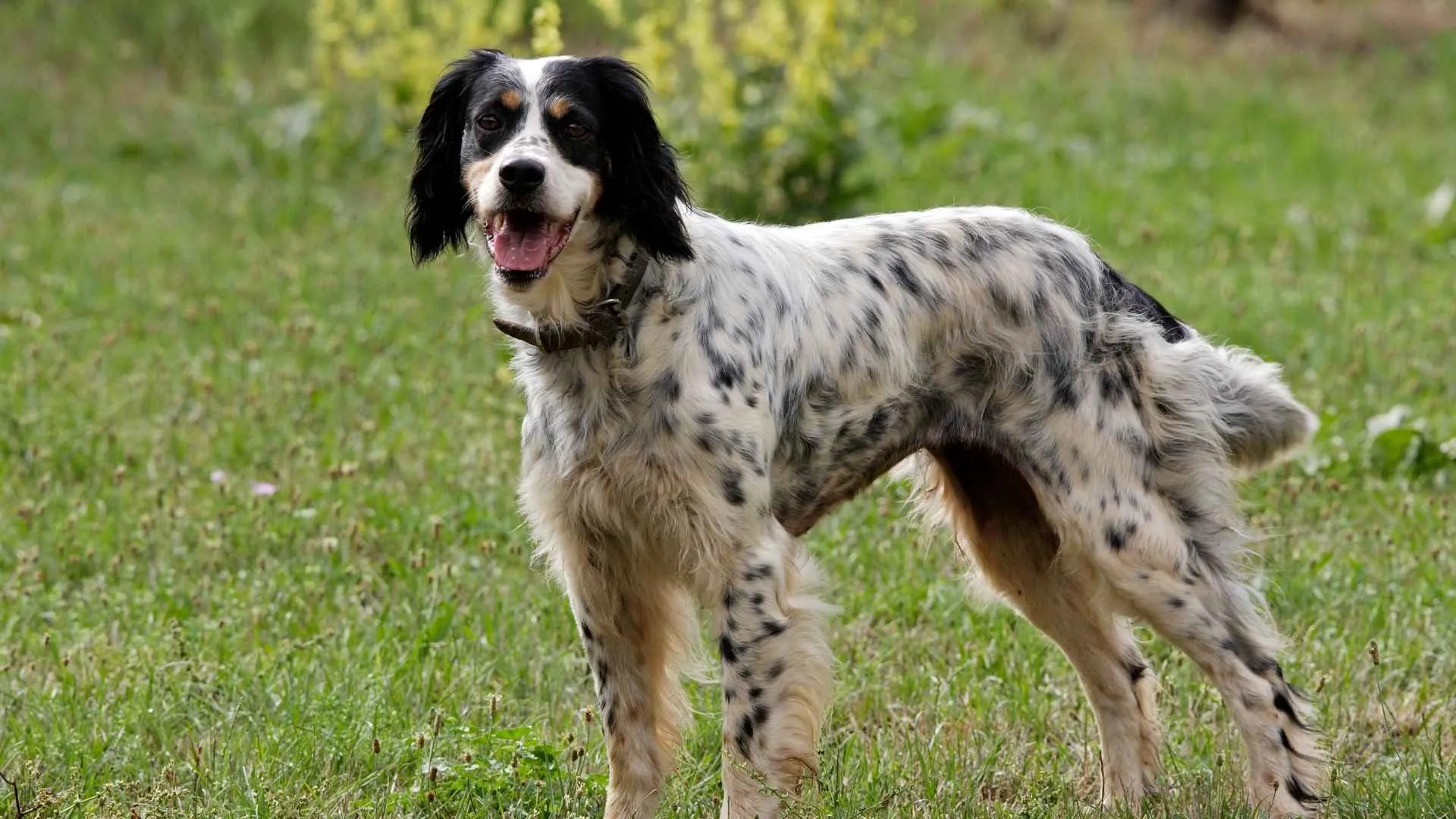
English Setters are graceful hunting dogs with a long history of helping hunters locate game. They earned their name from their natural habit of “setting,” or crouching low when they detect a scent, allowing hunters to approach before flushing rabbits.
Their keen noses, steady pace, and pointing instincts also make them capable of locating wild rabbits in fields and light cover.
Best for: Hunters looking for a gentle, intelligent, and dependable pointing dog
Hunting style: Locates game with its excellent nose and naturally points by crouching when it finds a scent
Hunting Ability
English Setters are athletic, active dogs that enjoy spending time outdoors. They need regular exercise, interactive activities, and plenty of opportunities to use their natural hunting instincts.
They are intelligent and eager to work, though they may also enjoy roaming, digging, and exploring if left bored. With maturity, they usually become calmer while remaining enthusiastic hunting companions.
Temperament and Care
English Setters are affectionate, gentle, and highly social dogs that form strong bonds with their families. They get along well with children, other dogs, and, with proper socialization, other pets.
They do not enjoy being left alone for long periods and prefer being included in family activities. Their long, feathered coats need brushing several times a week to prevent tangles and mats, especially after time spent outdoors.
5. Brittany
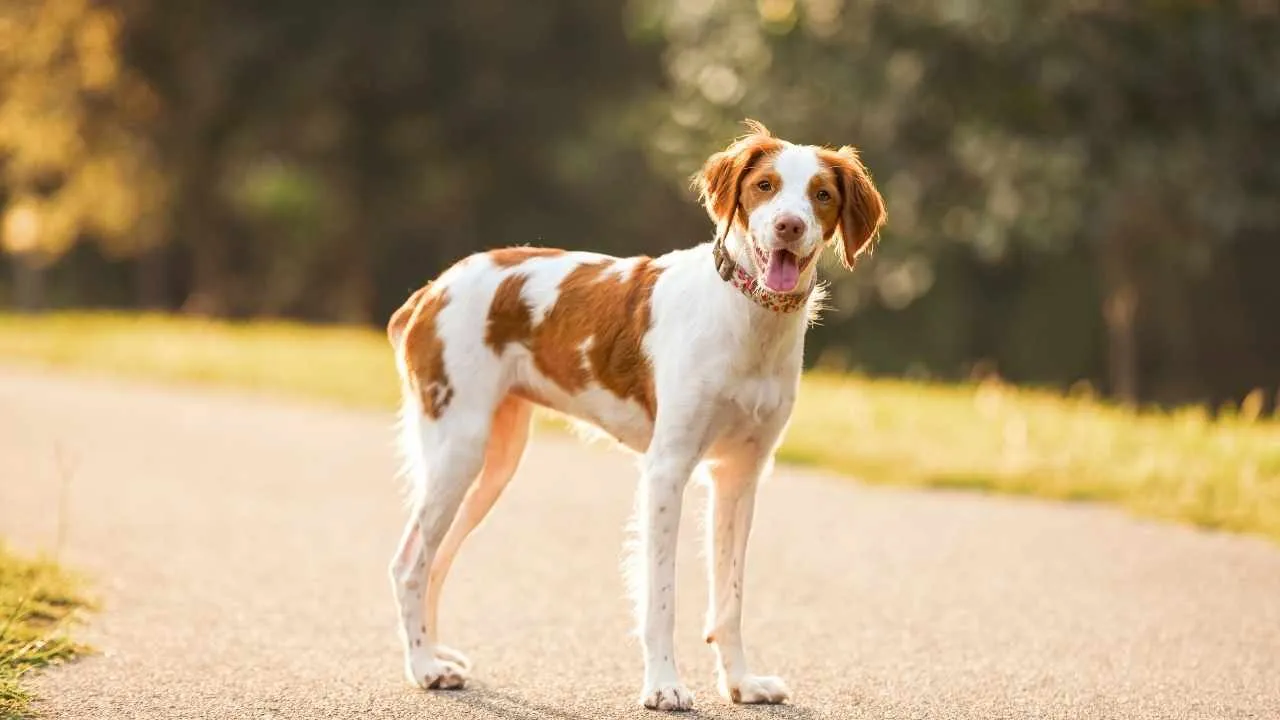
Originally developed as hunting dogs in France, Brittanys are energetic, intelligent, and eager to work in the field. They use both sight and scent to locate game, making them excellent hunting companions for active outdoorsmen.
Their speed, stamina, and natural hunting instincts also make them well-suited for locating and pointing wild rabbits.
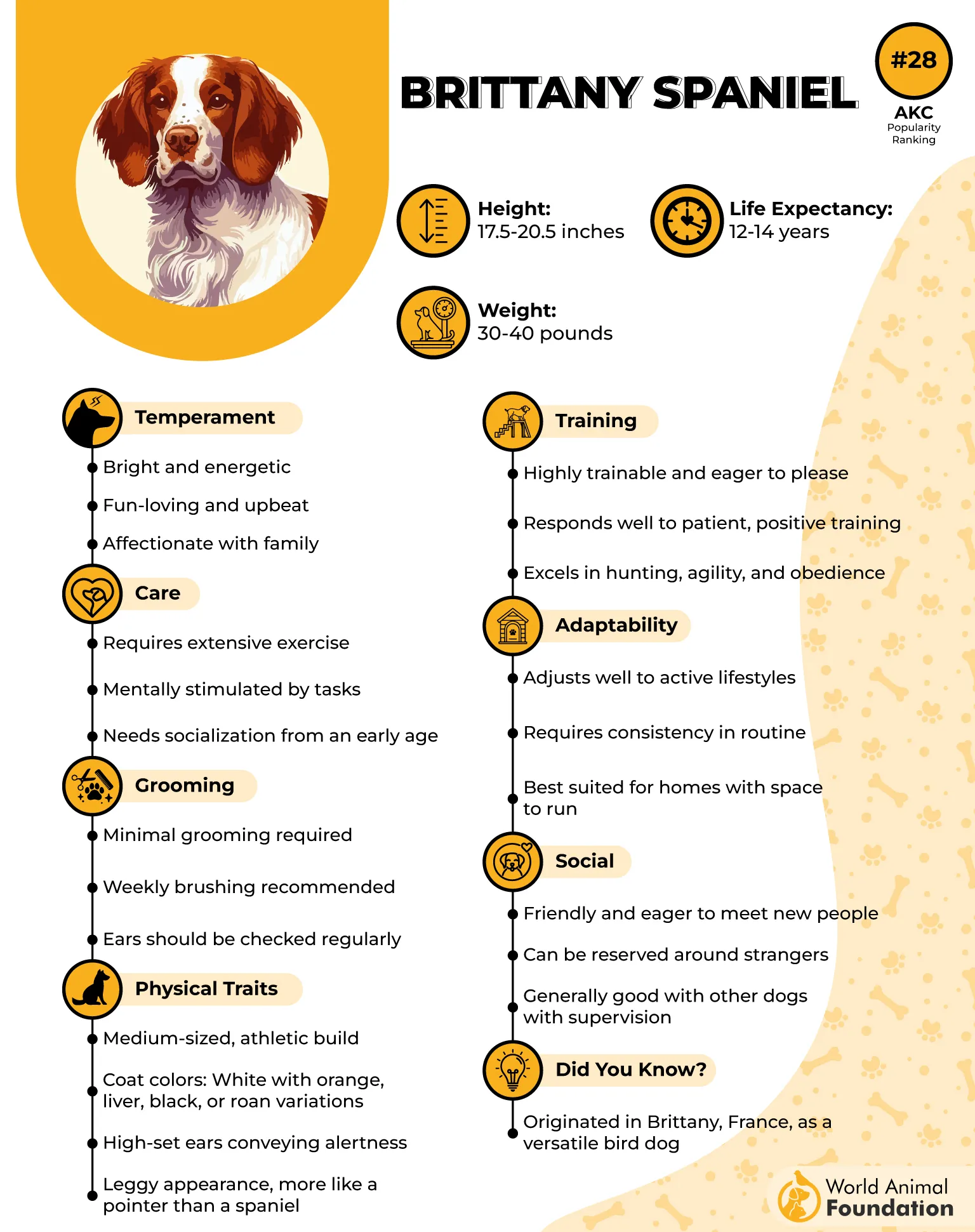
Best for: Active hunters who want a fast, trainable, and family-friendly hunting dog
Hunting style: Uses both scent and sight to locate game while covering ground quickly
Hunting Ability
Brittanys are bright, eager to please, and quick to learn, making them easy to train for hunting tasks. They have endless energy and need plenty of daily exercise, whether through hunting, hiking, running, or agility training.
Without enough physical activity and mental stimulation, they can become bored, leading to barking, roaming, or other unwanted behaviors. Early socialization and training help them develop into reliable hunting partners.
Temperament and Care
Brittanys are affectionate, friendly, and enjoy being around people. They usually get along well with children, other pets, and visitors when properly socialized.
They thrive in active homes where they can spend plenty of time with their families rather than being left alone. Their soft coats are relatively easy to maintain and only need weekly brushing to remove loose hair and dirt.
6. English Springer Spaniel
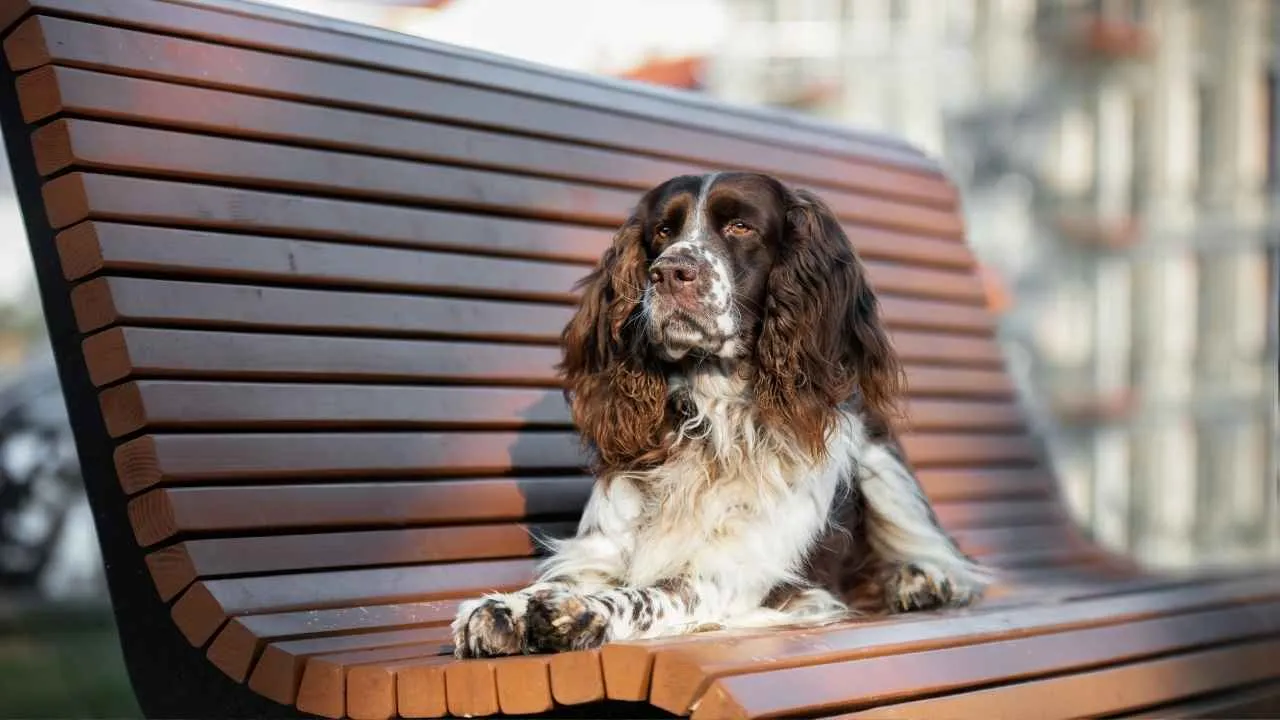
English Springer Spaniels have been trusted hunting companions for centuries. They were originally bred to “spring” or flush game from dense cover, but their sharp noses, intelligence, and eagerness to work also make them skilled at locating wild rabbits.
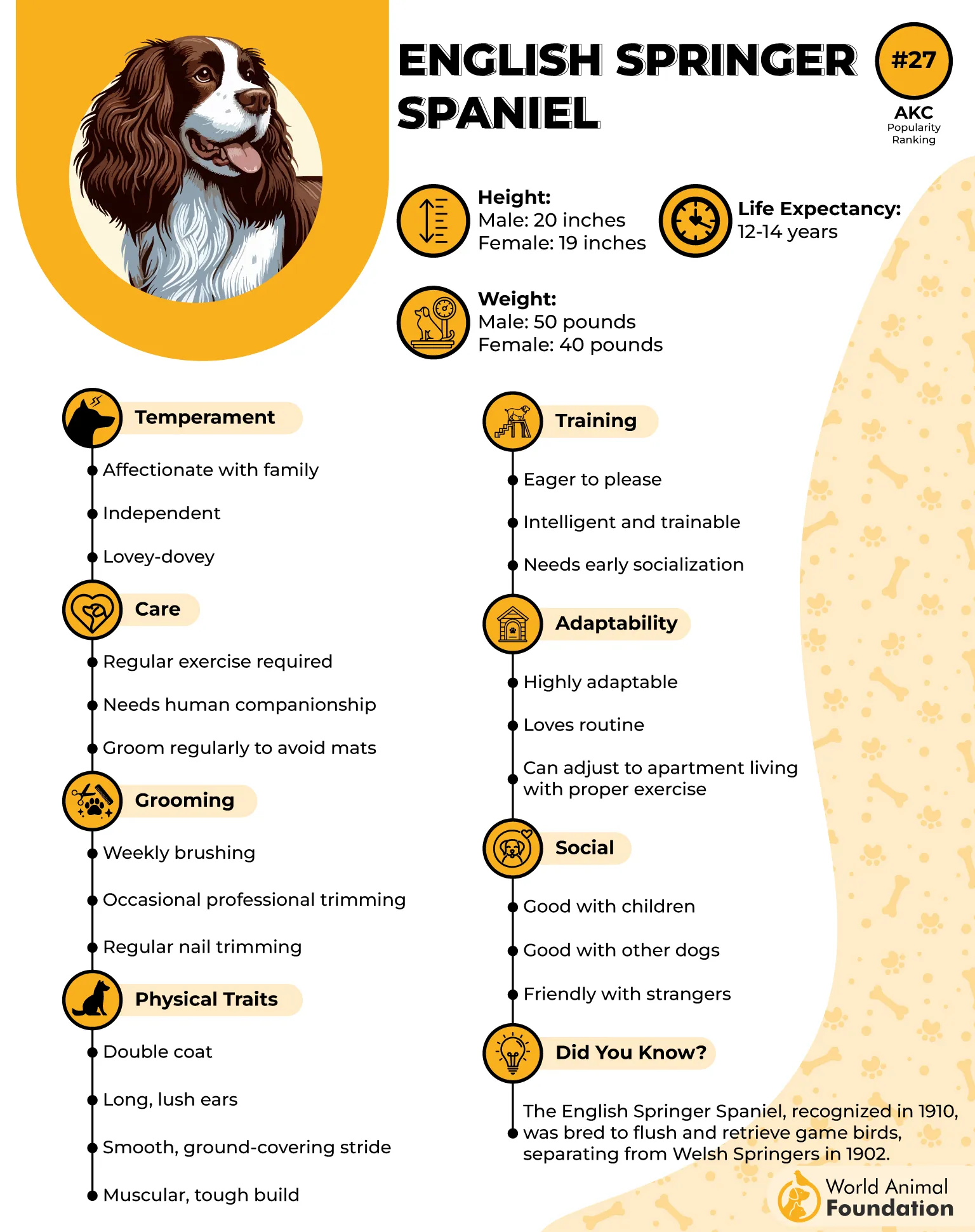
Best for: Hunters who want an energetic, trainable, and people-oriented hunting companion
Hunting style: Locates game with its keen nose and flushes it from thick cover for the hunter
Hunting Ability
English Springer Spaniels are intelligent, lively, and eager to please, making them highly trainable in the field. They thrive on hunting, retrieving, agility, and other activities that keep them mentally and physically active.
Most also enjoy water work in addition to land hunting. Without enough exercise or stimulation, they may become bored and develop habits like chewing or digging.
Temperament and Care
English Springer Spaniels are friendly, affectionate, and happiest when spending time with their families. They usually get along well with children and other dogs, especially with early socialization.
Their medium-length, weather-resistant coats need regular brushing to prevent mats, and their floppy ears should be cleaned weekly to reduce the risk of ear problems. They can also gain weight easily, so regular exercise and controlled meals are important to keep them in top hunting condition.
7. Boykin Spaniel
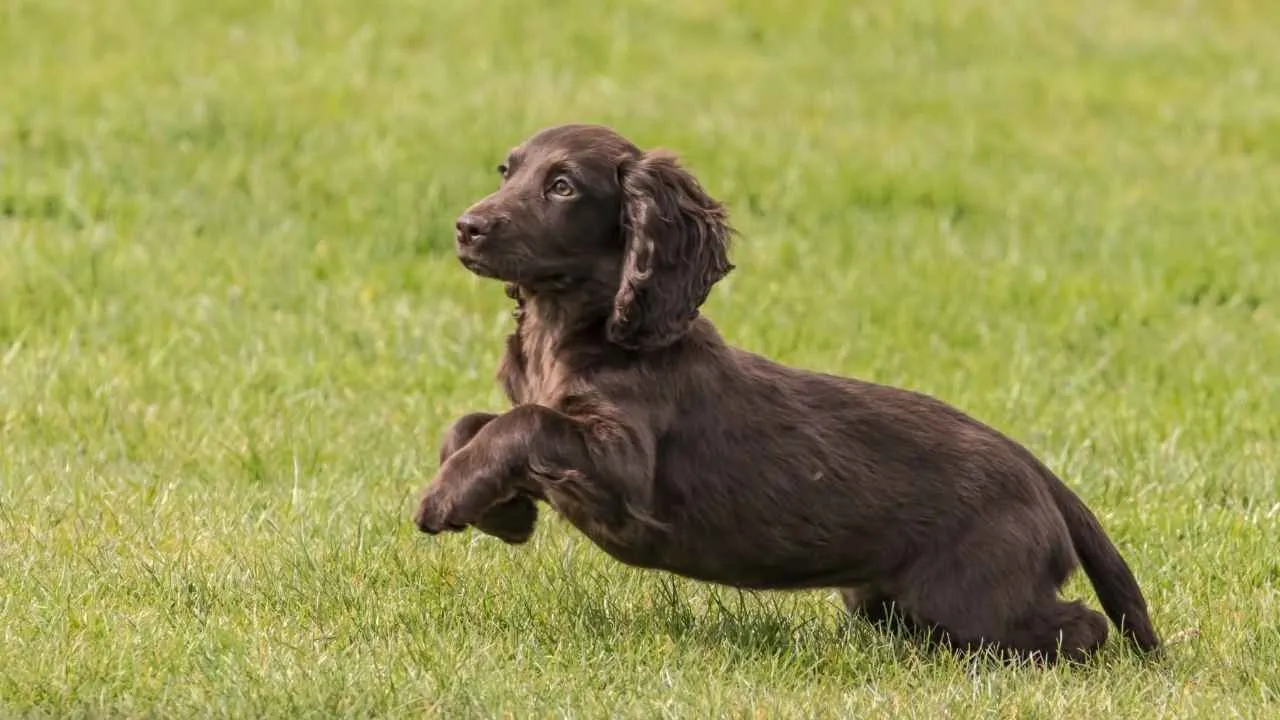
Originally developed in South Carolina, Boykin Spaniels are versatile hunting dogs known for their enthusiasm, intelligence, and eagerness to work.
Although they were bred to flush and retrieve birds, their excellent noses, agility, and determination also make them capable of locating wild rabbits in thick cover. Their compact size allows them to move easily through dense brush and challenging terrain.
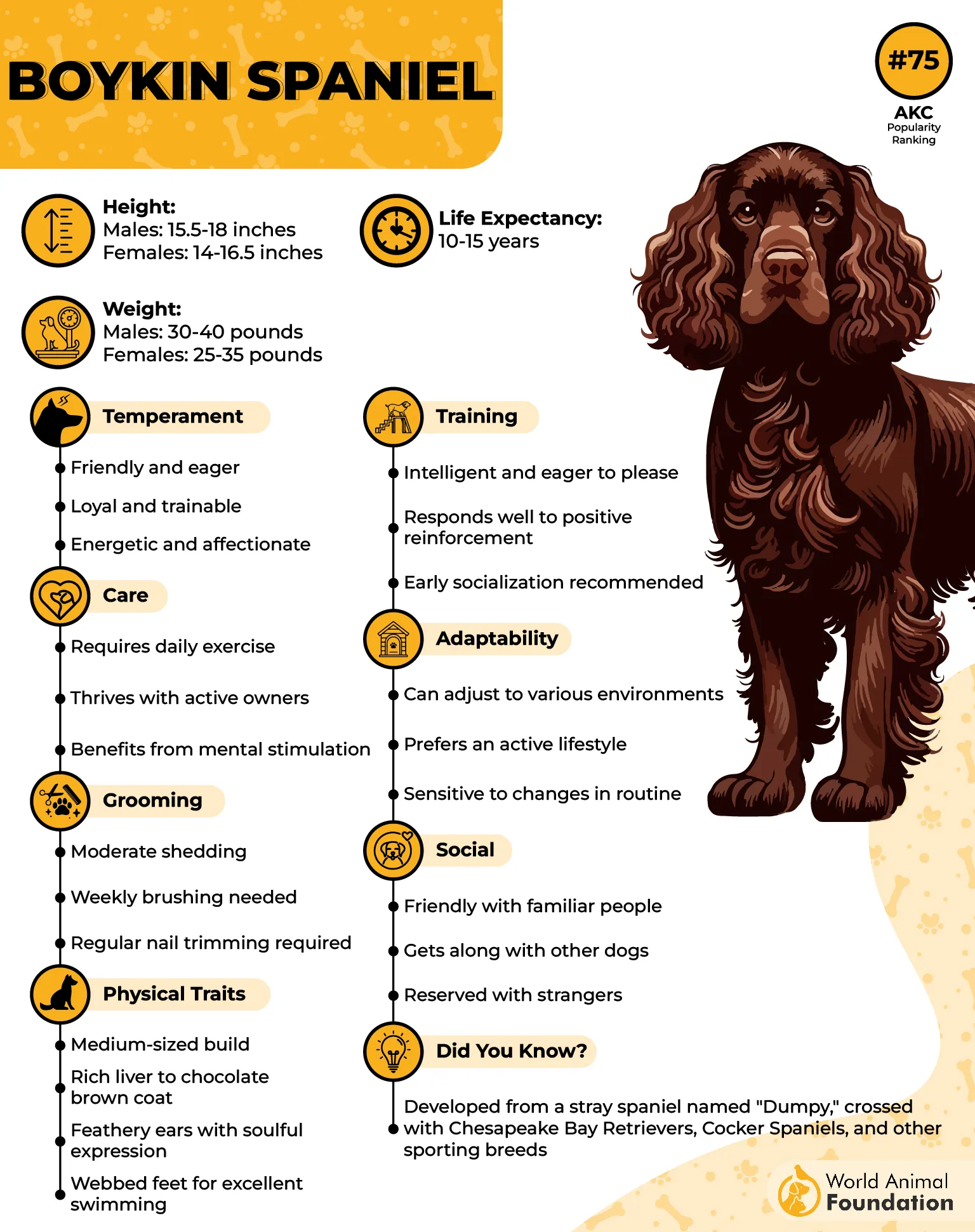
Best for: Hunters looking for an energetic, versatile, and family-friendly hunting companion
Hunting style: Uses its keen nose to locate game and confidently works through dense cover
Hunting Ability
Boykin Spaniels are hardworking dogs with plenty of stamina and a strong desire to please. They learn quickly and enjoy having a job, whether it’s hunting, hiking, swimming, or participating in dog sports.
PetMD says they need several hours of daily exercise and mental stimulation to stay happy. Without enough activity, their high energy can lead to mischievous behavior.
Temperament and Care
Boykin Spaniels are affectionate, cheerful, and friendly with people, children, and other pets when properly socialized.
They make excellent family companions for active households and enjoy being included in outdoor adventures. Their medium-length, wavy coats need weekly brushing and occasional trimming to prevent mats and keep them looking neat.
Conclusion
Finding the best dog breed to hunt rabbits comes down to your hunting style, experience, and lifestyle. Some dogs excel at covering large areas with speed, while others shine with their steady pointing instincts, powerful noses, or close partnership with their handlers.
No matter which breed you choose, the best hunting companion is one that matches your needs and receives the right training, exercise, and care.
Take the time to choose a breed that fits your goals, invest in consistent training, and build a strong bond along the way. With the right dog by your side, every hunt becomes a more rewarding and memorable experience.
Looking for more rabbit hunting breeds? You can also check out the Jack Russell Terrier, Chesapeake Bay Retriever, Basset Hound, Labrador Retriever, Cocker Spaniel, Redbone Coonhound, American Foxhound, and Bluetick Coonhound.
