




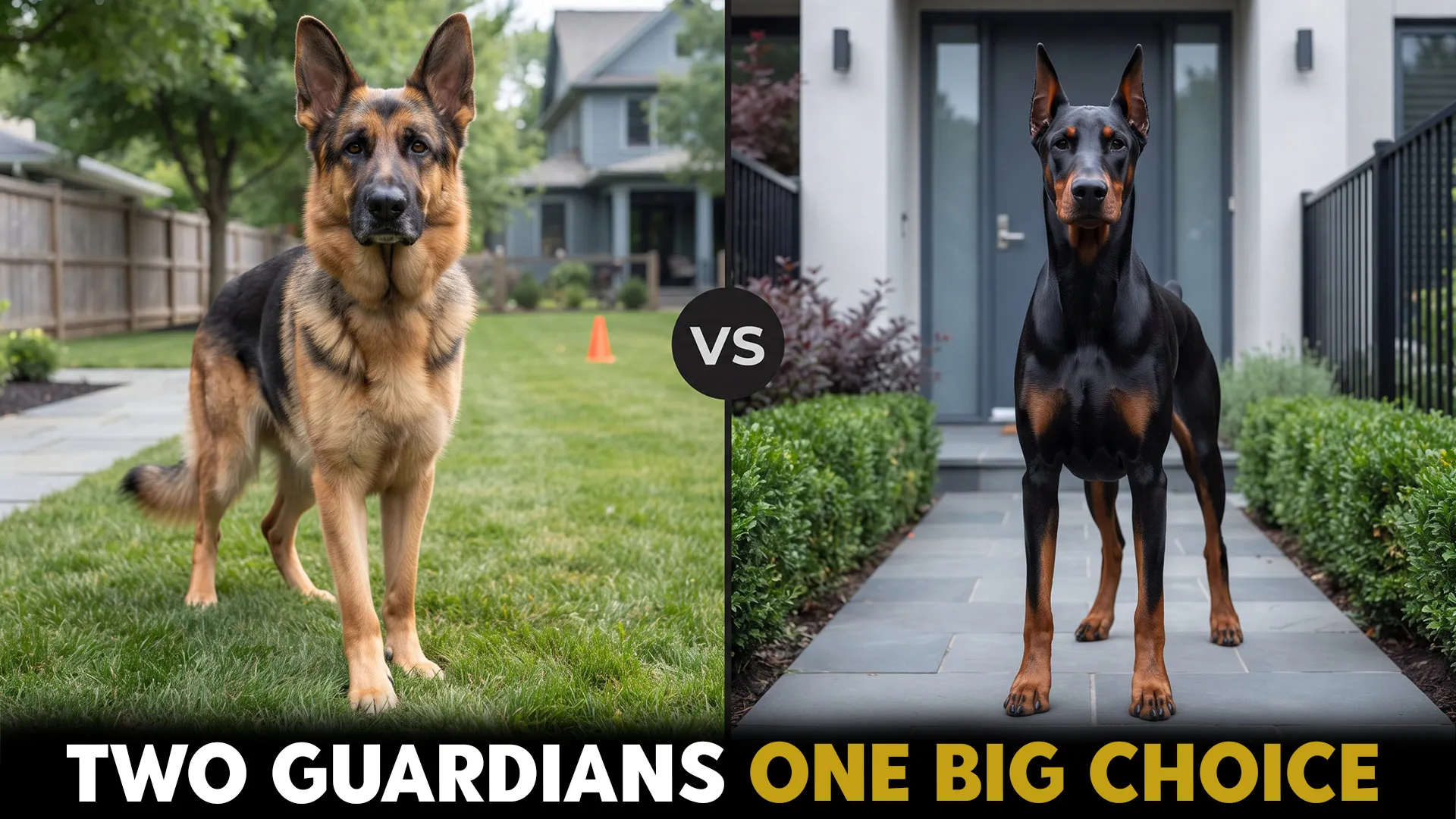
German Shepherds and Dobermans are two of the most recognizable working and protection breeds. Both are intelligent, athletic, loyal, and capable of forming powerful bonds with their owners. Their confident appearance has also made both popular choices for families seeking a dog with natural guarding instincts.
Despite these similarities, they were created for different purposes and developed distinct working styles. The German Shepherd began as a versatile herding dog and later became an exceptional police, military, service, and search-and-rescue dog. The Doberman, by contrast, was developed specifically around the idea of a personal protection dog that could accompany its owner and respond to threats.
The comparison below looks at their differences in practical areas, from physical build and cost to training, grooming, health, and protective behavior. Understanding these distinctions can make it easier to determine which breed fits a particular household.
German Shepherd vs. Doberman: Must-Know Facts About These Dog Breeds
1. Origins & Purpose
German Shepherd: Built Around Versatility
The German Shepherd was developed in Germany in the late 19th century under the direction of Max von Stephanitz, who wanted an exceptionally capable working and herding dog. The breed later expanded into police, military, search-and-rescue, service, and protection work because of its intelligence and adaptability.
Doberman: Created for Personal Protection
The Doberman was developed in Germany by Karl Friedrich Louis Dobermann, who wanted a dependable dog to accompany him during his work as a tax collector. Breeding focused on courage, intelligence, loyalty, and protective ability, giving the breed a much more direct connection to personal protection from the beginning.
Their Original Jobs Still Shape Them
Both breeds became highly versatile, but their foundations were different. The German Shepherd was shaped around all-purpose working ability, whereas the Doberman was developed with human protection much closer to the center of its purpose. That distinction remains noticeable in their modern working styles.
2. Size & Build
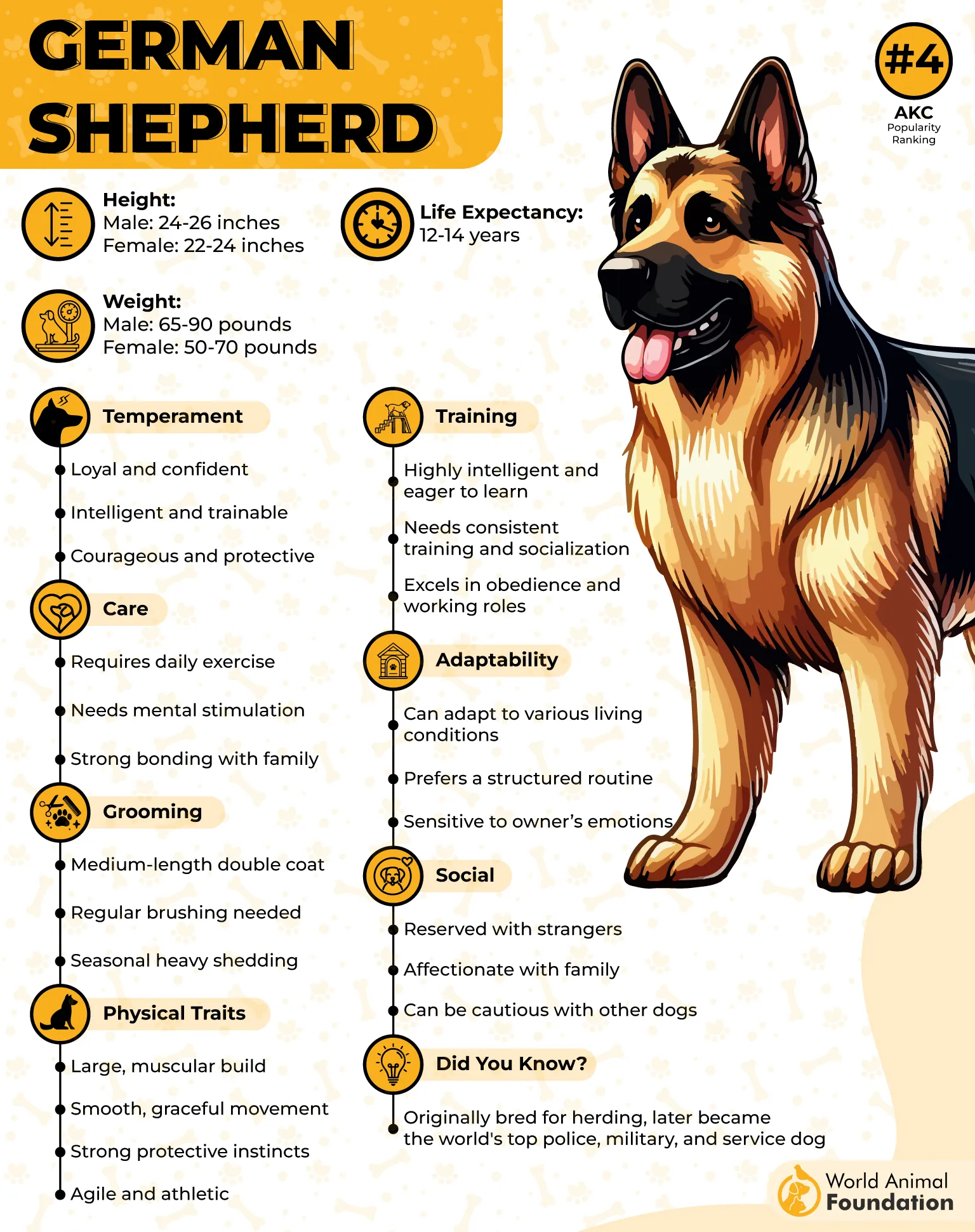
German Shepherd: Substantial and Athletic
Male German Shepherds generally stand 24–26 inches tall and weigh 65–90 pounds, while females stand 22–24 inches and weigh 50–70 pounds. Their muscular bodies combine strength and endurance, giving them the substantial appearance associated with traditional working dogs.
Doberman: Sleek and Powerful
Dobermans are typically 26–28 inches tall for males and 24–26 inches for females, with weight commonly ranging from about 60–100 pounds. Their bodies are compact and athletic, with a streamlined silhouette that emphasizes speed, agility, and endurance rather than bulk.
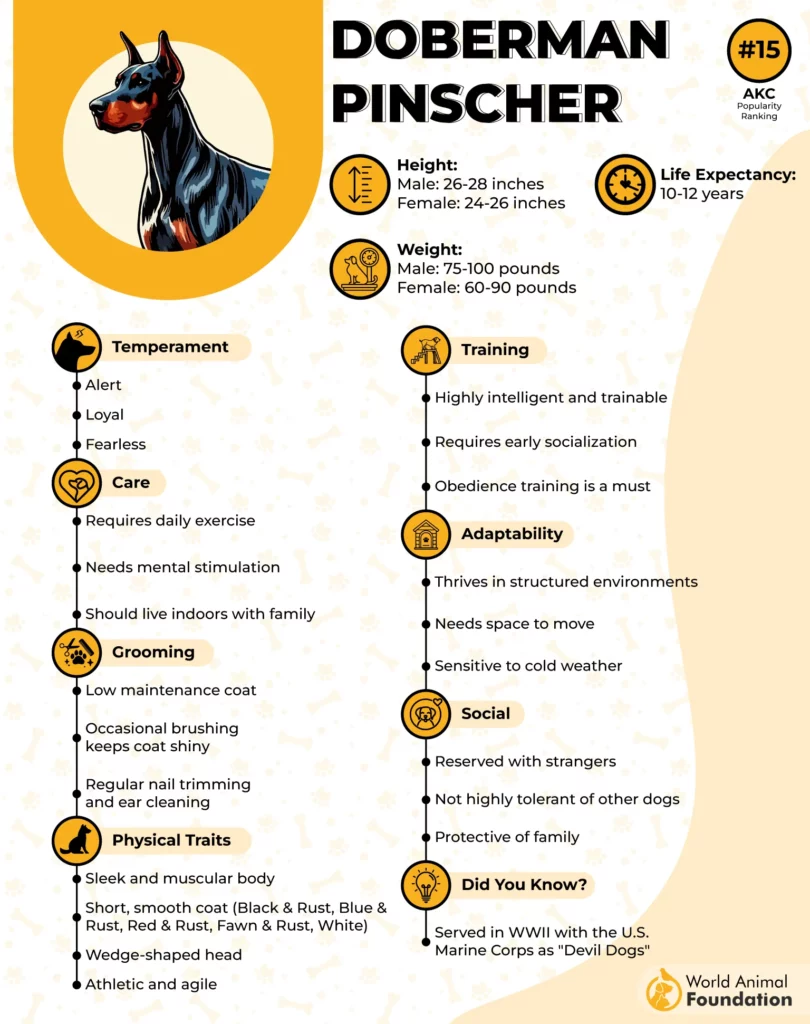
Doberman Has the Sleeker Silhouette
Although the two muscular breeds can overlap considerably in size, they look quite different. German Shepherds generally appear heavier and more rugged, while Dobermans have a taller, narrower outline. The choice therefore involves body type as much as measurements.
3. Pricing & Availability
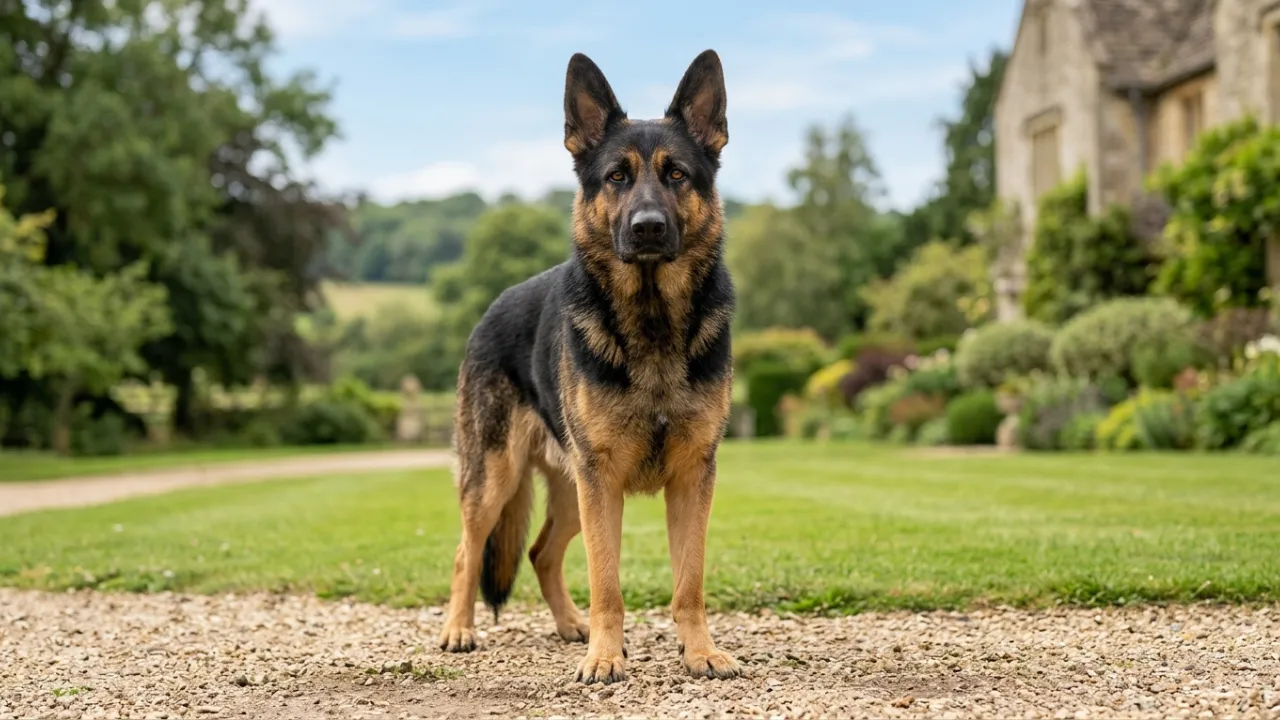
German Shepherd: Easy to Find in Many Regions
German Shepherds are among the world’s most popular dog breeds, so puppies and adult dogs are generally widely available. Prices can vary considerably according to location, pedigree, breeder reputation, health testing, and whether the dog comes from working or show lines.
Doberman: Availability Can Be More Limited
Dobermans are also established internationally, but finding a responsible breeder may require more research in some regions. Their prices similarly depend on bloodline, health screening, pedigree, registration, and breeder practices, making advertised prices an unreliable way to judge overall value.
Breeder Quality Matters More Than the Sticker Price
The German Shepherd may be easier to find, but availability should not determine the decision. With either breed, prospective owners should prioritize responsible breeding, health records, appropriate socialization, and sound temperament rather than choosing a puppy simply because it costs less.
4. Temperament & Personality
German Shepherd: Loyal and Focused
German Shepherds are typically intelligent, confident, loyal, and protective dogs that form strong relationships with their families. They may be reserved around strangers while remaining affectionate at home, and their willingness to work closely with people is one of their defining characteristics.
Doberman: Devoted and Watchful
Dobermans are often highly attached to their families and enjoy staying involved in household activities. They can be affectionate and playful with familiar people while remaining watchful around strangers, reflecting their history as personal protection dogs, as per Hill’s Pet.
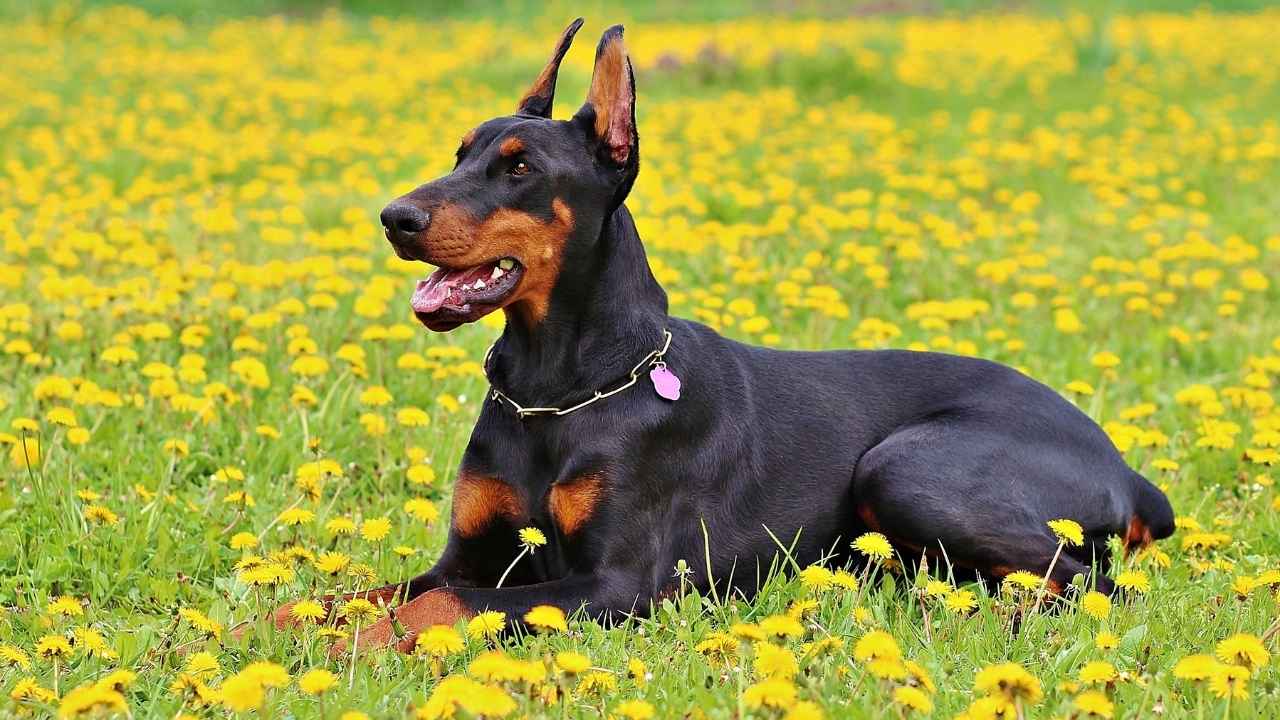
Their Protective Personalities Have Different Flavors
A German Shepherd often combines its protective instincts with a broad willingness to perform different tasks, while a Doberman can seem particularly focused on its family and immediate surroundings. Neither temperament is automatically better; the difference comes down to the type of relationship an owner wants.
5. Exercise Needs & Energy Level
German Shepherd: Needs a Job Alongside Exercise
German Shepherds have considerable physical and mental energy and usually need more than casual daily walks. Activities such as obedience, tracking, agility, herding, hiking, or structured games can help satisfy both their athletic requirements and their desire to use their minds.
Doberman: An Athletic Daily Companion
Dobermans also require substantial daily exercise and can excel at running, hiking, obedience, agility, and other active pursuits, as per Orvis. Their athletic build gives them plenty of stamina, but regular mental engagement is equally important for preventing boredom and frustration.
Neither Breed Is Suited to an Inactive Home
Both breeds need owners who enjoy an active routine. The German Shepherd may particularly enjoy having varied jobs to perform, while the Doberman can thrive when exercise and training happen alongside its owner. A sedentary household is unlikely to meet either breed’s needs comfortably.
6. Trainability & Obedience
German Shepherd: A Proven All-Purpose Learner
German Shepherds have demonstrated their trainability in police work, military service, search-and-rescue, assistance work, scent detection, and competitive dog sports. Their combination of intelligence, responsiveness, and willingness to cooperate makes them highly adaptable training partners.
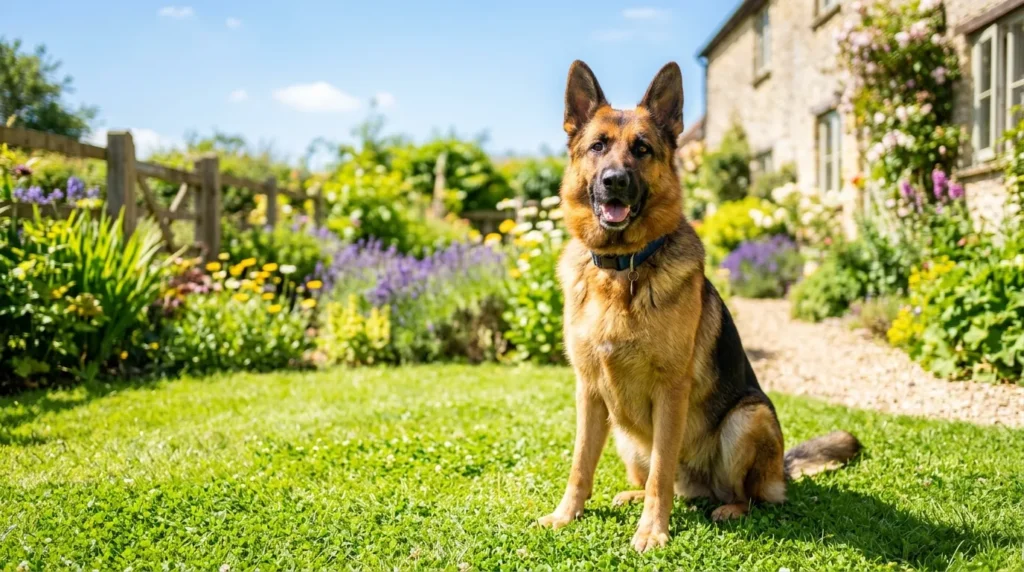
Doberman: Fast, Intelligent, and Responsive
Dobermans can learn commands and routines quickly and often enjoy training when lessons are purposeful and engaging. Their intelligence, athleticism, and close attachment to their owners can make them excellent obedience and working partners, provided training begins early and remains consistent.
German Shepherd Offers Exceptional Working Versatility
Both breeds are highly trainable, but the German Shepherd has a particularly extensive record across different working fields. A Doberman can be equally impressive in the right hands, especially for owners interested in obedience, protection-oriented work, or active dog sports.
7. Grooming Needs & Shedding
German Shepherd: More Coat, More Shedding
German Shepherds have a double coat consisting of a dense undercoat and protective outer coat, as per PetMD. Regular brushing helps manage loose hair, but owners should expect heavier seasonal shedding and should avoid shaving the coat because its natural structure provides protection and insulation.
Doberman: Simple Coat Maintenance
The Doberman’s short, smooth coat requires considerably less grooming than the German Shepherd’s double coat. Occasional brushing can help remove loose hair and keep the coat looking healthy, while routine nail, dental, and ear care remains necessary.
Doberman Is Easier for Low-Grooming Households
The difference is particularly noticeable around the home. German Shepherd owners should be prepared for substantial amounts of loose hair, whereas Dobermans generally require a much simpler coat-care routine. For owners who dislike frequent brushing and vacuuming, the Doberman has a clear advantage.
8. Guarding Instincts & Alertness
German Shepherd: Versatile Guardian
The German Shepherd’s courage, intelligence, loyalty, and responsiveness have made it a longstanding choice for police, military, and protection work. It can remain alert to its surroundings while still responding closely to its handler, making its guarding ability part of a broader working skill set.
Doberman: Protection Is Part of Its Foundation
The Doberman was intentionally developed to accompany and protect its owner, so personal protection is deeply connected to its history. Modern Dobermans can be highly watchful and protective while remaining affectionate toward their families when appropriately socialized and trained.
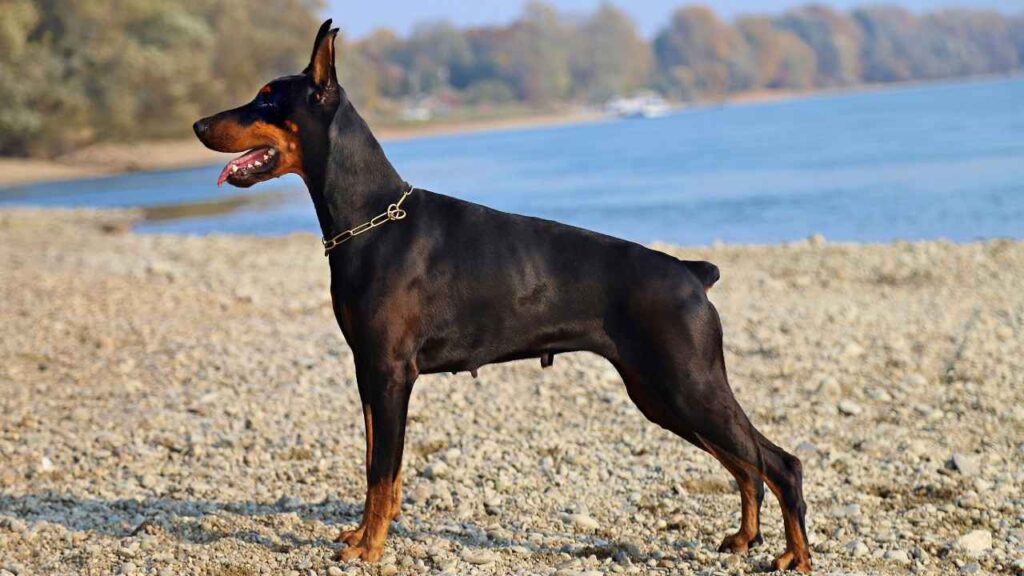
Doberman Has the More Direct Protection Heritage
Both breeds can serve as effective watchdogs and guardians, but their histories create a subtle distinction. The German Shepherd’s protective ability developed alongside many other working roles, whereas the Doberman’s original purpose was much more directly connected to safeguarding a person.
9. Health & Lifespan
German Shepherd: Around 12–14 Years
German Shepherds commonly have a lifespan of around 12–14 years, although individual longevity varies. Responsible breeders screen for inherited concerns, while owners should remain attentive to orthopedic problems and other health conditions that can affect large working dogs.
Doberman: Generally Similar Large-Breed Longevity
Dobermans have a lifespan that commonly falls within the range expected for large breeds, although individual dogs can vary significantly. Prospective owners should discuss breed-specific health screening with reputable breeders and maintain regular veterinary care throughout the dog’s life.
Responsible Breeding Can Make a Major Difference
Neither breed should be selected solely according to a published lifespan estimate. Genetics, breeding quality, nutrition, exercise, weight management, preventive care, and veterinary attention all influence longevity. Health testing is therefore an important consideration when choosing either breed.
10. Which Guard Dog Fits Your Lifestyle Best?
A German Shepherd may be the stronger choice for someone seeking a versatile working dog that can participate in obedience, tracking, protection, hiking, or other demanding activities. A Doberman may suit an owner who prefers a sleek, athletic companion with a particularly strong personal-protection heritage and a simpler grooming routine.
Conclusion
German Shepherds and Dobermans share intelligence, athleticism, loyalty, and strong protective instincts, but they were created for different purposes. The German Shepherd grew from a versatile herding and working background, while the Doberman was deliberately developed as a personal protection dog.
The German Shepherd generally offers broader working versatility but comes with heavier shedding and substantial exercise needs. The Doberman has a sleeker build, easier coat maintenance, and a particularly strong connection to personal protection.
Ultimately, neither breed is an effortless guard dog. Both need responsible socialization, consistent training, daily exercise, appropriate veterinary care, and an owner prepared to manage a powerful working breed.
The best choice is the one whose temperament, energy level, grooming demands, and working instincts align with the household’s lifestyle.
