




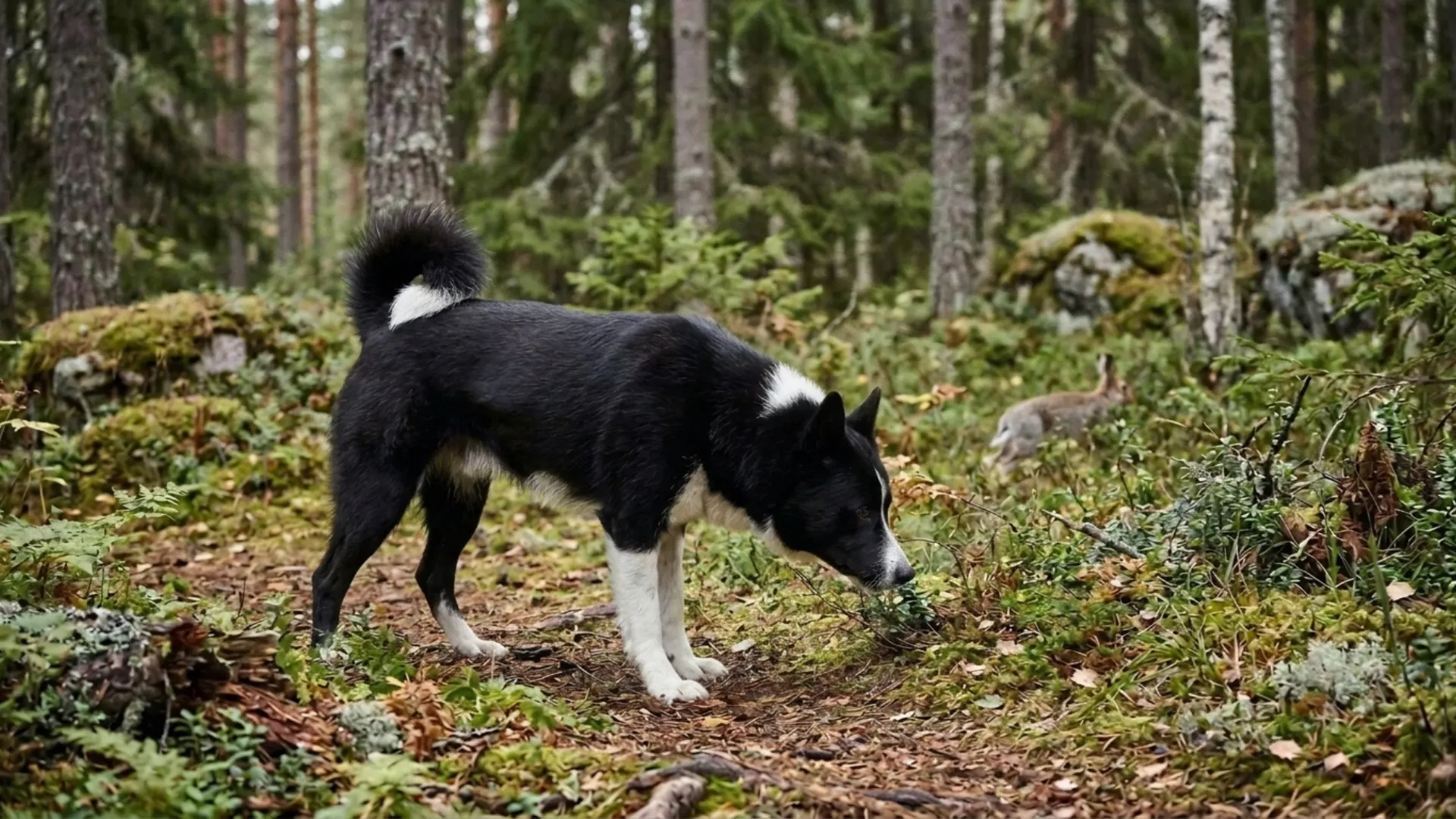
Hunting is rarely about one skill alone. The most versatile hunting dogs are remarkable partners that can track scent, point game, flush birds from cover, and retrieve with confidence across changing terrain.
These breeds earned their reputation through generations of working alongside hunters, combining intelligence, endurance, and an eagerness to learn. Their adaptability also makes many of them devoted family companions when given enough daily exercise and mental stimulation.
Whether your pursuits include upland birds, waterfowl, or mixed game, choosing the right breed depends on hunting style, temperament, and instincts. These versatile dogs are built to excel wherever the hunt leads.
Versatile Hunting Dog Breeds for Hunting Diverse Prey
1. German Wirehaired Pointer
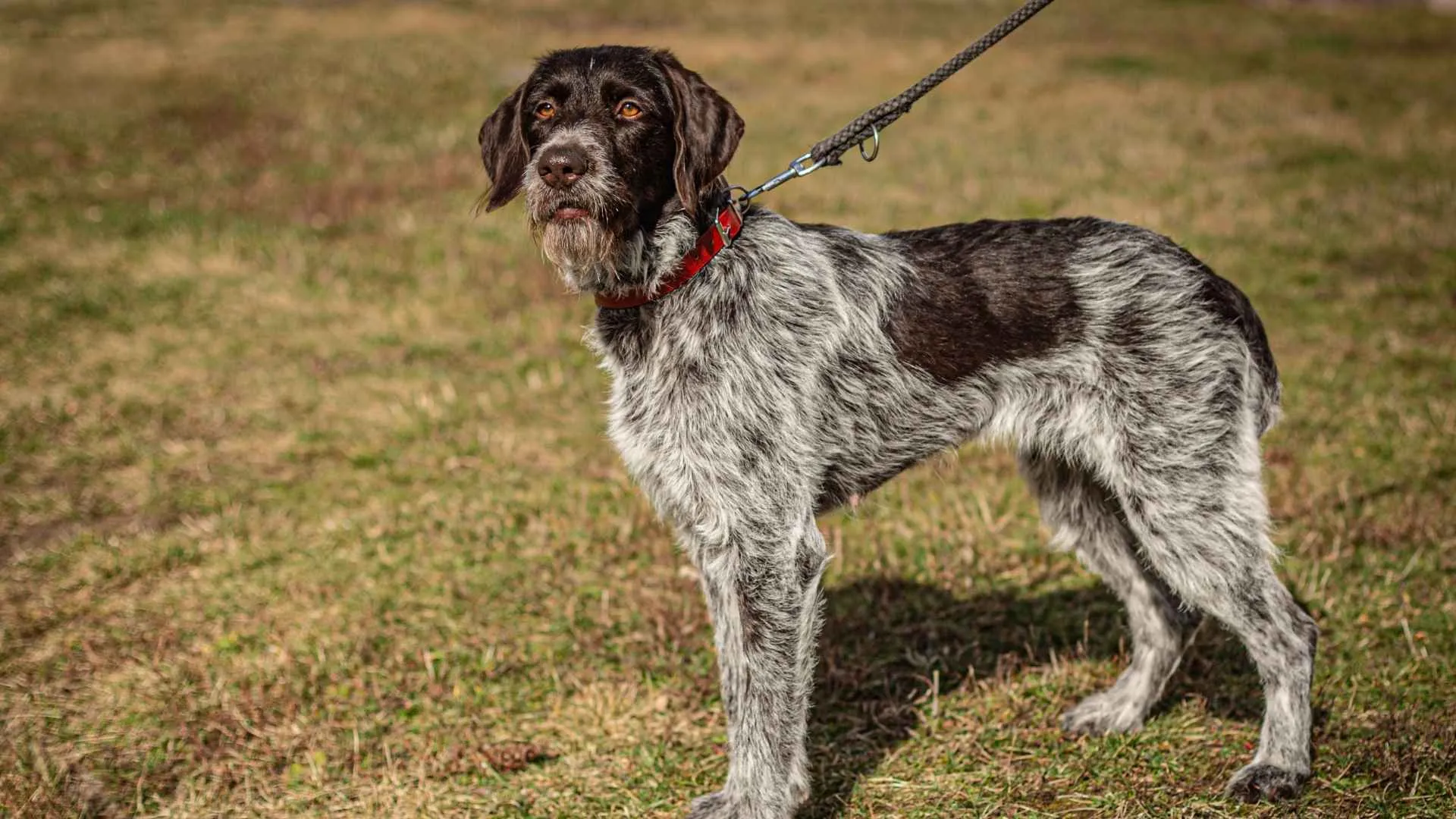
The German Wirehaired Pointer was developed as a dependable hunting partner capable of working across rugged fields, dense brush, and icy wetlands. Its harsh, weather-resistant coat and webbed feet help it perform comfortably in demanding conditions on both land and water.
Athletic and highly intelligent, this breed excels when given challenging work that engages both body and mind. Loyal to its family and eager to please, it responds well to consistent training while thriving in active homes that can match its remarkable stamina.
How This Breed Stands Out
All-weather hunting specialist: A protective, wiry coat and rugged build allow it to hunt confidently through rough terrain, cold weather, and wetlands.
Tracks, points, and retrieves: This versatile sporting dog can locate game by scent, point with precision, and retrieve birds from fields or water.
2. Boykin Spaniel
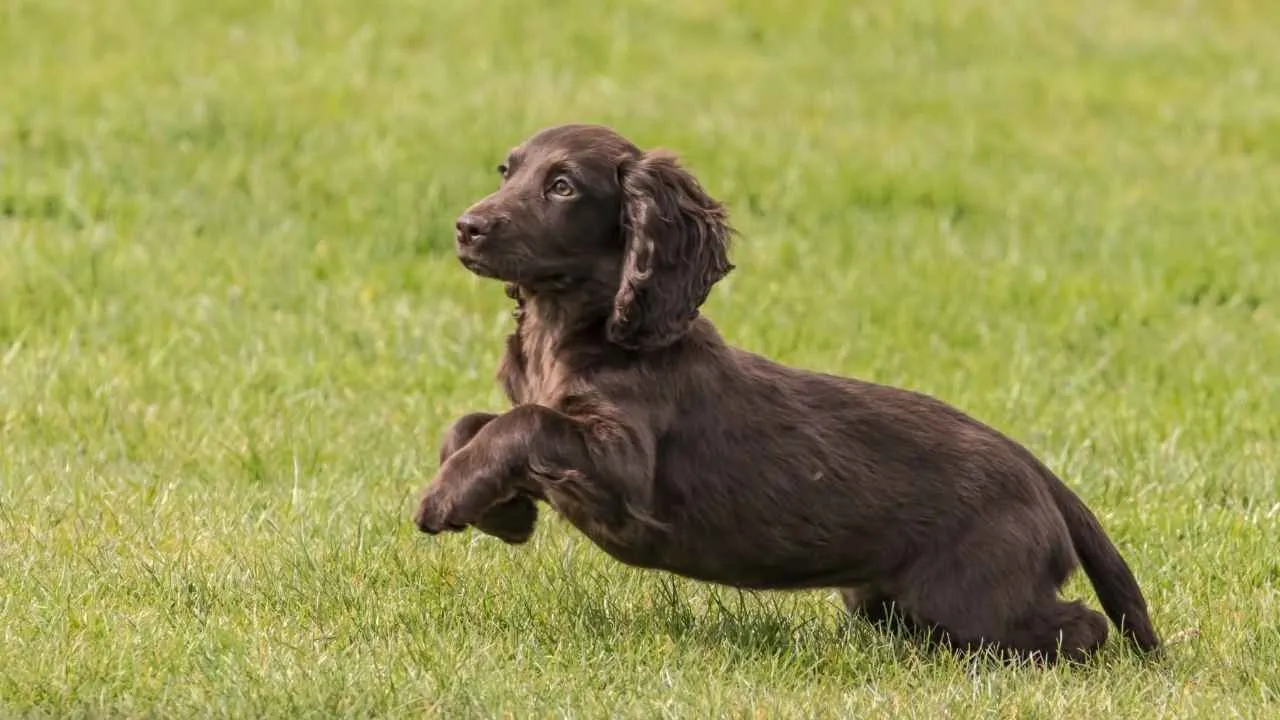
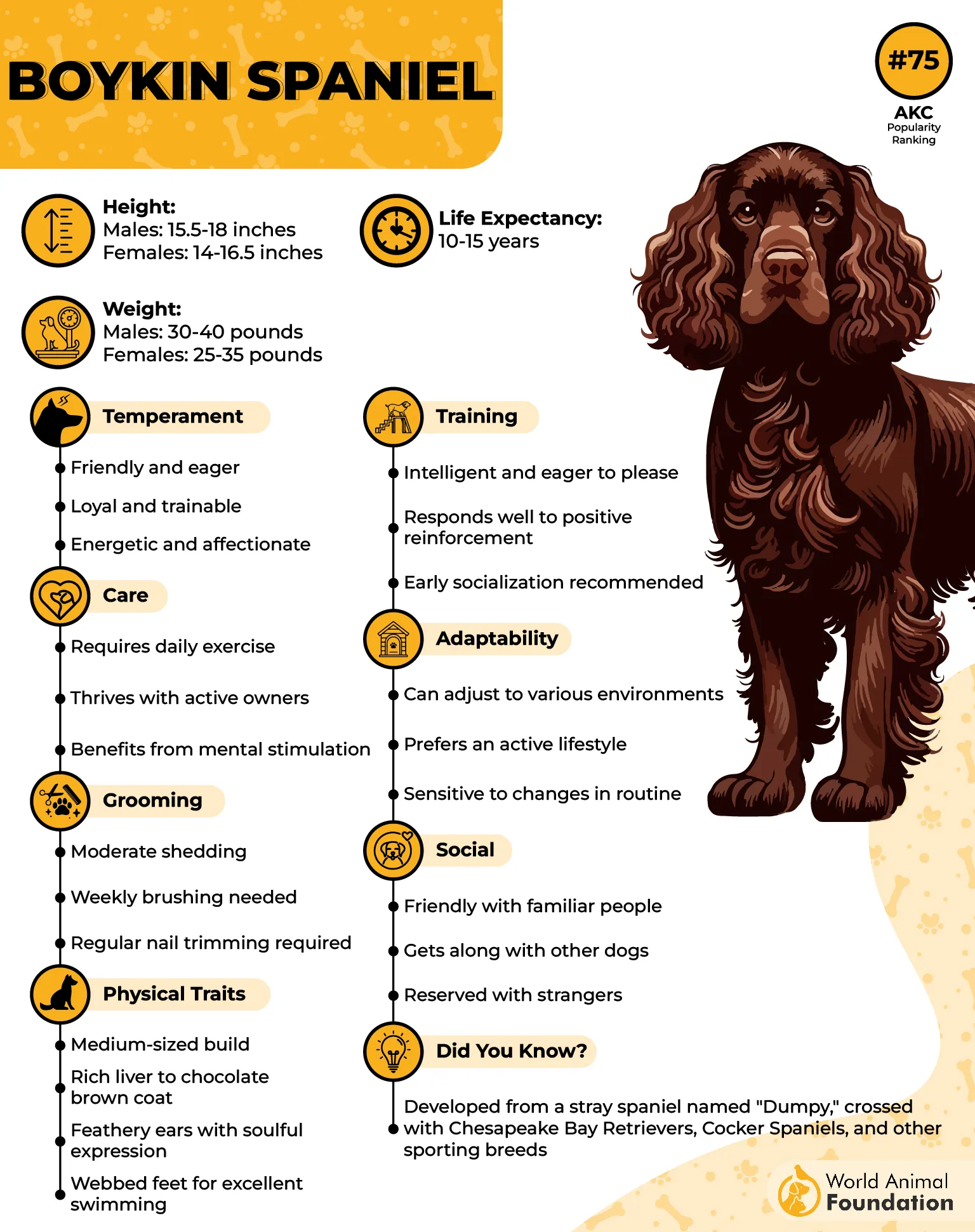
Originally developed in South Carolina, the Boykin Spaniel is a compact sporting dog built for retrieving waterfowl from lakes, marshes, and swampy terrain. Its manageable size also makes it an excellent hunting companion in small boats and tight, brush-filled environments.

The Boykin Spaniel is more specialized for wetland work than small-game hounds. According to the AKC, consistent physical activity helps Boykin Spaniels stay healthy, active, and happy.
Energetic and devoted, this breed combines strong flushing instincts with reliable retrieving ability across diverse habitats. It thrives with regular exercise and mental challenges, and its affectionate, eager-to-work nature makes it a seamless fit for active families and outdoor lifestyles.
How This Breed Stands Out
Dense-cover flushing expert: Its agile build allows it to push through thick vegetation and flush birds from heavy cover with confidence.
Excels in marshland hunts: Bred for wetland hunting, it navigates swamps and shallow water with ease while retrieving game efficiently.
3. Karelian Bear Dog
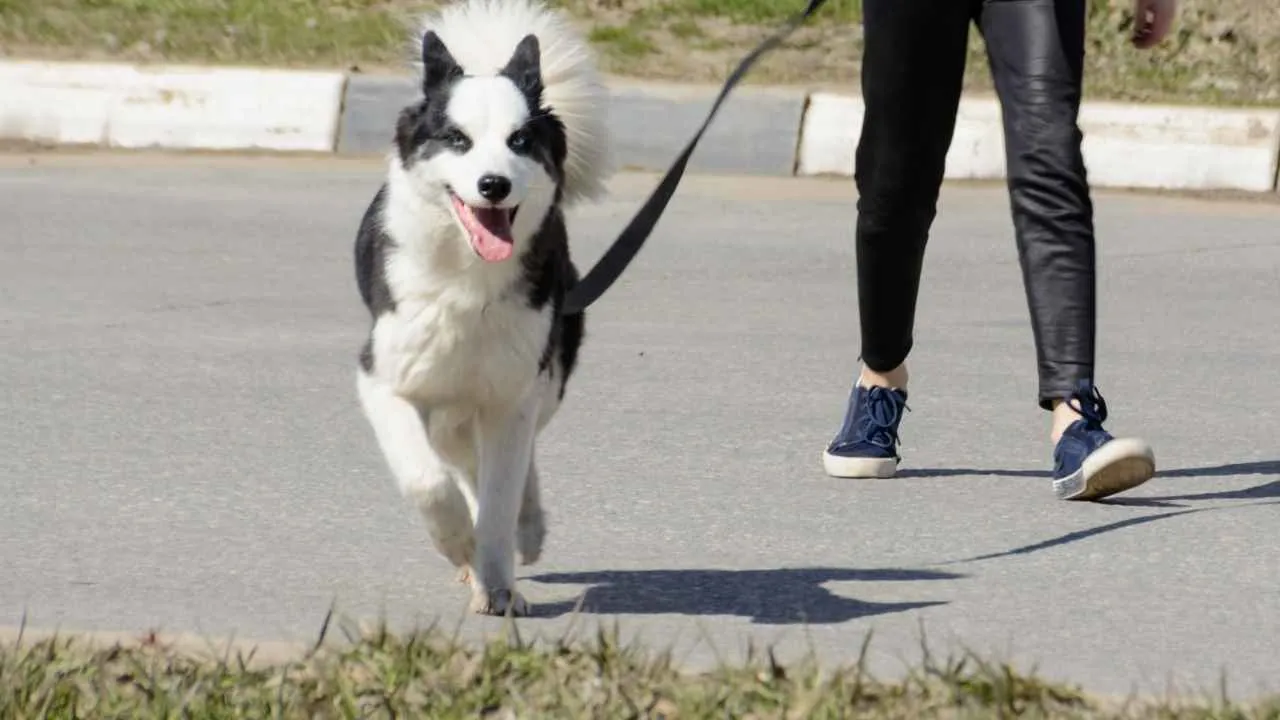
The Karelian Bear Dog is a fearless Nordic hunting breed developed to track and confront large game in harsh forests. Rather than attacking immediately, it relies on stealth to locate quarry before boldly holding it at bay for the hunter.
According to Royal Canin, Karelian Bear Dogs are self-assured, energetic hunters known for their exceptionally keen senses.
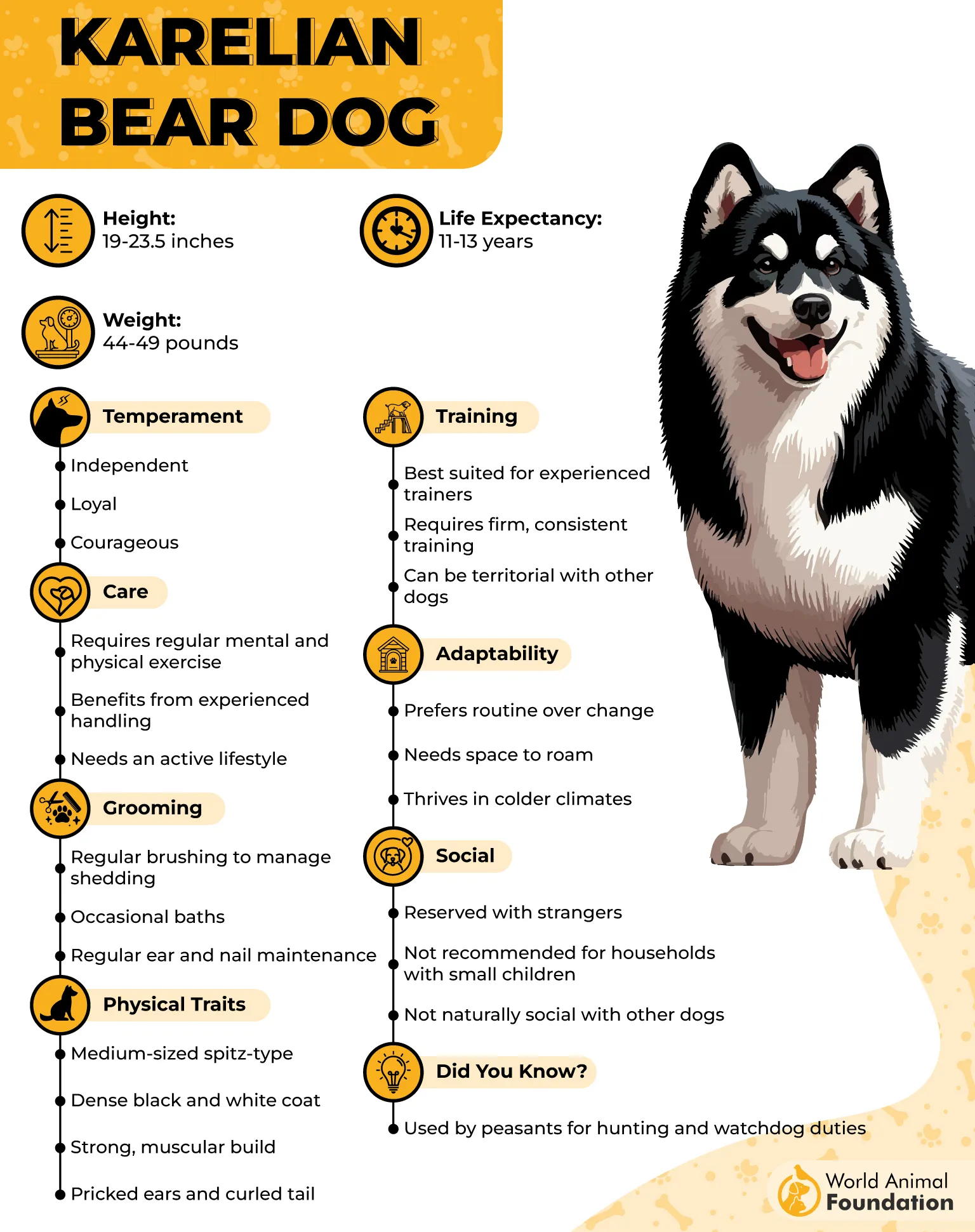
Highly energetic and fiercely loyal, this spitz thrives with experienced handlers who can provide structured training and demanding outdoor work. Its courage, endurance, and protective instincts make it a remarkable partner for challenging wilderness hunts.
How This Breed Stands Out
Fearless large-game confrontations: Bred to confidently corner formidable animals like bears, it remains composed even in dangerous situations.
Bold barking deterrent: After silently tracking prey, it uses a powerful, persistent bark to signal the hunter and keep game contained without losing ground.
4. Norwegian Elkhound
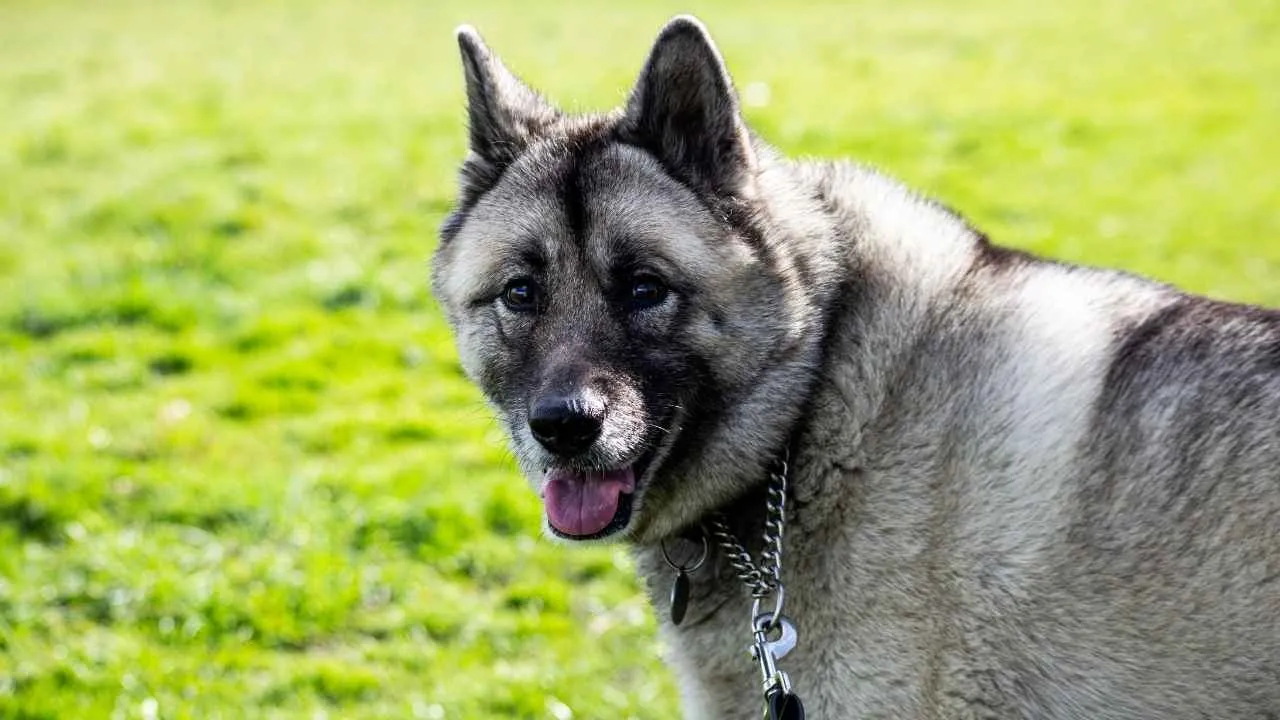
The Norwegian Elkhound is an ancient Scandinavian hunting breed developed to track moose across rocky mountains, deep forests, and snowy landscapes. Its thick double coat and powerful build allow it to work confidently through harsh weather where endurance is essential.
Brave yet loyal, this energetic spitz combines remarkable stamina with a good sense of smell that helps it detect the presence of large game before closing the distance. According to Purina, the Norwegian Elkhound shares classic Spitz features, including a thick coat, upright ears, and a tail that curls over its back.
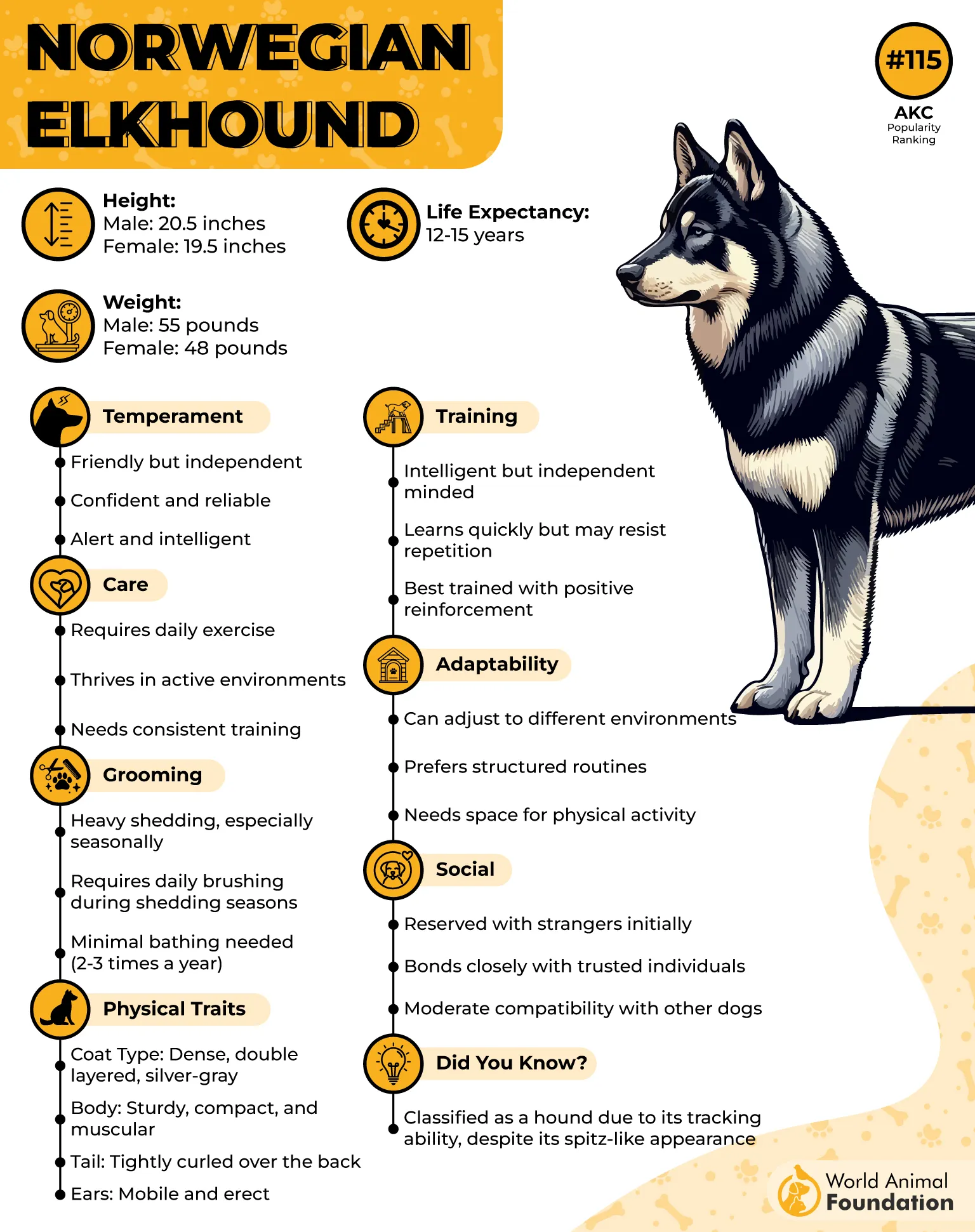
Instead of making an immediate start or reckless chase, it uses control and stamina to do its job well, locating game and keeping it occupied until the hunter arrives, making it a dependable companion for demanding wilderness expeditions and active outdoor lifestyles.
How This Breed Stands Out
Moose-hunting heritage: For centuries, it has specialized in tracking and holding powerful game like moose in rugged northern environments.
Endures rugged mountain terrain: Its weatherproof coat, athletic frame, and exceptional endurance help it thrive across steep trails, snow, and challenging landscapes.
5. English Springer Spaniel
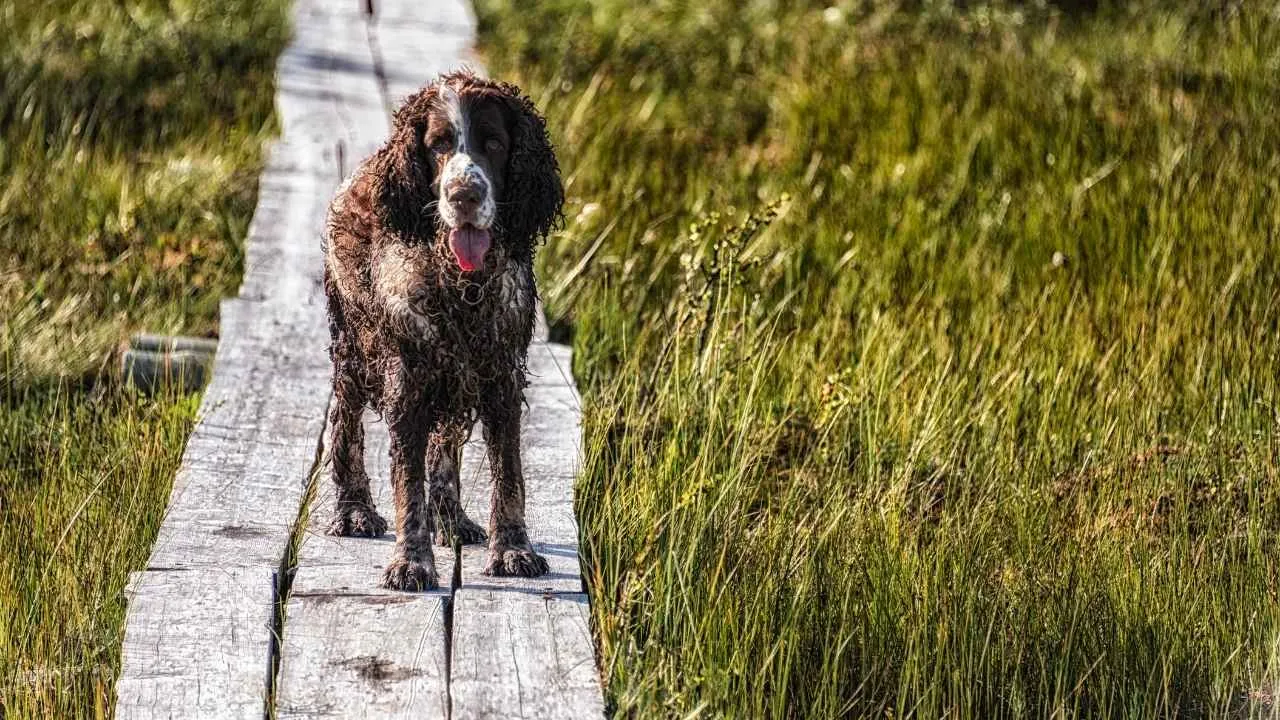
Originally bred to flush game from dense cover, the English Springer Spaniel is one of the most adaptable hunting dogs for upland birds and waterfowl. Its athletic build, keen nose, and natural retrieving instinct allow it to work confidently across fields, wetlands, and wooded terrain.
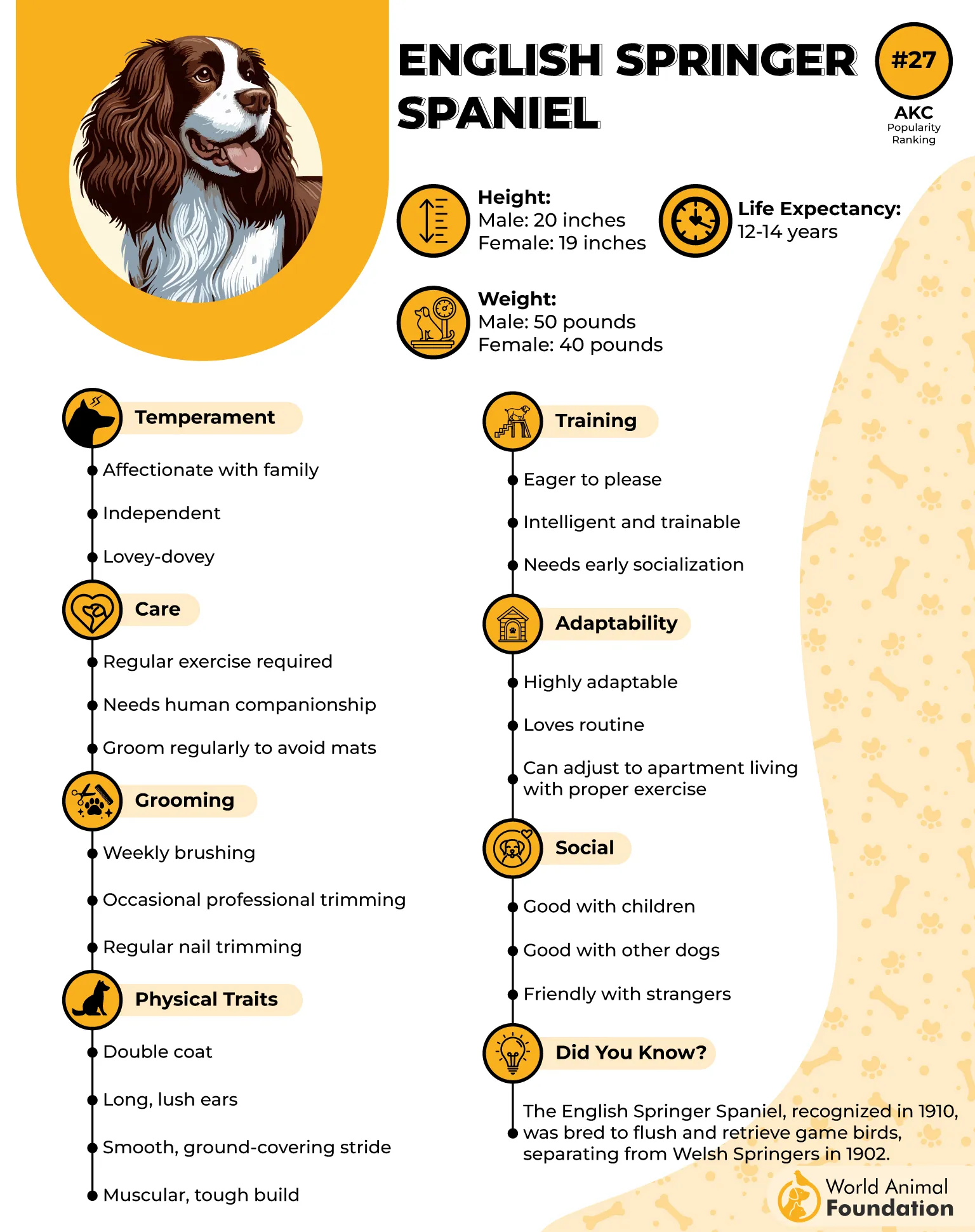
Beyond its hunting ability, this cheerful sporting breed is intelligent, eager to please, and highly trainable. It thrives in active homes where long walks, scent games, and outdoor adventures satisfy its impressive stamina while strengthening the close partnership it naturally forms with its handler.
How This Breed Stands Out
Flushes hidden upland birds: Expertly locates and drives pheasants, quail, and other game birds from thick vegetation with precision.
Agile woodland movement: Its compact, athletic frame helps it weave through brush, forests, and tight hunting cover while retrieving game efficiently.
6. Rhodesian Ridgeback
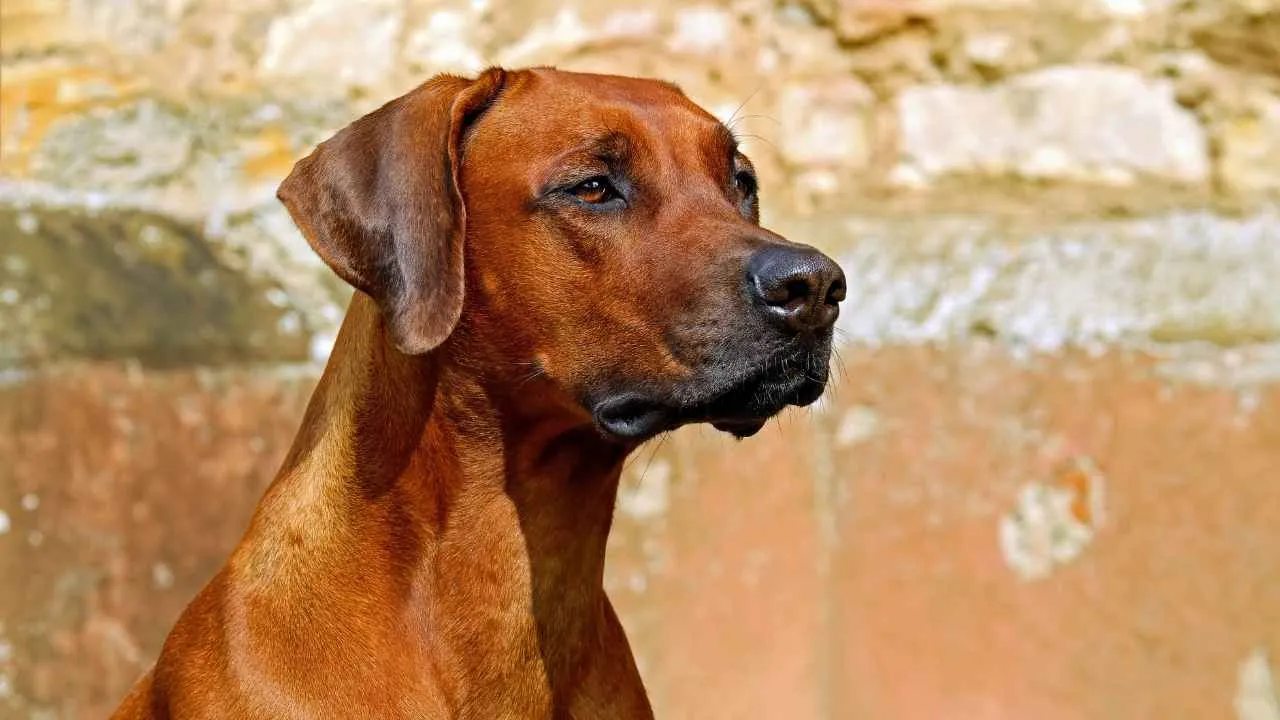
The Rhodesian Ridgeback was developed in southern Africa as a fearless tracking hound capable of pursuing formidable game across open plains, with a heritage shaped by a combination of endurance, speed, and control suited to dangerous quarry. Its signature ridge of backward-growing hair reflects a heritage built on courage, speed, and remarkable versatility in demanding hunting environments.
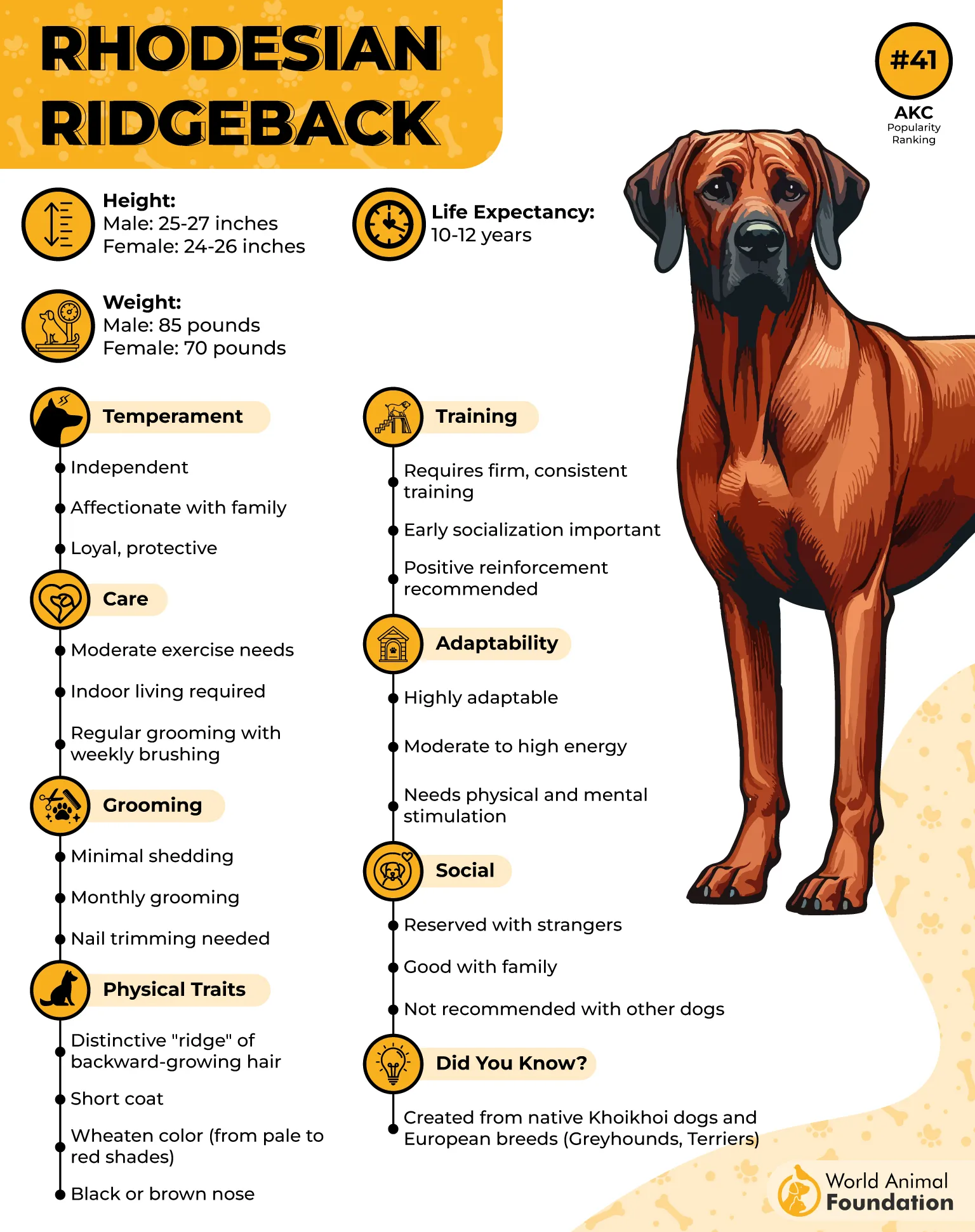
Powerful yet athletic, this breed combines keen eyesight, an excellent nose, and impressive stamina, along with the tenacity to stay on long pursuits, making it a strong fit for the type of hunter who wants an independent dog for challenging outdoor work.
Independent by nature, it responds best to patient, consistent training and thrives with active owners who can provide vigorous exercise, tracking activities, and meaningful outdoor work.
How This Breed Stands Out
Pursues powerful quarry: Bred to track and confidently hold large game at bay without attacking, showcasing exceptional bravery and control.
Heat-tolerant endurance: Its lean, muscular build and outstanding stamina allow it to cover long distances efficiently in warm, rugged landscapes.
7. Treeing Walker Coonhound
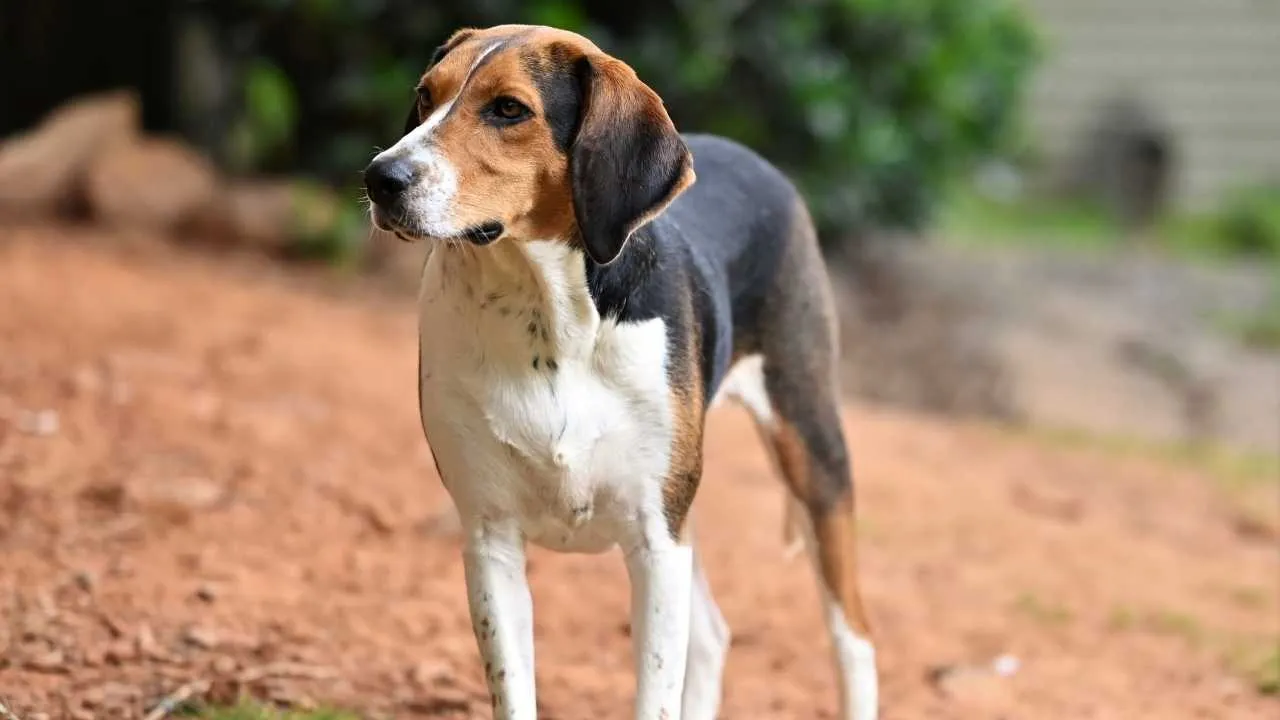
Bred for raccoon hunting, the Treeing Walker Coonhound is celebrated for its exceptional nose, remarkable speed, and relentless determination. It follows scent trails over long distances before driving quarry up a tree and announcing its location with its unmistakable baying voice.
This athletic hound thrives in active homes that can provide vigorous exercise, trail work, or hunting adventures, and similarly driven hounds such as Redbone Coonhounds need a minimum of 60–90 minutes of daily exercise.
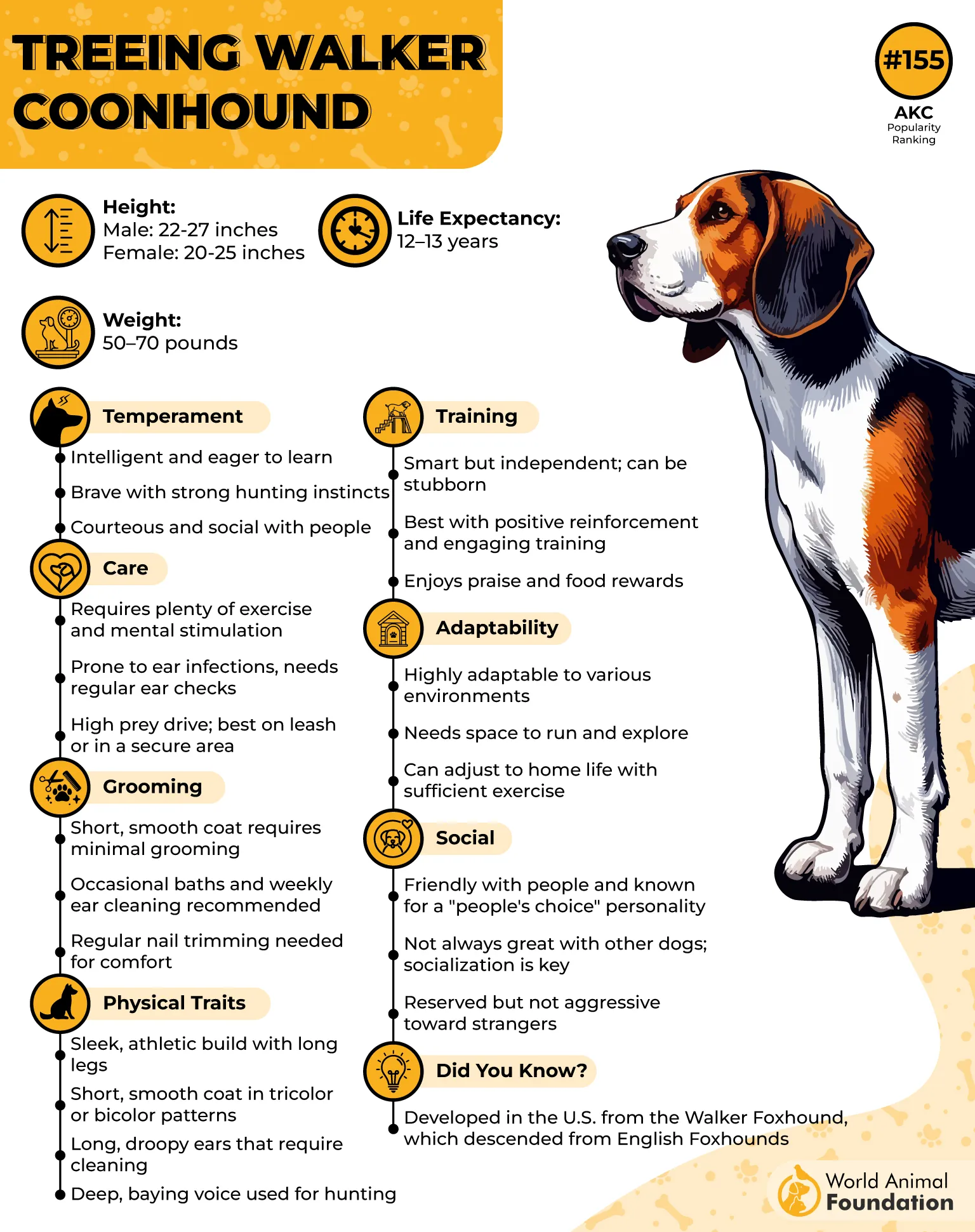
Intelligent yet independently minded, it responds well to positive training and early socialization, while its friendly, playful nature makes it a devoted companion when the day’s work is done.
How This Breed Stands Out in Game Hunting
Rapid scent-trailing ability: Its powerful nose and impressive endurance allow it to follow game across challenging woodland terrain with remarkable accuracy.
Exceptional treeing instinct: Once quarry is located, it confidently trees the animal and uses its distinctive voice to guide hunters directly to the spot.
Conclusion
The finest hunting dogs combine instinct, intelligence, and endurance, allowing them to adapt confidently to forests, wetlands, mountains, and open fields. Their versatility makes them valuable partners across many different hunting environments.
Some breeds excel at tracking powerful game, while others specialize in flushing birds, retrieving waterfowl, or following scent trails through dense cover. A Labrador Retriever is a classic example for waterfowl work thanks to its strong build and natural retrieving drive, while squirrel-bred dogs can make tree game easier to locate and hold. Each brings unique strengths to a different style of pursuit.
Beyond their working ability, these dogs thrive through purposeful training, regular exercise, and strong partnerships with dedicated handlers. Loyalty, trainability, and traits like confident swimming can make demanding days in the field feel easier for both dog and handler.
Choosing the right hunting breed depends on the terrain, quarry, and lifestyle you enjoy most, and if breed standards and pedigree matter, it is also worth checking whether the breed is recognized and registered by the American Kennel Club.
With the right match, these remarkable sporting dogs deliver skill, resilience, and unwavering dedication on every adventure.
