




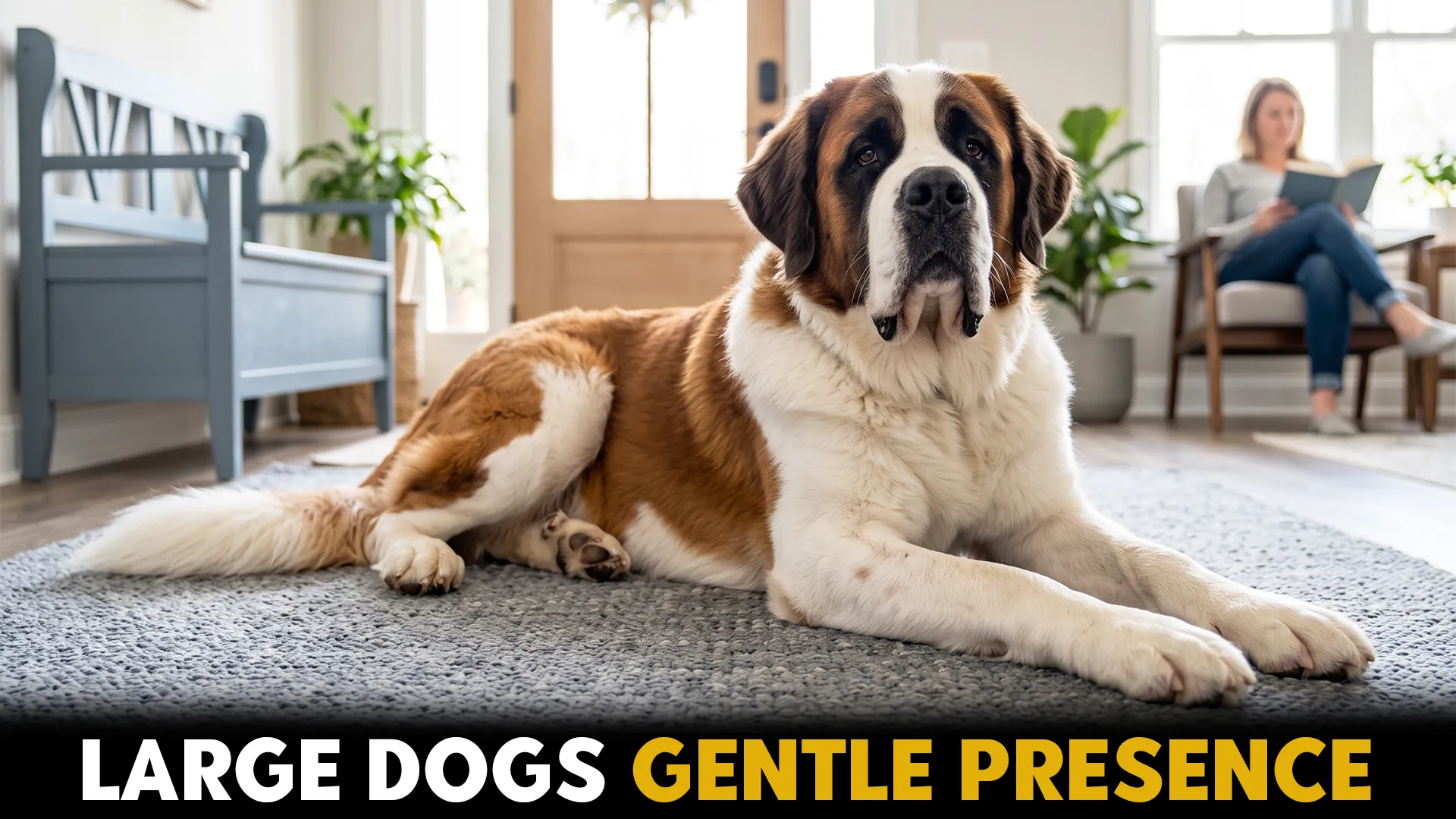
A good guard dog does not have to act like a furry security alarm.
In fact, some of the best guardians are surprisingly calm. They watch the door, notice unfamiliar sounds, and stay close to their people without turning every passing squirrel into a five-alarm emergency. That balance can be especially valuable for families who want protection without constant chaos.
From the powerful Bullmastiff to the gentle Newfoundland, these breeds bring different kinds of confidence to the home. Some were developed specifically for guarding, while others combine an imposing presence with a steady family nature.
Here are seven calm guard dog breeds worth knowing if you want a loyal companion who can keep a watchful eye without making your home feel like Fort Knox.
Top Calm Guard Dog Breeds for Peace of Mind
1. Bullmastiff
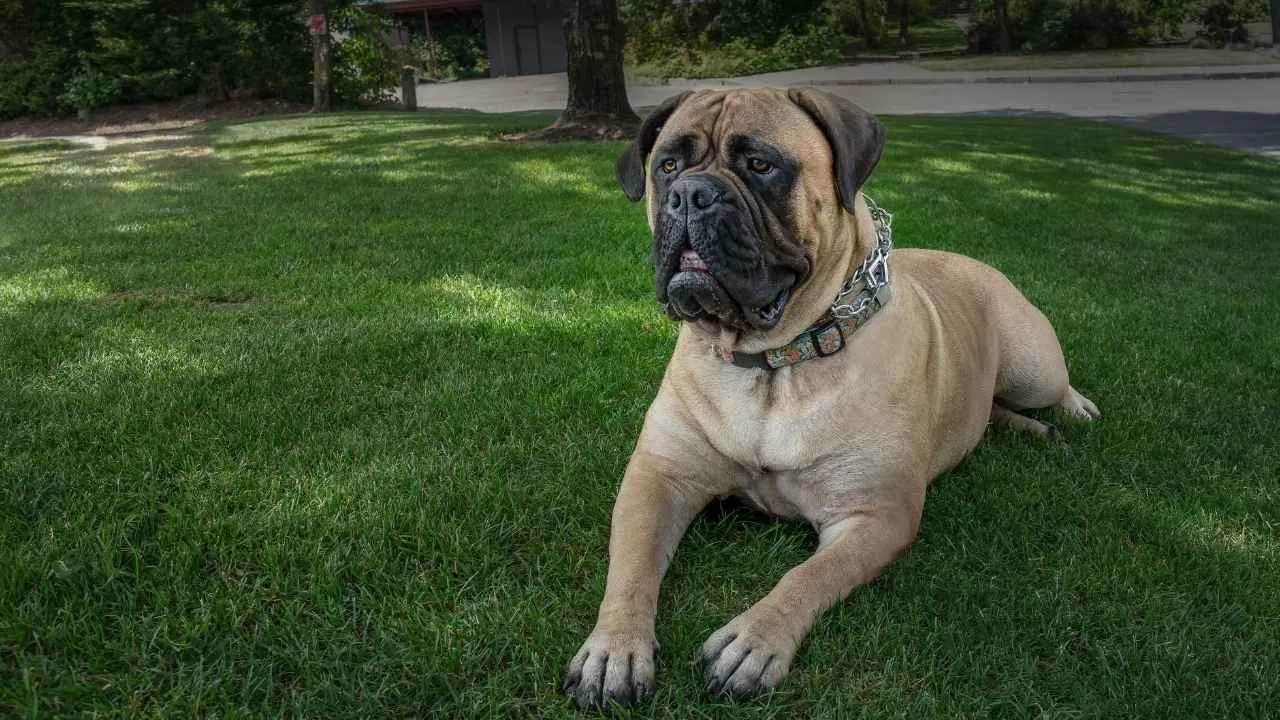
The history dates back to the 19th century, when English estate owners felt the need to have a good guard dog to protect their properties from poachers. The breeders crossed the Bulldog and the Mastiff to develop a breed that can physically knock down an intruder.
The slightly undershot jaw structure provides a strong holding grip. The arched neck has an equal circumference to the skull, which neutralizes the movement of intruders. The family dog is known for its short-distance sprinting speed. It has a quiet nature and silently follows the target from behind, only barking to notify the owner.
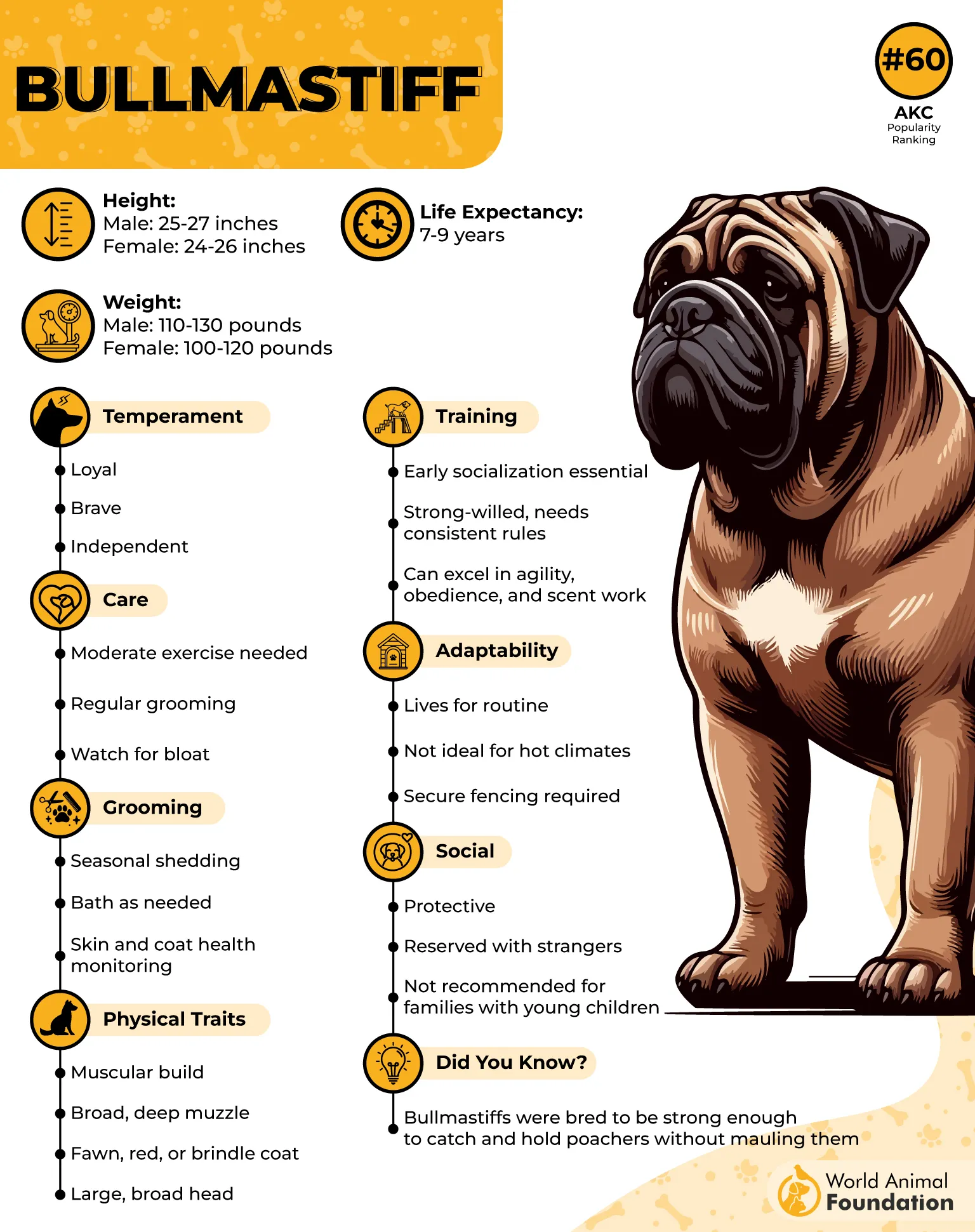
It tends to sit at vantage points of all entry zones and remains highly perceptive of noise or scent even when sleeping, as noted by the AKC. It initially sees every stranger with suspicion but makes friends with them once properly introduced by the owner.
2. Leonberger
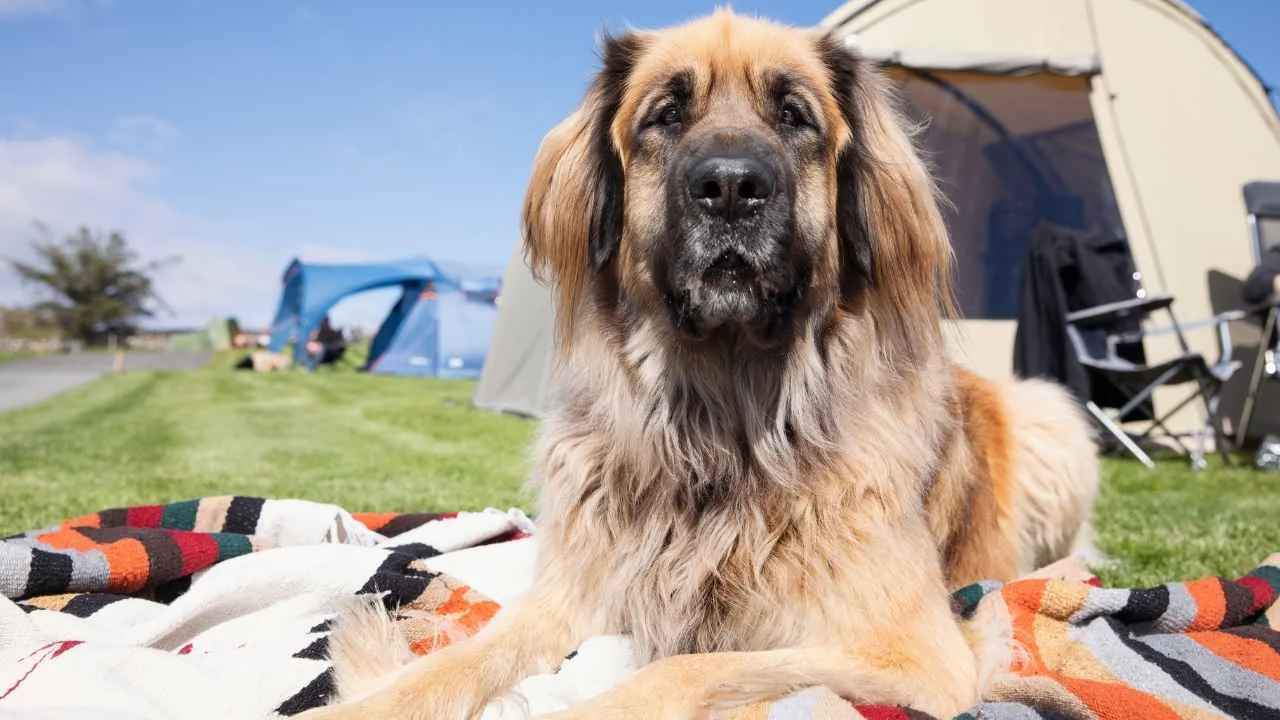
The protective dog breed was originally bred as a companion dog for the European royalty. The Saint Bernard and the Newfoundland were crossed by Heinrich Essig in the 19th century to develop the breed. However, it was officially recognized by the AKC in 2010.
The large dog has a lion-like mane around its neck, protecting the dog from counterattacks (bites, etc.) and making it look larger. The dark, black ‘mask’ from the muzzle to the eyebrows gives it a serious expression. Being a natural watchdog, it can detect minute changes in the environment.
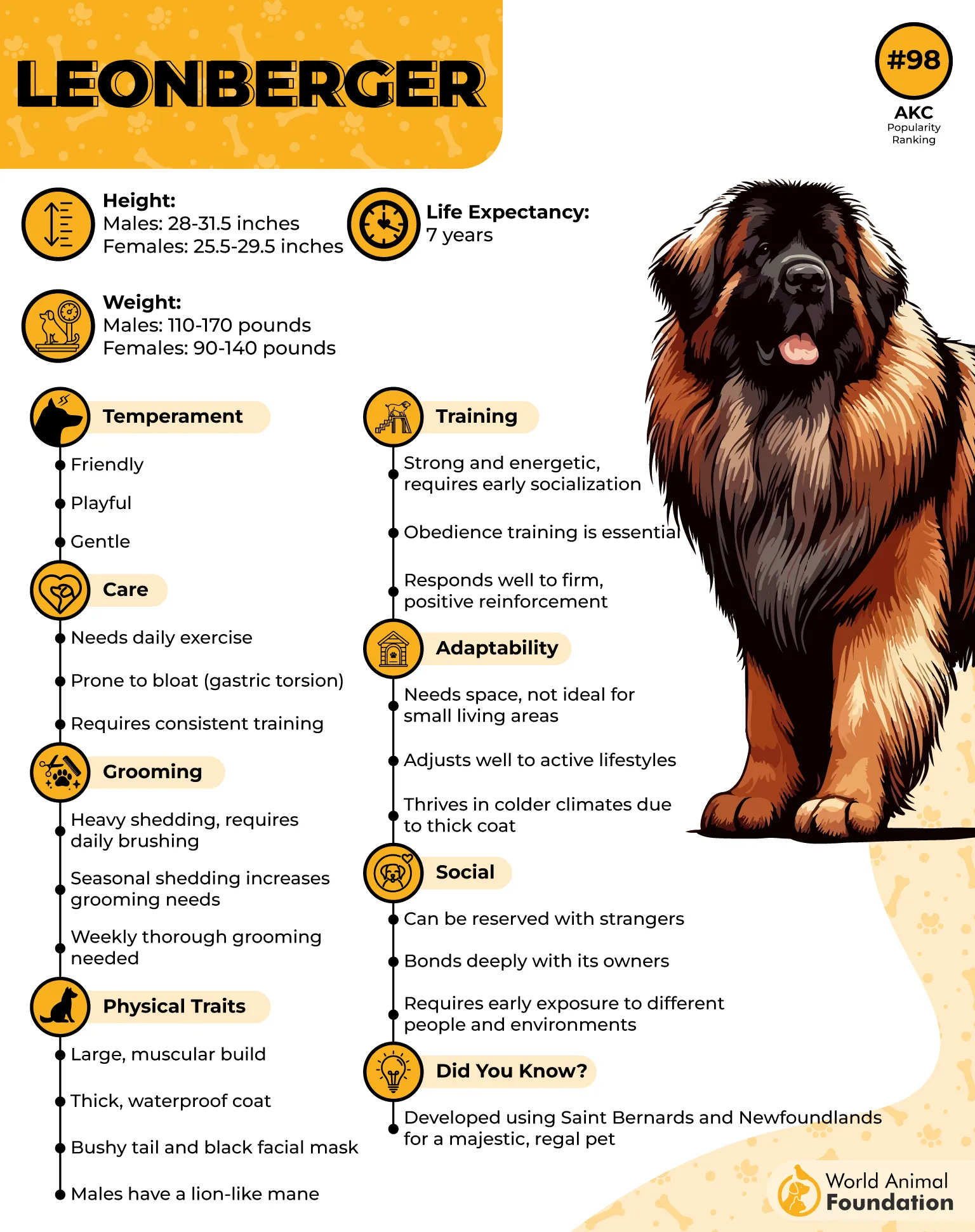
This large breed is highly obedient to family members and has strong territorial instincts, making it a great guard dog without formal training. It has a ‘nanny patience’ for kids and simply relocates itself when irritated by them.
3. Broholmer
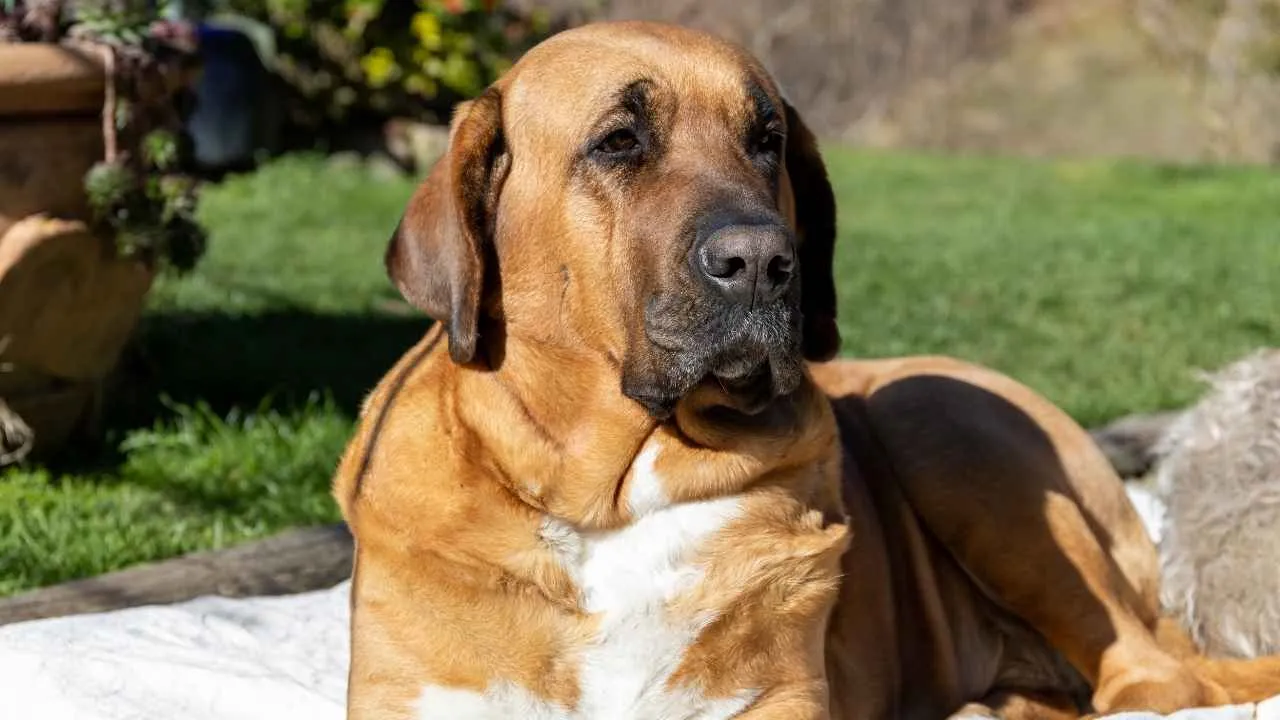
Also known as the Danish Mastiff, the breed was developed in Denmark as a guard dog for rich people. The number declined during World War II and revived in the 1970s, as reported by Wikipedia. It has a broad head and a powerful muzzle that give an immense bite force.
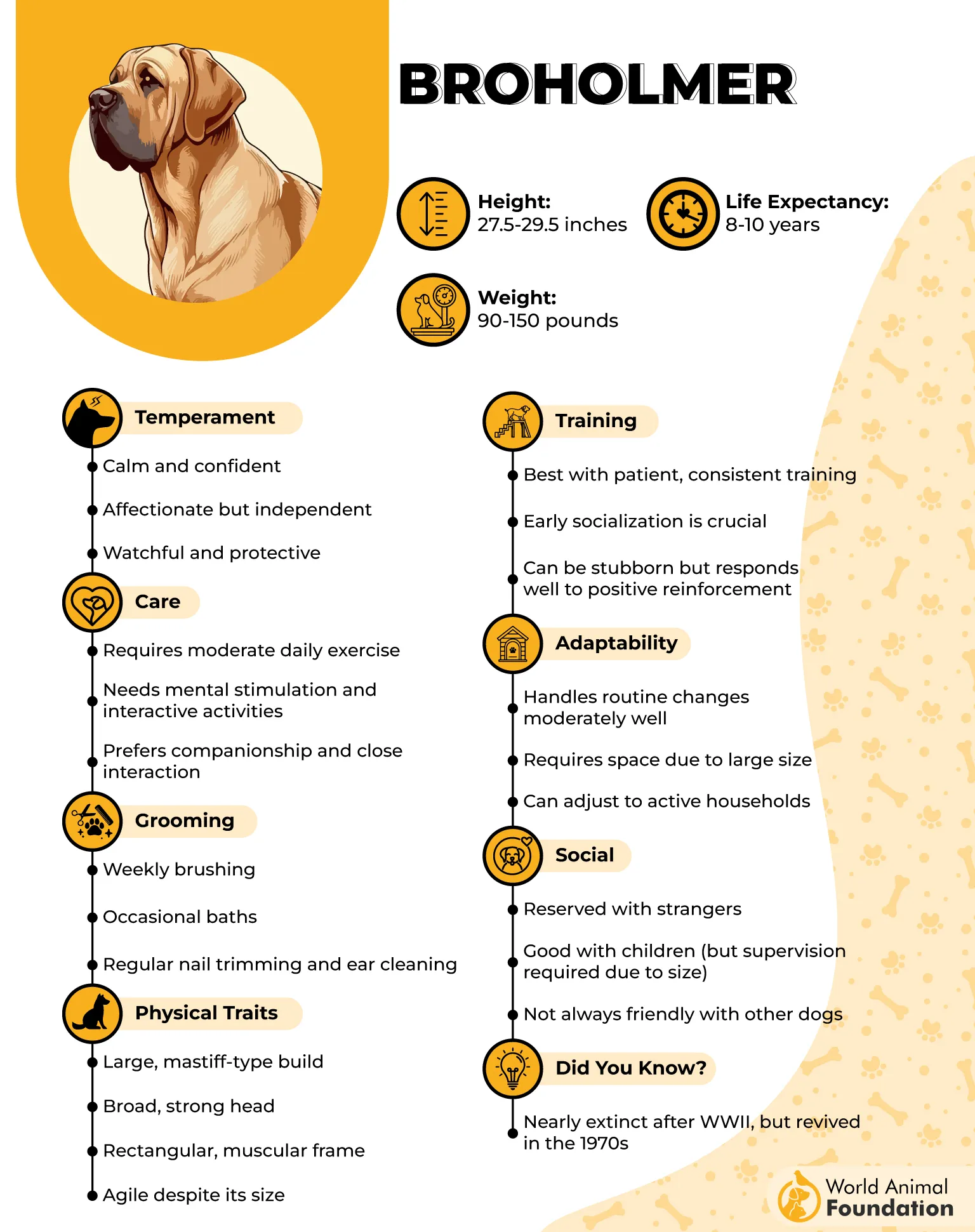
The deep chest and sturdy legs allow it to physically pin and hold the intruders. With its controlled temperament, it remains calm indoors but gets excited by a threat and shifts its physical posture: head carried high, tail rises, and a clear visual warning.
The right guard dog forms strong bonds with the owner and tends to sit directly in their lap or on their feet. It naturally patrols the home’s boundaries regularly. It produces an alert bark when it notices unusual activity.
4. Great Dane
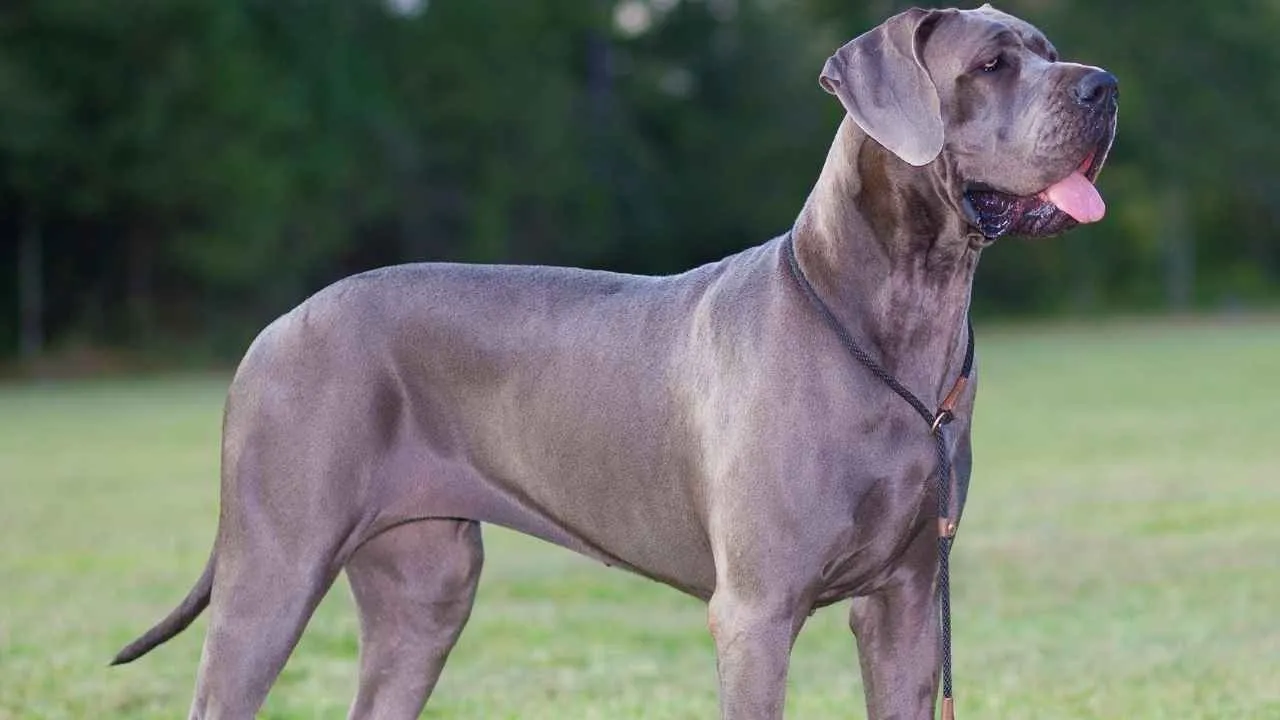
Also known as Deutsche Dogge in Germany, this large dog was developed to hunt wild boars. Later, it became a watchdog for families. However, a similar dog was found in ancient Egyptian monuments from 3,000 BC. The remains of large hunting dogs from thousands of years ago are also said to have similar traits and characteristics.
It places its eyes directly at the human chest or face level while standing and stands 6 ft tall when rearing up, giving it an intimidating presence. The breed has a bite force of 238 PSI, and it can crush the bones of an attacker. It executes body blocking using its massive frame as the first mode of protection.
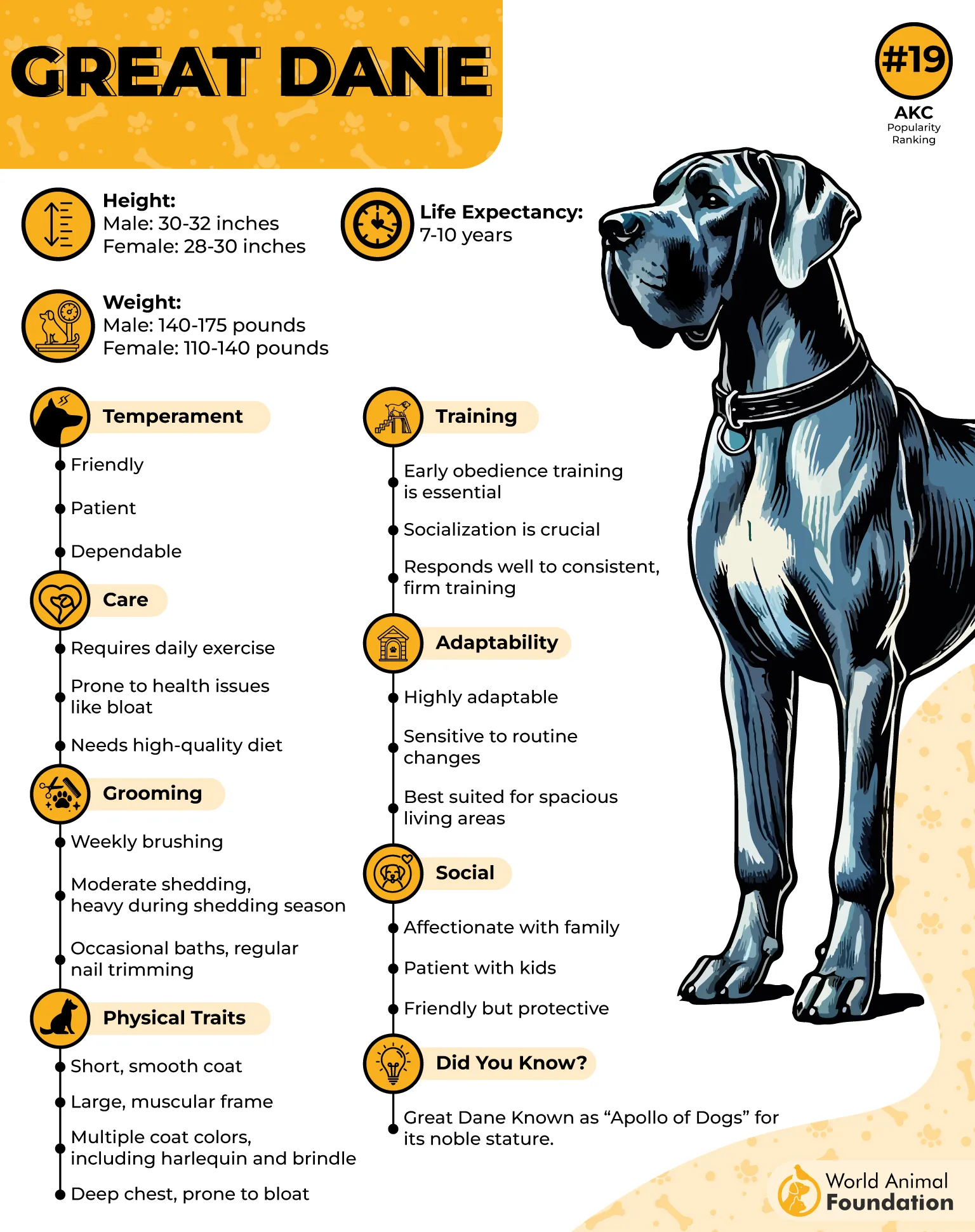
With its selective territorial aggression, the excellent guard dog immediately shifts to a protective posture if it feels a threat to the family or property. It is a low-energy breed indoors and needs 30-60 minutes of exercise daily.
5. Newfoundland
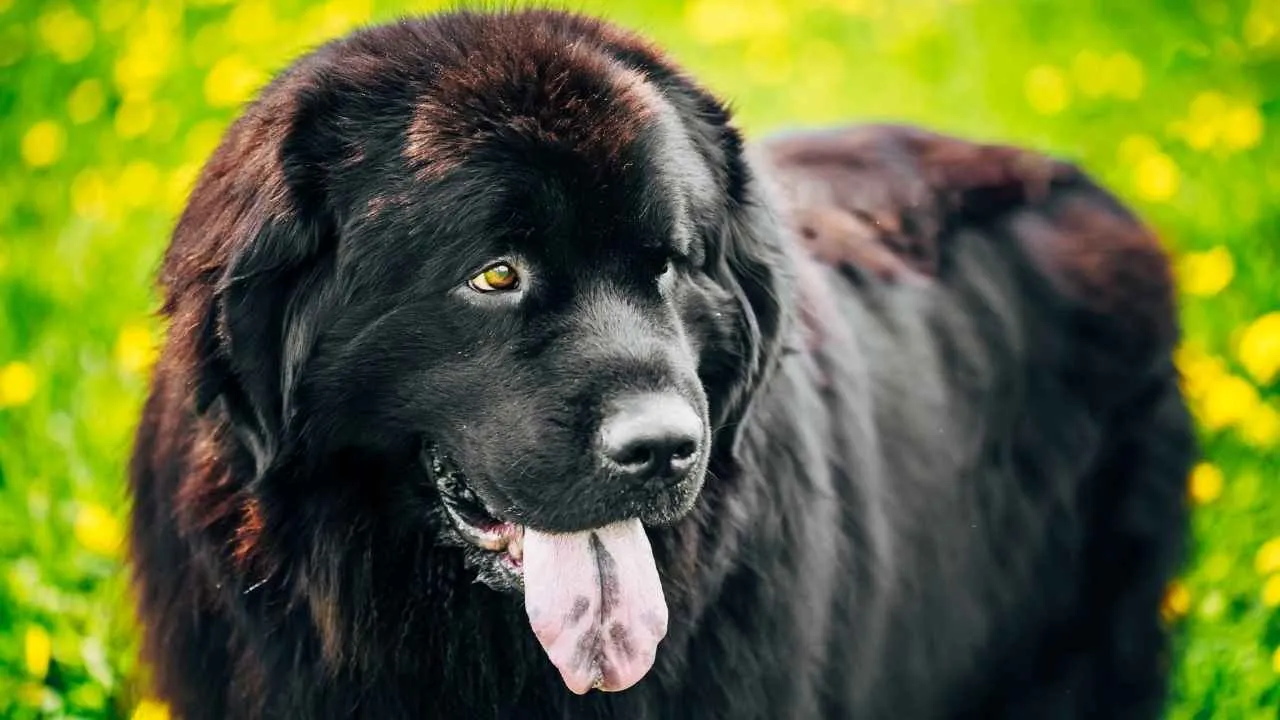
The gentle giant was developed in Canada and has ancestral roots with the St. Bernard and the Mastiff. The working dog was initially used to haul nets for the fishermen and pull heavy carts. It excels in water because of its webbed feet and a thick double coat, says Omlet.
It rarely bites and has great endurance in stressful situations. It keeps its auditory and optical pathways active, even during energy-conserving rest cycles, making it an efficient watchdog. The breed has a low prey drive; thus, it is highly suitable for families with children.
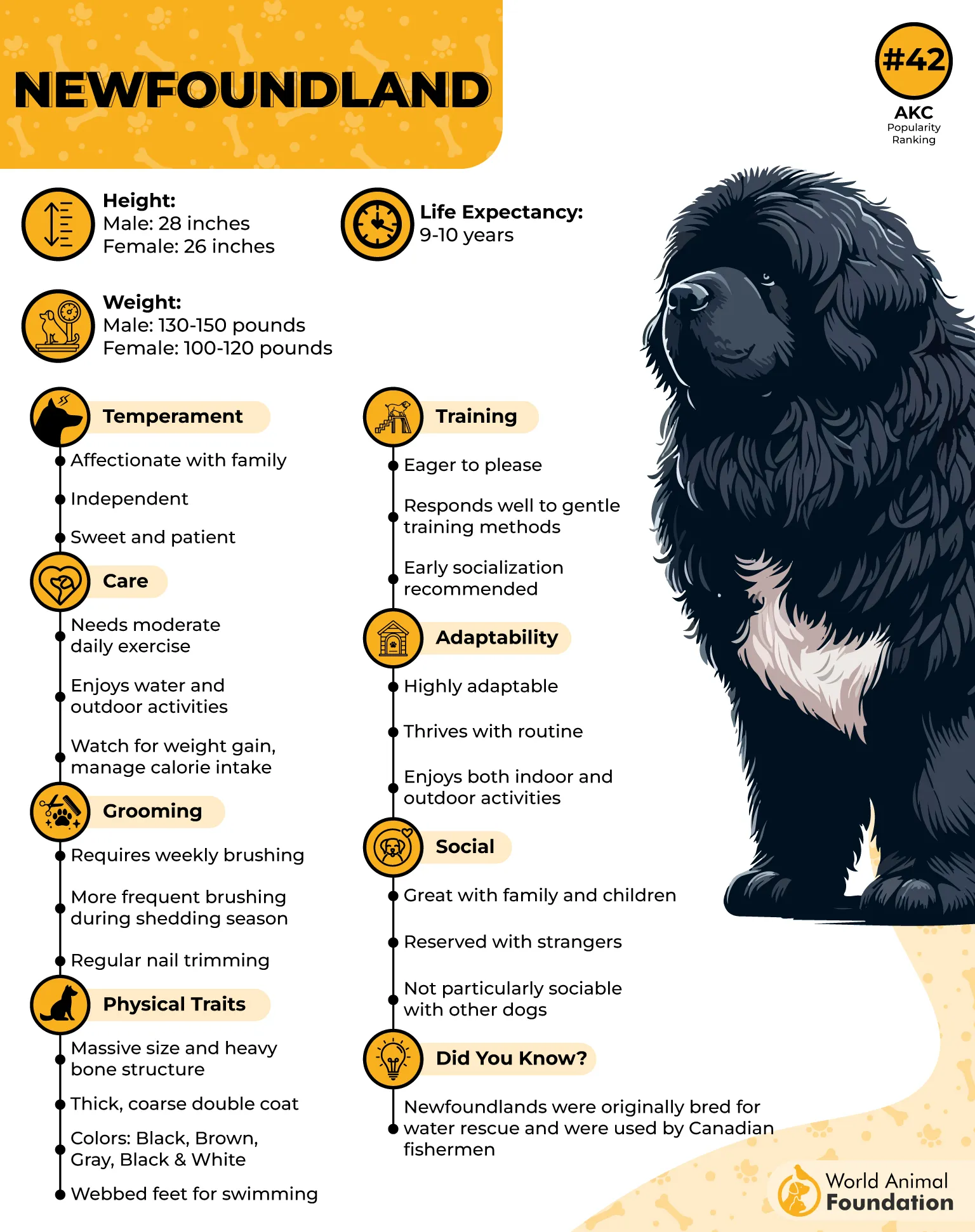
It has a low trigger threshold and a natural protective instinct, preventing hyper-reactivity, and does not bite out of fear. However, it needs proper training and early socialization to behave around strangers.
6. Rhodesian Ridgeback
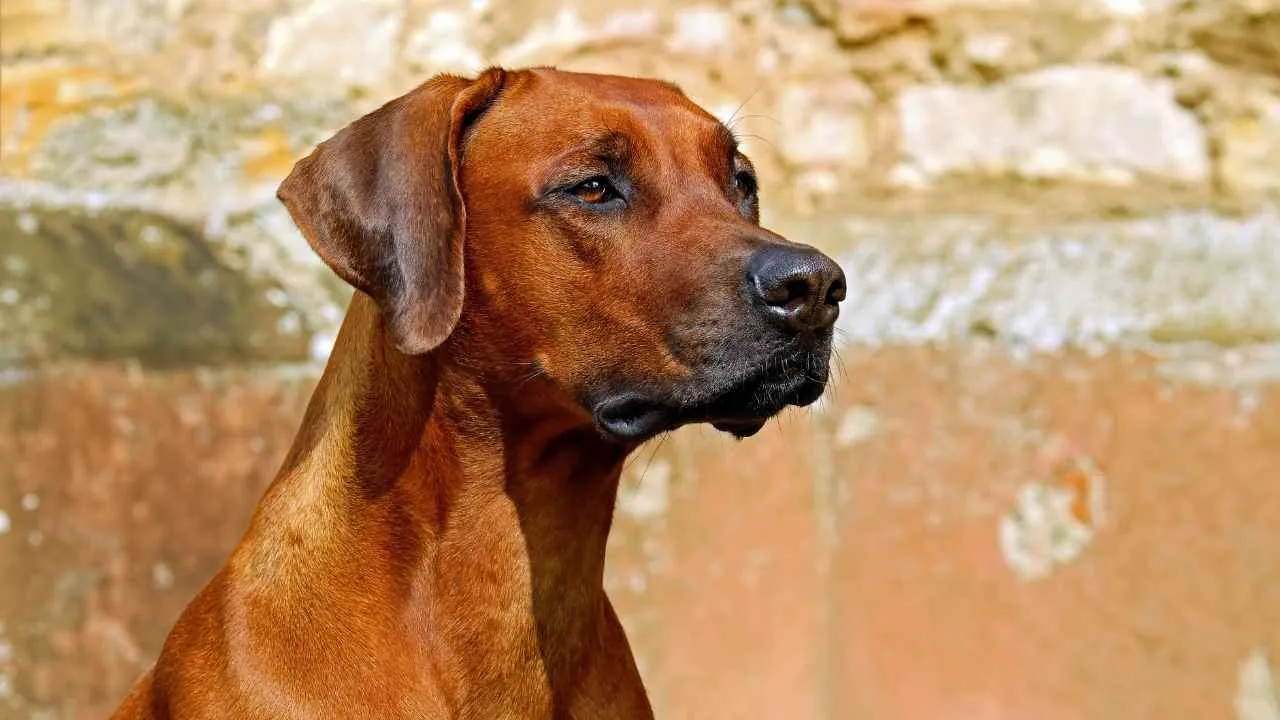
Developed from semi-wild dogs in South Africa, the Rhodesian Ridgeback was bred by the European settlers in the 17th century. The primary purpose of the breed was to hunt large game and could also hold lions. Bulldog, Mastiff, Great Dane, Bloodhound, and Terrier have contributed to the development of the breed.
The athletic dog has explosive speed, allowing it to cover ground rapidly to intercept threats. With its tracking abilities and acute vision. The main goal was not to kill, but to hold and track at bay. It has a short coat, making it highly resilient to intense hot weather. It keenly observes micro-expressions, helping it to assess situations efficiently.
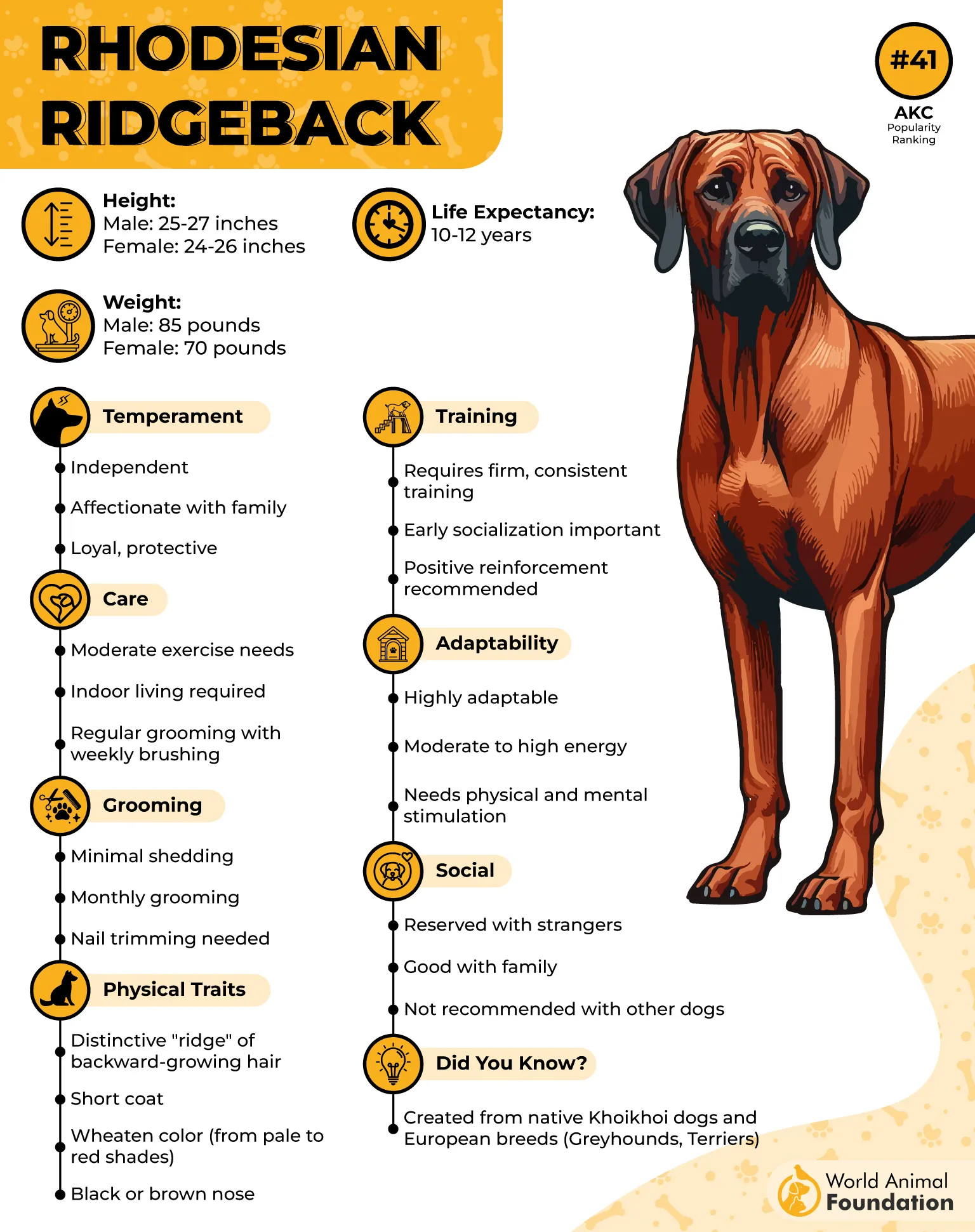
Being an independent thinker, it tends to work without the handler’s instructions. However, this may lead to stubbornness; thus, basic obedience training at an early age is highly recommended.
7. Kuvasz
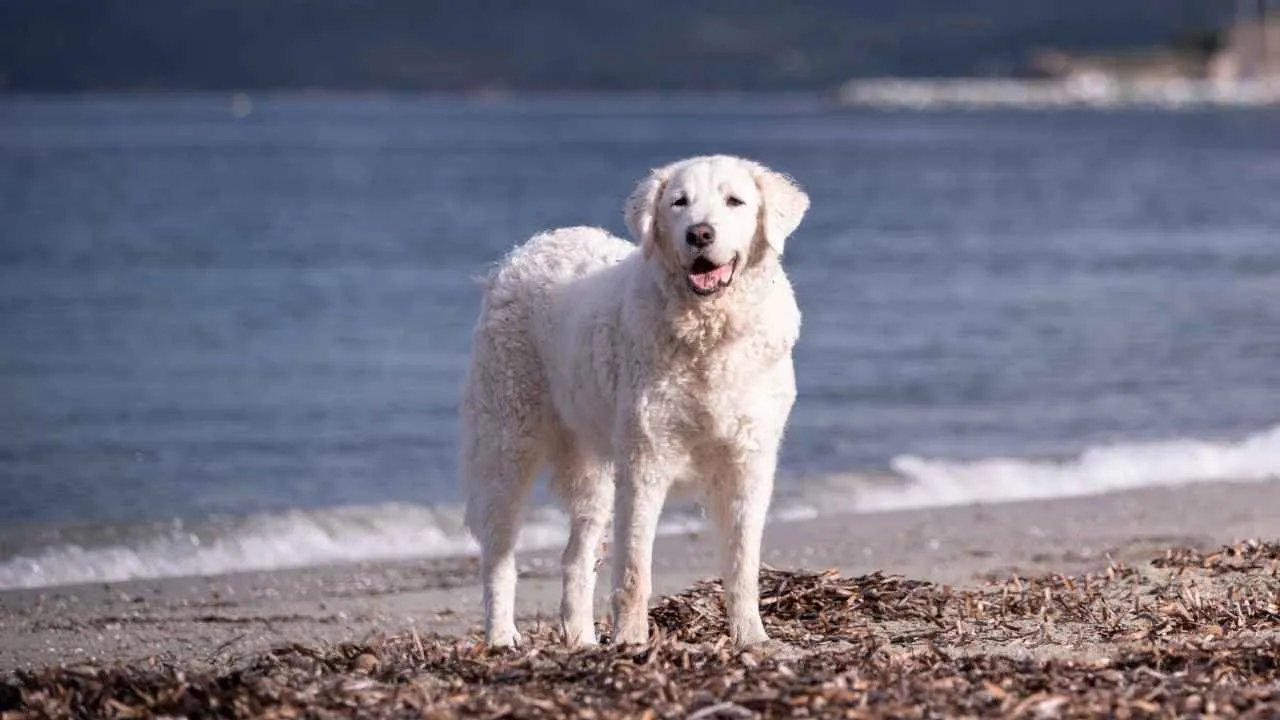
The ancient breed was originally developed in Siberia, but its history dates back to the Magyar tribes, who brought the breed to Hungary in the late 800s. It was allowed only to noble families initially. It almost went extinct during World War II and was believed to have been hunted down by Nazis, as it was fiercely protective.
The pure white coat historically helped the shepherds to distinguish between the dog and the wolves. It has a wedge-shaped head, almond-shaped eyes with an alert expression, and V-shaped ears that catch low-frequency sounds. The breed does not look at the owner for approval and keeps working even if the owner is not around.
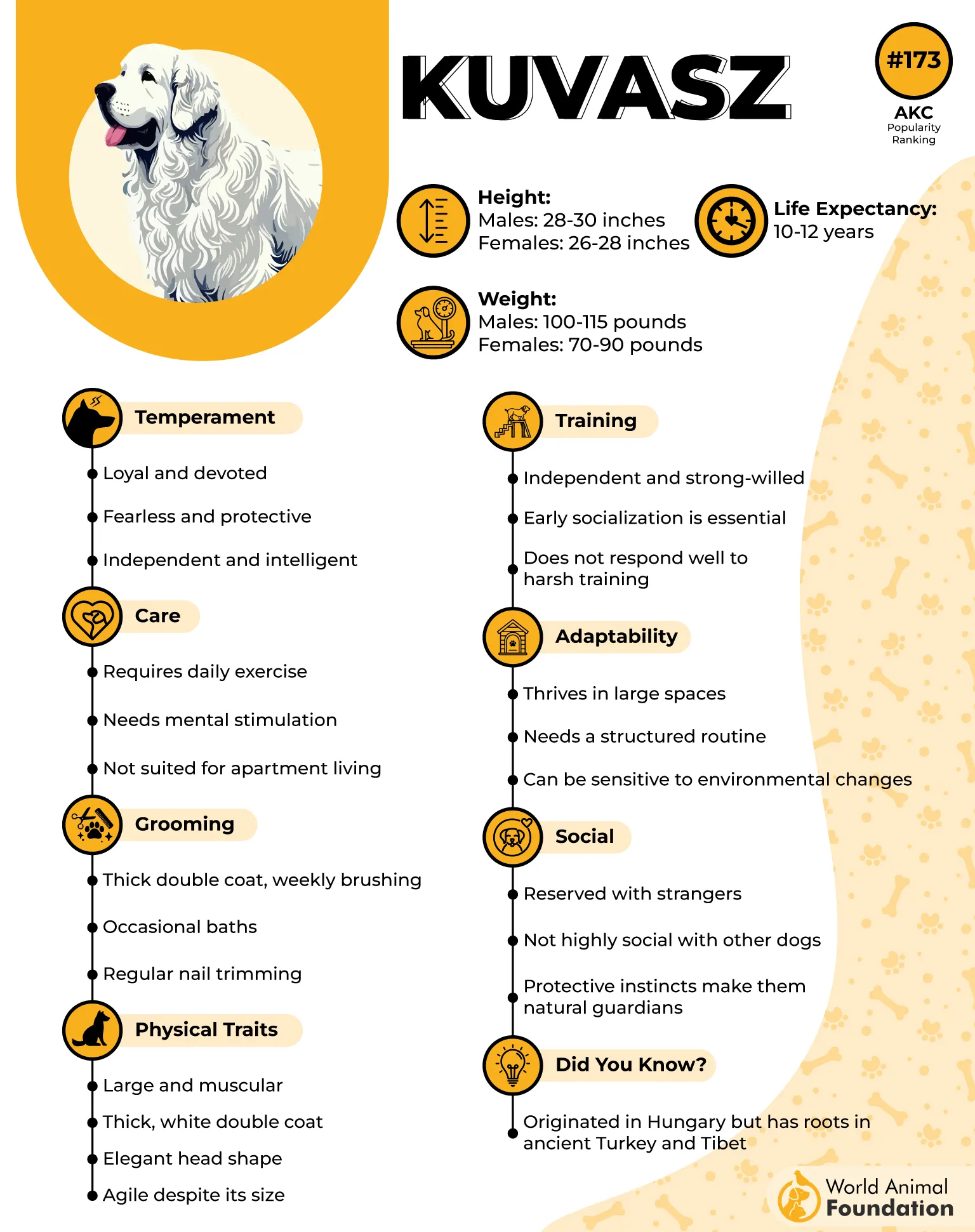
The high-energy breed needs 1.5-2 hours of daily exercise and mental stimulation: puzzle toys, scent work, jogging, running, and obedience training.
Conclusion
A calm guard dog can bring something special to a home: the feeling that someone is paying attention even when you are busy making dinner, answering emails, or hunting for the phone that is somehow already in your hand. The seven breeds above approach guarding in different ways. Some rely heavily on size and presence.
Others are naturally watchful, independent, or quietly protective of their families. The right choice depends on more than appearance. Think about your space, activity level, training experience, grooming tolerance, and the kind of temperament you want around your family.
