




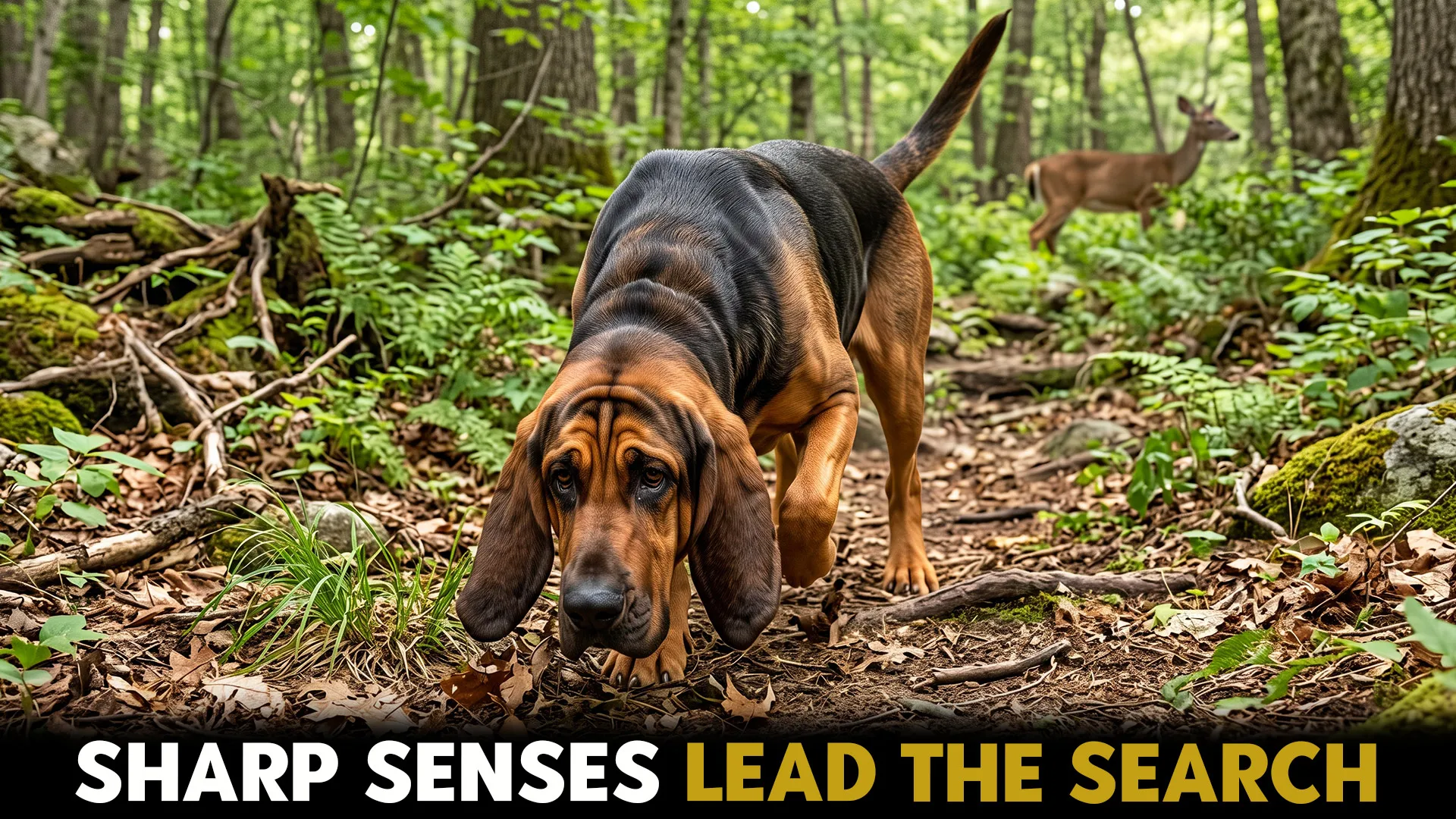
Finding wildlife in thick woods, open fields, marshes, mountains, or miles of tangled brush is not exactly a casual walk in the park. Humans see leaves, mud, broken branches, and maybe one suspicious footprint, while a skilled tracking dog can enter the same area and basically receive an entire scent-based group chat about who passed through, where they went, and sometimes how long ago they left.
That incredible ability is why scent hounds, pointing breeds, and specialized hunting dogs have worked beside people for generations.
Not every great wildlife-tracking dog works the same way, either. Some breeds keep their noses low and patiently unravel ground scent; others scan air currents for airborne odor; some drive game through cover; and several famous coonhounds announce their discoveries with booming voices that carry through the forest. That variety is exactly what makes the tracking world so interesting.
The best hunting dog breeds below are selected because each brings a distinctive strategy to the job.
Top Dog Breeds for Tracking and Locating Wildlife
1. Bloodhound
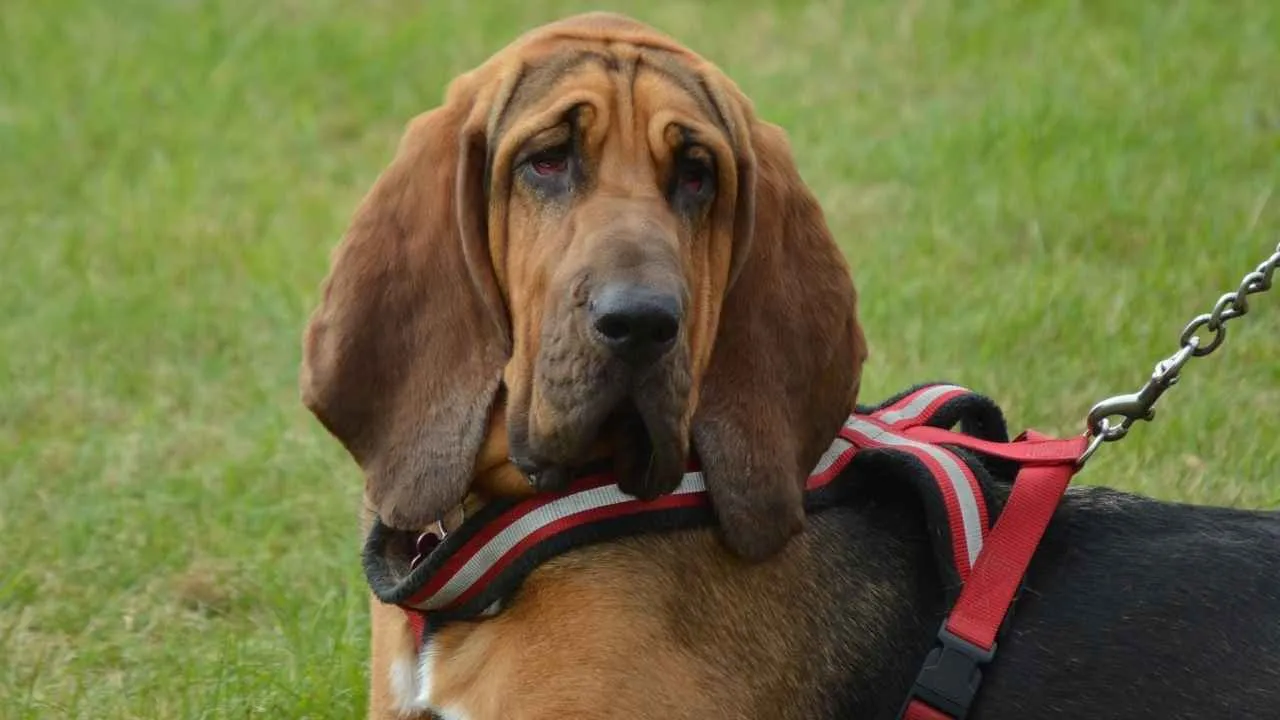
The Bloodhound has been selectively shaped around one main superpower: following an individual odor trail with ridiculous persistence. When a Bloodhound lowers its enormous nose and locks onto a scent, everything else can quickly become background noise.
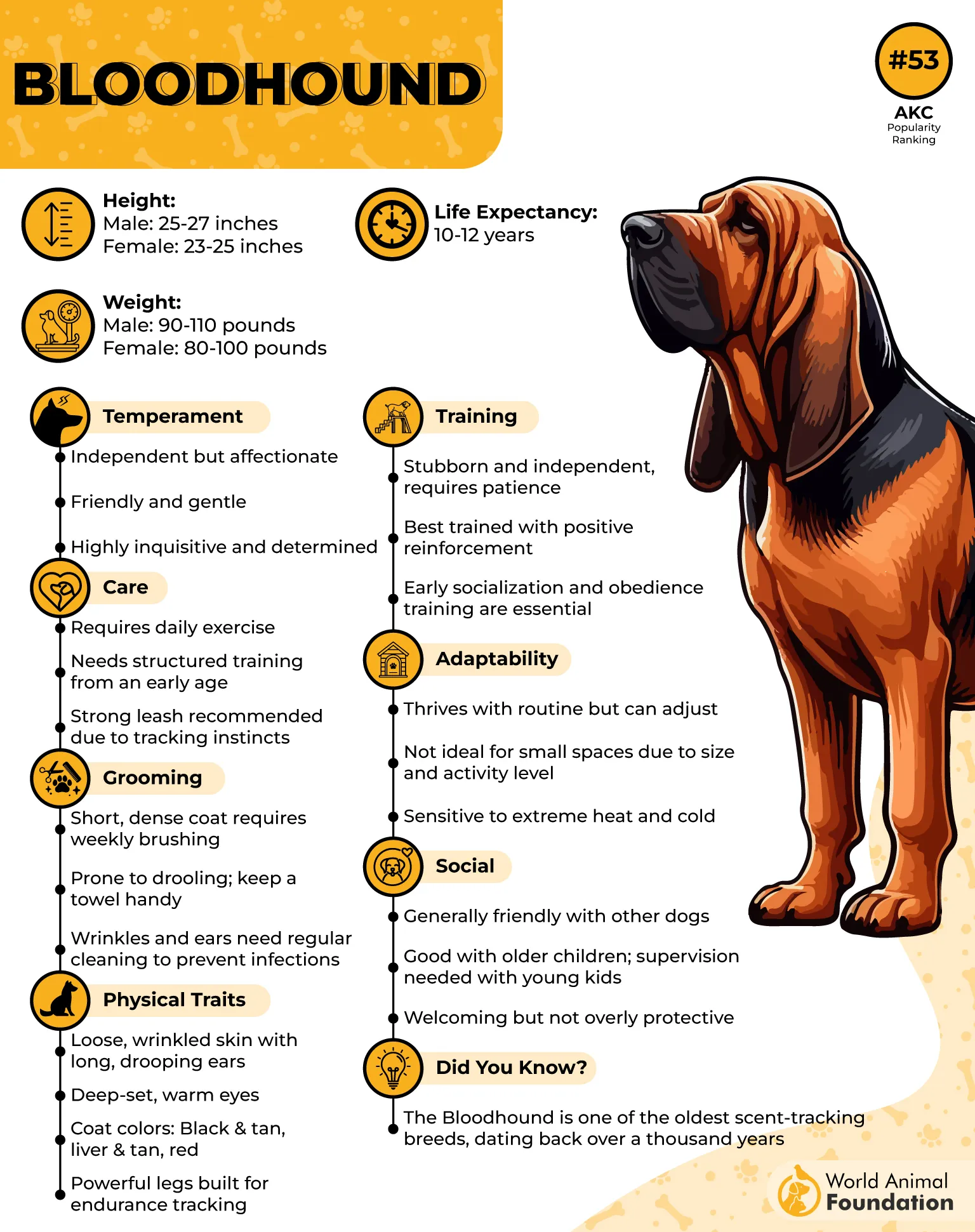
Its anatomy is almost unfairly well suited to the job. Long ears sweep close to the ground, loose facial skin holds scent particles around the muzzle, and the long neck lets the dog maintain a low tracking posture without constantly fighting its own body mechanics.
This versatile hunting dog is not simply a dog that sniffs one footprint and instantly teleports to the target, though. Great tracking depends on concentration, trail interpretation, environmental conditions, training, handler experience, and the dog’s ability to distinguish the chosen odor from the thousands of smells competing for attention.
Physically, Britannica says they are much more athletic than their droopy expression sometimes suggests. A deep chest, muscular frame, sturdy limbs, and endurance-oriented build let them cover fields, woodland, roadsides, and mixed terrain while maintaining that signature nose-down posture.
Their tracking and locating Strategy
The Bloodhound typically works a ground-scent trail, comparing odor concentrations step by step and remaining committed even when the route twists through changing terrain.
Its long ears, facial folds, low head carriage, and scent-focused temperament combine into a tracking system built for persistence rather than speed.
2. German Shorthaired Pointer
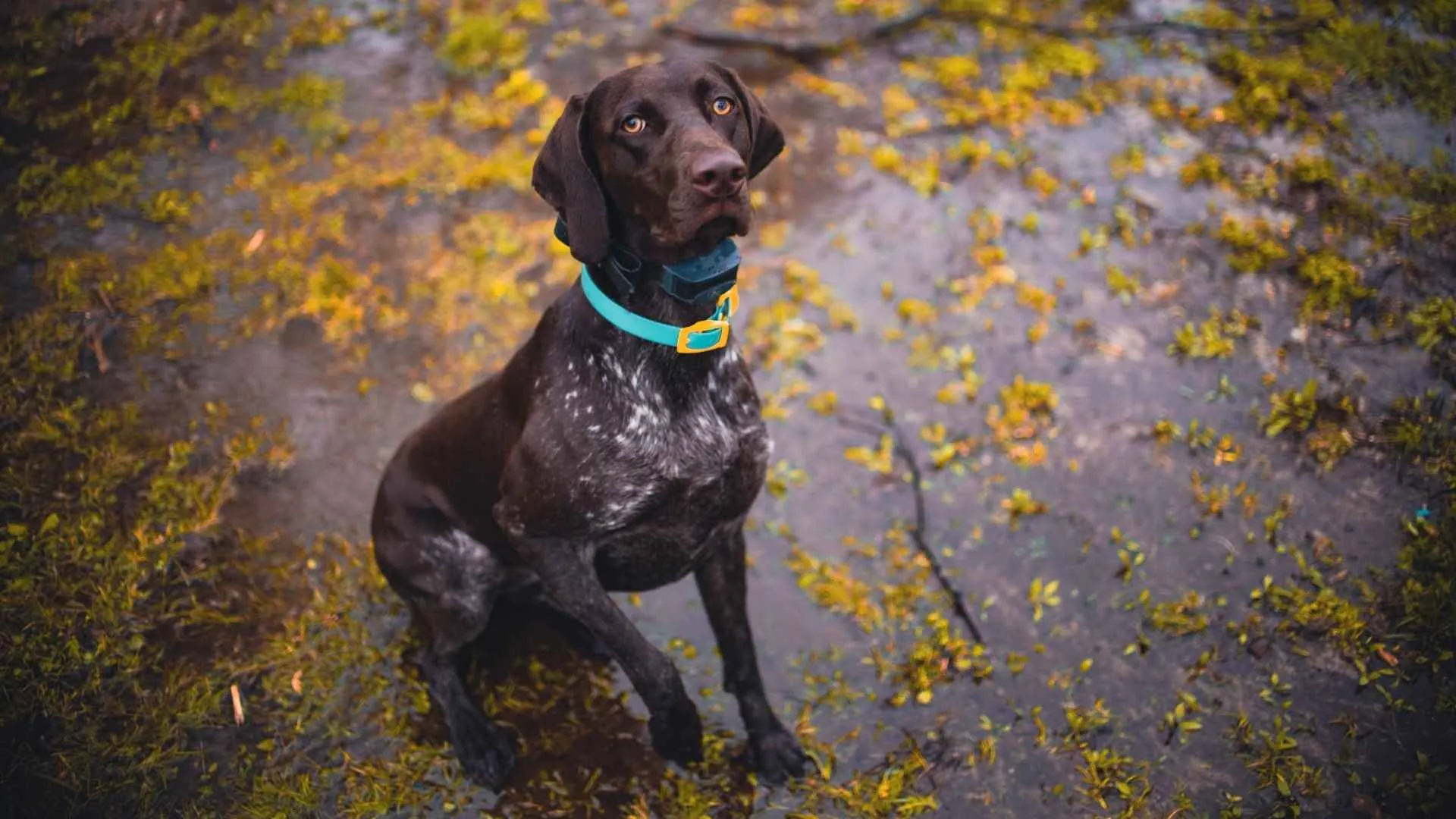
The German Shorthaired Pointer brings completely different energy to wildlife location. Instead of moving like a slow detective reconstructing every clue, the German Shorthaired Pointer can cover ground quickly, sample scent carried on moving air, and suddenly freeze when the odor picture becomes strong enough.
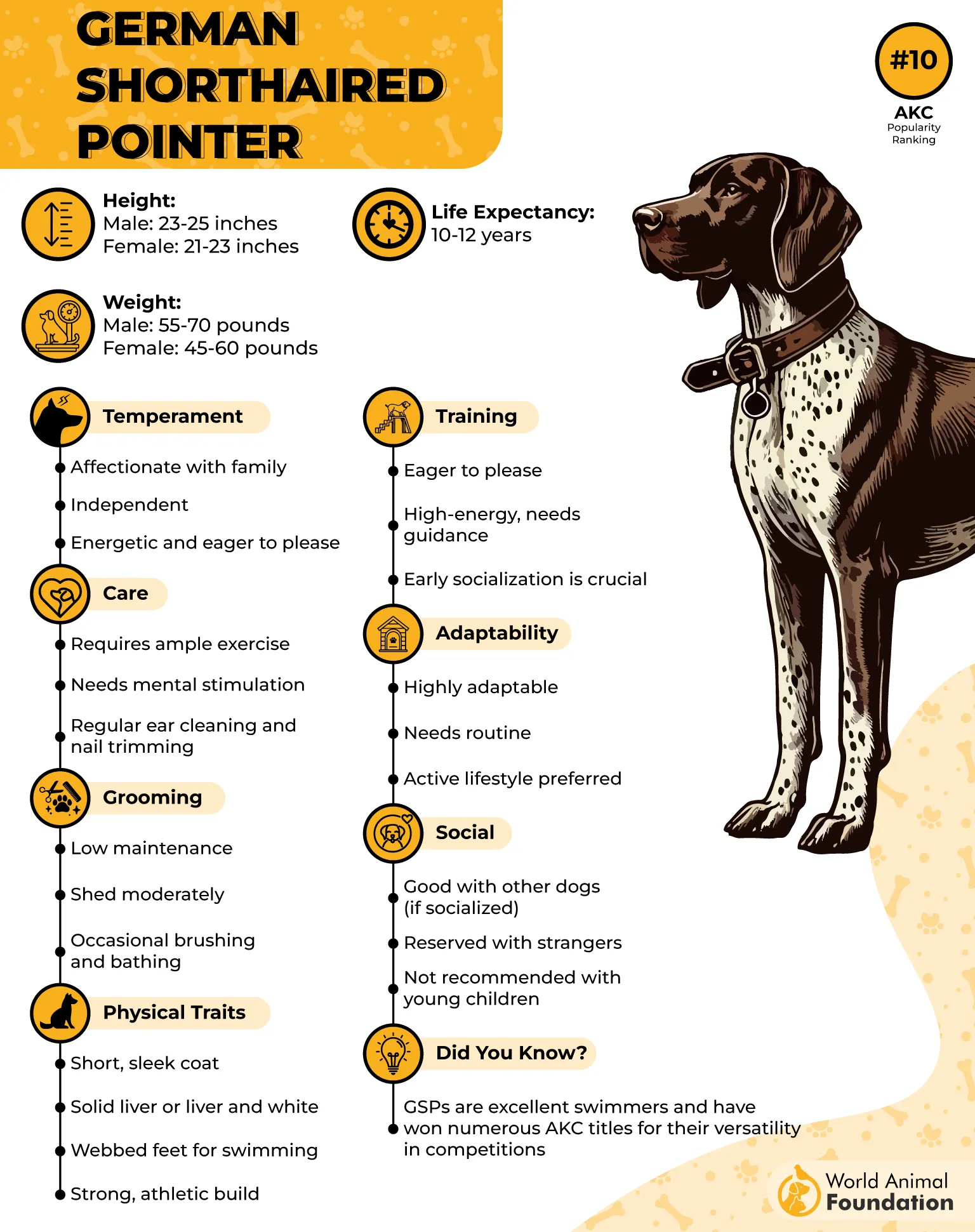
When properly bred and trained, these bird dogs locate game scent; many naturally become rigid, extend the head and body toward the source, and may raise one front paw while holding position. This lets the handler understand where the game is without the dog immediately rushing in and scattering everything.
The American Kennel Club describes tracking as an activity demonstrating a dog’s natural ability to recognize and follow scent, and notes that canine tracking also underpins search-and-rescue work.
This hunting dog breed is also built like an endurance athlete who accidentally got installed with a hunting operating system. This Pointer dog’s deep chest supports sustained activity, long legs provide efficient ground coverage, and the short coat reduces maintenance after hours of moving through grass, brush, and wet terrain.
Their tracking and locating Strategy
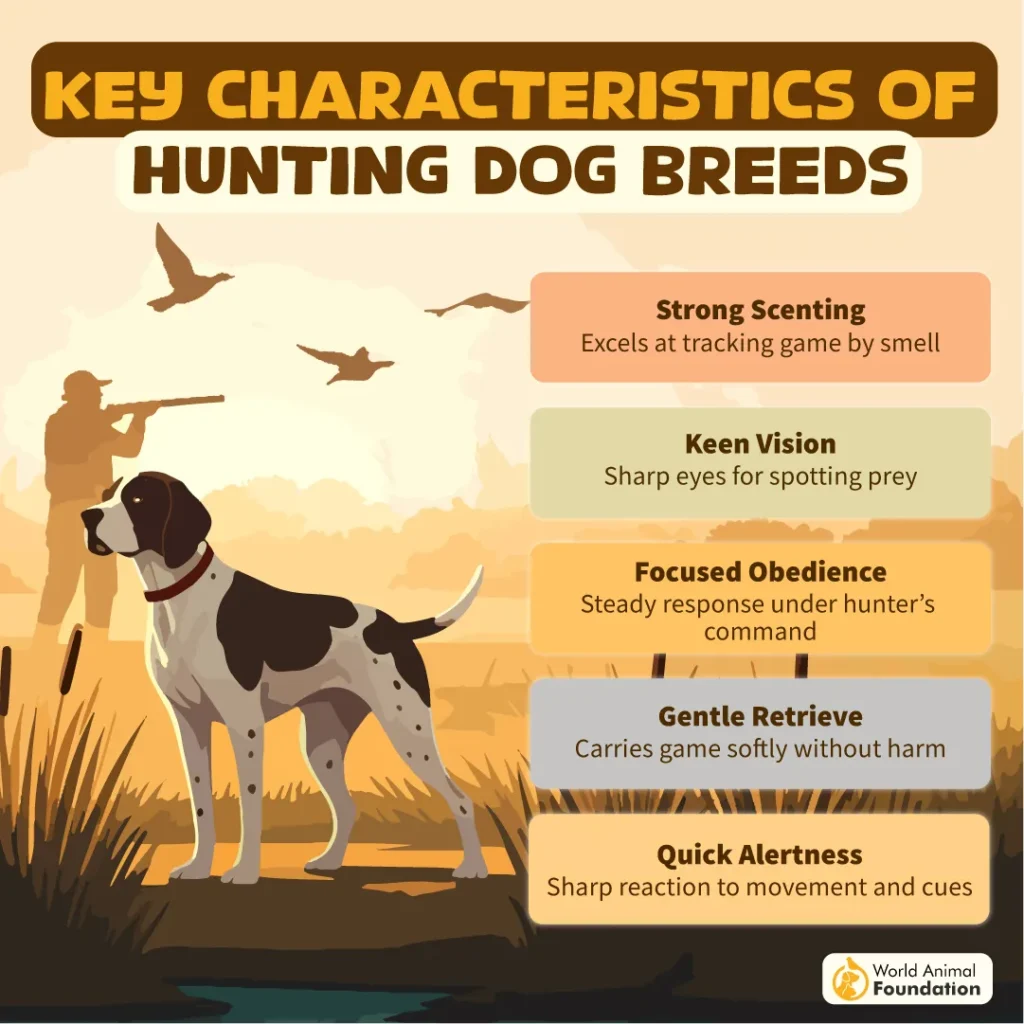
GSPs often use air scenting, moving through a search area until airborne odor reveals the general location of birds or other game.
Once scent becomes concentrated, the breed’s natural response is often to point and hold, giving the handler a directional marker instead of immediately charging forward.
3. Beagle
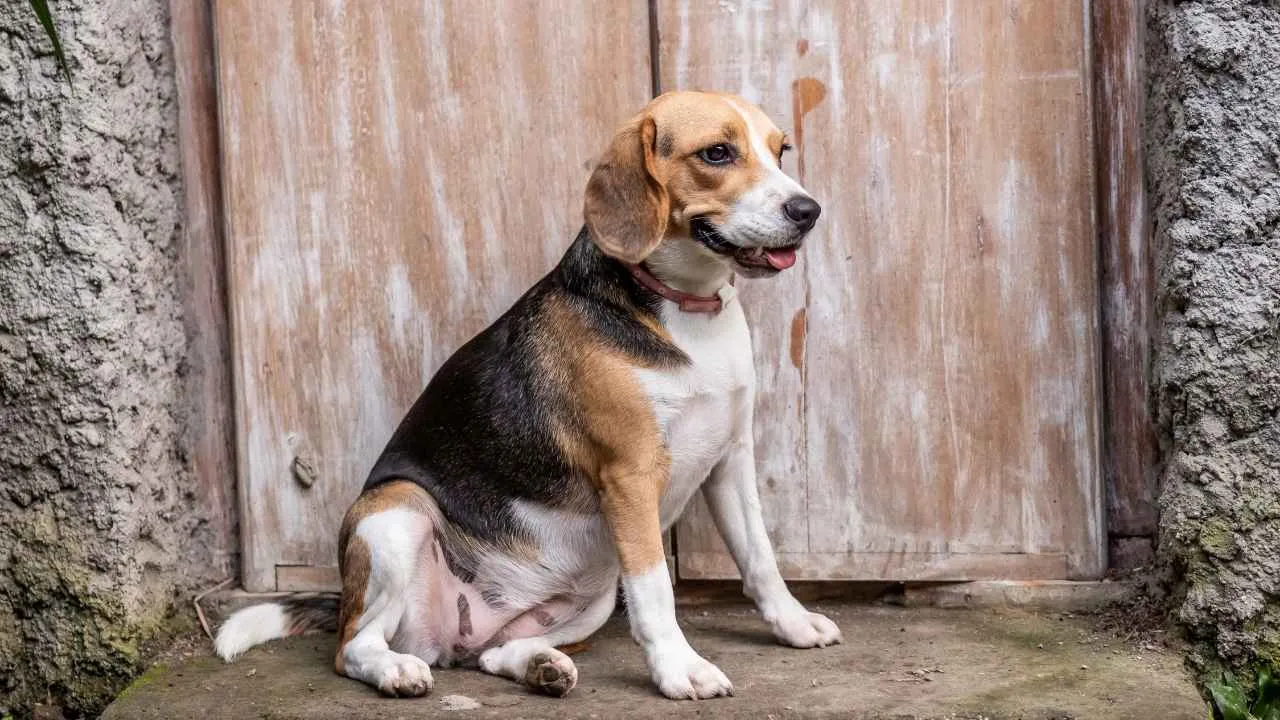
Generations of hunting selection produced a small scent hound named Beagle capable of entering thick cover, identifying a rabbit trail, and staying emotionally invested in the assignment long after many other dogs would have clocked out.
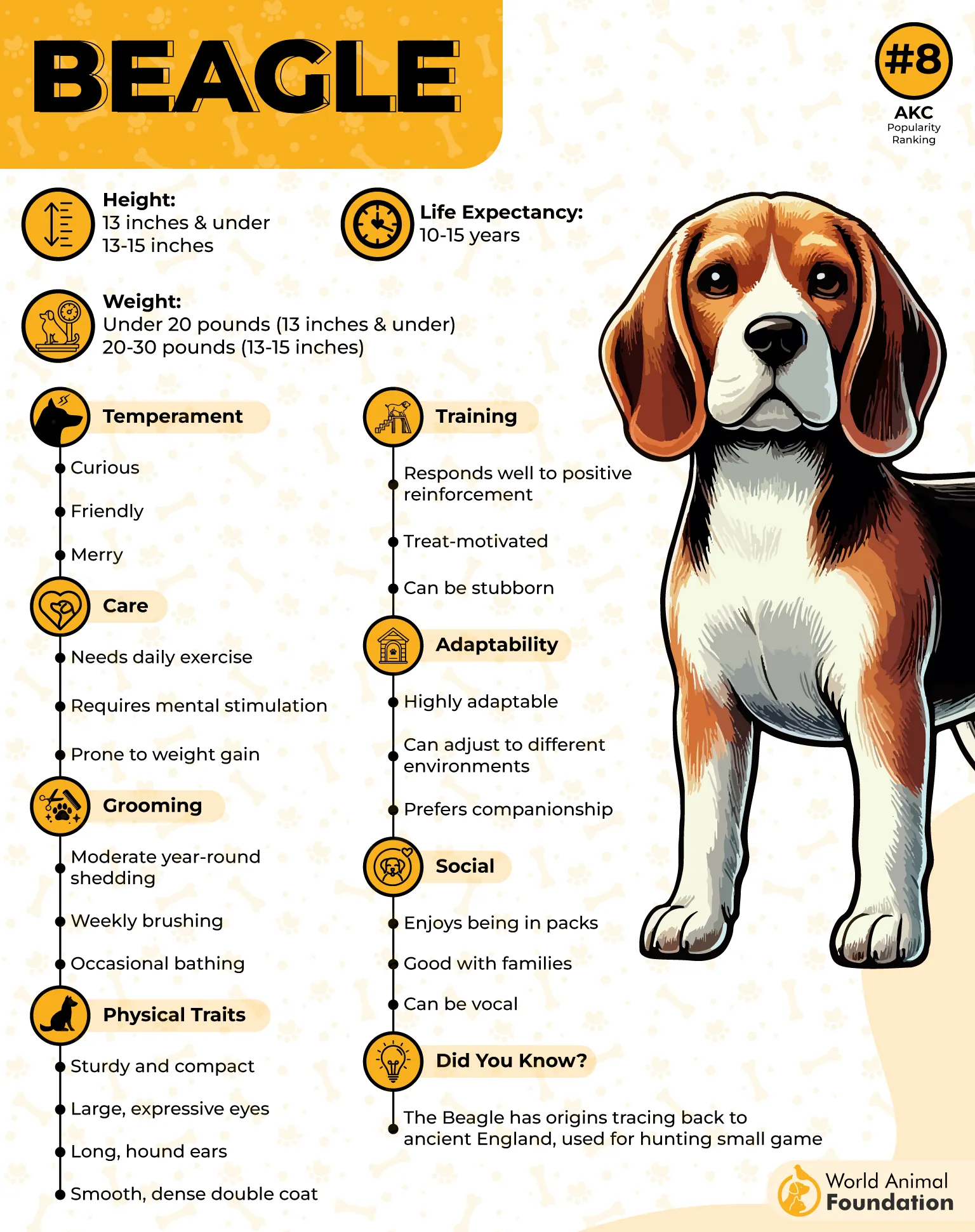
The Beagle’s greatest advantage is its ability to work close to the ground where scent from rabbits and other small game collects on vegetation, soil, moisture, and disturbed surfaces. The breed’s broad nostrils, strong scenting instinct, determination, energy, and habit of keeping its nose low make it a great hunter.
Then there is the voice, because these excellent hunting dogs apparently decided silent tracking would be way too boring. PetMD says that their signature bay lets hunters or handlers monitor the chase even when vegetation hides the dog completely. Experienced hound people often learn to recognize differences in intensity as the trail grows fresher.
Their tracking and locating Strategy
Beagles excel at following ground scent through dense cover, particularly when pursuing smaller game such as rabbits.
Their recognizable bay provides an audio map of the pursuit, helping people follow the dog’s progress without maintaining constant visual contact.
4. Bluetick Coonhound
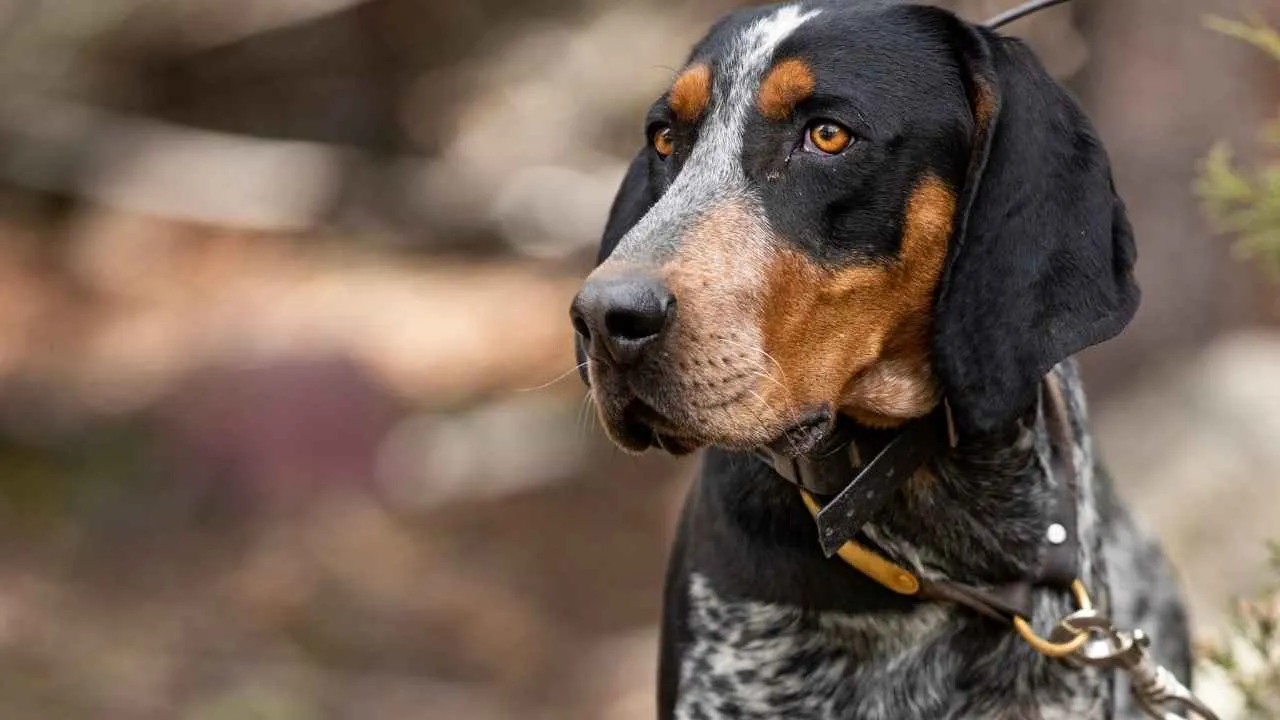
Blueticks are often described as cold-nosed hounds, meaning many individuals can successfully work older scent rather than requiring an extremely fresh trail. This dog is methodical, persistent, and, in some situations, able to follow scent that may be hours or even days old.
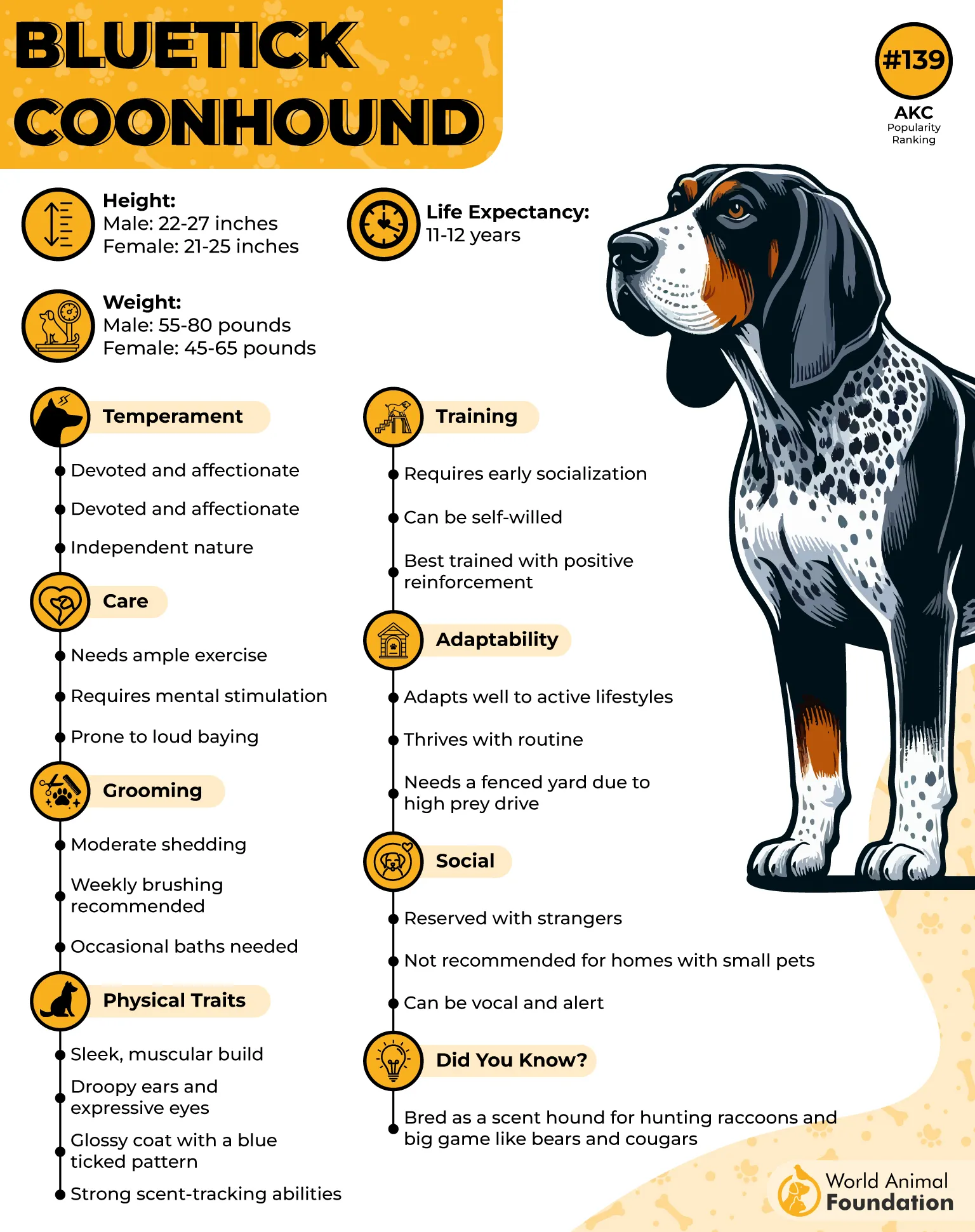
The actual tracking experience is highly auditory. A Bluetick may give voice while following the trail, then change its bark when the quarry has climbed, and the dog begins treeing at the base.
Traditional handlers learn those vocal patterns almost like another language, so a hunt in dark timber can become a strange mix of navigation, listening, interpretation, and trust.
Purina says its body is designed for that workload too. The deep chest supports endurance, muscular shoulders and hindquarters help the dog negotiate rough terrain, and the long muzzle and open nostrils support sustained scent sampling.
Their tracking and locating Strategy
Blueticks specialize in cold trailing, working scent that may be substantially older than the freshest tracks in the area.
They communicate continuously through distinctive vocal changes, allowing skilled handlers to distinguish active trailing from treeing behavior.
5. Black and Tan Coonhound
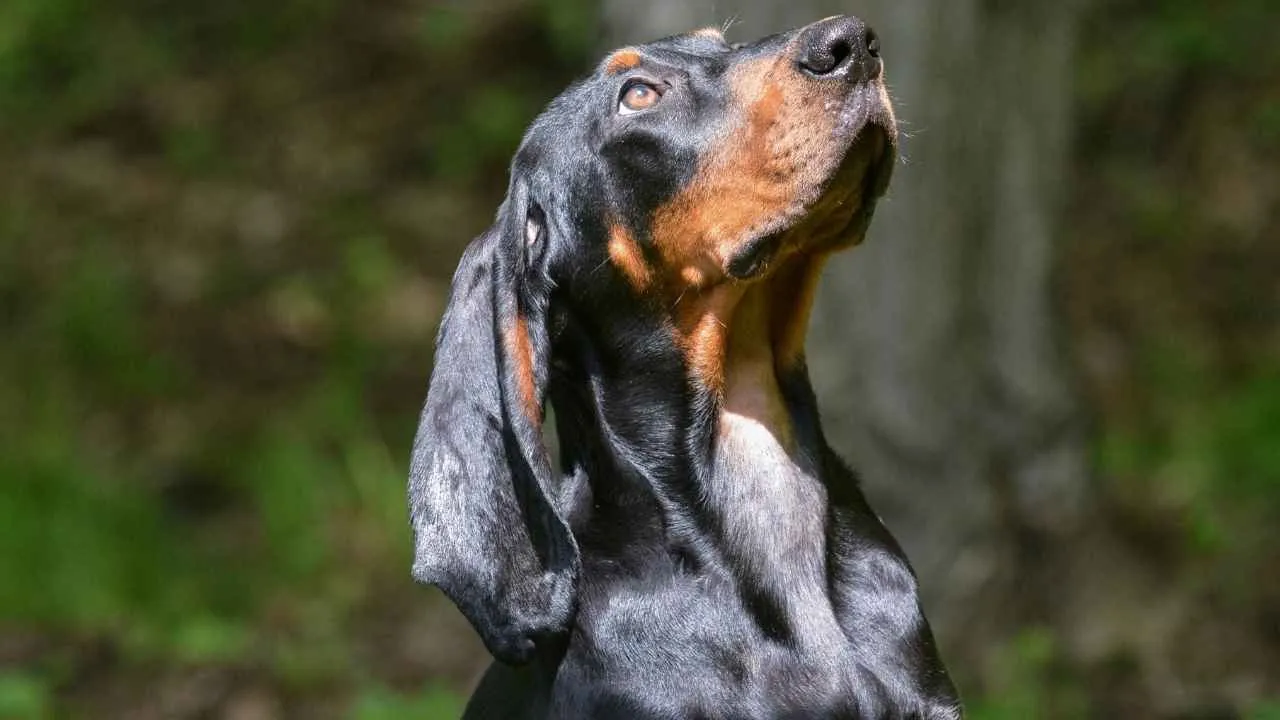
The Black and Tan Coonhound looks exactly like what you would imagine if someone said, “Please design me a dog capable of investigating a forest all night.” The breed carries generations of American scenthound tradition into the modern world.
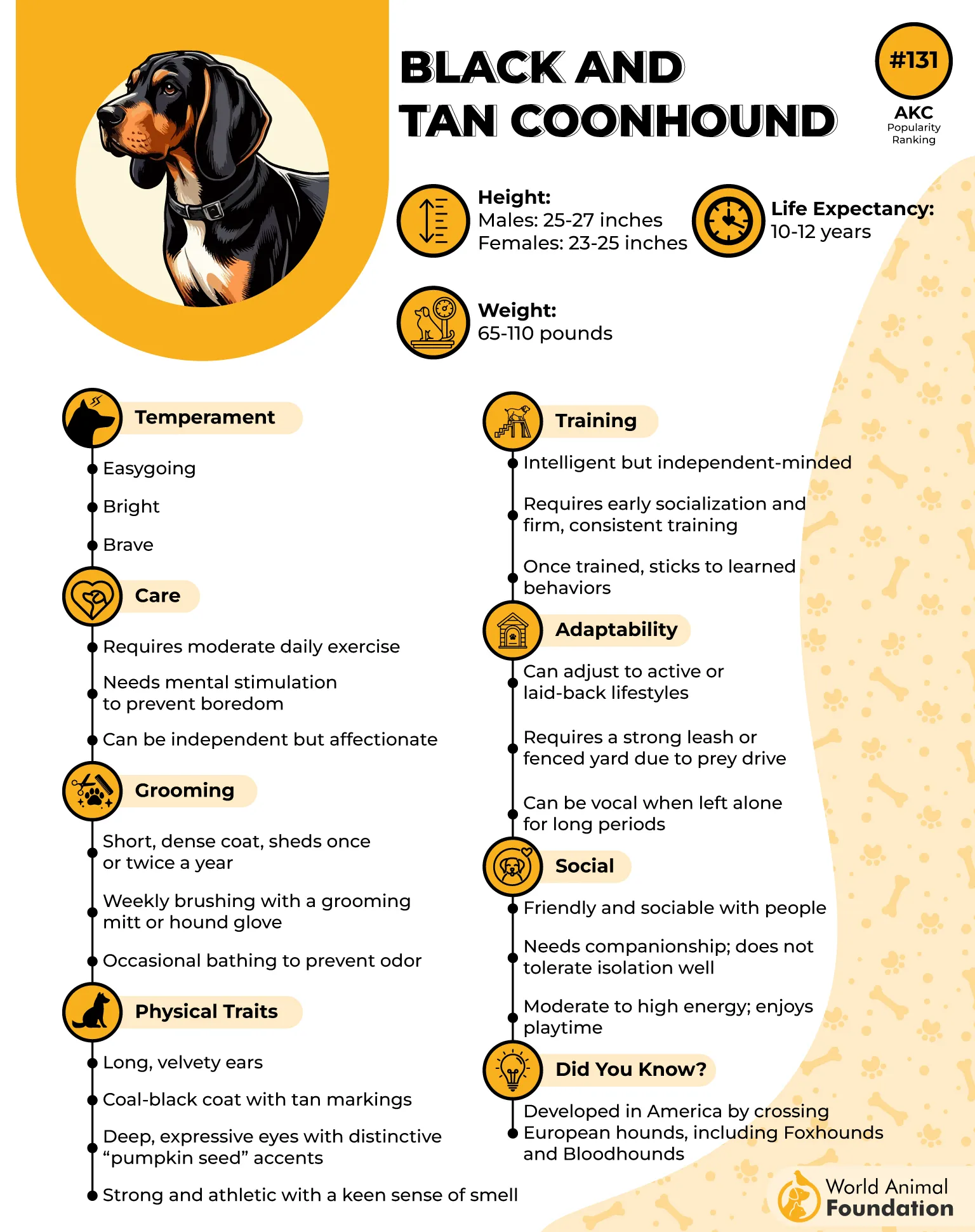
Its biggest strength is patient trailing. These dogs were developed to follow game over considerable distances rather than explode forward for thirty seconds and then ask where the snacks are. When conditions become messy, the Black and Tan’s deliberate style can help it sort through overlapping smells and remain committed to the trail it has been asked to pursue.
Those famous ears are more than visual drama. Hanging close to the sides of the head, they move near vegetation and ground surfaces while the dog tracks, potentially helping disturb scent toward the nose as the hound advances.
Like other long-eared breeds, however, Black and Tans need regular ear checks because reduced airflow can make moisture and debris management extra important after outdoor work.
Their tracking and locating Strategy
Black and Tan Coonhounds tend to work a trail steadily and deliberately, relying on scent continuity more than outright speed.
Their persistence becomes valuable when wildlife crosses rough ground, doubles back, or leaves confusing scent intersections.
6. Redbone Coonhound
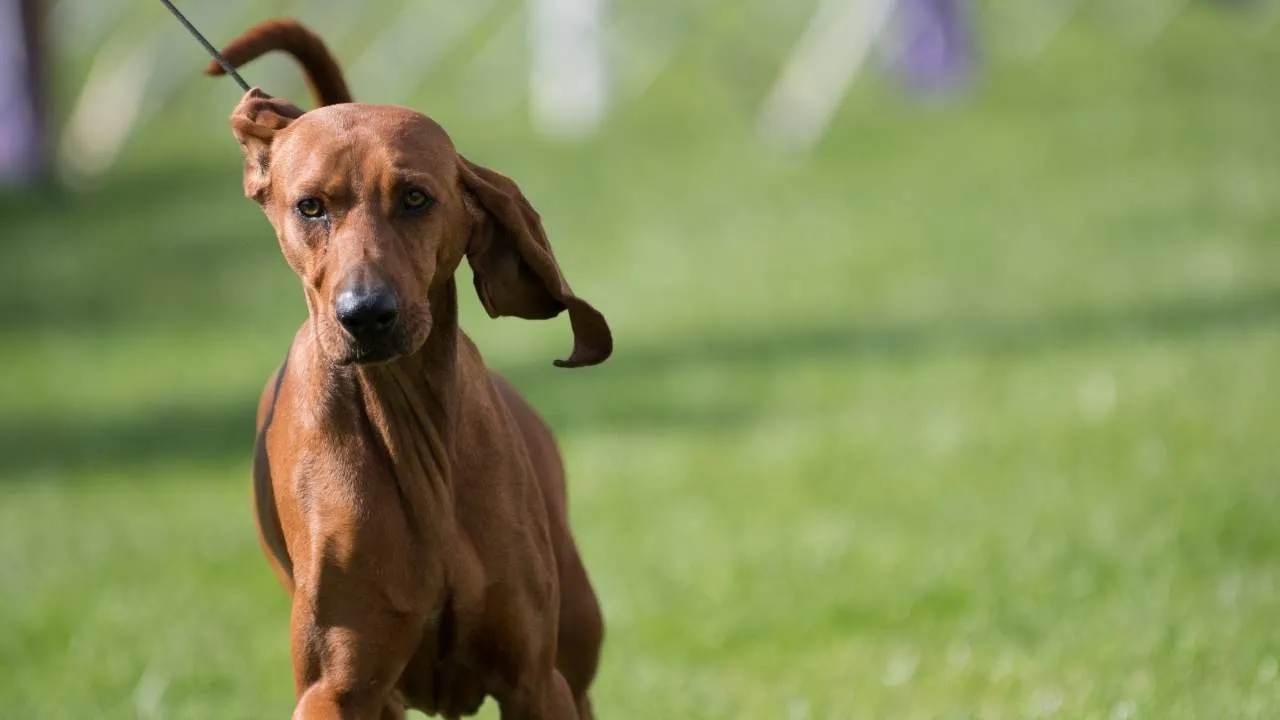
Historically associated with hunting animals including raccoons and other game, Redbone Coonhounds were originally bred into capable trailers willing to cross varied ground for extended periods. They are elegant enough to look fancy and rugged enough to immediately ruin that illusion by charging happily through mud.
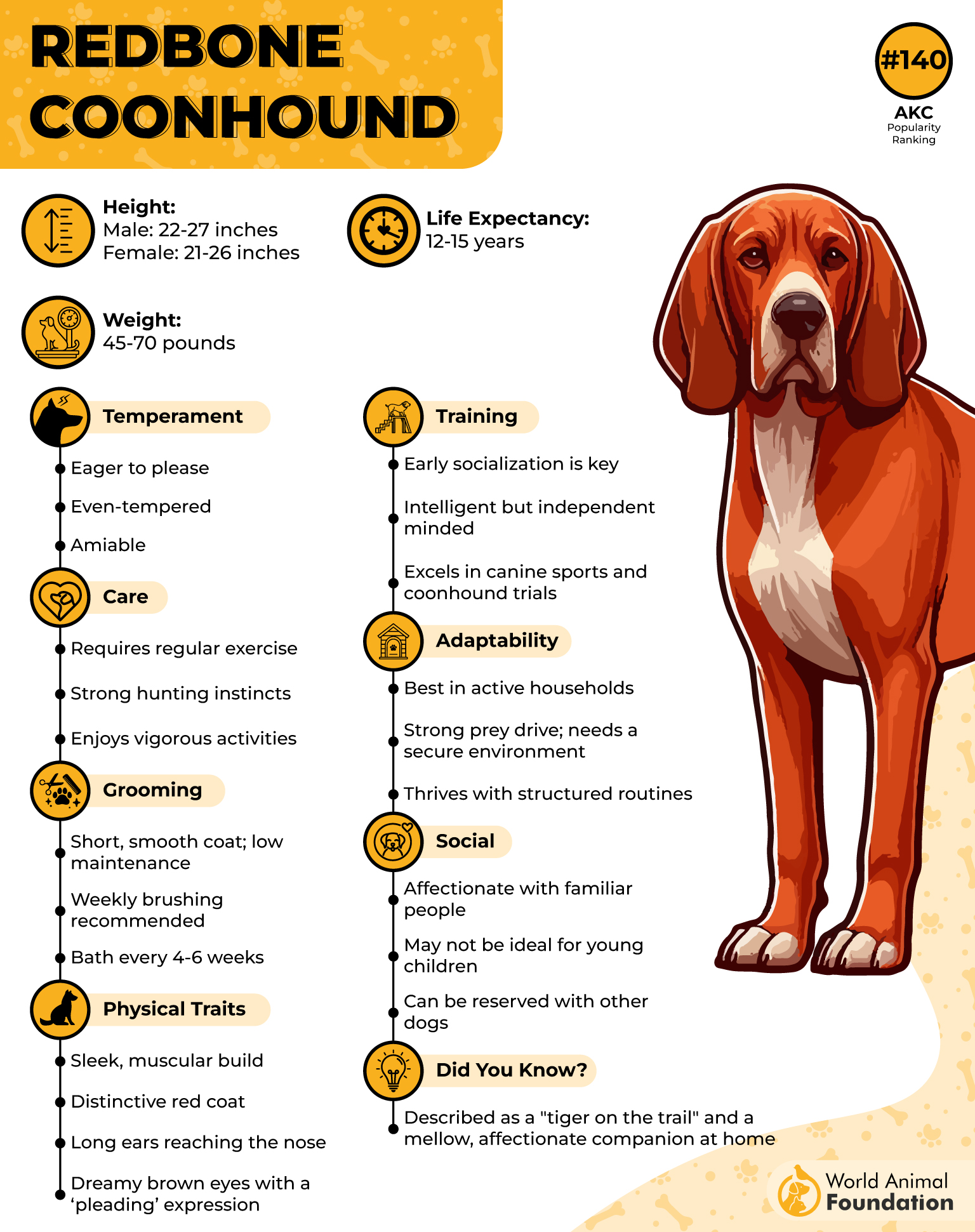
A strong Redbone doesn’t just have a good nose; it pairs that nose with athletic mobility. The breed’s medium-to-large frame, long limbs, and endurance-oriented build make it well-suited to long trails where constant movement matters as much as odor recognition. Its persistent nose-down tracking, pack cooperation, intelligence, curiosity, and the ability to work over varied terrain make it a notable hunter.
Working with other dogs is another fascinating part of the Redbone tradition. In pack settings, different hounds contribute their own pace, voice, positioning, and scent interpretation, producing something closer to a coordinated search team than a collection of random dogs running through the woods.
Watching these quick learners and experienced hounds solve a complicated trail can remind you that animal problem-solving sometimes looks far more sophisticated than people expect.
Their tracking and locating Strategy
In multi-dog situations, they may contribute through pack coordination, combining voice, positioning, and scent information with other hounds.
Their athleticism gives them an advantage when the search requires covering distance without sacrificing nose work.
7. Plott Hound
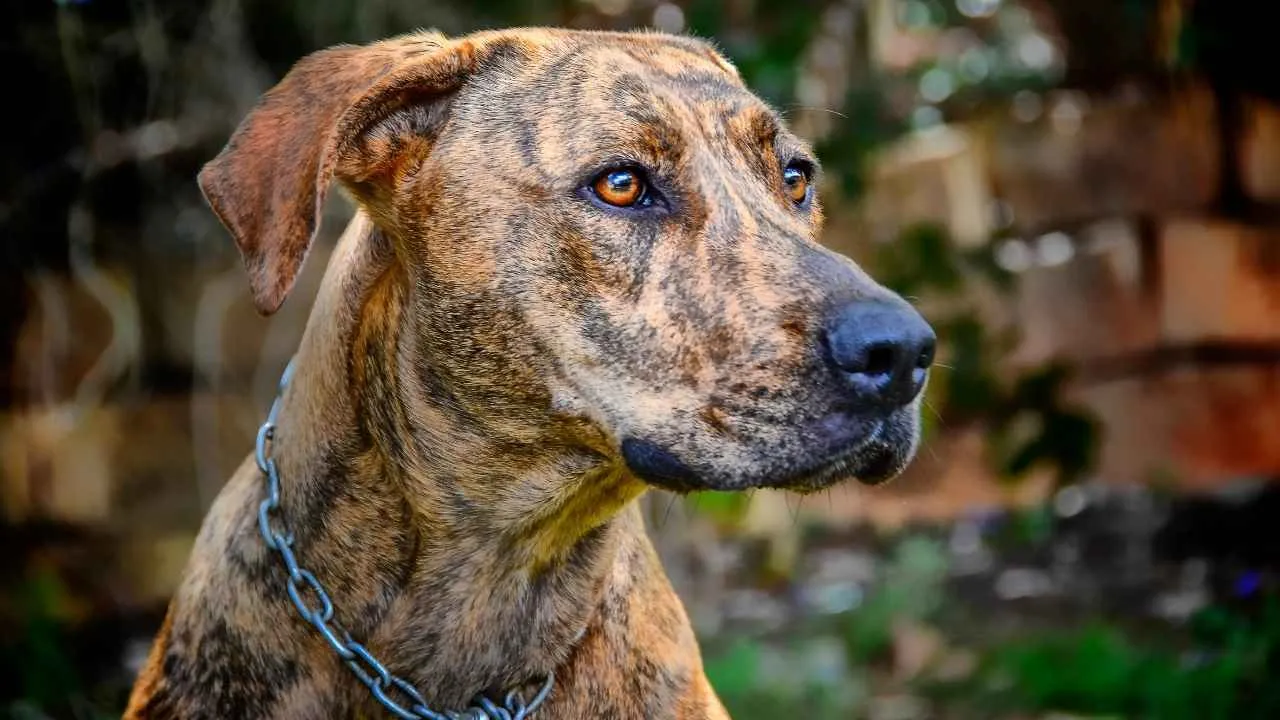
The Plott Hound is known for hunting wild boar and bears, requiring courage, endurance, physical agility, scent ability, and enough judgment to keep bravery from turning into complete chaos. They have a muscular build, long legs, loyalty, stamina, a strong bay, and a serious big-game tracking history.
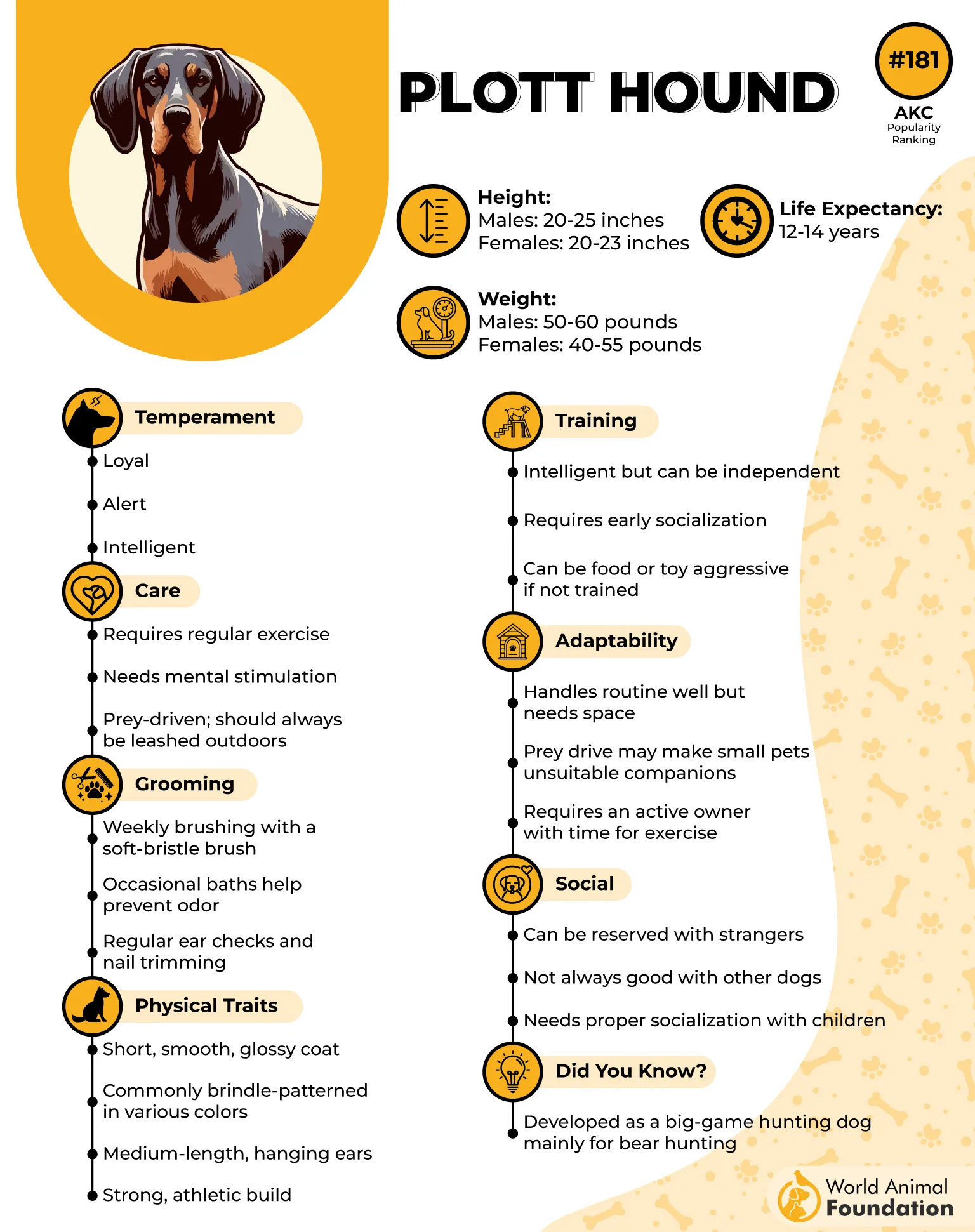
This hound dog generally works with more physical intensity than its medium-to-large size might suggest. Powerful hindquarters help it climb and accelerate, long legs make difficult ground easier to negotiate, and the tail assists with balance during active movement through rough environments.
That rugged field personality does not mean the breed lives permanently in battle mode. Properly socialized Plotts are frequently devoted to their families and can become perfect companions, yet they still need substantial mental and physical engagement.
Their tracking and locating Strategy
Plotts combine scent pursuit with strong physical mobility, helping them follow wildlife through steep, wooded, and rugged environments.
Their traditional big-game background rewards dogs that stay determined under pressure rather than backing off when terrain gets difficult.
Conclusion
Tracking wildlife is not one skill expressed seven different ways. That variety also explains why you should never choose a breed based only on which dog looks coolest in a field photo. A brilliant tracking dog usually comes with the exact traits that make tracking possible: independence, prey drive, stamina, persistence, curiosity, vocal behavior, and an almost unreasonable interest in smells.
Labrador Retriever, Golden Retriever, Border Collie, German Wirehaired Pointer, and English Springer Spaniel are also known for their phenomenal retrieving game.
Real handlers repeatedly describe one lesson across serious tracking breeds: learning to trust the dog’s nose changes the relationship. Humans naturally want to direct every turn because we are used to being the species holding the map. Still, scent work occasionally requires admitting the dog has access to information we don’t. That role reversal is part of what makes tracking such an addictive activity.
