




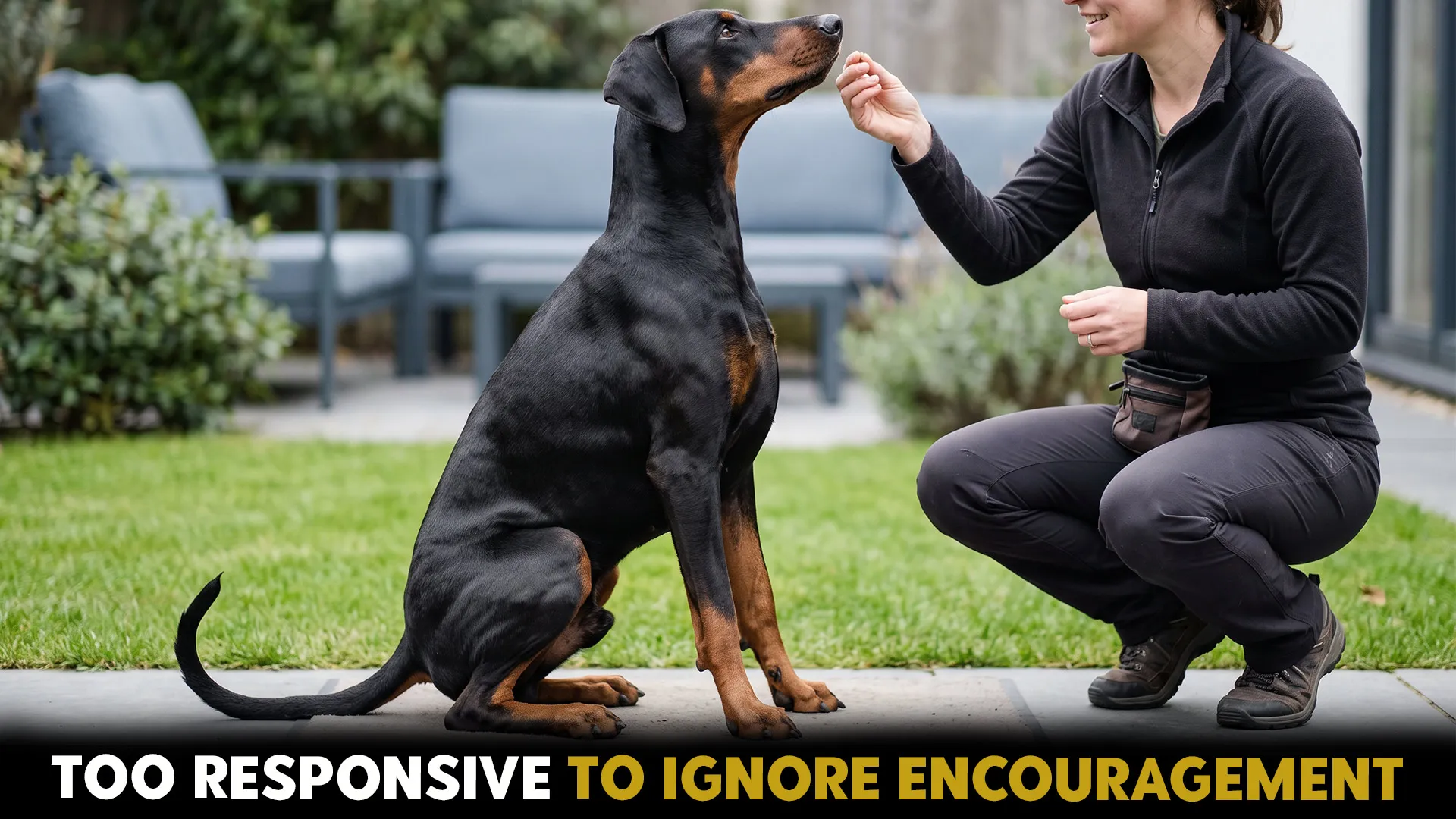
Some dogs don’t just learn “sit.” They study you, anticipate your next move, and act as if they’ve already solved the puzzle before you finish explaining it.
Smart breeds can be wonderful, but their busy brains need the right kind of training. That’s where positive reinforcement shines. Treats, praise, play, and calm rewards build trust instead of fear.
From Border Collies who learn commands in as few as five repetitions to Poodles who adore problem-solving, these breeds flourish when training feels like a game rather than a chore.
Think of it this way: you would not teach a gifted kid by yelling at them. Dogs deserve the same kindness, and a little patience when they outsmart us.
Best Cognitive Dog Breeds That Thrive With Positive Reinforcement
1. Border Collie
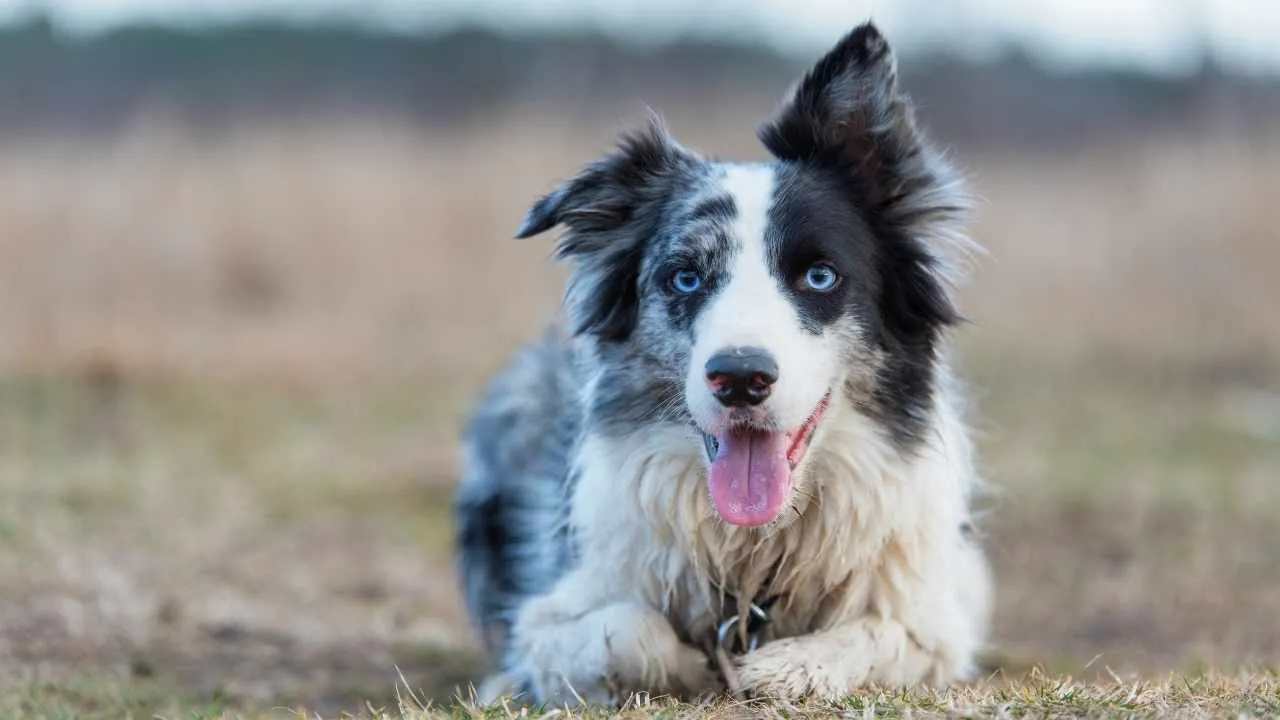
Originally bred as a herding breed, the Border Collie was standardized in the year 1906 and was classified as a sheepdog. The word ‘border’ in the name suggests its place of origin (between England and Scotland), says Omlet.
The visual cortex is adapted to track minor motion from miles away. The breed can learn complex tasks and commands within 5 repetitions by forming new neural pathways rapidly. With a high degree of operational independence, it can analyze a situation precisely, read emotions, and make split-second decisions.
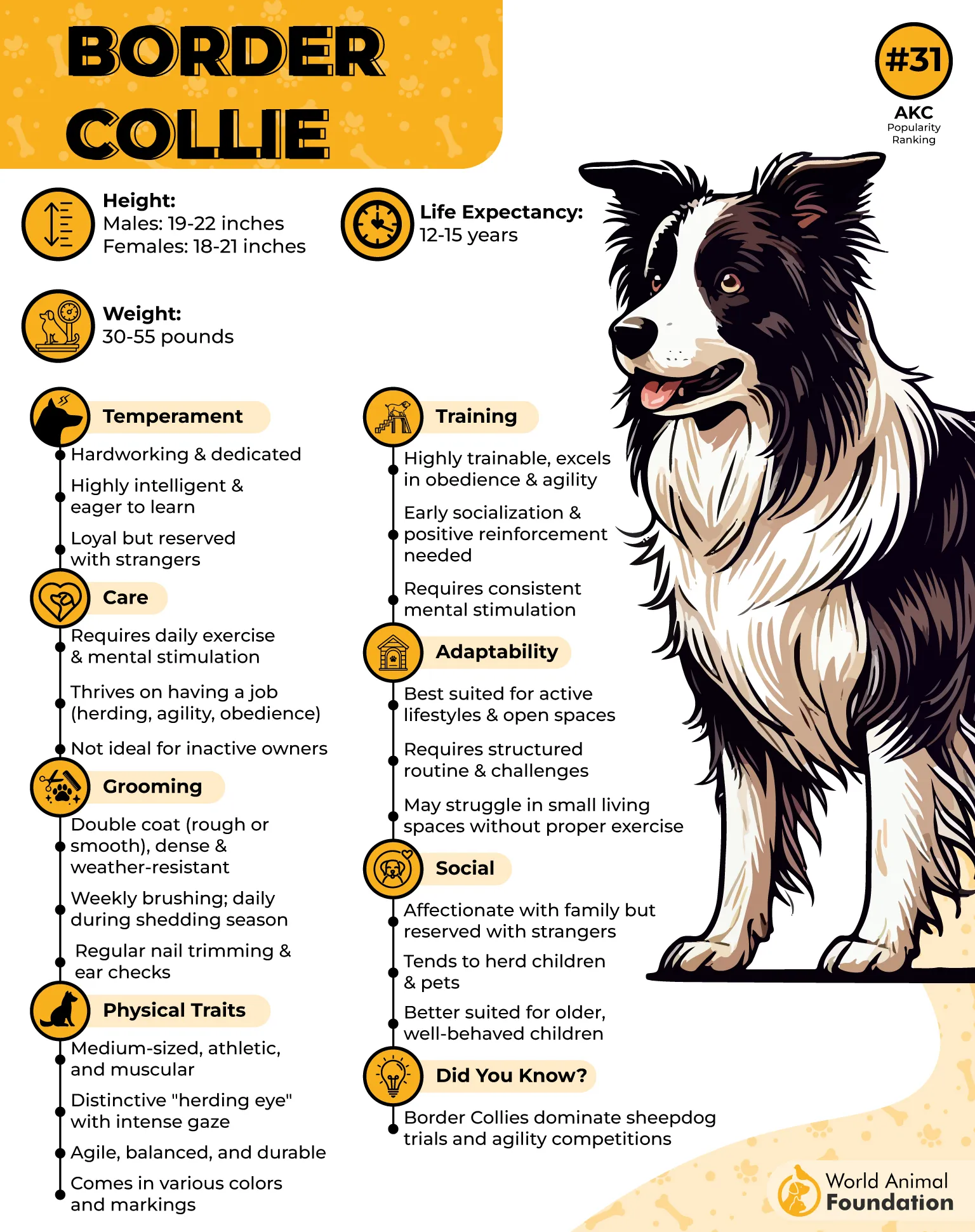
The most intelligent dog breed is highly responsive to gentle cues and verbal tone since it is prone to fear-based reactivity if treated harshly. Mental stimulation is required for at least 15-20 minutes daily.
2. German Shepherd
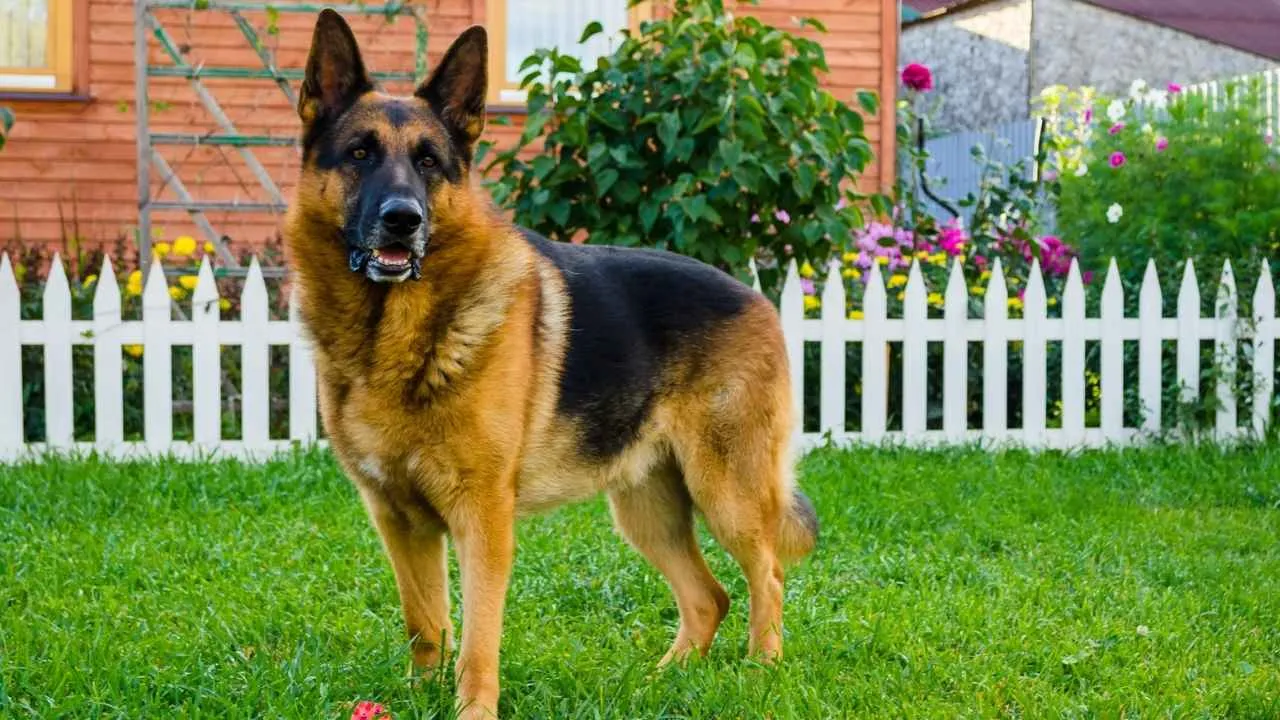
Captain Max von Stephanitz from Germany is credited with developing the breed for herding and guarding farms in 1899. He crossed different herding breeds from Central and Northern Germany to have a medium-sized dog that was later used in K9 units and WW II.
The popular dog breed has a high threshold for environmental stress, allowing it to remain neutral and calm in any situation. The nervous system spikes to maximum alertness in a threatening scenario, but once there is no threat, it goes back to the resting phase instantly.
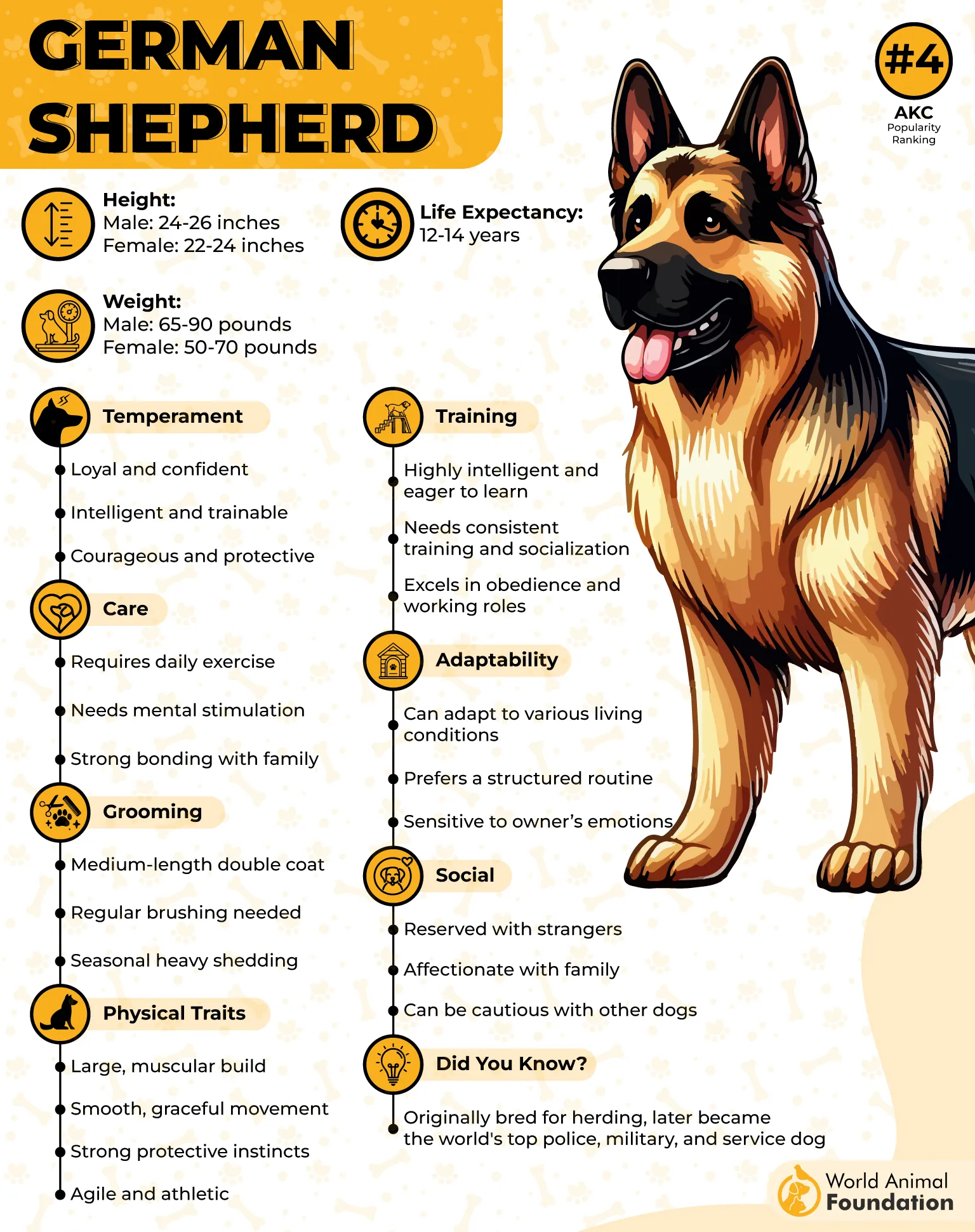
Because of the high prey drive, the GSD needs precision obedience training sessions to prevent chasing and gripping a moving object. Maintain total control under command during protection training.
3. Miniature Poodle
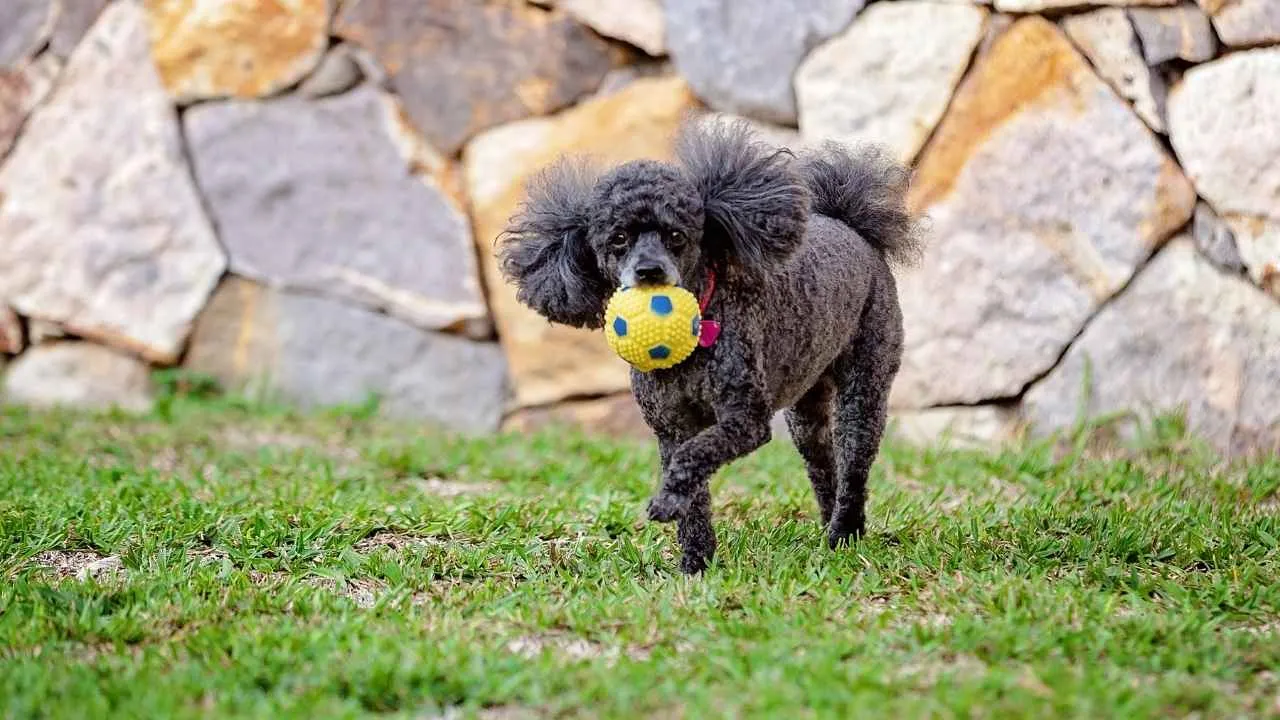
The Poodle breed was developed in France and made its way to Europe with herders as a retrieving breed. However, the Miniature Poodle was developed as a companion and a circus dog in Germany.
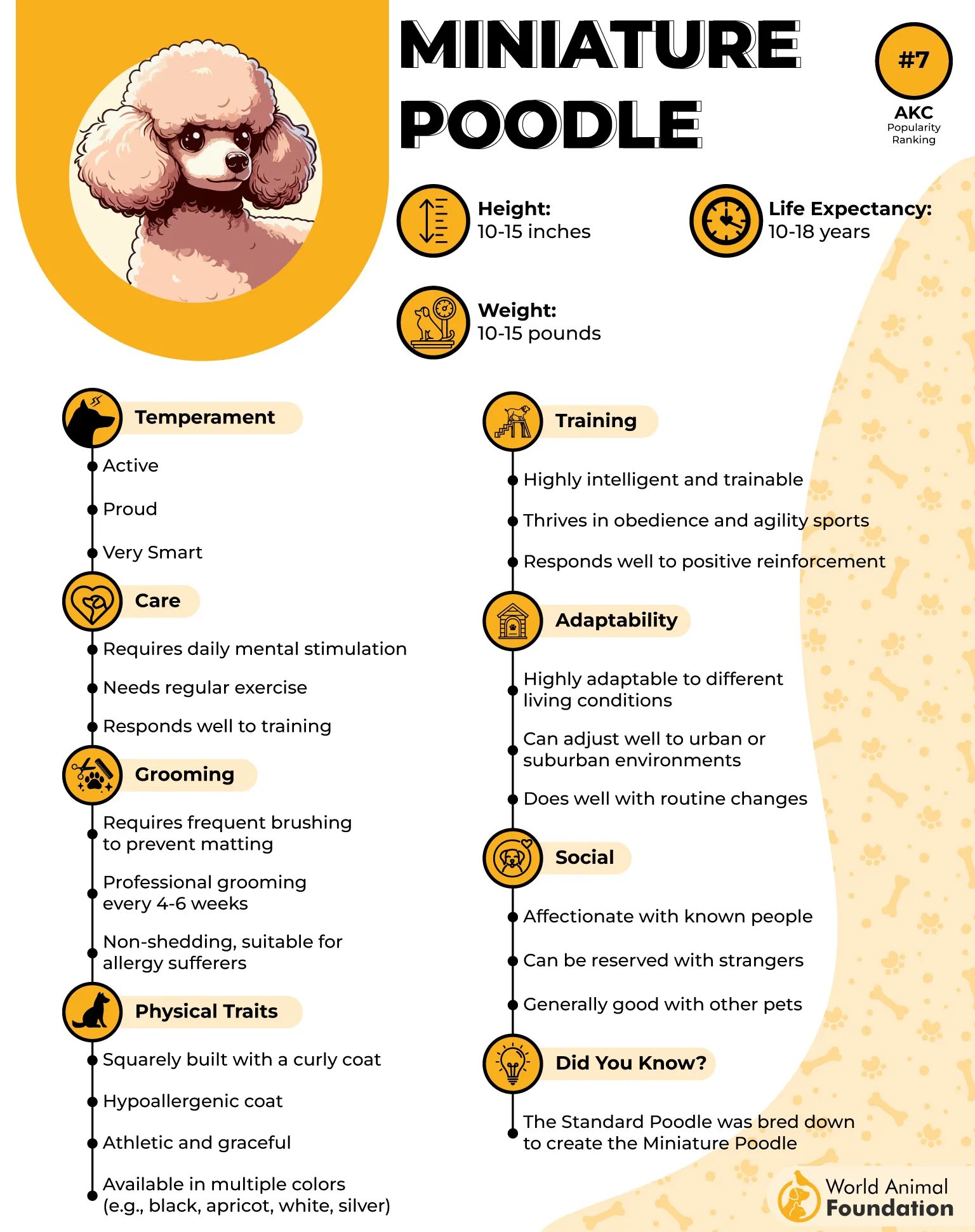
Since it forms strong bonds with the owner, the breed reads micro-expressions of the owner. With its mutual eye contact, it constantly looks at the handler for instructions and can learn up to 400 human words. Because of high canine intelligence, repetitive and long training sessions may bore the breed.
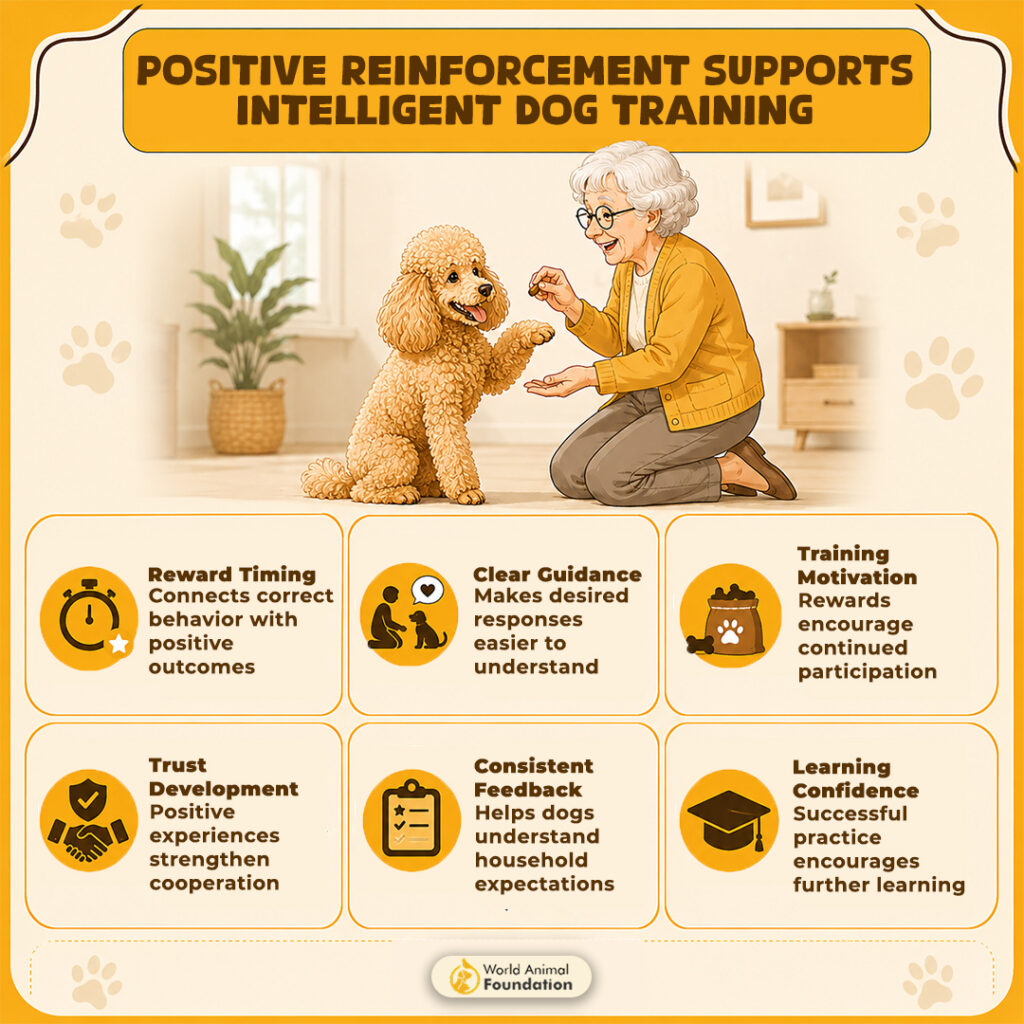
It excels at pattern learning and tends to learn exact parameters for when and where the rule is applied. The cognitive ability of the highly intelligent breed matches that of a 3-5-year-old human child.
4. Doberman Pinscher
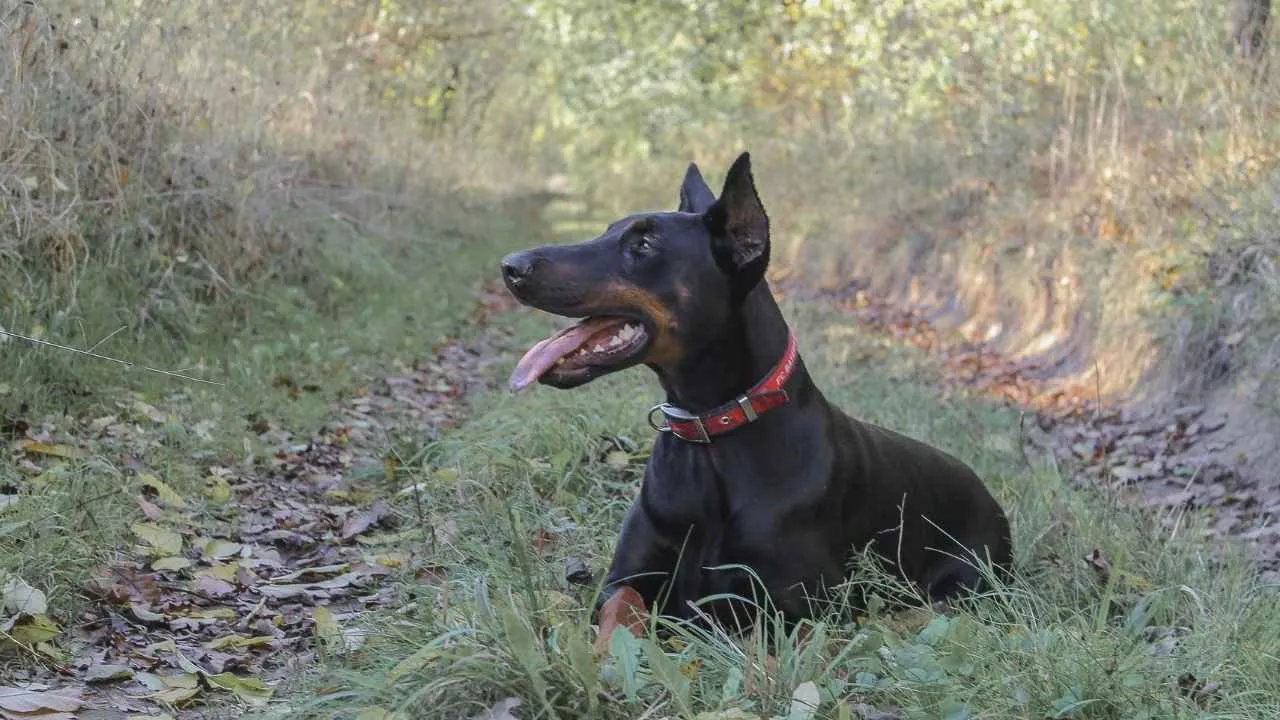
The fifth most intelligent breed was developed by a German tax collector, Louis Dobermann, as a protection dog. He crossed the now-extinct Old German Shepherd, Greyhound, and German Pinscher, and other breeds to develop a breed that is kept as a family pet today, as per Chewy.
Since it has a high prey and defense drive, the dog reacts instantly to motion, making it a good candidate for advanced training, such as agility competitions, tracking, and protection sports. The brain maps daily routine and learns cause-and-effect structures rapidly.
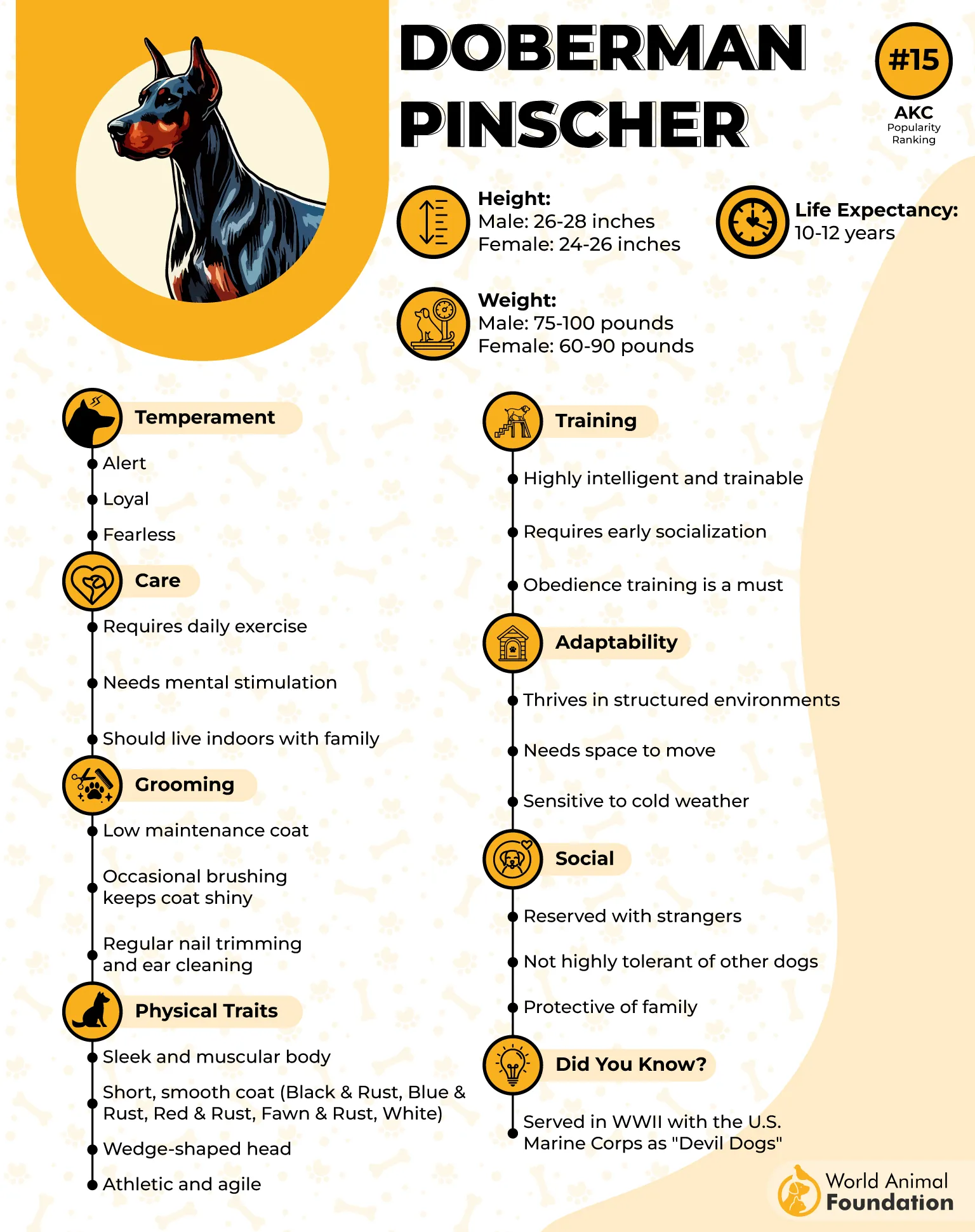
Implement a 3-second-rule for focus: wait three seconds before delivering the marker and reward. Engage the breed in high-intensity physical exercise and mental routine to teach how to use its ‘switch-off’ mode.
5. Shetland Sheepdog
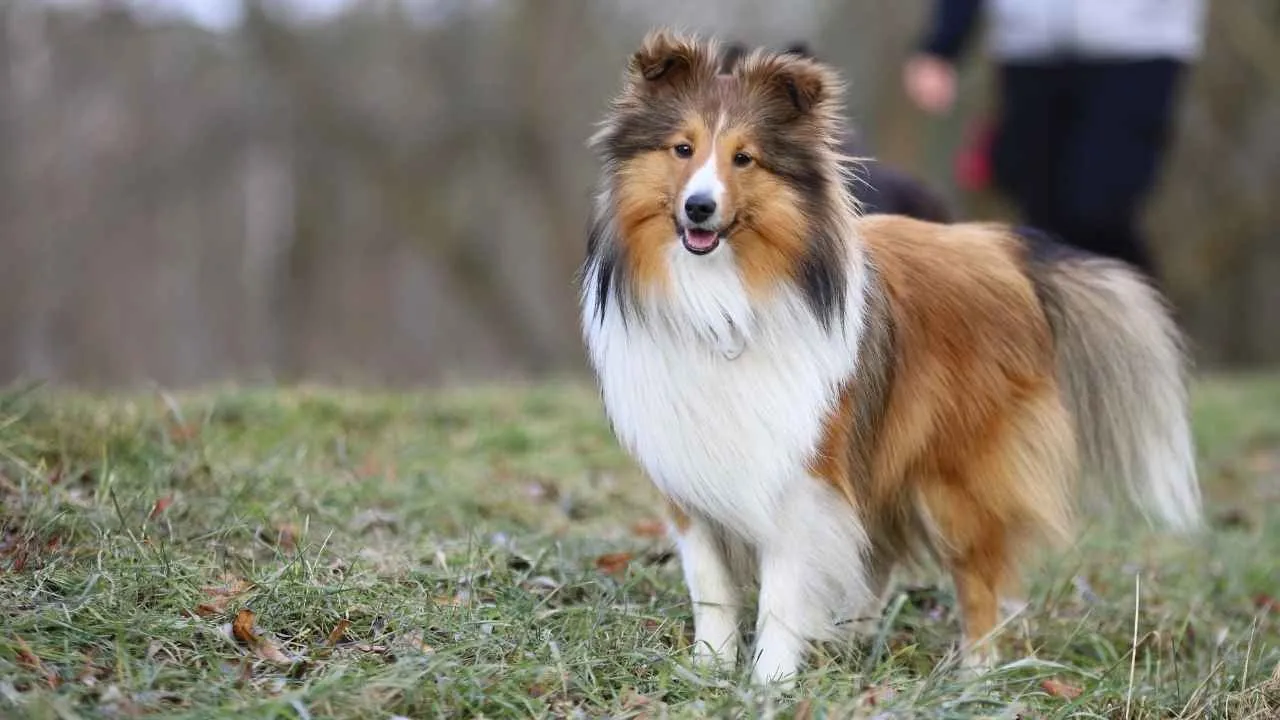
Also known as Sheltie, the smart dog was developed in Scotland in the 19th century by crossing the Scottish herding dogs with the Collie, since there was a need for a smaller herding dog for herding livestock of smaller size.
The highly intelligent dog registers all three senses simultaneously: smell, hearing, and sight. It tends to obey the very first command 95% of the time. It is driven by cooperation and loves teamwork. It works best with reward-based training, followed by clicker training and calm vocal tones.
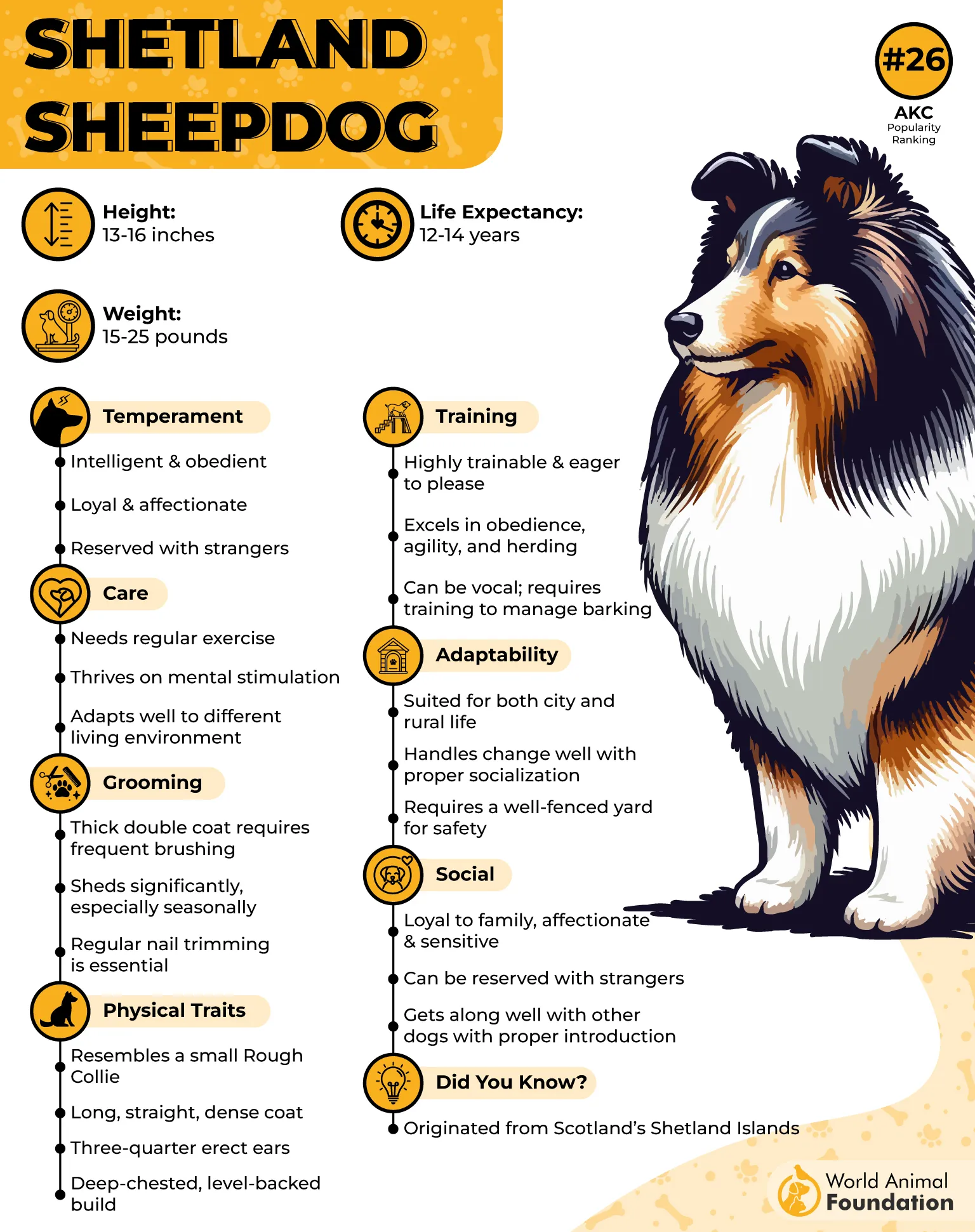
It has a hyper-vigilant acoustic alert system that needs to be controlled with basic commands, such as ‘sit’ and ‘go to mat’, etc. It has a high drive to nip at the heels, making impulse control training important.
6. Labrador Retriever
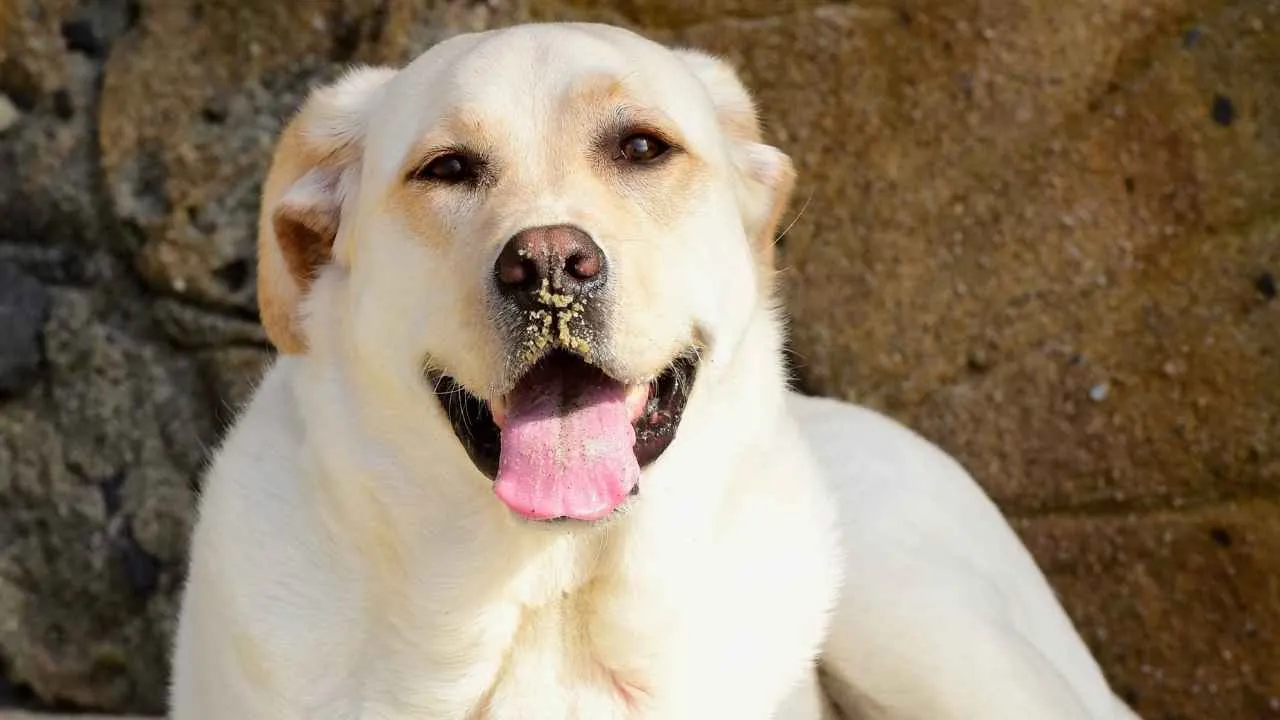
One of the most popular dog breeds was developed in Britain as a retriever gundog from the St. John’s water dog imported from Newfoundland, Canada. Laso used for hunting and sporting initially, it was later adopted as a companion breed.
The advanced nervous system can withstand stress and environmental stimuli without triggering a long-lasting ‘fight-or-flight’ response. It has a strong innate drive to grasp, hold, and carry items in its mouth, making it easier for the trainer to teach it with rewards. The working strain is highly focused, and the show-line strain has a relaxed nervous system.
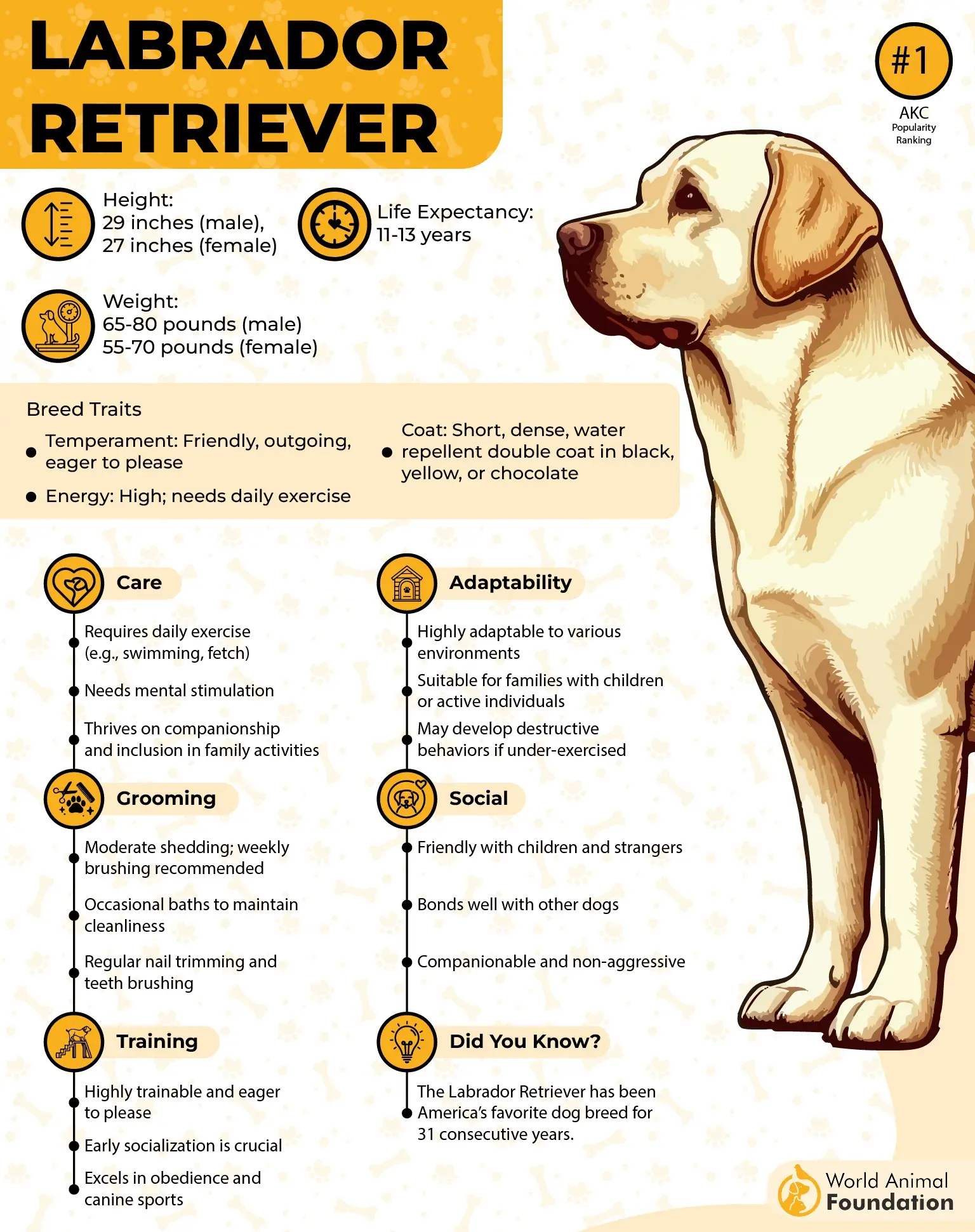
30 minutes of playful activities immediately after a learning lesson requires fewer re-learning trials 24 hours later for the Labrador. This improves long-term memory storage.
7. Papillon
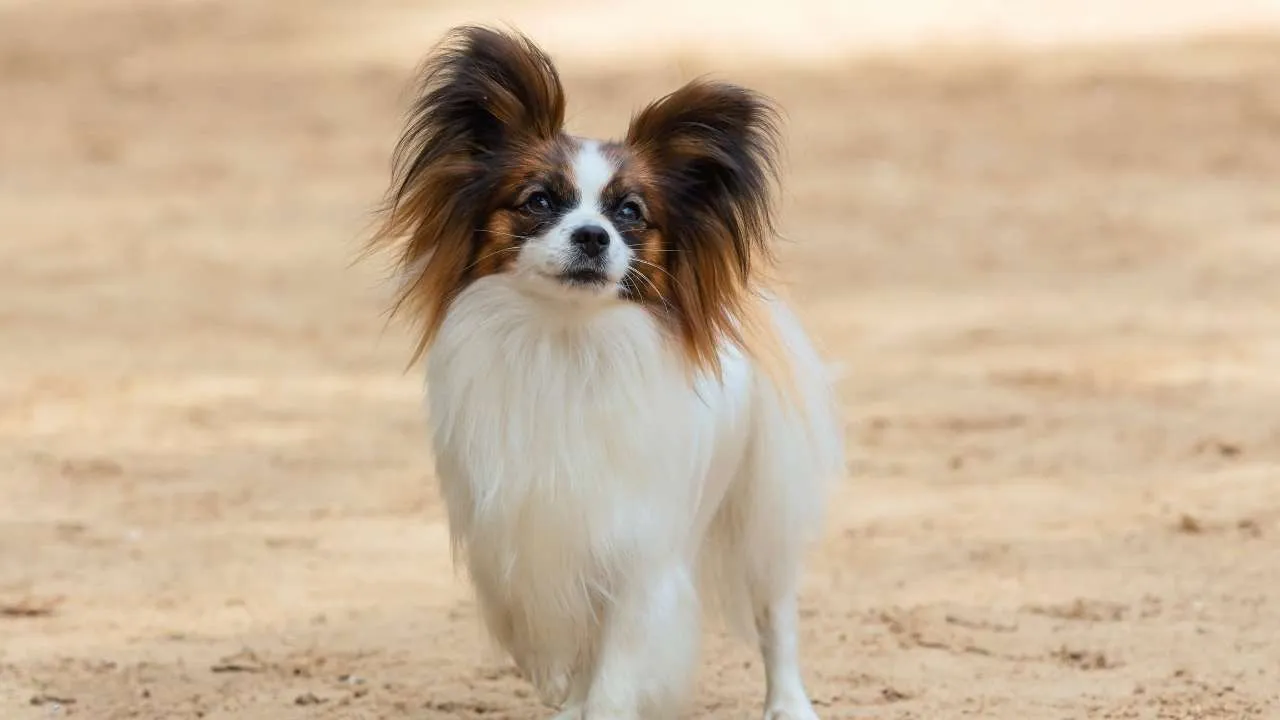
Favored by the royal ladies, the small breed was developed in France and was classified as a Toy Spaniel. The easy-to-train breed is famously known for its erect and highly functional ‘butterfly’ ears.
The breed tends to respond to any change in the environment within a second. With its advanced internal mapping capability, it calculates complex trajectories and jump distances with precision. It has a herding drive and needs a constant job; thus, proper training with early command training is important.
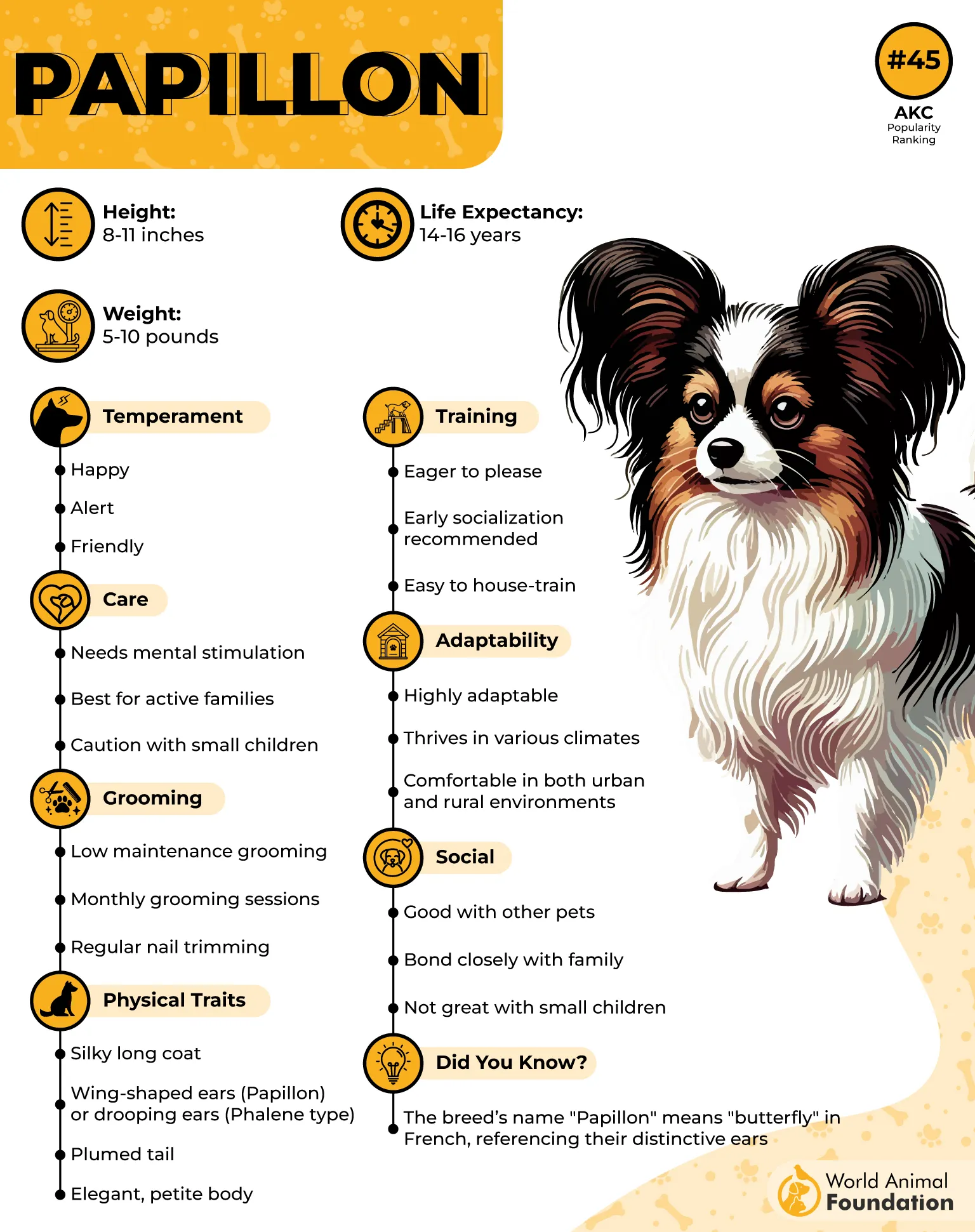
Stick to pea-sized reward training since it is highly food motivated. It has a small bladder and is prone to frequent excretion, making early housetraining non-negotiable.
8. Rottweiler
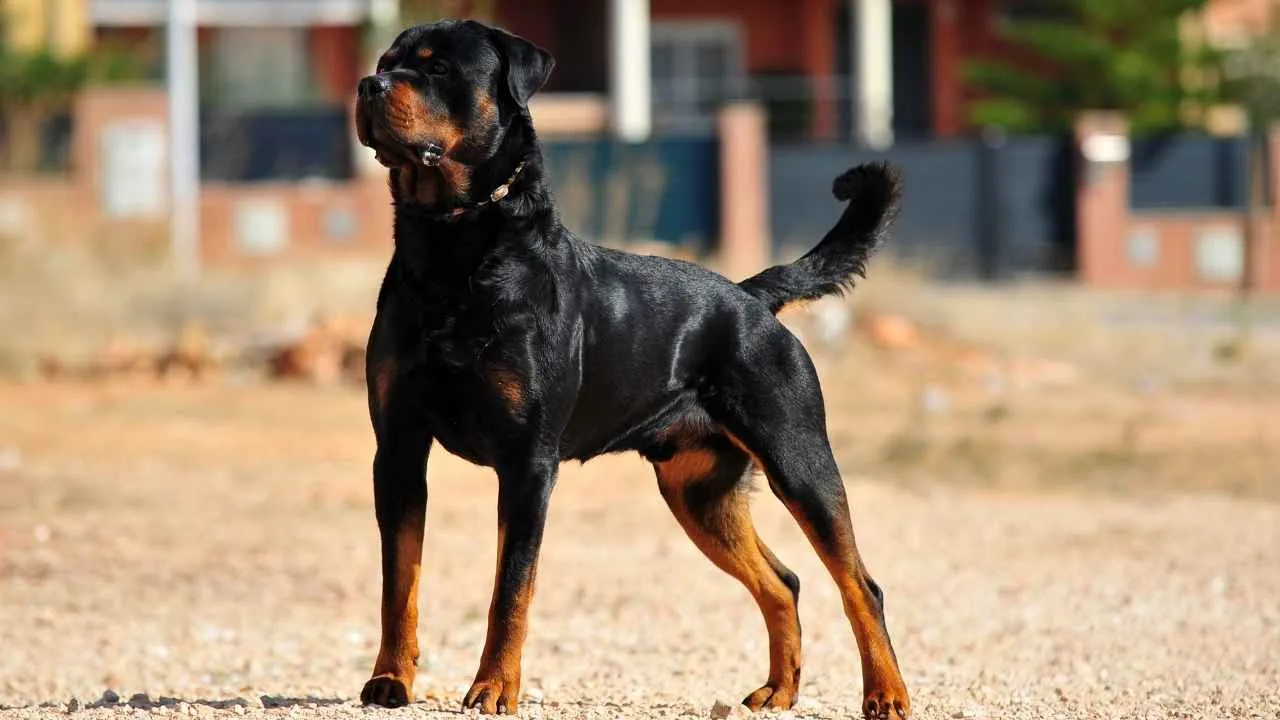
The protection dog is descended from the mastiffs of the Roman Army. The primary purpose was to herd cattle while the army was on the job. Also known as ‘Rottweiler Metzgerhund,’ it was later used to pull meat carts in Germany, says Purina.
Because of its ‘wait-and-see’ attitude towards external stimuli, it keenly observes its surroundings and does not respond instantly to loud noises or sudden movement. Though having a slow maturation in the first 2-3 years, it later develops long-term cognitive memory.
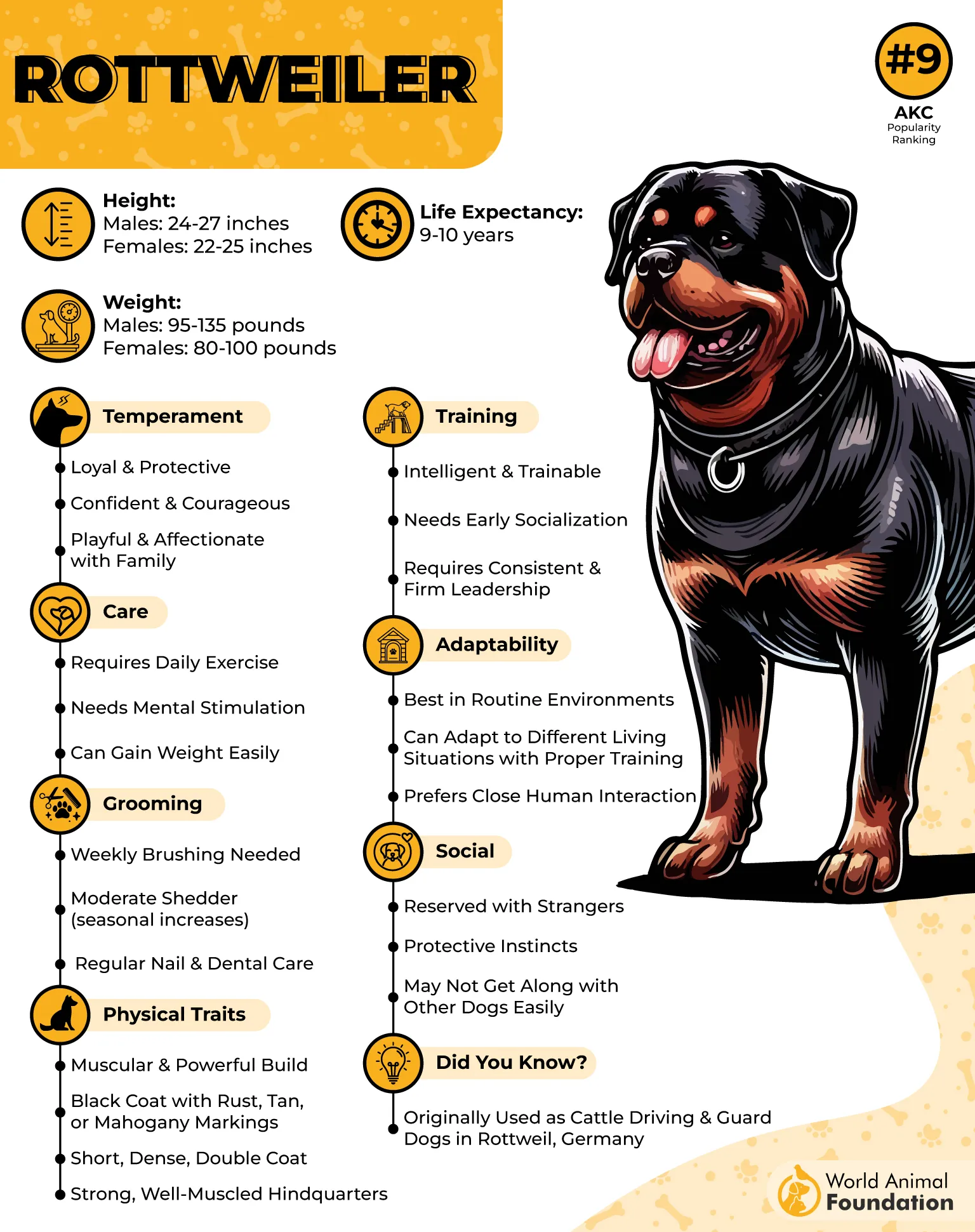
Using the ‘luring and mechanical shaping’ technique, guide the dog into an exact physical position with a marker, such as ‘yes.’ It thrives on cognitive load, and thus, scent work and object retrieval are suggested.
9. Pembroke Welsh Corgi
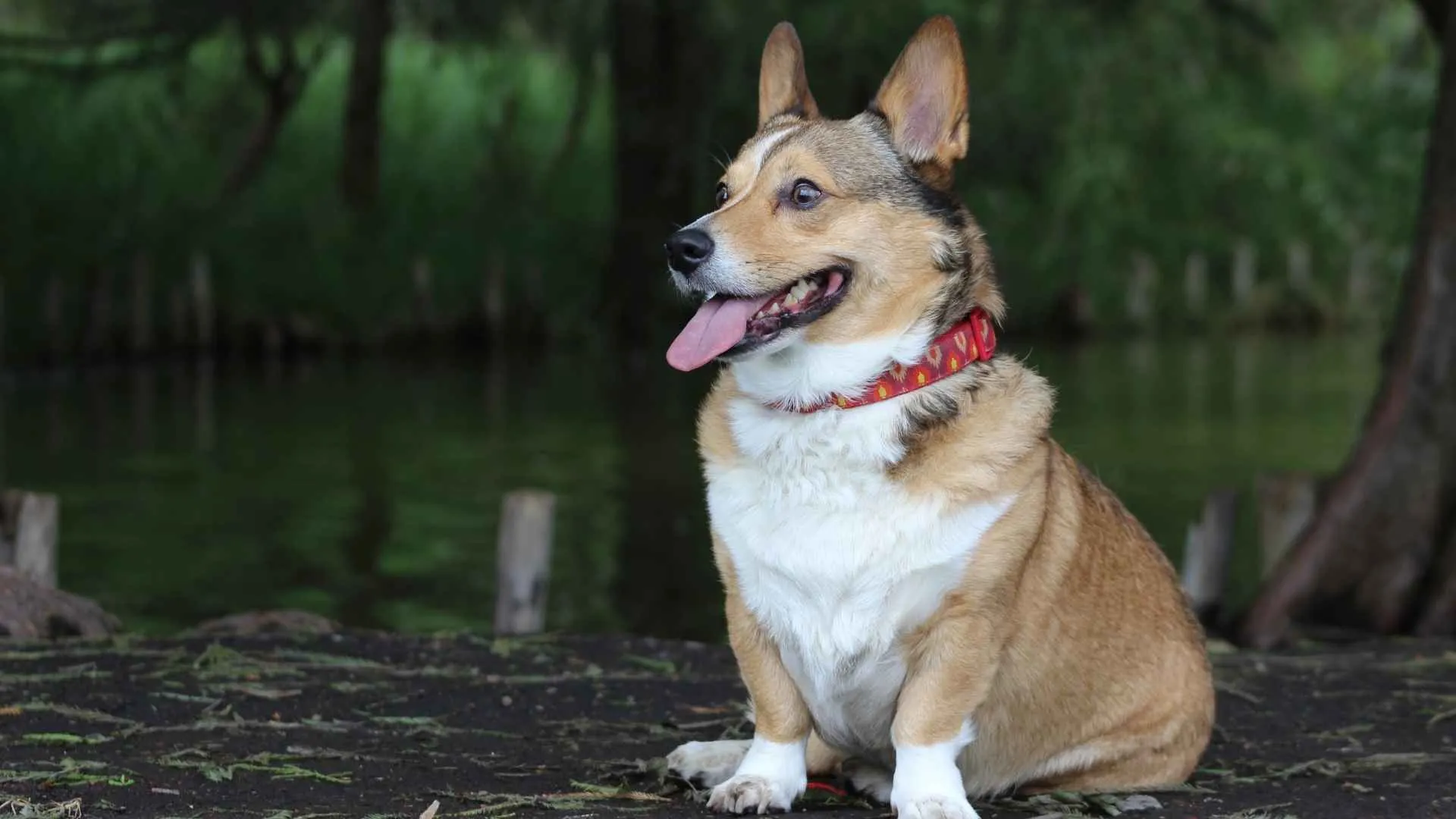
The dog was bred in Wales as a herding and protection breed, and the history dates back to 1107 BCE. The ancient dog breed is descended from the Swedish vallhund and was officially recognized in 1934.
Being a herding dog, it was hardwired to nip at the heels of stubborn cattle; thus, it has an exceptional physical reactivity. It is a good learner when it comes to pattern recognition. The breed has an independent streak and tends to assess the situation rather than solely relying on the handler’s instructions.
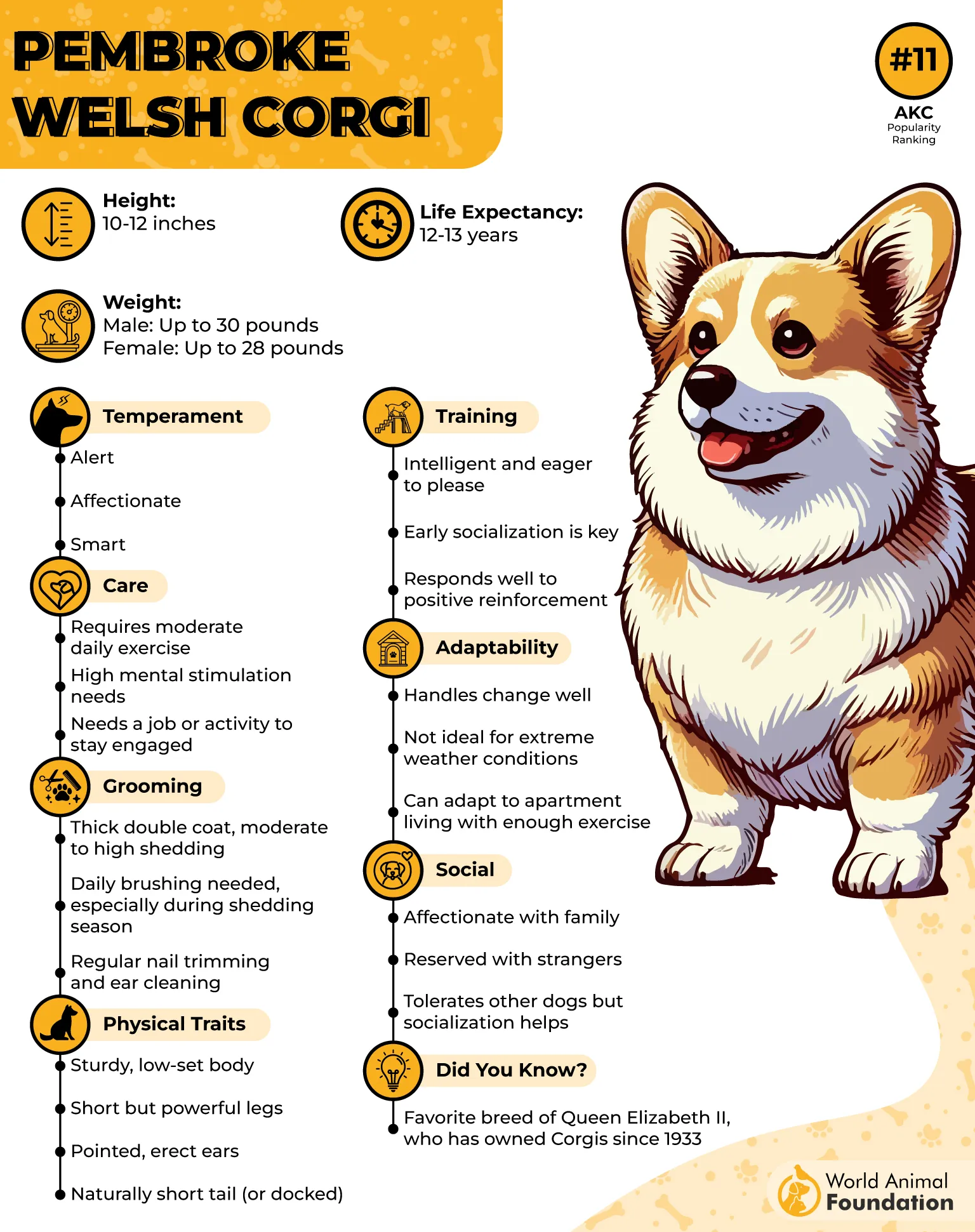
Consistent training is important, as the brain finds a gap when the training sessions are not held frequently. The hyper-alert sympathetic nervous system makes it nip, chase, and bark, making de-escalation and impulse control necessary.
10. Australian Cattle Dog
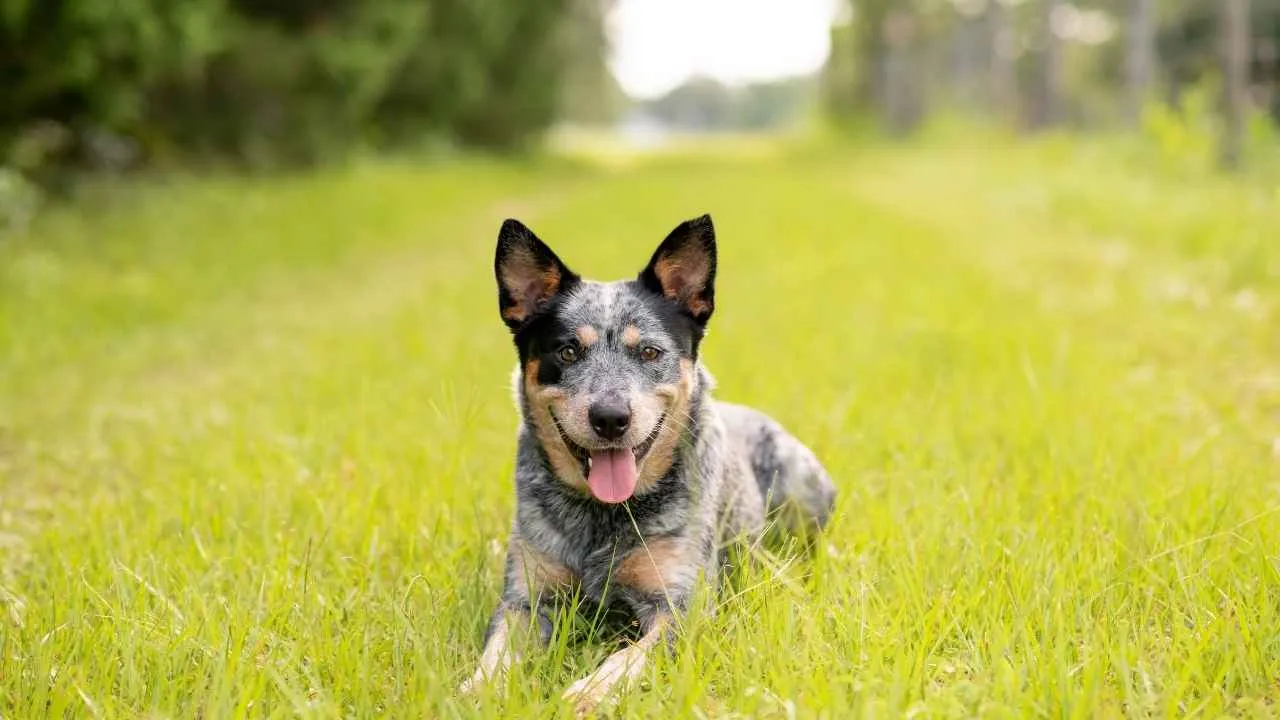
The large dog breed was developed in Australia in the 19th century by farmers. The goal was to breed a dog that could herd cattle on a vast terrain without being overly aggressive. Breeds like the Dalmatian and the Bull Terrier contributed to the development of the breed.
It has a high pain tolerance, making it highly resilient in high-stress dog sports, such as agility competitions. The high motor drive allows instant deceleration and direction changes, helping it in precision sports. It is aloof with strangers and requires systematic, early socialization.
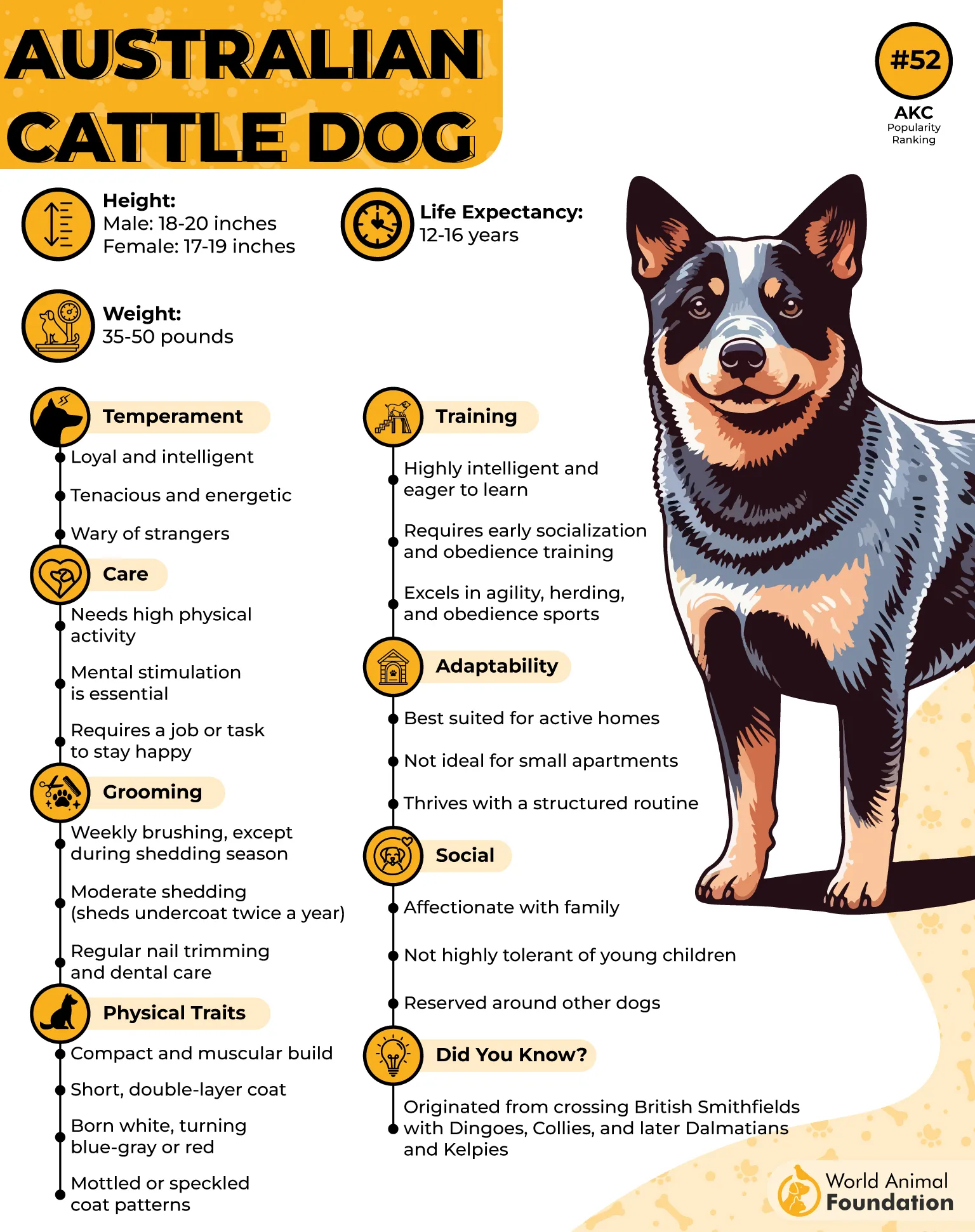
Use desensitization to suppress hyper-reactivity by introducing triggers below the threshold and reward it for remaining calm. Use a flirt pole or herding ball to control chase, grab, and bite patterns.
Conclusion
These breeds think quickly, notice everything, and often need a job, a routine, and a person who makes learning fun. You do not need to be a professional trainer. Start small. Reward the behavior you want. Keep sessions short, upbeat, and consistent. Celebrate the wins; even the tiny ones, like a perfect recall in the backyard or a calm “down” while dinner is being made.
Choose a breed that fits your energy, home, and lifestyle. Then give your dog room to use that brilliant mind. With kindness, patience, and a pocket full of treats, you will not just train a smart dog; you will build a lifelong teammate who genuinely wants to work with you.
