




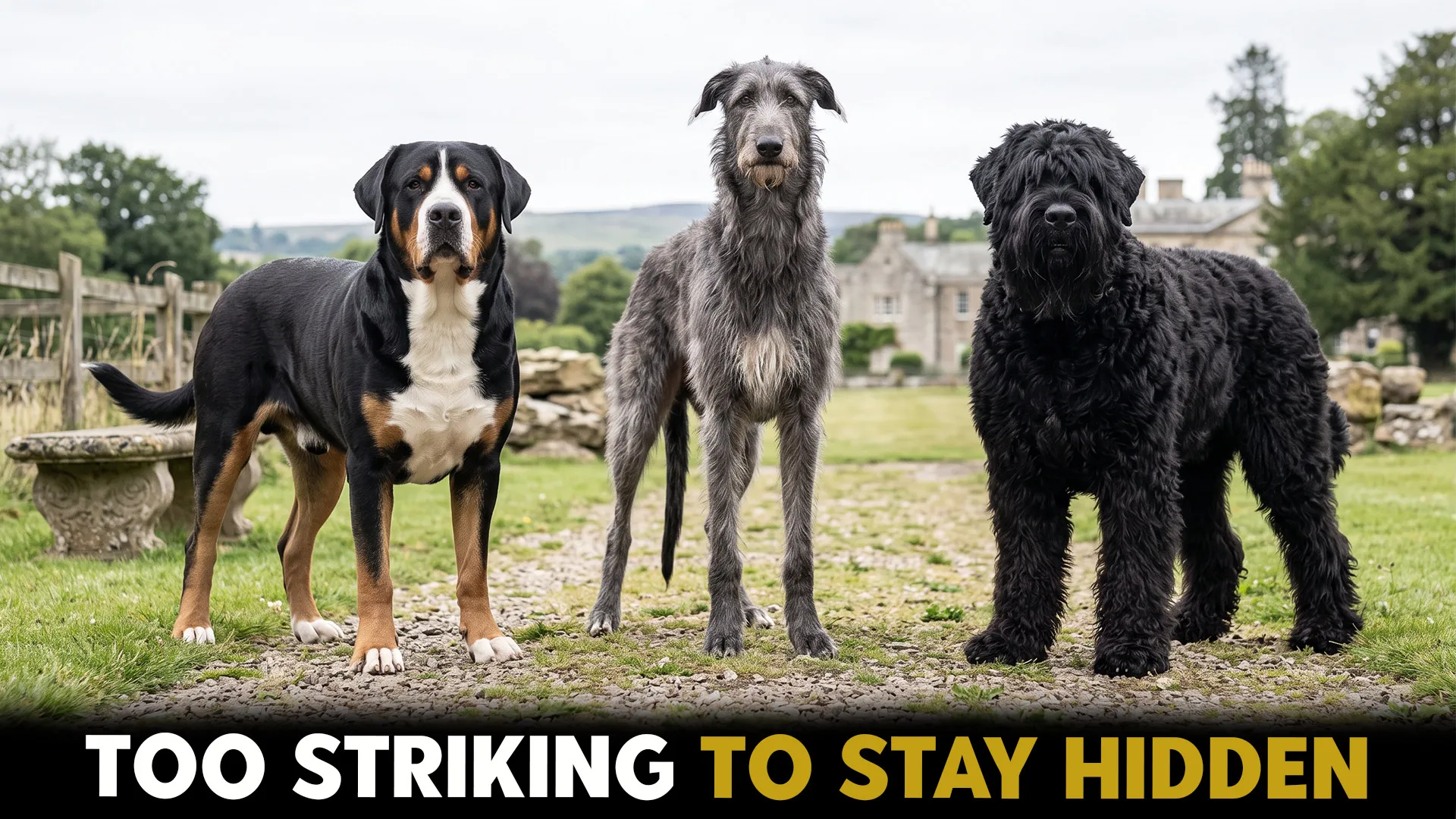
Some dog breeds are far less common despite their giant size. These breeds were developed for specific purposes, originated in particular regions, or simply never gained the fame of the Great Dane or the Bernese Mountain Dog.
Rare giant breeds are intriguing, but size is only part of the story. Some served as estate guardians, while others worked for farmers. Some hunted big game, and others were bred as police or military dogs.
Their personalities vary widely, and all of them need plenty of attention. Some need more training and structure, while others are happy to spend most of the day relaxing indoors instead of herding cattle outside.
Check out these seven rare big dog breeds below!
Rare and Wonderful Giant Dog Breeds: Meet The Giants
1. Leonberger
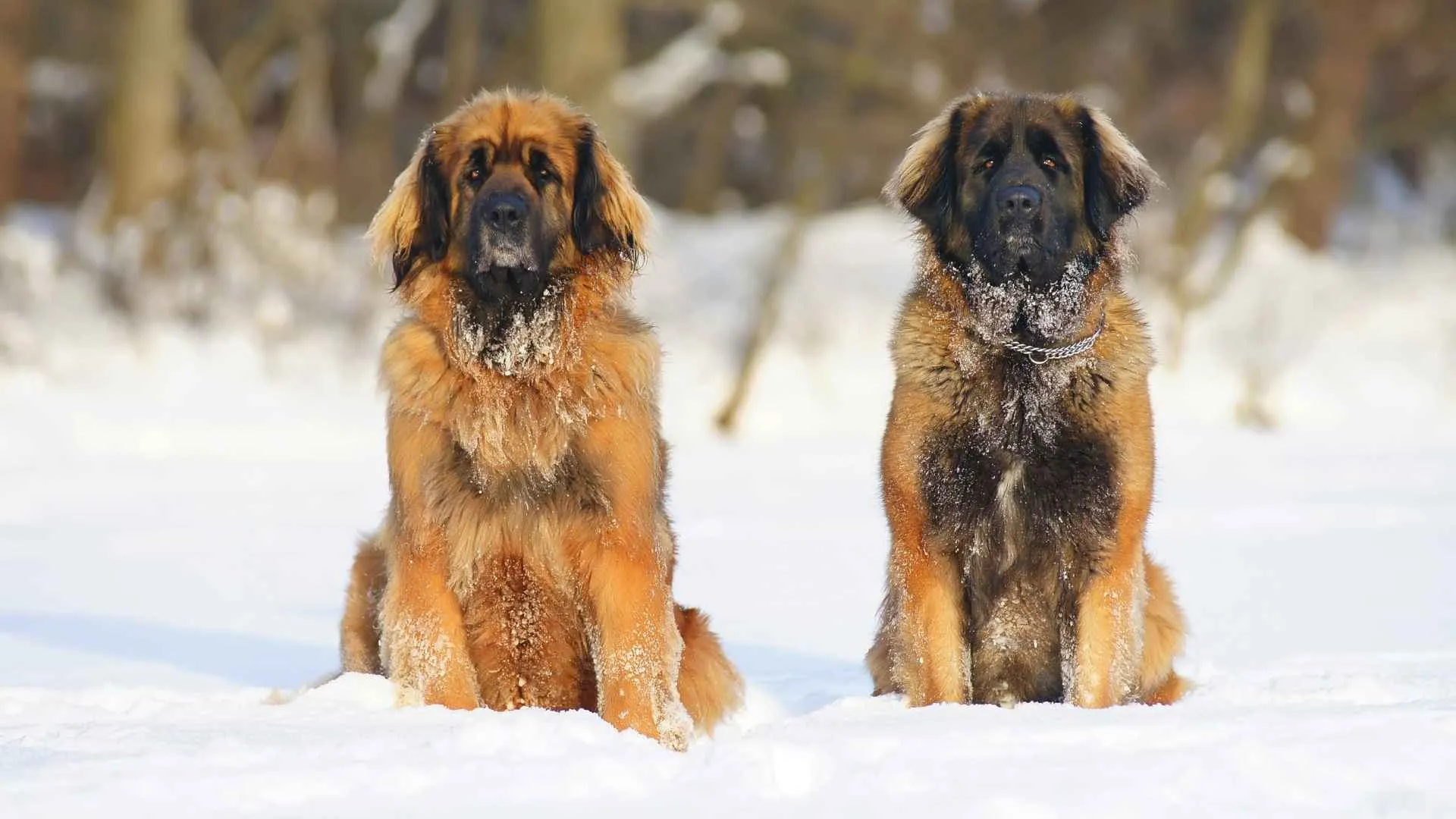
Called majestic by Orvis, the Leonberger is a breed that’s hard to fully appreciate until you see one in person.
It was developed in Germany in the 19th century as both a family pet and a working dog. The breed had royal connections across Europe and came close to extinction during the two world wars, but dedicated breeders brought it back.
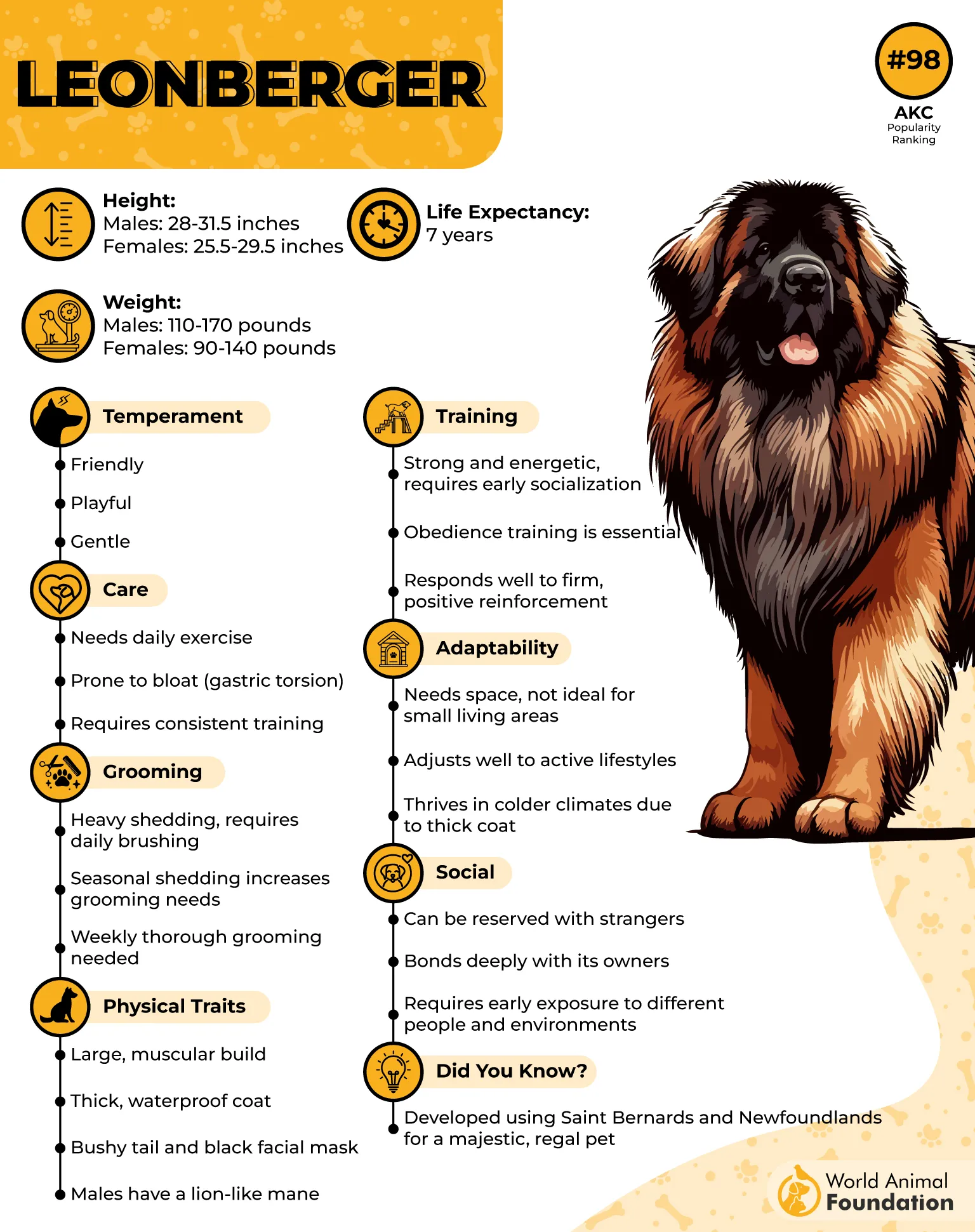
Its large size, thick coat, and mane-like fur around the neck, especially in males, set it apart from other breeds. These dogs are also calm, patient, and affectionate with their families.
The coat deserves some thought, too. The long double coat sheds, so it needs regular brushing, with extra attention to spots where mats tend to form.
If you’re looking for a large, kind-hearted breed with a unique look, the Leonberger is one you can’t miss.
2. Black Russian Terrier
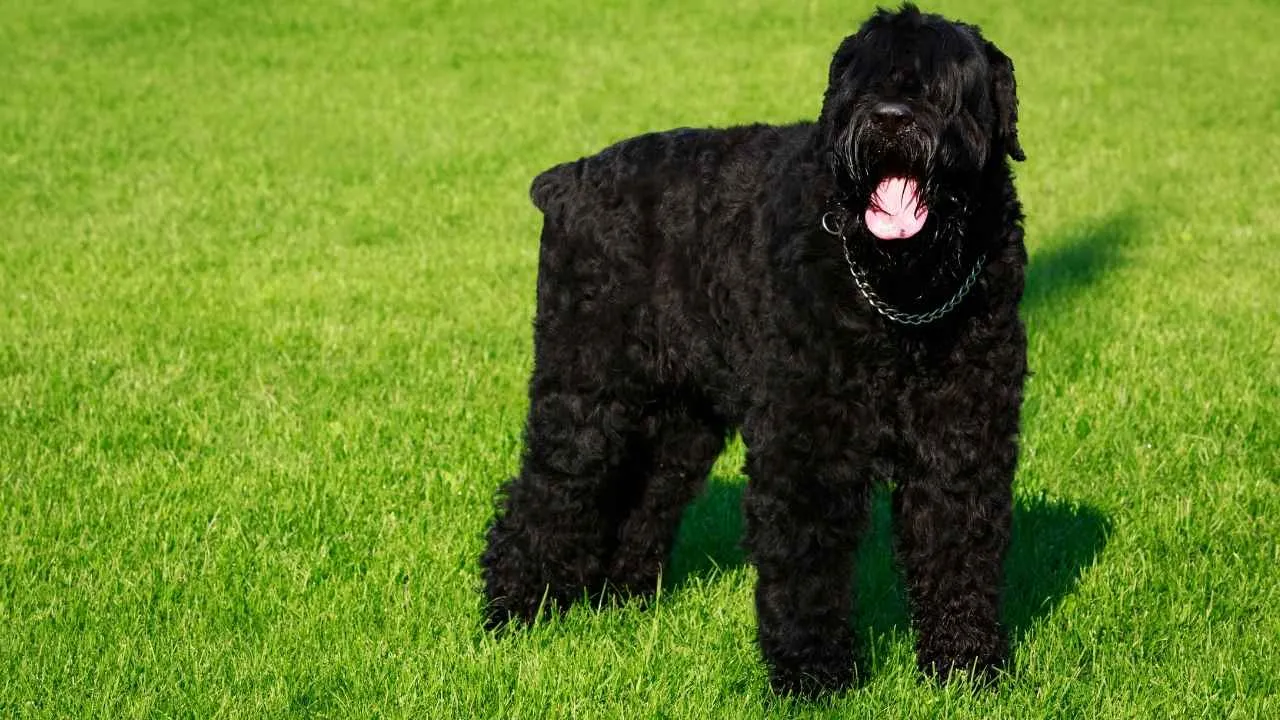
The Black Russian Terrier is a very different breed. Rather than being developed as a companion dog, it was created in the Soviet Union in the 20th century for military, police, and guard work.
This intelligent dog’s working history is still apparent today. It’s confident and protective, and it typically needs owners who are willing to set clear boundaries. Because of its guarding instincts, early training and socialization should be a top priority.
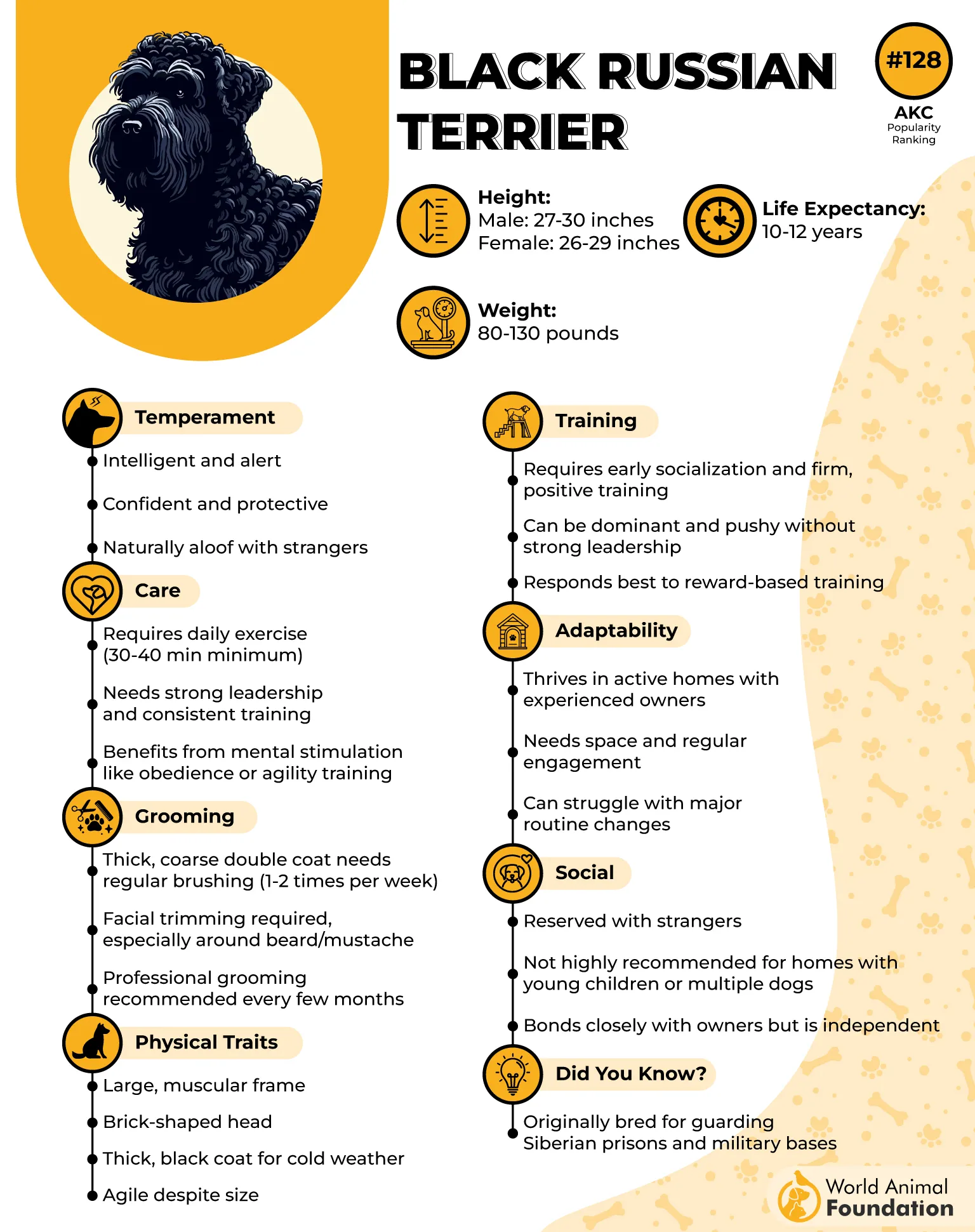
Its coat is distinctive, too. It’s dense, coarse, and black, with the breed’s trademark beard and bushy eyebrows. Proper care means regular brushing and trimming by a professional groomer.
This is a large dog meant for owners who want a hardworking breed, not one that is simply big in size but relaxed in temperament.
3. Scottish Deerhound

Called the “Royal Dog of Scotland” by the AKC, the Scottish Deerhound is one of the most interesting breeds on this list.
This rare breed was developed in Scotland to hunt red deer. The Deerhound was historically linked to the Scottish Highlands and prized by Scottish nobility. Later, changes in hunting methods and the decline of the big estates put the breed at risk.
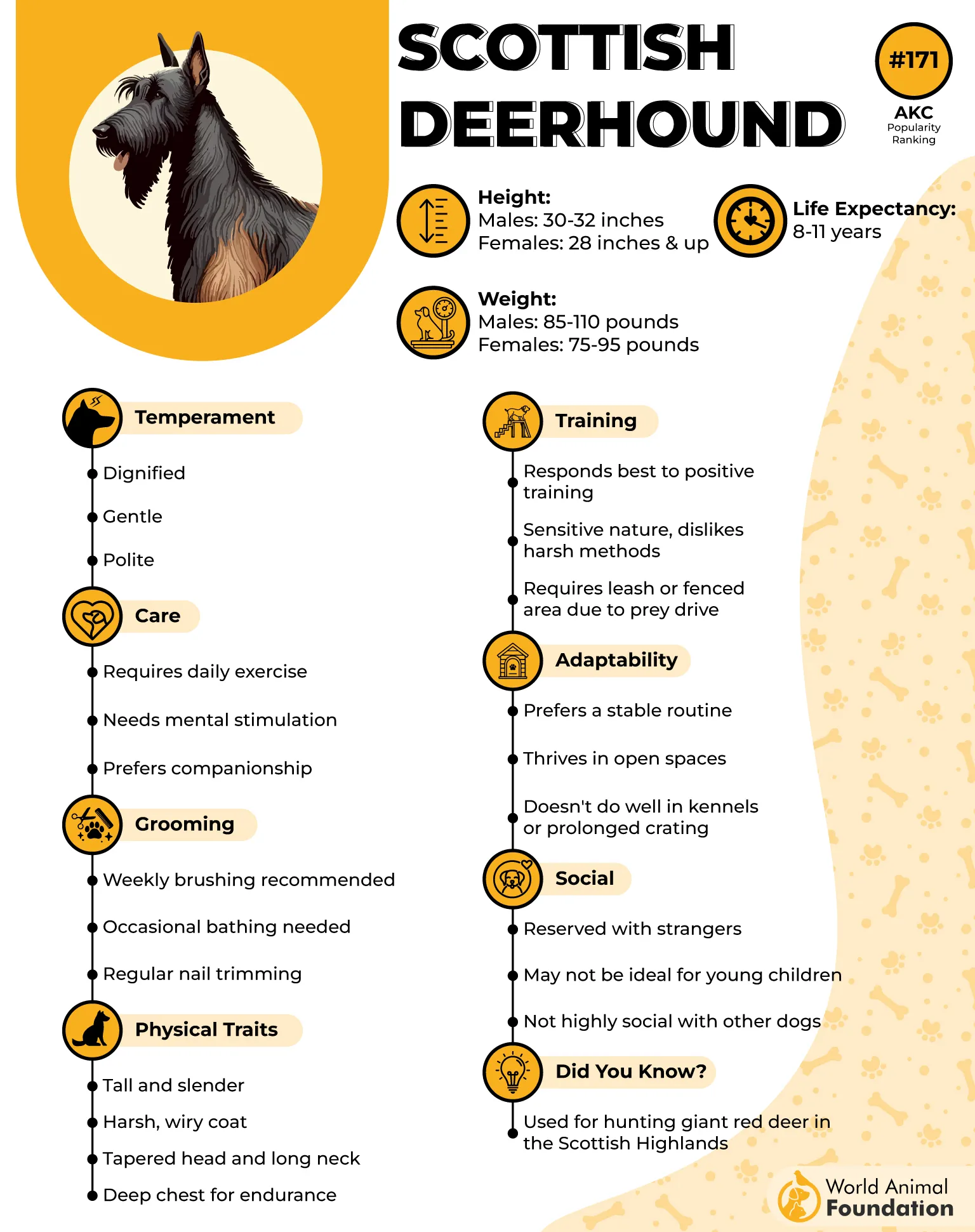
Despite that history, the Deerhound is a quiet, easygoing dog that prefers resting and stretching to being constantly on the go.
Training takes patience. The breed is independent and doesn’t always obey right away, even when it understands what’s being asked. Short, positive sessions work better than repetitive drilling.
Its wiry coat is relatively easy to care for and doesn’t need much grooming. Regular combing is usually enough.
4. Dogue de Bordeaux
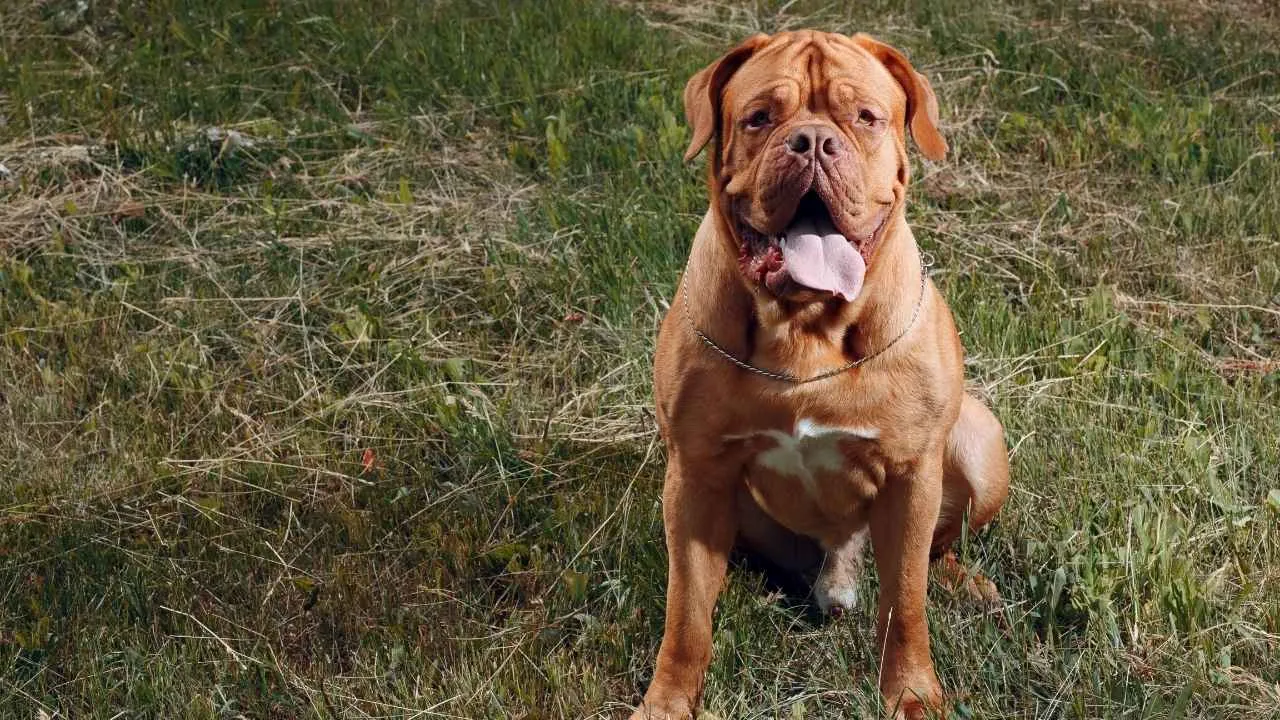
The Dogue de Bordeaux is easy to spot thanks to its large head, wrinkled face, muscular body, and reddish-fawn coat.
This French breed has a long working history that includes guarding property and livestock and assisting with hunting. Today it’s best known as a family guardian that enjoys joining in on family activities, as long as there’s enough room for a dog of its size.
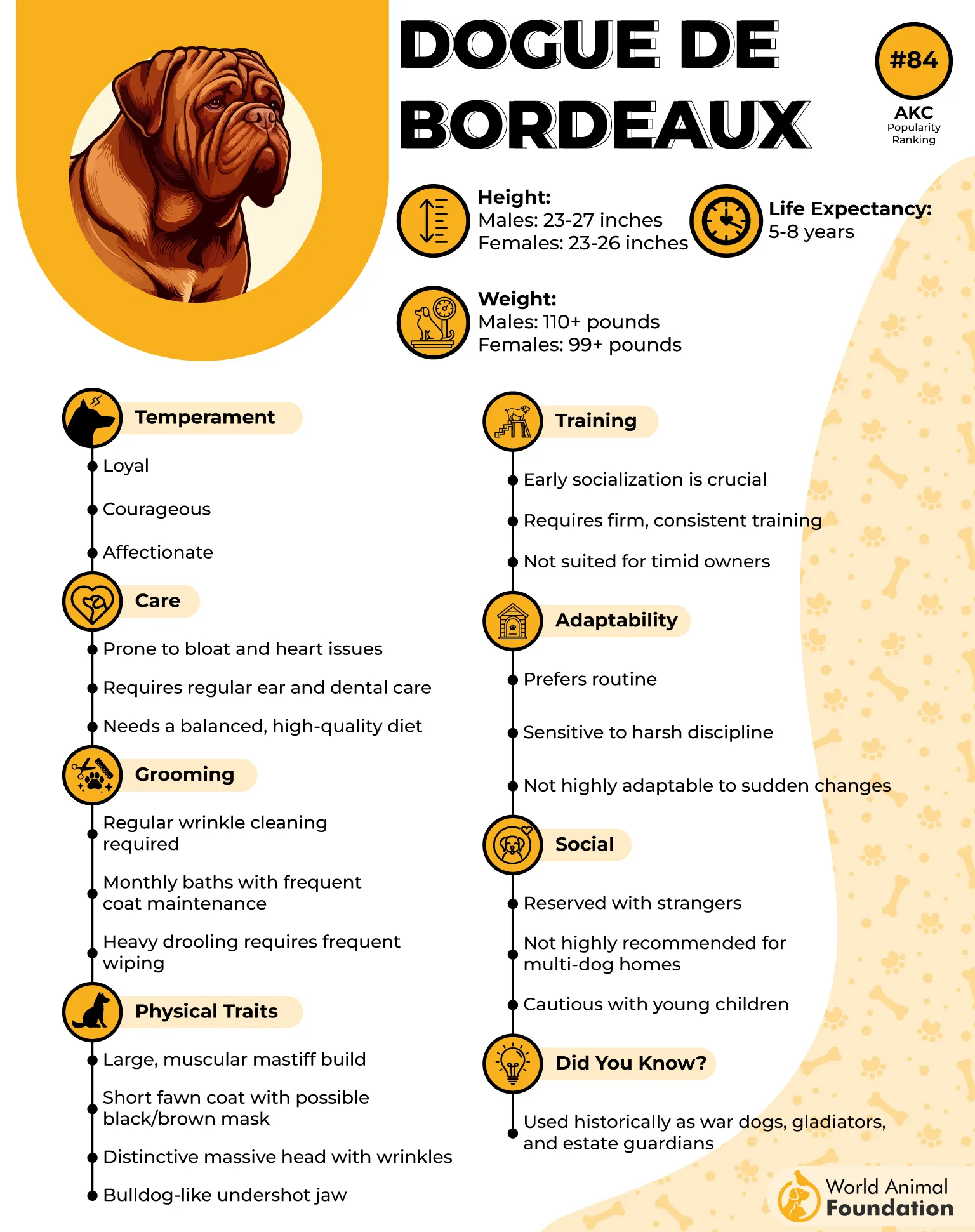
Its personality is more affectionate than intimidating, which makes it a good companion. Dogues form close bonds with their families and are well suited to family life. That closeness is worth keeping in mind if you’re thinking of adopting one, because this isn’t a breed that should be left outside without attention or company.
The short coat is easy to maintain, but the facial folds need regular cleaning. Pet parents should also be ready for drooling and avoid excessive exercise while the dog is still growing.
5. Broholmer
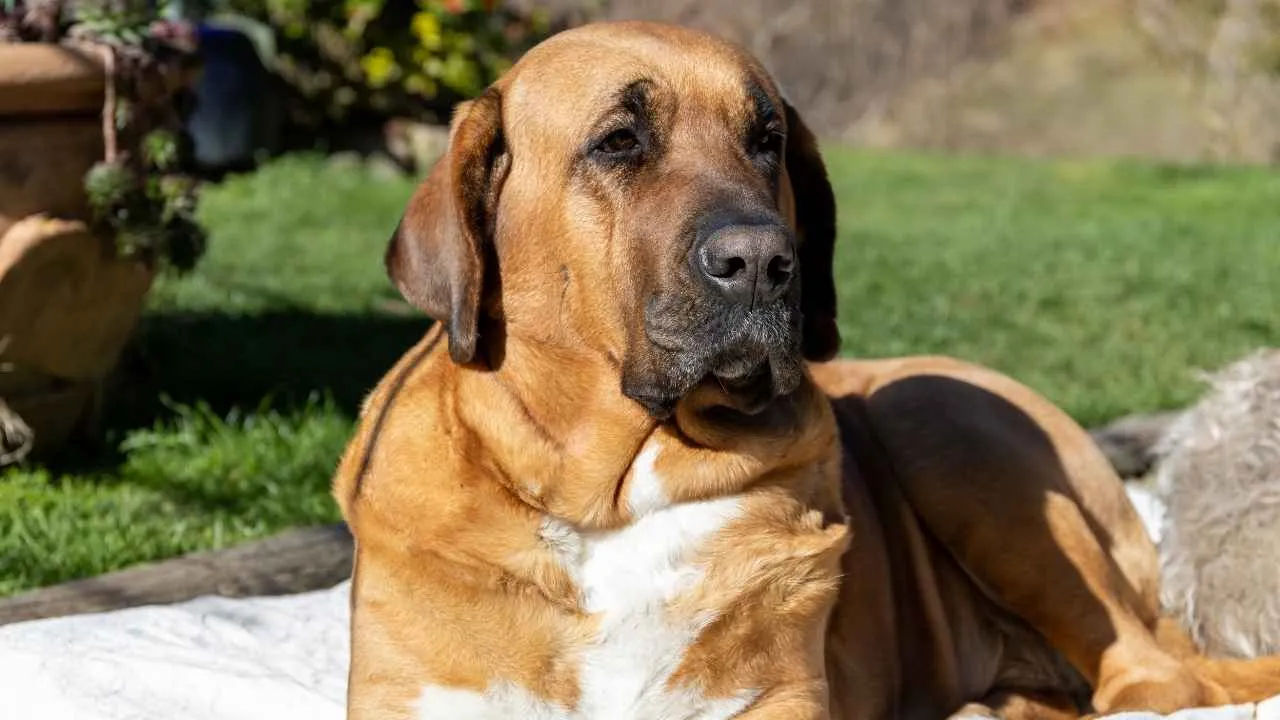
The Broholmer is one of the lesser-known breeds on this list, and its rarity is part of what makes it so interesting.
This Danish breed belongs to the Mastiff group and was historically used to guard estates and farms. Today it’s described as friendly, loving, and watchful.
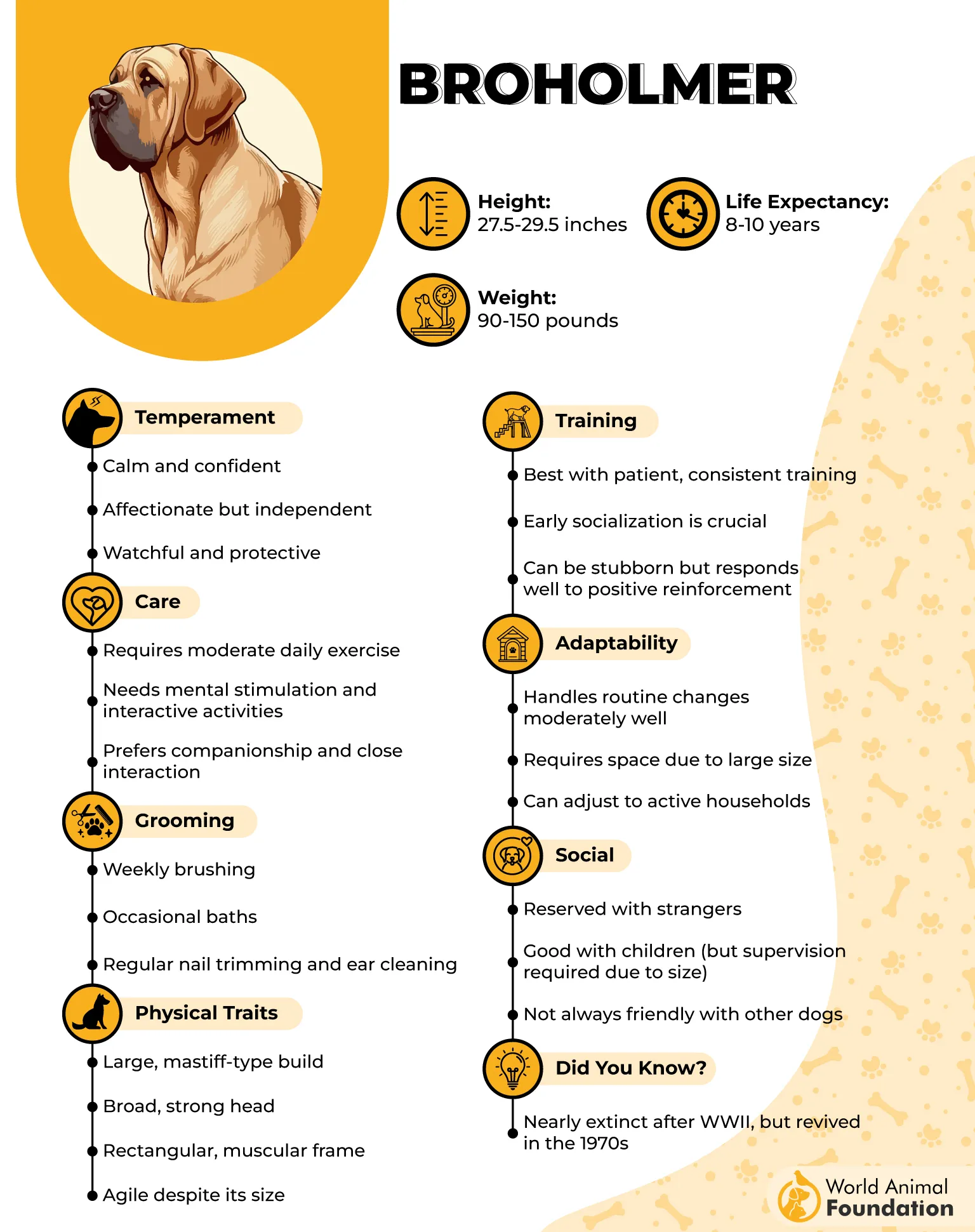
The Broholmer has a fairly straightforward look compared with some ancient breeds, with a powerful Mastiff-type body and a short, simple coat.
If you’re in the market for an unusual breed, this one is worth exploring. It’s a true giant, and its life expectancy is typically around eight to ten years.
6. Neapolitan Mastiff
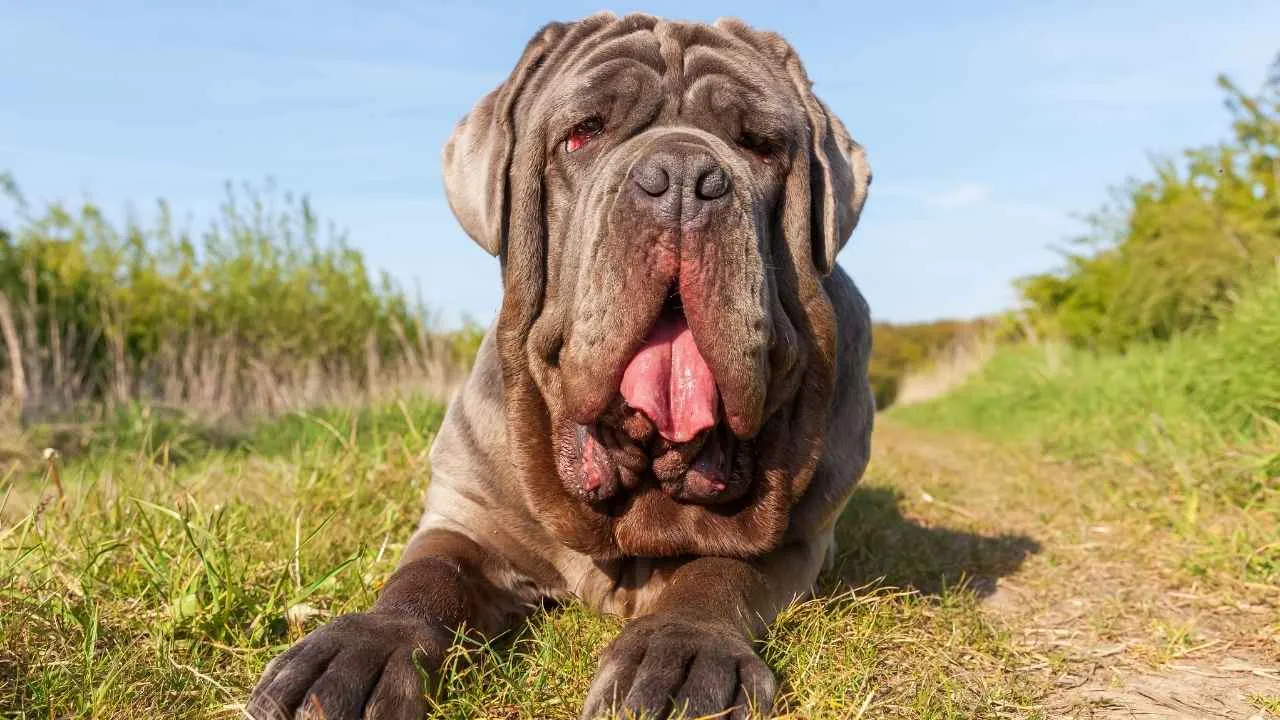
The Neapolitan Mastiff is one of the most beautiful breeds in the dog world.
It’s instantly recognizable thanks to its loose skin, heavy wrinkles, large head, and serious expression. These features are closely tied to its past as an estate and property guardian in Italy.
The breed’s ancestors go back to ancient Mastiff-type dogs, and it was developed around Naples. It remained relatively little known until the 20th century.
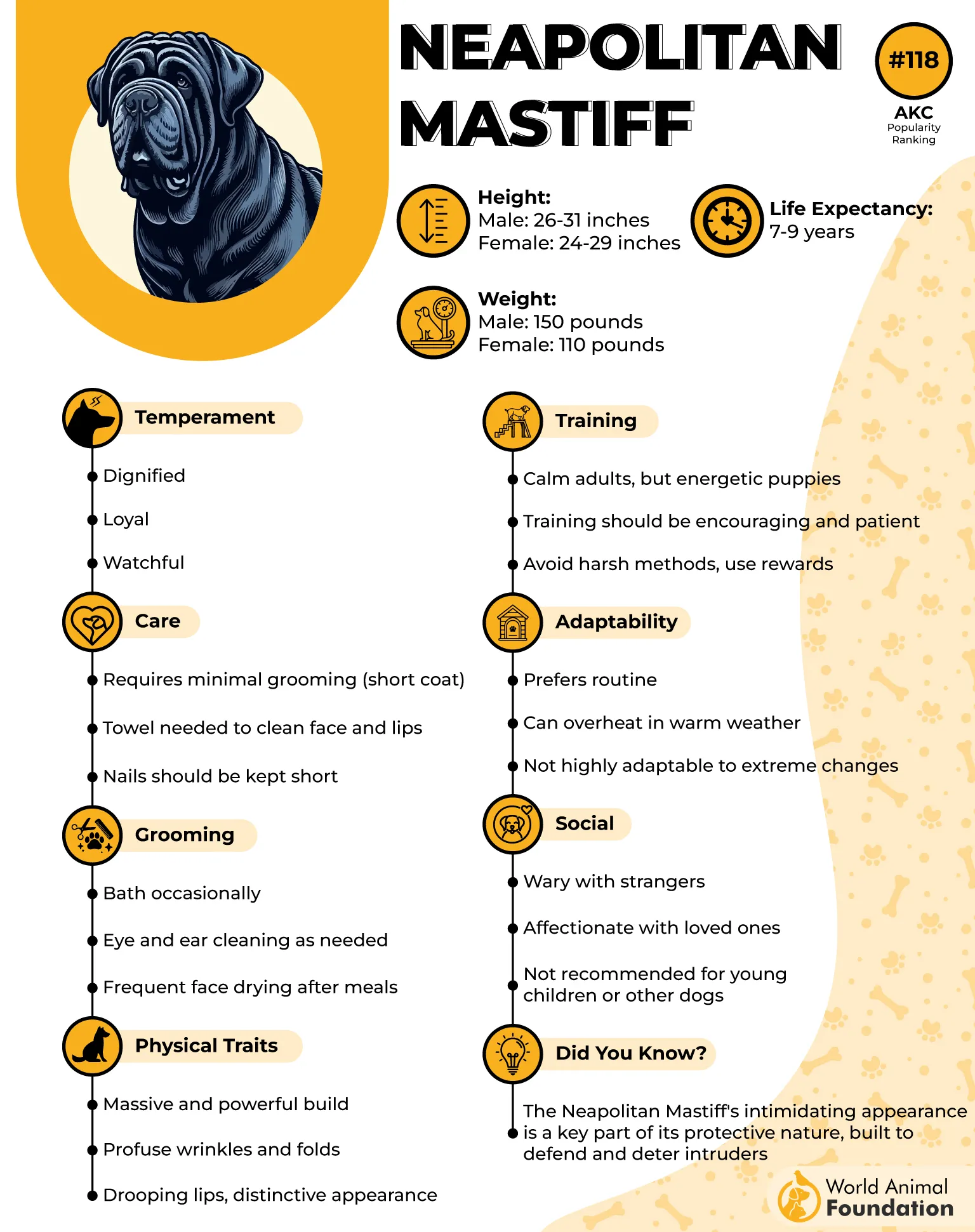
Keeping this powerful guardian under control is the real challenge. These dogs can be wary of strangers and aren’t fond of other dogs. Their sheer size can also make normal behaviors like jumping or pulling on the leash hard to manage if they aren’t corrected early.
Called loyal by PetMD, the Neapolitan Mastiff is best known as a dedicated protector in the canine world.
7. Greater Swiss Mountain Dog
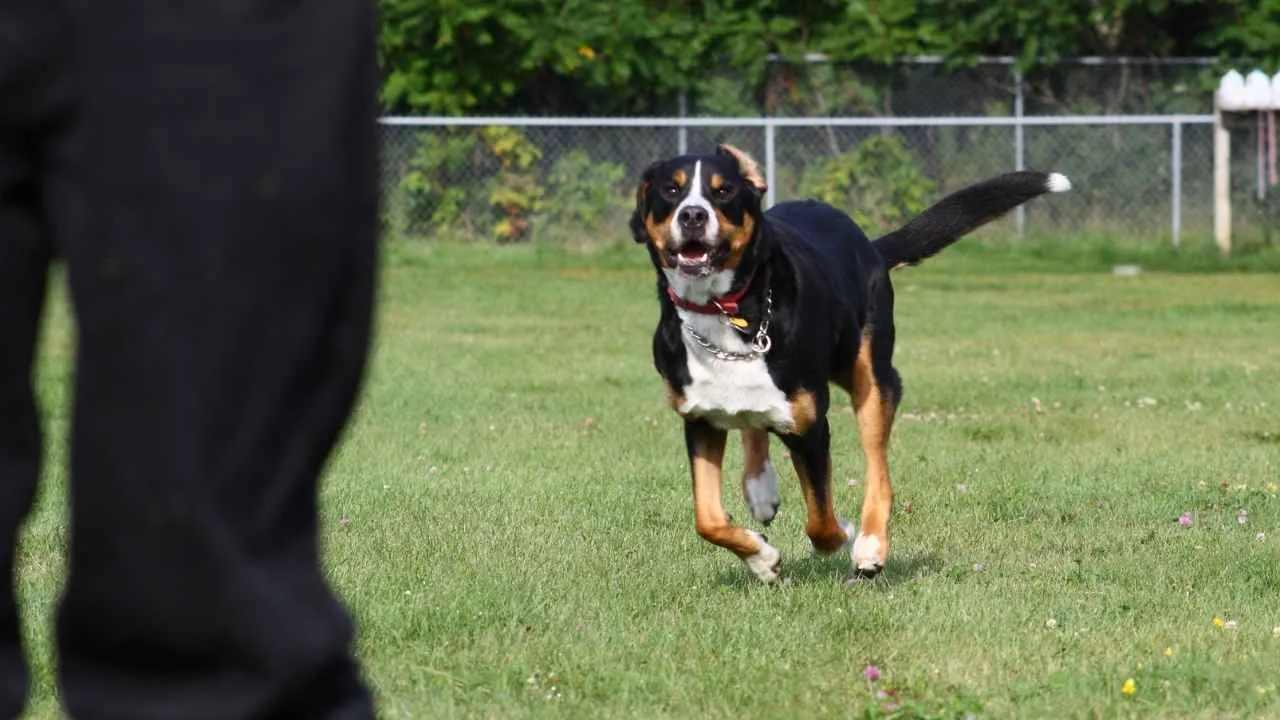
The Greater Swiss Mountain Dog offers a different profile from the other breeds on this list.
Known as the Swissy, it was developed in Switzerland as an all-purpose farm dog. It was used for herding, drafting, and general farm work, which made it both strong-willed and highly effective.
Versatility is its best trait. A Swissy can be affectionate and relaxed with its family while still loving activities like carting and weight-pulling.
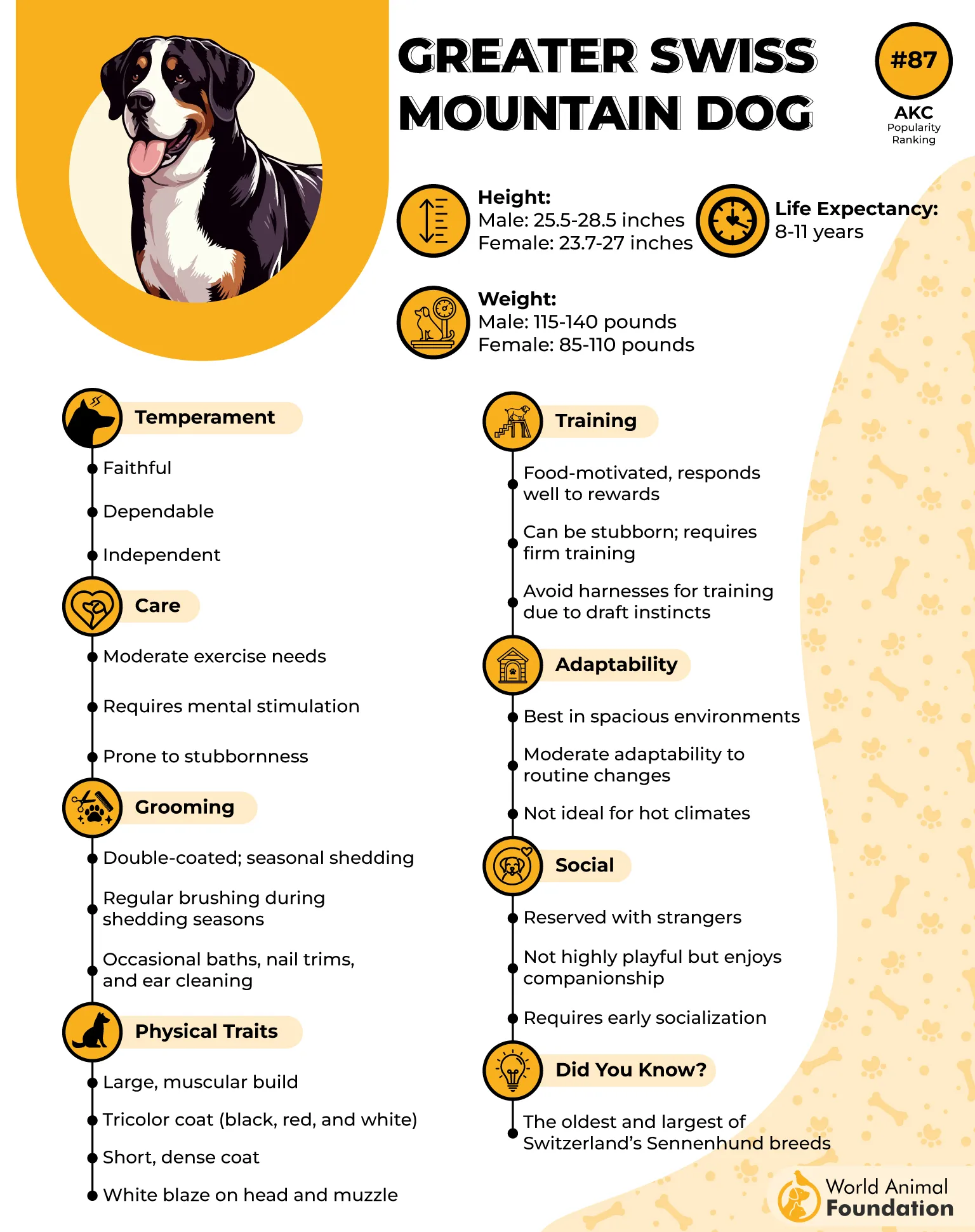
The breed was developed in the cool Swiss Alps and may not cope well with warm weather. In hot climates, exercise your Swissy during the cooler parts of the day.
If you want a useful, hardworking breed with fairly easy grooming, the Greater Swiss Mountain Dog is an excellent choice.
Conclusion
There’s more to rare giant breeds than you might expect. Most benefit from consistent socialization, appropriate grooming, and a safe, secure outdoor area. Some adapt to apartment living with enough exercise, while others are better suited to experienced owners.
A large dog needs room, exercise, training, and veterinary care to thrive. Before adopting one, learn about its exercise, care, and grooming needs to make sure it fits your lifestyle.
Some of these gentle giants are among the tallest breeds, and some are natural water rescuers. Some have thick double coats, while others have short fur. All of them need plenty of exercise and regular outings to stay fit and healthy.
