




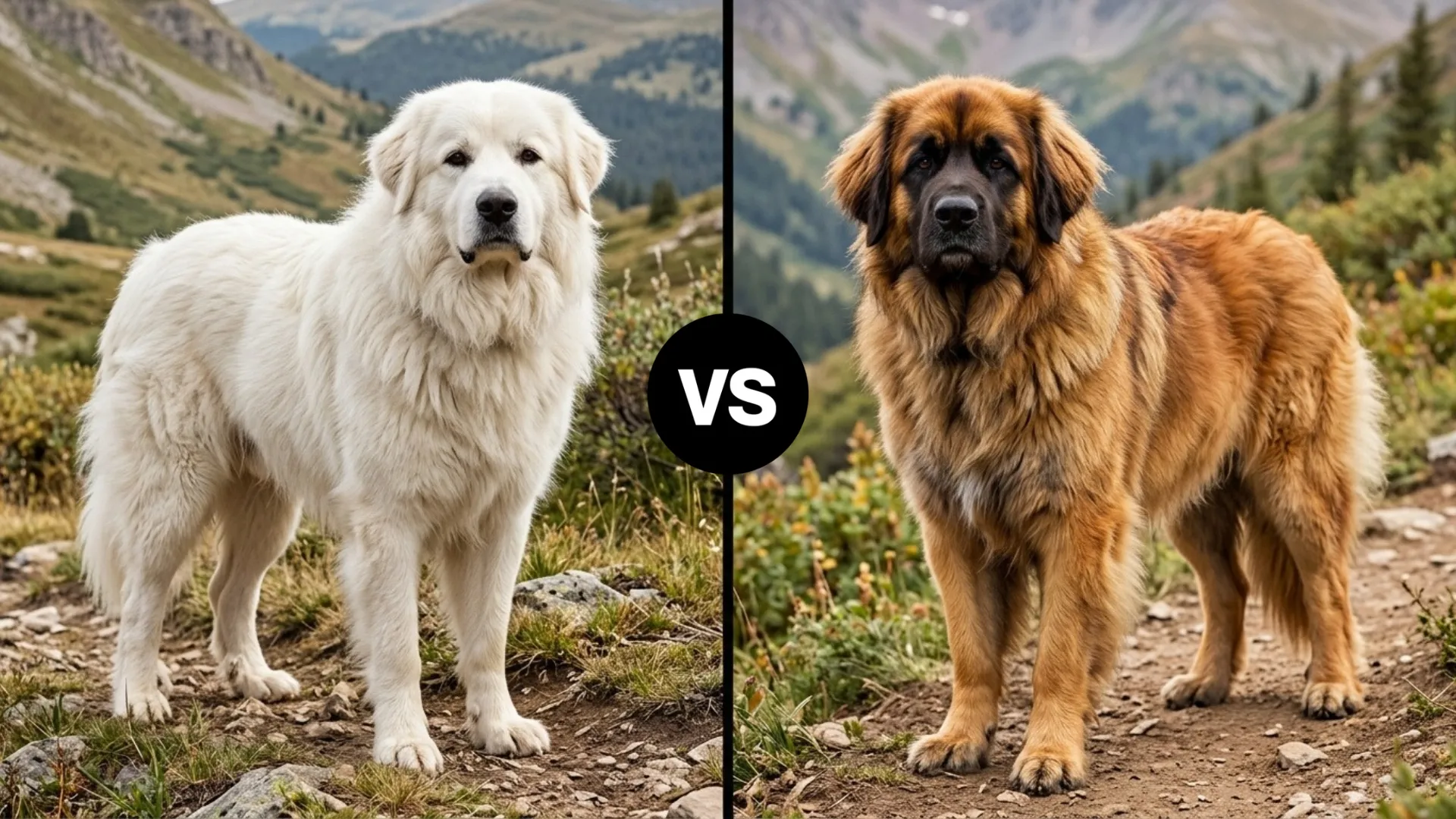
Okay, let’s talk about two dogs that make everyone at the dog park stop and stare.
Great Pyrenees vs. Leonberger.
Two giant breeds. Two enormous, fluffy, gentle-eyed dogs that look like they belong in a fairy tale. And two dogs that will shed on your black pants, steal your spot on the couch, and make you wonder how you ever lived in a house with “normal” furniture.
But this is where people trip up. They are both big and fluffy, so folks assume these two are basically the same dog in different colors.
NOPE. Not even close.
One was originally bred to sit on a mountainside and guard sheep with ZERO human help. The other was bred to look like a lion and be a companion to families. One makes decisions on its own. The other genuinely wants to know what you think.
Same fluff. Very different dog underneath.
Fun Fact!
The Leonberger gets its name from the town of Leonberg, Germany, and the town crest features a lion. According to the breed’s origin story by the American Kennel Club (AKC), a local man named Heinrich Essig set out in the 1800s to create a dog that looked like that lion. That’s where the “lion-like mane” you see on male Leonbergers comes from.
So the breed was basically created to match a coat of arms.
Meanwhile, the Great Pyrenees was bred to match a job description: FEND OFF wolves.
Which one sounds more intense? Yeah, we thought so.
Great Pyrenees vs. Leonberger: Fluffy Giant Breed Comparison
Appearance, Size and Strength
Let’s start with the obvious. These are BIG dogs.
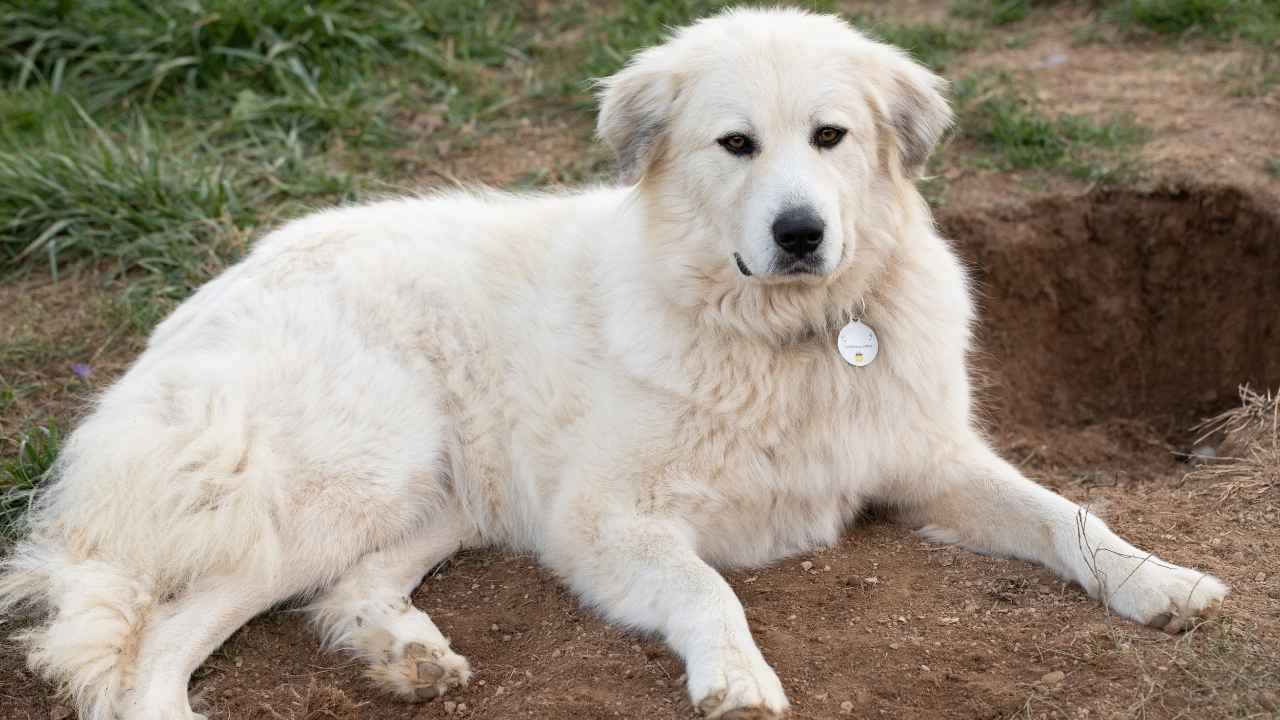
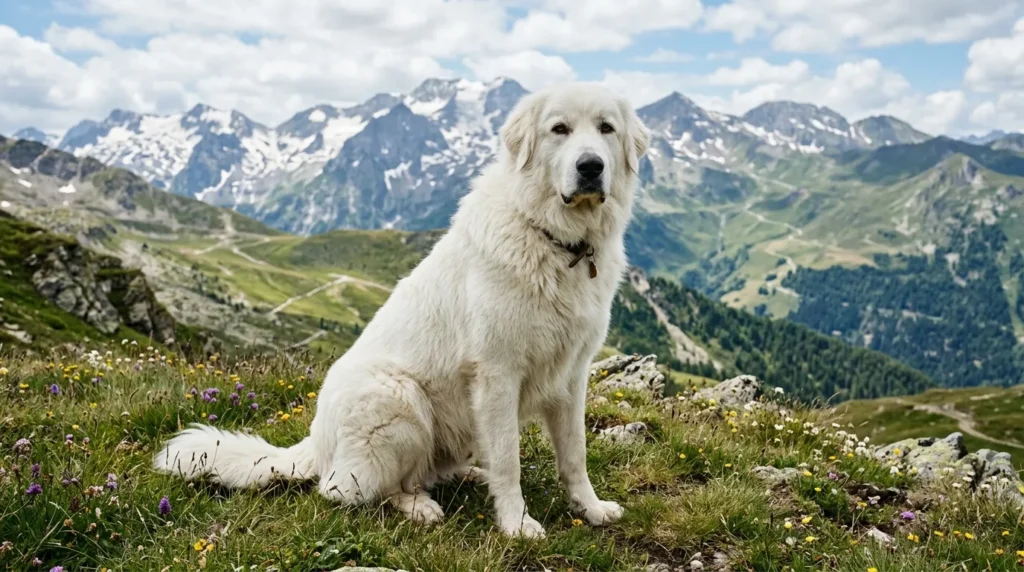
The Great Pyrenees is a white, thick-coated mountain dog that usually stands about 25 to 32 inches tall. Males commonly weigh 100 pounds or more. They are bred for endurance, not speed, with a sturdy frame, a plumed tail, and that serious BUT calm expression.
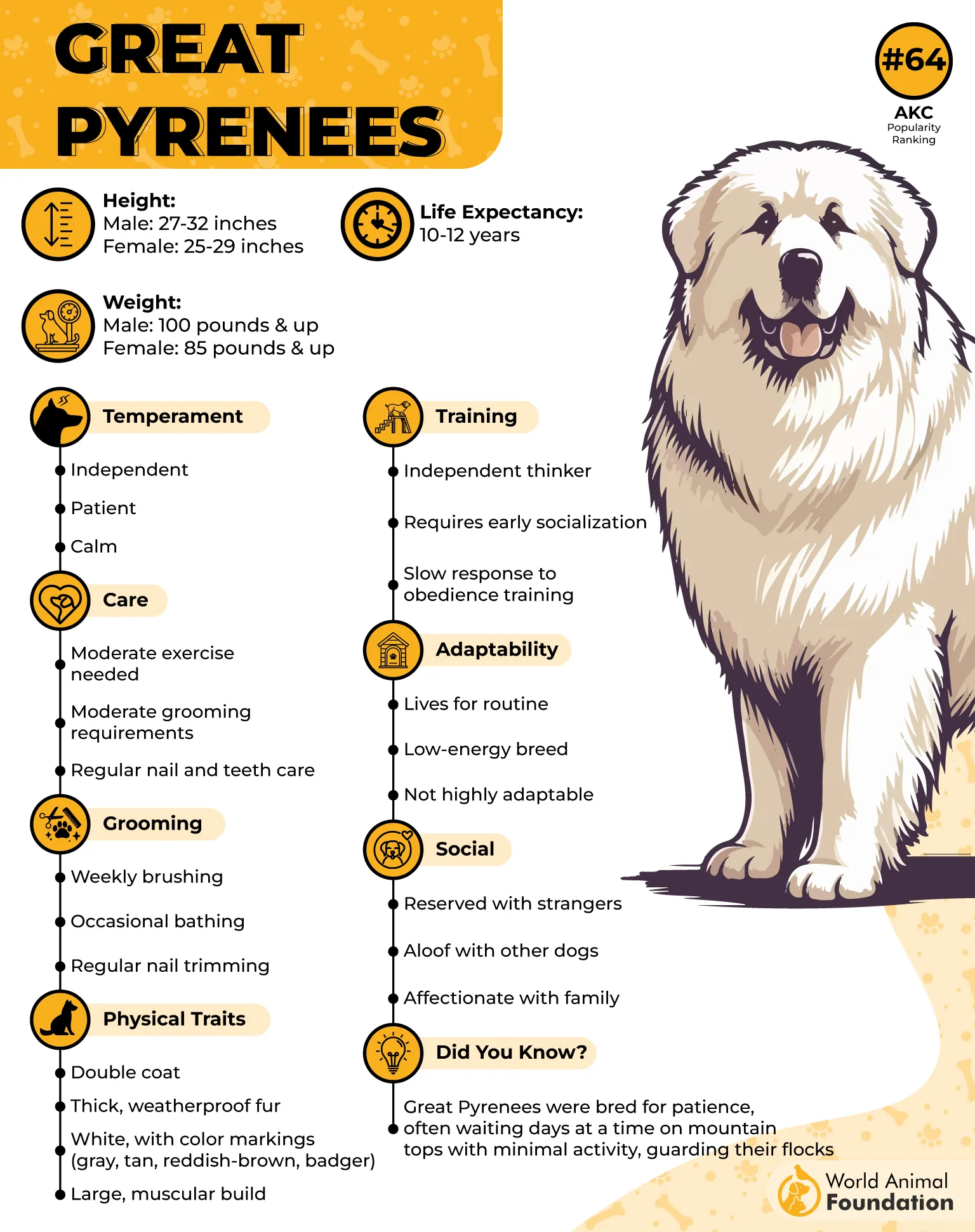
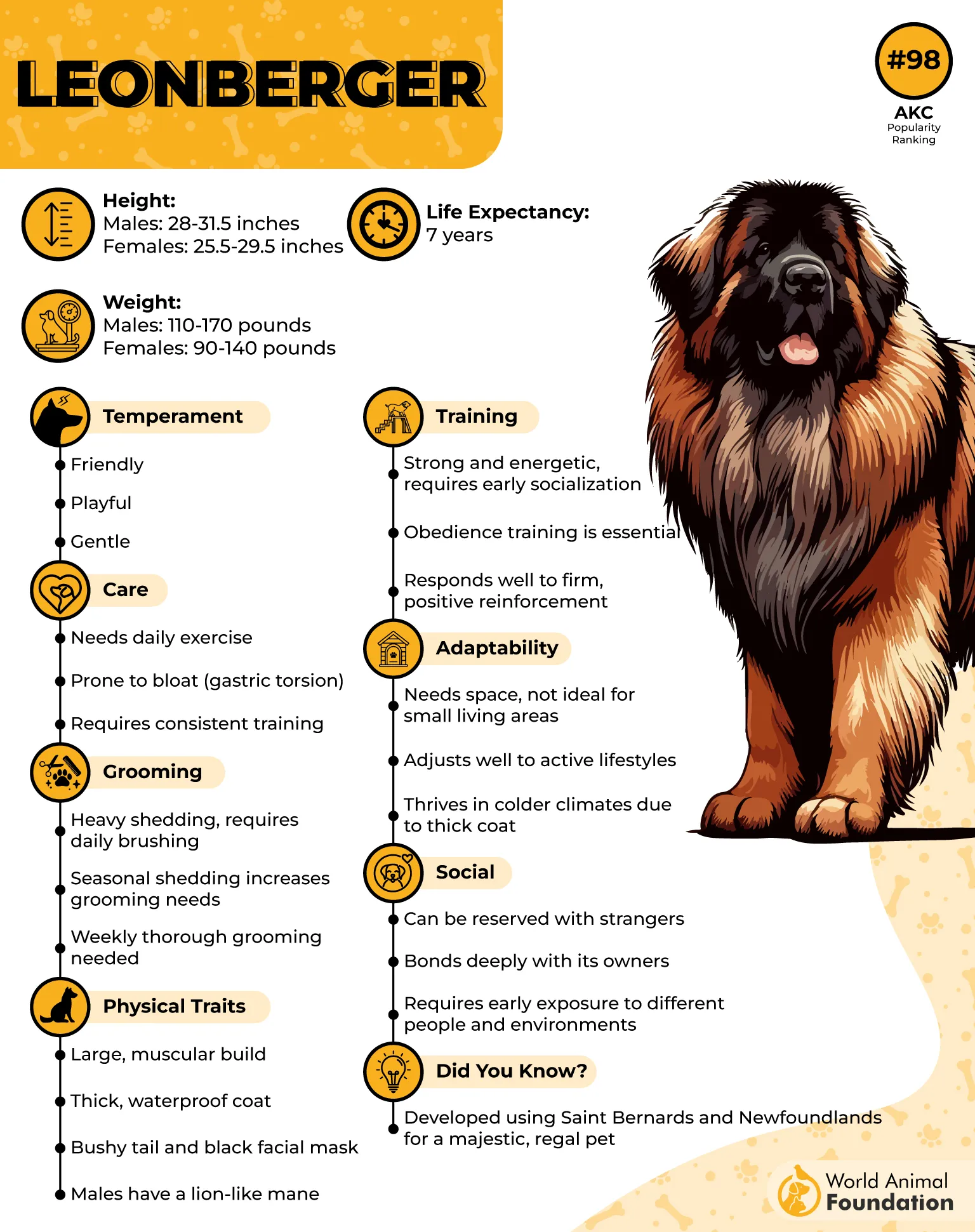
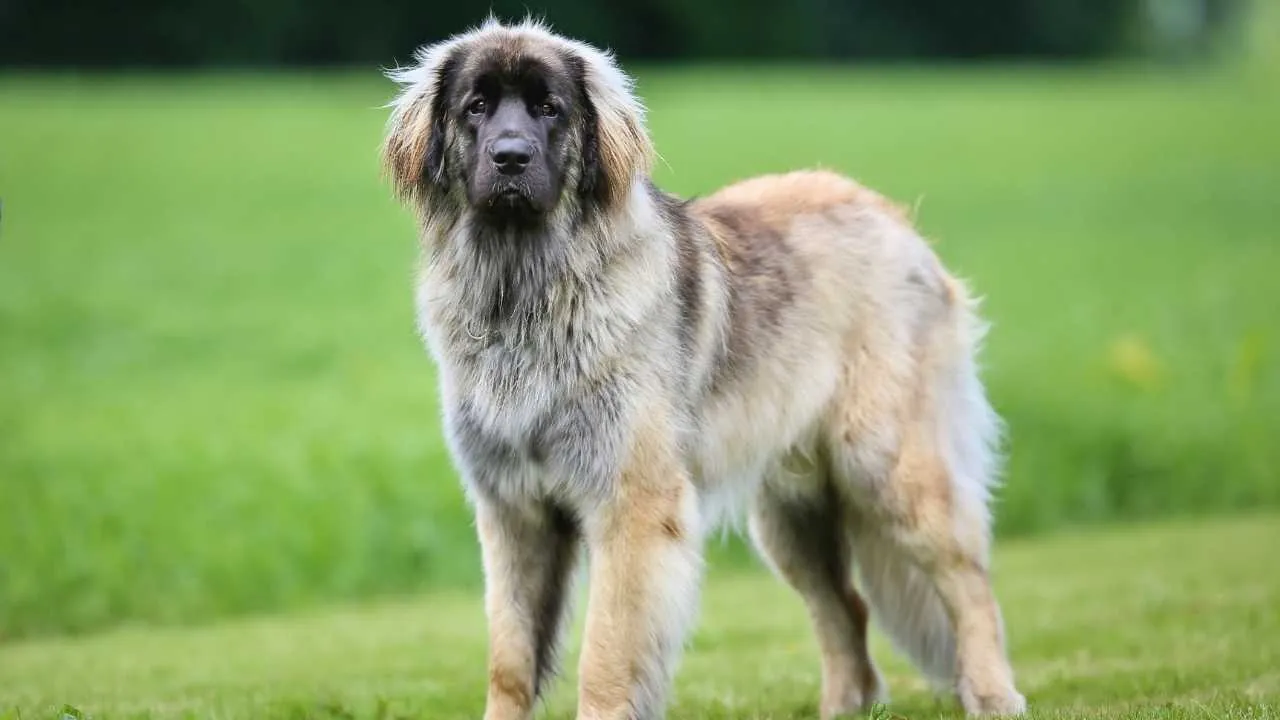
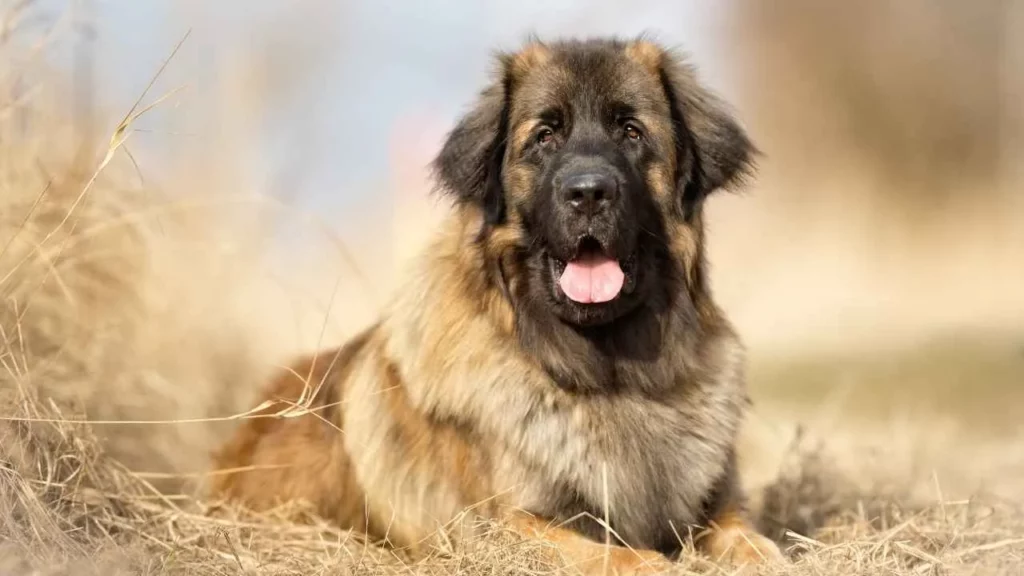
According to PetMD, the Leonberger runs even larger. Males can reach about 31 inches at the shoulder and weigh anywhere from 90 to 170 pounds. YIKES!! Those are some big dogs. Females are a bit smaller, but still hefty. Their coats come in shades of gold, red, and sand, with a dark mask on the face.
And that mane… Male Leos wear it proudly. It is a big part of the lion-like look.
BOTTOM LINE!
The Pyr looks like a snowdrift. The Leonberger looks like a lion.
Both these large dogs have MASSIVE size and real strength. So please don’t expect either one to politely stay off the furniture.
Temperament and Personality
This is where the two really split.
Great Pyrenees dogs are calm, patient, and deeply loyal to their family members. These mountain dogs are also a little aloof with strangers. They will warm up to new people eventually, but on their own schedule. Honestly, we’d say that is the charm of these beautiful white dogs.
Leonbergers are the opposite. They are affectionate, sociable, and usually described as true “people dogs.” They want to be where you are, in the kitchen, bathroom, under your feet when you are trying to carry laundry, maybe?
Anyway, both have a gentle nature, and both tend to be great with children when properly raised. A Leonberger is usually the bigger goofball. A Pyr is a calm big dog.
Neither one is aggressive by nature. But how they show love is totally different.
Health and Lifespan
Let’s be real for a second. This is the hard part of owning giant breeds.
Big dogs generally live shorter lives than smaller dogs. And these two gentle giants are no exception.
The Great Pyrenees typically lives around 10 to 12 years. The Leonberger usually lives 7 to 9 years. Every pet parent should consider this before bringing a puppy home.
Both breeds can face health challenges like Hip Dysplasia and bloat, which are serious, sometimes life-threatening conditions in deep-chested dogs. According to Hill’s Pet Nutrition, Leonbergers also have some breed-specific concerns, including a nerve disorder called Leonberger Polyneuropathy, plus a higher risk of certain cancers and heart problems.
So WHAT HELPS?
A reputable breeder who health-tests parents. Regular vet visits. A weight that stays lean. And high-quality dog food made for large breeds, fed in smaller meals rather than one big bowl.
Pet parents! TAKE NOTES!
Training and Exercise
A fun twist!
Both breeds are intelligent, but they use that intelligence differently.
Leonbergers are generally eager to please. They respond well to proper training, treats, and a happy voice. Start training them at an early age, stay consistent, and you will get a large dog that enjoys learning.
Great Pyrenees are smart too, genuinely. But they have THAT independent streak. If you ask a Pyr to sit and it doesn’t see the point, well… it might just look at you and nod away. For a while. This breed does best with experienced dog owners with patience and a good sense of humor.
Early socialization is important for BOTH. Introduce puppies to new people, new places, and other dogs when they are still small enough to carry. Trust us, you don’t want to start this at 100 pounds.
When it comes to exercise, neither dog is a marathon runner. They like moderate, steady activity. A daily walk, some time to explore a safe space, and mental stimulation like puzzle toys or short training sessions.
Leonbergers tend to need a little more regular exercise, and many of them LOVE water. They have webbed feet and have even been used in water rescues.
Pyrs are more of the couch potatoes when indoors. But outside, these guard dogs need a securely fenced yard, because that guarding instinct will send them off to investigate anything suspicious.
Long‑Term Vigilance
This one is about what you will need to keep up over the years, not just in the first few months.
Giant dogs are a long game. Joint care, weight control, and grooming are all ongoing jobs. And with a Leonberger especially, vigilance about health becomes part of your routine. Watch for changes in how they move, eat, and breathe.
Great Pyrenees need a different type of vigilance. These dogs are famous for roaming. Fences, gates, and a leash on a walk are non-negotiable, according to the UKC.
And both breeds need people who can spend time with them. These aren’t dogs you leave in the backyard and forget. They want company.
Weather‑Resistant Coat
Both of these dogs have a thick coat, and both are made for cold weather.
The Great Pyrenees has a dense double coat that’s weather-resistant and good at staying clean (Surprisingly!).
Regular brushing, a couple of times a week, keeps it from matting. During seasonal shedding, BRACE yourselves. Shedding hair will end up on everything you own.
The Leonberger also has a water-resistant double coat. It’s longer and a little more work. Plan on brushing a few times a week and more often during shedding season. That mane can tangle, and those feathered legs love to collect burrs and mud.
Hot weather is rough on both. Shade, cool water, and lots of rest are important in the summer. Never shave them, either. That coat helps insulate against heat.
Invest in a good vacuum, seriously. Get two.
Natural Guard Instincts
Alright, this is a big one.
The Great Pyrenees is a livestock guardian. For centuries, these dogs watched over sheep in the mountains, usually alone and at night. That’s why many Pyrs bark after dark. It is not a bug, but job of these livestock guardian dogs.
They are alert and deeply committed to the animals and humans they consider theirs. If you live in a quiet neighborhood, that nighttime barking is worth thinking about. Plus, they have a super protective nature.
Leonbergers protect, too. But their nature is soft. They will alert you to strangers and prefer to stand between you and trouble. But they are much more likely to greet a visitor with a wagging tail than a stern stare. They are guardians by size, not by obsession.
One dog patrols the perimeter (or a large yard) at 2 a.m.
The other dog wants to know if you like giving belly rubs.
Conclusion
So, Great Pyrenees vs. Leonberger. Which fluffy giant takes the crown?
Honestly, neither. It comes down to compatibility. Both are powerful dogs.
If you have space, a fenced yard, and patience for an independent thinker who takes guarding seriously, the Great Pyrenees could be your match. They are calm, loyal, and happiest keeping watch over their family.
If you want a social companion who loves being part of everything, and you are ready for a grooming routine and a shorter lifespan, the Leonberger might be your dog.
Do your homework, meet the breed, talk to breeders and owners, and be honest about your lifestyle.
Because either way, you get a best friend with an affectionate nature. A gentle giant. A dog that will fill your home with fur, drool, and love.
A very, very large amount of it.
