




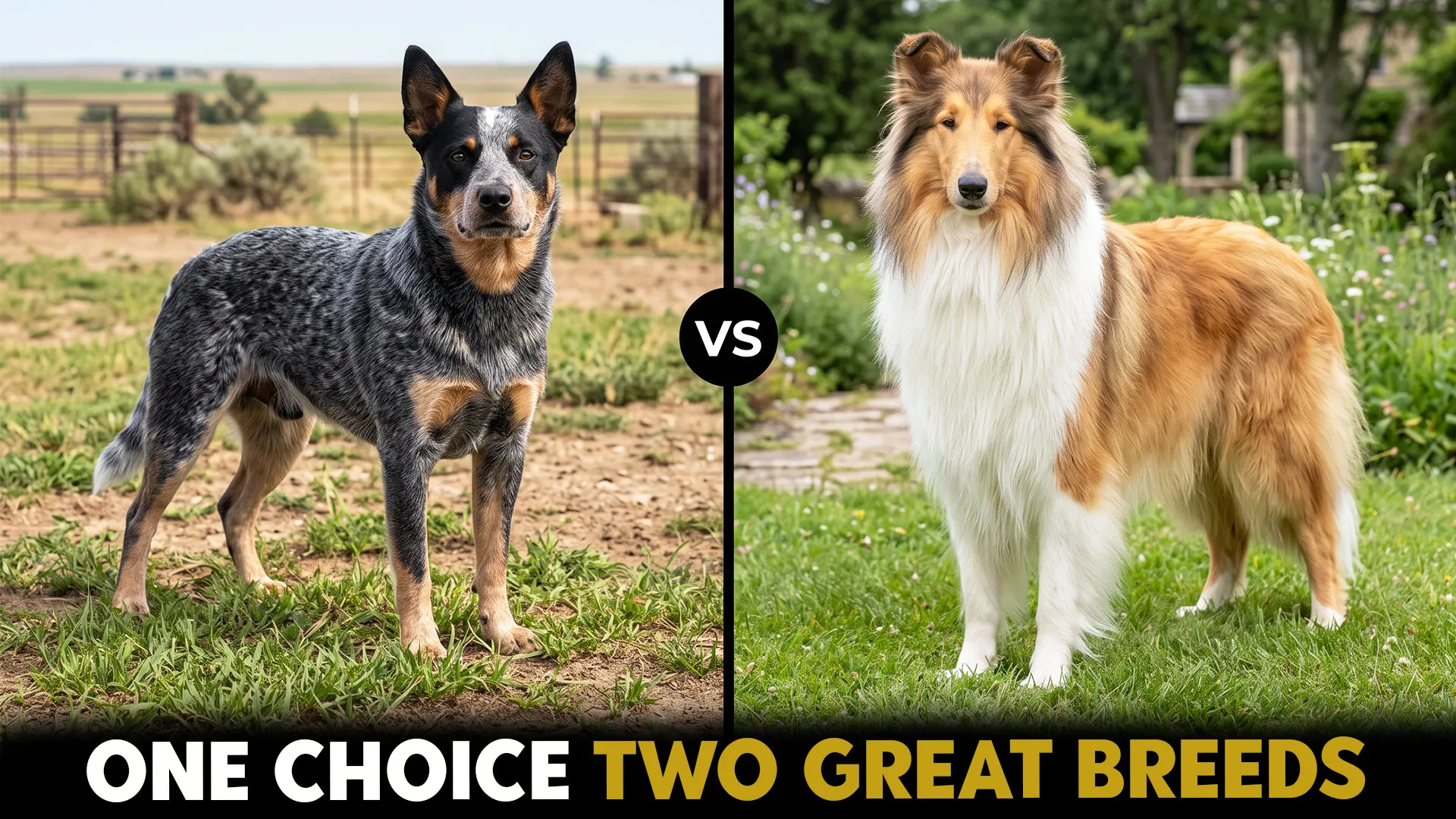
Picture two working dogs standing side by side on an Australian cattle station. One is low, dense, and staring down a steer twice its size. The other is lean, quick, and already circling the herd before anyone gives a command.
That contrast sits at the heart of this breed comparison. The Australian Cattle Dog and the Collie both come from a herding dog breed lineage, yet they solved the same problem in completely different ways.
One was built for grit on rough terrain, bred to nip at heels and hold its ground against livestock. The other grew into a gentler, more social companion, the kind Queen Victoria herself welcomed into royal life.
Both breeds rank among the most intelligent dogs around, and both demand real exercise, mental stimulation, and proper care from their owners. Neither one suits a hands-off lifestyle.
What follows breaks down origins, build, temperament, training, grooming, and health side by side, section by section, so you can see exactly where these two herding dogs overlap and where they part ways entirely.
Australian Cattle Dog vs. Collie Dog Breeds: Fascinating Facts
1. Origins & Purpose
What happens when ranchers in 19th-century Australia need a herding dog breed tough enough for scorching outback terrain? Breeders crossed dingoes with collies and other working stock to build the Australian Cattle Dog, a breed the American Kennel Club later officially recognized. The result was a compact dog built purely for driving cattle across rough terrain.
Collies trace their roots to Scotland and northern England, where farmers relied on strong herding instincts to move sheep across open hillsides. Queen Victoria fell for the breed in the 1860s, and that royal attention pushed Collies out of the fields and into family homes. The shift from working farms to companion dogs started right there.
Both breeds share a livestock background, yet their purposes split early. The Cattle Dog stayed a specialist bred for grit on rough terrain. The Collie grew into a generalist suited to farms, families, and everything in between.
2. Size & Physical Build
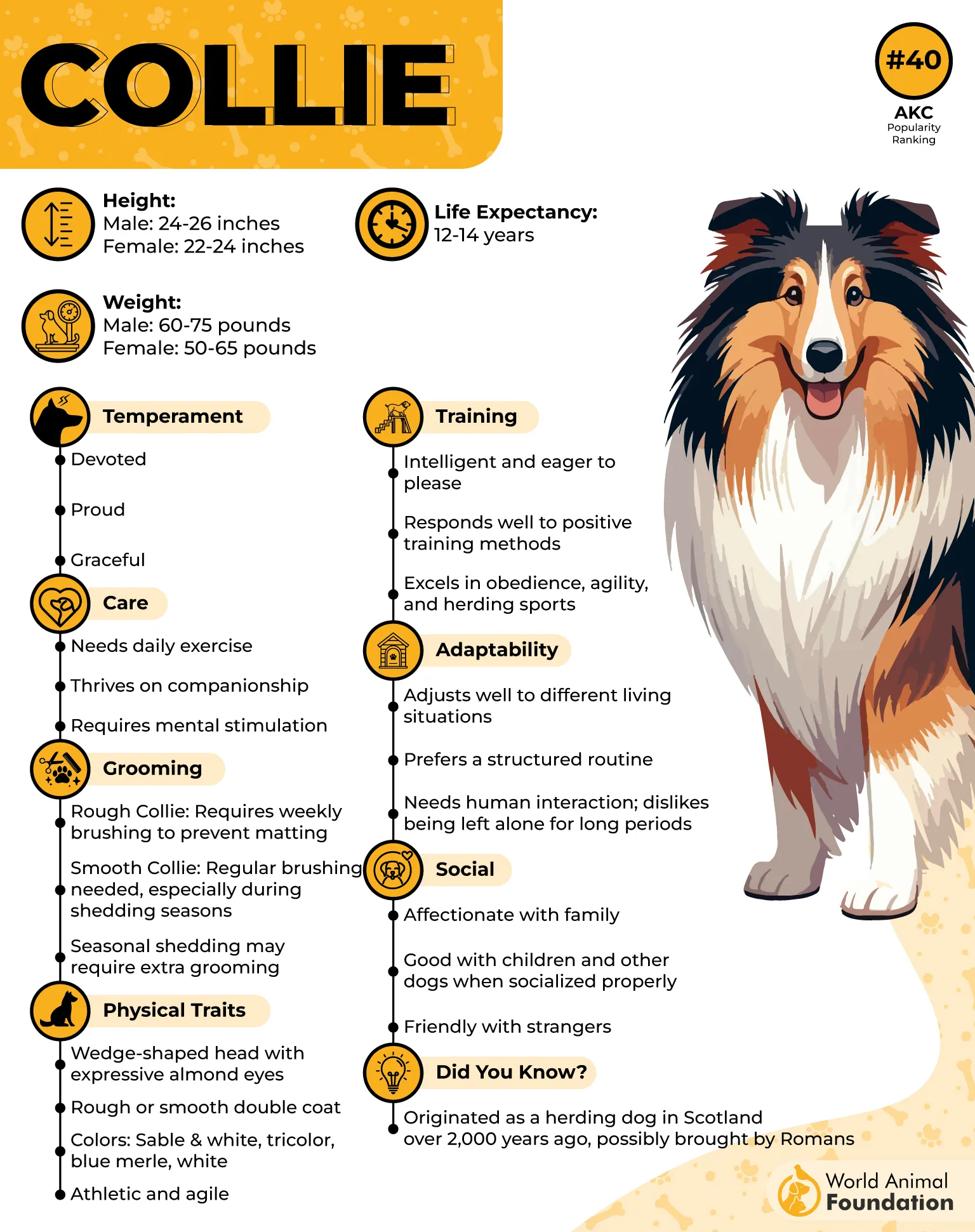
Size tells you almost everything before you even meet either dog. A full-grown Australian Cattle Dog stands 17 to 20 inches at the shoulder and weighs 35 to 50 pounds, built low and dense. A Collie runs taller and leaner at 22 to 26 inches and 50 to 75 pounds.
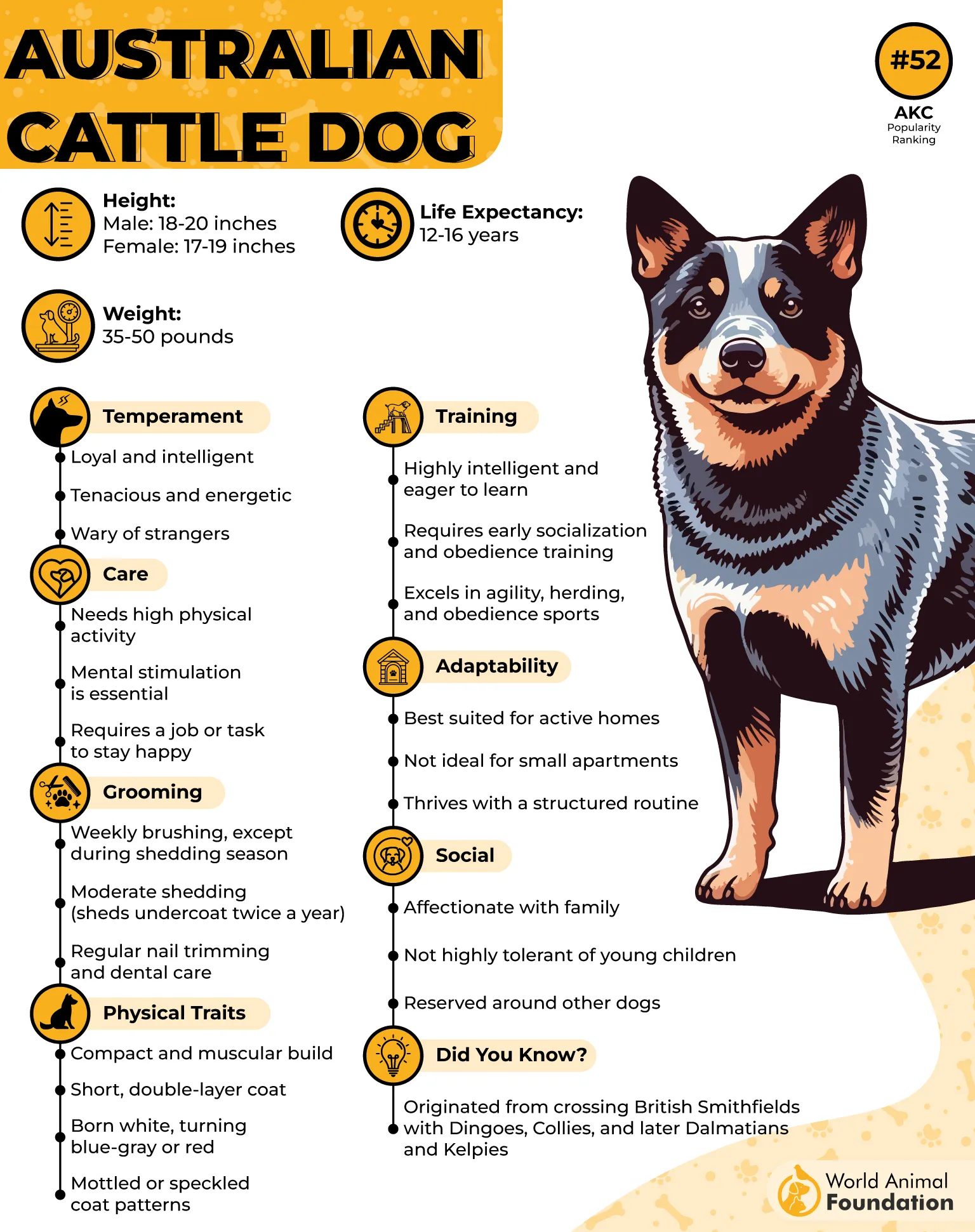
Here is how the two compare at a glance:
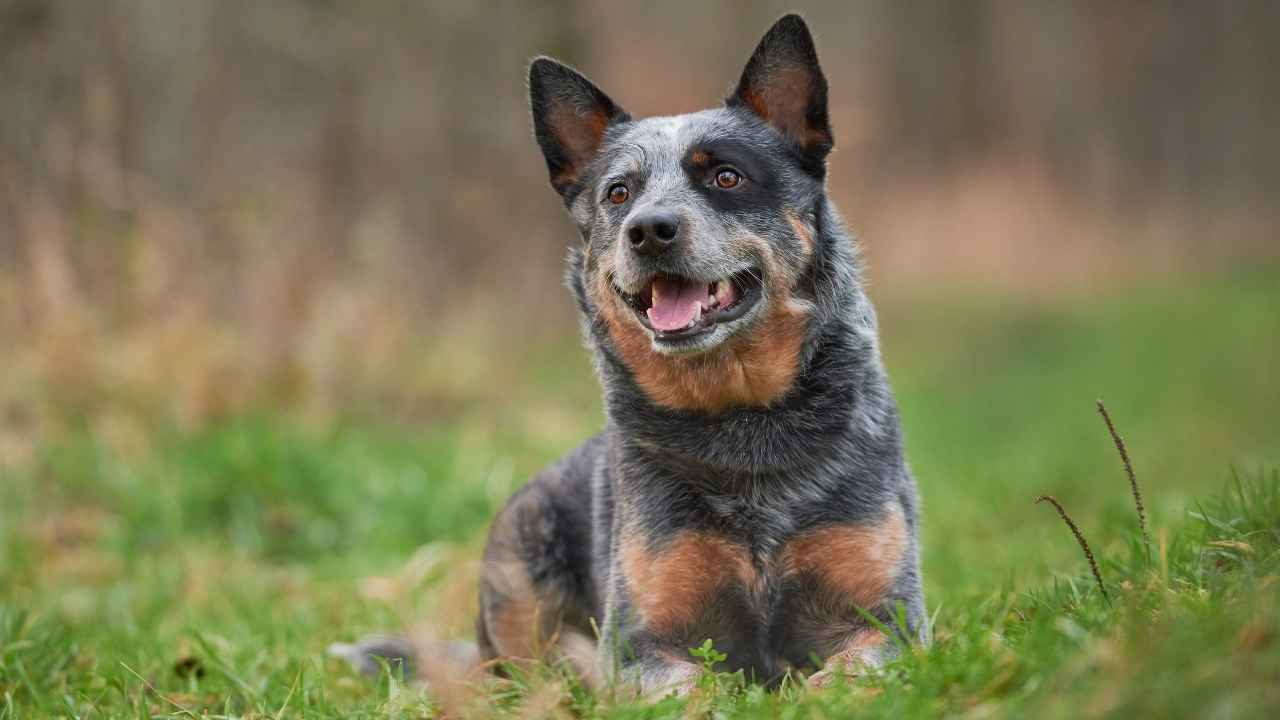
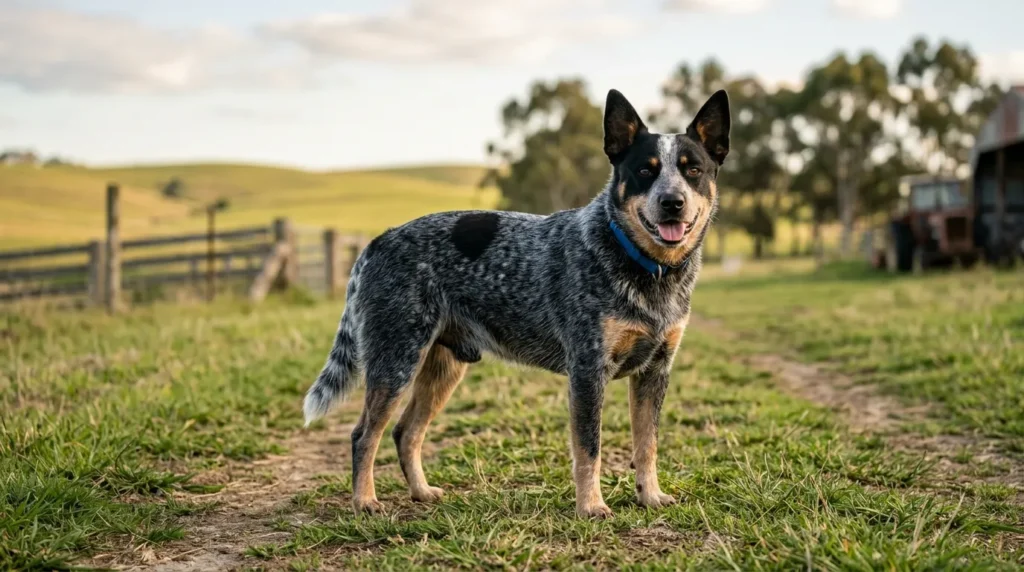
Australian Cattle Dog: Compact, muscular frame, pricked ears, a blue or red mottled coat
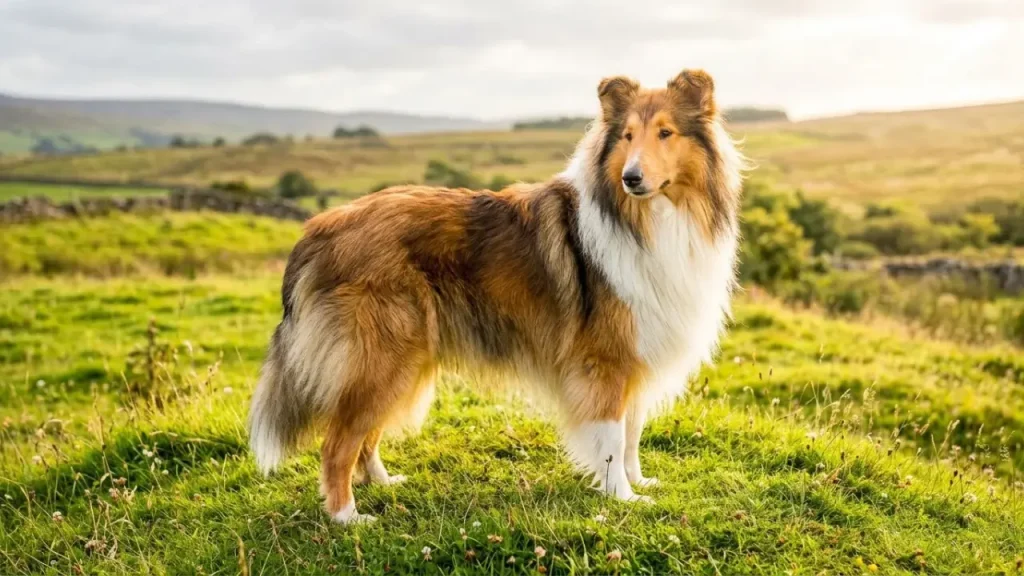
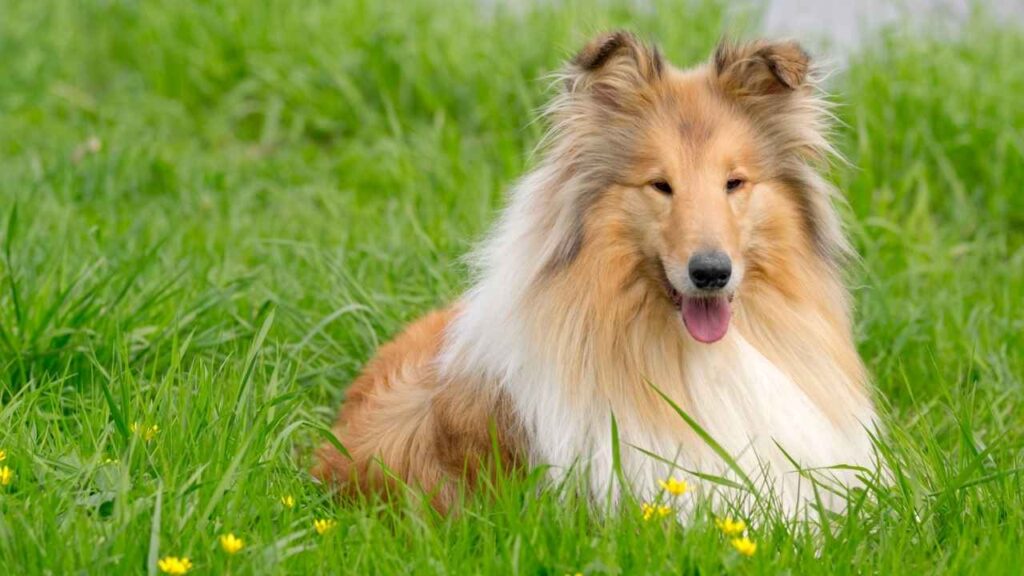
Collie: Longer legs, a feathered tail, a narrow head with semi-erect ears
The Cattle Dog carries weight low for leverage against livestock twice its size. The Collie carries height and reach for covering open pasture at a run. Neither build is superior; they are simply shaped for different jobs on the farm.
3. Temperament & Personality
One trait surprises new owners more than any other: a Cattle Dog left under mental stimulation for a single afternoon may start herding the kids, the cats, or whatever moves. This breed bonds fiercely with one family and can be wary of strangers until properly introduced. Energy without an outlet quickly turns into mischief.
Collies lean gentler and more eager to please, which has made them great family dogs for generations. They read human emotion closely and often shadow their favorite person from room to room. Children, other pets, and visitors generally find Collies far more welcoming on first meeting.
Both breeds need real engagement, not just a yard to wander in. A Cattle Dog thrives on a job, even a pretend one. A Collie thrives on closeness, proving that intelligent dogs still need very different kinds of attention.
4. Exercise & Energy Levels
Sixty minutes is the bare minimum for either of these breeds, and neither one will thank you for stopping there. The Australian Cattle Dog carries famously high energy levels, often needing 60 to 90 minutes of serious physical activity daily, split between a good run and structured tasks. Without that outlet, destructive habits show up fast.
Collies also need strong daily output, and PetMD notes that at least an hour of exercise supports both body and mind in this herding dog breed. Fetch, agility courses, and long walks on varied, rough terrain all work well.
A tired Cattle Dog is a manageable one. A bored Collie gets creative in ways owners rarely enjoy. Proper care for both breeds means treating exercise as essential, not optional.
5. Training & Intelligence
Smart does not always mean easy, and that is the truth with both. Collies rank among the most trainable herding dogs around, picking up new commands in a handful of short sessions when positive reinforcement is used consistently. Their eagerness to please makes obedience work feel almost effortless.
The Australian Cattle Dog is just as intelligent, arguably more so, but it questions instructions rather than following blindly. Highly skilled handlers lean on short, varied sessions of 10 to 15 minutes to keep this breed from getting bored or stubborn. Consistency matters more than repetition here.
Both breeds respond best to firm, kind guidance rather than harsh correction. A Collie trains like a willing student. A Cattle Dog trains like a sharp negotiator who wants a reason.
6. Coat Maintenance
Twice a year, owners of either breed notice fur appearing everywhere at once. The Australian Cattle Dog carries a short, dense double coat that sheds moderately through the year and blows out seasonally, needing a brush once weekly and daily during peak shedding. Grooming needs stay fairly low outside those windows.
Collies carry a longer double coat, and that coat needs brushing two to three times a week to prevent matting, with daily attention during the heavier seasonal blow. Smooth-coated Collies need noticeably less upkeep than their rough-coated relatives.
Anyone sensitive to allergies should plan around both breeds, since neither is considered hypoallergenic. Regular brushing keeps loose fur off furniture and floors. Grooming here is about routine, not difficulty.
7. Health & Lifespan
How long can you expect to share your life with either of these dogs? The Australian Cattle Dog typically lives 12 to 16 years, among the longer spans for an active, mid-sized breed, as noted by VCA. Common health issues include hip dysplasia, progressive retinal atrophy, and a higher rate of congenital deafness tied to the breed’s coloring.
Collies generally live 12 to 14 years and face their own set of prone conditions, including hip dysplasia and progressive retinal atrophy. Regular vet checkups catch most of these issues early, especially eye conditions specific to the breed.
Puppies from responsible breeders typically run 800 to 1,500 dollars for either breed, with healthy lineage and early screening driving the higher end. Proper care, steady weight management, and routine screening keep both breeds healthy well into their senior years. A well-matched owner makes all the difference in that outcome.
Conclusion
So which herding dog breed actually suits your life, the Cattle Dog or the Collie? If your days involve rough terrain, livestock, or a job that needs doing, the Australian Cattle Dog brings grit, high energy levels, and a fierce one-person loyalty that rewards an active owner. It is not a breed for apartment living or long stretches alone.
The Collie fits more households with ease, blending herding instincts with genuine warmth toward children, strangers, and other pets. It still needs a solid hour of exercise and real mental stimulation daily, but its temperament forgives small mistakes a first-time owner might make.
Neither breed is the easy choice, and that is the point. Both are smart, loyal, and built for purpose rather than decoration. Match the breed to your pace of life, commit to proper care and regular vet checkups, and either dog will reward you for years.
