





Both Australian Cattle Dogs and Labrador Retrievers are medium-sized, athletic dogs. They share high energy levels and unwavering loyalty to their humans, but they differ quite a bit in looks and behavior.
Australian Cattle Dogs, also known as Blue Heelers or Queensland Heelers, were primarily developed as herding dogs. Labrador Retrievers, on the other hand, were originally bred in Newfoundland, Canada, to assist fishermen, and were later used as hunting dogs.
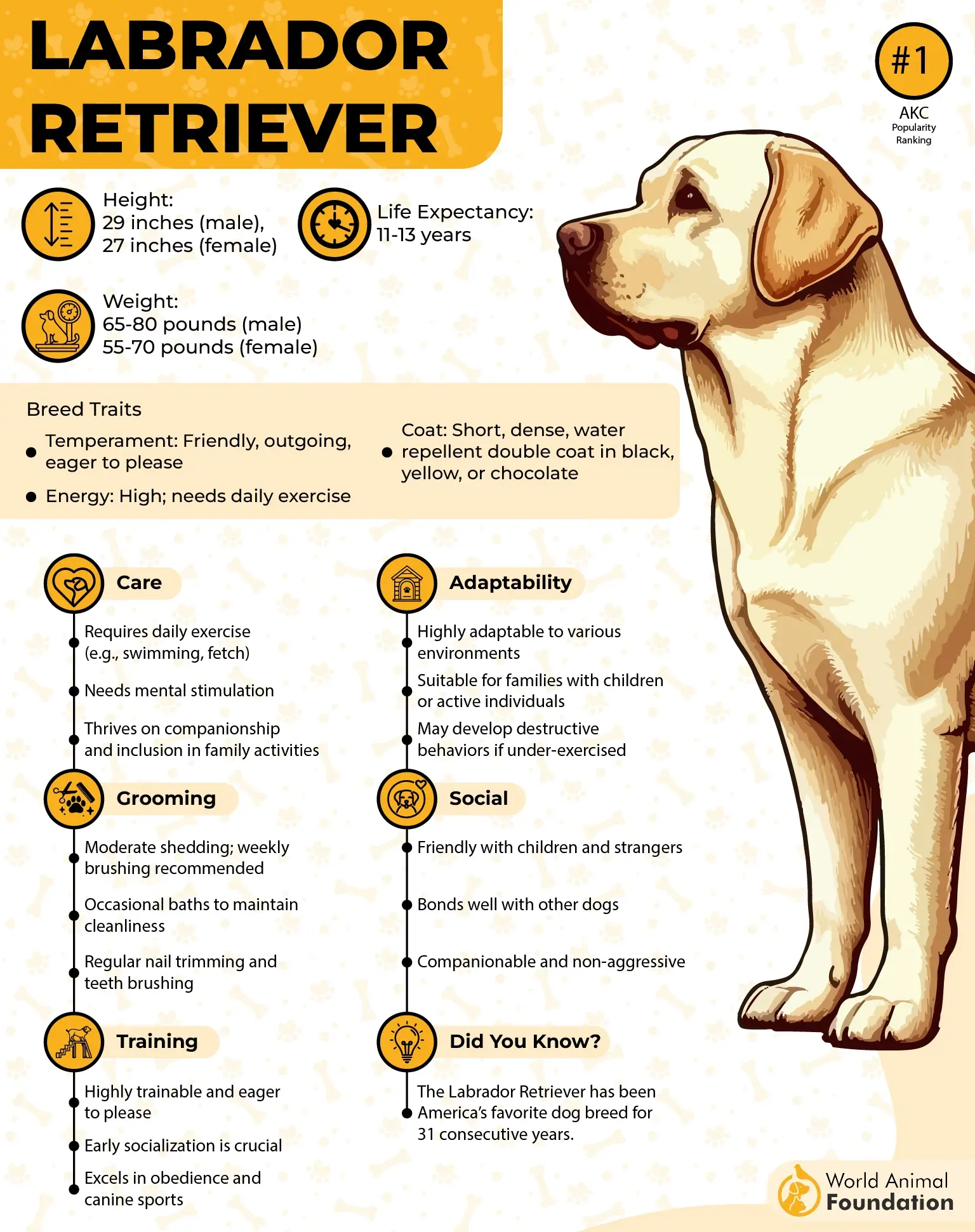
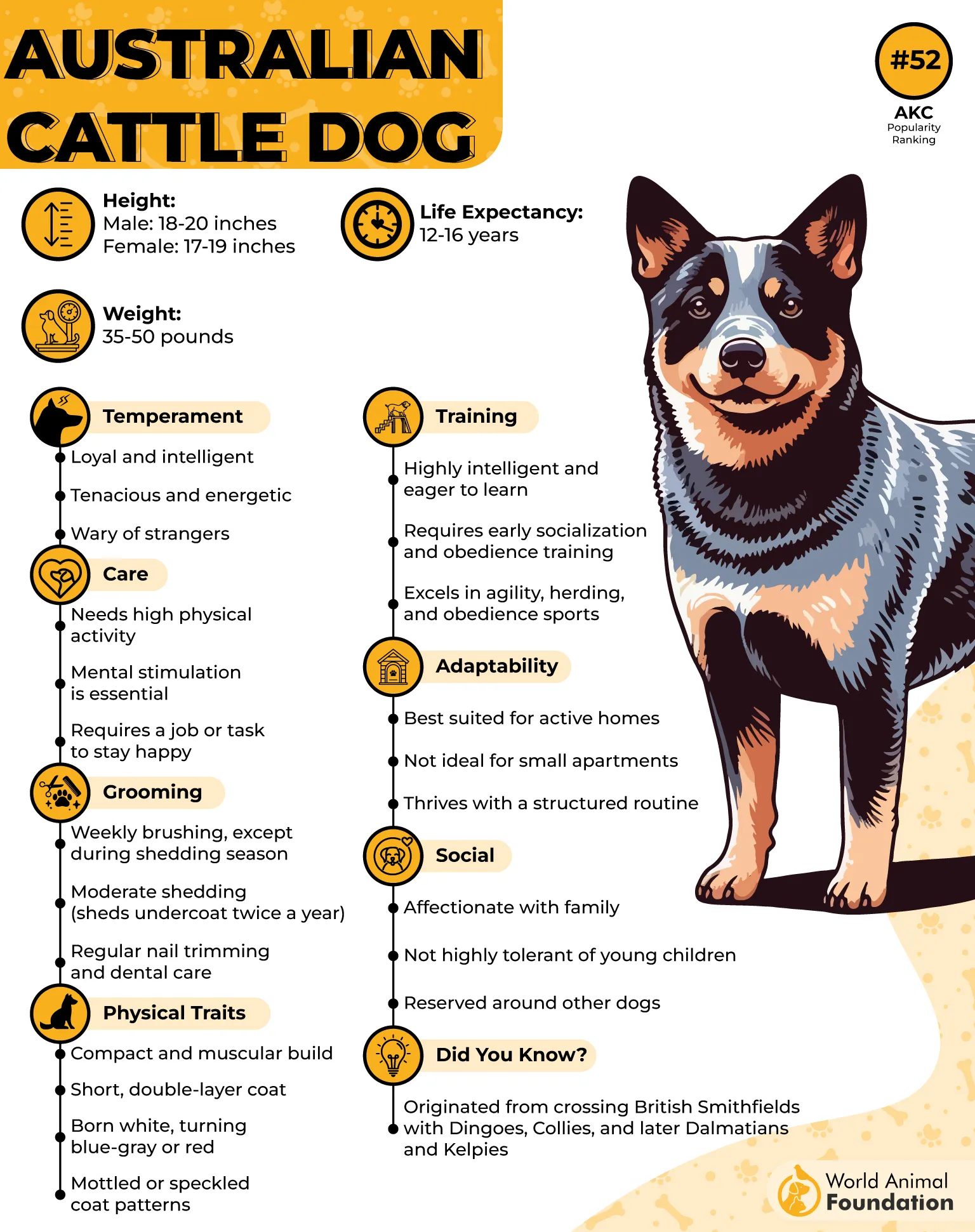
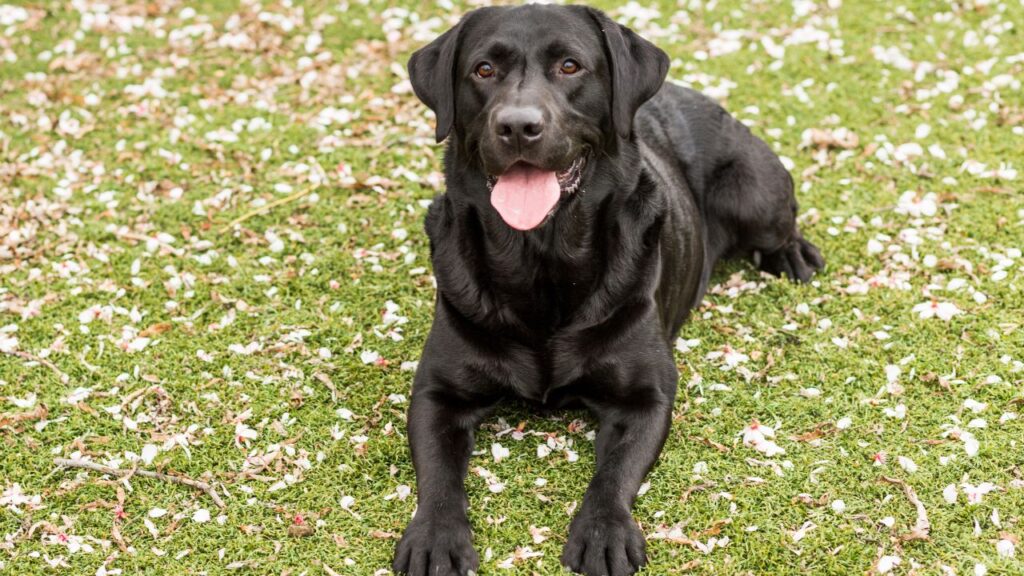
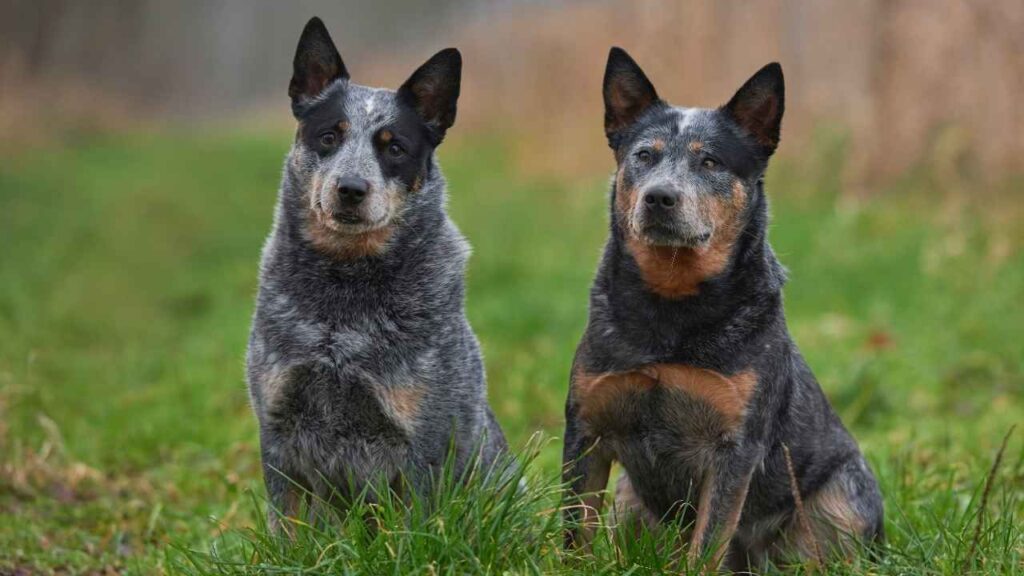
Heelers are hardy, well-muscled dogs with alert expressions, distinctive coat colors, and pricked ears. Labs are also high-spirited and muscular, with triangular, floppy ears and a friendly personality.
Here are the key differences between the two breeds.
Australian Cattle Dog vs. Labrador Retriever Dog Breeds
Australian Cattle Dogs and Labrador Retrievers are both energetic, intelligent breeds, but they differ in temperament and daily needs. Comparing their key traits can help you choose the better companion for your home and lifestyle.
Physical Features
Labrador Retrievers and Australian Cattle Dogs are both medium-sized breeds with muscular, athletic builds, but some major differences set them apart.
Male Labs stand 22.5 to 24.5 inches tall at the shoulder and weigh 65 to 80 pounds. Females are a bit smaller, standing 21.5 to 23.5 inches tall and weighing 55 to 70 pounds. Either way, Labs are strong dogs with solid legs.
They’re easy to recognize by their broad heads, wide muzzles, and bright eyes. Their thick, tapering “otter tail” and webbed feet help them swim with ease.
Australian Cattle Dogs are smaller than Labs. Males stand 18 to 20 inches tall at the shoulder, while females average 17 to 19 inches. Both sexes typically weigh between 35 and 50 pounds.
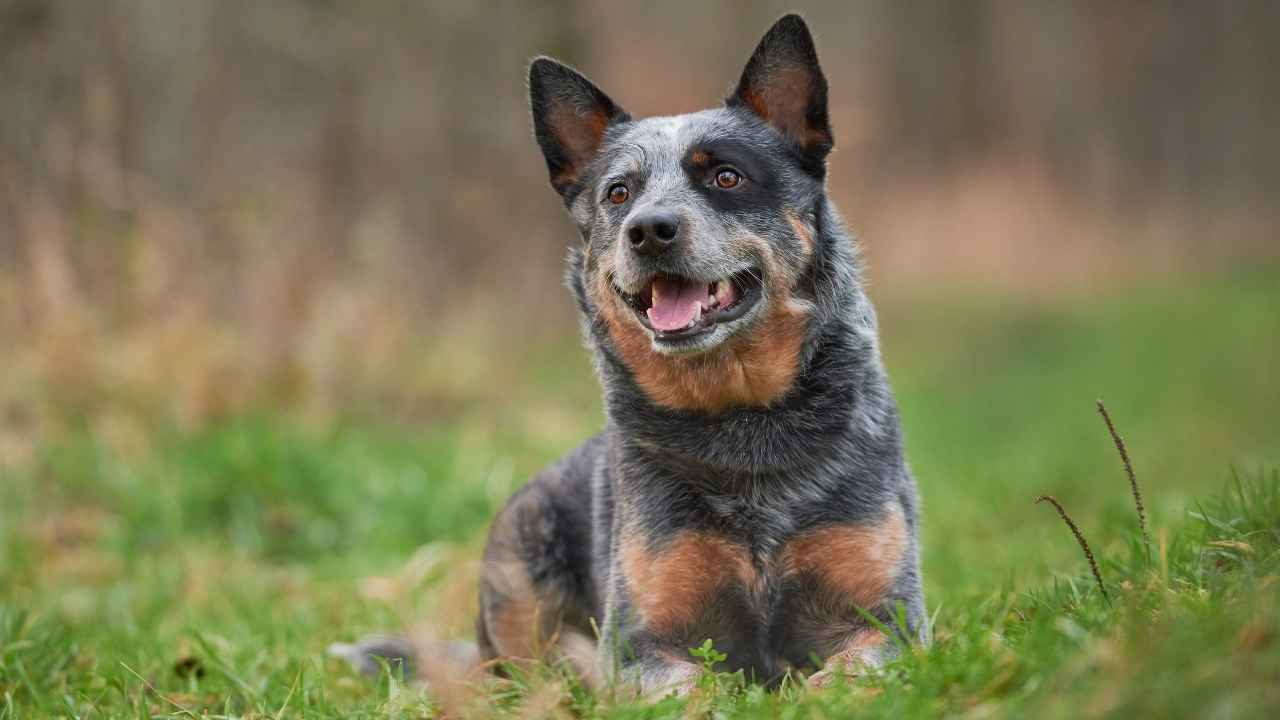
Their pointed ears and angular faces are often said to echo their dingo ancestry. These well-muscled herders have dark brown eyes and black noses.
Speed & Strength
Labrador Retrievers and Australian Cattle Dogs are both agile, strong dogs, but they differ in speed and strength.
Labs are sturdy dogs that can run at around 18 to 20 mph. These versatile pups typically take about 5 to 5.5 seconds per leg in flyball. They have more raw physical strength, but their wider chests and heavier bodies make them a bit slower.
Australian Cattle Dogs are faster, reaching speeds of roughly 25 to 30 mph. They’re known for their agility, strength, and endurance. WebMD notes that they have plenty of strength and stamina, and they can cover long distances over rugged terrain while herding livestock.
Exercise & Energy Levels
Labrador Retrievers and Australian Cattle Dogs are both working dogs with boundless energy for a variety of tasks. When they’re off the clock, they still need regular exercise to burn off the extra steam.
The American Kennel Club describes Labs as exuberant, energetic dogs that need plenty of exercise every day, along with physical and mental enrichment to stay happy. Plan on at least an hour and a half to two hours of daily activity.
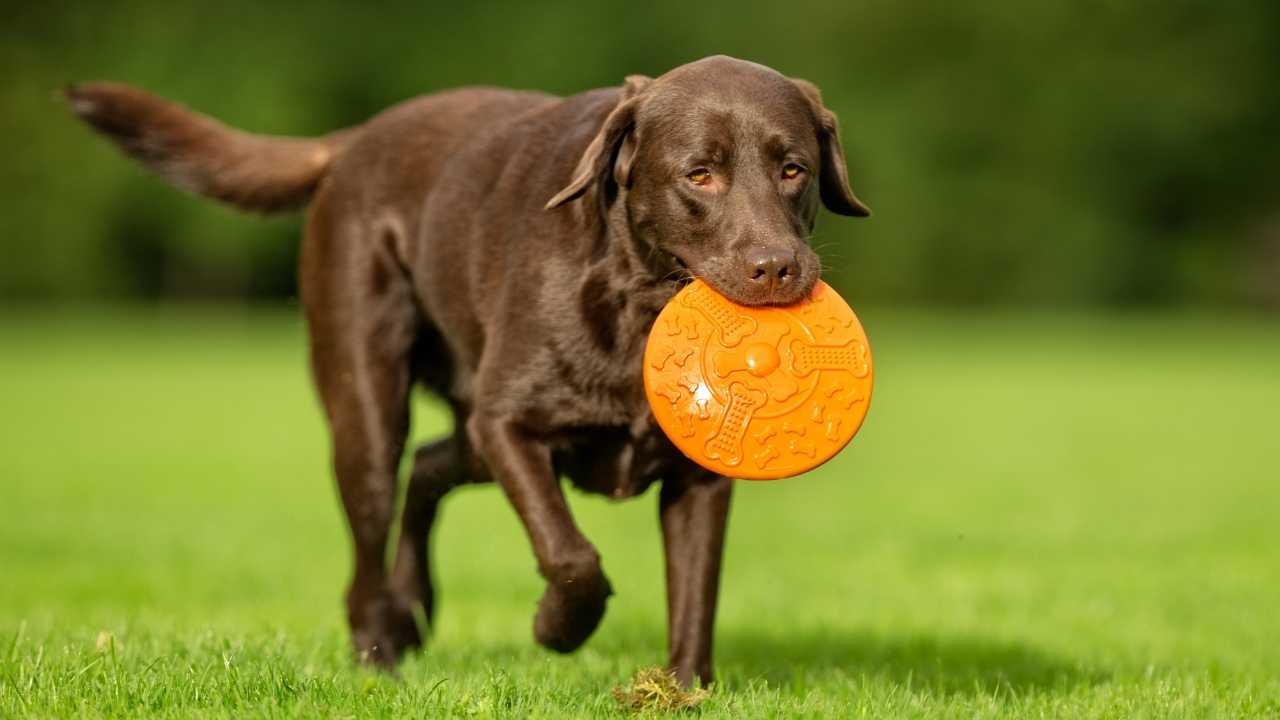
Swimming and hiking are great ways to exercise both their minds and bodies. Labs also excel at many dog sports, including dock diving, tracking, agility, and obedience.
As herding dogs, Australian Cattle Dogs are very high energy too, and they’re often a bit more energetic than Labs. Expect to give them more than two hours of daily exercise for physical and mental stimulation.
Long sessions of running, jogging, frisbee, or fetch are great ways to channel that extra energy. Dog sports like agility and obedience are another good outlet.
Training & Intelligence
Labrador Retrievers and Australian Cattle Dogs are both incredibly smart and rank among the top ten on the list of smartest dog breeds in Stanley Coren’s well-known intelligence rankings, which the AKC often references. Labs edge out Heelers on that list, but both are quick learners.
Labs rank 7th and are known for picking up new commands in just a handful of repetitions. Many can learn well over 200 words and gestures, and they have a knack for understanding simple quantity differences, like noticing when something is missing. Their strong obedience and adaptability, combined with an eager-to-please nature, make them very easy to train. That’s why Labs so often work as guide dogs and search and rescue dogs.
The tenacious Australian Cattle Dog is smart, hardworking, and eager to please, too. PetMD mentions that they’re capable of solving problems on their own. Strong problem-solving skills and a desire to please their humans make them highly trainable.
They can be stubborn at times, though, so they need a gentle but firm hand. Both breeds respond well to positive reinforcement training methods.
Socialization & living environment
Labrador Retrievers are friendly, sociable dogs that make excellent family pets. They don’t like being left alone for long stretches, and they usually get along well with everyone, including other pets and children. Their easygoing personality makes them a great choice for first-time dog owners.
With their high energy levels, Labs are a great fit for active households. They’re very adaptable and can thrive in many types of homes, as long as their exercise needs are met.
Australian Cattle Dogs are known for their strong herding instincts, which often show up as nipping at the heels of children or smaller pets. That can make them a tricky match for multi-pet homes. With proper training and early socialization, though, they can get along with other animals.
Unlike Labs, ACDs have a stubborn streak, which makes them a poor fit for first-time dog owners. They’re better suited to people who can keep up with their high energy levels and exercise needs.
Coat grooming needs
Australian Cattle Dogs and Labrador Retrievers both have short, dense double coats. The fur is water-repellent and helps protect them from harsh weather.
Labs come in yellow, black, or chocolate. Their coats shed a lot, so plan on brushing two to three times a week to keep loose hair under control. Occasional baths help keep the coat and skin healthy.
ACD puppies are born white, and their coats turn blue-gray or red as they grow. Both Blue and Red Heelers may have distinctive mottling or speckling. Their coats don’t have much odor or oily residue, and a quick brushing once a week is usually enough to keep them looking good. Cattle Dogs shed less than Labs, though they blow their undercoat about twice a year.
Health & Lifespan
Labrador Retrievers have a lifespan of about 11 to 13 years. They’re relatively healthy dogs, but there are some potential health issues pet parents should know about. Over their lifetime, Labs may develop ear problems, tricuspid valve dysplasia, centronuclear myopathy, hip and elbow dysplasia, and progressive retinal atrophy (PRA).
Australian Cattle Dogs typically live 12 to 16 years, which is longer than Labs. They’re generally healthy and hardy, but they can still develop certain health problems. ACDs are prone to eye issues, deafness, and orthopedic problems.
Conclusion
ACDs and Labrador Retrievers are both energetic, active dogs with exuberant personalities, but several behavioral and physical differences set them apart. Labs are medium-to-large dogs with yellow, black, or chocolate coats.
Heelers are a bit smaller and instantly recognizable by their speckled red or blue coats. Labs rank higher in intelligence, but ACDs tend to be more energetic because of their herding background.
Thanks to their friendly, kind nature, Labs are a good choice for new pet parents. ACDs, on the other hand, are better suited to experienced handlers because of their stubborn streak and strong herding instincts. Both breeds need proper training and early socialization to grow into well-mannered pets.
