




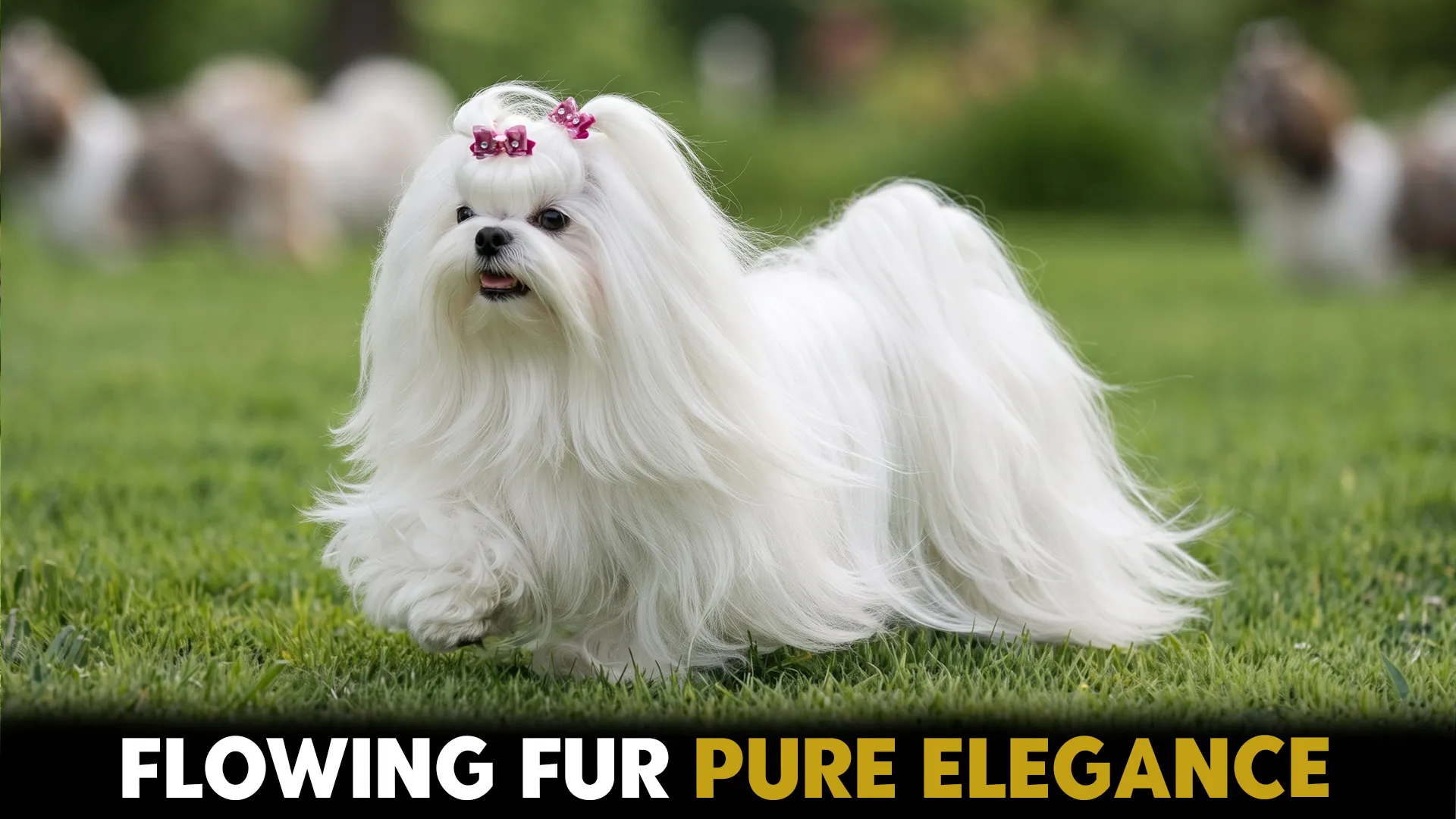
A long coat does not automatically mean a dog will be difficult to live with. That assumption can make people overlook breeds whose grooming needs are manageable with a routine.
Long-haired dogs vary widely in coat texture, shedding patterns, size, and maintenance. Some need frequent brushing because loose hair and tangles build quickly. Others have coats that are easier to manage but still benefit from regular grooming. The same variety appears in their personalities and everyday habits.
A beautiful coat may belong to an energetic dog that needs plenty of activity, a relaxed companion that prefers quieter days, or a highly trainable working breed that enjoys having a job. That is why appearance should be one part of the decision. Your time, home environment, grooming habits, and expectations deserve attention before bringing one home.
The long-haired breeds ahead show just how different these dogs can be, making the search interesting.
Key Takeaways
A beautiful long coat can hide some very different stories, from royal companions to dogs bred for serious work.
The Bolognese was once prized by European aristocrats, while the Bearded Collie developed into an energetic Scottish herder.
The Skye Terrier used its unusual build to reach tight hunting spaces, and the Yorkshire Terrier went from rat catcher to a dog known for its remarkably long hair.
Then there’s the Pekingese with its lion-like coat, the silky Maltese, and the Tibetan Terrier with an unusual role in the mountains of Tibet.
Wonderful Long-Haired Dog Breeds: Find Your Perfect Match
1. Bolognese
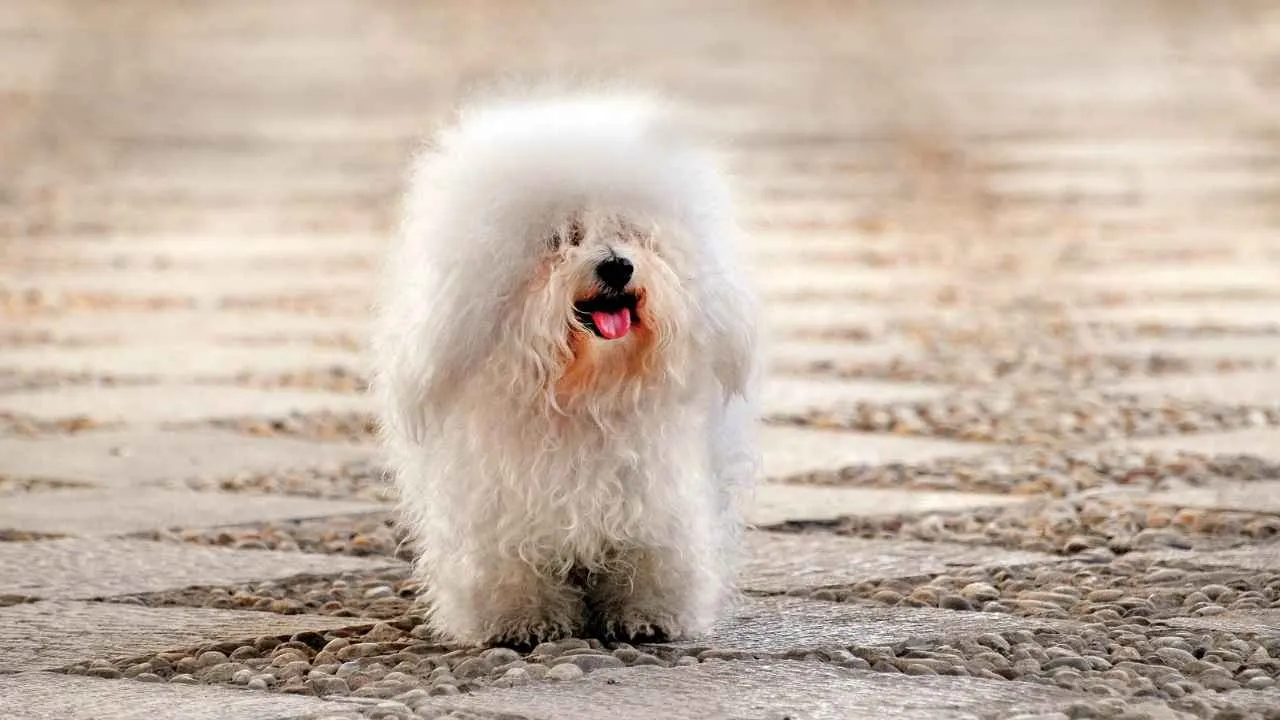
Bolognese is an Italian companion breed linked to Bologna and recorded as early as the 11th and 12th centuries. Its roots are associated with small white Bichon-type dogs from southern Italy and Malta, and it became a prized gift among European aristocratic families.
Made for Close Living
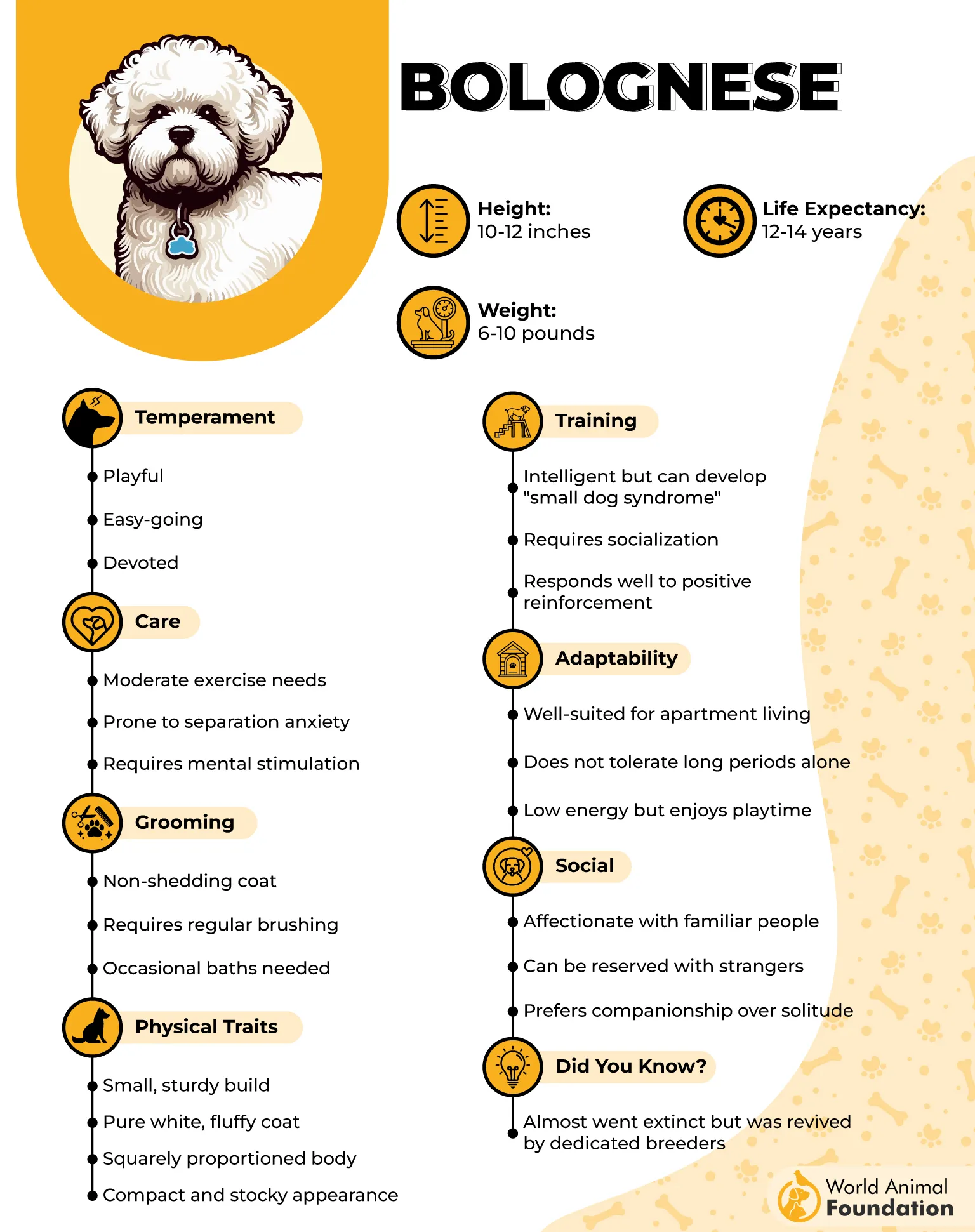
Bolognese suits city life and apartments well, especially for people who enjoy having a small companion nearby throughout the day, as noted by Royal Canin. Its ability to match its person’s activity level also makes it comfortable with quiet routines, lap time, or gentle daily activity.
Its easygoing side also extends to social situations:
Suitable for therapy-dog work
Can alert to unusual activity
Often comfortable around other pets
White Coat, Daily Work
Bolognese has a low-shedding coat, which can appeal to people who prefer less loose fur around the home. Keeping their long white coat neat requires daily brushing, regular bathing, and gentle eye cleaning when rusty or brown tear stains appear.
2. Bearded Collie
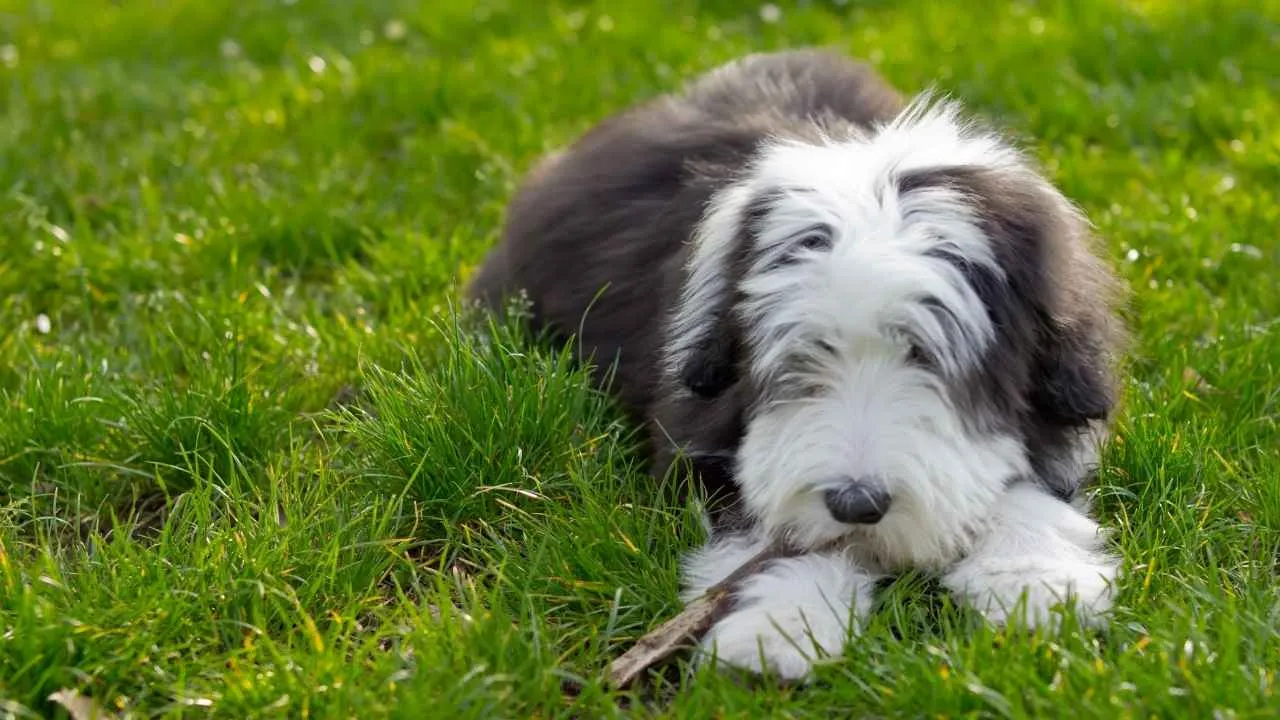
Bearded Collie is linked to 16th-century Scotland, where traders brought Lowland Polish Sheepdogs that impressed local farmers with their strong herding ability. Scottish Sheepdogs were later bred with these dogs, gradually forming the Beardie recognized today, as Omlet reported.
A Shaggy Double Coat
Bearded Collie wears a soft, furry undercoat beneath a long, shaggy topcoat, giving its coat plenty of texture and volume. Its floppy ears are also covered in long hair, with the ear bases lifting when the dog becomes especially alert.
These coat details make the look even more distinctive:
Long hair covers the floppy ears
Soft fur forms the undercoat
Shaggy hair creates the outer layer
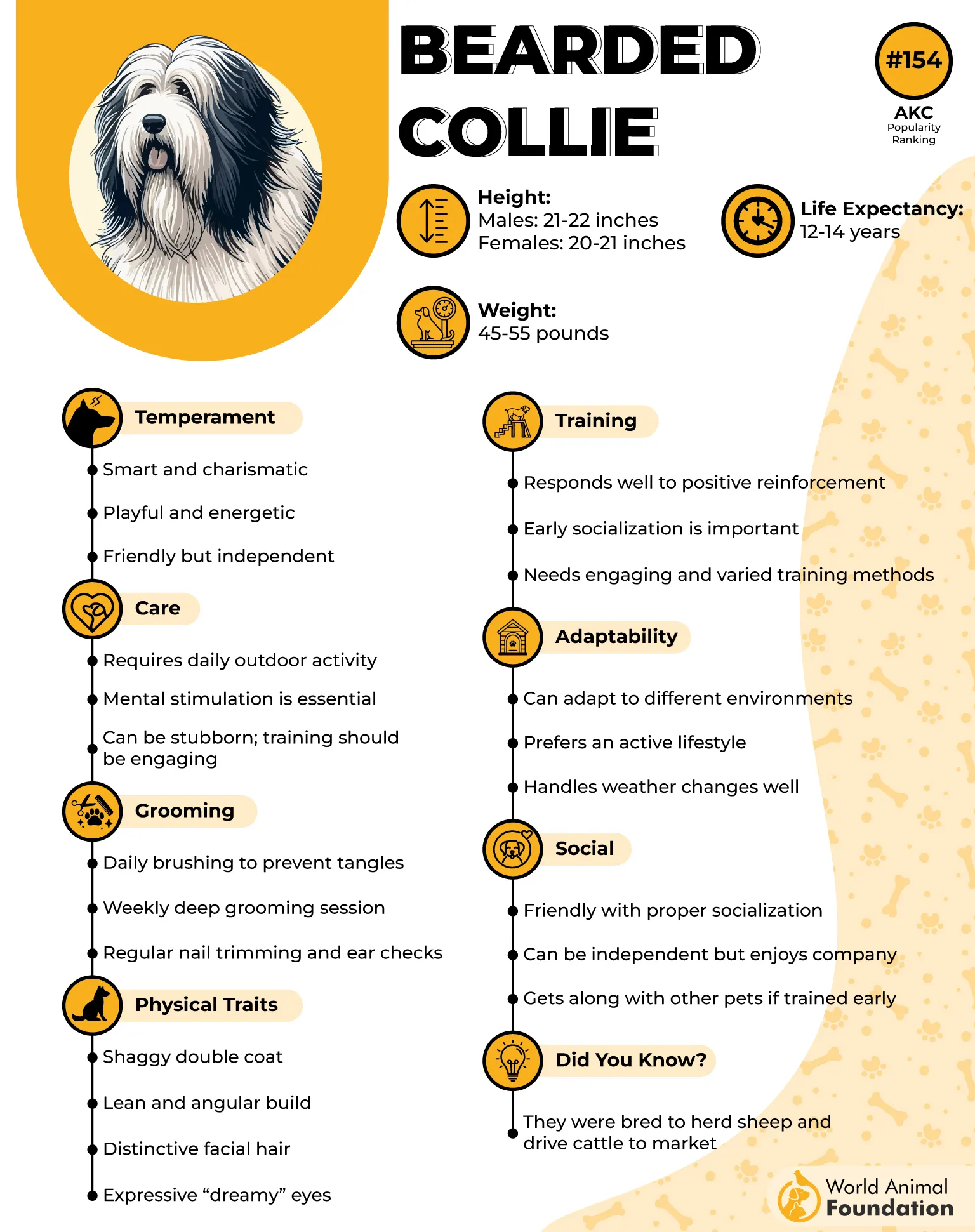
Ready for Action
This shaggy dog brings plenty of energy to everyday life, enjoying pursuits such as chasing, running, hiking, and active play. Training can progress quickly when lessons remain lively, with treats, praise, and play breaks helping reinforce new skills before boredom takes over.
3. Skye Terrier
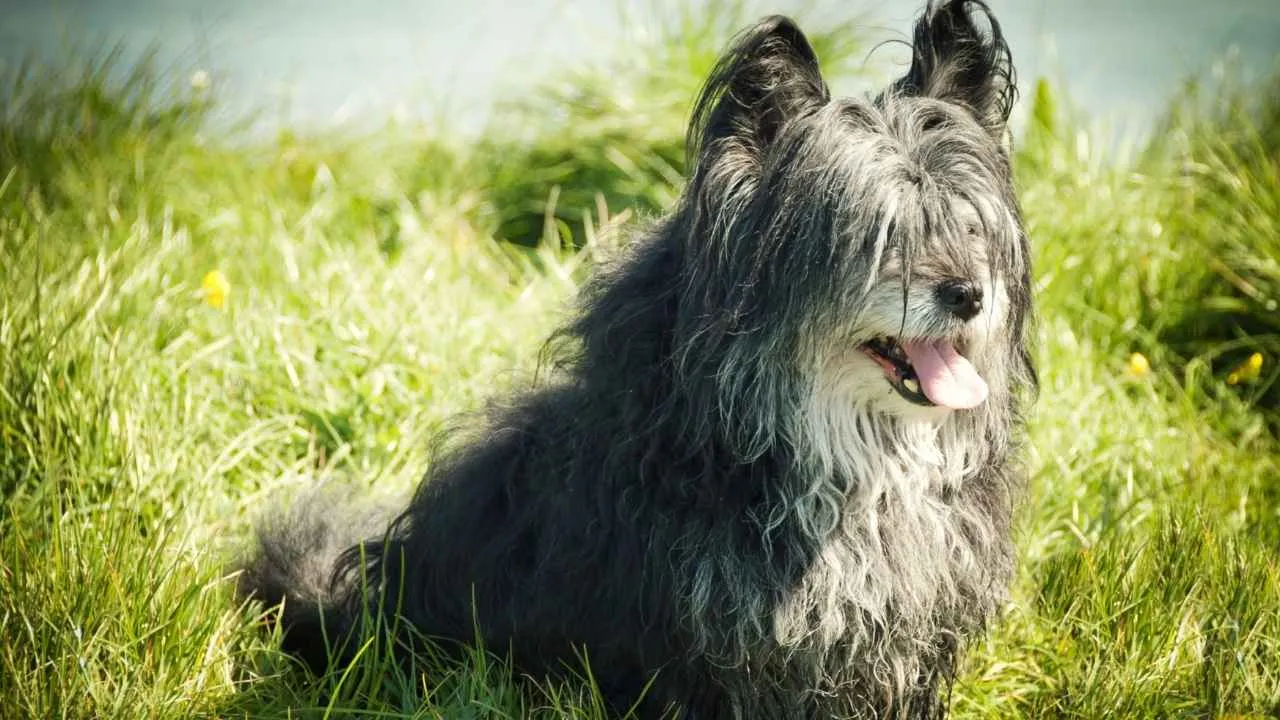
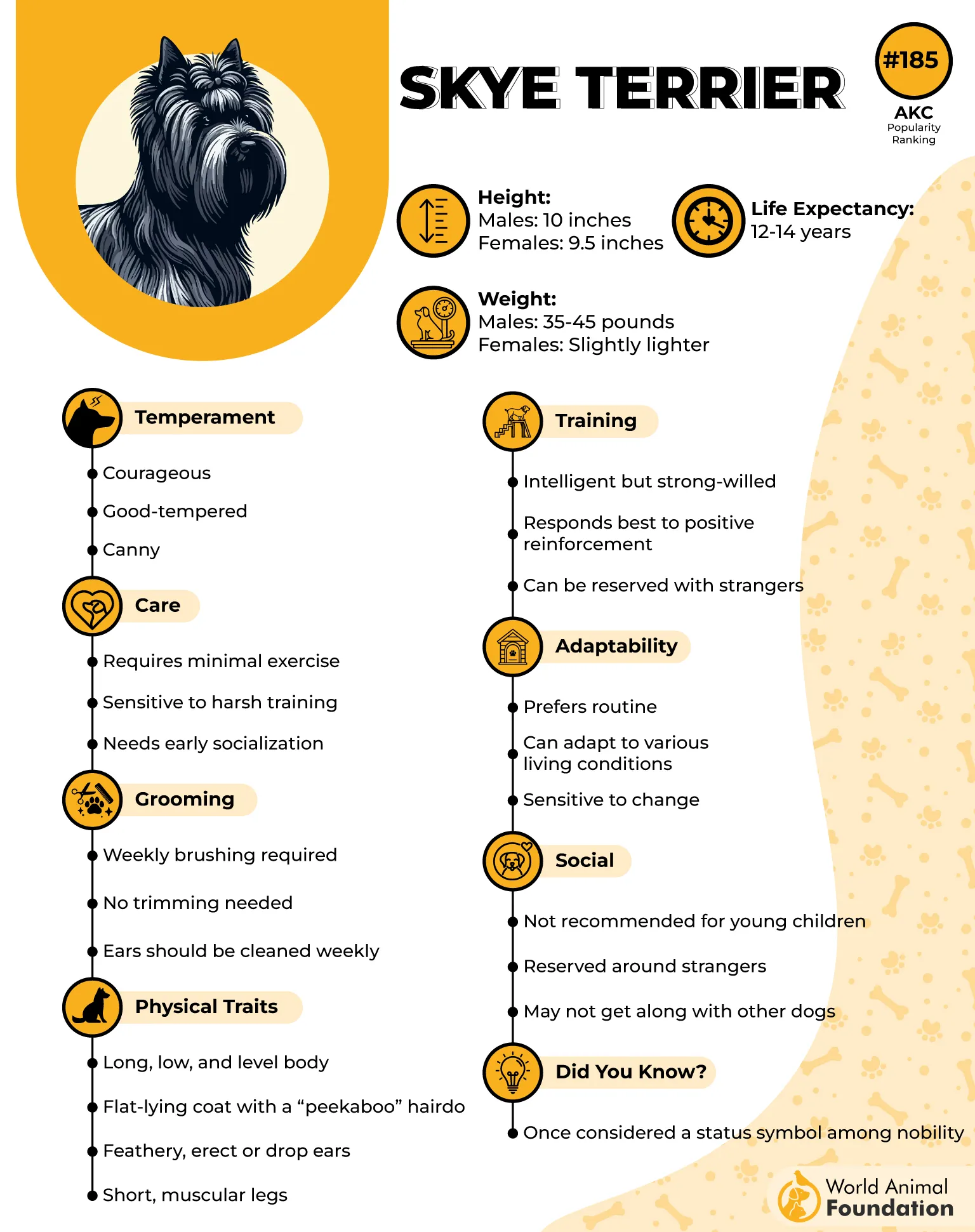
Skye Terrier was originally bred on Scotland’s Isle of Skye and nearby western coastal areas, with historical records dating to before the 16th century. Once favored by upper-class families and later kept more widely, the breed even found a place in Queen Victoria’s household.
Made for Tight Spaces
This small dog breed has a low, elongated body that once helped it reach confined spots while pursuing foxes, otters, and rats. That unusual build gave this small hunter access to places where taller dogs would have struggled to follow.
The breed’s nature has more to offer than quiet company:
Needs about an hour of daily activity
Enjoys walks, hiking, agility, and nose work
Early socialization supports better interactions
Long Coat, Real Work
Skye Terrier wears a straight double coat with an outer layer over a shorter, softer undercoat, and the breed standard calls for hair at least 5.5 inches long, as mentioned by PetMD. Regular brushing helps remove sticks, tangles, and loose hair picked up during active outdoor adventures.
4. Yorkshire Terrier
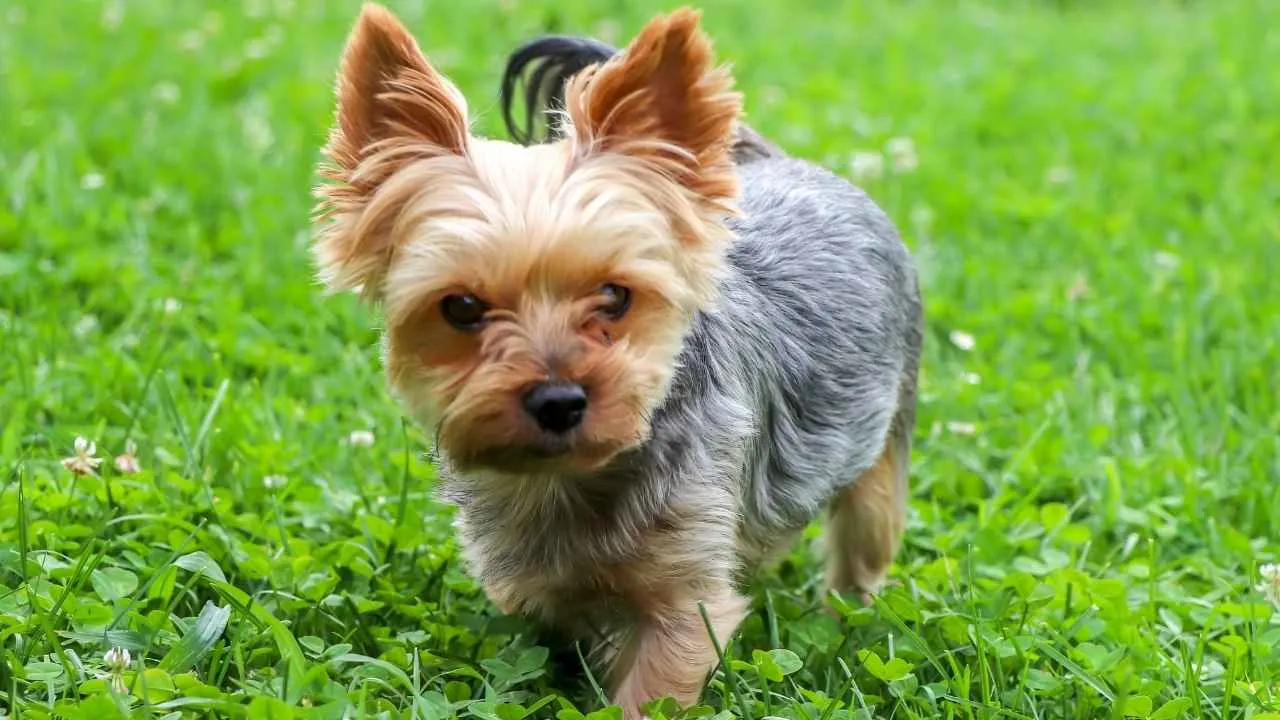
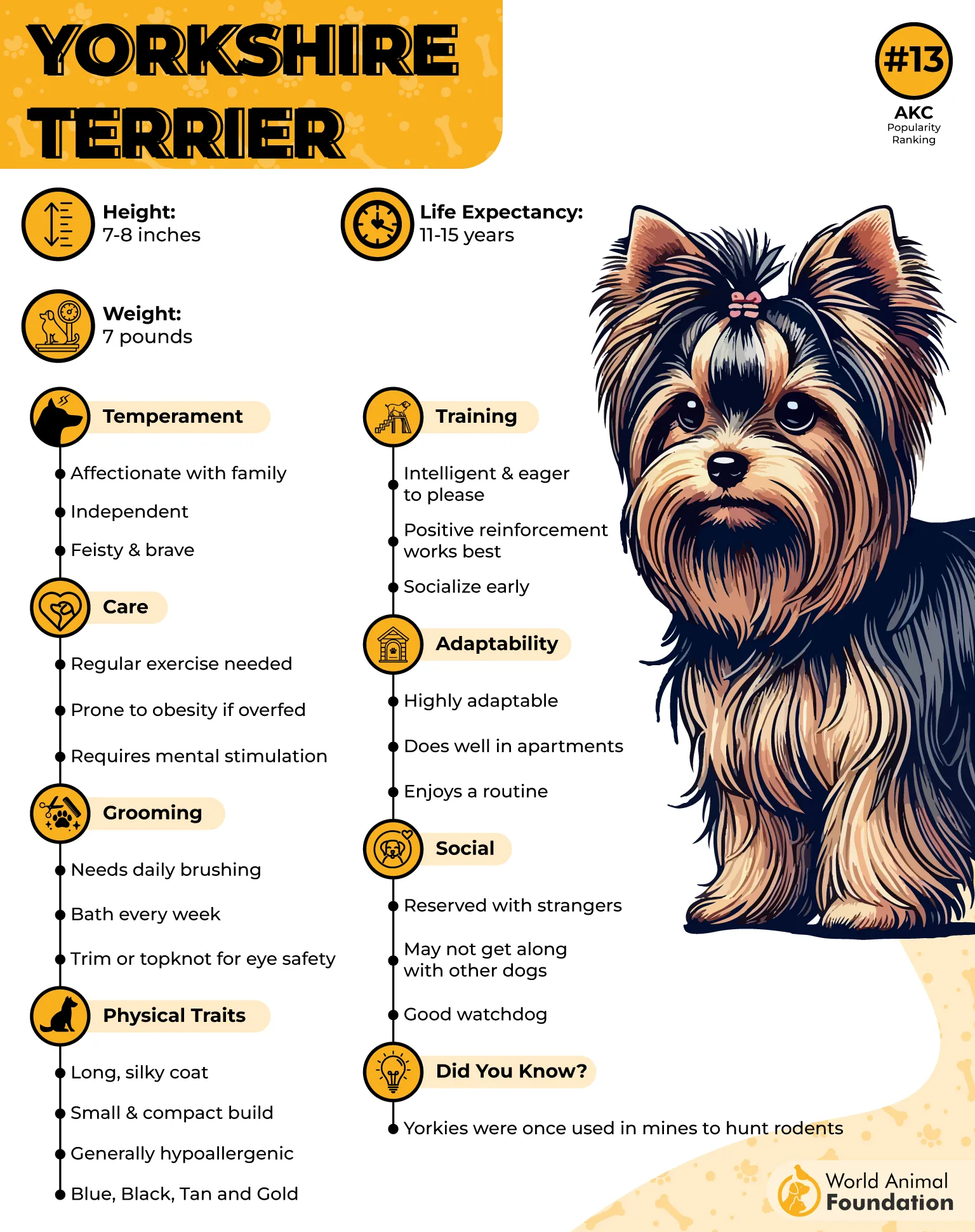
Yorkshire Terrier began in Yorkshire in the mid-1800s after Scottish workers brought small terriers into the region’s cotton mills. These compact dogs were used to catch rats, and later breeding focused on bringing their size below 10 pounds by the early 1900s.
Floor-Length Hair
Yorkies can grow a silky coat all the way to the floor, giving owners plenty of room to choose between a long style and a shorter teddy bear or puppy cut. Its fine hair resembles human hair and needs daily brushing to limit breakage and matting.
The following coat details make grooming decisions easier:
Puppy cuts usually measure 1 to 2 inches
Coat combines steel blue or black with tan or gold
Monthly bathing includes shampoo followed by conditioner
Small Dog, Big Schedule
Yorkshire Terrier is a bright, spirited companion that can happily take charge of household routines, from reminding you about breakfast to expecting playtime. Early training can work especially well because this breed is eager to please and can begin learning cues from around 7 or 8 weeks old.
5. Pekingese
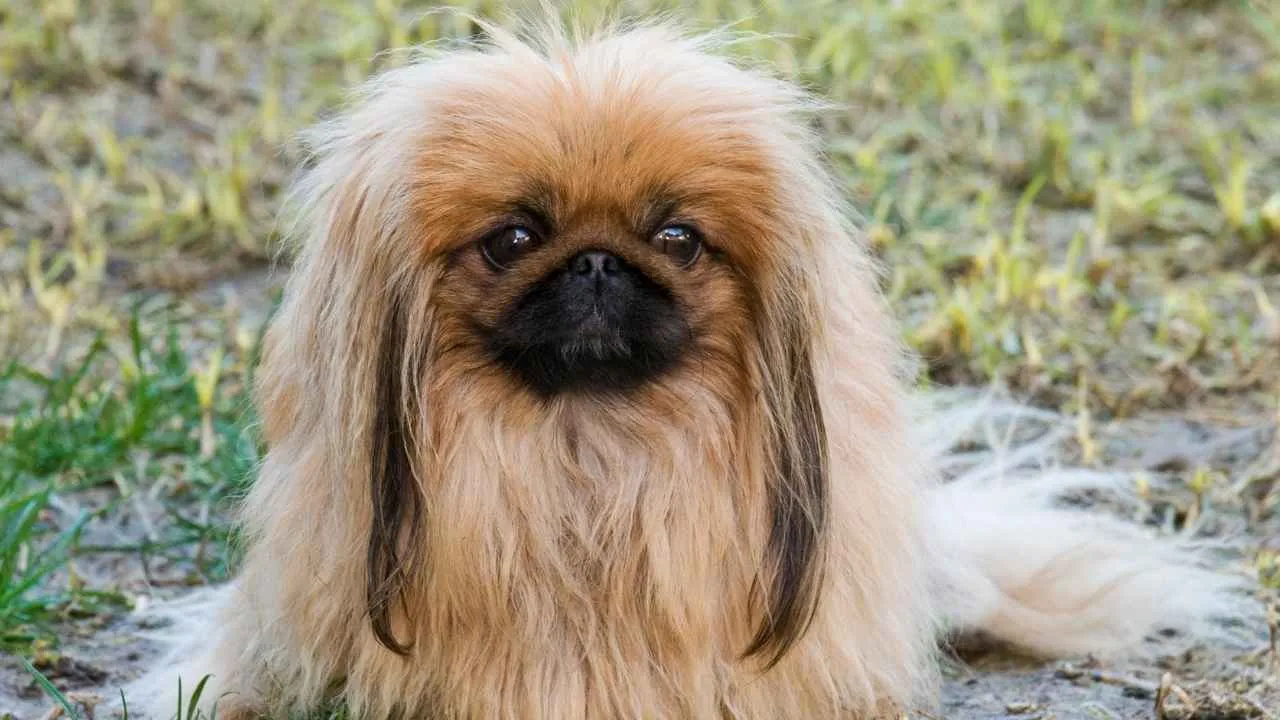
Pekingese dates back around 2,000 years to China’s Shu Dynasty, where Buddhist monks selectively bred these small dogs to resemble the lion, a powerful Buddhist symbol. They became sacred companions of the Imperial family, and taking one beyond the palace could once bring a death sentence.
A Lion-Like Coat
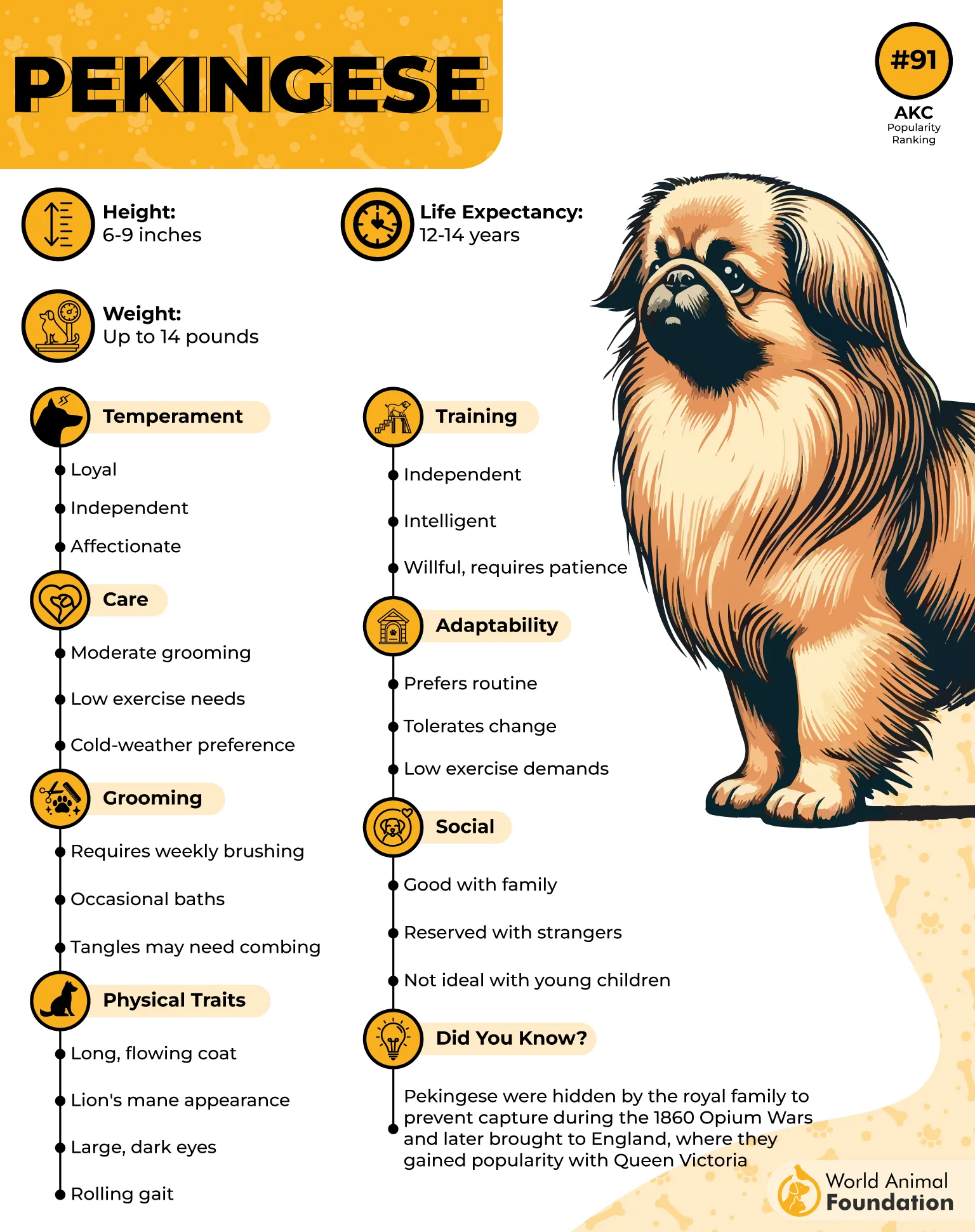
This small-sized breed has a dense double coat with a coarse outer layer, a softer undercoat, and a long mane around the neck and shoulders. That flowing coat covers a compact body that can weigh up to 14 pounds while standing only about 6 to 9 inches tall.
Three details make that coat especially distinctive:
Daily brushing helps prevent tangles
A slicker brush and de-shedding tool reduce loose fur
Grooming appointments may be needed every six weeks
Selective With Company
Pekingese often keeps a close eye on household activity and may bark when someone approaches the home, including a delivery at the door. Around children, gentle handling matters because this breed may tolerate their presence without wanting to participate in energetic play.
6. Maltese
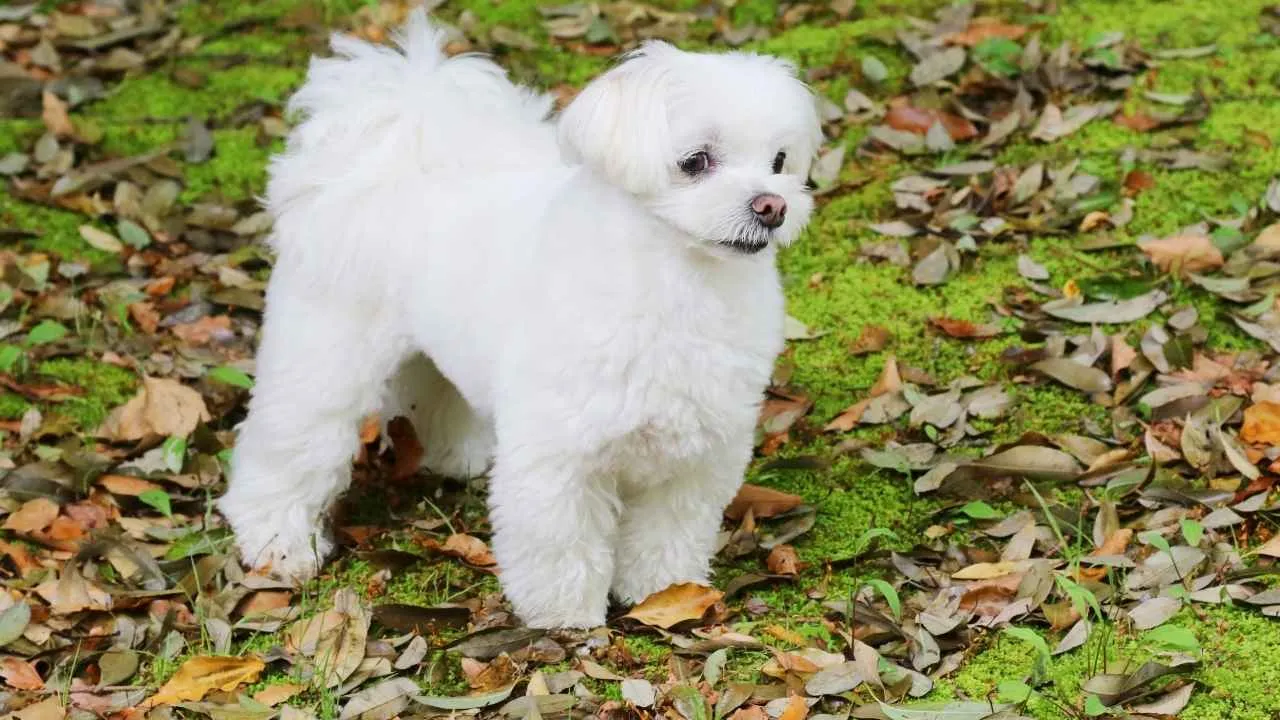
Maltese has been linked with Malta for more than 28 centuries, earning a place among the favored companions of ancient aristocratic circles. Roman governor Publius even owned a Maltese named Issa, praised in a famous epigram for her gentle and playful nature.
Silk From Head to Floor
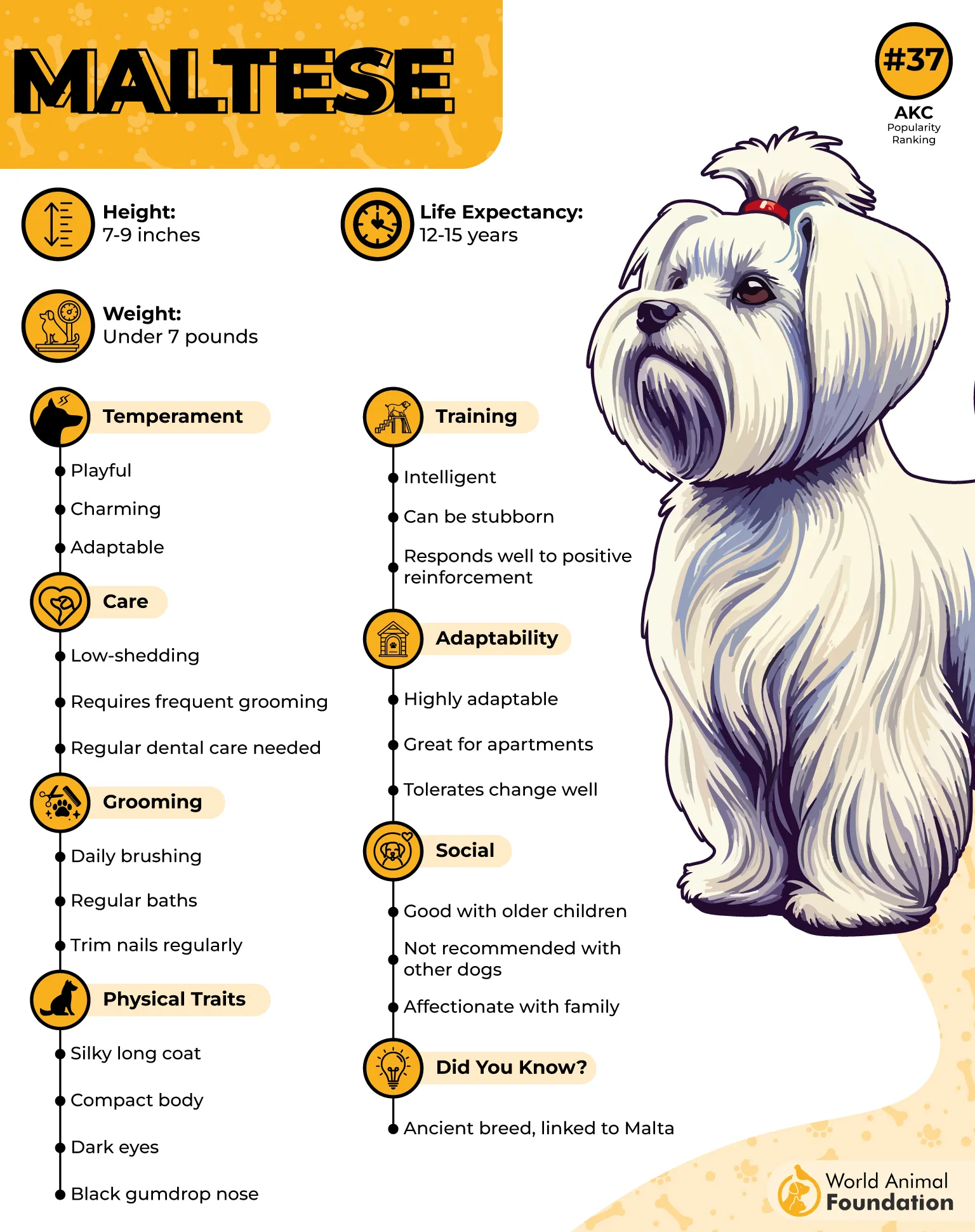
This adorable dog breed has a silky, single-layered coat that can grow all the way to the floor when left untrimmed. Its fur is white, while the ears can carry light tan or lemon coloring, giving the tiny breed a distinctly polished appearance.
Here’s a closer look at the coat features:
No insulating undercoat
Daily brushing for long fur
Bathing every four to six weeks
Small and Delicate
Maltese can make gentle therapy companions because of their sweet personality and strong preference for spending time with people. Its tiny frame also calls for close supervision around babies and young children, who may accidentally handle such a small dog too roughly.
7. Tibetan Terrier
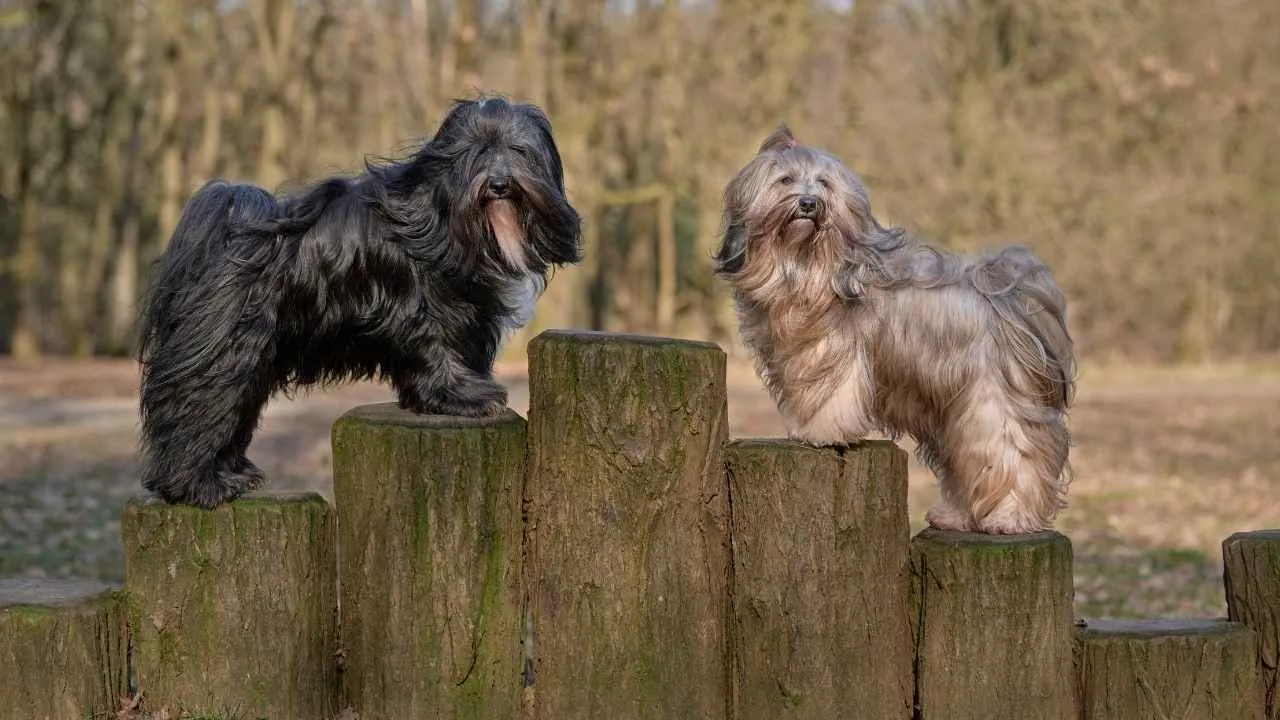
Tibetan Terrier traces its roots to the monasteries of Tibet’s Lost Valley, where monks kept these dogs as companions and alert sentries. Their unusual working role also included guiding sheep through narrow ravines by running across their backs, a striking skill for such a shaggy breed.
A Coat Full of Character
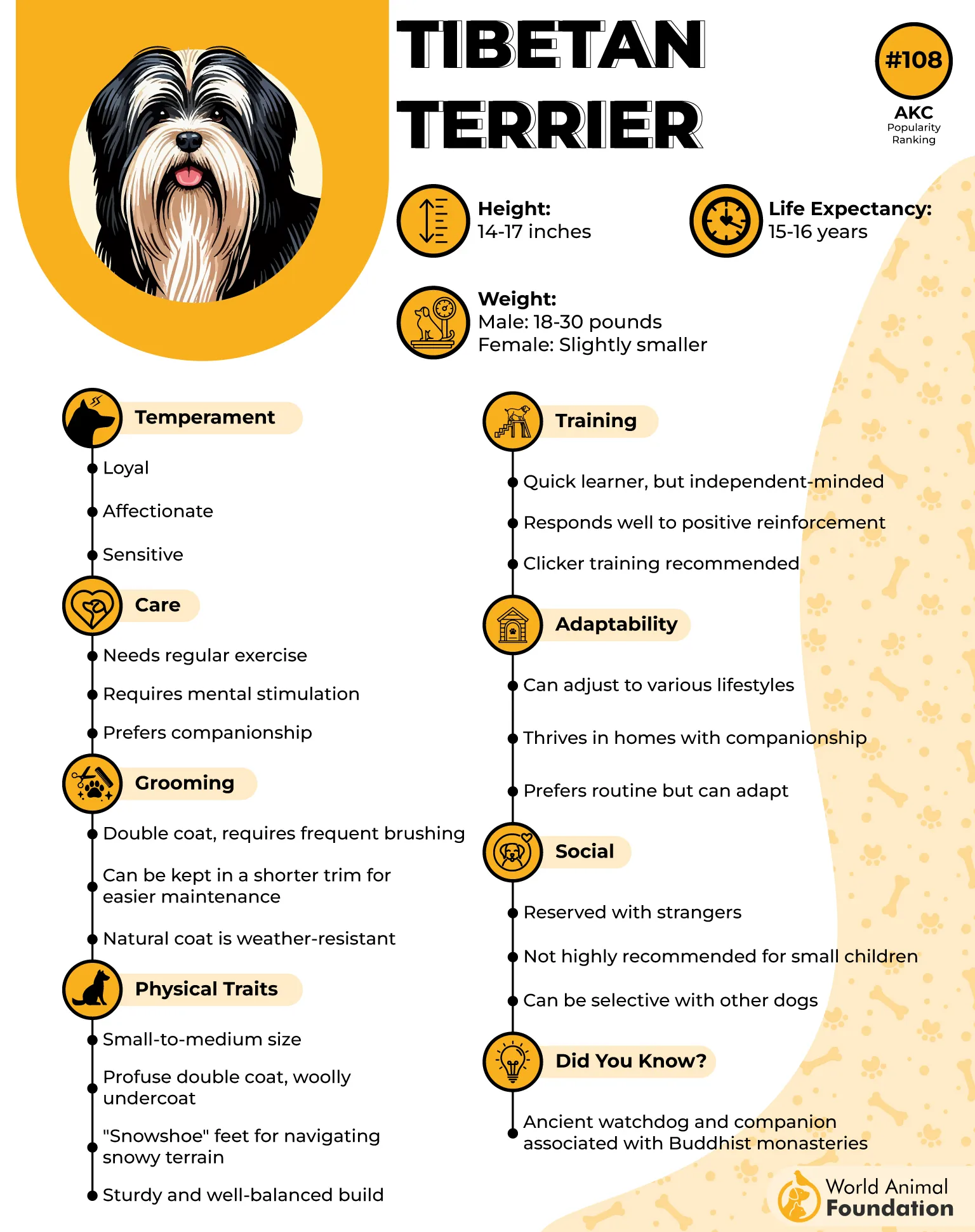
This terrier has an extremely long double coat with a soft, woolly underlayer and a fine, plentiful outer layer. When left untrimmed, the hair can fall over the eyes and front of the face, creating the unmistakable look of this ancient breed.
These features make that coat especially interesting:
Colors range from white to black
Golden brindle can have subtle tiger-like stripes
Outer hair is fine rather than coarse
Sensitive Around People
Tibetan Terrier generally gets along well with cats, dogs, and children, although its sensitive nature makes respectful handling especially important. Guests may receive a reserved reception, while an approaching person at the door can trigger the loud barking inherited from its monastery guard duties.
Conclusion
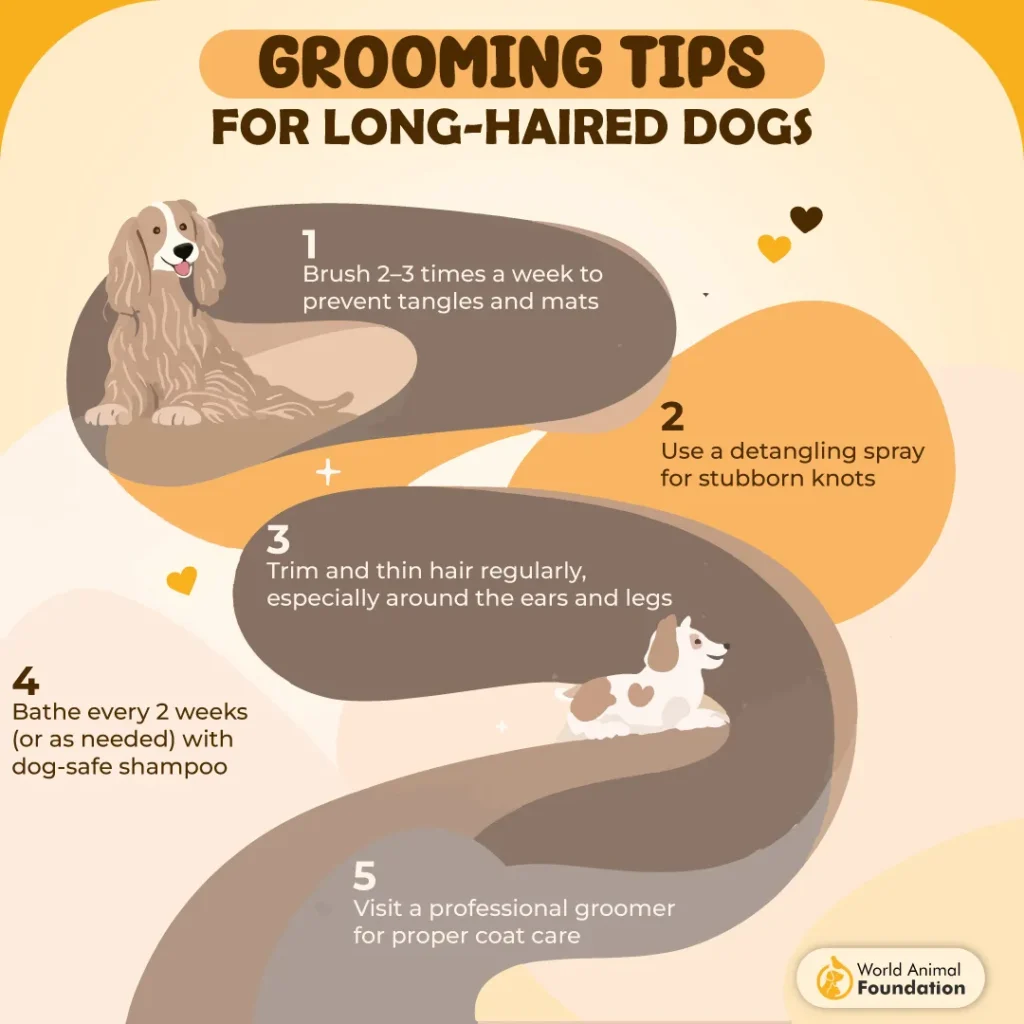
A flowing coat can catch attention quickly, but living with a long-haired dog means looking beyond appearance. Brushing, bathing, trimming, and mat prevention can become regular parts of the weekly routine, especially when hair is fine, dense, or easily tangled. These dogs can have gorgeous coats, but their grooming requirements and personalities can vary widely.
Some need to exercise daily and plenty of mental stimulation, while others are happier with quiet companionship. Owners should consider grooming commitment, exercise, children, household space, and time available for care, especially with larger dogs. Finding the right balance can make their beauty easier to enjoy without becoming an everyday burden.
